
 TRANSCULTURAL ADAPTATION OF THE CENTRAL VASCULAR ACCESS DEVICE-ASSOCIATED SKIN IMPAIRMENT ALGORITHM - CASI/BRAZIL
ABSTRACT
Objective: to transculturally adapt the CASI Algorithm for Brazilian Portuguese and context.
Method: this is a methodological study conducted between December 2023 and November 2024, of the transcultural adaptation of the CASI Algorithm for Brazilian Portuguese following the guidelines of Beaton et al. based on five main stages: translation, synthesis of translations, back-translation, evaluation by a committee of experts, pre-testing with the target audience with translation of the final version into English, and approval by the authors. Content validation was obtained through the Content Validity Index and Content Validity Ratio.
Results: semantic, idiomatic, cultural, and conceptual equivalence was evaluated by a committee of six experts, obtaining a Content Validity Index of 0.84. The clarity, comprehension, and relevance of the algorithm were evaluated by 66 nurses, obtaining a Content Validity Index of 0.92 and a Content Validity Ratio of 0.85, indicating that there is a consensus regarding the content of the CASI Algorithm adapted to the Brazilian context, and that they agree that the elements are crucial for the purpose of the Tool.
Conclusion: The cross-cultural adaptation of the CASI Algorithm to Brazilian Portuguese was performed successfully, presenting CVI and CVR values which indicate high agreement among participants regarding the content, relevance, clarity, and essentiality of the Tool’s items.
DESCRIPTORS:
Central venous catheter; Nursing; Translation; Cross-cultural comparison; Patient safety
RESUMO
Objetivo: Adaptar transculturalmente o Algoritmo CASI para o português e contexto brasileiro.
Método: Estudo metodológico, realizado entre dezembro de 2023 e novembro de 2024, de adaptação transcultural do Algoritmo CASI para o português brasileiro, seguindo as diretrizes de Beaton e colaboradores, a partir de cinco etapas principais: tradução, síntese das traduções, tradução reversa, avaliação por um comitê de especialistas, pré-teste com público-alvo com tradução da versão final para o inglês e aprovação pelas autoras. A validação do conteúdo foi obtida por meio do Índice de Validade de Conteúdo e Razão de Validade do Conteúdo.
Resultados: A equivalência semântica, idiomática, cultural e conceitual foi avaliada por um comitê de seis especialistas, obtendo-se Índice de Validade de Conteúdo de 0,84. A clareza, compreensão e relevância do algoritmo foi avaliada por 66 enfermeiros, obtendo Índice de Validade de Conteúdo de 0,92 e Razão de Validade de Conteúdo de 0,85, indicando que há um consenso em relação ao conteúdo do Algoritmo CASI adaptado para o contexto brasileiro, e que estes concordam que os elementos são cruciais para o propósito da Ferramenta.
Conclusão: A adaptação transcultural do Algoritmo CASI para o português brasileiro foi realizada com sucesso, apresentando valores de IVC e CVR que indicam alta concordância entre os participantes sobre o conteúdo, a relevância, clareza e essencialidade dos itens da Ferramenta.
DESCRITORES:
Cateter venoso central; Enfermagem; Tradução; Comparação Transcultural; Segurança do paciente
RESUMEN
Objetivo: adaptar transculturalmente el Algoritmo CASI al portugués brasileño y su contexto.
Método: estudio metodológico, realizado entre diciembre de 2023 y noviembre de 2024, sobre la adaptación transcultural del Algoritmo CASI al portugués brasileño, siguiendo las directrices de Beaton et al., basado en cinco etapas principales: traducción, síntesis de traducciones, retrotraducción, evaluación por un comité de expertos, preprueba con el público objetivo con traducción de la versión final al inglés y aprobación por los autores. La validación de contenido se obtuvo mediante el Índice de Validez de Contenido y el Índice de Validez de Contenido.
Resultados: la equivalencia semántica, idiomática, cultural y conceptual fue evaluada por un comité de seis expertos, obteniendo un Índice de Validez de Contenido de 0,84. Sesenta y seis enfermeras evaluaron la claridad, la comprensión y la relevancia del algoritmo, obteniendo un Índice de Validez de Contenido (IVC) de 0,92 y una Razón de Validez de Contenido (RVC) de 0,85. Esto indica consenso respecto al contenido del Algoritmo CASI adaptado al contexto brasileño y que coinciden en que sus elementos son cruciales para la finalidad de la herramienta.
Conclusión: la adaptación transcultural del Algoritmo CASI al portugués brasileño se realizó con éxito, presentando valores de IVC y RVC que indican un alto grado de acuerdo entre los participantes respecto al contenido, la relevancia, la claridad y la esencialidad de los elementos de la herramienta.
DESCRIPTORES:
Catéter venoso central; Enfermería; Traducción; Comparación transcultural; Seguridad del paciente
INTRODUCTION
The vast majority of critically ill patients or those with complex health issues require central vascular access devices (CVADs) during their hospital stay1. It is estimated that 8% of adults and 26% of hospitalized children and adolescents require CVAD insertion during their treatment2.
Despite being widely used, these devices are associated with complications for patients that can lead to increased hospital costs, worsened prognosis, longer hospital stays, pain and discomfort for the patient, as well as the need for early removal of the device3,4.
CVAD insertion of into the individual’s venous network results in a break in the skin’s integrity at the insertion site, and requires adopting maintenance measures while the device is in situ, such as the use of fixation devices, appropriate adhesive dressings, and antiseptic solutions for cleaning the surrounding skin1,2,5.
Management of the CVAD insertion site is usually performed by the responsible healthcare professional, especially nurses. However, problems such as lack of care standardization, low level of knowledge of the professionals responsible, or incorrect use of adhesive dressings can lead to developing skin impairment6,7.
Inadequate management practices expose the patient to develop skin complications such as CASI (CVAD-Associated Skin Impairment), which represents 1.4% to 12% of CVAD complications, being a potentially serious and avoidable injury to the patient2.
A Chinese study on CASI incidence in adult patients with a peripherally inserted central catheter (PICC) identified 173 cases, where 56.1% (97/173) corresponded to infection at the insertion site, 16.8% (29/173) to exudation at the site, 21.4% (37/173) to irritant dermatitis, 4.6% (8/173) to allergic dermatitis, and 1.2% (2/173) to tension-induced injury. The participants most prone to developing CASI in the abovementioned study were older adults with excessive moisture and sweating, diabetics, and those undergoing chemotherapy8.
Although CASI may be related to on-site device management care5,6, it is understood that all individuals with implanted CVADs are susceptible to developing skin complications2. Patient physiological characteristics are a significant risk factor for developing these lesions such as extreme ages, older adults and neonates9, previous comorbidities10 and skin conditions9. However, the cause may be multifactorial and other factors such as trauma at insertion2, high humidity8, antiseptic agents for cleaning around the device11, mechanical forces for skin antisepsis9, fixation devices and dressing adhesive may be involved7.
In recognizing this problem, the CASI Algorithm (CVAD-Associated Skin Impairment Algorithm) was proposed in 2017, a tool to aid in the management and clinical decision-making of healthcare professionals responsible for vascular devices with skin complications around the insertion site5.
The CASI Algorithm is divided into two sequential domains: the first assesses the patient’s skin, and the second protects the skin and promotes comfort. It also provides guidance on the use of appropriate dressings and antiseptic solutions according to the type of lesion observed5.
Although the CASI Algorithm is available to the scientific and clinical community, its version is only in English, and there are no similar tools available in Portuguese or adapted to the Brazilian context for the management of these lesions.
In this sense, it is essential that this tool based on scientific evidence be made available and adapted to the Brazilian context in order to standardize the care provided, promote improvements in patient safety, and raise the quality of care. Thus, the objective of this study was to transculturally adapt the CASI Algorithm to Portuguese and the Brazilian context.
METHOD
This is a methodological study on the cross-cultural adaptation of the CASI Algorithm for Portuguese and the Brazilian context, conducted between December 2023 and November 2024. The cross-cultural adaptation of a tool to another cultural context requires systematic and rigorous procedures to ensure its applicability and accuracy in the new scenario12. The methodological framework proposed by Beaton et al.12,13 was adopted.
After obtaining authorization from the main authors for adaptation into Brazilian Portuguese, the cross-cultural adaptation process began (Figure 1). In the first stage, two initial translations were performed from the original language (English) of the Algorithm to the target language (Portuguese). In turn, two bilingual translators were hired to carry out these translations, both native speakers of Brazilian Portuguese, one of whom was from the health field. Each translator performed an independent translation in order to obtain an approximate congruent version between both translators.
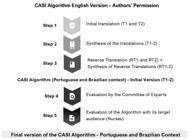
The versions translated by Translator 1 (T1) and Translator 2 (T2) were then synthesized in the second stage, resulting in an initial translation version called T1-2. The synthesis was jointly performed by the researchers, and the obstacles related to translations with semantic ambiguities, which could result in divergent interpretations, were resolved through a meeting.
The third stage involved the back-translation process into English of the T1-2 version of the CASI Algorithm by two bilingual English translators to assess potential translation errors and conceptual inconsistencies. This generated two back-translations (RT1 and RT2). Following this, the researchers synthesized the two versions through discussion and comparison with the original version in a meeting to resolve conceptual or translation errors, resulting in the common reverse-translation known as RT1-2.
Next, the initial version of the CASI Algorithm translated into Portuguese (T1-2) was submitted to an evaluation by a Committee of Experts in the fourth stage, being composed of nurses specializing in infusion therapy with experience in cross-cultural adaptation of instruments, and a language professor specializing in document translations. The experts were selected through an advanced search on the Lattes Platform, using filters for “professional activity” in the area of “Health Sciences” and “Nursing”, who were then invited to participate in the research via email. After agreeing, they received a Google Forms® link containing the 13 items of the algorithm along with the evaluation questionnaire.
The expert evaluation questionnaire was designed to assess the four fundamental dimensions considered in cross-cultural adaptations: semantic equivalence (“Does the translation have the same or similar meaning to the original version?”); idiomatic equivalence (“Were idiomatic expressions and/or words difficult to translate from the original instrument replaced with equivalent words?”); cultural equivalence (“Does the translation of these items relate to the cultural context of the population in which the Tool will be applied?”); and conceptual equivalence (“Does the translation of this item present words with conceptual meanings equivalent to the original version of the instrument?”). In addition to these four main dimensions, a question about the grammatical correctness of the translation was also included, thus completing the linguistic evaluation of the algorithm.
Each of the 13 items which compose the algorithm was individually evaluated by experts using a Likert-type scale (1=no equivalence, 2=little equivalence, 3=medium equivalence, 4=high equivalence, and 5=total equivalence) to obtain the equivalences. In cases where the chosen options were 1, 2, or 3, they were asked to indicate suggestions for possible modification. Thus, a Content Validity Index (CVI) was calculated for each item based on the scale results using the formula CVI = (number of responses 4 or 5) / (total number of responses), adopting 0.80 as the cut-off point for validation14,15.
The CVI measures the degree to which the content of the items is considered relevant and appropriate within a given context14. Therefore, the CVI assessed the congruence with the experts’ opinion on the content of the items, in this case the equivalences of the translation into Brazilian Portuguese15. This rigorous methodological approach ensured that the adapted version maintained the original properties while adapting to the Brazilian context, and its applicability in national clinical practice14,15.
The fifth stage was initiated after obtaining content validity with nurses, and comprised evaluating the understanding, clarity, and relevance of the adapted version of the CASI Algorithm by the target audience. According to the methodological framework adopted, a minimum participation of 30 to 40 representatives of the target audience is required in this stage12,13. The initial sample was selected by convenience, with the initial participants identified through filtering on the Lattes Curriculum Platform in the area of “Nursing”. These individuals were contacted via email. The snowball sampling technique was subsequently adopted, in which participants indicated other qualified professionals to be included in the study, and these professionals were then contacted via email or WhatsApp®. The inclusion criteria consisted of being a registered nurse or a faculty member of an undergraduate nursing program. Undergraduate nursing students were not included, and incomplete completion of the evaluation questionnaire was considered an exclusion criterion.
In turn, a two-block instrument was created for pre-testing with the target audience. The first block contained variables characterizing the participants, and the second block contained variables of comprehension, clarity, and relevance. The instrument was made available to participants via Google Forms®, and they evaluated the algorithm’s items in their entirety using a Likert-type scale (1=very bad, 2=bad, 3=neither good nor bad, 4=good, 5=very good). In cases where the chosen option was equal to or less than three, participants were asked to leave suggestions for later discussion among the researchers. The data were analyzed using the Standard Statistical Software (SPSS) version 29.0. A descriptive analysis was performed to characterize the sample, and the CVI and CVR (Content Validity Ratio) were applied to assess the content of the algorithm by the participants, measuring the clarity, comprehension, and relevance of the tool16,17.
The Content Validity Ratio (CVR) is defined as a content validation measure focused on the essentiality of items. Its goal is to ensure that only truly indispensable elements are included in the tool. The CVR was used in this study to measure the essentiality of the translated content of the algorithm16,17. CVR values range from -1 (total disagreement) to +1 (total agreement), with values greater than zero indicating that more than half of the participants consider the content essential. In addition, the critical CVR value varies according to the sample size; this value refers to a critical number that must be reached to be considered adequate, which in this case is 0.3 according to the adopted reference17.
The CVR was calculated for the Tool as a whole considering comprehension, clarity and relevance using the formula: CVR-I = (Ne - N/2) / (N/2), where Ne represents the number of nurses who answered “agree” and “strongly agree” and N the total number of participants. The average CVR was subsequently calculated by summing the individual values and dividing by the total number of items in the assessment, which in this case are three (comprehension, clarity and relevance)16,17.
It is noteworthy that the study received approval from the Research Ethics Committee with Human Beings of the Federal University of Santa Catarina, and all study participants signed the Informed Consent Form.
RESULTS
The algorithm translation was titled “Central Vascular Access Device-Associated Skin Impairment Algorithm - CASI Algorithm” for the Brazilian version (Figure 2). The translation, synthesis, and reverse-translation steps followed the previously established procedure. Although versions T1 and T2 were quite similar, some items were adjusted during the synthesis process for better suitability in the initial version T1-2. This step was finalized after discussion among the researchers. No significant discrepancies were found in the reverse-translation between this and the original version, maintaining the original meaning of the words.
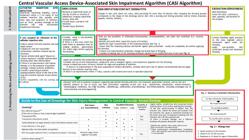
Brazilian Version of the Central Venous Access Device-Associated Skin Impairment Algorithm - CASI Algorithm.
Then, a total of 22 experts were invited in the expert committee stage, and six responded. Of these, five were nurses, doctors, specialists in infusion therapy, stoma therapy, and had experience in cross-cultural adaptation methodology of instruments, and the sixth expert was an English language teacher. All were proficient in English and familiar with it.
The CASI Algorithm items were evaluated by experts for equivalences, resulting in a CVI for each equivalence, as shown in Table 1. It is noteworthy that all dimensions analyzed obtained CVI values above the established cut-off point (0.80), demonstrating that the experts’ opinions are compatible regarding the adequacy of the translated and adapted content with an overall CVI of 0.84. These results indicate that the adapted version of the CASI Algorithm for Brazilian Portuguese preserves the original meaning in all dimensions evaluated, confirming its content validity for the proposed use.
Some changes were made according to suggestions recommended by the experts. These changes especially focused on the adequacy of terms, in addition to adjustments regarding acronyms and words with ambiguous meaning in Portuguese. Regarding the title, the CASI acronym was maintained due to its widespread use in the literature, and standardization of the CVAD term from English (Central Vascular Access Device) to the Portuguese term Dispositivo de Acesso Vascular Central (DAVC). Furthermore, the term “dressing” was modified throughout the algorithm to “covering,” the term “insertion site” was standardized throughout the text in cases where the term was translated as “insertion location,” and “alcohol-free barrier film” to “alcohol-free skin protectant (swab).”
There was disagreement among the reviewers regarding the term “skin tears” and its translation into Brazilian Portuguese, which could lead to misinterpretation as it was initially translated as “cuts” or “laceration,” resulting in discussion among the researchers and a literature search regarding the nomenclature for this term. Thus, the use of the term “friction injury” was chosen by consensus, widely used for injuries caused by shearing, friction, or brute force that results in a split in the skin of full or partial dimension18,19.
Next, a total of 66 nurses participated in the pre-test phase with the target audience, most of whom had a specialization (45.5%), with a mean age of 35.38 years (±9.38) and a mean professional experience of 9.72 years (±8.58) (Table 2).
Characterization of nurses participating in the evaluation phase by the target audience. Florianópolis, SC, Brazil, 2024. (n=66)
Regarding the area of activity, most worked in assistance (75.8%), with 33.3% involved in research, 31.8% in teaching, 13.6% in consulting or sales, and 6.1% in management. The regional distribution revealed a greater concentration in the South (39.4%) and Northeast (31.8%), followed by the Southeast (22.7%), North (4.5%), and Midwest (1.5%).
The nurses’ assessment of clarity, comprehension, and relevance obtained a CVI of 0.92, indicating that the adaptation of the proposed content is adequate for the established objectives (Table 3). In addition, the calculated CVR for the target audience was 0.85, a value above the cut-off index (CVR=0.3), which demonstrates consensus among the participants regarding the relevance, comprehension, and clarity of the items. There were no suggestions for changes from the target audience, resulting in the maintenance of all items in the final version.
DISCUSSION
Given the frequent use of CVADs in clinical practice, it is expected that the healthcare professionals responsible are properly trained to manage these devices following the best available practices5,19. The use of tools that support these professionals in their activities can contribute to improving clinical decision-making and preventing possible complications associated with the use of these devices2,20.
The CASI Algorithm is configured as an important tool to assist healthcare professionals in dealing with skin lesions around CVADs5. Due to the lack of tools to support Brazilian professionals in dealing with these complications, it has become essential to adapt this tool already available to the scientific and clinical community. Studies indicate that adapting tools already available is better indicated than creating new instruments in a new language, standardizing the care process across all cultures21,22.
According to the literature, there is still no consensus on the ideal methodology for adapting a tool to different cultural contexts23. However, it is important to highlight that this process must go beyond a simple translation, requiring an adaptation that considers the context in which it will be inserted, the target population, and the specific characteristics of the tool21,23.
The adaptation of the CASI Algorithm followed a precise and rigorous methodological process aiming to ensure that the algorithm (in its translated version) is able to faithfully reproduce the function for which it was originally designed in the new context in which it will be applied12-14,22.
In addition, the guidelines recommended by Beaton et al.12,13 were adopted to ensure adequate equivalence between the original version of the algorithm and the adapted version. The methodology proposed by this reference is widely recognized in cross-cultural adaptation studies in the health field, being one of the most widely used methods in research of this nature19,22-24.
After the initial translation and the adjustments made jointly by the researchers, the validity of the equivalences obtained with the committee of experts was ensured by following the recommendations of the proposed methodology. The CVI obtained was 0.84, indicating adequacy of the adapted content by the evaluators14. Considering that there is no consensus on the ideal number of specialists for this stage, it was decided to form a committee with specific experience in the algorithm’s content, thus ensuring a qualified evaluation of the adapted construct24.
The committee consisted of six experts, including five nurses with doctorates in infusion therapy/stoma therapy and a specialized linguist. As mentioned, all experts had proven experience in the field, relevant scientific production, and proficiency in English. Despite the limited number of participants, the expertise ensured rigorous evaluations, meeting the minimum recommendations indicated in the literature14,15, and obtaining excellent content validity indices (CVI = 0.84)15, demonstrating that the technical qualification of the evaluators in validation studies is crucial to ensure reliable results25.
In addition, it is noteworthy that the CASI Algorithm with the target population obtained adequate evaluation indices regarding the adapted content, with a CVI of 0.92 and a CVR of 0.85. These values indicate that the items were well-designed and meet the expectations and needs of the population, which ensures that the content is relevant and meaningful16,17.
The CVI of 0.92 reflects the agreement among nurses regarding the relevance, clarity, and adequacy of the items in relation to the adapted construct. Values above 0.78 are considered excellent, suggesting that the proposed content is highly representative of what is intended to be measured15. On the other hand, the CVR of 0.85 (which ranges from -1 to +1) demonstrates that most considered the items essential for the Tool, with a CVR above 0.3 (minimum index for the group of 66 participants, as in this case) indicating that the items are fundamental and should be maintained17. The combination of the CVI and CVR results reinforces the content validity of the tool, providing greater confidence in the accuracy and use of the CASI Algorithm for its intended purposes15.
It is important to highlight that cutaneous complications associated with vascular catheters are uncomfortable, cause changes in skin appearance, and can progress to systemic changes such as bloodstream infections or catheter failure2,9,26. International clinical practice guidelines have consistently recommended the use of technologies that offer high-quality evidence to support professionals in their daily practice1,27. With the increase in studies demonstrating the high rate of CASI in vascular devices, it is considerable that coordinated and systematic actions to prevent these injuries should be implemented4,8,26.
A prospective multicenter cohort study, conducted in two intensive care units with Brazilian adult patients identified an incidence of 31.8% (44/138) of skin lesions at CVD insertion sites. This result can be attributed to multiple factors, such as the clinical condition of critically ill patients, who have greater vulnerability to skin integrity, the characteristics of medical adhesives, and the mechanical trauma caused by the repetitive application and removal of dressings28. Given the high prevalence of skin lesions associated with intravascular devices in Brazil, which has rates between 28.5%10 and 31.8%28, the adaptation of the CASI Algorithm to the national context is a crucial and timely initiative to support standardization of care and improve patient safety.
The principal authors approved the final Portuguese version of the CASI Algorithm. It is worth highlighting that this is the first cross-cultural adaptation study of the CASI Algorithm for another cultural context. Furthermore, there is no other tool available in Portuguese or within clinical practice to support professionals dealing with skin damage associated with these devices. Despite the success in cross-cultural adaptation, future studies are needed to advance the psychometric validation of the algorithm, particularly through reliability tests (test-retest and inter-observer) and criterion validation against clinical gold standards.
The study’s main limitation is the low adherence rate to the Expert Committee, reflecting a common methodological challenge in validation studies, and the low representativeness of participants from the Central-West region in the stage with the target audience, which may limit the generalization of the results to this region due to regional differences in clinical practices and resources. Although the sample size met the recommendations of the adopted methodological framework12,13, this disparity reinforces the need for future studies with greater regional balance. Furthermore, the tool has not yet undergone clinical validation, constituting another limitation of the study, since its effectiveness and applicability in real-world clinical practice situations still need to be confirmed.
CONCLUSION
The cross-cultural adaptation of the CASI Algorithm to the Brazilian context was conducted with methodological rigor, ensuring the relevance and applicability of the tool in a new cultural setting.
The findings point to the suitability of the algorithm in terms of the representativeness of the items for clinical practice. The availability of this algorithm can assist healthcare professionals in making more accurate and timely decisions related to skin complications in patients with stroke, promoting better outcomes and contributing to the quality of care in Brazil. Continued studies on the clinical efficacy of the CASI Algorithm are recommended to strengthen its application in the clinical setting.
ACKNOWLEDGMENT
We thank the authors Daphne Broadhurst and Amanda Ullman for making the tool available.
REFERENCES
-
1. Liu M, Zheng C, Guan X, Ke Z, Zou P, Yang Y. Development of central venous access device-associated skin impairment assessment instrument. Nurs Open [Internet]. 2022 [cited 2024 Jul 10];9(4):2095-107. Available from: https://doi.org/10.1002/nop2
» https://doi.org/10.1002/nop2 -
2. Xu H, Campbell J, Takashima M, Larsen E, Coyer F, August D, et al. Development and Preliminary Validation of a Central Venous Access Device-Associated Skin Impairment Classification Tool Using Modified Delphi and Clinimetric Methods. J Adv Nurs [Internet]. 2024 [cited 2025 Jan 15];81(2):1095-1112. Available from: https://doi.org/10.1111/jan.16416
» https://doi.org/10.1111/jan.16416 -
3. Curtis K, Gough K, Krishnasamy M, Tarasenko E, Hill G, Keogh S. Central venous access device terminologies, complications, and reason for removal in oncology: a scoping review. BMC Cancer [Internet]. 2024 [cited 2024 Ago 10];24:498. Available from: https://doi.org/10.1186/s12885-024-12099-8
» https://doi.org/10.1186/s12885-024-12099-8 -
4. Gavin NC, Northfield S, Mihala G, Somerville M, Kleidon T, Marsh N, et al. Central Venous Access Device-Associated Skin Complications in Adults with Cancer: A Prospective Observational Study. Semin Oncol Nurs [Internet]. 2024 [cited 2024 Jun 08];40(3):151618. Available from: https://doi.org/10.1016/j.soncn.2024.151618
» https://doi.org/10.1016/j.soncn.2024.151618 -
5. Broadhurst D, Moureau N, Ullman AJ. Management of Central Venous Access Device-Associated Skin Impairment. J Wound Ostomy Continence Nurs [Internet]. 2017 [cited 2024 Jun 26];44(3):211-20. Available from: https://www.ncbi.nlm.nih.gov/pmc/articles/PMC5417573/
» https://www.ncbi.nlm.nih.gov/pmc/articles/PMC5417573/ -
6. Broadhurst D, Moureau N, Ullman AJ. Central Venous Access Devices Site Care Practices: An International Survey of 34 Countries. J Vasc Access [Internet]. 2016 [cited 2024 Jul 01];17(1):78-86. Available from: https://doi.org/10.5301/jva.5000450
» https://doi.org/10.5301/jva.5000450 -
7. Zhao Y, Bian L, Yang J. Intervention efficacy of MARSI nursing management on skin injury at peripherally inserted central catheter insertion site on oncological patients. Int Wound J [Internet]. 2022 [cited 2025 Jan 10];19(8):2055-61. Available from: https://doi.org/10.1111/iwj.13805
» https://doi.org/10.1111/iwj.13805 -
8. Li Q, Wang H, Liu F, He Y. Investigation and Analysis of Catheter-Associated Skin Impairment in PICC’s Patients in Jingzhou City. J Biosci Med [Internet]. 2020 [cited 2024 Set 15];8(10):38-46. Available from: https://doi.org/10.4236/jbm.2020.810005
» https://doi.org/10.4236/jbm.2020.810005 -
9. Thayer D. Skin Damage Associated with Vascular Access: Understanding Common Mechanisms of Injury and Strategies for Prevention. J Radiol Nurs [Internet]. 2021 [cited 2025 Jan 10];40(1):61-8. Available from: https://doi.org/10.1016/j.jradnu.2020.05.011
» https://doi.org/10.1016/j.jradnu.2020.05.011 -
10. Alcântara CMP, Oliveira ELDS, Campanili TCGF, Santos RSDCS, Santos VLCDG, Nogueira PC. Prevalence and associated factors of medical adhesive-related skin injury in cardiac critical care units. Rev Esc Enferm USP [Internet]. 2021 [cited 2024 Jul 10];55:e03698. Available from: https://doi.org/10.1590/S1980-220X2019035503698
» https://doi.org/10.1590/S1980-220X2019035503698 -
11. de Campos Pereira Silveira RC, Reis PED, Ferreira EB, Braga FTMM, Galvão CM, Clark AM. Dressings for the central venous catheter to prevent infection in patients undergoing hematopoietic stem cell transplantation: a systematic review and meta-analysis. Support Care Cancer [Internet]. 2020 [cited 2025 Jan 10]28(2):425-38. Available from: https://doi.org/10.1007/s00520-019-05065-9
» https://doi.org/10.1007/s00520-019-05065-9 -
12. Beaton D, Bombardier C, Guillemin F, Ferraz MB. Recommendations for the Cross-Cultural Adaptation of the DASH & QuickDASH Outcome Measures. [Internet]. 2007 [cited 20 Fev 2024]. Available from: https://dash.iwh.on.ca/sites/dash/files/downloads/ cross_cultural_adaptation_2007.pdf
» https://dash.iwh.on.ca/sites/dash/files/downloads/ cross_cultural_adaptation_2007.pdf -
13. Beaton DE, Bombardier C, Guillemin F, Ferraz MB. Guidelines for the process of cross-cultural adaptation of self-report measures. Spine (Phila Pa 1976) [Internet]. 2000 [cited 20 Fev 2024];25(24):3186-91. https://doi.org/10.1097/00007632-200012150-00014
» https://doi.org/10.1097/00007632-200012150-00014 - 14. Polit DF, Beck CT. Fundamentos em pesquisa em enfermagem: Avaliação de evidências para a prática da enfermagem. 9rd ed. Porto Alegre, RS (BR): Artmed Editora; 2021.
-
15. Polit DF, Beck CT, Owen SV. Is the CVI an acceptable indicator of content validity? Appraisal and recommendations. Res Nurs Health [Internet]. 2007 [cited 2024 Nov 20];30:459-67. Available from: https://doi.org/10.1002/nur.20199
» https://doi.org/10.1002/nur.20199 -
16. Madadizadeh F, Bahariniya S. Tutorial on how to calculate content validity of scales in medical research. J Clin Transl Endocrinol [Internet]. 2023 [cited 2025 Jan 10];31:100310. Available from: https://doi.org/10.1016/j.pcorm.2023.100315
» https://doi.org/10.1016/j.pcorm.2023.100315 -
17. Ayre C, Scally AJ. Critical values for Lawshe’s content validity ratio: revisiting the original methods of calculation. Meas Eval Couns Dev [Internet]. 2014 [cited 2025 Jan 10];47(1):79-86. Available from: https://doi.org/10.1177/0748175613513808
» https://doi.org/10.1177/0748175613513808 -
18. Pinheiro RV, Salomé GM, Miranda FD, Alves JR, Reis FA dos, Mendonça AR dos A. Algorithms for the prevention and treatment of friction injury. Acta Paul Enferm [Internet]. 2021 [cited 2025 Fev 10];34:eAPE03012. Available from: https://doi.org/10.37689/acta-ape/2021AO03012
» https://doi.org/10.37689/acta-ape/2021AO03012 -
19. Silva C, Campanili T, LeBlanc K, Baranoski S, Santos V. Adaptação cultural e validade de conteúdo do ISTAP Skin Tear Classification para o português no Brasil. ESTIMA, Braz J Enterostomal Ther [Internet]. 2018 [cited 2025 Fev 10];16:e2618. Available from: https://doi.org/10.30886/estima.v16.590_PT
» https://doi.org/10.30886/estima.v16.590_PT -
20. Li JY, Li J, Fan YY, Lin XL, Huang CL, Qin HY. Application and effect evaluation of multidisciplinary team management model: On central venous access device associated skin impairment based on Delphi method. J Vasc Access [Internet]. 2022 [cited 2025 Fev 10];25(3):759-66. Available from: https://doi.org/10.1177/11297298221075166
» https://doi.org/10.1177/11297298221075166 -
21. Borsa JC, Damásio BF, Bandeira DR. Adaptação e validação de instrumentos psicológicos entre culturas: algumas considerações. Paidéia (Ribeirão Preto) [Internet]. 2012 [cited 2025 Fev 10];22(53):423-32. [cited 2024 Jan 15]. Available from: https://doi.org/10.1590/S0103-863X2012000300014
» https://doi.org/10.1590/S0103-863X2012000300014 -
22. Machado RS, Fernandes ADBF, Oliveira ALCB, Soares LS, Gouveia MTO, Silva GRF. Cross-cultural adaptation methods of instruments in the nursing area. Rev Gaúcha Enferm [Internet]. 2018 [cited 2025 Fev 10];39:e2017-0164. Available from: https://doi.org/10.1590/19831447.2018.2017-0164
» https://doi.org/10.1590/19831447.2018.2017-0164 -
23. Epstein J, Santo RM, Guillemin F. A review of guidelines for cross-cultural adaptation of questionnaires could not bring out a consensus. J Clin Epidemiol [Internet]. 2015 [cited 2024 Nov 15];68(4):435-41. Available from: https://www.sciencedirect.com/science/article/pii/S0895435614004995
» https://www.sciencedirect.com/science/article/pii/S0895435614004995 -
24. Shafiee E, MacDermid JC, Walton D, Vincent JI, Grewal R. Psychometric properties and cross-cultural adaptation of the Patient-Rated Tennis Elbow Evaluation (PRTEE); a systematic review and meta-analysis. Disabil Rehabil [Internet]. 2022 [cited 2024 Nov 20];44(19):5402-17. Available from: https://doi.org/10.1080/09638288.2021.1938248
» https://doi.org/10.1080/09638288.2021.1938248 -
25. Department of Medical Education, School of Medical Sciences, Universiti Sains Malaysia, MALAYSIA. ABC of Content Validation and Content Validity Index Calculation. Educ Med J [Internet]. 2019 [citado 21 Ago 2025]. Available from: https://doi.org/10.21315/eimj2019.11.2.6
» https://doi.org/10.21315/eimj2019.11.2.6 -
26. Ullman AJ, Kleidon TM, Turner K, Gibson V, Dean A, Cattanach P, et al. Skin Complications Associated with Pediatric Central Venous Access Devices: Prevalence, Incidence, and Risk. J Pediatr Oncol Nurs [Internet]. 2019 [cited 2024 Jul 10];36(5):343-51. Available from: https://doi.org/10.1177/1043454219849572
» https://doi.org/10.1177/1043454219849572 -
27. Nickel B, Gorski L, Kleidon T, Kyes A, DeVries M, Keogh S, et al. Infusion Therapy Standards of Practice, 9th Edition. J Infus Nurs [Internet]. janeiro de 2024 [cited 2024 Jan 31];47(1S):S1-285. Available from: https://doi.org/10.1097/NAN.0000000000000532
» https://doi.org/10.1097/NAN.0000000000000532 -
28. Frota OP, Pinho JN, Ferreira- Júnior MA, Sarti ECFB, Paula FM, Ferreira DN. Incidence and risk factors for medical adhesive-related skin injury in catheters of critically ill patients: A prospective cohort study. Aust Crit Care [Internet]. 2023 [cited 2025 Ago 20];36(6):997-1003. Available from: https://doi.org/10.1016/j.aucc.2023.02.005
» https://doi.org/10.1016/j.aucc.2023.02.005
NOTES
-
ORIGIN OF THE ARTICLE
This study is linked as a subproject of the Project “Intervenções tecnológicas para prevenção de eventos adversos no uso de dispositivo de acesso vascular na população pediátrica” (CNPq/MCTI No 10/2023 - UNIVERSAL, Process 406103/2023-2), linked to the Universidade Federal de Santa Catarina.
-
FUNDING INFORMATION
This work was conducted with the support of the National Council for Scientific and Technological Development (CNPq), Process 406103/2023-2 and through the Research Productivity Grant - Level 2 (CNPq Call No. 09/2022 - Process 309565/2022-7) and the Coordination for the Improvement of Higher Education Personnel (CAPES) through the Doctoral Scholarship, Process 88887.980176/2024-00.
-
APPROVAL OF ETHICS COMMITTEE IN RESEARCH
Approved by the Research Ethics Committee with Human Beings of the Federal University of Santa Catarina, opinion no. 6.603.355, Certificate of Presentation for Ethical Review no. 75322723.9.0000.0121.
-
TRANSLATED BY
Christopher J. Quinn.
-
DATA AVAILABILITY
The dataset supporting the results of this study is available upon request to the corresponding author (Sayonara Stéfane Tavares de Moura). The dataset is not publicly available because it contains information that compromises the privacy of the research participants.
Edited by
The dataset supporting the results of this study is available upon request to the corresponding author (Sayonara Stéfane Tavares de Moura). The dataset is not publicly available because it contains information that compromises the privacy of the research participants.

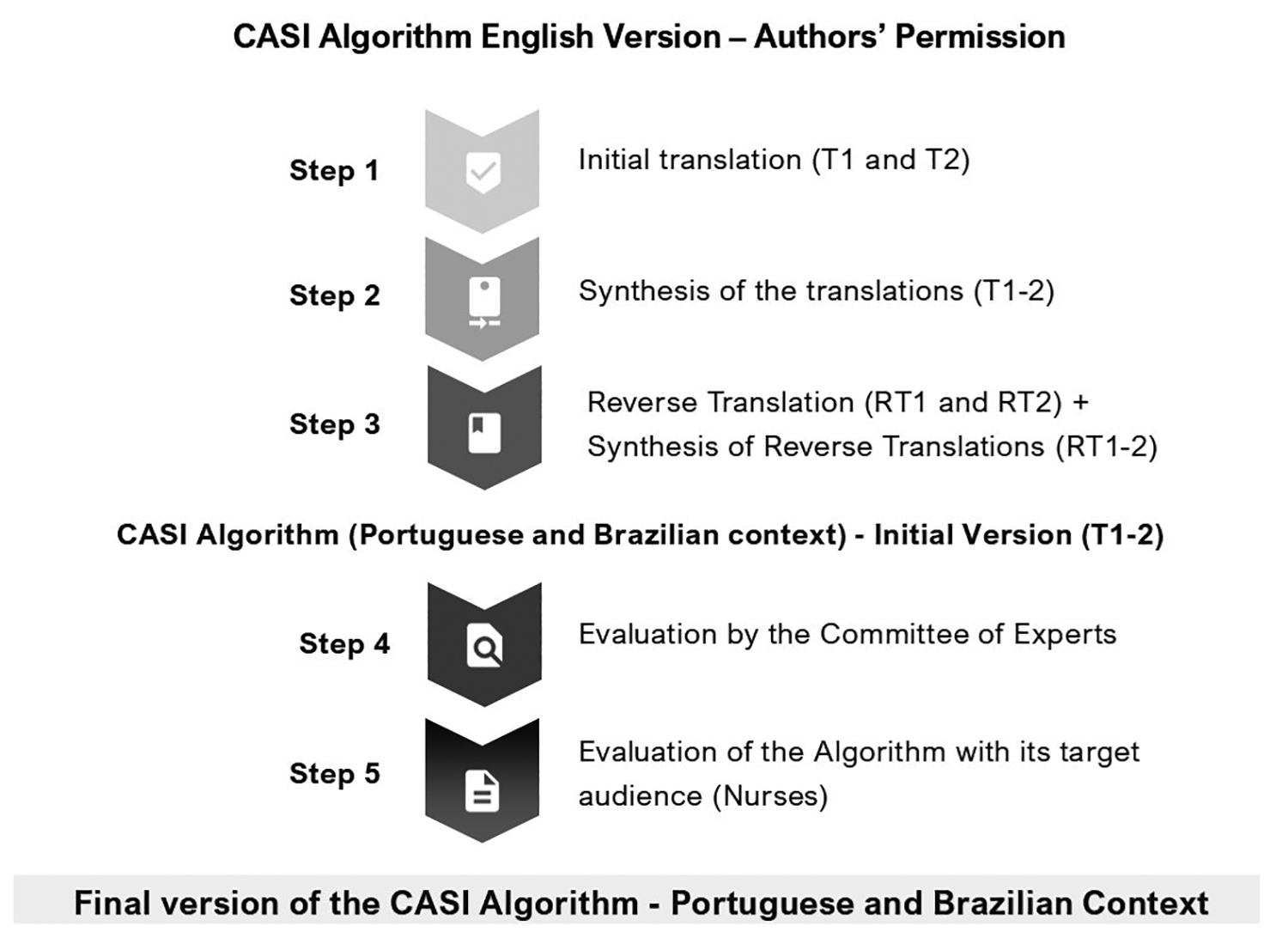 Source: Adapted from Beaton et al.