 Infraestructuras fronterizas, rutinas y alertas posibles:
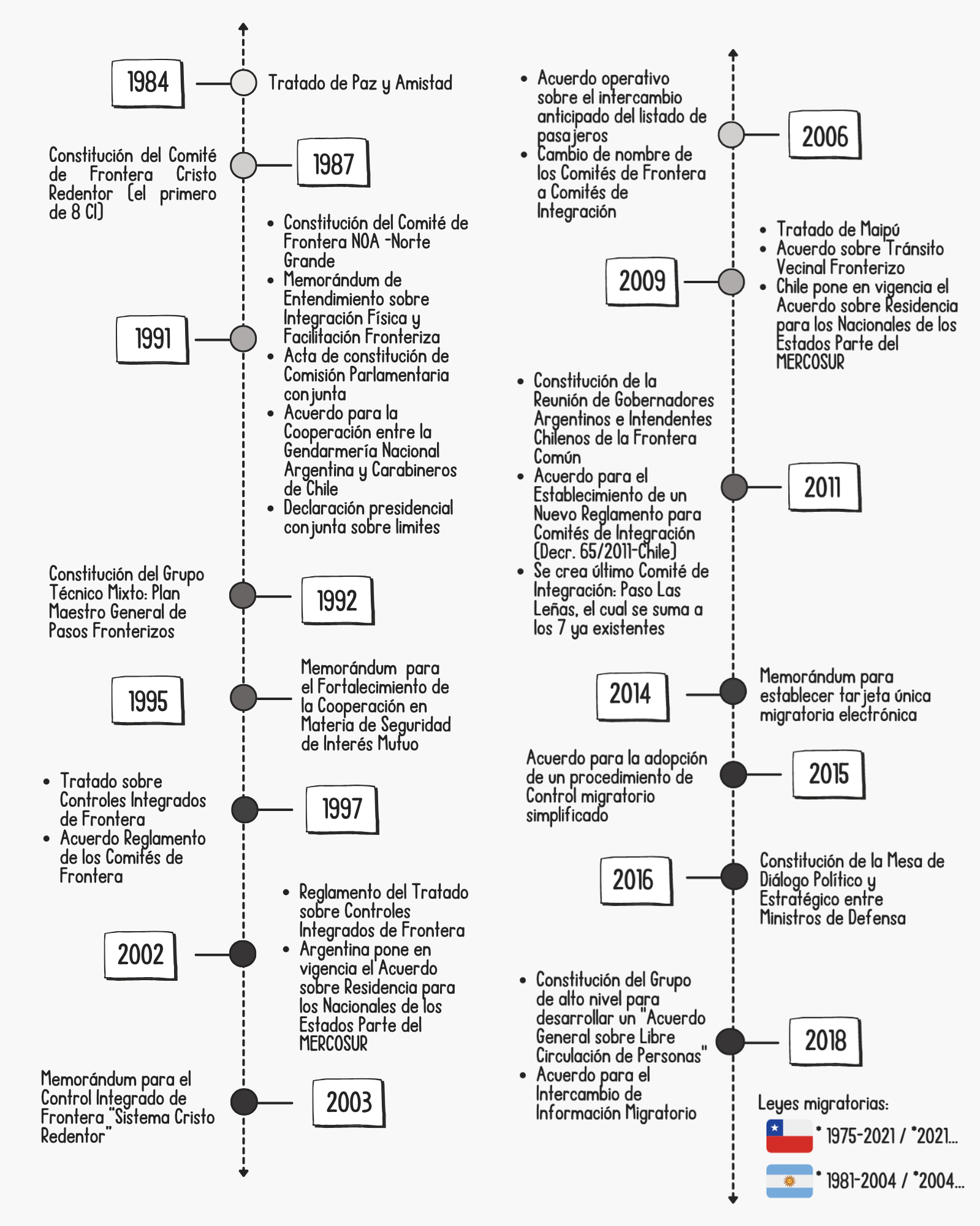
In this paper, we analyze border migration control between Argentina and Chile, particularly in the northwestern area of the former (NOA) and the northeastern area of the latter (NECH). For this, we employed a qualitative multiscale analysis, based on fieldwork (2022) and a collection of documents. From these, we first present a set of generalizations of the bilateral relations between the countries regarding migration and border control. Second, we outline the specificities of the NOA and NECH regions by constructing three interpretive topics: border infrastructures, institutional routines and arrangements for controlling individuals (and their documents), and alerts/surveillance regarding possible situations considered illicit by the States. One of the conclusions reached indicates that border controls have differential securitization criteria, which vary (plasticity) according to movements and levels of threats and risks that are territorially situated and defined by the State.
Keywords:
Border migration control; Chile; Argentina; Border infrastructures; Routines and institutional arrangements
 Thumbnail