 Yellow mealworm frass (Tenebrio molitor) as a biofertilizer for tomato plants
ABSTRACT
The incorporation of organic amendments into the soil offers numerous long-term benefits. Waste from Tenebrio molitor larvae production, including feces, exoskeletons, and feed residue, can serve as a valuable organic fertilizer. However, factors such as the type of waste, application rate, decomposition stage, and soil characteristics can significantly impact plant growth. This study evaluates the effectiveness of yellow mealworm frass as a biofertilizer for tomato plants. The waste was incorporated into the soil at concentrations of 0, 1, 2, 3, 4, and 5 % (v/v) and incubated for 0, 10, and 20 days, after which ten tomato seeds were sown. Seedling emergence, as well as the fresh and dry weights of the tomato plants, were evaluated weekly. Additionally, the impact on tomato plant growth was studied under greenhouse conditions. The results indicated that yellow mealworm frass did not exhibit phytotoxicity when incubated for more than 20 days; however, phytotoxic effects were observed at shorter incubation periods (0 and 10 days). After 20 days of incubation, both the fresh and dry mass of the plants increased proportionally with the rise in waste concentration. Greenhouse experiments further revealed that yellow mealworm frass enhanced stem diameter, fresh and dry mass, net photosynthesis, and water use efficiency of tomato plants. These findings underscore the potential of yellow mealworm frass as an effective organic fertilizer in agriculture.
Keywords:
insect waste; organic matter; organic fertilizer; insect exoskeleton
Introduction
The practice of applying organic matter to enhance soil health and fertility has a long history, dating back centuries (Blatt and McRae, 1998; Bonanomi et al., 2018; Bonanomi et al., 2020; Gagnon and Berrouard, 1994; Heck et al., 2019). Organic matter plays a crucial role in soil ecosystems, serving as a nutrient source for microorganisms, enhancing soil structure and water retention, reducing heavy metal toxicity, and promoting disease suppression, among other essential functions (Goss et al., 2013).
The production of insects as a source of protein, both for animal feed and human consumption, has seen significant growth in recent decades (Liceaga, 2021; Sogari et al., 2023). Insect farming offers several advantages over traditional protein sources, including reduced land and water requirements, higher food conversion rates, and shorter life cycles (Moruzzo et al., 2021). At the market level, the insect industry is experiencing rapid expansion, with numerous companies emerging in the United States, Canada, China, South Africa, Europe, and other regions since 2000 (Koeleman, 2016). Large-scale commercial production predominantly targets animal feed, focusing on species such as Hermetia illucens L., Musca domestica L., and Tenebrio molitor L. (Sogari et al., 2019). These adaptable insects hold great promise as a sustainable protein source and are utilized across various sectors, including pharmaceuticals and food production. The globally prevalent T. molitor (Coleoptera: Tenebrionidae) is recognized as a pest of stored grains, inflicting considerable damage on agricultural products. Additionally, it feeds on paper, cardboard, softwood, and dried meat. Tenebrio reproduces readily, and its larvae are notably high in protein content. This rapid production is attributed to the insect's low energy expenditure in maintaining a constant body temperature, which allows for more energy to be channeled into growth and development, thereby requiring less food to gain mass (Selaledi et al., 2020).
The waste generated from rearing Tenebrio larvae, including feces, exoskeletons, unconsumed feed, and dead adults, has been identified as a potential source of organic fertilizer rich in both macro- and micro-nutrients (Houben et al., 2020; Houben et al., 2021). Nevertheless, the influence of this waste on plant growth can vary based on several factors, including the type of waste, application rate, decomposition stage, and the specific soil or substrate used (Zunzunegui et al., 2024). This study aims to assess the effectiveness of yellow mealworm frass as a biofertilizer for tomato plants, thereby contributing to the advancement of sustainable agriculture.
Materials and Methods
The assays were conducted in Morrinhos, Goiás State, Brazil (17°49’12.0" S, 49°12’09.5" W, altitude 836 m).
The raw organic waste from the yellow mealworm (T. molitor) was sourced from Agrin Criação e Comércio de Insetos. Batches of waste were collected immediately after the insect boxes were cleaned and stored in a cool, ventilated environment. The collected batches were homogenized and kept at 4 °C in the dark. A homogeneous waste sample was placed in a 1000-mL amber glass bottle and stored in a freezer at –20 °C for subsequent chemical analysis. Insects were raised and kept at a temperature of 25 ± 2 °C and a relative humidity of 70 % under constant darkness. Their diet, provided ad libitum, consisted of a mix of poultry feed and wheat bran.
The chemical composition of yellow mealworm frass is as follows: C = 40.8 %, N = 3.7 %, C/N ratio = 11.0, organic matter = 83.0 %, P = 3.8 %, K = 2.4 %, Ca = 0.2 %, Mg = 0.6 %, S = 0.5 %; pH H2O = 6.1; pH CaCl2 = 5.6; B, Fe, Cu, Mn and Zn were 6.0, 353.0, 44.0, 585.0 and 272.5 mg kg–1, respectively.
Evaluation of the phytotoxicity of yellow mealworm frass
The identified soil type was a Typic Acrustox (US Soil Taxonomy) (Soil Survey Staff, 2014), displaying the following physical and chemical characteristics in the 0 to 20 cm layer: clay = 437.6 g kg–1, silt = 60.0 g kg–1, sand = 502.4 g kg–1, pH H2O = 5.5, P = 1.4 mg dm–3, K = 22.9 mg dm–3, Na = 4.7 mg dm–3, Ca = 0.3 cmolc dm–3, Mg = 0.1 cmolc dm–3, H+AL = 1.8 cmolc dm–3, Al = 0.03 cmolc dm–3, Fe = 15.6 mg kg–1, Cu = 1.6 mg kg–1, Mn = 1.5 mg kg–1, and Zn = 0.3 mg kg–1.
The waste was incorporated into the soil at concentrations of 0, 1, 2, 3, 4, and 5 % (v/v) and transferred to 300-mL plastic pots, with five replicates for each concentration. Initial irrigation of the soil was carried out through capillarity to achieve the initial field capacity across all pots. The pots were then incubated for 0, 10, and 20 days in a screened greenhouse covered with 70 % black shade. Moisture levels in the pots were monitored gravimetrically and maintained at field capacity throughout the incubation period. Subsequently, 10 mL soil samples were collected from each pot, homogenized, and dried in the shade for 20 days. Composite samples (one from each pot) were stored in 50-mL Falcon tubes in a cool, ventilated environment for subsequent chemical characterization, as outlined by Bernardi et al. (2002).
Ten seeds of the tomato variety ‘Santa Cruz Kada’ (Solanum lycopersicum L.) were sown at a depth of 0.5 cm in each pot. Soil moisture was monitored and maintained at 60 % of field capacity. Seedling emergence was assessed every week, and both the percentage of emerged seedlings and the emergence speed index (ESI) were calculated. The ESI was determined using the formula ESI = (E1/N1 + E2/N2 + …, En/Nn). E1, E2, …, En represents the number of emerged seedlings counted in the first, second, and last counts; N1, N2, …, Nn denotes the number of days since sowing for the first, second, and last counts. Counts were carried out daily, starting from the day the first seedlings emerged and continuing until the twenty-fifth day post-sowing.
Twenty-five days after sowing, all plants were removed from their pots, carefully washed under running water, and gently dried with paper towels to measure their fresh mass using a semi-analytical balance (0.001 g) BL3200H (Shimadzu®). The plants were then dried in a circulation stove at 40 °C for two weeks to determine their dry mass.
A completely randomized experimental block design was employed in a 6 × 3 factorial scheme, which included six waste concentrations and three incubation periods, with five replications for each treatment. Each pot served as an individual experimental plot. The experimental trial was repeated twice, following the same procedures and steps as in the first trial.
Evaluation of yellow mealworm frass on tomato growth in a greenhouse
Yellow mealworm frass was incorporated into a dystrophic Red Latosol (Oxisol) at concentrations of 0, 1, 2, 3, 4, and 5 % (v/v). This soil mix presented its physical and chemical properties in the 0 to 20 cm layer, as follows: clay = 260 g kg–1, silt = 140 g kg–1, sand = 600 g kg–1, pH H2O = 6.5, P = 4.9 mg dm–3, K = 182 mg dm–3, H+AL = 1.8 cmolc dm–3, Al = 0.02 cmolc dm–3, Ca = 2.6 cmolc dm–3, Mg = 1.0 cmolc dm–3). Considering the results obtained in the previous stage, which evaluated plant emergence, the mixtures were transferred into 2.8-L plastic pots, irrigated as previously described to achieve the initial field capacity, and subsequently incubated for 20 days in a greenhouse at 25 °C ± 3 °C. In each pot, 4.8 g of 5-25-15 NPK and 4 g of dolomitic calcium (24 % Ca, 11 % Mg) (Furlani and Bataglia, 2018) were incorporated before transplanting 25-day-old tomato seedlings of the variety ‘Santa Cruz Kada’. Soil moisture was adjusted to reach 60 % of field capacity. Urea was applied at a rate of 1 g per pot at 20 and 40 days after transplanting. The strategy of using yellow mealworm frass was to complement mineral fertilization, ultimately aiming to improve yield. This application rate varies depending on the specific type of organic residue used, which has been relatively underexplored (Trani et al., 2015).
Following a 20-day incubation period, simple samples of 10 mL of soil were collected, homogenized, and then dried in the shade for another 20 days. Composite samples were then stored in a cool, ventilated environment in a 50-mL Falcon tube for chemical analysis (Bernardi et al., 2002).
The diameter of plant stems, and the fresh and dry mass of shoots were measured 75 days after transplanting. Roots and shoots were dried in a circulation stove MA035 (Marconi). The macro- and micronutrients of foliar samples were measured (Carmo et al., 2000).
Gas exchange measurements, including net photosynthesis (A; μmol CO2 m–2 s–1), stomatal conductance (gsw; mol H2O m–2 s–1), leaf transpiration (E; mmol H2O m–2 s–1), water use efficiency (WUE; μmol CO2 (mmol H2O)–1), external CO2 concentration (Ca; µmol mol–1), and internal CO2 concentration (Ci; µmol mol–1), were conducted 50 days post-transplant using a portable infrared gas analyzer (IRGA LI-6800, LI-COR Inc.). The Ci/Ca ratio was subsequently calculated. Measurements were performed under controlled conditions with a constant photon flux density of 1500 µmol m–2 s–1, relative humidity of 50 %, and CO2 concentration of 400 µmol mol–1 while maintaining a temperature of 25 °C within the analyzer's system. Gas exchange analyses were conducted on a clear day between 08h00 and 11h00. The measurements focused on the third fully expanded leaf from the plant apex.
A completely randomized experimental block design was employed with ten replications. Each pot represented an experimental plot. The experimental trial was conducted twice.
Data analysis
Data from repeated experiments did not show significant differences (p < 0.05) and were therefore combined for the analysis of variance (ANOVA). The results were assessed for the assumptions of ANOVA by using the Shapiro-Wilk test for normality of errors and the Bartlett test for homogeneity of variances. Significance testing was conducted with the F test at a 5 % probability level. Significant results were then fitted to a regression model. For the variable of incubation time, means were compared using the Tukey test at a 5 % probability level. All analyses were performed using the statistical software R, version 4.0.3.
Results
Evaluation of the phytotoxicity of yellow mealworm frass
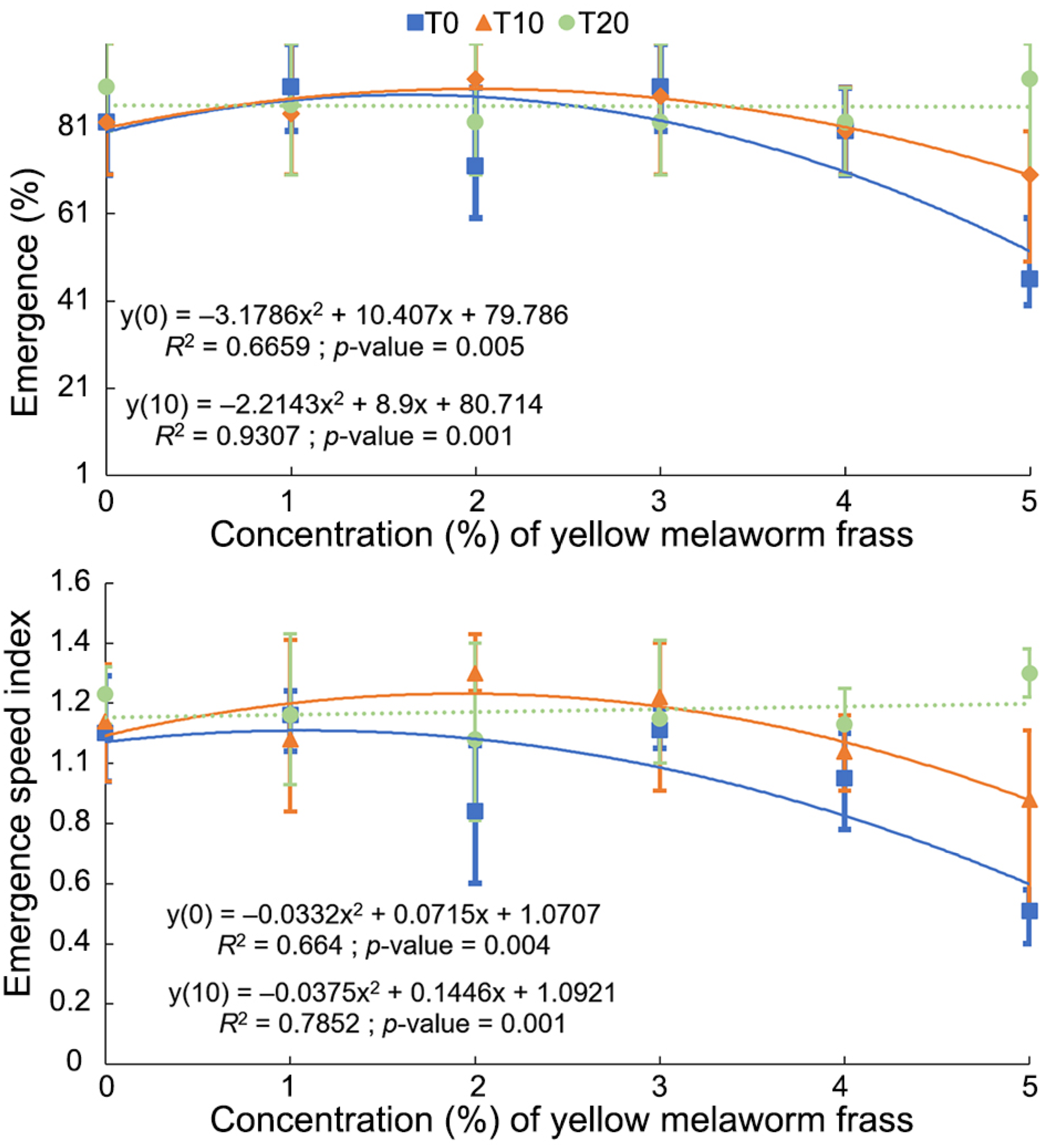
The emergence of tomato plants was notably influenced by the concentration of yellow mealworm frass and the duration of incubation (Figure 1A-B). For incubation periods of zero and ten days, a quadratic relationship was observed between residue concentration and plant emergence (R2 = 0.67 and 0.93; p-values 0.005 and 0.001, respectively) (Figure 1A). A decline in emergence began at a residue concentration of 3 %. In comparison to the 20-day incubation period, tomato plant emergence decreased by 50 % at a waste concentration of 5 % after zero days of incubation and by 24 % after ten days. These findings indicate that the phytotoxic effects of yellow mealworm frass were more pronounced at higher concentrations and shorter incubation periods. Additionally, the rate of plant emergence was reduced by 61 % and 32 % at the 5 % concentration for the zero- and ten-day incubation periods, respectively, when compared to the 20-days (Figure 1B). However, during the 20-day incubation, neither emergence nor the emergence speed index was significantly affected by increasing waste concentrations (Figure 1A-B). This suggests that the compost had sufficiently decomposed to no longer impede emergence and plant growth.
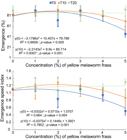
A) Emergence and (B) emergence speed index of tomato plants (Solanum lycopersicum) after 25 days of sowing in soil containing six concentrations of yellow mealworm frass pre-incubated for 0, 10, and 20 days.
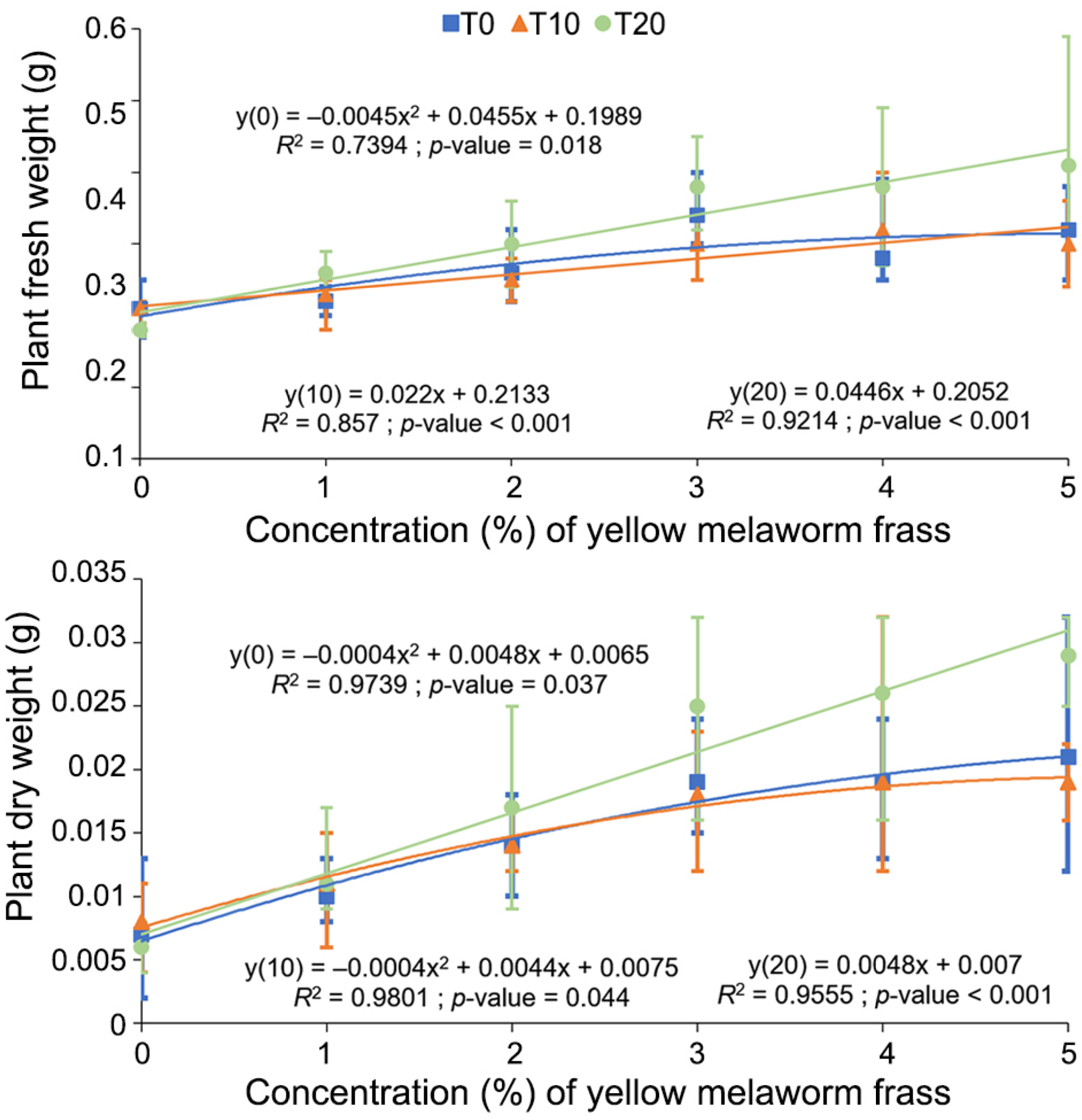
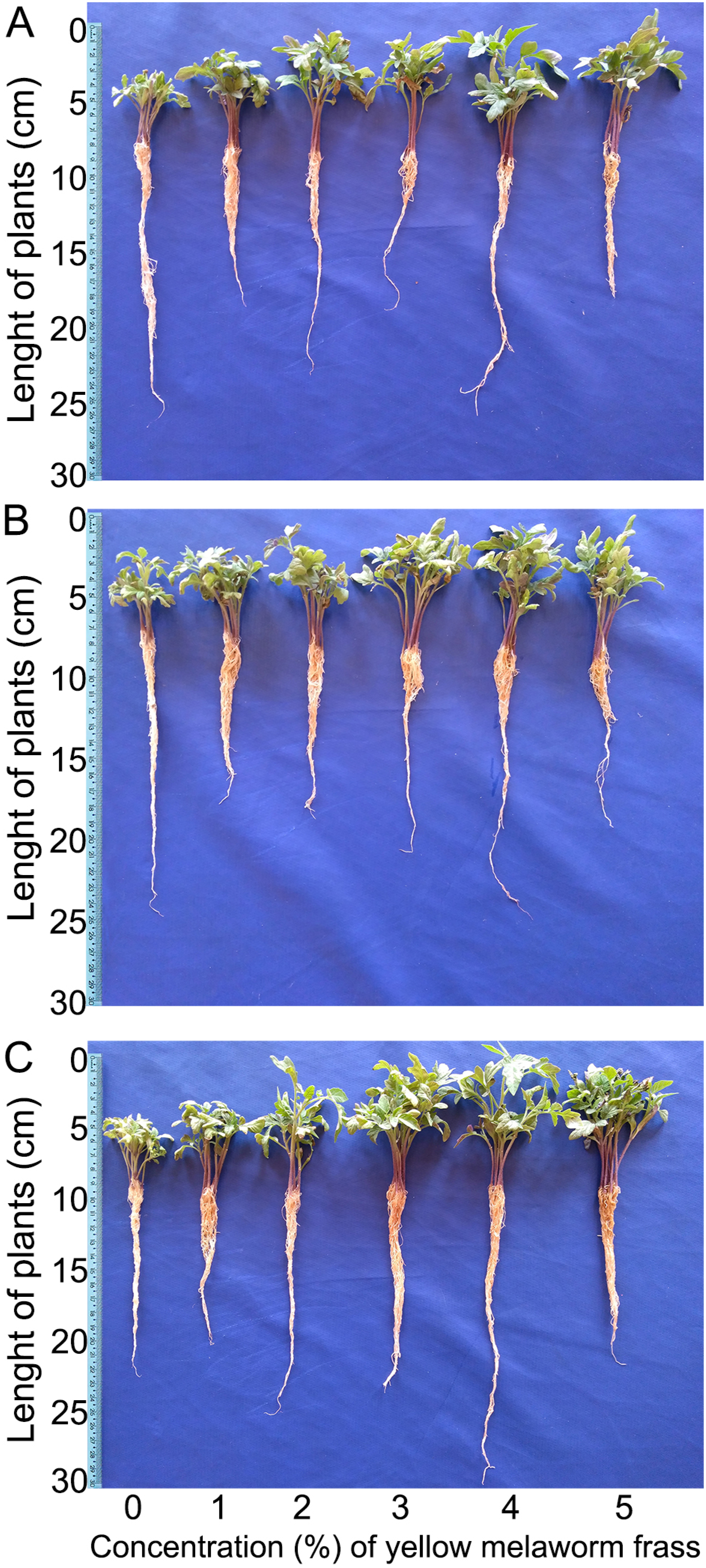
The fresh and dry mass of tomato plants was affected by both the residue concentration and the incubation period (Figure 2A-B, Figure 3A-C). During a 20-day incubation period, both fresh and dry mass exhibited a direct proportionality to the residue concentrations (Figure 2A-B). In contrast, at the zero-day incubation period, the response of fresh and dry mass to concentration was quadratic (R2 = 0.74 and 0.97; p-value = 0.018 and 0.037, respectively) (Figure 2A-B). A zero-day incubation period resulted in enhanced growth of tomato seedlings, whereas a 20-day incubation period further boosted growth by an additional 31 %. The most significant increases in fresh and dry mass occurred at a 5 % concentration of the waste when incubated for 20 days, leading to increases of 127 % and 383 % relative to the control (0 %) (Figure 2A-B). The rates of fresh and dry mass gain (angular coefficients of equations T20, in Figure 2A-B) for each percentage unit of yellow mealworm frass added to the soil were 0.0446 and 0.0048 g, corresponding to gains of 10 % and 16 % of the maximum values achieved. Moreover, the levels of P, K, Na, Ca, and Mg, as well as the soil pH, increased with the concentration of yellow mealworm frass incorporated into the soil (Table 1). The behaviors of metallic micronutrients such as Fe, Cu, Mn, and Zn varied notably. Specifically, Fe exhibited a distinct reduction in availability, while Cu levels remained relatively stable; Zn and Mn showed an increase in availability.
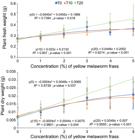
Effects of six concentrations (0, 1, 2, 3, 4, and 5 % v/v) of yellow mealworm frass × incubation periods in the soil on the (A) fresh and (B) dry weight of tomato plants (Solanum lycopersicum) after 25 days of sowing.

A) Effects of six concentrations (0, 1, 2, 3, 4, and 5 % v/v) of yellow mealworm frass × incubation periods for (A) 0, (B) 10, and (C) 20 days on the development of tomato plants (Solanum lycopersicum).
Effects of yellow mealworm frass concentrations ´ incubation periods on soil chemical characterization.
Evaluation of yellow mealworm frass in tomato growth under greenhouse conditions
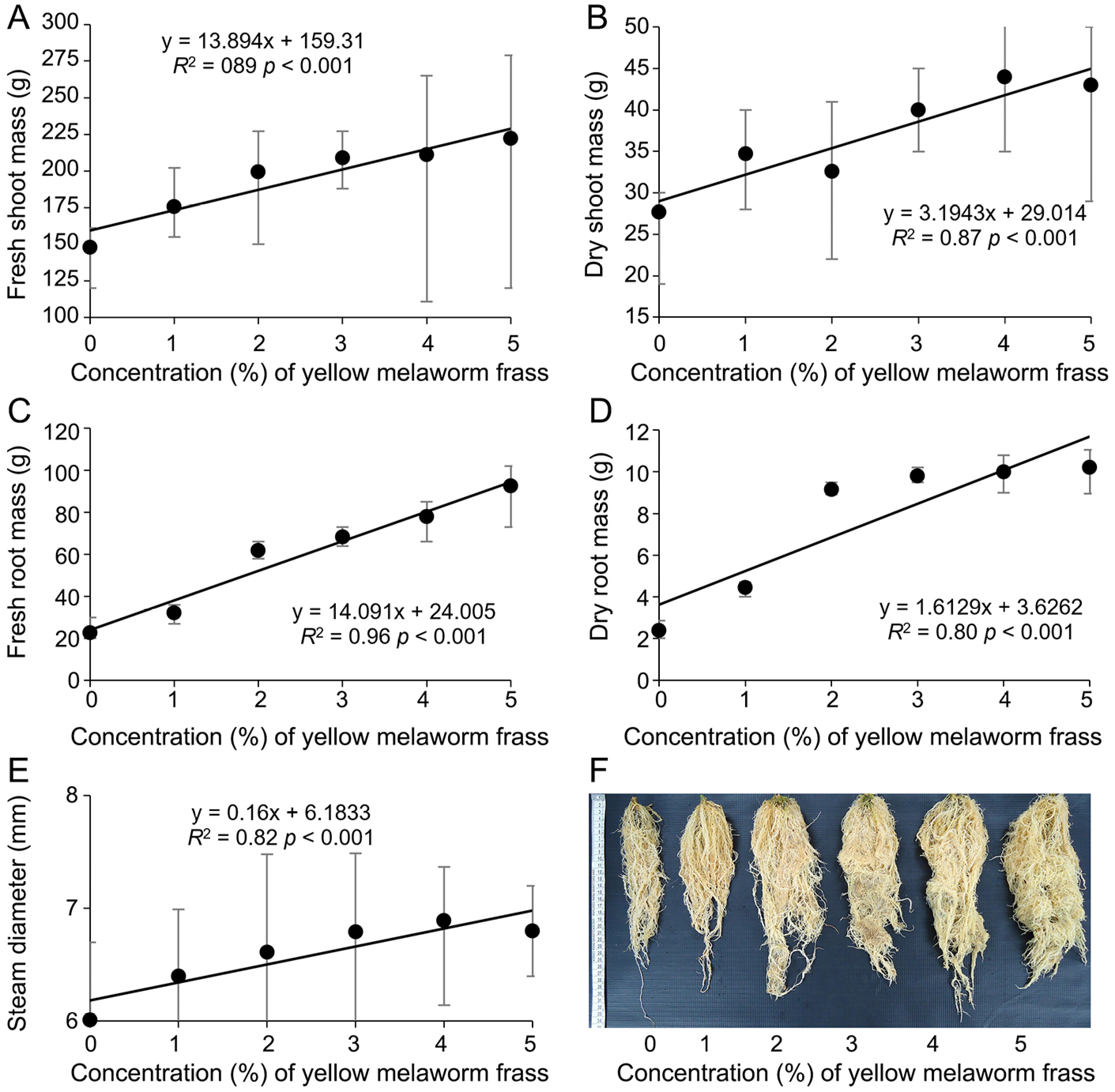
Greenhouse experiments revealed that increasing concentrations of yellow mealworm frass enhanced the growth of tomato plants (p < 0.001). All examined growth parameters, including stem diameter, fresh and dry shoot mass, and fresh and dry root mass, demonstrated a linear correlation with the increasing concentrations of yellow mealworm frass (Figure 4A-F). Notably, compared to the control treatment, plants cultivated in soil enriched with 5 % yellow mealworm frass exhibited up to a 14 % increase in stem diameter, a 50 % increase in fresh shoot mass, a 59 % increase in dry root mass, a 308 % increase in fresh root mass, and a remarkable 328 % increase in dry root mass.
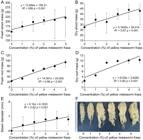
Effects of six different concentrations (0, 1, 2, 3, 4, and 5% v/v) of yellow mealworm frass on the following parameters of tomato plants (Solanum lycopersicum) grown in a greenhouse: (A) fresh shoot mass, (B) dry shoot mass, (C) fresh root mass, (D) dry root mass, and (E) stem diameter. (F) view of root development in different concentrations of yellow mealworm frass.
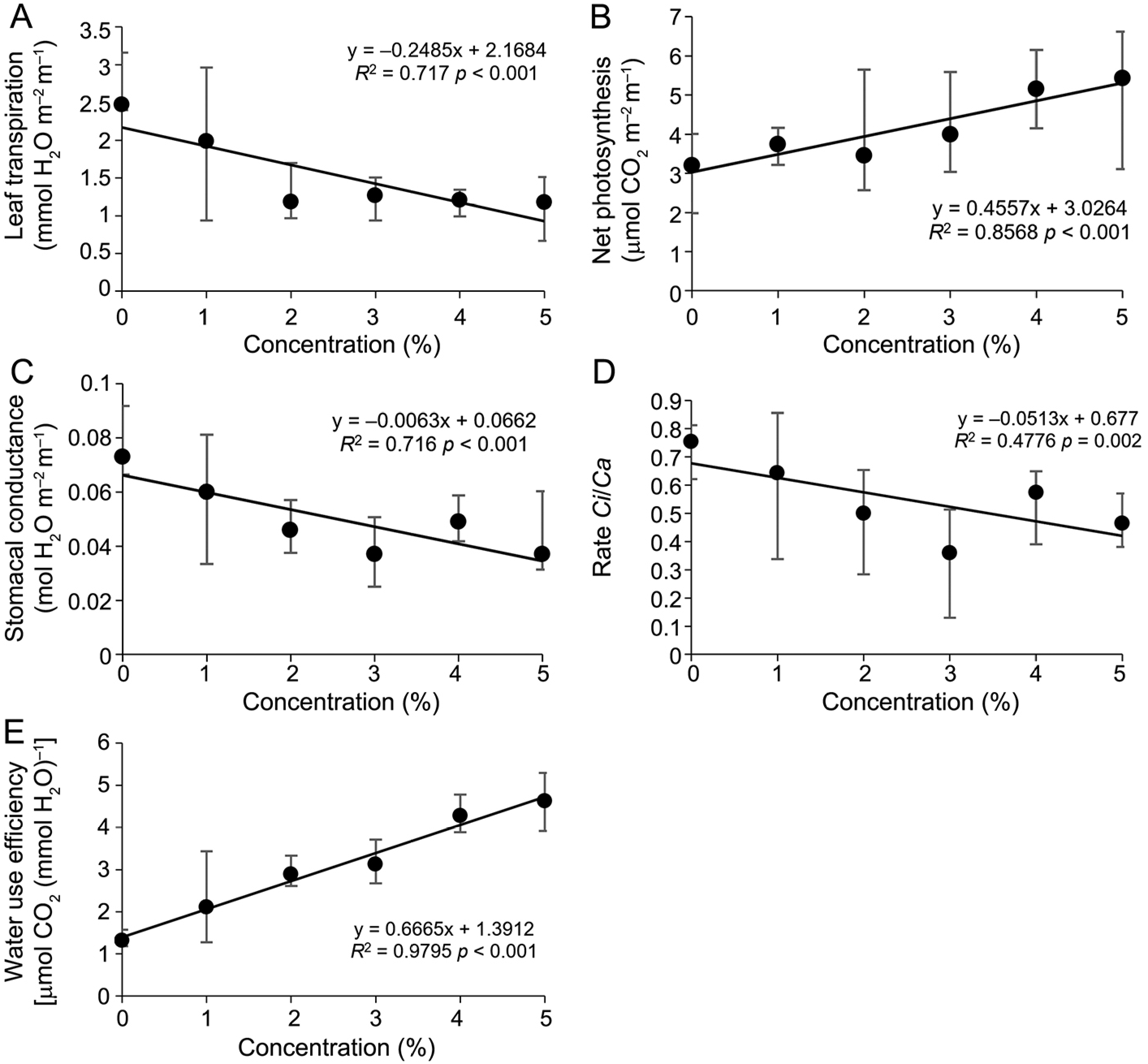
Net photosynthesis and water use efficiency exhibited a direct proportionality to the concentrations of yellow mealworm frass incorporated into the soil, demonstrating linear responses (Figure 5B, E). The addition of yellow mealworm frass increased the net photosynthetic rate by 16 % to 69 % compared to the control when incorporated at levels ranging from 1 % to 5 % into the soil. In comparison to the control, water use efficiency showed an increase of up to 252 % with the addition of 5 % yellow mealworm frass concentration (Figure 5 B-E). Conversely, leaf transpiration and stomatal conductance were inversely related to the concentration of yellow mealworm frass in the soil (Figure 5A-C). Specifically, the leaf transpiration rate was inversely proportional to the photosynthetic rate; thus, as transpiration decreased, photosynthesis increased with higher concentrations of the incorporated waste.
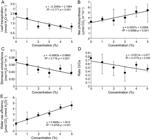
Effects of six concentrations (0, 1, 2, 3, 4, and 5 % v/v) of yellow mealworm frass on the (A) gas-exchange measurements leaf transpiration, (B) net photosynthesis, (C) stomatal conductance, (D) Ci/Ca ratio, and (E) water use efficiency of tomato plants.
Soil fertility improved primarily due to the increased availability of P and K, which exhibited linear increases in their levels with the addition of yellow mealworm waste. When a 5 % concentration of yellow mealworm frass was incorporated into the soil, the P content reached a level nine times higher than that of the control, while the maximum K content was approximately three times that of the control for the same treatment. Notably, the pH of the soil remained unchanged following the application of the residue (Table 2).
Impact of yellow mealworm frass concentrations on soil chemical properties after 20 days of incubation.
The findings from the leaf analysis revealed that the accumulation of Mn was directly proportional to the residue concentrations. Additionally, this accumulation resulted in elevated levels of Na and Fe, with the maximum accumulation observed at 4 % waste, along with increased Zn levels. The concentrations of other nutrients remained consistent across the various treatments (Table 3).
Effects of six concentrations of yellow mealworm frass on the characterization of macro- and micronutrients of foliar tomato plants.
Discussion
Our study revealed a complex interaction among the concentrations of waste incorporated into the soil, incubation period, plant emergence, the emergence speed index, and the growth of tomato plants (Table 1, Figure 1A-B, Figure 2A-B, Figure 3A-C). Greenhouse experiments further demonstrated a direct positive correlation between increasing concentrations of yellow mealworm waste and enhanced plant growth parameters (Table 3, Figures 4A-F, Figure 5A-E). These findings underscore the significant potential of yellow mealworm frass as a sustainable and nutrient-rich amendment for plant cultivation.
Interestingly, a 20-day incubation period before planting consistently resulted in optimal plant growth without any signs of phytotoxicity, regardless of the waste concentration applied (Figure 1A-B, Figure 2A-B, Figure 3A-C). Reductions of 15 %, 16 %, and 3 % in the germination rates of sunflower, tomato, and cress seeds, respectively, were observed when seeds were sown immediately after mixing 6.25 % yellow mealworm frass with a commercial organic substrate. This effect was attributed to potential phytotoxic compounds present or released during the initial mineralization of the residue, as well as an increase in electrical conductivity (Foscari et al., 2024). Notably, the authors found no phytotoxic effects on sunflower seed germination when yellow mealworm frass was pre-incubated for six days with medium-textured soil, confirming the transient nature of phytotoxicity.
Although insect farming is a relatively new concept in Western countries, it has been practiced for decades in Eastern nations, where the production of insects for feed and food has a long history (Halloran et al., 2018). Until recently, however, there has been limited literature on the use of yellow mealworm frass, which has often been regarded as a byproduct and received less research attention compared to its primary product. Nevertheless, a growing number of studies have emerged in recent years, predominantly focusing on its fertilizing properties (Fuertes-Mendizábal et al., 2023; Hénault-Ethier et al., 2023; Nyanzira et al., 2023; Karkanis et al., 2024; Zunzunegui et al., 2024). These authors investigate the effects of yellow mealworm waste on plant development, nutrient cycling, and the stimulation of plant growth, among other benefits.
The application of yellow mealworm frass directly onto crops has been shown to enhance plant biomass. Notable examples include beans (Phaseolus vulgaris L.) (Liu et al., 2003), barley (Hordeum vulgare L.) (Houben et al., 2020), ryegrass (Lolium multiflorum Lam.) (Houben et al., 2021; Watson et al., 2021), lettuce (Lactuca sativa L.) (Fuertes-Mendizábal et al., 2023), tomato and arugula (Eruca sativa Mill.) (Hénault-Ethier et al., 2023), wheat (Triticum aestivum L.) (Nyanzira et al., 2023), and sowthistle (Sonchus oleraceus L.) and bristly oxtongue (Helminthotheca echioides (L.) Holub) (Karkanis et al., 2024). Furthermore, research has indicated its potential to enhance plant tolerance to salinity, drought, and flooding, particularly in chard (Beta vulgaris var. cicla (L.) K. Koch) (Poveda et al., 2019). Additionally, it has been reported to stimulate the activity of earthworms (Lumbricus terrestris L.) in the soil, resulting in improved nutrient absorption by barley (Dulaurent et al., 2020).
The rapid mineralization of this residue following its application to the soil reached 37 % carbon mineralization within seven days (Houben et al., 2020) and approximately 50 % in 20 days, followed by a decline in rates thereafter (Houben et al., 2021). Similarly, the nitrogen content exhibited a comparable trend, with rapid mineralization occurring during the first 17 days of incubation (Houben et al., 2020). Findings from an experiment incubating peat with varying doses of yellow mealworm frass or urea to produce a horticultural substrate revealed that, after 21 days of incubation, the mineral N content was similar between the two sources (Nogalska et al., 2023). This underscores the rapid mineralization of the residue.
The levels of P, K, Ca, Mg, and Na in the soil increased directly in proportion to the rising concentrations of yellow mealworm frass waste incorporated into the soil (Table 1). In contrast, the availability of metallic micronutrients such as Fe, Cu, Mn, and Zn is influenced by both the contribution from the proportion of residue in the soil and the reduced availability resulting from an increase in pH (Weil and Brady, 2017).
The observed improvements in soil fertility positively affect both the fresh and dry weights of tomato plants when subjected to increasing concentrations of yellow mealworm frass (Figure 4A-F). Numerous studies have demonstrated similar nutritional benefits of yellow mealworm frass on plant development (Fuertes-Mendizábal et al., 2023; Hénault-Ethier et al., 2023; Karkanis et al., 2024; Nyanzira et al., 2023).
The increased net photosynthetic rates observed with the incorporation of yellow mealworm frass can explain the enhanced plant growth and development. This is due to the process of photosynthesis, in which light energy is converted into biomass by extracting electrons from water molecules (Zavřel et al., 2018). Plants that efficiently utilize water tend to produce more dry matter per gram of water transpired. In contrast, the higher Ci/Ca ratio in control plants may suggest a slower carboxylation rate, likely caused by carbon accumulation in the substomatal chamber. Interestingly, the unexpected inverse relationship between reduced stomatal conductance and increased photosynthetic rates with higher residue amounts challenges conventional understanding. Typically, decreased stomatal conductance would indicate a reduction in carboxylation as a more restricted entry of CO2 into the leaf occurs, which also accounts for the lower water loss during transpiration (Taiz and Zeiger, 2013). Additionally, factors such as improved N supply from residue use (Watson et al., 2021), its impact on chlorophyll content in tomato plants (Cui et al., 2024), and the nonlinear relationship between stomatal conductance and photosynthetic rate under low irradiance conditions (Lamour et al., 2022) may provide further insight into the findings of this study.
Soil pH plays a crucial role in regulating the availability of nutrients and potentially toxic elements. Therefore, keeping pH levels within the range of 5.5 to 6.5 optimizes nutrient absorption and minimizes the harmful toxic effects of Al and Mn (Weil and Brady, 2017). In a tropical environment, correcting soil acidity is essential for achieving high levels of productivity (Fageria and Nascente, 2014). Consequently, inputs that help maintain or increase pH levels can lower correction costs and extend the period between limestone applications.
The application of yellow mealworm frass had the most pronounced effect on the phosphorus (P) and potassium (K) contents in the soil (Tables 1 and 2). In research assessing the phytotoxicity of this waste, the highest phosphorus levels were recorded at time zero (37.7 mg dm–3). However, after incubating yellow mealworm frass for ten and 20 days, the maximum P values declined to 5.7 and 6.6 mg dm–3, respectively, despite the initial abundance. This decline can be attributed to the fixation of some phosphorus through adsorption onto the surfaces of Fe and Al oxides and hydroxides, which are prevalent in oxidic soils like those utilized in this study (Fontes and Weed, 1996). The fixation of phosphorus intensifies with extended contact between phosphates and the colloid surfaces, and the reversibility of this process diminishes over time (Broggi et al., 2010), thus elucidating the higher P values observed at time zero. Although P levels increased approximately fivefold after incubation for ten and 20 days, the initial application demonstrated greater availability. Moreover, due to the high clay content of the soil, around 84 % of the P available at time zero was retained on the clay surfaces (values calculated for doses of 5 % residue – Table 1). Based on these findings, applying the residue in sandy soils (> 850 g kg–1 of sand) may lead to enhanced phosphorus availability compared to the observed values here, as sandy soils exhibit lower P fixation. In the Oxisol used to evaluate the effect on tomato plants, classified as sand-loam with a clay content of 260 g kg–1, increases in P availability were noted, particularly at the two highest application doses (Table 2), achieving values seven to eight times higher than the control.
In assays examining the potential of yellow mealworm frass as a fertilizer for tomato growth in a greenhouse setting, it was found that the initial soil pH was higher than that in the phytotoxicity evaluation. At a 5 % residue concentration, the maximum available phosphorus (P) was approximately ten times higher than that of the control. Although the fixation of P on clay surfaces does not rely on soil charge balance, an increase in pH tends to hinder this process. This occurs due to the repulsion of phosphate anions by the net negative charge or the reduced net positive charge on the surfaces of the soil particles (Sato and Comerford, 2005; Weil and Brady, 2017).
The levels of available potassium (K) in the soil increased with the application of yellow mealworm frass (Tables 1 and 2). The P availability was directly proportional to the applied doses, regardless of the incubation period across all experiments. On average, the increases were 3 %, 6 %, 10 %, 14 %, and 17 % in the soil when 1 %, 2 %, 3 %, 4 %, and 5 % of the yellow mealworm waste was incorporated, respectively. Potassium, due to its high solubility in various residues and rapid release (Marschner, 2012), supports this proportionality for the applied dosage. Moreover, the experiment was carried out under controlled conditions, which minimized K losses through leaching. Potassium is one of the most widely absorbed and exported nutrients by various crops (Almeida et al., 2023; Ferreira et al., 2023; Martins et al., 2017), and yellow mealworm waste, with its relatively high K content, serves as a valuable source of this essential nutrient.
The application of yellow mealworm frass increased P and K contents in the soil. However, the leaf nutrient contents did not exhibit similar increases, remaining close to the expected range for the crop, which is between 2.5 to 7.5 g kg–1 for P and 30 to 50 g kg–1 for K (Scucuglia and Creste, 2014). The values recorded in this study were slightly below these reference ranges, a discrepancy attributed to differences in the timing and developmental stage of the tomato plants. For accurate foliar diagnosis, it is recommended to sample the fifth or sixth leaf from the plant apex (Scucuglia and Creste, 2014). In the experiments conducted in the present study, all leaves were sampled.
In leaf tissue, manganese (Mn) was the nutrient most significantly influenced by the increase in yellow mealworm waste dosage, achieving levels five times higher than those observed in the control. Adequate Mn levels in tomato leaves range between 250 and 400 mg kg–1, and the values observed in the present study fall within a safe range. Meanwhile, iron (Fe) and zinc (Zn) levels remained normal (Scucuglia and Creste, 2014), although specific references available for sodium (Na) are unavailable.
The incorporation of yellow mealworm frass into the soil, followed by a 20-day incubation period, significantly enhanced the availability of nutrients for tomato plants. This study underscores the potential of yellow mealworm frass as a sustainable and nutrient-rich amendment for plant cultivation. The observed positive correlation between increasing concentrations of this waste and improved plant growth parameters, along with the absence of phytotoxicity, indicates that yellow mealworm frass can serve as an effective fertilizer, offering a more sustainable and environmentally friendly approach to crop production.
Data availability statement
Data will be made available upon request to authors.
Acknowledgments
The first author thanks the Fundação de Amparo à Pesquisa do Estado de Minas Gerais (FAPEMIG) for the granted scholarship (n. 5.316/15). The fifth author wishes to thank Conselho Nacional de Desenvolvimento Científico e Tecnológico (CNPq) for granting the productivity fellowship (305557/2023-8).
References
-
Almeida LG, Cardoso AII, Candian JS, Grassi Filho H, Sartori MMP. 2023. Growth and macronutrient accumulation in tomato cultivated in an organic system. Horticultura Brasileira 41: e2532. http://dx.doi.org/10.1590/s0102-0536-2023-e2532
» http://dx.doi.org/10.1590/s0102-0536-2023-e2532 -
Bernardi CAC, Silva CA, Pérez DV, Meneguelli NA. 2002. Analytical quality program of soil fertility laboratories that adopt the Embrapa methods in Brazil. Communications in Soil Science and Plant Analysis 33: 2661-2672. https://doi.org/10.1081/CSS-120014471
» https://doi.org/10.1081/CSS-120014471 -
Blatt CR, McRae KB. 1998. Comparison of four organic amendments with a chemical fertilizer applied to three vegetables in rotation. Canadian Journal of Plant Science 78: 641-646. https://doi.org/10.4141/P97-089
» https://doi.org/10.4141/P97-089 -
Bonanomi G, Lorito M, Vinale F, Woo SL. 2018. Organic amendments, beneficial microbes, and soil microbiota: toward a unified framework for disease suppression. Annual Review of Phytopathology 56: 1-20. https://doi.org/10.1146/annurev-phyto-080615-100046
» https://doi.org/10.1146/annurev-phyto-080615-100046 -
Bonanomi G, Zotti M, Idbella M, Silverio N, Carrino L, Cesarano G, et al. 2020. Decomposition and organic amendments chemistry explain contrasting effects on plant growth promotion and suppression of Rhizoctonia solani damping off. PLoS One 15: e0230925. https://doi.org/10.1371/journal.pone.0230925
» https://doi.org/10.1371/journal.pone.0230925 -
Broggi F, Oliveira AC, Freire FJ, Freire MBGS, Nascimento CWA. 2010. Adsorption and chemical extraction of phosphorus as a function of soil incubation time. Revista Brasileira de Engenharia Agrícola e Ambiental 14: 32-38. https://doi.org/10.1590/S1415-43662010000100005
» https://doi.org/10.1590/S1415-43662010000100005 - Carmo CFS, Araújo WS, Bernardi ACC, Saldanha, MFC. 2000. Analytical Methods of Plant Tissue Used in Embrapa Solos. Embrapa Solos, Rio de Janeiro, RJ, Brazil (in Portuguese, with an abstract in English).
-
Cui J, Liu W, Li B, Yao M, Mao L, Zhao M, et al. 2024. Effects of different water and nitrogen treatments on greenhouse tomato yield, water use efficiency, and physiological responses. Irrigation Science 42: 509-523. https://doi.org/10.1007/s00271-023-00895-2
» https://doi.org/10.1007/s00271-023-00895-2 -
Dulaurent AM, Daoulas G, Faucon MP, Houben D. 2020. Earthworms (Lumbricus terrestris L.) mediate the fertilizing effect of frass. Agronomy 10: 783. https://doi.org/10.3390/agronomy10060783
» https://doi.org/10.3390/agronomy10060783 -
Fageria NK, Nascente AS. 2014. Management of soil acidity of South American soils for sustainable crop production. Advances in Agriculture 128: 221-275. https://doi.org/10.1016/B978-0-12-802139-2.00006-8
» https://doi.org/10.1016/B978-0-12-802139-2.00006-8 -
Ferreira ACM, Souza HA, Sagrilo E, Silva Júnior GB, Natale W, Sobral AHS, et al. 2023. Absorption, partitioning, and export of nutrients by phenological stage in maize cultivated in eastern Maranhão, Brazil. Journal of Plant Nutrition 47: 240-256. https://doi.org/10.1080/01904167.2023.2275072
» https://doi.org/10.1080/01904167.2023.2275072 -
Fontes MPF, Weed SB. 1996. Phosphate adsorption by clays from Brazilian Oxisols: relationships with specific surface area and mineralogy. Geoderma 72: 37-51. https://doi.org/10.1016/0016-7061(96)00010-9
» https://doi.org/10.1016/0016-7061(96)00010-9 -
Foscari A, Dalla Costa L, Tulli F, Uboni C, Fellet G. 2024. Frass from Tenebrio molitor as alternative to NPK-mineral fertilization: results from a germination test and pot experiment on sunflower. Italian Journal of Agronomy 19: 100010. https://doi.org/10.1016/j.ijagro.2024.100010
» https://doi.org/10.1016/j.ijagro.2024.100010 -
Fuertes-Mendizábal T, Salcedo I, Huérfano X, Riga P, Estavillo JM, Blanco DA, et al. 2023. Mealworm frass as a potential organic fertilizer in synergy with PGP-Based biostimulant for lettuce plants. Agronomy 13: 1258. https://doi.org/10.3390/agronomy13051258
» https://doi.org/10.3390/agronomy13051258 - Furlani PR, Bataglia OC. 2018. Correção do solo e adubação. p. 47-84. In: Nick C, Silva DJH, Borém A. eds. Tomate: do plantio à colheita. UFV, Viçosa, MG, Brazil (in Portuguese).
-
Gagnon B, Berrouard S. 1994. Effects of several organic fertilizers on growth of greenhouse tomato transplants. Canadian Journal of Plant Science 74: 167-168. https://doi.org/10.4141/cjps94-035
» https://doi.org/10.4141/cjps94-035 -
Goss MJ, Tubeileh A, Goorahoo D. 2013. A review of the use of organic amendments and the risk to human health. Advances in Agriculture 120: 275-379. https://doi.org/10.1016/B978-0-12-407686-0.00005-1
» https://doi.org/10.1016/B978-0-12-407686-0.00005-1 -
Halloran AMS, Hansen HH, Jensen LS, Brunn, S. 2018. Comparing environmental impacts from insects for feed and food as an alternative to animal production. p. 163-18. In: Halloran A, Flore R, Vantomme P, Roos N. eds. Edible insects in sustainable food systems. Springer, Cham, Baviera, Germany. https://doi.org/10.1007/978-3-319-74011-9_11
» https://doi.org/10.1007/978-3-319-74011-9_11 -
Heck DW, Ghini R, Bettiol W. 2019. Deciphering the suppressiveness of banana Fusarium wilt with organic residues. Applied Soil Ecology 138: 47-60. https://doi.org/10.1016/j.apsoil.2019.02.021
» https://doi.org/10.1016/j.apsoil.2019.02.021 -
Hénault-Ethier L, Reid B, Hotte N, Paris N, Quinche M, Lachance C, et al. 2023. Growth trials on vegetables, herbs, and flowers using mealworm frass, chicken manure, and municipal compost. Journal of Agriculture Science & Technology 3: 249-259. https://doi.org/10.1021/acsagscitech.2c00217.s001
» https://doi.org/10.1021/acsagscitech.2c00217.s001 -
Houben D, Daoulas G, Faucon MP, Dulaurent AM. 2020. Potential use of mealworm frass as a fertilizer: impact on crop growth and soil properties. Science Reporter 10: 4659. https://doi.org/10.1038/s41598-020-61765-x
» https://doi.org/10.1038/s41598-020-61765-x -
Houben D, Daoulas G, Dulaurent AM. 2021. Assessment of the short-term fertilizer potential of mealworm frass using a pot experiment. Frontiers in Sustainable Food Systems 5: 714596. https://doi.org/10.3389/fsufs.2021.714596
» https://doi.org/10.3389/fsufs.2021.714596 -
Karkanis A, Asprogeraka AC, Paouris E, Ntanasi T, Karavidas I, Rumbos CI, et al. 2024. Yellow mealworm frass: a promising organic fertilizer for common sowthistle (Sonchus oleraceus L.) and bristly oxtongue (Helminthotheca echioides (L.) Holub) cultivation. Heliyon 10: e35508. https://doi.org/10.1016/j.heliyon.2024.e35508
» https://doi.org/10.1016/j.heliyon.2024.e35508 -
Koeleman E. 2016. Insect meal allowance expected in 2020. In: All about food. Available at: https://www.allaboutfeed.net/all-about/new-proteins/insect-meal-allowance-expected-in-2020/ [Accessed Apr 14, 2024]
» https://www.allaboutfeed.net/all-about/new-proteins/insect-meal-allowance-expected-in-2020/ -
Lamour J, Davidson KJ, Ely KS, Moguédec GL, Leakey ADB, Li Q, et al. 2022. An improved representation of the relationship between photosynthesis and stomatal conductance leads to more stable elimination of conductance parameters and improves the goodness-of-fit across diverse data sets. Global Change Biology 28: 3481-3744. https://doi.org/10.1111/gcb.16103
» https://doi.org/10.1111/gcb.16103 -
Liceaga AM. 2021. Processing insects for use in the food and feed industry. Current Opinion in Insect Science 48: 32-36. https://doi.org/10.1016/j.cois.2021.08.002
» https://doi.org/10.1016/j.cois.2021.08.002 - Liu H, Yang Z, Tan D, Wu Z. 2003. Study on the fertilizer efficiency of the frass of Tenebrio molitor L. Journal of Quanzhou Normal University Natural Science 21: 68-70.
- Marschner P. 2012. Mineral Nutrition of Higher Plants. Elsevier, Amsterdam, The Netherlands.
-
Martins KV, Dourado-Neto D, Reichardt K, Favarin FL, Sartori FF, Felisberto G, et al. 2017. Maize dry matter production and macronutrient extraction model as a new approach for fertilizer rate estimation. Anais da Academia Brasileira de Ciências 89: 705-716. https://doi.org/10.1590/0001-3765201720160525
» https://doi.org/10.1590/0001-3765201720160525 -
Moruzzo R, Riccioli F, Diaz SE, Secci C, Poli G, Mancini S. 2021. Mealworm (Tenebrio molitor: potential and challenges to promote circular economy. Animals 11: 2568. https://doi.org/10.3390/ani11092568
» https://doi.org/10.3390/ani11092568 -
Nogalska A, Przemieniecki SW, Krzebietke SJ, Załuski D, Kosewska A, Skwierawska M, et al. 2023. The Effect of mealworm frass on the chemical and microbiological properties of horticultural peat in an incubation experiment. International Journal of Environmental Research and Public Health 20: 2. https://doi.org/10.3390/ijerph20010021
» https://doi.org/10.3390/ijerph20010021 -
Nyanzira A, Machona O, Matongorere M, Chidzwondo F, Mangoyi R. 2023. Analysis of frass excreted by Tenebrio molitor for use as fertilizer. Entomology Applied Science Letters 10: 29-37. https://doi.org/10.51847/xBw1ooFqXN
» https://doi.org/10.51847/xBw1ooFqXN -
Poveda J, Jiménez-Gómez A, Santi-Santamaría Z, Usategui-Martín R, Rivas R, García-Fraile P. 2019. Mealworm frass as a potential biofertilizer and abiotic stress tolerance-inductor in plants. Applied Soil Ecology 142: 110-122. https://doi.org/10.1016/j.apsoil.2019.04.016
» https://doi.org/10.1016/j.apsoil.2019.04.016 -
Sato S, Comerford NB. 2005. Influence of soil pH on inorganic phosphorus sorption and desorption in a humid brazilian Ultisol. Revista Brasileira de Ciências do Solo 29: 685-694. https://doi.org/10.1590/S0100-06832005000500004
» https://doi.org/10.1590/S0100-06832005000500004 -
Scucuglia CL, Creste JE. 2014. Diagnosis and recommendation integrated system (DRIS) of tomato in greenhouse. Horticultura Brasileira 32: 200-204. https://doi.org/10.1590/S0102-05362014000200014
» https://doi.org/10.1590/S0102-05362014000200014 -
Selaledi L, Mbajiorgu CA, Mabelebele M. 2020. The use of yellow mealworm (T molitor as alternative source of protein in poultry diets: a review. Tropical Animal Health and Production 52: 7-16. https://doi.org/10.1007/s11250-019-02033-7
» https://doi.org/10.1007/s11250-019-02033-7 -
Sogari G, Amato M, Biasato I, Chiesa S, Gasco L. 2019. The potential role of insects as feed: a multi-perspective review. Animals 9: 119. https://doi.org/10.3390/ani9040119
» https://doi.org/10.3390/ani9040119 -
Sogari G, Oddon SB, Gasco L, van Huis A, Spranghers T, Mancini S. 2023. Review: recent advances in insect-based feeds: from animal farming to the acceptance of consumers and stakeholders. Animal 17: 100904. https://doi.org/10.1016/j.animal.2023.100904
» https://doi.org/10.1016/j.animal.2023.100904 - Soil Survey Staff. 2014. Keys to soil taxonomy, 12ed. USDA-Natural Resources Conservation Service, Washington, DC, USA.
- Taiz L, Zeiger E. 2013. Plant Physiology. 5ed. Sinauer, Sunderland, UK.
- Trani PE, Kariya EA, Hanai SM, Anbo RH, Bassetto Júnior OB, Purquerio LFV, et al. 2015. Calagem e Adubação do Tomate de Mesa. Instituto Agronômico, Campinas, SP, Brazil (Boletim Técnico, 215) (in Portuguese).
-
Watson C, Preißing T, Wichern F. 2021. Plant nitrogen uptake from insect frass is affected by the nitrification rate as revealed by urease and nitrification inhibitors. Frontiers in Sustainable Food Systems 5: 721840. https://doi.org/10.3389/fsufs.2021.721840
» https://doi.org/10.3389/fsufs.2021.721840 - Weil RR, Brady NC. 2017. The nature and properties of soils. Pearson Education, Columbus, OH, USA.
-
Zavřel T, Szabó M, Tamburic B, Evenhuis C, Kuzhiumparambil U, Literáková P, et al. 2018. Effect of carbon limitation on photosynthetic electron transport in Nannochloropsis oculata Journal of Photochemistry and Photobiology B: Biology 181: 31-43. https://doi.org/10.1016/j.jphotobiol.2018.02.020
» https://doi.org/10.1016/j.jphotobiol.2018.02.020 -
Zunzunegui I, Martín-García J, Santamaria Ó, Poveda J. 2024. Analysis of yellow mealworm (Tenebrio molitor frass as a resource for a sustainable agriculture in the current context of insect farming industry growth. Journal of Cleaner Production 460: 142608. https://doi.org/10.1016/j.jclepro.2024.142608
» https://doi.org/10.1016/j.jclepro.2024.142608
Edited by
-
Edited by:
Francesco Montemurro