 Importance of the nutritional quality of the plant parts in the selection of topcross hybrids of maize for silage
ABSTRACT
Corn plant components play a key role in determining silage quality and yield. The aim of this work was to assess the importance of the structural component of the plant and grain in defining whole plant quality, thereby supporting the selection of topcross maize hybrids for silage. Eighty-four topcross hybrids were evaluated at the silage point. The qualitative traits of forage evaluated were the neutral detergent fiber of the whole plant (NDF-WP), acid detergent fiber of the whole plant (ADF-WP), lignin of the whole plant (LIG-WP), dry mass digestibility of the whole plant (DIG-WP), neutral detergent fiber of the plant without ear (NDF-WE), acid detergent fiber of the plant without ear (ADF-WE), lignin of the plant without ear (LIG-WE) and dry mass digestibility of the plant without ear (DIG-WE). The data were subjected to a joint analysis of variance; the genotypic correlation coefficients between traits were estimated, and a path analysis was conducted. The means of selected hybrids for NDF ranged from 51 to 60 %, for NDF-WE from 69 to 75 %, for ADF-WP from 25 to 32 %, for ADF-WE from 41 to 47 %, for DIG-WP from 51 to 63 %, for DIG-WE from 45 to 52 % and the yield at the silage point ranged from 11 to 16 t ha–1. The DIG-WE and grain vitreousness can be used for selecting genotypes with high digestibility of dry mass yield (DDMY) and high quality fiber. However, when the fiber quality of the vegetative parts is low, grain traits become the primary determinant of DDMY.
Keywords:
Zea mays; bromatological analyses; dry mass digestibility; grain digestibility; vitreousness
Introduction
Maize (Zea mays L.) is the most widely used plant for silage because of its high dry mass yield, ease of fermentation in the silo, good acceptance by ruminants, high nutritional value, desirable fiber content and good digestibility of dry mass (Izumi et al., 2019; Naderi et al., 2019). However, the choice of genotype influences the high yield and good quality of fiber (Schils et al., 2020).
Among the variables used for genotype selection, the proportion of grains in forage dry mass is usually prioritized (Neumann et al., 2018) due to its correlation with dry mass yield (Paziani et al., 2019) and high energy content in the form of starch (Nogoy et al., 2019), influencing plant dry mass digestibility (Nazli et al., 2019; Zhao et al., 2016). Grain type is another commonly considered variable as it can influence digestibility, depending on its vitreous and farinaceous fraction content (Darrah et al., 2019).
It has been demonstrated that the nutritive value of forage can be influenced by factors, other than the fiber quality of the plant without grain (Nogoy et al., 2019), which can vary from one genotype to another and impact the digestibility of the whole plant (Ferreira et al., 2013).
When selecting maize genotypes to produce silages with good fiber quality and digestibility, the qualitative traits of all the constituent parts of the whole plant should be considered (Nogoy et al., 2019). Given that they may give rise to a compensatory effect, the low quality of the vegetative part can be compensated for by the quality of the grain, or the opposite effect can also be possible.
The identification of suitable variables for genotype selection can be aided by correlation genotypic and path analysis, which identifies the association between variables that can be inherited and facilitates the indirect selection of important variables. Path analysis determines the direct and indirect effects of variables related to the most important variable, allowing for a more efficient indirect selection. These analyses have been used to analyze other traits of the maize crop (Silva et al., 2023; Mascarenhas et al., 2024).
The objective of this work was to evaluate the importance of the quality of the structural parts of the plant and the vitreousness of the grain in determining the overall quality of the plant, specifically in the selection of topcross hybrids of maize for silage purpose.
Materials and Methods
Experimental area
Experiments were conducted in Guarapuava, in the state of Paraná, Brazil, located at 25°23’02" S, 51°29’43" W, at an altitude of 1100 m, during the spring/summer crop seasons of 2017/2018 and 2018/2019, referred to as environment 1 (ENV-1) and environment 2 (ENV-2), respectively. The soil in the region is classified as Aluminic Oxisol, according to the Brazilian soil classification system, and as a Humic Hapludox according to the United States Department of Agriculture classification system (USDA). Chemical soil analysis showed: 5.8 pH (CaCl2), 50.3 g dm–3 organic matter (wet combustion), 3.97 mg dm–3 P (Mehlich–1), 0.37 cmolc dm–3 K, cation exchange capacity of 15.64 cmolc dm–3, and base saturation of 58 %. According to Köppen's classification, the climatic type is temperate Cfb, characterized by an average temperature in the coldest month of less than 18 °C and the hottest month of less than 22 °C, with no defined dry season. The annual precipitation ranges from 1,800 to 2,000 mm (Alvares et al., 2013). The meteorological data for ENV-1 and ENV-2 are shown in (Figure 1).

Average temperature and precipitation meteorological data in 2017/2018 (environment 1 = ENV-1) and 2018/2019 (environment 2 = ENV-2), in Guarapuava, Paraná state, Brazil.
Genotypes used
Eighty-four topcross hybrids of maize were evaluated, obtained from crosses of 28 S3 progenies with three narrow genetic base testers: being two elite inbred lines, Line 1 (T1) and Line 2 (T2) and the commercial hybrid AG8025 PRO2 (T3).
Experimental design, treatments, and plots
The genotypes were evaluated in a randomized block design with three replications. Sowing was carried out in a no tillage system after the previous desiccation of the area with glyphosate herbicide (4 L ha–1), oak (Avena strigosa Schreb) being the previous crop. Each plot comprised a row 5 m in length, spaced 0.5 m apart, with a stand equivalent to 72,000 plants ha–1. Base fertilization consisted of 350 kg ha–1 of NPK (08-20-20). Two cover fertilizations were carried out, applying 113 kg ha–1 of N to each in the V3 and V6 stages. These methods were identical for both environments.
In each environment, two independent trials were established simultaneously in adjacent areas, one for the evaluation of grain at the silage point (SP) and the other at the physiological maturity stage (PM). At the silage point, the ears of each plot were removed from the plant and threshed manually. At the physiological maturity stage the ears were collected manually and threshed mechanically. At both times, homogeneous samples of whole grains were taken for evaluation.
Evaluations
The forage was cut when the grains were in the floury to pasty stage, considered to be the silage point, when the grain was at the ¾ mealy stage. The plants were submitted to manual cutting at 20 cm above the soil. Ten plants from each plot were collected, and they were divided into two samples of five plants; one was used to evaluate traits of the WP and the other the traits of the WE following the method used by Paiva et al. (2023). The samples were cut in a stationary chopper, with an average particle size of 2 cm. Subsequently, the cut material was homogenized, and a 300 g sample was placed in an oven with air circulation at 55 °C until it reached a constant weight. The samples were ground in a Wiley-type blade mill with a 1 mm sieve (Tecnal brand) rotating at 15.5 Hz, then packed in plastic bags for bromatological and digestibility analyses.
Analyses of the forage of the whole plant and the plant without ear were carried out to determine the contents of NDF-WP and NDF-WE (using α thermostable amylase), ADF-WP, ADF-WE, LIG-WP, and LIG-WE, following the method of Van Soest et al. (1991).
The DIG-WP and DIG-WE were determined using the in situ technique (Nocek, 1988). The incubation time was 48 h, after which the samples were removed and placed in ice water to paralyze the microbial activity. They were then placed in an oven at 55 °C, until constant weight was reached. Two calves of the Jersey breed were used with the following traits: 36 months old, an average live weight of 750 kg, and carriers of ruminal cannulas. Prior to the evaluations, the animals were fed a standard diet for two weeks, consisting of 20 % concentrate (18 % protein and 72 % digestible total nutrients) and 80 % corn silage. The project had been previously submitted to the assessment of the "Ethics Committee on Animal Use in Trials" and approved for execution (letter n°. 021/2018).
The grains collected were used to determine grain digestibility at both the silage point (DIG-GSP) and the physiological maturity stage (DIG-GPM), using a technique similar to that used for determining the DIG-WP and DIG-WE. They were also used to determine grain vitreousness at both the silage point (VIT-SP) and the physiological maturity stage (VIT-PM) following the manual dissection method used by Rossi et al. (2016).
The dry mass yield of the whole plant (DMY-WP) and the plant without ear (DMY-WE) was determined using the information of green mass and percent dry mass (% DM), using the samples from five plants, removed at the point of ensiling, and weighed to obtain the forage green mass yield. In the sequence, one sample was heated to the oven at 55 °C until it reached a constant weight. The percentage of ear contribution (%EC) was determined by the difference between the DMY-WP and DMY-WE, using the following formula:
Additionally, using DMY-WP and DIG-WP, DDMY was determined in t ha–1, supplementing information on forage yield and quality simultaneously for this trait, using the following formula:
Statistical analysis
Individual analyses of variance were performed for each environment and then the homogeneity of variances was verified by the Bartlett test. As the ratio between the largest and smallest mean square of the residuals of the environments was less than seven, the joint analysis of variance was performed, considering the two environments.
The analysis of each variable followed the statistical model:
in which Yij is the response variable measured in the j block that received the i topcross, µ, the overall mean of all observations, (B / A)jk, the effect of block k within environment j, Gi, the random effect of i topcross hybrid, Aj, the effect of environment j, GAij, the effect of the interaction between topcross hybrid i and environment j, and Eijk, and the random error associated to observation Yijk.
Means were grouped using the Scott Knott test (p < 0.05). The genotypes ranked in the group with higher means for the DDMY in each environment were used to study the importance of the structural part of the plant and the type of grain in defining the overall quality of the plant.
The degree of association among the traits of grain quality (VIT-PM, VIT-SP, DIG-GPM, DIG-GSP) and the DIG-WP was determined considering two groups, one formed by all the genotypes (84 topcross hybrids) and the other by 37 topcross hybrids selected according to the DDMY. From the joint analysis, the variance and covariance matrix of the variables were obtained to determine the genetic correlations among the variables DIG-WE, VIT-PM and VIT-SP, DIG-GPM and DIG-GSP, and %EC in relation to the variable DIG-WP
In the path analysis, DIG-WP was considered primary variable, while and DIG-WE, VIT-PM and VIT-SP, DIG-GPM, DIG-GSP and %EC as secondary. Prior to analysis, a multicollinearity diagnostic was performed to eliminate traits that could have resulted in biased coefficients. The analyses were carried out considering the means of both environments, using the GENES 2013 statistical software.
Results
Analysis of variance for each environment and joint
The interaction between topcross hybrids × environments was significant for all the traits evaluated, indicating differential performance of the topcrosses in the evaluated environments. The means of the topcross hybrids for the traits of fiber quality without ear participation (NDF-WE, ADF-WE, and LIG-WE) were superior to those observed for the whole plant (NDF-WP, ADF-WP, and LIG-WP). In turn, the mean of DIG-WE was inferior to that of the DIG-WP (Figure 2A-B).
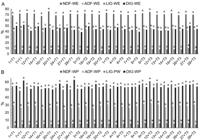
A) Means of the 26 topcross hybrids selected based on digestibility of dry mass yield (DDMY) in environment 1, for the traits neutral detergent fiber of the plant without ear (NDF-WE), acid detergent fiber of the plant without ear (ADF-WE), lignin of the plant without ear (LIG-WE) and dry mass digestibility of the plant without ear (DIG-WE); B) neutral detergent fiber of the whole plant (NDF-WP), acid detergent fiber of the whole plant (ADF-WP), lignin of the whole plant (LIG-WP) and dry mass digestibility of the whole plant (DIG-WP) evaluated in 2017/2018 in Guarapuava, Paraná state, Brazil. Same letter belongs to the same group by the Scott Knott test (p < 0.05).
The general mean of VIT-PM of the topcross hybrids (72 %) was higher compared to VIT-SP (67 %), while for digestibility, the average of DIG-GPM (80 %) was lower compared to DIG-GSP (82 %).
Selection of genotypes considering plant components
For DDMY, evaluated in crop season ENV-1, 26 topcross hybrids ranked in the group with the highest mean. Among these 26, grouping by means was not possible for NDF-WE and ADF-WE. However, for LIG-WE, ten topcross hybrids stood out on account of having the lowest means, ranging from 6.4 to 7.9 % (Figure 2A). As regards the DIG-WE, 11 topcross hybrids were grouped by higher means which ranged from 45 to 52 % (Figure 2A).
For NDF-WP, the Scott-Knott test was not efficient in discriminating between groups, whereas for ADF-WP, the 16 topcross hybrids formed the group with the lowest means. For DIG-WP, most of the topcross hybrids ranked considering DDMY were grouped with the highest means (Figure 2B), as expected, given that these genotypes were selected based on their combined digestibility and yield of dry mass.
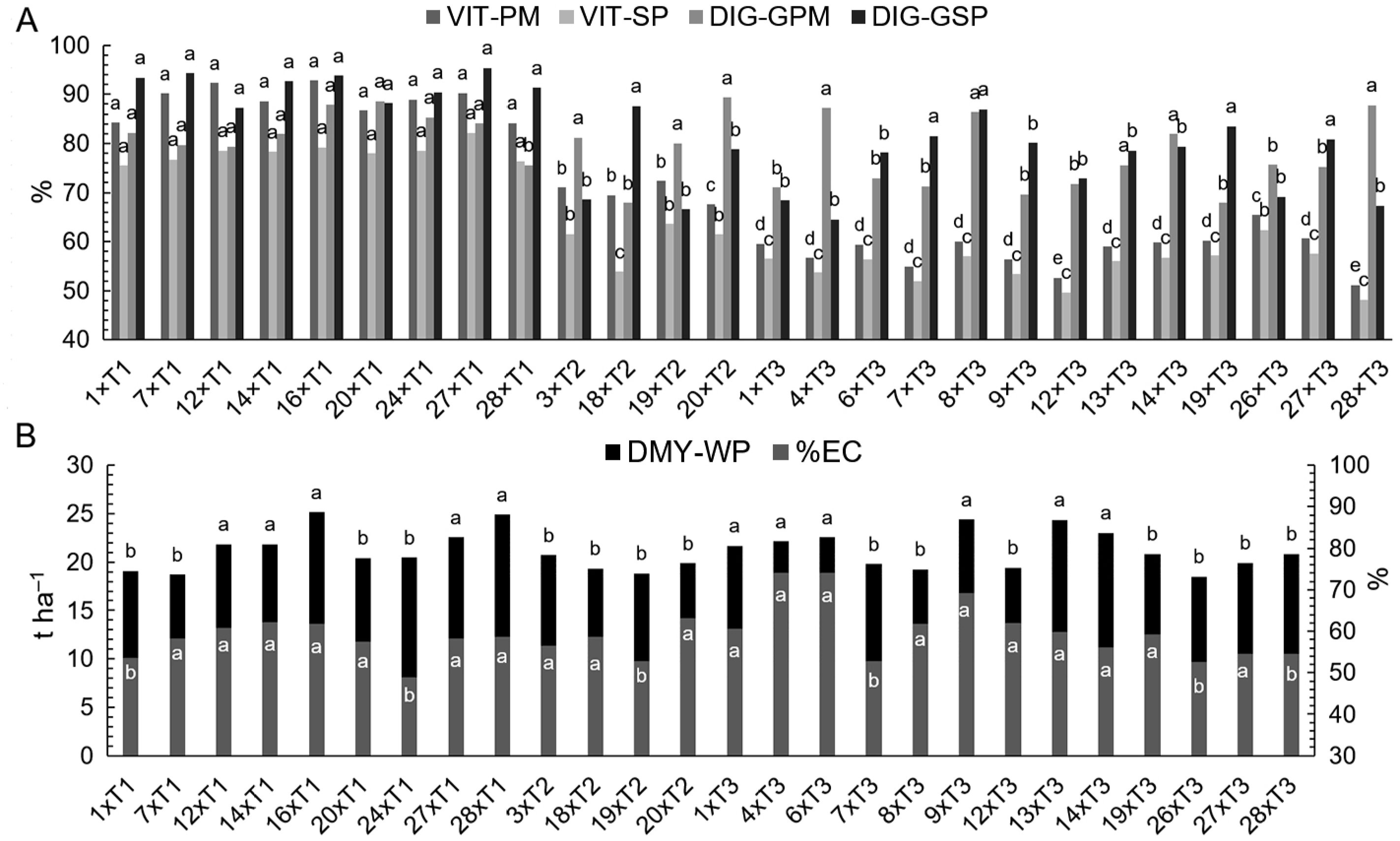
For VIT-PM and VIT-SP, nine topcross hybrids were grouped with the highest means. The vitreousness of grains at the silage point was less than that observed at the physiological maturation stage; however, the genotypes already expressed this trait before physiological maturation (Figure 3A).

A) Means of the 26 topcross hybrids selected based on digestibility of dry mass yield (DDMY) in environment 1, for the traits grain vitreousness at the physiological maturity stage (VIT-PM), grain vitreousness at the silage point (VIT-SP), grain digestibility at the physiological maturity stage (DIG-GPM) and grain digestibility at the silage point (DIG-GSP); B) dry mass yield of the whole plant (DMY-WP) and percentage of ear contribution (%EC), evaluated in 2017/2018 in Guarapuava, Paraná state, Brazil. The same letter belongs to the same group according to the Scott Knott test (p < 0.05).
Among the 15 topcross hybrids that presented the highest means of DIG-GPM, 14 formed the group with the highest means of VIT-PM, as well as DIG-GSP (Figure 2A).
The %EC values were above 49 %, and 21 topcross hybrids ranked based on DDMY were classified in the group with the greatest percentages, which ranged from 58 to 74 %. For the DMY, 11 topcross hybrids presented the highest averages ranging from 22 to 25 t ha–1 (Figure 3B).
Considering the DDMY means in ENV-2, 11 topcross hybrids were classified in the group of higher means, ranging from 17 to 20 t ha–1. Five topcross hybrids were classified in the group with lower means for NDF-WE, with values that ranged from 73 to 77 %; six presented the lowest means for ADF-WE, ranging from 41 to 45 %; three presented the lowest means for LIG-WE, which ranged from 5.4 to 7.1 %; and four stood out with the highest means for DIG-WE, ranging from 50 to 55 % (Figure 4A).

A) Means of the 11 topcross hybrids selected based on digestibility of dry mass yield (DDMY) in environment 2, for the traits neutral detergent fiber of the plant without ear (NDF-WE), acid detergent fiber of the plant without ear (ADF-WE), lignin (LIG-WE) and dry mass digestibility of the plant without ear (DIG-WE); B) neutral detergent fiber of the whole plant (NDF-WP), acid detergent fiber of the whole plant (ADF-WP), lignin of the whole plant (LIG-WP) and dry mass digestibility of the whole plant (DIG-WP) evaluated in 2018/2019 in Guarapuava, Paraná state, Brazil. The same letter belongs to the same group according to the Scott Knott test (p < 0.05).
From the topcross hybrids selected by DDMY, eight stood out on account of the lowest means of NDF-WP, which ranged from 38 to 53 %; nine presented the lowest means for ADF-WP, which ranged from 19 to 28 %; six stood out with LIG-WP means that ranged from 3.5 to 4.7 %; and nine were classified in the group with the highest means of DIG-WP, which ranged from 61 to 75 % (Figure 4B).
For the grains evaluated in ENV-2, topcross hybrids 27 × T2 and 28 × T2, which presented VIT-PM means that ranged from 73 to 79 %, were also classified in the group with higher VIT-SP means (Figure 5A).

A) Means of the 11 topcross hybrids selected based on digestibility of dry mass yield (DDMY) in environment 2, for the traits grain vitreousness at the physiological maturity stage (VIT-PM), grain vitreousness at the silage point (VIT-SP), grain digestibility at the physiological maturity stage (DIG-GPM) and grain digestibility at the silage point (DIG-GSP); B) dry mass yield whole plant (DMY-WP) and percentage of ear contribution (%EC), evaluated in 2018/2019 in Guarapuava, Paraná state, Brazil. The same letter belongs to the same group according to the Scott Knott test (p < 0.05).
For DIG-GPM, six topcross hybrids (9 × T1, 3 × T2, 15 × T2, 28 × T2, 7 × T3 and 8 × T3) formed the group of the greatest means, which ranged from 79 to 89 %. For DIG-GPM, only two topcrosses were not classified in the group with the highest means; the nine topcross hybrids presented means that ranged from 83 to 94 % (Figure 5A).
All topcrosses were classified in the group with the highest EC means, varying from 55 to 65 %. For DMY, ten topcross hybrids formed the group of the highest means, which ranged from 26 to 32 t ha–1 (Figure 5B). As observed in ENV-1 in ENV-2 the genotypes with high vitreousness also stood out for DDMY, %EC and DMY (Figures 3A and 5A).
Genetic correlation and path analysis
The correlations between traits, considering all the topcross hybrids evaluated, showed that DIG-WP was influenced by DIG-WE (0.26) and EC (0.33), while grain VIT-PM (r = –0.39) and VIT-SP (r = –0.36), were negatively correlated with DIG-WP. The traits DIG-GSP and DIG-GPM showed positive correlation with VIT-PM and VIT-SP (Table 1).
Genotypic correlation coefficients of variables dry mass digestibility of the whole plant (DIG-WP), dry mass digestibility of the plant without ear (DIG-WE), grain vitreousness at the physiological maturity stage (VIT-PM), grain vitreousness at the silage point (VIT-SP), grain digestibility at the physiological maturity (DIG-GPM), grain digestibility at the silage point (DIG-GSP) and percentage of ear contribution (%EC), in Guarapuava, Paraná state, Brazil.
For the genotypes selected by DDMY, the correlation coefficients for DIG-WP were influenced by the traits VIT-PM and VIT-SP with a lower magnitude of the correlation coefficient. In contrast, the opposite situation was observed for DIG-WE which increased in magnitude. There was a significant correlation between VIT-PM and VIT-SP, as well as between DIG-GPM and DIG-GSP, indicating that genotypes with higher vitreousness already express their effect at the silage point, albeit in lower proportion (Table 1).
Considering the total set of hybrids, the analysis of the direct and indirect effects of the primary components on the main variable (DIG-WP) revealed that DIG-WE had a direct effect of 0.57, indicating its importance for the definition of DIG-WP; its indirect effect by the other variables was also positive, albeit of low magnitude. The VIT-PM presented a high negative direct effect, whereas VIT-SP presented a positive direct effect, the opposite result to that observed in the genotypic correlation. The indirect effect via DIG-GPM was high and positive (Table 2).
Direct and indirect effect components of genotypic correlations of independent explanatory variables dry mass digestibility of the plant without ear (DIG-WE), grain vitreousness at the physiological maturity stage (VIT-PM), grain vitreousness at the silage point (VIT-SP), grain digestibility at the physiological maturity stage (DIG-GPM), grain digestibility at the silage point (DIG-GSP) and percentage of ear contribution (%EC), on the main dependent variable dry mass digestibility of the whole plant (DIG-WP), in Guarapuava, Paraná state, Brazil.
In the group of topcross hybrids selected based on DDMY in both environments, a similar result occurred to that observed considering the set of all genotypes, though with a greater magnitude, DIG-WE presented a direct effect on the primary variable (DIG-WP), as well as a greater contribution with indirect effect by VIT-PM and VIT-SP. The variable VIT-PM had a negative direct effect, and VIT-SP had a positive one (Table 2).
Discussion
The mean of DIG-WE was inferior to that of the DIG-WP, probably on account of the grains providing energy in the form of starch, increasing the dry mass digestibility of the whole plant, and diluting the effect of fiber, which has lower digestibility (Nazli et al., 2019; Zhao et al., 2016). The means observed for NDF and DIG without ear participation and for the whole plant are close to those observed in evaluations of commercial hybrids (Ferreira et al., 2013; Neumann et al., 2020; Paziani et al., 2019).
The general average of VIT-PM for the topcross hybrids (72 %) is close to the one reported by Rossi et al. (2016) in their evaluation of hybrids with endosperm and semi-flint texture, likely due to the commercial hybrid that originated the progenies, which has semi-flint endosperm. The superiority of the VIT-PM mean compared to VIT-SP may be due to the stage of development of the grain at the ensilage point (3/4 of the milk line), which is not completely formed yet since as maturation progresses; the sugars of the amiloplasts are turned into starch which then forms the vitreous and floury endosperm (García-Lara et al., 2019; Gusmão et al., 2021).
The lower mean of DIG-GPM in relation to DIG-GSP corroborates the results observed by Gusmão et al. (2021), probably due to the higher vitreous and protein content resulting from the maturation progress (García-Lara et al., 2019), which can act as a barrier for enzyme activity and/or ruminal bacteria (McAllister et al., 2011).
The values of %EC in the composition of the plants of the topcross hybrids (53.8 %) were like those reported for commercial hybrids (Klein et al., 2018) and experimental maize hybrids (Jacobo et al., 2018). For DMY, the topcross hybrids presented a mean of 20.9 t ha–1, which was close to the values obtained in commercial hybrids (Neumann et al., 2020; Paziani et al., 2019).
For DDMY, the topcross hybrids yielded a mean of 11.7 t ha–1, with values comparable to those observed by Paziani et al. (2019). This trait considers the combination yield and digestibility information for the dry mass, allowing for the identification of genotypes with a good dry mass yield usable by the animal (Carvalho et al., 2019).
Among the group of topcross hybrids that were selected by DDMY, some exhibited desirable means of LIG-WE and DIG-WE, indicating that the fiber quality of the plant is defined by all the components (Nogoy et al., 2019) and the quality of the vegetative part can influence the digestibility of the whole plant.
The presence of topcross hybrids with high grain vitreousness among those selected for the DDMY (Figure 3A), suggests that genotypes with higher content of vitreousness can also be promising for producing silage with good fiber digestibility. This is noteworthy, as the literature often reports that genotypes with greater vitreousness are not promising as regards the obtaining of forage with good digestibility (Leng et al., 2019; Philippeau et al., 2000; Philippeau and Michalet-Doreau, 1998; Rossi et al., 2016).
The genotypes with a higher content of grain vitreousness were classified in the group according to the highest means of DIG-WP, possibly because they presented good traits of fiber quality without ear participation, standing out in relation to DIG-WE, ADF-WE or LIG-WE (Figure 2A), which are factors that might influence the obtaining of fiber of good digestibility of the whole plant. Additionally, grain processing may mitigate the adverse effects of the vitreous endosperm (Giuberti et al., 2014).
The highest averages of the hybrids grouped for DMY ranged from 22 to 25 t ha–1 (Figure 3B), being higher than commercial maize hybrids evaluated in the south Paraná region (Neumann et al., 2020; Paziani et al., 2019).
Values close to those obtained for NDF-WE, ADF-WE, and LIG-WE (Figure 2A) were reported by Ferreira et al. (2013) in an evaluation of maize genotypes without ear participation; however, these authors observed lower digestibility values.
A meta-analysis involving trials of forage of maize single hybrids carried out in Brazil reported a mean value of 7.2 % for the lignin content of the whole plant (Velho et al., 2020). Thus, the lignin content of the vegetative part without ear participation, deserves attention, considering that lignin is one of the components of the cell wall which negatively correlates with dry mass digestibility (Figure 2B) (Hristov et al., 2020). Furthermore, considering that the bromatological quality of the whole plant is defined by its components, the high quality of the fiber fraction in the plant's vegetative tissues may contribute to obtaining forage with enhanced nutritional value (Ferreira et al., 2013).
The values observed for NDF-WP and ADF-WP in the topcross are promising, as well as the LIG-WP contents when compared to the values reported in evaluations of maize hybrids (Carvalho et al., 2016; Horst et al., 2019; Neumann et al., 2018; Nogoy et al., 2019).
The grain vitreousness contents is high, considering that Rossi et al. (2016) reported a means of 70 % in the evaluation of maize hybrids of the flint grain type at physiological maturity. The classification of topcross hybrids in the group of the highest means of VIT-PM and VIT-SP (Figure 3A) indicates that the genotypes with greater vitreousness of grains at physiological maturation stadium show this performance already at forage point, although with lower values because the grain is not completely developed yet (García-Lara et al., 2019; Gusmão et al., 2021).
The DIG-GPM means were likely high due to the highly digestible starch of the grains (Philippeau et al., 2000), in addition to the fact that grain processing favors digestibility. The topcross hybrids with greater VIT-PM stood out for DIG-GSP (Figure 3A), which indicates that high vitreousness does not totally limit grain digestibility, probably because the starch within the vitreousness bodies is also digestible, as well as the starch that is in the floury endosperm (Xu et al., 2019). Although starch granules are present in the vitreous endosperm, they are encapsulated in protein bodies, which may inhibit the action of enzymes or bacteria, in addition to presenting a higher carbohydrate content. This aspect can be minimized through grain processing, which improves the digestibility of the starch found in the vitreous endosperm (Corona et al., 2006; Giuberti et al., 2014).
The topcrosses selected in ENV-2 showed high %EC averages, possibly due to the important contribution of the grains for the dry mass yield of the plant (Neumann et al., 2018; Nogoy et al., 2019), the same way as they improve the total digestibility of the plant due to the energy content provided by the starch (Zhao et al., 2016). This characteristic may account for the classification of the topcross hybrid 11 × T3, characterized by high vitreousness, among the group with the highest DDMY means, despite failing to exhibit superior values for fiber contents of the vegetative part, nor for DIG-WE. The mean DMYs of the selected topcross hybrids are close to the results of the evaluations of the experimental hybrids in the South Paraná region (Rosa et al., 2020; Silva et al., 2021).
Genotypes with high grain vitreousness also stood out for DDMY. Although vitreousness was related to smaller digestibility, these genotypes presented favorable fiber quality traits in the plant without the ear, standing out in terms of DIG-WE, ADF-WE and LIG-WE, which contributed to the obtaining of a whole plant forage with good digestibility. In addition, grain processing can contribute to minimize the negative effects of the vitreousness endosperm, thereby positively influencing the digestibility of the whole plant (Corona et al., 2006; Giuberti et al., 2014); it can also favor the decrease of NDF-WP content compared to the NDF-WE content (Zhao et al., 2016). Consequently, the high %EC of these genotypes improved DMY-WP and DDMY and may have contributed to the increase in DIG-WP, given the highly digestible energy of the starch in the grains (Nogoy et al., 2019).
Several works in the literature have reported a negative correlation between grain vitreousness and the digestibility of the whole plant. However, the coefficients observed in this work were inferior to those reported in Philippeau et al. (2000), Philippeau and Michalet-Doreau (1998), Rossi et al. (2016). DIG-GPM and DIG-GSP showed a negative correlation of low magnitude with DIG-WP. These results justify why topcross hybrids that presented high grain digestibility did not have the highest digestibility means of the whole plant, as they did not exhibit the fiber quality of the vegetative part of the plant. Thus, genotypes with high DIG-GSP content did not exhibit high DIG-WP content.
The positive genotypic correlation between VIT-PM and VIT-SP indicates that genotypes with high vitreousness at physiological maturation already tend to exhibit a high percentage of vitreousness at the silage stage (Table 1), as observed in the mean performance of the topcross hybrids across both environments (Figures 3A and 5A). Traits DIG-GSP and DIG-GPM showed positive correlation with VIT-PM and VIT-SP (Table 1), indicating that starch granules that are in the vitreous endosperm are also digestible (Xu et al., 2019); this may have happened due to grain grinding, when the proteins that protect the starch grains were broken, which favors their digestibility (Corona et al., 2006; Giuberti et al., 2014).
It can be inferred that a genotype can be promising for the forage production of high quality, even with a greater vitreousness content, provided it has good traits of the fiber of the vegetative part, demonstrating the importance of all the parts of the plant and their ability of complementation (Table 1), the means of the topcross hybrids corroborate the statement (Figures 3A and 5A).
Considering the genotypic correlation of the group comprising all genotypes, VIT-PM plays a relevant role in improving whole-plant forage quality, with a correlation of –0.39. The importance of this variable is reinforced by the magnitude of its direct effect, indicating that it should not be disregarded when aiming for the indirect selection of genotypes with favorable DIG-WP. The VIT-SP presented a negative genotypic correlation (–0.36), however, with direction with positive magnitude, which is not appropriate for considering this variable to select genotypes with DIG-WP (Table 1).
The importance of the DIG-WE variable should be highlighted, as it showed a positive genotypic correlation of medium magnitude with the DIG-WP variable and had a direct effect of high magnitude, making it interesting characteristic for the indirect selection of genotypes with high DIG-PM.
The results obtained in both environments ENV-1 and ENV-2 show the importance of considering all the parts of the plant when selecting genotypes with forage aptitude, given the fact that they define the fiber quality of the whole plant (Nogoy et al., 2019) and thus avoid their discard or selection by considering only one of the components, seeking balance and complementarity between fiber quality and grain contribution. In the literature, reports indicate that genotypes with high fiber digestibility due to the introduction of brown midrib (BMR) gene have shown greater consumption in spite of lower utilization of grain starch (Ferraretto and Shaver, 2015). This probably happens either because of the greater speed of passage in the rumen or because of the traits of the grain that might influence it (Coons et al., 2019). Additionally, the decrease in lignin content weakens the stalk and increases the probability of bending (Tesso and Ejeta, 2011). Moreover, when genotype quality is defined solely by grain yield, it can be easily compromised by unfavorable environmental conditions, which considerably decreases the overall quality of the plant, as environmental factors strongly influence both quality and yield (Pan et al., 2017).
Analyzing the 28 progenies that originated the topcross hybrids evaluated, ten progenies deserve special attention (1, 7, 9, 12, 14, 16, 19, 20, 27 and 28) because they originated topcross hybrids with high DDMY with more than one tester, indicating that they are promising for the obtaining of hybrids with good fiber quality and forage yield.
The DIG-WE and VIT-PM variables can aid in the selection of genotypes with higher digestible dry mass productivity. In genotypes with high dry mass yield and high digestibility, grain vitreousness by itself does not determine the dry mass digestibility of the whole plant. However, the fiber quality of the vegetative part of the plant can define it.
In genotypes with low fiber quality in the vegetative part of the plant, grain vitreousness is of major importance in the dry mass digestibility of the plant. In this case, the grain defines the quality of the plant, as it reinforces the need to select balanced genotypes and consider the qualitative traits of all the constituent parts of the plant.
Evaluations of topcross hybrids enabled the selection of promising progenies, leading to the development of hybrids with superior forage quality and yield.
Data availability statement
The authors confirm that the data supporting the findings of this study are available within the article, and its supplementary materials can be accessed upon request to the authors.
Acknowledgments
Graduate Student Agreement Program of the Coordenação de Aperfeiçoamento de Pessoal de Nível Superior (CAPES), Conselho Nacional de Desenvolvimento Científico e Tecnológico (CNPq), Fundação Araucária de Apoio ao Desenvolvimento Científico e Tecnológico do Paraná and Minister of Foreign Affairs (MRE-Brasil).
References
-
Alvares CA, Stape JL, Sentelhas PC, Gonçalves JLM, Sparovek G. 2013. Köppen's climate classification map for Brazil. Meteorologische Zeitschrift 22: 711-728. https://doi.org/10.1127/0941-2948/2013/0507
» https://doi.org/10.1127/0941-2948/2013/0507 -
Carvalho IR, Souza VQ, Follmann DN, Nardino M, Pelegrin AJ, Ferrari M, et al. 2016. Silage production and bromatological constitution effects of corn hybrids in different environments. Revista de Ciências Agrárias 39: 242-250. https://doi.org/10.19084/RCA15130
» https://doi.org/10.19084/RCA15130 -
Carvalho JRR, Schoonmaker JP, Chizzotti ML, Teixeira PD, Dias JCO, Gionbelli TRS, et al. 2019. Total nutrient digestibility and small intestine starch digestion in Nellore and Angus young bulls fed a whole shelled corn diet. Journal of Animal Physiology and Animal Nutrition 103: 8-16. https://doi.org/10.1111/jpn.13024
» https://doi.org/10.1111/jpn.13024 -
Coons EM, Fredin SM, Cotanch KW, Dann HM, Ballard CS, Brouillette JP, et al. 2019. Influence of a novel bm3 corn silage hybrid with floury kernel genetics on lactational performance and feed efficiency of Holstein cows. Journal of Dairy Science 102: 9814-9826. https://doi.org/10.3168/jds.2019-16786
» https://doi.org/10.3168/jds.2019-16786 -
Corona L, Owens FN, Zinn RA. 2006. Impact of corn vitreousness and processing on site and extent of digestion by feedlot cattle. Journal of Animal Science 84: 3020-3031 https://doi.org/10.2527/jas.2005-603
» https://doi.org/10.2527/jas.2005-603 -
Darrah LL, McMullen MD, Zuber MS. 2019. Breeding, Genetics and Seed Corn Production. p. 19-41. In: Serna-Saldivar SO. Corn Chemistry and Technology. 3ed. Elsevier, Amsterdam, The Netherlands. https://doi.org/10.1016/B978-0-12-811971-6.00002-4
» https://doi.org/10.1016/B978-0-12-811971-6.00002-4 -
Ferraretto LF, Shaver RD. 2015. Effects of whole-plant corn silage hybrid type on intake, digestion, ruminal fermentation, and lactation performance by dairy cows through a meta-analysis. Journal of Dairy Science 98: 2662-2675. https://doi.org/10.3168/jds.2014-9045
» https://doi.org/10.3168/jds.2014-9045 - Ferreira GDG, Jobim CC, Oliveira RL, Emile JC, Barrière Y, Palmieri AD. 2013. Nutritional value of ten earless corn hybrids used for silage. Revista Colombiana de Ciencias Pecuarias 26: 255-262.
-
García-Lara S, Chuck-Hernandez CH, Serna-Saldivar SOS. 2019. Development and Structure of the Corn Kernel. p. 147-163. In: Serna-Saldivar SO. Corn: Chemistry and Technology. 3ed. Elsevier, Amsterdam, The Netherlands. https://doi.org/10.1016/B978-0-12-811971-6.00006-1
» https://doi.org/10.1016/B978-0-12-811971-6.00006-1 -
Giuberti G, Gallo A, Masoero F, Ferraretto LF, Hoffman PC, Shaver RD. 2014. Factors affecting starch utilization in large animal food production system: a review. Starch 66: 72-90. https://doi.org/10.1002/star.201300177
» https://doi.org/10.1002/star.201300177 -
Gusmão JO, Lima LM, Ferraretto LF, Casagrande DR, Bernardes TF. 2021. Effects of hybrid and maturity on the conservation and nutritive value of snaplage. Animal Feed Science and Technology 274: 114899. https://doi.org/10.1016/j.anifeedsci.2021.114899
» https://doi.org/10.1016/j.anifeedsci.2021.114899 -
Horst EH, Mareze J, Bumbieris VH, Neumann M, Venancio BJ, Souza AM. 2019. Performance, carcass characteristics and ingestive behavior of steers fed with silages of different maize hybrids. Arquivo Brasileiro de Medicina Veterinária e Zootecnia 71: 1977-1984. https://doi.org/10.1590/1678-4162-11057
» https://doi.org/10.1590/1678-4162-11057 -
Hristov AN, Harper MT, Roth G, Canale C, Huhtanen P, Richard TL, et al. 2020. Effects of ensiling time on corn silage neutral detergent fiber degradability and relationship between laboratory fiber analyses and in vivo digestibility. Journal of Dairy Science 103: 2333-2346. https://doi.org/10.3168/jds.2019-16917
» https://doi.org/10.3168/jds.2019-16917 -
Izumi K, Tamura T, Fujii R, Nakatsuji H, Morita S. 2019. Effects of substituting kraft pulp with corn silage on dry matter intake, ruminal mat formation, rumen fermentation, and rumination activity in non-lactating cows. Animal Science Journal 90: 205-213. https://doi.org/10.1111/asj.13149
» https://doi.org/10.1111/asj.13149 - Jacobo MAR, Carballo AC, Carrillo ARQ, Garay AH, Huerta HV, Zarco ECR, et al. 2018. Productive behaviour of twelve threelineal forage corn hybrids in a dry tropical region. Tropical and Subtropical Agroecosystems 21: 579-586.
- Klein JL, Viana AFP, Martini PM, Adams SM, Guzatto C, Bona RDA, et al. 2018. Productive performance of maize hybrids for the production of silage using the whole plant. Revista Brasileira de Milho e Sorgo 17: 101-110 (in Portuguese, with abstract in English).
-
Leng P, Ouzunova M, Landbeck M, Wenzel G, Lübberstedt T, Darnhofer B, et al. 2019. QTL mapping of improving forage maize starch degradability in European elite maize germplasm. Plant Breeding 138: 524-533. https://doi.org/10.1111/pbr.12699
» https://doi.org/10.1111/pbr.12699 - Mascarenhas SNAP, Almeida IF, Almeida RV, Pinto BRC, Fernandes GA. 2024. Evaluation of half-sib maize progenies through the recurrent selection method. Revista Inova Ciência & Tecnologia 10: 1-8.
-
McAllister TA, Phillippe RC, Rode LM, Cheng KJ. 2011. Effect of the protein matrix on the digestion of cereal grains by ruminal microorganisms. Journal of Animal Science 71: 205-212. https://doi.org/10.2527/1993.711205x
» https://doi.org/10.2527/1993.711205x -
Naderi N, Ghorbani GR, Sadeghi-Sefidmazgi A, Kargar S, Ghaffari MH. 2019. Substitution of corn silage with shredded beet pulp affects sorting behaviour and chewing activity of dairy cows. Journal of Animal Physiology and Animal Nutrition 103: 1351-1364. https://doi.org/10.1111/jpn.13160
» https://doi.org/10.1111/jpn.13160 -
Nazli MH, Halim RA, Abdullah AM, Hussin G, Samsudin AA. 2019. Potential of four corn varieties at different harvest stages for silage production in Malaysia. Asian-Australasian Journal of Animal Science 32: 224-232. https://doi.org/10.5713/ajas.18.0175
» https://doi.org/10.5713/ajas.18.0175 - Neumann M, Poczynek M, Leão GFM, Figueira DN, Souza AM. 2018. Hybrid performance for maize silage cultivated in different places with three population densities. Revista Brasileira de Milho e Sorgo 17: 49-62 (in Portuguese, with abstract in English).
-
Neumann M, Venancio BJ, Horst EH, Cristo FB, Petkowicz K, Pontarolo GB, et al. 2020. Corn hybrid silage quality according to harvesting time. Semina: Ciências Agrárias 41: 369-382. https://doi.org/10.5433/1679-0359.2020v41n2p369
» https://doi.org/10.5433/1679-0359.2020v41n2p369 -
Nocek JE. 1988. In situ and other methods to estimate ruminal protein and energy digestibility: a review. Journal of Dairy Science 71: 2051-2069. https://doi.org/10.3168/jds.S0022-0302(88)79781-7
» https://doi.org/10.3168/jds.S0022-0302(88)79781-7 -
Nogoy KM, Zhang Y, Lee YH, Li XZ, Seong HA, Choi SH. 2019. Nutrient composition and in vitro fermentability of corn grain and stover harvested at different periods in Goesan, a mountainous area. Journal of Animal Science and Technology 61: 18-27. https://doi.org/10.5187/jast.2019.61.1.18
» https://doi.org/10.5187/jast.2019.61.1.18 -
Paiva EAP, Faria MV, Neumann M, Mendes MC, Gava E, Chiquito NR, et al. 2023. Combining ability of forage maize S3 progenies in topcrosses for traits of the vegetative part and whole plant. Pesquisa Agropecuária Brasileira 58: e03057. https://doi.org/10.1590/S1678-3921.pab2023.v58.03057
» https://doi.org/10.1590/S1678-3921.pab2023.v58.03057 -
Pan L, Yin Z, Huang Y, Chen J, Zhu L, Zhao Y, et al. 2017. QTL for maize grain yield identified by QTL mapping in six environments and consensus loci for grain weight detected by meta-analysis. Plant Breeding 136: 820-833. https://doi.org/10.1111/pbr.12524
» https://doi.org/10.1111/pbr.12524 -
Paziani SF, Duarte AP, Nussio LG, Freitas RS, Gallo PB, Mateus GP. 2019. Correlations between quantitative and qualitative characteristics of maize and sorghum for silage. Revista Brasileira de Milho e Sorgo 18: 408-416 (in Portuguese, with abstract in English). https://doi.org/10.18512/1980-6477/rbms.v18n3p408-416
» https://doi.org/10.18512/1980-6477/rbms.v18n3p408-416 -
Philippeau C, Michalet-Doreau B. 1998. Influence of genotype and ensiling of corn grain on in situ degradation of starch in the rumen. Journal of Dairy Science 81: 2178-2184. https://doi.org/10.3168/jds.S0022-0302(98)75796-0
» https://doi.org/10.3168/jds.S0022-0302(98)75796-0 -
Philippeau C, Landry J, Michalet-Doreau B. 2000. Influence of the protein distribution of maize endosperm on ruminal starch degradability. Journal of the Science of Food and Agriculture 80: 404-408. https://doi.org/10.1002/1097-0010(200002)80:3<404::AID-JSFA541>3.0.CO;2-Z
» https://doi.org/10.1002/1097-0010(200002)80:3<404::AID-JSFA541>3.0.CO;2-Z -
Rosa JC, Faria MV, Zaluski WL, Gava E, Andreoli PHW, Sagae VS. 2020. Forage potential of S3 corn progenies in topcrosses and selection of testers of different genetic bases. Pesquisa Agropecuária Brasileira 55: e01283. https://doi.org/10.1590/s1678-3921.pab2020.v55.01283
» https://doi.org/10.1590/s1678-3921.pab2020.v55.01283 -
Rossi ES, Faria MV, Mendes MC, Neumann M, Gabriel A, Del Conte MV. 2016. Bromatological characteristics and ruminal digestibility of grain corn hybrids with different vitreousness in silage maturity. Acta Scientiarum. Agronomy 38: 337-344. https://doi.org/10.4025/actasciagron.v38i3.28703
» https://doi.org/10.4025/actasciagron.v38i3.28703 -
Schils RLM, Van den Berg W, Van der Schoot JR, Groten JAM, Rijk B, Van de Ven GWJ, et al. 2020. Disentangling genetic and non-genetic components of yield trends of Dutch forage crops in the Netherlands. Field Crops Research 249: 107755. https://doi.org/10.1016/j.fcr.2020.107755
» https://doi.org/10.1016/j.fcr.2020.107755 -
Silva CA, Faria MV, Paiva EAP, Zaluski WL, Gava E, Marck DF, et al. 2021. Selection of S3 progenies of forage maize based on topcrosses with different testers. Acta Scientiarum. Agronomy 43: e51223. https://doi.org/10.4025/actasciagron.v43i1.51223
» https://doi.org/10.4025/actasciagron.v43i1.51223 -
Silva EM, Guedes ML, Filho AJC, Ciappina AL, Reis EF, Resende MPM. 2023. Genetic parameters and selection for multiple traits in recurrent selection populations of maize. Revista Ceres 70: 81-90. https://doi.org/10.1590/0034-737X202370030009
» https://doi.org/10.1590/0034-737X202370030009 -
Tesso T, Ejeta G. 2011. Stalk strength and reaction to infection by Macrophomina phaseolina of brown midrib maize (Zea mays and sorghum (Sorghum bicolor Field Crops Research 120: 271-275. https://doi.org/10.1016/J.FCR.2010.10.015
» https://doi.org/10.1016/J.FCR.2010.10.015 -
Van Soest PJ, Robertson JB, Lewis BA. 1991. Methods for dietary fiber, neutral detergent fiber, and nonstarch polysaccharides in r relation to animal nutrition. Journal of Dairy Science 74: 3583-3597. https://doi.org/10.3168/jds.S0022-0302(91)78551-2
» https://doi.org/10.3168/jds.S0022-0302(91)78551-2 -
Velho JP, Zardin PB, Jobim CC, Haygert-Velho IMP, Alessio DRM, Giotto E, et al. 2020. Meta-analysis of corn plants, green fodder (ensilage), and silages of different types of maize hybrids used in experimental conditions in Brazil. Semina: Ciências Agrárias 41: 237-253. https://doi.org/10.5433/1679-0359.2020v41n1p237
» https://doi.org/10.5433/1679-0359.2020v41n1p237 -
Xu A, Lin L, Guo K, Liu T, Yin Z, Wei C. 2019. Physicochemical properties of starches from vitreous and floury endosperms from the same maize kernels. Food Chemistry 291: 149-156. https://doi.org/10.1016/j.foodchem.2019.04.024
» https://doi.org/10.1016/j.foodchem.2019.04.024 -
Zhao M, Bu D, Wang J, Zhou X, Zhu D, Zhang T, et al. 2016. Milk production and composition responds to dietary neutral detergent fiber and starch ratio in dairy cows. Animal Science Journal 87: 756-766. https://doi.org/10.1111/asj.12482
» https://doi.org/10.1111/asj.12482
Edited by
-
Edited by:
Evandro Vagner Tambarussi