 A web tool for predicting log assortments in secondary Atlantic forests using regional taper models
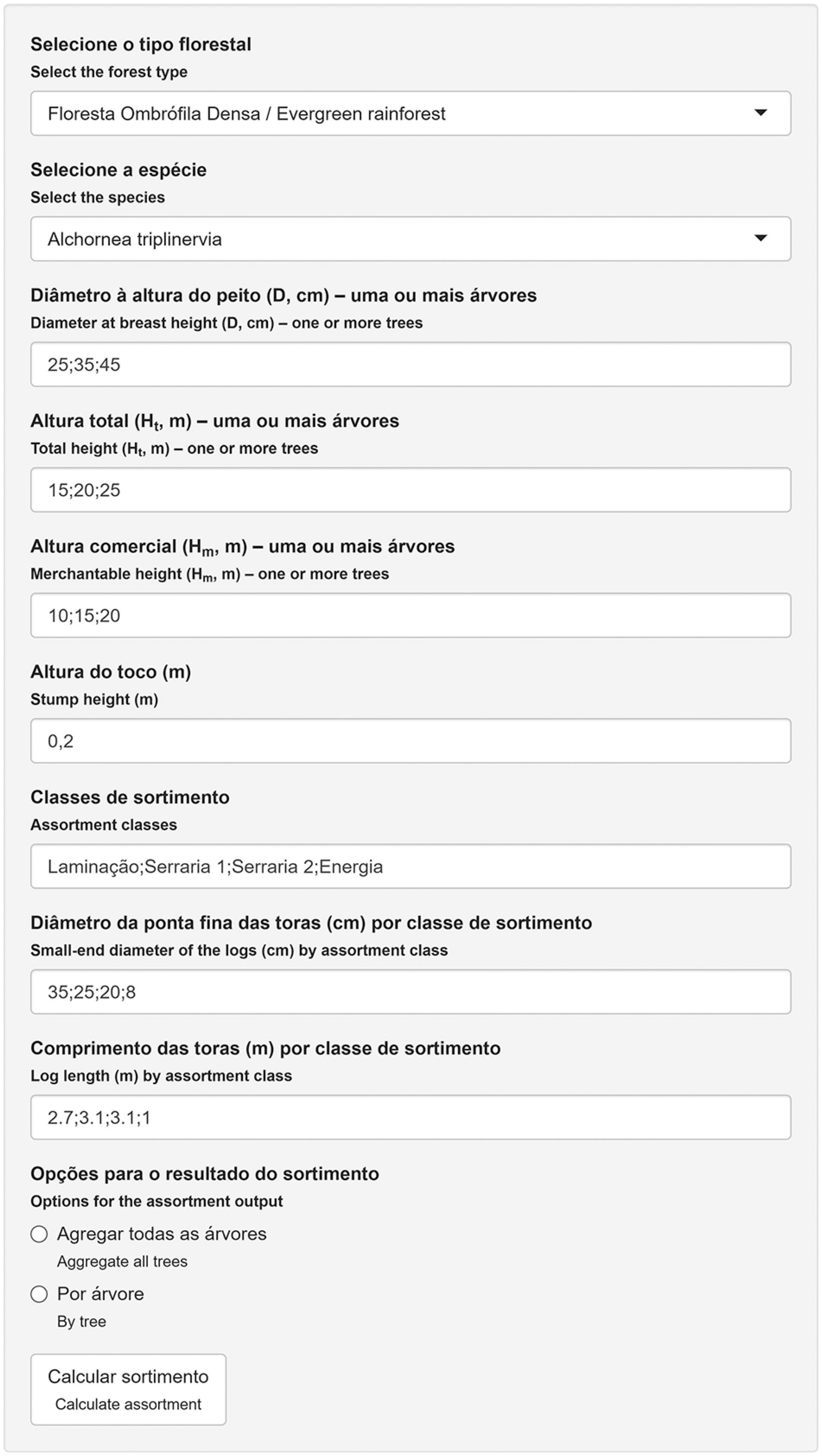
Intense exploitation of the Atlantic forest in southern Brazil has caused the depletion of stocks of valuable timber. Legal restrictions and socioeconomic changes have subsequently promoted the expansion of secondary forests in the region. In addition to their ecological importance, secondary forests are endowed with promising productive potential, with fast-growing species and good quality timber. Given this context, this study introduces a web application developed in R language (‘shiny’ package) to predict log assortments – i.e. the number and volume of logs by dimensional classes (encompassing different log lengths and minimum diameters) that may be extracted from a stem – for species growing in three forest types of the Atlantic forest. The application uses new taper models calibrated with large datasets acquired by the FlorestaSC program, an initiative linked to the National Forest Inventory of Brazil, and aims to contribute to the development of sustainable management of secondary forests in the region.
Keywords:
National Forest Inventory; Atlantic forest; forest management; forest resources; taper model
 Thumbnail