 Branching formation of apple trees grown under contrasting growing conditions in a mild winter region
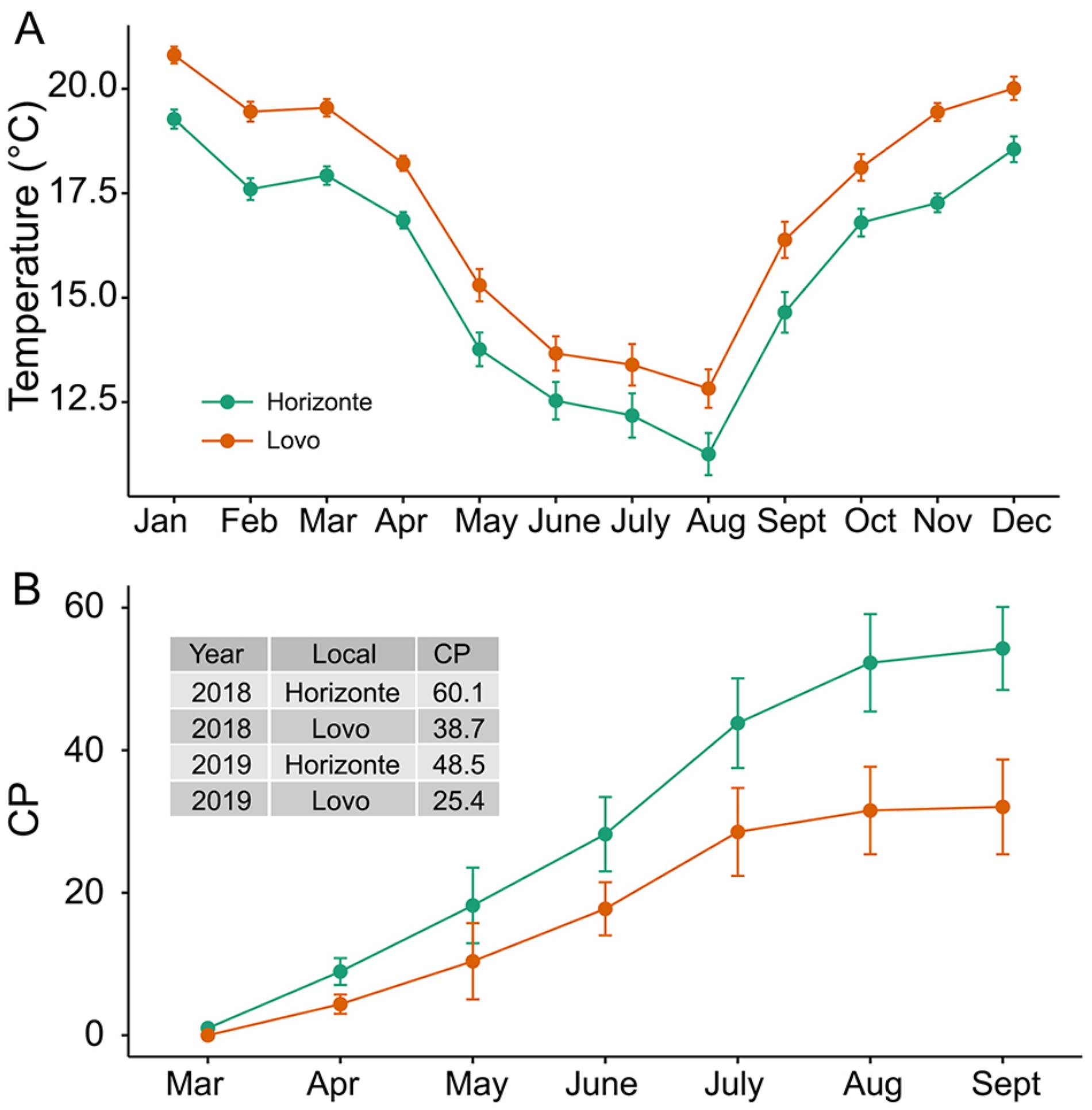
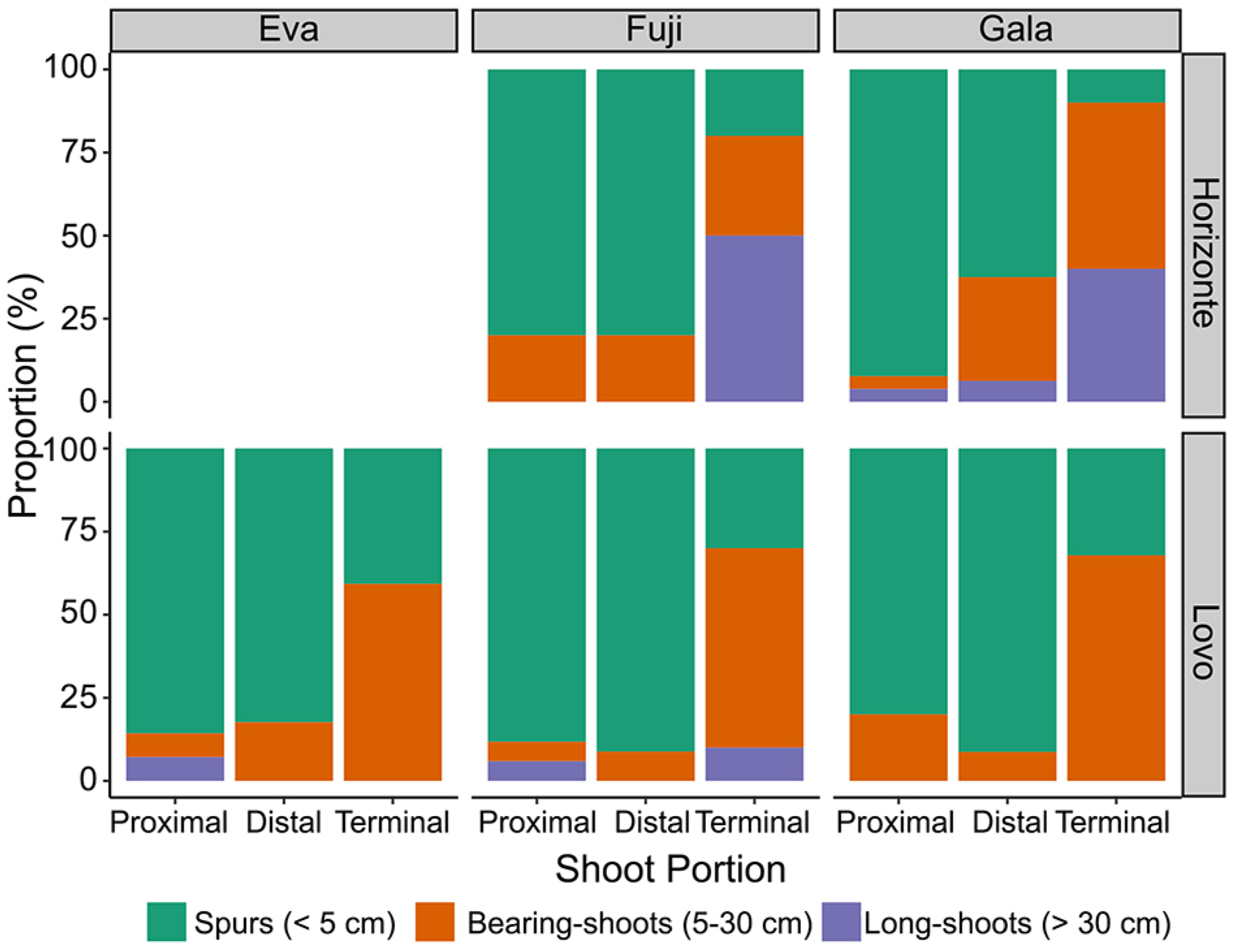
The expansion of apple cultivation into subtropical climates has necessitated effective strategies to ensure high and consistent productivity. Adapting apple trees to mild winter regions involves challenges in lateral sprouting, which is partly related to the accumulation of chill. This study aimed to investigate the budding patterns of different apple tree cultivars in two sites with contrasting environmental cultivation. The study was conducted in two orchards in a mild winter region of Brazil: Horizonte orchard (ideal cultivation environment) and Lovo orchard (marginal cultivation environment). The selected apple cultivars included ‘Eva’, ‘Fuji Suprema’, and ‘Galaxy’. The experimental design involved marking five one-year-old shoots on five plants at each site and cultivar during the winter for two consecutive years. At the onset of the subsequent autumn, the marked branches were collected to assess the development of lateral shoots. In addition, the total number of spurs and shoots was counted in each orchard. The ‘Gala’ cultivar exhibited consistent spurs per plant across both sites. However, the ‘Fuji’ cultivar demonstrated a substantial increase in total spurs per plant in the low chill environment, with no discernible change in the development of lateral spurs, suggesting a high bourse-over-bourse formation. In orchards with higher chill accumulation, both cultivars necessitated high pruning due to excessive long shoots, underscoring the importance of adapted training systems and cultural practices to each growing region. Further research must enhance our understanding of plant architecture in mild winter regions.
Keywords:
acrotony; budburst pattern; dormancy; mild winter region; tree architecture
 Thumbnail
 Thumbnail
 Thumbnail