 The nutritional and technological quality of common bean is affected by water stress and cultivar
ABSTRACT
Agricultural management practices such as cultivar choice and irrigation management may change common bean technological and nutritional quality and affect the product price and food biological value. This study aimed to explain and compare the technological and nutritional grain quality of different common bean cultivars under various irrigation levels. The study was carried out for two years in the southeast of Brazil, including two common bean cultivars: IAC Imperador, which has a determinate growth habit, and IPR Campos Gerais, which possesses an indeterminate growth habit. Both cultivars were subjected to five irrigation levels: 54, 70, 77, 100, and 132 % of the crop evapotranspiration (ETo). Overall, cultivar IPR Campos Gerais had superior technological and nutritional quality compared to IAC Imperador. Specifically, its grain size were up to 119 % larger, had cooking time (CT) up to 36 % shorter, and contained higher levels of essential nutrients for human consumption, including P (up to 37 % higher), Mg (14 %), Fe (27 %), and Cu (18 %). Water deficit conditions reduced P, Ca, Mg, Cu, Mn, and Fe contents in the grains, with decreases of up to 22, 35, 6, 11, 5, and 5 %, respectively. The extend of these effects varied depending on the year and the cultivar. Moreover, water deficit promotes grains with up to 22 % more protein and 11 % more Zn. These results demonstrate the importance of proper irrigation management and cultivar choice to enhance common bean quality, leading to greater market acceptance and biological value as food.
Phaseolus vulgaris L.; crude protein content; food security; human nutrition; zinc
Introduction
Common beans (Phaseolus vulgaris L.) are vital for world food security (Hummel et al., 2018; Nassary et al., 2020). It presents high availability, easy access by the population, and adequate nutritional quality for humans (Miano et al., 2018). Human malnutrition is a serious global problem, and the nutrients most affecting the world population are Fe, Zn, I, and Se (White and Broadley, 2009). Common bean has Fe and Zn, available to a large part of the population, and may also be biofortified with Se (Ravello et al., 2021).
Common bean consumption by the population has been decreasing to the detriment of other foods with lower nutritional quality, which may promote human nutrient deficiencies. In Brazil, for example, consumption per capita of common bean decreased by 52 % between 2003 and 2018, i.e., from 12.4 to 5.9 kg inhabitant−1 yr−1 (IBGE, 2020). Thus, searching for common bean cultivars richer in nutrients and vitamins is essential to minimizing the impact of this reduced consumption on human nutrition.
Common bean technological quality is defined by the combining of characteristics that involve bean commercialization, such as grain size, seed coat color, and cooking time (CT). In contrast, nutritional quality is related to the compounds that are indispensable to human health, such as protein and other nutrients (Lemos et al., 2015; Flores-Sosa et al., 2020). Common beans are rich in several important nutrients, including phosphorus (P), potassium (K), calcium (Ca), magnesium (Mg), sulfur (S), iron (Fe), boron (B), zinc (Zn), copper (Cu), and manganese (Mn). This makes common beans a highly nutritious food, at an affordable price which may further global food security.
Factors such as nitrogen fertilization and soil tillage system (Nunes et al., 2021), cultivars (Smith et al., 2019; Nunes et al., 2021), and climate conditions (Hummel et al., 2018) can promote differences in the technological and nutritional attributes of common bean. As regards technological quality, variables that directly affect the product’s price are the most important, such as grain size and CT. Thus, the evaluation of practices that promote higher nutritional and technological quality of common beans is necessary to increase producer income and food biological value.
The water deficit may reduce bean yield by more than 40 % (Mathobo et al., 2017). However, little is known about the effects of irrigation on the technological and nutritional quality (Ribeiro et al., 2019). This study hypothesized that stress due to water deficit reduces common bean grain’s technological and nutritional quality. The aim was to explain and compare the technological and nutritional quality of common bean cultivars subjected to different irrigation levels.
Materials and Methods
The experiment was carried out in the winter growing season of 2019 and 2020 in Jaboticabal, São Paulo state, Brazil (21°14’44” S, 48°17’00” W, altitude 545 m). According to the Köppen classification, the regional weather is Aw (Alvares et al., 2013), i.e., a tropical climate with a dry winter, summer rains, an average annual temperature of 22 °C, and average annual precipitation of 1,425 mm.
The soil in the experimental area is classified as a Rhodic Eutrudox (Soil Survey Staff, 2014). Three undisturbed and disturbed soil samples were collected for the physical characterization of the experimental area before sowing the seeds in 2019 (Table 1). Fifteen simple soil samples were collected 30 days before sowing the seeds in each year, forming a composite sample for fertility analysis (Table 2).
Common beans were shown on 07 May 2019, and 18 May 2020. Two common bean cultivars from the ‘Carioca’ commercial group, with contrasting growth habits, were used: IAC Imperador and IPR Campos Gerais. Cultivar IAC Imperador has a determinate growth habit (Type I), erect architecture, and an early cycle of 75 days (Chiorato et al., 2012). The cultivar IPR Campos Gerais has an indeterminate growth habit (Type II), erect architecture, and a normal cycle of 90 days (Moda-Cirino et al., 2012). The cultivars were mechanically sown on 07 May 2019 and 18 May 2020 to obtain a density of 240,000 plants ha−1, with an inter-row spacing of 0.45 m. Before sowing, the seeds were treated with pyraclostrobin (5 g ai ha−1) + thiophanate-methyl (45 g ai ha−1) + fipronil (50 g ai ha−1), using the commercial product Standak® Top, and inoculated with Rhizobium tropici R. (StarFix® Feijão) for biological nitrogen fixation using the recommended rate.
Common bean was sown in an area previously cultivated with corn, using a seed-cum-fertilizer drill intended for no-tillage. The corn hybrid P4285VYHR was sown in Oct over the two years, with an inter-row spacing of 0.90 m and 75,000 plants ha−1. Limestone with a total neutralizing power of 95 was applied 30 days before corn sowing over the two years at a dose of 1.5 Mg ha−1. The limestone was incorporated into the soil with a plowing harrow operation (0.00 - 0.20 m) and two leveling harrow operations.
Sowing fertilization of the common bean crop was carried out according to the soil analysis (Table 2) and recommendation of Ambrosano et al. (1997) by applying a rate of 200 kg ha−1 of the formulation 04-20-20 in the two years, supplying 8 kg ha−1 of N, 40 kg ha−1 of P2O5, and 40 kg ha−1 of K2O. Topdressing fertilization was carried out at the V4 stage, characterized by the third trifoliate leaf fully expanded (Fernández et al., 1985), and consisted of the application of a rate of 100 kg ha−1 of N in both years, with urea as source (Ambrosano et al., 1997). The topdressing fertilization was carried out at 19 and 21 days after emergence (DAE) of the common bean crop in 2019 and 2020, respectively, in a continuous strip at 0.10 m from the sowing row.
A 10-mm irrigation depth was applied to all treatments two years after topdressing fertilization to avoid the effect of different volatilization rates between the different irrigation levels. It was used because it is a minimum value that does not promote losses of urea by volatilization (Espindula et al., 2021), and does not significantly interfere with the applied treatments. The control of weeds, pests, and diseases was carried out when necessary, using products registered for the crop.
The experimental design consisted of a strip-block design, with four replications in a split-plot arrangement, with irrigation levels being the main factor and the cultivar the secondary factor. Each subplot had 15 rows of common beans, 6.75 m long and 2.4 m wide. The first row of common beans at each end and the initial 50 cm of the central rows were considered as borders. Six out of the remaining 13 cultivation rows were used to estimate yield and the other seven for destructive analysis.
The line-source sprinkler system was used, to distribute the irrigation water at variable application depths as the treatment moved away from the central sprinkler line (Hanks et al., 1976). A field test enabled the definition of the distribution fractions of the sprinkler precipitation. In the collector field test, the irrigation fractions received in the middle of each plot were 1.002, 0.754, 0.584, 0.532, and 0.407 for irrigation levels L5, L4, L3, L2, and L1, respectively. Senninger 4023-2 sprinklers and 3/4” M 08Qx05 nozzles were used spaced every 6 m on the central line. The water application intensity of the sprinklers was measured in the field in tests with collectors placed at 1 m from each other up to the limit distance of water application by the sprinklers in a line perpendicular to the irrigation line, with four replications.
For study purposes, the treatments consisted of five irrigation levels (L1, L2, L3, L4, and L5), which were set up after establishing the water application regression by the sprinkler line. The calibrated equation was of fifth degree: y = 0.00000360x5 – 0.0013777x4 + 0.0181722x3 – 0.0952159x2 + 0.1004520x + 0.9903059 (Coefficient of determination (R2) = 0.997). The L4 level was used as a standard, receiving 100 % of the water required by the common bean crop. The L5 level received excess water, with 132 % of the water requirement by the common bean, while the L3, L2, and L1 levels provided 77, 70, and 54 % of the water requirement, respectively.
The irrigation management was carried out based on the crop water demand, according to the FAO 56 method, using climate data obtained daily from an automated weather station located 1,000 m from the experiment. The reference evapotranspiration (ETo) was estimated daily using the FAO 56 method (Allen et al., 1998). The evapotranspiration of the common bean crop (ETc) was calculated using the product of ETo by the crop coefficients (Kc) (Allen et al., 1998). The Kc values used were 0.40 (0 to 10 % of soil cover), 0.40 to 1.15 (10 to 80 % of soil cover), 1.15 (80 to 100 % of soil cover), and 1.15 to 0.35 (maturation).
Irrigation was carried out when the water deficit in the area was equal to 18 mm. This water depth was calculated according to the soil’s physical attributes (Table 1) and the common bean crop. The calculation considered an adequate root depth of 0.25 m and a water availability factor of 0.40 (Allen et al., 1998). Two water depths of 15 mm were applied to the plant emergence, considering a uniform initial stand in all treatments.
The maximum and minimum temperatures during the 2019 experimental period were 27.8 and 13.9 °C, respectively, with accumulated precipitation of 48.7 mm. The minimum temperature on 07 July 2019 was 3.3 °C, which caused frost in the experimental area. The number of trifoliate leaves hit by the frost was counted in each cultivar, with an average of 10 % in cultivar IAC Imperador and 12 % in cultivar IPR Campos Gerais. In 2020, the maximum and minimum temperatures during the experimental period were 28.4 and 13.9 °C, respectively, with accumulated precipitation of 35 mm. Minimum temperatures below 5 °C were not observed in 2020. The mean and standard deviation of the mean of the 15-day values of global solar radiation and temperature for the 2019 and 2020 experimental periods are shown in Table 3.
The irrigation was triggered to control the frost during the dawns of 06 July 2019, 07 July 2019, and 08 July 2019. Thus, the water depth these days was constant for all treatments, and 20, 40, and 20 mm were applied on days 6, 7, and 8, respectively. The calculation considered 30 mm of irrigation water on those days for all treatments. Soil moisture was determined weekly at three points per subplot in the 0.00 - 0.20 m depth layer, using the time domain reflectometry technique (Fellner-Feldegg, 1969).
The subplots were harvested, and the grains were packed in paper bags at 25 ± 2.0 °C and relative humidity of 60 ± 5.0 % for 30 days in the two years to determine the variables related to the grain’s nutritional and technological quality. The grains of each subplot were separated by size using a set of sieves with oblong openings, that is, P10 = 10/64” × 3/4 (3.97 × 19.05 mm), P11 = 11/64” × 3/4 (4.37 × 19.05 mm), P12 = 12/64” × 3/4 (4.76 × 19.05 mm), P13 = 13/64” × 3/4 (5.16 × 19.05 mm), P14 = 14/64” × 3/4 (5.56 × 19.05 mm), and P15 = 15/64” × 3/4 (5.96 × 19.05 mm), under stirring for 1 min. The grain mass retained on each sieve was determined, and the sieve yield higher than or equal to 12 (SY ≥ 12) and the relative grain production on sieves (RGPS) were calculated according to the methodology proposed by Carbonell et al. (2010). The 100-grain weight (100W) was determined using samples from the previous evaluation to count four subsamples of 100 grains per subplot, standardizing the grain moisture content to 0.13 kg kg−1.
Grains retained on sieve 12 were used to determine N, P, K, Ca, Mg, S, B, Zn, Cu, Fe, and Mn contents. For this, the grains were washed in running water, water with neutral detergent (0.1 %), and deionized water, placed in a forced-air circulation oven at 65 °C until constant weight, and ground using a Willey mill. The crude protein content (CPC) of grains was determined using the equation (AOAC, 1995) CPC = total N × 6.25, where CPC is the crude protein content in the grains (%) and total N is the nitrogen content in the grains, according to the methodology proposed by Bataglia et al. (1983). The other nutrients were determined according to the methodology proposed by Malavolta et al. (1997).
Grains retained on sieve 13 were used to determine CT. It was determined using the Mattson cooker, consisting of 25 vertical stylets with 1/16” tips and a 90 g weight at the other end. The bottom end is supported by the common bean grain during cooking, and the tip penetrates the grain when it is cooked, displacing the stylet. The final CT of the sample was obtained when 50 % + 1, that is, 13 stylets, were displaced. For this determination, 25 g of grains were hydrated in 100 mL of deionized water for 12 h. The water temperature was maintained at 96 °C. The Proctor and Watts (1987) scale was used to check the resistance level of grains to cooking.
As in this study, the variation sources were levels (quantitative factor), all the analyzed variables were subjected to the polynomial regression analysis as a function of the irrigation depths applied to each cultivar (Kozak and Powers, 2017; Carvalho et al., 2020). Analyses were performed using the SpeedStat software (Carvalho et al., 2020). For variables with non-significant regressions in the two cultivars, the F-test (p < 0.05) was used for mean comparison.
Results
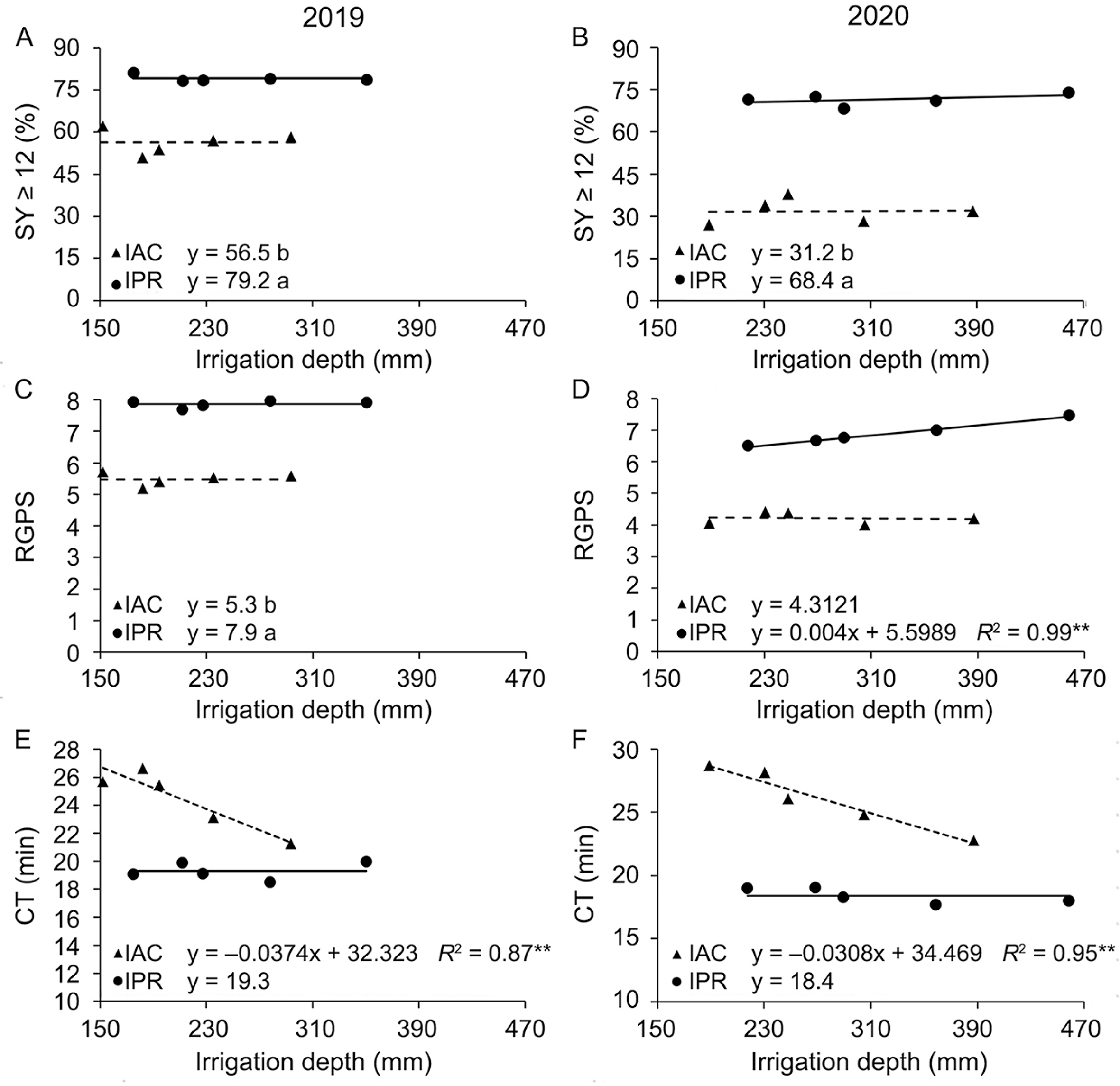
The cultivars had no variation in SY ≥ 12 as a function of the applied irrigation depths (Figure 1A and B). Cultivar IPR Campos Gerais presented an SY ≥ 12 higher than cultivar IAC Imperador in both years, with an average of 40 % higher in 2019 and 118 % higher in 2020. Only cultivar IPR Campos Gerais presented an SY ≥ 12 higher than or close to 70 % in the two years.
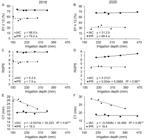
– A and B) Sieve yield higher than or equal to 12 (SY ≥ 12), C and D) relative grain production on sieves (RGPS), and E and F) cooking time (CT) of the common bean cultivars IAC Imperador and IPR Campos Gerais as a function of irrigation levels in the years 2019 and 2020. **p < 0.01. a, bMean letters compared by Tukey’s test (p < 0.05). R2 = coefficient of determination.
Relative grain production on sieves showed no variations as a function of irrigation depths for both cultivars in 2019 and IAC Imperador in 2020 (Figure 1C and D). IPR Campos Gerais presented a linear increase of 0.4 units for every 100 mm of irrigation in 2020. Similar to SY ≥ 12, IPR Campos Gerais presented RGPS higher than IAC Imperador, with an average value higher than 7.0 in 2019, regardless of the irrigation depth, and an average value higher than 7.0 in 2020 from an irrigation depth of 350 mm, a value corresponding to management under 97 % of the irrigation level (Figure 1D).
The IAC Imperador showed a reduction in CT over the two years due to increased irrigation levels. However, this variable was not affected by irrigation levels for the IPR Campos Gerais (Figure 1E and F). On average, every 100 mm of water applied reduced CT in 3.4 min for IAC Imperador. The overall average showed that the CT of the IPR Campos Gerais was lower than that for IAC Imperador.
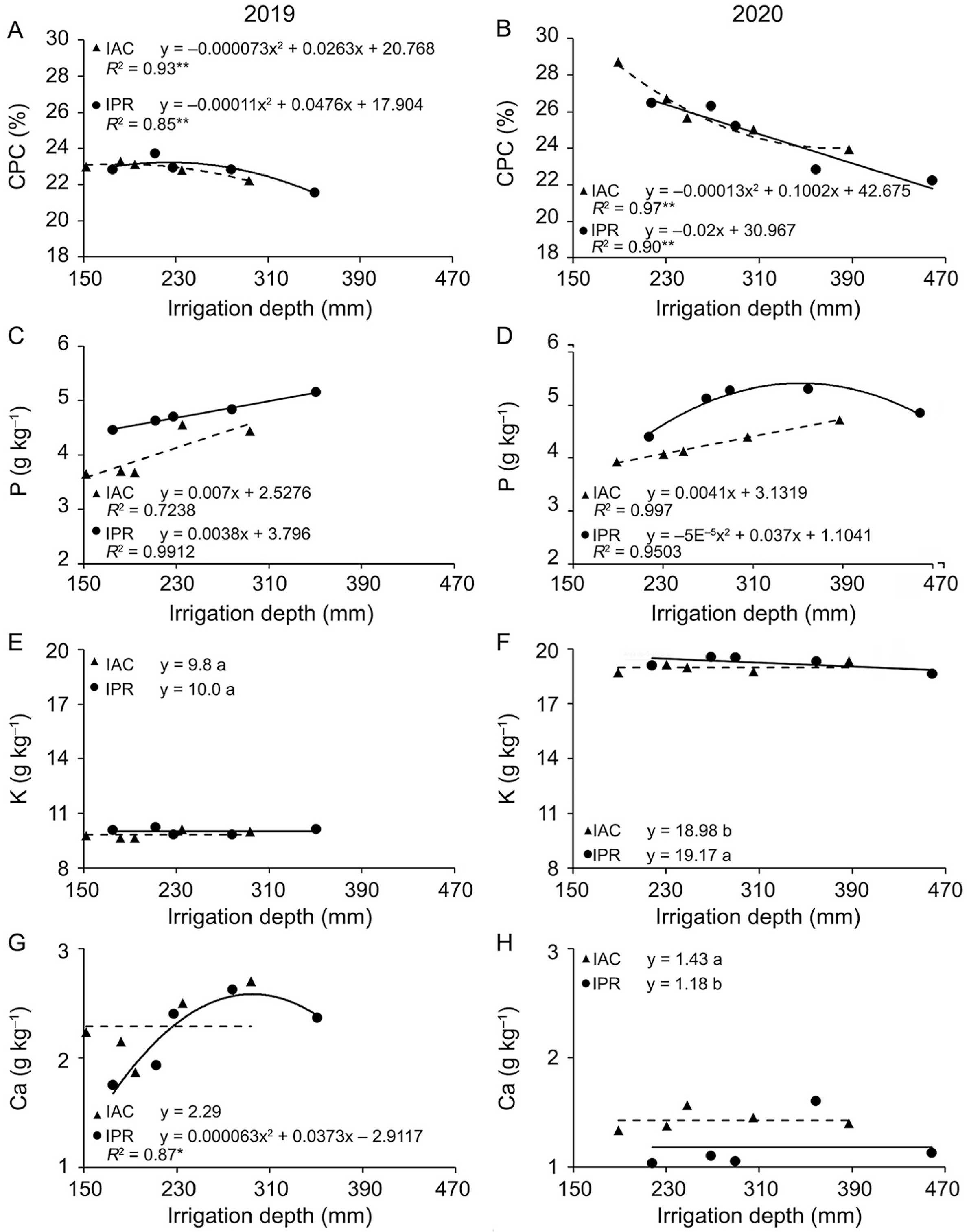
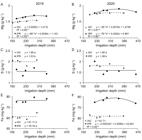
Crude protein content (CPC) of grains showed a quadratic increase in 2019 for both cultivars, with maximum values for IAC Imperador (23.1 %) and IPR Campos Gerais (23.0 %) obtained at irrigation depths of 180 and 216 mm, respectively (Figure 2A and B). A decrease was observed in 2020 for both cultivars, with a quadratic variation for IAC Imperador and a linear variation for IPR Campos Gerais. The lowest CPC for IAC Imperador (23.4 %) was obtained at an irrigation depth of 385 mm, while IPR Campos Gerais showed a 2 % reduction for every 100 mm of irrigation.
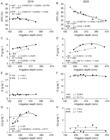
– A and B) Crude protein content (CPC) of grains, C and D) phosphorus (P), E and F) potassium (K), and G and H) calcium (Ca) of grains of the common bean cultivars IAC Imperador and IPR Campos Gerais as a function of irrigation depths in the years 2019 and 2020. *p < 0.05; **p < 0.01. a, bMean letters compared by Tukey’s test (p < 0.05). R2 = coefficient of determination.
Linear increments were observed in P content for both cultivars in 2019 and IAC Imperador in 2020 (Figure 2C and D). IAC Imperador P content increased by 0.7 and 0.4 g kg−1 for each 100 mm of water applied in 2019 and 2020, respectively and 0.38 g kg−1 in IPR Campos Gerais. The maximum grain P content for IPR Campos Gerais in 2020 (5.35 g kg−1) was obtained at an irrigation depth of 349 mm. Overall, IPR Campos Gerais presented a higher P content in the grains compared to IAC Imperador. K content showed no variation as a function of irrigation depths (Figure 2E and F). The grain K contents were similar between cultivars. Only IPR Campos Gerais showed variation in the Ca content attributable to irrigation depths, with the maximum value (2.6 g kg−1) obtained with an irrigation depth of 296 mm in 2019 (Figure 2G and H). Ca grain contents were similar between cultivars.
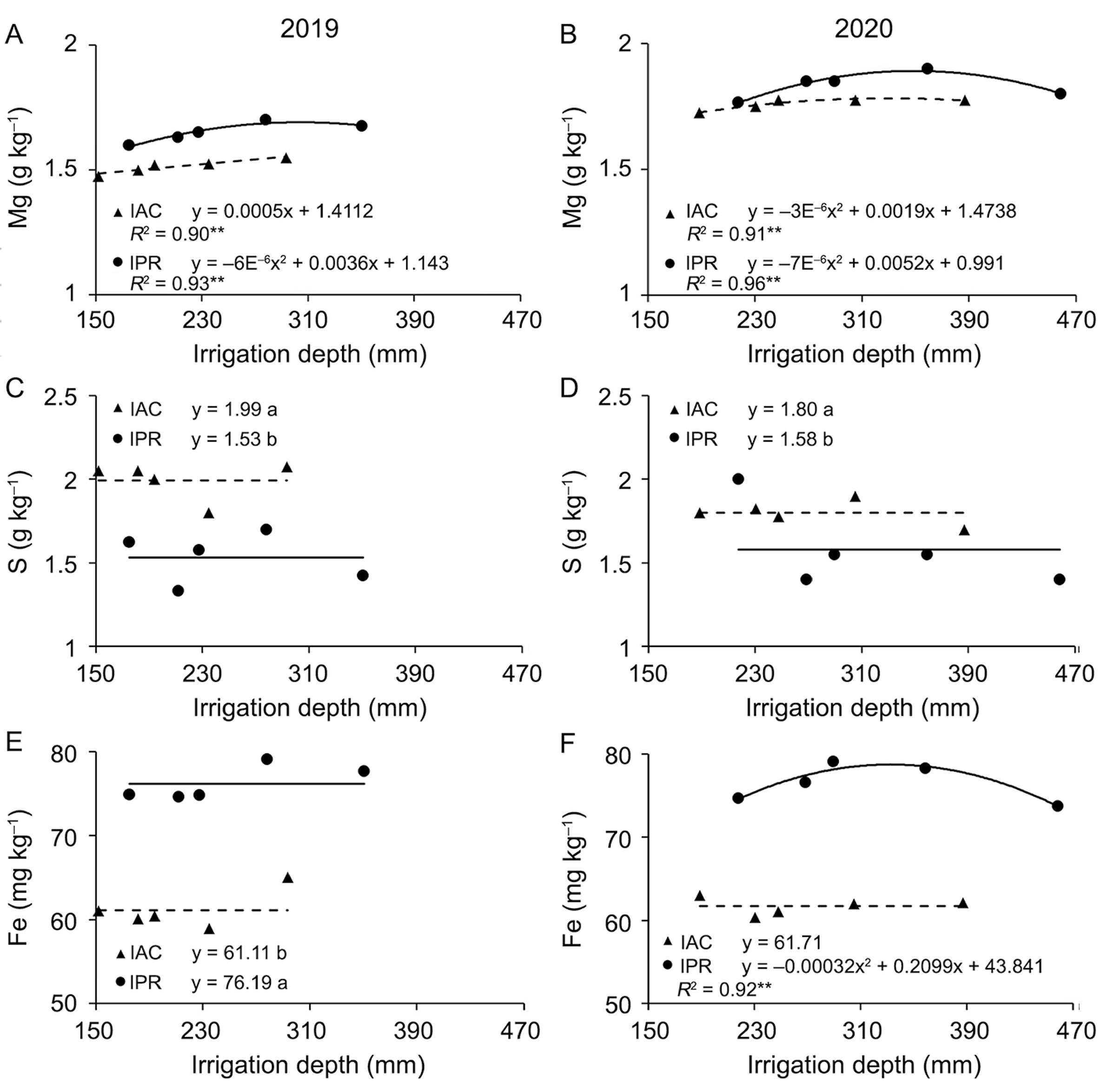
The common bean cultivars showed increments in Mg contents as a function of irrigation depths (Figure 3A and B). In 2019, a linear increase of 0.05 g kg−1 for each 100 mm of irrigation was observed for IAC Imperador. IPR Campos Gerais presented a quadratic increase, with the maximum content (1.68 g kg−1) for an irrigation depth of 300 mm. In 2020, both cultivars showed quadratic increments, with maximum values for IAC Imperador (1.77 g kg−1) and IPR Campos Gerais (1.94 g kg−1) obtained at 312 and 369 mm irrigation depths, respectively.
– A and B) Contents of magnesium (Mg), C and D) sulfur (S), and E and F) iron (Fe) of grains of the common bean cultivars IAC Imperador and IPR Campos Gerais as a function of irrigation depths in the years 2019 and 2020. **p < 0.01. a, bMean letters compared by Tukey’s test (p < 0.05). R2 = coefficient of determination.
The grain S content was not affected by irrigation depths over the two years (Figure 3C and D). The S content was higher for IAC Imperador compared to IPR Campos Gerais. IPR Campos Gerais showed variation in the grain Fe content, with a quadratic increase (Figure 3E and F) in 2020. In addition, IPR Campos Gerais presented higher Fe grain content in both years, with up to 60 % superiority compared to IAC Imperador.
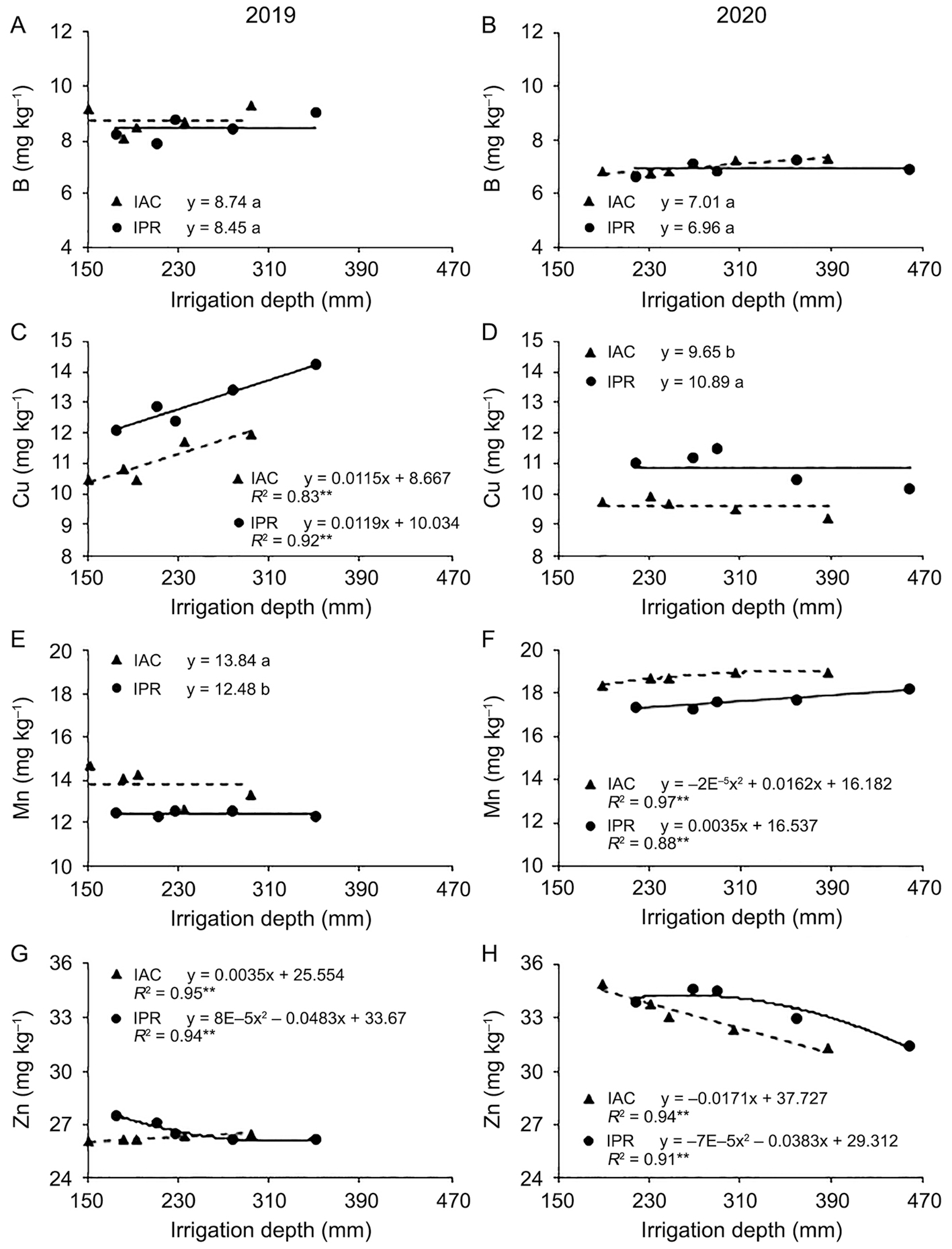
The B content did not vary as a function of the irrigation depths (Figure 4A and B). The cultivars showed a similarity in the B grain contents in both years. The Cu contents showed variation due to irrigation depths only in 2019, with increments of 1.15 and 1.19 g kg−1 for every 100 mm applied for IAC Imperador and IPR Campos Gerais, respectively (Figure 4C and D).
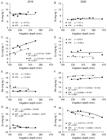
– A and B) Contents of boron (B), C and D) copper (Cu), E and F) manganese (Mn), and G and H) zinc (Zn) of grains of the common bean cultivars IAC Imperador and IPR Campos Gerais as a function of irrigation levels in the years 2019 and 2020. *p < 0.05; **p < 0.01. a, bMean letters compared by Tukey’s test (p < 0.05). R2 = coefficient of determination.
The Mn grain content was affected only by irrigation depths in 2020, with a quadratic increment for cultivar IAC Imperador and a linear increment of 0.35 g kg−1 for every 100 mm of irrigation for cultivar IPR Campos Gerais (Figure 4E and F). The maximum Mn value for IAC Imperador in 2020 (19.0 g kg−1) was obtained at an irrigation depth of 353 mm.
The Zn content showed differences in the responses of the cultivars (Figure 4G and H). In 2019, IAC Imperador showed a linear increase of 0.35 g kg−1 for every 100 mm irrigation. IPR Campos Gerais decreased quadratically, with the minimum value (26.1 g kg−1) reached with an irrigation depth of 314 mm. In 2020, IAC Imperador showed a linear reduction of 1.7 g kg−1 the Zn content of grains for every 100 mm of irrigation, while IPR Campos Gerais increased the Zn content (34.3 g kg−1) up to the irrigation depth of 259 mm from which point the content also decreased.
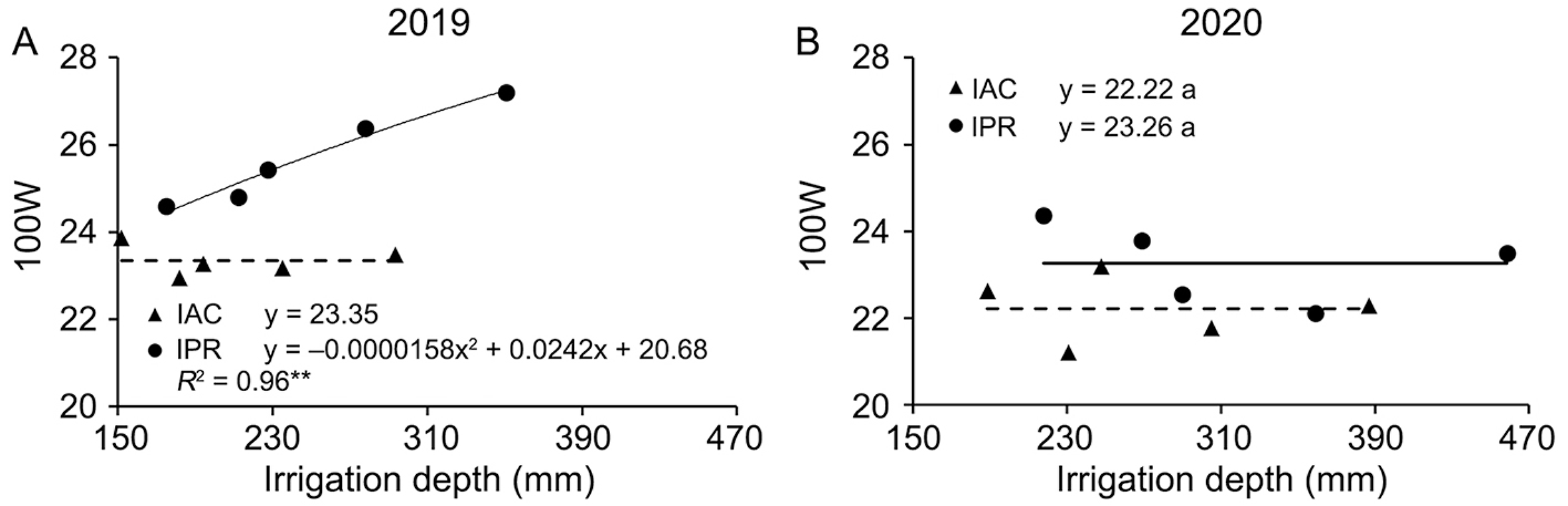
Additionally, only IPR Campos Gerais showed variations in the 100W, with linear increments of 1.59 g in 100W for each 100 mm of applied water (Figure 5A) in 2019. The highest 100W was found for IPR Campos Gerais in 2019, while in 2020, no differences were observed (Figure 5B).
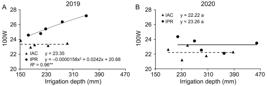
– A and B) Variation in the 100-grain weight (100W) as a function of irrigation depths for two common bean cultivars evaluated in two years (2019 and 2020). **p < 0.01. aMean letters compared by Tukey’s test (p < 0.05). R2 = coefficient of determination.
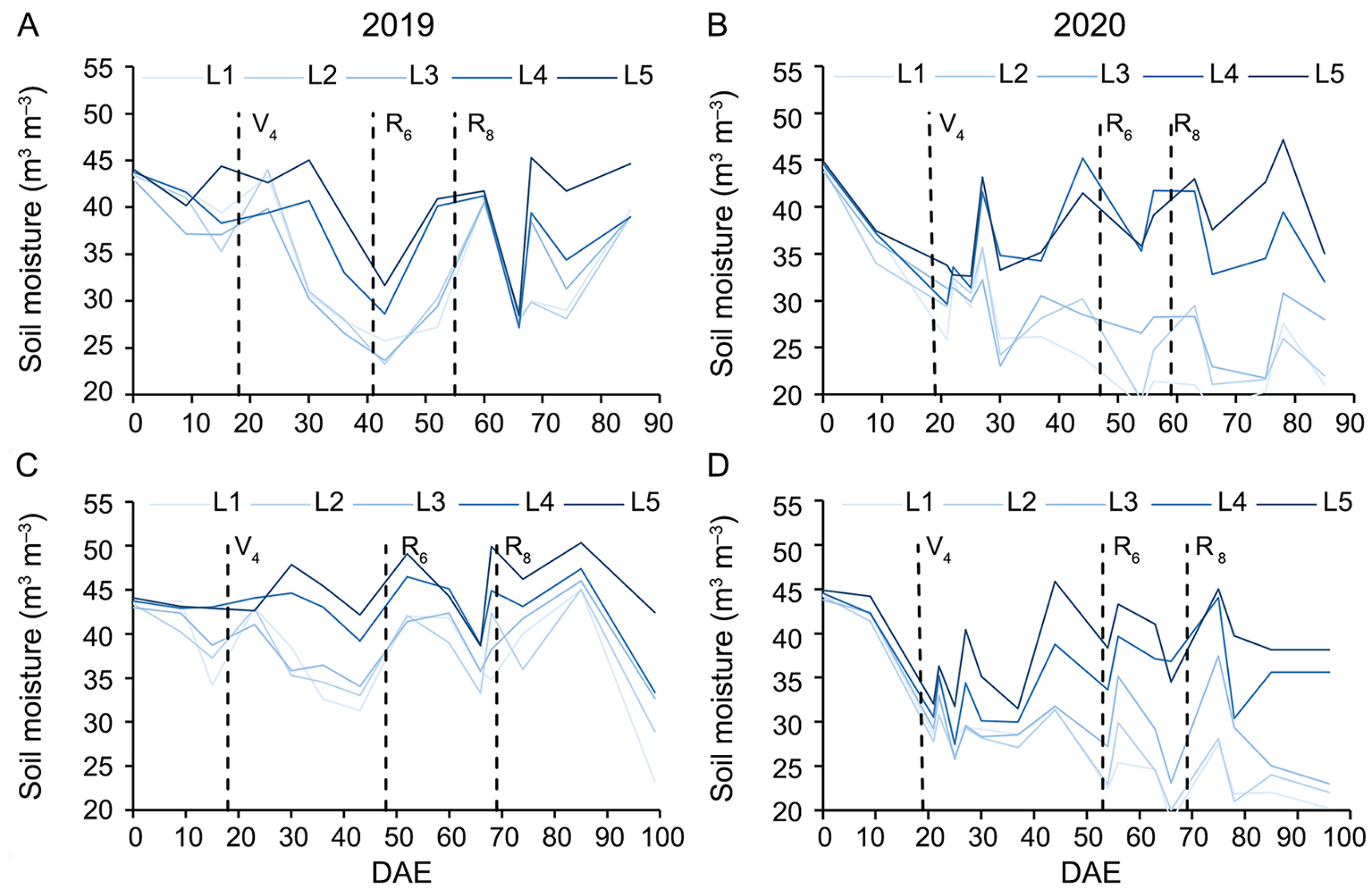
Soil moisture during the two years was lower for the management under the water deficit (L1 to L3) and higher for the management under water excess (L5) compared to the L4 management, which provided 100 % of ETc, thereby confirming the effect of water deficit and excess in the study (Figure 6A-D). In 2019, soil moisture similarity between irrigation management practices from 60 to 68 DAE was due to the adopted management, with a constant water depth for all treatments to avoid plant frost damage (Figure 6A and C). Water deficit was more severe from the flowering stage (R6) and in 2020 (Figure 6B and D).
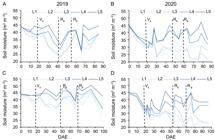
– Soil moisture variation as a function of time for the cultivars A and B) IAC Imperador, and C and D) IPR Campos Gerais in two years (2019 and 2020) for five irrigation management practices (L1-L5). V4 = three fully developed trifoliate leaves phenological stage; R6 = full flowering phenological stage; R8 = grain filling phenological stage.
Discussion
Irrigation depths had little effect on the variables SY ≥ 12 and RGPS, as regards the grain size of common beans. Common bean lots must have SY ≥ 12 and RGPS above 70 % and 7.0, respectively, to be characterized as coarse grains, with financial compensation for salling and commercially more accepted grains (Carbonell et al., 2010). In this context, only cultivar IPR Campos Gerais showed SY ≥ 12 and RGPS values above or close to those recommended, characterizing a genotype with higher acceptance by the market and the possibility of generating a higher selling price than IAC Imperador.
Overall, the IPR Campos Gerais common bean cultivar has shown a higher SY ≥ 12 than the IAC Imeprador, as verified in the literature (Filla et al., 2020). In addition, the authors observed that the SY ≥ 12 of the cultivar IAC Imperador was within the minimum limit of 70 % to be classified as ideal for common beans. Another study also demonstrated that cultivar IPR Campos Gerais presented SY ≥ 12 and RGPS higher than IAC Imperador (Aires et al., 2019). It demonstrates that cultivar IPR Campos Gerais presents bigger grains than cultivar IAC Imperador, regardless of the environment. Herein, IPR Campos Gerais presented SY ≥ 12 up to 119 % higher than IAC Imperador.
Cultivar IPR Campos Gerais presented lower values for CT than the IAC Imperador, regardless of the irrigation depth and year. Furthermore, the CT of IAC Imperador decreased as a function of the irrigation depth, while IPR Campos Gerais showed no changes for this variable as a function of irrigation. It shows that the water deficit increases CT of the IAC Imperador (up to 27 %), which is not desirable from the point of view of grain quality. The CT of the IAC Imperador varied from 21.3 to 26.6 min in 2019 and 22.5 to 28.7 min in 2020. In 2020, an increase in CT due to a water deficit from irrigation depths lower than 210 mm changes the CT classification from “Normal cooking resistance” (21 to 28 min) to “Average cooking resistance” (28 to 32 min). Additionally, the IPR Campos Gerais is classified as having “Average susceptibility to cooking,” with a CT of 16 to 21 min (Proctor and Watts, 1987).
Overall, both cultivars obtained the highest CPC values in deficit irrigation depths. The water deficit promoted CPC values up to 22 % higher than irrigation depths without deficit. Generally, higher CPC values are found under conditions of less water availability due to the dilution effect of higher grain production in irrigation management without a water deficit or a moderate water deficit (Silva et al., 2020). Furthermore, the water deficit in the field did not affect N remobilization from the shoot to the grains of common beans subjected to deficit levels (Foster et al., 1995). Water deficit did not affect N remobilization for common bean grains but reduces the number of grains produced per plant, leading to a higher CPC in grains under this condition (Palta et al., 1994). Similar CPC values between IAC Imperador and IPR Campos Gerais were found in the literature, with an average of 25 % (Aires et al., 2019).
Irrigation depths hardly changed the contents of K, Ca, S, Fe, and B. Water deficit may reduce the Fe content of common bean cultivars, regardless of the cultivar (Ghanbari et al., 2015). However, the deficit evaluated by the authors was more severe than that observed in the present study. Similarly, a reduction in the Fe content due to water deficit may be genotype-dependent (Smith et al., 2019), as was observed in 2020 in the present study. K has no structural function in plants, with enzymatic activation being its main action (Prado, 2021). This characteristic allows for the high mobility of K throughout the plant. As this nutrient is not part of the structure of any molecule, irrigation has a negligible effect on its content in grains, thereby justifying the similarities in its content between treatments. Ca and B are the two nutrients with the lowest mobility in plants. Therefore, the water status of the plant did not impede their translocation to the grains, justifying the similarity between the treatments for the contents of these two nutrients. Although S has a structural role in specific molecules in plants, especially sulfur amino acids, the similarity in common bean grain content as a function of irrigation depth is justified by the low sulfur amino acid content in the common bean (Flores-Sosa et al., 2020; Prado, 2021).
Water deficit reduced the P (up to 22 %), Mg (up to 6 %), Cu (up to 11 %), and Mn (up to 5 %) contents in the grains, regardless of the cultivar. Hummel et al. (2018) observed that the P, Mg, Cu, and Mn contents also decreased for most of the studied genotypes under water deficit conditions, as the lack of water reduces the absorption and translocation of these nutrients to the grains. Water deficit reduces the amount of P translocated to the grains in soybean genotypes (Jin et al., 2006), reducing the P content in the grains, as was observed for common beans in the present study.
In addition to CPC, Zn was the only nutrient with higher contents under water deficit conditions (up to 11 % higher). Almost all situations showed a decrease in the Zn content of grains with an increase in the irrigation depth. This fact was like that Hummel et al. (2018) observed, in which water deficit increased the Zn contents in the grains in most of the evaluated cultivars. According to the authors, a water deficit changes the translocation of this nutrient to the grains, and the Zn content in the grains is higher under these conditions due to the dilution effect caused by the lower number of grains in plants with a water deficit. Because of this, the Zn content in common bean grains is higher under water deficit conditions depending on the cultivar (Sica et al., 2021).
In a bibliographic review of the remobilization of macro-and micronutrients in different crops as a function of water deficit, Etienne et al. (2018) observed that N is always remobilized for grains in all plant species, while the degree of water deficit and the crop can affect the remobilization of K, S, P, Mg, Cu, Fe, and Zn. Moreover, the authors also found little evidence that water deficit affects Ca, Mn, and B remobilization, as these nutrients already show little remobilization without water deficit conditions.
The comparison between cultivars showed general similarities in K, Ca, B, and Zn contents. IPR Campos Gerais presented the highest contents for P (up to 37 % higher), Mg (up to 14 % higher), Fe (up to 27 % higher), and Cu (up to 18 % higher). At the same time, cultivar IAC Imperador had the highest values for S and Mn, regardless of the year and irrigation levels. Therefore, IPR Campos Gerais can be considered a genotype with a higher grain nutritional quality, as it has a higher number and contents of nutrients than IAC Imperador, among those most important for human consumption, such as Fe. This cultivar has a higher Fe and Zn content than cultivar IAC Imperador.
A study observed differences of 16 % in CPC, 26 % in the Ca content, and 37 % in the Zn content of grains between five common bean cultivars (Sica et al., 2021). Another study found differences of 35 % in CT and 44 % in SY ≥ 12 between 16 cultivars (Nunes et al., 2021). In addition, early cultivars have a lower SY ≥ 12 than cultivars of normal and late cycles, especially as regards grain size (Aires et al., 2019; Nunes et al., 2021). These differences show that the correct choice of a common bean cultivar directly affects the product price and food biological value. Cultivars with higher nutritional quality should be prioritized in regions where nutrient deficiencies predominate in the population, mainly Fe and Zn, while cultivars with higher technological quality, especially with a high SY ≥ 12, should be chosen in regions where the so-called hidden hunger does not occur, as they are an alternative to increasing the price paid for the product and, consequently, the producer income.
Overall, the water deficit reduces the technological and nutritional quality of the common beans. Water deficit reduces RGPS in IPR Campos Gerais by up to 13 %. It increases the CT of grains in cultivar IAC Imperador by up to 27 %, thus affecting the acceptability and price. With regard to the nutritional quality, water deficit reduces P, Ca, Mg, Cu, Mn, and Fe contents up to 22, 35, 6, 11, 5 and 5 %, respectively. Moreover, the water deficit did not change K, S, and B contents but increased the grains’ crude protein and Zn content by more than 10 %. IPR Campos Gerais has the best technological and nutritional quality of grains. This cultivar presents grain size up to 119 % larger, CT up to 36 % lower, and higher contents of the most important nutrients for human consumption, such as P (up to 37 % higher), Mg (14 %), Fe (27 %), and Cu (18 %), compared to IAC Imperador. These results demonstrate the importance of proper irrigation management and cultivar choice to increase common bean quality.
Acknowledgments
To the Fundação de Amparo à Pesquisa do Estado de São Paulo (FAPESP) - process number 2018/17363-2.
References
-
Aires BC, Soratto RP, Guidorizzi FVC. 2019. Grain yield and quality of common bean cultivars in response to nitrogen. Científica 47: 231-238. https://doi.org/10.15361/1984-5529.2019v47n2p231-238
» https://doi.org/10.15361/1984-5529.2019v47n2p231-238 - Allen RG, Pereira LS, Raes D, Smith M. 1998. Crop evapotranspiration-Guidelines for computing crop water requirements-FAO Irrigation and drainage paper 56. FAO, Rome, Italy.
-
Alvares CA, Stape JL, Sentelhas PC, Gonçalves JLM, Sparovek G. 2013. Köppen's climate classification map for Brazil. Meteorologische Zeitschrift 22: 711-728. https://doi.org/10.1127/0941-2948/2013/0507
» https://doi.org/10.1127/0941-2948/2013/0507 - Ambrosano EJ, Wutke EB, Bulisani EA, Cantarella H. 1997. Feijão. p. 194-195. In: Raij BV, Cantarella H, Quaggio JA, Furlani AMC. eds. Recomendação de adubação e calagem para o Estado de São Paulo. Editora Ceres, Campinas, SP, Brazil (in Portuguese).
- Association of Official Analytical Chemists [AOAC]. 1995. Official methods of analysis. 16 ed. AOAC, Washington, USA.
- Bataglia OC, Furlani AMC, Teixeira JPF, Furlani PR, Gallo JR. 1983. Métodos de análise química de plantas. p. 48. Editora Ceres, Campinas, SP, Brazil (in Portuguese).
-
Carbonell SAM, Chiorato AF, Gonçalves JGR, Perina EF, Carvalho CRL. 2010. Commercial grain size in common bean cultivars. Ciência Rural 40: 2067-2073 (in Portuguese, with abstract in English). https://doi.org/10.1590/S0103-84782010005000159
» https://doi.org/10.1590/S0103-84782010005000159 -
Carvalho AMX, Mendes FQ, Mendes FQ, Tavares LF. 2020. SPEED Stat: a free, intuitive, and minimalist spreadsheet program for statistical analyses of experiments. Crop Breeding and Applied Biotechnology 20: e327420312. https://doi.org/10.1590/1984-70332020v20n3s46
» https://doi.org/10.1590/1984-70332020v20n3s46 -
Chiorato AF, Carbonell SAM, Carvalho CRL, Barros VLNP, Borges WLB, Ticelli M, et al. 2012. 'IAC IMPERADOR': early maturity "carioca" bean cultivar. Crop Breeding and Applied Biotechnology 12: 297-300. https://doi.org/10.1590/S1984-70332012000400012
» https://doi.org/10.1590/S1984-70332012000400012 -
Coelho AP, Faria RT, Lemos LB, Reis MAM, Filla VA, Bertino AMP. 2023. Irrigation management of common bean cultivars with contrasting growth habits. Scientia Agricola 80: e20220038. http://doi.org/10.1590/1678-992X-2022-0038
» http://doi.org/10.1590/1678-992X-2022-0038 -
Espindula MC, Rodovalho GM, Marcolan AL, Barberena IM, Cipriani HN, Araújo LFB. 2021. Ammonia loss from protected urea in soil under different irrigation depths. Acta Scientiarum. Agronomy 43: e46764. https://doi.org/10.4025/actasciagron.v43i1.46764
» https://doi.org/10.4025/actasciagron.v43i1.46764 -
Etienne P, Diquelou S, Prudent M, Salon C, Maillard A, Ourry A. 2018. Macro and micronutrient storage in plants and their remobilization when facing scarcity: The case of drought. Agriculture 8: 1-14. https://doi.org/10.3390/agriculture8010014
» https://doi.org/10.3390/agriculture8010014 -
Fellner-Feldegg H. 1969. Measurement of dielectrics in the time domain. The Journal of Physical Chemistry 73: 616-623. https://doi.org/10.1021/j100723a023
» https://doi.org/10.1021/j100723a023 - Fernández F, Gepts P, López M. 1985. Etapas de dessarollo en la planta del frijol. p. 61-78. In: López M, Fernández F, Schoonhoven AV. eds. Frijol: investigación y producción. CIAT, Cali, Colômbia (in Spanish).
-
Filla VA, Coelho AP, Leal FT, Bettiol JVT, Lemos LB. 2020. Portable chlorophyll meter in monitoring and management of nitrogen in common bean cultivars. Revista de la Facultad de Ciencias Agrarias 52: 64-77. Available at: http://www.scielo.org.ar/pdf/refca/v52n2/v52n2a07.pdf [Accessed Feb 02, 2024]
» http://www.scielo.org.ar/pdf/refca/v52n2/v52n2a07.pdf -
Flores-Sosa ÁR, Aquino-Bolaños EN, Cardador-Martínez A, Chávez-Servia JL, Vera-Guzmán AM, Carrillo-Rodríguez JC, et al. 2020. Variation in protein and amino acids content among landraces of common bean ( Phaseolus vulgaris L.). Emirates Journal of Food and Agriculture 32: 750-760. https://doi.org/10.9755/ejfa.2020.v32.i10.2175
» https://doi.org/10.9755/ejfa.2020.v32.i10.2175 -
Foster EF, Pajarito A, Acosta-Gallegos J. 1995. Moisture stress impact on N partitioning, N remobilization and N-use efficiency in beans ( Phaseolus vulgaris ). The Journal of Agricultural Science 124: 27-37. https://doi.org/10.1017/S0021859600071215
» https://doi.org/10.1017/S0021859600071215 -
Ghanbari AA, Mousavi SH, Pessarakli M. 2015. Accumulation of reserve compounds in common bean seeds under drought stress. Journal of Plant Nutrition 38: 609-623. https://doi.org/10.1080/01904167.2014.934479
» https://doi.org/10.1080/01904167.2014.934479 -
Hanks RJ, Keller J, Rasmussen VP, Wilson GD. 1976. Line source sprinkler for continuous variable irrigation-crop production studies. Soil Science Society of America Journal 40: 426-429. https://doi.org/10.2136/sssaj1976.03615995004000030033x
» https://doi.org/10.2136/sssaj1976.03615995004000030033x -
Hummel M, Hallahan BF, Brychkova G, Ramirez-Villegas J, Guwela V, Chataika B, et al. 2018. Reduction in nutritional quality and growing area suitability of common bean under climate change induced drought stress in Africa. Scientific Reports 8: 16187. https://doi.org/10.1038/s41598-018-33952-4
» https://doi.org/10.1038/s41598-018-33952-4 -
Instituto Brasileiro de Geografia e Estatística [IBGE]. 2020. Pesquisa de orçamentos familiares 2017-2018: Avaliação nutricional da disponibilidade domiciliar de alimentos no Brasil. p. 61. IBGE, Rio de Janeiro, RJ, Brazil. Avalaible at: https://biblioteca.ibge.gov.br/visualizacao/livros/liv101704.pdf [Accessed Oct 10, 2020] (in Portuguese).
» https://biblioteca.ibge.gov.br/visualizacao/livros/liv101704.pdf -
Jin J, Wang G, Liu X, Pan X, Herbert SJ, Tang C. 2006. Interaction between phosphorus nutrition and drought on grain yield, and assimilation of phosphorus and nitrogen in two soybean cultivars differing in protein concentration in grains. Journal of Plant Nutrition 29: 1433-1449. https://doi.org/10.1080/01904160600837089
» https://doi.org/10.1080/01904160600837089 -
Kozak M, Powers SJ. 2017. If not multiple comparisons, then what? Annals of Applied Biology 171: 277-280. https://doi.org/10.1111/aab.12379
» https://doi.org/10.1111/aab.12379 - Lemos BL, Mingotte FLC, Farinelli R. 2015. Cultivares. p. 181-207. In: Arf O, Lemos LB, Soratto RP, Ferrari S. eds. Aspectos gerais da cultura do feijão Phaseolus vulgaris. FEPAF, Botucatu, São Paulo, Brazil (in Portuguese).
- Malavolta E, Vitti GC, Oliveira SA. 1997. Avaliação do estado nutricional de plantas: Princípios e aplicações. p. 308. Potafos, Piracicaba, SP, Brazil (in Portuguese).
-
Mathobo R, Marais D, Steyn JM. 2017. The effect of drought stress on yield, leaf gaseous exchange and chlorophyll fluorescence of dry beans ( Phaseolus vulgaris L.). Agricultural Water Management 180: 118-125. https://doi.org/10.1016/j.agwat.2016.11.005
» https://doi.org/10.1016/j.agwat.2016.11.005 -
Miano AC, Saldaña E, Campestrini LH, Chiorato AF, Augusto PED. 2018. Correlating the properties of different carioca bean cultivars ( Phaseolus vulgaris ) with their hydration kinetics. Food Research International 107: 182-194. https://doi.org/10.1016/j.foodres.2018.02.030
» https://doi.org/10.1016/j.foodres.2018.02.030 -
Moda-Cirino V, Gerage AC, Riede CR, Sera GH, Takahashi M, Abbud NS, et al. 2012. Plant breeding at Instituto Agronômico do Paraná: IAPAR. Crop Breeding and Applied Biotechnology 12: 25-30. https://doi.org/10.1590/S1984-70332012000500004
» https://doi.org/10.1590/S1984-70332012000500004 -
Nassary EK, Baijukya F, Ndakidemi PA. 2020. Intensification of common bean and maize production through rotations to improve food security for smallholder farmers. Journal of Agriculture and Food Research 2: 100040. https://doi.org/10.1016/j.jafr.2020.100040
» https://doi.org/10.1016/j.jafr.2020.100040 -
Nunes HD, Leal FT, Mingotte FLC, Damião VDA, Couto Junior PA, Lemos LB. 2021. Agronomic performance, quality and nitrogen use efficiency by common bean cultivars. Journal of Plant Nutrition 44: 995-1009. https://doi.org/10.1080/01904167.2020.1849292
» https://doi.org/10.1080/01904167.2020.1849292 -
Palta JA, Kobata T, Turner NC, Fillery IR. 1994. Remobilization of carbon and nitrogen in wheat as influenced by postanthesis water deficits. Crop Science 34: 118-124. https://doi.org/10.2135/cropsci1994.0011183X003400010021x
» https://doi.org/10.2135/cropsci1994.0011183X003400010021x - Prado RM. 2021. Mineral nutrition of tropical plants. p. 392. Springer Nature, Switzerland.
-
Proctor JR, Watts BM. 1987. Development of a modified Mattson bean cooker procedure based on sensory panel cookability evaluation. Canadian Institute of Food Science and Technology Journal 20: 9-14. https://doi.org/10.1016/S0315-5463 (87)70662-2
» https://doi.org/10.1016/S0315-5463 (87)70662-2 -
Ravello RAV, Oliveira C, Lessa J, Boas LVV, Castro EM, Guilherme LRG, et al. 2021. Selenium application influenced selenium biofortification and physiological traits in water-deficit common bean plants. Crop and Pasture Science 73: 44-55. https://doi.org/10.1071/CP20519
» https://doi.org/10.1071/CP20519 -
Ribeiro T, Silva DA, Esteves JAF, Azevedo CVG, Gonçalves JGR, Carbonell SAM, et al. 2019. Evaluation of common bean genotypes for drought tolerance. Bragantia 78: 1-11. https://doi.org/10.1590/1678-4499.2018002
» https://doi.org/10.1590/1678-4499.2018002 -
Sica P, Galvao A, Scariolo F, Maucieri C, Nicoletto C, Pilon C, et al. 2021. Effects of drought on yield and nutraceutical properties of beans ( Phaseolus spp.) traditionally cultivated in Veneto, Italy. Horticulturae 7: 17. https://doi.org/10.3390/horticulturae7020017
» https://doi.org/10.3390/horticulturae7020017 -
Silva AN, Ramos MLG, Ribeiro Júnior WQ, Alencar ER, Silva PC, Lima CA, et al. 2020. Water stress alters physical and chemical quality in grains of common bean, triticale and wheat. Agricultural Water Management 231: 106023. https://doi.org/10.1016/j.agwat.2020.106023
» https://doi.org/10.1016/j.agwat.2020.106023 -
Smith MR, Veneklaas E, Polania J, Rao IM, Beebe SE, Merchant A. 2019. Field drought conditions impact yield but not nutritional quality of the seed in common bean ( Phaseolus vulgaris L.). PLoS One 14: e0217099. https://doi.org/10.1371/journal.pone.0217099
» https://doi.org/10.1371/journal.pone.0217099 - Soil Survey Staff. 2014. Soil taxonomy. 12ed. USDA Natural Resources Conservation Service, Washington, USA.
-
White PJ, Broadley MR. 2009. Biofortification of crops with seven mineral elements often lacking in human diets-iron, zinc, copper, calcium, magnesium, selenium and iodine. New Phytologist 182: 49-84. https://doi.org/10.1111/j.1469-8137.2008.02738.x
» https://doi.org/10.1111/j.1469-8137.2008.02738.x
-
Data availability statement:
Data will be made available upon request.
-
Declaration of use of AI Technologies:
The authors did not use AI technologies in the manuscript.
Edited by
-
Edited by:
Adriano Costa de Camargo
Data will be made available upon request.