
 Technological arrangements for regulating access to healthcare: experience in the state of São Paulo
ABSTRACT
OBJECTIVE To describe and analyze the regulatory arrangements used to expand access to beds and health services during Covid-19.
METHODS This study, part of the Research for the SUS Program funded by Fundação de Amparo à Pesquisa do Estado de São Paulo (Fapesp) and the Secretaria de Ciência, Tecnologia, Inovação e Insumos Estratégicos em Saúde do Ministério da Saúde (Sctie-MS) Fapesp/Sctie used mixed methods to investigate the management of network care to face Covid-19 in São Paulo. Data was collected via an electronic questionnaire sent to managers in 645 municipalities between November 2021 and February 2022, with the support of the São Paulo Council of Municipal Health Secretaries (COSEMS-SP). The responses were analyzed quantitatively and qualitatively, with a focus on regulating access to healthcare.
RESULTS 255 valid responses were collected (39.5% of São Paulo municipalities). Most municipalities regulated Covid-19 beds through the state regulation center (58%) and faced difficulties with access (53.7%), insufficient beds and 68.6% difficulties with hospitalization. The creation of new services was reported by 83.1%, and 70.0% implemented specific flows to expand access. In outpatient access, 54.5% used multiple regulation strategies. Financial resources were sufficient for 54.0% of the municipalities and 86.3% faced difficulties in acquiring supplies. Statistically significant associations were observed between municipal size and regulation variables.
CONCLUSION The Covid-19 pandemic has highlighted the importance of bed regulation and the unequal distribution between the public and private sectors. This study identified challenges such as insufficient beds, difficulties in admitting patients, and a reduction in outpatient services. Large municipalities have expanded beds through field hospitals and agreements with private hospitals. Small and medium-sized municipalities adopted regional strategies and multiple protocols. Regional coordination and state regulation were crucial in managing the response, but difficulties with supplies and human resources impacted on access. The incorporation of digital mechanisms and new regulatory strategies was important, despite the structural and political challenges that aggravated the emergency response.
DESCRIPTORS
Effective Access to Health Services; Health Care Coordination and Monitoring; Bed Occupancy; COVID-19
RESUMO
OBJETIVO Descrever e analisar os arranjos de regulação empregados para a ampliação do acesso a leitos e serviços de saúde durante a covid-19.
MÉTODOS Estudo parte de pesquisa Programa Pesquisa para o SUS financiada pela Fundação de Amparo à Pesquisa do Estado de São Paulo (Fapesp) e da Secretaria de Ciência, Tecnologia, Inovação e Insumos Estratégicos em Saúde do Ministério da Saúde (Sctie-MS), utilizando métodos mistos, investigou a gestão do cuidado em rede para enfrentar a covid-19 em São Paulo. Dados foram coletados via questionário eletrônico, enviado a gestores de 645 municípios entre novembro de 2021 e fevereiro de 2022, com apoio do Conselho dos Secretários Municipais de Saúde de São Paulo (Cosems-SP). As respostas foram analisadas quantitativa e qualitativamente, com foco na regulação do acesso à saúde.
RESULTADOS Foram coletadas 255 respostas válidas (39,5% dos municípios paulistas). A maioria dos municípios regulou leitos covid-19 pela central de regulação estadual (58%) e enfrentou dificuldades de acesso (53,7%), insuficiência de leitos e 68,6% dificuldades para internação. A criação de novos serviços foi relatada por 83,1%, e 70,0% implementaram fluxos específicos para ampliar o acesso. No acesso ambulatorial, 54,5% usaram múltiplas estratégias de regulação. Recursos financeiros foram suficientes para 54,0% dos municípios e 86,3% enfrentaram dificuldades na aquisição de insumos. Associações estatísticas significativas foram observadas entre porte municipal e variáveis de regulação.
CONCLUSÃO A pandemia de covid-19 destacou a importância da regulação de leitos e a desigualdade na distribuição entre os setores público e privado. Este estudo identificou desafios como a insuficiência de leitos, dificuldades na internação de pacientes e a redução de serviços ambulatoriais. Municípios de grande porte ampliaram leitos por meio de hospitais de campanha e acordos com hospitais privados. Já os pequenos e médios adotaram estratégias regionais e protocolos múltiplos. A articulação regional e a regulação estadual foram cruciais na gestão da resposta, mas as dificuldades com insumos e recursos humanos impactaram o acesso. A incorporação de mecanismos digitais e novas estratégias de regulação foram importantes, apesar dos desafios estruturais e políticos que agravaram a resposta emergencial.
DESCRITORES
Acesso Efetivo aos Serviços de Saúde; Regulação e Fiscalização em Saúde; Ocupação de Leitos; COVID-19
INTRODUCTION
The global spread of the SARS-CoV-2 virus, which began at the end of 2019, has resulted in a public health crisis on a global scale. Millions of people have been infected, and more than 7 million deaths have been recorded1, overloading health systems and making it necessary to re-evaluate conventional practices in the provision of health care. In addition to caring for the sick, implementing measures to contain the virus and maintaining essential social activities were major challenges. The scenario was aggravated by the difficulties encountered in the medical and hospital supply chain, logistical obstacles, human and financial resources, which exposed the fragility of health systems across the board2,3.
In this context, regulating access to healthcare during the pandemic has become a critical challenge. An analysis of the available literature shows that decision-makers, governments and health authorities began to use arrangements that could help manage limited resources. Various technological arrangements for regulating access have been identified4, with the aim of qualifying demand5, optimizing supply4,6, using technology to streamline processes7,8 and enabling patient care, with the implementation of field hospitals9, the adoption of differentiated protocols for access, and the use of digital health for patient care and monitoring being highlighted. In addition, the construction and strengthening of care networks10 played an important role in the response, identified in local contexts as well as regionally.
In Brazil and in other countries with universal health systems11,12, the regionalization of health systems through regions and care networks has been a strategy for increasing access, resizing supply and overcoming barriers to care11, often using technological regulation arrangements. Identifying the adoption of this type of strategy in the Unified Health System (SUS) reinforces the capillarity of health regulation actions, fostered by the National Regulation Policy. In addition, although the Brazilian regionalization process is still under construction13 and presents additional difficulties due to its size and scope11, its relevance and the expression of the results achieved14 are undeniable, including through governance mechanisms.
In this sense, the concept of governance is related to resource management, planning and policy formulation14. On a regional scale, governance mechanisms work to optimize installed capacity and rationalize care, generating economies of scale, integrating local systems, overcoming care barriers and access difficulties14,15. In Brazil, governance is advancing, producing spaces for articulation and solidarity between managers, but it faces challenges in terms of state protagonism and democratic legitimacy10, influenced by the allocation of resources in unequal logics.
The state of São Paulo, according to data from the Instituto Brasileiro de Geografia e Estatística (IBGE), concentrates around a third of the country’s gross domestic product, with strong economic activity in different areas, and is considered the most important economy in the nation. In health, it has the largest technological park, with the highest concentration of services and density of professionals, which coexist with significant challenges related to social inequalities16. For Lorenz et al.17, the evolution of the epidemic, starting in the capital and moving inland, coincides with the main state highways17 and the same with the epidemic peaks of 2020 and 2021. According to the authors, the profile of severe cases and deaths is similar to that found in other Brazilian countries and regions.
The São Paulo State Health Department coordinates and executes health actions through 17 regional health departments (DRS), which act as decentralized bodies. Coordination with the municipalities takes place mainly via the Regional Inter-Management Commission (CIR), a formal agreement body. The Council of Municipal Health Secretaries (COSEMS) plays a strategic role in aligning these actions. Despite weaknesses in regional coordination, the CIR has helped to expand access to healthcare, following established regionalization guidelines.
This article aims to describe and analyze the technological arrangements for regulating access to healthcare beds and services in the state of São Paulo during the Covid-19 pandemic. The importance of this study lies in the identification of productions and innovations used as facilitators to expand access to deal with the health crisis, understanding how these mechanisms were articulated in the SUS, how they contributed to overcoming the barriers imposed by the pandemic and their incorporation as a legacy.
METHODS
This study is part of a research project under the Research Program for the SUS (PPSUS) funded by Fundação de Amparo à Pesquisa do Estado de São Paulo (Fapesp) and the Secretaria de Ciência, Tecnologia, Inovação e Insumos Estratégicos em Saúde do Ministério da Saúde (Sctie-MS) , using mixed methods with the aim of identifying the management of network care in the fight against Covid-19 in the state of São Paulo18. The data analyzed here was collected via an electronic questionnaire, answered by municipal health managers between November 2021 and February 2022. COSEMS-SP supported the dissemination of the survey and encouraging participation.
The questionnaire, with 39 questions (38 multiple choice and one discursive), was sent by e-mail to the 645 municipalities in São Paulo to be answered by the municipal manager/secretary or designate. The questions, prepared by the researchers and previously tested, were divided into four axes: Management, Health Surveillance, Network Assistance, and Vulnerabilities.
The multiple-choice answers were grouped and analyzed by the researchers in Excel tables, concentrating on the Management and Networked Care axis, with a focus on regulating access to healthcare. Answers to 18 questions were used, with descriptive analysis and the chi-square test (x2) to identify associations with the size of the municipalities, classified based on population as small, medium, large, and extra-large, with cut-off ranges established by the IBGE.
Cramer’s V was used as a measure of effect size, with the following cut-off points: > 0.1 - small; > 0.3 - medium; and > 0.5 - large19. The program used was the Statistical Package for the Social Sciences (SPSS) version 2020. The significance interval for positive associations was set at p < 0.05.
In addition, the answers to the discursive question were used to increase understanding of the quantitative findings, as pointed out by Creswell21. The narratives helped to identify technological regulation arrangements that act as facilitators for access to healthcare. AtlasTi 24 software was used, based on the elaboration and application of analysis category codes, which allowed the themes of interest to be brought together, as Friese22points out. The citations are identified using the references provided by the software, locating the document number, the coding number and the paragraph in which it is found (format: D:C¶P).
The research received funding from FAPESP and was approved by the Research Ethics Committee of the Universidade Federal de São Paulo, under CAAE 45679521.6.0000.5505. The participants were given a free and informed consent form at the beginning of the electronic questionnaire and before the interviews were carried out, they agreed to take part in the study, and the respondents were guaranteed confidentiality and anonymity.
RESULTS
In total, 340 responses were collected, excluding questionnaires answered in duplicate, leaving 255 valid responses (39.5% of São Paulo municipalities), representing all the health regions in the state of São Paulo, delimited by the seventeen DRS. Two-thirds were provided by the managers of the Municipal Health Departments (SMS), and most of the participating municipalities are small (51.4%), as shown in Table 1.
The results were grouped between hospital/urgency regulation (Table 2) and outpatient/non-Covid regulation and other aspects (Table 3), using data from the Management and Network Assistance axes. The findings of association with the size of the municipalities are described below and shown in Table 4.
Hospital/Urgency Regulation
Most municipalities (58.0%) regulated beds exclusively for Covid-19 through the São Paulo State Health Services and Supply Regulation Center (CROSS). However, there were difficulties with access: 53.7% reported insufficient beds and 70.3% faced problems admitting patients. As for hospitalization protocols, 42.7% used more than one protocol, as shown in Table 2.
The creation of new services for suspected cases of Covid-19, such as care centers to deal with Covid-19, was reported by 83.1% of respondents. In emergency services, 70.2% have implemented specific flows and 51.3% have created or adapted services to deal with Covid-19. The relationship between the public and private sectors was expanded, including the expansion of the number of beds (42.0%). On the other hand, 21.5% of public managers received requests for transfer from the private sector to public beds.
Outpatient/Non-Covid Regulation
In terms of access to outpatient healthcare not related to Covid-19, 54.5% of respondents used multiple regulation strategies, such as monitoring queues, risk classification protocols, matrix support, and teleregulation. There was a reduction in specialized consultations, therapeutic procedures, diagnostic tests and surgeries, as shown in Table 3.
Other Factors Associated with Regulation
Other factors have interfered with access to healthcare during the pandemic, such as the availability of financial resources, which 54.0% of municipalities considered sufficient, while 39.0% disagreed. There was an increase in the number of staff in the emergency services and the Mobile Emergency Care Service (SAMU) (45.5%) and in the hospital sector (49.0%), but in specialized care 52.5% reported no change and 17.6% recorded a reduction due to sick leave. In addition, 86.3% faced difficulties in acquiring materials and supplies.
Associations with the Size of Municipalities
Table 4 shows the association between the size of the municipality and the variables of interest. Regarding hospital beds, the majority of small municipalities were regulated by a state/CROSS center (p < 0.001). Statistical significance was also found in the use of Covid-19 bed regulation protocols (p < 0.001). Small municipalities were more likely to adopt multiple protocols, while large municipalities more often adopted the state protocol.
As for strategies to ensure access to outpatient services not related to Covid-19, there was a significant association between large municipalities and the use of multiple strategies (p < 0.05), such as outpatient regulation, queue qualification, risk protocols, matrix support and teleregulation. Small municipalities, on the other hand, were associated with the absence of actions (p < 0.05). Small and medium-sized municipalities also adopted various strategies, but without statistical significance (p = 0.146).
The associations were less obvious for variables related to the provision of outpatient services, such as specialized consultations and surgeries. There was statistical significance in the reduction of diagnostic tests (p = 0.008), but not in specialized consultations. Sufficiency of financial resources was associated with the size of the municipality (p < 0.001), with small municipalities reporting greater sufficiency. Managers in large and medium-sized municipalities, on the other hand, reported insufficiency.
There was also a significant association between municipal size and an increase in staff in emergency services and SAMU (p = 0.001) and in hospital care (p = 0.000). Small municipalities had more “unchanged” workforces and faced more difficulties in acquiring supplies, especially due to a lack of products on the market (p = 0.026).
The results presented were categorized into barriers and facilitators of access, highlighting the technological regulation arrangements used, helping to analyze the importance of these mechanisms. At this stage of the study, narratives from managers were highlighted which contribute to understanding the dynamics of the use of arrangements in facilitating and tackling the barriers encountered in the health emergency (Figure).

DISCUSSION
From a broader perspective of access to healthcare, based on the elements that make up the regulation process, the findings described in this study reinforce barriers such as insufficient beds, difficulties in admitting patients and a reduction in the supply of outpatient services, in line with the current literature23,24 on coping with the pandemic. However, facilitators such as the relationship between the public and private sectors and regional coordination were revealed. Regarding the distribution of resources, the asymmetry identified has had different effects in different regions of the state.
The Covid-19 pandemic has highlighted the importance of financial resources in the management and organization of health systems. In Brazil, the SUS is funded on a tripartite basis, but the unequal distribution has created significant challenges25. It is important to note that municipal elections took place in Brazil during the first year of the pandemic, bringing other elements into the political scenario and the allocation of resources26. The larger municipalities, with greater responsibility for managing the crisis, faced insufficient resources to expand hospital structures and technologically expand their health units. On the other hand, the small municipalities, which make up the majority, reported that resources were sufficient, although they had low technological density. Complexity and bureaucracy also imposed difficulties in the use of resources, aggravating the problems in dealing with the pandemic.
The seriousness of the infectious situation caused by the SARS-Cov2 virus indicates the centrality of hospital beds in building the emergency response. According to a report by the Ministry of Health’s Extraordinary Secretariat for Coping with Covid, 14% of patients with Covid-19 have progressed to serious conditions in Brazil27, requiring oxygen therapy and intensive care units. Considering this, there was a 23.5% increase in the number of intensive care unit (ICU) beds in Brazil in the first six months of the pandemic28. However, although the data is surprising, this expansion has maintained the profile of unequal distribution of beds, in regional terms and in the division between public and private beds, accentuating the structural flaw in the distribution of ICU beds in Brazil29.
The state of São Paulo, which has one of the largest number of ICU beds in the country30, became the epicenter of the pandemic, especially its capital31, and was the first Brazilian state to be hit. The inequalities in the distribution of beds in São Paulo are strongly linked to the discrepancy between the number of public and private beds, considering the dependent population. The lack of beds was one of the main barriers identified and mobilized the use of regulatory arrangements in an attempt to minimize the impacts caused.
The organization of the response through the expansion of beds is portrayed in the data collected, where it is also possible to identify the arrangements that were used to enable the expansion of the care network, acting as facilitators of access. In large and extra-large municipalities, the increase in beds was largely the result of expanding the existing structure, setting up field hospitals32 and contracting with private hospitals.
The larger municipalities, while on the one hand benefiting from the fact that they already had a hospital and emergency network in place, on the other hand honored regional agreements, serving as a reference for small municipalities with insufficient or even non-existent hospital and emergency networks33.
Medium-sized municipalities, on the other hand, used arrangements such as changing the care profile of certain wards, or even the hospital as a whole, as a way of increasing access to beds. In small municipalities, other arrangements have been implemented to guarantee initial emergency care, until transfer to larger centers, respecting the regional logic of care and the agreements made in the different health regions33. In this context, the managers of small municipalities highlighted the measures adopted to minimize the difficulties of hospitalization, creating temporary or transitional structures until access to adequate resources was possible.
The organization of care in the state of São Paulo reinforces the importance of regional coordination between municipalities in the composition of a comprehensive regional care network, historically established through agreements between managers11. In the context of emergency care, the commitment to the constitution of regions and networks adopted in São Paulo served as a facilitator for the organization of regional reference grids, covering different levels of complexity, challenges for regional regulation, distribution of resources and patient transport.
As a way of operationalizing the flows/grids established for care, the central regulation offices have emerged as a central cog in organizing the response. The predominance of the state regulation center and the adoption of multiple protocols for regulating access to beds corroborate the notion that the CIRs are powerful spaces for developing new care arrangements to overcome access difficulties34 and strengthen the commitment to the creation of regions and networks as a way of moving forward in the construction of a health system that addresses the problems of access and adequacy of supply11.
Through municipal protagonism, agreements built in the territories were put into practice, the result of shared planning and management efforts14, forged in a scenario of intense political mobilization, tensioned by private interests, the media, and the judiciary. CROSS acted as an instrument of regional governance in the regulation of beds, serving as a link between entities, in an attempt to minimize the historical weakening of its role in the spheres of agreement13, the result of the widening participation of service providers in management spaces, the distancing of financial resources and the reduced negotiating power of the regions. This scenario was aggravated by the absence of the federal government in coordinating the response to the pandemic, relegating responsibility for building the response to the sub-national entities.
On the other hand, in the state of São Paulo alone, the private sector had more than 50% of the existing ICU beds, according to data from before the pandemic29. The health emergency intensified existing relations between the public and private sectors and provided an opportunity to establish new cooperation formats. The medium-sized municipalities that established technological regulation arrangements to guarantee patients’ access to specialized beds relied heavily on the support of the private sector, including philanthropic hospitals, establishing partnerships or expanding existing agreements to make Covid-19 beds available.
However, the private sector has also resorted to the supply provided by SUS, evidence of the collapse also faced by private hospitals, health plans and insurance29,35. Although the implementation of a single queue for access to Covid beds has been discussed in Brazil, unifying public and private supply, as well as the possibility of decrees for the requisition of beds by the public authorities, the proposal has not advanced35.
The expansion of the workforce, which is crucial to increasing access, also represented a major challenge for managers, both because of the scarcity of human resources available and because of the inexperience and need to train the contingent of workers in a short space of time. The high rate of contamination among professionals, especially those identified as the “front line”, limited actions, affecting supply and consequently access to health services36. Protecting professionals from the increased risk of infection required efforts to provide personal protective equipment and adequate training for handling personal protective equipment and patients37.
Moreover, the difficulty in acquiring supplies is also an important obstacle faced, along with the difficulty in accessing beds. Although strategies to deal with the issue of supplies have been identified, limitations in the adequate supply of hospitals have led to reports of a severe operational challenge faced by hospital managers, motivated mainly by the scarcity of products, but also by the practice of exorbitant prices, which has further restricted access38.
Changing the supply of services in specialized care was also pointed out as a challenge. Reducing the number of elective surgeries and specialized consultations was seen as a solution36,41 to increase the supply of care, reduce the exposure of users and workers and optimize resources, but it also caused problems due to the reduction in supply, making access to historically sensitive and problematic health services even more difficult42. Concern about chronic diseases considers the impact of Covid-19 and the need to re-establish links with patients and outpatient treatment. The reduction in outpatient supply has had disastrous effects on specialized health care, increasing the ongoing challenge at this level of care.
The incorporation of digital health mechanisms as part of the strategy to expand access has strengthened and innovated through the creation of telemonitoring strategies, multi-professional care, mental health care and clinical management of hospitalized patients. Important tools for health education were used intensively, such as video resources, meetings between managers via digital platforms, the use of messaging applications (WhatsApp)43 to assist in the bed regulation process, among others, even though they had already been used and recognized in other contexts.
The data from this study reveals the complexity and challenges faced by the SUS during the Covid-19 pandemic. The insufficiency of beds and the inequality in their distribution, highlighting inequalities between the public and private sectors, were central problems that hampered the response to the emergency. Municipalities have led efforts to increase the supply of care, expanding and readjusting the care network. Technological arrangements for regulating access to healthcare, such as access protocols and changes in the care profile, were crucial in tackling complex problems. Regional coordination and the use of regulation centers were key to mitigating difficulties, reinforcing the importance of shared and well-structured governance.
However, efforts to increase access to beds sacrificed outpatient services, reducing the supply and the outpatient workforce and concentrating resources on hospital care. Technological arrangements, such as matrix support, queue qualification and the use of digital tools and telemedicine, have helped to guarantee access. Studies on post-pandemic access to healthcare will be essential to understand the impact of these arrangements and guide future responses to health emergencies.
The use of an electronic questionnaire is a limitation of the study, which may have excluded participants with less digital familiarity and made it difficult to capture complex realities.
Strengthening spaces for regional agreement, which operate through robust governance mechanisms, could be important for future responses, ensuring networked assistance mechanisms and funding for actions. The expansion of the workforce and the adequate supply of essential materials can also contribute, minimizing the effects on specialized outpatient health actions.
REFERENCES
-
1 World Health Organization. Coronavirus disease 2019 (COVID-19): situation report -51. Situation in numbers: total and new cases in last 24 hours. Geneva: World Health Organization; 2020 [cited 2023 Nov 11]. Available from: em: https://www.who.int/docs/default-source/coronaviruse/situation-reports/20200311-sitrep-51-covid-19.pdf
» https://www.who.int/docs/default-source/coronaviruse/situation-reports/20200311-sitrep-51-covid-19.pdf -
2 Ranney ML, Griffeth V, Jha AK. Critical Supply Shortages - The Need for Ventilators and Personal Protective Equipment during the Covid-19 Pandemic.N Engl J Med. 2020 Apr;382(18):e41. https://doi.org/10.1056/NEJMp2006141
» https://doi.org/10.1056/NEJMp2006141 -
3 Corrêa PR, Ishitani LH, Abreu DM, Teixeira RA, Marinho F, França EB. A importância da vigilância de casos e óbitos e a epidemia da COVID-19 em Belo Horizonte, 2020. Rev Bras Epidemiol. 2020;23:e200061. https://doi.org/10.1590/1980-549720200061
» https://doi.org/10.1590/1980-549720200061 -
4 Paganini M, Pizzato M, Weinstein E, Vecchiato E, Bitetti A, Compostella C, et al. Implementation of a nurse-led alternate care site for the management of the surge of patients with COVID-19 in an Italian emergency department. Emerg Med J. 2022 Jul;39(7):554-8. https://doi.org/10.1136/emermed-2021-212056
» https://doi.org/10.1136/emermed-2021-212056 -
5 O'Rielly C, Ng-Kamstra J, Kania-Richmond A, Dort J, White J, Robert J, et al. Surgery and COVID-19: a rapid scoping review of the impact of the first wave of COVID-19 on surgical services. BMJ Open. 2021 Jun;11(6):e043966. https://doi.org/10.1136/bmjopen-2020-043966
» https://doi.org/10.1136/bmjopen-2020-043966 -
6 Bar-On E, Segal G, Regev-Yochay G, Barkai G, Biber A, Irony A, et al. Establishing a COVID-19 treatment centre in Israel at the initial stage of the outbreak: challenges, responses and lessons learned. Emerg Med J. 2021 May;38(5):373-8. https://doi.org/10.1136/emermed-2020-209639
» https://doi.org/10.1136/emermed-2020-209639 -
7 Hinson JS, Klein E, Smith A, Toerper M, Dungarani T, Hager D, et al. Multisite implementation of a workflow-integrated machine learning system to optimize COVID-19 hospital admission decisions. NPJ Digit Med. 2022 Jul;5(1):94. https://doi.org/10.1038/s41746-022-00646-1
» https://doi.org/10.1038/s41746-022-00646-1 -
8 Bircher C, Wilkes M, Zahradka N, Wells E, Prosser-Snelling E. Remote care and triage of obstetric patients with COVID-19 in the community: operational considerations. BMC Pregnancy Childbirth. 2022 Jul;22(1):550. https://doi.org/10.1186/s12884-022-04863-0
» https://doi.org/10.1186/s12884-022-04863-0 -
9 Chaudhary MJ, Howell E, Ficke JR, Loffredo A, Wortman L, Benton GM, et al. Caring for Patients at a COVID-19 Field Hospital. J Hosp Med. 2021 Feb;16(2):117-9. https://doi.org/10.12788/jhm.3551
» https://doi.org/10.12788/jhm.3551 -
10 Shimizu HE, Carvalho AL, Brêtas Júnior N, Capucci RR. Regionalização da saúde no Brasil na perspectiva dos gestores municipais: avanços e desafios. Cien Saude Colet. 2021 Aug;26 suppl 2:3385-96. https://doi.org/10.1590/1413-81232021269.2.23982019
» https://doi.org/10.1590/1413-81232021269.2.23982019 -
11 Viana AL, Bousquat A, Pereira AP, Uchimura LY, Albuquerque MV, Mota PH, et al. Tipologia das regiões de saúde: condicionantes estruturais para a regionalização no Brasil. Saude Soc. 2015 Jun;24(2):413-22. https://doi.org/10.1590/S0104-12902015000200002
» https://doi.org/10.1590/S0104-12902015000200002 -
12 Marchildon G. The integration challenge in Canadian regionalization. Cad Saude Publica. 2019, 35(suppl 2):e00084. https://doi.org/10.1590/0102-311x00084418
» https://doi.org/10.1590/0102-311x00084418 -
13 Louvison MC. Regionalização dos sistemas de saúde como resposta às desigualdades territoriais: um debate necessário. Cad Saude Publica. 2019;35(suppl 2):e00116019. https://doi.org/10.1590/0102-311x00116019
» https://doi.org/10.1590/0102-311x00116019 -
14 Ribeiro PT, Tanaka OY, Denis JL. Governança regional no Sistema Único de Saúde: um ensaio conceitual. Cien Saude Colet. 2017 Apr;22(4):1075-84. https://doi.org/10.1590/1413-81232017224.28102016
» https://doi.org/10.1590/1413-81232017224.28102016 -
15 Ramos MC, Barreto JO, Shimizu HE, Moraes AP, Silva EN. Regionalization for health improvement: a systematic review. PLOS One. 2020 Dec 22;15(12):e0244078. https://doi.org/10.1371/journal.pone.0244078
» https://doi.org/10.1371/journal.pone.0244078 - 16 Souza LE, Guimarães RF, Travassos C, Canabrava CM. Infraestrutura tecnológica do SUS: rede de estabelecimentos, equipamentos, acesso a serviços de saúde e desenvolvimento científico-tecnológico e inovação. Saúde coletiva: teoria e prática. 2nd ed. Rio de Janeiro: Medbook; 2023. p. 211-27.
-
17 Lorenz C, Ferreira PM, Masuda ET, Lucas PC, Palasio RG, Nielsen L, et al. COVID-19 no estado de São Paulo: a evolução de uma pandemia. Rev Bras Epidemiol. 2021;24:e210040. https://doi.org/10.1590/1980-549720210040
» https://doi.org/10.1590/1980-549720210040 -
18 Chioro A, Andreazza R, Furtado L, Araujo E, Pereira AL, Pinto ND, et al. Relatório técnico-científico final: enfrentamento da pandemia de COVID-19: produções, invenções e desafios na gestão do cuidado em rede; 30 mar 2023 [cited 2024 Jul 20]. Available from: https://repositorio.unifesp.br/items/829eadc7-c616-4ddb-bbb7-d8df729fd91d
» https://repositorio.unifesp.br/items/829eadc7-c616-4ddb-bbb7-d8df729fd91d - 19 Field A. Descobrindo a estatística usando o SPSS. 5th ed. Penso Editora; 2020.
-
20 Serdar CC, Cihan M, Yücel D, Serdar MA. Sample size, power and effect size revisited: simplified and practical approaches in pre-clinical, clinical and laboratory studies. Biochem Med (Zagreb). 2021 Feb;31(1):010502. https://doi.org/10.11613/BM.2021.010502
» https://doi.org/10.11613/BM.2021.010502 - 21 Creswell JW. Projeto de pesquisa: métodos qualitativo, quantitativo e misto. 2nd ed. Porto Alegre: Artmed; 2007.
- 22 Friese S. Qualitative data analysis with ATLAS.ti. London: Sage; 2019.
-
23 Murthy S, Leligdowicz A, Adhikari NK. Intensive care unit capacity in low-income countries: a systematic review. PLOS One. 2015 Jan 24;10(1):e0116949. https://doi.org/10.1371/journal.pone.0116949
» https://doi.org/10.1371/journal.pone.0116949 -
24 Marques FR, Domingues LF, Carreira L, Salci MA, Marques FR, Domingues LF, et al. Reorganização do serviço ambulatorial de referência para condições crônicas durante a pandemia da COVID-19. Esc Anna Nery. 2022;26:e20210354. https://doi.org/10.1590/2177-9465-ean-2021-0354
» https://doi.org/10.1590/2177-9465-ean-2021-0354 - 25 Funcia FR. Avaliação do financiamento federal do SUS diante da desigualdade regional e da pandemia da Covid-19. Rev Parlam Soc. 2020;8(15):83-102.
-
26 Sandes-Freitas VEV, Almeida HN, Silame TR, Santana L. Combate à pandemia de covid-19 e sucesso eleitoral nas capitais brasileiras em 2020. Rev Bras CiencPolítica. 2021;(36):1-40. https://doi.org/10.1590/0103-3352.2021.36.246974
» https://doi.org/10.1590/0103-3352.2021.36.246974 -
27 Ministério da Saúde (BR). Secretaria Extraordinária de Enfrentamento à Covid-19. Relatório Técnico ESPIN Covid-19 no Brasil. Brasília: Secovid; 2022 [cited 2024 Jul 20]. Available from: https://www.gov.br/saude/pt-br/composicao/secovid/relatorio-tecnico/relatorio-tecnico-espin-covid-19-no-brasil-secovid-ms.pdf
» https://www.gov.br/saude/pt-br/composicao/secovid/relatorio-tecnico/relatorio-tecnico-espin-covid-19-no-brasil-secovid-ms.pdf -
28 Cotrim Junior DF, Cabral LM. Crescimento dos leitos de UTI no país durante a pandemia de Covid-19: desigualdades entre o público x privado e iniquidades regionais. Physis. 2020;30(3):e300317. https://doi.org/10.1590/s0103-73312020300317
» https://doi.org/10.1590/s0103-73312020300317 - 29 Fagundes MC, Freire NP, Machado MH, Ximenes Neto FR. Unidades de terapia intensiva no Brasil e a fila única de leitos na pandemia de COVID-19. Enfermagem Foco. 2020 Dec 18,11(2.ESP). 10.21675/2357-707X.2020.v11.n2.ESP.4152
-
30 Instituto Brasileiro de Geografia e Estatística. IBGE divulga distribuição de UTIs, respiradores, médicos e enfermeiros. Rio de Janeiro: Instituto Brasileiro de Geografia e Estatística; 2020 [cited 2023 Nov 19]. Available from: https://agenciadenoticias.ibge.gov.br/agencia-noticias/2012-agencia-de-noticias/noticias/27614-ibge-divulga-distribuicao-de-utis-respiradores-medicos-e-enfermeiros
» https://agenciadenoticias.ibge.gov.br/agencia-noticias/2012-agencia-de-noticias/noticias/27614-ibge-divulga-distribuicao-de-utis-respiradores-medicos-e-enfermeiros -
31 Jardim VC, Buckeridge MS. Análise sistêmica do município de São Paulo e suas implicações para o avanço dos casos de Covid-19. Estud Av. 2020 Aug;34(99):157-74. https://doi.org/10.1590/s0103-4014.2020.3499.010
» https://doi.org/10.1590/s0103-4014.2020.3499.010 -
32 Painvin B, Messet H, Rodriguez M, Lebouvier T, Chatellier D, Soulat L, et al. Inter-hospital transport of critically ill patients to manage the intensive care unit surge during the COVID-19 pandemic in France. Ann Intensive Care. 2021 Mar;11(1):54. https://doi.org/10.1186/s13613-021-00841-5
» https://doi.org/10.1186/s13613-021-00841-5 -
33 Meira AL, Godoi LP, Ibañez N, Viana AL, Louvison MC. Gestão regional no enfrentamento à pandemia da Covid-19: estudo de casos em São Paulo. Saude Debate. 2023 Sep;47:418-30. https://doi.org/10.1590/0103-1104202313804i
» https://doi.org/10.1590/0103-1104202313804i -
34 Silveira Filho RM, Santos AM, Carvalho JA, Almeida PF. Ações da Comissão Intergestores Regional para gestão compartilhada de serviços especializados no Sistema Único de Saúde. Physis. 2016 Sep;26(3):853-78. https://doi.org/10.1590/s0103-73312016000300008
» https://doi.org/10.1590/s0103-73312016000300008 - 35 Aurélio M, Emmendoerfer ML, Silvestre HC, Correia AM. Capacidade estatal e redes de cooperação pública na saúde no controle da pandemia COVID-19. Sistemas Gestão. 2022 Dec 30;17(3). 10.20985/1980-5160.2022.v17n3.1795
-
36 Massuda A, Tasca R, Malik AM. Uso de leitos hospitalares privados por sistemas públicos de saúde na resposta à Covid-19. Saude Debate. 2020;44(spe4):248-60. https://doi.org/10.1590/0103-11042020e416
» https://doi.org/10.1590/0103-11042020e416 -
37 Nguyen LH, Drew DA, Graham MS, Joshi AD, Guo CG, Ma W, et al. Coronavirus Pandemic Epidemiology Consortium. Risk of COVID-19 among front-line health-care workers and the general community: a prospective cohort study. Lancet Public Health. 2020 Sep;5(9):e475-83. https://doi.org/10.1016/S2468-2667 (20)30164-X
» https://doi.org/10.1016/S2468-2667 (20)30164-X -
38 Cohen J, Rodgers YV. Contributing factors to personal protective equipment shortages during the COVID-19 pandemic. Prev Med. 2020 Dec;141:106263. https://doi.org/10.1016/j.ypmed.2020.106263
» https://doi.org/10.1016/j.ypmed.2020.106263 -
39 Francis JR. COVID-19: Implications for Supply Chain Management. Front Health Serv Manage. 2020;37(1):33-8. https://doi.org/10.1097/HAP.0000000000000092
» https://doi.org/10.1097/HAP.0000000000000092 -
40 Badeldrin HA, Atallah B. Global drug shortages due to COVID-19: impact on patient care and mitigation strategies. Res Soc Adm Pharm. 2021;17(1):1946-9. https://doi.org/10.1016/j.sapharm.2020.05.017
» https://doi.org/10.1016/j.sapharm.2020.05.017 - 41 Freire MP, Silva LG, Meira AL, Louvison MC. Telemedicina no acesso à saúde durante a pandemia de covid-19: uma revisão de escopo. 2023 May 11;57(Supl.1):4
-
42 Hacker KA, Briss PA, Richardson L, Wright J, Petersen R. COVID-19 and chronic disease: the impact now and in the future. Prev Chronic Dis. 2021 Jun;18(18):E62. https://doi.org/10.5888/pcd18.210086
» https://doi.org/10.5888/pcd18.210086 -
43 Tofani LFN, Bigal AL, Tureck F, Furtado LAC, Andreazza R, Chioro A. Uso do aplicativo WhatsApp® na gestão, no trabalho e no cuidado à saúde no enfrentamento da pandemia de covid-19. Cien Saude Coletiva. 2025 Jan;30(1):e08082023. https://doi.org/10.1590/1413-81232025301.08082023
» https://doi.org/10.1590/1413-81232025301.08082023

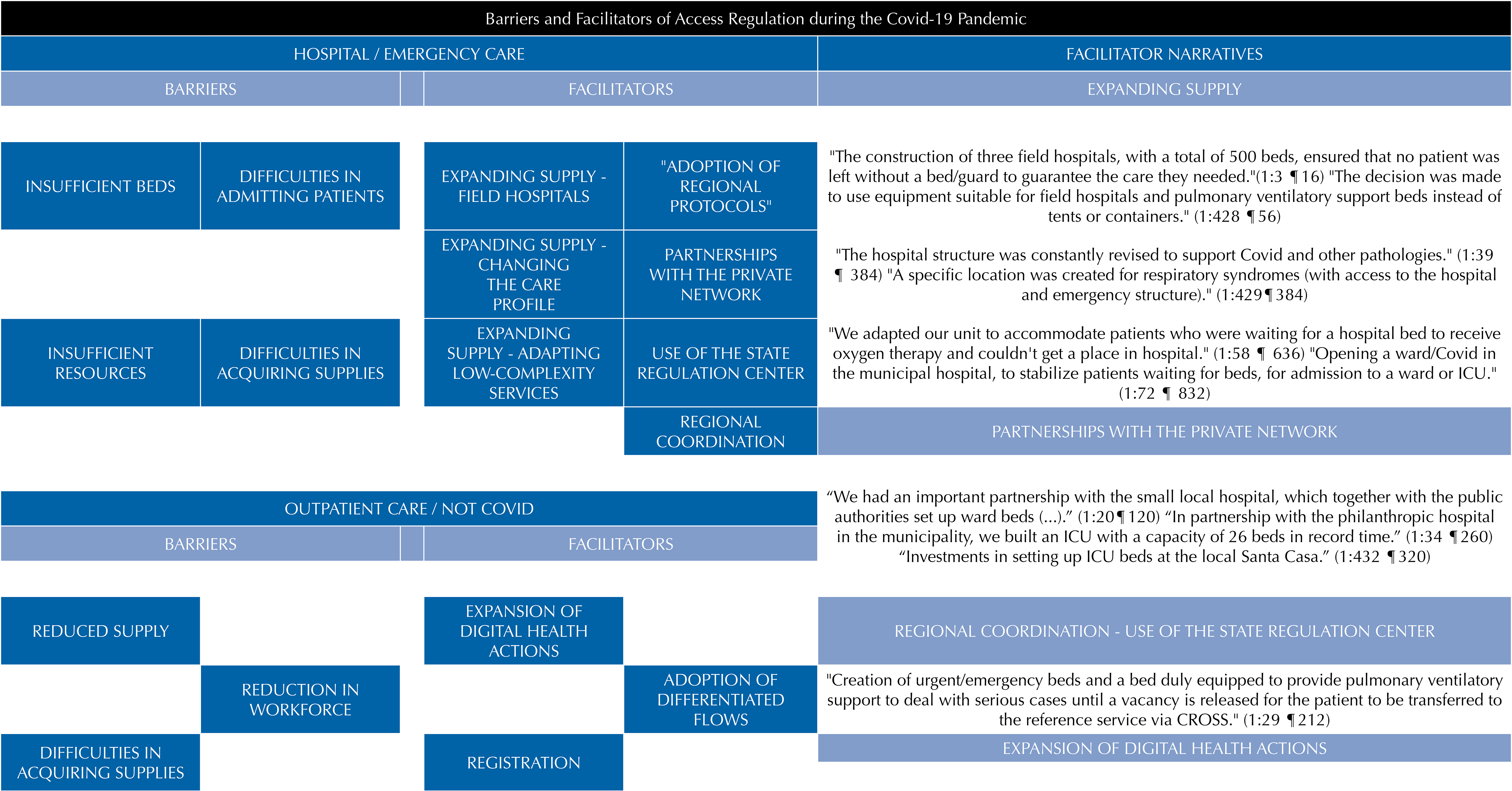 Note: The identification of citations uses the references provided by the AtlasTi software in the format D:C ¶ P D=document number, C=code number and P=paragraph number. ICU: intensive care unit; CROSS: São Paulo State Health Services and Supply Regulation Center.