 Teaching capacity and educational inequalities in Brazil: progress and challenges over a decade
Introduction: Teaching capacity plays a critical role in shaping educational performance. Ensuring its equitable distribution is essential for reducing inequalities and fostering both equity and quality in education. This study examines how teaching capacity has been distributed among Brazilian schools and tracks changes from 2013 to 2023.
Materials and methods: The study developed a teaching capacity index based on indicators such as training, adequacy, consistency, and effort, drawing on data from the School Census. The study analyzed the index's averages and variations per school from 2013 to 2023, comparing results across socioeconomic levels, regions, and administrative affiliation. Linear regression analyses were performed to identify the main factors driving variations in the index.
Results: The analysis revealed significant disparities in teaching capacity, with municipal schools, schools in the North and Northeast regions, and those serving lower socioeconomic communities scoring the lowest. However, the decade saw notable improvements, particularly in more vulnerable school systems, which helped narrow these gaps.
Discussion: While the findings show meaningful progress, significant inequalities in teaching capacity persist. Bridging these gaps calls for sustained educational policies that focus on equity and quality, particularly in underserved regions. The improvements over the past decade highlight the effectiveness of targeted investments for reducing inequalities but ensuring equitable access to teaching resources remains a persistent challenge.
Keywords
educational policies; teaching capacity; educational inequality; elementary education; linear regression
 Thumbnail
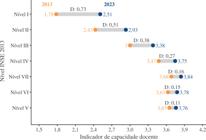 Thumbnail
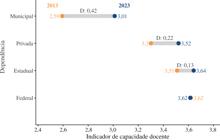 Thumbnail
 Thumbnail
 Fonte: elaborado pelos autores a partir dos dados do censo escolar de 2013 e 2023.
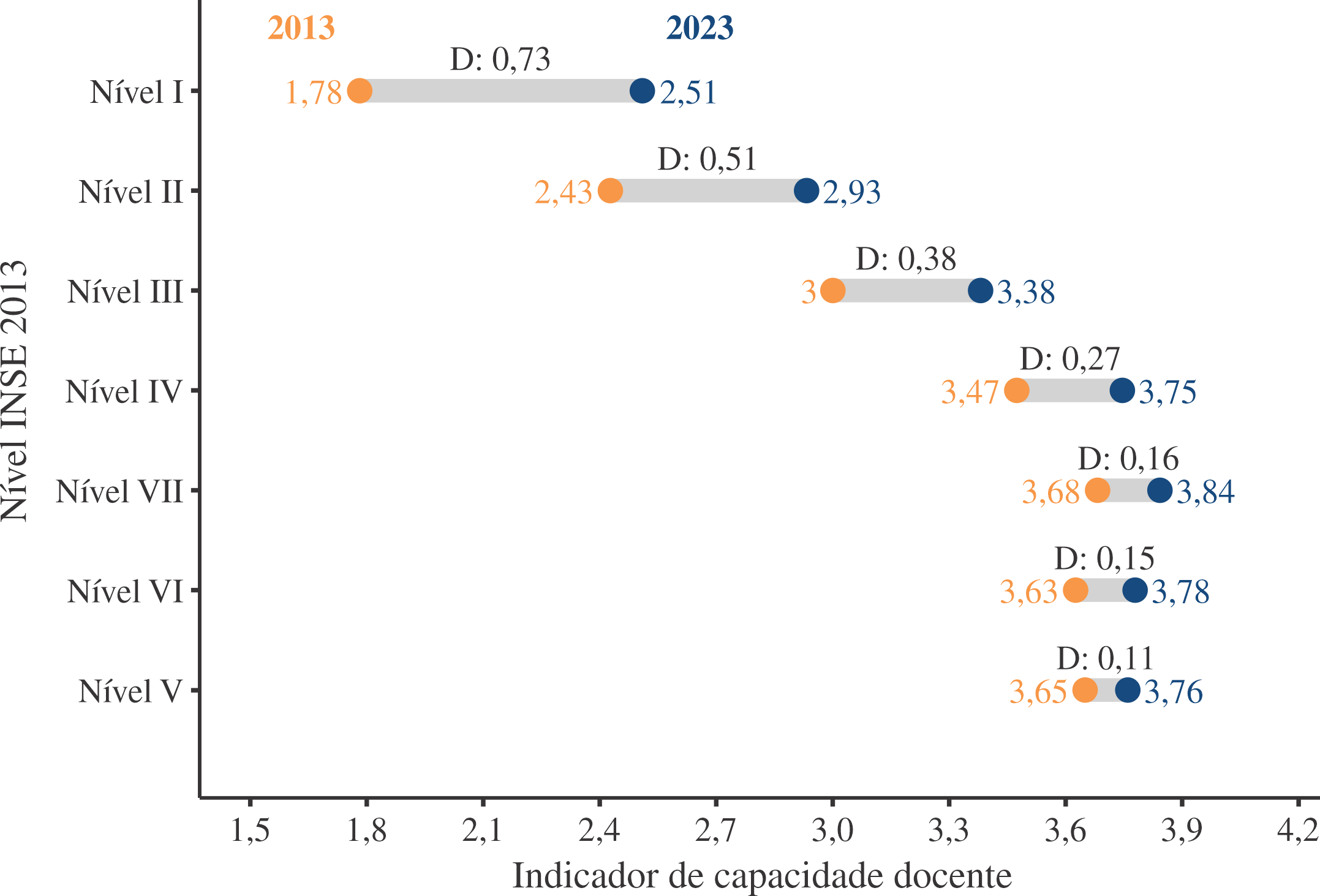 Fonte: elaborado pelos autores a partir dos dados do censo escolar de 2013 e 2023.
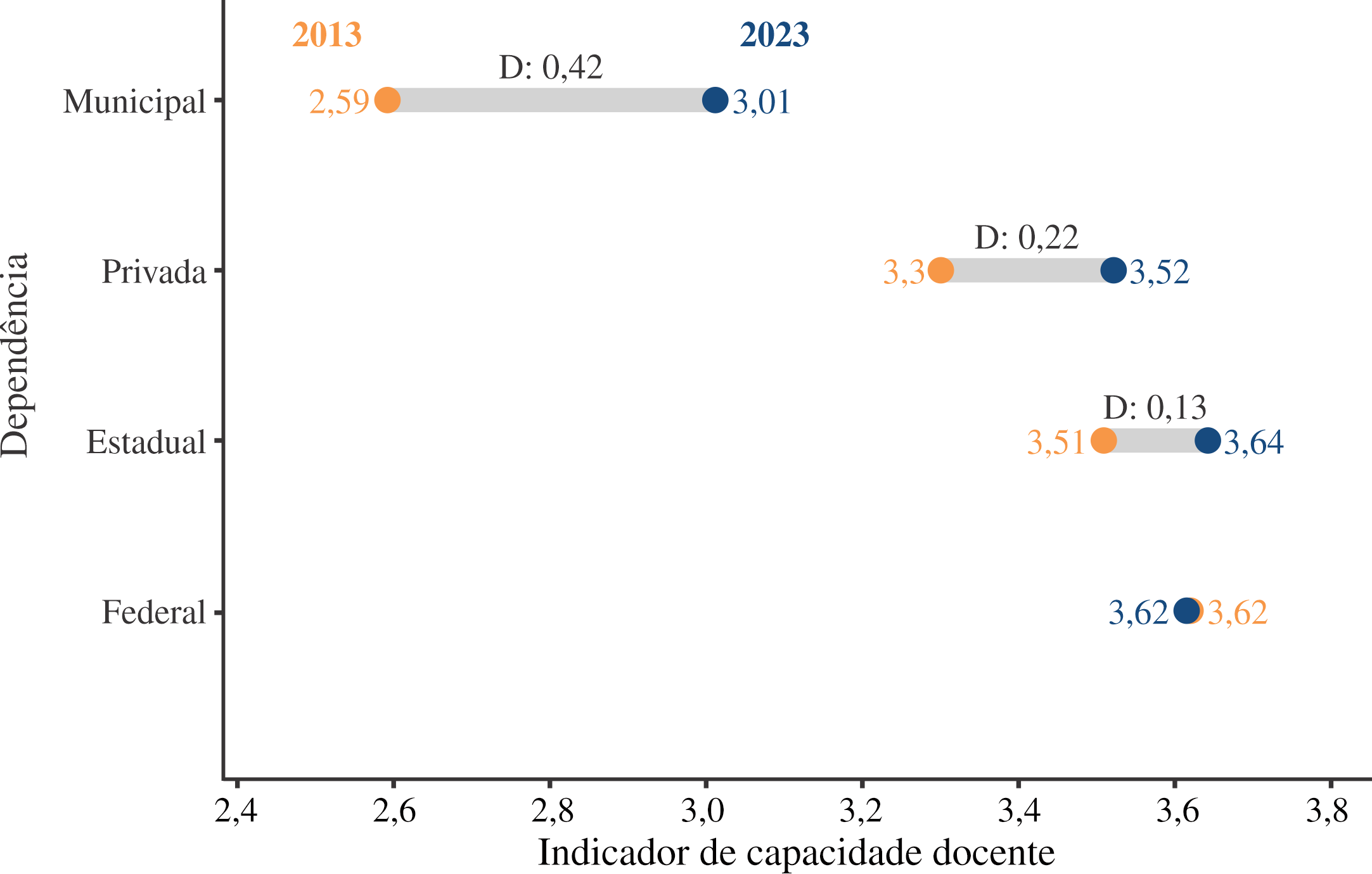 Fonte: elaborado pelos autores a partir dos dados do censo escolar em 2013 e 2023.
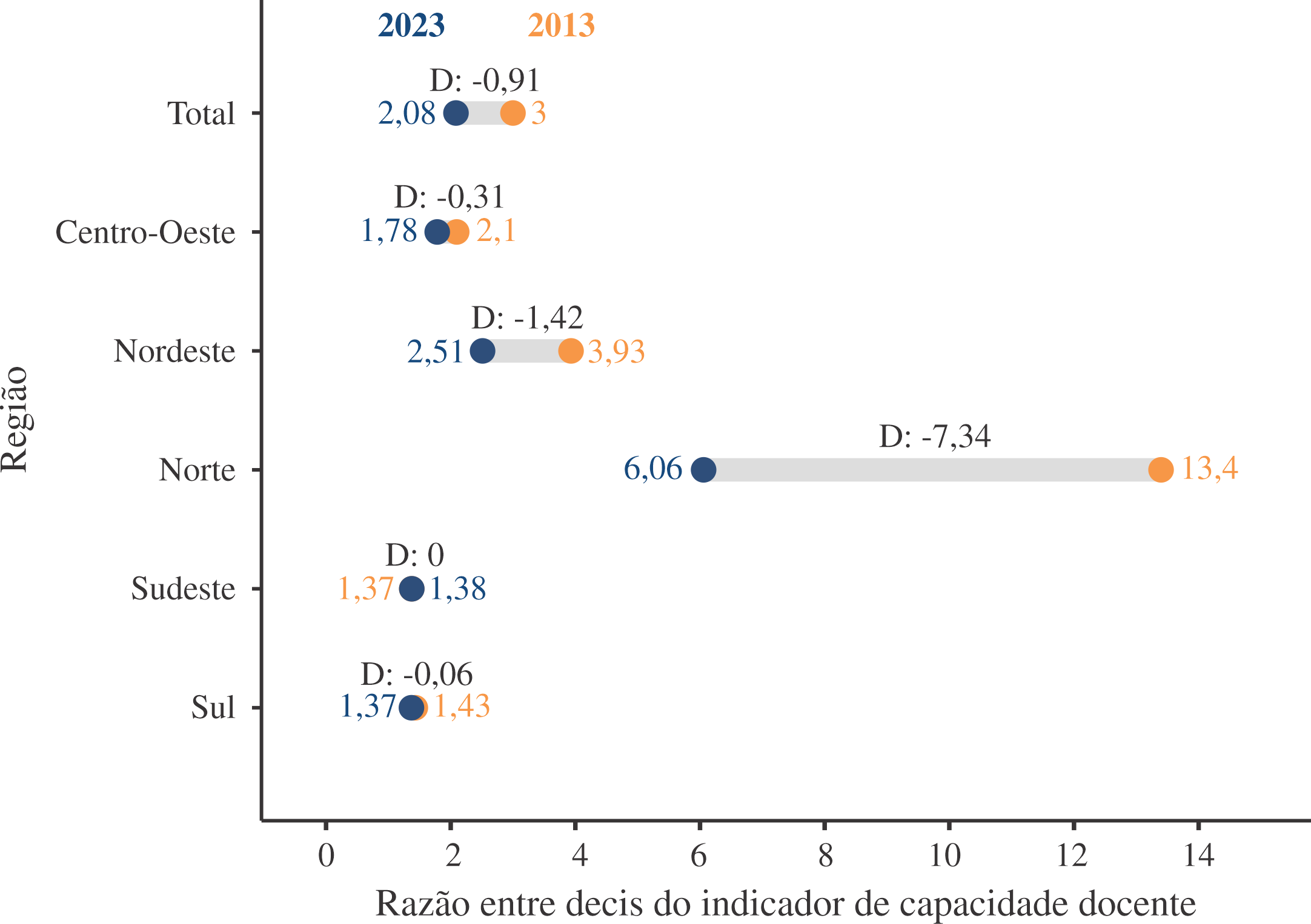 Fonte: elaborado pelos autores a partir dos dados do censo escolar de 2013 e 2023.