 Prognostic value of the New York Heart Association classification for cardiovascular events and mortality in Chagas cardiomyopathy: a systematic review and meta-analysis with GRADE recommendations
ABSTRACT
Chagas cardiomyopathy is associated with a higher risk of severe cardiovascular events and increased mortality. Among the factors associated with Chagas cardiomyopathy, impairment in functional capacity-commonly assessed using the New York Heart Association (NYHA) functional classification-is notable and may contribute to risk stratification. In this review, we assessed the prognostic value of the NYHA classification on cardiovascular events and mortality in patients with Chagas cardiomyopathy. The search was performed across EMBASE, LILACS, MEDLINE, and Web of Science databases. Prospective and retrospective cohort studies in which the prognostic value of the NYHA classification was assessed were eligible. Risk of bias was assessed using the Quality in Prognostic Studies tool. Evidence was classified using the adapted GRADE system. Eighteen studies were included in the systematic review. The meta-analysis results indicate that the NYHA classification is an important prognostic factor for mortality. Patients with NYHA class III and IV showed a higher risk of death than those with class I and II (hazard ratio, 2.63; 95% confidence interval: 2.00-3.45; moderate GRADE evidence). Patients with NYHA class IV had a higher risk of death than those with class I, II, and III (hazard ratio, 2.80; 95% confidence interval: 1.06-7.43; low GRADE evidence). Very low evidence suggests that the NYHA classification does not predict heart transplantation or stroke, but may predict cardiac pacemaker implantation. Overall, the NYHA classification is a key prognostic indicator of mortality in Chagas cardiomyopathy, although its ability to predict stroke, heart transplantation, and pacemaker implantation is inconsistent.
Keywords:
Chagas cardiomyopathy; Chagas disease; NYHA; Prognoses; Prognostic factor; Systematic review
INTRODUCTION
Chagas disease, a neglected tropical disease1,2, an important public health problem in Latin America1 and, more recently, in non-endemic areas such as the United States and some European countries3. Approximately 70 million people are at risk of infection, with an incidence of 30,000 cases and approximately 12,000 deaths occurring annually4. The infection begins when an individual is exposed to Trypanosoma cruzi, and advances to the acute disease phase, which is usually characterized by nonspecific clinical manifestations5. The infection later progresses to the chronic phase, which can be divided into indeterminate (i.e., without evidence of organ involvement), cardiac (i.e., with specific heart abnormalities), digestive (i.e., with specific digestive abnormalities), or mixed (i.e., heart and digestive abnormalities simultaneously)6 forms.
About 30% to 40% of infected individuals present with the cardiac form of Chagas disease, also known as Chagas cardiomyopathy (ChC); this is the most common and severe clinical form7. Patients with ChC may have a worse prognosis than those with cardiomyopathies of other etiologies8. This worse prognosis can be attributed to the specific pathophysiological characteristics of Chagas disease-such as chronic cardiac inflammatory processes, dysautonomia, and cardiac tissue remodeling9-and to social determinants frequently associated with the disease, including limited access to specialized healthcare, low levels of education, and low income9,10. Together, these biological and social factors may contribute to poor clinical outcomes in this population, including the need for pacemaker implantation or heart transplantation, and the occurrence of cardioembolic events and sudden death11,12.
During the clinical course of ChC, patients experience a significant reduction in their capacity to exercise13. This reduction in functional capacity often leads to lower levels of activity, especially when symptoms such as angina and dyspnea are present11. This may cause a cycle to develop between inactivity and symptoms of ChC, further reducing functional capacity. Consequently, besides information on the current functional status, symptom intensity during exertion can be an additional important prognostic factor for progression of the condition14. Among the tools used to assess functional symptoms, the New York Heart Association (NYHA) functional classification is the most frequently cited in the literature. This classification is a low-cost, easy-to-use tool. The NYHA tool is used to classify symptoms into four categories based on the severity of the patient’s symptoms and their ability to perform physical activities; these categories range from class I (no symptoms) to class IV (severe symptoms even at rest)15. The NYHA functional class is considered a prognostic factor for death and hospitalization caused by other heart diseases. In ChC, it is known to be highly associated with markers of severity, such as reduced left ventricular ejection fraction16 and peak oxygen uptake. Of the predictors of death identified in a cohort of 424 patients with ChC, NYHA functional classes III and IV were found to be the strongest17. By contrast, other studies18-20 have reported that the NYHA class does not identify patients with a worse prognosis. Therefore, the prognostic value of the NYHA class in predicting cardiovascular events and mortality in patients with ChC is uncertain21,22.
Prognostic factors are variables associated with the risk of a future health outcome, indicating either a better or worse prognosis23. Identifying these variables is important for clinical decision-making, facilitating the adoption of tailored interventions and providing research targets for new treatments in randomized trials24. Given the importance of functional assessment and the uncertainty regarding the prognostic value of the NYHA class in patients with ChC, we aimed to evaluate the prognostic value of the NYHA class for cardiovascular events and mortality in this population in this systematic review.
METHODS
This systematic review followed the methods proposed by the Cochrane Prognosis Methods Group25,26 and is reported in accordance with the Preferred Reporting Items for Systematic reviews and Meta-Analyses (PRISMA) Statement27. The protocol was registered prospectively in the Open Science Framework (registration number 10.17605/OSF.IO/F578).
Searches and inclusion criteria
The Literatura Latino-Americana e do Caribe em Ciências da Saúde (LILACS), Medical Literature Analysis and Retrieval System Online (MEDLINE), Excerpta Medica Database (EMBASE), and Web of Science databases were searched without language or date restrictions. The search terms were related to “Chagas cardiomyopathy” and “prognostic study.” Database-specific search strategies were developed for each source, considering its controlled vocabulary, syntax, indexing structure, and language of indexed terms. For MEDLINE, searched using the Ovid platform, we used the prognostic-factor search strategy recommended by the Cochrane Prognosis Methods Group (sensitivity, 0.98; specificity, 0.96)28. In addition to the main MEDLINE search, Epub Ahead of Print, In-Process, In-Data-Review and Other Non-Indexed Citations, Daily and Versions, and Biological Abstracts were selected as supplementary search sources to improve the identification of grey literature, and non-indexed and incompletely indexed records. To complement this strategy, we manually screened the reference lists of relevant systematic reviews to identify potentially eligible studies that were not retrieved through the electronic searches. The complete search strategies for each database, including terms, combinations, filters, limits, and update strategies, are provided in the Supplementary Material in accordance with the PRISMA-S, the extension to the PRISMA Statement for Reporting Literature Searches in Systematic Reviews.
After the searches were conducted, the references retrieved were exported to the Rayyan systematic review website (https://www.rayyan.ai/) to select studies based on defined eligibility criteria. Two independent reviewers (WTS and HJS) screened titles and abstracts, and then assessed potential full texts. Between-reviewer discrepancies were resolved by a third reviewer (HSC).
Prospective and retrospective cohort studies in which the prognostic value of the NYHA class on cardiovascular events and mortality were assessed were eligible, with no restrictions placed on date or language. Studies were eligible if they included individuals of both sexes, regardless of age, from any health care setting. The criteria for the population of interest were that Chagas disease was confirmed through positive serology for T. cruzi using at least two different serological tests, and that the electrocardiographic findings were compatible with Chagas cardiomyopathy29. For studies published before these criteria were adopted in 2005, diagnostic definitions accepted at the time of publication were considered when they were explicitly reported30. The index prognostic factor was higher NYHA functional class, defined as classifications representing greater symptom severity. NYHA classes representing less severity were used as the comparator and or reference group whenever possible. Therefore, effect estimates were interpreted as the risk of adverse outcomes among patients with more severe NYHA classes compared with those with less severe NYHA classes. Further details are provided in Table 1. Due to difficulties in obtaining data on individual participants, studies were grouped by their original NYHA classification to ensure homogeneity. The outcomes considered were adverse cardiovascular events (i.e., implantation of implantable cardiac electronic devices, heart transplantation, and stroke), and mortality. The formulation of the research question in the patient population, exposure (index prognostic factor), comparator, outcome, timing, and setting format is presented in Table 1.
Data extraction
Data extraction was performed according to the Critical Appraisal and Data Extraction for Systematic Reviews of Prediction Modelling Studies checklist. The variables for which data were collected included data origin, participants, cardiovascular outcomes, NYHA class, and sample size. Data extraction was conducted independently by two authors, and any discrepancies were resolved through discussion and, when necessary, adjudication by a third reviewer.
Missing data
When data were missing, we contacted the original investigators to request the information. The authors were contacted three times, with a 1-week interval. When necessary, we calculated or estimated effect sizes from any reported data, for example, from 2 × 2 frequency tables, graphs, and figures, such as Kaplan-Meier curves; we used indirect estimation measures, as recommended by Parmar et al31. and Tierney et al32. If missing data could not be obtained through any of these approaches, the study was included in the systematic review but not in the meta-analysis.
Risk of bias assessment
Two independent reviewers (WTS and HJS) assessed the risk of bias of the included studies using the Quality in Prognostic Studies (QUIPS) tool33. Briefly, the tool contains six domains: (i) study participation, (ii) study attrition, (iii) prognostic factor measurement, (iv) outcome measurement, (v) study confounding, and (vi) statistical analysis and reporting. Each domain was rated as having a high, moderate, or low risk of bias. Discrepancies were resolved by a third reviewer (HSC).
Data analysis
When possible, meta-analyses were conducted using DerSimonian and Laird’s random-effects model because it was the most appropriate to use when heterogeneity among the studies was expected34. For the meta-analyses, we included only adjusted hazard ratios derived from the final multivariable models reported in each study. Studies reporting only crude or unadjusted estimates were retained in the descriptive synthesis, but excluded from the meta-analyses. Heterogeneity was assessed using the I² statistic, and Cochran’s Q test was used to assess the significance of the heterogeneity35. The results are presented as a forest plot. Details on the statistical analysis and scripts are summarized in the Supplementary Material. All analyses were performed using R 4.4.3 software.
Two independent reviewers (WTS and HJS) assessed the certainty of the current evidence using the adapted GRADE scale for prognostic studies36. Between-reviewer discrepancies were resolved by a third reviewer (HSC). According to the four-level GRADE system, evidence can range from high to very low quality, with low levels indicating that future high-quality trials are likely to change the estimated effects. The criteria applied in the GRADE assessment are provided in the Supplementary Material.
RESULTS
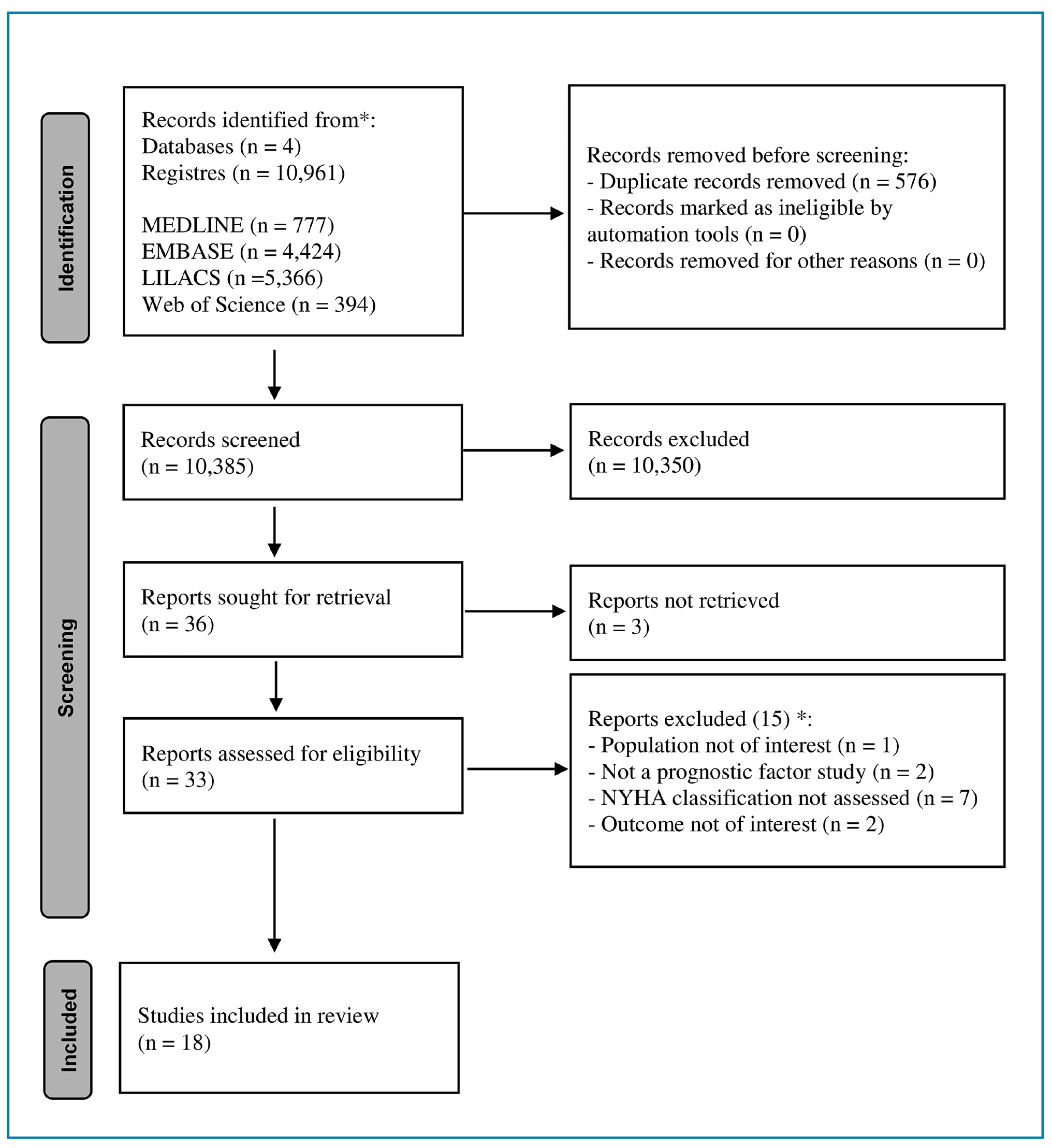
Through the electronic search strategy, we identified 10,961 titles and abstracts. Among them, 576 (5.25%) were duplicates. Of the remaining 10,385 references, 36 were selected as potentially eligible studies, and 10,350 were excluded. We did not identify any additional articles for full-text review through our manual search. Finally, 18 studies met our inclusion criteria17-20,37-50. Figure 1 outlines the flow of study selection for the systematic review.
Preferred Reporting Items for Systematic reviews and Meta-Analyses flow diagram of study selection. Articles could be excluded for more than one reason. NYHA: New York Heart Association.
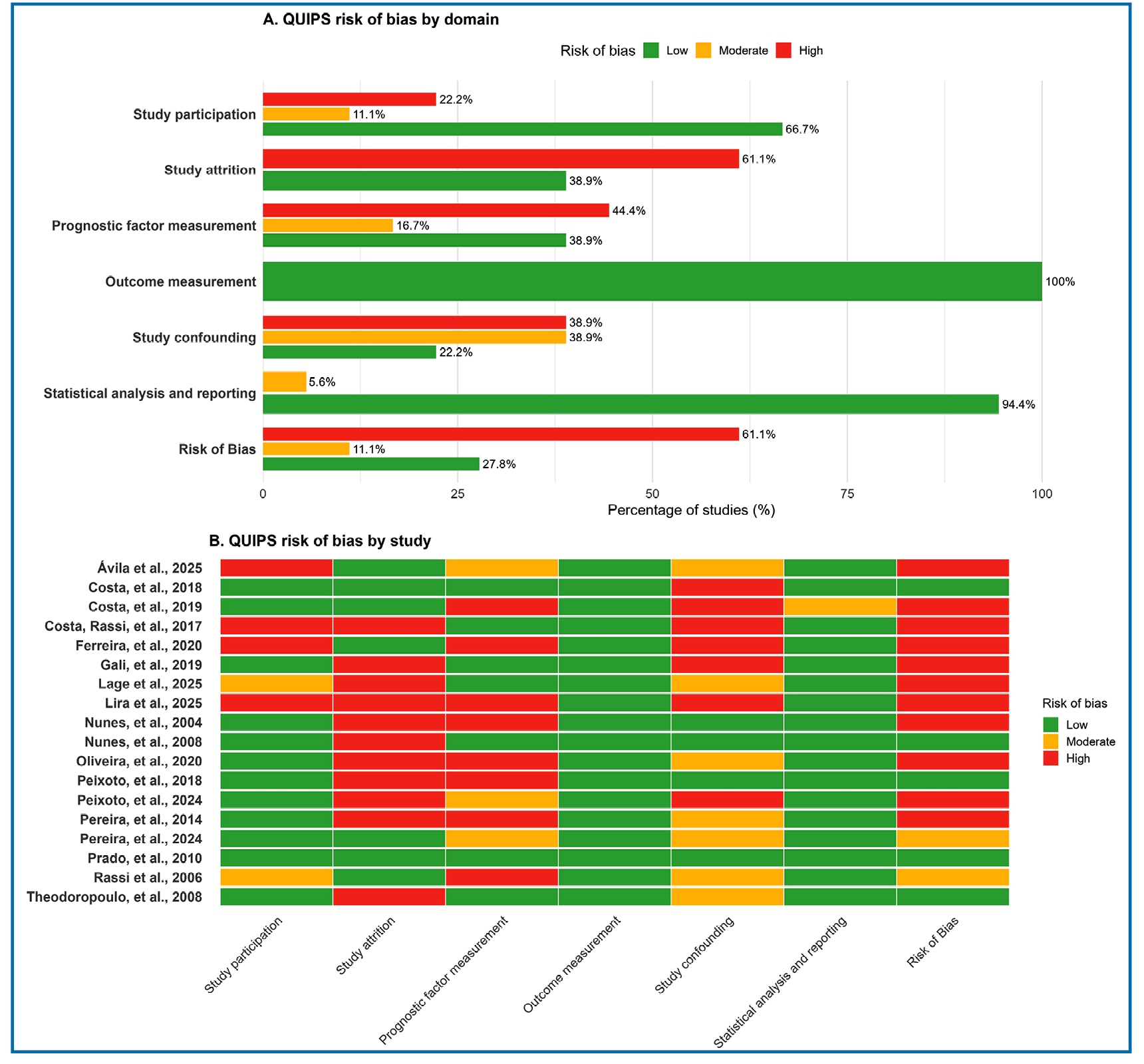
Of the 18 studies included, 5 (27.77%) had a low risk of bias, 2 (11.11%) had a moderate risk, and 11 (61.11%) had a high risk. Among these 18 studies, 16 involved prospective cohorts, of which 3 were classified as inception cohorts (immediately following exposure to a specific factor), and 2 were classified as retrospective cohorts. The characteristics of the included studies are shown in Table 2. The risk of bias assessment of the included studies, performed using the QUIPS tool, is displayed in Figure 2. The full eligibility assessment and risk of bias evaluation are presented in Supplementary Material Table 1 and Supplementary Material Table 2.
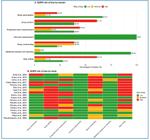
Risk of bias assessment of the included studies using the Quality in Prognostic Studies tool. (A) The aggregated risk of bias by QUIPS domain, expressed as the percentage of studies classified as having a low, moderate, or high risk of bias. (B) The study-level risk of bias assessment using a traffic-light plot. QUIP: Quality in Prognostic Studies.
Mortality
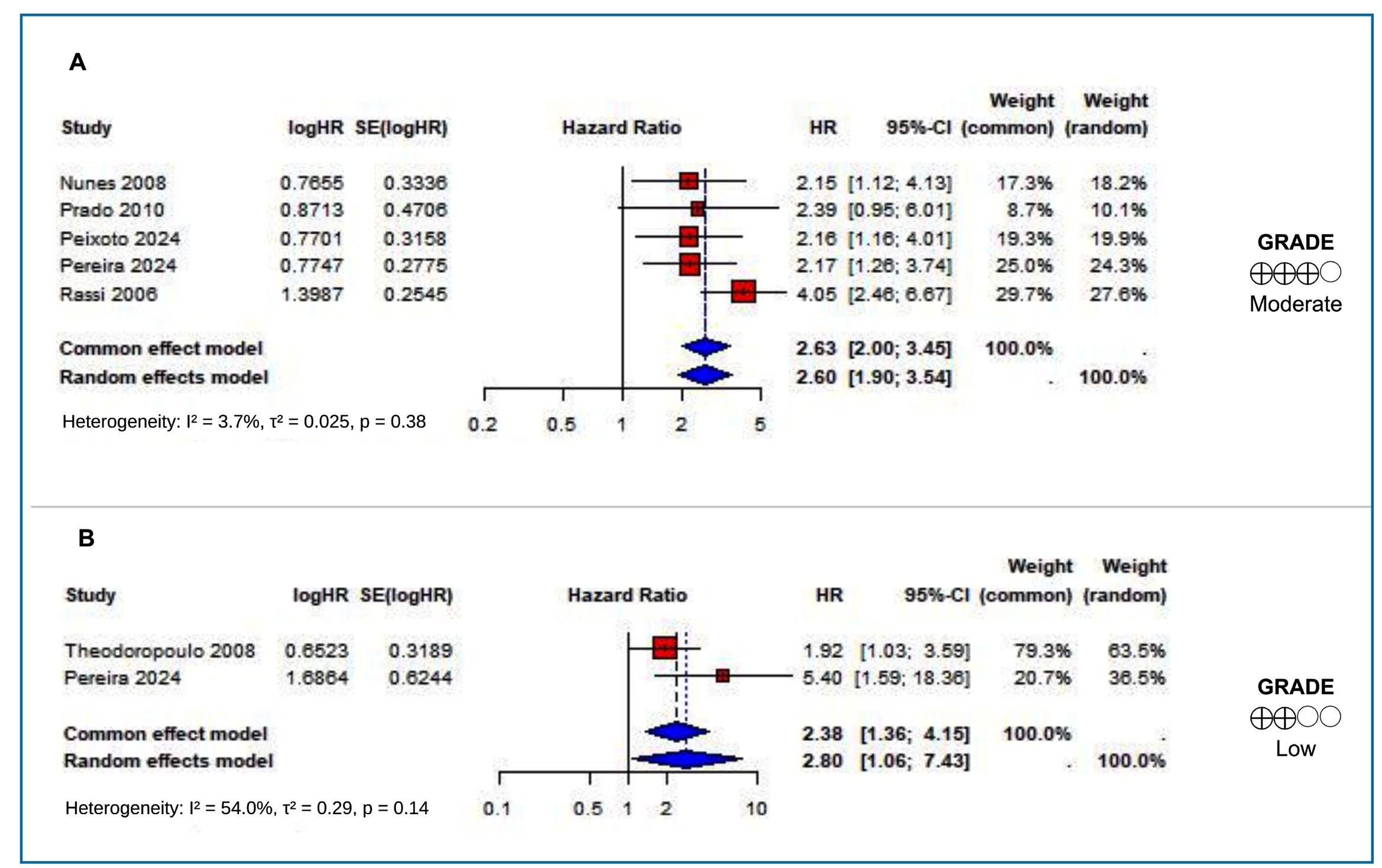
Of the seventeen studies in which the prognostic value of the NYHA class on mortality was assessed, six were included in the meta-analyses because they reported comparable mortality outcomes, compatible NYHA exposure and or comparator categories, and adjusted estimates derived from final multivariable models (the descriptions of these studies with the individual estimates are shown in Table 2). The meta-analyses indicated that individuals with NYHA functional classes III and IV had a higher risk of death compared to patients with NYHA classes I and II (hazard ratio [HR] = 2.63; 95% confidence interval [CI]: 2.00-3.45; low statistical heterogeneity [I² = 3.7%; p = 0.38]; moderate quality of evidence; Figure 3) A sensitivity analysis yielded results that were consistent with the primary analysis (HR = 2.70; 95% CI: 1.87-3.91; p < 0.0001; I² = 18.4%; p = 0.29); the study by Lima Peixoto et al.40 was excluded from this analysis because it was classified as having a high risk of bias (Supplementary Material Figure 1). Compared to NYHA functional classes I, II, and III, functional class IV was associated with an increased risk of all-cause mortality (HR = 2.80; 95% CI: 1.06-7.43; no statistically significant heterogeneity was observed [I² = 54.0%; p = 0.14]; low quality of evidence).
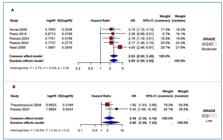
Meta-analyses of the association between the New York Heart Association functional class and mortality outcome. (A) Forest plot of the association, expressed as HRs, between exposure to NYHA functional classes II to IV and all-cause mortality in patients with Chagas cardiomyopathy. (B) Forest plot of the association, expressed as HRs, between exposure to NYHA functional class IV and all-cause mortality in patients with Chagas cardiomyopathy. CI: confidence interval; HR: hazard ratio; NYHA: New York Heart Association; SE: standard error.
Quality of evidence for mortality
The quality of evidence for the prognostic value of the NYHA class on mortality (NYHA classes I and II vs. classes III and IV) was moderate, given serious concerns about publication bias. NYHA class IV compared with NYHA classes I, II, and III was only evaluated in two studies, with the pooled estimate showing high imprecision and serious concerns about publication bias. Therefore, we classified it as having a low quality of evidence. Future research is likely to significantly impact this estimate. The detailed evaluation of the certainty of evidence using the GRADE approach is presented in Supplementary Material Figure 2.
Cardiovascular events
Cardiovascular outcomes were predominantly evaluated as composite endpoints, with varying combinations of events. In two prospective cohort studies with a high risk of bias20,37, composite cardiovascular outcomes that included cardiac death, heart transplantation, and stroke or ischemic events were assessed; no association between the NYHA functional class and outcome was found in either of these studies. Similarly, the study by Ferreira et al.42, also classified as having a high risk of bias, reported that NYHA functional classes II to IV were associated with a high risk of cardiovascular events; however, this association was observed in a composite outcome in which all-cause mortality, atrial fibrillation, and pacemaker implantation were combined.
Gali et al.43 conducted an inception cohort study, which had a moderate risk of bias, and evaluated a composite outcome of all-cause mortality or heart transplantation. They observed an association between NYHA class III and the outcome in univariate analysis, but this association did not persist in the multivariate model. Increasing NYHA functional class was linked to a greater risk of heart transplantation when analyzed within a composite outcome of total mortality and heart transplantation in a retrospective cohort study with a high risk of bias50. Conversely, the study by Lage et al.18 was the only study in which a cardiovascular outcome alone was assessed; no association between NYHA functional class III or IV and stroke was reported.
Meta-analyses of the prognostic value of the NYHA class on cardiovascular events were not feasible due to heterogeneity across the studies. Particularly, methodological heterogeneity (e.g., differences in study design, population characteristics, and follow-up durations) and variability in NYHA functional class categorization was found.
Quality of evidence for cardiovascular events
The confidence evidence for cardiovascular events was very low, suggesting that the NYHA class cannot predict heart transplantation or stroke, but it can predict pacemaker implantation. The quality of evidence for cardiovascular outcomes was downgraded to very low because of serious concerns regarding inconsistency, imprecision, risk of bias, and publication bias36,51.
DISCUSSION
This was the first systematic review with meta-analysis to assess the prognostic value of the NYHA class in individuals with ChC. Evidence of moderate quality indicated that NYHA classes III and IV predict mortality in this population, whereas evidence warranting low confidence suggests that a NYHA class of IV alone is also associated with mortality. However, evidence warranting very low confidence indicates that the NYHA class cannot predict heart transplantation or stroke, but appears to be capable of predicting implantation of a cardiac pacemaker.
The results of our meta-analyses indicated that, as well as those in an isolated group with class IV (versus those with class I, II, and III), patients with NYHA classes III and IV have a worse prognosis regarding mortality outcomes than those with classes I and II. The NYHA classification is used to assess the symptomatic impact of heart disease on daily activities, ranging from no symptoms (class I) to severe symptoms at rest (class IV)52,53. In NYHA classes I and II, symptoms are absent or mild when daily activities are performed. Patients with these classes typically present with minimal impairments in functional capacity or cardiac structure and function53,54. By contrast, patients with classes III and IV exhibit symptoms of heart disease under minimal exertion or even at rest, most often presenting with significant impairments in functional capacity and in cardiac structure and function53,54. This classification is strongly associated with key markers of disease severity, such as functional capacity21, left ventricular ejection fraction54, and cardiac fibrosis55. This may explain why the class can be to predict mortality outcomes.
Consensus among clinicians and researchers that the NYHA classification is a fundamental tool for assessing the functional impact of heart disease in patients is well established; this is attributed to its ease of application, low cost, and effectiveness in distinguishing degrees of impairment53,56. However, this review’s findings highlight an additional role for the NYHA classification in predicting mortality: In patients with ChC, well-established prognostic markers such as echocardiographic57 and cardiopulmonary exercise testing58 variables are often unavailable in endemic regions with low indices for human development59. Clinically, this may reduce uncertainty in the use of the NYHA classification as a tool for risk stratification, potentially supporting decision-making regarding closer monitoring and or referral to specialized care when available; particularly, this may support decision-making for access to more complex prognostic tools such as cardiopulmonary exercise testing or echocardiography58,59.
Three of the four studies in which the prognostic value of the NYHA classification for heart transplantation outcomes were evaluated found no association; however, in two studies, fewer than 10% of the sample were classified as class III or IV. Gali et al.43 reported only one patient classified as having NYHA class III; Costa et al.20 and Ávila et al.37 reported six and none, respectively. Furthermore, none of the studies included patients with NYHA class IV. These findings were contradicted only by the findings of Lira et al.,50 who reported a prognostic value of the NYHA class for cardiovascular events; however, this outcome was assessed as a composite that included mortality. Given the methodological and statistical heterogeneity across the studies, this finding should be interpreted with caution, and further studies are warranted.
The small number of patients classified as having NYHA classes III and IV may have limited the number of events observed in the group with greater functional impairment60. However, these findings serve as a warning: NYHA class IV-and, in some cases, class III-is an established indication for heart transplantation61. This suggests that although patients may meet the criteria for transplantation, the procedure is not being performed. This may be due to patients with ChC, particularly those in endemic regions, having limited access to specialized healthcare services62,63 as well as the long waiting lists for transplantation64-67. This underscores the importance of preventing disease progression while patients are still classified as having NYHA classes I and II.
The results show that the prognostic value of the NYHA class for stroke was only evaluated in two studies18,37. Both studies found no association between NYHA class and stroke incidence. This may be explained by the high propensity for stroke across all stages of ChC, as described in previous studies68. This high propensity for stroke to occur, regardless of the severity of the cardiomyopathy, can be explained by the pathophysiology of stroke in ChC, which is closely related to the intense inflammatory process and endothelial dysfunction, common findings throughout the disease cycle69. However, this finding must be interpreted with caution, because it was only reported by one study.
Finally, the prognostic power of the NYHA classification in predicting pacemaker implantation was only evaluated in one study, with findings suggesting a potential predictive role42. However, the study assessed pacemaker implantation within a composite outcome that included mortality and atrial fibrillation, which may have facilitated statistical significance being achieved because atrial fibrillation can, in some cases, constitute an indication for pacemaker implantation70. Therefore, further studies are needed to investigate the ability of the NYHA classification to predict the need for pacemaker implantation.
The results of this systematic review should be interpreted with caution, especially regarding outcomes such as stroke, heart transplantation, and pacemaker implantation, due to the high heterogeneity and limited number of studies included. Furthermore, the unavailability of individual-level data for more detailed analysis was a significant limitation, because it prevented the integration of univariate and multivariate data, extraction at specific time points, and standardization of NYHA functional class categories across studies. Consequently, the pooled comparison of classes III and IV versus classes I and II may have masked potential prognostic gradients across individual NYHA classes. Moreover, conclusions regarding NYHA class IV alone should be interpreted with caution, because this analysis was based on a limited number of studies. Nevertheless, considering their applicability, these findings highlight the NYHA classification as an important and promising variable for risk stratification of patients with ChC. These contributions can enhance decision-making, particularly regarding the frequency of consultations, modification of risk factors through treatment, individualization of care, and overall risk stratification.
CONCLUSION
The strength of the evidence ranged from very low to moderate. Moderate evidence suggests that NYHA classes III and IV can predict mortality in ChC; however, we have low confidence evidence indicates that NYHA class IV alone may have predictive value for this outcome. Insufficient evidence was available to support a consistent association between the NYHA functional class and heart transplantation or stroke; moreover, this evidence was categorized as very low certainty. However, limited evidence suggested a possible association between the class and pacemaker implantation. Given the high degree of heterogeneity across samples and methods, future research should follow established guidelines for conducting and reporting studies to ensure more robust and comparable results.
SUPPLEMENTARY MATERIAL
Supplementary material
Supplementary material Table 1
Supplementary material Table 2
Supplementary material Figure 1
Supplementary material Figure 2
REFERENCES
-
1 World Health Organization. Neglected tropical diseases [Internet]. Geneva: World Health Organization; 2025 [cited 2026 Feb 21]. Available from: Available from: https://www.who.int/news-room/questions-and-answers/item/neglected-tropical-diseases
» https://www.who.int/news-room/questions-and-answers/item/neglected-tropical-diseases -
2 World Health Organization. Chagas disease (American trypanosomiasis) [Internet]. Geneva: World Health Organization ; 2025 [cited 2026 Feb 21]. Available from: Available from: https://www.who.int/news-room/fact-sheets/detail/chagas-disease-(american-trypanosomiasis)
» https://www.who.int/news-room/fact-sheets/detail/chagas-disease-(american-trypanosomiasis) - 3 Bea-Serrano C, de Gracia-León AI, Llenas-García J, Vela-Bernal S, Belmonte-Domingo A, Pinto-Pla C, et al. Chagas disease in a non-endemic setting: clinical profile, treatment outcomes, and predictors of cure in a 15-year cohort study. Trop Med Infect Dis. 2025;10(6):161.
-
4 Pan American Health Organization. Chagas disease [Internet]. Washington (DC): Pan American Health Organization; [cited 2026 Feb 21]. Available from: https://www.paho.org/en/topics/chagas-disease
» https://www.paho.org/en/topics/chagas-disease - 5 Pérez-Molina JA, Molina I. Chagas disease. Lancet (London, England). 2018;391(10115):82-94.
- 6 Saraiva RM, Mediano MFF, Mendes FS, Sperandio da Silva GM, Veloso HH, Sangenis LHC, et al. Chagas heart disease: an overview of diagnosis, manifestations, treatment, and care. World J Cardiol. 2021;13(12):654-75.
- 7 Marin-Neto JA, Rassi A, Oliveira GMM, Correia LCL, Ramos AN, Luquetti AO, et al. SBC guideline on the diagnosis and treatment of patients with cardiomyopathy of Chagas disease - 2023. Arq Bras Cardiol. 2023;120(6):e20230269.
- 8 Nunes MCP, Barbosa MM, Ribeiro ALP, Fenelon LMA, Rocha MOC. Predictors of mortality in patients with dilated cardiomyopathy: relevance of Chagas disease as an etiological factor. Rev Esp Cardiol. 2010;63(7):788-97.
- 9 Campos Lopes CB, Yamada AT, Araújo F, Barreto ACP, Mansur AJ. Socioeconomic factors in the prognosis of heart failure in a Brazilian cohort. Int J Cardiol. 2006;113(2):181-7.
- 10 Viotti R, Vigliano CA, Alvarez MG, Lococo BE, Petti MA, Bertocchi GL, et al. The impact of socioeconomic conditions on chronic Chagas disease progression. Rev Esp Cardiol. 2009;62(11):1224-32.
- 11 Acquatella H. Predicting heart failure and mortality in chronic Chagas’ heart disease: a novel disorder in Spain. Rev Esp Cardiol. 2008;61(2):105-7.
- 12 Silva CP, Del Carlo CH, Oliveira Junior MT, Scipioni A, Strunz-Cassaro C, Ramirez JAF, et al. Why do patients with chagasic cardiomyopathy have worse outcomes than those with non-chagasic cardiomyopathy? Arq Bras Cardiol. 2008;91(6):358-62.
- 13 Costa HS, Lima MMO, Costa FSMd, Chaves AT, Nunes MCP, Figueiredo PHS, et al. Reduced functional capacity in patients with Chagas disease: a systematic review with meta-analysis. Rev Soc Bras Med Trop. 2018;51(4):421-6.
- 14 Coats AJ. What causes the symptoms of heart failure? Heart. 2001;86(5):574-8.
- 15 Fisher JD. New York Heart Association classification. Arch Intern Med. 1972;129(5):836.
- 16 Santana JG, Aras MG, Nascimento L, Aras Jr R. Functional classification versus ejection fraction in patients with heart failure and Chagas disease. Arq Bras Cardiol Imagem Cardiovasc. 2021;34(3):eabc137.
- 17 Rassi Jr A, Rassi A, Little WC, Xavier SS, Rassi SG, Rassi AG, et al. Development and validation of a risk score for predicting death in Chagas’ heart disease. N Engl J Med. 2006;355(8):799-808.
- 18 Lage TAR, Rocha MOC, Tupinambás JT, Botoni FA, de Pádua LB, Mutarelli A, et al. Predictors of ischemic stroke in Chagas disease: insights into mechanisms beyond cardiomyopathy severity. Int J Cardiol. 2025;418:132628.
-
19 Prado NG. Pronóstico de mortalidad en una cohorte de pacientes portadores de miocardiopatía dilatada por enfermedad de Chagas crónica [Internet]. Argentina; 2010 [cited 2025 Feb 21]. Available from: Available from: http://bvssp.icict.fiocruz.br/lildbi/docsonline/get.php?id=2379
» http://bvssp.icict.fiocruz.br/lildbi/docsonline/get.php?id=2379 - 20 Costa HS, Lima MMO, Figueiredo PHS, Chaves AT, Nunes MCP, da Costa Rocha MO. The prognostic value of health-related quality of life in patients with Chagas heart disease. Qual Life Res. 2019;28:(1):67-72.
- 21 Silva WT, Costa HS, Figueiredo PHS, Lima MMO, Lima VP, Costa FSMd, et al. Determinants of functional capacity in patients with Chagas disease. Arq Bras Cardiol. 2021;117(5):934-41.
- 22 Mady C, Salemi VMC, Ianni BM, Ramires FJA, Arteaga E. Maximal functional capacity, ejection fraction, and functional class in Chagas cardiomyopathy: are these indices related? Arq Bras Cardiol. 2005;84(2):152-5.
- 23 Riley RD, van der Windt DA, Croft P, Moons KGM, editors. Prognosis research in healthcare: concepts, methods, and impact. 1st ed. Oxford: Oxford University Press, 2019. 384 p.
- 24 Riley RD, Hayden JA, Steyerberg EW, Moons KG, Abrams K, Kyzas PA, et al. Prognosis research strategy (PROGRESS) 2: prognostic factor research. PLoS Med. 2013;10(2):e1001380.
-
25 Cochrane Prognosis Methods Group. An introduction to systematic reviews of prognosis [Internet]. [place unknown]: Cochrane Prognosis Methods Group; [date unknown] [cited 2026 Feb 21]. Available from: Available from: https://methods.cochrane.org/sites/methods.cochrane.org.prognosis/files/uploads/Auckland%20presentation_prognosis%20workshop.pdf
» https://methods.cochrane.org/sites/methods.cochrane.org.prognosis/files/uploads/Auckland%20presentation_prognosis%20workshop.pdf - 26 Riley RD, Moons KGM, Debray TPA, Altman DG, Collins GS. Systematic reviews and meta-analysis of prognosis research studies. In: Riley RD, van der Windt DA, Croft P, Moons KGM, editors. Prognosis research in healthcare: concepts, methods, and impact. 1st ed. Oxford: Oxford University Press, 2019. p. 208-44.
- 27 Page MJ, McKenzie JE, Bossuyt PM, Boutron I, Hoffmann TC, Mulrow CD, et al. The PRISMA 2020 statement: an updated guideline for reporting systematic reviews. Int J Surg. 2021;88:105906.
- 28 Ingui BJ, Rogers MA. Searching for clinical prediction rules in MEDLINE. J Am Med Inform Assoc. 2001;8(4):391-7.
- 29 Dias JCP, Ramos Jr AN, Gontijo ED, Luquetti A, Shikanai-Yasuda MA, Coura JR, et al. 2nd Brazilian consensus on Chagas disease, 2015. Rev Soc Bras Med Trop. 2016;49(Suppl 1):3-60.
- 30 Ministério da Saúde, Secretaria de Vigilância em Saúde. Brazilian consensus on Chagas disease. Rev Soc Bras Med Trop. 2005;38(Suppl 3):7-29.
- 31 Parmar MK, Torri V, Stewart L. Extracting summary statistics to perform meta-analyses of the published literature for survival endpoints. Stat Med. 1998;17(24):2815-34.
- 32 Tierney JF, Stewart LA, Ghersi D, Burdett S, Sydes MR. Practical methods for incorporating summary time-to-event data into meta-analysis. Trials. 2007;8(1):1-16.
- 33 Hayden JA, van der Windt DA, Cartwright JL, Côté P, Bombardier C. Assessing bias in studies of prognostic factors. Ann Intern Med. 2013;158(4):280-6.
- 34 Deeks JJ, Higgins JPT, Altman DG. Analysing data and undertaking meta-analyses. In: Higgins JPT, Thomas J, Chandler J, Cumpston M, Li T, Page MJ, Welch VA, editors. Cochrane handbook for systematic reviews of interventions. 2nd ed. Chichester (UK): John Wiley & Sons, 2019. p. 241-84.
- 35 Hoaglin DC. Misunderstandings about Q and ‘Cochran’s Q test’ in meta-analysis. Stat Med. 2016;35(4):485-95.
- 36 Huguet A, Hayden JA, Stinson J, McGrath PJ, Chambers CT, Tougas ME, et al. Judging the quality of evidence in reviews of prognostic factor research: adapting the GRADE framework. Syst Rev. 2013;2:71.
- 37 Ávila MR, de Souza DM, de Oliveira LFF, Figueiredo PHS, Silva LMC, Silva WT, et al. Prognostic value of soluble TNF receptors in Chagas cardiomyopathy: observational study. Mem Inst Oswaldo Cruz. 2025;120:e240107.
- 38 Costa HS, Lima MMO, Figueiredo PHS, Martinelli PM, Camargos ER, Chaves AT, et al. Prognostic value of serum brain-derived neurotrophic factor levels in patients with Chagas cardiomyopathy. Mem Inst Oswaldo Cruz. 2018;113(10):e180224.
- 39 Costa SdA, Rassi S, Freitas EMdM, Gutierrez NdS, Boaventura FM, Sampaio LPdC, et al. Prognostic factors in severe chagasic heart failure. Arq Bras Cardiol. 2017;108(3):246-54.
- 40 de Lima Peixoto G, de Siqueira SF, Nishioka SAD, Pedrosa AAA, Teixeira RA, Costa R, et al. Mortality risk score for patients with Chagas cardiomyopathy and pacemaker. PLoS Negl Trop Dis. 2024;18(5):e0012114.
- 41 Di Lorenzo Oliveira C, Nunes MCP, Colosimo EA, de Lima EM, Cardoso CS, Ferreira AM, et al. Risk score for predicting 2-year mortality in patients with Chagas cardiomyopathy from endemic areas: SaMi-Trop cohort study. J Am Heart Assoc. 2020;9(6):e014176.
- 42 Ferreira AM, Sabino ÉC, Oliveira LC, Oliveira CDL, Cardoso CS, Ribeiro ALP, et al. Impact of the social context on the prognosis of Chagas disease patients: multilevel analysis of a Brazilian cohort. PLoS Negl Trop Dis. 2020;14(6):e0008399.
- 43 Gali WL, Sarabanda AV, Baggio JM, Silva EF, Gomes GG, Junqueira LF. Predictors of mortality and heart transplantation in patients with Chagas’ cardiomyopathy and ventricular tachycardia treated with implantable cardioverter-defibrillators. Europace. 2019;21(7):1070-8.
- 44 Nunes MCP, Barbosa MM, Rocha MOC. Prognostic value of diastolic dysfunction in patients with dilated Chagas cardiomyopathy. Rev Bras Ecocardiogr. 2004;17(4):15-22.
- 45 Nunes MdoC, Rocha MO, Ribeiro AL, Colosimo EA, Rezende RA, Carmo GA, et al. Right ventricular dysfunction is an independent predictor of survival in patients with dilated chronic Chagas’ cardiomyopathy. Int J Cardiol. 2008;127(3):372-9.
- 46 Peixoto GL, Martinelli Filho M, Siqueira SF, Nishioka SAD, Pedrosa AAA, Teixeira RA, et al. Predictors of death in chronic Chagas cardiomyopathy patients with pacemaker. Int J Cardiol. 2018;250:260-5.
- 47 Pereira FT, Rocha EA, Monteiro Mde P, Neto AC, Daher EdeF, Sobrinho CR, et al. Long-term follow-up of patients with chronic Chagas disease and implantable cardioverter-defibrillator. Pacing Clin Electrophysio. 2014;37(6):751-6.
- 48 Pereira FTM, Rocha EA, Gondim DSP, Almeida RLFd, Pires Neto RdJ. Predictors of appropriate therapies and death in patients with implantable cardioverter-defibrillator and chronic Chagas heart disease. Arq Bras Cardiol. 2024;121(6):e20230337.
- 49 Theodoropoulos TA, Bestetti RB, Otaviano AP, Cordeiro JA, Rodrigues VC, Silva AC. Predictors of all-cause mortality in chronic Chagas’ heart disease in the current era of heart failure therapy. Int J Cardiol. 2008;128(1):22-9.
- 50 Lira M, Furquim SR, Marchi DC, Maciel PC, Dantas RCT, Biselli B, et al. Left ventricular reverse remodeling: a predictor of survival in chagasic cardiomyopathy patients with a reduced ejection fraction. PLoS Negl Trop Dis. 2025;19(4):e0013053.
- 51 Iorio A, Spencer FA, Falavigna M, Alba C, Lang E, Burnand B, et al. Use of GRADE for assessment of evidence about prognosis: rating confidence in estimates of event rates in broad categories of patients. BMJ. 2015;350:h870.
- 52 Bocchi EA, Braga FGM, Ferreira SMA, Rohde LEP, Oliveira WAd, Almeida DRd, et al. III Diretriz brasileira de insuficiência cardíaca crônica. Arq Bras Cardiol. 2009;93(1 Suppl 1):3-70.
- 53 Bennett JA, Riegel B, Bittner V, Nichols J. Validity and reliability of the NYHA classes for measuring research outcomes in patients with cardiac disease. Heart Lung. 2002;31(4):262-70.
- 54 Rochitte CE, Oliveira PF, Andrade JM, Ianni BM, Parga JR, Ávila LF, et al. Myocardial delayed enhancement by magnetic resonance imaging in patients with Chagas’ disease: a marker of disease severity. J Am Coll Cardiol. 2005;46(8):1553-8.
- 55 Gómez-Ochoa SA, Rojas LZ, Hernández-Vargas JA, Trujillo-Cáceres SJ, Hurtado-Ortiz A, Licht-Ardila M, et al. Myocardial fibrosis by magnetic resonance and outcomes in Chagas disease: a systematic review and meta-analysis. JACC Cardiovasc Imaging. 2024;17(5):552-5.
- 56 Maddox TM, Januzzi Jr JL, Allen LA, Breathett K, Butler J, Davis LL, et al. 2021 update to the 2017 ACC expert consensus decision pathway for optimization of heart failure treatment: answers to 10 pivotal issues about heart failure with reduced ejection fraction: a report of the American College of Cardiology Solution Set Oversight Committee. J Am Coll Cardiol. 2021;77(6):772-810.
- 57 Pereira CdB, Markman Filho B. Clinical and echocardiographic predictors of mortality in chagasic cardiomyopathy-systematic review. Arq Bras Cardiol. 2014;102(06):602-10.
- 58 Costa HS, Lima MMO, Figueiredo PHS, Lima VP, Ávila MR, Menezes KKPd, et al. Exercise tests in Chagas cardiomyopathy: an overview of functional evaluation, prognostic significance, and current challenges. Rev Soc Bras Med Trop . 2020;53:e20200100.
- 59 Coura JR, Viñas PA. Chagas disease: a new worldwide challenge. Nature. 2010;465(7301):S6-7.
- 60 Field A. Discovering statistics using IBM SPSS Statistics: and sex and drugs and rock “n” roll. 4th ed. Los Angeles (CA): SAGE Publications, 2013.
- 61 Alraies MC, Eckman P. Adult heart transplant: indications and outcomes. J Thorac Dis. 2014;6(8):1120-8.
- 62 Damasceno RF, Sabino EC, Ferreira AM, Ribeiro ALP, Moreira HF, Prates TEC, et al. Challenges in the care of patients with Chagas disease in the Brazilian public health system: a qualitative study with primary health care doctors. PLoS Negl Trop Dis. 2020;14(11):e0008782.
- 63 Pinazo M-J, Pinto J, Ortiz L, Sanchez J, Garcia W, Saravia R, et al. A strategy for scaling up access to comprehensive care in adults with Chagas disease in endemic countries: the Bolivian Chagas Platform. PLoS Negl Trop Dis . 2017;11(8):e0005770.
- 64 Goldstein BA, Thomas L, Zaroff JG, Nguyen J, Menza R, Khush KK. Assessment of heart transplant waitlist time and pre- and post-transplant failure: a mixed methods approach. Epidemiology (Cambridge, Mass). 2016;27(4):469-76.
- 65 Singh TP, Almond CS, Taylor DO, Milliren CE, Graham DA. Racial and ethnic differences in wait-list outcomes in patients listed for heart transplantation in the United States. Circulation. 2012;125(24):3022-30.
- 66 Lima FET, Ferreira AKA, Fontenele KdA, Almeida ERBd. Profile of patients in the Unified Waiting List for heart transplantation in state of Ceará. Arq Bras Cardiol. 2010;95(1):79-84.
- 67 Bakhtiyar SS, Godfrey EL, Ahmed S, Lamba H, Morgan J, Loor G, et al. Survival on the heart transplant waiting list. JAMA Cardiol. 2020;5(11):1227-35.
- 68 Oliveira-Filho J, Viana LC, Vieira-de-Melo RM, Faiçal F, Torreão JA, Villar FA, et al. Chagas disease is an independent risk factor for stroke: baseline characteristics of a Chagas disease cohort. Stroke. 2005;36(9):2015-7.
- 69 Lage TAR, Tupinambás JT, Pádua LB, Ferreira MO, Ferreira AC, Teixeira AL, et al. Stroke in Chagas disease: from pathophysiology to clinical practice. Rev Soc Bras Med Trop . 2022;55:e0575.
- 70 Gregoratos G, Cheitlin MD, Conill A, Epstein AE, Fellows C, Ferguson Jr TB, et al. ACC/AHA guidelines for implantation of cardiac pacemakers and antiarrhythmia devices: executive summary: a report of the American College of Cardiology/American Heart Association Task Force on Practice Guidelines (Committee on Pacemaker Implantation). Circulation. 1998;97(13):1325-35.
Edited by
-
Editor-in-Chief:
Prof. Dalmo Correia Filho. Orcid: https://orcid.org/0000-0002-2174-5058
Research data are only available upon request.