
 Discontinuation of mandibular complete denture use: associated factors and clinical implications in public health services
Resumo
Introdução O edentulismo é um problema de saúde pública altamente prevalente.
Objetivo Este estudo teve como objetivo investigar os fatores associados à descontinuidade do uso da prótese total mandibular (PTM) e suas repercussões clínicas e subjetivas em idosos reabilitados no Sistema Único de Saúde (SUS).
Material e método Trata-se de um estudo observacional, analítico, transversal e retrospectivo, com 46 pacientes edêntulos totais reabilitados com próteses totais bimaxilares entre 2018 e 2024. O desfecho principal foi o padrão de uso da PTM (uso regular vs. descontinuidade), avaliado por entrevista e exame clínico. Foram analisados domínios sociodemográficos, clínicos, funcionais e subjetivos, incluindo desempenho mastigatório (CFQ), satisfação (EVA), qualidade de vida relacionada à saúde bucal (OHIP-EDENT), estado nutricional (MNA) e cognição (MEEM).
Resultado A descontinuidade do uso da PTM foi observada em 43,5% dos pacientes, estando associada a pior desempenho mastigatório e menor satisfação com o tratamento, mas não a variáveis sociodemográficas, qualidade de vida, estado nutricional ou cognitivo. As análises de regressão logística indicaram que a instabilidade protética, a baixa satisfação e a pior performance mastigatória aumentaram a chance de descontinuidade.
Conclusão Conclui-se que a instabilidade protética e experiências funcionais negativas são fatores centrais para o abandono ou uso irregular da PTM, ressaltando a necessidade de protocolos de acompanhamento e manutenção no SUS, a fim de garantir o uso efetivo das próteses e otimizar os desfechos em saúde bucal e geral.
Descritores:
Próteses totais; mandíbula; função mastigatória; adesão do paciente; odontologia em saúde pública
Abstract
Introduction Edentulism is a highly prevalent public health problem.
Objective This study aimed to investigate factors associated with the discontinuation of mandibular complete denture (MCD) use and its clinical and subjective repercussions in older adults rehabilitated within the Brazilian Unified Health System (SUS).
Material and method An observational, analytical, cross-sectional, and retrospective study was conducted with 46 edentulous patients rehabilitated with bimaxillary complete dentures between 2018 and 2024. The main outcome was the MCD use pattern (regular use vs. discontinuation), assessed through interviews and clinical examination. Sociodemographic, clinical, functional, and subjective domains were analyzed, including masticatory performance (CFQ), satisfaction (VAS), oral health-related quality of life (OHIP-EDENT), nutritional status (MNA), and cognition (MMSE).
Result Discontinuation of MCD use was observed in 43.5% of patients and was associated with poorer masticatory performance and lower treatment satisfaction, but not with sociodemographic variables, oral health-related quality of life, nutritional, or cognitive status. Logistic regression analyses indicated that prosthetic instability, lower satisfaction, and impaired masticatory performance increased the likelihood of discontinuation.
Conclusion In conclusion, prosthetic instability and negative functional experiences are key determinants of MCD abandonment or irregular use, highlighting the need for structured follow-up and maintenance protocols within the SUS, to ensure effective denture use and optimize oral and general health outcomes.
Descriptors:
Dentures, complete; mandible; masticatory function; patient compliance; public health dentistry
INTRODUCTION
Complete edentulism, the cumulative outcome of untreated oral diseases throughout life1,2, remains a significant public health concern due to its high prevalence among older adults2,3, with substantial impacts on mastication, aesthetics, and quality of life4,5. In developing countries such as Brazil, approximately 36.5% of older individuals are completely edentulous and require functional prosthetic rehabilitation6. For this population, removable complete dentures (CDs) remain the primary form of oral rehabilitation, particularly among those of low socioeconomic status, for whom implant-based alternatives are generally not feasible3.
Despite their widespread use, mandibular complete dentures (MCDs) present inherent limitations that compromise both functionality and acceptance. Anatomical and functional factors including advanced mandibular bone resorption, reduced support area, tongue and floor of mouth mobility, thin mucosa, and dynamic mandibular movements during function, make adaptation to the MCD a frequent clinical challenge7-11. In older adults, these difficulties are further exacerbated by diminished adaptive capacity, neuromuscular alterations, hyposalivation, and lower tolerance to discomfort5,12.
Consequently, MCD use is often associated with complaints of poor retention and stability, masticatory difficulties, pain and discomfort from mucosal ulcerations, impaired nutrition-related quality of life, social insecurity, and reduced self-esteem9,13,14. These problems may result in the discontinuation of MCD use, with adverse consequences for both oral and general health in older adults, and may even be linked to increased mortality risk15. Previous studies have demonstrated that non-adaptation or abandonment of MCD use is not uncommon during the adaptation period, typically lasting 3 to 6 months8,9,14. However, evidence regarding usage patterns beyond this period remains limited, particularly with respect to their multidimensional impacts on oral function, systemic health, and patients’ subjective experiences.
Accordingly, the present study aimed to assess the frequency of MCD use after the adaptation period, to identify factors associated with discontinuation, and to evaluate the influence of discontinuation on subjective (satisfaction and oral health-related quality of life), functional (masticatory performance), and systemic (nutritional and cognitive status) outcomes in older adults rehabilitated within public health services. By considering the discontinuation of MCD use as a clinically relevant and measurable outcome, this study seeks to expand the understanding of its implications for the health of older adults and to support the development of more effective care strategies to promote successful treatment with CDs.
MATERIAL AND METHOD
Study Design and Sampling Strategy
This was an observational, analytical, cross-sectional study with a quantitative approach and retrospective exposure. It included patients rehabilitated with bimaxillary conventional complete dentures (CDs) in the undergraduate dental clinics of a university dental hospital linked to the public health system. The study was conducted and reported in accordance with the STROBE (Strengthening the Reporting of Observational Studies in Epidemiology) guidelines.
The study protocol was approved by the Research Ethics Committee of a public higher education institution (CAAE: 74899723.7.0000.5152), and all participants provided written informed consent prior to data collection. The inclusion criterion was complete edentulism with rehabilitation using new bimaxillary removable complete dentures (RCDs) between 2018 and 2024. All patients rehabilitated during this period were contacted by phone and invited to participate. Those who did not answer were contacted at least two additional times. Patients who failed to respond after repeated attempts, were unable to attend the clinic due to health issues or dementia, or declined participation for any reason were excluded. Considering the exploratory nature of the study, a convenience sample was adopted, comprising all eligible individuals who attended the clinical evaluation during the study period.
Data Collection
Data were collected between February 2024 and April 2025 at the postgraduate clinics of the university dental hospital, in a single session, by a previously trained researcher (EHS). The process included interviews, administration of validated subjective assessment instruments, and a clinical examination of the oral cavity and complete dentures (CDs). To ensure consistency, all procedures followed a structured protocol applied uniformly to every participant.
The pattern of mandibular complete denture (MCD) use was defined as the primary outcome and classified into two categories: regular use (RU), referring to the daily functional use of the MCD together with the maxillary denture; and discontinued use (DU), which encompassed irregular use, characterized by wearing only the maxillary denture or an old MCD, and complete abandonment, in which the MCD was no longer used. This classification was based on patient self-report during the interview and validated by clinical observation at the time of evaluation.
Based on this categorization, secondary outcomes were assessed across sociodemographic, subjective, functional, systemic, and clinical domains to explore their associations with MCD use.
Interview and Clinical Examination
Participants completed a structured questionnaire addressing sociodemographic variables (gender, age, family income, and education level) as well as information related to denture use, including current use status, reasons for discontinuation when applicable, and problems experienced with the dentures after delivery and discharge from treatment.
The clinical examination comprised evaluations of both anatomical and technical aspects associated with removable complete denture (RCD) use. With respect to anatomical factors, the quality of the supporting fibrous mucosa was classified into four categories (excellent, good, fair, poor), according to clinical criteria adapted from Woelfel et al.16. This evaluation considered color, thickness, tissue integrity, presence of lesions, and mucosal mobility. Excellent mucosa exhibited a uniform pink color, firm consistency, and no lesions or mobility; good mucosa showed mild thinning or limited mobility without ulceration; fair mucosa was characterized by a thinner or more mobile surface with occasional redness; and poor mucosa presented atrophy, inflammation, or ulceration indicating intolerance to prosthetic load16. The type of alveolar ridge was assessed following the Cawood, Howell17 classification, which describes the morphology of edentulous jaws based on ridge contour, height, and basal bone preservation. Because all participants were completely edentulous, only Classes III to VI were applicable in this study. Class III corresponds to a well-rounded ridge with adequate height and width, providing favorable support and stability. Class IV represents a knife-edge ridge with adequate height but insufficient width, often associated with mucosal tenderness. Class V indicates a flat ridge with both height and width reduced, offering limited support and retention. Class VI refers to a depressed ridge with basal bone loss and muscle attachments near the crest, typically resulting in poor denture stability and compromised prosthetic prognosis. The classification was determined by direct visual inspection and digital palpation of the mandibular arch, emphasizing ridge height, crest sharpness, vestibular depth, and proximity of muscle insertions.
For the technical evaluation of the RCDs, mandibular denture stability was assessed using the Kapur classification18. Stability was tested by applying gentle alternating pressure with the index fingers over the occlusal surfaces of the right and left premolar regions, simulating functional load, and observing the degree of rocking or displacement of the denture base. The parameter was scored from 0 to 2 according to the denture’s resistance to movement. A score of 0 indicated no stability, characterized by evident rocking of the denture on the basal seat when pressure was applied; a score of 1 indicated moderate stability, when some horizontal or anteroposterior movement occurred under light finger pressure; and a score of 2 indicated good stability, when the denture exhibited minimal or no rocking under simulated functional load. The sum of these scores was used to classify the overall clinical quality of the mandibular dentures as satisfactory (score = 2) or unsatisfactory (scores = 0 or 1), according to the original Kapur criteria. These parameters are widely recognized for their objectivity and feasibility in both clinical and population-based studies and have been consistently applied over recent decades19.
Subjective Assessments: Psychosocial, Functional, and Systemic Domains
Regarding subjective outcomes, patient satisfaction with the complete denture treatment was assessed using a 100-mm Visual Analogue Scale (VAS) anchored at both ends: “0” (not satisfied) and “100” (fully satisfied). Participants rated their satisfaction across several aspects of the treatment, including overall satisfaction, comfort, stability, speech ability, chewing ability, and aesthetics. The score was obtained by measuring the distance in millimeters from the “0” anchor to the marked point. Higher scores indicated greater satisfaction with the prosthetic treatment. Oral health-related quality of life (OHRQoL) was further evaluated using the validated Brazilian version of the OHIP-EDENT20. This instrument measures the impact of oral conditions on quality of life and comprises 19 items grouped into seven domains: functional limitation, physical pain, psychological discomfort, physical disability, psychological disability, social disability, and handicap. Responses are recorded on a three-point ordinal scale (never = 0, sometimes = 1, almost always = 2), generating a total score from 0 to 38, with higher scores indicating a greater negative impact on OHRQoL. The inventory was administered individually in an interview format to ensure comprehension and consistency of responses.
The functional outcome (perceived masticatory performance) was subjectively assessed through patient self-evaluation guided by the researcher. The Chewing Function Questionnaire (CFQ), a validated instrument designed to measure perceived masticatory function among denture wearers, was applied21,22. This questionnaire consists of 10 items addressing difficulties and limitations when chewing foods of varying textures and consistencies (i.e; fruits, meat, bread, nuts, and fibrous vegetables). Responses are record on a five-point Likert scale (0 = no difficulty to 4 = extreme difficulty), yielding a total score ranging from 0 to 40, where higher scores reflect greater masticatory impairment.
Systemic outcomes were assessed using instruments validated for the Brazilian population. Nutritional status was evaluated with the Brazilian version of the Mini Nutritional Assessment (MNA), a widely used geriatric screening tool capable of identifying early risk of malnutrition in older adults, including in community-based studies23. The full version of the MNA® consists of a screening section (maximum 14 points) and an assessment section (maximum 16 points), which together yield a total score ranging from 0 to 30. According to the final score, individuals are classified as well-nourished (24-30 points), at risk of malnutrition (17-23.5 points), or malnourished (<17 points). Cognitive status was evaluated using the Mini-Mental State Examination (MMSE), based on the standardization proposed by Bertolucci et al.24. The instrument assesses orientation, memory, attention, calculation, language, and constructive abilities, with a maximum score of 30 points, where higher scores indicate better cognitive performance. To account for the influence of educational level on total scores, cutoff points were adjusted according to schooling, as suggested by the authors: 20 for illiterate individuals, 25 for those with 1-4 years of education, 26.5 for 5-8 years, 28 for 9-11 years, and 29 for more than 11 years of education. This approach ensures greater accuracy in detecting cognitive deficits in populations with heterogenous educational backgrounds.
Statistical Analysis
Statistical analyses were performed using SPSS software, version 27.0 (SPSS Inc., Chicago, IL, USA). Initially, descriptive analyses of the variables were conducted. Subsequently, comparative analyses were performed between groups defined by the pattern of mandibular complete denture (MCD) use (regular use vs. discontinued use). For continuous variables, data distribution was assessed using the Shapiro-Wilk test. Masticatory performance (CFQ) followed a normal distribution and was described using mean and standard deviation, with between-group comparisons conducted using the independent samples Student’s t-test. Overall satisfaction (VAS) and oral health-related quality of life (OHIP-EDENT) did not follow a normal distribution and were described using median and interquartile range (P25-P75), with comparisons made using the Mann-Whitney U test. For categorical variables, associations with MCD use patterns were assessed using Pearson’s chi-square test or Fisher’s exact test, depending on expected frequencies. The significance level was set at 5% (p < 0.05).
Variables with a p-value ≤ 0.20 in the bivariate analyses were included in a logistic regression model, with the MCD use pattern as the dependent variable. Results were expressed as odds ratios (OR) with corresponding 95% confidence intervals (95% CI). The criteria for retaining variables in the final multivariate logistic regression model included both clinical relevance and statistical significance (p < 0.05).
RESULT
During the study period, 267 patients were rehabilitated with bimaxillary CDs. Of these, 159 (59.6%) did not respond to telephone contact attempts. In most cases, the calls resulted in automatic messages such as “nonexistent number” or were redirected to voicemail, suggesting likely phone number changes and highlighting a limitation in the longitudinal tracking of this population. Another 40 patients (15.0%) were excluded prior to contact for reasons such as death or lack of any available contact information. Of the 68 patients successfully reached, 67 agreed to participate; however, 19 (32.8%) did not attend the scheduled appointment. Consequently, 48 patients were evaluated in person, of whom two were excluded from the analysis: one due to the use of a mandibular overdenture and another for not bringing their dentures for assessment. The final sample therefore consisted of 46 patients. The participant selection process is illustrated in Figure 1 (recruitment flowchart).
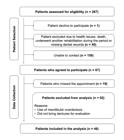
Among participants, 56.5% reported regular use of their MCDs, while 43.5% had discontinued use, either due to abandonment (70%) or irregular/non-functional use (30%). The main reasons cited for discontinuation included lack of retention and stability (e.g., “loose or unstable denture”), pain and discomfort (e.g., “hurts too much when chewing”), and denture fracture, which accounted for 21.4% of cases.
No statistically significant associations were found between sociodemographic variables and the pattern of MCD use (Table 1). Although most patients with discontinued MCD use presented mandibular ridges classified as Class V or resorbed (50%), and 65% had mandibular dentures with deficient stability, no significant associations were observed between clinical, technical, or anatomical characteristics and the pattern of MCD use in the bivariate analysis (Table 2).
Association between sociodemographic characteristics and the pattern of mandibular complete denture (MCD) use
Association between clinical, technical, and operational characteristics and the pattern of MCD use
Regarding functional, subjective, and systemic outcomes, statistically significant differences were observed between the regular use (RU) and discontinued use (DU) groups in terms of perceived masticatory performance and treatment satisfaction (Table 3). However, no statistically significant differences were found for oral health-related quality of life or systemic outcomes such as nutritional status and cognitive function (Table 4).
Impact of MCD use pattern on masticatory performance (CFQ), patient satisfaction (VAS), and oral health-related quality of life (OHIP-EDENT)
Bivariate logistic regression analyses indicated that lower satisfaction scores (VAS), poorer functional performance (CFQ), and denture instability were associated with discontinued MCD use. Satisfaction, measured using the VAS, showed a significant association: for each additional point on the scale, the likelihood of discontinuing MCD use decreased by 5% (OR = 0.95; 95% CI not reported; p = 0.005). Regarding functional performance, higher CFQ scores were associated with increased likelihood of discontinuation: for each one-point increase, the odds of discontinuation rose by 12% (OR = 1.12; p = 0.005). Unsatisfactory clinical quality of the denture showed a trend toward association with the outcome (p = 0.078), reducing the likelihood of regular MCD use by 66% (OR = 0.34). The variables age and alveolar ridge type were included in the models due to p-values ≤ 0.20 in the bivariate analysis, but neither reached statistical significance (p = 0.157 and p = 0.181, respectively).
In the multivariate logistic regression, which considered adjusted effects of the selected variables, the clinical quality of the mandibular denture continued to show a trend toward association with discontinued use (OR = 0.223; 95% CI: 0.047-1.058; p = 0.059), suggesting that patients with unstable lower dentures were less likely to maintain regular use. The variables satisfaction (VAS) (OR = 0.963; 95% CI: 0.919-1.009; p = 0.115) and perceived masticatory performance (CFQ) (OR = 1.087; 95% CI: 0.985-1.200; p = 0.097) remained close to statistical significance, reinforcing the potential role of subjective experience in determining usage patterns (Figure 2).
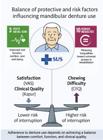
Graphical representation of the logistic regression findings illustrating the balance between protective and risk factors for mandibular denture use interruption. Higher satisfaction (VAS) and satisfactory clinical quality (Kapur index) were associated with a lower likelihood of discontinuing MCD use, whereas greater chewing difficulty (CFQ) increased the odds of discontinuation. In the multivariate model, denture instability showed a trend toward significance (OR = 0.22; p = 0.059), while satisfaction (OR = 0.96; p = 0.115) and masticatory performance (OR = 1.09; p = 0.097) remained near statistical significance, reinforcing the role of comfort, function, and technical quality in patient adherence.
DISCUSSION
The findings of this study demonstrate that discontinuation of MCD use, whether through abandonment or irregular use, represents an important clinical marker of treatment failure, particularly linked to declines in patient satisfaction and masticatory performance. Discontinuation of MCD use appears to be exacerbated by mandibular denture instability and can occur even after the initial adaptation phase, which typically lasts 3 to 6 months8. A recent clinical study8 found a 38% non-adaptation rate to MCDs at three months, decreasing to 14.1% at six months after adjustments and guidance, underscoring the importance of prosthetic maintenance in this critical period. Without structured follow-up beyond the adaptation phase, 43.5% of patients in our study abandoned or irregularly used the MCD, often keeping it only for esthetics and removing it during meals.
Denture instability alone is a major determinant of dissatisfaction and subjective complaints, regardless of the technical quality of the prosthesis or the patient’s sociodemographic characteristics13,25. In this study, deficient MCD stability was associated with up to a 77.7% reduction in the likelihood of continuous use, even after adjustment for other variables. This aligns with previous findings that identify the MCD as the main source of dissatisfaction in complete denture rehabilitation, particularly due to the morphology of the mandibular alveolar ridge8-13. Although this study did not identify a statistically significant association between alveolar ridge type and usage pattern, a relevant clinical trend was observed: severely resorbed ridges (Class V)17 were predominant among patients who discontinued MCD use. Recent studies corroborate this finding, demonstrating that the severity of mandibular ridge resorption is directly associated with shorter denture lifespan11 and poorer clinical performance of MCDs10, mainly due to progressive loss of bony support and reduced prosthesis stability11.
Thus, the patient’s subjective experience is a decisive factor in continued MCD use. In our study, lower satisfaction scores increased the likelihood of discontinuation, while no significant differences were found in overall OHRQoL scores. This likely reflects limitations of the OHIP-EDENT in capturing functional issues such as instability, chewing discomfort, and intermittent use. Moreover, the esthetic value of dentures may offset negative functional experiences, masking their impact on OHRQoL. From a functional perspective, discontinued MCD use was associated with poorer perceived masticatory performance. Each additional point on the CFQ increased the odds of discontinuation by 8.7%, reflecting the impact of instability and retention loss, often accompanied by pain or discomfort during chewing. Although based on subjective measures, patient perception of chewing ability is clinically meaningful, as self-reports, such as food acceptance and chewing function questionnaires, provide valuable insights into daily oral function and have demonstrated reasonable association with objective masticatory performance in older adults with removable dentures26. Importantly, objective assessments could not be applied uniformly, since some participants no longer used their mandibular denture. Despite the lack of a statistically significant association between MCD use pattern and nutritional status (MNA), it is noteworthy that more than half of the participants were already at nutritional risk or malnourished.
Beyond its impact on nutrition, impaired masticatory function from discontinued denture use may also contribute to cognitive decline5,27. Edentulism has been associated with poorer cognitive performance28, reinforcing the importance of maintaining functional denture use in older adults. These findings suggest that MCD usage patterns may influence the link between chewing function, nutrition, and cognition, underscoring the need for clinical monitoring of denture effectiveness. In this study, however, no significant association was observed between MCD use and cognitive status, likely reflecting the limited sensitivity of the Mini-Mental State Examination (MMSE), particularly in populations with low educational attainment.
A notable finding of this study was the high rate of patient absenteeism during recruitment, reflecting poor adherence to maintenance visits after denture delivery. This indicates that discontinuation of MCD use stems not only from clinical failures but also from gaps in follow-up and patient education29. While early adaptation is critical, our results emphasize the importance of continuous monitoring, as fractures, discomfort, and ridge resorption can compromise denture stability even after initial success. Taken together, these findings reinforce the need for public health policies that move beyond providing access to prostheses and ensure functional maintenance, aiming to preserve stability, improve satisfaction, and support overall health.
It is also noteworthy that, in certain borderline cases, even with adjustments and follow-up strategies, MCDs fail to achieve satisfactory functional performance25. Identifying the clinical and systemic profiles of patients who are less likely to adapt to conventional dentures could guide future studies and inform tailored treatment strategies. In this context, alternative prosthetic options, including implant-supported overdentures or digitally fabricated dentures, have shown promising results in improving stability, satisfaction, and adherence25,30, reinforcing the importance of ongoing research to optimize treatment pathways. In the context of the Brazilian Unified Health System (SUS), these findings highlight that the challenge is not limited to ensuring access to dentures, but also to guaranteeing their effective use through structured follow-up and patient education. Without such measures, discontinuation contributes not only to functional impairment and poorer general health in older adults, but also to additional costs for the system due to repeated rehabilitation demands.
Among the limitations of this study, the cross-sectional design stands out, as it only permits identification of associations rather than causal relationships. Nevertheless, the use of logistic regression analyses allowed adjustment for confounding variables, thereby strengthening the robustness of the observed associations. The high rate of absenteeism and the reduced sample size may have limited the generalizability of the findings. Part of this limitation may also be attributed to barriers imposed by the COVID-19 pandemic, particularly among individuals rehabilitated prior to its onset. Future prospective and controlled clinical studies, incorporating both subjective and objective analyses of the evaluated variables, are essential to broaden understanding of the impacts of MCD discontinuation and to explore potential causal pathways.
CONCLUSION
Discontinuation of mandibular complete denture (MCD) use was frequent among the older adults evaluated and was consistently associated with impaired masticatory performance and lower satisfaction. These findings point to prosthetic instability and negative functional experiences as central factors driving abandonment or irregular use, even after the adaptation period. In the context of public health services, they underscore the need for follow-up protocols and patient education to ensure not only access to dentures but also their effective and sustained use.
ACKNOWLEDGMENTS
The authors would like to acknowledge the financial support of the Brazilian research agencies CNPq (National Council for Scientific and Technological Development) and FAPEMIG (Research Support Foundation of the State of Minas Gerais), which contributed to the development of this study through institutional funding.
-
How to cite:
Silva EH, Oliveira LC, Souza WB, Silverio MGC, Oliveira GJPL, Camargos GV. Discontinuation of mandibular complete denture use: associated factors and clinical implications in public health services. Rev Odontol UNESP. 2025;54:e20250031. https://doi.org/10.1590/1807-2577.20250031
-
FUNDING
CNPq (National Council for Scientific and Technological Development, Grant nº 406840/2022-9) and FAPEMIG (Research Support Foundation of the State of Minas Gerais, Grant nº RED-00204-23).
-
DATA AVAILABILITY
Data is available on demand from referees.
REFERENCES
- 1 World Health Organization – WHO. The global oral health status report: towards universal health coverage for oral health by 2030: regional summary of the South-East Asia Region. Geneva: WHO; 2023.
-
2 Nascimento GG, Alves-Costa S, Romandini M. Burden of severe periodontitis and edentulism in 2021, with projections up to 2050: the global burden of disease 2021 study. J Periodontal Res. 2024 Oct;59(5):823-67. https://doi.org/10.1111/jre.13337 PMid:39192495.
» https://doi.org/10.1111/jre.13337 -
3 Roberto LL, Crespo TS, Monteiro-Junior RS, Martins AMEBL, De Paula AMB, Ferreira EF, et al. Sociodemographic determinants of edentulism in the elderly population: a systematic review and meta-analysis. Gerodontology. 2019 Dec;36(4):325-37. https://doi.org/10.1111/ger.12430 PMid:31274222.
» https://doi.org/10.1111/ger.12430 -
4 Campos Sugio CY, Mosquim V, Jacomine JC, Zabeu GS, Espíndola GG, Bonjardim LR, et al. Impact of rehabilitation with removable complete or partial dentures on masticatory efficiency and quality of life: a cross-sectional mapping study. J Prosthet Dent. 2022 Dec;128(6):1295-302. https://doi.org/10.1016/j.prosdent.2021.02.035 PMid:33875264.
» https://doi.org/10.1016/j.prosdent.2021.02.035 -
5 Kim KS, Ahn S, Han JW, Cho SH, Lee JT, Lee HJ, et al. Oral health and risk of cognitive disorders in older adults: a biannual longitudinal follow-up cohort. J Oral Rehabil. 2023 Sep;50(9):792-801. https://doi.org/10.1111/joor.13486 PMid:37159220.
» https://doi.org/10.1111/joor.13486 - 6 Brasil. Ministério da Saúde. Pesquisa Nacional de Saúde Bucal – SB Brasil 2023. Brasília: Ministério da Saúde; 2023.
-
7 Chee W, Jivraj S. Treatment planning of the edentulous mandible. Br Dent J. 2006 Sep;201(6):337-47. https://doi.org/10.1038/sj.bdj.4814041 PMid:16990883.
» https://doi.org/10.1038/sj.bdj.4814041 -
8 Ribeiro AKC, Veríssimo AH, Medeiros AKB, Cardoso RG, Melo LA, Fonte Porto Carreiro A. Incidence and risk factors for non-adaptation of new mandibular complete dentures: a clinical trial. Clin Oral Investig. 2022 Jun;26(6):4633-45. https://doi.org/10.1007/s00784-022-04432-x PMid:35239016.
» https://doi.org/10.1007/s00784-022-04432-x -
9 Chu M, Ibrahim AMBR, Moores CJ, Moynihan P. The impact of wearing complete denture in one or both arches, on eating-related quality of life and patients’ perceived need for advice to support eating well: results from a qualitative study. J Oral Rehabil. 2024 Oct;51(10):1956-65. https://doi.org/10.1111/joor.13775 PMid:38873721.
» https://doi.org/10.1111/joor.13775 -
10 Girundi FMDS, Girundi ALG, Ribeiro MCO, Machado RMM, Gonçalves TMSV, Del Bel Cury AA, et al. Influence of denture-bearing conditions on masticatory function and patient-reported outcomes measures. J Oral Rehabil. 2024 Nov;51(11):2316-23. https://doi.org/10.1111/joor.13815 PMid:39101650.
» https://doi.org/10.1111/joor.13815 -
11 Borges GA, Borges MHR, Dini C, Marcello-Machado RM, Barão VAR, Mesquita MF. Prognosis of removable complete dentures considering the level of mandibular residual ridge resorption: a systematic review and meta-analysis. Clin Oral Investig. 2025 May;29(6):307. https://doi.org/10.1007/s00784-025-06379-1 PMid:40394268.
» https://doi.org/10.1007/s00784-025-06379-1 - 12 Allen PF, McMillan AS. A review of the functional and psychosocial outcomes of edentulousness treated with complete replacement dentures. J Can Dent Assoc. 2003 Nov;69(10):662. PMid:14611716.
-
13 Huumonen S, Haikola B, Oikarinen K, Söderholm AL, Remes-Lyly T, Sipilä K. Residual ridge resorption, lower denture stability and subjective complaints among edentulous individuals. J Oral Rehabil. 2012 May;39(5):384-90. https://doi.org/10.1111/j.1365-2842.2011.02284.x PMid:22289034.
» https://doi.org/10.1111/j.1365-2842.2011.02284.x -
14 Ribeiro AKC, Verissimo AH, Santiago JF Jr, Costa RTF, Moraes SLD, Carreiro ADFP. Factors associated with nonadaptation to new mandibular complete dentures: a scoping review. Int J Prosthodont. 2023 Dec;36(6):754-68. https://doi.org/10.11607/ijp.7774 PMid:38109397.
» https://doi.org/10.11607/ijp.7774 -
15 Mameno T, Otsuki N, Takeuchi S, Yamamoto R, Ikebe K. Removable denture use, fit, and all-cause mortality in older adults with reduced occlusal support: the OHSAKA study. J Prosthet Dent. 2025 Jun;133(6):1505-11. https://doi.org/10.1016/j.prosdent.2024.10.037 PMid:39616101.
» https://doi.org/10.1016/j.prosdent.2024.10.037 -
16 Woelfel JB, Paffenbarger GC, Sweeney WT. Clinical evaluation of complete dentures made of 11 different types of denture base materials. J Am Dent Assoc. 1965 May;70(5):1170-88. https://doi.org/10.14219/jada.archive.1965.0208 PMid:14284642.
» https://doi.org/10.14219/jada.archive.1965.0208 -
17 Cawood JI, Howell RA. A classification of the edentulous jaws. Int J Oral Maxillofac Surg. 1988 Aug;17(4):232-6. https://doi.org/10.1016/S0901-5027(88)80047-X PMid:3139793.
» https://doi.org/10.1016/S0901-5027(88)80047-X -
18 Kapur KK. A clinical evaluation of denture adhesives. J Prosthet Dent. 1967 Dec;18(6):550-8. https://doi.org/10.1016/0022-3913(67)90221-1 PMid:4863771.
» https://doi.org/10.1016/0022-3913(67)90221-1 -
19 Limpuangthip N, Phuckdeedindan M, Techapiroontong S. Clinician evaluation of removable complete denture quality: a systematic review of the criteria and their measurement properties. J Prosthet Dent. 2025 Jan;133(1):96-107. https://doi.org/10.1016/j.prosdent.2023.01.008 PMid:36797082.
» https://doi.org/10.1016/j.prosdent.2023.01.008 -
20 Souza RF, Patrocínio L, Pero AC, Marra J, Compagnoni MA. Reliability and validation of a Brazilian version of the oral health impact profile for assessing edentulous subjects. J Oral Rehabil. 2007 Nov;34(11):821-6. https://doi.org/10.1111/j.1365-2842.2007.01749.x PMid:17919248.
» https://doi.org/10.1111/j.1365-2842.2007.01749.x -
21 Peršić S, Palac A, Bunjevac T, Celebić A. Development of a new chewing function questionnaire for assessment of a self-perceived chewing function. Community Dent Oral Epidemiol. 2013 Dec;41(6):565-73. https://doi.org/10.1111/cdoe.12048 PMid:23551089.
» https://doi.org/10.1111/cdoe.12048 -
22 Gonçalves TMSV, Schimmel M, van der Bilt A, Chen J, van der Glas HW, Kohyama K, et al. Consensus on the terminologies and methodologies for masticatory assessment. J Oral Rehabil. 2021 Jun;48(6):745-61. https://doi.org/10.1111/joor.13161 PMid:33638156.
» https://doi.org/10.1111/joor.13161 -
23 Machado RS, Coelho MA, Veras RP. Validity of the portuguese version of the mini nutritional assessment in brazilian elderly. BMC Geriatr. 2015 Oct;15(1):132. https://doi.org/10.1186/s12877-015-0129-6 PMid:26493313.
» https://doi.org/10.1186/s12877-015-0129-6 -
24 Bertolucci PHF, Brucki SMD, Campacci SR, Juliano Y. O mini-exame do estado mental em uma população geral: impacto da escolaridade. Arq Neuropsiquiatr. 1994;52(1):1-7. https://doi.org/10.1590/S0004-282X1994000100001 PMid:8002795.
» https://doi.org/10.1590/S0004-282X1994000100001 -
25 Verissimo AH, Ribeiro AKC, Silva DMS, Maciel ED, Leles CR, Carreiro ADFP. The effect of single-implant mandibular overdenture on the pattern of denture uses and patient-reported outcomes: a 2-year prospective study. Clin Oral Investig. 2025 Feb;29(3):163. https://doi.org/10.1007/s00784-025-06190-y PMid:40019571.
» https://doi.org/10.1007/s00784-025-06190-y -
26 Suwanarpa K, Hasegawa Y, Salazar S, Kikuchi S, Yoshimoto T, Paphangkorakit J, et al. Can masticatory performance be predicted by using food acceptance questionnaire in elderly patients with removable dentures? J Oral Rehabil. 2021 May;48(5):582-91. https://doi.org/10.1111/joor.13147 PMid:33438242.
» https://doi.org/10.1111/joor.13147 -
27 Cerutti-Kopplin D, Emami E, Hilgert JB, Hugo FN, Padilha DMP. Cognitive status of edentate elders wearing complete denture: does quality of denture matter? J Dent. 2015 Sep;43(9):1071-5. https://doi.org/10.1016/j.jdent.2015.07.008 PMid:26188327.
» https://doi.org/10.1016/j.jdent.2015.07.008 -
28 Newman-Norlund RD, Kudaravalli S, Merchant AT, Fridriksson J, Rorden C. Exploring the link between tooth loss, cognitive function, and brain wellness in the context of healthy aging. J Periodontal Res. 2024 Dec;59(6):1184-94. https://doi.org/10.1111/jre.13280 PMid:38708940.
» https://doi.org/10.1111/jre.13280 -
29 Mendonça CCG, Nogueira TE, Moreira FDCL, Jordão LMR, McKenna G, Leles CR. Prolonged use of old dentures: a qualitative study with Brazilian older adults. Gerodontology. 2025 Jun;42(2):225-32. https://doi.org/10.1111/ger.12787 PMid:39165146.
» https://doi.org/10.1111/ger.12787 -
30 Avelino MEL, Costa RTF, Vila-Nova TEL, Vasconcelos BCDE, Pellizzer EP, Moraes SLD. Clinical performance and patient-related outcome measures of digitally fabricated complete dentures: a systematic review and meta-analysis. J Prosthet Dent. 2024 Oct;132(4):748.e1-10. https://doi.org/10.1016/j.prosdent.2024.02.003 PMid:38485595.
» https://doi.org/10.1016/j.prosdent.2024.02.003
Edited by
-
Edited by
Editor: Micheline Trentin
Data is available on demand from referees.


