 Between fibers and flavors: buriti and its multiple uses in the markets of Boa Vista, Roraima state, Brazil
Abstract
We investigated the commercialization of buriti palm (Mauritia flexuosa) products in the open-air markets and fairs of Boa Vista, Roraima State, Brazil, emphasizing their socio-economic and cultural relevance. Interviews were conducted with ten vendors selected for their involvement in selling buriti-based products in six public markets. Our results revealed a predominance of artisanal uses (77%), including the production of baskets, hammocks, earrings, and decorative items primarily derived from plant fibers. Additionally, culinary uses of the fruits, such as juice pulp, liqueurs, and sweets, demonstrate the plant’s nutritional and economic value. The study highlights the integral role of Indigenous Communities (Warao, Yanomami, Macuxi, and Taurepang) in both the production and supply of buriti-based products, often without intermediaries. These groups contribute raw materials and craftsmanship that sustain cultural practices linked to buriti - including traditional rituals and ecological knowledge. Despite the recognized importance of the buriti value chain, it faces challenges due to limited institutional support, informal logistics, and the lack of public policy integration. Our findings underscore the need for strategies that can promote sustainable development, cultural preservation, and the economic strengthening of socio-biodiversity resources, and point to the need for future initiatives (academic, political, and community-driven) designed to prioritize and formalize Indigenous artisanal production, improve logistics, and advance policies aligned with conservation and bioeconomy principles.
Key words:
bioeconomy; urban ethnobotany; Amazonian palm
Resumo
Este estudo analisa a comercialização do buriti (Mauritia flexuosa) em feiras e mercados públicos de Boa Vista, Roraima, Brasil, com ênfase em sua relevância socioeconômica e cultural. A pesquisa de campo foi realizada em seis mercados, com entrevistas aplicadas a dez feirantes que comercializam produtos derivados do buriti. Os resultados apontam a predominância de usos artesanais (77%), como confecção de cestas, redes, brincos e objetos decorativos, com base principalmente nas fibras da planta. Também foram registrados usos alimentares, como polpa para sucos, licores e doces, que evidenciam o valor nutricional e comercial do fruto. O estudo destaca o protagonismo de comunidades indígenas (Warao, Yanomami, Macuxi e Taurepang) na produção e no fornecimento direto dos produtos, sem intermediação. Esses grupos contribuem com matéria-prima, técnicas artesanais e práticas culturais associadas ao buriti, como rituais e conhecimentos ecológicos. Apesar de sua importância, a cadeia do buriti enfrenta desafios relacionados à logística informal, ausência de políticas públicas específicas e apoio institucional insuficiente. Os dados revelam a necessidade de estratégias voltadas à valorização da sociobiodiversidade regional, promovendo o fortalecimento econômico, a conservação ambiental e a preservação cultural. Recomenda-se que futuras ações priorizem a formalização da produção artesanal indígena, melhorias logísticas e políticas alinhadas à bioeconomia.
Palavras-chave:
bioeconomia; etnobotânica urbana; palmeira amazônica
Introduction
The Arecaceae (Palmae) family comprises approximately 251 genera and 2836 species distributed globally, with its greatest diversity being encountered in the humid tropical areas of the Americas, Asia, Madagascar, Oceania, and Australia (Miranda et al. 2025; Flora e Funga do Brasil 2025).
Palms are widely used by humans, and have significant economic and ornamental values (Marcato 2004; Miranda et al. 2025; Flora e Funga do Brasil 2025). Additionally, the fruits produced by various species are essential components of the diets of several frugivorous vertebrate groups, such as canids, rodents, and psittacines (Galetti et al. 2003; Staggemeier et al. 2017).
Among the species of this family, the “buriti” palm (Mauritia flexuosa L.f.) stands out for its wide distribution across Brazil, occurring in the northern region of that country (in the states of Acre, Amazonas, Pará, Rondônia, and Tocantins), in the northeast (Bahia, Ceará, Maranhão, and Piauí), central-west (Federal District, Goiás, Mato Grosso do Sul, and Mato Grosso), and southeast (Minas Gerais and São Paulo). It spans multiple phytogeographic domains, including the Amazon, Caatinga, and Cerrado (Vianna, 2025). Due to its broad geographical range and presence in distinct sociocultural contexts, it is known by various popular names such as buriti, caraná, caraná-do-mato, buritirana, miritirana, carandaí-guaçu, miriti, and muri (Camillo 2022; Flora e Funga do Brasil 2025).
The species typically occurs in flooded areas, such as along riverbanks, streams, swamps, and springs, where it often forms dense monospecific stands known as buritizais or miritizais (Teodoro et al. 2024; Camillo 2022). Despite its preference for humid environments, M. flexuosa is also capable of developing in drier areas, provided there is constant availability of groundwater-as observed in areas with shallow or exposed water tables. For this reason, Indigenous Peoples consider it a reliable indicator of the presence of groundwater (Vieira et al. 2006; Teodoro et al. 2024).
The buriti palm holds significant socio-economic and cultural importance in the Amazon region, and is widely used by traditional communities and Indigenous Peoples as a food source, for housing construction, and for the manufacture of work tools and handicrafts (Santos & Coelho-Ferreira 2012).
Its fruits are consumed fresh or processed into juices, wines, sweets, ice creams, oils, flours, and cosmetics, rich in nutrients and bioactive compounds (Gazel Filho & Lima 2001; Cavalcante 2010; Camillo 2022). The pith and sap of the stem provide starch and sugar, while the seeds serve as animal feed and as raw material for crafts (Pesce 1941; Ferreira et al. 2018; Cymerys et al. 2005; Oliveira et al. 2021). The leaves, petioles, and fibers are used in construction, roofing, utensil making, clothing, toys, and artisanal products; the stems and trunks are used in civil constructions and river transport (Cymerys et al. 2005).
Numerous products and services derived from buriti palms contribute to the subsistence of traditional peoples and communities as well as surplus income generation. Understanding and quantifying the economic importance of buriti-based products will be essential to developing tools to strengthen local economies and to propose solutions to logistical and supply chain challenges that bottleneck the sustainable use of this resource - with the related promotion of the conservation of buriti stands (buritizais).
Although studies by Ribeiro (2010) and Braga and Bethonico (2018) have demonstrated the diverse uses of buriti in Roraima State, the lack of data on the commercialization of its products hinders the development and consolidation of M. flexuosa economic chains.
In this context, the present study surveyed the different forms of buriti commercialization in street markets and open-air fairs in Boa Vista in order to provide information on the origins of products, the actors involved, the trade routes used, as well as ethnobotanical aspects of its importance to Native American populations.
Material and Methods
Study area
The present study was conducted in open-air fairs and markets in Boa Vista, the capital city of Roraima state, in the far north of Brazil. Roraima shares borders with Venezuela and Guyana, as well as with the Brazilian states of Pará and Amazonas. The state has a total population of 636,700 inhabitants (Brazilian Institute of Geography and Statistics - IBGE 2022), with most of its residents (approximately 413,500), residing in the state capital.
Roraima’s natural vegetation cover is composed of both forested and non-forested formations (Sette-Silva 1997; Barbosa et al. 2003). Among the non-forested ecosystems, the savannas known locally as Lavrados form a mosaic of savanna phytophysiognomies with varying structural and floristic compositions (Miranda et al. 2002). The Lavrados range from grasslands and herbaceous formations to areas with scattered trees (Miranda & Absy 2000; Sette-Silva 1997) and cover approximately 54,000 km², spanning Brazil, Venezuela, and Guyana, and forming the Rio Branco-Rupununi landscape complex (Mcgill 1966; Eden 1970; Brasil 1975). The Brazilian portion occupies about 39,800 km² in northeastern Roraima (Barbosa & Fearnside 2005). Boa Vista, the focus of this study, is situated in the south-central sector of this continuous region (Sanaiotti 1996; Miranda & Absy 2000).
Data collection and analysis
This study was carried out in six public markets and open-air fairs in the city of Boa Vista, Roraima state, Brazil (the Centro de Artesanato Velia Coutinho, Centro de Artesanato da Orla Taumanan, Feira do Garimpeiro, Feira do Produtor, Feira do Passarão, and Mercado São Francisco) (Fig. 1). Fieldwork included multiple visits to each location: two visits to Feira do Passarão; three to both Centro de Artesanato da Orla Taumanan and Centro de Artesanato Velia Coutinho; three to Feira do Produtor; and four each to Feira do Garimpeiro and Mercado São Francisco.

a-f. Markets and fairs surveyed in the municipality of Boa Vista, Roraima - a.Centro de Artesanato Velia Coutinho; b. Centro de Artesanato da Orla Taumanan; c. Feira do Garimpeiro; d. Feira do Produtor; e. Feira do Passarão; f. Mercado São Francisco.
A total of ten vendors were interviewed, selected specifically based on the presence and sale of Mauritia flexuosa products. Given the specific nature of the trade in M. flexuosa products, the sample (N=10) represented the entire universe of buriti vendors active in the surveyed markets during the data collection period. Therefore, this study encompasses the total identified population of actors directly involved in buriti commercialization in these locations.
Data collection involved semi-structured interviews that combined open- and closed-ended questions, following the methodology proposed by Albuquerque et al. (2010). Interviews were conducted during regular business hours at each site.
The questionnaire addressed the origins of the plant products, their traditional uses, and whether any Indigenous group was involved in their handling or production. Socioeconomic data were also gathered, such as the participants’ age and the length of time they had worked as vendors (see Appendix 1 - Supplementary Material at <https://doi.org/10.6084/m9.figshare.32411613>).
Items displayed in the stalls were cataloged through direct observation and were photographed for documentary purposes. The products were systematized by use-category and classified according to the plant part used. Additionally, to address the bioeconomic framework, the products were classified according to their degree of processing and value added (High, Medium, or Low). Finally, the relative frequencies of products were estimated based on field records in order to determine their predominant uses within a commercial context.
This research complied with the ethical standards established by the Conselho Nacional de Saúde and the Comissão Nacional de Ética em Pesquisa (CONEP) and was approved by the Ethics Committee of the Universidade Federal de Roraima (CAAE - 76100823.9.0000.5302).
Results and Discussion
Vendor profile
The study sample consisted of ten market vendors (N = 10), ranging in age from 24 to 70 years old. The majority of participants were women (70%), with men accounting for 30% of the sample group. In terms of educational background, 50% had completed their higher education, 40% had finished secondary school, while one respondent (10%) had completed only primary school.
All participants currently reside in the municipality of Boa Vista; seven, however, were born outside of Roraima State and had their origins in Maranhão (2), Goiás (1), Amazonas (1), Bahia (1), Pará (1), and Guyana (1). Their lengths of residence in Boa Vista ranged from 12 to 69 years.
Concerning their occupational roles, six respondents identified themselves as both producers and vendors, while four classified themselves solely as vendors. Experience in selling plant-based products varied from 1 to 30 years, with half of the respondents (5) having more than two decades of experience. A majority (60%) reported that selling plant products constituted their household’s primary source of income, while the remaining participants indicated product commercialization as representing either supplementary or alternative incomes. These findings highlight the economic relevance of plant product commercialization in Boa Vista, particularly among women, who represented the majority of the sample.
Forms of Buriti Commercialization
Buriti-derived products are widely commercialized in the public markets of Boa Vista and serve multiple purposes, with culinary, handicraft, and decorative applications (Fig. 2). The presence of buriti products was confirmed in the stalls, and their identifications were corroborated by the vendors.

a-k. Different forms of buriti commercialization in open-air markets and fairs in Boa Vista, Roraima - a. liqueur; b. juice pulp; c. earring; d. basketry; e. hat; f. strainers and vases; g. seeds for accessories; h. coasters; i-j. basketry; k. hammock.
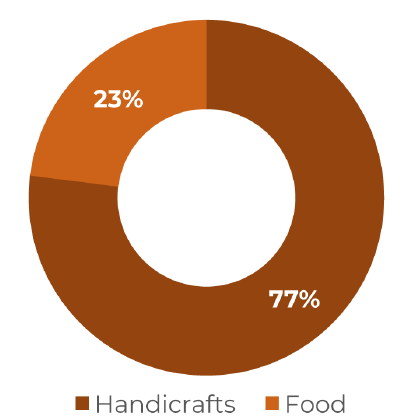
Our findings revealed a predominance of buriti-based items in the handicraft category, accounting for 77% of the products offered (Fig. 3).

Table 1 reveals distinct economic dynamics within the general categories. Basketry emerged as the most prominent product among fiber uses, highlighting the persistence of traditional weaving techniques as a primary source of trade (Santos 2019).
From a bioeconomic perspective, the data illustrate a variable value-addition system. High-complexity artifacts, such as hammocks and traditional basketry, are classified as having ‘High’ value perception because their fabrication requires weeks of specialized labor and a deep cultural heritage (Velthem 2012). Items like bio-jewelry and fiber bundles, on the other hand, represent products with lower value additions, but offer faster liquidity (turnover) to the vendors. In the culinary category, while buriti fruit pulp remains essential for local food security, the commercialization of liqueurs and jellies indicates an important commercial shift towards processing. These products offer high added values and longer shelf lives compared to perishable raw fruits (Cymerys et al. 2005), suggesting a potential pathway for strengthening the buriti value chain.
While Table 1 highlights the frequency of products, field observations revealed a clear spatial segmentation regarding their commercialization. Based on our results, it is evident that certain fairs and markets in Boa Vista exhibit distinct characteristics regarding their structures and their target audiences. Markets such as the Centro de Artesanato Velia Coutinho, Orla Taumanan, and Mercado São Francisco stand out for catering primarily to the ‘Tourist’ category. Located in the city center, these venues predominantly offer handicraft items with higher value additions.
In contrast, open-air markets such as Feira do Garimpeiro, Feira do Produtor, and Feira do Passarão attract local residents as their main consumers, indicating a closer relationship with the domestic public and a focus on the commercialization of in natura (or minimally processed) products. This distinction in consumer profiles explains the distribution pattern observed: high-value crafts concentrated in tourist venues, while food staples are found in local fairs.
The most commonly used part of the plant for handicrafts is the fiber, which is primarily extracted from the leaves. This fiber is used in the confection of items such as baskets, handbags, hammocks, and sieves (Tab. 1). This finding aligns with previous reports indicating that buriti fiber is the most commercially used part of the plant in Brazil, especially for artisanal productions (Ferreira et al. 2018). Other parts, such as seeds for making keychains, necklaces, and earrings, are also utilized, as well as the petiole and the leaf sheath (locally known as capemba). The latter are used for making decorative objects and fruit bowls respectively. These decorative and utilitarian items are frequently purchased by tourists as cultural souvenirs from the region (Tab. 1; Fig. 1 c-k).
Previous studies have likewise documented the diverse uses of this species, confirming that its handicraft production potential is broadly recognized. Young leaves are typically used for handmade items (Sampaio et al. 2008), while mature leaves are employed as roofing material (Ferreira et al. 2018). Santos and Coelho-Ferreira (2011) reported the use of buriti leaves to make tipiti (a traditional woven mesh for squeezing cassava mass), sieves, and toys in the municipality of Abaetetuba, in Pará State. Camillo (2022) noted the use of buriti seeds to produce assorted ornaments. Cymerys (2005) and Camillo (2022) described the petiole as being used to manufacture toys, bottle stoppers, toilet paper, and decorative crafts.
In the culinary category, the fruits of M. flexuosa are commonly used to make juice pulp, jellies, and liqueurs - products that are widely appreciated and have good commercial value in the markets of Boa Vista (Fig. 1a,b). The use of buriti for food is very prevalent among Indigenous Communities in Roraima. The Darora community, located in the São Marcos Indigenous Territory (TISM), for example, uses buriti fruits to prepare sweets, juices, and fermented beverages (Oliveira et al. 2021). In the Araçá Indigenous Territory, the Guariba and Mutamba communities use buriti fruits to produce pulp, wine, sweets (including pé de moleque), cakes, flour, artisanal ice cream (known locally as dindin, pamonha), and oil (Ribeiro 2010). Buriti oil is widely employed in local cuisine, particularly for frying fish (Cavalcante 2010). Santos and Coelho-Ferreira (2012) highlighted the importance of buriti in the diets of riverside communities in Abaetetuba, Pará, where the fruit is eaten raw and as well as used in porridge, wines, cakes, and popsicles.
In addition to human consumption, the fruits are used as animal feed, especially for pigs, and as bait for hunting (Ribeiro 2010). Beyond its nutritional uses, the buriti palm also holds cultural significance. Among the Huitoto people, for example, its fruits are used to prepare a fermented beverage similar to chicha, which plays a vital role in their nutrition and subsistence practices (Bohorquez 1976). Given the variety of buriti-based products available in Boa Vista’s markets and fairs, it is evident that this palm represents a valuable economic and cultural resource for surrounding populations.
Mauritia flexuosa is widely distributed not only in the Amazon region but also across the Cerrado and Caatinga biomes (Vianna, 2025). In Piauí state, for instance, buriti sweets (doce de buriti) are commonly sold in local markets in small portions or large containers (up to 20 kg) (Cavalcante 2010). In Maranhão, the fruits are marketed in packaging made from the plants’ own fibers, emphasizing the multifunctionality of the species (Cavalcante 2010). In the Kalunga community of Engenho II, in Goiás state, buriti is consumed raw or used to prepare juices, sorbets, sweets, molasses, and sambereba (a traditional recipe combining buriti pulp with manioc flour and sugar) (Martins et al. 2012).
Commercialization chain and the ethnic groups involved
Regarding product commercialization, most vendors reported that buriti palm derivatives are primarily sold to tourists. In terms of transportation logistics, the majority of products reach their final points of sale via land routes (7 reports), followed by air transport (4 reports) and river transport (2 reports) (Fig. 4). It is important to note that these categories are not mutually exclusive, as some vendors utilize multiple transport modalities. The sum of responses exceeded the total number of interviewees (N=10) as multiple transport modalities could be reported by a single vendor.

Transportation logistics of products commercialized in the fairs and markets of Boa Vista, Roraima. The chart illustrates the number of reports indicating how products reach their final points of sale via land (7), air (4), and river (2) routes.
Indigenous participation in the buriti commercialization chain is significant, as, according to 60% of respondents, the products sold are sourced directly from Indigenous Communities. Vendors reported that this supply occurs without intermediaries, with the Indigenous producers themselves being responsible for delivering goods to commercial establishments.
Buriti handicrafts originate primarily from the Warao, Yanomami, Macuxi, and Taurepang peoples, while other raw materials (such as seeds and fruits) are sourced locally within Boa Vista or from other municipalities in the state. There are also reports of fruits being acquired at urban open-air markets.
The Warao, an Indigenous people from Venezuela, play a key role in supplying handmade products, such as baskets, hammocks, and bags, as well as raw materials, including buriti fiber and seeds, which are later sold in Boa Vista. The Warao predominantly inhabit the Venezuelan Amazon region, especially along the Orinoco River basin, with a large population concentrated in Delta Amacuro State, home to over 40,000 individuals from this ethnic group (Venezuela 2015). Buriti palms are abundant in that region, and they are regarded as sacred. The palm provides food (e.g., flour and other derivatives) as well as vital raw materials for handicraft production, and thus constitutes one of the main sources of income for the Warao (Heinen et al. 1996).
The escalation of Venezuela’s political and socioeconomic crisis has driven a considerable migration of Warao people into Roraima State in Brazil since 2014 (Araújo Neto & Alves 2025). Beginning in 2016, their presence in Boa Vista became increasingly visible, especially in terms of older women and mothers accompanied by children, who began selling handicrafts and soliciting donations on the streets (Xavier 2021). According to Rosa (2020), the Warao maintain regular cross-border movements between Brazil and Venezuela, frequently returning with new artisanal goods for resale. This transnational flow reflects the complex sociocultural dynamics of the Warao and highlights the central role of artisanal production as a strategy for both survival and cultural continuity. This migratory influx has directly altered the market dynamics in Boa Vista, resulting in a noticeable increase in the availability and diversity of fiber-based handicrafts (particularly baskets and hammocks) in public markets.
The Yanomami are also actively involved in crafting goods sold in Boa Vista’s markets and fairs, and they are particularly renowned for their technical mastery of fiber manipulation in basketry. This Indigenous group is composed primarily of hunter-gatherer and farming communities that inhabit the far northern tropical forests of the Amazon, and most of them have had only relatively recent contact with the broader Brazilian society (Instituto Socioambiental 2025). The Yanomami Indigenous Territory spans approximately 192,000 km² across the Brazil-Venezuela border, and in 2023, the Yanomami population on the Brazilian side was estimated at 31,223 individuals (Instituto Socioambiental 2025).
Yanomami basketry transcends its simple commercial value, as it embodies cultural, ethical, and aesthetic meanings expressed through traditional narratives and origin myths (Ramos et al. 2022). However, according to vendor accounts, Yanomami products have become less common in Boa Vista’s markets, a reflection of the severe social and environmental challenges facing those people. Chief among these issues is environmental degradation caused by illegal mining, which has led to outbreaks of debilitating diseases, loss of biodiversity, and contamination of their water and food resources (Leme et al. 2024). The situation became particularly critical during the COVID-19 pandemic, when governmental negligence allowed the intensification of illegal invasions, deforestation, and mining in Indigenous territories (Rapozo 2021). These disruptions, beyond their direct health consequences, have severely impacted the cultural and spiritual traditions of the Yanomami (Carvalho et al. 2025). Consequently, a direct correlation was observed between the advance of illegal mining and the scarcity of Yanomami products in the markets. The territorial and social disruption caused by mining activities has hindered both the harvesting of raw materials and the flow of artisanal production. As a result, items that were once emblematic of local biodiversity, such as Yanomami basketry, have become rare or even absent in the stalls surveyed, reducing the diversity of high-complexity handicrafts available to consumers.
The Macuxi people, of the Karib language family, are also prominent producers of artisanal basketry. These native peoples mainly inhabit the headwaters of the Branco and Rupununi rivers, in the border region between Brazil and Guyana. In Brazil, they are concentrated in the Raposa Serra do Sol and São Marcos Indigenous Territories, both located in Roraima (Santilli 2021).
According to Braga and Bethonico (2018), buriti occupies a central position in Macuxi culture, especially within the Campo Alegre Indigenous community, located in the São Marcos Indigenous Territory. There, the buriti palm is regarded as the “tree of life” due to its versatility and abundance. In addition to the previously mentioned food uses, the palm is used by the Macuxi people for the production of a traditional buriti wine (vinho de buriti). It also serves as a raw material for the production of organic fertilizer and a variety of handicrafts, including garments and ornaments such as necklaces, earrings, and headdresses (Braga & Bethonico 2018; Nicácio et al. 2024).
During the Parixara festivities, celebrated primarily in March with singing and dancing, their traditional clothing is made from young buriti leaves. These garments are crafted in two ways: using fibers extracted from the leaves or using whole green leaves. At the end of the celebration, which may last several days, the garments are symbolically burned to drive away evil spirits. Another significant Macuxi artisanal tradition is the production of clay pots, which are fired exclusively by burning buriti leaf sheaths (capemba) as fuel (Nicácio et al. 2024; Braga & Bethonico 2018).
The Taurepang people also produce handicrafts and basketry items sold in Boa Vista. This Indigenous group primarily inhabits the northern region of Roraima state, an area of savannas and highlands at the border area between Brazil, Venezuela, and Guyana (Andrello 2021; Pessoa 2006). Monteiro (2012) described their craftsmanship for making miniature fans (jamachin), strainers, and sieves for commercial establishments in Boa Vista. According to Moreira (2013), the transmission of traditional knowledge for the production of specific artisanal items remains strong among the Taurepang. Elders still teach younger generations how to use buriti fibers to make woven containers (daruanas) that are commonly used to carry fish and other goods. Other sustainable practices are also passed down from parents to children, such as techniques for careful fruit harvesting to avoid damaging buriti palms - thereby ensuring their availability in following years (Moreira 2013).
The participation of these ethnic groups in buriti commercialization highlights the cultural diversity associated with the use of this palm and the central role of Indigenous Peoples in sustaining its productive chain in Boa Vista.
Socio-cultural dynamics: preservation vs. dilution in the urban context
The urban market provides a space for cultural resistance and visibility, although the commercial interactions observed in Boa Vista reflect a process of cultural dilution driven by market demands. Traditional techniques are being adapted, and often simplified, to fit the profiles of urban consumers, who typically seeks portable and affordable souvenirs rather than traditional utilitarian tools (Graburn 1976; Velthem 2012). This “souvenirization” of Indigenous art poses a risk to the intergenerational transmission of complex weaving techniques.
Furthermore, the socio-economic reality of these markets highlights a marginalization of Indigenous producers. This was starkly highlighted by one of the vendors interviewed, who pointed out a scarcity of handicrafts originating specifically from Roraima. She attributed this scarcity to the “absence of a locally structured productive chain” and to a “severe devaluation of artisans.” Her prediction is that these traditional products may “cease to exist” in the near future.
This local perception corroborates the critical view that the current bioeconomic model is unsustainable. For groups like the Warao, the sale of Buriti crafts is often a measure for food security and mobility in a migrational context, which places them in a position of weak bargaining power regarding prices (Santos 2019). Their bargaining power is further weakened by market competition and the high logistical costs of sourcing raw materials from Venezuela, which traps them in a cycle of economic vulnerability.
Similarly, field observations indicate that this trade acts as a vital financial lifeline for the Yanomami during their travels to secure health care. Data collected at the markets suggests that while staying at the Indigenous Health House (CASAI) for medical treatment, they must rely on selling their artifacts to local Craft Centers (Centros de Artesanato) to generate income, further illustrating how this bioeconomy is deeply intertwined with social vulnerabilities.
Implications for Amazonian urban ethnobotany
Our findings suggest that urban ethnobotany in the Amazon must be analyzed beyond the mere presence of plants in city landscapes, and must be understood as a process wherein the city consumes and transforms the forest heritage. The fairs of Boa Vista function as socio-biodiversity hubs, connecting the swamps where the palms grow (buritizais) to the urban center.
However, for this socio-biodiversity to persist in the future, the model must shift from predatory consumption of cheap labor/fiber to a model of biocultural appreciation. Without public policies that recognize these markets as cultural heritage sites and ensure fair pricing mechanisms, all trends point towards a homogenization of crafts and the marginalization of the artisans themselves.
Conclusions
The present study highlighted the relevance of buriti palms (Mauritia flexuosa) in the urban context of Boa Vista, Roraima state, Brazil, as well as the diversity of its culinary, artisanal, and decorative uses. The wide range of buriti-based products observed being commercialized in different forms in the city’s fairs and markets demonstrates its economic importance to vendors and its integration into the cultural practices of various Indigenous ethnic groups, including the Warao, Yanomami, Macuxi, and Taurepang.
The buriti value chain was found to rely heavily on traditional knowledge, Indigenous leadership, and simple logistical circuits, revealing both its strengths and vulnerabilities. The lack of specific public policies and an established organizational structure limits the development of a more robust economy based on this palm, despite its clear contribution to income generation and cultural preservation.
Understanding the uses and trade routes of buriti will be essential to supporting strategies that can promote both the valorization of regional socio-biodiversity and the strengthening of sustainable practices. In this regard, it is recommended that future academic and political initiatives be designed to include actions aimed at formalizing and promoting Indigenous crafts, providing logistical support, and consolidating a buriti production chain aligned with the principles of conservation and a bioeconomy. Furthermore, detailed research will be needed concerning the value chain distribution, particularly comparing the revenues received by Indigenous producers versus final market prices. Such data will be vital to fully understanding the socioeconomic impacts of this trade.
Acknowledgments
Our sincere appreciation goes to the vendors who contributed to this research. We also acknowledge the facilities provided by the Herbário da Universidade Federal de Roraima (UFRR), the Programa de Pós-Graduação em Saúde e Biodiversidade (PPGSBio - UFRR), and the Centro de Estudos da Biodiversidade (CBio - UFRR). We also thank CAPES (Coordenação de Aperfeiçoamento de Pessoal de Nível Superior) for awarding a scholarship to the first author; the Conselho Nacional de Desenvolvimento Científico e Tecnológico- CNPq, Ministério da Ciência, Tecnologia e Inovações - MCTI, and the Fundo Nacional de Desenvolvimento Científico e Tecnológico - FNDCT for a research grant (Chamada CNPq/MCTI/FNDCT Nº 39/2022 - Programa de Apoio a Museus e Centros de Ciência e Tecnologia e a Espaços Científico-Culturais).
References
- Albuquerque UP, Lucena R & Cunha LVFC (orgs.) (2010) Métodos e técnicas na pesquisa etnobiológica e etnoecológica. NUPEEA, Recife. 559p.
-
Andrello G (2021) Taurepang. Povos Indígenas no Brasil. IISA. Available at <https://pib.socioambiental.org/pt/Povo:Taurepang>. Accessed 27 May 2025
» https://pib.socioambiental.org/pt/Povo:Taurepang -
Araújo Neto DV & Alves J (2025) De povo da canoa a povo da estrada: o processo de expropriação e migração dos Warao da Amazônia Venezuelana até a Amazônia Acreana (BR). Pegada: A Revista da Geografia do Trabalho 26: 51-71. DOI: 10.33026/peg.v26i1.10816
» https://doi.org/10.33026/peg.v26i1.10816 - Barbosa RI, Xaud MR, Silva GNF & Cattâneo AC (2003) Forest fires in Roraima, Brazilian Amazonia. International Forest Fire News 28: 51-56.
- Barbosa RI & Fearnside PM (2005) Fire frequency and area burned in the Roraima savannas of Brazilian Amazonia. Forest Ecology and Management 204: 371-384.
- Bohórquez JA (1976) Monografía sobre Mauritia flexuosa L.f. In: Simposio internacional sobre plantas de interés económico de la flora amazónica. Informes de conferencias, cursos y reuniones No. 93. IICA, Turrialba. Pp. 233-244.
- Braga MGG & Bethonico MBB (2018) Uso da palha de buriti: manejo, preservação e tradição do povo Macuxi da comunidade indígena Campo Alegre - Roraima. Revista PerCursos 19: 177-205.
- Brasil (1975) Levantamento de Recursos Naturais - Projeto RADAMBRASIL. Departamento Nacional da Produção Mineral, Rio de Janeiro, Brazil. 427p.
- Camillo J (2022) Alimentícias. In: Coradin L, Camillo J & Vieira ICG (eds.) Espécies nativas da flora brasileira de valor econômico atual ou potencial: plantas para o futuro - Região Norte. MMA, Brasília. Pp. 145-560.
-
Carvalho R, Santia M & Ramasubramanian S (2025) Framing the Yanomami: decolonial analysis of U.S. coverage of Indigenous people in Brazil during COVID-19. Ethnic and Racial Studies 48: 346-367. DOI: 01419870.2024.2362453
» https://doi.org/01419870.2024.2362453 - Cavalcante PB (2010) Frutas comestíveis na Amazônia. Museu Paraense Emílio Goeldi, Belém. 282p.
- Cymerys M, Fernandes NMP & Rigeamonte-Azevedo OC (2005) Buriti (Mauritia flexuosa L.f.). In: Shanley P, Medina G (eds) Frutíferas e plantas úteis na vida amazônica. CIFOR, Imazon, Belém. Pp. 181--87
- Eden MJ (1970) Savanna vegetation in the northern Rupununi, Guyana. The Journal of Tropical Geography 30: 17-28.
- Ferreira MGR, Costa CJ, Pinheiro CUB, Souza ERB & Carvalho CO (2018) Espécies nativas da flora brasileira de valor econômico atual ou potencial: plantas para o futuro: Região Nordeste. MMA, Brasília. 131p.
-
Flora e Funga do Brasil (2025) Jardim Botânico do Rio de Janeiro. Available at <https://floradobrasil.jbrj.gov.br/FB53>. Access on 30 April 2025.
» https://floradobrasil.jbrj.gov.br/FB53 -
Galdino LKA, Silva EV, Falcão MT, Pinheiro MNM & Oliveira SKS (2019) A questão indígena em Roraima: análise socioambiental na comunidade indígena Boca da Mata na Terra Indígena São Marcos. Ambiente: Gestão e Desenvolvimento 6: 81-89. DOI: 10.24979/225
» https://doi.org/10.24979/225 - Galetti M, Pizo MA & Morellato P (2003) Fenologia, frugivoria e dispersão de sementes. In: Cullen Jr L, Rudran R & Valladares-Padua C (eds) Métodos de estudos em biologia da conservação e manejo da vida silvestre. Editora UFPR, Curitiba. Pp. 395-422.
- Gazel Filho AB & Lima JAS (2001) O buritizeiro (Mauritia flexuosa L.) e seu potencial de utilização. (Documento, 27) Embrapa Amapá, Macapá. 21p.
- Graburn NHH (1976) Ethnic and tourist arts: cultural expressions from the fourth world. University of California Press, Berkeley. 412p.
- Heinen D, Lizarralde R & Gómez T (1996) El abandono de un ecosistema: el caso de los Morichales del Delta del Orinoco. Antropologica 81: 3-36.
-
IBGE (2022) Brasil, Roraima, Boa Vista. Available at <https://cidades.ibge.gov.br/brasil/rr/boa-vista/panorama>. Access on 20 July 2024.
» https://cidades.ibge.gov.br/brasil/rr/boa-vista/panorama -
Instituto Socioambiental (ISA) (2025) Terra Indígena Yanomami. Available at <https://terrasindigenas.org.br/terras-indigenas/4016?id_arp=4016#demografia>. Access on 13 May 2025.
» https://terrasindigenas.org.br/terras-indigenas/4016?id_arp=4016#demografia - Leme JWM, Pscheidt AC & Rodrigues ER (2024) A destruição do meio ambiente e sua relação direta com a saúde dos Yanomami no Brasil. ACiS - São Paulo 12: 9-17.
- Marcato AC (2004) Revisão taxonômica do gênero Butia (Becc.) Becc. e filogenia da subtribo Butiinae. Tese de Doutorado. Universidade de São Paulo, São Paulo. 147p.
- McGill (1966) Savanna Research Project - Technical Report 5. McGill University, Montreal. 52p
-
Miranda F, Coronel-Chugden JW, Veneros J, García L, Guadalupe GA & Arellanos E (2025) Species diversity of the family Arecaceae: What are the implications of their biogeographical representation? Forests 16: 76. doi: 10.3390/f16010076
» https://doi.org/10.3390/f16010076 - Miranda IS & Absy ML (2000) Fisionomia das savanas de Roraima, Brasil. Acta Amazonica 30: 423-423.
- Miranda IS, Absy ML && Rebelo G (2002) Community structure of wood plants of Roraima savannahs, Brazil. Plant Ecology 164: 109-123.
- Monteiro HMV (2012) Relatos de um estrangeiro na Terra de Macunaíma. Revista de Estudos Universitários 38: 417-436.
- Moreira JAM (2013) O impacto sociocultural na identidade Taurepang na comunidade Sorocaima I. Dissertação de Mestrado. Universidade Federal do Amazonas, Manaus. 103p.
-
Nicácio CM, Cavalcante GMB, Araujo MV, Matos MB & Santos RBS (2024) Cultura e arte dos povos Macuxi e Wapichana. Cuadernos de Educación y Desarrollo 16: 01-29. DOI: 10.55905/cuadv16n5-053
» https://doi.org/10.55905/cuadv16n5-053 - Oliveira RLC, Almeida LFP, Durigan MFB, Scudeller VV & Barbosa RI (2021) Espécies arbóreas de uso múltiplo em uma comunidade Makuxi no Lavrado de Roraima, Amazônia Brasileira. In: Gomide PHO, Falcão MT (eds.) Sociobiodiversidade amazônica & saberes, olhares e práticas agroecológicas. UERR Edições, Boa Vista. Pp. 18-31.
- Pesce C (1941) Oleaginosas da Amazônia. Belém, Brazil. Revista da Veterinaria, Belém. 128p
- Pessoa KN (2006) Fonologia Taurepang e comparação preliminar da fonologia de línguas do grupo Pemóng (família caribe). Dissertação de Mestrado. Universidade Federal de Pernambuco, Recife. 125p.
- Ramos AR, Senra EB & Oliveira MW (2022) Terra Indígena Yanomami 30 anos: o futuro é indígena. ISA - Instituto Socioambiental; Hutukara Associação Yanomami, São Paulo, Brazil. 363p.
- Rapozo P (2021) Necropolitics, state of exception, and violence against Indigenous people in the Amazon region during the Bolsonaro administration. Brazilian Political Science Review 15: e0002.
- Ribeiro AH (2010) O buriti (Mauritia flexuosa L. f.) na Terra Indígena Araçá, Roraima: usos tradicionais, manejo e potencial produtivo. Dissertação de Mestrado. Instituto Nacional de Pesquisas da Amazônia (INPA), Manaus. 100p.
- Rosa M (2020) A mobilidade Warao no Brasil e os modos de gestão de uma população em trânsito: reflexões a partir das experiências de Manaus-AM e de Belém-PA. Tese de Doutorado. Universidade Federal do Rio de Janeiro, Rio de Janeiro. 322p.
- Sampaio MB, Schmidt IB & Figueiredo IB (2008) Harvesting effects and population ecology of the buriti palm (Mauritia flexuosa L. f., Arecaceae) in the Jalapão region, Central Brazil. Economic Botany 62: 171-181.
- Sanaiotti TM (1996) The woody flora and soils of seven Brazilian Amazonian dry savanna areas. PhD Thesis. University of Stirling, Stirling. 145p.
-
Santilli P (2021) Macuxi. In: Instituto Socioambiental (ISA). Povos Indígenas no Brasil. Available at <https://pib.socioambiental.org/pt/Povo:Macuxi>. Access on 22 May 2025.
» https://pib.socioambiental.org/pt/Povo:Macuxi - Santos JRT (2019) Diáspora dos índios Warao da Venezuela. Dissertação de Mestrado. Universidade Federal de Roraima, Boa Vista. 83p.
- Santos RS & Coelho-Ferreira M (2011) Artefatos de miriti (Mauritia flexuosa L. f.) em Abaetetuba, Pará: da produção à comercialização. Boletim do Museu Paraense Emílio Goeldi. Ciências Humanas 6: 559-571.
-
Santos RS & Coelho-Ferreira M (2012) The ethnobotanical study of Mauritia flexuosa L. f. (Arecaceae) in riverine communities of Abaetetuba county, Pará state, Brazil. Acta Amazonica 42: 1-10. DOI: 10.1590/S0044-59672012000100001
» https://doi.org/10.1590/S0044-59672012000100001 - Sette-Silva EL (1997) A vegetação de Roraima. In: Homem, ambiente e ecologia no estado de Roraima. INPA, Manaus. Pp. 401-415
- Staggemeier VG, Cazetta E & Morellato LPC (2017) Hyperdominance in fruit production in the Brazilian Atlantic Rain Forest: the functional role of plants in sustaining frugivores. Biotropica 49: 71-82.
- Teodoro AJ, Yamaguchi KKL, Dolinsky M, Martinez RM, Torres TL (2024) Frutas nativas e exóticas do Brasil: nutrição e biodiversidade. Appris, Curitiba. 486p.
- Velthem LHV (2012) O objeto etnográfico é aquele que o museu guarda? Revista do Patrimônio Histórico e Artístico Nacional 34: 185-201.
- Venezuela. Instituto Nacional de Estadística (INE) (2015) XIV Censo Nacional de Población y Vivienda de 2011. INE, Caracas. 116p.
-
Vianna SA (2025) Mauritia in Flora e Funga do Brasil. Jardim Botânico do Rio de Janeiro. Available at <https://floradobrasil.jbrj.gov.br/FB15723>. Access on 30 April 2025.
» https://floradobrasil.jbrj.gov.br/FB15723 - Vieira RF, Costa TSA, Silva DB, Ferreira FR & Sano SM (2006) Frutas nativas da Região Centro-oeste do Brasil. Embrapa Recursos Genéticos e Biotecnologia, Brasília. 322p.
- Xavier FCC (2021) Direitos indígenas para imigrantes indígenas: o caso dos Warao no Brasil. Revista da Faculdade de Direito do Sul de Minas 37: 383-414.