
 The use of fractal dimension among the descriptive characteristics of different types of natural fine aggregate for construction in arid environments
ABSTRACT
The use of natural aggregates, particularly natural fine aggregate (NFA), in construction has been extensively studied; however, there remains a need for accurate and comprehensive characterization to understand the limits of their use in engineering materials fully. Our study examined numerous natural fine aggregate sites in desert areas and their use in concrete. The problem lies in identifying the types and varieties of fine aggregate over an area of more than 800 kilometers. The goal is to identify them by their physical, chemical, and mechanical properties. Based on extensive testing, the results showed that all of the natural aggregates studied were classified as very fine and clean aggregates. Chemical results then showed that these fine aggregates (FA) have a siliceous composition. The silica content reaches 98%. This confirms its potential for use as a construction aggregate. In addition, the grain distribution is asymmetrical, using the “fractal dimension” property. This encourages us to study this fine aggregate closely for use in concrete mixes and to work on using other types to correct it in terms of coarse grains. The preliminary results of natural fine aggregate (NFA) corrected with crushed fine aggregate (CFA) are very acceptable compared to using crushed fine aggregate alone.
Keywords:
Construction materials; Fractal modeling; Fine aggregates; Concrete; Buildings
1. INTRODUCTION
The importance of using fine aggregate in construction is demonstrated by the fact that they account for approximately two-thirds of the volume of concrete and around a third of cement mortar or cement-based mortar [1,2,3]. Natural fine aggregates have been used as a building material since antiquity [4,5,6]. However, over the last few years, the availability of high-quality fine aggregate has been diminished, in particular in areas in which natural fine aggregate was previously utilized extensively, with notable differences.
The demand for building materials in desert regions, particularly fine-grained materials in arid climates, as discussed by the authors in references [5, 7], has led to the irregular use of natural fine aggregate, as well as modern technological and research applications that are unsuitable for the desert environment. In addition, given the softness of the natural fine aggregate that is abundant in these areas, careless exploitation can have a detrimental effect on the suitability of aggregates for structural construction, as mentioned in references [3, 4]. Against this background, this paper aims to provide a physical and chemical description, followed by an application to concrete to determine the mechanical properties using different types of natural fine aggregate found in Algerian desert areas. Based on the construction sites identified by the official technical services, natural fine aggregates are present at all sites. This phenomenon has already occurred in many countries around the world, particularly on the coasts of France, Spain, the United Kingdom, Argentina, Morocco, Saudi Arabia, Iraq, and Libya. Research has been conducted to study the use of crushed fine aggregate to make mortar and mix concrete. Various studies have prompted these countries to review their regulations, particularly the permissible proportion of fine aggregate.
In the case of fine aggregate, that is, material with a particle size of less than 4 mm, replacing fine aggregate extracted from quarries with natural fine aggregate has been the most common approach. Traditionally, fine aggregate is produced as part của the crushing and sieving process. Since the sizes of its particles vary, elongated and flat particles often have insufficient grain size, resulting in poor performance in concrete. Fine aggregate is found in desert environments, which are generally well known. Still, these areas have been the subject of significant exploration for large reserves of NFA, encouraging exploitation and investment, particularly in the Algerian desert, underground exploration and exploitation, and the development of the desert tourism sector. Given the positive effects of the desert environment on development and business, such as prosperity and economic growth, and the technical challenges involved in project design and implementation, the desert environment plays an important role in fostering sustainability, as noted by the authors in references [2, 6]. In addition, it can address the specificities of the fine-aggregate context in the study, related to roads and other applications, having outlined the work that relies on the usage of locally sourced materials from the desert environment, and taking into account the physiological effects of salt contained in natural fine aggregate during its use. The authors in [2, 3] note the need to meet fine-aggregate requirements and to preserve surrounding natural resources to protect the environment. It is necessary and appropriate to study most grades of fine aggregate to develop a preliminary concept, considering all of its properties chemical, mechanical and physical in relation to the extraction of aggregate and other building materials. Fine aggregate, natural fine aggregate, must be used properly in concreting technology. Improving the usage of natural fine aggregate in building construction helps mitigate drought, thereby addressing some aspects of fine-aggregate shortages in the Algerian desert region.
This study aims to contribute to finding a solution to the problem of using natural fine aggregate in the manufacture of mortar and concrete, as well as to reducing the costly production of fine aggregate extracted from desert quarries. Based on the condition of the fine aggregate, a large-scale physiological analysis of different categories of natural fine aggregate was proposed. The quality of the fine aggregate is then assessed against the reference fine aggregate. The study also sought to provide a better understanding of the physical and chemical behavior of different types of fine aggregate in Algerian regions. In addition, based on the new hypothesis of “fractal dimension,” an applied study was conducted on concrete using different types and grades of natural fine aggregate to assess the effectiveness of the results obtained from the physical and chemical characterization of the aggregate. Crushed fine aggregate was used to replace the natural fine aggregate, achieve the ideal grain-size distribution for concrete production, and address the issue of coarse grains missing from the fine aggregate. The results demonstrate the importance of using natural fine aggregate in construction materials, as opposed to crushed fine aggregate, which is expensive and scarce.
2. MATERIALS AND METHODS
Fine aggregates are formed by natural processes, including the deposition and formation of various rock materials, followed by their transport by water and sometimes by wind. Most fine-aggregate formations consist of quartz. They are small in size. In this work, aggregates from desert natural fine aggregate were studied in three main areas based on their geographical location, and they were used across several categories of granular natural fine aggregate. Taking into account the inclusion of reference fine aggregate categories (Crushed fine aggregate and standard fine aggregate), these fine aggregates were considered as reference fine aggregates for the study of different natural fine aggregates along a distance of approximately 1,000 km of the vast desert in southwestern Algeria. Eight samples were taken from the three fine aggregate categories, the first of which is located in a fine aggregate area called Gourarat. The second category is located in an area called Touate. The third category is located in an area called Touate -Tidikelte.
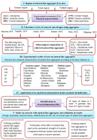
The approach proposed for this research is divided into five consecutive parts. The first part includes experimental and analytical assessments to determine the effects of natural sand classification on several characteristics of hydraulic concrete, which can be used to formulate concrete with specific specifications for arid regions. These properties include the physical and chemical characterization of the granular components used in concrete, particularly natural fine aggregates, as well as the mechanical characterization of concrete. Physical characterization is also performed using fractal dimension analysis to observe the distribution of small aggregate particles and dry granular mixtures for concrete. The other parts. This study is organized as follows. The second part presents a synthesis of the literature on concrete mixing. It includes a synthesis of the literature on concrete mixtures using natural fine aggregates, as well as analytical results on the use of fractal dimension and the methods proposed for its application. This section constitutes the core of the research work and describes the unified determination of the representation of aggregates used in concrete. Next, the third part describes the analytical modeling used to determine the physical properties of natural and crushed fine aggregates for concrete. In the fourth part, the results of the physical and chemical analyses of natural fine aggregates are compared with previously reported findings. In the fifth part, continuing to work on the use of fine natural aggregate in different types of concrete to determine their effect on concrete design, which in itself confirms the validity of the proposed approach and highlights its effectiveness through a critical discussion of the results obtained, paving the way for its extension in future work. Figure 1 presents a diagram providing an overview of the different stages of the five parts covered by this research program. In another approach, natural fine aggregate, which is abundant in desert environments and characterized by its clean appearance and relative ease of extraction, is a material that will be available for years to come and a solution to the depletion of natural rock reserves.
2.1. NATURAL FINE AGGREGATES
The abundance of fine aggregates in the Algerian desert prompted us to conduct a descriptive study of various sites, based on the physical and chemical characteristics of this important resource, to identify the types of fine aggregates suitable for construction. This approach is consistent with that of a relatively large number of Algerian researchers who have studied the use of natural fine aggregate in several fields. As can be seen from the works of the researchers mentioned in references [4, 6], their work aims to characterize the physical and chemical properties of natural fine aggregate in valleys to assess the applicability of this material in the manufacture of high-quality silicon. In addition to other published works, which are mentioned in order in the list of references.
This work is based on an in-depth research study that provides a more comprehensive overview of natural fine aggregate fields in the arid region (Figure 2), located 1,500 kilometers southwest of Algiers (Algeria). Furthermore, in reference [7], the researcher proposed evaluating locally available materials in the desert region (Ouargla, Algeria) for use in road construction; the material studied was a mixture of tuff and fine aggregate.

Natural fine aggregate from the Timimoun-Adrar sites in Algeria and samples from various sites.
The results of a research study [8] on natural fine aggregate from desert areas in Ghardaïa and Ouargla, Algeria, are also presented. In [9], the authors focused on the chemical composition of cementitious materials using fine aggregate as one of the components rich in silica (SiO2). According to the work mentioned in reference [10], the authors studied the fine aggregate located in the northern part of the city of Laghouat, Algeria. The authors in reference [11] also searched for evidence of wind effects across a fine aggregate belt at the entrance to the Algerian desert in the center (Medea, Algeria), while in reference [12] provides surface samples of fine aggregate found on the Algerian coast dating back to the end of the last century for the various categories of fine aggregate found there. In terms of composition, in particular, in addition to numerous mineral components, these natural fine aggregates in the Ouargla region consist mainly of single-cell quartzite minerals, some gypsum, and a small amount of kaolinite with hematite in terms of crystal phase, degree of crystallization, crystal system, and crystallization category, according to the American Society for Testing and Materials standard (ASTM C127: 2024) adopted by the authors in reference [13].
In this study, previous research on the technological aspects of treating clay soils from the Média region (Algeria) using natural fine aggregates was reviewed. Based on previous results from the literature, a first physical definition of all types of fine aggregates was derived by converting the particle size distribution curve into a fractal linear distribution and determining the particle size distribution curves with the fractal dimension (FD) value in accordance with the results obtained in references [3, 5, 14]. Using these fractal dimension values, the size distribution of the natural fine aggregate particles used in the granular components of building materials can be determined. Natural materials have been used in construction since their inception. Natural fine aggregate produced from rock aggregate classified by particle size with a maximum dimension (Dmax) of 4 mm or less, according to standard [13], is a comprehensive definition whose limits vary depending on the type of fine aggregate. The term “fine aggregate” commonly refers to granular aggregate produced from rock and composed of mineral particles of varying sizes, resulting from crushing other materials, with particle sizes ranging from 0.063 to 6.3 mm. Although crushed fine aggregate does not naturally fall under this concept, when talking about fine aggregate in this study, it refers primarily to natural fine aggregate, which is abundant in many countries, for which there is no standard definition, and which is more complex than crushed fine aggregate. The latter allows us to distinguish between natural and artificial fine aggregates by defining their characteristics based on the type of work required. Similar to abundant natural materials, especially in our region. Natural fine aggregate is produced in three successive stages, beginning with the decomposition of various rocks, which are then transformed into sediments, where they remain in various forms. It is one of the most well-known types of natural fine aggregate, as mentioned by several researchers, including references [14,15,16,17]:
Natural fine aggregate is found in deserts and is part of the landscape of arid regions. They are fine aggregate grains that are blown by prevailing local winds and gather in one place to form clusters of various sizes.
Sea fine aggregate is a limited supply of granular material that accumulates on beaches. It is in demand worldwide and used in many areas, including construction materials.
River fine aggregate is characterized by elements that may be angular, irregular in shape, and vary in composition, consisting of rocks of different compositions. Windblown fine aggregate is formed by the disintegration of rocks by wind and is characterized by two distinct types of grains, completely polished and angular. Windblown fine aggregate is formed by the disintegration of rocks by wind. In the construction industry, fine aggregate is used in the production of concrete and mortar. Choosing the right type of fine aggregate affects the effectiveness of these products. In this study, the effectiveness of using natural fine aggregate is studied based on its physical, chemical, and mechanical properties. Studies have shown that the construction industry determines its efficiency based on its ability to meet its needs. Therefore, it was not difficult to determine the different types of natural fine aggregate that should be used effectively in construction, given their abundance in desert areas. Using the blue gram test conducted on several types of fine aggregate as part of the work in [14], it was possible to determine the limits of each type of fine aggregate used in this study. Thus, in general, researchers classified these fine aggregates as either siliceous or siliceous and calcareous.
Table 1 presents results from the literature on the chemical analysis of the fine aggregate, its high calcium oxide content, and the acidic forms resulting from the waste. The results for this fine aggregate are consistent with silico-calcareous fine aggregate that can be used in the concrete industry.
Results reported for the chemical analysis of fine natural aggregates for the different sites.
Several researchers, as mentioned in the Bibliography. The cited references [16,17,18,19,20] present conclusions that provide a clear overview of the various natural fine aggregates used in these areas, based on their mineral and chemical composition. Since the properties of these fine aggregates can vary, it is sufficient to determine their category. A reference study [15, 21] also determined the chemical composition of natural fine aggregate, and the results are shown in Table 1 as part of the study on the properties of clay soil treated with natural fine aggregate from the Boujizoul region (Algeria). In the reference study [18] conducted by researchers using the American Society for Testing and Materials (ASTM) C136/C136M [22] standards, the silica content in natural fine aggregate used in concrete production was found to be 74.61%. Researchers [19] also used it, as explained earlier, in the Adrar region (Algeria), where chemical and mineral analyses of natural fine aggregate from this region showed a silica content of 96.17% in accordance with ASTM C29/C29M standards. [23]. In addition, two other authors wanted to adopt a method for treating natural fine aggregate by adding hydraulic binding materials, as in traditional technical tests, to distinguish between the materials used in chemical and mineral investigations according to ASTM C33/C33M standards [24], taking into account that the fine aggregate contains 91.85% silica in the reference work [16].
3. METHODOLOGY AND RESULTS
3.1. Physical characterization
In the following part, a synthesis of the laboratory test results is presented, which will be used to classify several categories of fine natural aggregate based on physical properties such as bulk density (VW) and fineness modulus (FM), fine aggregate equivalent (SE), absorption coefficient (AC), water content (WC), and grain size distribution (GE), with a focus on the property of determining particle size distribution through fractal dimension (FD), which may help determine their suitability as granular materials in hydraulic concrete mixtures. Particle size distribution testing is a fundamental physical property used to characterize granular materials, as it determines their size distribution [22].
Table 2 summarizes the physical results for standard reference fine aggregate (marine, Crushed, and standard). Most of the curves are consistent with our particle size distribution analysis using OREGEN software. The particle size distribution curves for the fine aggregate types show a continuous distribution compared to the particle size distribution graphs for the reference fine aggregate, as illustrated in the particle distributions for the three categories in Figures 3(a), 4(c), and 5(e).

(a) Natural fine aggregate grain sizes, (b) fractal lines of natural fine aggregate in the Gourarat region.

(c) Natural fine aggregate grain sizes, (d) fractal lines of natural fine aggregate in the Touate region.

(e) Natural fine aggregate grain sizes, (f) fractal lines of natural fine aggregate in the Touate-Tidikelte region.
The qualitative practice in the main granular materials is to be used. The maximum particle size (Dmax) and analysis. The particle size is determined using a particle size distribution curve for all granular materials, including fine aggregate, to quantify the quantities used in concrete or mortar and in this study, adopted a previously reported technique [2, 4, 22], which involves determining the particle size distribution of various fine aggregates through fractal analysis, as reflected in the fractal dimension (FD). The fractal dimension (FD) is obtained by converting the grading curves into fractal lines, as shown in Figures 3(b), 4(d), and 5(f).
Most of the natural fine aggregates for which computer programs obtained FD values have values close to or equal to 3 (Table 2). These results indicate that this fine aggregate contains a high proportion of fine grains. Thus, this indicates that the ideal fractal distribution has not been reached. Despite the large distance between the different natural fine aggregate sites, the particle size distribution of most of the different categories of fine aggregate grains from sites north of Adrar lies along the same axis, as confirmed by the grain size analysis curves versus fractal dimension (FD). Figure 3(a) shows that all grain size curves for fine aggregate at the Gourarat site have a continuous distribution. The fractal dimension (FD) values also show close agreement, as shown in Figure 3(b). Figure 4(c) shows that all grain size curves for fine aggregate at the Touate site have a continuous distribution. The fractal dimension (FD) values also show close agreement, as shown in Figure 4(d). Figure 5(e) shows that all grain-size curves for fine aggregate at the Touate-Tidikelte site also exhibit a continuous distribution. The fractal dimension (FD) values are also close, as shown in Figure 5(f).
The results for natural fine aggregate in Table 3 indicate that it is classified as fine fine aggregate, with fineness modulus (FM) values for all natural fine aggregates in the Al-Gourarat area ranging between 1.90 and 2.24. Table 4 shows the results for natural fine aggregate in the Touate area, where the fineness modulus (FM) values for all natural fine aggregates in that area range between 1.51 and 2.58.
Finally, Table 5 presents the smoothness factor (FM) results for natural fine aggregates, with values for all-natural fine aggregates in the Touate-Tidikelte region ranging from 1.49 to 2.68. It should be noted that the reference fine aggregate (Crushed fine aggregate) is coarse fine aggregate, classified according to European standard NF EN 12620 + A1 [25], compared to natural fine aggregate. However, according to the American Society for Testing and Materials standard ASTM C127: 2024 [13], the fineness modulus (FM) is defined as a physical property of fine aggregate used in concrete or mortar that describes its fineness. Since natural fine aggregate, which is abundant in the desert, contains the largest amount of fine grains, they are classified as fine fine aggregate according to the above standards.
Figure 6 compares the specific physical properties. Examples of the different types of natural fine aggregate studied. The differences between the results obtained are clearly evident in the American South. In accordance with ASTM C29/C29M [23], the descriptive tests were conducted to determine the true density of the fine aggregate particles.

Physical properties comparison (VW, FM, SE, AC, GE, FD) for different types of natural fine aggregates.
Figure 7 shows only the convergence and divergence between the equivalent fine aggregate (ES) property results according to the American Society for Testing and Materials standard ASTM C33/C33M [24] for all the different types of fine natural aggregates studied in this work. These tests aim to determine the water content (W) in natural fine aggregate in accordance with ASTM C33/C33M [24] and to evaluate its effect on concrete workability by measuring the mixing water used in its manufacture, as reported in previous references [26,27,28,29,30,31,32,33]. Therefore, the proportion of water used in concrete, according to the various methods of concrete formulation as stated in references [34, 35], will account for the amount of water initially present (W) in the fine aggregate, whether due to humidity, rain, or other sources. Therefore, it was necessary to determine the water content of the fine aggregate. The results of the study indicate that the water content (W) in fine aggregate is estimated to be between 2.50% and 3.15%.

The fine aggregate equivalent (SE) is determined in the 0/2 mm fine aggregate fraction in accordance with the standard ASTM C33/C33M [24]. The following are the findings of the Fine Aggregate Equivalent Coefficient Test, measuring the purity of fine aggregate. The ES grades for sea fine aggregate (96) and crushed fine aggregate (90) were classified as very clean fine aggregate, in addition to the rest of the natural fine aggregate.
Fine aggregate from natural fine aggregate is classified according to the ES standard, which ranges from 75 to 94. At one end of the scale, the cleanest fine aggregate with the fewest clay particles is considered perfect for high-quality concrete. Lack of flexibility in concrete could be due to the usage of very fine, high-purity gravel and the nearly complete lack of refined clay, which requires adding more water to the mix.
Figure 8 shows that the physical properties that determine the effectiveness of fine aggregates as construction materials were also taken into account, particularly excess water, which is a decisive factor in the evaluation of other properties. Essential properties of fresh concrete, such as the water ratio. Therefore, as an experiment, several values of relative water content—not exceeding 13% of the fine aggregate used—were adopted to determine the saturation ratio and water absorption rate of the fine aggregate, thereby illustrating the evolution of its swelling behavior as a function of the percentage of added water. Figure 8 shows the maximum fineness modulus of the fine aggregate at water contents of 7% and 9% for all types of fine aggregate studied. Therefore, these values were plotted on a graph to determine the degree of agreement among the fineness modulus results for natural fine aggregate.

Evolution of the Fine Aggregate bulking factor. (a) Fine Aggregate in the Gourara region. (b) Fine Aggregate in the Touat region. (c) Fine Aggregate in the Touat-Tidikelt region.
3.2. Chemical characterization
In aIn addition to the physical characteristics of the natural fine aggregates, notably the fractal dimension, which identifies the granular distribution of the fine aggregates. Another very important aspect contributing to the knowledge of the different types of fine aggregates studied is the summary of the results of chemical characteristics and mineralogical compositions.
In Table 6, the results of chemical and mineralogical analyses show that laboratory tests were conducted to determine the chemical and mineralogical constituents of natural fine aggregates from the Touate region of the Algerian Sahara. Table 7 also presents the results of chemical and mineralogical analyses used to determine the constituents of natural fine aggregates from the Touate region. Table 8 also presents the chemical and mineral analysis results for the fine natural aggregate in the Touate-Tidikelte area.
Summary of physico-chemical properties of natural fine aggregate in the Touate-Tidikelte region.
The large number of Fine aggregate samples studied in the laboratory confirmed that natural fine aggregates contain high levels of silica (SiO2), the most abundant mineral in natural fine aggregates. As is well known, the mineral content of dunes is quartz, as concluded from the experimental process. The limestone (CaCO3) content was determined by gas measurement using a Barnard meter. The active limestone content (CaCO3) was determined by the Droin method, which involves not dissolving the limestone with ammonium oxalate solution and titrating the excess oxalate with potassium permanganate solution in sulfuric acid. The gypsum content (CaCO3) was also determined as described in the barium chloride precipitation method and by calcination for two hours in a muffle furnace at 900 °C. The electrical conductivity of the diluted extract was measured with a conductivity meter at a fine-aggregate-to-water ratio of 1:5. 20 g of fine aggregate and 1000 ml of distilled water were weighed. The ingredients were poured into a container and stirred for two hours. These results indicate that the fine aggregate does not contain active limestone, as its maximum active limestone content is 5%. Furthermore, the maximum percentage of sulfates does not exceed 1.10% of the fine aggregate.
Another important aspect of characterizing fine granular materials as aggregate for concrete is presenting the XRD results for all types of fine aggregate used in this study, which demonstrate that the silica composition of these aggregates is indisputable. For this reason, XRD analysis was used, and Figure 9 shows the results for a large number of natural fine aggregates (dunes). Recent experimental data have enabled us to deepen the chemical analysis, providing a set of laboratory results that contribute to the overall characterization of the fine aggregate particles are studying. This is very clear in Tables 6–8, which summarize the chemical properties mentioned above, as shown in Figure 9 [32]. Thanks to these results, this method enabled us to identify the main minerals in the material: silicate rocks.

Sections 3 to 5 summarize the experimental results related to physical properties. In addition to previous works as basic references [6, 7, 11, 12], this indicates that previous authors have determined the particle distribution in terms of FD values. After applying this method to the natural fine aggregate studied in our research, they confirmed that the fine aggregate exhibits a fractal distribution and that they can correct the particle size distribution by comparing it with reference results. The absolute value of the density of all natural fine aggregates does not exceed 2.65 kg/m3, and the fine aggregate equivalent (SE) shows that all types of fine aggregate are very clean. Fine aggregate is classified as fine aggregate when the fineness modulus (FM) values do not exceed 2.80.
This fine aggregate has a rocky base. In addition, the results of X-ray analysis are shown in Figure 10, which includes a scan electron microscope (SEM) micrograph used to measure electronic transmission. This analysis enabled us to provide information on the composition of natural fine aggregate, identify unique crystals, reveal their structure, and apply it to three different types of natural fine aggregate. The images in Figure 10 show natural fine aggregate observed under a scanning electron microscope (SEM), with its circular shapes lacking corners and other features, which may indicate a higher number of crystals in the fine aggregate.

The main objective of the chemical description is to determine the type of fine aggregate studied in physiography, as the study proved that the fine aggregate contains a uniform component such that the mineral composition contains at least 84.94% silica (SiO2) for all types of natural fine aggregate studied. Calcium carbonate (CaCO3) concentration does not surpass 9.95% in any case. The calcium sulphate (CaSO4) concentration does not exceed 2.86% in any case. Similar to the physical description, which showed that fine aggregates fall on the same axis but differ in grain distribution, the fine aggregates at the dune sites are of the same silica-based type. Figure 11 shows the chemical analysis of fine aggregate to determine its components in an inert environment.

Shows the different proportions of silica, limestone, and gypsum in natural fine aggregates.
4. APPLICATION AND DISCUSSION
This section discusses the use of natural fine aggregate in concrete mix design, compared with crushed and standard fine aggregates, to justify the contribution of natural fine aggregate to concrete production in arid regions.
The applicable standards regarding concrete composition must be followed. It is important to choose the appropriate components that meet the recommended requirements. Today, concrete has moved beyond the two-phase composite components to the three-phase composite components, using solid fibers in concrete produced according to reference [36], with coarse aggregate to determine the effects of its low content and varying densities. Several types of concrete tests were conducted using natural fine aggregate and fine aggregate modified with coarse aggregate to determine the effectiveness of these fine aggregates in concrete mixtures. The study drew on previous work [35, 37] to conduct additional characterization tests on fine aggregates and gravel to study concrete using natural fine aggregates.
4.1. Correction of the fine aggregates used
Particle size distribution is an essential physical characteristic for identifying materials, as it allows the distribution of grains by size to be determined, expressed as the percentage by mass passing through a specified set of sieves (Figure 12). Its grain-size class is determined by the lower (d) and upper (D) sieve sizes. The mass of the sample for the grain size analysis test depends on the dimensions of the largest elements it contains (D). The determination of the grain size distribution by the grain size analysis test according to standard EN 933-1. The particle size distribution will enable us to determine the dosages of different concrete grain classes in accordance with the concrete formulation method. The objective of all concrete formulation methods is to determine the optimal combination of materials to produce concrete with the desired properties while being as economical as possible. The formulation method also allows us to adjust the fine aggregate to varying degrees to achieve the desired properties, as per reference [8]. The smoothness modulus (FM) for the modified mixture (corrected mixture) in accordance with standard EN 12620+A1 [25], based on the mass used on the sieve series, expressed as a percentage in relation (1).

Grain size curves, (a) Original natural fine aggregate, (b) Corrected natural fine aggregate.
Table 9 shows the smoothness coefficient of the original natural fine aggregate, which is no more than 2 mm in size, and the values for fine aggregate modified with crushed fine aggregate up to 4 mm in size. The purpose of this modification is to compensate for the lost grains (large grains) with fine aggregate grains up to 4 mm in size.
Figure 12(a) the following shows sharp curves for the particle size distribution of nine (09) types of natural fine aggregate, in addition to Crushed fine aggregate and standard fine aggregate. Figure 12(b) shows the same curves for Crushed fine aggregate and standard fine aggregate, in addition to the natural fine aggregate curves corrected with Crushed fine aggregate, which appear somewhat prolonged.
The largest dimensions and the thickness of the aggregate determine the flatness coefficient. It is determined by double sieving in accordance with standard NF P 18-561 [38]. The aggregate was used as a component of concrete subjected to stresses that could cause it to break. The crushing strength of the gravel used is measured using the Los Angeles (LA) test. This test covers standard NF P 18-573 A1 [39]. It is an impact strength test that measures the deterioration in particle size of materials subjected to impact. The Los Angeles coefficient is calculated from the 1.6 mm sieve passage, measured at the end of the test, and characterizes the aggregate; the lower the value, the greater the crushing strength. The abrasion resistance coefficient is a material’s ability to resist deterioration from friction and abrasion, particularly under conditions involving moderate impact and mutual friction. This property is particularly important for aggregates used in construction and other materials subject to mechanical stress. Micro Deval test according to standard NF P 18-572 [40]. The results of the aplatissement, Los Angeles, and Micro-Deval coefficients for the aggregate used are shown in Table 10. These results relate to the experimental determination of the physical and mechanical parameters of aggregate mixtures. The study concludes that the physical and mechanical properties of the aggregate (gravel) used are favorable for use in concrete.
4.2. Granular mixture of concretes
This part of the validation of the results obtained enabled us to determine the effectiveness of natural fine aggregate in construction, particularly as a granular class among the components of concrete. There are several methods for determining the composition of concrete. The Abrams method [41], the Bolomey method [42], the Barond Ollivier method [43], the Faury method [44], and the Dreux-Gorisse method [45]. In our study, in this study, the Dreux-Gorisse method was used to determine the concrete composition mix ratios according to the stages, the W/C ratio according to Bolomey’s formula, the cement (C) and water (W) mix ratios, the optimal granular mix with a minimum of voids, the compactness of the concrete, and the aggregate volumes according to the OAB reference curves. The evaluation was carried out on nine (9) types of concrete, including one concrete with normalized fine aggregate and another with crushed fine aggregate, three concretes with natural fine aggregate only, and three concretes with natural fine aggregate corrected with crushed fine aggregate /Regganne. The last concrete contained a mineral additive (silica fume). The requirements for this study were prepared based on three classes of natural fine aggregate regions: one concrete made with crushed fine aggregate and one control concrete made with standard fine aggregate. All concretes are formulated with the same gravel classes (3/8, 8/15, 15/25) and the same type and dosage of cement, including the admixture (superplasticizers), so that only the fine aggregate is substituted. The concretes are composed as follows:
| (TC-SAF) (TC-CAF) (C-NAF-M) (C-NAF-KK) (C-NAF-R) (C-NAF-M/CAF) (C-NAF-KK/CAF) (C-NAF-R/CAF) (C-NAF-R/CAF-FS) |
Test concrete in Standard Fine Aggregate. Test concrete in Crushed Fine Aggregate. Concrete in Natural Fine Aggregate - Métarfa. Concrete in Natural Fine Aggregate - Ksar Kadour. Concrete in Natural Fine Aggregate - Regganne. Concrete in Natural Fine Aggregate - Métarfa corrected. Concrete in Natural Fine Aggregate - Ksar Kadour corrected. Concrete in Natural Fine Aggregate - Regganne, corrected. The same concrete (CDS-R/CAF) plus mineral additions including Silica Fume. |
4.3. Fractal dimension of granular concrete mixtures
The fractal dimension and granular range of these parameters enable the identification of the granularity of a class or granular mixture in concrete. Our objective in using these parameters is to determine the influence of particle-size distribution on the granular mixtures in our concrete. Figures 13, 14, and 15 show the transformation of particle size distribution curves into fractal lines for each granular concrete mixture to determine the fractal dimension FD as a parameter for identifying the particle size distributions of granular concrete mixtures.

Grain size distribution curve for concrete with NFA, (a) Grain size curve, (b) Fractal line.


Example of concrete with a corrected NFA aggregate mix, (a) Grain size curve, (b) Fractal line.
4.4. Test of concrete composition (TC-NS)
This section details one of the concrete mixes according to the Dreux-Gorisse method and summarizes the proportions of the nine concrete mixes studied.
The same type of gravel from the Reggane-Adrar region was used. The same type of cement, CPJ 42.5, and superplasticizers were used in all types of concrete. Our study focused on replacing natural and modified natural fine aggregates to determine their effects on the behavior of fresh and hardened concrete. The following characteristics were given consideration:
Mechanical Strength Required for 28-Day-Old concrete (fc 28’ = (Rc28j 1’15 (Rc28j = 34.5MPa
Concrete slump: A = 8 cm plastic flow (2), Compression: standard vibration (2), without concrete pumping, actual cement class at 28 days: c28’ = 55 MPa (2), Mv Specific density of cement in g/cm3: 3.1, Determination of W/C ratio: The cement/water (W/C) ratio is evaluated using the Polomi equation:
Determination of binder doses: Gravel quality coefficient G = 0.50, Dreux-Gorisse method [45]. The cement content C of 350 kg/m3 was derived from the Drew 2 curves in our study. Therefore, the water dose is determined to be E = 199 liters. Water dose correction: 0.25 = D mm. E = 199 liters.
Determining aggregate dosages: First step: Draw the reference curve AOB (Figure 16), whose coordinates are the starting point O: origin (x = (dmin); y = TC(%), O (0.05; 0%)

End point B: (x = Dmax; y = TC(%)). B (25; 100%). Intercept point A: (x = D/2 if D ≤ 20 mm or the middle of the section (5 mm, D) if D > 20 mm.
Aggregate volume ratio: SN: 35%; G3/8(R): 9%; G8/15(R): 21%; G15/25(R): 35%. Compactness coefficient γ: D = 20 ≡ γ = 0.825; D = 31.5 ≡ γ = 0.830. Therefore, D = 25 ≡ γ= 0.827, the following results were obtained: the total volume of solid components is Vt = 1000 * γ = 830l, and the absolute volume of aggregates is Vg = Vt – Vc = 714 l. Thus, the volumes are as follows: Cement Vc = C/γc = 350/3.1 = 113 l, Fine aggregate V(SN) = 0.35 * 714 = 249.9 l, Gravel (G3/8) = 0.09 * 714 = 64.26 l, Gravel (G8/15) = 0.21 * 714 = 149.94 l, Gravel 15/25 V(G15/25) = 0.35*714 = 249.9 l.
Table 11 shows the dosages of concrete components, with or without the use of original or modified natural fine aggregate, as determined according to Figure 17 (a, b). The AOB reference particle-size distribution curves allow the determination of the sizes of the concrete components, and, using the specific gravity of each component, the other quantities are calculated.
Dosages and results of mixing concrete components from the original and modified natural fine aggregate.

Grain size distribution curves for granular concrete mixtures. (a) Mixture of original natural fine aggregates, (b) mixture of corrected natural fine aggregates.
Figure 18 shows how the CA compression machine is used to measure strength of pressurized concrete at 28 days for 27 cubic concrete samples. In this section, the results of concrete made from natural fine aggregate, CFA, and modified FA are compared. Table 11 presents the findings of the examinations conducted on different types of concrete, both fresh and hardened, for analysis and interpretation.

The parameter that characterizes the physical behavior of fresh concrete is its stability, as evidenced by its slump, which reflects the concrete’s workability. On the other hand, the parameter that characterizes concrete in its hardened state is its mechanical compressive strength. For both behaviors, dependent and independent parameters such as (density, W/C, G/S, fractal dimension, d/D, etc.) were selected, but interpreting the results obtained on concrete using only one of these properties is not sufficient to determine the changes in workability and compressive strength of our concrete.
The particle size and distribution curves of mixtures using fine aggregate from natural sources in the M, KK, and NR regions show discontinuities at FD values of 2.74, 2.77, and 2.75, respectively. After correction, it was found that these natural fine aggregates, along with crushed fine aggregates from the Regan area, have a continuous particle size distribution, with values very close to FD 2.70 and 2.71 across the three mixtures. Table 11 summarizes the results showing collapse and cohesion.
Figure 19 shows the development of collapse and resistance at 28 days (Rc28j) as a function of fractal dimension (FD), a parameter used to characterize particle distribution.

It was found that concrete made with standard and crushed fine aggregates exhibits extreme values in fractal dimension; therefore, each concrete belongs to a different family.
All types of concrete made from natural fine aggregate, whether natural or modified with crushed fine aggregate, are grouped, allowing us to propose a preliminary determination of collapse or mechanical compressive strength based on the fractal dimension of the concrete aggregate mixture. Finally, the coefficient linking the flowability of concrete to its compressive strength was determined. When the slump value decreases, the Rc28 strength increases.
5. CONCLUSIONS
The results obtained in this work are very interesting, given the detailed study of numerous samples collected from several fine-aggregate sites. Thus, based on this extensive experience in the field of natural fine aggregates, a knowledge base has been created that addresses physical and chemical parameters.
Since most of the fine aggregates studied have the same maximum particle size, the physicochemical properties of the fine aggregate were important parameters for characterizing natural fine aggregate in specific desert areas.
Although the fractal distributions are not completely identical between different types of fine aggregate, they are a positive indication that the grain distributions are not the same as they appear in the convergent grain curves, and that the fine aggregates have different patterns in terms of grain size distribution.
After conducting a general analysis of the chemical and physical properties of natural fine aggregate in Algeria’s desert areas, the following observations were made:
The vast majority of natural fine aggregates are soft, with a maximum grain size of 2 mm.
All fine aggregates are very clean, with a fine aggregate equivalent value greater than 80.
The sulfate content does not exceed 2.30%.
The silica content of the fine aggregates is at least 85%, indicating that they are all siliceous.
The calcium carbonate total does not exceed 10%, and the active component does not exceed 2.60.
It was concluded that each parameter alone is insufficient to describe the relationship between workability and the compressive resistance of concrete. However, the fractal dimension of the granular mixture and the granular dispersion provide an opportunity for preliminary determination of workability, on the one hand, and of the mechanical compressive resistance of concrete, on the other. Therefore, our results form the basis for further in-depth research on concrete in the desert region using local materials (fine natural aggregate). This result is considered effective based on two criteria: the slump of fresh concrete and the development of mechanical strength in hardened concrete using natural fine aggregate.
6. ACKNOWLEDGMENTS
Sincere thanks are extended to the engineers at the Building Materials Laboratory (Abdelkrim Yachi) in the Department of Civil Engineering, as well as the “Civil Engineering Materials” research team affiliated with the Sustainable Development and Information Laboratory at the Adrar University in Algeria, for their support of this research.
7. BIBLIOGRAPHY
-
[1] ABADOU, Y., GHRIEB, A., BUSTAMANTE, R., ““Crushed concrete waste influence on dune fine aggregate mortar performance”, Contribution to the valorization”, Materials Today: Proceedings, v. 33, n. 4, pp. 1758–1761, May. 2020. doi: https://doi.org/10.1016/j.matpr.2020.04.871.
» https://doi.org/10.1016/j.matpr.2020.04.871 -
[2] ABDELDJALIL, M., YOUSFI, S., “Identification of fine aggregates of dune and concretes using a granular model - Case of arid region”, Case Studies in Construction Materials, v. 13, n. e00458, pp. e00458, Dec. 2020. doi: https://doi.org/10.1016/j.cscm.2020.e00458.
» https://doi.org/10.1016/j.cscm.2020.e00458 -
[3] DAHEUR, E.G., TAIBI, S., GOUAL, I., et al., “Hydro-mechanical behavior from small strain to failure of tuffs amended with dune fine aggregate – Application to pavement design in Saharan areas”, Construction & Building Materials, v. 272, pp. 121948, Feb. 2021. doi: https://doi.org/10.1016/j.conbuildmat.2020.121948.
» https://doi.org/10.1016/j.conbuildmat.2020.121948 -
[4] ABDELDJALIL, M., “Application of a granular model to identify the particle size of the granular mixtures of concrete based on fine aggregates”, In: Hosam El-Din, M. S. (ed), Sustainability of concrete with synthetic and recycled aggregates, chapter 9, London, UK, IntechOpen, 2022. doi: https://doi.org/10.5772/intechopen.99969.
» https://doi.org/10.5772/intechopen.99969 -
[5] AZIZI, M., CHENCHOUNI, H., BELAROUCI, M.E.H., et al., “Diversity of psammophyte communities on natural fine aggregate and fine aggregate soils of the northern Sahara Desert”, Journal of King Saud University. Science, v. 33, pp. 101656, Dec. 2021. doi: https://doi.org/10.1016/j.jksus.2021.101656.
» https://doi.org/10.1016/j.jksus.2021.101656 -
[6] BRAHIMI, A., MEGHACHOU, M., ABBAD, H., et al., “Analysis of experimental data of environmental cement prepared by fly ash of eggshell and natural fine aggregate for reduction of carbon dioxide”, Data in Brief, v. 30, n. 105407, Jun. 2020. doi: https://doi.org/10.1016/j.dib.2020.105407. PubMed PMID: 32215310.
» https://doi.org/10.1016/j.dib.2020.105407 -
[7] BOUCEDRA, A., BEDERINA, M., GHERNOUTI, Y., “Study of the acoustical and thermo-mechanical properties of dune and river fine aggregate concretes containing recycled plastic aggregates”, Construction & Building Materials, v. 256, n. 119447, pp. 119447, Sep. 2020. doi: https://doi.org/10.1016/j.conbuildmat.2020.119447.
» https://doi.org/10.1016/j.conbuildmat.2020.119447 -
[8] HASSANI, M., SAADOUD, D., CHABOUA, M.C., et al., “Spectral signs of aeolian activity around a fine aggregate-dune belt in northern Algeria”, Catena, v. 182, n. 104175, pp. 104175, Nov. 2019. doi: https://doi.org/10.1016/j.catena.2019.104175.
» https://doi.org/10.1016/j.catena.2019.104175 -
[9] BAKALEM, A., RUELLET, T., DAUVIN, J.C., “Benthic indices and ecological quality of shallow Algeria fine fine aggregate community”, Ecological Indicators, v. 9, n. 3, pp. 395–408, May. 2009. doi: https://doi.org/10.1016/j.ecolind.2008.05.008.
» https://doi.org/10.1016/j.ecolind.2008.05.008 -
[10] MECHRI, M.L., CHIHI, S., MAHDADI, N., et al., “Diagnosis of the heating effect on the electrical resistivity of Ouargla (Algeria) dunes fine aggregate using XRD patterns and FTIR spectra”, Journal of African Earth Sciences, v. 125, pp. 18–26, Jan. 2017. doi: https://doi.org/10.1016/j.jafrearsci.2016.10.007.
» https://doi.org/10.1016/j.jafrearsci.2016.10.007 -
[11] AMRI, S., AKCHICHE, M., BENNABI, A., et al., “Geotechnical and mineralogical properties of treated clayey soil with dune fine aggregate”, Journal of African Earth Sciences, v. 152, pp. 140–150, Apr. 2019. doi: https://doi.org/10.1016/j.jafrearsci.2019.01.010.
» https://doi.org/10.1016/j.jafrearsci.2019.01.010 -
[12] ACORDI, J., LUZA, A., FABRIS, D.C.N., et al., “New waste-based supplementary cementitious materials: Mortars and concrete formulations”, Construction & Building Materials, v. 240, n. 117877, pp. 117877, Apr. 2020. doi: https://doi.org/10.1016/j.conbuildmat.2019.117877.
» https://doi.org/10.1016/j.conbuildmat.2019.117877 - [13] AMERICAN SOCIETY FOR TESTING AND MATERIALS, ASTM C127 2024 Standard Test Method for Density, Relative Density (Specific Gravity), and Absorption of Coarse Aggregate, eLearning Course, West Conshohocken, ASTM, 2024.
-
[14] LI, Z., GAN, D., “Cyclic behavior and strength evaluation of RC columns with dune fine aggregate”, Journal of Building Engineering, v. 47, pp. 103801, Apr. 2022. doi: https://doi.org/10.1016/j.jobe.2021.103801.
» https://doi.org/10.1016/j.jobe.2021.103801 -
[15] WANG, Q., LIU, W., WU, G., et al., “Influence of heat treatment on cyclic deformation and low-cycle fatigue behavior of fine aggregate-cast Mg–10Gd–3Y–0.5Zr magnesium alloy”, Journal of Materials Research, v. 32, n. 11, pp. 2179–2187, Jun. 2017. doi: https://doi.org/10.1557/jmr.2017.196.
» https://doi.org/10.1557/jmr.2017.196 -
[16] KUMAR, P.K., KRISHNA, R., RAMESH, P.S., et al., “Effect of fines on strength and durability of concrete with manufactured fine aggregate”, Materials Today: Proceedings, v. 66, n. 4, pp. 2381–2386, Sep. 2022. doi: https://doi.org/10.1016/j.matpr.2022.06.334.
» https://doi.org/10.1016/j.matpr.2022.06.334 -
[17] LI, Z., ZHAO, Y., XIAO, Y., et al., “A feasible strategy of Prussian blue reflective electrochromic devices capable of reversible switching between fine aggregate-yellow and leaf-green”, Materials Letters, v. 307, pp. 130969, Jan. 2022. doi: https://doi.org/10.1016/j.matlet.2021.130969.
» https://doi.org/10.1016/j.matlet.2021.130969 -
[18] NAAS, A., TAHA-HOCINE, D., SALIM, G., et al., “Combined effect of powdered dune fine aggregate and steam-curing using solar energy on concrete characteristics”, Construction & Building Materials, v. 322, pp. 126474, Mar. 2022. doi: https://doi.org/10.1016/j.conbuildmat.2022.126474.
» https://doi.org/10.1016/j.conbuildmat.2022.126474 -
[19] AKACEM, M., BOUTELDJA, M., CEREZO, V., et al., “A method to use local low-performance aggregates in asphalt pavements – An Algerian case study”, Construction & Building Materials, v. 125, pp. 290–298, Oct. 2016. doi: https://doi.org/10.1016/j.conbuildmat.2016.08.035.
» https://doi.org/10.1016/j.conbuildmat.2016.08.035 -
[20] SMAIDA, A., HADDADI, S., NECHNECH, A., “Improvement of the mechanical performance of dune fine aggregate for use in flexible pavements”, Construction & Building Materials, v. 208, pp. 464–471, May. 2019. doi: https://doi.org/10.1016/j.conbuildmat.2019.03.041.
» https://doi.org/10.1016/j.conbuildmat.2019.03.041 -
[21] ARUN, B., JANARDHANAN, G., “Evaluating the chemical and environmental impacts of manufactured fine aggregate as a green alternative to river fine aggregate”, Matéria (Rio de Janeiro), v. 30, Jan. 2024. doi: https://doi.org/10.1590/1517-7076-rmat-2024-0868.
» https://doi.org/10.1590/1517-7076-rmat-2024-0868 - [22] AMERICAN SOCIETY FOR TESTING AND MATERIALS, ASTM C136/C136M 2019 Standard Test Method for Sieve Analysis of Fine and Coarse Aggregates, West Conshohocken, ASTM, 2019.
- [23] AMERICAN SOCIETY FOR TESTING AND MATERIALS, ASTM C29/C29M 2023 Standard Test Method for Bulk Density (“Unit Weight”) and Voids in Aggregate, West Conshohocken, ASTM, 2023.
- [24] AMERICAN SOCIETY FOR TESTING AND MATERIALS, ASTM C33/C33M 2024 Standard Specification for Concrete Aggregates, West Conshohocken, ASTM, 2024.
- [25] ASSOCIATION FRANÇAISE DE NORMALISATION, NF EN 12620+A1 Aggregates for concrete. ICS: 91.100.15, 93.080.20, Paris, AFNOR, 2008.
-
[26] ZHAO, l., BAI, z., XU, B., et al., “Influence of chemical pore-clearing method on infiltration rates of pervious asphalt concrete pavement”, Matéria (Rio de Janeiro), v. 27, n. 4, pp. e20220207, Nov. 2022. doi: https://doi.org/10.1590/1517-7076-rmat-2022-0207.
» https://doi.org/10.1590/1517-7076-rmat-2022-0207 -
[27] CHOUICHA, K., “La dimension fractale et l’étendue granulaire comme paramètres d’identification des mélanges granulaires”, Materials and Structures, v. 39, n. 7, pp. 665–681, Jun. 2006. doi: https://doi.org/10.1617/s11527-006-9113-0.
» https://doi.org/10.1617/s11527-006-9113-0 -
[28] SEBSADJI, S.K., CHOUICHA, K., “Determining periodic representative volumes of concrete mixtures based on the fractal analysis”, International Journal of Solids and Structures, v. 49, n. 21, pp. 2941–2950, Oct. 2012. doi: https://doi.org/10.1016/j.ijsolstr.2012.05.017.
» https://doi.org/10.1016/j.ijsolstr.2012.05.017 -
[29] ABDELDJALIL, M., CHOUICHA, K., “Efect of the Cement-to-Water Ratio and Fractal Granular Model on the Prediction of Concretes Compressive Strength”, International Journal of Concrete Structures and Materials, v. 16, n. 43, pp. 43, Aug. 2022. doi: https://doi.org/10.1186/s40069-022-00526-8.
» https://doi.org/10.1186/s40069-022-00526-8 -
[30] ABDELDJALIL, M., CHOUICHA, K., “Study of the prediction of the mechanical strength of concrete based on the fractal model of granular distribution”, Construction & Building Materials, v. 348, pp. 128562, 2022. doi: https://doi.org/10.1016/j.conbuildmat.2022.128562.
» https://doi.org/10.1016/j.conbuildmat.2022.128562 -
[31] SEBSADJI, S.K., “Determining concrete properties for different optimized combined concrete mixtures: Novel mathematical approach”, Powder Technology, v. 409, n. 117756, pp. 117756, Sep. 2022. doi: https://doi.org/10.1016/j.powtec.2022.117756.
» https://doi.org/10.1016/j.powtec.2022.117756 -
[32] ABDELDJALIL, M., BENSEKHRIA, A., AKACEM, M., “Identification of dune fine aggregates used in building by their characteristics and a granular model for an arid environment”, Asian Journal of Civil Engineering, v. 25, n. 3, pp. 2883–2901, Dec. 2024. doi: https://doi.org/10.1007/s42107-023-00951-4.
» https://doi.org/10.1007/s42107-023-00951-4 -
[33] ABDELDJALIL, M., AKACEM, M., “Determining the characteristics of dune fine aggregate used in the building of different sites for the desert environment, in”, Research Square, 2023. doi: https://doi.org/10.21203/rs.3.rs-3016446/v1.
» https://doi.org/10.21203/rs.3.rs-3016446/v1 -
[34] MUTHURATHINAM, R.V., ALRUWAIS, N., MAZROA, A. A., et al., “Optimizing concrete compressive strength prediction with a deep forest model: an advanced machine learning approach”, Matéria (Rio de Janeiro), v. 29, n. 4, pp. e20240569, Oct. 2024. doi: https://doi.org/10.1590/1517-7076-rmat-2024-0569.
» https://doi.org/10.1590/1517-7076-rmat-2024-0569 -
[35] ARUMUGAM, C., THIRUMALA, G.K.G.V., RAJAMANICKAM, G., “Investigations on self-compacting concrete utilizing agricultural waste ashes”, Matéria, v. 30, pp. e20240860, Mar. 2025. doi: https://doi.org/10.1590/1517-7076-rmat-2024-0860.
» https://doi.org/10.1590/1517-7076-rmat-2024-0860 -
[36] FIGUEIREDO, A.D., PIETRA, I., BITENCOURT JÚNIOR, L.A.G., “Influence of low content of steel fiber on concretes produced with recycled coarse aggregates with varying densities”, Matéria (Rio de Janeiro), v. 28, n. 2, pp. e20230109, Jun. 2023. doi: https://doi.org/10.1590/1517-7076-rmat-2023-0109.
» https://doi.org/10.1590/1517-7076-rmat-2023-0109 -
[37] NGA, N.T.T., MINH, T.Q., THONG, P.Q., et al., “An experimental study on the influence of fine and coarse aggregates on the strength of polyurethane concrete for highway maintenance”, Matéria (Rio de Janeiro), v. 30, pp. e20250269, Aug. 2025. doi: https://doi.org/10.1590/1517-7076-rmat-2025-0269.
» https://doi.org/10.1590/1517-7076-rmat-2025-0269 - [38] ASSOCIATION FRANÇAISE DE NORMALISATION, NF EN 18-561. Granulats: mesure du coefficient d’aplatissement. E: Aggregates Measurement of the flakiness index, Paris, AFNOR, 1990.
- [39] ASSOCIATION FRANÇAISE DE NORMALISATION, NF P 18-573 Granulats - Essai de Los Angeles Dans la série des normes P 18-... qui concerne les granulats, la présente norme définit un……, Paris, AFNOR, 1990.
- [40] ASSOCIATION FRANÇAISE DE NORMALISATION, NF P 18-572 Granulats - Essai d’usure micro-DEVAL Dans la série des normes P 18-... qui concerne les granulats, la présente norme définit une méthode de mesure de la résistance à l’usure par frottements réciproques en présence d’eau ou à sec des gravillons, Paris, AFNOR, 1990.
- [41] ABRAMS D.A., Design of Concrete Mixtures, Bulletin 1, Chicago, Lewis Institute, California Library, Structural Materials Research Laboratory, 1919.
- [42] SALEM A., MARZENA K., HAKIM A., et al., “Concrete mix design using Abrams and Bolomey Methods”, BAU Journal - Science and Technology, v. 4, n. 1, Dec. 2022.
-
[43] TRUC, O., OLLIVIER, J.P., CARCASSÈS, M., “A new way for determining the chloride diffusion coefficient in concrete from steady state migration test”, Cement and Concrete Research, v. 30, n. 2, pp. 217–226, Feb. 2000. doi: https://doi.org/10.1016/S0008-8846(99)00232-X.
» https://doi.org/10.1016/S0008-8846(99)00232-X -
[44] HAMZA, C., BOUCHRA, S., MOSTAPHA, B., et al., “Formulation of ordinary concrete using the Dreux-Gorisse method”, Procedia Structural Integrity, v. 28, pp. 430–439, Dec. 2020. doi: https://doi.org/10.1016/j.prostr.2020.10.050.
» https://doi.org/10.1016/j.prostr.2020.10.050 -
[45] KURDA, R., SALIH, A., SHAKOR, P., et al., “Mix design of concrete: advanced particle packing model by developing and combining multiple frameworks”, Construction & Building Materials, v. 320, n. 126218, pp. 126218, Jan. 2022. doi: https://doi.org/10.1016/j.conbuildmat.2021.126218.
» https://doi.org/10.1016/j.conbuildmat.2021.126218


