
 Mathematical modeling and computational simulation of a floating solar still
ABSTRACT
This study the thermal behavior of a floating solar still in the city of Campina Grande, Paraíba, Brazil. The energy balance equations applied to the main regions of the system, including the water, cover, absorber surface, and two insulating layers. For the simulation input data, the Open-Meteo database was used, covering solar radiation, air temperature, relative humidity, wind speed, and atmospheric pressure. Analyses were conducted for the 15th day of each month throughout 2024, representing the typical seasonal variations of the region’s semi-arid climate. The numerical method adopted was a transient 0D multi-region nodal model, suitable for simulations with larger time steps, complemented by a convergence study with 3600 s, 1800 s, 900 s, 300 s, 60 s, and 30 s, allowing the evaluation of production sensitivity to different temporal resolutions. The results demonstrated that time steps below 300 s provide convergent and reliable predictions, with 60 s identified as an optimal compromise between numerical accuracy and computational cost. The results indicated daily freshwater yield values ranging from 0.4 to 3.9 L m–2day–1, with the best performance observed in January and more pronounced limitations in June, associated with lower solar irradiance and higher relative humidity.
Keywords:
Floating Solar Still; Thermal Efficiency; Solar Irradiance; Potability; Simulation.
1. INTRODUCTION
The growing global scarcity of potable water, driven by rapid population growth and inadequate management of water resources, underscores the urgency for accessible and sustainable technological solutions, especially in vulnerable regions [1]. In this context, ensuring safe and equitable access to water becomes essential for achieving the United Nations 2030 Agenda. DI BALDASSARRE et al. [2] emphasize that meeting the Sustainable Development Goals (SDGs) requires integrated water resources management, which is a key element to ensure environmental sustainability and social justice in water use.
Despite international progress, universal access to potable water is still far from being a reality. According to the joint report by UNICEF and the WORLD HEALTH ORGANIZATION [3], about 2.2 billion people remain without safe access to water, while 3.5 billion lack adequate basic sanitation. In light of this scenario, the use of non-conventional sources, such as seawater desalination, has become a viable alternative, although it is still limited by its operational costs [4]. Therefore, it is increasingly necessary to develop decentralized, low-cost solutions with long-term sustainable feasibility.
Given the increasing scarcity of potable water, exacerbated by the effects of climate change, finding sustainable alternatives for water purification has become a global priority. In this context, solar stills have emerged as a promising solution, especially for isolated regions or areas with limited infrastructure. However, their large-scale viability is still hindered by productivity limitations, which require technological advancements and improvements in operational efficiency [5]. The efficiency of these systems strongly depends on local climatic variables, such as solar irradiance, air temperature, relative humidity, and wind speed. In this regard, the use of thermal simulations based on real meteorological data proves to be a powerful tool for anticipating system performance, reducing prototyping costs, and guiding design improvements [6]. Mathematical models make it possible to assess the thermal behavior of the evaporation and condensation regions, estimate the accumulated water production, and calculate the energy conversion efficiency throughout the day.
The operating principle of solar desalination units is based on the evaporation of saline or brackish water induced by incident solar radiation, followed by the condensation of water vapor on a cooler transparent surface, resulting in the production of desalinated water.
The need for resilient solutions becomes even more evident in the face of the intensification of extreme weather events, such as heat waves, severe cold spells, torrential rains, and prolonged droughts phenomena that are increasingly frequent due to natural variability and climate change [7]. In arid and semi-arid regions, these variations make predicting extreme hydrological events particularly challenging [8], exacerbating the socio-environmental vulnerability of these areas.
This study aims to uantitatively evaluate the thermal and productive performance of a floating solar desalination system, by means of numerical simulation, considering the evolution of internal temperatures, the evaporation rate, the hourly freshwater production, and the thermal efficiency of the system. The analysis was conducted for a floating solar still located in the city of Campina Grande, located in the state of Paraíba (latitude –7.22°, longitude –35.90°, average altitude of 550 m), a region in the Paraíba hinterland with a tropical climate in the Brazilian semi-arid zone and well-defined seasons.
For this purpose, climate data were used, obtained from the Open-Meteo platform, which provided hourly information on solar radiation, air temperature, air humidity, wind speed, and atmospheric pressure throughout the year. This database was adopted due to its broad temporal coverage, continuous availability, and suitability for long-term seasonal analyses, enabling a consistent evaluation of the system’s thermal performance.
The simulations were carried out on the 15th day of each month in 2024, in order to capture the seasonal variation in thermal performance. The results obtained show the evolution of internal temperatures, the water evaporation rate, the production of desalinated water throughout the day, and the thermal efficiency of the system.
Thus, the contribution of this work consists of an annual evaluation of the thermal performance of a floating solar desalination system with pyramidal geometry, using hourly meteorological data and a transient 0D multi-region nodal numerical scheme, highlighting the main limitations and potentialities of the system under semi-arid climatic conditions.
2. MATERIALS AND METHODS
Some papers may include a bibliographic review between the introduction and materials and methods.
The solar still studied features a pyramidal geometry, consisting of an absorber basin coated with matte black paint, cover, and EPS used as thermal insulation and for buoyancy. Hourly meteorological data (solar radiation, air temperature, relative humidity, wind speed, and atmospheric pressure) were obtained from the Open-Meteo platform for Campina Grande-PB throughout the year 2024.
The energy balance equations were applied to the water, cover, absorber surface, and insulating layers. The numerical solution was carried out using a transient 0D multi-region nodal model with a time step of 1 hour. Water production was estimated based on the evaporation rate, calculated from the temperature difference between the water surface and the inner face of the cover.
2.1. Methodological solutions
The mathematical model developed plays a vital role in assessing the thermal performance of solar desalination units under varying climatic and solar radiation conditions. In this study, the implementation was carried out in Python, using a system of differential equations based on the energy balance of the different regions of the device. The model was coupled with actual meteorological data, including solar radiation, ambient temperature, relative humidity, wind speed, and atmospheric pressure, all with hourly resolution.
The numerical solution is performed using a transient 0D multi-region nodal thermal model based on lumped parameters, with implicit time integration and linearized implicit formulation, coupled with hourly meteorological data and incorporating calibration and sensitivity analyses, relying on well-established correlations reported in the solar still literature.
The model operates within temperature differences typically found in real solar stills. Between the absorber plate and the water, the temperature difference ranges from approximately 0 °C to 22 °C, while between the glass cover and the water it varies between 0 °C and 17 °C. These intervals are consistent with experimental data reported in the literature [9, 10].
The main assumptions adopted were: (i) a lumped nodal model for each thermal region; (ii) uniform thermophysical properties within each node during each time step; (iii) local thermodynamic equilibrium for estimating the saturated vapor pressure at the surfaces; (iv) the use of empirical correlations to couple convection and evaporation; and (v) an implicit transient time-integration scheme for the simultaneous update of nodal temperatures.
2.2. Description of climatic data
The solar radiation data and meteorological variables used in this study refer to the city of Campina Grande, located in the state of Paraíba, Brazil (latitude –7.22°, longitude –35.90°, average altitude of 550 m). This information was obtained through the Open-Meteo platform, which provides time series with hourly resolution for atmospheric variables fundamental to the thermal performance of solar desalination systems.
These data were processed in a Python environment and served as input for the implemented mathematical model, which estimates the thermal response of the solar desalination system. This approach enables the simulation of the influence of climatic variability on heat flows, the system’s internal temperatures, the water evaporation rate, and the equipment’s productivity.
2.3. Energy balance equations
The mathematical model of the floating solar still was developed based on the principles of energy and mass conservation applied to the system’s components, integrating solar and climatic data from the Campina Grande region.
For this article, a solar still with a symmetrical pyramidal geometry and a base area of 1.00 m2 was adopted, highlighting that this dimension is not explicitly standardized in the literature but was chosen to facilitate measurement, normalization, and comparison of system productivity, as well as to ensure experimental practicality and numerical simplicity. The critical design parameter, the inclination of the cover, was set at 22.30°. This choice is based on the results of Conserva et al. [9], who found that this angle provides perfect drainage of the distillate along the cover surfaces. The resulting dimensions for the prototype, calculated from the base side (1.00 m) and the face angle (22.30°), are presented in Table 1.
Figure 1 schematically illustrates the geometric dimensions of the faces that make up the inclined cover of the solar still. These dimensions were calculated based on the adopted inclination for the cover surfaces, taking into account both the efficiency of solar radiation capture and the proper drainage of condensate. The representation aims to facilitate the visualization of the system’s geometry, serving as support for the prototype construction phase and for potential computer simulations related to heat transfer and condensation dynamics.

llustration of the solar still cover faces: (h) height; (a) slant height; (b) face edge; and (L) base length.
Figure 2 shows that for each control volume section from section 01 to section 05, we have: Incoming energy (absorbed solar irradiation; heat gained from the neighboring volume through convection/conduction). Outgoing energy includes (heat lost by convection to the environment; heat lost by thermal radiation; heat used for water evaporation). The energy balance is carried out through the heat transfer rates to the condensation surface, where the energy stored in the cover corresponds to the energy entering the system. The energy entering the system is represented by the rate of heat transfer due to evaporation, convection, radiation, and solar irradiation (heat exchanged between the system’s evaporator and the cover). The system rejects heat by convection and radiation to the ambient air (heat exchanged between the condensation surface and the surroundings).

Schematic diagram of heat fluxes and energy balance sections in the floating solar desalination system.
Applying the first law of thermodynamics to each node i, a transient ordinary differential equation is obtained:
where Ci is the thermal capacitance of node i, and the terms on the right-hand side represent the rate of heat generation due to solar absorption and the net heat exchanges by conduction, convection, radiation, and evaporation.
The time discretization uses a semi-implicit scheme (implicit Euler for the thermal exchange terms), resulting in a linear system ATn+1 = b solved at each time step Δt. The matrix A and the vector b are detailed below for each node.
Node 0 – Glass Cover (Tg)
In discretized form:
Node 1 – Evaporating Tray (Tw)
In discretized form:
Node 2 – Absorber Plate (Tp)
In discretized form:
Node 3 – Upper EPS Insulation (Tins1)
In discretized form:
Node 4 – Lower EPS Insulation (Tins2)
In discretized form:
The energy balance of the solar desalination system was formulated assuming lumped thermal behavior for each system component (seawater layer, EPS plate, tray + felt, and cover). The governing equations account for thermal energy storage and heat transfer by convection, radiation, and evaporation among the different elements. Incident solar radiation is considered the sole energy source of the system and is modeled as a boundary condition, being applied to the surface of the absorber plate (felt) and to the cover according to their optical properties. No internal volumetric energy generation within the fluid or solid materials is considered.Heat losses to the external environment occur through convective and radiative exchanges at the external surfaces of the system. Phase change is represented by a heat transfer term due to evaporation at the water–cover interface.• Internal Convection and Evaporation (Dunkle Model)
For the confined space between the water surface (Tw) and the glass cover (Tg), the DUNKLE model [11]. The natural convection coefficient hc [W m–2 K–1] is given by:
where Pw = Psat (Tw) e Pg = Psat (Tg) are the saturation vapor pressures of water, expressed in pascals [12]. The saturation vapor pressure of saline water (s = 35 g/kg) [13] is corrected by:
The equivalent evaporative mass transfer coefficient he is calculated as:
he corresponding latent heat flux is given by qevap = he(Tw – Tg). The mass of distilled water produced over a time interval ∆t is:
where hfg is the latent heat of vaporization [J kg–1] corrected for salinity effects [13].
• Internal Radiation
The thermal radiation heat transfer coefficient between two parallel surfaces (felt and glass) is given by:
where σ= 5.67 × 10⁻⁸ W m–2K–4.
• External Heat Transfer
Forced convection due to wind on the external glass surface [14]:
where V is the wind speed [m s–1] corrected to the device height (z = 0.15 m) using the power law with exponent α = 0.11.
Radiative heat transfer to the sky is calculated using the effective sky temperature Tsky [15, 16]:
• Conduction in Solids and Porous Media
The effective thermal conductivity of the wet felt (kfelt) is calculated as a weighted average of the thermal conductivities of water (kw) and cotton fiber (kc), based on the porosity (φ):
For the perforated EPS, the effective thermal conductivity accounts for the fraction of area occupied by the capillary wicks (fholes):
The thermal conductances between solid layers (Up1, U12, U2s) are calculated as the inverse of the sum of the thermal resistances in series.
• Mass of water evaporated in the time step (mh):
where hfg is calculated using .
• Instant efficiency (η):
In order to adequately represent the evaporation and condensation processes, the model incorporated heat transfer coefficients obtained through energy balances and classical equations consolidated in the literature [11, 17]. These coefficients were adjusted for temperature dependency during the simulation, enabling a more accurate representation of the actual operational variations of the system.
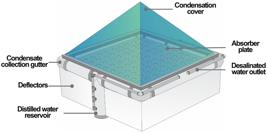
A prototype of a pyramid-type solar desalination device with a square base and floating structure was developed. The equipment measures (1.00 × 1.00) m. The acrylic cover has a thickness of 4 mm. The base of the device is surrounded by an aluminum structure, which helps increase the temperature and heat the water, and is coupled with expanded polystyrene (EPS), which improves thermal insulation and facilitates buoyancy. Figure 3 shows the design of the prototype.
3. RESULTS AND DISCUSSION
The simulation results focus on four closely interconnected aspects which, together, provide a comprehensive view of the system’s performance. First, the hourly distribution of solar irradiance is assessed, as it is the main energy source for the desalination unit, responsible for heating the heat-absorbing plate and driving the evaporation process of brackish water. Next, the thermal evolution of the main regions of the system throughout the day is analyzed, including the water, the upper acrylic cover, and the external environment. This analysis makes it possible to understand the dynamics of heat transfer between the components, especially during the critical phases of condensation and convective exchange.
The simulation was conducted for representative dates throughout the year 2024, with the aim of assessing the impact of seasonal climatic variability on the performance of the floating solar desalination unit. The city of Campina Grande, located in the semi-arid region of Northeast Brazil, has a semi-humid tropical climate with two well-defined seasons: the rainy season (March to July), characterised by higher relative humidity, intense cloud cover, and lower solar radiation availability; and the dry season (August to February), marked by low humidity levels, clear skies, and higher incidence of solar radiation, providing conditions more favourable for the operation of solar-powered desalination technologies.
For the purposes of standardising the analysis, the 15th day of each month was adopted as a reference, representing typical average monthly conditions. To deepen the discussion, two extreme climatic scenarios were selected: January, representing the best performance during the summer, and June, associated with the lowest yield in the rainy season.
Although this stage remains limited to the computational scope, without experimental validation, the results provide valuable guidelines for the design of the physical prototype, eliminating the need to build the prototype at this phase. The simulation, rather than planning field tests, already indicates the best configurations and dimensions. By demonstrating the technical feasibility of the project, the research contributes to the advancement of sustainable technologies that utilize solar energy for the production of potable water.
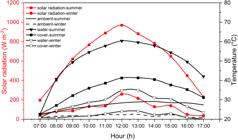
Figure 4 presents an overall view of the seasonal thermal behavior of the solar desalination system throughout the year. The results clearly indicate a strong dependence of system performance on solar radiation availability, which governs internal temperature levels and, consequently, the evaporation potential. During the summer months, solar radiation reaches peak values between approximately 800 and 1000 W m−2, resulting in elevated internal temperatures. Under these conditions, the average water temperature is approximately 49 °C, while the cover temperature is around 34 °C. The resulting thermal gradient, often exceeding 20 °C, establishes favorable conditions for evaporation and explains the higher productivity observed during this period. In contrast, during the winter months, the reduction in solar radiation leads to lower internal temperatures and a reduced thermal driving force, evidencing a well-defined seasonal pattern in system performance.

Hourly distribution of global solar radiation and simulated temperatures throughout the 15th day of each month in 2024, covering the time interval from 7:00 AM to 5:00 PM.
Figure 5 complements this general analysis by focusing on two representative extreme scenarios: January, corresponding to the best system performance, and June, associated with the lowest performance condition. This comparative approach enables a more detailed assessment of the desalination system response under contrasting climatic conditions. In January, solar radiation reaches peak values of approximately 900 W m–2, increasing the water and cover temperatures to about 60 °C and 41 °C, respectively. This pronounced thermal gradient between the water and the cover sustains high evaporation rates and enhanced distillate production. Conversely, in June, solar radiation does not exceed approximately 250 W m–2, resulting in absorber temperatures close to 35 °C and water and cover temperatures below 24 °C. The lower energy intensity and the reduced thermal difference between the evaporating and condensing surfaces significantly impair evaporation, leading to a marked reduction in system efficiency.
Based on Figure 6, the analysis of the internal heat transfer coefficients of the solar still reveals that evaporation is the dominant and decisive mechanism for water production. Its variation throughout the year is directly linked to solar radiation. In the summer months (January), the high solar radiation boosts the water temperature, causing the evaporation coefficient to reach a peak of approximately 28 W m–2 K–1. In contrast, the low radiation in June (winter) limits the available energy, resulting in a drastically reduced evaporation peak of only 7 W m–2 K–1. The internal convection and radiation coefficients are of low magnitude (around 1 to 5 W m–2 K–1) in both months, indicating that heat transfer through these mechanisms is secondary compared to the evaporation process. This analysis confirms that water production in the solar still is directly proportional to the evaporation energy, which in turn directly depends on the available solar radiation.

Figure 7 shows a clear seasonal difference: in January, the heat transfer coefficients are relatively low (below 6 W m−2 K−1),), which indicates a lower heat loss to the environment and a more efficient retention of available solar energy. In contrast, in June, the coefficients are significantly higher (reaching peaks of about 42 W m−2 K−1 for convection and about 5 W m−2 K−1 for radiation), which suggests greater heat dissipation, likely caused by stronger winds. This high heat loss, combined with the low available solar radiation in June, explains why the system is considerably less efficient during the winter.

The water production presented in Figure 8 demonstrates that in January, the high solar radiation, which reaches 900 W m–2, boosts the accumulated production to nearly 3937 mL m–2 day–1 and raises the hourly efficiency to peaks of around 35%. In contrast, the low radiation in June, which does not exceed 250 W m–2, limits the total production to approximately 452 mL m–2 day–1 and keeps the efficiency below 21%. The accumulated production curve for January shows a sharp increase during the solar peak, while the one for June presents a slow and limited rise, confirming that water production is directly linked to the available solar energy and the system’s efficiency in converting it.

4. CORRELATION ANALYSIS
The system’s performance shows a strong correlation with seasonality, with maximum efficiency in the months with the highest solar irradiance (summer) and minimum in winter. Even during the period of lowest yield, the thermal gain in the water remains functional and expressive.
Figure 9 presents the simulated monthly average daily temperatures for different regions of the floating solar still throughout the year. It is observed that:

-
The water had average temperatures between 28°C (June) and 49°C (January), reflecting a strong dependence on solar radiation.
-
The cover followed a similar behavior to the water, with values from 21°C (June) to 34°C (January), maintaining the necessary thermal gradient for evaporation.
-
The ambient temperature remained stable, varying between 21°C (June) and 26°C (January), confirming the seasonal conditions of Campina Grande-PB simulated via Open-Meteo.
This behavior confirms the coherent thermal operation of the model, with maximum performance in the summer, since solar radiation constitutes the main energy source of the system, the heating promoted by this energy input raises the temperature of the brackish water and intensifies evaporation; consequently, condensation occurs on the upper cover due to the temperature difference between the vapor and this relatively cooler surface [18]. In addition, the temperature difference between the basin water and the inner surface of the cover governs the productivity of the still [19]. Experimental results also show that solar irradiance is the climatic parameter with the greatest influence on productivity, and that production increases with increasing incident radiation [20].
Figure 10 presents the monthly evolution of the daily average heat transfer coefficients at the interfaces of the floating solar still. Among the analyzed mechanisms, the heat transfer coefficient by evaporation between the water and the cover stands out widely as the main responsible for the conduction of useful energy in the system. Its values vary seasonally between 5.2 W m−2 K−1 (June) and 20.0 W m−2 K−1 (January), reflecting the strong dependence of this mechanism on solar irradiance and the thermal gradient between the liquid-vapor interface. The other coefficients such as convection between the water and the cover (between 1.0 and 2.5), radiation between the same surfaces (between 5.0 and 6.2), and convection between the cover and the environment (29.0 and 55.1 W m−2 K−1).

Figure 11 shows that the daily average accumulated production of the simulated system ranged from 452 mL m−2 day−1 (June) to 3937 mL m−2 day−1 (January), with the best performances occurring in the months with higher solar radiation (January, March, October, November). This variation follows the trend observed in the temperature and heat transfer coefficient graphs, indicating a strong dependence on the thermal gradient and incident radiation. The system operates for 10 simulated daily hours (from 7am to 5pm), considering the continuous input of solar radiation, similar to the experimental field conditions of the studies to be analyzed.

The efficiency of the evaporation-condensation process depends directly on the system’s capacity to convert incident solar radiation into sensible heat, and, especially, on establishing a significant temperature differential between the surface of the heated water and the inner face of the cover. This thermal gradient acts as the primary driver for mass transfer, directly influencing the coefficients of convection, radiation, and, mainly, evaporation.
From a physical point of view, the evaporation rate is proportional not only to the temperature difference but also to the saturation pressure difference between these two surfaces. When the water temperature significantly surpasses that of the cover, the evaporation coefficient intensifies, promoting greater vapor transfer and, consequently, a larger volume of desalinated water. Conversely, reduced thermal gradients imply a lower evaporative flux, limiting the system’s overall performance.
Recent studies corroborate this analysis. SHAREEF et al. [21] demonstrated that alterations in the geometric design, such as the insertion of segmented absorber plates and the use of modified covers, intensify the thermal gradient and increase the evaporation coefficients, resulting in productivity gains of up to 20%. SINGH [22] also directly associated the increase in water temperature promoted by solar concentrators with the increment of thermal coefficients and the elevation of energy efficiency.
The peak efficiency occurs in the summer and transition months (Jan, Apr, Oct, Dec), when solar radiation is more intense and constant, promoting a greater thermal gradient between the water and the cover. The low efficiency in June is associated with lower solar radiation and a reduced thermal gradient, typical of winter in the studied region. This behavior follows the trend of passive solar desalination systems, whose performances are directly affected by environmental conditions.
The production of desalinated water by different floating desalination systems is strongly associated with the still design, its geometry, and the operating conditions. As presented in Table 2, a wide variation in productivity values reported in the literature can be observed. CHEN et al. [6] obtained a production of 1.5 L m−2 day−1, whereas RAIHANANDA et al. [17] experimentally reported 4.5 g in a double-slope still, corresponding to approximately 0.11 L m−2 day−1. NI et al. [23] achieved 2.5 L m−2 day−1 using a similar double-slope configuration. In contrast, the model simulated in this study produced 3.9 L m−2 day−1 during the dry season, while during the rainy season the production decreased to 0.4 L m−2 day−1.
When compared with the study by WEI et al. [24], who experimentally investigated a floating solar desalination system with a pyramidal configuration and an area of 0.25 m2, it is observed that the system proposed in this work exhibits competitive performance. The authors reported a productivity of 0.95 L m−2 day−1 for a 9 hour operational period, which is significantly lower than the productivity obtained by the model simulated under dry-season conditions. This difference can be mainly attributed to the climatic conditions considered in the simulation, the geometric optimization of the system, and the improved utilization of solar radiation throughout the day.Table 2 compiles the productivities of different solar still configurations reported in the literature, highlighting significant variations depending on the system layout and operating conditions. LIU et al. [25] evaluated a single-slope system with an area of 0.010 m², obtaining a productivity of 0.83 L m–2 day–1 over a 10 h period. HADI et al. [26], also using a single-slope configuration with an area of 0.562 m², reported a production of 0.80 L day–1 over 24 h of operation. CAO et al. [27], using a double-slope configuration, achieved a productivity of 3.06 L m–2 over 7 h of operation. CARUANA, ABELA AND REFALO [28] investigated a single-slope system and obtained 1.45 L m–2 day–1 over 15 h of operation. WANG et al. [29], also with a single-slope configuration and an area of 0.007 m², reported 0.434 kg m–2 h–1 and an equivalent production of 1.16 L m–2. In double-slope systems, LAUVANDY et al. [30] obtained 0.15 L m–² day–¹ with a mass of 6.39 g over a 2 h period, while SHARBATIYAN, RASHIDI AND MIRHOSSEINI [31] reported an annualized production of 0.64 L m–2 year–1 over 8 h of operation.
Overall, the results indicate that the pyramidal geometry positively contributes to increased productivity by allowing greater solar radiation capture regardless of the angle of incidence. Therefore, the performance achieved in this study reinforces the potential of this type of configuration when compared with pyramidal systems previously reported in the literature, such as that presented in [24].
5. CONVERGENCE AND SENSITIVITY ANALYSIS
The heat map of the maximum water temperature shows a consistent convergence behavior as the time step is reduced. For the month of January, a progressive decrease is observed from 61.5 °C (Δt = 3600 s) to approximately 60.3 °C (Δt ≤ 60 s). The relative variation between the smallest time steps (60 s and 30 s) is below 0.05%, indicating that the solution becomes practically independent of the time step within this range. Similarly, for the month of June, the maximum temperature converges from 36.4 °C to about 35.0 °C, with negligible differences between Δt = 60 s and Δt = 30 s. This behavior confirms the numerical stability of the thermal model and the adequacy of the adopted temporal resolution, ensuring reliability in predicting the temperature field (Figure 12).

The production convergence plot shows an initial sensitivity to the time step, especially for large values of Δt. In January, the estimated production decreases from approximately 4426 mL (Δt = 3600 s) to about 3937 mL (Δt = 30 s). For Δt ≤ 300 s, the variations become progressively smaller, with a difference of less than 0.3% between the 60 s and 30 s time steps, characterizing temporal convergence. For June, a similar trend is observed, although with significantly lower absolute values, varying from 477 mL to approximately 453 mL. The stabilization of production for Δt ≤ 300 s reinforces that the model adequately captures thermal and evaporation effects even under conditions of lower solar irradiance (Figure 13).

The analysis of thermal efficiency reveals a well-defined convergence behavior for both months. In January, the efficiency decreases from 40.4% (Δt = 3600 s) to approximately 35.8% at the smallest time steps. The difference between Δt = 60 s and Δt = 30 s is below 0.04%, indicating numerical independence of the solution. In June, the efficiency converges from 24.5% to about 21.6%, with clear stabilization for Δt ≤ 300 s. This behavior confirms that larger time steps tend to overestimate efficiency due to the lower resolution of transient phenomena, whereas smaller time steps provide more physically realistic results (Figure 14).

Overall, the three maps shown in Figures 12, 13, and 14 demonstrate that the model exhibits satisfactory temporal convergence for Δt ≤ 300 s, with Δt = 60 s representing an appropriate compromise between numerical accuracy and computational cost. The differences observed between 60 s and 30 s are negligible for all analyzed variables, validating the choice of the time step adopted in the final simulations.
Figure 15 presents the sensitivity analysis of desalinated water production and thermal efficiency as a function of two key model parameters: the Dunkle factor (x) and the felt thickness, evaluated for the months of January (high irradiance conditions) and June (low irradiance conditions). The sensitivity analysis indicates that the Dunkle factor exerts a dominant influence on both the production and efficiency of the desalination system, showing a monotonically decreasing behavior in January and an optimal value in June (x ≈ 0.7). In contrast, increasing the felt thickness has a limited effect on production under high irradiance conditions but significantly reduces thermal efficiency, particularly under low energy availability. The Dunkle factor was adopted as an empirical adjustment parameter to represent the combined effects of natural convection and radiation between the water surface and the desalination cover, and it was analyzed over a range consistent with the literature to assess model sensitivity and ensure the physical consistency of the results.

Overall, the results demonstrate that the Dunkle factor is the most sensitive parameter of the model, especially under high irradiance conditions, as it is directly associated with the convective and radiative coefficients inside the desalination system. In contrast, the felt thickness acts as a fine-tuning parameter, whose influence becomes more relevant under low solar radiation scenarios.
The analysis also indicates that parameter optimization should consider local climatic conditions, since optimal values differ between dry and rainy periods. In particular, reduced values of the Dunkle factor and moderate felt thicknesses favor the overall performance of the system.
5. CONCLUSIONS
The simulation carried out throughout the year 2024 allowed the evaluation, under different seasonal climatic conditions, of the thermal behavior and productivity of a floating solar desalinator with a pyramidal geometry. Using a numerical model based on energy balance coupled with hourly meteorological data from the Open- Meteo database, the critical variables influencing the system’s performance were identified, with emphasis on incident solar radiation and the thermal gradient between the water and the cover.
The simulations showed that the months with the highest radiation availability (January, October, and November) provided the best results in terms of water production and thermal efficiency, with water temperatures exceeding 49 °C and average daily efficiencies above 37%. On the other hand, the most critical months, such as June, presented reduced performance, with production below 452 mL m−2 day−1 and efficiencies close to 21%, reflecting the limitations imposed by low solar conditions typical of the semi-humid winter in Campina Grande–PB.
The heat transfer coefficients for evaporation demonstrated a strong correlation with solar radiation and the water-cover temperature differential, confirming their dominant role in the system’s energy conversion mechanism. The thermal inertia of the structure proved to be efficient, maintaining significant productivities even after the daily solar peak.
The convergence analysis showed that the model is stable and reliable, as reducing the time step led to progressively smaller variations in the results, indicating that the solutions become independent for time steps smaller than 300 s. In addition, the sensitivity analysis demonstrated that the desalination system performance is strongly influenced by thermal parameters, particularly the Dunkle factor, which directly affects heat transfer processes, and the thickness of the absorber material, whose impact is more significant on thermal efficiency under low irradiance conditions.
Overall, the results confirm that the floating solar desalination system with pyramidal geometry exhibits competitive performance, robust numerical behavior, and high sensitivity to physically meaningful thermal parameters, reinforcing the consistency of the proposed model.
6. CONSTANTS AND MAIN VARIABLES
Table 3 presents the fixed numerical parameters (constants) used in the model, including thermophysical properties, geometric dimensions, and empirical coefficients adopted in the simulations. These parameters remain unchanged throughout the analyses and serve as reference values for the energy balance calculations of the solar desalination system.
Table 4 lists the state variables of the model, represented by the temperatures of each node in the thermal network. These variables describe the transient thermal behavior of the main components of the solar desalination system and are obtained by solving the energy balance equations at each time step.
Table 5 summarizes the geometric parameters of the solar desalination system, including areas, thicknesses, characteristic lengths, and spatial dimensions of each component. These parameters are essential for defining heat transfer surfaces and calculating conductive, convective, and radiative heat exchanges in the model.
Table 6 presents the thermophysical properties of the materials used in the solar desalination system, such as density, specific heat, and thermal conductivity. These properties are fundamental for accurately modeling heat storage and heat transfer processes within the system components.
Table 7 lists the optical properties of the system components, including absorptivity, transmissivity, and emissivity. These properties govern the interaction between solar radiation and the materials, directly influencing solar energy absorption and radiative heat transfer within the desalination system.
Table 8 presents the heat and mass transfer coefficients employed in the model, including convective, radiative, and evaporative coefficients. These parameters are obtained from empirical correlations and theoretical models and are essential for quantifying the thermal and mass exchange processes between the different components of the solar desalination system.
Table 9 summarizes the thermodynamic and transport quantities considered in the model, such as latent heat of vaporization, saturation vapor pressure, air and vapor properties, and auxiliary variables used in the heat and mass transfer correlations. These quantities support the evaluation of coupled thermal and mass transport phenomena in the solar desalination system.
Table 10 presents the performance variables and main results obtained from the model, including freshwater productivity, thermal efficiency, heat fluxes, and other key indicators used to evaluate the operational performance of the solar desalination system under the studied conditions.
Table 11 defines the superscripts and indices used throughout the mathematical formulation of the model. These notations identify time levels, nodes, and specific physical processes, ensuring clarity and consistency in the presentation of the governing equations and results.
7. DATA AVAILABILITY
The datasets generated and/or analyzed during the present study are available from the corresponding author upon request.
8. BIBLIOGRAPHY
-
[1] KUMAR, S., AHMAD, A., IRSHAD, K., et al, “Solar stills: a review for water scarcity solutions”, Heliyon, v. 10, n. 19, pp. e38751, Oct. 2024. doi: https://doi.org/10.1016/j.heliyon.2024.e38751. PubMed PMID: 39430487.
» https://doi.org/10.1016/j.heliyon.2024.e38751 -
[2] DI BALDASSARRE, G., SIVAPALAN, M., RUSCA, M., et al, “Sociohydrology: scientific challenges in addressing the sustainable development goals”, Water Resources Research, v. 55, n. 8, pp. 6327–6355, Aug. 2019. doi: https://doi.org/10.1029/2018WR023901. PubMed PMID: 32742038.
» https://doi.org/10.1029/2018WR023901 - [3] UNICEF, WORLD HEALTH ORGANIZATION, Progress on household drinking water, sanitation and hygiene, Geneva, WHO, 2023.
-
[4] ALMESHAAL, M.A., MAATKI, C., “Numerical study of inclination effect of the floating solar still fitted with a baffle in 3D double diffusive natural convection”, Processes (Basel, Switzerland), v. 10, n. 8, pp. 1607, 2022. doi: https://doi.org/10.3390/pr10081607.
» https://doi.org/10.3390/pr10081607 -
[5] NAJJAR, A., ALMALLAHI, M. N., ELGENDI, M., “Evaluating the effect of external and internal condensers on the productivity of solar stills: a review”, Energy Conversion and Management: X, v. 24, pp. 100763, 2024. doi: https://doi.org/10.1016/j.ecmx.2024.100763.
» https://doi.org/10.1016/j.ecmx.2024.100763 -
[6] CHEN, S., ZHAO, P., XIE, G., et al, “A floating solar still inspired by continuous root water intake”, Desalination, v. 512, pp. 115133, Sep. 2021. doi: https://doi.org/10.1016/j.desal.2021.115133.
» https://doi.org/10.1016/j.desal.2021.115133 -
[7] VAN DER WIEL, K., BINTANJA, R., “Contribution of climatic changes in mean and variability to monthly temperature and precipitation extremes”, Communications Earth & Environment, v. 2, n. 1, pp. 1, Jan. 2021. doi: https://doi.org/10.1038/s43247-020-00077-4.
» https://doi.org/10.1038/s43247-020-00077-4 -
[8] NABINEJAD, S., SCHÜTTRUMPF, H., “Flood risk management in arid and semi-arid areas: a comprehensive review of challenges, needs, and opportunities”, Water (Basel), v. 15, n. 17, pp. 3113, Aug. 2023. doi: https://doi.org/10.3390/w15173113.
» https://doi.org/10.3390/w15173113 -
[9] CONSERVA, V.R., SILVA, C.B., RAMIREZ, R.C., et al, “Influence of the wind generator and thermal electrical modules in the solar still in the continuous production of fresh water”, ACS ES&T Water, v. 4, n. 11, pp. 5039–5052, Nov. 2024. doi: https://doi.org/10.1021/acsestwater.4c00636.
» https://doi.org/10.1021/acsestwater.4c00636 -
[10] KELLY FREITAS SARMENTO, K., BARBOSA SILVA, C., SILVA DE ABREU BENEDITO, D., et al, “Cascade type solar distiller with the use of photothermic materials applied in the treatment of surface water”, Applied Thermal Engineering, v. 244, pp. 122721, May. 2024. doi: https://doi.org/10.1016/j.applthermaleng.2024.122721.
» https://doi.org/10.1016/j.applthermaleng.2024.122721 - [11] DUNKLE, R.V., “Solar water distillation: the roof type still and a multiple effect diffusion still”, In: Proceedings of International Heat Transfer Conference, University of Colorado, pp. 895, 1961.
-
[12] WAGNER, W., COOPER, J.R., DITTMANN, A., et al, “The IAPWS Industrial Formulation 1997 for the thermodynamic properties of water and steam”, Journal of Engineering for Gas Turbines and Power, v. 122, n. 1, pp. 150–184, Jan. 2000. doi: https://doi.org/10.1115/1.483186.
» https://doi.org/10.1115/1.483186 -
[13] SHARQAWY, M.H., LIENHARD, V., ZUBAIR, S.M., “Thermophysical properties of seawater: a review of existing correlations and data”, Desalination and Water Treatment, v. 16, n. 1–3, pp. 354–380, Apr. 2010. doi: https://doi.org/10.5004/dwt.2010.1079.
» https://doi.org/10.5004/dwt.2010.1079 -
[14] HAWKINS, G.A., “Heat Transmission William H. McAdams. McGraw-Hill, New York-London, ed. 3, 1954. xiv + 532 pp. Illus. $8.50”, Science, v. 120, n. 3128, pp. 984–984, Dec. 1954. doi: https://doi.org/10.1126/science.120.3128.984.a. PubMed PMID: 13216199.
» https://doi.org/10.1126/science.120.3128.984.a -
[15] SWINBANK, W.C., “Long‐wave radiation from clear skies”, Quarterly Journal of the Royal Meteorological Society, v. 89, n. 381, pp. 339–348, Jul. 1963. doi: https://doi.org/10.1002/qj.49708938105.
» https://doi.org/10.1002/qj.49708938105 -
[16] DUFFIE, J.A., BECKMAN, W.A., Solar Engineering of Thermal Processes, 4 ed., Hoboken, Wiley, 2013. doi: https://doi.org/10.1002/9781118671603.
» https://doi.org/10.1002/9781118671603 -
[17] RAIHANANDA, F.A., PHILANDER, E., LAUVANDY, A.F., et al, “Low-cost floating solar still for developing countries: Prototyping and heat-mass transfer analysis”, Results in Engineering, v. 12, pp. 100300, Dec. 2021. doi: https://doi.org/10.1016/j.rineng.2021.100300.
» https://doi.org/10.1016/j.rineng.2021.100300 -
[18] AYOOBI, A., RAMEZANIZADEH, M., “A detailed review investigating the mathematical modeling of solar stills”, Frontiers in Energy Research, v. 10, pp. 879591, Apr. 2022. doi: https://doi.org/10.3389/fenrg.2022.879591.
» https://doi.org/10.3389/fenrg.2022.879591 -
[19] RADOMSKA, E., MIKA, L., SZTEKLER, K., et al, “Experimental validation of the thermal processes modeling in a solar still”, Energies, v. 14, n. 8, pp. 2321, Apr. 2021. doi: https://doi.org/10.3390/en14082321.
» https://doi.org/10.3390/en14082321 -
[20] RASHID, F.L., AL-OBAIDI, M.A., HUSSEIN, A.K., et al, “Floating solar stills and floating solar-driven membranes: recent advances and overview of designs, performance and modern combinations”, Solar Energy, v. 247, pp. 355–372, 2022. doi: https://doi.org/10.1016/j.solener.2022.10.044.
» https://doi.org/10.1016/j.solener.2022.10.044 -
[21] SHAREEF, A.S., KURJI, H.J., HAMZAH, A.H., “Modifying performance of solar still, by using slices absorber plate and new design of glass cover, experimental and numerical study”, Heliyon, v. 10, n. 1, pp. e24021, Jan. 2024. doi: https://doi.org/10.1016/j.heliyon.2024.e24021. PubMed PMID: 38234896.
» https://doi.org/10.1016/j.heliyon.2024.e24021 -
[22] SINGH, A.K., “Analysis for optimized prerequisites of modified solar stills”, Heliyon, v. 10, n. 3, pp. e25804, Feb. 2024. doi: https://doi.org/10.1016/j.heliyon.2024.e25804. PubMed PMID: 38356532.
» https://doi.org/10.1016/j.heliyon.2024.e25804 -
[23] NI, G., ZANDAVI, S.H., JAVID, S.M., et al, “A salt-rejecting floating solar still for low-cost desalination”, Energy & Environmental Science, v. 11, n. 6, pp. 1510–1519, Jun. 2018. doi: https://doi.org/10.1039/C8EE00220G.
» https://doi.org/10.1039/C8EE00220G -
[24] WEI, X., ZHENG, Q., CHEN, W., et al, “Pyramid floating solar still with enhanced condensation surfaces operating under actual weather conditions”, Renewable Energy, v. 237, pp. 121579, 2024. doi: https://doi.org/10.1016/j.renene.2024.121579.
» https://doi.org/10.1016/j.renene.2024.121579 -
[25] LIU, Z., SONG, H., JI, D., et al, “Extremely cost-effective and efficient solar vapor generation under nonconcentrated illumination using thermally isolated black paper”, Global Challenges (Hoboken, NJ), v. 1, n. 2, pp. 1600003, Feb. 2017. doi: https://doi.org/10.1002/gch2.201600003. PubMed PMID: 28616256.
» https://doi.org/10.1002/gch2.201600003 -
[26] HADI, H.H., KHAN, I., SARWAR, G., et al, “Comparative analysis of glass fiber sheet and crepe paper for a wick type floating solar still”, MEHRAN UNIVERSITY RESEARCH JOURNAL OF ENGINEERING AND TECHNOLOGY, v. 39, n. 3, pp. 532–540, Jul. 2020. doi: https://doi.org/10.22581/muet1982.2003.08.
» https://doi.org/10.22581/muet1982.2003.08 -
[27] CAO, P., ZHAO, L., ZHANG, J., et al, “Gradient heating effect modulated by hydrophobic/hydrophilic carbon nanotube network structures for ultrafast solar steam generation”, ACS Applied Materials & Interfaces, v. 13, n. 16, pp. 19109–19116, Apr. 2021. doi: https://doi.org/10.1021/acsami.0c21831. PubMed PMID: 33852264.
» https://doi.org/10.1021/acsami.0c21831 -
[28] CARUANA, L., ABELA, S., REFALO, P., “Development and analysis of a floating solar distillation device”, Desalination and Water Treatment, v. 228, pp. 36–46, Jul. 2021. doi: https://doi.org/10.5004/dwt.2021.27335.
» https://doi.org/10.5004/dwt.2021.27335 -
[29] WANG, X., LI, Z., WU, Y., et al, “Construction of a three-dimensional interpenetrating network sponge for high-efficiency and cavity-enhanced solar-driven wastewater treatment”, ACS Applied Materials & Interfaces, v. 13, n. 9, pp. 10902–10915, Mar. 2021. doi: https://doi.org/10.1021/acsami.0c21690. PubMed PMID: 33629587.
» https://doi.org/10.1021/acsami.0c21690 -
[30] LAUVANDY, A.F., RAIHANANDA, F.A., PHILANDER, E., et al, “Improving condensing performance of a low-cost floating solar still by surface characteristic alteration”, Sustainable Energy Technologies and Assessments, v. 54, pp. 102835, Dec. 2022. doi: https://doi.org/10.1016/j.seta.2022.102835.
» https://doi.org/10.1016/j.seta.2022.102835 -
[31] SHARBATIYAN, M.H., RASHIDI, S., MIRHOSSEINI, M., “Experimental study on the performance of floating solar desalination system with porous absorbent plate”, Journal of the Taiwan Institute of Chemical Engineers, v. 148, pp. 104677, Jul. 2023. doi: https://doi.org/10.1016/j.jtice.2023.104677.
» https://doi.org/10.1016/j.jtice.2023.104677


