 Mechanical strength, tribological performance, and waste control in filler-modified glass fiber–reinforced epoxy composites
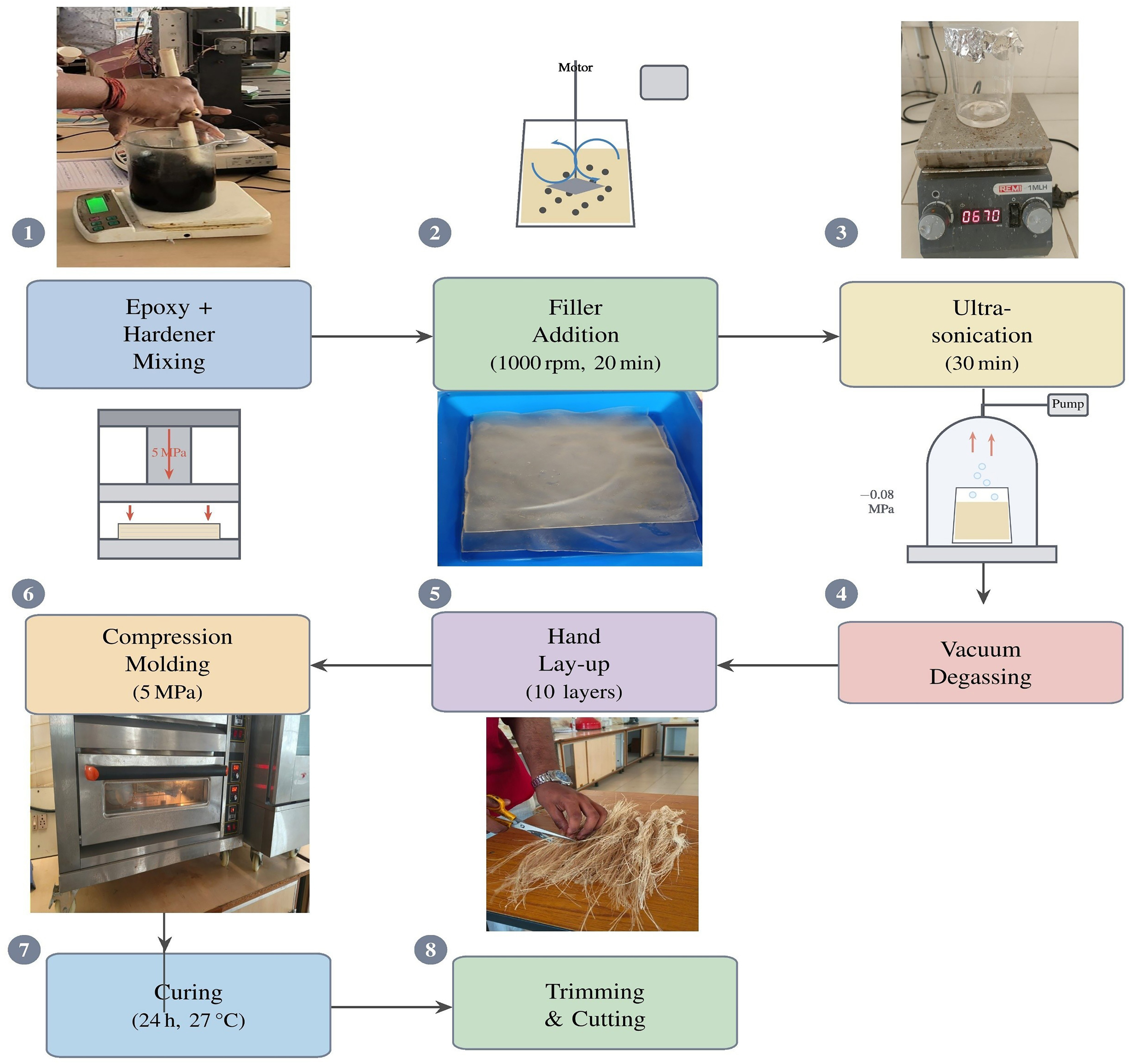
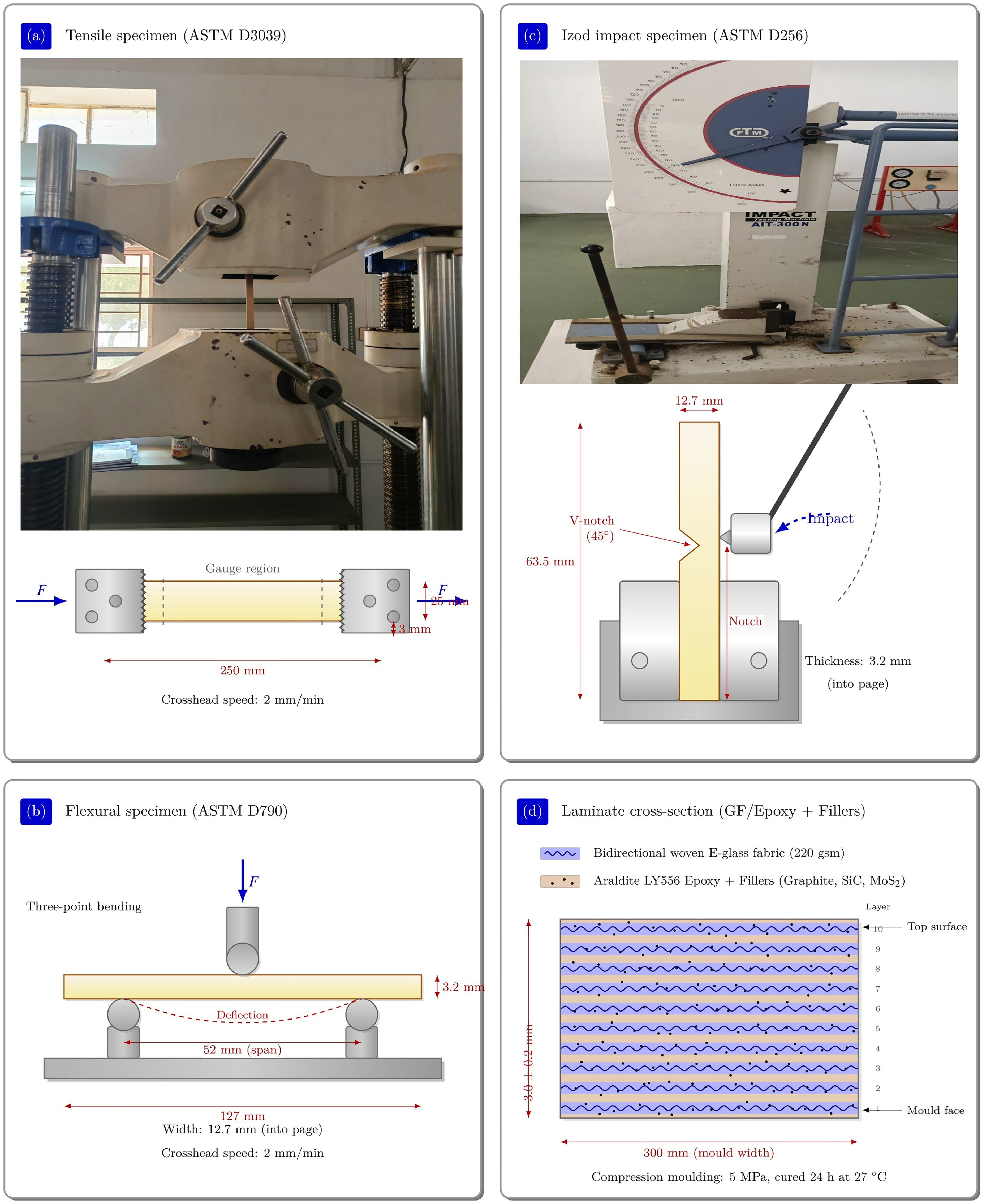
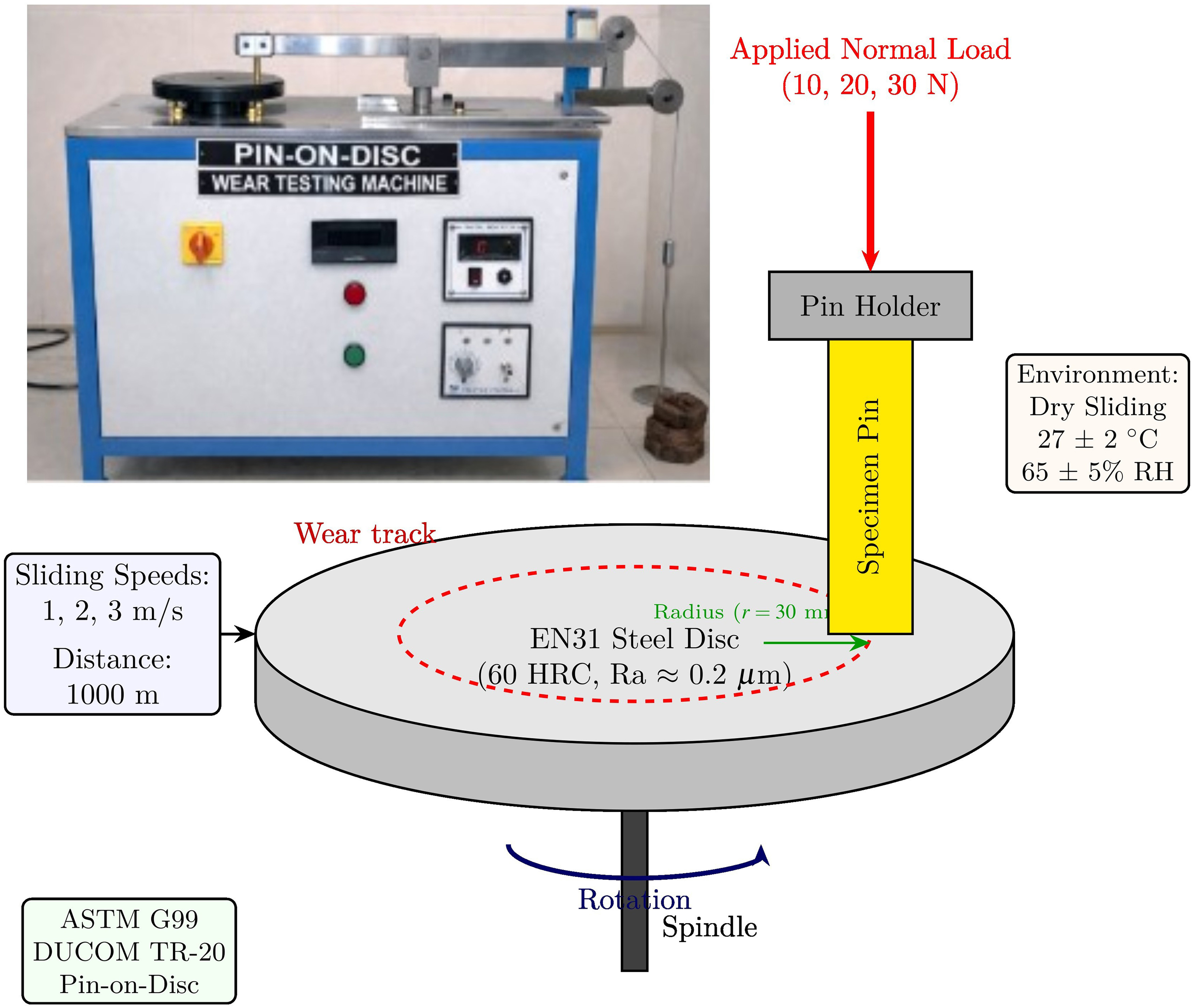
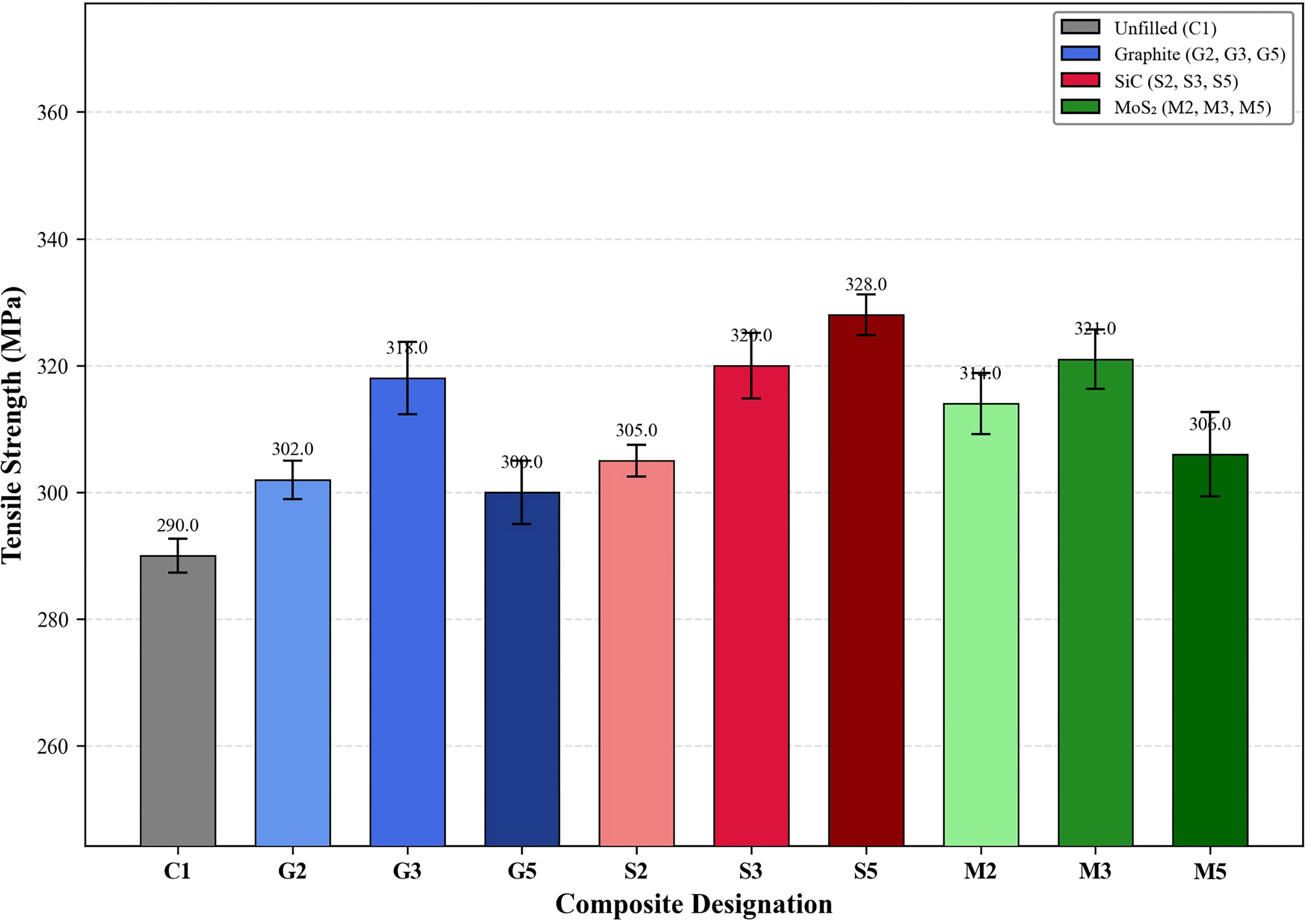
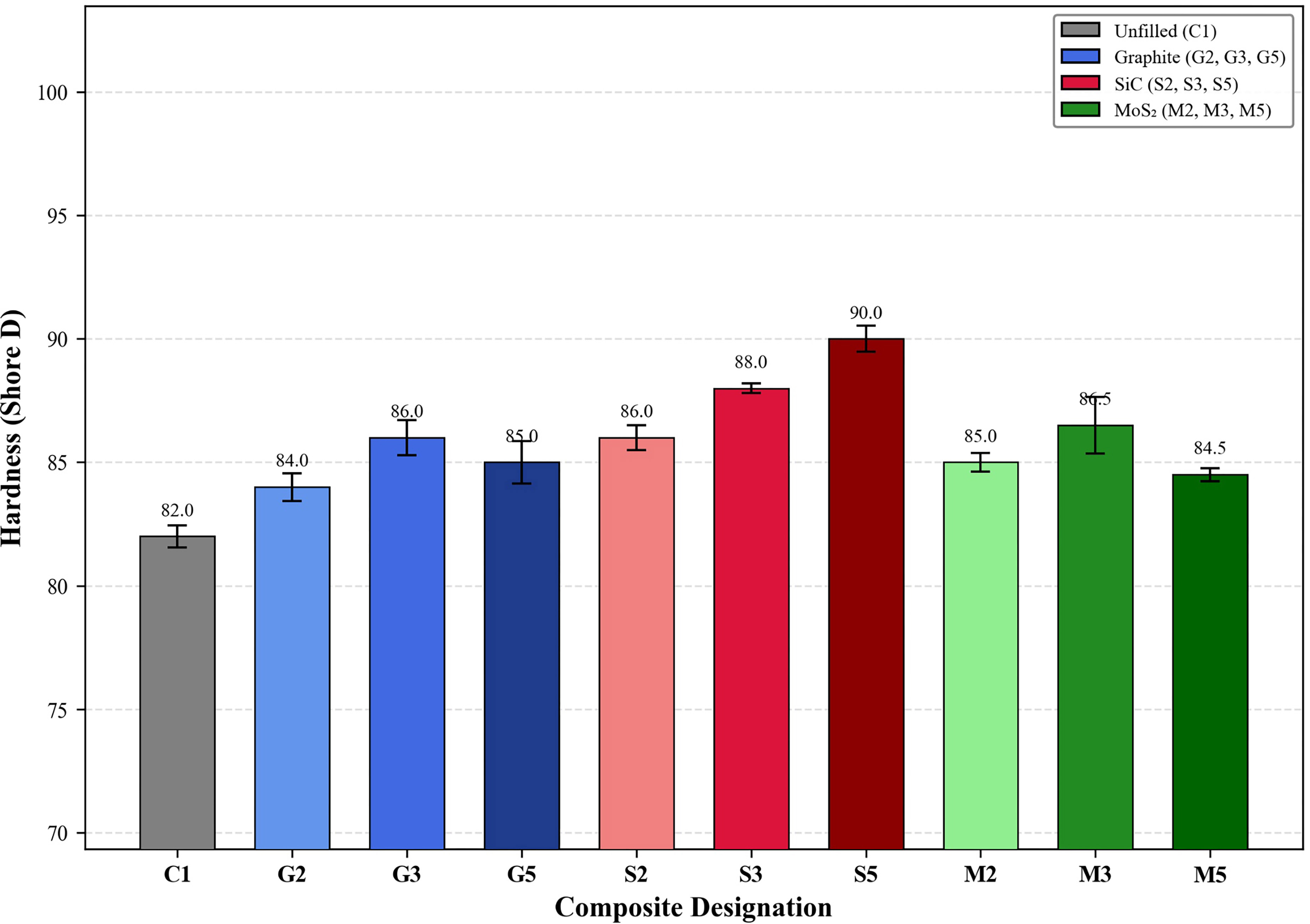
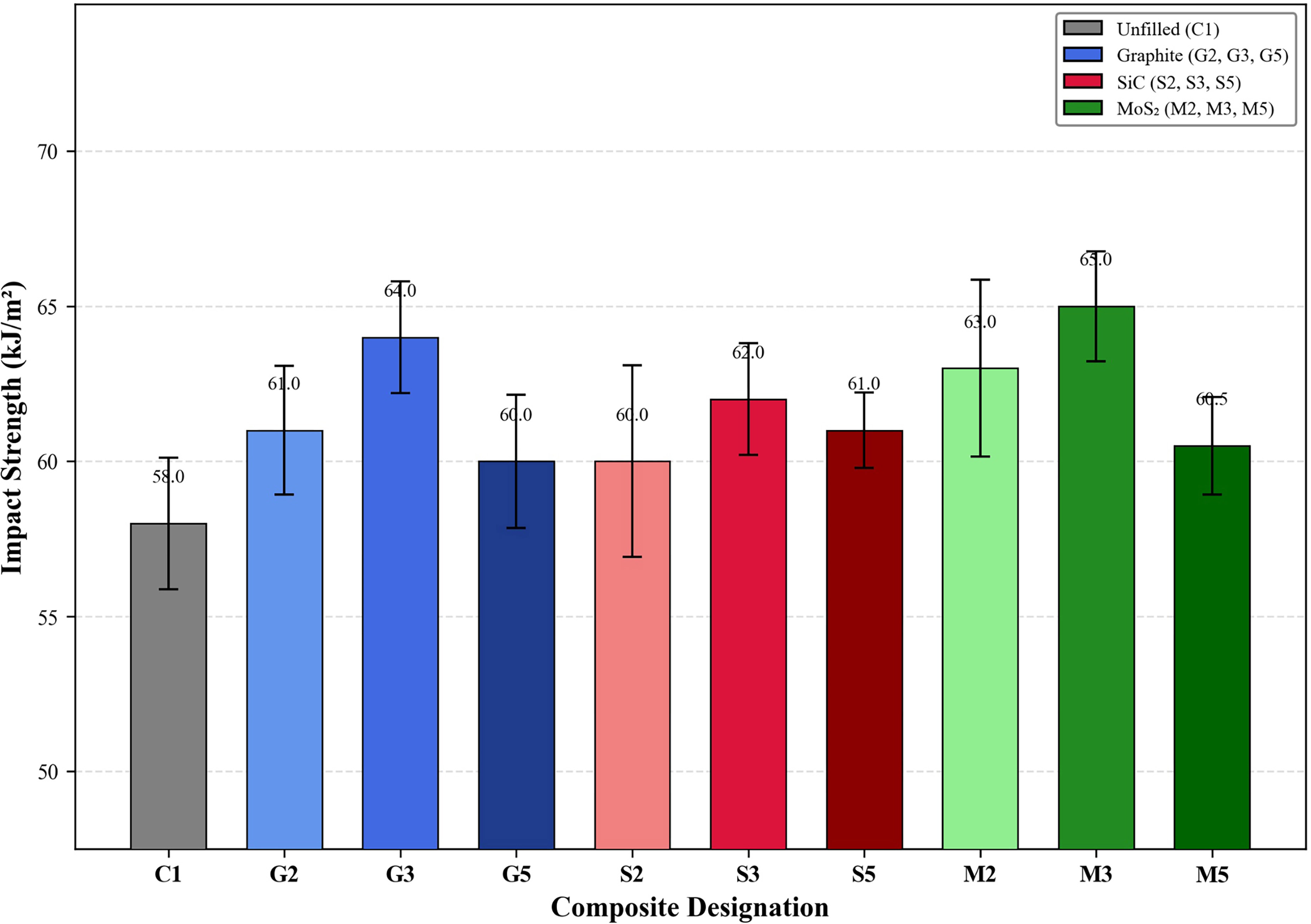
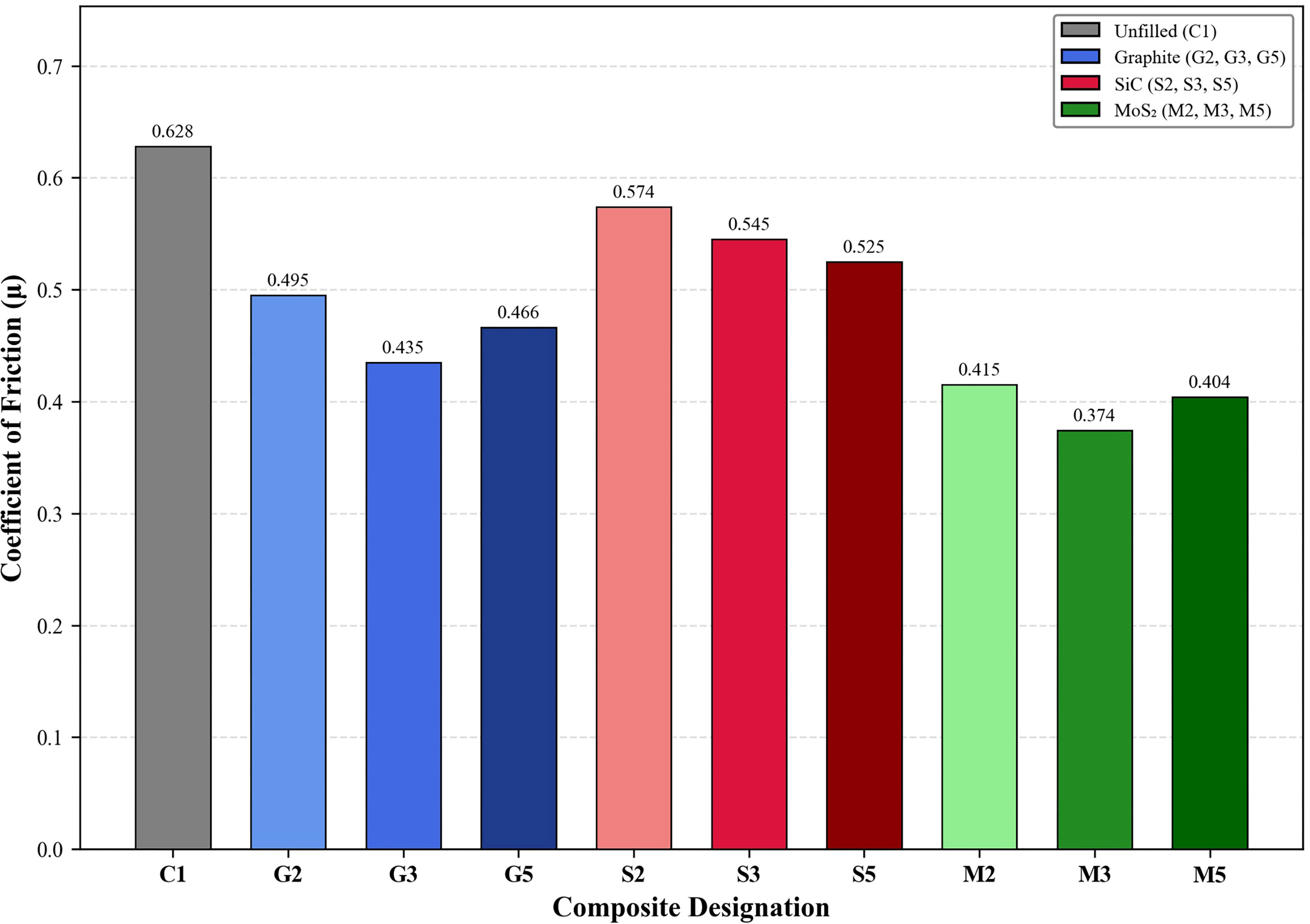
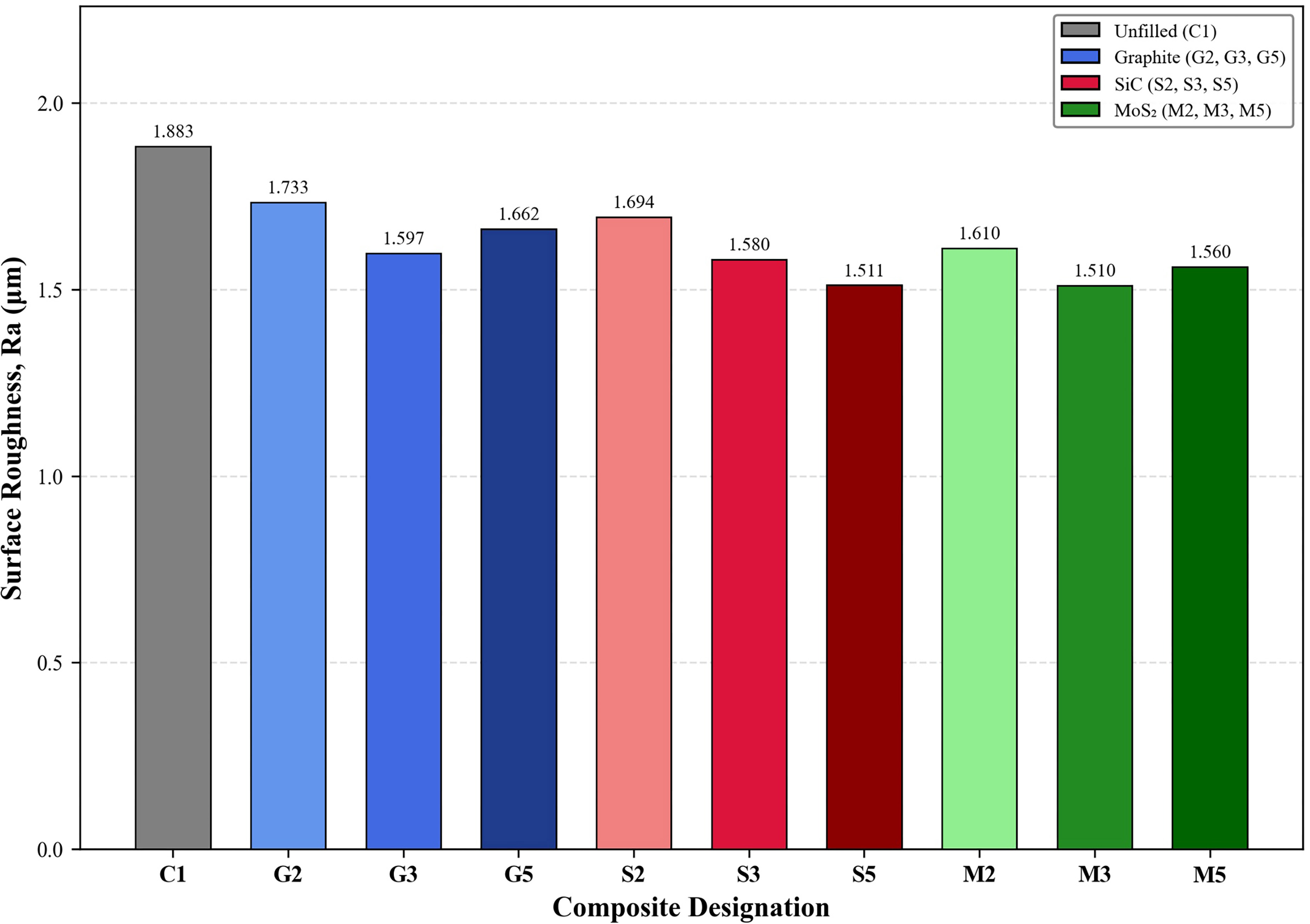
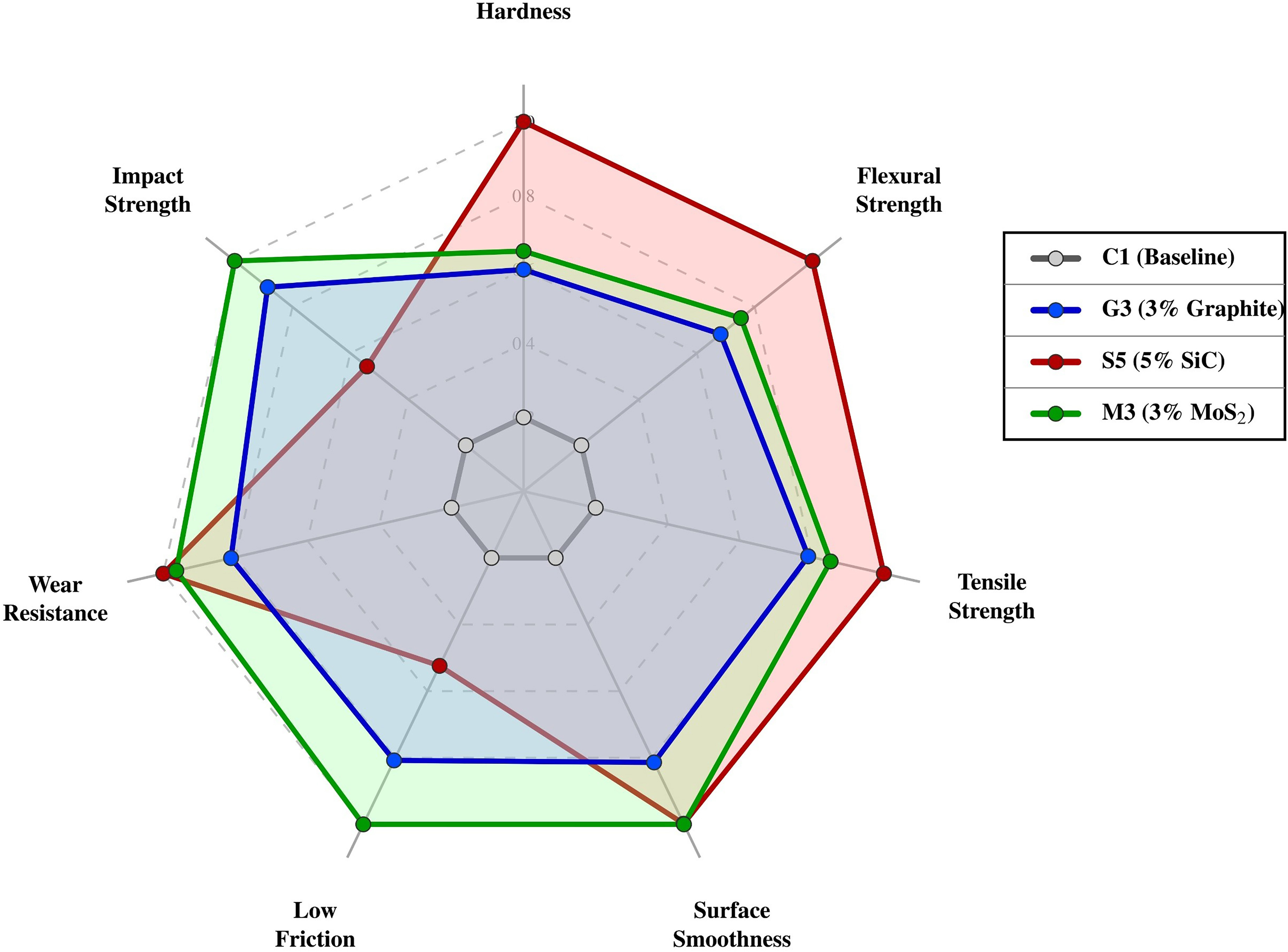
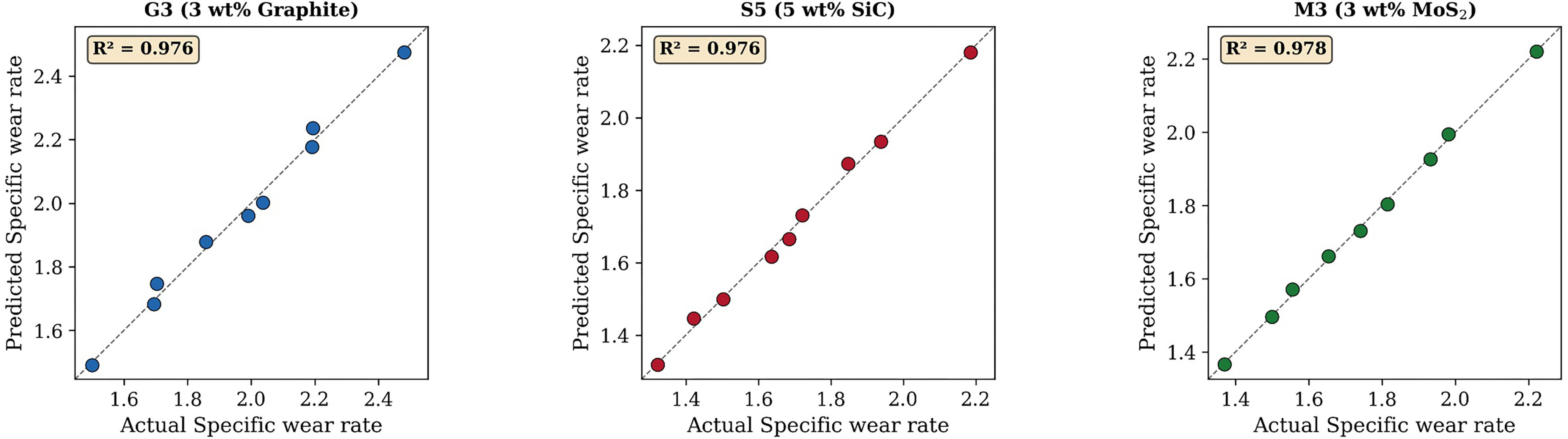
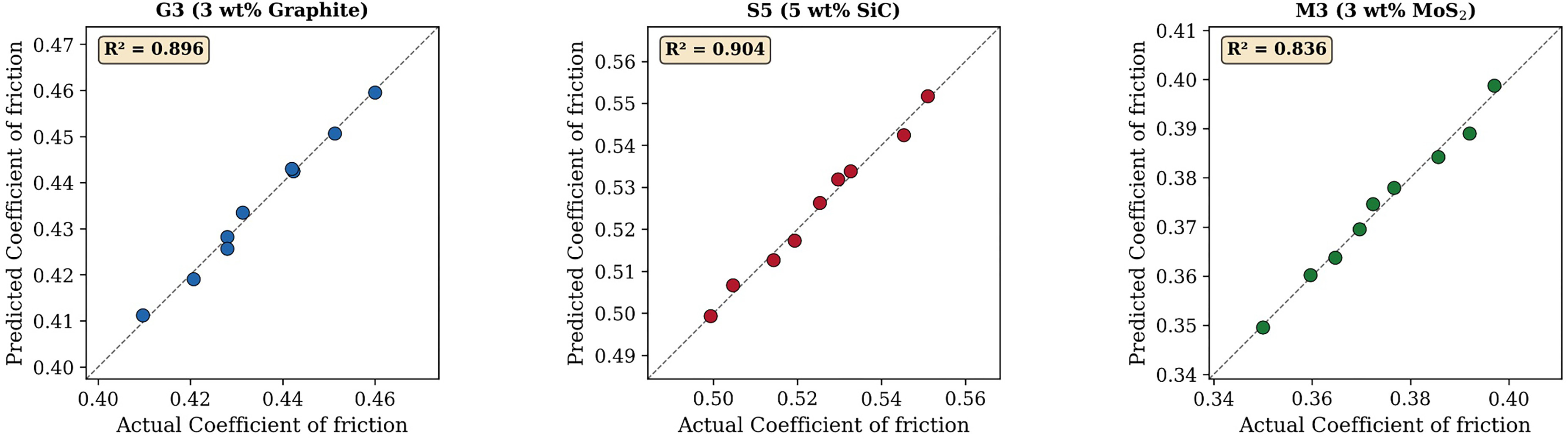
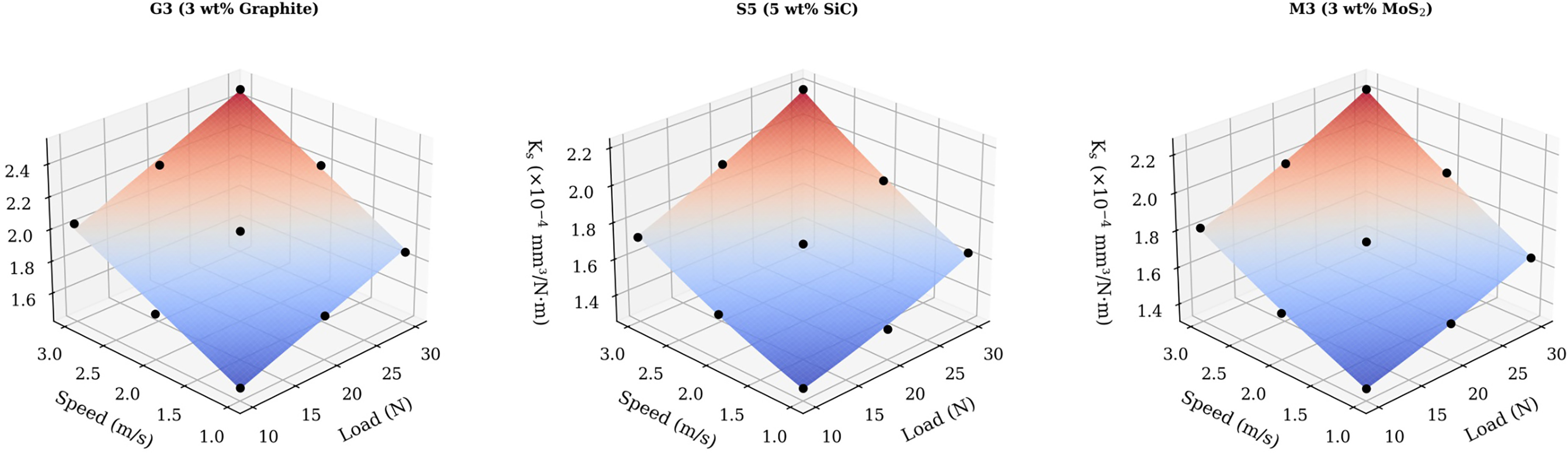
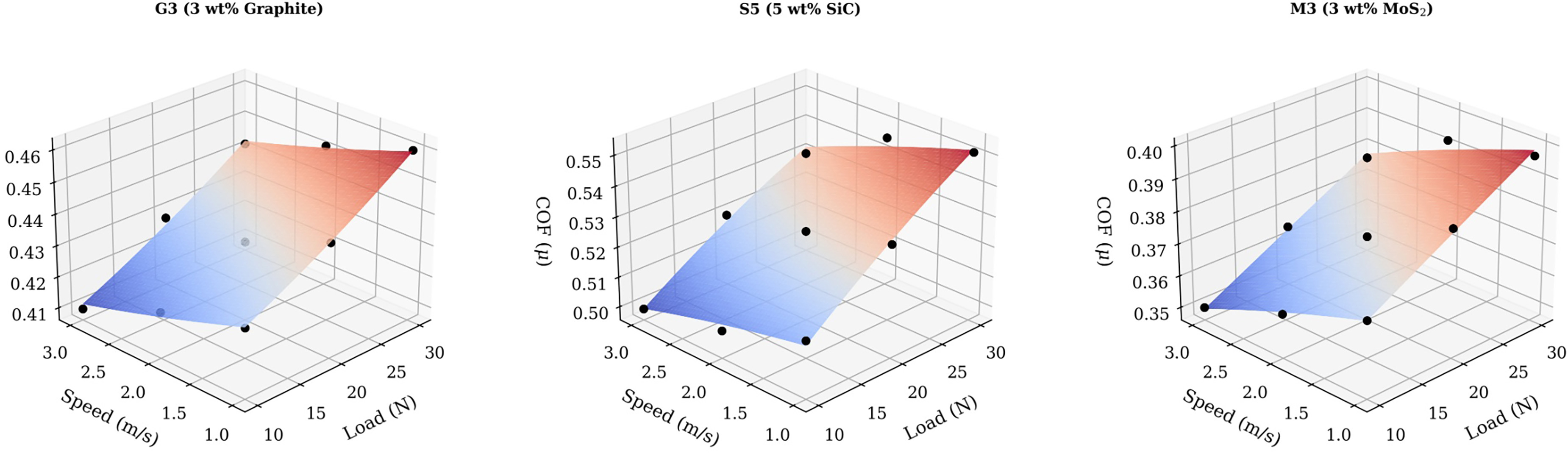
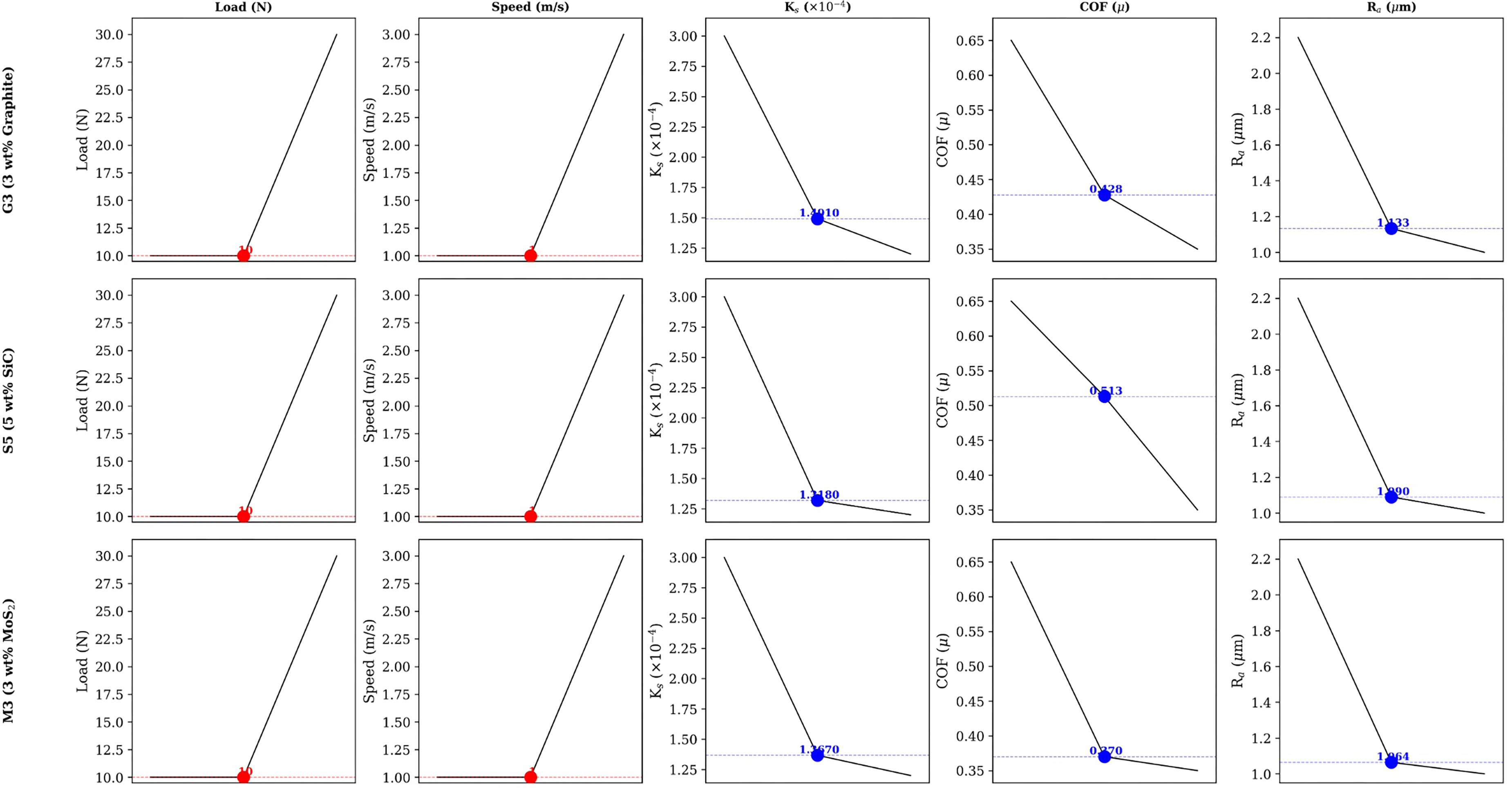
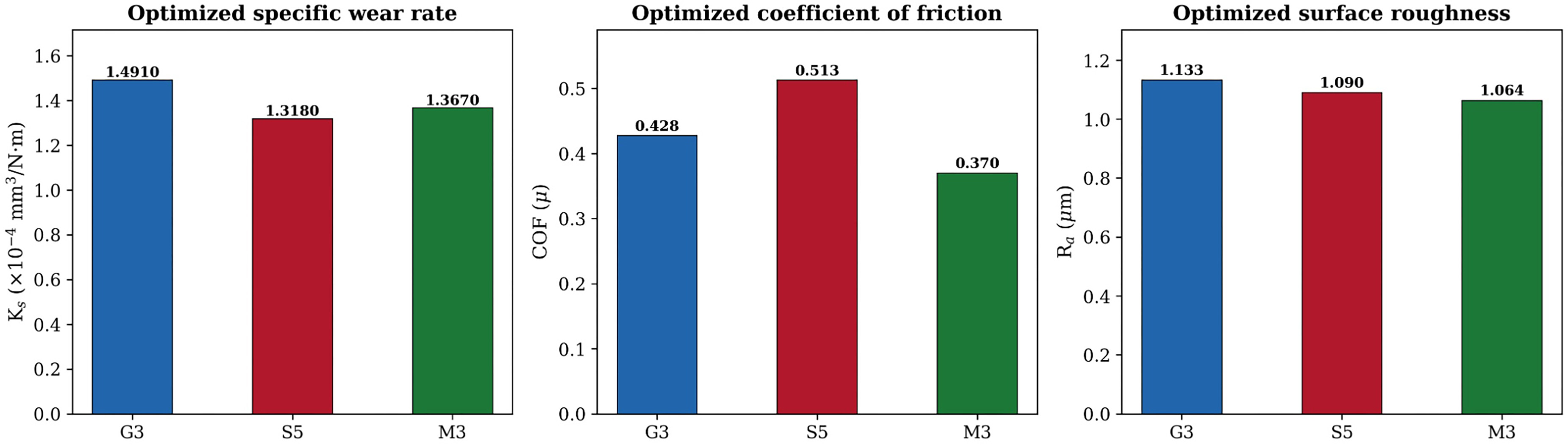
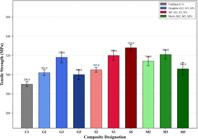
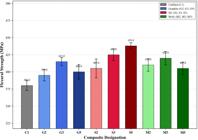
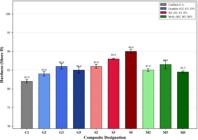
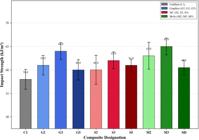
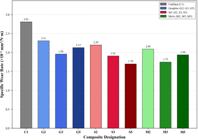
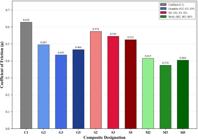
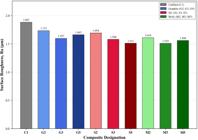
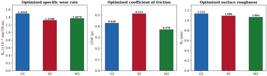
Glass fiber–reinforced epoxy composites are used in lightweight structural and sliding components, yet dry-contact damage can shorten service life and generate wear debris. Filler engineering offers a practical route to strengthen the matrix-rich surface while controlling friction and material loss. A coordinated comparison of lubricating, ceramic, and lamellar fillers within a single glass fiber–epoxy platform is still needed. This study aims to assess the mechanical, tribological, and waste-control response of graphite-, SiC-, and MoS₂-filled glass fiber–epoxy laminates. Laminates containing 0, 2, 3, and 5 wt.% filler were fabricated by hand lay-up and compression molding, then tested by tensile, flexural, Shore D hardness, notched Izod impact, ASTM G99 pin-on-disc wear, profilometry, SEM, and response surface modelling. S5 recorded 328 MPa tensile strength, 438 MPa flexural strength, 90 Shore D hardness, and 1.70 × 10⁻⁴ mm³ N-1 m-1 specific wear rate, representing 13.1%, 15.3%, 9.8%, and 39.5% gains over C1. M3 recorded 65 kJ m⁻² impact strength, 0.374 coefficient of friction, and 1.510 µm roughness, giving 12.1%, 40.4%, and 19.8% gains. The results support application-specific filler selection: SiC is suitable for load-bearing wear components, while MoS₂ is suitable for low-friction sliding interfaces. Future innovation should extend validation to high loads, ageing, filler mapping, and multi-criteria ranking.
Keywords:
Glass fiber–reinforced epoxy composites; Pin-on-disc tribology; Response surface methodology; Solid lubricant fillers; Waste recycling
 Thumbnail
 Thumbnail
 Thumbnail
 Thumbnail
 Thumbnail
 Thumbnail
 Thumbnail
 Thumbnail
 Thumbnail
 Thumbnail
 Thumbnail
 Thumbnail
 Thumbnail
 Thumbnail
 Thumbnail
 Thumbnail
 Thumbnail
 Thumbnail
 Thumbnail
 Thumbnail
 Thumbnail
 Thumbnail
 Thumbnail
 Thumbnail
 Thumbnail