 Explorations into the mechanical properties of composites reinforced with sisal and abaca natural fibers
ABSTRACT
This study explores the complex world of mechanical properties displayed by composites reinforced with natural fibers, concentrating on the features of sisal and abaca fibers in particular. This research aims to thoroughly assess the inherent capabilities of these eco-friendly and renewable fibers as strong reinforcing agents in composite materials. The creation of composite samples with carefully adjusted fiber content and matrix compositions is all part of the study technique. A full investigation occurs, diving into essential mechanical qualities such as compression strength, tensile strength, flexural strength, impact resistance, and water absorption. The impact of relative fiber, and the composites were created by blending sisal and abaca fibers in a range of volume fraction ratios (0.0–1.0, 0.25–0.75, 0.50–0.50, 0.75–0.25, and 1.0–0.0). These trials yield data that are carefully examined in order to decipher the complex interactions among fiber type, and overall mechanical performance. The study incorporates advanced microstructural analysis methods, such as scanning electron microscopy (SEM), to reveal subtleties in the complex interfacial bonding dynamics between the natural fibers and the matrix. This research, which goes beyond the usual limitations, illuminates prospective uses for sisal and abaca natural fibers in composite materials while also enhancing our understanding of the mechanical properties.
Keywords:
Sisal fibre; Abaca fibre; Mechanical properties; Microstructural analysis
1. INTRODUCTION
This study looked at the impact and properties of fracturing in high-density composites made of polyethylene and natural flax fiber. In order to fabricate the composite, both pressure molding and hand lay-up methods were used. The mechanical properties were investigated and fracture characteristics were identified by applying tensile and impact loads. A number of tests with varied quantities were carried out to determine the material's stress–strain characteristics, such as yield stress, bending strength, Young's modulus, ductility, and toughness [1]. The fundamental deformation and failure mechanisms of the composite were qualitatively evaluated by the use of optical and scanning electron microscopy. The outcomes demonstrated a notable enhancement in the composite's toughness, which suggests a favorable effect on its resilience to fractures. This thorough analysis clarifies the physical characteristics of high-density composites and provides important information about their overall performance and fracture characteristics [2].
The strength and rigidity of hybrid composites—a material created by mixing oil palm and jute fiber reinforcement—that were created. The hybrid composite was found to have superior tensile and dynamic mechanical qualities after the inspection. It has been demonstrated that the interface between fibers and matrix bonding in the oil palm-epoxy composite is significantly stronger [3]. Incorporating up to 50% sisal and banana fiber in an epoxy matrix boosts mechanical characteristics while minimizing moisture absorption. In the first situation, as fiber loading increases, tensile and flexural strengths rise; in the second scenario, on the other hand, strengths fall. This variant emphasizes the intricate relationship between loading and fiber composition and the necessity for careful changes to produce the best possible mechanical performance and moisture resistance [4].
The physical properties and microstructure of sisal fiber-reinforced composites made of epoxy are the subject of research, which provides important insights into the variables affecting strength and structure. This makes a substantial contribution to our basic knowledge of sisal composites and their uses [5]. An further investigation delves into the physical attributes of polypropylene hybrids reinforced with sisal fibers, providing significant understanding of their characteristics and a range of industrial uses. This study advances our comprehension of the physical attributes of sisal composites and leads to future developments [6]. A key resource discusses biofibers and biocomposites, such as sisal and abaca, and offers insights into the variety of natural fibers and their many uses in composite components. This work unlocks prospects for the use of biofibers in a variety of sectors and acts as a valuable information repository [7].
Investigating the impact of banana fiber content and coupling agents on polypropylene composites, researchers provide vital insights into optimizing fiber levels. Emphasizing the role of coupling agents, their work underscores their contribution to enhancing the strength of composite materials [8]. Another study focuses on the chemical modification of sisal, jute, and other fibers, highlighting the importance of fiber treatment for improved compatibility with polymer matrices. This research significantly adds to our understanding of enhancing the interaction between natural fibers and polymers [9]. Offering a comprehensive overview, a study delves into sisal fibers as an alternative reinforcement in polymer matrix composites. Exploring characteristics and potential applications, it becomes a valuable resource for researchers and industries interested in sustainable composite materials [10].
Exploring the amalgamation of natural fibers, like sisal, into polylactic acid composites, scientists contribute to unraveling the intricacies of the compatibility between these fibers and biodegradable polymer matrices. This research serves as a catalyst in advancing our understanding of sustainable materials development [11]. Examining short banana fiber-reinforced polyester composites, the study delves into the nuanced exploration of mechanical characteristics and aging behavior, playing a vital role in refining the utilization of banana fibers as reinforcement in composite materials [12]. In their scrutiny of natural fibers in biopolymers and biocomposites, the research provides valuable insights into the broader context of incorporating these fibers into biodegradable polymers, thereby propelling sustainable material development [13]. Another investigation on natural fiber surfaces and composites contributes essential insights into interfacial bonding and surface characteristics, proving pivotal in optimizing the performance of natural fiber composites across diverse applications [14].
Analytical calculations were done to determine the applicability of the stress fracture found in synthetic fiber composites, natural fiber composites, and blended composites. The PSC criteria dimension somewhat increases with whole expansion, according to data gathered from all laminates examined [15]. To investigate the effect of whole size on notch sensitivity for hybridization with glass and jute fibers, exhibiting enriched properties. These findings together add to a thorough knowledge of stress fracture behavior in diverse composite materials, revealing the subtle impacts of whole size and the enriched characteristics arising from the hybridization of glass and jute fibers [16].
An experimental and a theoretical method for the production and evaluation of sisal fiber reinforced low density polyethylene composites. When the experimental results for tensile strength were compared to many theoretical models, it was found that the Hirsch and modified Bowyer and Bader models predicted the closest values more accurately than the other models [17]. By comparing the experimental results for tensile strength. In addition to Rule of Mixtures (RoM), several theories for predicting the mechanical properties of short, randomly oriented fiber composites are proposed, where the properties are highly influenced by the fiber length, orientation, interaction with the matrix [18].
The research on sisal-abaca hybrid fiber-reinforced epoxy composites experimentation due to the promising properties exhibited by the material. The mechanical properties of the hybrid composite are influenced by factors such as fiber length and loading on the matrix; however, these effects have not been extensively documented [19]. The impact of chemical treatment on the fiber is vital, enhancing the features of the fiber and consequently improving the qualities of hybrid composites. The objective is to produce hybrid fiber composites utilizing sisal and abaca fibers, with a specific focus on examining how variations in fiber volume fraction and fiber length influence the physical, mechanical, and water absorption characteristics of short fiber composites [20].
2. MATERIALS AND METHODS
2.1. Sisal fibre
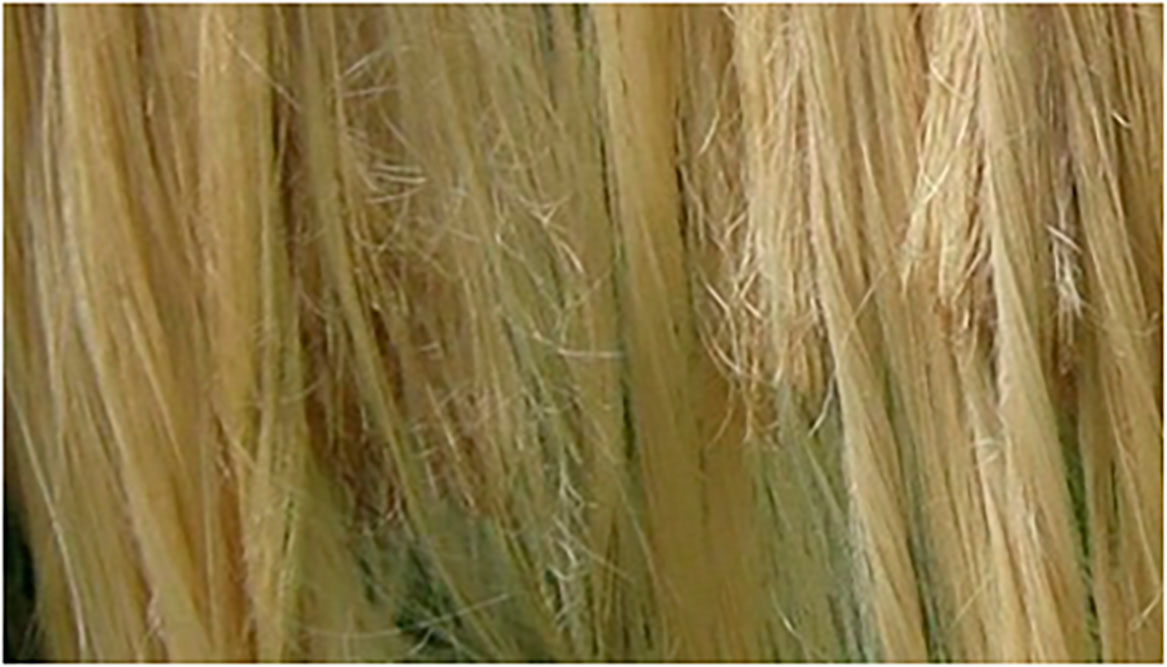
A fundamental comprehension of the characteristics of sisal fiber, opening the door to possible developments in a range of industrial applications. The sisal fibers have the following characteristics: a diameter that varies from 50 to 250 μm, a density of 1423 kg/m3, a microfibrillar angle that ranges from 11 to 21 degrees, an elongation percentage that falls between 3 and 6%, and a cell length-to-diameter (L/D) ratio that falls between 90 and 110. These discoveries shed important light on the physical properties of sisal fibers. The microfibrillar angle demonstrates the orientation of fibrils inside the fibers, whilst the density measurement indicates the quantity per unit volume. The material's capacity to deform before breaking is indicated by the observed elongation percentage. The fiber's internal structure and dimensions are emphasized by the cell L/D ratio and diameter, which provide important information for material science and composite production applications. Figure 1 shows the image of sisal fibre.

2.2. Abaca fibre
The material under scrutiny demonstrates favorable properties, with an average diameter ranging from 180 to 235 μm, showcasing structural uniformity. Young’s modulus falls consistently within the range of 17 to 18 GPa, indicating a stable and predictable stiffness. Notably, the material exhibits a robust tensile strength, ranging between 750 to 800 MPa, suggesting its ability to endure substantial mechanical stress. Its elongation at break, varying from 6 to 9%, highlights a degree of ductility, crucial for flexibility in applications. The recorded density of 1.48 g/cm3 offers insights into the material's mass per unit volume. Overall, these comprehensive results provide a nuanced understanding of the material's mechanical and physical attributes, laying the groundwork for potential applications across diverse industries, particularly in areas that demand a combination of strength, flexibility, and predictable behavior. Figure 2 shows the image of abaca fibre.

2.3. Epoxy resin
Epoxy resins play a pivotal role in the fabrication of polymer composites owing to their exceptional adhesion to a wide range of fibers, heightened mechanical and electrical properties, and effective performance at elevated temperatures. Notably, low curing shrinkage and excellent chemical resistance are two highly coveted attributes associated with epoxy resins. The epoxy groups within the resin directly contribute to the creation of reactive sites, thereby augmenting the water resistance of the epoxy resin beyond its inherent capabilities. In the current experimental setup, Epoxy LY556 was selected as the matrix material due to its distinct advantages not found in other thermoset polymers, as previously highlighted. The term “epoxide” denotes the chemical family, with bisphenol-A diglycidyl ether being a representative compound under this classification. For this experiment, a composite sample was formulated by combining LY556 epoxy, characterized by a density range of 1.15–1.20 g/cm3, with HY951 hardener, possessing a density range of 0.97–0.99 g/cm3. The weight ratio of epoxy to hardener was maintained at 1 to 10, ensuring a balanced composition for the desired properties in the resulting composite material.
2.4. Composite fabrication
The research study uses sisal fiber, abaca fiber, and epoxy LY556 with hardener HY951 as its materials. The environmental benefits of the composite constituents used in this study, together with their affordability, accessibility, and compatibility with other components, all played a role in their selection. The mild compression method was used in conjunction with the conventional hand layup procedure during the manufacturing process of composites. In order to create composites for this investigation, short random-oriented fiber and woven fiber mats were used. The sections below discuss the fiber compositions of both composite varieties. Both sisal and abaca fiber were cut into lengths of 5 mm, 10 mm, 15 mm, and 20 mm before being weighed to determine the required volume fraction. Fibers with different volume fractions (0.05, 0.10, 0.15, and 0.20, respectively) are used in this experiment. Throughout the mixing process, the proportion of sisal to abaca fiber in the overall volume of fiber was kept constant. Compression was the last stage in the hand layup and compression of composites.
3. EXPERIMENTAL INVESTIGATION
3.1. Compression testing
Compression testing was performed on the hybrid composite material in accordance with ASTM E9 utilizing an Universal testing machine at a test speed of 5 millimetres per minute. In each investigation, five representative samples were analysed to get the average value.
3.2. Tensile testing
Tensile testing was performed on the hybrid composite material in accordance with ASTM D638 utilizing an Universal testing machine at a test speed of 5 millimetres per minute. In each investigation, five representative samples were analysed to get the average value.
3.3. Flexural testing
The hybrid composite was submitted to flexural testing in the three point bending mode in accordance with ASTM D790 and utilizing an Universal testing machine. In each investigation, five representative samples were analysed to get the average value.
3.4. Impact test
The composite was subjected to impact testing using equipment designed for impact testing in the izod mode in accordance with ASTM D256. In each investigation, five representative samples were analysed to get the average value.
3.5. Water absorption test
One drawback of natural fiber reinforced composites is their propensity to absorb moisture. Thus, it is imperative to examine the hybrid fiber composites' water absorption capacities. Water-absorption studies were carried out throughout this inquiry in compliance with ASTM D570. Until the samples' full potential was achieved, the process was repeated. Each study's mean value was ascertained through the examination of five representative samples. Table 1 shows the trail number of various propositions of sisal fibre and abaca fibre.
3.6. SEM analysis
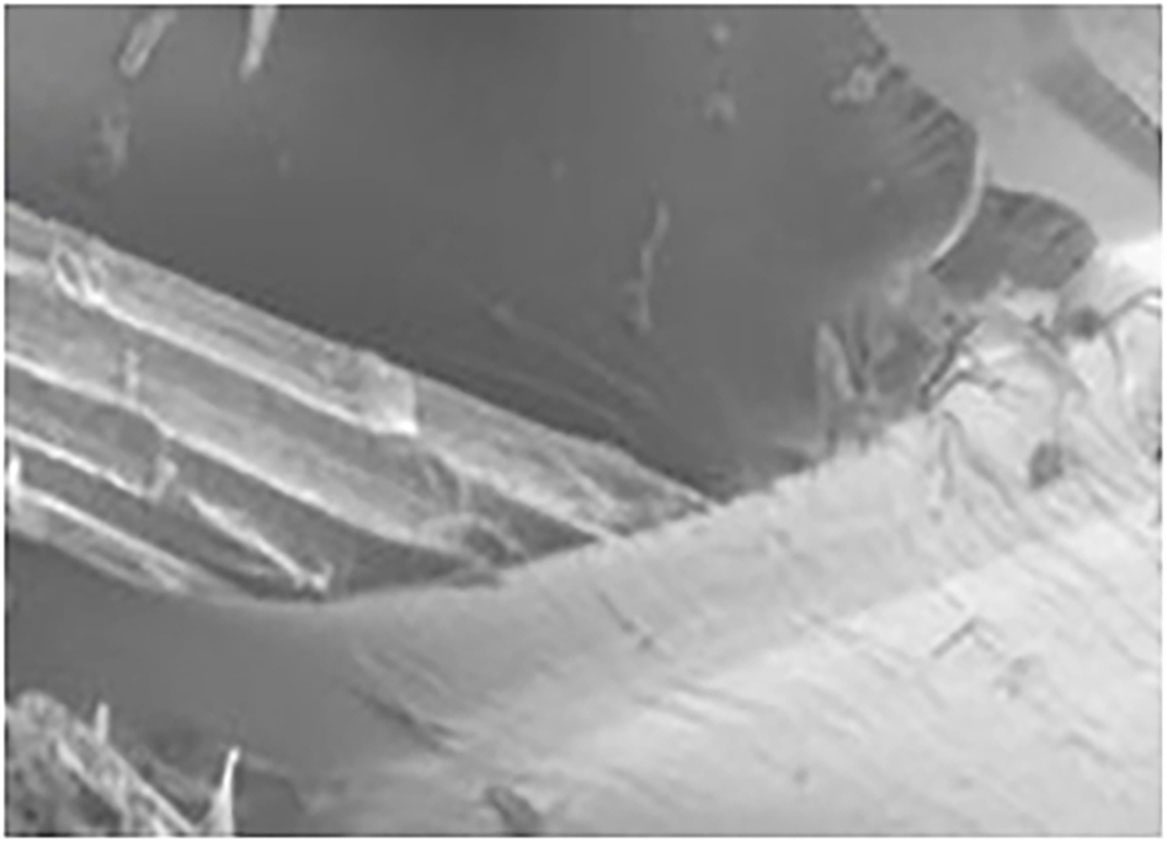
Micrographs of the tested specimens were utilized to examine the fracture's complexity. The fibre has a tendency to curl at longer fibre lengths and fibre breakdown happens in the longitudinal direction, according to images. As the number of fibres rises, the contact between matrix and fibre decreases. As a result, the adhesion between the fibre and the matrix is inadequate. The failure of the specimen can be seen throughout the longitudinal axis of the fibre in this view. The sudden load due to impact on the fibres and matrix, can be seen when looking at the picture closely. Furthermore, the SEM scans demonstrated that the reinforcing fibre was equally spread and oriented randomly. Furthermore, at greater fibre volume fractions, fibre aggregation was seen, resulting in poor matrix-fibre interaction.
4. RESULTS AND DISCUSSION
4.1. Compression testing
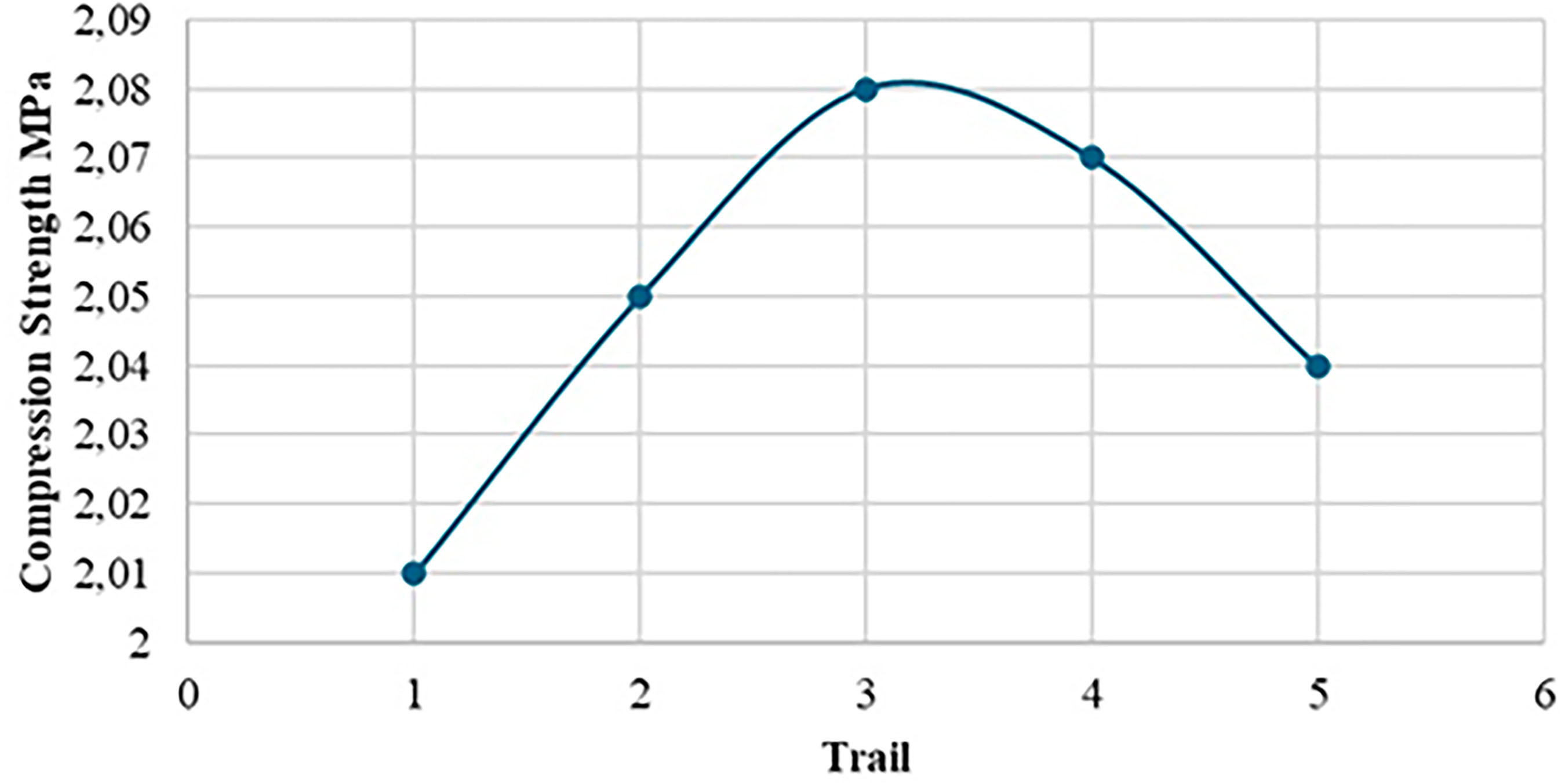
It was looked into how strong epoxy resin composites with different ratios of sisal and abaca fibers were under compression. There was a little increase in compression strength when the amount of sisal fiber rose from 0% to 1.0% and the fraction of abaca fiber decreased. At a sisal fiber concentration of 0.5%, the greatest strength of 2.08 MPa was observed, while at 0% sisal content, the lowest strength of 2.01 MPa was noted. These results show that fiber composition has a little effect on compression strength, indicating that fiber ratios can be used to modify mechanical characteristics in epoxy resin composites. Figure 3 shows the graphical representation of compression strength.

4.2. Tensile strength
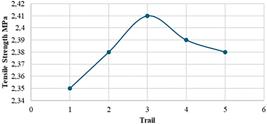
The tensile strength investigation of epoxy resin composites with varying sisal and abaca fiber ratios revealed subtle trends. Incremental changes in sisal fiber content from 0% to 1.0%, coupled with decreasing abaca fiber proportions, exhibited a minor enhancement in tensile strength. The highest strength, recorded at 2.41 MPa, was observed at a 0.5% sisal fiber ratio, while the lowest strength of 2.35 MPa was noted at 0% sisal content. These results suggest a nuanced impact of fiber composition on tensile strength, indicating the potential for tailored mechanical characteristics in epoxy resin composites through controlled adjustments in fiber ratios. Figure 4 shows the graphical representation of tensile strength.
4.3. Flexural strength
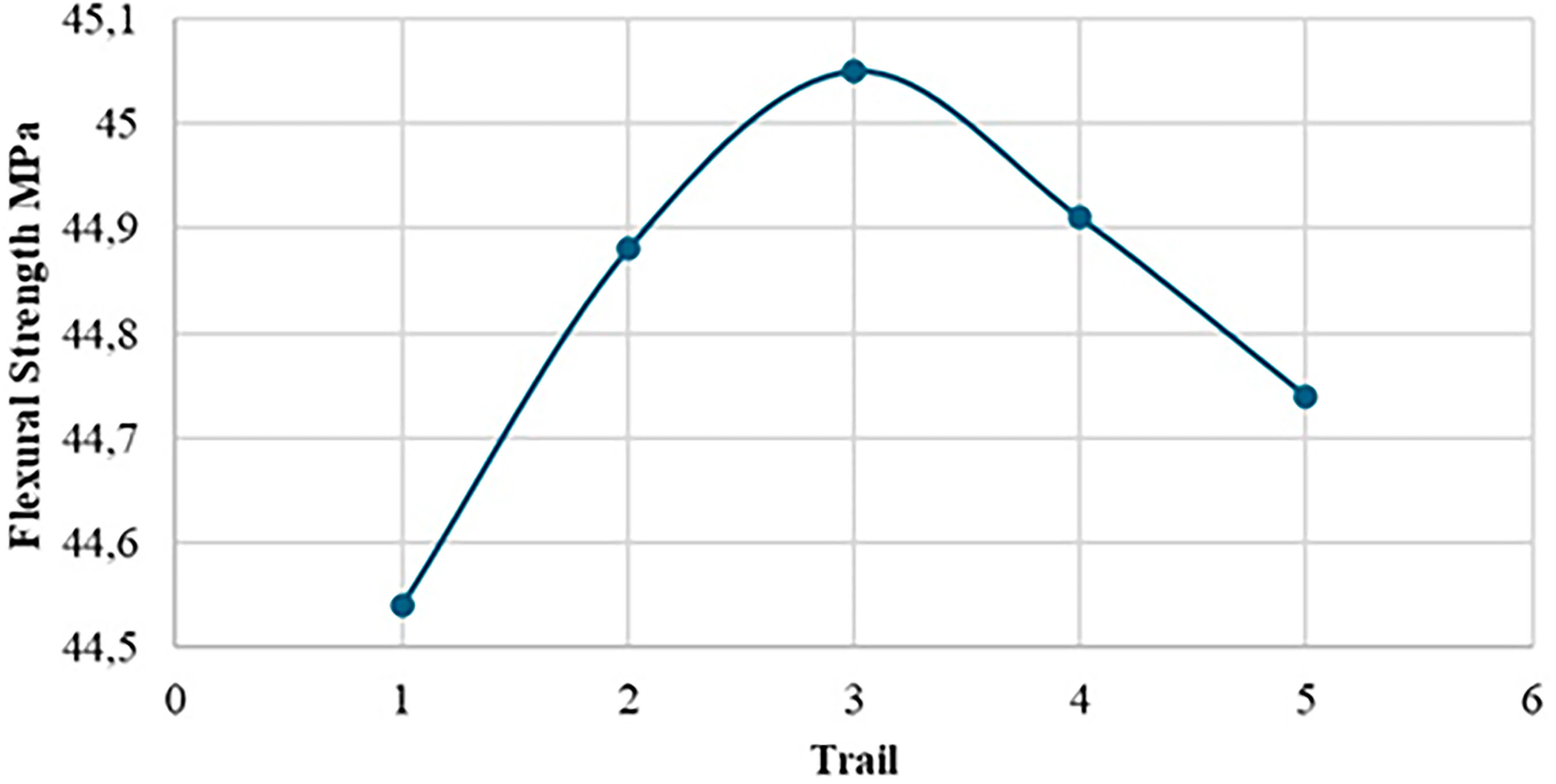
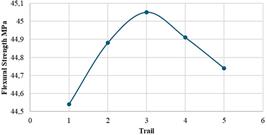
The flexural strength of epoxy resin composites with varied sisal and abaca fiber percentages revealed modest variations. Increases in sisal fiber content from 0% to 1.0%, along with a decrease in abaca fiber proportions, resulted in a moderate improvement in flexural strength. The maximum strength, 45.05 MPa, was observed at a 0.5% sisal fiber ratio, while the lowest, 44.54 MPa, was reported at 0% sisal content. These findings point to a subtle effect of fiber composition on flexural strength, indicating the possibility of customized mechanical characteristics in epoxy resin composites by purposeful fiber ratio modifications. Figure 5 shows the graphical representation of flexural strength.
4.4. Impact strength
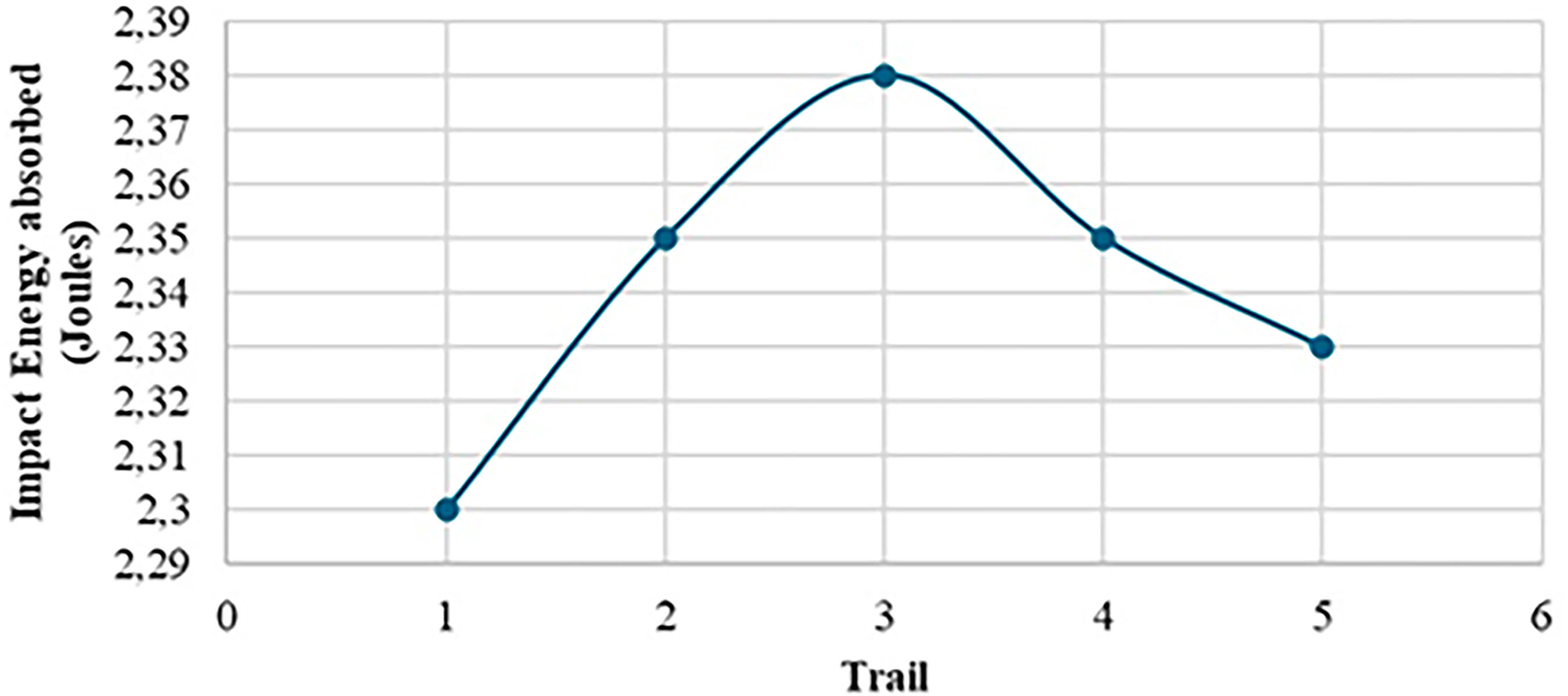
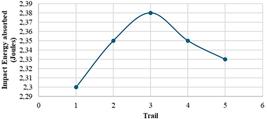
The evaluation of impact energy absorption in epoxy resin composites with various amounts of sisal and abaca fiber showed complex tendencies. Changes in sisal fiber concentration from 0% to 1.0%, along with lower abaca fiber proportions, resulted in a slight improvement in impact energy absorption. The maximum absorption, 2.38 Joules, was measured at a 0.5% sisal fiber ratio, while the lowest absorption, 2.30 Joules, was measured at 0% sisal fiber percentage. These findings point to a refined influence of fiber composition on impact energy absorption, implying the possibility of customized mechanical characteristics in epoxy resin composites by controlled changes in fiber ratios. Figure 6 shows the graphical representation of impact strength.
4.5. Water absorption
The investigation into water absorption in epoxy resin composites, varying in sisal and abaca fiber percentages, displayed minimal variations. As the sisal fiber content increased from 0% to 1.0%, alongside a reduction in abaca fiber proportions, a subtle decrease in water absorption was observed. The lowest water absorption, recorded at 2.27%, was noted at a 0.5% sisal fiber ratio, while the highest absorption of 2.33% occurred at 0% sisal content. These findings suggest a marginal influence of fiber composition on water absorption, indicating the overall resilience of the epoxy resin composites to water penetration across the tested ratios. Figure 7 shows the graphical representation of water absorption.

4.6. SEM analysis
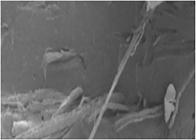
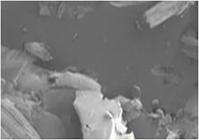
Micrographs of the tested specimens were utilized to examine the fracture's complexity. The test specimens are shown in SEM pictures from Figures 8,9,10,11, to 12. The pictures demonstrate that the composites failure was caused by fibre breakage and withdrawal. This has already been witnessed. The fibre has a tendency to curl at longer fibre lengths and fibre breakdown happens in the longitudinal direction, according to images. Furthermore, as the number of fibres rises, the contact between matrix and fibre decreases. As a result, the adhesion between the fibre and the matrix is inadequate. The sudden load due to impact on the fibres and matrix, can be seen when looking at the picture closely. Furthermore, the SEM scans demonstrated that the reinforcing fibre was equally spread and oriented randomly. At greater fibre volume fractions, fibre aggregation was seen, resulting in poor matrix-fibre interaction.


5. CONCLUSION
The investigation into the composite materials comprising sisal and abaca fibers reveals several significant findings. Across various performance metrics including compression strength, tensile strength, flexural strength, impact energy absorption, and water absorption, the influence of varying proportions of sisal and abaca fibers is evident. Firstly, regarding compression strength, it is observed that as the percentage of sisal fibers increases, there is a marginal decrease in compression strength, while the converse is true for abaca fibers. However, the overall effect on compression strength remains within a relatively narrow range across the trials, indicating a balanced performance between the two fiber types. Similarly, in terms of tensile strength, flexural strength, and impact energy absorption, the trends mirror those observed in compression strength. As the proportion of sisal fibers increases, there is a slight decrease in performance metrics, while the opposite trend is observed with abaca fibers. Nonetheless, the differences in these properties across the trials are minimal, suggesting a consistent and predictable behavior of the composite materials under various loading conditions. The water absorption tests demonstrate that the variations in fiber composition have negligible effects on the moisture uptake capabilities of the composites. This indicates that the hybridization of sisal and abaca fibers does not significantly alter the inherent water resistance properties of the materials. The adhesion between the fibre and the matrix is inadequate. The sudden load due to impact on the fibres and matrix, can be seen when looking at the picture closely. The SEM scans demonstrated that the reinforcing fibre was equally spread and oriented randomly. At greater fibre volume fractions, fibre aggregation was seen, resulting in poor matrix-fibre interaction.
6. BIBLIOGRAPHY
- [1] MANICKARAJ, K., RAMAMOORTHY, R., BABU, M.S., et al, “Bio-fiber reinforced polymer matrix composites: a review”, Turkish Journal of Computer and Mathematics Education, v. 10, n. 2, pp. 740–748, 2019.
- [2] MANICKARAJ, K., RAMAMOORTHI, R., KARUPPASAMY, R., et al., “A review of natural biofiber-reinforced polymer matrix composites”, Evolutionary Manufacturing, Design and Operational Practices for Resource and Environmental Sustainability, pp. 135–141, 2024.
-
[3] JAWAID, M., ABDUL KHALIL, H.P.S., HASSAN, A., et al, “Effect of jute fibre loading on tensile and dynamic mechanical properties of oil palm epoxy composites”, Composites. Part B, Engineering, v. 45, n. 1, pp. 619–624, 2013. doi: http://doi.org/10.1016/j.compositesb.2012.04.068.
» https://doi.org/10.1016/j.compositesb.2012.04.068 -
[4] SATHISH, K., MANICKARAJ, K., KRISHNA, S.A., et al, Integrating sustainable materials in exoskeleton development: a review. AIP Conference Proceedings, v. 3221, n. 1, pp. 020021, 2024. doi: http://doi.org/10.1063/5.0235913.
» https://doi.org/10.1063/5.0235913 -
[5] AMICO, S.C., ANGRIZANI, C.C., DRUMMOND, M.L., “Influence of the stacking sequence on the mechanical properties of glass/sisal hybrid composites”, Journal of Reinforced Plastics and Composites, v. 29, n. 2, pp. 179–189, 2010. doi: http://doi.org/10.1177/0731684408096430.
» https://doi.org/10.1177/0731684408096430 -
[6] GOKUL, S., RAMAKRISHNAN, T., MANICKARAJ, K., et al, 2024. Analyzing challenges and prospects for sustainable development with green energy: a comprehensive review. AIP Conference Proceedings, v. 3221, n. 1, pp. 020043. doi: http://doi.org/10.1063/5.0235884.
» https://doi.org/10.1063/5.0235884 -
[7] GURUSAMY, M., SOUNDARARAJAN, S., KARUPPUSAMY, M., et al, “Exploring the mechanical impact of fine powder integration from ironwood sawdust and COCO dust particles in epoxy composites”, Matéria (Rio de Janeiro), v. 29, n. 3, pp. e20240216, 2024. doi: http://doi.org/10.1590/1517-7076-rmat-2024-0216.
» https://doi.org/10.1590/1517-7076-rmat-2024-0216 -
[8] SRINIVASAN, S.S., MUTHUSAMY, N., ANBARASU, N.A., “The structural performance of fiber-reinforced concrete beams with nanosilica”, Matéria (Rio de Janeiro), v. 29, n. 3, pp. e20240194, 2024. doi: http://doi.org/10.1590/1517-7076-rmat-2024-0194.
» https://doi.org/10.1590/1517-7076-rmat-2024-0194 -
[9] IBRAHIM, I.D., JAMIRU, T., SADIKU, R.E., et al., “Dependency of the mechanical properties of sisal fiber reinforced recycled polypropylene composites on fiber surface treatment, fiber content and nanoclay”, Journal of Polymers and the Environment, v 25, n. 2, pp. 427–434, 2017. doi: http://doi.org/10.1007/s10924-016-0823-2.
» https://doi.org/10.1007/s10924-016-0823-2 -
[10] CHITHRA, N.V., KARUPPASAMY, R., MANICKARAJ, K., et al, “Effect of reinforcement addition on mechanical behavior of Al MMC-a critical review”, Journal of Environmental Nanotechnology, v. 13, n. 2, pp. 65–79, 2024. doi: http://doi.org/10.13074/jent.2024.06.242632.
» https://doi.org/10.13074/jent.2024.06.242632 - [11] KARUPPUSAMY, M., RAMAMOORTHI, R., KARUPPASAMY, R., et al, “Review on fabrication and applications of jute fiber epoxy composite reinforced bio composite”, Journal of Advanced Mechanical Sciences, v. 2, n. 3, pp. 76–81, 2023.
-
[12] NITHYANANDHAN, T., SIVARAMAN, P., MANICKARAJ, K., et al, “Tribological behaviour of aluminium 6061 reinforced with graphite and chicken bone ash by using stir casting”, International Journal of Vehicle Structures & Systems, v. 14, n. 7, pp. 849–854, 2022. doi: http://doi.org/10.4273/ijvss.14.7.04.
» https://doi.org/10.4273/ijvss.14.7.04 -
[13] PALANIAPPAN, S.K., ARUCHAMY, K., BHUVANESHWARAN, M., et al, “Polyacrylonitrile fiber: composites and applications”, In: Rangappa, S.M., Ayyappan, V., Manik, G., et al. (eds), Synthetic and Mineral Fibers, Their Composites and Applications, Sawston, Woodhead Publishing, pp. 269–290, 2024. doi: http://doi.org/10.1016/B978-0-443-13623-8.00009-5.
» https://doi.org/10.1016/B978-0-443-13623-8.00009-5 - [14] MANICKARAJ, K., RAMAMOORTHI, R., SATHISH, S., et al, “Effect of hybridization of novel African teff and snake grass fibers reinforced epoxy composites with bio castor seed shell filler: experimental investigation”, Polymers & Polymer Composites, v. 30, pp. 1–11, 2022.
-
[15] RAMAKRISHNAN, T., MANICKARAJ, K., PRITHIV, S.P., et al, 2024. Advancements in aluminum metal matrix composites: reinforcement, manufacturing, and applications. AIP Conference Proceedings, v. 3221, n. 1, pp. 020030. doi: https://doi.org/10.1063/5.0235881.
» https://doi.org/10.1063/5.0235881 - [16] MANICKARAJ, K., RAMAMOORTHI, R., RAMAKRISHNAN, T., et al, “Enhancing solid waste sustainability with iroko wooden sawdust and african oil bean shell particle-strengthened epoxy composites”, Global NEST Journal, v. 26, n. 1, pp. 05467, 2024.
-
[17] FURTOS, G., SILAGHI-DUMITRESCU, L., PASCUTA, P., et al, “Mechanical properties of wood fiber reinforced geopolymer composites with sand addition”, Journal of Natural Fibers, v. 18, n. 2, pp. 285–96, 2021. doi: http://doi.org/10.1080/15440478.2019.1621792.
» https://doi.org/10.1080/15440478.2019.1621792 -
[18] MANICKARAJ, K., RAMAMOORTHI, R., SATHISH, S., et al, “A comparative study on the mechanical properties of African teff and snake grass fiber-reinforced hybrid composites: effect of bio castor seed shell/glass/SiC fillers”, International Polymer Processing, v. 38, n. 5, pp. 551–563, 2023. doi: http://doi.org/10.1515/ipp-2023-4343.
» https://doi.org/10.1515/ipp-2023-4343 - [19] MANSOR, M.R., SAPUAN, S.M., ZAINUDIN, E.S., et al, “Stiffness prediction of hybrid kenaf/glass fiber reinforced polypropylene composites using rule of mixtures (ROM) and rule of hybrid mixtures (RoHM)”, Journal of Polymer Materials, v. 30, n. 3, pp. 321–334, 2013.
-
[20] FURTOS, G., MOLNAR, L., SILAGHI-DUMITRESCU, L., et al, “Mechanical and thermal properties of wood fiber reinforced geopolymer composites”, Journal of Natural Fibers, v. 19, n. 13, pp. 6676–6691, 2022. doi: http://doi.org/10.1080/15440478.2021.1929655.
» https://doi.org/10.1080/15440478.2021.1929655