 Impact and ballistic performance of hybrid ramie fabric and SiC particle-reinforced epoxy matrix composites
ABSTRACT
Growing environmental awareness has intensified the search for sustainable engineering materials, particularly natural lignocellulosic fiber–reinforced composites. This study evaluates the impact and ballistic performance of hybrid epoxy composites reinforced with ramie fabric and silicon carbide (SiC) particles. The composites incorporated 30 vol% ramie fabric and 0, 5, or 15 vol% of either micrometric (SiC-M) or nanometric (SiC-N) SiC. Impact resistance was evaluated by Izod impact test, while ballistic performance was assessed through limit velocity (VL) and absorbed energy (Eabs) with .45 caliber. The incorporation of SiC significantly affects both impact and ballistic behavior. The composite containing 15 vol% micrometric SiC (R15SiCM) achieved the highest Izod impact strength (111.68 J/m), outperforming the control ramie–epoxy composite (74.51 J/m) while was statistically superior to all other formulations. In ballistics tests, the composite with 15 vol% nanometric SiC (R15SiCN) achieved the highest absolute Eabs (~315 J). However, this performance was accompanied by substantial variability, attributed to nanoparticle agglomeration and processing-induced heterogeneities, as confirmed by SEM fractographic analysis. Conversely, the composite containing 5 vol% micrometric SiC (R5SiCM) demonstrated a favorable balance, combining high ballistic Eabs (200.11 J) with stable specific energy absorption. Overall, moderate loadings of micrometric SiC provided the most reliable enhancement in both impact and ballistic statistical performance, surpassing nanometric fillers whose tendency to agglomerate compromised consistency. These findings highlight the potential of ramie fabric/SiC hybrid composites as sustainable high-performance materials for impact and ballistic protection.
Keywords:
Natural fiber; Silicon carbide reinforcement; Hybrid epoxy nanocomposites; Impact test (Izod); Ballistic performance
1. INTRODUCTION
Recent research has demonstrated that current environmental challenges demand sustainable technological development, in which the costs and energy consumption of material production remains critical concerns for engineering applications [1,2,3]. Therefore, manufacturing must prioritize renewable and biodegradable solutions while addressing these sustainability factors. The growing emphasis on sustainability, driven by socio-economic awareness and the rapid depletion of petroleum resources, has accelerated the search for eco-friendly materials. In this context, waste management has become increasingly important, spurring scientific research into eco-composites. The global availability of natural lignocellulosic fibers (NLF) and agricultural waste has fueled interest in sustainable technologies, with attention to both economic feasibility and energy demands related to industrial production [4,5,6,7,8]. NLF-based composites have gained significant attention due to their ease of cultivation, valorization of waste resources, wide range of applications, and reduced environmental impact compared to synthetic fibers [7,8,9,10].
The combined presence of lignin and cellulose in NLF imparts high flexibility and strength [11,12,13,14,15]. Ramie fiber (“Boehmeria nivea”) is a particularly notable NLF, with reported tensile strength exceeding 1000 MPa [16]. Studies on polymeric matrix composites reinforced with 30% ramie lignocellulosic fibers have reported tensile strengths of 100 MPa [17,18,19,20]. These properties have enabled the production of ramie fabrics and their integration into polymeric matrix composites (PMC) for several applications [21]. The increasing use of PMCs in automotive, construction, and packaging sectors, driven by demand for environmental friendly solutions, has further promoted research on NLF-reinforced materials [22]. Recent studies have also demonstrated that PMCs reinforced with NLFs can achieve levels of ballistic efficiency comparable to synthetic aramid fabrics such as Kevlar™, offering a cost-effective and sustainable solution for protective armor applications [23].
Ramie fibers have also been investigated as reinforcement in ballistic panel concepts, including configurations designed to meet NIJ level II type threat conditions [24]. SEN et al. [25] evaluated its performance relative to Kevlar™ using finite element simulations under identical conditions as target size, boundary constraints, projectile type, and impact velocity. Their results showed that three-layer ramie targets exhibited similar or superior performance to single-layer Kevlar™ targets in both limit velocity and maximum out-of-plane displacement. MUKHAMAD et al. [26] investigated the optimal thickness of a ramie fiber–epoxy and silicon carbide (SiC) ceramic multilayered armor system structure capable of withstanding penetration from a 7.62 × 51 mm NATO projectile. Their study assessed the influence of SiC ceramic layers on back face signature and failure modes. Results demonstrated that increasing the number of SiC layers enhanced ballistic resistance, as indicated by lower back face signature values. The configuration 5SiC + 10R achieved the best performance, resisting penetration with a back face signature of 12 mm. Notably, the use of a NLF such as ramie in the second layer of the multilayered armor system proved effective in resisting projectile impact, showing performance comparable to and, in some cases, exceeding that of existing synthetic fiber materials like KevlarTM.
In addition to fiber selection, advances in composite engineering have shown that incorporating ceramic particles as secondary reinforcements into the polymer matrix can markedly improve the composite performance [27,28,29,30]. This improvement is linked to more efficient and uniform stress transfer between the matrix and fibers, leading to superior mechanical and thermal stability [31,32,33,34]. The present work aims to develop a novel PMC based on ramie fabric reinforced with SiC as a secondary phase. The study focuses on assessing the impact and ballistic performance of these SiC-reinforced PMCs, hereafter referred to as hybrid composites [35].
2. MATERIALS AND METHODS
2.1. Materials
The polymer matrix consisted of a diglycidyl ether of bisphenol A (DGEBA) epoxy resin, (Dow Chemical do Brasil), commercialized by Epoxyfiber (Brazil), and cured with triethylenetetramine (TETA) using a stoichiometric mass ratio of 100:13 (epoxy:TETA). The density of the cured system was 1.10 g/cm3 [36]. The reinforcement consisted of a ramie fabric supplied by Di Palma Tecidos (Brazil), featuring a plain-weave architecture and an areal density of ~280 g/m2. Individual ramie fibers exhibited an average thickness of 0.05 mm and density of 1.49 g/cm3, with variability below 10% [36]. SiC powders were introduced as secondary reinforcement in two size ranges: (i) a micrometric-grade powder (SiC-M; purity >98%, Kymera) with particle sizes of 0.5–0.9 μm; and (ii) a nanometric-grade powder (SiC-N; average particle size 40 nm, purity 99%, Skyspring). The density of SiC was taken as 3.21 g/cm3 [37].
2.2. Hybrid composite production
Hybrid composite plates were fabricated with 30 vol% ramie fabric (40 fabric layers) and 5 and 15 vol% of either, micro and nano SiC, using a hand lay-up process followed by compression molding [38]. A steel mold with internal dimensions of 150 × 120 × 12 mm3 was employed. The epoxy resin and SiC powders were initially blended for 15 min using a high-speed mechanical stirrer to promote particle dispersion [35, 38]. No sonication or surfactant treatment was applied in the present study, which is acknowledged as a limitation, particularly for nanometric SiC. The fabric layers were sequentially placed in the mold, and the resin–SiC mixture, combined with the hardener, was poured to fully impregnate the reinforcement.
The laminate was consolidated under a compressive load of 5 tons using a hydraulic press and cured at room temperature (RT) for 24 h. Although all plates were manufactured using identical mold dimensions, number of fabric layers and fiber architecture, variations in the final panel mass were observed. These differences are primarily attributed to fillerdependent changes in resin viscosity, which influence impregnation efficiency, resin uptake, and void formation. In particular, higher SiC contents increase resin viscosity and limit effective fabric wetting, leading to nonuniform impregnation. As a consequence, local density and the overall panel mass vary across the different formulations. Sample nomenclature and compositions are summarized in Table 1.
2.3. Scanning electron microscope (SEM)
SiC powders morphology and the fracture surfaces of the hybrid composites were characterized by secondary-electron SEM imaging and energy-dispersive X-ray spectroscopy (EDS) using a Quanta FEG 250 scanning electron microscope (FEI Company) housed at the Electron Microscopy Laboratory of IME. For sample preparation, SiC powders were dispersed in deionized water (0.01 vol%) and magnetically stirred for 1 hour to ensure uniform dispersion. The suspension was deposited onto brass stubs and subsequently dried in an oven at 80 °C for 72 hours. Both the dried powder mounts and the post-test Izod fracture specimens were sputter-coated with a thin Au layer (Leica EM ACE 600; r 1 min) immediately prior to observation.
2.4. Izod impact test
Following ASTM D256, the specimens were machined into bars measuring 63.5 × 12.7 × 10 mm, which served as the base for the Izod impact test samples. Testing was performed at RT using a Pantec XC-50 pendulum impact tester (located at the State University of Northern Rio de Janeiro, Brazil) in the Izod configuration. A hammer with a 11 J capacity was used to measure impact energy. Ten specimens per condition were tested, and the results were statistically analyzed.
2.5. Ballistic test
Ballistics tests were performed at RT at the Ballistic Testing Laboratory of IME (Military Institute of Engineering, Rio de Janeiro, Brazil). A pre-charged pneumatic rifle (Airforce Texan) was employed to launch .45 caliber lead projectiles with an average mass of 14.4 g. The impact and residual velocities were recorded using two ProChrono Pal ballistic chronographs (accuracy ±0.31 m/s) positioned 10 cm upstream and 10 cm downstream of the target, respectively. The rifle-to-target stand-off distance was 5 m.. The ballistic limit velocity (VL) was defined as the minimum impact velocity required to achieve complete penetration. The absorbed energy (Eabs) was calculated using Eq. (1), and VL was determined according to Eq. (2), where mp is the projectile mass, vi is the impact velocity, vr is the residual velocity, and Eabs* is the baseline energy loss measured without a target plate.
2.6. Statistical analysis
Statistical analyses were performed using Minitab®. For both Izod and ballistics tests, data normality was verified using the Anderson–Darling test, and homoscedasticity was assessed via Levene’s test. All datasets satisfied analysis of variance (ANOVA) assumptions (α = 0.05).
One way ANOVA was applied to detect significant differences between composite formulations, followed by Tukey’s post-hoc test for a pairwise comparisons. Sample sizes were n = 10 for Izod tests and n = 5 for ballistics tests. Effect sizes were estimated using η2 (eta-squared) to quantify the influence of SiC content and particle size on performance metrics. Mass variability was not treated as a controlled variable but as an inherent outcome of processing conditions associated with filler type and content.
3. RESULTS AND DISCUSSION
3.1. SiC morphology
SEM characterization of particle shape and size (Figure 1) show that SiC-M powder consists of equiaxed particles in the micrometric range (0.5 and 0.9 μm), with a predominantly irregular, angular morphology. Such sharp-edged features are consistent with comminution routes (e.g. grinding) commonly used in the production of SiC powders. In this context, Li et al. [39] systematically evaluated the effects of particle gradation and dry ball milling on the blended SiC micropowders and the microstructure-related attributes of Si/SiC ceramics consolidated by spark plasma sintering. Three SiC micro-powders with different particle sizes were blended, and the particle gradation was further modified through dry ball milling. The effects of milling time on morphology and several other properties were subsequently analyzed in Si/SiC ceramic samples fabricated via spark plasma sintering. SEM analyses showed that short milling time results in irregular shapes, with a higher incidence of sharp cusps and edges. At prolonged milling (>48 min), the powder morphology became more regular again, with a marked reduction in sharp-edged particles and a significant decrease in both particle size and size variation [39].

The SEM micrography in Figure 2 confirm the nanoscale dimensions of SiC-N particles, revealing that the powders consist of agglomerated, yet discrete nanoparticle clusters. A predominantly rounded morphology with particle size around 50 nm was observed, distinct from the angular particles of SiC-M. LI et al. [39] affirmed that this rounded shape also resembles the typical morphology of SiC particles synthesized via mechanochemical methods [40]. Gonçalves et al. [41] studied the microstructural evolution of liquid-phase-sintered SiC at 1800–1900°C using Al2O3-Y2O3 additives (5–15 wt%). Their light microscopy analysis of the same commercial powder identified a similar rounded morphology, which they called “alveolar”. Further supporting this observation, OVALI-DÖNDAŞ [42] demonstrated that mechanochemical processing at RT produces analogous rounded SiC-VSi2 nanocomposite powders. Their work presents a rapid, energy-efficient route for synthesizing such morphologies, characteristic of high-energy milling processes. The authors also note that this structural evolution is widely reported in derived advanced ceramics systems.

3.2. Impact test
As shown in Table 2, samples reinforced with ramie fabric exhibited higher impact absorbed energy (Eabs) than neat epoxy (~20 J/m), as reported in the literature, confirming an improvement in material toughness [23]. In this table the R15SiCM achieved the highest absorbed energy (111.68 J/m), statistically significant compared to other groups (Tukey’s test, 95% confidence level). Composites containing 5% SiC compositions (R5SiCM, R5SiCN) exhibited moderate Eabs of 88.65 and 79.90 J/m, respectively, indicating enhanced performance at lower filler volumes. Higher SiC-N contents led to divergent mechanical outcomes. While R15SiCM showed peak performance, likely due to improved particle-matrix interaction, R15SiCN exhibited lower Eabs (70.24 J/m), possibly as a consequence of nanometric particles agglomeration at higher filler content. This agglomeration-associated performance reduction may promote viscosity-driven delamination, thereby hindering uniform fabric impregnation. Consequently, the higher standard deviations observed for R5SiCN (29.26 J/m) and R15SiCN (25.21 J/m), indicate inconsistent sample quality when nanometric fillers are employed without an advanced dispersion technique.
The ANOVA of results in Table 2 revealed significant differences among groups (p < 0.05, η2 = 0.52), indicating a strong effect of filler type and content. Tukey’s test from results in Table 3 showed that only R15SiCM was significantly different compared from others. The superior performance of R15SiCM is attributed to effective stress transfer and crack deflection promoted by SiC-M particles, which enhance matrix toughness without severely impairing fabric impregnation. In contrast, formulations containing SiC-N exhibited significant variability, particularly at 15 vol%, reflecting agglomeration and viscosity-driven delamination that compromised impact consistency.
Although nanometric fillers may increase variability at higher loadings, micrometric fillers consistently provided a notably more uniform enhancement in impact strength under the present experimental conditions. Compared with values reported in the literature, the confidence interval (CI) for R15SiCM was consistently wider than those reported in many recent studies. PEREIRA et al. [43] investigated the incorporation of graphene oxide (GO) to improve the impact and ballistic resistance of ramie fabric-reinforced composites containing 30 vol% ramie. The addition of 0.2 vol% GO into epoxy resulted in a 21 % increase in Izod impact strength, reaching ~60 J/m, at the expense of high variability, a value very close to that of the R sample in this work. GIRIMURUGAN et al. [44] evaluated banana fiber-reinforced epoxy composites (65 wt % matrix) with 2–6 wt % Camellia sinensis particles. The addition significantly improved Rockwell hardness, but Izod impact energy and impact strength were reduced. The optimal balance was obtained at 4 wt % Camellia sinensis (31 wt % banana fiber), where hardness peaked without excessive brittleness. However, the best impact resistance in their study was achieved with 35 wt % fiber content, reaching ~40 J/m, which remains substantially lower than the performance recorded for R15SiCM in the present work. These comparisons clearly demonstrate that SiC-M fillers, not only enhance the mechanical robustness of our NLF composites, but enable R15SiCM to surpass the impact resistance levels typically reported for comparable systems with similar fiber volume fraction, including those optimized with advanced nanofillers or alternative natural fibers.
3.3. Ballistic test
Table 4 summarizes the ballistic evaluation results and illustrates the distinct performance characteristics among the tested composites. Among the evaluated systems, R15SiCN demonstrated the highest absolute Eabs (~315 J); however, this result was accompanied by a substantial standard deviation (±33.39 J), indicating pronounced sample inconsistency. This variability is commonly attributed to processing challenges, particularly the high viscosity of the epoxy/SiC-N mixture, which hindered proper fabric impregnation and led to the formation of heterogeneous regions within the composite. In contrast, R5SiCM exhibited more consistent Eabs (200.11 ±11.31 J), suggesting that 5% SiC-M particles provided effective reinforcement while avoiding the processing complications observed at higher filler concentrations, although no statistically significant difference was observed under the present experimental conditions. The control sample R (182.14 ±8.41 J) established baseline performance for the ramie-epoxy system, while R5SiCN showed reduced Eabs (165.41 ±8.17 J), likely due to nanoparticle agglomeration creating localized stress concentrations.
KUMAR et al. [45] investigated the ballistic performance of hybrid jute-Kevlar epoxy composites for armor applications. They identified a configuration consisting of 20 layers of jute composite impregnated with resin as a high-performance configuration, achieving a VL of 280 m/s and Eabs of 288.79 J. Notably, in this work, the total thickness of the ramie fabric laminate was substantially lower than KUMAR et. al. [45], being approximately 0.05 mm per layer, with a total of 40 layers.
KAR et al. [46] highlight the importance of bio-inspired woven fabrics, multilayered fabrics, hybrid fabrics and the role of polymers matrices in the manufacturing of personal protective armor, helmets and related protective items. The authors also report that the Eabs of the composites reinforced with kenaf fabric are below 50 J [47]. MAHESH et al. [48] investigated the ballistic impact response of a novel green-compliant composite, comprising naturally available jute fiber, rubber-based prepreg, and natural rubber layers, by comparing their performance with traditional stiff jute-epoxy composites. The results demonstrated that the compliant hybrid composite of (Jute/Rubber/Jute/Rubber/Jute) achieved the highest Eabs of 38.72 J and VL of 88 m/s, significantly outperforming stiff Jute-Epoxy composites (e.g., JE10 at 16.82 J). Furthermore, the work of SHIH et al. [49] on the ballistic impact resistance of aramid fabric reinforced with shear-thickening fluids, epoxy, or elastomers confirmed that seven layers of KevlarTM exhibited lower impact performance than achieved in the present work.
The statistical analysis of the Eabs results presented in Table 5 revealed significant differences among groups (p < 0.01, η2 = 0.63). The one-way ANOVA, followed by Tukey’s post-hoc test, indicated that only R15SiCN was statistically superior in terms of Eabs. Although R15SiCN exhibited the highest mean Eabs among all formulations (≈315 J), this result was accompanied by a markedly high standard deviation (±33.39 J), indicating pronounced variability in ballistic performance. From a statistical standpoint, ANOVA and Tukey’s test confirmed the superiority of R15SiCN based solely on mean Eabs values; however, a deeper interpretation reveals that this statistical significance does not necessarily translate into reliable or predictable ballistic behavior.
The pronounced scatter measured for R15SiCN is consistent with the processing-induced heterogeneities that become more critical at high loadings of SiC-N. At 15 vol% SiCN, the resin–particle suspension exhibited a substantial increase in viscosity, which can hinder wettability and reduce the effectiveness of shear-driven deagglomeration during mixing and consolidation. Under these conditions, locally concentrated nanoparticle clusters may persist and act as intrinsic defects, disrupting load transfer between the fibers and the matrix while amplifying local stresses concentration. Such stress concentration promotes preferential crack initiation and highly localized damage evolution, rendering the dominant failure sequence strongly specimen-dependent. As result, the Eabs spans a wide range. Indeed, some specimens exhibit progressive damage accumulation and dissipate higher energy levels, whereas others fail prematurely once cracking localizes at defect-rich regions, thereby widening the confidence interval.
This variability directly influences the interpretation of the FCritical (p-value). While the mean absorbed energy of R15SiCN is statistically higher, the substantial within-group variance reduces the robustness of this conclusion when evaluated from an engineering perspective. In practical ballistic applications, reproducibility and performance predictability are as critical as peak energy absorption. Therefore, the high variance associated with R15SiCN limits its immediate applicability in ballistic armor systems that require consistent and reliable impact.
Effect size analysis further reinforces this interpretation. The high η2 value (0.63) obtained for ballistic Eabs confirms that both SiC type and filler content exert a strong influence on system performance. Nevertheless, effect size alone does not adequately capture the dispersion of results. When variability is considered alongside effect magnitude, R15SiCN emerges as a formulation with high potential, but limited reliability. From a design standpoint, especially in ballistic armor applications, materials with slightly lower peak performance and reduced variability are often preferred over systems with higher average performance and poor reproducibility. Conversely, R15SiCN should be regarded as a high-performance but processing-sensitive system, whose full potential can only be attained with improved dispersion strategies, such as sonication, surface functionalization, or rheological control of the matrix.
Figure 3 presents a graphical representation of the statistical analysis performed to evaluate significant differences in Eabs among the tested groups. Based on this analysis, the application of Tukey’s post-hoc test was justified to identify which specific groups presented statistically significant differences. When the interval of the Eabs values does not cross the zero reference line, the corresponding group means are considered statistically different. Accordingly, statistically significant differences were identified for the following comparisons involving R, R5SiCN, R5SiCM and R15SiCN.

Multiple comparisons of mean energy absorption in ballistic test using Tukey’s test with 95% confidence intervals.
The statistical analysis of Table 5 and Figure 3 already identified R15SiCN as the superior formulation in terms of Eabs. This result gains additional significance when contextualized within recent literature [23, 50–56]. Figure 4 compiles Eabs values reported in several studies on NLF–reinforced composites tested under similar ballistic conditions. In general, the Eabs values reported for caranan fiber [23], raffia fabric [50], titica vine fiber [51], babassu fiber [52], sedge fiber [53], cannabis sativa hemp fabric [54], tucum fiber [55], fique fabric [56] and others NLF-based laminates that vary between ~70 and 220 J, depending on fiber fraction and processing route.

Comparison of R15SiCN (golden star) with recent studies reinforced with natural fibers: SILVA et al. [50], Raffia fabric; CUNHA et al. [51], Titica vine fiber; CHAVES et al. [52], Babassu fiber; NEUBA et al. [53], Sedge fiber; RIBEIRO et al. [54], Cannabis sativa hemp fabric; OLIVEIRA et al. [55], Tucum fiber; OLIVEIRA et al. [56], Fique fabric; SOUZA et al. [23], Caranan fiber.
Against this backdrop, the Eabs of the R15SiCN plates, reaching approximately 315 J, stands out as one of the highest values reported to date for NLF-reinforced ballistic composites. This comparison is particularly striking when considering that comparable formulations with 20–30 vol% fiber fractions rarely exceed 200 J in other studies. The incorporation of SiC-N particles into the ramie fabric matrix appears to significantly enhance energy dissipation during impact, possibly through improved particle–polymer interfacial interactions and more efficient stress transfer across the hybrid reinforced system. Despite the processing challenges associated with high filler contents, the present results place R15SiCN among the most promising NLF-reinforced composites for ballistic protection. These findings underscore the potential of combining ramie fabrics with nanoscale ceramic SiC reinforcements to surpass the performance of conventional NLF-based laminates.
In the current state of the art, the standard deviation in ballistic absorbed energy should be interpreted primarily as a measure of reproducibility under dynamic loading, rather than a simple experimental noise. The ballistic response is well known to be highly sensitive to small microstructural and consolidation variations, especially when the laminate operates in a high Eabs-regime. The comparative plot in Fig.4 shows a clear tendency that mean Eabs values exceeding 200 J are generally associated with larger error bars, indicating that higher protection levels are often attained at the expense of greater statistical scatter. This pattern is consistent with literature datasets explicitly reporting dispersion, such as Chaves et al. [52] (203 ± 26 J and 209 ± 55 J), where the relative scatter reaches ~12.8% and ~26.3%, respectively. The phenomenon is also evident at lower energy levels as reported by da CUNHA et al. [51] (84 ± 8.42 J and 70 ± 9.14 J), corresponding to ~10.0% and ~13.1% relative dispersion, respectively.
In this context, the present variability observed for R15SiCN (≈315 ± 33 J) corresponds to ~10.8%. This level of variation should not be interpretated as an outlier. Instead, it falls within the typical range when compared to values reported in the literature, particularly for materials with high Eabs. In fact, the variability is comparable, or even lower than, several previously reported high performance systems. Importantly, despite this dispersion, R15SiCN still achieves the highest average absorbed energy among all the configurations evaluated. From a practical perspective, this analysis reinforces that scatter is not exclusive to R15SiCN, but instead represents a recurring characteristic of composite systems operating at elevated Eabs level. Indeed, as Eabs increases, the composite performance becomes more sensitive to local heterogeneities (e.g., porosity, incomplete impregnation zones, and non-uniform reinforcement distribution), which can shift the dominant failure sequence from specimen-to-specimen basis and consequently broaden confidence intervals. Accordingly, within the set of benchmarked materials, R15SiCN stands out as the most effective configuration in terms of absolute ballistic Eabs. Although some variability is observed in its results, this should not be viewed as an isolated anomaly. Instead, such dispersion is commonly associated with high-performance composite systems designed for elevated protection levels, where complex failure mechanisms naturally introduce variability. Therefore, the observed scatter is better understood as an inherent characteristic of these materials rather than a limitation of the specific configuration.
3.4. Failure mechanisms in SEM analysis
The performance of a hybrid composite is primarily governed by two key factors: interfacial stress transfer and laminate architecture (i.e. fiber orientation and stacking sequence). Together, these parameters control how loads are redistributed within the material and how damage initiates and evolves [57, 58]. In ceramic-filled NLF composites subjected to impact/ballistic loading, the energy absorption results from a combination of interacting mechanisms. These include matrix cracking, interlaminar delamination, and fiber fracture or pull-out. In addition, ceramic particles can contribute by deflecting cracks, thereby altering the damage propagation path and enhancing energy dissipation [58, 59]. The relative contribution of each mechanism depends not only on laminate design and fiber-matrix adhesion, but also on the microstructural quality achieved during processing. Defects such as fiber waviness, voids, or particle agglomeration can shift the dominant failure mode. As result, they tend to increase variability in the mechanical response and reduce overall reliability [60]. For this reason, parameters such as particle size, dispersion quality, and resin rheology during processing are critical. These factors directly influence microstructural uniformity, which determines both the magnitude of the mechanical performance and the reproducibility of the mechanical the results [61].
Fractographic analysis of the control composite (R), shown in Figure 5, reveals two dominant failure mechanisms: longitudinal and transversal fiber pull-out as well as brittle matrix fracture characterized by well-defined river markings. Elongated fibers and pull-out traces observed in Figures 5a and 5b indicate partial interfacial debonding and frictional energy dissipation, whereas the river markings visible in Figures 5c and 5d reflect rapid crack propagation through the epoxy matrix [62, 63]. Such coexistence of mechanisms is typical of laminated NLF composites subjected to impact loading, where cracks preferentially propagate along regions of stress concentration and weaker interlaminar bonding [58, 64]. The fracture morphology observed in Figure 5 is therefore consistent with delamination-driven failure modes, widely reported for polymeric laminates under dynamic loading conditions [61–65,66].

Fractographic electron microscopy analysis of the control composite (R) after impact loading: a) longitudinal fiber pull-out with elongated fibers at 200x, indicating partial interfacial debonding and frictional energy dissipation; b) pull-out traces left in the epoxy matrix at 1000x; c–d) brittle matrix fracture characterized by well-defined river markings, evidencing rapid crack propagation through the polymer matrix at 500 and 1000x.
Figure 6 illustrates a distinct transition in failure behavior for the R5SiCM formulation. In this case, transverse fiber pull-out is less pronounced. Figures 6a and 6b show shorter transverse fibers segments, indicating that fibers tend to fracture closer to the matrix interface, rather than be extracted from the matrix by pull-out. At the same time, a higher density of voids is observed. Concurrently, Figures 6c and 6d show an intensification of brittle matrix fracture and river markings extending across most of the fractured surface. This change in behavior suggests improved interfacial adhesion promoted by the addition of SiC-M, which enhance stress transfer and restrict interfacial sliding [67, 68]. However, this improvement is accompanied by processing-related drawbacks. The incorporation of ceramic SiC particles increases resin viscosity, which hinders effective fiber wetting and impregnation. As a result, the porosity level increase, negatively affecting the overall microstructural quality of the hybrid composite [69, 70].

Electron micrographs of R5SiCM’s fracture surface after impact testing: a–b) reduced transverse fiber pull-out with short fractured fibers at 200 and 1000x and the presence of voids associated with possible viscosity-induced porosity; c–d) intensified brittle matrix fracture with a high density of river markings at 500 and 1000x, indicating improved stress transfer and crack deflection promoted by micrometric SiC particles.
The increase in the density of river marks observed in Figure 6 can be further explained by the EDS analysis presented in Figure 7, which demonstrates a relatively homogeneous dispersion of SiC-M. This uniform particle distribution modifies crack propagation paths by increasing crack tortuosity, thereby promoting brittle matrix fracture and fiber breakage, rather than extensive transverse fiber pull-out. A similar crack deflection mechanism was reported by Mizapour et al. [71] in epoxy composites reinforced with carbon nanotubes, as evidenced by their fractography analysis. Although this mechanism improves stiffness and enhances Eabs under impact loading, it also introduces a critical drawback. The laminate becomes more sensitive to microstructural defects, such as voids and resin-rich regions, which act as preferential sites for crack initiation and subsequent propagation [72, 73].

Microstructural and elemental analysis of the R5SiCM composite fracture surface: a) secondary electron (SE) image at 3000× magnification; b) corresponding EDS elemental mapping for silicon (green), evidencing a homogeneous dispersion of micrometric SiC particles throughout the matrix.
Figure 8 demonstrates that processing-induced defects becomes more pronounced at higher contents of micrometric filler. The R15SiCM formulation exhibits the same dominant failure mechanisms observed in R5SiCM, but with a substantially higher void density, as illustrated in Figures 8a and 8b. These defects are primarily attributed to the increased viscosity of the resin–particle mixture. As the filler content rises, the mixture becomes progressively more difficult to process, which can introduce defects during laminate consolidation and promote premature fracture [74, 75]. Additionally, Figures 8c and 8d reveal river marks concentrated around regions of longitudinal fiber pull-out, forming radial patterns emanating from localized stress-concentration sites. Although the R15SiCM composite exhibits enhanced interfacial adhesion, as evidenced by reduced transverse fiber pull-out, the high porosity ultimately governs the failure behavior. This condition leads to increase result scatter, contributing to greater statistical variability in the measured mechanical and ballistic performance [76].

Fractographic electron microscopy features of R15SiCM: a–b) 100x and 200x of high density of voids generated during processing due to increased resin viscosity; c–d) 1600 and 3000x of river markings concentration around longitudinal fiber pull-out regions, forming radial patterns associated with stress concentration and crack initiation sites.
Figure 9 presents the EDS elemental mapping of the R15SiCM composite. Despite the high SiC content, particle agglomeration remains limited. This behavior may be associated with the micrometric particle size of SiC-M contributing to the reduced agglomeration as the particle clustering observed on SiC-N SEM analysis of Figure 1. However, this interpretation should be treated with appropriate caution. The relatively uniform particle distribution provides a plausible explanation for the consistent fracture mechanisms observed across the laminate thickness. Nevertheless, it is proposed that the large standard deviations observed in both Izod impact and ballistics tests are not primarily attributed to particle agglomeration. Instead, they are more plausibly associated with the increased density of voids (Fig 8 a–b) introduced during processing of the high-viscosity resin-particle system. These findings reinforce the critical role of resin flow behavior and effective impregnation, as both directly govern microstructural integrity and, consequently, the reliability and reproducibility of hybrid composite performance [76,77,78].

Microstructural and compositional characterization of the R15SiCM composite: (a) secondary electron (SE) image at 3000× magnification highlighting fracture features; b) EDS elemental mapping for silicon (blue) and carbon (red) demonstrating uniform distribution of micrometric SiC particles without evidence of agglomeration.
In contrast, Figure 10 shows that the R5SiCN formulation preserves the previously identified dominant failure mechanisms, such as fiber pull-out, river markings, and void formation. However, Figures 10b and 10d reveal the presence of relatively large voids, with sizes ranging from approximately 70 to 150 μm. Moreover, R5SiCN exhibits more pronounced transverse fiber pull-out compared with the RM-series, indicating weaker interfacial adhesion. The lower density of river marks, relative to R5SiCM, suggests reduced crack deflection efficiency and less effective stress redistribution. This behavior is consistent with inadequate dispersion of nanometric particles, which ultimately contributes to the observed degradation in mechanical performance [71].
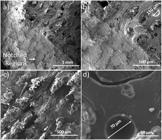
Electron micrographs of R5SiCN’s fracture surface: (a–d) coexistence of longitudinal and transverse fiber pull-out, brittle matrix fracture, and large processing-induced voids, with void sizes ranging from approximately 70 to 150 μm, indicating reduced interfacial adhesion and compromised laminate integrity.
This interpretation is directly supported by the silicon EDS elemental mapping presented in Figure 11, which clearly reveals a non-homogeneous nanoparticle distribution and the presence of large SiC agglomerates. These agglomerates act as intrinsic structural defects, locally concentrating stresses and disrupting efficient load transfer between fibers and matrix. As a result, regions surrounding the agglomerates become preferential sites for crack initiation and premature failure. This type of behavior is widely reported for nanoparticle-filled polymer composites processed without dedicated dispersion strategies, such as ultrasonic sonication, surface functionalization, or highshear mixing [79, 80].

Microstructural and elemental analysis of the R5SiCN composite fracture surface: a) secondary electron image at 3000× magnification; b) EDS elemental mapping for silicon (green) revealing non-homogeneous nanoparticle dispersion.
Figure 12 demonstrates that the detrimental effect of poor nanoparticle dispersion is most evident in the R15SiCN formulation. The fracture surfaces reveal a combination of competing failure mechanisms, in which massive fiber pull-out (Figure 12a) occurs alongside regions dominated by brittle matrix fracture and fiber rupture without pull-out (Figure 12b). Fiber pull-out is widely reported as a dominant energy dissipation mechanism in ballistic laminate composites, primarily through frictional resistance generated during interfacial sliding under impact loading conditions [81, 82]. This mechanistic framework helps to rationalize the present results. Despite the higher areal mass, the material still achieves relatively high ballistic Eabs (~300 J). In contrast, the Izod impact performance remains comparatively low (~70 J) and exhibits greater sensitivity to variability, with standard deviations of approximately ~35 J for ballistic-Eabs and 25 J Izod-Eabs [81, 82].

Fractographic electron microscopy of R15SiCN composite a) regions exhibiting massive fiber pull-out, indicative of weak interfacial bonding; b) fiber rupture without pull-out and high porous density; c-d) areas dominated by brittle matrix fracture, revealing heterogeneous failure mechanisms and explaining the high variability observed in mechanical and ballistic performance.
Notably, although R15SiCM presents the same nominal filler content as the RM-series, it does not reproduce the interfacial improvements observed in the R15SiCM. This observation suggests that the mechanisms responsible for enhanced performance in SiC-M filled compositions are not effectively activated in the high loading RN-series. Instead, the fracture surfaces retain a similarly and predominantly brittle character, as evidenced in Figures 12c–d, indicating that nanoparticle agglomeration and processinginduced defects dominate the failure response [83].
Figure 13 further underscores the pronounced heterogeneity in filler dispersion, with SiC aggregates of approximately 10 μm in size. This microstructural heterogeneity helps explain the high standard deviations observed in mechanical and ballistic performance, as distinct and competing energy dissipation mechanisms operate simultaneously within the same laminate. Specifically, regions with welldispersed nanoparticles can effectively contribute to interfacial reinforcement and energy dissipation, whereas areas dominated by SiC agglomerates act as intrinsic defects. The coexistence of contrasting microstructural regimes leads to competing energy dissipation mechanisms within the same laminate, thereby reducing the overall consistency and predictability of the material response. SAMAD et al. [80] reported closely related behavior, through SEM analysis, that higher nanoparticle loadings promote agglomeration due to enhanced particle–particle interaction. Such interactions adversely affect the final product, in terms of its properties and the curing process. Consequently, this microstructural instability might be one of the primary factors contributing to the pronounced variability observed for the R15SiCN performance.

Microstructural and elemental analysis of the R15SiCN composite fracture surface: a) secondary electron image at 3000× magnification showing voids, fiber pull-out, and interfacial features; b) EDS elemental mapping for carbon (red) and silicon (green) revealing non-homogeneous nanoparticle dispersion and the presence of micrometric agglomerates.
When positioned within the broader field of ceramic-reinforced NLF composites, these results reinforce a consistent trend reported for Al2O3, SiO2, and SiC-filled systems. Namely, nanometric ceramic fillers may provide higher upper-bound mechanical or impact performance, but often at the expense of increased processing complexity, higher sensitivity to dispersion quality, and reduced reproducibility. Conversely, micrometric fillers tend to promote more uniform stress redistribution, lower data scatter, and greater manufacturing robustness, particularly in laminated composite systems where resin viscosity, fiber wetting, and void control are already critical challenges [84, 85].
4. SUMMARY AND CONCLUSIONS
This study evaluated the impact and ballistic performance of hybrid epoxy laminates reinforced with 30 vol% ramie fabric and silicon carbide (SiC) as a secondary reinforcement phase, comparing micrometric (SiCM) and nanometric (SiCN) powders at 0, 5, and 15 vol%. Impact resistance was assessed by Izod testing, while ballistic performance was quantified through the ballistic limit velocity (VL) and absorbed energy (Eabs) under .45 caliber projectile and the following conclusions can be summarized:
-
The hybrid composite demonstrated strong potential for those applications as results demonstrate that high SiC additions can enhance performance, albeit at the cost of reduced reproducibility due to processinginduced heterogeneities. While the RM-series proved more reliable than the RN-series, moderate filler incorporation did not result in statistically significant improvements. The R15SiCM composite achieved the highest Izod impact strength (111.68 J) and also presented one of the highest Eabs values in ballistics tests (233.49 ± 46.82 J), second only to the highlighted formulation, R15SiCN (315.31 ± 33.39 J).
-
Although higher SiC content showed practical processing limitations, especially with nanometric particles, leding to high variability and reduced reliability of performance, R15SiCM and R15SiCN were the only formulations to exhibit statistically significant higher peak values than all other compositions. The increased variability observed in both cases, however, has been reported in the recent literature as a common characteristic associated with high Eabs values. These findings highlight the critical need for optimized viscosity control, filler dispersion, and curing processes to achieve uniform resin–fiber–filler integration, while still representing the most effective options in terms of absorbed energy per unit mass.
-
From a processing–property–cost perspective, these findings are particularly relevant. While SiC-N offers theoretical advantages in terms of interfacial area and crack deflection capability, it underscores the critical role of resin flow, impregnation quality, and defect control in natural-fiber laminates, particularly when nanofillers are employed. Effective use requires advanced techniques that increase processing cost and reduce scalability. SiC-M, by contrast, provides a more reliable balance between mechanical performance, laminate integrity, and manufacturing feasibility. Thus, although nanometric systems such as R15SiCN demonstrate high performance potential in isolated cases, micrometric SiC-reinforced composites currently represent a more robust and industrially viable solution for natural fiber–based impact and ballistic applications.
-
Consistent with the discussion, the study also indicates that fully exploiting SiC-N systems will require more rigorous dispersion and viscosity control approaches (e.g., sonication, surface functionalization, or viscosity management), which were identified as limitations of the present processing route and as necessary directions to reduce variability and improve technological applicability. However, the findings position ramie/SiC hybrid composites as promising candidates for sustainable ballistic protection, while highlighting the need for improved dispersion strategies for nanometric fillers in future studies.
5. ACKNOWLEDGMENTS
The authors would like to thank Kymera for providing the SiC powder. Magno Torres Carvalho was supported by the fellowships from CAPES, Brazil, as part of a “Sandwich” Doctoral Dissertation Program and Academic Excellence Program (Proex). Dr. Eduardo de Sousa Lima acknowledges the financial support from the National Council for Scientific and Technological Development (CNPq) through the Productivity Grant in Technological Development and Innovative Extension – DT (Process No. 302739/2023-8). Dr. Lucas de Mendonça Neuba acknowledges the financial support from Carlos Chagas Filho Foundation for Research Support (Process No. E-26/200.233/2025).
6. DATA AVAILABILITY
All data supporting the findings of this study that are not presented directly in the manuscript have been made publicly available in a public repository and can be accessed at DOI: https://doi.org/10.48331/SCIELODATA.WRU2NJ
7.BIBLIOGRAPHY
-
[1] SAHOO, P.K., DATTA, R., RAMAN, M.M., et al., “Sustainable environmental technologies: recent development, opportunities, and key challenges”, Applied Sciences (Basel, Switzerland), v. 14, n. 23, pp. 10956, 2024. doi: https://doi.org/10.3390/app142310956.
» https://doi.org/10.3390/app142310956 -
[2] JAGADEESH, P., PUTTEGOWDA, M., BOONYASOPON, P., et al., “Recent developments and challenges in natural fiber composites: a review”, Polymer Composites, v. 43, n. 5, pp. 2545–2561, 2022. doi: https://doi.org/10.1002/pc.26619.
» https://doi.org/10.1002/pc.26619 -
[3] NAYAK, R., JAJPURA, L., KHANDUAL, A., “Traditional fibres for fashion and textiles: associated problems and future sustainable fibres”, In: Nayak, R. (ed), Sustainable Fibres for Fashion and Textile Manufacturing, Cambridge, Woodhead Publishing, 2023. p. 3–25. doi: https://doi.org/10.1016/B978-0-12-824052-6.00013-5.
» https://doi.org/10.1016/B978-0-12-824052-6.00013-5 -
[4] THAPLIYAL, D., VERMA, S., SEN, P., et al., “Natural fibers composites: origin, importance, consumption pattern, and challenges”, Journal of Composites Science, v. 7, n. 12, pp. 506, 2023. doi: https://doi.org/10.3390/jcs7120506.
» https://doi.org/10.3390/jcs7120506 -
[5] MAITI, S., ISLAM, M.R., UDDIN, M.A., et al., “Sustainable fiber‐reinforced composites: a review”, Advanced Sustainable Systems, v. 6, n. 11, pp. 2200258, 2022. doi: https://doi.org/10.1002/adsu.202200258.
» https://doi.org/10.1002/adsu.202200258 -
[6] KRIFA, M., GNANASEKAR, V.K., “Perspectives on natural fibers’ competitiveness and sustainability”, Fibers (Basel, Switzerland), v. 13, n. 2, pp. 14, 2025. doi: https://doi.org/10.3390/fib13020014.
» https://doi.org/10.3390/fib13020014 -
[7] KARIMAH, A., RIDHO, M.R., MUNAWAR, S.S., et al., “A comprehensive review on natural fibers: technological and socio-economical aspects”, Polymers, v. 13, n. 24, pp. 4280, 2021. doi: https://doi.org/10.3390/polym13244280. PubMed PMID: 34960839.
» https://doi.org/10.3390/polym13244280 -
[8] GONZALEZ, V., LOU, X., CHI, T., “Evaluating environmental impact of natural and synthetic fibers: a life cycle assessment approach”, Sustainability (Basel), v. 15, n. 9, pp. 7670, 2023. doi: https://doi.org/10.3390/su15097670.
» https://doi.org/10.3390/su15097670 -
[9] ZWAWI, M., “A review on natural fiber bio-composites, surface modifications and applications”, Molecules (Basel, Switzerland), v. 26, n. 2, pp. 404, 2021. doi: https://doi.org/10.3390/molecules26020404. PubMed PMID: 33466725.
» https://doi.org/10.3390/molecules26020404 -
[10] AMIN, M., AHAMD, W., KHAN, K., et al., “A comprehensive review of types, properties, treatment methods and application of plant fibers in construction and building materials”, Materials (Basel), v. 15, n. 12, pp. 4362, 2022. doi: https://doi.org/10.3390/ma15124362. PubMed PMID: 35744418.
» https://doi.org/10.3390/ma15124362 -
[11] RANGAPPA, S.M., SIENGCHIN, S., PARAMESWARANPILLAI, J., et al., “Lignocellulosic fiber reinforced composites: progress, performance, properties, applications, and future perspectives”, Polymer Composites, v. 43, n. 2, pp. 645–691, 2022. doi: https://doi.org/10.1002/pc.26413.
» https://doi.org/10.1002/pc.26413 -
[12] ASYRAF, M.R.M., SYAMSIR, A., ISHAK, M.R., et al., “Mechanical properties of hybrid lignocellulosic fiber-reinforced biopolymer green composites: a review”, Fibers and Polymers, v. 24, n. 2, pp. 337–353, 2023. doi: https://doi.org/10.1007/s12221-023-00034-w.
» https://doi.org/10.1007/s12221-023-00034-w -
[13] KUMAR, A., BISWAL, M., MOHANTY, S., et al., “Recent developments of lignocellulosic natural fiber reinforced hybrid thermosetting composites for high-end structural applications: a review”, Journal of Polymer Research, v. 28, n. 12, pp. 459, 2021. doi: https://doi.org/10.1007/s10965-021-02788-4.
» https://doi.org/10.1007/s10965-021-02788-4 -
[14] TAVARES, S.S., NEUBA, L.M., LOPERA, H.C., et al., “The embira bark fiber: a sustainable Amazon tape”, Advanced Composites and Hybrid Materials, v. 8, n. 2, pp. 184, 2025. doi: https://doi.org/10.1007/s42114-024-01170-4.
» https://doi.org/10.1007/s42114-024-01170-4 -
[15] HU, P., JIN, H., WANG, K., et al., “Lignin-based carbon nanofibe rs: Morphologies, properties, and features as substrates for pseudocapacitor electrodes”, International Journal of Biological Macromolecules, v. 193, n. Pt A, pp. 519–527, 2021. doi: https://doi.org/10.1016/j.ijbiomac.2021.10.108. PubMed PMID: 34695494.
» https://doi.org/10.1016/j.ijbiomac.2021.10.108 -
[16] GARCIA FILHO, F.C., LUZ, F.S., NASCIMENTO, L.F.C., et al., “Mechanical properties of Boehmeria nivea natural fabric reinforced epoxy matrix composite prepared by vacuum-assisted resin infusion molding”, Polymers, v. 12, n. 6, pp. 1311, 2020. doi: https://doi.org/10.3390/polym12061311. PubMed PMID: 32526839.
» https://doi.org/10.3390/polym12061311 -
[17] ARIVENDAN, A., CHEN, X., ZHANG, Y.F., et al., “The effect of fibre length and content on Aloe vera and ramie fibre-reinforced epoxy hybrid composite properties”, Biomass Conversion and Biorefinery, v. 15, n. 7, pp. 10873-10884, 2025. doi: https://doi.org/10.1007/s13399-024-05909-3.
» https://doi.org/10.1007/s13399-024-05909-3 -
[18] PUTRA, D.A., MARDIYATI, Y., STEVEN, S., et al., “Mechanical properties of woven ramie fiber-reinforced epoxy composite”, AIP Conference Proceedings, v. 2262, pp. 040009, 2020. doi: https://doi.org/10.1063/5.0015856.
» https://doi.org/10.1063/5.0015856 -
[19] GIRIDHARAN, R., “Preparation and property evaluation of Glass/Ramie fibers reinforced epoxy hybrid composites”, Composites. Part B, Engineering, v. 167, pp. 342–345, 2019. doi: https://doi.org/10.1016/j.compositesb.2018.12.049.
» https://doi.org/10.1016/j.compositesb.2018.12.049 -
[20] RAMESH, M., RAJESHKUMAR, L., BALAJI, D., “Mechanical and dynamic properties of ramie fiberreinforced composites”, In: Krishnasamy, S., Nagarajan, R., Thiagamani, S. M. K. et al. (eds), Mechanical and Dynamic Properties of Biocomposites, Weinheim, Wiley‐VCH GmbH, ρ. 275–291, 2021. doi: https://doi.org/10.1002/9783527822331.ch15.
» https://doi.org/10.1002/9783527822331.ch15 -
[21] SHAKIR, M.H., SINGH, A.K., “Ramie fiber and its composites: a review”, Polymer Composites, v. 46, n. 8, pp. 6813–6841, 2025. doi: https://doi.org/10.1002/pc.29417.
» https://doi.org/10.1002/pc.29417 -
[22] SURIYAPRAKASH, M., NALLUSAMY, M., SHANJAI, K.S.R., et al., “Experimental investigation on mechanical properties of Ramie, Hemp fiber and coconut shell particle hybrid composites with reinforced epoxy resin”, Materials Today: Proceedings, v. 72, pp. 2952–2956, 2023. doi: https://doi.org/10.1016/j.matpr.2022.08.091.
» https://doi.org/10.1016/j.matpr.2022.08.091 -
[23] SOUZA, A.T., NEUBA, L.M., JUNIO, R.F.P., et al.,”Ballistic properties and Izod impact resistance of novel epoxy composites reinforced with caranan fiber (Mauritiella armata)”, Polymers, v. 14, n. 16, pp. 3348, 2022. doi: https://doi.org/10.3390/polym14163348. PubMed PMID: 36015605.
» https://doi.org/10.3390/polym14163348 -
[24] NAYAK, S.Y., SULTAN, M.T.H., SHENOY, S.B., et al., “Potential of natural fibers in composites for ballistic applications–a review”, Journal of Natural Fibers, v. 19, n. 5, pp. 1648–1658, 2022. doi: https://doi.org/10.1080/15440478.2020.1787919.
» https://doi.org/10.1080/15440478.2020.1787919 -
[25] SEN, S., SHAW, A., ADHIKARI, B., “On the possibility of using Ramie–A natural material in cost-effective low threat body armours”, Journal of Industrial Textiles, v. 51, n. 4, pp. 6612S-6639S, 2022. doi: https://doi.org/10.1177/15280837221076576.
» https://doi.org/10.1177/15280837221076576 -
[26] MUKHAMMAD, H., FADLLU, A., RIYADI, T.W.B., et al., “Determination of the ballistic performance ramie-fiber-reinforced epoxy compositesic ceramic in multilayered armor system”, Eastern-European Journal of Enterprise Technologies, v. 122, n. 12, pp. 55–63, 2023. doi: https://doi.org/10.15587/1729-4061.2023.277914.
» https://doi.org/10.15587/1729-4061.2023.277914 -
[27] CHAVHAN, G.R., WANKHADE, L.N., “Improvement of the mechanical properties of hybrid composites prepared by fibers, fiber-metals, and nano-filler particles – A review”, Materials Today: Proceedings, v. 27, pp. 72–82, 2020. doi: https://doi.org/10.1016/j.matpr.2019.08.240.
» https://doi.org/10.1016/j.matpr.2019.08.240 -
[28] SINHA, R., SENGUPTA, S., JAYAPALAN, S., “Effect of hybrid fillers on the mechanical behavior of polypropylene based hybrid composites”, Journal of the Indian Chemical Society, v. 99, n. 2, pp. 100317, 2022. doi: https://doi.org/10.1016/j.jics.2021.100317.
» https://doi.org/10.1016/j.jics.2021.100317 -
[29] PRAVEENKUMARA, J., MADHU, P., YASHAS GOWDA, T.G., et al., “A comprehensive review on the effect of synthetic filler materials on fiber-reinforced hybrid polymer composites”, Journal of the Textile Institute, v. 113, n. 7, pp. 1231–1239, 2022. doi: https://doi.org/10.1080/00405000.2021.1920151.
» https://doi.org/10.1080/00405000.2021.1920151 -
[30] AFOLABI, O.A., NDOU, N., “Synergy of hybrid fillers for emerging composite and nanocomposite materials - a review”, Polymers, v. 16, n. 13, pp. 1907, 2024. doi: https://doi.org/10.3390/polym16131907. PubMed PMID: 39000762.
» https://doi.org/10.3390/polym16131907 -
[31] FAUZI, A.A.A., OSMAN, A.F., ALRASHDI, A.A., et al., “On the use of dolomite as a mineral filler and co-filler in the field of polymer composites: a review”, Polymers, v. 14, n. 14, pp. 2843, 2022. doi: https://doi.org/10.3390/polym14142843. PubMed PMID: 35890619.
» https://doi.org/10.3390/polym14142843 -
[32] EJETA, L.O., “Nanoclay/organic filler-reinforced polymeric hybrid composites as promising materials for building, automotive, and construction applications-a state-of-the-art review”, Composite Interfaces, v. 30, n. 12, pp. 1363–1386, 2023. doi: https://doi.org/10.1080/09276440.2023.2220217.
» https://doi.org/10.1080/09276440.2023.2220217 -
[33] JAGADEESH, P., PUTTEGOWDA, M., GIRIJAPPA, Y.G.T., et al., “Effect of natural filler materials on fiber reinforced hybrid polymer composites: an overview”, Journal of Natural Fibers, v. 19, n. 11, pp. 4132–4147, 2022. doi: https://doi.org/10.1080/15440478.2020.1854145.
» https://doi.org/10.1080/15440478.2020.1854145 -
[34] RAJA, T., MOHANAVEL, V., KUMAR, S.S., et al., “Evaluation of mechanical properties on kenaf fiber reinforced granite nano filler particulates hybrid polymer composite”, Materials Today: Proceedings, v. 59, pp. 1345–1348, 2022. doi: https://doi.org/10.1016/j.matpr.2021.11.548.
» https://doi.org/10.1016/j.matpr.2021.11.548 -
[35] ANTIL, P., SINGH, S., MANNA, A., “Glass fibers/SiCp reinforced epoxy composites: effect of environmental conditions”, Journal of Composite Materials, v. 52, n. 9, pp. 1253–1264, 2018. doi: https://doi.org/10.1177/0021998317723448.
» https://doi.org/10.1177/0021998317723448 -
[36] MAHAPATRA, S.K., SATAPATHY, A., “Development and characterization of titanium oxide filled ramie fiber based hybrid composites”, Polymer Composites, v. 44, n. 10, pp. 6707–6719, 2023. doi: https://doi.org/10.1002/pc.27590.
» https://doi.org/10.1002/pc.27590 -
[37] MANIKANDAN, E., AGARWAL, L., “A comprehensive review of recent progress, prospect and challenges of silicon carbide and its applications”, Silicon, v. 14, n. 18, pp. 12887–12900, 2022. doi: https://doi.org/10.1007/s12633-022-01998-9.
» https://doi.org/10.1007/s12633-022-01998-9 -
[38] KAMARAJ, M., SANTHANAKRISHNAN, R., MUTHU, E., “An experimental investigation on mechanical properties of SiC particle and sisal fibre reinforced epoxy matrix composites”, IOP Conference Series: Materials Science and Engineering. v. 402, pp. 012094, 2018. doi: doi: https://doi.org/10.1088/1757-899X/402/1/012094.
» https://doi.org/10.1088/1757-899X/402/1/012094 -
[39] LI, Q., MA, L., GAO, Y., et al., “Effect of the SiC powder microscopic morphology on properties of Si/SiC ceramics prepared by spark plasma sintering”, International Journal of Applied Ceramic Technology, v. 22, n. 1, pp. e14904, 2025. doi: https://doi.org/10.1111/ijac.14904.
» https://doi.org/10.1111/ijac.14904 -
[40] SHERIF EL-ESKANDARANY, M., SUMIYAMA, K., SUZUKI, K., “Mechanical solid state reaction for synthesis of β–SiC powders”, Journal of Materials Research, v. 10, n. 3, pp. 659–667, 1995. doi: https://doi.org/10.1557/JMR.1995.0659.
» https://doi.org/10.1557/JMR.1995.0659 -
[41] GONÇALVES, D.C., SALEIRO, G.T., MATIAS, P.C., et al., “Microstructural characterization and influence of ceramography method on the microhardness of sintering agents added silicon carbide”, Materials Research, v. 20, pp. 92–96, 2017. doi: https://doi.org/10.1590/1980-5373-mr-2016-0958.
» https://doi.org/10.1590/1980-5373-mr-2016-0958 -
[42] OVALI-DÖNDAŞ, D., “Room-temperature mechanochemical synthesis of SiC-Based Ceramic Powders”, Ceramics International, v. 51, n. 25, Pt B, pp. 45922–45932, 2025. doi: https://doi.org/10.1016/j.ceramint.2025.07.305.
» https://doi.org/10.1016/j.ceramint.2025.07.305 -
[43] PEREIRA, A.C., MONTEIRO, S.N., SIMONASSI, N.T., et al., “Enhancement of impact toughness using graphene oxide in epoxy composite reinforced with ramie fabric”, Composite Structures, v. 282, pp. 115023, 2022. doi: https://doi.org/10.1016/j.compstruct.2021.115023.
» https://doi.org/10.1016/j.compstruct.2021.115023 -
[44] GIRIMURUGAN, R., PUGAZHENTHI, R., MAHESKUMAR, P., et al., “Impact and hardness behaviour of epoxy resin matrix composites reinforced with banana fiber/camellia sinensis particles”, Materials Today: Proceedings, v. 39, pp. 373–377, 2021. doi: https://doi.org/10.1016/j.matpr.2020.07.597.
» https://doi.org/10.1016/j.matpr.2020.07.597 -
[45] KUMAR, S., DAS, E.K., AHUJA, P., et al., “Ballistic efficiency of Corchorus fiber and aramid reinforced epoxy composite for armor material application”, Materials Today: Proceedings, v. 57, pp. 65–71, 2022. doi: https://doi.org/10.1016/j.matpr.2022.01.333.
» https://doi.org/10.1016/j.matpr.2022.01.333 -
[46] KAR, S., PATTNAIK, S., SUTAR, M.K., “Ballistic performance of green woven fabrics–A short review”, Materials Today: Proceedings, v. 62, pp. 5965–5970, 2022. doi: https://doi.org/10.1016/j.matpr.2022.04.813.
» https://doi.org/10.1016/j.matpr.2022.04.813 -
[47] YAHAYA, R., SAPUAN, S.M., JAWAID, M., et al., “Quasi-static penetration and ballistic properties of kenaf–aramid hybrid composites”, Materials & Design, v. 63, pp. 775–782, 2014. doi: https://doi.org/10.1016/j.matdes.2014.07.010.
» https://doi.org/10.1016/j.matdes.2014.07.010 -
[48] MAHESH, V., JOLADARASHI, S., KULKARNI, S.M., “Comparative study on ballistic impact response of neat fabric, compliant, hybrid compliant and stiff composite”, Thin-walled Structures, v. 165, pp. 107986, 2021. doi: https://doi.org/10.1016/j.tws.2021.107986.
» https://doi.org/10.1016/j.tws.2021.107986 -
[49] SHIH, C.H., YOU, J.L., LEE, Y.L., et al., “Design and ballistic performance of hybrid plates manufactured from aramid composites for developing multilayered armor systems”, Polymers, v. 14, n. 22, pp. 5026, 2022. doi: https://doi.org/10.3390/polym14225026. PubMed PMID: 36433153.
» https://doi.org/10.3390/polym14225026 -
[50] SILVA, D.S., JUNIO, R.F.P., MONTEIRO, S.N., et al., “Ballistic, thermal and chemical characterization of raffia fiber fabric (Raphia vinifera) reinforced epoxy matrix composites”, Journal of Materials Research and Technology, v. 36, pp. 2700–2717, 2025. doi: https://doi.org/10.1016/j.jmrt.2025.04.001.
» https://doi.org/10.1016/j.jmrt.2025.04.001 -
[51] CUNHA, J.S.C., NASCIMENTO, L.F.C., COSTA, U.O., et al., “Ballistic Behavior of Epoxy Composites Reinforced with Amazon Titica Vine Fibers (Heteropsis flexuosa) in Multilayered Armor System and as Stand-Alone Target”, Polymers, v. 15, n. 17, pp. 3550, 2023. doi: https://doi.org/10.3390/polym15173550. PubMed PMID: 37688176.
» https://doi.org/10.3390/polym15173550 -
[52] CHAVES, Y.S., MONTEIRO, S.N., NASCIMENTO, L.F.C., et al., “Mechanical and ballistic properties of epoxy composites reinforced with babassu fibers (attalea speciosa)”, Polymers, v. 16, n. 7, pp. 913, 2024. doi: https://doi.org/10.3390/polym16070913. PubMed PMID: 38611171.
» https://doi.org/10.3390/polym16070913 -
[53] NEUBA, L.M., JUNIO, R.F.P., RIBEIRO, M.P., et al., “Promising mechanical, thermal, and ballistic properties of novel epoxy composites reinforced with Cyperus malaccensis sedge fiber”, Polymers, v. 12, n. 8, pp. 1776, 2020. doi: https://doi.org/10.3390/polym12081776. PubMed PMID: 32784467.
» https://doi.org/10.3390/polym12081776 -
[54] RIBEIRO, M.P., NEUBA, L.M., SILVEIRA, P.H.P.M., et al., “Mechanical, thermal and ballistic performance of epoxy composites reinforced with Cannabis sativa hemp fabric”, Journal of Materials Research and Technology, v. 12, pp. 221–233, 2021. doi: https://doi.org/10.1016/j.jmrt.2021.02.064.
» https://doi.org/10.1016/j.jmrt.2021.02.064 -
[55] OLIVEIRA, M.S., LUZ, F.S., SOUZA, A.T., et al., “Tucum fiber from Amazon Astrocaryum vulgare palm tree: Novel reinforcement for polymer composites”, Polymers, v. 12, n. 10, pp. 2259, 2020. doi: https://doi.org/10.3390/polym12102259. PubMed PMID: 33019570.
» https://doi.org/10.3390/polym12102259 -
[56] OLIVEIRA, M.S., LUZ, F.S., LOPERA, H.A.C., et al., “Energy absorption and limit velocity of epoxy composites incorporated with fique fabric as ballistic armor - A brief report”, Polymers, v. 13, n. 16, pp. 2727, 2021. doi: https://doi.org/10.3390/polym13162727. PubMed PMID: 34451267.
» https://doi.org/10.3390/polym13162727 -
[57] JAWAID, M., ABDUL KHALIL, H.P.S., “Cellulosic/synthetic fibre reinforced polymer hybrid composites: a review”, Carbohydrate Polymers, v. 86, n. 1, pp. 1–18, 2011. doi: https://doi.org/10.1016/j.carbpol.2011.04.043.
» https://doi.org/10.1016/j.carbpol.2011.04.043 -
[58] SYDUZZAMAN, M., CHOWDHURY, S.E., PRITHA, N.M., et al., “Natural fiber reinforced polymer composites for ballistic protection: design, performance, and challenges”, Results in Materials, v. 24, pp. 100639, 2024. doi: https://doi.org/10.1016/j.rinma.2024.100639.
» https://doi.org/10.1016/j.rinma.2024.100639 -
[59] OJO, O.O., OLALEKE, M.O., ALANEME, K.K., et al., “Ballistic and impact resistance performance of natural fiber-reinforced composites from biomass resources”, Next Materials, v. 8, pp. 100565, 2025. doi: https://doi.org/10.1016/j.nxmate.2025.100565.
» https://doi.org/10.1016/j.nxmate.2025.100565 -
[60] WANG, Y., ZHU, S., LI, H., et al., “Experimental and numerical study on the compressive failure of composite laminates with fiber waviness defects”, Polymers, v. 13, n. 19, pp. 3204, 2021. doi: https://doi.org/10.3390/polym13193204. PubMed PMID: 34641020.
» https://doi.org/10.3390/polym13193204 -
[61] RYBAK, A., “Functional polymer composite with core-shell ceramic filler: II. Rheology, thermal, mechanical, and dielectric properties”, Polymers, v. 13, n. 13, pp. 2161, 2021. doi: https://doi.org/10.3390/polym13132161. PubMed PMID: 34208931.
» https://doi.org/10.3390/polym13132161 -
[62] JÄNICKE, G., VINTACHE, A., SMANIOTTO, B., et al., “Debonding analysis via digital volume correlation during in-situ pull-out tests on fractal fibers”, Composites Part C: Open Access, v. 9, pp. 100302, 2022. doi: https://doi.org/10.1016/j.jcomc.2022.100302.
» https://doi.org/10.1016/j.jcomc.2022.100302 -
[63] MINIAPPAN, P.K., MARIMUTHU, S., KUMAR, S.D., et al., “Exploring the mechanical, tribological, and morphological characteristics of areca fiber epoxy composites reinforced with various fillers for multifaceted applications”, Frontiers in Materials, v. 10, pp. 1185215, 2023. doi: https://doi.org/10.3389/fmats.2023.1185215.
» https://doi.org/10.3389/fmats.2023.1185215 -
[64] LI, H., YU, Z., LIU, K., et al., “Damage accumulation and failure mechanism of glass/epoxy composite laminates subjected to repeated low velocity impacts”, e-Polymers, v. 23, n. 1, pp. 20230146, 2023. doi: https://doi.org/10.1515/epoly-2023-0146.
» https://doi.org/10.1515/epoly-2023-0146 -
[65] RUSSO, A., PALUMBO, C., RICCIO, A., “The role of intralaminar damages on the delamination evolution in laminated composite structures”, Heliyon, v. 9, n. 4, pp. e15060, 2023. doi: https://doi.org/10.1016/j.heliyon.2023.e15060. PubMed PMID: 37089321.
» https://doi.org/10.1016/j.heliyon.2023.e15060 -
[66] SAEEDIFAR, M., HOSSEINI TOUDESHKY, H., “The effect of interlaminar and intralaminar damage mechanisms on the quasi-static indentation strength of composite laminates”, Applied Composite Materials, v. 30, n. 3, pp. 871–886, 2023. doi: https://doi.org/10.1007/s10443-023-10123-x.
» https://doi.org/10.1007/s10443-023-10123-x -
[67] SHAHABAZ, S.M., MEHROTRA, P., KALITA, H., et al., “Effect of Al2O3 and SiC nano-fillers on the mechanical properties of carbon fiber-reinforced epoxy hybrid composites”, Journal of Composites Science, v. 7, n. 4, pp. 133, 2023. doi: https://doi.org/10.3390/jcs7040133.
» https://doi.org/10.3390/jcs7040133 -
[68] MONA, M.A., KHALID, A.A., MAHMOUD, A.H., “Recent advances of Fiber-reinforced Polymer composites for defense innovations”, Results in Chemistry, v. 15, pp. 102199, 2025. doi: https://doi.org/10.1016/j.rechem.2025.102199.
» https://doi.org/10.1016/j.rechem.2025.102199 -
[69] RASHID, A.B., HAQUE, M., ISLAM, S.M.M., et al., “Nanotechnology-enhanced fiber-reinforced polymer composites: Recent advancements on processing techniques and applications”, Heliyon, v. 10, n. 2, pp. e24692, 2024. doi: https://doi.org/10.1016/j.heliyon.2024.e24692. PubMed PMID: 38298690.
» https://doi.org/10.1016/j.heliyon.2024.e24692 - [70] TAJ, A., BHARATH, K.N., HIREMATH, A. et al., “Mechanical enhancement of sustainable natural fiber composites through filler additives: a comprehensive review”, Journal of Umm Al-Qura University for Engineering and Architecture, pp. 1–19, 2025. doi: https://doi.org/10.1007/s43995-025-00240-y.
-
[71] MIRZAPOUR, M., COUSIN, P., ROBERT, M., et al., “Dispersion characteristics, the mechanical, thermal stability, and durability properties of epoxy nanocomposites reinforced with carbon nanotubes, graphene, or graphene oxide”, Polymers, v. 16, n. 13, pp. 1836, 2024. doi: https://doi.org/10.3390/polym16131836. PubMed PMID: 39000691.
» https://doi.org/10.3390/polym16131836 -
[72] HU, H., ZHANG, S., “Mechanical and tribological properties of silicon carbide/carbon fiber/epoxy resin based composites”, Journal of Engineered Fibers and Fabrics, v. 19, pp. 1–13, 2024. doi: https://doi.org/10.1177/15589250231214229.
» https://doi.org/10.1177/15589250231214229 -
[73] TRETIAK, I., KAWASHITA, L.F., HALLETT, S.R., “Manufacturing composite laminates with controlled void content through process control”, Journal of Reinforced Plastics and Composites, v. 43, n. 1–2, pp. 16–29, 2024. doi: https://doi.org/10.1177/07316844231154585.
» https://doi.org/10.1177/07316844231154585 -
[74] BEHERA, A., DEHURY, J., RAYAGURU, B.P., “The consequence of SiC filler content on the mechanical, thermal, and structural properties of a jute/kevlar reinforced epoxy hybrid composite”, Silicon, v. 15, n. 15, pp. 6509–6519, 2023. doi: https://doi.org/10.1007/s12633-023-02543-y.
» https://doi.org/10.1007/s12633-023-02543-y -
[75] WANG, Y., MERTINY, P., “Mechanical and thermal properties of epoxy resin upon addition of low-viscosity modifier”, Polymers, v. 16, n. 17, pp. 2403, 2024. doi: https://doi.org/10.3390/polym16172403. PubMed PMID: 39274036.
» https://doi.org/10.3390/polym16172403 -
[76] LI, H., ZHENG, W., “Enhanced thermal conductivity of epoxy/alumina composite through multiscale-disperse packing”, Journal of Composite Materials, v. 55, n. 1, pp. 17–25, 2021. doi: https://doi.org/10.1177/0021998320942575.
» https://doi.org/10.1177/0021998320942575 -
[77] AMJAD, A., ANJANG, A., ABIDIN, M.S.Z., “Effect of nanofiller concentration on the density and void content of natural fiber-reinforced epoxy composites”, Biomass Conversion and Biorefinery, v. 14, n. 7, pp. 8661–8670, 2024. doi: https://doi.org/10.1007/s13399-022-02839-w.
» https://doi.org/10.1007/s13399-022-02839-w -
[78] CHAMOLA, R., DAS, S., AHLAWAT, D.S., et al., “Recent developments in shear thickening fluid-impregnated synthetic and natural fiber-reinforced composites for ballistic applications: a review”, Journal of Materials Science, v. 59, n. 3, pp. 747–793, 2024. doi: https://doi.org/10.1007/s10853-023-09201-z.
» https://doi.org/10.1007/s10853-023-09201-z -
[79] RAHMAN, M.M., KHAN, K.H., HASSAN, M.M., et al., “Polymer nanocomposites with optimized nanoparticle dispersion and enhanced functionalities for industrial applications”, Processes (Basel, Switzerland), v. 13, n. 4, pp. 994, 2025. doi: https://doi.org/10.3390/pr13040994.
» https://doi.org/10.3390/pr13040994 -
[80] SAMAD, U.A., ALAM, M.A., ANIS, A., et al., “Nanomechanical and electrochemical properties of ZnO-nanoparticle-filled epoxy coatings”, Coatings, v. 12, n. 2, pp. 282, 2022. doi: https://doi.org/10.3390/coatings12020282.
» https://doi.org/10.3390/coatings12020282 -
[81] BILISIK, N.E., ERDOGAN, G., BILISIK, K., “Pull-out properties of nano-processed para-aramid fabric materials in soft ballistic: an experimental analysis”, Applied Sciences (Basel, Switzerland), v. 15, n. 5, pp. 2260, 2025. doi: https://doi.org/10.3390/app15052260.
» https://doi.org/10.3390/app15052260 -
[82] ZHOU, Y., ALI, M., GONG, X., et al., “An overview of yarn pull-out behavior of woven fabrics”, Textile Research Journal, v. 89, n. 2, pp. 223–234, 2019. doi: https://doi.org/10.1177/0040517517741156.
» https://doi.org/10.1177/0040517517741156 -
[83] AREDLA, R., DASARI, H.C., KUMAR, S.S., et al., “Mechanical properties of natural fiber reinforced natural and ceramic fillers for various engineering applications”, Interactions (Cham), v. 245, n. 1, pp. 249, 2024. doi: https://doi.org/10.1007/s10751-024-02109-3.
» https://doi.org/10.1007/s10751-024-02109-3 -
[84] GASHAWTENA, E., KIDANE, A., SIRAHBIZU, B., “The effect of nanocellulose and silica filler on the mechanical properties of natural fiber polymer matrix composites”, Results in Engineering, v. 24, pp. 102898, 2024. doi: https://doi.org/10.1016/j.rineng.2024.102898.
» https://doi.org/10.1016/j.rineng.2024.102898 -
[85] LIU, H., SUN, Y., YU, Y., et al., “Effect of nano-SiO2 modification on mechanical and insulation properties of basalt fiber reinforced composites”, Polymers, v. 14, n. 16, pp. 3353, 2022. doi: https://doi.org/10.3390/polym14163353. PubMed PMID: 36015610.
» https://doi.org/10.3390/polym14163353