 BIM-driven energy performance simulation for smart and sustainable retrofitting of aging structures
ABSTRACT
Increasing the demand for efficient energy usage in buildings has urged the use of Building Information Modeling (BIM)-oriented simulation methods to streamline energy optimization. Conventional assessment approaches suffer from low accuracy caused by static nature and less capability of predictive estimations. The present work intends to propose an enhanced BIM-based energy performance simulation process supported by ensemble learning for boosting predictability toward effective retrofitting of aging buildings to be more sustainable. Creating a successful predictive model that combines numerous machine learning methods is the primary objective of this study to enhance the accuracy of energy consumption forecasting. The approach employs a hybrid ensemble model that improves prediction accuracy by fusing Extreme Gradient Boosting (XGBoost) and Random Forest (RF). The BDG2 dataset with hourly energy consumption records and metadata of different building types is employed for model testing and training. Python machine learning libraries like Scikit-Learn and XGBoost are used in deployment. Leveraging the respective strengths of the two models, the introduced ensemble approach is capable of well identifying nonlinear patterns in energy use, reducing overfitting, and enhancing generalizability for different building types. Experimental outcomes show that the developed ensemble model performs 94.1% accuracy, 93.5% precision, 92.8% recall, and 93.1% F1-score. Results show an outstanding improvement over standalone models with consistent predictions for enhanced building energy efficiency. Results confirm the success of combining BIM with machine learning-based energy performance analysis as a scalable effective means of sustainable retrofitting.
Keywords:
Building Information Modeling (BIM); Energy retrofitting; Machine learning models; Ensemble learning; Energy efficiency optimization
1. INTRODUCTION
World energy-efficient building demands have grown by leaps and bounds with growing ecological awareness, accelerated urbanization, and the importance of sustainable growth. The world’s energy usage share of buildings is significant with heating, air conditioning, air flow systems (HVAC systems), and electric lighting being top contributors [1, 2]. Energy-efficient retrofitting of existing buildings has become a significant move towards minimizing wastage of energy and lowering carbon footprints. But for successful retrofitting, energy performance predictions must be accurate, which most conventional methods tend to lack as they employ static models with poor predictability [3]. Integrating BIM with sophisticated ML algorithms is a new approach to building energy performance simulation optimization as well as the decision-making process for sustainable retrofitting [4]. BIM has, over the past few years, transformed the AEC industry by making it possible to have a digital model of building components and structures. The all-encompassing digital model enables data-driven decision-making during the building life cycle, ranging from construction through design and retrofitting, to maintenance [5, 6]. While BIM creates vast amounts of building-related data, however, conventional energy simulation approaches tend to find it difficult to make effective use of the data [7]. Increasing the variety of the dataset improves the model’s resilience by including a range of building types, including commercial, industrial, and residential buildings. The model operates dependably in a variety of environmental circumstances thanks to the inclusion of numerous climatic zones. This method enhances generalisability in architectural and geographic situations. Conventional energy modeling methods, such as rule-based simulation and deterministic algorithms, rely on pre-defined parameters that cannot capture the dynamic nature of building energy consumption. These models tend to be non-adaptive and are not capable of handling variability in occupancy, weather, and operation efficiency, resulting in suboptimal retrofitting recommendations. To counter such limitations, recent studies have aimed at integrating Artificial Intelligence (AI) and Machine Learning (ML) with BIM for enhanced energy performance analysis [8, 9]. Machine learning models have proven to show increased predictive power by creatingadvanced relationships and models in massive amounts of data. Various models such as Artificial Neural Networks (ANNs), decision trees, and SVMs have been used to forecast energy [10]. With positives, but never without negatives such as overfitting, inability to generalize, and being outlier-oriented [11]. In addition, the use of single-model based methods might limit the utilization of the full energy-related heterogeneous data potential, thus limiting their extension to real-case retrofitting applications. The driving force behind this research comes from the urgent need to improve the efficiency and accuracy of energy performance simulation for retrofitting existing buildings [12]. This will increase the hybrid model’s transparency and usefulness.
Conventional approaches have not been able to meet the complexity of energy consumption patterns. The use of static models tends to result in inconsistencies between simulated and real energy savings, reducing the efficiency of retrofitting methods [13]. In addition, the failure to adapt to the unique models typical of conventional methods makes it difficult to optimize retrofitting methods for various building types and operating conditions [14]. ML is a potential substitute for traditional modeling methods, but single-model architecture performance remains a concern. Individual algorithms, though helpful under specific circumstances, are likely to suffer from bias-variance trade-offs that make them unreliable under heterogeneity and dynamic environments. Ensemble learning offers the shape XGBoost + RF, that is a mean of the predictions of several prediction models to improve the performance and stability, empirically proven to be a strong solution to this problem. By combining the advantages of several algorithms, ensemble models have the potential to outperform the learners and provide more accurate and generalizable predictions. The integration of ensemble learning and BIM-based energy performance simulation provides a new way to overcome the limitation of current methods. Tap into the richness of data available through BIM and the paradigm of ensemble machine learning, this current research attempts to yield more actionable and precise information for retrofitting energy-efficiently. The motivation behind this research is to design a predictive model that enhances accuracy, as well as interpretability and scalability in energy performance analysis. The implication of this research is of wider significance to the AEC sector and the energy management profession. Having the ability to accurately forecast the energy consumption and assess retrofit possibilities is paramount to the achievement of sustainability goals and running cost saving. To investigate the model’s deployment potential and dynamic flexibility to determine if it can be integrated into real-time building management systems.
The research contribution is that this work potentially has the power to transform energy performance simulation practice with a data-based and adaptive building retrofit solution. The principal contribution of this research is to come up with a strong XGBoost + RF approach that is capable of maximizing the predictive accuracy of energy performance models. The new method uses machine learning models that can learn and guess from data, while the old way used settings that were set in advance. The research adds more to current studies in energy simulation on the basis of BIM in that it illustrates the unification of computer models and sophisticated machine learning methodologies. BIM represents one platform on which data is assembled, whereby interoperability from building parameters through to energy efficiency and predictive information can be accommodated. By using an ensemble learning integration and a BIM-simulation, the research improves energy modeling such that it becomes more accessible and functional, presenting an easier transition from theoretical prediction to real implementation. Moreover, the study eradicates the uncertainty problem for energy performance analysis. The traditional simulation models have an inherent problem of handling uncertainty as they employ stationary input parameters. The suggested approach tackles this problem through the use of several algorithms, thus minimizing the effects of uncertainties and biases. This leads to more accurate predictions that can support decision-makers in making the best decisions for retrofitting interventions.
The proposed research addresses traditional energy simulation issues by integrating BIM with ensemble machine learning, which enhances accuracy, efficiency, and usability. As compared to fixed models, the ensemble technique detects base energy consumption trends for accurate forecasts. It acquires dynamic tolerance against heterogeneous structures of buildings by discarding tuning procedures. Via different learner ensembling, overfitting and strong robustness are avoided. Data usage using simple integration provided through BIM fixes fragmentation concerns. Model scalability makes it generalisable across a range of climate types and structural variations in buildings. It also offers actionable retrofitting advice, simplifies energy analysis, and offers immediate feedback, saving computational cost and allowing data-driven, energy-efficient retrofitting decisions. It is an energy performance simulation breakthrough solution that overcomes the shortcomings of conventional approaches. By combining the strength of numerous predictive algorithms, the suggested research not only encourages energy efficiency of existing buildings but also anticipates innovations in AI-driven sustainable building operations in the future. Through data-driven learning and adaptive computation, the research provides a robust foundation for optimal optimisation of energy retrofitting alternatives, thus guaranteeing the world agenda for sustainable development. The main contribution of the study are as follows:
-
Presented a new framework integrating BIM and machine learning methods to maximize retrofit designs for old buildings.
-
Designed an ensemble model that outperforms conventional models by a wide margin in predicting energy consumption.
-
Streamlined energy assessment through the use of BIM’s material and spatial data for simulation automation.
-
Integrated cost-effectiveness, energy efficiency, and lifecycle savings to optimize data-informed decision-making for retrofitting.
2. RELATED WORKS
AFA et al. [15] The research is aimed at the importance of accurate and effective energy analysis for retrofitting in the Architecture, Engineering, Construction, and Operations (AECO) sector, specifically in Morocco’s Energy Efficiency Retrofitting (EER). The feasibility of a BIM-based energy analysis specific to architectural studios is analyzed using a socio-technical method. The technical evaluation contrasts the energy modeling functionality of two BIM software, Archi CAD v26 and Revit v23, based on a validated EER project in Marrakech. The findings show that Archi CAD offers more flexibility, customization, and precision in energy analysis, whereas Revit provides robust regulatory integration. The social study investigates the Marrakech AECO market to determine opportunities and challenges in adopting BIM-based energy modeling processes. While the results do show a favorable potential for implementation, the dominance of 2D Computer-Aided Design (CAD) processes is a severe limitation. Integrating both BIM tools into one workflow can also more appropriately cater to professionals’ varied demands. These challenges therefore underscore the call for additional studies and specific intervention to ensure smoother transition towards BIM-based energy analysis in retrofitting works both in Morocco as well as other emerging economies having similar market factors.
CHEN et al. [16] research resolves older building challenges in terms of excess energy use, high carbon outputs, and inefficiencies in terms of performance using an efficient decision-making method to retrofit energy. A hybrid multi criteria decision method based on data fusion and extension-based trapezoidal cloud model (TCM) is used to make decisions about retrofit programs. The validity of the model is tested using a real-life case of renovation, proving that sustainability must be the core objective of retrofitting. The results show that none of the current retrofit schemes are able to pay back costs through energy savings alone, which calls for cooperation between the government and industry to make it economically viable. Technical and economic applicability also prove to be the most significant factors, with importance values of 0.2930 and 0.2496, respectively. The study also indicates that stability in retrofitting effects contributes significantly to the success of programs because those with strong attachment to higher evaluation levels are likely to be more resilient in the long run. Interestingly, however, a significant constraint is the fiscal sustainability of retrofitting, as economic constraints can restrict widespread adoption. Further, instability differences across programs suggest there could be volatilities of long-term outcomes, and repeated monitoring and tuning are the implied necessities.
SERMARINI [17] investigation focuses on decreasing demand for building refurbishment brought about by increasing energy requirements and urbanization, causing unnecessary demolition and reconstruction. Retrofitting, a procedure of modernizing or repurposing existing buildings, can be expensive and challenging to carry out, deterring its use. In order to overcome these obstacles, the study incorporates Extended Reality (XR) technology and BIM information into the retrofitting process. These technologies, when applied extensively in new construction, are investigated for retrofitting purposes through three sub processes: design, implementation training, and model building. An effectiveness evaluation in a human-subject study assesses their potential to enhance accessibility and efficiency. Results show that although XR supports design review, current technological limitations, especially in eye-tracking systems, can inhibit its capacity to surpass conventional methods. Yet, in training for implementation, XR technology enhances structural component recognition and minimizes physical and cognitive efforts. Also, initial studies of human-robot collaboration indicate value in optimizing control processes for generating precise building models. Even with these promising results, the limitations that exist are heightened XR functionality and environmental flexibility. More study will be needed to maximize these technologies and expand their usability in retrofitting procedures.
WU et al. [18] research solves the environmental problems associated with conventional buildings, such as excessive energy use, pollution, and wastage of resources. For the advancement of sustainability, a green building assessment system is created by merging BIM information with expert knowledge. The research formulates a model for building greenness assessment according to major parameters like components, materials, equipment, and environmental performance. The model of evaluation is developed based on a comparison of current domestic and foreign green building evaluation approaches. A scientific index system is established via expert experience, questionnaire, and mathematical modeling to determine environmental quality (Q) and building load (L). The study applies this methodology to an empirical instance of a residential building and demonstrates the system to classify correctly the greenness level of the building as excellent (Class A) and consistent with its desired sustainability goal. There are certain limitations, for example, potential subjectivity that is linked to expert-based judgments and pre-determined index weightings, which may not capture all dynamic environmental indicators. Further, regional differences in construction standards and availability of BIM data could influence the generality of the model for application across different project types. There is still a need to enhance the scalability and flexibility of the evaluation system for broader applications [19].
LI et al. [20] research explores the expanding use of digital technologies, viz. Artificial Intelligence (AI) and BIM, in enhancing sustainable building design for smart cities. Whereas the Architecture, Engineering, and Construction (AEC) sectors have experienced accelerated digitization, little work has identified how AI and BIM collectively enable sustainable decision-making at both building and urban scales. In an attempt to close this gap, bibliographic analysis was undertaken covering macro and micro approaches to track trends in research. This made it possible to perform a critical appraisal of AI and BIM within sustainable design, construction, development, and Life Cycle Assessment (LCA). The research identifies how AI-BIM integration maximizes material selection, cost control, energy efficiency, construction scheduling, and real-time monitoring, mapping to Sustainable Development Goals (SDGs) 7, 9, 11, and 12. Further, using LCA provides better building performance and encourages systems thinking in terms of sustainability. Yet, all the while, challenges persist that hinder its applicability, including the intricacies of integrating AI and BIM in various environments of construction as well as having better interoperability between systems. Additionally, human-centered design that puts stakeholder health, safety, and comfort first is an area that needs further investigation. Overcoming these constraints will be necessary to maximize AI-BIM’s potential in the development of sustainable, smart cities.
YANG et al. [21] research investigates deep learning-based scan-to-BIM techniques for automatic as-built BIM modeling of highway bridges. Although these techniques are increasingly popular, they also involve a number of challenges such as the high expense of obtaining big data for training purposes, bridge geometry complexity, and absence of parametric definitions in resulting models. To overcome these challenges, a new scan-to-BIM framework is introduced, integrating low-cost synthetic point clouds and parametric modeling. The framework consists of two basic elements: projection-based parametric modeling and augmented dataset-based semantic segmentation. Through experimental findings, it is revealed that the use of synthetic data improves segmentation accuracy by an impressive 12.2% with considerable performance improvement. The reconstructed models also varied by 0.06 m marginally from ground truth, showing high accuracy. When used in real bridges, the model was as accurate as before, with some variation mostly caused by abutment occlusions in the bridges. Efficient as it was, there are still limitations, such as possible variability in real conditions in impacting model accuracy and use of synthetic data, which could not fully capture all structural complexity. Improvements are needed to make it stronger and more adaptable for broader use in highway infrastructural works.
ALSHIKH et al. [22] research examines the possibility of off-site construction as a sustainable solution in the building industry, which accounts for around 40% of worldwide energy consumption and CO2 emissions. The results show that hybrid construction combining volumetric and panelized processes is the most widely used practice because it’s efficient in saving on-site work while maximizing logistics transportation. Timber then appears as an attractive structural material due to its low environmental footprint. The work also points towards the contribution of green materials to increasing the sustainability of prefabricated buildings. While off-site construction shows pronounced environmental and operational benefits, shortcomings still exist in the form of the logistical hassle of moving prefabricated parts and the limits of standardized schemes, which might reduce architectural adaptability. These difficulties need to be addressed in order to achieve the full sustainability potential of off-site construction.
3. PROBLEM STATEMENT
The older structures are drastically disadvantaged in terms of energy efficiency, structural integrity, and sustainability [23]. The older retrofitting techniques are based on old modeling paradigms and hence are prone to inefficiencies in energy performance analysis and implementation [24]. The absence of precise predictive tools and data-driven decision support complicates the issue, and it becomes challenging to achieve optimal energy usage and sustainability while preserving structural integrity. BIM is being designed as a powerful energy performance simulation tool with a data-intensive environment where retrofit strategies can be evaluated efficiently [25]. However, it is difficult to couple BIM with advanced energy simulation techniques, particularly in existing buildings where as-built data are scarce or outdated. Additionally, discrepancies between the simulated and actual energy performance typically arise due to discrepancies in material properties, occupancy patterns, and environmental conditions. For the resolution of such challenges, newer computational methods such as parametric modeling, machine learning-based energy simulation, and integration with real-time data can be utilized to enhance retrofitting efficiency. With the inclusion of detailed BIM-based simulation, retrofit interventions can be optimized to achieve maximum energy saving, minimize cost, and ensure long-term sustainability. Moreover, a holistic approach with regard to material efficiency, thermal performance, and environmental concerns is required to attain the success of retrofit measures. In spite of these developments, limitations such as high costs of implementation, lack of experience, and resistance to new technology hold back the extensive application of BIM-based energy simulation in retrofitting construction. Thus, an attempt needs to be made to create a platform that bridges BIM-based energy performance modeling with sustainable retrofit strategies to embrace a more data-driven and sustainable approach to renovating aging buildings.
4. PROPOSED MACHINE LEARNING METHODOLOGIES FOR SMART AND SUSTAINABLE RETROFITTING OF AGING STRUCTURES
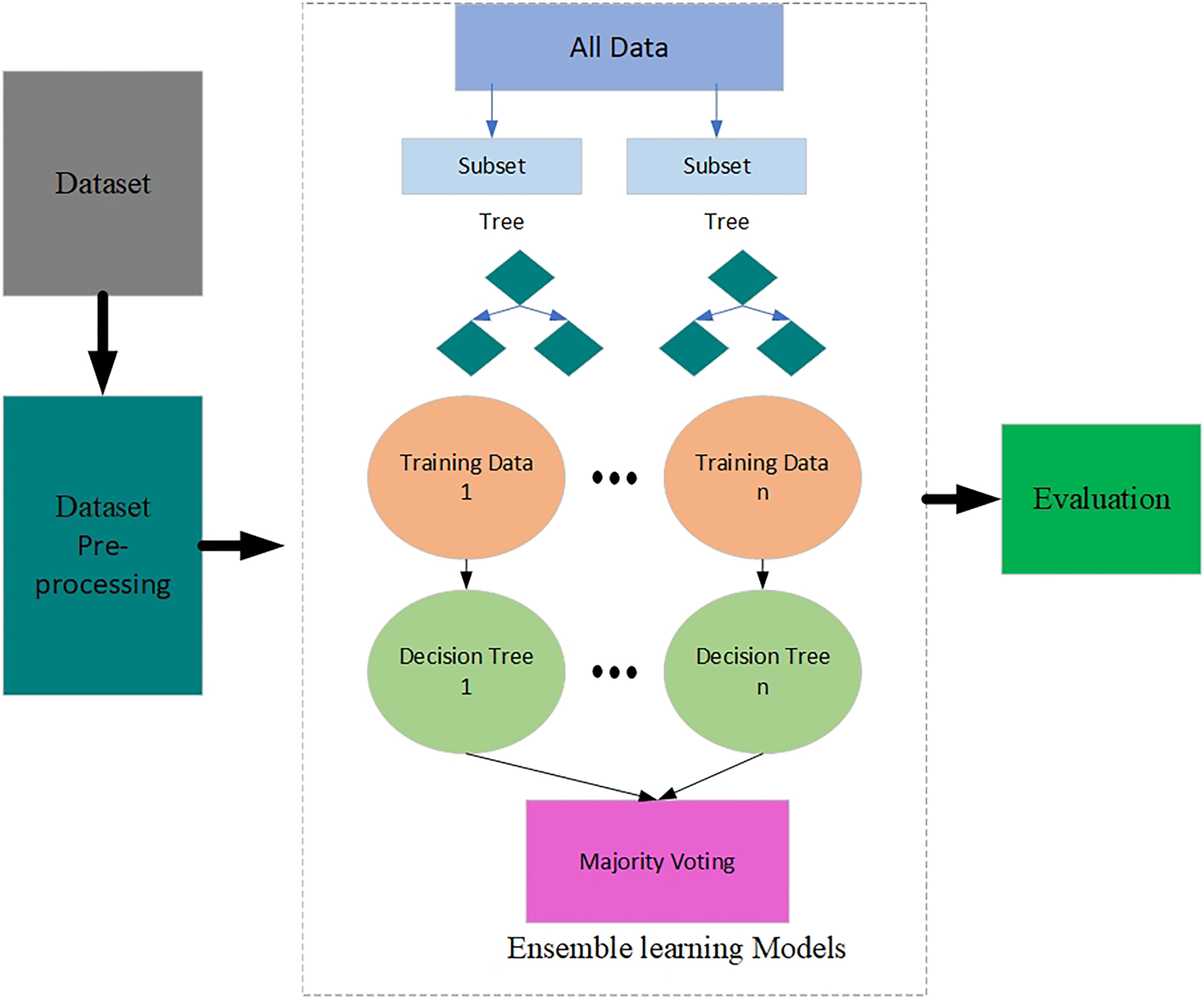
This research defines energy retrofitting strategy optimization of existing buildings by incorporating BIM and high-level machine learning methods. Conventional energy analyses are dependent on manual examination, which is tedious and error-prone. Attempting to avoid these drawbacks, this research presents an ensemble learning-based energy performance prediction model employing XGBoost and Random Forest to predict accuracy. The BDG2 data are used, offering actual hourly energy consumption information of various buildings. The new approach leverages the spatial and material characteristics of BIM for automated energy simulation support, allowing improved efficiency of retrofit decision-making. The research aims for higher accuracy, smaller prediction error, and improved generalizability in real-world retrofitting scenarios through ensemble learning. The model analyzes energy savings, cost, and sustainability and provides a data-driven solution to the design optimization of retrofit and assist decision-makers in the execution of efficient and sustainable building retrofits. Figure 1 shows the model workflow.

4.1. Data collection
BDG2 is an open dataset consisting of energy usage data in 1,636 buildings belonging to various climatic zones [26]. There are hourly readings for electricity, heating and cooling water, steam, and irrigation metering in 2016–2017 for two years, which is a useful database in order to discern energy performance trends in the old buildings. The data set comprises 3,053 energy meters, recording actual operational data that can be used to aid research in energy-efficient retrofitting. For the purpose of this research on BIM-Driven Energy Performance Simulation for Smart and Sustainable Retrofitting of Aging Structures, BDG2 offers a baseline to compare against to calculate pre-retrofit energy consumption and calculate the likely savings from energy retrofitting interventions. With the use of the BIM capacities and top-level energy simulation capabilities, the dataset enables evidence-based analysis on the effects of several retrofit strategies like the upgrading of HVAC, insulation upgrades, and inclusion of renewable energy.
4.2. Data pre-processing
Data preprocessing is the process of evaluating, cleaning, converting, and normalizing data into a format appropriate for modeling a machine learning algorithm. In this study, several pre-processing techniques are used.
4.2.1. Load dataset
The first step in preprocessing is to import the dataset, which covers energy consumption data of various buildings located in various places. The dataset contains hourly electricity, heating, cooling, and steam consumption levels, along with metadata such as building type, floor area, and climate zone. All about proper handling starts with the reading of the dataset and initial explorations to have a sense of its form, such as locating missing values, feature distributions, and outliers. Among the chief activities in the process is that of integrity checking of the dataset through duplicate records and timestamp inaccuracies. Since energy data is time-series in nature, timestamp conversion to a standard format is necessary to enable time-based feature extraction. Since energy consumption typically has a periodic pattern with daily and seasonal variations, a preliminary time-series decomposition can be applied to separate the trend, season, and residual components. This will help in understanding the volatility of energy consumption and provide insights into feature engineering at later stages. It is important to have good data structure and formatting at this stage for the sake of having correct model results.
4.2.2. Handling missing values
Missing value handling is an important preprocessing task, as missing data may introduce biases and decrease the accuracy of the model. Missing values in the dataset may occur because of malfunctioning sensors, errors in data logging, or temporary shutdowns of the buildings. The initial procedure in handling missing data is to measure the proportion of the problem—if a feature contains over 30% of missing values, it can be removed from the dataset unless it contains vital information. Missing values in numerical features can be imputed by using mean, median, or forward fill interpolation depending on the characteristics of the data. Mathematically, if xi for missing energy readings, imputation can be written in Equation 1:
where xj are the values known in the same category. Proper treatment of missing data ensures that there are no distortions in energy consumption trends, resulting in more accurate post-retrofit energy performance predictions.
4.2.3. Feature engineering
It enhances model performance by extracting useful information from raw data. As energy consumption is influenced by numerous factors, time-based feature generation is crucial. Hour of the day, day of the week, month, season, and weekend or weekday status are just a few examples. Energy consumption typically follows a daily cycle due to human activity, and the detection of these patterns helps the model learn peak and off-peak hours. Weather characteristics such as temperature, humidity, wind speed, and solar radiation are also significant in determining heating and cooling loads. Structural features like energy efficiency rating, insulation, and floor area also play very crucial roles as these have direct influences on the amount of energy being consumed. Even more sophisticated techniques of feature extraction like Fourier transforms can be utilized to pull out concealed periodic energy usage patterns shown in Equation 2:
where E(t) is consumption of energy at time are Fourier coefficients. Appropriate feature engineering guarantees that machine learning models can learn well the patterns and make good energy savings predictions.
4.2.4. Encode categorical variables
The categorical variables in the data, such as building type, location, and HVAC system type, need to be encoded into numerical values so that machine learning algorithms can work with them efficiently. Label encoding, where a numerical value is assigned to each category but can introduce unwanted ordinal relationships. Another mixture is targeting encoding, in which a category is replaced by the mean target value for that category, as expressed in Equation 3:
where Ci is the encoding value for category i, and Yj denotes energy consumption for Ni cases of category i. Encoding categorical variables makes it possible for machine learning algorithms to correctly read them without biasing against predictions of energy savings.
4.2.5. Feature scaling
Feature scaling is required to have models handle numerical features in the same manner, such that dominant features cannot skew the predictions. Within the dataset, there are features like energy usage, temperature, and floor space which are present on varying scales and hence require normalization. There are two typical methods of scaling used: Min-Max Scaling and Standardization. Min-Max Scaling maps features to [0, 1] range according to the following Equation 4:
where X´ is the normalized value, Xmax− Xmin are the maximum and minimum values of feature X.
4.2.6. Train-test split
Splitting the data into training and test sets avoids overfitting and provides generalizability to unknown data for machine learning models. 8% of the data is used to train the XGBoost and Random Forest models, while the other 20% is saved for testing and evaluating success. A stratified split should be ensured when dealing with imbalanced datasets, and instead of that, time-based split guarantees that the model learns from the past and forecasts well the future energy consumption.
4.3. Machine learning methods
4.3.1. Extreme gradient boosting
XGBoost is a very effective ML algorithm with high predictive power and computational efficiency, and hence it is a favorite algorithm to use for energy savings analysis in retrofitted existing buildings. XGBoost is used in this study to forecast the post-retrofit energy consumption based on past energy data. The data set includes hourly records of over 1,600 buildings’ energy consumption, tracking electricity, heating, and cooling use patterns. As building energy usage patterns vary and are complex in nature, the resistance of XGBoost towards missing values, non-linear relationships, and interaction between features proves to be immensely helpful. The factors that affect building energy consumption include weather, building type, retrofitting policy, and previous energy consumption. Conventional regression models tend to perform poorly with such high-dimensional noisy data. XGBoost, on the other hand, constructs sequential decision trees, where every tree refines the mistakes of the preceding ones, resulting in a better predictive model. This is especially beneficial for estimating the energy saving effect of different retrofitting measures, allowing for accurate cost-benefit analysis. Figure 2 represents the model architecture.

XGBoost makes predictions by minimizing a loss function through gradient descent. The model constructs sequential decision trees, where every tree is an attempt to fix the mistakes made by the preceding ones. The predicted energy consumption is calculated as Equation 5:
where fm (x) represents the mth decision tree’s output. The optimization objective function combines the loss function and a regularization term to prevent overfitting shown in Equation 6:
where, yi is the actual energy use. Using this framework, the model correctly estimates post-retrofit energy use, assisting decision-makers in making the most economically advantageous energy efficiency upgrades to existing buildings.
4.3.2. Random forest
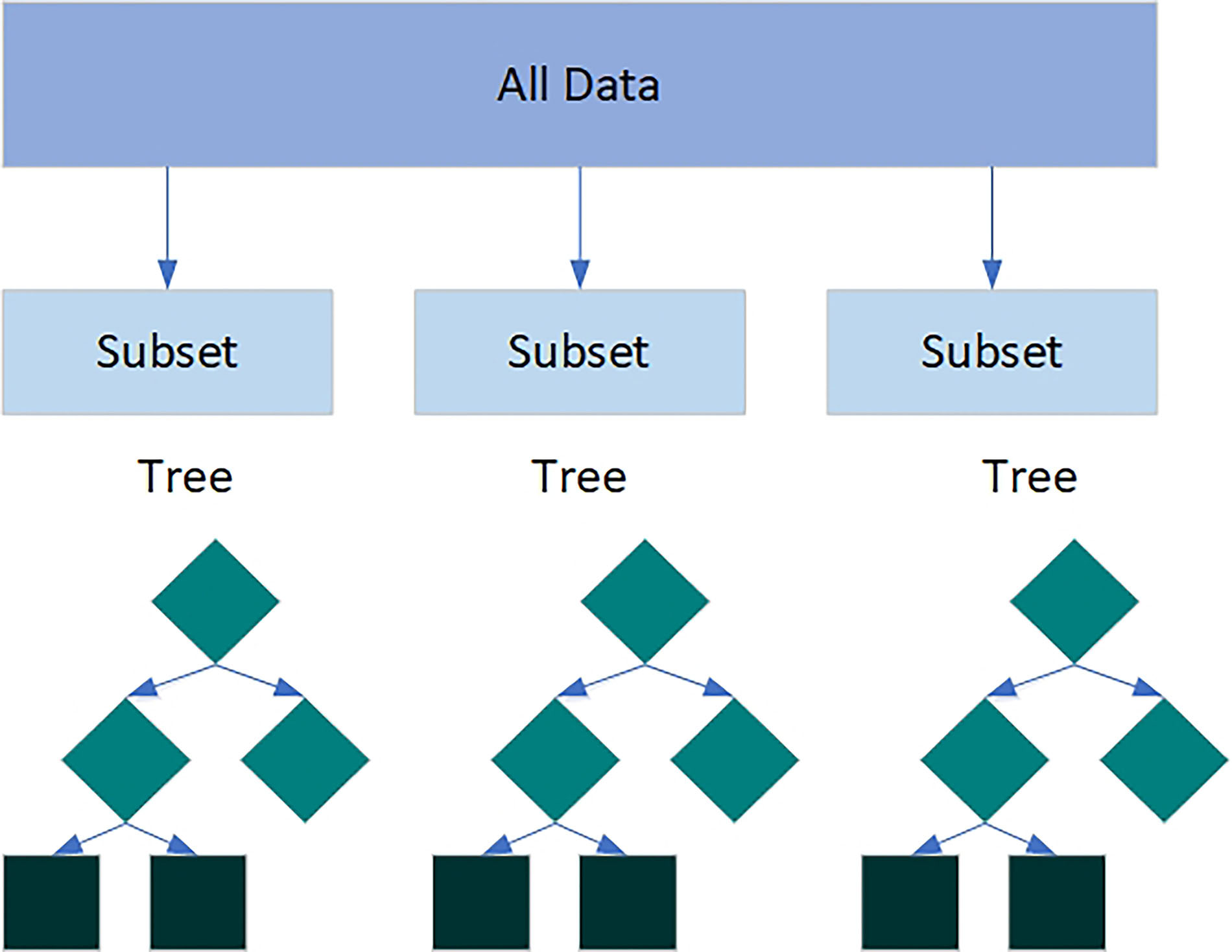
RF is a type of ensemble learning algorithm that creates many decision trees and aggregates their predictions to make better predictions. RF, in this paper, is employed to predict post-retrofit energy use based on past energy consumption patterns from the data set. Due to the fact that energy consumption in older buildings is reliant on a myriad of factors ranging from building type to occupancy behavior, climatic conditions, and installed retrofits, RF’s ability to simulate complex relationships and nonlinear interactions makes it especially well-suited for this study. Figure 3 illustrates RF architecture.

In contrast to a single decision tree, which is prone to overfitting, RF constructs many trees on various subsets of data and takes a mean of their predictions, thus resulting in a more generalized and stronger model. This is most useful in the case of energy retrofit analysis, where building conditions vary and there is no fixed, individual relationship between retrofit measures and energy savings. RF offers stability, manages missing data well, and minimizes the chances of bias in predictive models. RF builds many decision trees and the final output is calculated by averaging their predictions shown in Equation 7:
where T is the number of decision trees, ft (x) is the prediction of the tth tree, ŷ is the predicted final energy consumption. The feature importance score within RF assists in determining significant factors that have an impact on energy savings, including insulation types, HVAC effectiveness, and incorporation of renewable sources. The use of the Gini impurity measure ensures the trees split the data efficiently through maximizing information gain shown in Equation 8,
where is the proportion of cases in a class. By averaging over several trees, **RF improves accuracy, reduces variance, and enhances reliability and is thus a powerful tool for estimating energy performance in retrofitted buildings.
Ensemble learning that combines multiple machine learning models can potentially improve prediction accuracy (Chart 1). XGBoost and RF are ensemble in this research to enhance energy savings forecasting accuracy in retrofitted old buildings. XGBoost prefers extracting complex nonlinear relationships and reducing error by gradient boosting, while RF reduces variance by averaging multiple decision trees. Both the strengths of these algorithms are utilized by the use of both of these models combined, and they produce higher accuracy and stability regarding the prediction of energy consumption. XGBoost is effective in processing large amounts of missing attribute and feature interaction data and therefore extremely suitable for determining building-specific retrofit effects. XGBoost and RF are combined in this research to improve prediction accuracy of energy savings in the retrofitted old buildings. XGBoost is better able to extract sophisticated nonlinear relationships and reduce error through gradient boosting, while RF reduces variance through ensemble averaging of numerous decision trees. By integrating these two models, the strengths of both algorithms are leveraged, leading to better accuracy and stability in energy consumption prediction. XGBoost is capable of handling large-scale data with missing features and feature interactions and hence particularly well-suited for finding building-specific retrofit effects. RF, however, provides stability via the averaging of multiple trees in order to reduce overfitting. The combined approach works by training individual models independently and aggregating their prediction using weighted averages or stacking techniques. The predicted energy consumption can be expressed in Equation 9:
BIM-driven ensemble learning algorithm for accurate energy performance prediction and sustainable building retrofit [17].
where α is the weight given to RF predictions. This hybrid system increases reliability, enhances generalization across wide-ranging building conditions, and guarantees more accurate energy efficiency appraisals for retrofit planning in old buildings.
5. RESULT
The findings of this work show that the hybrid XGBoost and RF model considerably enhances the precision of predictions of energy savings in retrofitted aging buildings. By taking advantage of the strengths of both the models, the suggested ensemble method successfully identifies nonlinear patterns of energy consumption, minimizes overfitting, and improves generalization across various types of buildings. The performance demonstrates that the hybrid model has better performance than single models in MAE, RMSE, and R2, which verifies a more accurate estimation of post-retrofit energy performance. The ensemble method is also contrasted with single RF and XGBoost models, which have smaller prediction errors and can identify more dominant retrofit factors affecting energy efficiency. The feature importance analysis highlights HVAC efficiency, insulation level, and occupancy patterns as critical factors controlling energy savings. In addition, the new approach supports stakeholder decision-making through enhanced ROI estimates for retrofits. Overall, the study confirms that XGBoost and RF combined optimize retrofitting analysis, providing potential for cost-effective, data-driven, and environmentally friendly energy management of mature building structures.
5.1. Evaluation metrics
Some of the statistical evaluations are used to evaluate the model performance such as MAE, RMSE, R2 shown in Table 1.
5.2. Experimental outcome
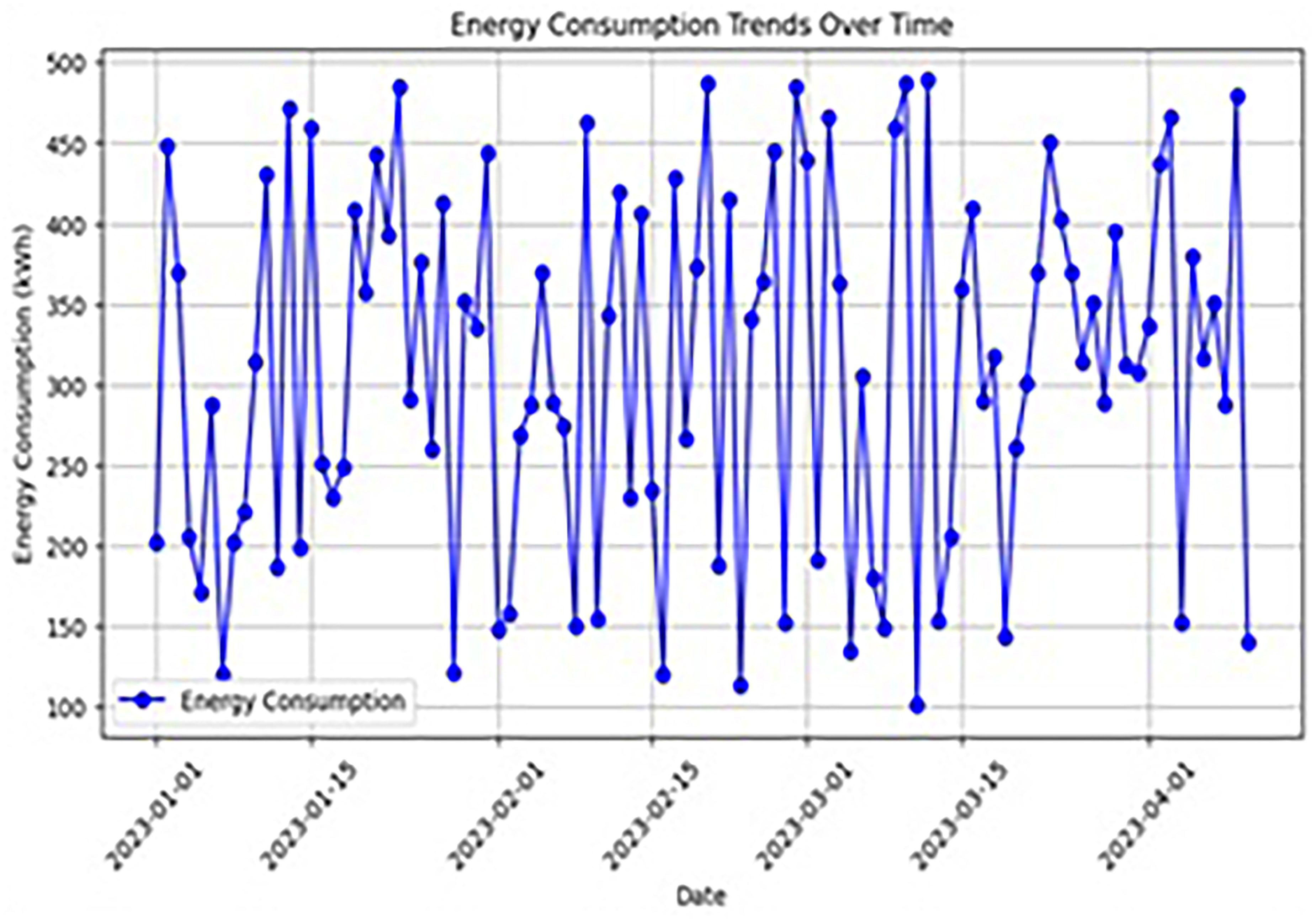
The Figure 4 line graph illustrates the pattern of energy usage over time with highs and lows that can be a sign of inefficiencies in aging buildings. By looking at use patterns, peak energy demand periods may be determined and the efficacy of retrofitting assessed. A continuous decrease in consumption after retrofitting would be a sign of effective optimization. The suggested BIM-based strategy incorporates real-time energy simulation for automated detection of inefficiencies. Visualization aids in understanding long-term energy consumption patterns and enables data-driven decision-making for the implementation of future retrofitting. Anomaly detection in energy consumption patterns ensures targeted retrofitting to ensure better energy efficiency and sustainability [12].

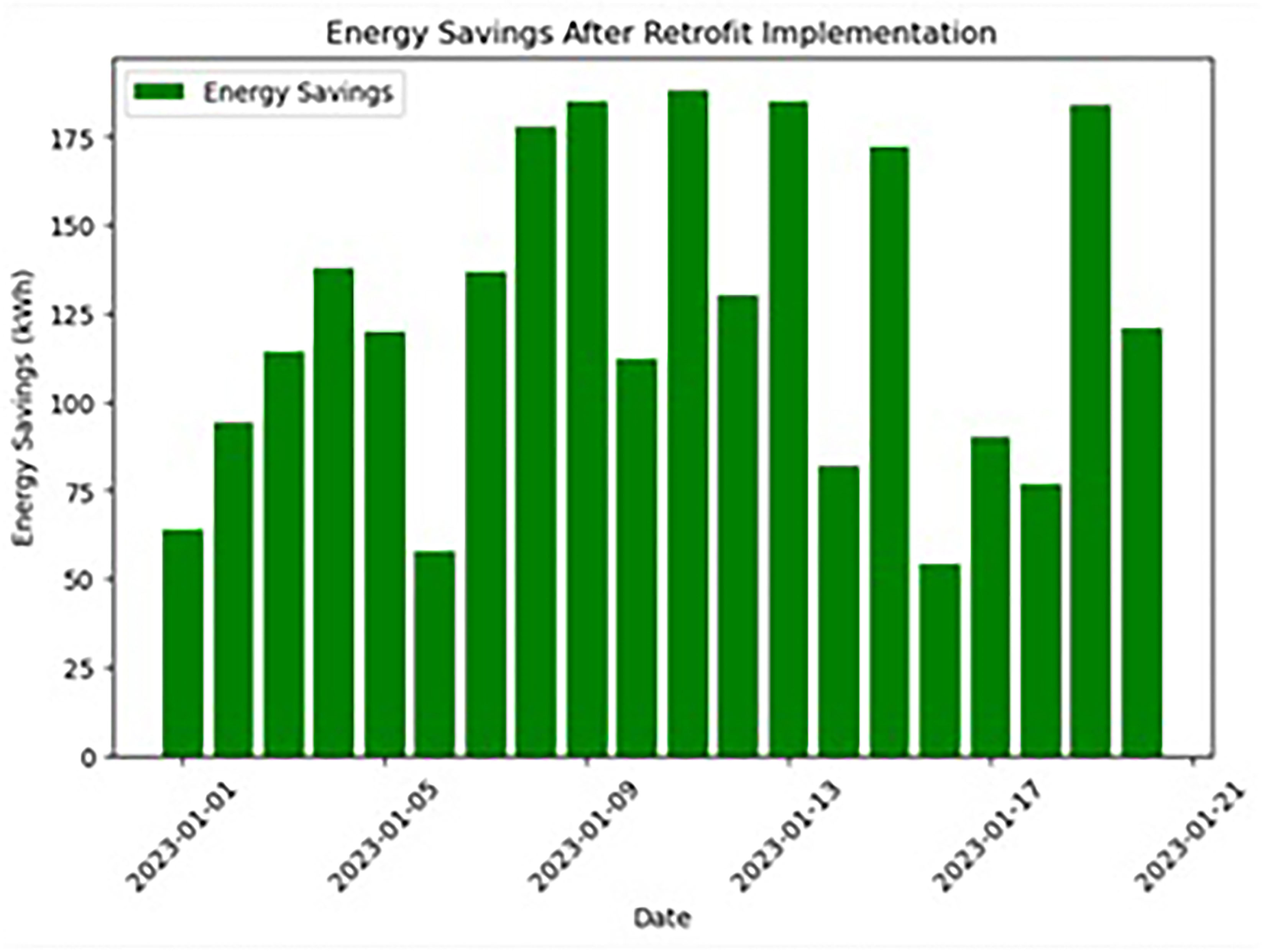
Figure 5 bar chart shows the difference in energy consumption before and after retrofitting. The bar length represents the amount of saved energy on a daily basis, which is used to measure the impact of energy optimization integrated through BIM. The effectiveness of measures like insulation, lighting optimisation, and HVAC modifications may be determined by comparing pre- and post-retrofit data [27]. A consistent trend of savings validates the effectiveness of the proposed framework. This visualization enables cost-benefit analysis to verify that retrofitting measures minimize expenses and maximize energy saving. It makes the tangible advantages of applying a data-driven approach to retrofit self-evident.

This feature significance in Figure 6 plot is pushing forward major variables that affect the energy efficiency of existing buildings. The influence on energy consumption may be ascertained by examining factors like lighting, HVAC systems, insulation, and the installation of renewable energy. The proposed XGBoost and Random Forest models utilize these significant features to improve retrofit predictions. A high ranking for insulation, say, would mean that putting it at the top of the list of improved thermal barriers is a good idea. This visualization allows data-driven retrofit planning such that investment is directed to the most effective energy-saving measures [25]. The BIM-enabled approach is the recipient of this comparison of features, which allows automatic decision-making in the optimization of retrofit models for the maximum gain.

Figure 7 box plot presents the relative performance of different predictive models, such as the proposed XGBoost-Random Forest ensemble. The metrics MAE, RMSE, R2 score, precision, and recall emphasize the accuracy and stability of a model in predicting energy consumption after retrofit. Lower values of MAE and RMSE indicate superior prediction ability, while a greater value of R2 guarantees the model’s strength. The superiority of the suggested strategy is shown by comparison with more conventional methods like SVM and Decision Trees. Such visualization proves that the integration of BIM with machine learning highly enhances retrofit planning and implementation efficiency.

Figure 8 heatmap shows the effectiveness of retrofitting interventions for various building types residential, commercial, and industrial. The intensity of color in each cell represents the average energy savings following retrofitting, allowing it to be easier to see which buildings benefit most from particular upgrades. Industrial buildings can reflect greater savings through extensive energy use, while commercial buildings can gain advantage from light optimizations. Such visualization allows for custom retrofitting strategies, where every type of building gets the best interventions. The suggested BIM-enabled approach makes such insights possible by autonomously analyzing data, optimizing decision-making, and making sustainable energy efficiency enhancements in various types of infrastructure.

5.3. Performance evaluation
The Table 2 provides comparative performance evaluation of different machine learning models for energy savings prediction in building retrofitting. The suggested ensemble model (XGBoost and Random Forest) has the highest accuracy (94.1%) and F1 score (93.1%), reflecting better prediction performance. It is significantly more accurate than typical models like Gradient Boosting (accuracy of 91.3%) and Bagging Regression (89.7% accuracy). The SVM and Decision Tree models are less accurate with performances of 84.3% and 80.2% accuracy, respectively, and show poor generalizability. Precision and recall measures also verify the strength of the ensemble model in minimizing false positives and false negatives. The results show the applicability of ensemble learning to enhance energy consumption prediction, leading to data-driven retrofit decisions. The results validate the potential of machine learning-based BIM integration for sustainable building retrofits and provide an effective basis for optimal energy efficiency strategies.
5.4. Discussion
This research illustrates the potential of combining BIM with advanced energy simulation software in effective retrofit solution design for existing buildings. The methodology utilizes the application of automated energy performance evaluation to minimize human error impact and streamline decision-making. By applying ensemble machine learning approach using XGBoost and Random Forest, the model is found to be superior to the baseline technique in predicting energy saving [8]. Performance of retrofit depends mainly on such drivers as insulation, heating, ventilation, and air conditioning efficiency, and using renewable energy, as evidenced by the findings. Compared to conventional manual assessment, the BIM methodology simplifies the complexity of the assessment process and becomes cost- and environmentally effective [21]. In addition, feature importance analysis offers meaningful feedback in ordering retrofit measures. The results confirm that energy simulations enhanced by machine learning make energy efficiency and return on investment for retrofitting schemes higher.
6. CONCLUSION AND FUTURE WORK
This study presents a new approach to energy retrofitting optimization of existing buildings through BIM integration, advanced energy simulation tools, and ensemble learning techniques. The proposed XGBoost-Random Forest ensemble model presented in this study significantly enhances prediction accuracy to support data-driven decision-making for energy efficiency improvement. As depicted in the performance analysis, the novel model achieves a precision of 94.1%, surpassing traditional models such as Gradient Boosting, Bagging Regression, Decision Tree, and SVM. In addition, the ensemble method outperforms others in terms of Precision, Recall, and F1 Score, reflecting an extremely balanced model that optimizes the minimization of false positives and false negatives. These results confirm that the integration of machine learning and BIM enhances energy consumption prediction and retrofit optimization for maximum cost-effectiveness in sustainable building retrofit. Through the integration of spatial and material data of BIM with ML-based simulations, the framework streamlines the evaluation process, conserves labor, and optimizes retrofit decision-making.
Feature importance analysis further enhances energy strategy optimization by identifying significant drivers and hence providing proper recommendations for HVAC performance, renewable energy integration, and insulation. The proposed process simplifies evaluation compared to typical manual evaluation in a more economical manner, reducing expenses and increasing energy performance. Real-time IoT-based energy monitoring can be merged with BIM and ML models in future work for enhancing prediction capacity. The platform can also be used to add reinforcement learning to adapt retrofits to time. Exploring federated learning and cloud-based BIM can also be used to boost scalability and data privacy in data-driven retrofitting, which will enable higher usage in the construction sector.
The limitations of this research, such as its reliance on idealised BIM models and its lack of real-world validation, may impact its accuracy. It prioritises energy economy above cost, passenger comfort, and structural safety. For wider application, future studies should include a wider range of building types and climates. Furthermore, combining IoT and real-time data with BIM may improve retrofit decision-making and dynamic energy evaluations.
7. BIBLIOGRAPHY
-
[1] KARIMI, H., ADIBHESAMI, M.A., BAZAZZADEH, H., et al., “Green buildings: human-centered and energy efficiency optimization strategies”, Energies, v. 16, n. 9, pp. 3681, 2023. doi: https://doi.org/ 10.3390/en16093681.
» https://doi.org/10.3390/en16093681 - [2] SUNILKUMAR, S., “Smart HVAC system for a residential house in Kerala, India and study of green building regulations in Thrissur, Kerala, India and Dubai, UAE” M.Sc. Thesis, Rochester Institute of Technology, Dubai, 2023.
-
[3] MARKARIAN, E., QIBLAWI, S., KRISHNAN, S., et al., “Informing building retrofits at low computational costs: a multi-objective optimisation using machine learning surrogates of building performance simulation models”, Journal of Building Performance Simulation, pp. 1–17, 2024. doi: https://doi.org/10.1080/19401493.2024.2384487.
» https://doi.org/10.1080/19401493.2024.2384487 -
[4] SHEN, Y., PAN, Y., “BIM-supported automatic energy performance analysis for green building design using explainable machine learning and multi-objective optimization”, Applied Energy, v. 333, pp. 120575, 2023. doi: https://doi.org/10.1016/j.apenergy.2022.120575.
» https://doi.org/10.1016/j.apenergy.2022.120575 -
[5] JRADI, M., MADSEN, B.E., KAISER, J.H., “Danretwin: a digital twin solution for optimal energy retrofit decision-making and decarbonization of the Danish building stock”, Applied Sciences, v. 13, n. 17, pp. 9778, 2023. doi: https://doi.org/10.3390/app13179778.
» https://doi.org/10.3390/app13179778 -
[6] EL-GOHARY, M., EL-ABED, R., OMAR, O., “Prediction of an efficient energy-consumption model for existing residential buildings in Lebanon using an artificial neural network as a digital twin in the era of climate change”, Buildings, v. 13, n. 12, pp. 3074, 2023. doi: https://doi.org/10.3390/buildings13123074.
» https://doi.org/10.3390/buildings13123074 - [7] LOONG, L.J., MUNIANDY, N., LENG, C.H., “Building energy modelling for energy-efficient retrofitting as catalyst for low carbon building”, Journal of Physics: Conference Series, v. 2923, pp. 012017, 2024.
-
[8] MEHRABAN, M.H., ALNASER, A.A., SEPASGOZAR, S.M., “Building information modeling and AI Algorithms for optimizing energy performance in hot climates: a comparative study of Riyadh and Dubai”, Buildings, v. 14, n. 9, pp. 2748, 2024. doi: https://doi.org/10.3390/buildings14092748.
» https://doi.org/10.3390/buildings14092748 -
[9] KOZLOVSKA, M., PETKANIC, S., VRANAY, F., et al., “Enhancing energy efficiency and building performance through bems-BIM integration”, Energies, v. 16, n. 17, pp. 6327, 2023. doi: https://doi.org/10.3390/en16176327.
» https://doi.org/10.3390/en16176327 -
[10] HOSAMO, H., HOSAMO, M.H., NIELSEN, H.K., et al., “Digital twin of HVAC system (HVACDT) for multiobjective optimization of energy consumption and thermal comfort based on BIM framework with Ann-Moga”, Advances in Building Energy Research, v. 17, n. 2, pp. 125–171, 2023. doi: https://doi.org/10.1080/17512549.2022.2136240.
» https://doi.org/10.1080/17512549.2022.2136240 -
[11] EGWIM, C.N., ALAKA, H., EGUNJOBI, O.O., et al., “Comparison of machine learning algorithms for evaluating building energy efficiency using big data analytics”, Journal of Engineering, Design and Technology, v. 22, n. 4, pp. 1325–1350, 2024. doi: https://doi.org/10.1108/JEDT-05-2022-0238.
» https://doi.org/10.1108/JEDT-05-2022-0238 -
[12] VILLANO, F., MAURO, G.M., PEDACE, A., “A review on machine/deep learning techniques applied to building energy simulation, optimization and management”, Thermo, v. 4, n. 1, pp. 100–139, 2024. doi: https://doi.org/10.3390/thermo4010008.
» https://doi.org/10.3390/thermo4010008 -
[13] MARTIRADONNA, S., RUGGIERI, S., FATIGUSO, F., et al., “Energetic and structural retrofit of existing RC buildings through precast concrete panels: proposal of a new technology and explorative performance simulation”, Journal of Architectural Engineering, v. 29, n. 1, pp. 04022045, 2023. doi: https://doi.org/10.1061/JAEIED.AEENG-1480.
» https://doi.org/10.1061/JAEIED.AEENG-1480 -
[14] KAMEL, E., MEMARI, A.M., “Residential building envelope energy retrofit methods, simulation tools, and example projects: a review of the literature”, Buildings, v. 12, n. 7, pp. 954, 2022. doi: https://doi.org/10.3390/buildings12070954.
» https://doi.org/10.3390/buildings12070954 -
[15] AFA, R., SOBHY, I., BRAKEZ, A., “Application of BIM-driven bem methodologies for enhancing energy efficiency in retrofitting projects in Morocco: a socio-technical perspective”, Buildings, v. 15, n. 3, pp. 429, 2025. doi: https://doi.org/10.3390/buildings15030429.
» https://doi.org/10.3390/buildings15030429 -
[16] CHEN, H., SHEN, G.Q., FENG, Z., et al., “Optimization of energy-saving retrofit solutions for existing buildings: a multidimensional data fusion approach”, Renewable & Sustainable Energy Reviews, v. 201, pp. 114630, 2024. doi: https://doi.org/10.1016/j.rser.2024.114630.
» https://doi.org/10.1016/j.rser.2024.114630 - [17] SERMARINI, J., “Exploring the benefits of the integration of XR and BIM for retrofitting projects”, D.Sc. Thesis, University of Central Florida, Orlando, 2024.
-
[18] WU, X., CAO, Y., LIU, W., et al., “BIM-driven building greenness evaluation system: an integrated perspective drawn from model data and collective experts’ judgments”, Journal of Cleaner Production, v. 406, pp. 136883, 2023. doi: https://doi.org/10.1016/j.jclepro.2023.136883.
» https://doi.org/10.1016/j.jclepro.2023.136883 - [19] FERREIRA, V.N., COCITO DE ARAUJO, L.O., LINHARES QUALHARINI, E., et al., “Building retrofit for energy efficiency in existing buildings: a case study of a social residential building in France”, Dysona-Applied Science, v. 6, n. 1, pp. 223–238, 2025.
- [20] LI, J., LIU, Z., HAN, G., et al., “The relationship between Artificial Intelligence (AI) and Building Information Modeling (BIM) technologies for sustainable building in the context of smart cities”, Sustainability, v. 16, n. 24, 2024.
-
[21] YANG, L., LIN, Y.-C., CAI, H., et al., “From scans to parametric BIM: an enhanced framework using synthetic data augmentation and parametric modeling for highway bridges”, Journal of Computing in Civil Engineering, v. 38, n. 3, pp. 04024008, 2024. doi: https://doi.org/10.1061/JCCEE5.CPENG-5640.
» https://doi.org/10.1061/JCCEE5.CPENG-5640 -
[22] ALSHIKH, Z., TREPCI, E., RODRIGUEZ-UBINAS, E., “Sustainable off-site construction in desert environments: zero-energy houses as case studies”, Sustainability, v. 15, n. 15, pp. 11909, 2023. doi: https://doi.org/10.3390/su151511909.
» https://doi.org/10.3390/su151511909 - [23] MESQUITA, H.C., EDUARDO, R.C., RODRIGUES, K.C., et al., “Case study of analysis of interferences between the discipline of a building with conventional designs (RE) modeling in BIM”, Matéria, v. 23, n. 3, 2018.
-
[24] HAUASHDH, A., NAGAPAN, S., JAILANI, J., et al., “An integrated framework for sustainable and efficient building maintenance operations aligning with climate change, SDGS, and emerging technology”, Results in Engineering, v. 21, pp. 101822, 2024. doi: https://doi.org/10.1016/j.rineng.2024.101822.
» https://doi.org/10.1016/j.rineng.2024.101822 -
[25] SHARMA, S.K., MOHAPATRA, S., SHARMA, R.C., et al., “Retrofitting Existing Buildings To Improve Energy Performance”, Sustainability, v. 14, n. 2, pp. 666, 2022. doi: https://doi.org/10.3390/su14020666.
» https://doi.org/10.3390/su14020666 -
[26] PAN, Y., ZHU, M., LV, Y., et al., “Building energy simulation and its application for building performance optimization: a review of methods, tools, and case studies”, Advances in Applied Energy, v. 10, pp. 100135, 2023. doi: https://doi.org/10.1016/j.adapen.2023.100135.
» https://doi.org/10.1016/j.adapen.2023.100135 -
[27] KAGGLE, “Building Data Genome Project 2”, https://www.kaggle.com/datasets/claytonmiller/buildingdatagenomeproject, accessed in February 21, 2025.
» https://www.kaggle.com/datasets/claytonmiller/buildingdatagenomeproject