 Fracture, resiliency, and feasibility analysis of cement concrete with lathe steel scrap for paving applications in transportation technology
ABSTRACT
This study evaluated the technical feasibility of incorporation of LSS into base concretes for rigid pavements and focusing on enhanced properties of the concrete. Two approaches were employed here, and two reference mixtures – designated as A-0 and S-0 – were designed. These two approaches are as follows: (a) simple additions of 1% (A-1), 1.5% (A-1.5), and 2% (A-2) of LSS as a fiber; and (b) LSS contents of 10% (S-10), 20% (S-20), and 30% (S-30) replacing part of the natural sand fraction of the base concrete. Workability was monitored in the slump test, whereas the hardened properties included compressive strength, splitting tensile strength, flexural strength, and modulus of elasticity. Flexural strength considerably improved after incorporation of LSS, whereas the best results in compressive strength and splitting tensile strength were observed for S-10 and S-20. The modulus of elasticity mainly decreased probably due to the reductions in the compressive strengths and the lack of homogeneity of the mixtures. The S-10 material overall provided the best findings, and its application in rigid pavements may occur after adjustments in the dosage. Hence, LSS can be effectively utilized as a viable and sustainable alternative for reinforcement in cement concrete for rigid pavements.
Keywords:
Lathe steel scrap; Mechanical properties; Slump; Rigid pavements; Concrete dosage.
1. INTRODUCTION
Portland cement concrete has a widespread application worldwide, including the construction of concrete slabs for rigid pavements. The use of recycled materials to replace part of the conventional aggregates – or even the Portland cement by itself – and design more sustainable concretes has been a prominent topic in the literature. These recycled materials include crumb rubber [1], carbide [2], red ceramic industry residues [3], and glass powder [4]. In the Brazilian steelmaking industry, approximately 8 out of 100 tons of waste are destined to landfills [5]. This industry waste is known as lathe steel scrap, waste lathe scrap, lathe scrap or steel scrap, amongst other variants. It is typically cheaper than other residues and does not undergo natural degradation in the nature, which may lead to ground water pollution and release of toxic gases [6, 7].
Despite these environmental benefits, some aspects concerning the actual benefits of the incorporation of lathe steel scrap in the Portland cement concrete still remain unclear [8]. This residue may be used with or without lubricants and cooling fluids in the concrete, even though its separation from the fluids is a challenging task [9]. Earlier studies showed that the presence of such fluids did not negatively affect the mechanical properties of the concretes [8, 10,11,12]. Moreover, one may use lathe steel scrap in the concrete as a fiber or by replacing part the fine aggregates [13]. A partial replacement of the Portland cement [14] or the coarse aggregates [15] is also possible.
Lathe steel scrap may increase by 20% the compressive strength of the original concrete when replacing part of the fine aggregates, provided that the contents are no greater than 20% by mass [8, 16, 17]. The splitting tensile strength may also show increases from 1.7 to 36% after the addition of contents up to 2% of this residue, depending on the investigation undertaken in the literature [18,19,20]. In general, the flexural strength depicts considerable increases – sometimes greater than 100% [21] – after the incorporation of contents no greater than 2% of lathe steel scrap in the reference concrete, e. g., from 9 to 20% in the laboratory study from DARJI et al. [19] and from 10 to 54% in the investigation from PUROHIT et al. [22]. Moreover, earlier studies reported proportional increases in the modulus of elasticity and the dynamic modulus – in some cases, greater than 20% for both parameters – when the contents of this residue are no greater than 15%. In some cases, such increases overcame 20% [11, 21].
Although lathe steel scrap brings several benefits to the Portland cement concrete, the workability of the modified concrete mainly becomes worse after such an addition, even for small contents (up to 2%). For instance, QURESHI et al. [18] and PRASAD et al. [7] reported decreases greater than 20% in the slump value of the concrete with this residue. Accordingly, BALAMURALIKRISHNAN et al. [23] found even higher decreases in the slump value – higher than 60% – for contents up to 3%. A few studies [11] indicated that the slump may be higher after the incorporation of lathe steel scrap in the concrete. The literature points out that such decreases in the workability are explained by the heterogeneity and the roughness of the residue, thereby decreasing the fluidity of the concrete [24]. On the other hand, this contributes to a greater cohesion of the concrete and a smaller probability of segregation [25].
With respect to the density of the concrete, the exact effects of lathe steel scrap in this property are dependent on the technique used in the incorporation of the residue. When steel scrap is simply added to the Portland cement concrete, density may increase by approximately 10% in some cases due to the inherent characteristics of this residue [21, 26, 27]. However, this is not a consensus in the literature because MOHAMMED et al. [28] obtained decreases by 2% in the density of the final concrete after the addition of lathe steel scrap up to 8% by mass, probably due to the presence of voids in the concrete matrix. Alternatively, this residue may replace part of the aggregate fraction (coarse or fine ones). In these cases, a group of authors [24, 29] reported increases by 5% or lower in the density of the final Portland cement concrete for replacement contents no greater than 20% of fine aggregates by lathe steel scrap by mass. Another group of authors [11] observed decreases in the density of the concrete – between 2 and 9% – when the steel scrap contents of 5, 10 and 15% replaced part of the fine aggregate fraction.
Amongst the possible uses of the lathe steel scrap-modified concrete, rigid pavements may be included. TUAUM et al. [30] analyzed the mechanical properties of concretes with the addition of contents between 0.4 and 2% of this residue. The workability of the samples was not significantly reduced and, in addition, the resistance and the durability of the modified concretes increased by about 2%. Hence, the incorporation of lathe steel scrap as a fiber in the concrete may provide several benefits to the pavement, including greater flexural resistance, less propagation of cracks, and less construction costs. Nevertheless, the use of residues in pavement construction faces some challenges that must be overcome. For instance, the transition zone between the mortar matrix and the surface of the residue – which is typically a fragile point – may be enhanced by utilizing mineral additives [31]. Other studies have explored the synergy between LSS and mineral admixtures in alternative binders. For example, the use of micro silica fume may improve mechanical performance and internal bonding of geopolymeric concrete reinforced with waste steel lathe scraps [32].
As can be seen, there are still unanswered questions about the actual benefits of the use of this residue in the concrete. Further investigations are required to better understand the role of lathe steel scrap in concrete structures. This is especially critical in Brazil, where only a few national studies appear to be available [33, 34]. Hence, the aim of this study is to evaluate the technical feasibility of the use of lathe steel scrap in the Portland cement concrete for rigid paving applications. The specific objectives are as follows:
-
To measure the impact of the incorporation of 1%, 1.5% and 2% of this residue in the mechanical properties of the concrete;
-
To monitor the mechanical properties of the Portland cement concrete after replacing 10%, 20% and 30% of the fine aggregate by lathe steel scrap; and
-
To determine the best formulation and corresponding content of this residue, as based on the resulting properties of the Portland cement concrete.
2. EXPERIMENTAL PROGRAM
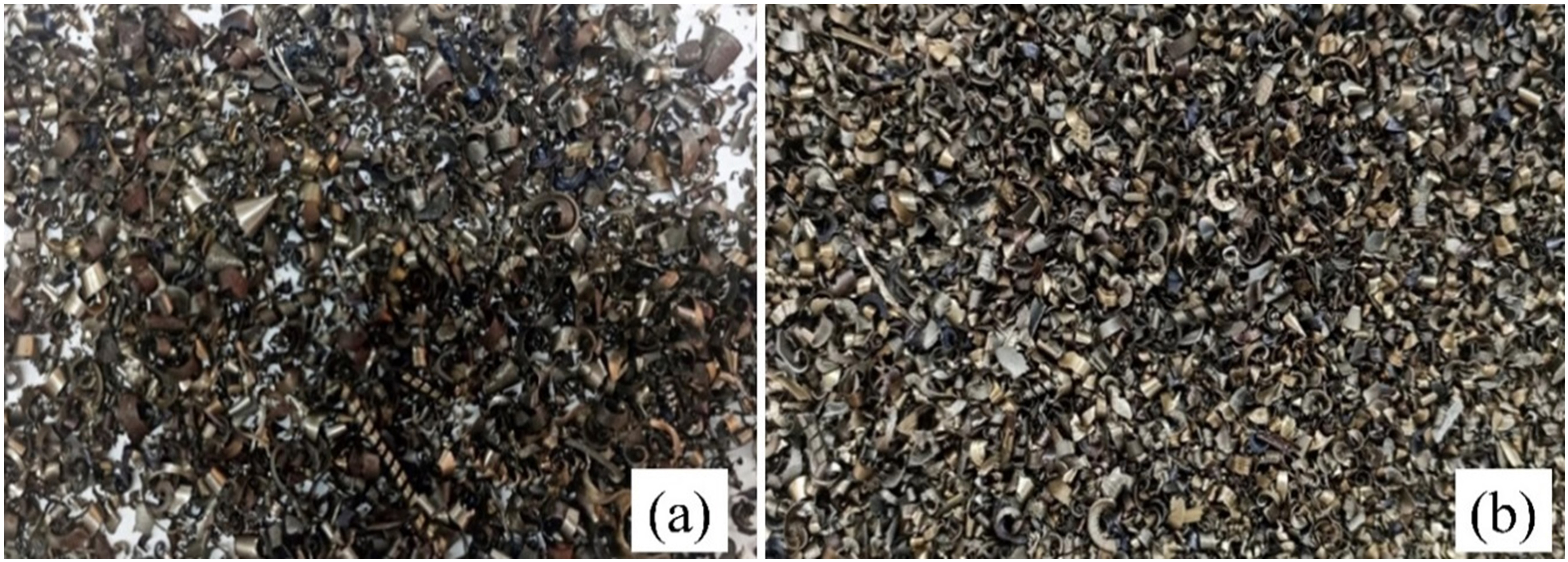
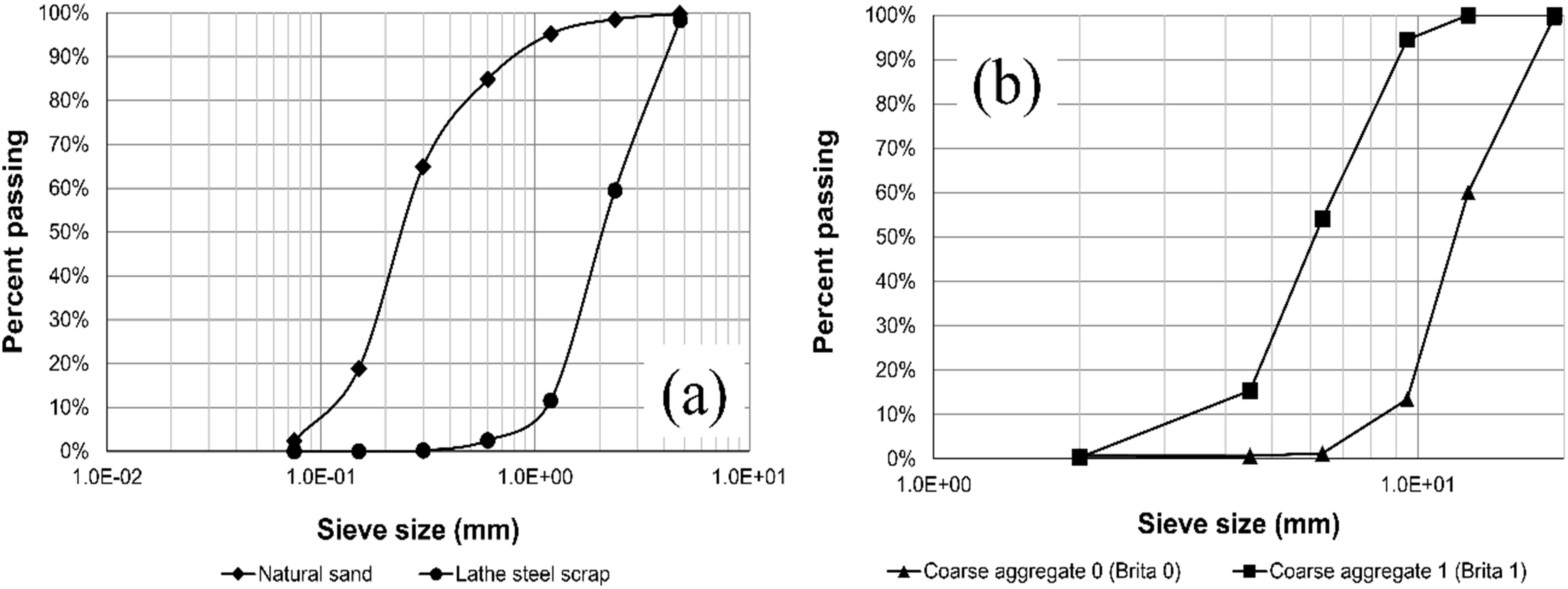
The residues used in the study were characterized as mixtures of several shapes, mainly conical spiral and disconnected arc (comma) types. These characterizations followed the NBR ISO 3685 protocol [35]. Figure 1 illustrates the Lathe Steel Scraps (LSSs), and they were not previously washed prior to mixing with the concrete, as recommended by others in the literature [8, 11]. Due to the fact that LSS was not washed, the residual cooling fluid contents were not quantified; hence, it was not possible to evaluate the effects of the cooling fluid on the concrete such as adhesion between the cementitious matrix and the residue. Ordinary high early strength Portland cement (CP V-ARI) was used to reduce the curing time and facilitate a rapid demolding of the samples. One should notice that the LSS addition contents of 1%, 1.5% and 2% by volume were suggested by earlier studies, as well as the replacement contents of 10%, 20% and 30% by mass [7, 13, 16, 29, 36]. As can be seen in Figure 2a, the LSSs show a slightly coarser granulometric curve when compared with the natural sand fraction. The fineness moduli of the natural sand and LSS were 1.40 and 4.28, respectively. In both cases, the curves comply with the limits of fine aggregates according to standards [37].
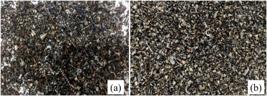
Lathe steel scraps used in the concrete samples: (a) incorporation as a fiber; and (b) partial replacement of the fine aggregate fraction.
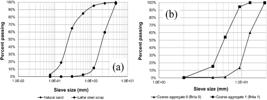
Granulometric curves: (a) natural sand and the lathe steel scraps, and (b) coarse aggregates.
2.1. Dosage, mixing procedure, and curing of the samples
The Brazilian Rigid Pavement Manual [38] establishes some requirements for Portland cement concretes used as concrete slabs. The minimum consumption of Portland cement is 320 kg/m3, whereas the water-cement ratio (w/c) should be from 0.40 to 0.56. Moreover, the minimum axial compressive strength is 30 MPa and the minimum slump value is 70 mm. In terms of this investigation, the concrete dosage method developed by the Brazilian Portland Cement Association [39] was followed. Each LSS incorporation process has its respective reference mix because the authors made an attempt to improve specific properties required by the Brazilian Rigid Pavement Manual for cement concretes used in concrete slabs [38]. To achieve such a goal, coarse aggregates with different granulometric curves and superplasticizer were used. Consequently, the contents of other raw materials (e. g., water) were affected.
Table 1 details the proportions of Portland cement, conventional aggregates, LSS, water, and superplasticizer additives. The letters “A” (addition) and “S” (substitution/replacement) indicate the method used in the incorporation of LSS in the ordinary concrete. Each number shows the percentage of LSS in the concrete sample. For example, the notation “A-1” refers to a concrete with the addition of 1% of LSS as a fiber. Similarly, the notation “S-20” refers to a concrete with a partial replacement of 20% of natural sand by LSS in the dosage of the concrete.
To avoid segregation and ensure a homogeneous distribution of LSS, the residue was progressively added to the concrete after mixing the other materials [36]. The molding and curing procedures were performed in accordance with the NBR 5738 standard [40]. The samples were demolded after 24 h of molding, and the curing process was conducted in a laboratory environment and within 28 days. The molding process was undertaken according to the same standard.
2.2. Laboratory tests and corresponding parameters
The laboratory experiments performed in the cured samples included compressive strength, splitting tensile strength, flexural strength, and modulus of elasticity. Additionally, the workability of the fresh concretes was measured according to the well-known slump test [41].
The compressive strength tests were carried out on samples with 200 mm in height and 100 mm in diameter. These tests were performed in a Universal Testing Machine (UTM) located in the laboratories of the Federal University of Technology-Parana (UTFPR). As stated by the NBR 5739 standard [42], the rate of increase in the applied load was 0.45 ± 0.15 MPa/s, and six replicates per concrete dosage were submitted to the test until failure. The compressive strength values (fc) were calculated in accordance with Equation 1:
where F is the load at failure (N), and D is the diameter of the sample (mm).
Analysis of Variance (ANOVA) was performed on the compression test results of the mixes. This analysis aims at determining statistically significant differences between LSS content and each concrete property. If significant differences exist at a significance level of 5%, the multiple comparison test (Tukey’s test) was used to identify which samples showed differences from each other. Thus, it was possible to evaluate the influence of LSS content on the compressive strength of concrete and with statistical relevance.
The splitting tensile strength tests were also conducted in a UTM device and on samples with 100 mm in diameter and 200 mm in height. The protocol set by the NBR 7222 standard [43] was observed. The rate of increase in the applied load was maintained within 0.05 ± 0.02 MPa/s. Six replicates were considered per concrete dosage, and the splitting tensile strength values (fct,sp) were determined according to Equation 2:
where Ft is the maximum load (N), d is the sample diameter (mm), and ℓ is the sample length (mm).
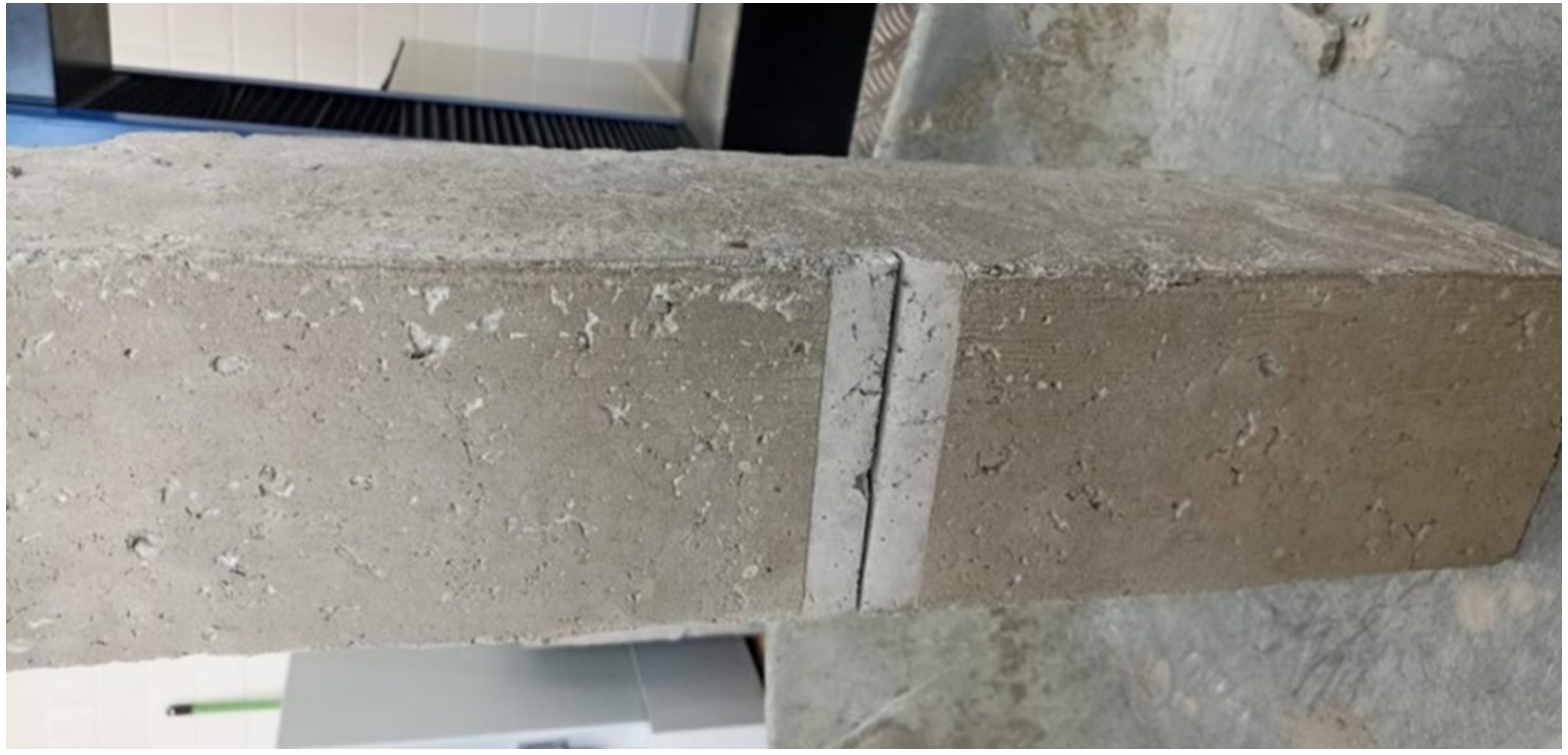
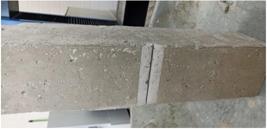
The flexural strength tests were performed on concrete beams with (150 × 150 × 600) mm each. It was previously hypothesized that LSS acts as a fiber in the concrete matrix, regardless of its incorporation type in the concrete. Before demolding of the beams, a notch was made in each of them – example in Figure 3 – to ensure compliance with the test requirements. Then, a vertical and perpendicular load was applied in the middle of the span and at a constant displacement rate of 0.05 mm/min or 0.2 mm/min, depending on the rate of increase in the notch size (CMOD). Further details may be found in NBR 16940 [44]. The corresponding residual flexural strength (fR,i) at each of the four considered CMOD values (CMOD1, CMOD2, CMOD3, and CMOD4) is calculated according to Equation 3:
where Fi is the load corresponding to each of the CMOD values (N), L is the length of the span (mm), b is the width of the sample (mm), and hsp is the distance between the surface of the notch and the surface of the sample (mm).
Finally, the NBR 8522-2 standard [45] was observed for determining the modulus of elasticity of the concretes. Six cylindrical replicates with 200 mm in height and 100 mm in diameter were tested per concrete dosage. One should note that this standard provides the dynamic modulus (Ecd), whereas the static modulus (Eci) was derived from the corresponding Ecd value and by considering the Popovics model [46]. Equations 4 and 5 were used in the calculations of Ecd and Eci, respectively (both in GPa):
where h is the sample height (mm), m is the sample mass (g), d is the sample diameter (mm), ff is fundamental flexural resonance frequency (Hz), T is a correction factor for ff, and ρ is the specific gravity of the concrete (g/cm3).
3. PRESENTATION OF FINDINGS AND DISCUSSIONS
Table 2 shows the slump values of the concrete dosages prepared in this study, together with the corresponding variations from the results of the reference concretes A-0 and S-0. It follows that the samples with partial replacement of the natural sand by LSS are much more affected by the presence of this residue than the ones prepared with a simple addition of LSS. For the highest percentage of replacement of fine aggregates by LSS (S-30 concrete), no slump is observed in the fresh condition. These results are in agreement with the technical literature, refer to PRASAD et al. [7], ISMAIL and AL-HASHMI [29], ADETUKASI [47], and BHAGYAWATI et al. [48] as some examples.
Slump values of the fresh concretes and corresponding variations from the reference concretes S-0 and A-0.
In terms of the S-30 mixture, the zero-slump consistency posed significant challenges for specimen preparation. Despite rigorous manual consolidation and the use of a tamping rod in multiple layers, the extreme stiffness of the fresh concrete hindered full compaction. This difficulty in placement likely resulted in a higher presence of air voids within the matrix, and this can be correlated with the observed reductions in compressive strength and modulus of elasticity for this concrete dosage.
When LSS is simply added to the concrete, the reductions in slump are mainly attributed to the adhesion between the residue and the cementitious matrix, thus increasing the resistance to flow and decreasing the fluidity of the fresh concrete [12, 47]. Despite this greater cohesion, some authors [35] do not recommend LSS contents greater than 2% by volume, since these high percentages may severely compromise the workability of the concrete. Moreover, agglomeration of LSS may occur for percentages of 3% or higher in some cases.
When LSS partially replaces the natural sand fraction, reductions in workability are explained by the heterogeneity of the residue and its irregular surface [24, 29, 49]. In addition, higher Portland cement contents are required to cover the surface of the LSS particles, which decreases the amount of cement available to provide fluidity of the concrete [49]. In terms of this investigation, no agglomeration of the LSS particles was observed for any concrete dosage. Moreover, the reductions in the slump test results can be associated with the fineness modulus of LSS, which is approximately three times higher compared to the one of the natural sand. These reductions in slump are more significant in the mixes with the partial replacement of the natural sand by LSS. Even though the LSS content in the A-2 concrete (157.0 kg/m3) is similar to the S-20 concrete (160.6 kg/m3), the considerable differences in slump (Table 2) can be directly explained by the fineness modulus of the aggregate. In other words, the aggregate contents are not changed for the samples with simple addition of LSS, which is not the case of the samples with partial replacement of conventional material by LSS.
3.1. Compressive strength tests
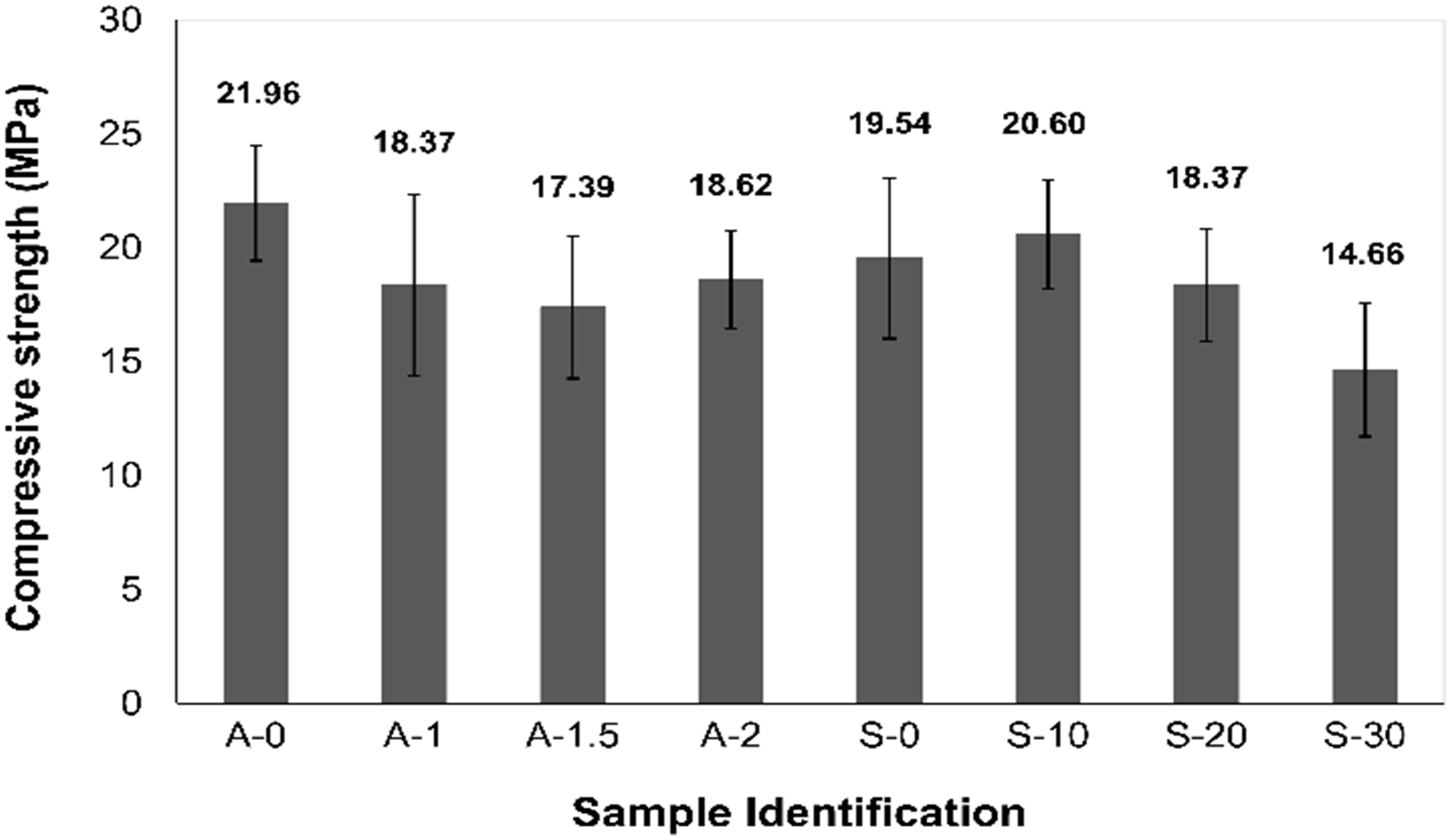
Figure 4 shows the mean values and the corresponding box plots of the parameter fc. Overall, the compressive strength decreases with increasing LSS content, regardless of the incorporation method (addition or partial replacement of natural sand). Interestingly, these decreases in fc do not occur for all LSS contents. When the residue is simply added to the concrete, the compressive strength starts to increase for contents greater than 1.5%. When the residue partially replaces the fine aggregate fraction, a slight increase in compressive strength (6.02%) may be seen at the content of 10%. On the other hand, it was not possible to obtain concretes with LSS and a minimum required fc value of 30 MPa for use in rigid pavements, as established by the technical manuals [38].
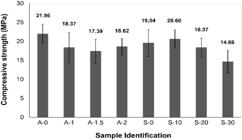
Compressive strength values of the concretes prepared with a simple addition (letter “A”) or a partial replacement of the natural sand (letter “S”) by lathe steel scrap.
The ANOVA statistical analysis returned a p-value of 0.0806 for the addition of LSS. This indicates that such an addition has no significant effect on compressive strength of the concrete. Nevertheless, the p-value was 0.0103 when LSS partially replaces the natural sand. This suggests that such samples were significantly different at a significance level of 5%. The Tukey test results for the mixes with partial replacement of natural sand by LSS are presented in Table 3. As can be seen, compared to the reference mix (S-0), only the concrete with 30% of LSS (S-30) showed a significant role of LSS on the compressive strength of the concrete (reduction of 25.0% in the original values).
Even though the desirable effect of the addition of LSS to the concrete is a higher compressive strength, decreases may also be found in the literature. Examples include SHARBA and IBRAHIM [27], ADETUKASI [47], and SHRIVASTAVA and JOSHI [50]. Concretes reinforced with other types of fibers also exhibit this behavior such as coconut fibers, silver nanoparticles, and ground granulated blast furnace slag [51, 52]. With respect to the peak value observed for the S-10 concrete dosage, this was also observed by others elsewhere. Moreover, the optimum LSS content is within the interval of 4% to 30% reported by different authors [8, 16, 48, 53, 54]. Either the simple addition of LSS or a partial replacement of the natural sand by LSS in the concrete show varying responses: maintenance, increase or decrease in fc.
Higher compressive strength values may be explained by strengthening of the internal structure of the concrete, i. e., the LSS particles help in transmitting stresses within the cracks and postponing its propagation [10, 55, 56]. However, the resistance of the concrete around the cracks induced by these LSS particles may lead to fragmentation of the cementitious matrix and hence, decreases in the fc values [56]. This bridging mechanism is also effective under compressive pressure: as the load increases, the LSS particles act as micro-ties that restrain the lateral expansion, thereby confining the concrete matrix and delaying the formation of macro-cracks. Other factors that may reduce these resistances are the fiber surface area and its thickness, which can negatively affect the surface bond between the materials [51].
3.2. Splitting tensile strength tests
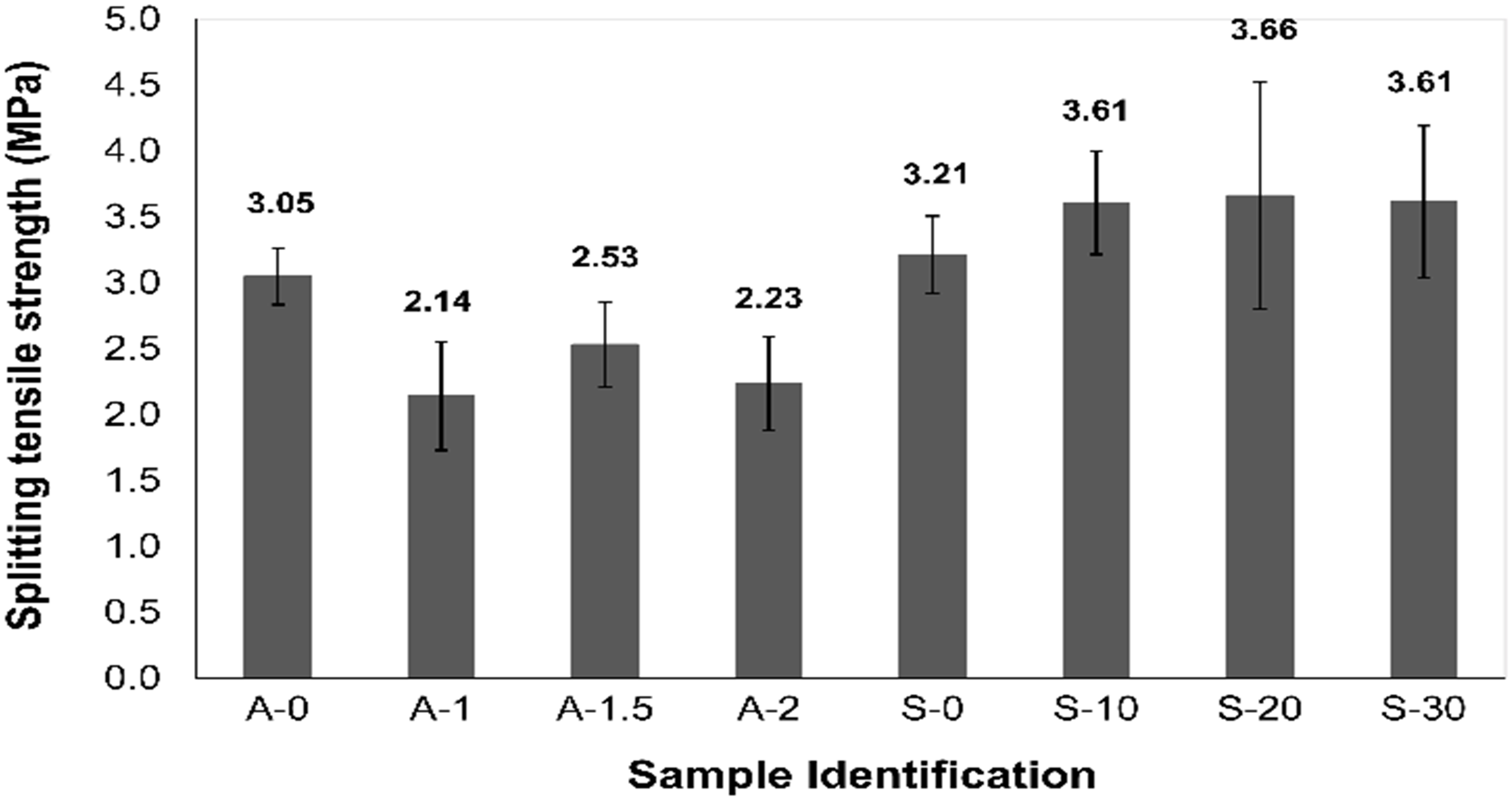
Figure 5 shows the individual fct,sp values of the concretes, together with their corresponding box plots. The responses of these concretes considerably differ from one LSS addition type to the other, i. e., the samples with partial replacement of natural sand by LSS depict more prominent (and better) tensile strength resistances than the ones with a simple addition of the residue. The samples with LSS contents up to 2% (from A-1 to A-2 ones) are less resistant than the reference concrete sample A-0. Conversely, the concretes with partial replacement of natural sand by LSS (from S-10 to S-30 ones) are more resistant than the reference material S-0: the increases in fct,sp for S-10, S-20 and S-30 are all between 10% and 20% when compared with the original material.
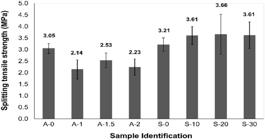
Splitting tensile strength values of the concretes prepared with a simple addition (letter “A”) or a partial replacement of the natural sand (letter “S”) by lathe steel scrap.
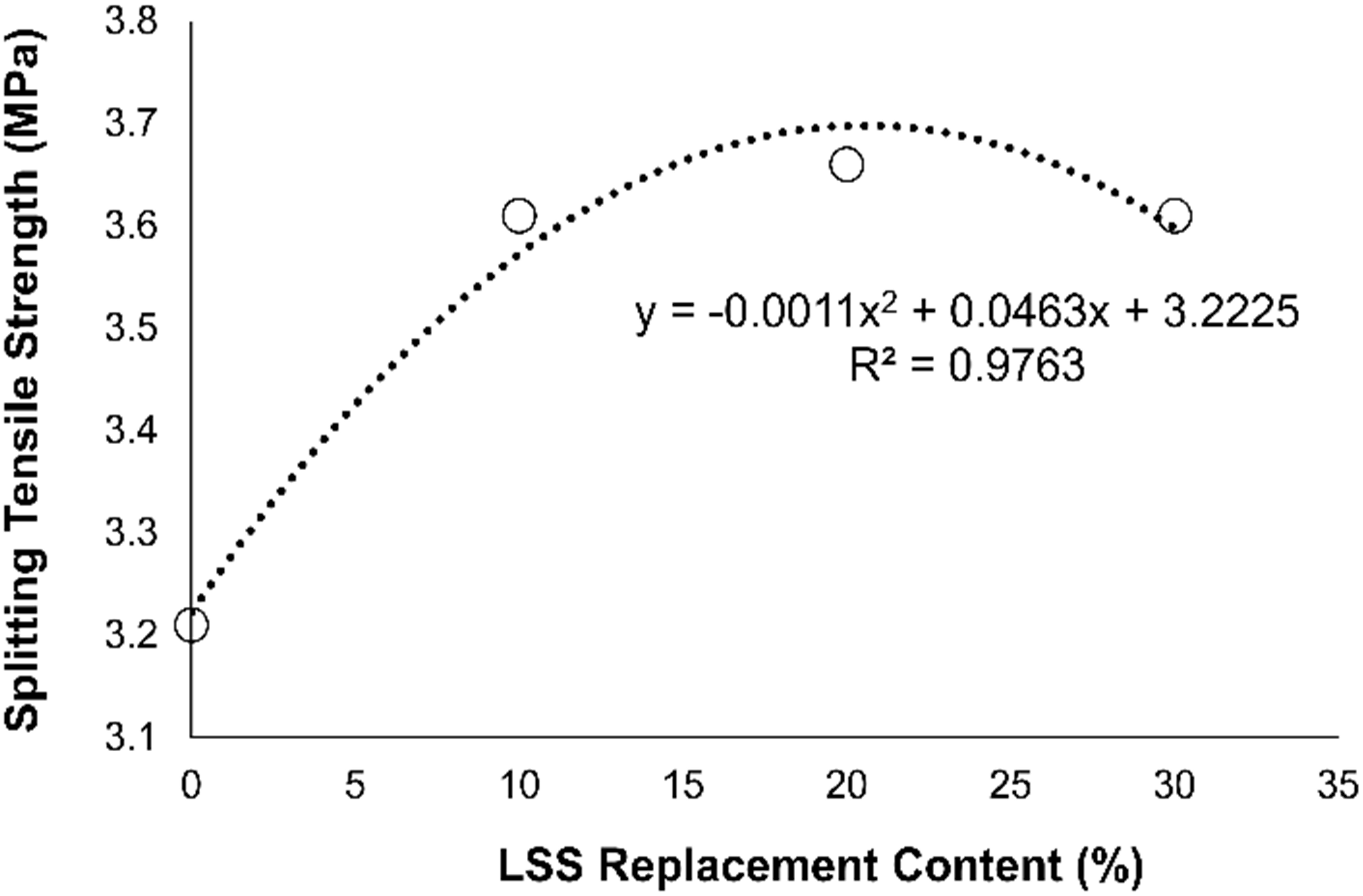
Despite the reductions in fct,sp when LSS was simply added to the concrete, one should note that the content of 1.5% (A-1.5 material) depicts a higher splitting tensile strength than the corresponding materials with 1% (A-1) and 2% (A-2) of LSS. This is in accordance with earlier publications from PRASAD et al. [7], ÇELIK et al. [36] and KHOSO et al. [57], who determined an optimum LSS content of around 1.5% based on the splitting tensile strength tests. With respect to the progressive increases in fct,sp with increasing LSS content in the samples with partial replacement of natural sand, this is also found elsewhere [11, 48, 53, 58]. The determination of a maximum fct,sp value for a replacement content of 20% (S-20) can be observed in the present study and others as well [8, 16]. In terms of the present investigation, the regression trendline in Figure 6 suggests that the optimum LSS content is about 20.7%, which is in close alignment with the literature. Such increases in the splitting tensile strength may be explained by interlocking among the aggregate particles, which is caused by the roughness of LSS [24]. This interlocking phenomenon delays the formation and propagation of cracks, absorbs part of the traction tests, and decreases concrete shrinkage [18, 19, 21, 56].

Correlation between the splitting tensile strength values and the LSS replacement contents.
This superior resistance may also be attributed to the inherent steel properties, in that LSS acts quite similar to steel bars in the concrete [18, 19, 47]. Moreover, concrete samples with LSS show a more ductile failure mechanism, and hence cracks and other visible responses are clear before full collapse of these samples [21, 56]. On the other hand, the decreases observed for the A-series and the LSS replacement contents (in this case, 30%) are possibly caused by the formation of voids during molding and difficulties encountered during compaction of the concrete [59]. Other reasons may include low workability higher specific gravity of the final concrete, and non-uniform distribution of the LSS particles [60].
3.3. Flexural strength tests
Table 4 summarizes the maximum flexural strengths for the studied samples, as well as the corresponding standard deviations and variations from the reference materials A-0 and S-0. With respect to the materials with simple additions of LSS, the pattern of response is similar to the one observed for the compressive strength tests (see Figure 4). Several authors have reported progressive increases in the flexural strength with increasing addition of LSS content in the concrete, e. g., THENMOZHI et al. [13], ABDULHUSSEIN and ALFEEHAN [21], PRABU et al. [53], and ARAVINDASAMY et al. [61]. However, MEDDAH and BENCHEIKH [62] found slight decreases in flexural strength for the studied LSS contents, which finds agreement with the results reported in this study.
With respect to partial replacement of natural sand by LSS, the literature diverges on the response of the concrete. For instance, NOORI and IBRAHIM [54] noticed continuous increases in the flexural strength up to an optimum content of 12%. KUMAR et al. [8] observed a similar pattern for contents up to 8% of residue. Others [11, 24, 29, 48] highlighted progressive increases in the flexural strength with increasing contents of residue. A few authors [63] noticed decreases in flexural strength for higher contents.
Table 5 shows the individual residual flexural strengths (fR,i) of the concretes and for all CMOD values. The modified concretes show superior performance when compared with the reference ones, and the S-30 formulation (i. e., replacement content of 30% of LSS) provides the best findings. In addition, the use of LSS as a partial replacement of the natural sand depicts better results than a simple addition of this residue in the concrete matrix. By comparing the fR,i values with the maximum loads from Table 3, one may see that the addition of 1% of LSS (A-1) yields the most promising results within the materials with LSS incorporated into the concrete (“A” samples). This is somehow in agreement with the optimum content of 1.5% of LSS reported by QURESHI et al. [18]. Within the group of materials with LSS partially replacing the natural sand (“S” samples), one may notice that the replacement content of 30% of LSS (S-30) shows the best outcomes.
Results of the individual residual flexural strengths (fR,i) and standard deviations (SD) for the studied concretes.
The superior performance of S-30 in terms of residual flexural strength suggests the existence of an energy absorption mechanism. Such a behavior is mainly attributed to the bridging effect of stress transmission in the cracks provided by LSS. As the cementitious matrix cracks, the LSS particles act as mechanical anchors and connect the fracture surfaces with each other, thus delaying the appearance and increase of cracks.
3.4. Modulus of elasticity
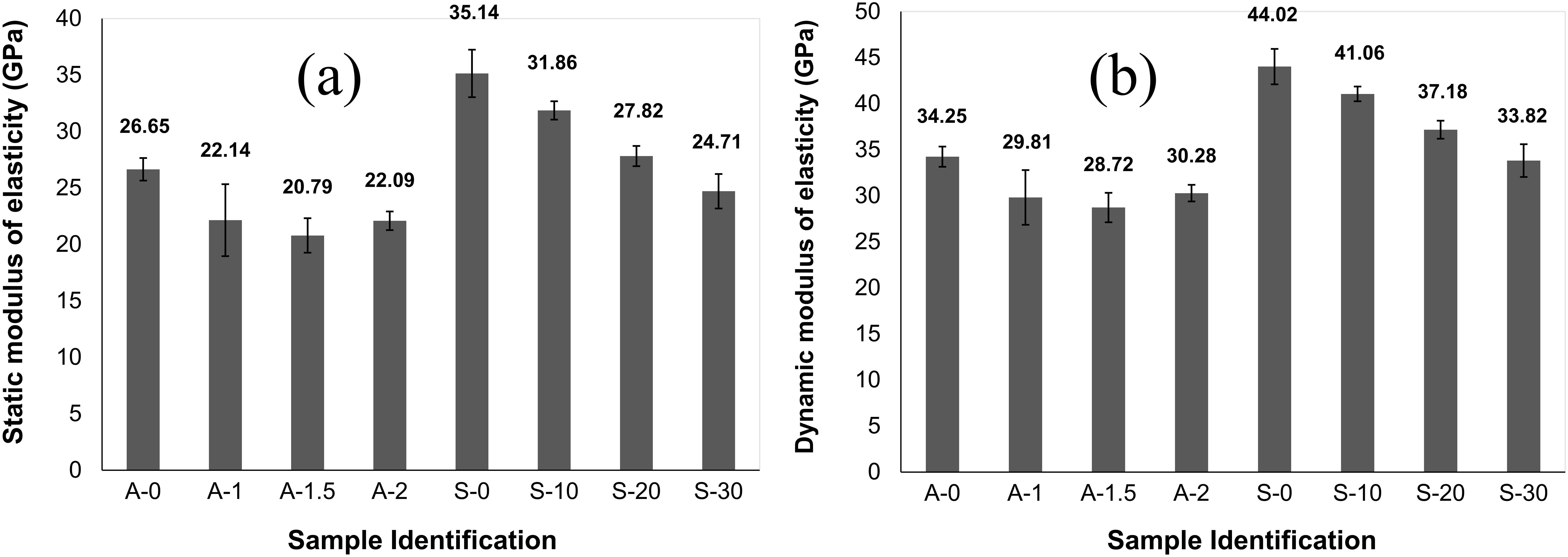
Figures 7a and 7b show the Eci and Ecd values of the studied concretes, respectively. In general, the moduli decrease with increasing LSS contents, regardless of the technique used in the incorporation of the residue (simple addition or partial replacement of natural sand).
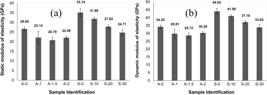
Moduli of elasticity of the studied concrete dosages prepared with a simple addition (letter “A”) or a partial replacement of the natural sand (letter “S”) by lathe steel scrap: (a) static modulus Eci; and (b) dynamic modulus Ecd.
Differently from several publications from the literature [11, 12, 21, 60], the modulus of elasticity mainly decreases in this study with increasing contents of residue. One possible explanation for this discrepancy is that the modulus of elasticity is directly related with the compressive strength, as dictated by the NBR 6118 standard [64]. Another possible explanation could be the LSS particle distribution and sizes within the concrete matrices, and microstructural discontinuities. As based on the phenomena found in other residues for concretes [65], excessive concentrations of LSS particles may disrupt the homogeneity of the concrete mixtures. In terms of LSS, MEDDAH and BENCHEIKH [62] verified an increase in porosity with both increasing LSS content and fiber length. Hence, this may potentially lead to weaker bonding between LSS particles and the cementitious phases. Although porosity was not directly measured, the low workability of the mixtures with high LSS content suggests that manual compaction was less effective, thus potentially leading to increased macro-porosity and significantly affecting stiffness of the material. Moreover, a few studies reported decreases or marginal increases in the modulus of elasticity – or Young’s modulus – after the addition of steel fibers to the concrete, including the LSS residue [12, 66, 67].
3.5. Feasibility analysis and corresponding rankings
Table 6 contains a summary of the compliance requirements for the use of the concrete dosages in rigid pavements according to the Brazilian standards [38]. None of the concretes may be used as concrete slabs in paving applications, since at least one mechanical property or parameter is not met. Overall, it can be implied that one or more concretes with LSS will be suitable for paving use if the dosage parameters are revised. This may be applied to the concrete with the addition of 2% of LSS (A-2), in which the splitting tensile strength and the compressive strength are comparable to the ones of the base material (A-0). These observations are in alignment with SHRIVASTAVA and JOSHI [68], once these authors recommended a concrete with 1.5% of LSS for obtaining higher service lives, less corrosion and cracks and better serviceability.
Since none of the concretes met all the required properties and parameters for rigid pavements set by the Brazilian standards [38], the mix dosages may be modified to achieve such properties and parameters. To reach these objectives, some possibilities include the use (or change) in the superplasticizer contents. Even though the mixes with LSS have superplasticizer in the composition, the contents are similar. Another suggestion is the combination of LSS with a granulometric curve more similar to the natural sand and a higher mortar content to cover the surface of the LSS particles, as well as to improve the slump value and the mechanical properties of the concrete reinforced with LSS. Furthermore, other properties must be taken into account for the application of LSS-reinforced concrete for pavements, e. g., chloride corrosion resistance, risk of corrosion, long-term durability, and freeze-thaw cycles. The chloride corrosion resistance can be enhanced with an anti-corrosion coating and the dosage threshold for steel fibers [69].
Furthermore, studies about the applicability of different materials in rigid pavement concrete can be found in the literature, e. g., KHAN et al. [70] and HASHIM et al. [71]. These authors demonstrated that the addition of 5% of bentonite, 10% of silica fume, 0.75% of polypropylene fibers, and ultrafine cerium dioxide particles into recycled coarse aggregate concrete reduces chloride migration in concrete, thereby increases the chloride resistance of the concrete. To deal with freeze-thaw cycles, the steel fibers suppress the expansion of internal cracks [71]. In any case, further investigations are needed to better understand the effect of these variables on the performance of the concrete reinforced with LSS.
Table 7 provides comparative rankings of the concretes studied here, as based on the outcomes of the mechanical properties determined in the laboratory. Better results – i. e., higher fct, fct,sp, Ecd, and Eci values, as well as higher maximum loads in the flexural strength tests – received higher positions in the corresponding rankings. On average, the formulation with replacement of 10% of natural sand by LSS (S-10) shows the best results in all tests, followed by the S-20 material. The concretes with simple addition of LSS do not yield promising laboratory findings, regardless of the percentage of residue.
Although the literature mainly emphasizes that both techniques for incorporating LSS into the concrete can yield better hardened concrete properties, a partial replacement of natural sand by this residue may further contribute to a more rational use of natural (and limited) resources. Moreover, literature review papers indicate that the LSS contents in the formulations with a simple addition of this residue are very low, typically not exceeding 2%. When the workability of the concrete decreases to critical levels, these authors recommend the incorporation of superplasticizers [72, 73]. Hence, it appears that a combined effect of reducing the amount of natural aggregates and increasing the LSS content is the best approach for producing more ecological concretes and with improved mechanical properties. For comparison purposes, CO2 emissions for 1 m3 of concrete may be reduced by almost 15% by selecting LSS fibers rather than glass fibers. This is equivalent to a reduction of 38 kg in the total mass of CO2 for producing 1.0 m3 of concrete, according to the environmental assessment methodology EPD 2018 together with the European Life Cycle Database – ELCD [74].
4. CONCLUSIONS AND RECOMMENDATIONS
The present study assessed the fresh and hardened properties of concretes with Lathe Steel Scrap (LSS). This was made by adding the residue as a fiber at the contents of 1%, 1.5% and 2% (A-1, A-1.5, and A-2 formulations, respectively), as well as by partially replacing the natural sand fraction by LSS at the contents of 10%, 20% and 30% (S-10, S-20, and S-30 formulations, respectively). The workability of the fresh concrete was measured in the slump test, whereas the hardened concrete properties included compressive strength, splitting tensile strength, flexural strength, and modulus of elasticity. The following are the major findings of the investigation:
-
Slump gradually decreases with increasing LSS content, but the loss of workability is more pronounced for the S-10, S-20, and S-30 materials;
-
The compressive strength (fc) mainly decreases with increasing contents of the residue, but both a peak value for the S-10 material and a slight increase in fc for the A-2 material could be seen; these observations suggest the existence of at least one optimum LSS content in the concrete dosages;
-
The responses of the formulations vary according the splitting tensile strength (fct,sp) values: while the ones with partial replacement of the fine aggregates by LSS showed much better fct,sp results, the ones with simple addition of LSS typically depicted worse performance than the reference concrete A-0;
-
The individual residual flexural strength (fR,i) values of the LSS-modified concretes are higher than the corresponding reference concretes A-0 and S-0, but the results are better when LSS is not added to the concrete as a fiber; and
-
The static and dynamic moduli of elasticity (Eci and Ecd, respectively) decreases with increasing LSS contents, regardless of the incorporation method; this may be attributed to the correlation between the modulus of elasticity and the compressive strength and disruptions in the homogeneity of the concrete matrices with LSS, especially for higher contents of the residue.
It should be noticed that none of the studied concretes may be used for rigid paving applications, since one or more requirements set by the Brazilian rigid pavement manual are not met. Nevertheless, the S-10 formulation provides the best findings in a general context. It is believed that adjustments in the dosage may deal with the technical limitations of this concrete with 10% of LSS, including a higher compressive strength (minimum targeted value of 30 MPa) and a greater workability (minimum slump value of 70 mm). Additionally, higher LSS contents may help in saving natural resources and contribute to the reduction of CO2 emissions, thereby minimizing the negative effects of global warming.
Based on the findings and the limitations of the study reported here, the following suggestions for future investigations can be presented:
-
Porosity, air voids and hardened density of the concretes reinforced with LSS;
-
The crack patterns of the LSS-reinforced concretes, especially in the flexural tests;
-
New dosages of concretes with partial replacement of natural sand by LSS, especially by selecting an LSS granulometric curve more similar to the one of the natural sand; and
-
The effects of freeze-thaw cycles and chloride corrosion on the mechanical resistance and performance of LSS-reinforced concretes.
5. ACKNOWLEDGMENTS
The authors thank Professors and laboratory technicians from the Guarapuava and Curitiba campuses of the Federal University of Technology-Parana (UTFPR) for their support in the preparation of samples and data collection during the laboratory tests. This study was financed in part by the Coordenação de Aperfeiçoamento de Pessoal de Nível Superior – Brasil (CAPES) – Finance Code 001.
6. DATA AVAILABILITY
All data generated or analyzed during this study are included in this published article.
7. BIBLIOGRAPHY
-
[1] MHAYA, A.M., BAHAROM, S., BAGHBAN, M.H., et al., “Systematic experimental assessment of POFA concrete incorporating waste tire rubber aggregate”, Polymers, v. 14, n. 11, pp. 2294, 2022. doi: https://doi.org/10.3390/polym14112294. PubMed PMID: 35683966.
» https://doi.org/10.3390/polym14112294 -
[2] WANG, Q., SUN, S.-K., WANG, Z.-M., et al., “Physical properties, hydration mechanism, and leaching evaluation of the Portland cement prepared from carbide residue”, Journal of Cleaner Production, v. 366, n. 132777, pp. 132777, 2022. doi: https://doi.org/10.1016/j.jclepro.2022.132777.
» https://doi.org/10.1016/j.jclepro.2022.132777 -
[3] CARVALHO, C.M., BARBOSA, N.P., BEZERRA, U.T., et al., “Red ceramic industry residues: used to produce Portland cement”, Case Studies in Construction Materials, v. 13, n. e00449, pp. e00449, 2020. doi: https://doi.org/10.1016/j.cscm.2020.e00449.
» https://doi.org/10.1016/j.cscm.2020.e00449 -
[4] HASSANI, M.S., MATOS, J.C., ZHANG, Y., et al., “Green concrete with glass powder – a literature review”, Sustainability (Basel), v. 15, n. 20, pp. 14864, 2023. doi: https://doi.org/10.3390/su152014864.
» https://doi.org/10.3390/su152014864 -
[5] SELLITTO, M.A., MURAKAMI, F.K., “Destination of the waste generated by a steelmaking plant: a case study in Latin America”, Aestimum (Firenze), v. 77, pp. 127–144, 2020. doi: https://doi.org/10.13128/aestim-9025.
» https://doi.org/10.13128/aestim-9025 -
[6] KARALAR, M., ÖZKILIÇ, Y.O., DEIFALLA, A.F., et al., “Improvement in bending performance of reinforced concrete beams produced with waste lathe scraps”, Sustainability (Basel), v. 14, n. 19, pp. 12660, 2022. doi: https://doi.org/10.3390/su141912660.
» https://doi.org/10.3390/su141912660 -
[7] PRASAD, B.P., MAANVIT, P.S., JAGARANPU, D.C.K., et al., “Flexural behavior of fiber reinforced concrete incorporation with lathe steel scrap”, Materials Today: Proceedings, v. 33, n. 1, pp. 196–200, 2020. doi: https://doi.org/10.1016/j.matpr.2020.03.793.
» https://doi.org/10.1016/j.matpr.2020.03.793 -
[8] KUMAR, D.P., GLADSON, G.J.N., CHANDRAMAULI, A., et al., “Influence of reinforcing waste steel scraps on the strength of concrete”, Materials Today: Proceedings, v. 69, n. 3, pp. 1134–1137, 2022. doi: https://doi.org/10.1016/j.matpr.2022.08.179.
» https://doi.org/10.1016/j.matpr.2022.08.179 - [9] OTTINK, T., “Recycling of steel grinding swarf via production of iron chloride coagulants for water treatment”, M.Sc. Thesis, Chalmers University of Technology, Gothenburg, Sweden, 2024.
- [10] ABBAS, A.H., “Management of steel solid waste generated from lathes as fiber reinforced concrete”, European Journal of Scientific Research, v. 50, n. 4, pp. 481–485, 2011.
-
[11] MAŁEK, M., KADELA, M., TERPIŁOWSKI, M., et al., “Effect of metal lathe waste addition on the mechanical and thermal properties of concrete”, Materials (Basel), v. 14, n. 11, pp. 2760, 2021. doi: https://doi.org/10.3390/ma14112760. PubMed PMID: 34071033.
» https://doi.org/10.3390/ma14112760 -
[12] SHEWALUL, Y.W., “Experimental study of the effect of waste steel scrap as reinforcing material on the mechanical properties of concrete”, Case Studies in Construction Materials, v. 14, n. e00490, pp. e00490, 2021. doi: https://doi.org/10.1016/j.cscm.2021.e00490.
» https://doi.org/10.1016/j.cscm.2021.e00490 - [13] THENMOZHI, S., GOWRI, V., BHUINYAN, S.S., et al., “Experimental investigations on fiber reinforced concrete with lathe fibers for sustainable construction”, BioGecko, v. 12, n. 3, pp. 2928–2940, 2023.
-
[14] JARAL, M., BAJAJ, E.M., “Structural strength enhancement of rigid pavement using scrap steel fibre reinforcement”, International Journal of Scientific Development and Research, v. 3, n. 4, pp. 306–310, 2018. http://www.journalelasti.br/145163, accessed in June, 2026.
» http://www.journalelasti.br/145163 -
[15] SHEIKH, M.A., REZA, M., “Strengthening of concrete using lathe scrap waste”, International Research Journal of Engineering and Technology, v. 7, n. 10, pp. 464–470, 2020. https://www.irjet.net/archives/V7/i10/IRJET-V7I1077.pdf, accessed in June, 2026.
» https://www.irjet.net/archives/V7/i10/IRJET-V7I1077.pdf -
[16] ASFAR, A.S.A.K., AJITHKUMAR, D., VIDHYA, K., et al., “Determination of hardened properties of high-strength concrete with partially replacement of fine aggregate using lathe scraps”, Materials Today: Proceedings, v. 80, n. 3, pp. 3178–3180, 2023. doi: https://doi.org/10.1016/j.matpr.2021.07.189.
» https://doi.org/10.1016/j.matpr.2021.07.189 -
[17] INDURKAR, M., DHAWALE, G.D., KEDAR, R.S., et al., “Experimental study on partial replacement of fine aggregate by lathe steel scrap in concrete”, International Journal of Advanced Research in Science, Communication and Technology, v. 2, n. 2, pp. 679–694, 2022. doi: https://doi.org/10.48175/IJARSCT-3368.
» https://doi.org/10.48175/IJARSCT-3368 -
[18] QURESHI, Z.N., RAINA, Y.M., RUFAIE, S.M.A., “Strength characteristics analysis of concrete reinforced with lathe machine scrap”, International Journal of Engineering Research and General Science, v. 4, n. 4, pp. 210–217, 2016. https://www.pnrsolution.org/Datacenter/Vol4/Issue4/28.pdf, accessed in June, 2026.
» https://www.pnrsolution.org/Datacenter/Vol4/Issue4/28.pdf -
[19] DARJI, S., BORSADIYA, K., MOMIN, A., et al. “Analysis of properties of mix design concrete using steel scrap”, International Research Journal of Engineering and Technology, v. 5, n. 3, pp. 1900–1903, 2018. https://www.irjet.net/archives/V5/i3/IRJET-V5I3429.pdf, accessed in June, 2026.
» https://www.irjet.net/archives/V5/i3/IRJET-V5I3429.pdf -
[20] SINGH, V., DOGRA, D., “Evaluation of mechanical properties of concrete by using lathe steel fiber”, Journal of Emerging Technologies and Innovative Research, v. 10, n. 3, pp. 187–218, 2023. https://www.jetir.org/papers/JETIR2303427.pdf, accessed in June, 2026.
» https://www.jetir.org/papers/JETIR2303427.pdf -
[21] ABDULHUSSEIN, S.S., ALFEEHAN, A.A., “Mechanical properties of structural aerated lightweight concrete reinforced with iron lathing waste”, Journal of Engineering and Sustainable Development, v. 25, n. 1, pp. 100–108, 2021. doi: https://doi.org/10.31272/jeasd.25.1.9.
» https://doi.org/10.31272/jeasd.25.1.9 -
[22] PUROHIT, R., DULAWAT, S., AHMAD, E., “To enhance mechanical properties of concrete by using lathe steel scrap as reinforced material”, Journal of Engineering Sciences, v. 11, n. 6, pp. 206–214, 2020. https://jespublication.com/upload/2020-110634.pdf, accessed in June, 2026.
» https://jespublication.com/upload/2020-110634.pdf -
[23] BALAMURALIKRISHNAN, R., ARAVIND, N., WAHAIBI, S.A.A., ““An experimental study on strength and corrosion of concrete with steel scrap”, EPH -”, International Journal of Science and Engineering, v. 3, n. 1, pp. 14–19, 2017. doi: https://doi.org/10.53555/eijse.v3i1.39.
» https://doi.org/10.53555/eijse.v3i1.39 -
[24] ALTHOEY, F., HOSEN, M.D., “Physical and mechanical characteristics of sustainable concrete comprising industrial waste materials as a replacement of conventional aggregate”, Sustainability (Basel), v. 13, n. 8, pp. 4306, 2021. doi: https://doi.org/10.3390/su13084306.
» https://doi.org/10.3390/su13084306 -
[25] VASUDEV, R., VISHNURAM, B.G., “Experimental studies of the application of turn steel scraps as fibres in concrete – a rehabilitative approach”, IACSIT International Journal of Engineering and Technology, v. 6, n. 4, pp. 1885–1899, 2014. http://www.enggjournals.com/ijet/docs/IJET14-06-04-050.pdf
» http://www.enggjournals.com/ijet/docs/IJET14-06-04-050.pdf -
[26] ABDULHUSSEIN, S.S., ALFEEHAN, A.A., “Utilization of iron lathe waste and post-tensioned steel reinforcement in lightweight concrete ribbed slabs”, In: Proceedings of the 2nd Al-Noor International Conference for Science and Technology, pp. 44–50, Baku, Azerbaijan, Aug. 2020. doi: https://doi.org/10.1109/NICST50904.2020.9280310.
» https://doi.org/10.1109/NICST50904.2020.9280310 -
[27] SHARBA, A.A.K., IBRAHIM, A.J., “Evaluating the use of steel scrap, waste tiles, waste paving blocks and silica fume in flexural behavior of concrete”, Innovative Infrastructure Solutions, v. 5, n. 94, pp. 94, 2020. doi: https://doi.org/10.1007/s41062-020-00341-8.
» https://doi.org/10.1007/s41062-020-00341-8 -
[28] MOHAMMED, H.J., ABBAS, A.H., HUSAIN, M.A., “Using of recycled rubber tires and steel lathes waste as fibbers to reinforcing concrete”, Iraqi Journal of Civil Engineering, v. 9, n. 1, pp. 27–38, 2013. doi: https://doi.org/10.37650/ijce.2013.80363.
» https://doi.org/10.37650/ijce.2013.80363 -
[29] ISMAIL, Z.Z., AL-HASHMI, E.A., “Reuse of waste iron as a partial replacement of sand in concrete”, Waste Management, v. 28, n. 11, pp. 2048–2053, 2008. doi: https://doi.org/10.1016/j.wasman.2007.07.009. PubMed PMID: 17928216.
» https://doi.org/10.1016/j.wasman.2007.07.009 - [30] TUAUM, A., HAILESELASSIE, B., TSEHAYE, Y.T. “Experimental investigation of rigid concrete pavements incorporated with waste lathe scrap steel fiber”, In: Proceedings of the 1st International Conference on Engineering and Technology, pp. 124–135, Mekelle, Tigray, Ethiopia, Mar. 2020.
-
[31] ROUT, M.K.D., SAHDEO, S.K., BISWAS, S., et al., “Feasibility study of reclaimed asphalt pavements (RAP) as recycled aggregates used in rigid pavement construction”, Materials (Basel), v. 16, n. 4, pp. 1504, 2023. doi: https://doi.org/10.3390/ma16041504. PubMed PMID: 36837135.
» https://doi.org/10.3390/ma16041504 -
[32] ÇELIK, A.I., ÖZKILIÇ, Y.O., BAHRAMI, A., et al., “Mechanical performance of geopolymer concrete with micro silica fume and waste steel lathe scraps”, Case Studies in Construction Materials, v. 19, n. e02548, pp. e02548, 2023. doi: https://doi.org/10.1016/j.cscm.2023.e02548.
» https://doi.org/10.1016/j.cscm.2023.e02548 -
[33] PINTO, F.B., “Análise da influência da adição de resíduos metálicos nas propriedades do concreto autoadensável – CAA”, Tese de D.Sc., Universidade Federal de Itajubá, Itajubá, MG, Brasil, 2019. https://repositorio.unifei.edu.br/jspui/handle/123456789/2336, accessed in June, 2026.
» https://repositorio.unifei.edu.br/jspui/handle/123456789/2336 - [34] DIAS, J.C.R., MAZZARO, J.V.V., REIS, S.C., et al., “Comportamento do concreto reforçado com cavacos de aço e alumínio: resistência à tração por compressão diametral”, Brazilian Journal of Development, v. 7, n. 5, pp. 51880–51889, 2021.
- [35] ASSOCIAÇÃO BRASILEIRA DE NORMAS TÉCNICAS, NBR ISO 3685: Ensaio de Vida da Ferramenta de Ponta Única para Torneamento, Rio de Janeiro, ABNT, 2017.
-
[36] ÇELIK, A.İ., ÖZKILIÇ, Y.O., ZEYBEK, Ö., et al., “Performance assessment of fiber-reinforced concrete produced with waste lathe fibers”, Sustainability (Basel), v. 14, n. 19, pp. 11817, 2022. doi: https://doi.org/10.3390/su141911817.
» https://doi.org/10.3390/su141911817 - [37] ASSOCIAÇÃO BRASILEIRA DE NORMAS TÉCNICAS, NBR 17054: Agregados – Determinação da Composição Granulométrica – Método de Ensaio, Rio de Janeiro, ABNT, 2022.
- [38] DNIT, Manual de pavimentos rígidos, 2 ed., Rio de Janeiro, Instituto de Pesquisas Rodoviárias, 2005.
- [39] RODRIGUES, P.P.F., Parâmetros de dosagem do concreto, 2 ed., São Paulo, Associação Brasileira de Cimento Portland, 1995.
- [40] ASSOCIAÇÃO BRASILEIRA DE NORMAS TÉCNICAS, NBR 5738: Concreto – Procedimento para Moldagem e Cura de Corpos de Prova, Rio de Janeiro, ABNT, 2015.
- [41] ASSOCIAÇÃO BRASILEIRA DE NORMAS TÉCNICAS, NBR 16889: Concreto – Determinação da Consistência pelo Abatimento do Tronco de Cone, Rio de Janeiro, ABNT, 2020.
- [42] ASSOCIAÇÃO BRASILEIRA DE NORMAS TÉCNICAS, NBR 5739: Concreto – Ensaio de Compressão de Corpos de Prova Cilíndricos, Rio de Janeiro, ABNT, 2018.
- [43] ASSOCIAÇÃO BRASILEIRA DE NORMAS TÉCNICAS, NBR 7222: Concreto e Argamassa – Determinação da Resistência à Tração por Compressão Diametral de Corpos de Prova Cilíndricos, Rio de Janeiro, ABNT, 2011.
- [44] ASSOCIAÇÃO BRASILEIRA DE NORMAS TÉCNICAS, NBR 16940: Concreto Reforçado com Fibras – Determinação das Resistências à Tração na Flexão (Limite de Proporcionalidade e Resistências Residuais) – Método de Ensaio, Rio de Janeiro, ABNT, 2021.
- [45] ASSOCIAÇÃO BRASILEIRA DE NORMAS TÉCNICAS, NBR 8522-2: Concreto Endurecido – Determinação dos Módulos de Elasticidade e de Deformação. Parte 2: Módulo de Elasticidade Dinâmico pelo Método das Frequências Naturais de Vibração, Rio de Janeiro, ABNT, 2021.
- [46] ASSOCIAÇÃO BRASILEIRA DE NORMAS TÉCNICAS, NBR 8522-1:Concreto Endurecido – Determinação dos Módulos de Elasticidade e de Deformação. Parte 1: Módulo de Elasticidade Estático à Compressão, Rio de Janeiro, ABNT, 2021.
-
[47] ADETUKASI, A.O., “Strength and deflection characteristics of concrete reinforced with steel swarf”, IOP Conference Series. Materials Science and Engineering, v. 640, n. 012044, pp. 012044, 2019. doi: https://doi.org/10.1088/1757-899X/640/1/012044.
» https://doi.org/10.1088/1757-899X/640/1/012044 -
[48] BHAGYAWATI, M., SAHA, L.K., KUMAR, V., et al., “Experimental study on properties of concrete by partial replacement of fine aggregates with waste steel chips”, International Journal of Civil Engineering and Technology, v. 9, n. 5, pp. 912–918, 2018. https://iaeme.com/MasterAdmin/Journal_uploads/IJCIET/VOLUME_9_ISSUE_5/IJCIET_09_05_099.pdf, accessed in June, 2026.
» https://iaeme.com/MasterAdmin/Journal_uploads/IJCIET/VOLUME_9_ISSUE_5/IJCIET_09_05_099.pdf -
[49] ISMAIL, Z.Z., AL-HASHMI, E.A., “Validation of using mixed iron and plastic wastes in concrete”, In: Proceedings of the 2nd International Conference on Sustainable Construction Materials and Technologies, pp. 393–404, Ancona, Italy, June 2010. http://www.claisse.info/2010%20papers/l40.pdf, accessed in June, 2026.
» http://www.claisse.info/2010%20papers/l40.pdf -
[50] SHRIVASTAVA, P., JOSHI, Y.P., “Reuse of lathe waste steel scrap in concrete pavements”, Journal of Engineering Research and Applications, v. 4, n. 12, pp. 45–54, 2014. https://www.ijera.com/papers/Vol4_issue12/Part%20-%204/I0412044554.pdf, accessed in June, 2026.
» https://www.ijera.com/papers/Vol4_issue12/Part%20-%204/I0412044554.pdf -
[51] KATMAN, H.Y.B., KHAI, W.J., BHEEL, N., et al., “Fabrication and characterization of cement-based hybrid concrete containing coir fiber for advancing concrete construction”, Buildings (Basel, Switzerland), v. 12, n. 1450, pp. 1450, 2022. doi: https://doi.org/10.3390/buildings12091450.
» https://doi.org/10.3390/buildings12091450 -
[52] KIRGIZ, M.S., KHATIB, J., CAMPILHO, R.D.S.G., et al., “Modification mechanism of silver nanoparticles-functionalized MWCNT and GGBFS and CQDs on the structural properties of geopolymer reinforced-composite beam”, Scientific Reports, v. 15, n. 1, pp. 27997, 2025. doi: https://doi.org/10.1038/s41598-025-08910-6. PubMed PMID: 40745426.
» https://doi.org/10.1038/s41598-025-08910-6 - [53] PRABU, M., VIGNESH, K., SAII PRASANNA, N., et al., “Experimental study on concrete in partial replacement of fine aggregate with lathe waste”, International Journal of Scientific and Engineering Research, v. 11, pp. 68–72, 2020.
-
[54] NOORI, K.M.-G., IBRAHIM, H.H., “Mechanical properties of concrete using iron waste as a partial replacement of sand”, Eurasian Journal of Science and Engineering, v. 3, n. 3, pp. 75–82, 2018. doi: https://doi.org/10.23918/eajse.v3i3p75.
» https://doi.org/10.23918/eajse.v3i3p75 - [55] MANSI, A.H., GALAL, O.H., LAFI, M., “The utilisation of lathe steel waste fibers to improve plain concrete”, In: Proceedings of the 9th International Conference on Advances in Civil, Structural and Mechanical Engineering, pp. 25–28, Rome, Italy, Dec. 2019.
-
[56] HUSSEIN, O.A., ABBAS, A.N., “Self-compacting concrete strengthening efficiency investigation by using recycled steel waste as fibers”, Ecological Engineering and Environmental Technology, v. 24, n. 3, pp. 153–160, 2023. doi: https://doi.org/10.12912/27197050/159790.
» https://doi.org/10.12912/27197050/159790 - [57] KHOSO, S., SOOMRO, Z., ALI, T., et al., “Experimental study of the effect of lathe steel fiber on the mechanical properties of concrete”, Webology, v. 19, n. 2, pp. 4821–4832, 2022.
-
[58] PRAKASH, S., HELMAND, P., SAINI, S., “Mechanical properties of concrete in presence of iron filings as complete replacement of fine aggregates”, Materials Today: Proceedings, v. 15, n. 3, pp. 536–545, 2019. doi: https://doi.org/10.1016/j.matpr.2019.04.118.
» https://doi.org/10.1016/j.matpr.2019.04.118 -
[59] KOKILA, L.; MADHUSUDHANAN, B.; KANNAN, K.K., “Experimental investigation on concrete using steel scrap”, International Research Journal of Engineering and Technology, v. 6, n. 3, pp. 4508–4512, 2019. https://www.irjet.net/archives/V6/i3/IRJET-V6I31170.pdf, accessed in June, 2026.
» https://www.irjet.net/archives/V6/i3/IRJET-V6I31170.pdf -
[60] SATHE, S., SONAR, K., PATIL, S., “Analyzing the strength and impact resistance characteristics of concrete with lathe machine waste as fiber”, Innovative Infrastructure Solutions, v. 9, n. 376, pp. 376, 2024. doi: https://doi.org/10.1007/s41062-024-01690-4.
» https://doi.org/10.1007/s41062-024-01690-4 -
[61] ARAVINDASAMY, M., MANIKANDAN, M., SOMIYADEVI, P., “Studies on the flexural behavior of concrete beams with lathe waste in RC”, International Journal for Research in Applied Science and Engineering Technology, v. 10, n. 1, pp. 1065–1070, 2022. doi: https://doi.org/10.22214/ijraset.2022.39470.
» https://doi.org/10.22214/ijraset.2022.39470 -
[62] MEDDAH, M.S., BENCHEIKH, M., “Properties of concrete reinforced with different kinds of industrial waste fibre materials”, Construction & Building Materials, v. 23, n. 10, pp. 3196–3205, 2009. doi: https://doi.org/10.1016/j.conbuildmat.2009.06.017.
» https://doi.org/10.1016/j.conbuildmat.2009.06.017 -
[63] SEETHARAM, P.G., VIDHYA, S., BHUVANESWARI, C., et al., “Studies on properties of concrete replacing lathe scrap”, International Journal of Engineering Research & Technology (Ahmedabad), v. 6, n. 3, pp. 382–386, 2017. doi: https://doi.org/10.17577/IJERTV6IS030377.
» https://doi.org/10.17577/IJERTV6IS030377 - [64] ASSOCIAÇÃO BRASILEIRA DE NORMAS TÉCNICAS, NBR 6118: Projeto de Estruturas de Concreto, Rio de Janeiro, ABNT, 2024.
-
[65] JAHAMI, A., YOUNES, H., KHATIB, J., “Enhancing reinforced concrete beams: investigating steel dust as a cement substitute”, Infrastructures, v. 8, n. 11, pp. 157, 2023. doi: https://doi.org/10.3390/infrastructures8110157.
» https://doi.org/10.3390/infrastructures8110157 -
[66] NEVES, R.D., ALMEIDA, J.C.O.F., “Compressive behaviour of steel fibre reinforced concrete”, Structural Concrete, v. 6, n. 1, pp. 1–8, 2005. doi: https://doi.org/10.1680/stco.2005.6.1.1.
» https://doi.org/10.1680/stco.2005.6.1.1 -
[67] SRUTHI, A., GREESHMA, A.K., “Study on effect of lathe waste metal fibers in titanium dioxide ETP sludge concrete”, International Journal of Advance Engineering and Research Development, v. 3, n. 9, pp. 121–131, 2016. https://ijaerd.org/index.php/IJAERD/article/download/4914/4704, accessed in June, 2026.
» https://ijaerd.org/index.php/IJAERD/article/download/4914/4704 - [68] SHRIVASTAVA, P., JOSHI, Y.P., “Innovative use of waste steel scrap in rigid pavements”, Civil and Environmental Research, v. 6, n. 7, pp. 43–54, 2014.
-
[69] LIU, J., WEI, L., CUI, Q., et al., “Chloride corrosion resistance of steel fiber-reinforced concrete and its application in subsea tunnel linings”, Coatings, v. 15, n. 2, pp. 235, 2025. doi: https://doi.org/10.3390/coatings15020235.
» https://doi.org/10.3390/coatings15020235 -
[70] KHAN, A.M., ELAHI, A., WAQAS, R.M., et al., “Influence of bentonite, silica fume, and polypropylene fibers on green concrete for pavement and structural durability”, Scientific Reports, v. 15, n. 1, pp. 29567, 2025. doi: https://doi.org/10.1038/s41598-025-13313-8. PubMed PMID: 40796921.
» https://doi.org/10.1038/s41598-025-13313-8 -
[71] HASHIM, A.A., ANAEE, R., NASR, M.S., et al., “Mechanical properties, corrosion resistance and microstructural analysis of recycled aggregate concrete made with ceramic wall waste and ultrafine ceria”, Journal of Materials Research and Technology, v. 36, pp. 627–640, 2025. doi: https://doi.org/10.1016/j.jmrt.2025.03.154.
» https://doi.org/10.1016/j.jmrt.2025.03.154 -
[72] YU, J., YI, Z., ZHANG, Z., et al., “The effects of hybrid steel/basalt fibers on the durability of concrete pavement against freeze-thaw cycles”, Materials (Basel), v. 16, n. 22, pp. 7137, 2023. doi: https://doi.org/10.3390/ma16227137. PubMed PMID: 38005066.
» https://doi.org/10.3390/ma16227137 - [73] KHOSO, S., RAAD, J., PARVIN, A., “State of the art review on the properties of sustainable concrete using hybrid fibers”, International Journal of Energy and Environmental Engineering, v. 30, n. 1, pp. 37–52, 2023.
- [74] KAMANI, H., PITRODA, J.R., RAVAL, A.D., “Effect of steel fibres on mechanical properties of concrete: a review”, Studies in Indian Place Names, v. 40, n. 50, pp. 1670–1679, 2020.