 Analysis of nursing consultations for people with systemic arterial hypertension in Primary Health Care
Objective: to analyze nursing consultations with people with systemic arterial hypertension in primary health care according to the Brazilian Guidelines for Arterial Hypertension, the stages of the Nursing Process, and clinical communication.
Method: a cross-sectional analytical study that evaluated 29 nursing consultations performed by 13 nurses with users with arterial hypertension in four Brazilian states. The consultations were assessed using a structured checklist. The data were subjected to descriptive and bivariate analyses, using tables and graphs to characterize the sample and explore potential associations among variables.
Results: there was low adherence to the Nursing Process and the recommendations of the Brazilian Guidelines for Hypertension. Only 20% of the steps in the Nursing Process were fully complied with. Specifically, regarding the Guidelines, there was a lack of fundamental actions, such as blood pressure measurement, risk factor assessment, and communication of the diagnosis.
Conclusion: there was a weakness in the application of the Nursing Process in consultations with people with hypertension. Factors such as case complexity, interruptions, high work demands, gaps in training, and the absence of structured protocols contributed to these findings.
Descriptors:
Hypertension; Primary Health Care; Office Nursing; Nursing Process; Clinical Protocols; Nursing Care
Highlights:
(1) Social, cultural, and regional aspects must be part of the nursing process. (2) All stages of the Nursing Process and effective communication were covered. (3) Hypertension Guidelines can guide the Nursing Process in Primary Health Care. (4) The nursing process for people with hypertension needs to be improved in Primary Health Care.
Objetivo: analisar a consulta de enfermagem em pessoas com Hipertensão Arterial Sistêmica na Atenção Primária à Saúde de acordo com as Diretrizes Brasileiras de Hipertensão Arterial, as etapas do Processo de Enfermagem e a comunicação clínica.
Método: estudo transversal analítico que avaliou 29 consultas de enfermagem realizadas por 13 enfermeiros aos usuários com hipertensão arterial em quatro estados brasileiros. A avaliação das consultas foi feita por meio de um checklist estruturado. Os dados foram submetidos à análise descritiva e bivariada, utilizando tabelas e gráficos para caracterizar a amostra e explorar possíveis associações entre as variáveis.
Resultados: houve baixa adesão ao Processo de Enfermagem e às recomendações das Diretrizes Brasileiras de Hipertensão. Apenas 20% das etapas do Processo de Enfermagem foram integralmente cumpridas. Especificamente em relação às Diretrizes, observou-se a insuficiência de ações fundamentais, como a aferição da pressão arterial, a avaliação de fatores de risco e a comunicação clínica do diagnóstico.
Conclusão: houve fragilidade na aplicação do Processo de Enfermagem nas consultas às pessoas com hipertensão. Fatores como a complexidade dos casos, interrupções, alta demanda de trabalho, lacunas na formação e ausência de protocolos estruturados contribuíram para esses achados.
Descritores:
Hipertensão Arterial Sistêmica; Atenção Primária à Saúde; Enfermagem de Consultório; Processo de Enfermagem; Protocolos Clínicos; Cuidados de Enfermagem.
Destaques:
(1) Aspectos sociais, culturais e regionais precisam compor o Processo de Enfermagem. (2) Todas as etapas do Processo de Enfermagem e comunicação efetiva foram contempladas. (3) As Diretrizes de Hipertensão podem nortear o Processo de Enfermagem na Atenção Primária à Saúde. (4) O Processo de Enfermagem à pessoa com hipertensão precisa ser aprimorado na Atenção Primária à Saúde.
Objetivo: analizar la consulta de enfermería a personas con hipertensión arterial sistémica en la atención primaria de salud según las Directrices Brasileñas sobre Hipertensión Arterial, las etapas del proceso de enfermería y la comunicación clínica.
Método: un estudio analítico transversal que evaluó 29 consultas de enfermería realizadas por 13 enfermeras con usuarios con hipertensión arterial en cuatro estados brasileños. La evaluación de las consultas se realizó mediante una lista de verificación estructurada. Los datos se sometieron a análisis descriptivo y bivariado, utilizando tablas y gráficos para caracterizar la muestra y explorar posibles asociaciones entre las variables.
Resultados: hubo baja adhesión al Proceso de Enfermería y a las recomendaciones de las Directrices Brasileñas sobre Hipertensión. Solo se cumplieron completamente el 20% de las etapas del proceso de enfermería. Específicamente en relación con las Directrices, se observó que las acciones fundamentales eran insuficientes, como la medición de la presión arterial, la evaluación de factores de riesgo y la comunicación clínica del diagnóstico.
Conclusión: hubo debilidad en la aplicación del Proceso de Enfermería en las consultas a personas con hipertensión. Factores como la complejidad de los casos, las interrupciones, la alta demanda de trabajo, las lagunas en la formación y la ausencia de protocolos estructurados contribuyeron a estos hallazgos.
Descriptores:
Hipertensión; Atención Primaria de Salud; Enfermería de Consulta; Proceso de Enfermería; Protocolos Clínicos; Atención de Enfermería.
Destacados:
(1) Los aspectos sociales, culturales y regionales deben formar parte del proceso de enfermería. (2) Se cubrieron todas las etapas del proceso de enfermería y la comunicación efectiva. (3) Las Directrices de Hipertensión pueden guiar el proceso de enfermería en la Atención Primaria de Salud. (4) El proceso de enfermería a personas con hipertensión necesita mejorar en la Atención Primaria de Salud.
Introduction
A strengthened Primary Health Care (PHC) system that is adequately sized, territorially based, and involves community participation is associated with health systems that deliver better outcomes and greater access to services for the population1-2. In Brazil, systemic arterial hypertension (SAH) is one of the most influential factors in premature mortality from cardiovascular diseases (CVD) when associated with dietary, metabolic, and environmental factors3. Thus, PHC is a fertile field for implementing evidence-based public policies and early interventions to reduce the incidence and complications of SAH.
In the longitudinal follow-up of patients with SAH in PHC, the Brazilian Guidelines on Hypertension (Diretrizes Brasileiras de Hipertensão Arterial) recommend that care include a clinical approach that addresses the psychosocial, cultural, and socioeconomic factors that determine health4-6. Therefore, the importance of managing SAH in PHC is noteworthy, since this aspect of the Health Care Network considers the conditions that can determine the cardiovascular health and outcomes of the population.
Thus, in the context of PHC, nurses play a prominent role in care management, particularly in addressing behavioral changes and improving quality of life. In this scenario, studies demonstrate that nursing interventions in the care of people with SAH in PHC are associated with reduced blood pressure levels, improved anthropometric data, treatment adherence, and positive behavioral changes7-9.
Among the tools used by nurses in PHC, the Nursing Process (NP) stands out. This is a methodological instrument through which the Nursing Consultation10 is carried out, contributing to the systematization of clinical reasoning, the identification of health needs and care planning, thereby enabling a care plan that strengthens care coordination, longitudinality, and the evaluation of health outcomes.
Thus, nurses play an essential role in providing user-centered care through interventions that address health needs, thereby fostering a bond of trust11-12. Still from this perspective, an emerging review of personalized communication strategies points to a positive relationship between customized nursing care and satisfaction/adherence to the agreed treatment13, as well as a favorable contribution to building bonds and empowering users in self-care14.
Although the NP is legally defined and recognized as the method for implementing nursing care, several challenges remain to its effective use in Brazilian PHC, both related to its operationalization and to the specificities of caring for people with SAH. Thus, to support improvements in clinical practice and consolidate the implementation of the NP in the care of users with SAH in PHC, we seek to understand how nurses have used the elements recommended by the Brazilian Guidelines for Arterial Hypertension in Nursing Consultations, considering the stages of the NP and clinical communication strategies.
Thus, this study aims to analyze nursing consultations for patients with systemic arterial hypertension (SAH) in primary health care (PHC) in accordance with the Brazilian Guidelines for Arterial Hypertension, the stages of the nursing process (NP), and clinical communication.
Method
The writing of this study followed the Strengthening the Reporting of Observational Studies in Epidemiology (STROBE) checklist15.
Study design and location
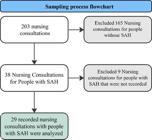
This is a cross-sectional analytical observational study based on secondary data from a multicenter study entitled “Advanced practice skills in care management in nursing consultations in Primary Health Care: situational diagnosis and training proposal”, which evaluates different lines of care for nurses in PHC through the recording of 203 nursing consultations performed by 32 nurses. Data collection took place in 17 Basic Health Units (BHUs) in four different federal units, with 6 located in the North, 7 in the Northeast, and 4 in the Southeast of the country.
This study included nursing consultations with individuals who self-reported having SAH and who were recorded in full (n=29), conducted by 13 nurses.
Population and sample definition
The sampling process was defined for convenience, considering the inclusion of different scenarios in Brazil (Figure 1). Thus, given the country’s continental size, it was decided to consider three of the five macro-regions in cities with different demographic profiles, morbidity and mortality rates, and service offerings: two large towns and two small cities.
Selection criteria
The participants in this study were nurses and users present at the recorded nursing consultation. The inclusion criteria for nurses were to have been working in direct care for PHC users for at least one year. For users, the inclusion criterion was that they sought care from a nurse who had agreed to participate in the study.
The nurses and users who agreed to participate in the study signed the Free and Informed Consent Form, the Image and Voice Authorization Form, and the Demographic Characterization Instrument.
Data collection
Data collection for the multicenter study took place between May and July 2022, following invitations and agreements with management and participating nurses. Two researchers collected the data. The first researcher was responsible for inviting users into the waiting room and obtaining their consent. She also characterized users by sociodemographic data, reasons for seeking nursing consultation, and health history, and nurses by sociodemographic data, training, field characteristics, and professional motivation. The second researcher was responsible for operating the two GoPro® Hero9 cameras: one positioned in the office and the other secured to the nurse’s body with an elastic chest strap.
In addition to the recording, consultation data were extracted from physical or electronic medical records after the consultation. The data were obtained using an instrument developed by researchers, designed to evaluate the recording of the nursing process in medical records. This process enabled evaluation of the stages of the nursing process and clinical reasoning that were not verbally communicated to patients.
Additionally, in this study, data were extracted from recordings of nursing consultations with patients with SAH from September to October 2023, focusing on the evaluation of recommendations from the Brazilian Guidelines for SAH, based on the NP stages.
Study variables and data collection instruments
A checklist was developed to evaluate nursing consultations regarding care for users with hypertension. This document was based on the Brazilian Guidelines for Hypertension4 to support the evaluation of clinical parameters; COFEN (Federal Nursing Council) Resolution 736/202410 and the Nursing Process in Primary Health Care Manual16 to evaluate compliance with the stages of the Nursing Process and the communication skills guide Calgary-Cambridge Guide to the Medical Interview - Communication Process17 to evaluate the clinical communication strategies used.
The process of constructing the checklist items and sub-items was conducted through joint evaluation by the article’s authors, a team composed of nurses and nutritionists with extensive experience in research and in caring for users who present chronic conditions in PHC. The discussion of the concepts and the integration of the questions that make up the checklist were carried out in meetings attended by at least three researchers. After reaching consensus, a pilot analysis of two nursing consultations was conducted to calibrate the instrument and standardize the evaluators in terms of concepts and responses.
Based on the pilot results, discrepancies among the evaluators’ responses were discussed to reach a final consensus. In these meetings, in addition to analyzing the content, questions were removed, new ones added, and others rewarded as needed. This process resulted in weekly 1h30 sessions for three weeks. After agreement was reached, the process of evaluating all nursing consultations by two nurses (LC and CD) began.
The items and sub-items of the checklist were organized into the following sections: “Nursing Assessment”, “Nursing Diagnosis”, “Nursing Planning”, “Implementation of Nursing Care”, “Nursing Progress”, “Communication”, and “Characterization of the Consultation”. For the analysis, the characterization of the consultation was not considered as a stage of the NP and communication compliance index. The sub-items are questions dependent on the items, for example: for the question “Did the professional perform the correct blood pressure measurement technique?” to be applicable, the answer to the question “Did the professional measure blood pressure?” had to be “yes”. Similarly, for the question “Did the professional request a fasting blood glucose test?” to be applicable, the answer to the question “Did the professional request basic complementary tests?” had to be “yes”.
Each item and subitem was evaluated as present or absent according to the nurse’s actions during the consultation. Additionally, columns for scene evidence and observations were included and are to be completed if necessary. In the “Scene Evidence” column, the corresponding part of the video in which the response was evident was inserted, as well as the minute in which it appeared. The “Observations” field was left open for the evaluator to write any observations they deemed relevant freely. Subsequently, the official video analysis process began, which took about two months to complete in its entirety.
Both the construction of the instrument for evaluating medical records and the checklist for analyzing recorded nursing consultations, as well as data management, were conducted electronically using the RedCap (Research Electronic Data Capture) platform.
To reduce selection bias, inclusion and exclusion criteria were defined. The instrument for analyzing nursing consultations was constructed based on national references in the field of care for people with SAH in PHC, reducing possible measurement biases, as well as the uniform training of researchers who analyzed the videos of nursing consultations. In addition, transparency in the description of procedures and the bivariate analyses employed help to assess the robustness of the results. Together, these measures strengthen the methodological quality and credibility of this study’s conclusions.
Data processing and analysis
Initially, a univariate descriptive analysis of all variables was performed, using measures of central tendency (mean or median) and dispersion (standard deviation or interquartile range), as appropriate, along with frequency distributions for categorical variables. The normality of the distribution of each continuous variable was formally assessed using the Shapiro-Wilk test. For the bivariate analysis aimed at exploring the relationship between the percentage compliance with the NP steps and the duration of the consultation, a graphical approach complemented by inferential statistics was used. Specifically, a scatter plot was constructed with three elements:
-
points representing each observation,
-
dashed linear regression lines to visualize the trend of the relationship in each subgroup and
-
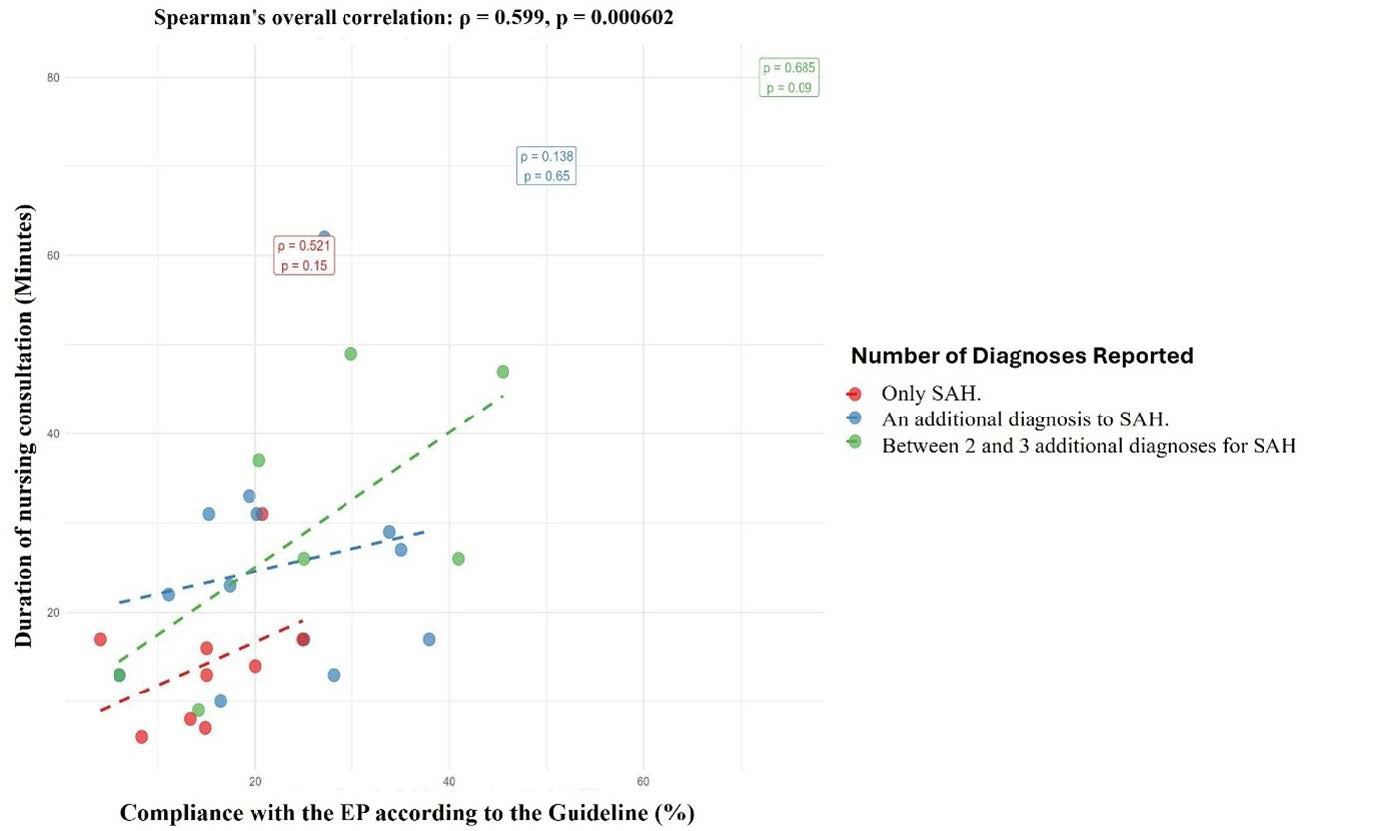
color distinction based on the categorical variable “Number of Reported Diagnoses”. Considering that the variable “consultation duration” violated the assumption of normality (Shapiro-Wilk, p < 0.05), the strength and direction of the continuous association between these two variables were quantified using the nonparametric Spearman’s rank correlation coefficient (ρ) method.
To assess adherence to the Brazilian Guidelines for Hypertension, a cross-sectional observational analysis was conducted, using the PE as the methodological reference framework. A data extraction checklist was constructed by aligning each stage of the process-Assessment, Diagnosis, Planning, Implementation, and Nursing Evolution-with the specific recommendations of the Guidelines. Through direct observation of 29 consultations, the execution of critical items for the management of SAH was verified, such as the correct technique for measuring blood pressure, the investigation of cardiovascular risk factors, the performance of a targeted physical examination, health education, and the establishment of a shared care plan. Thus, the NP served as an analytical lens to systematically and comprehensively measure whether the practices observed corresponded to the recommended standard of clinical excellence.
The percentage of compliance with the PE stages was calculated as the number of items analyzed, assuming equal weights across all stages. To this end, the total number of items that entirely comprise the NP was determined, ensuring an equitable distribution across the stages. These percentages were described and graphically presented according to user and nursing professional characteristics and consultation characteristics. All statistical analyses were performed using statistical software R version 4.1.3 (R Project for Statistical Computing) together with statistical software R Studio version 1.4.1717 (RStudio).
Ethical considerations
Ethical and legal requirements were met, in accordance with Resolution No. 466/2012 of the National Health Council. The study was approved by the Research Ethics Committee (56255622.2.0000.0071) and received consent from the participating centers. In accordance with Open Science, the data are available upon consultation with the authors, in part, since the recording of nursing consultations can identify the nurses, users, and participating health units.
Results
Users
This study included 29 recordings of nursing consultations concerning users of Primary Health Care units who self-reported a diagnosis of SAH. The users included in the analyses had a mean age of 56.62 years (±15.28), with 86.21% female and 68.96% Black or Brown.
In terms of socioeconomic conditions, 72.41% of users received some income, and of these, 75.87% received between 0 and 2 minimum wages. Regarding their places of origin, three users were from the municipality located in the state of Alagoas (AL), 11 from the state of Amazonas (AM), six from Rio Grande do Norte (RN), and nine from the state of São Paulo (SP). In addition, 82.76% reported living with family members. In addition to hypertension, 55.27% of users reported having more than three different diagnoses. The main reasons for seeking health services were acute events (30.37%), cervical cytopathological testing (17.24%), and evaluation of test results (10.34%).
Nurses
A total of 13 nurses were responsible for consultations with users with SAH, including one from AL, four from AM, three from RN, and five from SP. Of these, 76.92% were female. The health services in which they worked were, in 61.54% of cases, Basic Health Units under the Family Health Strategy, and among the 13 professionals participating in the study, 8 (61.5%) had at least 5 years of experience in the field. All professionals reported holding a postgraduate degree; among these, 91.54% had residency or specialization in PHC, Family and Community Health, Collective Health, or Public Health.
Concerning factors that facilitated or hindered the consultations, 76.92% of nurses had an exclusive room and 61.54% had access to some taxonomy as a guide for nursing diagnoses. Further information about the characteristics of the nurses whose consultations were evaluated in this study is shown in Table 1. As further illustrated in this table, there were cases where nurses did not report, or reported participating in more than one course in the last year and applying multiple protocols when providing care to users.
The average duration of each consultation was 22.89 minutes (±13.54), 66.67% of consultations were interrupted, 55.17% were scheduled in advance, and 24.14% of consultations involved a user complaint related to SAH.
The following description is based on the content generated by analyzing the consultation videos using the checklist. In the Nursing Assessment stage, 72.41% of professionals did not measure blood pressure during the consultation and, among those who did, 25% performed the procedure correctly. The search for anthropometric data was absent in 51.72% of consultations, as was cardiac auscultation (86.21%). Assessment of users’ extremities was documented in 10% of consultations, in which professionals assessed the possibility of edema.
The professionals performed basic complementary tests in 31.0% of consultations, and in 88.89% of these cases, the results were communicated to the user. The use of continuous medication was investigated in 51.72% of consultations, and in none of these cases was the use of non-prescription medication and/or illicit drugs questioned.
Specific risk factors for actual cardiovascular disease were explored in 72.42% of consultations, with age being the most frequent (66.67%). The presence of smoking, alcohol consumption, or sodium intake was not explored in 94.24%, 95.25%, and 95.24% of consultations, respectively. Coronary artery disease and chronic kidney disease were present in 1 and 3 consultations, respectively. The investigation of the presence of diabetes was evident in 42.86% of consultations.
In 79.31% of cases, psychosocial, cultural, and socioeconomic aspects that could be associated with blood pressure measurements and comorbidities were not investigated, and of those that did include such an investigation, emotional stress was the most frequent (66.67%).
The following were absent in 100% of consultations: evaluation of Ankle-Brachial Index (ABI), auscultation of carotid arteries, calculation of Glomerular Filtration Rate (GFR), neurological examination, history of stroke (or Cerebrovascular Accident) and investigation of hypertensive retinopathy, calculation of Pulse Wave Velocity (PWV), assessment of the apical impulse on palpation, investigation of family history of early onset of SAH, investigation of sleep apnea and pulse pressure.
The communication of the Nursing Diagnosis was not evident in any of the consultations. During the Planning stage, 89.66% of professionals did not set goals, and 20.69% of consultations involved joint planning with the user.
Nursing prescriptions were not verbalized in 75.86% of consultations, and in none of them were such prescriptions delivered in writing to the user. Finally, the calculation of cardiovascular risk was not evident in any of the consultations. Sixty-five point sixty-two percent of the consultations were follow-up consultations, and the Nursing Evolution stage was not explicit in any of them.
Regarding the communication and interpersonal skills of the professionals, 65.52% identified the user and 86.21% did not introduce themselves. Comfort and privacy were guaranteed in 96.55% of consultations, and interviews began with open-ended questions in 51.72%. In addition, 79.31% of professionals maintained eye contact with the user during the interaction and gave the user sufficient time to express themselves without interruption.
In addition, 58.62% of professionals practiced active listening, and 93.1% used language adapted to the educational and socioeconomic conditions of users. Verification of the person’s understanding and encouragement to clarify doubts were present in 79.31% of consultations, and the summarization technique was applied in 55.17% of clinical encounters. Furthermore, 75.86% of users were not involved in planning therapeutic options regarding their own health-illness-care process, and user feedback on the care provided was not requested in 89.66% of consultations.
Nursing Process
According to the execution
Table 2 shows that, in summary, of the total of 48 items evaluated by the checklist, the median number of items fulfilled was 18, indicating that 50% of nurses fulfilled up to 18 items of the Nursing Process. This value corresponds to a median fulfillment rate of 20% across the total number of steps in the NP.
As illustrated in Figure 2, a positive and statistically significant correlation was observed between longer nursing consultation times and greater adherence to the stages of the Nursing Process (NP) in patients with SAH. Analysis of consultation time using the Shapiro-Wilk test confirmed the absence of normality in its distribution (p = 0.0121). Given this result, we opted to use Spearman’s nonparametric test to assess the correlation.
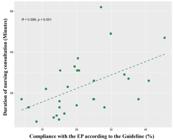
Correlation between the duration of nursing consultations and compliance with the stages of the Nursing Process for users with Arterial Hypertension in Primary Health Care. Brazil, 2022-2023
The analysis stratified by diagnostic complexity (Figure 3) revealed a gradient in correlation magnitude, although none of the subgroups were statistically significant (p > 0.05). Specifically, a moderate positive correlation (ρ = 0.521; p = 0.150) was observed in the group with only SAH, a feeble positive correlation (ρ = 0.138; p = 0.653) in the group with an additional diagnosis, and a strong positive correlation (ρ = 0.685; p = 0.090) in the group with greater complexity (2-3 additional diagnoses). This ascending pattern suggests that the relationship between consultation time and adherence to the NP intensifies progressively with increasing clinical complexity.
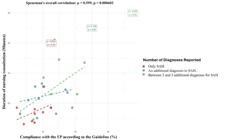
Correlation between diagnoses associated with high blood pressure and the consultation time required to complete the stages of the nursing process. Brazil, 2022-2023
According to the record
According to the NP stages, 79.31% of consultations were documented in medical records, and the content was legible in 87.5% of the records. In the Assessment, subjective data were absent in 52.17% of consultations, and objective data were absent in 86.96% of them. 73.91% of consultations lacked a nursing diagnosis record, and 95.65% of these consultations included at least one diagnosis according to the International Classification of Primary Care (ICPC).
Regarding the Planning stage, in 95.65% of consultations there was no record of goals, and of those that did, one was actually related to the nursing diagnosis listed above. Nursing prescriptions were documented in two consultation records, which were consistent with the previously established nursing goals and diagnoses. The Implementation stage was absent in 95.65% of records, and the Nursing Evolution stage was evident in 50% of them.
Discussion
The results of this study indicate a significant gap between the practice observed in Primary Health Care and the standards of care recommended by the Brazilian Guidelines for Hypertension, when analyzed through the lens of the Nursing Process (NP). The low frequency of essential assessment components-such as technical blood pressure measurement, investigation of modifiable risk factors (such as sodium intake and physical inactivity), and targeted physical examination-suggests that care is being provided in a mechanized and fragmented manner, failing to take advantage of the consultation as an opportunity to obtain a complete and accurate picture of the user’s cardiovascular risk profile.
The almost complete absence of nursing diagnoses (100% did not list any) is particularly concerning, as it indicates that clinical judgment is not being formalized, thereby preventing care planning from being specific, individualized, and grounded in the identified health needs. This weakness was revealed from the moment of the Nursing Assessment, which was carried out in an incomplete manner. Consequently, considering that the stages of the NP are interrelated and interdependent, the implementation of subsequent stages is compromised. This result is consistent with the findings of a study that conducted a situational diagnosis of the performance of nurses in PHC in Santa Catarina18 in 2023, which concluded that the application of the NP in nursing consultations still occurs in incipient and fragmented manner.
The disconnect between data collection and subsequent stages of the NP results in an incomplete care cycle. The absence of systematic clinical diagnoses compromises planning, which is often nonspecific or absent, as evidenced by the low rate of joint goal setting (10.34%). This scenario has already been described in other contexts, in which the development of individualized care plans is a differential in care practice, thereby favoring adherence and control of hypertension19-20. Consequently, the nursing interventions implemented lack a theoretical basis and clear direction, focusing on requests for tests and generic prescriptions, to the detriment of educational and behavioral strategies. However, robust evidence indicates that educational interventions led by nurses significantly reduce blood pressure levels and promote self-care8,21-22.
The high proportion of professionals who did not provide feedback or verify the user’s understanding (89.66%) reinforces a one-way communication, which does not promote shared responsibility. Qualitative studies also show that, in practice, nursing consultations tend to be uncreative and professional-centered, limiting users’ active participation23. Thus, it is observed that the gap in the integration between diagnosis, planning, and intervention directly affects the effectiveness of care in chronic conditions, reinforcing the need to reorganize the workflow to ensure user-centered and evidence-based care.
To analyze the factors related to the application of the NP in its entirety, the characteristics of the users served, the nurses, and the consultations evaluated were considered. An important aspect was the consultation time, as it became evident that people with multiple comorbidities need a longer consultation time so that all their health needs can be addressed. In addition, there were interruptions in most consultations, which disrupted clinical reasoning and impaired time management, as evidenced by an integrative literature review conducted in 202024.
This, in turn, leads to the context of clinical communication, an essential component of nursing consultations, but one assessed in this study as still somewhat secondary. Actions such as communicating diagnoses and therapeutic goals, providing written nursing prescriptions, and evaluating care together with the user are essential for effective clinical communication25-26, treatment adherence27, and improved bonding and satisfaction28. However, managing the schedule and addressing external interference, which ultimately falls under the responsibility of nurses in PHC, remains a challenge for the full implementation of the NP and for the execution of nursing consultations that include all items recommended by the SAH Guidelines29.
An analysis of nursing consultations carried out in Rio de Janeiro in 2021 showed that professionals were overwhelmed by the pressure of care due to busy schedules, which resulted in a medical-centered care model focused mainly on complaints and behavior30, making it difficult to use the NP in its entirety and potentially interfering negatively with users’ clinical outcomes.
Notably, there is a failure to comply with the Nursing Diagnosis stage. In our study, this stage was present in 26.09% of the consultations evaluated, and this fact is justified by the lack of skill and management with classificatory taxonomies. However, 38.5% of the evaluated professionals reported not using any taxonomy for nursing diagnosis. Such evidence is consistent with results in other contexts, where the difficulty of implementing the diagnostic stage in the NP remains strongly marked by theoretical complexity, gaps in training, lack of institutional support, high workload, and low practical mastery31-32.
Although most professionals report having received training in Nursing Process during their undergraduate studies and having specialization and/or residency, there is a gap between theory and the actual use of this tool by professionals, with the main hindering factor being the lack of training and implementation of knowledge in practice33, understanding that the NP is a tool for safe nursing practice. It is therefore necessary to be familiar with the taxonomies that standardize specific nursing care, as well as standards of care in Health Programs, since general protocols, for example, do not guarantee the NP’s full integration into the clinical encounter during consultation.
Thus, although many professionals participating in the study reported using some protocol to guide care, more than half of them were not specific to nursing, which may be an obstacle to the consolidation of a qualified NP34. The use of nursing protocols is essential, as they assist in decision-making focused on patient safety and support professionals by considering the ethical principles of the profession35. Implementing protocols as strategies to reduce obstacles and strengthen the process36 would be of great importance, given that 53.85% of nurses reported not using Nursing Protocols in their care practice.
In large municipalities in the interior of the state of São Paulo37, in 2015, the NP in a PHC unit was still in its infancy, with 19% of nurses reporting that they did not use it, 38% reporting that they used it rarely, and 29% reporting that they used it sporadically. Compared with our results, there was an improvement in the use of the NP, even though it does not cover all five stages. Thus, it is essential that, in addition to the development of clinical guidelines and protocols, the time required to complete the planned activities be calculated and evidenced, as this could even imply the degree of recommendation of a given intervention, the prioritization of more serious cases, and the need to increase the number of professionals available to care for these users38.
Despite the challenges for NP in primary care when caring for people with SAH, nursing consultations are a care practice that favors longitudinal care, since interventions are based on scientific evidence and address clinical, social, cultural, and regional aspects of care in a personalized manner39-41.
Starting from the NP, based on theories and used in its entirety, developed together with the person, on an individual basis, there is greater satisfaction with health monitoring, which favors behavioral changes and improves the clinical situation and quality of life42-43. For professionals, despite the challenges, nursing consultations increase nurses’ autonomy and yield positive experiences in their work44-45. Within the sphere of public policies and the Unified Health System (SUS, as per its Portuguese acronym), PHC can be further strengthened, with an expressive contribution from nursing toward reducing the burden of non-communicable chronic diseases.
This study has some limitations. First, the sample size was not calculated, and the selection of units was based on convenience. However, units from four different municipalities in the country were included, representing particular sociodemographic characteristics of regions of Brazil. The second limitation concerns the number of consultations analyzed (n=29) and the number of nurses (n=13), resulting in heterogeneous professional characteristics and a limited sample. The possible information bias related to the instrument used to evaluate nursing consultations may be a limitation.
Finally, as in observational studies, there is the possibility of selection bias attributable to nurses who agreed to participate, who may have different practices than those who refused to participate in the study. In addition, there is the possibility of social desirability bias, which may be triggered by behavioral change due to participating in the research and being subject to recording and observation. Despite its limitations, this study discusses essential results regarding the evaluation of all stages of the NP in PHC in the care of people with SAH. The findings contribute to critical reflection on nursing care and underscore the importance of recording the NP. It presents the factors associated with the challenges of using the NP, which will guide actions and research and allow for the adaptation of documents and public policies to address the specificities of nursing in PHC.
Given the still scarce number of studies conducted in Brazil on this topic, this research, as a primary study, paves the way and illuminates future discussions on the production of instruments and knowledge that strengthen clinical nursing practice. The aim is to enhance the rationale for the professional category’s existence: to provide the best care to users, grounded in robust instruments and the best scientific evidence.
Conclusion
Weaknesses were evident in the assessment of the elements recommended by the Brazilian Guidelines for Hypertension and in the consolidation of the NP during nursing consultations with people with SAH. The complexity of users, time, and interruptions during consultations, high demand for care, professional training, and the lack of structured nursing protocols based on the stages of the NP were hypothesized to explain this finding. In addition, the publication of care guidelines without a document outlining their applicability impedes their implementation in daily practice.
Data Availability Statement:
All data generated or analysed during this study are included in this published article.
References
-
1 Macinko J, Mendonça CS. The Family Health Strategy, a strong model of Primary Health Care that delivers results. Saude Debate. 2018;42(Spe 1):18-37. https://doi.org/10.1590/0103-11042018S102
» https://doi.org/10.1590/0103-11042018S102 -
2 World Health Organization; United Nations Children’s Fund. Primary health care measurement framework and indicators: monitoring health systems through a primary health care lens [Internet]. Geneva: World Health Organization; 2022 [cited 2025 Sep 4]. Available from: Available from: https://www.who.int/publications/i/item/9789240044210
» https://www.who.int/publications/i/item/9789240044210 -
3 Brant LCC, Nascimento BR, Veloso GA, Gomes CS, Polanczyk C, Oliveira GMM, et al. Burden of cardiovascular diseases attributable to risk factors in Brazil: data from the Global Burden of Disease 2019 study. Rev Soc Bras Med Trop. 2022;55:e0263-2021. https://doi.org/10.1590/0037-8682-0263-2021
» https://doi.org/10.1590/0037-8682-0263-2021 -
4 Barroso WKS, Rodrigues CIS, Bortolotto LA, Mota-Gomes MA, Brandão AA, Feitosa ADM, et al. Brazilian Guidelines of Hypertension - 2020. Arq Bras Cardiol. 2021;116(3):516-658. https://doi.org/10.36660/abc.20201238
» https://doi.org/10.36660/abc.20201238 -
5 Chaturvedi A, Zhu A, Gadela NV, Prabhakaran D, Jafar TH. Social determinants of health and disparities in hypertension and cardiovascular diseases. Hypertension. 2024;81(3):387-99. https://doi.org/10.1161/HYPERTENSIONAHA.123.21354
» https://doi.org/10.1161/HYPERTENSIONAHA.123.21354 -
6 Metlock FE, Hinneh T, Benjasirisan C, Alharthi A, Ogungbe O, Turkson-Ocran RN, et al. Impact of social determinants of health on hypertension outcomes: a systematic review. Hypertension. 2024;81(8):1675-700. https://doi.org/10.1161/HYPERTENSIONAHA.123.22571
» https://doi.org/10.1161/HYPERTENSIONAHA.123.22571 -
7 Silva ATM, Mantovani MF, Moreira RC, Arthur JP, Souza RM. Nursing case management for people with hypertension in primary health care: a randomized controlled trial. Res Nurs Health. 2020;43(1):68-78. https://doi.org/10.1002/nur.21994
» https://doi.org/10.1002/nur.21994 -
8 Ito M, Tajika A, Toyomoto R, Imai H, Sakata M, Honda Y, et al. The short and long-term efficacy of nurse-led interventions for improving blood pressure control in people with hypertension in primary care settings: a systematic review and meta-analysis. BMC Prim Care. 2024;25(1):143. https://doi.org/10.1186/s12875-024-02380-x
» https://doi.org/10.1186/s12875-024-02380-x -
9 Stephen C, Halcomb E, Fernandez R, McInnes S, Batterham M, Zwar N. Nurse-led interventions to manage hypertension in general practice: a systematic review and meta-analysis. J Adv Nurs. 2022;78(5):1281-93. https://doi.org/10.1111/jan.15159
» https://doi.org/10.1111/jan.15159 -
10 Conselho Federal de Enfermagem (BR). Resolução Cofen nº 736, de 17 de janeiro de 2024. Dispõe sobre a implementação do Processo de Enfermagem em todo o contexto socioambiental onde ocorre o cuidado de enfermagem. Diário Oficial da União [Internet]. 2024 Jan 23 [cited 2025 Sep 4];Seção 1. Available from: Available from: https://www.cofen.gov.br/resolucao-cofen-no-736-de-17-de-janeiro-de-2024/
» https://www.cofen.gov.br/resolucao-cofen-no-736-de-17-de-janeiro-de-2024/ -
11 Kwame A, Petrucka PM. A literature-based study of patient-centered care and communication in nurse-patient interactions: barriers, facilitators, and the way forward. BMC Nurs. 2021;20:158. https://doi.org/10.1186/s12912-021-00684-2
» https://doi.org/10.1186/s12912-021-00684-2 -
12 Hu J, Wang Y, Li X. Continuity of care in chronic diseases: a concept analysis by literature review. J Korean Acad Nurs. 2020;50(4):513-22. https://doi.org/10.4040/jkan.20079
» https://doi.org/10.4040/jkan.20079 -
13 Jandaghian-Bidgoli M, Jamalnia S, Pashmforosh M, Shaterian N, Darabiyan P, Rafi A. Personalized nursing as the missing link of providing care: a systematic review. BMC Nurs. 2025;24(1):239. https://doi.org/10.1186/s12912-025-02855-x
» https://doi.org/10.1186/s12912-025-02855-x -
14 Iroegbu C, Tuot DS, Lewis L, Matura LA. The influence of patient-provider communication on self-management among patients with chronic illness: a systematic mixed studies review. J Adv Nurs. 2025;81(4):1678-99. https://doi.org/10.1111/jan.16492
» https://doi.org/10.1111/jan.16492 -
15 von Elm E, Altman DG, Egger M, Pocock SJ, Gøtzsche PC, Vandenbroucke JP. The Strengthening the Reporting of Observational Studies in Epidemiology (STROBE) statement: guidelines for reporting observational studies. J Clin Epidemiol. 2008;61(4):344-9. https://doi.org/10.1016/j.jclinepi.2007.11.008
» https://doi.org/10.1016/j.jclinepi.2007.11.008 -
16 Secretaria Municipal da Saúde de São Paulo. Processo de Enfermagem na Atenção Primária à Saúde [Internet]. 1. ed. rev. São Paulo: SMS; 2022 [cited 2025 Sep 4]. 37 p. Available from: Available from: https://prefeitura.sp.gov.br/web/saude/w/sa%C3%BAde-lan%C3%A7a-protocolos-atualizados-em-enfermagem
» https://prefeitura.sp.gov.br/web/saude/w/sa%C3%BAde-lan%C3%A7a-protocolos-atualizados-em-enfermagem -
17 Kurtz S, Silverman J, Benson J, Draper J. Marrying content and process in clinical method teaching: enhancing the Calgary-Cambridge guides. Acad Med. 2003;78(8):802-9. https://doi.org/10.1097/00001888-200308000-00011
» https://doi.org/10.1097/00001888-200308000-00011 -
18 Rostirolla LM, Adamy EK, Vendruscolo C, Argenta C, Zanatta EA. Situational diagnosis of the nurses’ performance in primary health care. Rev Enferm Cent-Oeste Min. 2023;13:e4739. https://doi.org/10.19175/recom.v13i1.4739
» https://doi.org/10.19175/recom.v13i1.4739 -
19 Silva RLDT, Arruda GO, Barreto MS, Oliveira MLF, Matsuda LM, Marcon SS. Development of a care plan as a differential in care practice for hypertensive patients. Acta Paul Enferm. 2016;29(5):494-505. https://doi.org/10.1590/1982-0194201600070
» https://doi.org/10.1590/1982-0194201600070 -
20 Oliveira CJ, Araujo TL, Costa FBC, Costa AGS. Clinical validation of the nursing diagnosis “noncompliance” in people with hypertension. Esc Anna Nery [Internet]. 2013 [cited 2025 May 2];17(4):611-9. Available from: Available from: https://www.scielo.br/j/ean/a/DtPnzyQzP4SddsYWtcbtGxv/?lang=en
» https://www.scielo.br/j/ean/a/DtPnzyQzP4SddsYWtcbtGxv/?lang=en -
21 Falcão LM, Guedes MVC, Borges JWP, Silva GRF. Educational intervention performed by nurses for blood pressure control: a systematic review with meta-analysis. Rev. Latino-Am. Enfermagem. 2023;31:e3929. https://doi.org/10.1590/1518-8345.6648.3929
» https://doi.org/10.1590/1518-8345.6648.3929 -
22 Alves AM, Rodrigues A, Sá-Couto P, Simões JL. Effect of an educational nursing intervention on the mental adjustment of patients with chronic arterial hypertension: an interventional study. Int J Environ Res Public Health. 2022;19(1):170. https://doi.org/10.3390/ijerph19010170
» https://doi.org/10.3390/ijerph19010170 -
23 Albanez ICS, Vila BS, Lozano AW, Maldonado AS, Freitas ACG, Gouvêa AR, et al. Nurse perspectives on Previne Brasil performance indicators: analysis of care in hypertension and diabetes. Nursing (Sao Paulo) [Internet]. 2022 [cited 2025 Apr 30];25(291):7602-15. Available from: Available from: https://revistanursing.com.br/index.php/revistanursing/0628318
» https://revistanursing.com.br/index.php/revistanursing/0628318 -
24 Silva e Lima SG, Spagnolo RS, Juliani CMCM, Silva L, Fernandes VC, Martin LB. Nursing consultation in Primary Health Care: integrative revision. Ensaios Cienc Cienc Biol Agrar Saude [Internet]. 2020 [cited 2025 Apr 30];24(5 Suppl):693-702. Available from: Available from: https://ensaioseciencia.pgsscogna.com.br/ensaioeciencia/article/view/7946
» https://ensaioseciencia.pgsscogna.com.br/ensaioeciencia/article/view/7946 -
25 Stults CD, Mazor KM, Cheung M, Ruo B, Li M, Walker A, et al. Patients’ perspectives on plans generated during primary care visits and self-reported adherence at 3 months: data from a randomized trial. J Particip Med. 2024;16:e50242. https://doi.org/10.2196/50242
» https://doi.org/10.2196/50242 -
26 Stewart D, Schober M, Nissen L, Ladd E, Lamarche K, Bournival M, et al. Guidelines on prescriptive authority for nurses 2021 [Internet]. Geneva: International Council of Nurses; 2021 [cited 2025 Nov 26]. 48 p. Available from: Available from: https://www.icn.ch/resources/publications-and-reports/guidelines-prescriptive-authority-nurses-2021
» https://www.icn.ch/resources/publications-and-reports/guidelines-prescriptive-authority-nurses-2021 -
27 Mamaghani EA, Soleimani A, Zirak M. Trust in nurses and its association with medication adherence of cardiovascular patients: a descriptive correlational study. Int J Nurs Stud Adv. 2024;8:100278. https://doi.org/10.1016/j.ijnsa.2024.100278
» https://doi.org/10.1016/j.ijnsa.2024.100278 -
28 Terry D, Hills D, Bradley C, Govan L. Nurse-led clinics in primary health care: a scoping review of contemporary definitions, implementation enablers and barriers and their health impact. J Clin Nurs. 2024;33(5):1724-38. https://doi.org/10.1111/jocn.17003
» https://doi.org/10.1111/jocn.17003 -
29 Suhonen R, Stolt M, Habermann M, Hjaltadottir I, Vryonides S, Tonnessen S, et al. Ethical elements in priority setting in nursing care: a scoping review. Int J Nurs Stud. 2018;88:25-42. https://doi.org/10.1016/j.ijnurstu.2018.08.006
» https://doi.org/10.1016/j.ijnurstu.2018.08.006 -
30 Amaral IBST, Silva ALA. Nurses consultation in the Family Health Strategy: a cut-off in Rio de Janeiro. Rev Pesqui Cuid Fundam Online. 2021;13:227-33. https://doi.org/10.9789/2175-5361.rpcfo.v13.8250
» https://doi.org/10.9789/2175-5361.rpcfo.v13.8250 -
31 Seçer S, Karaca A. Evaluation of nurses’ perceptions of nursing diagnoses and their opinions regarding the application of nursing process. Florence Nightingale J Nurs. 2021;29(2):229-38. https://doi.org/10.5152/FNJN.2021.20034
» https://doi.org/10.5152/FNJN.2021.20034 -
32 Gryschek ALFPL, Fracolli LA, Padoveze MC, Caballero SPOS, Vilas Boas MAA. Critical analysis of the potential use of nursing nomenclatures in primary health care. Enferm Foco [Internet]. 2019 [cited 2025 May 2];10(7):50-6. Available from:Available from: https://biblioteca.cofen.gov.br/wp-content/uploads/2020/03/2471-13213-2-PB.pdf
» https://biblioteca.cofen.gov.br/wp-content/uploads/2020/03/2471-13213-2-PB.pdf -
33 Mota BAM, Moura-Lanza F, Nogueira-Cortez D. Effectiveness of nursing appointments in adherence to hypertension treatment. Rev Salud Publica (Bogota). 2019;21(3):324-32. https://doi.org/10.15446/rsap.v21n3.70291
» https://doi.org/10.15446/rsap.v21n3.70291 -
34 Silva e Lima SG, Juliani CMCM, Spagnuolo RS. Nursing consultation in primary care: from the beginning of praxis to daily life. Rev Baiana Enferm. 2023;37:e54664. https://doi.org/10.18471/rbe.v37.54664
» https://doi.org/10.18471/rbe.v37.54664 -
35 Báfica ACMF, Gomes AMB, Siqueira EF, Souza JM, Paese F, Belaver GM, et al. Comprehensive primary health care: expanding access for strong and resolutive nursing. Enferm Foco [Internet]. 2021 [cited 2025 Apr 4];12(Suppl 1):61-6. Available from: Available from: https://enfermfoco.org/en/article/comprehensive-primary-health-care-expanding-access-for-strong-and-resolute-nursing/
» https://enfermfoco.org/en/article/comprehensive-primary-health-care-expanding-access-for-strong-and-resolute-nursing/ -
36 Silva JFT, Costa ACM. Nursing process: characterization of its application in primary health care. Enferm Foco [Internet]. 2024 [cited 2025 May 2];15:e-2024111. Available from: Available from: https://enfermfoco.org/wp-content/uploads/articles_xml/2357-707X-enfoco-15-e-2024111/2357-707X-enfoco-15-e-2024111.pdf
» https://enfermfoco.org/wp-content/uploads/articles_xml/2357-707X-enfoco-15-e-2024111/2357-707X-enfoco-15-e-2024111.pdf -
37 Ribeiro GC, Padoveze MC. Nursing care systematization in a basic health unit: perception of the nursing team. Rev Esc Enferm USP. 2018;52:e03375. https://doi.org/10.1590/S1980-220X2017028803375
» https://doi.org/10.1590/S1980-220X2017028803375 -
38 Li S, Craig S, Mitchell G, Fitzsimons D, Creighton L, Thompson G, et al. Nurse-led strategies for lifestyle modification to control hypertension in older adults: a scoping review. Nurs Rep. 2025;15(3):106. https://doi.org/10.3390/nursrep15030106
» https://doi.org/10.3390/nursrep15030106 -
39 Chase JA, Bogener JL, Ruppar TM, Conn VS. The effectiveness of medication adherence interventions among patients with coronary artery disease: a meta-analysis. J Cardiovasc Nurs. 2016;31(4):357-66. https://doi.org/10.1097/JCN.0000000000000259
» https://doi.org/10.1097/JCN.0000000000000259 -
40 Estrada LV, Solano J, Turchioe MR, Cortes YI, Caceres BA. Comparative effectiveness of behavioral interventions for cardiovascular risk reduction in Latinos: a systematic review. J Cardiovasc Nurs. 2022;37(4):324-40. https://doi.org/10.1097/JCN.0000000000000806
» https://doi.org/10.1097/JCN.0000000000000806 -
41 Abbott L, Williams C, Slate E, Gropper S. Promoting heart health among rural African Americans. J Cardiovasc Nurs. 2018;33(1):E8-E14. https://doi.org/10.1097/JCN.0000000000000410
» https://doi.org/10.1097/JCN.0000000000000410 -
42 Barratt J, Thomas N. Nurse practitioner consultations in primary health care: patient, carer and nurse practitioner qualitative interpretations of communication processes. Prim Health Care Res Dev. 2019;20:e1. https://doi.org/10.1017/S1463423618000798
» https://doi.org/10.1017/S1463423618000798 -
43 Graarup J, Højskov IE. Patients’ perspective of attending nursing consultations - a pilot and feasibility study. Nurs Open. 2020;7(5):1482-8. https://doi.org/10.1002/nop2.522
» https://doi.org/10.1002/nop2.522 -
44 Kahl C, Meirelles BHS, Cunha KS, Bernardo MS, Erdmann AL. Contributions of the nurse’s clinical practice to primary care. Rev Bras Enferm. 2019;72(2):354-9. https://doi.org/10.1590/0034-7167-2018-0348
» https://doi.org/10.1590/0034-7167-2018-0348 -
45 Silva e Lima SG, Spagnuolo RS, Juliani CMCM, Colichi RMB. Nursing consultation in the Family Health Strategy and the nurse’s perception: Grounded Theory. Rev Bras Enferm. 2022;75(4):e20201105. https://doi.org/10.1590/0034-7167-2020-1105
» https://doi.org/10.1590/0034-7167-2020-1105
-
How to cite this article:
Couto LA, Dzembatyi CC, Fernandes DLG, Bonfim D, Nunciaroni AT, Varela ALV. Analysis of nursing consultations for people with systemic arterial hypertension in Primary Health Care. Rev. Latino-Am. Enfermagem. 2026;34:e4876 [cited year month day ]. Available from: URL . https://doi.org/10.1590/1518-8345.7998.4876
Edited by
-
Associate Editor:
Maria Lucia do Carmo Cruz Robazzi