 Red brick waste as a raw material for pervious concrete: An ideal replacement rate for achieving good performance in pavement applications
Abstract
Abstract This study evaluated the physical, hydraulic, mechanical, and thermal properties of pervious concrete (PC) incorporating Red Brick Waste (RBW) as partial cement replacement. The experimental program involved evaluating physical characteristics (density and porosity), hydraulic behavior (permeability), mechanical performance (compressive, tensile, and flexural strength), and thermal performance (solar reflectance) in relation to the variation in the content of cement replacement by RBW in pervious concrete. In addition, regression analyses were performed to evaluate the ideal percentage of RBW replacement in the pervious concrete to improve its mechanical and thermal performance for pavement applications. The experimental approach was divided into six stages: waste preparation, materials characterization, pervious concrete design and production, concrete mixture characterization, statistical analysis, and regression analysis. The ANOVA one-way confirmed that the RBW generated interference in all the evaluated properties of the pervious concrete mixtures. At a 5% replacement rate of cement by RBW in the PC mixture, porosity and permeability were lowest, and density was highest. The percentage of 5% of RBW promoted the highest compressive and flexural strengths for PC. The use of RBW contributed to increasing the solar reflectance of PC. Since all evaluated properties of the pervious concrete designed with 5% RBW met the minimum requirements of Brazilian standards for pavement applications, it was concluded that this replacement rate is ideal for the good performance of the pervious concrete dosed with this type of waste.
Keywords:
pervious concrete; red brick waste; raw material; good performance; pavement applications
Resumo
Resumo Este estudo tem como objetivo avaliar as propriedades físicas, hidráulicas, mecânicas e térmicas do concreto permeável (CP) incorporando Resíduos de Tijolo Vermelho (RTV) como substituto parcial do cimento. O programa experimental envolveu a avaliação das características físicas (densidade e porosidade), comportamento hidráulico (permeabilidade), desempenho mecânico (resistência à compressão e na tração à flexão) e desempenho térmico (refletância solar) em termos da variação no teor de substituição de cimento por RTV no concreto permeável. Além disso, análises de regressão linear foram realizadas para avaliar a porcentagem ideal de substituição de RTV no concreto permeável para um bom desempenho mecânico e térmico para aplicação em pavimentação. A abordagem experimental foi dividida em seis etapas: preparação do resíduo, caracterização dos materiais, projeto e produção do concreto permeável, caracterização das misturas de concreto, análise estatística e análise de regressão linear. A análise de variância - ANOVA confirmou que o RTV interferiu em todas as propriedades avaliadas das misturas de concreto permeável. A uma taxa de substituição de 5% de cimento por RBW na dosagem do CP, a porosidade e a permeabilidade apresentaram os menores valores e a densidade apresentou o maior valor. O percentual de 5% de RTV promoveu as maiores resistências à compressão e à flexão para o CP. O uso de RTV contribuiu para o aumento da refletância solar do CP. Como todas as propriedades avaliadas do concreto permeável dosado com 5% de RTV atenderam aos requisitos mínimos das normas brasileiras para aplicação em pavimentação, concluiu-se que esta é a substituição ideal para o bom desempenho do concreto permeável com esse tipo de resíduo.
Palavras-chave:
concreto permeável; resíduo de tijolo vermelho; matéria-prima; bom desempenho; aplicação para pavimentação
1 INTRODUCTION
Increasing urbanization and the growth of highway infrastructure have led to the widespread building of concrete and asphalt pavements, transforming natural permeable surfaces into impervious cover [1]. Surface sealing is evident in the form of flooding, unchanneled surface runoff, lowering of the water table, and the development of urban heat islands (UHI) [1]. In this context, sustainable rainwater management is crucial for cities' sustainable development, and consequently, developers are increasingly turning to permeable coatings [2].
Permeable coatings are a sustainable alternative to reduce the impacts of waterproofing in urban areas. Using this type of paving helps avoid flooding, groundwater depletion, and heat islands, as well as reducing groundwater runoff [1].
Instead of waterproofing the surface and reducing its pores as in conventional pavement, pervious concrete pavement opens the pore structure to facilitate infiltration, evaporation, and storage of volumetric water, as well as improving the requisites of noise generation and tire adherence to the roadway surface [3]. Compressive strength decreases as the material porosity increases, but by using adequate consistency in the proportions of mixtures, pervious concrete provides sufficient mechanical strength to be applied to pavements [4].
Simultaneously, cement is a widely used construction material that contributes to greenhouse gas emissions through significant CO2 emissions [5], [6]. The problem refers to the need to find ways to reduce Portland cement consumption in civil construction due to its harmful effects on environmental pollution and the high-energy consumption required for its manufacturing [7]. According to Moradikhou et al. [8], the production of Portland cement is a significant source of CO2 emissions, with approximately 1 ton of CO2 emitted for every ton of cement produced. This sector accounts for 7% to 10% of global CO2 emissions.
The construction and demolition industries generate millions of tons of waste, including bricks and concrete, which constitute the majority of the total waste. Currently, these waste materials are disposed of through sanitation company collections and dumping in sanitary landfills [9]–[11].
The countries that produce the most of this type of waste are China, with around 1.8 billion tons of construction and demolition waste products annually, and the United States, which disposes of around 700 million tons [12], [13].
Seeking to reduce the consumption of Portland cement, as well as defining the destination of construction waste products to sanitary landfills, non-conventional materials, such as construction waste products, are increasingly being used as a partial substitute for Portland cement in different concrete applications [14]. Research into alternative materials to reduce the cement content in concrete mixtures is advancing in numerous countries worldwide [15] –[19].
Several alternative materials can be incorporated as supplementary cementitious materials (SCMs) in concrete and mortar mixtures [14]. Some of the most widely used SCMs are rice husk ash, silica fume, fly ash, ground granulated blast furnace slag, and metakaolin. The choice of a specific SCM typically depends on factors such as local availability, material quality, and transportation cost [5].
Since SCMs are often pozzolanic, they can react with calcium hydroxide and water in the cement matrix to form Calcium Silicate Hydrate (CSH). They can effectively replace cement while maintaining high strength [20]. The environmental impact and cost analysis show that energy consumption and CO2 emissions from hybrid cement are lower than those of pure Portland cement [7].
This study investigates the use of widely available waste materials, red brick waste (RBW), as a cement replacement in pervious concrete (PC). Red brick waste has pozzolanic properties that enable it to serve as a partial substitute for Portland cement. It is produced by crushing, grinding, and sieving brick material. Its physical and chemical properties exhibit pozzolanic characteristics, making it a potential alternative to Portland cement. RBW can function as a hydraulic binder and is environmentally friendly, as this waste material can be repurposed instead of being disposed of [21].
There are still only a few studies on using RBW as a raw material to produce pervious concrete pavement. According to He et al. [21], an appropriate amount of RBW can improve the mechanical properties of cementitious materials; excessive amounts can reduce them, highlighting the importance of optimizing the replacement level.
In the study by Zhao et al. [7], it was found that the compressive strength of mortars with 30% RBW was 10% to 35% lower than that of mortars without RBW, and the smaller the RBW particle size, the faster the compressive strength increases.
Wong et al. [22] found that using waste brick dust as a partial cement replacement in cement-based concrete should be limited to below 20% for optimal performance. However, it is essential to ensure that the waste brick dust contains sufficient amorphous silica and has a fineness comparable to that of normal cement particles. This would provide the brick dust with pozzolanic reactivity, thereby enhancing concrete performance.
Tang et al. [23] reported that flexural strength generally decreases as RBW content increases. This decline in flexural strength occurs because adding RBW reduces the amount of hydration products, thereby lowering the concrete's flexural strength. However, incorporating the right amount of high-fineness RBW either has a positive effect or a minimal impact on flexural strength.
Zheng et al. [24] introduced a concept for manufacturing recycled pervious concrete without cement, based on the potential activity of silica and alumina in bricks. The authors examined the complete recycling of construction and demolition waste, using red brick waste activated with alkali as a binder to replace cement. In conclusion, recycled pervious concrete made without cement showed high water permeability and relatively lower compressive strength.
In the study by Arif et al. [25], it was shown that using brick powder can lower the total cost of cement. Replacing 10% of the cement with waste brick powder (WBP) can save one bag of cement for every ten bags used in concrete construction. The unit weight of concrete with 10% brick powder replacement decreases by up to 1.7% in the fresh state and by about 1% in the hardened state. Additionally, concrete containing WBP develops a denser microstructure. The authors confirmed that the compressive and flexural strengths of concrete improve with WBP addition. A 10% partial replacement results in an 18% increase in compressive strength, a 17% rise in tensile strength, and a 3.5% boost in flexural strength while the concrete is fresh; in the hardened state, these increases are 10%, 24%, and 12%, respectively.
Using red brick waste as a raw material for alkali-activated concrete shows promise, as indicated by the cited research. However, more studies are needed due to limited information on the use of this waste in pervious concrete. The addition of RBW at lower levels in pervious concrete pavements and the assessment of its physical, hydraulic, mechanical, and thermal performance can be further improved.
Based on the preceding discussion, this study aims to evaluate the physical, hydraulic, mechanical, and thermal properties of pervious concrete incorporating RBW as partial cement replacement. The experimental program evaluated physical characteristics (density and porosity), hydraulic behavior (permeability), mechanical performance (compressive, tensile, and flexural strength), and thermal performance (solar reflectance) as a function of the variation in the RBW content used as a cement replacement in pervious concrete. In addition, regression analyses were performed to evaluate the ideal percentage of RBW replacement in the pervious concrete to improve its mechanical and thermal performance. The research significance emphasizes the goal of reducing the carbon footprint by using alternative cementitious materials in pervious concrete while preserving its key properties for pavement application.
2. MATERIALS AND METHODS
This research employs a quantitative approach to investigate the replacement of cement with red brick waste (RBW) at a dosage in pervious concrete applied to the pavement surface layer.
The independent variable is defined as the percentage (0, 5, 10, and 15%) of RBW added to the concrete mixtures for thermal property (solar reflectance) and (0, 5, 7.5, and 10%) of RBW for physical properties (density and porosity), hydraulic property (permeability), and mechanical properties (compressive strength and flexural strength). The dependent variables are the results of the trial tests. A higher amount of RBW was used in the pervious concrete mixture to better evaluate its effect on the material's solar reflectance.
The hypotheses pertinent to the direct analysis of the dependent and independent variables follow this approach: the partial replacement of Portland cement by RBW influences the porosity, density, permeability, flexural tensile strength, compressive strength, and solar reflectance of PC.
The experimental approach was divided into six stages: waste preparation, materials characterization, pervious concrete design and production, concrete mixture characterization, statistical analysis, and regression analysis.
2.1 Materials
2.1.1 Natural aggregates
The aggregates used were fine and coarse gneiss gravel. Granulometry, water absorption, and specific mass tests were performed for characterization.
The water absorption and specific mass tests were performed in compliance with the DNER ME 081 standard [26]. The granulometry test was conducted in compliance with the NBR NM 248 standard [27].
2.1.2 Portland cement
CP V ARI Portland cement was used to prepare the pervious concrete. High early-strength Portland cement exhibits high reactivity after a short curing period due to the extensive grinding it undergoes, thereby increasing concrete yield.
2.1.3 Red brick waste (RBW)
The red brick waste was obtained from the production waste products of a ceramic brick-tile company located in Joinville, SC. The company makes conventional red ceramic bricks.
The bricks shipped from the ceramic brick-tile company were broken into smaller pieces using a hammer to utilize the pozzolanic waste material. Following that, the material was placed in a ball mill, a Servithec CT-241 model.
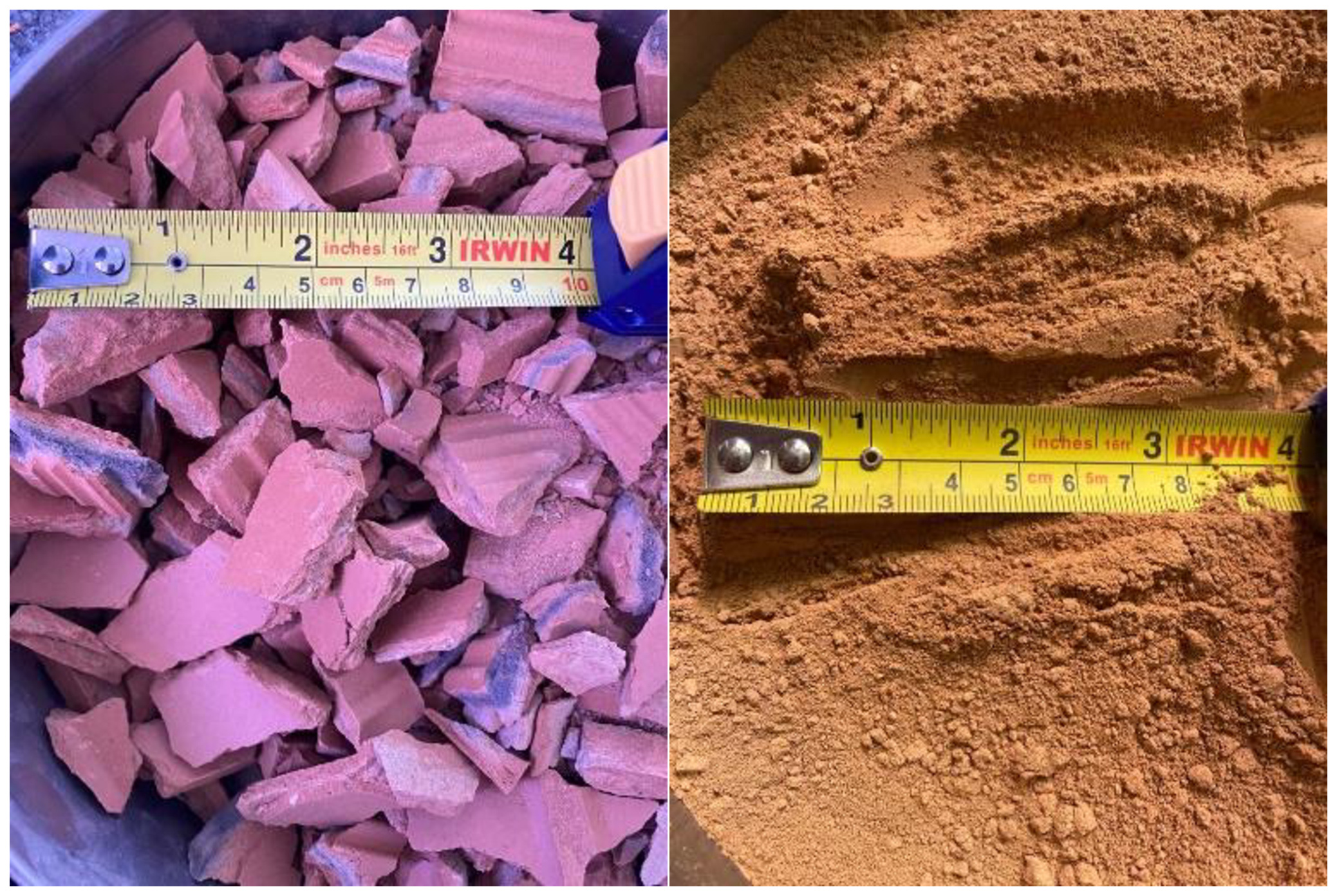
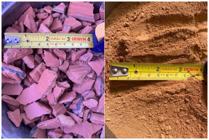
Each portion of material was subjected to a 40-minute milling cycle, sufficient time for the material to be easily strained through a 0.075 mm sieve. The material was stored in a sealed container to avoid humidity. Figure 1 displays the red brick waste after grinding in the ball mill.
X-ray fluorescence, laser granulometry, specific mass, and specific surface tests were performed to characterize the RBW. The X-ray fluorescence test was performed using an EDX-720 X-ray fluorescence spectrometer using dispersive energy. The Shimadzu Sald-2201 equipment version 2.2.0 was used for performing the laser granulometry test. This test was used to determine the specific mass and was conducted in accordance with NBR 16605 [28]. The superficial mass test was performed to determine the superficial area, and it was carried out in compliance with the NBR 16372 standard [29].
2.1.4 Superplasticizer additive and Polypropylene fibers
MC-PowerFlow 4001 superplasticizer was used in this research, with a dosage of 0.2% in the cement mixture. It is an additive synthetic that utilizes polycarboxylate polymer technology.
According to the research results by Yuan and Jia [30] and Zhang et al. [31], the incorporation of polypropylene fibers in concrete improves flexural and compressive strength. 1% polypropylene fibers by volume were incorporated into the pervious concrete mixtures for this research.
2.2 Experimental procedure
2.2.1 Development of pervious concrete mixtures
The cement-to-aggregate ratio of 1:4 and a water-cement ratio of 0.33 were reported by Schackow et al. [17]. The authors obtained good results regarding flexural tensile strength and a high degree of permeability in PC.
For this study, the water-cement ratio was adjusted to 0.31 to ensure concrete permeability [32]. The recommendation from Sathe and Dandin [6] is to keep the water-to-cement ratio between 0.26 and 0.45 for effective pervious concrete, ensuring optimal aggregate coating and paste stability.
The substitute percentage of RBW was based on the cement weight of the reference mixture, without any waste product additions. The constitution of the PC mixtures is presented in Table 1 (to manufacture 1 m3 of pervious concrete).
2.2.2 Experimental Testing
The experimental tests performed to verify the physical, mechanical, and thermal properties of PC mixtures included porosity and density [33], flexural strength [34], compressive strength [35], permeability [32], and solar reflectance [36]. The experimental tests were conducted after 28 days of curing the pervious concrete mixtures.
The flexural tensile strength and the compressive strength were obtained by Equation 1 and Equation 2, respectively.
Where: 𝑓𝑐𝑡, 𝑓 is the flexural tensile strength (MPa); F is the maximum force recorded in the testing machine (N); l is the span length between supports (mm); b is the average width of the specimens (mm); d is the average height of the specimens (mm).
Where: is the compressive strength (MPa); F is the maximum achieved force (N), D is the diameter of the specimen (mm).
The porosity and density were obtained by Equations 3 and 4, respectively.
Where: A is the dry mass of the specimen (g); B is the submerged mass of the specimen (g); ρw is the water density (g/cm3); V is the volume of the specimen (cm3).
The permeability coefficient was determined according to Attachment A of the NBR 16416 standard, noting the required minimum surface area of 0.50 m2. The molded plates were 70 x 80 x 10 cm, totaling a surface area of 0.56 m2. The plates were molded 10 cm thick, which is the minimum thickness for permeable pavement appropriate for light roadway traffic according to the NBR 16416 standard [32].
The plate surface was cleaned to remove any possible deposited sediments, and an infiltration ring was positioned over the plate to execute the test. The pavement was pre-wetted, and after 2 minutes, the test began. A known volume of water was poured over the infiltration ring at a rate that maintained the water level between the 10 mm and 15 mm markings.
Timing starts when water first contacts the pavement surface and ends when no free water remains, with a precision of 0.1 seconds. The permeability coefficient is defined based on Equation 5.
Where: 𝐾 is the permeability coefficient (mm/h); 𝑚 is the infiltrated water mass (kg); 𝑑 is the diameter of the infiltration ring (mm); 𝑡 is the time required for all the water to drain (s); 𝐶 is the conversion factor for SI units, with a value of 4,583,666,000.
Figure 2 exemplifies the accomplishment of flexural strength, compressive strength and permeability tests.

The quantity and dimension of the specimens for each test are described in Table 2, considering that the same test specimens were used for the compression, porosity, and density tests.
All specimens were molded using a manual compactor. The cylindrical specimens were molded in two layers with 12 blows per layer. The prismatic specimens were molded in two layers with 75 blows.
Reflectance tests were performed using a spectrometer, model Lambda 1050 UV-VIS-NIR. The spectral range analyzed was 300 nm – 2500 nm. Spectral reflectance is the ratio of reflected light to incident light at each wavelength on a surface. It indicates how much light of each color an object reflects [37].
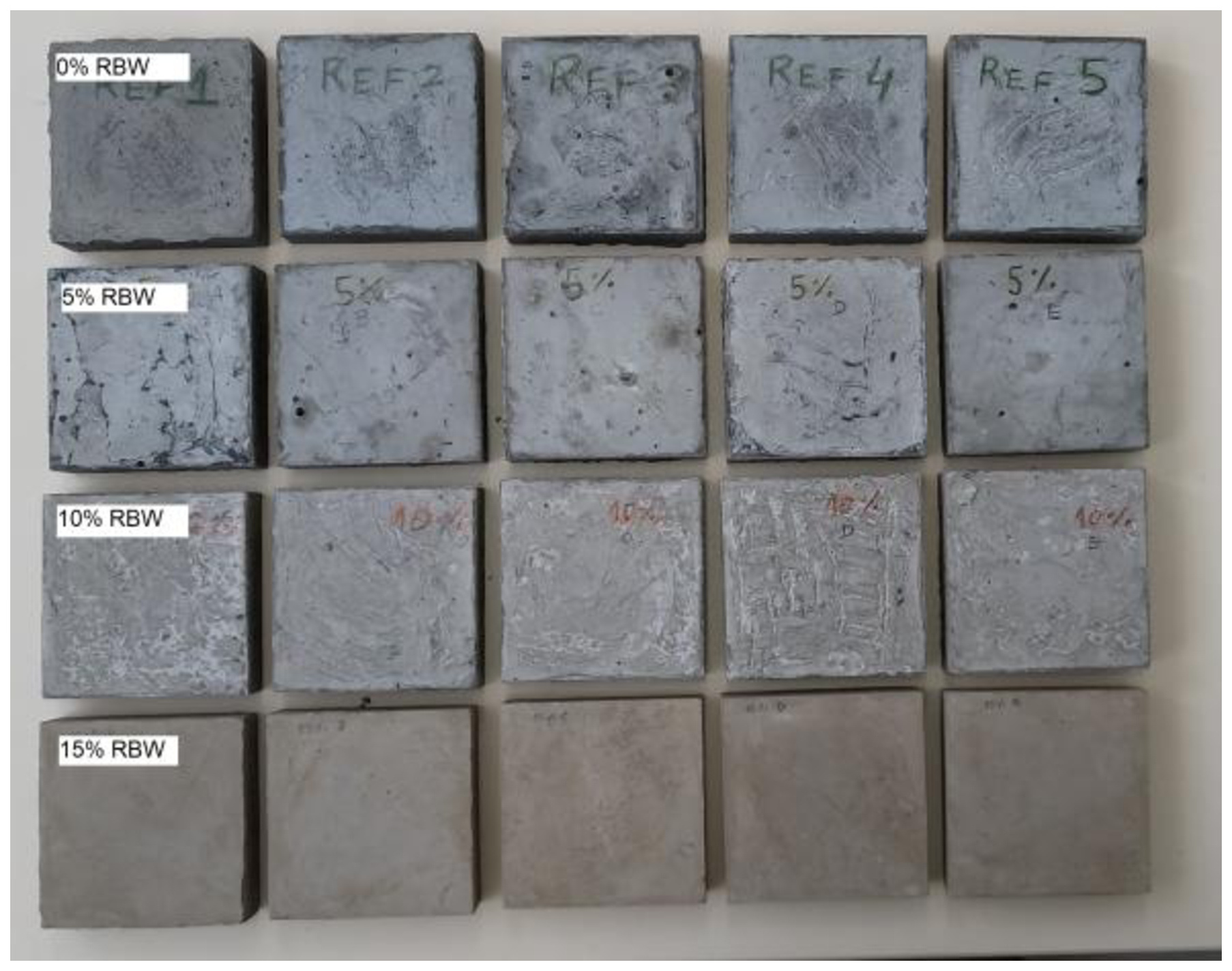
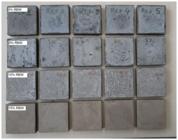
Reflectance and Absorbance values can be expressed in absolute form, ranging from 0 to 1, or in relative form, ranging from 0 to 100%. Figure 3 shows the 20 samples molded in the 100 x 100 x 25 mm format for the solar reflectance test.
2.3 Statistical and Regression Analysis
One-way Analysis of Variance (ANOVA) was employed to examine the effects of RBW on the evaluated properties of pervious concrete mixtures, including flexural tensile strength, compressive strength, permeability, porosity, density, and solar reflectance, using Minitab software.
ANOVA was used to compare means among pervious concrete mixtures after 28 days. A significance level of 0.05 was used for the statistical test. In the one-way ANOVA, the null hypothesis (H0) stated that all group means were equal. In contrast, the alternative hypothesis (H1) stated that at least one group mean differed from the others, as is standard in hypothesis testing [38].
Using one-way ANOVA requires checking key assumptions: independence of samples, normality of residuals, and homogeneity of variances. The Shapiro-Wilk test was applied to evaluate the normality of residuals; if the p-value exceeded 0.05, the normality assumption was considered satisfied. The Levene's test was used to assess homoscedasticity: a p-value over 0.05 indicated equal variances, while a p-value below 0.05 suggested unequal variances.
When ANOVA indicates significant differences among the treatment averages, the Dunnett test is used to determine which averages differ at the 5% significance level. The statistical analysis aimed to evaluate whether varying the percentage of RBW replacement affected the assessed properties of permeable concrete.
Furthermore, regression analyses were performed to evaluate the ideal percentage of RBW replacement in pervious concrete to improve its mechanical and thermal properties.
3. RESULTS AND DISCUSSIONS
3.1 Characterization of the materials
3.1.1 Red brick waste (RBW)
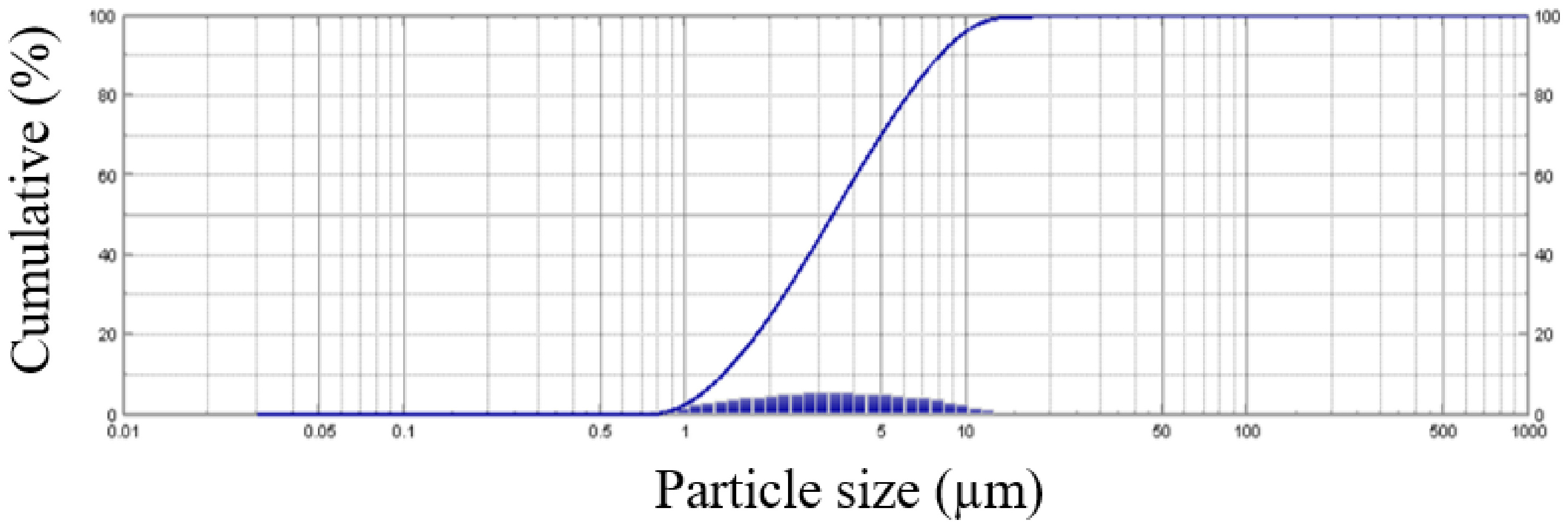
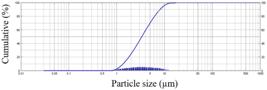
According to NBR 12653 [39], at least 20% of the pozzolanic material must be retained on the 45 μm sieve as a physical requirement. A laser granulometry test was performed to verify this requirement. The waste product displayed an average diameter of 3.316 μm. Moreover, 90% of the particles were smaller than 7.974 μm, thereby meeting the physical requirement of a pozzolanic material. The granulometric distribution of the RBW is displayed in Figure 4.
NBR 12653 [39] defines the pozzolanic materials as a total concentration of silica (SiO2), alumina (Al2O3), and iron oxide (Fe2O3) equal to or greater than 70% and the concentration of sulfur trioxide (SO3) is less than 4%. The chemical analysis of red brick waste by X-ray fluorescence revealed the composition shown in Table 3.
The results found from the red brick waste comply with the standard specifications. The total concentration of silica (SiO2), alumina (Al2O3), and iron oxide (Fe2O3) is 92.888% and the trioxide concentration of sulfur (SO3) is 0.967%. The specific mass obtained from the test is 2.13 g/cm3.
A surface area test was performed on the RBW and the cement. While the surface area of the cement is 3,208.71 cm2/g, the surface area of the RBW exceeds that of the cement by more than double, reaching 6,816.97 cm2/g.
The surface area of the material increases exponentially as particle size is reduced [40]. As surface area increases, more water is needed to envelop the material particles. A greater surface area contributed to increased reactivity of the material, and it could affect consistency and workability [41].
3.1.2 Natural aggregates
The coarse gneiss gravel fineness modulus was calculated as 6.85. Its water absorption was equal to 0.42%, and its density in a saturated condition with a dry surface was 2.78 g/cm3. The fineness modulus of the fine gneiss gravel was calculated as 3.14. Its water absorption was 3.58%, and its saturated density condition with a dry surface was 2.60 g/cm3.
3.2 Physical, mechanical, and thermal properties of PC mixtures
3.2.1 Porosity, Density, and Permeability
Table 4 shows the values of porosity, density, and permeability from tests in the previous concrete mixtures.
Typically, the porosity of pervious concrete ranges from 10% to 35% [42]. As shown in Table 4, pervious concrete containing 5% RBW has an average porosity of 36.79%, which is a 9.88% decrease compared to the reference concrete with an average of 40.82%. Pervious concrete with 7.5% RBW has an average porosity of 40.94%, differing from the reference concrete by only 0.29% and from the mixture with 10% RBW by just 3.35%.
Ortega et al. [43] discovered that the porosity of cementitious materials increases as the RBW replacement ratio rises. Tang et al. [23] and Ma et al. [44] observed that the pore structure of concrete improves when the RBW particle size is smaller than the cement particle size and the RBW content remains below 30%. For instance, concrete with 30% RBW (average particle size 9.06 μm) showed about 19.8% lower porosity compared to the reference concrete [23].
According to El-Hassan et al. [45], pervious concrete has a typical density between 1,600 and 2,000 kg/m3. The pervious concrete developed in this study presented high porosity, which consequently resulted in low values of its density, as shown in Table 4. Equal averages of 1,540 kg/m3 were observed for the density of the 0%, 7.5%, and 10% RBW concrete mixtures. The average density for the concrete with 5% RBW was 1,610 kg/m3, which represents an increase of 4.54%. Pervious concrete with 5% RBW had lower porosity and the highest density.
Seifeddine et al. [2] and Ma et al. [44] confirmed in their studies that the density of pervious concrete decreases linearly with increasing porosity. Sathiparan et al. [46] found that using supplementary cementitious materials (SCM) in pervious concrete generally does not significantly affect density, with changes usually less than 1%.
According to NBR 16416 [32], the pervious pavement must present a permeability coefficient greater than 3.6 mm/s. Table 4 presents the permeability coefficient averages for the analyzed concrete mixtures. All concrete mixtures presented a permeability coefficient greater than the minimum required by the standard.
The pervious concretes with a 10% RBW exhibited an increased permeability coefficient compared to the reference pervious concrete. Tang et al. [23] found an increase in water permeability of concrete when RBW particles are larger than cement particles.
Raghwani et al. [47] noted that substituting 5–10% silica fume for cement in pervious concrete did not negatively impact permeability, even with a constant water-to-binder ratio (0.33) and fixed porosity (20%).
In the study by Liu et al. [48], the cement was partially replaced with fly ash (FA) to prepare pervious concrete. They concluded that replacing the waste product did not significantly alter permeability. The permeability coefficient for all concrete mixtures was approximately 3.8 mm/s.
3.2.2 Flexural Strength and Compressive Strength
The average values of the mechanical properties of pervious concrete mixtures are presented in Table 5.
The pervious concrete intended for light traffic roadways must have a minimum flexural tensile strength of 2.0 MPa [32]. The concrete with 5% RBW showed the best flexural tensile strength, averaging 3.16 MPa, which is a 22.48% increase compared to the reference concrete. Although the flexural strength decreased by 14.54% in the mixture with 7.5% RBW compared to the reference, it still exceeded 2 MPa. This pervious concrete is suitable for use in pavements for light traffic applications. The concrete with 10% RBW did not meet the minimum strength requirement and showed a 54.12% reduction compared to the reference mixture.
Tang et al. [23] found that increasing RBW content generally decreases flexural strength due to reduced hydration product content. However, incorporating an appropriate amount of high-fineness RBW can have a positive or minimal impact on flexural strength. Singh et al. [20] noted a decrease in flexural strength of 1.98%, 3.61%, 10.28%, and 19.13% at 28 days as compared to the control mixture (2.77 MPa) with 5, 10, 15, and 20% on replacing cement with flash ash (FA), respectively. According to the authors, the decrease in strength is attributed to the lower pozzolanic reaction of fly ash (FA) at an early age.
Liu et al. [48] concluded that replacing cement with waste fly ash at various levels (3%, 6%, 9%, and 12%) led to decreases in both early-age (28 days) compressive and flexural strength of pervious concrete.
Muthaiyan and Thirumalai [49] examined the effects of replacing 10% and 20% of cement with fly ash on the properties of pervious concrete. The researchers observed only a minor decrease in flexural strength when up to 20% of cement was replaced with fly ash (FA).
In the study by Santos et al. [50], the pervious concrete with the addition of concrete floor polishing waste (CPFW) demonstrated better performance at an early age, with increases in average compressive and flexural strength of 57.45% and 33.78%, respectively, after 3 days of curing with 2% CFPW, and 45.41% and 37.20%, respectively, after 7 days of curing with 4% CFPW.
According to Table 5, the pervious concrete with 5% RBW replacement showed higher compressive strength. The average strength was 13.58 MPa, which is a 37.60% increase compared to the reference concrete. The concrete with 7.5% RBW replacement also showed improved compressive strength, averaging 11.79 MPa, a 19.45% increase over the reference. The concrete with 10% RBW replacement exhibited a slight decrease in compressive strength, averaging 8.55 MPa, a 13.38% decrease compared to the reference concrete.
Likes et al. [51] evaluated the compressive strength of concrete containing 20% replacement of Portland cement with an RBW. The RBW showed a 7-day decrease in compressive strength of only 8%, and a 2% reduction at 28 days.
Tang et al. [23] reported that the compressive strength of pervious concrete decreases as the recycled brick waste (RBW) replacement ratio increases. This reduction in strength is attributed to a decrease in the amount of hydration products and a decline in the integrity of the cementitious matrix with greater RBW incorporation.
He et al. [21] indicated that partially replacing cement with RBW reduces the compressive strength of cementitious composites, regardless of the RBW replacement ratio. The authors also found that adding an appropriate amount of RBW can improve the mechanical properties of cementitious materials. However, if the RBW content is too high, these properties decline. According to existing research, the optimal level of cement replacement with RBW ranges from 5 to 15%. Olofinnade et al. [52] stated that using 10% RBW in structural concrete significantly increased its compressive strength. They recommend not exceeding 15% RBW in concrete production.
Bideci et al. [53] verified that the chemical composition of RBW met the standard requirements for use as a pozzolanic material and that substituting 10% of the cement with RBW significantly improved the compressive strength of concrete. However, increasing the RBW ratio beyond this level resulted in decreased strength. The authors recommend limiting RBW to no more than 15% in concrete production.
3.2.3 Solar reflectance
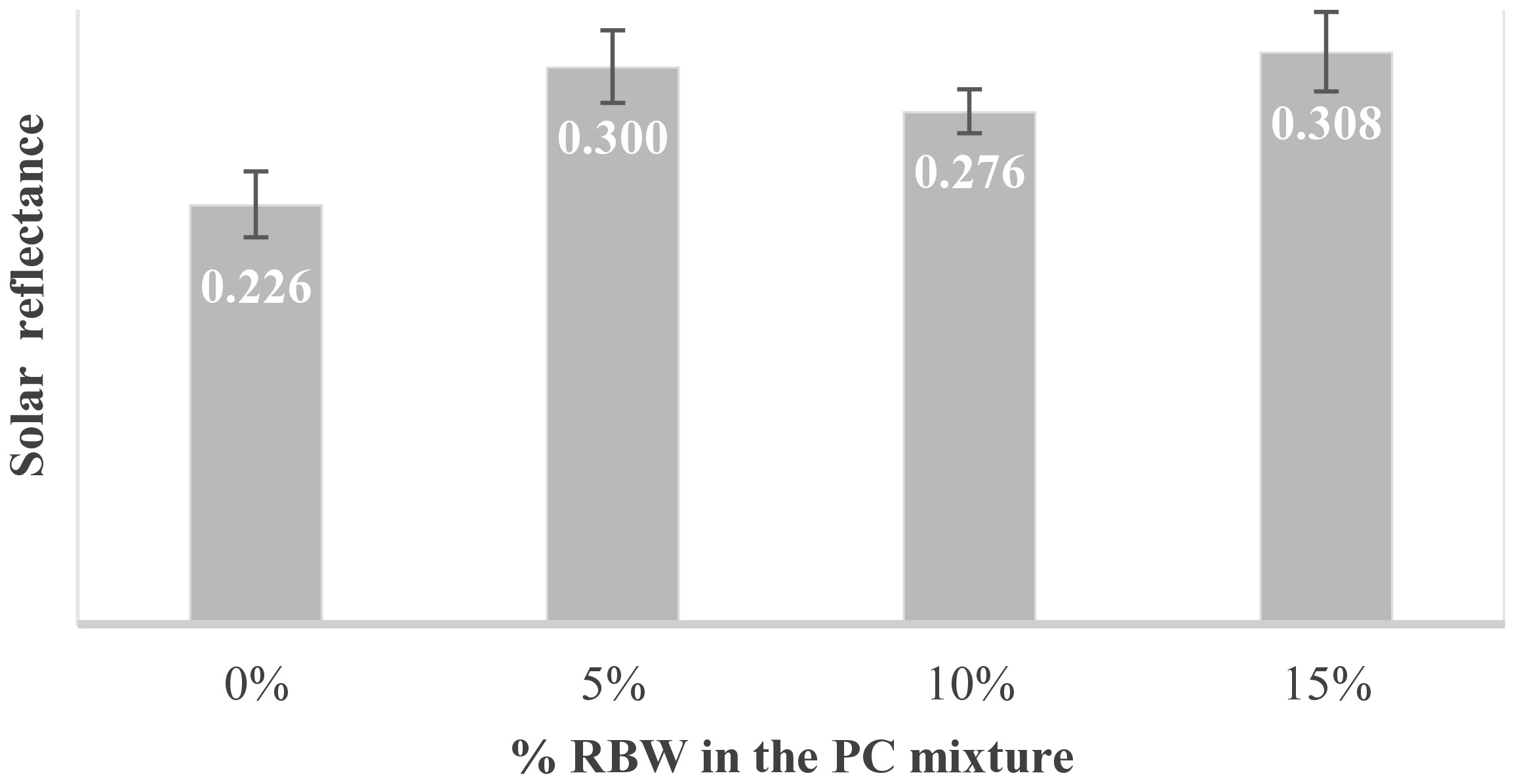
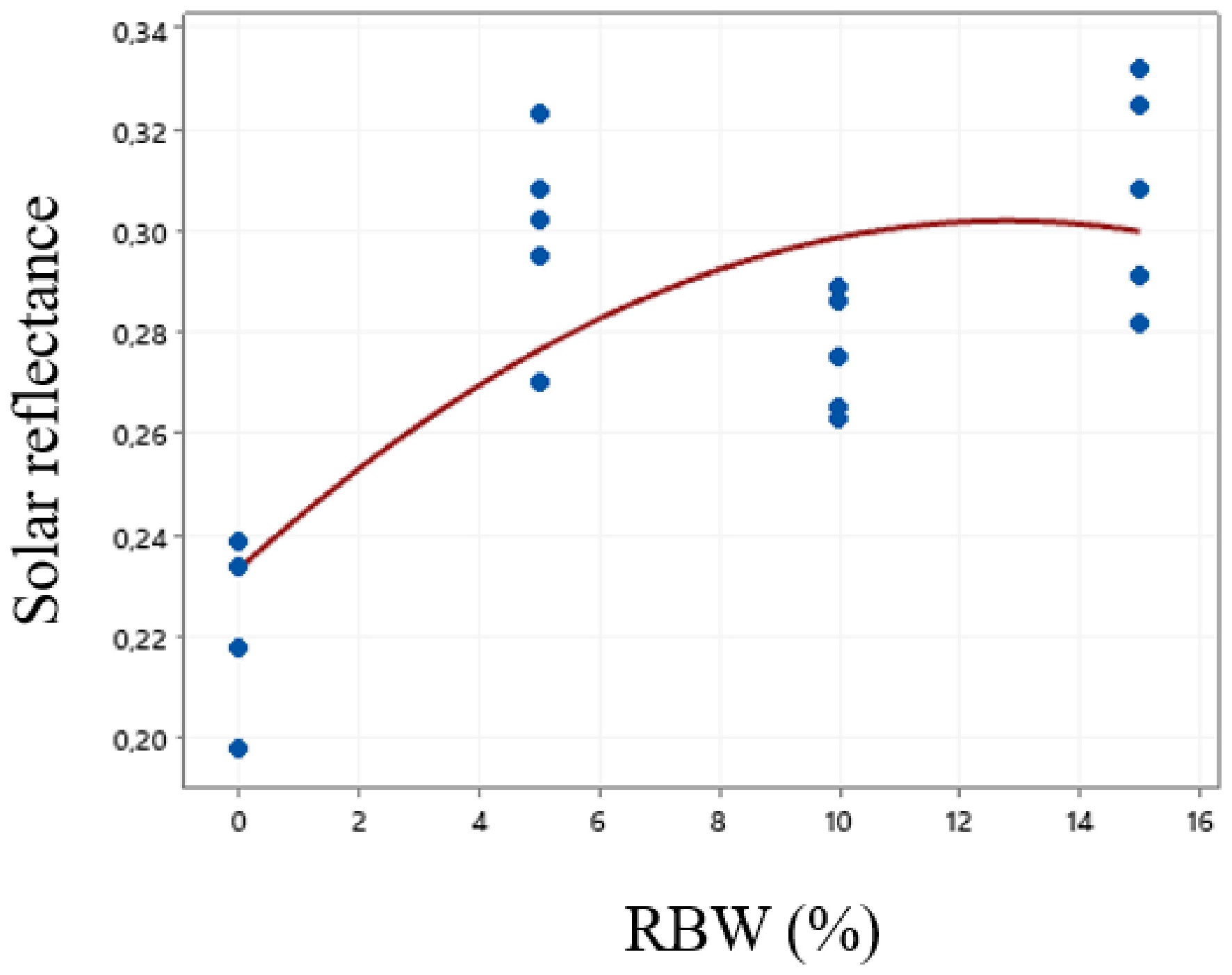
Figure 5 presents the average solar reflectance values for all pervious concrete mixtures.
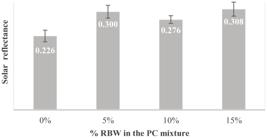
Pervious concrete with 15% RBW replacement showed the highest average solar reflectance (0.308), which represents an increase of 36.34% compared to the reference concrete. The use of RBW contributed to increasing the solar reflectance of pervious concrete. Greater solar spectral reflectance leads to a reduction in pavement temperature, as can be observed in the studies cited below.
The study by Shamsaei et al. [54] proposed a novel approach to mitigate the negative impact of asphalt pavements on urban heat island (UHI) effects. For these purposes, construction and demolition waste (CDW) materials—including waste clay bricks, concrete, and glass—were used as aggregates in chip seal layers to enhance solar reflectivity and reduce asphalt pavement temperatures, thereby mitigating urban heat island (UHI) effects. Laboratory tests using a UV-Visible-NIR spectrometer showed that the solar reflectance of yellow brick, red brick, and concrete chip seals was approximately 2.5, 2, and 1.8 times higher than that of aged Hot Mix Asphalt (HMA), respectively. This increased reflectivity was attributed to the lighter color and chemical composition of these materials. Numerical modeling, laboratory, and field tests all revealed similar trends, confirming the benefits of using clay brick and concrete aggregates in chip seal preparation to mitigate UHI and lower urban temperatures effectively.
Carpio et al. [55] examined the solar reflectance of 20 pavement types used in Brazil for roads, parking lots, squares, and sidewalks. In field tests, the highest solar reflectance values were observed for white Portuguese mosaic (0.49) and dense Portland concrete (0.42). The lowest value was found in the Conventional Asphalt Mix (0.02). The difference in reflectance between surfaces with a lighter (white Portuguese mosaic) and a darker (Conventional Asphalt Mix) appearance was approximately 47.9%, and the corresponding surface temperature difference was 18.4 °C. The main quantitative finding is the difference in solar reflectance between dense concrete (0.42) and pervious concrete (0.17). According to the authors, this difference in solar reflectance relates to their surface textures: the former has rough, nearly impermeable surfaces, while the latter has porous surfaces. For a smooth surface, solar radiation is reflected in multiple directions. Conversely, dense asphalt mixtures with a rough texture have a larger surface area, which allows more solar radiation to be absorbed.
Synnefa et al. [56] measured and analyzed the solar spectral properties and thermal performance of five colored thin-layer asphalt samples compared to conventional asphalt. All colored samples exhibited higher solar reflectance values and lower surface temperatures than the conventional asphalt. Furthermore, computational fluid dynamics (CFD) simulations indicated that replacing conventional asphalt with these colored alternatives could reduce average air temperature by up to 5 °C.
3.3 Statistical Analysis
An ANOVA was conducted to assess whether RBW influenced the physical and mechanical properties and solar reflectance of pervious concrete. For all properties evaluated, the p-values were below 0.05, as shown in Table 6. Consequently, the null hypothesis was rejected. confirming that RBW has a statistically significant impact on all evaluated properties. The Shapiro-Wilk test revealed that all residuals followed a normal distribution. Furthermore, the Levene test showed equal variances, with p-values greater than 0.05 for all properties assessed.
The results of Dunnett's test showed that the mean differences occurred between the reference concrete mixture and the 5% RBW mixture for porosity and density properties, and between the reference concrete mixture and all concrete mixtures with 5%, 7.5%, and 10% RBW replacement for permeability.
Regarding mechanical properties, the Dunnett test showed that the means for flexural strength differed between reference concrete and concrete with 5% RBW, and between reference concrete and concrete with 10% RBW. Dunnett's test did not reveal any differences in the average compressive strengths. This result can be attributed to significant differences among the group means for each property evaluated.
Regarding solar reflectance, Dunnett's tests showed significant differences between the reference concrete mixture and the other concrete mixtures with RBW replacement. However, ANOVA indicates that small amounts of RBW can partially replace cement without significantly affecting the evaluated properties of pervious concrete.
3.4 Regression analysis
Regression analysis was performed to evaluate the ideal percentage of RBW replacement in pervious concrete to improve its mechanical and thermal properties.
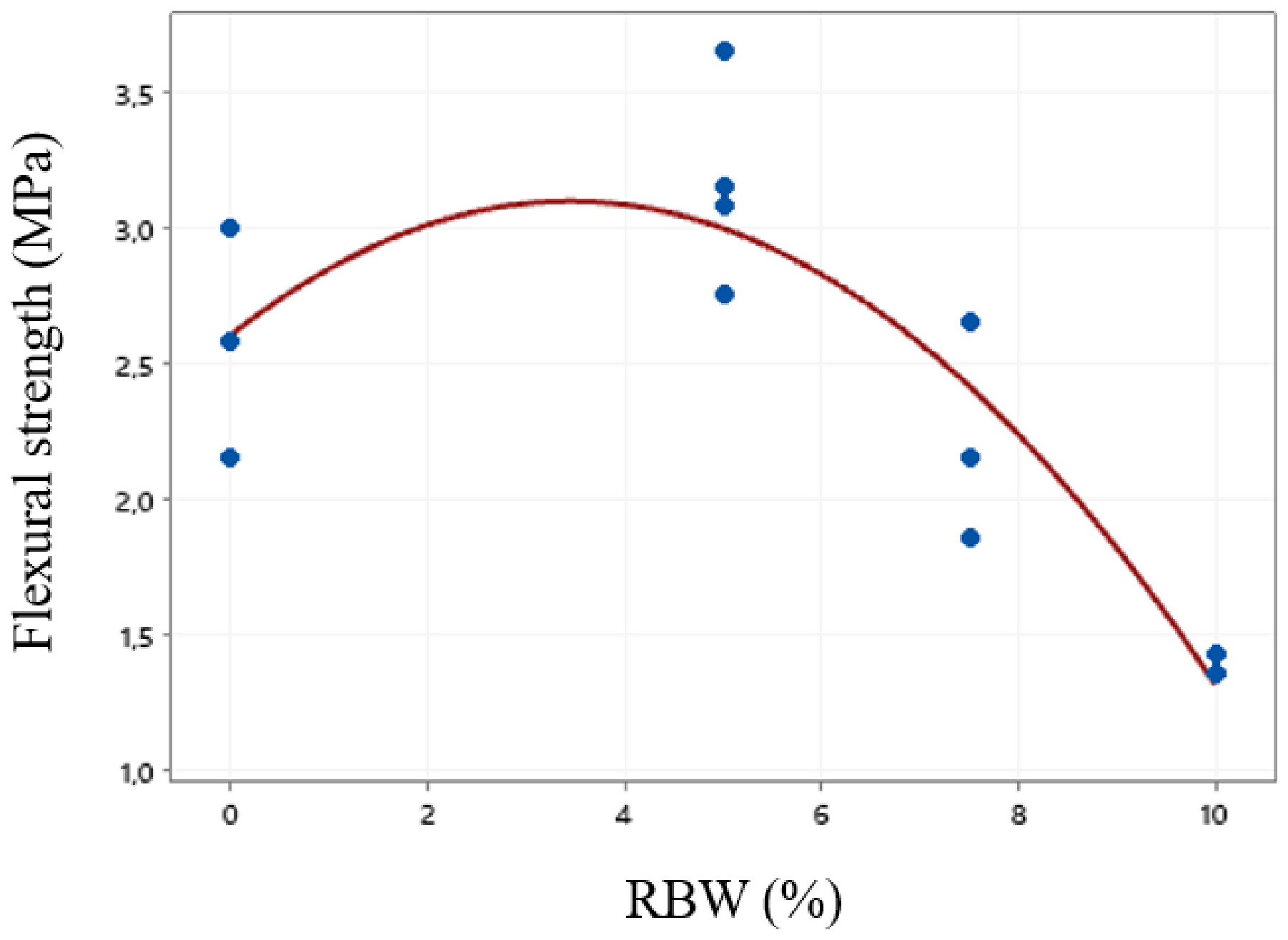
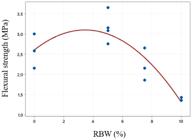
Figure 6 shows the regression analysis related to the percentage of the RBW and flexural tensile strength. The graphic shows that the regression analysis resulted in a quadratic function with a determination coefficient (R2) equal to 81.5%.
The regression analysis resulted in Equation 6.
By deriving Equation 6 and equaling it to zero to obtain the maximum flexural strength, 3.44% is the ideal percentage of RBW to obtain the maximum flexural tensile strength of 3.10 MPa.
In the study by Li et al. [16], the maximum value of flexural strength was 1.4 MPa obtained by substituting 10% of the glass powder waste products after 28 days.
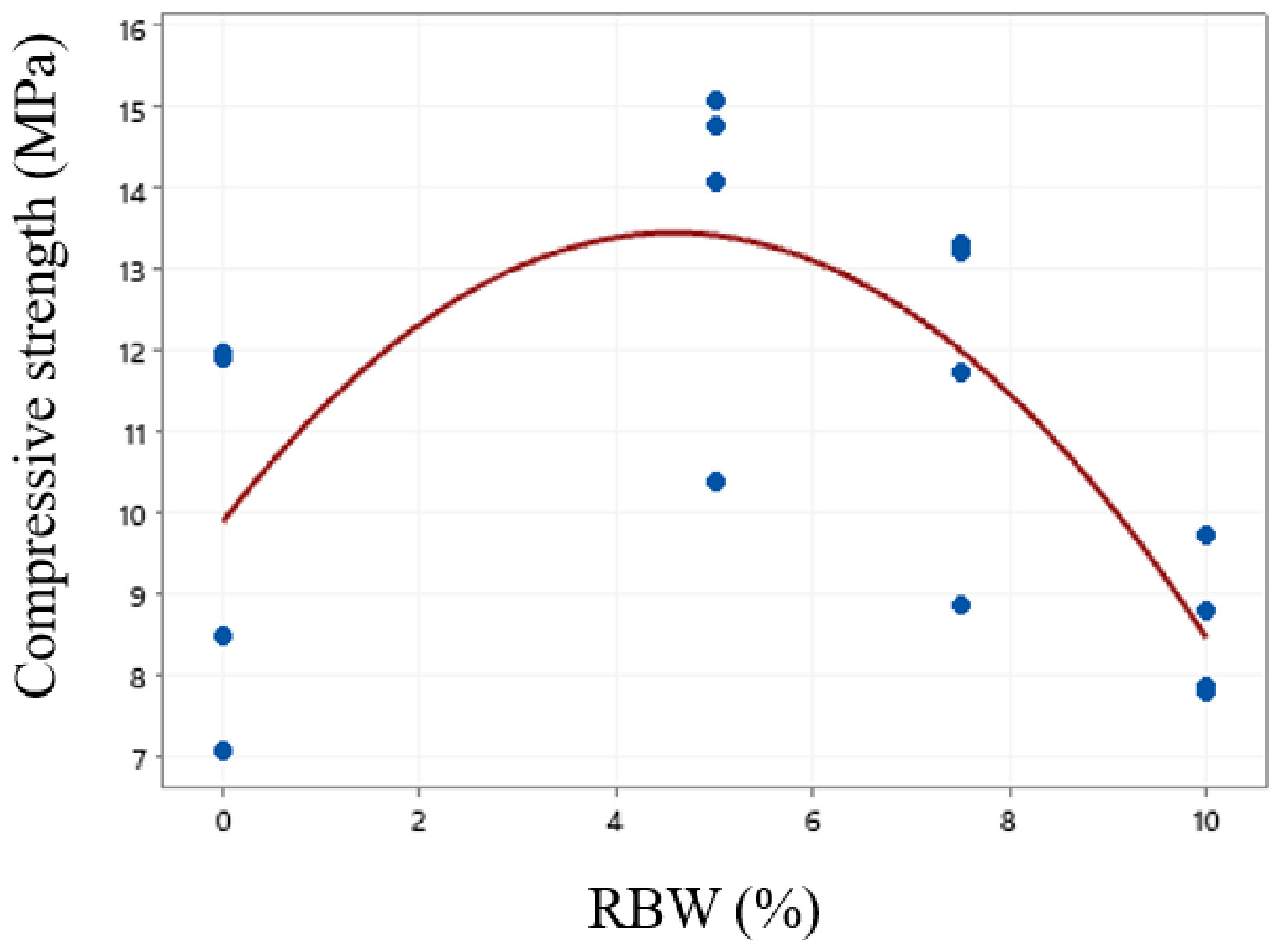
Figure 7 presents a regression analysis related to the percentage of the % RBW and compressive strength. The regression analysis resulted in a quadratic function with a determination coefficient equal to 54.7%.
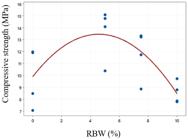
The regression analysis resulted in Equation 7. 4.58% is the ideal RBW percentage, derived from Equation 7 by setting it equal to zero, yielding a maximum compressive strength of 13.45 MPa.
Figure 8 presents the regression analysis between solar reflectance and the percentage of RBW replacement. The regression analysis resulted in a quadratic function given by Equation 8. The coefficient of determination (R2) was equal to 56.7%. Thus, 12.78% is the ideal percentage of RBW to obtain the maximum solar reflectance value of 0.302.
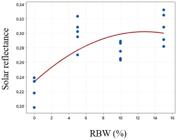
It is evident that replacing 5% of cement with RBW in pervious concrete mixtures results in the lowest porosity and permeability values: 36.79% and 5.1 mm/s, respectively. At this replacement level, the density of the pervious concrete reached its highest value, 1.610 kg/m3. These values are within the standard range for this type of material. Concerning mechanical properties, 5% RBW yielded the highest flexural and compressive strengths for PC: 13.58 MPa and 3.16 MPa, respectively. The solar reflectance of the pervious concrete at 5% replacement was 0.300, slightly lower than the 0.302 observed at 12.78% replacement. Based on these findings, it is concluded that 5% RBW replacement is optimal for achieving good performance in the PC with the RBW used in this study.
4. CONCLUSIONS
The current study investigated how Red Brick Waste affects the physical. hydraulic. mechanical. and thermal properties of Pervious Concrete mixes. Additionally, regression analyses were performed to identify the optimal RBW replacement percentage to improve its mechanical and thermal performance. Based on the results observed, the following conclusions are drawn:
-
At a significant level of 0.05, the ANOVA one-way confirmed that the RBW generated interference in all the evaluated properties of the pervious concrete mixtures.
-
Statistical tests showed that the mean differences occurred between the reference concrete mixture and the 5% RBW mixture for porosity and density, and between the reference mixture and mixtures with 5, 7.5%, and 10% RBW for permeability. At a 5% replacement of cement with RBW in pervious concrete, porosity and permeability had the lowest values: 36.79% and 5.1 mm/s, respectively. The density of the pervious concrete with 5% RBW was the highest at 1.610 kg/m3.
-
The 5% RBW mixture achieved the highest compressive and flexural strengths in pervious concrete, measuring 13.58 MPa and 3.16 MPa, respectively. Statistical tests showed that the means differed between reference concrete and concrete with 5% RBW, and also between reference concrete and concrete with 10% RBW for flexural strength. However, the test did not reveal any differences between the averages for compressive strength.
-
Pervious concrete with 15% RBW replacement showed the highest average solar reflectance (0.308), which represents a 36.34% increase compared to the reference concrete. The use of RBW increased the solar reflectance of pervious concrete. Statistical analysis revealed significant differences between the reference concrete mixture and the other concrete mixtures with RBW replacement.
-
Regression analyses indicated that the optimal percentages of RBW replacement in pervious concrete to improve compressive strength, flexural strength, and solar reflectance were 4.58%. 3.44%. and 12.78%, respectively. However, since all properties of the pervious concrete with 5% RBW met the minimum requirements of Brazilian standards for pavement applications. It was concluded that replacing 5% of RBW is suitable for ensuring good performance of this type of waste in the concrete mixture.
Thus, this study helps promote the use of natural resource-based raw materials for Portland cement production.
-
Financial support: The authors thank FAPESC (Research and Innovation Support Foundation of the State of Santa Catarina) for providing scholarships at a master’s degree level.
-
Data Availability:
The data that support the findings of this study are openly available in the UDESC site at https://www.udesc.br/arquivos/cct/id_cpmenu/706/2023_07_31_Bettina_Buchholz_16992850496744_706.pdf
-
How to cite:
B. Buchholz, and A. G. Santos. “Red brick waste as a raw material for pervious concrete: An ideal replacement rate for achieving good performance in pavement applications,” Rev. IBRACON Estrut. Mater., vol. 19, no. 3, e19117, 2026, https://doi.org/10.1590/S1983-41952026000100017
REFERENCES
-
1 N. Saboo, A. N. Prasad, M. Sukhija, M. Chaudhary, and A. K. Chandrappa, "Effect of the use of recycled asphalt pavement (RAP) aggregates on the performance of pervious paver blocks (PPB)," Constr. Build. Mater., vol. 262, pp. 120581, 2020, https://doi.org/10.1016/j.conbuildmat.2020.120581
» https://doi.org/10.1016/j.conbuildmat.2020.120581 -
2 K. Seifeddine, S. Amziane, and E. Toussaint, "State of the art on the mechanical properties of pervious concrete," Eur. J. Environ. Civ. Eng., vol. 26, no. 15, pp. 7727–7755, 2022, https://doi.org/10.1080/19648189.2021.2008511
» https://doi.org/10.1080/19648189.2021.2008511 -
3 J. Sansalone, X. Kuang, and V. Ranieri, "Permeable pavement as a hydraulic and filtration interface for urban drainage," J. Irrig. Drain. Eng., vol. 134, no. 5, pp. 666–674, 2008, https://doi.org/10.1061/(ASCE)0733-9437(2008)134:5(666)
» https://doi.org/10.1061/(ASCE)0733-9437(2008)134:5(666) -
4 A. Akkaya and İ. H. Çağatay, "Experimental investigation of the use of pervious concrete on high volume roads," Constr. Build. Mater., vol. 279, pp. 122430, 2021, https://doi.org/10.1016/j.conbuildmat.2021.122430
» https://doi.org/10.1016/j.conbuildmat.2021.122430 -
5 D. N. Subramaniam and N. Sathiparan, "Comparative study of fly ash and rice husk ash as cement replacement in pervious concrete: mechanical characteristics and sustainability analysis," Int. J. Pavement Eng., vol. 24, no. 2, pp. 2075867, 2023, https://doi.org/10.1080/10298436.2022.2075867
» https://doi.org/10.1080/10298436.2022.2075867 -
6 S. Sathe & S. Dandin (2024). Experimental study of permeable concrete with FA and GGBS as partial replacement to cement. Eur. J. Environ. Civ. Eng., pp. 1-27, 2024, https://doi.org/10.1080/19648189.2024.2417674
» https://doi.org/10.1080/19648189.2024.2417674 -
7 Y. Zhao, J. Gao, C. Liu, X. Chen, and Z. Xu, "The particle-size effect of waste clay brick powder on its pozzolanic activity and properties of blended cemen," J. Clean. Prod., vol. 242, pp. 118521, 2020, https://doi.org/10.1016/j.jclepro.2019.118521
» https://doi.org/10.1016/j.jclepro.2019.118521 -
8 A. B. Moradikhou, A. Esparham, and M. J. Avanaki, "Physical & mechanical properties of fiber reinforced metakaolin-based geopolymer concrete," Constr. Build. Mater., vol. 251, pp. 118965, 2020, https://doi.org/10.1016/j.conbuildmat.2020.118965
» https://doi.org/10.1016/j.conbuildmat.2020.118965 -
9 J. Choudhary, B. Kumar, and A. Gupta, "Potential utilization of construction wastes in asphalt pavements as fillers using ranking framework," Constr. Build. Mater., vol. 277, pp. 122262, 2021, https://doi.org/10.1016/j.conbuildmat.2021.122262
» https://doi.org/10.1016/j.conbuildmat.2021.122262 -
10 M. Chen, J. Lin, S. Wu, and C. Liu, "Utilization of recycled brick powder as alternative filler in asphalt mixture," Constr. Build. Mater., vol. 25, no. 4, pp. 1532–1536, 2011, https://doi.org/10.1016/j.conbuildmat.2010.08.005
» https://doi.org/10.1016/j.conbuildmat.2010.08.005 -
11 C. Poon and D. Chan, "The use of recycled aggregate in concrete in Hong Kong," Resour. Conserv. Recycling, vol. 50, no. 3, pp. 293–305, 2007., https://doi.org/10.1016/j.resconrec.2006.06.005
» https://doi.org/10.1016/j.resconrec.2006.06.005 -
12 J. Xiao, Z. Ma, and T. Ding, "Reclamation chain of waste concrete: a case study of Shanghai," Waste Manag., vol. 48, pp. 334–343, 2016, https://doi.org/10.1016/j.wasman.2015.09.018 PMid:26452425.
» https://doi.org/10.1016/j.wasman.2015.09.018 -
13 H. Wu, J. Zuo, G. Zillante, J. Wang, and H. Yuan, "Construction and demolition waste research: a bibliometric analysis," Archit. Sci. Rev., vol. 62, no. 4, pp. 354–365, 2019, https://doi.org/10.1080/00038628.2018.1564646
» https://doi.org/10.1080/00038628.2018.1564646 -
14 U.S. Geological Survey, Mineral Commodity Summaries 2021 USA: U.S. Geological Survey, 2021, 200 p. https://doi.org/10.3133/mcs2021
» https://doi.org/10.3133/mcs2021 -
15 Z. Ge, Y. Wang, R. Sun, X. Wu, and Y. Guan, "Influence of ground waste clay brick on properties of fresh and hardened concrete," Constr. Build. Mater., vol. 98, pp. 128–136, 2015, https://doi.org/10.1016/j.conbuildmat.2015.08.100
» https://doi.org/10.1016/j.conbuildmat.2015.08.100 -
16 A. Li, H. Qiao, Q. Li, T. Hakuzweyezu, and B. Chen, "Study on the performance of pervious concrete mixed with waste glass powder," Constr. Build. Mater., vol. 300, pp. 123997, 2021, https://doi.org/10.1016/j.conbuildmat.2021.123997
» https://doi.org/10.1016/j.conbuildmat.2021.123997 -
17 A. Schackow, C. Effting, V. G. Barros, I. R. Gomes, V. S. C. Neto, and M. S. Delandréa, "Permeable concrete plates with wastes from the paper industry: reduction of surface flow and possible applications," Constr. Build. Mater., vol. 250, pp. 118896, 2020, https://doi.org/10.1016/j.conbuildmat.2020.118896
» https://doi.org/10.1016/j.conbuildmat.2020.118896 -
18 J. Stolz, Y. Boluk, and V. Bindiganavile, "Wood ash as a supplementary cementing material in foams for thermal and acoustic insulation," Constr. Build. Mater., vol. 215, pp. 104–113, 2019, https://doi.org/10.1016/j.conbuildmat.2019.04.174
» https://doi.org/10.1016/j.conbuildmat.2019.04.174 -
19 P. A. Henríquez, D. Aponte, J. Ibáñez-Insa, and M. B. Bizinotto, "Ladle furnace slag as a partial replacement of Portland cement," Constr. Build. Mater., vol. 289, pp. 123106, 2021, https://doi.org/10.1016/j.conbuildmat.2021.123106
» https://doi.org/10.1016/j.conbuildmat.2021.123106 - 20 T. Singh, R. Siddique, S. Sharma, "Effectiveness of using Metakaolin and fly ash as supplementary cementitious materials in pervious concrete," Eur. J. Environ. Civ. Eng., vol. 26, no. 15, 7359-7382, 2022. https://doi.org/10.1080/19648189.2021.1988715.
-
21 Z. He et al, "Research progress on recycled clay brick waste as an alternative to cement for sustainable construction materials," Constr. Build. Mater., vol. 274, pp. 122113, 2021., https://doi.org/10.1016/j.conbuildmat.2020.122113
» https://doi.org/10.1016/j.conbuildmat.2020.122113 -
22 C. L. Wong, K. H. Mo, S. P. Yap, U. J. Alengaram, and T. Ling, "Potential use of brick waste as alternate concrete-making materials: a review," J. Clean. Prod., vol. 195, pp. 226–239, 2018, https://doi.org/10.1016/j.jclepro.2018.05.193
» https://doi.org/10.1016/j.jclepro.2018.05.193 -
23 Q. Tang, Z. Ma, H. Wu, and W. Wang, "The utilization of eco-friendly recycled powder from concrete and brick waste in new concrete: a critical review," Cement Concr. Compos., vol. 114, pp. 103807, 2020, https://doi.org/10.1016/j.cemconcomp.2020.103807
» https://doi.org/10.1016/j.cemconcomp.2020.103807 -
24 Q. Zeng et al, "Total recycling of low-quality urban-fringe construction and demolition waste towards the development of sustainable cement-free pervious concrete: the proof of concept," J. Clean. Prod., vol. 352, pp. 131464, 2022, https://doi.org/10.1016/j.jclepro.2022.131464
» https://doi.org/10.1016/j.jclepro.2022.131464 -
25 R. Arif et al, "Experimental analysis on partial replacement of cement with brick powder in concrete," Case Stud. Constr. Mater., vol. 15, pp. e00749, 2021, https://doi.org/10.1016/j.cscm.2021.e00749
» https://doi.org/10.1016/j.cscm.2021.e00749 - 26 Departamento Nacional de Estradas de Rodagem, Agregados - Determinação da da absorção e massa específica do agregado graúdo, DNER-ME 081/98, 1998.
- 27 Associação Brasileira de Normas Técnicas, Agregados - Determinação da Composição Granulométrica, NBR NM 248, 2003.
- 28 Associação Brasileira de Normas Técnicas, Cimento Portland e outros Materiais em Pó — Determinação da massa específica, NBR 16605/2017, 2017.
- 29 Associação Brasileira de Normas Técnicas, Cimento Portland e outros Materiais em Pó — Determinação da finura pelo método da permeabilidade ao ar (método de Blaine), NBR 16372/2015, 2015.
-
30 Z. Yuan, Y. Jia, Mechanical properties and microstructure of glass fiber and polypropylene fiber reinforced concrete: an experimental study. Construction and Building Materials, vol. 266, n. Pt A, pp. 121048, 2021, https://doi.org/10.1016/j.conbuildmat.2020.121048
» https://doi.org/10.1016/j.conbuildmat.2020.121048 -
31 B. Zhang et al, "Compressive behaviours, splitting properties, and workability of lightweight cement concrete: The role of fibres," Constr. Build. Mater., vol. 320, pp. 126237, 2022, https://doi.org/10.1016/j.conbuildmat.2021.126237
» https://doi.org/10.1016/j.conbuildmat.2021.126237 - 32 Associação Brasileira de Normas Técnicas, Pavimentos permeáveis de concreto – Requisitos e procedimentos, NBR 16416/2015, 2015.
- 33 American Society for Testing and Materials, Standard Test Method for Density and Void Content of Hardened Pervious Concrete, ASTM C1754, 2012.
- 34 Associação Brasileira de Normas Técnicas, Determinação da resistência à tração na flexão de corpos de prova prismáticos, NBR 12142/2010, 2010.
- 35 Associação Brasileira de Normas Técnicas, Concreto - Ensaio de compressão de corpos de prova cilíndricos, NBR 5739/2018, 2018.
- 36 American Society for Testing and Materials, Standard Test Method for Solar Absorptance, Reflectance, and Transmittance of Materials Using Integrating Spheres, ASTM E903, 2012.
-
37 Y. Lu, Y. Qin, C. Huang, and X. Pang, "Albedo of pervious concrete and its implications for mitigating urban heat Island," Sustainability (Basel), vol. 15, no. 10, pp. 8222, 2023, https://doi.org/10.3390/su15108222
» https://doi.org/10.3390/su15108222 - 38 D. C. Montgomery and G. C. Runger, Applied Statistics and Probably for Engineers, 6th ed., Hoboken, USA: Wiley, 2013.
- 39 Associação Brasileira de Normas Técnicas, Materiais pozolânicos — Requisitos, NBR 12653/2015, 2015.
- 40 L. A. F. Bauer, Materiais de Construção, 6. ed. Rio de Janeiro: LTC, 2022, 542 p.
- 41 A. Schackow, "Efeito das caracteríticas pozolâncias de rejeitos de tijolo nas propriedades de argamassas," Tese de doutorado – Prog. Pós-graduação Eng. Mat., Univ. Est. Sta Catarina, Joinville, 2015.
- 42 P. D. Tennis, M. L. Leming, and D. J. Akers, Pervious Concrete Pavements, EB302, Skokie, Illinois: Portland Cement Association; Maryland, USA: Silver Spring, 2004, 36 p.
-
43 J. M. Ortega, V. Letelier, C. Solas, G. Moriconi, M. A. Climent, and I. Sánchez, "Long-term effects of waste brick powder addition in the microstructure and service properties of mortars," Constr. Build. Mater., vol. 182, pp. 691–702, 2018, https://doi.org/10.1016/j.conbuildmat.2018.06.161
» https://doi.org/10.1016/j.conbuildmat.2018.06.161 -
44 Z. Ma, W. Li, H. Wu, and C. Cao, "Chloride permeability of concrete mixed with activity recycled powder obtained from C&D waste," Constr. Build. Mater., vol. 199, pp. 652–663, 2019, https://doi.org/10.1016/j.conbuildmat.2018.12.065
» https://doi.org/10.1016/j.conbuildmat.2018.12.065 -
45 H. El-Hassan, P. Kianmehr, and S. Zouaoui, "Properties of pervious concrete incorporating recycled concrete aggregates and slag," Constr. Build. Mater., vol. 212, pp. 164–175, 2019, https://doi.org/10.1016/j.conbuildmat.2019.03.325
» https://doi.org/10.1016/j.conbuildmat.2019.03.325 -
46 N. Sathiparan, D. H. H. P. Dassanayake, and D. N. Subramaniam, "Utilization of supplementary cementitious materials in pervious concrete: a review," Int. J. Environ. Sci. Technol., vol. 21, no. 6, pp. 5883–5918, 2024, https://doi.org/10.1007/s13762-023-05440-4
» https://doi.org/10.1007/s13762-023-05440-4 -
47 E. Khankhaje, T. Kim, H. Jang, C. Kim, J. Kim, and M. Rafieizonooz, "A review of utilization of industrial waste materials as cement replacement in pervious concrete: an alternative approach to sustainable pervious concrete production," Heliyon, vol. 10, no. 4, pp. e26188, 2024, https://doi.org/10.1016/j.heliyon.2024.e26188 PMid:38434066.
» https://doi.org/10.1016/j.heliyon.2024.e26188 -
48 H. Liu, G. Luo, L. Wang, and Y. Gong, "Strength time–varying and freeze–thaw durability of sustainable pervious concrete pavement material containing waste fly ash," Sustainability (Basel), vol. 11, no. 1, pp. 176, 2019, https://doi.org/10.3390/su11010176
» https://doi.org/10.3390/su11010176 -
49 U. M. Muthaiyan and S. Thirumalai, "Studies on the properties of pervious fly ash–cement concrete as a pavement material," Cogent Eng., vol. 4, no. 1, pp. 1, 2017, https://doi.org/10.1080/23311916.2017.1318802
» https://doi.org/10.1080/23311916.2017.1318802 -
50 I. S. Santos et al, "Investigating the potential of incorporating concrete floor polishing sludge waste in permeable concrete," Rev. IBRACON Estrut. Mater., vol. 17, no. 3, pp. e17314, 2024, https://doi.org/10.1590/s1983-41952024000300014
» https://doi.org/10.1590/s1983-41952024000300014 -
51 L. Likes, A. Markandeya, M. M. Haider, D. Bollinger, J. S. McCloy, and S. Nassiri, "Recycled concrete and brick powders as supplements to Portland cement for more sustainable concrete," J. Clean. Prod., vol. 364, pp. 132651, 2022, https://doi.org/10.1016/j.jclepro.2022.132651
» https://doi.org/10.1016/j.jclepro.2022.132651 -
52 O. Olofinnade, A. Ede, J. Ndambuki, and G. Bamigboye, "Structural properties of concrete containing ground waste clay brick powder as partial substitute for cement," Mater. Sci. Forum, vol. 866, pp. 63-67, 2016, https://doi.org/10.4028/www.scientific.net/MSF.866.63
» https://doi.org/10.4028/www.scientific.net/MSF.866.63 -
53 Ö. S. Bideci, A. Bideci, and A. Ashour, "Utilization of recycled brick powder as supplementary cementitious materials—a comprehensive review," Materials (Basel), vol. 17, no. 3, pp. 637, 2024, https://doi.org/10.3390/ma17030637 PMid:38591483.
» https://doi.org/10.3390/ma17030637 -
54 M. Shamsaei, A. Carter, and M. Vaillancourt, "Using construction and demolition waste materials to alleviate the negative effect of pavements on the urban heat island: a laboratory, field, and numerical study," Case Stud. Constr. Mater., vol. 20, pp. e03346, 2024, https://doi.org/10.1016/j.cscm.2024.e03346
» https://doi.org/10.1016/j.cscm.2024.e03346 -
55 J. A. V. Del Carpio, D. L. Marinoski, G. Trichês, R. Lamberts, and J. V. S. Melo, "Urban pavements used in Brazil: characterization of solar reflectance and temperature verification in the field," Sol. Energy, vol. 134, pp. 72–81, 2016, https://doi.org/10.1016/j.solener.2016.04.044
» https://doi.org/10.1016/j.solener.2016.04.044 -
56 A. Synnefa, T. Karlessi, N. Gaitani, M. Santamouris, D. N. Assimakopoulos, and C. Papakatsikas, "Experimental testing of cool colored thin layer asphalt and estimation of its potential to improve the urban microclimate," Build. Environ., vol. 46, no. 1, pp. 38–44, 2011, https://doi.org/10.1016/j.buildenv.2010.06.014
» https://doi.org/10.1016/j.buildenv.2010.06.014
Edited by
-
Editors:
Edna Possan, Leandro Trautwein.
The data that support the findings of this study are openly available in the UDESC site at https://www.udesc.br/arquivos/cct/id_cpmenu/706/2023_07_31_Bettina_Buchholz_16992850496744_706.pdf