 Modified Early Warning Score as a predictor of severe adverse events in adult trauma patients: a retrospective cohort study
Objective: To evaluate the performance of the Modified Early Warning Score (MEWS) in predicting severe adverse events (SAEs) in adult trauma patients.
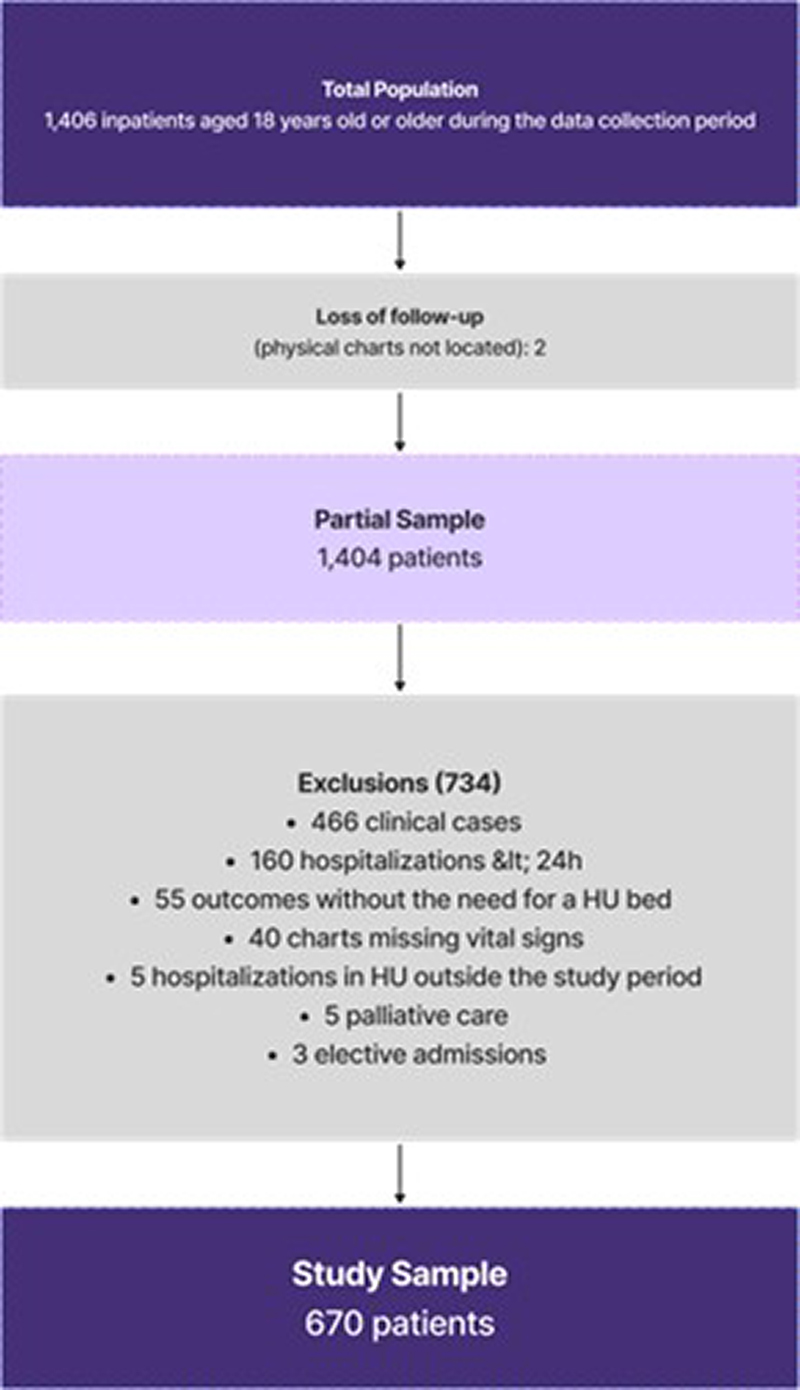
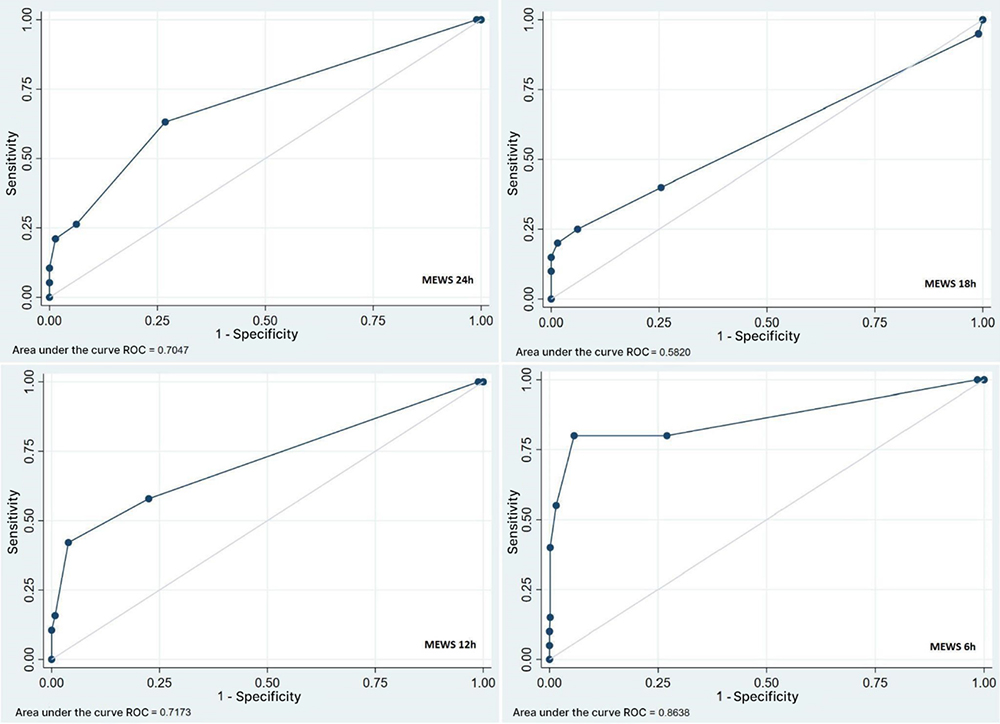
Method: A retrospective cohort study was conducted in a trauma hospital between July and October 2022. Adult trauma inpatients were included. Demographic and clinical data, along with MEWS scores, were collected every 6 hours for 30 days. Performance was assessed at 6, 12, 18, and 24 hours prior to the outcome using ROC curves, sensitivity, specificity, predictive values, and likelihood ratios. The outcome was defined as an SAE (cardiac arrest, ICU admission, or death). The optimal cutoff point for prediction was determined.
Results: Medical records of 670 patients (mean age 49.4±21.3 years) were reviewed, with 20 (3%) requiring intensive care unit admission and no deaths. The best performance was observed within 6 hours prior to the outcome (AUC-ROC 0.86) at a cutoff of ≥4, with sensitivity of 80%, and specificity of 73%. Subgroup analyses indicated distinct optimal cutoff points.
Conclusion: MEWS demonstrated good predictive ability, particularly within six hours prior to the outcome, with a cutoff of ≥4, favoring early detection of clinical deterioration.
Keywords:
Early Warning Score; Clinical Deterioration; Trauma Centers; Trauma; Cohort Studies
 Thumbnail
 Thumbnail