 Podcasts on newborn home care: development, validation, and evaluation
ABSTRACT
Objective: To develop, validate, and evaluate educational podcasts on home care for newborns.
Method: Methodological study, developed in a virtual setting from February to December 2024, in nine stages: selection of topics; theoretical study; preparation of scripts for the recording of the educational podcast; validation of the content of the scripts by experts; adaptation of the scripts; recording of the podcast episodes; evaluation of the educational podcast by family caregivers; adaptation of the educational podcast episodes; and dissemination of the educational podcast. A total of 48 individuals participated, 16 experts in the validation and 32 participants from the target audience in the evaluation. A Concordance Index was used for data analysis.
Results: The experts validated the content of 14 scripts with an overall concordance index of 1.0 (100.0%). The educational podcast recorded was evaluated by family members of newborns, including 15 mothers (46.8%), 14 uncles/aunts (43.7%), one cousin (3.1%), and two grandparents (6.3%). The agreement rate was 0.99 (99.0%).
Conclusion: The new educational podcast series, entitled “Podcasts do Parto ao Domicílio” (“From Childbirth to Home Podcasts”), with a collection of 14 episodes, was created, validated, and evaluated satisfactorily, and is available on a digital music platform for free.
Descriptors:
Infant, newborn; Educational technology; Webcast; Health education; Validation study; Neonatal nursing
RESUMO
Objetivo: Construir, validar e avaliar podcasts educacionais sobre cuidados domiciliares de recém-nascidos.
Método: Estudo metodológico, desenvolvido em ambiente virtual de fevereiro a dezembro de 2024, em nove etapas: seleção dos temas; estudo teórico; elaboração dos roteiros para a gravação dos podcasts educacionais; validação do conteúdo dos roteiros por experts; adequação dos roteiros; gravação dos podcasts; avaliação dos podcasts educacionais por familiares cuidadores; adequação dos podcasts educacionais e disponibilização dos podcasts educacionais. Participaram 48 indivíduos, sendo 16 experts na validação e 32 participantes do público-alvo na avaliação. Utilizou-se o Índice de Concordância na análise dos dados.
Resultados: Os experts validaram o conteúdo de 14 roteiros com índice de concordância global de 1,0 (100,0%). Os podcasts educacionais gravados foram avaliados por familiares de recém-nascidos, dentre eles, 15 mães (46,8%), 14 tios/tias (43,7%), uma prima (3,1%), dois avós (6,3%). O índice de concordância foi de 0,99 (99,0%).
Conclusão: A série de podcasts educacionais inédita, intitulada “Podcasts do Parto ao Domicílio”, com um acervo de 14 episódios, foi construída, validada e avaliada de forma satisfatória e está disponível em uma plataforma digital de música de forma gratuita.
Descritores:
Recém-nascido; Tecnologia educacional; Webcast; Educação em saúde; Estudo de validação; Enfermagem neonatal
RESUMEN
Objetivo: Construir, validar y evaluar podcasts educativos sobre cuidados domiciliarios para recién nacidos.
Método: Estudio metodológico, desarrollado en un entorno virtual de febrero a diciembre de 2024, en nueve etapas: selección de temas; estudio teórico; preparación de guiones para la grabación de podcasts educativos; validación del contenido del guión por expertos; adaptación de itinerarios; grabación de podcasts; evaluación de podcasts educativos por parte de cuidadores familiares; validación del podcast educativo; y disponibilidad del podcast educativo. Participaron 48 personas, 16 expertos en validación y 32 participantes del público objetivo en la evaluación. En el análisis de datos se utilizó el índice de concordancia.
Resultados: Los expertos validaron el contenido de 14 guiones con un índice de acuerdo global de 1,0 (100,0%). El podcast educativo grabado fue evaluado por familiares de recién nacidos, incluidas 15 madres (46,8%), 14 tíos/tías (43,7%), un primo (3,1%) y dos abuelos (6,3%). La tasa de acuerdo fue de 0,99 (99,0%).
Conclusión: La inédita serie de podcasts educativos, denominada “Podcasts do Parto ao Domicílio”, con un acervo de 14 episodios, fue creada, validada y evaluada satisfactoriamente, y se encuentra disponible en una plataforma de música digital de forma gratuita.
Descriptores:
Recién Nacido; Tecnología Educacional; Difusión por la Web; Educación en Salud; Estudio de Validación; Enfermería Neonatal
INTRODUCTION
Technologies are essential tools for the sharing of information. They can promote transformation that impacts individuals in their physical, cognitive, and social aspects1. In addition, they increase user independence when used in a virtual medium, enabling access to information regardless of time or place. They also enable the dissemination of knowledge, overcoming geographical barriers2-3. These aspects were particularly relevant during the COVID-19 pandemic, a period in which there was a rapid increase in the use of technology as a result of social distancing, helping consolidate its intrinsic relationship with daily life. Its impact was evident on both obtaining information and preserving social interactions 4-5.
In the context of health, technologies are built based on knowledge and practices of care. They are also applied to health education, in order to generate and disseminate information6. Technologies are classified as hard (machines and materials), light-hard (systematized knowledge, such as managerial and educational tools), and light (humanized care and active listening)7-8. Their advancement has enabled innovations in organizational and systemic forms of care, demanding reflections about their potential for transformation and social impact9.
Nursing practice incorporates different technologies, contemplating scientific, diagnostic, ethical, educational, and relational technical and assistance-related elements. In this context, information and communication technologies can be used as tools for diagnosis, management, guidance, teaching, and support. These tools can be integrated into health educational practices via resources such as social media (Instagram®), meeting platforms (Google Meet®), and digital audio platforms (Spotify®), making knowledge dynamic and accessible10.
Among so many technologies, podcasts, created in 2004, have become popular due to their flexibility, fast dissemination of information through sound, democratic access, and interactivity. In general, podcasts can be defined as audio and/or video content, made available through online digital platforms and incorporating elements of traditional radio language. Their rise in the media is directly related to how easy they are to produce, distribute, and be accessed by the public11. In the field of health education, they complement conventional teaching as an innovation in the teaching-learning process that efficiently reaches patients, professionals, and students, and can increase students' knowledge, confidence, and autonomy
In the current context, educational technologies applied to health are important allies in reducing risks in the neonatal period. It is worth noting that, in Brazil, this is the stage in which child mortality is most expressive, as more than 70% of deaths take place here. These deaths are generally avoidable and associated with shortcomings in the care provided to mothers and newborns in the pre- and postpartum period 14-15. Therefore, providing qualified care to the baby, with the support of educational technologies that focus on promotion, prevention, and integral healthcare can even help reduce infant morbidity and mortality rates16.
To increase access to knowledge with no physical barriers, health education as mediated by educational podcasts can be essential to disseminate information, overcoming geographic challenges as demonstrated in the COVID-19 pandemic17-19. However, the scarce number of studies about podcast use in neonatal nursing, including in regard to newborn home care, shows the need for developing this type of technological tool for the education in health of families.
As a result, this study is guided by the following guiding question: Is a series of educational podcasts about home care for newborns appropriate in regard to its objective, structure, and relevance, from the perspective of experts and family caregivers? It is well known that, before an educational technology is made, it must be submitted to a rigorous process of validation and evaluation from these groups, in order to ensure that the resulting material is qualified and fits the needs and preferences of its target audience20.
Therefore, the goal of this study was to create, validate, and evaluate educational podcasts about newborn home care.
METHOD
Methodological study focused on the construction, validation, and evaluation of an educational technology21 in the form of educational podcasts. It was developed by a research team, in a virtual environment, following the steps: 1) theme selection; 2) theoretical study; 3) elaboration of scripts to record the educational podcasts; 4) validation of the content of the scripts of the educational podcasts by experts; 5) adjustment of the scripts after expert suggestions; 6) recording of the educational podcasts; 7) validation of the educational podcasts by family caregivers; 8) adjustment of the scripts after suggestions from family caregivers; 9) the educational podcasts were made available.
The study population included experts (nurses and physicians with expertise in the fields of neonatology and/or pediatrics and/or in the production of educational technologies) and the target audience (pregnant and postpartum women, and newborn family caregivers). The following inclusion criteria were used to select the experts: health workers, specialized in the field of neonatology and/or pediatrics and/or in the production of educational technologies. The exclusion criteria were: professionals who worked exclusively in administrative roles. To be considered an expert, the participant needed to reach a minimum score of five in the classification system adapted from Fehring criteria22.
Eligible experts were those who scored at least five from the following points: PhD title (4 points); MS tittle (3 points); publications in journals indexed in the topics of interest of the study (2 points); specialization in the topics of interest of the study (2 points) five years or more of clinical practice in the topics of interest of this study (2 points); participating in scientific events in the last two years, about the topic of interest of the study (1 point)22. The score was verified via consultations to the curricula in the Lattes Platform, from the National Council of Scientific and Technological Development (CNPq).
Regarding the target audience, the following inclusion criteria were considered: pregnant and postpartum women, and family caregivers of newborns, 18 years old or older. The exclusion criteria were: having some physical and/or mental limitation that prevented them from evaluating the educational podcasts and/or being illiterate. These criteria were self-assessed at the moment the participants were to sign the consent form, and did not lead to the exclusion of any participants.
In the first stage, the most pertinent topics for the home care of newborns were selected. The authors are part of the extension group "From childbirth to home", and the most common questions from the conversation rounds and social networks of this group were identified by the team as the most pertinent topics. This process led to the definition of titles and contents for 14 podcasts: 1) The process of discharge from maternity (7′16″); 2) The arrival home of the baby (4′33″); 3) Visits to the baby at home (15′00″); 4) The sleep of the baby (6′50″); 5) The baths of the baby (10′01″); 6) Caring for the umbilical stump of the baby (6′16″); 7) Exchanging the baby's diaper (8′00″); 8) Caring for the baby's skin (8′13″); 9) Breastfeeding the baby (11′08″); 10) When the baby chokes (15′00″); 11) Transporting the baby and taking them out (5′34″); 12) Vaccinating the baby (8′13″); 13) General danger signs (4′13″), and 14) The follow up of the baby in health services (5′00″).
In the second stage, we searched the following informational resources in literature: the Journal Platform of the Coordination for the Improvement of Higher Education Personnel (CAPES), through the Federated Academic Community (CAFe), in which a simple search was conducted; and Google Scholar, where a free search was conducted. Additionally, we visited the websites of official institutions, such as the Brazilian Society of Pediatrics (BSP) and the Ministry of Health (MH). Therefore, we used the best scientific evidence for the topics chosen to produce the educational technology about the home care of newborns.
To guide our search, we used the following keywords: "newborn", "post-natal care", "newborn baths", "caring for the sin of the newborn", "breastfeeding", "choking in newborns", "visiting the newborn at home", "the sleep of the newborn", "umbilical stump care", "diaper exchange in babies", "baby skincare", "baby transportation", baby vaccination", "general signs of danger in the baby", and "baby health follow up". The research included full scientific works, as well as manuals, protocols, and official updated directives, as long as they addressed the topics mentioned. We excluded experience reports, letters, editorials, duplicates, and any studies not directly related to the scope of this study. Based on eligibility criteria, scientific evidence was considered, as well as official recommendations in line with the topic of the study, as long as they had been published from 2015 to 2023, ensuring that the sources selected were up-to-date. The list of materials used as a source for the construction of the products presented in this study is available in the section on availability of materials and data, at the end of the paper.
In the third stage, pre-recording scripts were developed for each topic, organizing the execution of the activity according to the information obtained in the earlier stage. The scripts were elaborated to ensure that the information was clear and accessible to the target audience, using a simple language and an attractive, didactic content, making sure that the scientific information was appropriate and relevant. Each script was elaborated by the first author, using the word processor Microsoft Word®. The images that formed the visual identity were produced in the design platform Canva®. The scripts of the episodes followed a defined structure, including the following topics: title of the educational podcast, episode number, narrator, project coordinator, duration, introduction, soundtrack, main content, ending, visual identity, and bibliographic references. The scripts were submitted to several rounds of revision between the two main authors in order to improve the development of the 14 episodes about newborn home care. At the end, the material was submitted to the rest of the research team, so a new evaluation could be carried out and needed adjustments made.
In the fourth stage, data collection was carried out in using Google Forms®, and the Google® platform. Invitations to participate were sent to experts who were in accordance with the chosen criteria via social media (Instagram® or WhatsApp®). The invitation sent included a message with explanations about the project and the research team, in addition to a link to access the study, the data collection instrument, and the informed consent form. The experts evaluated all scripts written for the episodes.
In the fifth stage, according to the evaluation of these specialists, adjustments were made to the scripts. After the documents were updated, we started to record the podcast, aiming to make the content more accessible and attractive. The validated materials functioned as a guide in this stage. Thus, in the sixth stage, the recording of the educational podcast was carried out by the first author using an audio recorder (smartphone). After the recording, the material was edited to ensure sound quality and content clarity.
In the seventh stage, the audio material was submitted to the evaluation of the target audience. The data collection was also carried out using Google Forms®, in the Google® platform. The invites were sent to the pregnant and postpartum women and other relatives who were in accordance with the inclusion criteria using the same social media platforms (Instagram® or WhatsApp®). The invite included a link for the research, including an explanation about the project and the research team, in addition to the data collection instrument and the informed consent form. In this stage, by accessing the link for the research, participants could choose one or more of the 14 podcast episodes produced, according to their interest and availability, meaning that it was not necessary for all participants to evaluate all episodes. However, the research ensured that each episode was evaluated at least once by its public audience, ensuring that the episodes were representative, and the general evaluation of the educational technology was consistent.
The eighth stage was expected to include adjustments to the educational podcasts, in accordance with the suggestions and evaluations of the target audience. However, these changes were not necessary, since there was no suggestion of change. In the ninth stage, the validated and evaluated podcasts were uploaded onto the digital platform Spotify®, and published on the website "From Childbirth to Home". This stage marked the end of the process and the release of the final product, making the educational podcasts available for the public in general. To find them on Spotify®, the user must search for "From Childbirth to Home".
All these stages were developed from February to December 2024. The scripts were prepared and validated from March to July; the recording of educational podcasts in August and September, and the collection of data for evaluation by family caregivers ended the process, taking place from October to December.
The experts and the target audience were selected by convenience using a consecutive, non-probabilistic method, and snowball sampling23. In the case of the experts, the process started with invites sent via Instagram® or WhatsApp® to potential participants who were part of the network of the participants. Five professionals recommended five others, who were also invited to participate in the study. Regarding the target audience, invites were sent, at first, via Instagram®, through direct messages to the followers of the page of the extension project associated with the authors, and to followers of the personal pages of the first and second authors. Other contacts from the research team were invited via WhatsApp®.
The final sample of experts was defined according to scientific literature in regard to validation procedures, which recommend from six to twenty specialists24. For the target audience, the minimum recommended number of nine was considered21. To preserve anonymity and privacy, no identifiable lists of contacts were used during the research. A period of ten days was estimated as necessary, during which 30 minutes would be needed to analyze the scripts of each educational podcast and fill in the form.
Due to the nature of the sample, most experts and participants in the target audience responded promptly, significantly facilitating data collection. 20 experts were invited, 16 of whom responded; and 33 members of the target audience, 32 of whom responded. Therefore, the final sample consisted of 16 experts and 32 participants from the target audience, including all responses received during the collection period. Thus, there was no need for a further round of invites, since the minimum recommended number 21,24 was reached in the first round, within the estimated time.
The study instrument had two parts: the first was made up of closed questions, to characterize the participants; and the second included questions related to the purpose of the study, that is, to the analysis of the educational podcasts. The evaluation criteria included: objective, structure, and relevance. The characterization variables of the experts were: gender; age; area of expertise; training, qualification, and years of professional experience; publication of research on the subject and participation in scientific events on the subject in the last two years. For the target audience, the variables were: sex, age, professional formation, profession, state of residence, and degree of kinship with the newborn.
For the validation, we used a form adapted from a previous study25, which was applied with the experts. The goal was to analyze the scripts of the educational podcasts before recording, based on the following criteria: objective (3 items), structure (9 items), and relevance (5 items). In the evaluation with the target audience, the same adapted instrument was used 25. However, it was adjusted to a more accessible language, compatible with the social context of participants. Analysis criteria were maintained, with adjustments in the number of items in each category: objective (3 items), structure (10 items), and relevance (7 items).
All items were evaluated using a Likert scale, allowing the classification of each element into the following levels: Inadequate (1), Partially Inadequate (2), Partially Adequate (3), and Adequate (4)24,25. At the end of the form, there was an invitation for participants to provide additional suggestions and comments to improve the materials. After the evaluation, the suggestions were analyzed and incorporated, whenever possible, to the pre-recording scripts and educational podcasts recorded.
After the stage in which the scripts and educational podcasts were validated and evaluated with the experts and target audience, a quantitative analysis of the responses of the participants was conducted, using the Agreement Index (AI) according to the following scores: Inadequate (1), Partially Inadequate(2), Partially Adequate (3), and Adequate (4). The AI was calculated per item, adding up the responses that received scores of three and four, and dividing the result by the total number of responses obtained. To determine the global AI, we calculated the mean of AI values per item. The items with an AI of 0.7 (70%) or greater were to be maintained, while those that did not reach this value would undergo corrections and changes21.
This study followed all ethical requirements from Resolution No., 466/12, from the National Council of Health, which regulates directives and norms for scientific research with human beings. It was approved by the Research Ethics Committee of the Universidade Federal Fluminense under opinion: 6.266.462 and CAAE: 70644123.0.0000.5243. Furthermore, an informed consent form was made available to the participants.
RESULTS
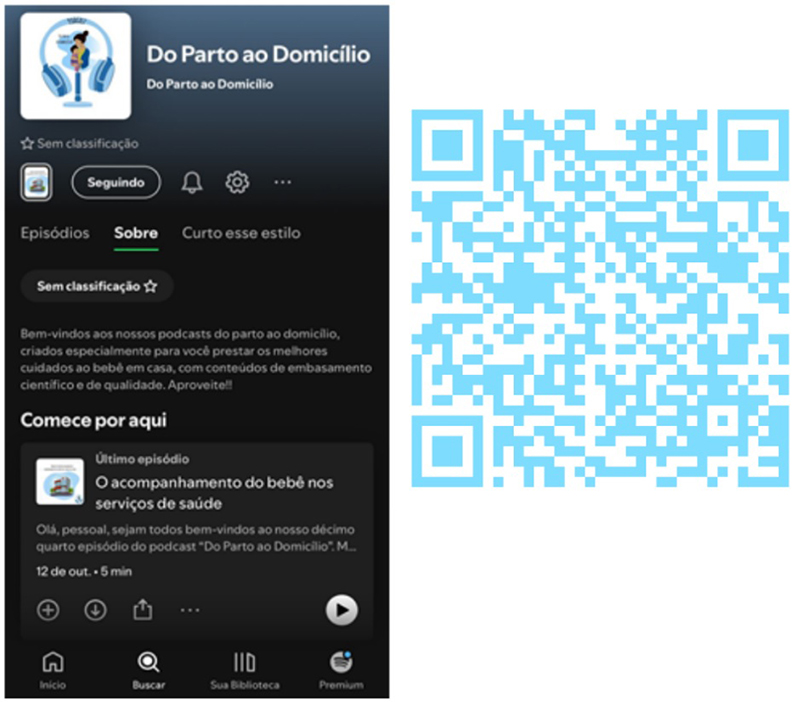
The stages of this study generated the educational podcast series titled "Podcasts from Childbirth to Home", with a collection of 14 episodes, made available on the digital platform Spotify® and accessible via desktop and mobile devices. Figure 1 shows the layout of the initial page of the educational podcasts available on Spotify®, and the Quick Response Code for access.
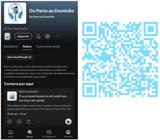
Layout of the initial home page of educational podcasts available on Spotify® and the Quick Response Code for access. Rio das Ostras, RJ, Brazil, 2025
16 (100.0%) expert nurses participated in the validation of the pre-recording script. All of them were female, aged from 26 to 70 years old. Regarding their professional qualifications, 12 (75.0%) were PhD, 2 (12.5%) were MS, and 2 (12.5%) were specialists. Regarding their field of expertise, 11 (68.8%) specialized in neonatal and/or obstetric nursing, one in pediatrics (6.3%), one (6.3%) in primary care/family health strategy, one in public health (6.3%), one in occupational nursing (6.3%), and one (6.3%) in intensive/urgent and emergency nursing. As for their time of experience in the field, 14 (87.5%) professionals had more than five years of experience, while two (12.5%) had five years. Table 1 shows the validation of the experts regarding the objective, structure, and relevance, according to the global and per-item CI.
All items obtained positive scores, with a CI of 1 (100%), indicating that the content of the educational podcasts received a positive evaluation by the experts, resulting in an overall CI of 1 (100%). Chart 1 shows the suggestions made by the experts and indicates whether they were met or not, explaining why accordingly.
Although the evaluation was satisfactory from both parties, the suggestions were analyzed and incorporated to adjust the educational podcasts as possible, in order to ensure this educational tool had the highest quality possible. The suggestions from the experts that were attended discussed the revision of terms, improvement of images, the addition of certain information, and others.
32 (100%) people participated in the evaluation with the target audience, divided as such: 15 (46.9%) mothers; 14 (43.75%) uncles/aunts; one (3.1%) cousin; one (3.1%) grandfather; and one (3.1%) grandmother. Their ages varied from 19 to 61 years old, with 28 (87.5%) females and 4 (12.5%) males. As for their educational level, 21 (65.6%) had complete higher education; 6 (18.8%) complete high education; and five (15.6%) had incomplete higher education. Five of them (15.6%) stated they were students; five (15.6%) were nurses; three (9.4%) were administrators; three (9.4%) were teachers; two (6.3%) were dentists; two (6.3%) were community health workers; two (6.3%) were nursing technicians; two (6.3%) salespeople; two (6.3%) housewives; one (3.1%) auto technician; one (3.1%) lawyer; one (3.1%) physical therapist; one (3.1%) au pair (an exchange program in which the person works as a nanny); one (3.1%) tax classifier; and one (3.1%) civil servant. As for their state of residence, 17 (53.1%) stated that they lived in Rio de Janeiro; 9 (28.13%) in Rio Grande do Sul; 2 (6.3%) in Paraná; 1 (3.1%) in Minas Gerais; 1 (3.1%) in Bahia; 1 (3.1%) in Pernambuco; and 1 (3.1%) in the Federal District.
Participants listened to all 14 episodes of the podcast, albeit with different frequencies. The episodes "Visits to the baby at home" and "The sleep of the baby" were the ones participants listened to the most, with 13 evaluations each (40.6%). They were followed by "Breastfeeding the baby", with 12 responses (37.5%) and "When the baby chokes", with 9 (28.1%). "The arrival home of the baby" and "The baths of the baby" received eight evaluations each (25.0%). Episodes such as "Caring for the baby's skin", "Transporting the baby and taking them out", and "Vaccinating the baby" were mentioned seven times (21.9%), while "The process of discharge from maternity" and "General danger signs" had six responses (18.8%). Finally, "Caring for the umbilical stump of the baby", "Exchanging the baby's diaper", and "The follow-up of the baby in health services" were evaluated by five respondents each (15.6%).
Table 2 presents the evaluation of the target audience regarding the objective, structure, and relevance, considering the global and per-item CI.
The mean CI received an expressive evaluation, reaching a global mean value of 0.99 (99%). The items evaluated varied from 0.90 (90%) and 1 (100%). The target audience did not give any suggestions for change, but many left praises, especially to the clarity with which the information was given and its accessibility. Thus, the results showed that this educational technology was qualified due to its innovative, accessible, versatile, dynamic, and inclusive nature.
The series of podcasts is currently available, free of charge, on a digital music platform, on the URL: https://open.spotify.com/show/4RXoMg1Ro14EPd03Dgi045?si=b5ab98026e1d4eb3.
DISCUSSION
The health education podcasts of "From Childbirth to Home" were elaborated, validated, and evaluated satisfactorily, with the methodological rigour required to develop an educational technology in the field of health, especially regarding its objectives, structure, and relevance, surpassing the minimum number of evaluators for validation and evaluation24. The evaluated item reached positive levels regarding the established criteria. An example is the validation of nursing professionals, which reached the maximum level of 1 (100%). The validation of educational content in the field of health is known to be essential to ensure that the content is efficient and reliable, especially considering the dissemination of fake and divergent information about topics related to health26-27.
In the Brazilian context, this research followed similar stages and had similar results to those of a research on the creation of podcasts about the prevention of metabolic syndromes in adolescents. However, it had better results in the expert validation, as the other study reached a Content Validity Index (CVI) of 0.9128. Still in the national scope, a study that created, validated, and evaluated an app for mobile devices about humane health care practices for newborns at regular risk in maternity, destined to health workers and their relatives, had the same scientific rigor as this research, and also had a lower CI among experts when compared to those of the podcasts. However, in the evaluation with the target audience, the results were the same29. This comparison reiterates that the podcast on home care with newborns reached superior results in validation and evaluation than the standards found in similar studies.
Although some studies about the creation and validation of educational technologies30-31 had been conducted only with experts, studies carried out in the United States and in Germany show that, although they were approved by specialists, some technological materials were not appropriately understood by the target audience32-34, which reiterates the importance of evaluations from the target audience. Additionally, a clear and simple language was adopted, complemented by images that work in harmony with the topics of the audio presented, making the educational podcast episodes more inclusive.
The evaluation from the target audience, formed by family caregivers, reached a promising level of agreement, showing that listeners understood the educational podcast and had a good experience and acceptance. The evaluation involving the group of interest, in order to reach more effective results, is essential, allowing the adjustment of the technology according to the possibilities of the study and the needs pointed out by the evaluator listeners35. Moreover, this stage of the research allows identifying whether the technology is satisfactory, functional, encourages behavioral change, and improves the understanding of its target audience36-37. This study demonstrated this, considering the evaluations obtained (global CI = 0.99).
A study carried out in the United States described the structure for the creation of an educational podcast managed by medical students, which had a high production cost4. That research did not conduct any validation and/or evaluation of the scripts pre-recording, nor of the podcasts. The present study, on the other hand, validated its content with experts and evaluated it with the target audience. Additionally, this study had no financial costs, as the tools used already belonged to the researchers. An example is that the microphone of the personal smartphone of the first author was used for the recordings, and the audio was edited and distributed on free platforms.
Although there is some scientific literature involving podcasts28,38, there is scarce information about how it compares to other forms of learning in regard to the apprehension and retention of knowledge. In a quantitative analysis carried out in the US and in Canada, involving educational podcasts, consumers stated that this tool is more attractive when compared to other teaching modules39. Therefore, it is probable that, for certain topics in health, learning via sound has more advantages, allowing spectators to focus better by having fewer visual distractions40.
From this perspective, an educational technology such as that produced in the current study emerges as a valuable resource for families, leading to practical access to essential scientific information, related to the care of babies at home. Corroborating this perspective, another study highlighted several benefits of the use of podcasts as connected to education, such as reducing the levels of visual tiredness, the possibility of cyclical listening, the optimization of learning, and the general improvement of the educational experience41. The contribution of the educational podcast as an informational support tool and a part of the support network to the families of newborns is evident41.
Despite the advancement of research involving this type of educational technology, studies have found that most podcasts developed are used as an educational tool for students and professional development, there being scarce evidence of their use to improve public health42, or to their use for family health education. This, therefore, is a gap in knowledge due to which the present study is necessary and relevant, given that, in a context in which education has a central role in the prevention of complications and the promotion of neonate wellbeing, this validated and evaluated tool becomes efficient and innovative to disseminate information.
The innovative and dynamic nature of podcasts should also be noted, as they can be used in the many different types of learning, except the visual ones, while also enabling those with visual disabilities to have access to information supported by scientific evidence. Furthermore, this tool increases the access of families to qualified educational content and can help reduce neonatal morbidity and mortality, while also improving quality of life. Thus, podcasts such as the one produced by this study, improved, well-structured, and grounded on theory, can facilitate the learning process of this population42-43, even in the postpartum period, during which the family tends to spend more time home38,43.
It is well-known, worldwide, that the adoption of evidence-based practices by families, in the context of home care, has an essential role in the protection of the life of newborns44. A relevant aspect of this that should be highlighted is the use of podcasts as an educational tool associated with postnatal programs, enabling nurses to use this tool to educate families with the information and the skills needed to ensure that they will be able to provide safe and qualified care to the newborn at home. This has positive results in this population, reiterating the importance of the educational podcast "From Childbirth to Home"44.
This study has some limitations that should be noted. They are: trouble accessing individuals beyond the network of the first contacts, restricting the diversity and representativity of participants; the need for internet to access and validate the educational podcast of the extension project "From Childbirth to Home", which may have excluded participants with precarious or nonexistent connections. Additionally, a potential response bias may have influenced the evaluations, since the participants tend to give positive evaluations to the podcast due to the fact that they are aware of the goals of this study. Another limitation is the fact that a more thorough follow-up on the effectiveness of the podcast in real settings would be necessary, reiterating the need for further studies that evaluate if its use actually contributes to the retention of knowledge and the application of knowledge in daily life. These limitations show elements that could be included and improved in later studies.
CONCLUSION
The "From Childbirth to Home" podcast on newborn home care for families was elaborated, validated, and evaluated satisfactorily, reaching the maximum levels of validation between nursing experts and a mean global CI of 0.99 (99%) in the target audience, formed by family caregivers of newborns.
Both validation and evaluation with the target audience reached better results than recommended, meaning that the podcast series can be considered an appropriate tool for its objective, structure, and relevance, contributing to the teaching-learning process of families and disseminating science-based information in a practical and accessible way.
From the perspective of nursing research and care, podcasts are emerging as an innovative, practical, dynamic, accessible, and inclusive educational technology that can contribute to the professional exercise in the field of health. Furthermore, when they are implemented as complementary resources to traditional teaching, especially by the nursing team, they enable optimizing education in health and strengthen health care practice by disseminating, via sound, evidence-based information. They are also a promising strategy to increase access to knowledge and promote people's autonomy, contributing to safe, qualified, and informed care. It is also worth highlighting that these podcasts are the first of their kind, being innovative and accessible for those with visual disabilities, which reiterates their inclusive nature.
Acknowledgments
To the National Council of Scientific and Technological Development (CNPq), for a Productivity Scholarship in Technological Development and Innovative Extensions (DT2), and to the Carlos Chagas Filho Foundation for the Support to Research in the State of Rio de Janeiro (FAPERJ), for a Technological Initiation Scholarship.
REFERENCES
-
1. Soares BKP, Carvalho ESL, Souza TA, Silva JA. Impacts of information and communication technologies as a permanent health education strategy for nursing professionals. Rev Ciênc Plur. 2022;8(2):1-18. https://doi.org/10.21680/2446-7286.2022v8n2ID24770
» https://doi.org/10.21680/2446-7286.2022v8n2ID24770 -
2. Milligan KJ, Daulton RS, Clair ZT, Epperson MV, Holloway RM, Schlaudecker JD. Creation of a student-run medical education podcast: tutorial. JMIR Med Educ. 2021;7(3):e29157. https://doi.org/10.2196/29157
» https://doi.org/10.2196/29157 -
3. Tarchichi TR, Szymusiak J. Continuing medical education in the time of social distancing: the case for expanding podcast usage for continuing education. J Contin Educ Health Prof. 2021;41(1):70-4. https://doi.org/10.1097/ceh.0000000000000324
» https://doi.org/10.1097/ceh.0000000000000324 -
4. Ruparelia S, Nguyen AX, Xu H, Le C. Creation and cost-evaluation of a student-run podcast in ophthalmology. Can Med Educ J. 2023;14(6):122-4. https://doi.org/10.36834/cmej.76125
» https://doi.org/10.36834/cmej.76125 -
5. Góes FGB, Nunes NGF, Borges JO, Souza AN, Soares IAA, Lucchese I. Transmedia in pediatric nursing for guidance to family members in coping with COVID-19: experience report. Rev Enferm UFSM. 2023;13:e2. https://doi.org/10.5902/2179769271376
» https://doi.org/10.5902/2179769271376 -
6. Gonçalves GAA, Silva KVLG, Santos RL, Machado MFAS, Rebouças CBA, Silva VM. Facilitators’ perceptions about health technologies used in educational workshops with adolescents. REME Rev Min Enferm. 2020;24:e1273. https://doi.org/10.5935/1415-2762.20200002
» https://doi.org/10.5935/1415-2762.20200002 -
7. Arais AGC, Rosa VS, Sakamoto VTM, Blatt CR, Caregnato RCA. Nursing guidelines: experience report of a subject on health technologies. REAS. 2021;13(8):e8380. https://doi.org/10.25248/reas.e8380.2021
» https://doi.org/10.25248/reas.e8380.2021 -
8. Santos Junior EM, Esteves APVS. The use of light, light-hard and hard technologies in the diagnosis of Diabetic Neuropathy. Braz J Desenvolver. 2023;9(5):17225-32. https://doi.org/10.34117/bjdv9n5-183
» https://doi.org/10.34117/bjdv9n5-183 -
9. Silva ASR, Ferreira SC. Building and validation of technology in health education for first aid. Hu Rev. 2021;47:1-8. https://doi.org/10.34019/1982-8047.2021.v47.32594
» https://doi.org/10.34019/1982-8047.2021.v47.32594 -
10. Carvalho SO, Silva GAA, Moura MCS, Santos BKI, Medeiros AMB, Duarte GM, et al. Podcasting for education in enterostomal therapy during the COVID-19 pandemic. Estima. 2022;20: e1522. https://doi.org/10.30886/estima.v20.1207_IN
» https://doi.org/10.30886/estima.v20.1207_IN -
11. Freitas MOS, Hoffmann DGN, Bandeira MP, Hanan ARA, Sponchiado-Júnior EC. Podcast as a complementary pedagogical tool in Endodontics: the perception of undergraduate students. Rev ABENO. 2024;24(1):1928. https://doi.org/10.30979/revabeno.v24i1.1928
» https://doi.org/10.30979/revabeno.v24i1.1928 -
12. Barton MJ, Okada M, Todorovic M. Podcasts in health education-Insights from a scoping reviewand survey. Anat Sci Educ. 2025;00:1-18. https://doi.org/10.1002/ase.70037
» https://doi.org/10.1002/ase.70037 -
13. Fritsch TZ, Bueno K, Silva LHF, Saraiva TF, Silva UPH, Rabin EG. Validation of “podcast” as a means of health promoting in oncology. Rev Recien. 2023;13(41):158-69. https://doi.org/10.24276/rrecien2023.13.41.158-169
» https://doi.org/10.24276/rrecien2023.13.41.158-169 -
14. Kreutz IM, Santos IS. Contextual, maternal, and infant factors in preventable infant deaths: a statewide ecological and cross-sectional study in Rio Grande do SUL, Brazil. BMC Public Health. 2023;23(1):87. https://doi.org/10.1186/s12889-022-14913-z
» https://doi.org/10.1186/s12889-022-14913-z -
15. Soares IAA, Góes FGB, Silva ACSS, Pereira-Ávila FMV, Oliveira GB, Silva MA. Health education website on home care for newborns: construction, validation, and evaluation. Rev Latino-Am Enfermagem. 2024;32:e4197. https://doi.org/10.1590/1518-8345.7222.4197
» https://doi.org/10.1590/1518-8345.7222.4197 -
16. Costa LD, Dalorsoletta K, Warmling KM, Trevisan MG, Teixeira GT, Cavalheiri JC, et al. Maternal difficulties in home care for newborns. Rev Rene. 2020;21:e44194. https://doi.org/10.15253/2175-6783.20202144194
» https://doi.org/10.15253/2175-6783.20202144194 -
17. Denny A, Curtin B, Taylor-Robinson S, Chirambo GB, Cilliers L, Wu TSJ, et al. Evaluating the appropriateness of podcasts to improve the knowledge and awareness of selected health topics among undergraduate general nursing students: protocol for an international feasibility study. JMIR Res Protoc. 2024;13:e50735. https://doi.org/10.2196/50735
» https://doi.org/10.2196/50735 -
18. Samartini RS, Guareschi APDF, Buchhorn SMM. Health education during a COVID-19 pandemic. Rev Recien. 2022;12(37):125-32. https://doi.org/10.24276/rrecien2022.12.37.125-132
» https://doi.org/10.24276/rrecien2022.12.37.125-132 -
19. Borges JO, Góes FGB, Silva ACSS, Pereira-Ávila FMV, Goulart MCL, Nunes NGF, Martins VR. Podcast about child care as an educational health technology: a qualitative study. Rev Cuid. 2024;15(3):e3845. https://doi.org/10.15649/cuidarte.3845
» https://doi.org/10.15649/cuidarte.3845 -
20. Monteiro DS, Rodrigues ILA, Souza DF, Barbosa FKM, Farias RC, Nogueira LMV. Validation of an educational technology for biosafety in primary health care. Rev Cuid. 2020;10(2). https://doi.org/10.15649/cuidarte.v10i2.654
» https://doi.org/10.15649/cuidarte.v10i2.654 - 21. Teixeira E, Mota VMSS. Tecnologias educacionais em foco. São Paulo: Difusão; 2011.
-
22. Faleiros F, Cucick CD, Silva Neto ET, Rabeh SAN, Favoretto NB, Käppler C. Development and validation of an educational video for clean intermittent bladder catheterization. Rev Eletr Enferm. 2019;21:e53973. https://doi.org/10.5216/ree.v21.53973
» https://doi.org/10.5216/ree.v21.53973 -
23. Bockorni BRS, Gomes AF. Snowball sampling in a qualitative business research. Receu. 2021;22(1):105-17. https://doi.org/10.25110/receu.v22i1.8346
» https://doi.org/10.25110/receu.v22i1.8346 -
24. Campos BL, Góes FG, Silva LF, Silva AC, Silva MA, Silva LJ. Preparation and validation of educational video about the home bath of the full-term newborn. Enferm Foco. 2021;12(5):1033-9. https://doi.org/10.21675/2357-707X.2021.v12.n5.4684
» https://doi.org/10.21675/2357-707X.2021.v12.n5.4684 -
25. Góes FGB, Soares IAA, Silva ACSS, Sá ACS, Campos BL, Silva LF, et al. Evaluation of an educational video about home bathing of newborns: a methodological study with parents and caregivers. Rev Eletr Enferm. 2024;26:77089. https://doi.org/10.5216/ree.v26.77089
» https://doi.org/10.5216/ree.v26.77089 -
26. Bernardes RM, Caliri MHL. Construction and validation of a website about pressure injuries. Acta Paul Enferm. 2020;33:1-9. https://doi.org/10.37689/acta-ape/2020AO01305
» https://doi.org/10.37689/acta-ape/2020AO01305 -
27. Siqueira VT, Sette GCS, Perrelli JGA, Marinus MWLC, Souza VP, Guedes TG. Educational video on prevention of sexual violence against children for family caregivers: development, validation and evaluation. Texto Contexto Enferm. 2024;33:e20230414. https://doi.org/10.1590/1980-265X-TCE-2023-0414en
» https://doi.org/10.1590/1980-265X-TCE-2023-0414en -
28. Sousa ASJ, Amorim Júnior JS, Moura IH, Silva ARV, Andrade EMLR. Construction and validation of a podcast for the prevention of metabolic syndrome in adolescents. Texto Contexto Enferm. 2024;33:e20230360. https://doi.org/10.1590/1980-265X-TCE-2023-0360en
» https://doi.org/10.1590/1980-265X-TCE-2023-0360en -
29. Lucchese I, Góes FGB, Goulart MCL, Silva MA, Silva ACSS, Silva LF. The “Nasci Bem” app for health professionals and families of newborns: construction, validation and evaluation. Rev Latino-Am Enfermagem . 2024;32:e4260. https://doi.org/10.1590/1518-8345.7264.4260
» https://doi.org/10.1590/1518-8345.7264.4260 -
30. Curan GRF, Nascimento OP, Bergamo JAO, Koga CAL, Silva RIAE, Ferreira DR, et al. A mobile app to promote breastfeeding self-efficacy in preterm infants’ mothers: development and validation. Clin Nurs Res. 2024;33(1):95-103. https://doi.org/10.1177/10547738231214582
» https://doi.org/10.1177/10547738231214582 -
31. Luz PK, Galindo Neto NM, Machado RS, Marques MCMP, Santos AMR, Andrade EMLR. Construction and validity of educational technology for adolescents on cardiac resuscitation. Acta Paul Enferm. 2023;36:eAPE016932. https://doi.org/10.37689/acta-ape/2023AO016932
» https://doi.org/10.37689/acta-ape/2023AO016932 -
32. Heim N, Faron A, Fuchs J, Martini M, Reich RH, Löffler K. Die lesbarkeit von onlinebasierten patienteninformationen in der augenheilkunde. Ophthalmologe. 2017;114(5):450-6. https://doi.org/10.1007/s00347-016-0367-9
» https://doi.org/10.1007/s00347-016-0367-9 -
33. Cohen SA, Fisher AC, Pershing S. Analysis of the readability and accountability of online patient education materials related to glaucoma diagnosis and treatment. Clin Ophthalmol. 2023;17:779-88. https://doi.org/10.2147/OPTH.S401492
» https://doi.org/10.2147/OPTH.S401492 -
34. Ghahremani JS, Ogi JE, Kody MT, Navarro RA. Readability of online patient education materials for shoulder instability surgery in English and Spanish. J Shoulder Elbow Surg. 2024;33(10):2220-9. https://doi.org/10.1016/j.jse.2024.02.028
» https://doi.org/10.1016/j.jse.2024.02.028 -
35. Dutra BD, Nascimento KC, Echevarría-Guanilo ME, Sparapani VC, Lanzoni GMM. Validation of an educational game about first aid for schoolchildren. Rev Bras Enferm. 2021;74(6):e20201107. https://doi.org/10.1590/0034-7167-2020-1107
» https://doi.org/10.1590/0034-7167-2020-1107 -
36. Silva FP, Alves BMM, Silva DMR, Frazão IS, B W Neto, Pinto IDS, et al. Educational technology validity as a teaching resource in mental health nursing teaching. Texto Contexto Enferm. 2024;33:e20230248. https://doi.org/10.1590/1980-265X-TCE-2023-0248en
» https://doi.org/10.1590/1980-265X-TCE-2023-0248en -
37. Cai F, McCabe M, Srinivas SK. A randomized trial assessing the impact of educational podcasts on personal control and satisfaction during childbirth. Am J Obstet Gyneco.2023;228(5):592.e1-592.e10. https://doi.org/10.1016/j.ajog.2023.01.021
» https://doi.org/10.1016/j.ajog.2023.01.021 -
38. Leite PL, Torres FAF, Pereira LM, Bezerra AM, Machado LDS, Silva MRF. Construction and validation of podcast for teen sexual and reproductive health education. Rev Latino-Am Enfermagem. 2022;30(spe):e3706. https://doi.org/10.1590/1518-8345.6263.3705
» https://doi.org/10.1590/1518-8345.6263.3705 -
39. Riddell J, Robins L, Brown A, Sherbino J, Lin M, Ilgen JS. Independent and interwoven: a qualitative exploration of residents' experiences with educational podcasts. Acad Med. 2020;95(1):89-96. https://doi.org/10.1097/ACM.0000000000002984
» https://doi.org/10.1097/ACM.0000000000002984 -
40. Anteby R, Amiel I, Cordoba M, Axelsson CGS, Rosin D, Phitayakorn R. Development and utilization of a medical student surgery podcast during COVID-19. J Surg Res. 2021;265:95-9. https://doi.org/10.1016/j.jss.2021.03.059
» https://doi.org/10.1016/j.jss.2021.03.059 -
41. Wang MC, Tang JS, Liu YP, Chuang CC, Shih CL. Innovative digital technology adapted in nursing education between Eastern and Western countries: a mini-review. Front Public Health. 2023;11:1167752. https://doi.org/10.3389/fpubh.2023.1167752
» https://doi.org/10.3389/fpubh.2023.1167752 -
42. Amador FLD, Alves GCG, Santos VR, Moreira RSL. Use of podcasts for health education: a scoping review. Rev Bras Enferm. 2024;77(1):e20230096. https://doi.org/10.1590/0034-7167-2023-0096
» https://doi.org/10.1590/0034-7167-2023-0096 -
43. Góes FGB, Silva MA, Santos AST, Pontes BF, Lucchese I, Silva MT. Postnatal care of newborns in the family context: an integrative review. Rev Bras Enferm. 2020;73(4): e20190454. https://doi.org/10.1590/0034-7167-2019-0454
» https://doi.org/10.1590/0034-7167-2019-0454 -
44. Subramanian L, Murthy S, Bogam P, Yan SD, Delaney MM, Goodwin CDG, et al. Just-in-time postnatal education programmes to improve newborn care practices: needs and opportunities in low-resource settings. BMJ Glob Health. 2020;5(7):e002660. https://doi.org/10.1136/bmjgh-2020-002660
» https://doi.org/10.1136/bmjgh-2020-002660

 Source: The authors, 2025