 Behavior change in people with type 2 diabetes mellitus: support for primary care
ABSTRACT
Objective: identify the stages of motivation for behavior change in people with diabetes and the actions taken by professionals to encourage self-care.
Method: This qualitative exploratory study was conducted in a Family Health Unit in a capital city in the Brazilian Midwest, based on the assumptions of the Transtheoretical Model of Motivation for Behavior Change. Of the 17 participants, nine were patients with type 2 diabetes mellitus and eight were healthcare professionals. Data collection took place through individual semi-structured interviews between January and May 2023, subjected to thematic content analysis.
Results: two main categories emerged: stages of motivation for behavior change from the perspective of users and professionals; care practices; and challenges in identifying these stages. Users presented different stages of motivation, depending on the habit analyzed, with no record of pre-contemplation. Professionals, however, reported difficulties in recognizing the stages, adopting generalized approaches.
Conclusion: identifying the stages of motivation is essential to support personalized interventions in Primary Care. Qualified listening, consideration of psychosocial factors, and adapting health education to individual readiness can promote self-care. The need to train teams in the use of user-centered approaches is reinforced.
Descriptors:
Diabetes mellitus; Transtheoretical model; Nursing care; Self care; Primary health care
RESUMO
Objetivo: identificar os estágios de motivação para mudança de comportamento de pessoas com diabetes e as ações de estímulo ao autocuidado realizadas por profissionais.
Método: estudo exploratório qualitativo, realizado em uma Unidade de Saúde da Família de uma capital do centro-oeste brasileiro, à luz dos pressupostos do Modelo Transteórico de Motivação para Mudança de Comportamento. Dentre os 17 participantes, nove eram usuários com diabetes mellitus tipo 2 e oito eram profissionais de saúde. A coleta ocorreu por meio de entrevistas semiestruturadas individuais, entre janeiro e maio de 2023, submetidas à análise de conteúdo, modalidade temática.
Resultados: emergiram duas categorias principais: estágios de motivação para mudança de comportamento na perspectiva de usuários e profissionais; práticas de cuidado e desafios na identificação desses estágios. Os usuários apresentaram diferentes estágios de motivação, conforme o hábito analisado, sem registros de pré-contemplação. Já os profissionais relataram dificuldades para reconhecer os estágios, adotando abordagens generalizadas.
Conclusão: a identificação dos estágios de motivação é essencial para subsidiar intervenções personalizadas na Atenção Primária. A escuta qualificada, a consideração dos fatores psicossociais e a adaptação da educação em saúde conforme a prontidão individual podem favorecer o autocuidado. Reforça-se a necessidade de capacitação das equipes para a utilização de abordagens centradas no usuário.
Descritores:
Diabetes mellitus; Modelo transteórico; Cuidado de enfermagem; Autocuidado; Atenção primária à saúde
RESUMEN
Objetivo: Identificar las etapas de motivación para el cambio de conducta en las personas con diabetes y las acciones emprendidas por los profesionales para fomentar el autocuidado.
Método: Este estudio exploratorio cualitativo se realizó en una Unidad de Salud Familiar de una capital del Medio Oeste brasileño, a la luz de los presupuestos del Modelo Transteórico de Motivación para el Cambio de Comportamiento. De los 17 participantes, nueve eran pacientes con diabetes mellitus tipo 2 y ocho profesionales de la salud. La recopilación de datos se realizó mediante entrevistas individuales semiestructuradas entre enero y mayo de 2023, sujetas a análisis de contenido temático.
Resultados: Se identificaron dos categorías principales: etapas de motivación para el cambio de comportamiento desde la perspectiva de usuarios y profesionales; prácticas de atención; y dificultades para identificar estas etapas. Los usuarios presentaron diferentes etapas de motivación, según el hábito analizado, sin registro de precontemplación. Sin embargo, los profesionales reportaron dificultades para reconocer las etapas, adoptando enfoques generalizados.
Conclusión: Identificar las etapas de la motivación es esencial para apoyar las intervenciones personalizadas en Atención Primaria. La escucha atenta, la consideración de los factores psicosociales y la adaptación de la educación sanitaria a la preparación individual pueden promover el autocuidado. Se refuerza la necesidad de capacitar a los equipos en el uso de enfoques centrados en el usuario.
Descriptores:
Diabetes mellitus; Modelo transteórico; Atención de enfermeira; Autocuidado; Atención primaria de salud
INTRODUCTION
Diabetes mellitus (DM) is a chronic condition characterized by high blood glucose levels and represents a significant global public health problem, with more than 589 million cases estimated in 2024. The disease manifests mainly in two types: type 1, of autoimmune origin, more common in children, adolescents and young adults; and type 2 (DM2), which corresponds to about 90% of cases1.
Type 2 diabetes (T2DM) is defined by the body's resistance to the action of insulin, which initially leads to a compensatory increase in its production and, subsequently, to insufficient secretion of this hormone. Despite having a multifactorial etiology, adopting healthy habits and modifying lifestyle are fundamental factors both for the prevention of T2DM and for reducing its complications2.
Because it is a chronic condition, the individual's engagement with their health and taking self-care actions become indispensable for promoting health and quality of life. To this end, health professionals must encourage the empowerment and self-responsibility of the individuals regarding their lifestyle habits and offer support for self-reflection in relation to the habits and behaviors adopted3.
In Brazil, among the practices used in the management of chronic conditions in Primary Health Care (PHC), the following stand out: group approach to health education, telemonitoring, welcoming, home visit, nursing consultation, development of individual care plans, encouragement of self-care and use of protocols and guidelines4.
However, the care offered to people with DM in primary health care still faces challenges related to the difficulty in establishing a bond between professionals and users, the predominance of the biomedical model-centered approach, limited access to services, and the scarcity of resources5-6). In this context, the Transtheoretical Model of Change (TTM) offers support for health professionals to assist and stimulate the individual's reflection process on their lifestyle habits, as well as the identification of the need for behavioral change. The model proposes a framework for understanding behavioral change, identifying the different stages through which individuals progress when faced with the need to change a habit and lifestyle. This identification enables the use of personalized interventions and increases the likelihood of success in the change process7-8.
According to TTM, behavioral change develops in five stages: pre-contemplation (the individual does not recognize the need for change), contemplation (the individual recognizes the problem but has not yet decided to act), preparation (the individual decides to change and begins to plan actions), action (the individual puts the planned changes into practice) and maintenance (consolidating the changes and avoiding relapses)9.
When addressing the need for behavior change with people with DM, it is necessary to identify the change processes. These are awareness expansion, emotional relief, self-reappraisal, surrounding reappraisal, social deliberation, stimulus control, counterconditioning, self-deliberation, reinforcement management and helping relationships 8.
In the international context, the use of the TTM as a reference for planning care actions for people with DM has proven to be a promising tool to help people adopt healthier behaviors and, consequently, improve their quality of life 10-11. Given this, the following questions arise: What is the stage of motivation for behavior change among people with diabetes registered in primary health care? Do the care actions offered in primary health care encourage self-care and behavior change?
In order to answer these questions, the present study aims to identify the stages of motivation for behavioral change in people with diabetes and the actions taken by health professionals to encourage self-care.
METHOD
This is an exploratory study with a qualitative approach, based on the assumptions of the Transtheoretical Model of Change (TTM), according to the criteria included in the Consolidated Framework. Criteria for Reporting Qualitative Research (COREQ). The TTM guided the development of support questions, the identification of change processes, and the interpretation of statements, enabling a focused look at the different stages of readiness of the participants.
The research was conducted at a Family Health Unit (USF) in a capital city in the Brazilian Center-west region, whose territory comprises an area of approximately 8,096 km², 897,938 inhabitants, and a Human Development Index of 0.784 (IBGE, 2022). At the time of data collection, the capital was divided into seven health districts, which consisted of 73 health units: 57 Family Health Units (USF) with 153 teams and 14 Basic Health Units (UBS) with 54 teams. The capital had 52% coverage of Family Health Strategy teams and 73% coverage of multidisciplinary teams.
The Family Health Unit (USF) where this study was conducted was selected for convenience, as it serves as a field for undergraduate and residency internships in the health field. It consists of a family health team and is supported by a Multidisciplinary team (eMulti), with 3,764 registered individuals, including 81 users diagnosed with diabetes, and an average of 20 consultations per day.
After contacting the manager of the Family Health Unit (USF) to present the study, a list of users diagnosed with type 2 diabetes mellitus (DM2) registered and monitored by the team was provided, totaling 52 individuals. A list of the professionals of the USF team was also provided, including a physician, a nurse, two nursing technicians, a dentist, and four Community Health Agents (ACS). The unit also had a multidisciplinary support team (eMulti), composed of a nutritionist, a physical education professional, a psychologist, a speech therapist, a gynecologist, and a pediatrician.
The inclusion criteria for individuals with diabetes mellitus (DM) were: adults diagnosed with type 2 diabetes for at least six months. Conversely, those who presented cognitive impairment and communication difficulties, identified during the selection process, were excluded, as this would require the use of alternative communication strategies and assertive technology, which the researchers do not master. The second phase of the study was conducted with healthcare professionals working in the Family Health Unit (USF) with a minimum of six months of experience.
Data were collected from January to May 2023. Individuals with type 2 diabetes mellitus (DM2) were personally invited during home visits accompanied by community health workers. For those who agreed, the interview began in their homes with characterization questions, followed by the guiding question: "Tell me about your daily diabetes care actions." Simultaneously, professionals working at the Family Health Unit (USF) were personally invited by the principal researcher. The dynamics and objectives of the study were explained to them. Upon their acceptance, the interview was scheduled for a more convenient day and time in a private office at their workplace. Data collection used a characterization instrument, followed by the guiding question: "Tell me about the self-care promotion actions offered to people with diabetes mellitus"
In order to ensure that the study's objective was achieved, supporting questions were used that explored the stages of change, self-care practices, and participants' perceptions of the self-care support actions they received. Both the guiding question and the supporting questions were discussed and refined within the research group responsible for conducting the study, leading the researchers to consider a pilot test unnecessary. The document containing the supporting questions was made available via the QR code shown in Figure 1.

QR code for accessing the supporting questions document. Campo Grande, Mato Grosso do Sul, Brazil, 2024.
Individual semi-structured interviews were conducted at the homes of individuals with type 2 diabetes and at the Family Health Unit (USF), in a private room, with healthcare professionals, by the main researcher, who is a nurse and master's student in Family Health, with experience in conducting interviews due to her participation in studies developed by members of the research group (to which she is affiliated) and who had no relationship whatsoever with the participants.
Twelve home visits were conducted with the participation of the Community Health Agents (CHAs), with one individual refusing to participate and two not being found at home. Of the 15 professionals, seven refused to participate due to lack of time. The search for information was concluded when the study objective was achieved and the collected information became repetitive, without new elements in the respondents' discourse12. These criteria were analyzed and discussed between the two main researchers (master's student and supervisor), who decided consensually.
All interviews were audio-recorded and lasted an average of 40 minutes. Subsequently, they were transcribed in full, manually, immediately after they were conducted, and subjected to thematic content analysis. The transcribed interviews were not presented to the participants for content validation. However, the results were submitted to the evaluation of a researcher external to the data collection process, ensuring greater reliability and reducing interpretive biases.
In the pre-analysis, the material was organized, transcribed and separated. Then, a floating reading was carried out to identify aspects relevant to the objective of the study. In the material exploration phase, the data were coded where 28 codes were identified from the recognition of relevant keywords and phrases13.
The codes were compared, grouped by thematic similarity, and subsequently integrated into core meanings, in order to preserve internal coherence and heterogeneity between categories. This process was conducted iteratively, with successive readings and discussions among researchers, ensuring consistency and analytical rigor, and the establishment of meaningful relationships between the participants' statements and the concepts of the TTM7. Thus, through the articulation between empirical data and theory, four core meanings emerged that synthesized the central meanings identified: 1- Identifying the stages of behavioral change. 2 - Use of cognitive and behavioral processes of the transtheoretical model in supporting change and its maintenance. 3 - Circumstances involved in behavioral change in people with DM2. 4 - Approach to behavioral change in the context of care.
To ensure greater fluency and clarity in the results, adaptations were made to the participants' statements, such as correcting speech habits, standardizing writing, and eliminating repetitions; however, the original meaning was preserved.
The confidentiality and anonymity of the participants were guaranteed. Their names were replaced by the letter U for "user" followed by the number corresponding to the order in which the interview was conducted. In turn, the health professionals were identified by the abbreviation of their professional category, as follows: ENF = nurse; MED = doctor; TE = nursing technician; ACS = community health agent; ODO = dentist; NUT = nutritionist; PEF = physical education professional and PSI = psychologist, followed by the number in which the interview was conducted. Ex: ENF1.
The study was developed in accordance with Resolutions No. 466/12, 510/2016 and 580/2018 of the National Health Council for research with human beings and was appreciated by the Research Ethics Committee involving Human Subjects under Protocol No. 5.826.293, CAAE 65038922.1.0000.0021. All participants signed the Informed Consent Form (ICF) in two identical copies.
RESULTS
The study included 17 participants, nine of whom had type 2 diabetes and eight were healthcare professionals. As for the service users, eight were women, aged 53-72 years; four identified as white, two as mixed-race, and three as black, and most had completed high school. Six participants were married, two were single, and one was widowed. Five were retired, with family incomes ranging from less than one minimum wage to five minimum wages.
Regarding lifestyle habits, all were sedentary, five reported sporadic alcohol consumption, and one was a smoker. The time elapsed since diagnosis of type 2 diabetes ranged from three to 28 years, and only one participant was using combined insulin therapy. Regarding the time elapsed since the last appointment at the Family Health Unit (USF), six participants had been seen in the last three months, two between six months and one year, and one patient more than a year ago.
Chart 1 describes the stages of motivation for behavior change regarding the habits reported by the participants, the main daily circumstances involved in changing or not changing behavior, and the cognitive and behavioral change processes applied by the participants, according to the adopted framework.
In turn, the participating health professionals were a nurse, a doctor, a community health worker, a dentist, a nursing technician, a nutritionist, a physical education professional, and a psychologist. Their ages ranged from 30 to 53 years, and all self-identified as white. Regarding education, five had completed postgraduate studies, two had completed higher education, and one had completed high school. The average length of time in their profession was 13.2 years, and the average length of time working at the Family Health Unit (USF) was 6.3 years.
After analyzing the interviews, two thematic categories were identified:
The stages of motivation for behavior change from the perspective of patients and professionals.
Individuals with type 2 diabetes (T2D) were at different stages of readiness for behavioral change depending on the habit assessed. Because they demonstrated awareness of the importance of a healthy lifestyle for managing T2D, no participants were experiencing the pre-contemplation stage.
Look, since I started treatment for diabetes I've changed a lot of things in my life, my diet, I'm on the right track [...], but what I really need is walking, physical activity, because this isn't easy (U02).
I think lifestyle is very important, I think it's what really defines it because before I developed diabetes, the doctor who was treating me was already telling me, "You have to exercise, you have to stop eating so many of the things you eat because otherwise you're going to get diabetic" [...] I didn't pay much attention, that's why I'm diabetic now (U05).
Regarding physical activity, individuals with type 2 diabetes were in a contemplation stage, as, although sedentary, they recognized its importance for managing the chronic condition and considered starting within the next six months. Among the reasons given for remaining in the contemplation stage regarding physical activity were physical limitations, difficulties accessing places to exercise, and low motivation.
[...] what I know is really lacking is physical activity. I need to adjust that (U05).
[...] it is partly because as we age we get arthritis, tendinitis, feel aches and pains, and lose the motivation to walk (U02).
Furthermore, some participants in the contemplation phase used the cognitive process of social deliberation as a strategy favorable to adherence to exercise, since these individuals considered the resources available in the community for this purpose. They also highlighted the use of the behavioral process of helping relationships, with emphasis on family encouragement, and emotional relief, demonstrated by the negative feeling caused by the experience of other people with type 2 diabetes.
In turn, regarding eating behavior, some participants were also in the contemplation stage and highlighted socioeconomic status, family habits, food culture, social events, and work routine as factors that hinder behavioral change.
[...] I have difficulty with food [...] I know that some foods are bad for me, for example, sugar, too many carbohydrates [...] sometimes I overdo it a little [...], but I am aware that it is bad for me (U03).
[...] It's difficult, especially on weekends, when we go out, sometimes we go to parties, and it is harder to control ourselves (U05).
Participants reported using cognitive processes, such as emotional relief, demonstrated by the fear of type 2 diabetes complications, and self-reappraisal, related to reflecting on how unhealthy habits can impact quality of life. They also used behavioral processes such as counterconditioning and helping relationships. The use of the surrounding reappraisal process was identified by the participants' greater awareness of the effects of their behavior on their environment.
I love sweets [...] there are days when I crave something sweet, especially right after lunch or dinner, I feel the need, it's like my body is asking for it, and then sometimes I'll take a piece of fruit, or dark chocolate (U07).
Those in the maintenance stage of healthy eating reported the influence of cognitive and behavioral processes on persistence and permanence in habit change. Participants also used behavioral processes such as helping relationships, seeking support from family members to maintain healthy habits, and counterconditioning, replacing unhealthy foods with healthier options in challenging situations.
[...], but when I go out to eat, have lunch at my son's or relative's house, I take my sparkling water, squeeze a lemon in it and drink it, that's it. Then I say it's my zero-sugar soda [laughs] (U02)
Care practices for people with diabetes: challenges in identifying the stage of behavioral change.
The study revealed that healthcare professionals, when attending to people with type 2 diabetes, do not assess their readiness for change. It also found weaknesses in the health professional-patient relationship, such as a lack of personalized care, little openness to dialogue, and poor empathetic communication.
I always give advice in a somewhat general way, I tell everyone the same thing, it's almost like a recipe, I always say the same thing (ODO7).
One of the patients like that, who I consider the most difficult, are diabetics; they are very rebellious, very controlling, you know, those kinds of people... they are difficult in their behavior, they are very resistant...(PSI3)
I think it's really a matter of behavioral change, acceptance, and patient willingness, but isn't the infrastructure lacking? So I think what's really lacking is the internal change of each individual. And there's no lack of guidance either. Because although we are four agents, our territory here isn't that large and everything is very close, so I think it's really a matter of behavioral change. (ACS4)
The professional said, “You have diabetes, you can’t eat this, you can’t eat that, you can’t eat the other thing,” it was kind of like, if you eat it, you’re going to die (U03).
Health education, aimed at raising individual awareness of their health and disease status and promoting better habits, has proven to be a common practice among professionals.
One of the main approaches I take is regarding the evolution of the disease [...] understanding diabetes as a chronic, incurable disease that can bring many future complications and that we cannot leave solely to pharmacological treatment [...] it is necessary to follow a diet and to do regular physical activity [...] I usually approach it this way to see if the patient feels a little more of a need for it (MED2).
There is a physical activity group that meets twice a week, on Wednesdays and Fridays. This group includes a physical education instructor who leads the physical activity and stretching exercises, and a nutritionist who provides guidance on nutrition (ENF1).
The professionals mentioned gaps in their training regarding user interaction, the importance of psychological and social perspectives, and inter- and multi-professional collaboration.
[...] I think I need to improve mainly the social aspect, in college we only have the clinical part, the patient only as an individual who needs to be cured (NUT5).
Back then (at university) there was no talk of physical education professionals in health, I didn't get that perspective (on behavior change) during my undergraduate studies, it was all just school. And then I found myself at SESAU (municipal health department), and I was like, "Guys, there isn't even a court here, what am I going to do?" (laughs) (PEF6).
This finding was corroborated by individuals with type 2 diabetes who reported that healthcare professionals do not address issues related to behavioral change during consultations, or that the guidance received is generic and lacks personalization, focusing more on clinical aspects.
[...] this doctor of ours, he doesn't usually talk about this [lifestyle change advice], but he's very attentive to what we're feeling (U03).
[...] it's kind of vague, with the nutritionist I went to [...] they just give you the leaf, take this, drink tea, and I said, "I went to the doctor to be told to drink tea, to do everything I'm already doing?", it doesn't change anything (U02).
The interpretation of the results in light of the assumptions of the Transtheoretical Model of Change resulted in Figure 2.
Results of interviews with users with type 2 diabetes and healthcare professionals according to the Transtheoretical Model of Motivation for Behavior Change.
DISCUSSION
The results indicated that people with type 2 diabetes were at different stages of motivation for change and that they evaluate and recognize these variations, which results in less personalized care strategies, which may contribute to reduced individual engagement with their health condition. Identifying the stages of behavior and change processes is a potentiating element in providing support to health professionals in developing actions to promote autonomy and individual engagement with their health condition and self-care14.
To this end, the professional needs to carry out a careful assessment, using scales, questionnaires and motivational interviews, in addition to observing the biopsychosocial context of each individual15. However, the change process is challenging, which is why it is believed that some participants in this study were at more advanced stages for some behaviors and less so for others. Thus, it is essential to encourage autonomy and prioritize behaviors that generate greater confidence and positive perspectives for the users15.
In this study, there were no participants in pre-contemplation because, although they did not perform some behaviors, they demonstrated awareness of the importance of healthy habits. The time elapsed since diagnosis and the accumulated experience with the disease may favor the expansion of awareness, a process foreseen by the TTM as one of the fundamental mechanisms for advancement between stages16.
Knowledge about type 2 diabetes and its complications is not always sufficient to guarantee the adoption of healthy habits. Other factors, such as personal and social barriers and limited access to health services, can also influence individuals' behavior16. For these people to improve their habits and quality of life, self-deliberation can be an essential process, as it involves strengthening self-confidence, controlling impulses and directing behavior towards specific goals17.
Lack of motivation was identified as one of the main barriers to physical activity among people with diabetes, reflecting emotional, psychological, and social challenges. This predominance in the contemplation stage is consistent with the TTM, in which the individual recognizes the problem but still encounters barriers to action, needing external support to overcome ambivalence and strengthen self-efficacy10. In the initial stages, the role of the health professional is to offer clear and concise guidance on the benefits and strategies for change, as well as to assist in identifying and overcoming barriers, and to encourage personal motivation and self-efficacy18-19.
Identifying barriers and facilitators to behavior change are influential elements in adopting behaviors to acquire a healthy lifestyle18. Therefore, it is essential to consider the multiple dimensions that influence individuals' disposition and develop integrated strategies that promote motivation and adherence to self-care.
Motivational interviewing is a tool that facilitates the process of behavioral change and has proven particularly effective in the initial stages, as it allows exploring the individual's ambivalence20. These findings highlight the help provided by motivational consultations to individuals with low self-criticism and little awareness of the problem, to explore their own internal motivations for change, such as acceptance, support and without judgment.
Overcoming barriers to healthy eating among people with diabetes requires a combination of personal motivation, social support, and a multidisciplinary approach. Interventions that use behavioral analysis to promote healthy habits have the potential to strengthen autonomy and engage individuals in adopting balanced diets. However, intrinsic motivation plays a central role, since dietary changes depend on their own determination, but they point out that support from family and health professionals is essential to sustain this process21.
Multidisciplinary strategies, which integrate nutritional guidance, emotional support and educational interventions, help not only to overcome practical barriers, such as lack of knowledge or resources, but also strengthen the support network around the patient, facilitating commitment to sustainable changes22.
In this context, it is worth considering that the implementation of intersector public policies that promote better living conditions can influence adherence to healthier eating habits. Such policies involve not only the health sector, but also farming, education, social assistance and urban planning, in order to expand physical and financial access to fresh and minimally processed foods, reduce the availability of ultra-processed foods in collective environments and encourage community initiatives, such as gardens and local markets. By mitigating socioeconomic and environmental barriers, these structural actions enhance the effects of interventions carried out in Primary Care in the context of care and not only in individual conduct23.
To enhance individual engagement with their health and care for their chronic condition, care for people with type 2 diabetes requires an approach based on active listening, with the joint construction of a care plan that considers the user's individual needs, in addition to monitoring and support from the health team6.
Furthermore, interpersonal relationships are determining factors for behavioral change 24. The maintenance stage for healthy eating was highlighted by participants as being influenced by established family relationships and cognitive and behavioral processes. Some participants reported relapses during the habit change process, returning to contemplation. The use of processes such as counterconditioning, helping relationships, and surrounding reappraisal shows that participants mobilized resources foreseen by the TTM to favor change. Although relapses are expected during the change process9, the absence of structured professional support in the early identification of relapse triggers and the adjustment of strategies can reduce the chances of long-term success.
The professionals participating in this study do not recognize the variations in the stages of readiness for behavior change in their care practices for people with chronic conditions, which corroborates the results of another study that identified gaps in professionals' knowledge regarding the model for behavior change25. The TTM constitutes not only an explanatory model, but also an applicable clinical tool, capable of guiding professionals in choosing strategies appropriate to each stage. Its integration into Primary Care practices, associated with training in motivational interviewing, can improve the care provided and increase users' engagement in self-care.
Weaknesses in the professional/user relationship, gaps in welcoming, lack of openness to dialogue, poor communication, and blaming the user for their adopted lifestyle were constant elements reported by the professionals participating in this study when addressing diabetes and the need for behavioral change. However, the effectiveness of care is based on the professional/user relationship and the established bond, elements that can stimulate patients' self-reflection on their behaviors and lifestyle and increase patient involvement in decision-making about their care26-27.
The gaps in the training process regarding patient-centered communication/care practices, which encourage self-reflection and engagement with one's own health, reported by professionals and reiterated by patients, can provide input for planning continuing education actions. Providing and expanding access for health professionals to tools and knowledge to effectively stimulate and support behavioral changes constitutes a first step towards achieving more effective results in the care process3.
Limitations of this study include the small sample size of people with diabetes, the study being conducted in only one primary health care unit (USF), and the absence of some invited professionals from the team due to refusal to participate. With these reservations, the results of this study offer support for planning personalized interventions in the care of people with type 2 diabetes in primary health care; improving the training and continuing education of professionals; strengthening the professional-patient bond; and formulating public policies and care protocols that incorporate the assessment of motivational stages as part of the routine of primary health care.
FINAL CONSIDERATIONS
The findings of the present study, interpreted in light of the assumptions of the Transtheoretical Model of Change, reveal a mismatch between the readiness stages of users and the observed professional practices. While users were distributed between contemplation and maintenance, using cognitive and behavioral processes predicted by the model, healthcare professionals did not recognize such variations and adopted generalist strategies, far from the TTM proposal. This misalignment can compromise the customization of care and may reduce the individual's engagement with their health condition and self-care actions. In this regard, investing in the training of professionals to identify stages and mobilize change processes is a fundamental step to align theory and practice in Primary Care.
Future intervention studies are suggested to evaluate the impact of applying the Transtheoretical Model to educational and care practices in Primary Care, as well as longitudinal research analyzing the evolution of stages of change over time. Investigations in different contexts and with other chronic conditions, in addition to studies on the integration of the model into the training and continuing education of professionals, can strengthen more personalized and user-centered approaches.
Acknowledgments
This work was carried out with the support of the Coordination for the Improvement of Higher Education Personnel - Brazil (CAPES) - Funding Code 001.
REFERENCES
-
1. International Diabetes Federation (IDF). IDF Diabetes Atlas [Internet]. 11. ed. Brussels: IDF; 2025 [cited 2025 May 15] Available from: https://diabetesatlas.org/resources/idf-diabetes-atlas-2025/
» https://diabetesatlas.org/resources/idf-diabetes-atlas-2025/ -
2. Silva-Tinoco R, Catillo-Martinez L, Pérez-Galván A, Torre-Saldana V, Guzmán-Olvera E, Hinojosa-Segura C, et al. Exploring prediabetes remission in public primary care in Mexico: a cascade analysis. Clin Med. 2025;25(3):100310. https://doi.org/10.1016/j.clinme.2025.100310/
» https://doi.org/10.1016/j.clinme.2025.100310/ -
3. Roberti J, Mazzoni A, Guglielmino M, Falaschi A, Mazzaresi Y, Elorrio EG. Recommendations for trengthening primary healthcare delivery models for chronic disease management in Mendoza: a RAND/UCLA modified Delphi panel. BMJ Open. 2025;15: e098074. https://doi.org/10.1136/bmjopen-2024-098074/
» https://doi.org/10.1136/bmjopen-2024-098074/ -
4. Draeger VM, Andrade SR, Meirelles BHS, Cechinel-Peiter C. Práticas do enfermeiro no monitoramento das doenças crônicas não transmissíveis na atenção primária à saúde. Esc Anna Nery. 2022;26:1-9. https://doi.org/10.1590/2177-9465-EAN-2021-0353pt/
» https://doi.org/10.1590/2177-9465-EAN-2021-0353pt/ -
5. Muzy J, Campos MR, Emmerick I, Silva RS, Schramm JMA. Prevalência de diabetes mellitus e suas complicações e caracterização das lacunas na atenção à saúde a partir da triangulação de pesquisas. Cad Saúde Pública. 2021;37(5). https://doi.org/10.1590/0102-311X00076120/
» https://doi.org/10.1590/0102-311X00076120/ -
6. Palasson RR, Paz EPA, Marinho GL, Pinto LFS, Teston EF, Gomes MA, et al. Qualidade da assistência à saúde na Atenção Primária: perspectiva de pessoas com diabetes mellitus. Rev Bras Enferm. 2023;76(5):1-8. https://doi.org/10.1590/0034-7167-2023-0008pt/
» https://doi.org/10.1590/0034-7167-2023-0008pt/ -
7. Prochaska JO, DiClemente CC. Transtheoretical therapy: toward a more integrative model of change. Psychother Theory Res Pract. 1982;19(3):276-88. https://doi.org/10.1037/h0088437/
» https://doi.org/10.1037/h0088437/ -
8. Prochaska JO, DiClemente CC. Stages and processes of self-change of smoking: Toward an integrative model of change. J Consult Clin Psychol. 1983;51(3):390-5. https://doi.org/10.1037//0022-006x.51.3.390/
» https://doi.org/10.1037//0022-006x.51.3.390/ -
9. Prochaska JO, DiClemente CC, Norcross JC. In search of how people change: Applications to addictive behaviors. Am Psychol. 1992;47(9):1102-14. https://doi.org/10.1037//0003-066x.47.9.1102/
» https://doi.org/10.1037//0003-066x.47.9.1102/ -
10. Hidrus A, Kueh YC, Norsa’adah B, Kim Y, Chang YK, Kuan G. Structural equation model of psychological constructs of transtheoretical model, motives for physical activity, and amount of physical activity among people with type 2 diabetes mellitus in Malaysia. PLoS One. 2022;17(3). https://doi.org/10.1371/journal.pone.0266104/
» https://doi.org/10.1371/journal.pone.0266104/ -
11. Zhang B, Kalampakorn S, Powwattana A, Sillabutra J, Liu G. A Transtheoretical Model-Based Online Intervention to Improve Medication Adherence for Chinese Adults Newly Diagnosed With Type 2 Diabetes: A Mixed-Method Study. Journal of Primary Care & Community Health. 2024;15. https://doi.org/10.1177/21501319241263657/
» https://doi.org/10.1177/21501319241263657/ -
12. Minayo MCS. Amostragem e saturação em pesquisa qualitativa: consensus e controvérsias. Rev Pesqui Qual [Internet]. 2017 [cited 2024 Sep 14];5(7):1-12. Available from: https://editora.sepq.org.br/rpq/article/view/82/
» https://editora.sepq.org.br/rpq/article/view/82/ - 13. Bardin L. Análise de Conteúdo. São Paulo; Edições 70; 2016.
-
14. Gutiérrez-Higuera T, Ochoa-Ávalos M, Ceballos-Gurrola O, Zamarripa J. Effect of an online program based on the transtheoretical model to promote physical activity and healthy eating habits in adolescents. J Educ Health Prom. 2025;14(1):172. https://doi.org/10.4103/jehp.jehp_948_24/
» https://doi.org/10.4103/jehp.jehp_948_24/ -
15. Spielmann M, Krolo-Wicovsky F, Tiede A, Krause K, Baumann S, Siewert-Markus U, et al. Patient motivation and preferences in changing co-occurring health risk behaviors in general hospital patients. Patient Educ Couns. 2023;114:e107841. https://doi.org/10.1016/j.pec.2023.107841/
» https://doi.org/10.1016/j.pec.2023.107841/ -
16. Vera DD, Garrido MEL, Troncoso CB. El modelo transteórico y la teoría del automanejo individual y familiar como paradigma para comprender el cambio de comportamiento y el automanejo en personas con enfermedades crónicas. Rhe [Internet]. 2023 [cited 2024 Dec 26]. Available from: https://horizonteenfermeria.uc.cl/index.php/RHE/article/view/67726/
» https://horizonteenfermeria.uc.cl/index.php/RHE/article/view/67726/ -
17. Hennessy S, D’Angelo S, McIntyre N, Koomar S, Kreimeia A, Cao L, et al. Technology use for teacher professional development in low- and middle-income countries: A systematic review. Comput Educ Open. 2022;3:100080. https://doi.org/10.1016/j.caeo.2022.100080/
» https://doi.org/10.1016/j.caeo.2022.100080/ -
18. Espinosa JNS, Malagón MYR, Granados SPL, Clavijo OSA, Herrera MCG, Díaz-Heredia LP. Barriers and facilitators that influence on adopting healthy lifestyles in people with cardiovascular disease. Invest Educ Enferm.2021;39(3). https://doi.org/10.17533/udea.iee.v39n3e04/
» https://doi.org/10.17533/udea.iee.v39n3e04/ -
19. Leyva F, Guerrero E, Arcila D, Serralde A, Flores A, García M, et al. Association between stages of change regarding weight reduction in patients with cardiovascular risk factors: a randomized controlled trial. Rev Chil Nutr. 2021;48(3):381-8. https://doi.org/10.4067/s0717-75182021000300381/
» https://doi.org/10.4067/s0717-75182021000300381/ -
20. Rodriguez VJ, Abbamonte JM, Alcaide ML, Yanes NLR, de la Rosa A, Sued O, et al. Motivational interviewing training for hiv care physicians in Argentina: uptake and sustainability of an effective behavior change intervention. ADIS Behav. 2021;25(6):1675-87. https://doi.org/10.1007/s10461-020-03083-x/
» https://doi.org/10.1007/s10461-020-03083-x/ -
21. Kang J, Me RC, Kamarudin KM. A healthy lifestyle persuasive design model based on behavioral analysis. Learn Motiv. 2024;87:102021. https://doi.org/10.1016/j.lmot.2024.102021/
» https://doi.org/10.1016/j.lmot.2024.102021/ -
22. Lönnberg L, Damberg M, Revenäs Å. "It's up to me": the experience of patients at high risk of cardiovascular disease of lifestyle change. Scand J Prim Health Care. 2020;38(3):340-351. https://doi.org/10.1080/02813432.2020.1794414/
» https://doi.org/10.1080/02813432.2020.1794414/ -
23. Larson MA Compelling health promoting primary care clinic using a settings-based approach: a demonstration project. Am J Lifestyle Med. 2024;19(4):639-51. https://doi.org/10.1177/15598276241303728/
» https://doi.org/10.1177/15598276241303728/ -
24. Hernández IR. Estrategia comunitaria para desarrollar estilos de vida saludables en adultos mayores. Rev Haban Cienc Méd [Internet]. 2022 [cited 2025 Jun 06];21(3). Available from: https://www.redalyc.org/articulo.oa?id=180473698012/
» https://www.redalyc.org/articulo.oa?id=180473698012/ -
25. Moreira MRS, Damasceno ANC, Melo SRS, Oliveira VAO. Conhecimento sobre o manejo da obesidade na atenção primária à saúde. Cad ESP. 2022;16(2):47-54. https://doi.org/10.54620/cadesp.v16i2.780/
» https://doi.org/10.54620/cadesp.v16i2.780/ -
26. Chatterjee S, Davies MJ, Heller S, Speight J, Snoek FJ, Khunti K. Diabetes structured self-management education programmes: a narrative review and current innovations. Lancet Diabetes Endocrinol. 2018;6(2):130-42. https://doi.org/10.1016/s2213-8587(17)30239-5/
» https://doi.org/10.1016/s2213-8587(17)30239-5/ -
27. Greenhalgh J, Gooding K, Gibbons E, Dalkin S, Wright J, Valderas J, et al. How do patient reported outcome measures (PROMs) support clinician-patient communication and patient care? a realist synthesis. J Patient Rep Outcomes. 2018;2:42. https://doi.org/10.1186/s41687-018-0061-6/
» https://doi.org/10.1186/s41687-018-0061-6/
Access to the dataset may be obtained by requesting it from the corresponding author.

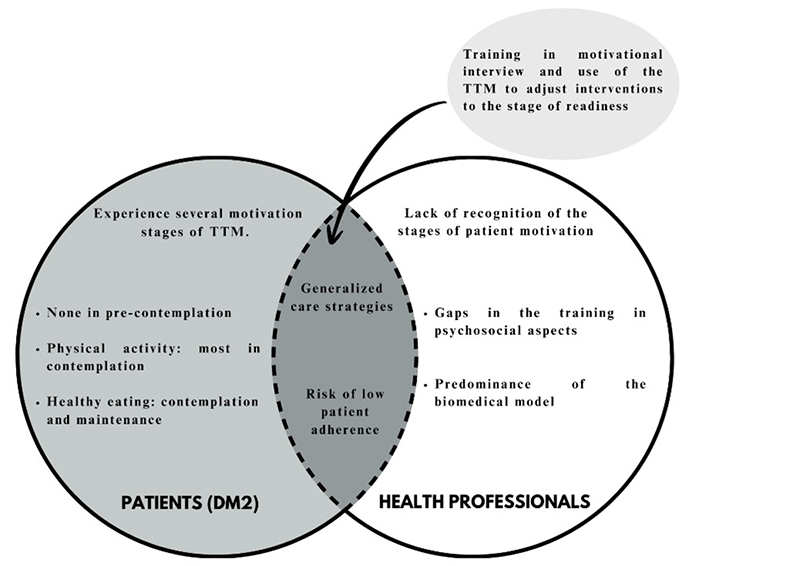 Source: Author's own work.