 Epidemiological profile, completeness of notifications, and factors associated with the adequacy of treatment for syphilis during pregnancy: a cross-sectional study, Ubá, 2018–2023
Objective To analyze the epidemiological profile of syphilis during pregnancy, the completeness of notifications, and the factors associated with treatment adequacy in Ubá, a region of Minas Gerais, between 2018 and 2023.
Methods Cross-sectional study with records from the Brazilian Notifiable Diseases Information System (SINAN). The annual detection rate of syphilis during pregnancy and logistic regression to assess treatment were calculated. Data completeness was calculated and categorized.
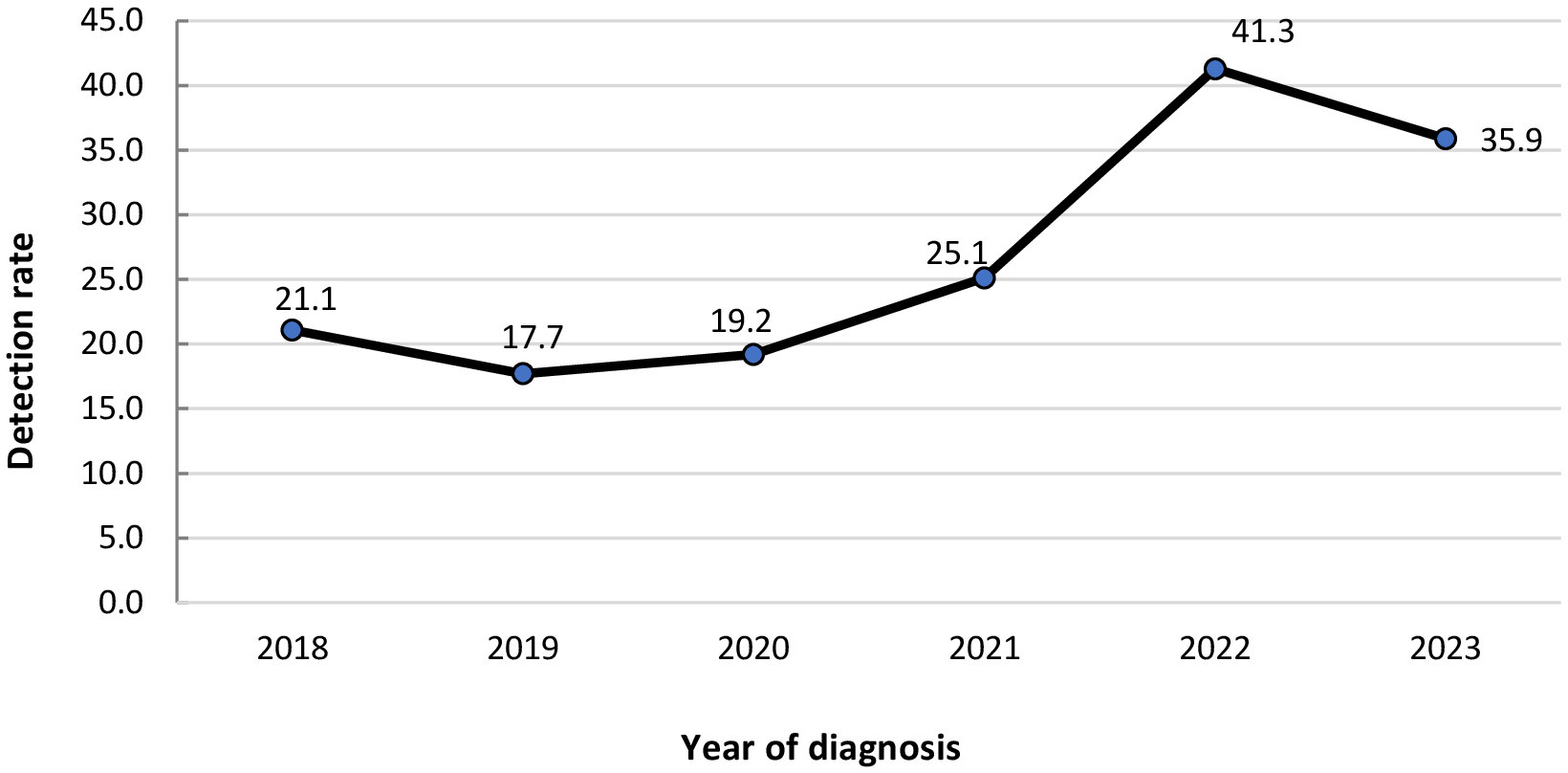
Results The detection rate ranged from 17.7 cases per 1 thousand live births in 2019 to 41.3 in 2022. Pregnant women had a median age of 23 years (interquartile range 19; 28), with 61.9% identifying as Black and 36.1% diagnosed in the third trimester. Penicillin was indicated in 75.3% of cases, and partner treatment occurred in 41.2%. Completeness was excellent for the variables “pregnancy trimester at diagnosis” (100.0%) and “nontreponemal test” (98.9%); poor for “education level” (65.4%) and “clinical classification” (70.6%). Inadequate prescriptions were higher among pregnant people diagnosed in the third trimester than among those diagnosed in the first trimester (odds ratio [OR] 2.00; 95% confidence interval [95%CI].30; 3.07). Pregnant people with a nonreactive result for the nontreponemal test (OR 13.48; 95%CI 5.93; 30.64) and those who did not undergo the treponemal test (OR 1.65; 95%CI 1.13; 2.40) had higher odds of inadequate prescription. There were more prescription failures among pregnant people whose sexual partners were not treated (OR 1.91; 95%CI 1.34; 2.72).
Conclusion A high detection rate and failures in notification completeness and in the treatment prescribed for pregnant people with syphilis were observed.
Keywords
Syphilis; Pregnant People; Sexually Transmitted Diseases; Disease Notification; Cross-Sectional Studies
 Thumbnail