 Health technology assessment in the Brazilian National Health System: profile of CONITEC exclusion recommendations, 2012-2023
Objective To analyze the recommendations for exclusion of health technologies in the Brazilian National Health System (SUS), made by the National Commission for the Incorporation of Technologies in the Brazilian National Health System (CONITEC) from 2012 to 2023, and to identify the disinvestment criteria used.
Methods Documentary, descriptive and retrospective analysis of CONITEC reports that assessed technology exclusion requests.
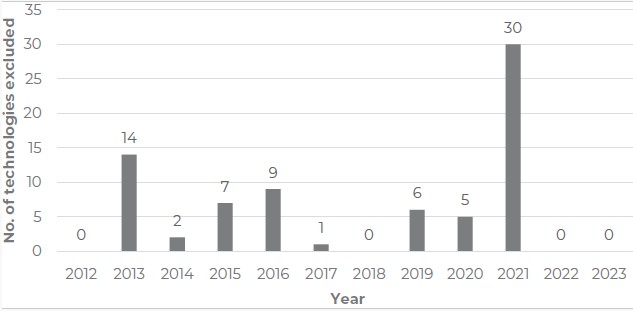
Results We identified 24 reports on 74 technologies, whereby the requests predominantly involved medications (95.9%). CONITEC favorably recommended 95% of the exclusions, prioritizing the absence of registration with the National Health Surveillance Agency and the existence of therapeutic alternatives.
Conclusion Low demand for exclusions compared to incorporations reveals challenges in identifying obsolescence and resistance to exclusion of technologies. The sustainability of the SUS requires greater monitoring of incorporated technologies, to optimize resources and promote the efficiency of the health system.
Keywords
Health Technology Assessment; Brazilian National Health System; Health Care Economics; Document Analysis
Main results The study identified that demands for exclusion of technologies in the Brazilian National Health System (Sistema Único de Saúde - SUS) are significantly lower than demands for incorporation, highlighting the need to pay greater attention to the disinvestment process, in order to guarantee the sustainability of the health system.
Implications for services The findings of this study point to the importance of structuring disinvestment assessment methods, with the aim of improving monitoring of health technology obsolescence and promoting more efficient allocation of resources in the SUS.
Perspectives We suggest that criteria be established for the periodic re-assessment of incorporated technologies, in order to guarantee regular reviews and the fluidity of CONITEC’s work in assessing health technologies.
 Thumbnail