
 Racial inequality in access to breast reconstruction surgery in the Brazilian Unified Health System: an interrupted time series study, Brazil, 2010-2024
Abstract
Objective: To estimate the differential in access to breast reconstruction surgery in the Brazilian Unified Health System according to race/skin color nationwide and in the country's regions.
Methods: This was an observational study of interrupted time series, which used monthly microdata from the Hospital Information System for the period 2010-2024. The differentials in the proportion of breast reconstruction surgeries according to race/skin color were estimated before and after the implementation of Ordinance No. 127/2023, with respective 95% confidence intervals (95%CI).
Results: We identified 565,234 surgeries, of which 404,944 (71.6%) were mastectomies and 160,290 (28.4%) were breast reconstructions. The proportion of reconstructions was, on average, 12.9 percentage points (95%CI -16.8; -8.9) lower for Black women compared to White and Asian women. After the Ordinance No. 127/2023 intervention, the differential increased to 28.6 percentage points (95%CI -44.1; -13.0). The largest differentials were observed in the Northern region, with 15.4 percentage points (95%CI -20.9; -10.8), and in the Northeast, with 11.7 percentage points (95%CI -15.8; -7.5).
Conclusion: There is a significant differential in access to breast reconstruction surgery according to race/skin color, and the effects are heterogeneous across the Brazilian regions.
Keywords:
Breast Reconstruction; Racial Inequality in Health; Breast Cancer; Brazilian Unified Health System; Mastectomy.
Resumo
Objetivo: Estimar o diferencial no acesso à cirurgia de reconstrução mamária no Sistema Único de Saúde conforme raça/cor da pele no Brasil e regiões.
Métodos: Estudo observacional de séries temporais interrompidas, o qual utilizou microdados mensais do Sistema de Informações Hospitalares no período 2010-2024. Estimaram-se os diferenciais na proporção de cirurgias de reconstrução mamária segundo raça/cor da pele, antes e após a implementação da Portaria nº 127/2023, com respectivos intervalos de confiança de 95% (IC95%).
Resultados: Foram identificadas 565.234 cirurgias, sendo 404.944 (71,6%) mastectomias e 160.290 (28,4%) reconstruções mamárias. A proporção de reconstruções é, em média, 12,9 pontos percentuais (IC95% -16,8; -8,9) menor para mulheres negras em comparação com mulheres brancas e amarelas. Após a intervenção da Portaria nº 127/2023, o diferencial aumentou para 28,6 pontos percentuais (IC95% -44,1; -13,0). Os maiores diferenciais foram observados no Norte com 15,4 pontos percentuais (IC95% -20,9; -10,8) e no Nordeste com 11,7 pontos percentuais (IC95% -15,8; -7,5).
Conclusão: Existe diferencial significativo no acesso à cirurgia de reconstrução mamária conforme raça/cor da pele, e os efeitos são heterogêneos entre as regiões.
Palavras-chave:
Reconstrução Mamária; Desigualdade Racial em Saúde; Câncer de Mama; Sistema Único de Saúde; Mastectomia
Resumen
Objetivo: Estimar la diferencia en el acceso a la cirugía de reconstrucción mamaria en el Sistema Único de Salud de Brasil según la raza/color de piel en Brasil y sus regiones.
Métodos: Estudio observacional de series temporales interrumpidas, que utilizó microdatos mensuales del Sistema de Información Hospitalaria para el periodo 2010-2024. Se estimaron las diferencias en la proporción de cirugías de reconstrucción mamaria según la raza/color de piel antes y después de la implementación de la Ordenanza N° 127/2023, con sus respectivos intervalos de confianza del 95% (IC95%).
Resultados: Se identificaron 565.234 cirugías, de las cuales 404.944 (71,6 %) fueron mastectomías y 160.290 (28,4 %) reconstrucciones mamarias. La proporción de reconstrucciones fue, en promedio, 12,9 puntos porcentuales (IC95 % -16,8; -8,9) menor para las mujeres negras en comparación con las mujeres blancas y asiáticas. Tras la entrada en vigor de la Ordenanza n.º 127/2023, la diferencia aumentó a 28,6 puntos porcentuales (IC95% -44,1; -13,0). Las mayores diferencias se observaron en la región Norte, con 15,4 puntos porcentuales (IC95% -20,9; -10,8), y en el Noreste, con 11,7 puntos porcentuales (IC95% -15,8; -7,5).
Conclusión: Existe una diferencia significativa en el acceso a la cirugía de reconstrucción mamaria según la raza/color de piel, y los efectos son heterogéneos entre las regiones.
Palabras clave:
Reconstrucción Mamaria; Desigualdad Racial en la Salud; Cáncer de Mama; Sistema Único de Salud de Brasil; Mastectomía.
This study used publicly available and anonymized databases.
Introduction
Breast cancer has the highest mortality rate and the second highest incidence rate among cancers that most commonly affect Brazilian women. In 2024, 73,000 estimated new cases were expected in the country. The most appropriate treatment depends on the stage and type of tumor[xref ref-type="bibr" rid="r1"]1[/xref].
The Brazilian Unified Health System (Sistema Único de Saúde, SUS) offers free breast cancer surgery, chemotherapy and radiotherapy1. Breast surgery, called mastectomy, is one of the main treatment modalities. Radical mastectomy, with total removal of the breast, was once considered the standard treatment, based on the belief that increasing the extent of the surgery would produce better results2. Currently, breast-conserving techniques are seen as an effective treatment option3,4, allowing for less invasive and painful treatments for health service users.
Breast reconstruction is performed after conservative surgery for local breast repairs and symmetrization5 and aims to restore patients' self-esteem and psychological well-being6,7. It is therefore seen as essential for the physical and emotional recovery of women undergoing treatment for breast cancer8.
Despite this, access to breast reconstruction has remained below the number of mastectomies performed9. This causes considerable suffering for women who are unable to complete treatment. In low- and middle-income countries, reconstruction rates are far from ideal, as they do not reach the 50% mark10. In 2023, the Brazilian Ministry of Health conducted an analysis that indicated an increase in access to this procedure from 21% in 2010 to approximately 65% in 20219. However, it was estimated that less than 30% of patients who underwent mastectomy had reconstruction through the SUS between 2015 and 202111-12.
With a view to patients' quality of life, Law No. 12802/2013 was brought into force by the SUS, which guarantees access to breast reconstruction immediately after tumor removal or as soon as the necessary clinical conditions exist13, and created an exceptional strategy to expand access in 202314. Ordinance No. 127 was enacted in February 2023 and included in the SUS health systems in June of the same year. The exceptional strategy provides that hospitals already accredited to provide SUS oncology services may perform post-mastectomy breast reconstruction, establishing a new procedure within the SUS14.
The main cause of low access to breast reconstruction is unequal access to healthcare. The literature indicates that race/skin color, place of residence and social class on their own do not affect health outcomes. In fact, these factors are related to overlapping processes that generate inequities, such as racism and other forms of discrimination and oppression15. At different times, disparities have been noted in some breast cancer indicators: Black women have less access to screening16, longer waiting times to start treatment17, higher incidence of diagnoses at advanced stages18, and higher risk of mortality19.
The objective of this study was to estimate the differential in access to breast reconstruction according to race/skin color between January 2010 and December 2024 in Brazil as a whole and in the country's regions. Analyses such as these allow identification of the women and locations that most need public policies aimed at promoting more equitable access to complete breast cancer treatment.
Methods
Design
This is an observational study with interrupted time series analysis using panel data, based on monthly records of surgeries performed between January 2010 and December 2024 held on the SUS Hospital Information System. These microdata are publicly accessible and available on the SUS Department of Information Technology platform20.
Setting
Monthly rates were calculated and the aforementioned method was applied in order to assess the effects of Ordinance No. 127, enacted in February 2023 and brought into effect in June of the same year. The objective was to estimate differentials according to race/skin color in access to breast reconstruction surgery after mastectomy. The approach allowed for analysis of differences in the trend (slope) of monthly rates between the two groups of women (Black/mixed-race vs. White/Asian) before and after the intervention brought about by Ordinance No. 127.
Participants
The study investigated mastectomy and breast reconstruction surgeries performed on women between January 2010 and December 2024. The unit of analysis was the monthly rates by racial group. The number of surgeries was obtained based on the proc_id variable. The mastectomy codes were selected as per Silva et al.21, while the codes for breast reconstruction procedures were obtained based on Almeida et al.11.
Variables
We analyzed race/skin color and region of residence markers. The raca_cor (race_color) variable identified the SUS service user's race/skin color as established by the Brazilian Institute of Geography and Statistics, whereby 1 indicates White race/skin color, 2 Black, 3 mixed-race, 4 Asian, 5 Indigenous, 99 unknown or "no information". Race/skin color data coded as 99 was removed from the study. In total, 120,492 surgeries did not have information on race/skin color, including 88,170 mastectomies and 32,322 breast reconstruction surgeries. Indigenous women were excluded from the analysis due to their low representation in the sample (137 mastectomies and 23 reconstructions).
Information on race/skin color became mandatory on the Hospital Information System in November 2022, making the "no information" option for race/skin color unavailable during data entry. The data shows that during the two-year period 2023 and 2024, there were no data entries with missing race/skin color information. This information is recorded by healthcare professionals and is therefore not self-declared.
Our analysis focused on two groups of women: those with codes 2 and 3 in the database, that is, Black and mixed-race (both classified as Black in this study); and White and Asian women, i.e. codes 1 and 4, respectively. The Black population includes people who self-identify as both Black and mixed-race. Although it corresponds to a wide range of phenotypes and diverse genomic ancestries, this political and social categorization is frequently adopted in Brazil.
Region of residence was obtained via the munic_res variable, which indicates the service user's municipality code, whereby when the first character is 1 it corresponds to the Northern region, 2 to the Northeast, 3 to the Southeast, 4 to the South and 5 to the Midwest.
Data source/measurement
The database was extracted from the Hospital Information System in March 2025 and consists of two files available for download on the File Transfer Platform20. In this study, the reduced database was used, from which it was possible to obtain information on surgeries and the criteria regarding the race/skin color and region of residence of the health service users. The files are monthly and organized according to the country's federative units.
The breast reconstruction indicator (dependent variable) was calculated as the percentage of reconstructions in relation to mastectomies, that is, where Rate it is the relationship between breast reconstruction surgeries and mastectomies performed in group i (Black or White and Asian women) during month t. Reconstructions it and Masctectomies indicate the total number of group i reconstructions and mastectomies during month t, respectively.
Service users have the right to undergo reconstruction immediately after tumor removal, if the necessary clinical conditions are met, or as soon as the requirements are met13. There are three possibilities: reconstruction is indicated immediately after mastectomy; reconstruction is not indicated; or, firstly, the patient must undergo complementary treatment with chemotherapy/radiotherapy and then breast reconstruction5. In general, the decision on the best treatment is personalized according to the specificity of the tumor, age group and daily activities. In addition, the decision is shared between the mastologist, the plastic surgeon, the oncologist and the patient5.
The microdata do not include user identification to track when each participant underwent reconstruction. Rates were calculated monthly for each of the two groups of women. This implies that this study enriched the literature by analyzing the differential according to race/skin color using monthly rates.
The annual number of breast reconstructions did not reflect the number of women undergoing mastectomy after breast cancer diagnosis9. Expression (1) described the monthly capacity of the SUS to offer complete treatment for the disease.
Bias
The exclusion of records lacking information on race/skin color affected a substantial portion of the sample. Furthermore, the COVID-19 pandemic reduced elective surgeries between 2020 and 2021.
Study size
After excluding records lacking race/skin color information and excluding information on Indigenous women, the final sample analyzed consisted of 160,290 reconstructions and 404,944 mastectomies. Because these are population-based administrative data, no sample size calculation was performed.
Statistical methods
The interrupted time series with panel data method was described in Linden22. The Ordinance No. 127/2023 intervention was explored to obtain the differential according to race/skin color in the relationship between breast reconstruction surgeries and mastectomies in the SUS. The Ordinance established an exceptional strategy to expand access to reconstruction14 and was included in the SUS Table of Procedures, Medicines and Orthoses, Prostheses and Mobility Aids Management System, popularly known as the SUS Table, in June 2023.
The identification hypothesis was that the change in the level or trend of the rates would be the same for the control group (White and Asian) and for the treatment group (Black) if the intervention had not occurred22. The intervention caused by the COVID-19 pandemic is not suitable for this analysis, as many oncology surgeries were interrupted during that period. Consequently, this reduced the differential between the groups. The effect of the pandemic is always positive when comparing the rates with the substantial reduction that occurred from March 2020 onwards.
The model was estimated using ordinary least squares, as follows:
Rateit= ß0+ ß1Timeit+ß2Interventionit+ ß3Timeit· Interventionit+ ß4Black womeni+ ß5Black womeni· Timeit+ ß6Black womeni· Interventionit+ ß7Black womeni· Interventionit· Timeit+ εit (2)
where:
Rateit is the dependent variable calculated in (1);
Timeit is a continuous variable varying between 1 and 180, representing January 2010 to December 2024 for each i group;
Interventionit is a binary variable that receives 1 with effect from June 2023;
Timeit· Interventionit is a continuous variable that indicates the time elapsed since the intervention, that is, in July 2023 it is 1, in August 2023 is it 2 and so on;
Black womeni is a binary variable that indicates 1 for the Black women's group and 0 for the White and Asian women's group;
Black womeni· Timeit is the time elapsed since the beginning of the study for the Black women's group;
Black womeni· Interventionit is a binary variable that receives 1 for the intervention for Black women;
Black womeni· Interventionit· Timeit indicates the time with effect from the intervention for Black women; and
εit is the error term.
Equation (2) tested comparability between groups. ß 4 and ß 5 indicate whether the groups are balanced in both the level and trajectory of the outcome variable in the pre-intervention period22. The ß 0 to ß 3 coefficients measure the effects for White and Asian women, while the ß 4 to ß 6 parameters measure the effects for Black women. Therefore, and are the parameters of interest and estimate the differential between the two groups of women before and after the intervention in June 2023, respectively. Specification (2) allows heterogeneous effects to be captured, adjusting for the different trajectories and levels of the dependent variable before and after the intervention22. Furthermore, it is possible to verify the effectiveness of the Ordinance in expanding access to breast reconstructions.
The coefficients of equation (2) were estimated using R statistical software. The standard errors are heteroscedasticity-robust, calculated from the White estimator, as implemented by the sandwich package. We used 95% confidence intervals.
Results
The total sample consisted of 565,234 surgeries performed on women, of which 71.6% (404,494) were mastectomies and 28.4% (160,290) were breast reconstructions. The surgical procedures used to measure the dependent variable of the model were described (Table 1). In the South, 91.2% of reconstructions were performed on White women, and 59.6% in the Southeast; in the North, 81.6% were performed on mixed-race women, 74.2% in the Northeast and 61.6% in the Midwest (Table 2).
Between 2010 and 2024, the proportion of reconstructions relative to mastectomies was higher among White and Asian women compared to Black women in all years analyzed (Figures 1 and 2). In 2010, the proportions were 26.6% among White and Asian women and 21.1% among Black women, a difference of 5.5 percentage points. In 2020, due to the interruption of elective procedures, a reduction in proportions was observed in both groups, with values of 38.0% among White and Asian women and 34.4% among Black women, resulting in a difference of 3.6 percentage points. After this period, the proportions increased again, reaching 69.9% and 53.9%, respectively, in 2024, maintaining a difference of 16.0 percentage points between the groups (Figures 1 and 2).
Code, description, number (n) and percentage (%) of mastectomies and breast reconstructions performed by the Brazilian Unified Health System. Brazil, 2010-2024
Absolute (n) and relative (%) frequencies of mastectomy and breast reconstruction surgeries performed by region of residence and race/skin color. Brazil, 2010-2024
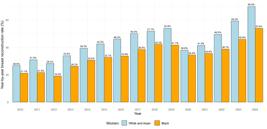
Year-by-year comparison of breast reconstruction rates per group of women. Brazil, 2010-2024

The monthly rates enabled equation (2) to be estimated for Brazil and for macro-regions of residence (North, Northeast, Southeast, South and Midwest) using filters in the database. In some months, the monthly rates showed proportions greater than 100% or could not be calculated in periods when no reconstructive surgeries were performed. In the Northern region, 20 observations were eliminated from the sample, seven months had rates above 100%, and no reconstructive surgeries occurred in thirteen of the months. These problems were observed in greater numbers between 2010 and 2014. The regions with the most complete information were the Southeast and South, with 360 and 359 observations, respectively (Table 3).
The significant coefficients for the Black women i and Black women i · Intervention it variables of equation (2) indicated the existence of a racial/skin color differential in access to breast reconstruction in the SUS (Table 3). The ß 4 coefficient of the Black women i variable represented the group of Black women in equation (2) prior to the intervention and presented a negative and significant value in the estimates, except for the Midwest (Table 3). This indicated that Black women had lower rates of breast reconstruction surgery and mastectomies compared to the group of White and Asian women.
For Brazil as a whole, the difference between the two groups was 12.9 percentage points (95% confidence interval, 95%CI -16.8; -8.9) in favor of White and Asian women in the pre-intervention period (Table 3). Regionally, the differential was 15.4 percentage points (95%CI -20.9; -10.8) in the North, 11.7 percentage points (95%CI -15.8; -7.5) in the Northeast, 8.0 percentage points (95%CI -11.0; -5.0) in the Southeast, and 6.9 percentage points (95%CI -10.8; -3.0) in the South. The models for the Northeast and Southern regions obtained the highest coefficients of determination, while those for the North and Midwest obtained the lowest (Table 3).
Absolute difference (in percentage points) in breast reconstruction rates between Black women and White/Asian women before and after the Ordinance No. 127/2023 intervention, 95% confidence intervals (95%CI) and monthly observations by region of residence. Brazil, 2010-2024
In the post-intervention estimates, the ß 6 coefficient of the Black women i · Intervention it iteration of equation (2) was negative and highly significant only for Brazil as a whole. The differential increased to 28.6 percentage points (95%CI -44.1; -13.0) in favor of White and Asian women (Table 3).
Discussion
These results indicated a racial/skin color differential in the relationship between breast reconstruction and mastectomy between January 2010 and December 2024. Rates were higher for White and Asian women compared to Black women. In Brazil, prior to the intervention made by Ordinance No. 127/2023, the differential was 12.9 percentage points, increasing to 28.6 percentage points from June 2023 onwards. Furthermore, the effects were heterogeneous across regions. The largest differentials were observed in the North and Northeast. Only in the Midwest region was the coefficient indicating the differential not significant.
The number of reconstructions did not match the number of mastectomies9-12. Using different annual timeframes, the proportions of reconstructions to mastectomies performed per year were verified9-12. In this way, this study contributed to the literature by analyzing the influence of race/skin color and by verifying regional heterogeneity using the time series method.
The limitations of this study are acknowledged. Firstly, the results were contingent on the accuracy and quality of the data. It was not possible to guarantee that there were no errors in information recording or information omission. Information on race/skin color became mandatory in the Hospital Information System records from November 2022. Therefore, the analyses may present some distortions. Secondly, it was not possible to control for the effects of the COVID-19 pandemic on the estimates. A reduction in oncology surgeries was observed during the most restrictive period of the pandemic23, so any comparison after the pandemic period will have a positive effect. Finally, the study's evidence was not based on a theoretical model that explains the relationships between all the possible factors involved.
Studies like this emphasize the importance of databases with complete information on race/skin color, with the aim of designing policies to reduce health inequalities. The results showed that the increase in reconstructions over the years did not ensure a reduction in access differences. This indicated the need for equitable public policies to expand access to reconstructive surgery.
Breast reconstruction is essential for the physical and emotional recovery of women undergoing cancer treatment8. The annual number of breast reconstructions has not reflected the increase in women diagnosed with breast cancer undergoing mastectomy9. Therefore, initiatives such as Ordinance No. 127/2023, which allowed referral hospitals to be able to perform post-mastectomy breast reconstruction14, are important to expand access to complete treatment9 and the well-being of service users.
These findings revealed the racial/skin color differential in access to breast reconstruction and are consistent with the literature. Many studies on breast cancer highlight the health inequalities faced by Black women. They have less access to screening16,24, present more advanced staging17 and higher risk of mortality19. The interactions of these multiple factors may influence differences in access to reconstruction, since more severe cases of cancer may present more contraindications for the procedure. Such adverse outcomes are also observed in socioeconomic indicators. Black women participate less in the labor market, are more affected by poverty and are less likely to complete higher education25.
Regional differences also stood out. The North and Northeast regions showed the greatest differences in access to reconstruction and were the areas with the highest proportion of Black and mixed-race people (79% and 73%, respectively)26. Despite progress in recent decades, inequalities persist. In the Northern region, breast cancer is the second most common cancer, after cervical cancer27, and has low screening rates28, longer waiting times for breast cancer surgery29 and limited access to cancer diagnosis and treatment due to the region's vast territorial dimensions30.
The concept of intersectionality is useful for explaining these inequalities, as it refers to the understanding that characteristics such as race/skin color, social class, gender and place of residence shape and reinforce complex social inequalities15. Therefore, there is a race/skin color differential in the monthly rates between breast reconstruction surgeries and mastectomies, and the effect is heterogeneous across the Brazilian regions. This result stems from differences in many social indicators that affect access to complete breast cancer treatment.
References
-
1. Instituto Nacional de Câncer. Controle do câncer de mama no Brasil [Internet]. Rio de Janeiro: Instituto Nacional de Câncer; 2024 [cited 2025 Apr 29]. Available from: Available from: https://ninho.inca.gov.br/jspui/bitstream/123456789/17002/1/Controle%20do%20câncer%20de%20mamano%20Brasil%20-%20dados%20e%20números%202024.pdf
» https://ninho.inca.gov.br/jspui/bitstream/123456789/17002/1/Controle%20do%20câncer%20de%20mamano%20Brasil%20-%20dados%20e%20números%202024.pdf - 2. Nascimento JHF, Vieira ATS, Souza Filho BM, Tomaz SC, Bocanegra RED, Costa VSM, et al. Breast cancer in Brazil: Screening program and surgical approach. Cancer Epidemiol. 2021;73(1):101970.
- 3. Rajan KK, Fairhurst K, Birkbeck B, Novintan S, Wilson R, Savović J, et al. Overall survival after mastectomy versus breast-conserving surgery with adjuvant radiotherapy for early-stage breast cancer: meta-analysis. BJS Open. 2024;8(3):zrae040.
- 4. Franceschini G. New trends in breast cancer surgery: a therapeutic approach increasingly efficacy and respectful of the patient. G Chir. 2015;36(4):145-52.
-
5. Fundação Oswaldo Cruz. Principais Questões sobre Reconstrução da Mama: direitos e desafios para acesso no SUS [Internet]. Rio de Janeiro: Fundação Oswaldo Cruz; 2021 [cited 2025 Apr 29]. Available from: Available from: https://portaldeboaspraticas.iff.fiocruz.br/atencao-mulher/principais-questoes-sobre-reconstrucao-da-mama-direitos-e-desafios-para-acesso-no-sus/
» https://portaldeboaspraticas.iff.fiocruz.br/atencao-mulher/principais-questoes-sobre-reconstrucao-da-mama-direitos-e-desafios-para-acesso-no-sus/ - 6. Quintanilha BRA, Silva CHHC, Dantas CS. Qualidade de vida de mulheres com reconstrução mamária após mastectomia: uma revisão integrativa. Res. Soc. Dev. 2022;11(14):e306111436303.
- 7. Pereira R, Pereira H, Nunes G, Andrade E, Aguiar V. Quality of life of mastectomized women undergoing immediate breast reconstruction in a cancer referral hospital in Amazonas: a cross-sectional study. Rev. Bras. Cir. Plást. 2020;35(1):38-43.
- 8. Reis I, Daroda R, Franco C, Silva G, Daroda L. Breast reconstruction: 10 years experience. Rev. Bras. Cir. Plást. 2024;39(2):1-5.
-
9. Botelho MB. Reconstrução mamária: Estratégia para ampliação do acesso [Internet]. Brasília: Ministério da Saúde; 2023 [cited 2025 Apr 29]. Available from: Available from: https://www.gov.br/saude/pt-br/acesso-a-informacao/gestao-do-sus/articulacao-interfederativa/cit/pautas-de-reunioes-e-resumos/2022/dezembro/apresentacao-estrategia-de-reconstrucao-mamaria-em-caso-de-mulheres-submetidas-a-mastectomia-total
» https://www.gov.br/saude/pt-br/acesso-a-informacao/gestao-do-sus/articulacao-interfederativa/cit/pautas-de-reunioes-e-resumos/2022/dezembro/apresentacao-estrategia-de-reconstrucao-mamaria-em-caso-de-mulheres-submetidas-a-mastectomia-total - 10. Freitas-Junior R, Ferreira-Filho DL, Soares LR, Paulinelli RR. Oncoplastic breast-conserving surgery in low- and middle-income countries: training surgeons and bridging the gap. Curr Breast Cancer Rep. 2019;11(1):136-42.
- 11. Almeida CSCD, Morais RXBD, França IRD, Cavalcante KWM, Santos ALBND, Morais BXBD, et al. Comparative analysis of mastectomies and breast reconstructions performed in the Brazilian Unified Health System in the last 5 years. Rev. Bras. Cir. Plást. 2021;36(3):263-9.
-
12. Instituto Oncoguia. Reconstrução mamária: apenas 30% das mulheres com câncer de mama conseguem acesso pelo SUS [Internet]. São Paulo: Instituto Oncoguia; 2024 [cited 2025 Apr 29]. Available from: Available from: https://www.oncoguia.org.br/conteudo/reconstrucao-mamaria-apenas-30-das-mulheres-com-cancer-de-mama-conseguem-acesso-pelo-sus/17456/7/
» https://www.oncoguia.org.br/conteudo/reconstrucao-mamaria-apenas-30-das-mulheres-com-cancer-de-mama-conseguem-acesso-pelo-sus/17456/7/ -
13. Brasil. Lei nº 12.802, de 24 de abril de 2013. Altera a Lei nº 9.797, de 6 de maio de 1999 para dispor sobre o momento da reconstrução mamária. Diário Oficial da União [Internet]. Brasília: Presidência da República; 2013 [cited 2025 Apr 29]. Available from: Available from: https://www.planalto.gov.br/ccivil_03/_ato2011-2014/2013/lei/l12802.htm
» https://www.planalto.gov.br/ccivil_03/_ato2011-2014/2013/lei/l12802.htm -
14. Brasil. Portaria nº 127 de 13 de fevereiro de 2023. Institui estratégia excepcional de ampliação do acesso à reconstrução mamária em caso de mulheres com diagnóstico de câncer de mama no âmbito do Sistema Único de Saúde. Diário Oficial da União [Internet]. Brasília: Presidência da República; 2023 [cited 2025 Apr 29]. Available from: Available from: https://www.in.gov.br/en/web/dou/-/portaria-gm/ms-n-127-de-13-de-fevereiro-de-2023-464446190
» https://www.in.gov.br/en/web/dou/-/portaria-gm/ms-n-127-de-13-de-fevereiro-de-2023-464446190 - 15. Shannon G, Morgan R, Zeinali Z, Brady L, Couto MT, Devakumar D, et al. Intersectional insights into racism and health: not just a question of identity. Lancet. 2022;400(10368):2125-36.
- 16. Silva ARD, Scorzafave LGDS. Inequality by skin color in breast cancer screening in Brazil: a differences-in-differences analysis of the COVID-19 pandemic. J Racial and Ethnic Health Disparities. 2025;12(1):685-91.
- 17. Medeiros GC, Bergmann A, Aguiar SSD, Thuler LCS. Análise dos determinantes que influenciam o tempo para o início do tratamento de mulheres com câncer de mama no Brasil. Cad Saúde Pública. 2015;31(6):1269-82.
- 18. Dos-Santos-Silva I, De Stavola BL, Renna NL, Nogueira MC, Aquino EML, Bustamante-Teixeira MT, et al. Ethnoracial and social trends in breast cancer staging at diagnosis in Brazil, 2001-14: a case only analysis. Lancet Global Health. 2019;7:e784-97.
- 19. Lemos LLP, Souza MC, Guerra AA, Piazza T, Araújo RM, Cherchiglia ML. Racial disparities in breast cancer survival after treatment initiation in Brazil: a nationwide cohort study. Lancet Global Health. 2024;12:e292-305.
-
20. Brasil. Ministério da Saúde. Transferência de arquivos [Internet]. Brasília: Ministério da Saúde; 2025 [cited 2025 Apr 29]. Available from: Available from: https://datasus.saude.gov.br/transferencia-de-arquivos/
» https://datasus.saude.gov.br/transferencia-de-arquivos/ - 21. Silva GA, Bustamante-Teixeira MT, Aquino EML, Tomazelli JG, dos-Santos-Silva I. Acesso à detecção precoce do câncer de mama no Sistema Único de Saúde: uma análise a partir dos dados do Sistema de Informações em Saúde. Cad Saúde Pública. 2014;30(7):1537-50.
- 22. Linden A. Conducting interrupted time-series analysis for single- and multiple-group comparisons. Stata J. 2015;15(2):480-500.
- 23. Ribeiro CM, Correa FM, Migowski A. Efeitos de curto prazo da pandemia de covid-19 na realização de procedimentos de rastreamento, investigação diagnóstica e tratamento do câncer no Brasil: estudo descritivo, 2019-2020. Epidemiol Serv Saúde. 2022;31(1):e2021405.
-
24. Silva ARD, Scorzafave LGDS. Determinants of inequality in access to mammography: Evidence from ELSI-Brazil [Internet]. Rio de Janeiro: Ciência & Saúde Coletiva; 2025 [cited 2025 Apr 29]. Available from: Available from: http://www.cienciaesaudecoletiva.com.br/artigos/determinants-of-inequality-in-access-to-mammography-evidence-from-elsibrazil/19575
» http://www.cienciaesaudecoletiva.com.br/artigos/determinants-of-inequality-in-access-to-mammography-evidence-from-elsibrazil/19575 -
25. Instituto Brasileiro de Geografia e Estatística. Mulheres pretas ou pardas gastam mais tempo em tarefas domésticas, participam menos do mercado de trabalho e são mais afetadas pela pobreza [Internet]. Brasília: IBGE; 2024 [cited 2025 Apr 29]. Available from: Available from: https://agenciadenoticias.ibge.gov.br/agencia-noticias/2012-agencia-de-noticias/noticias/39358-mulheres-pretas-ou-pardas-gastam-mais-tempo-em-tarefas-domesticas-participam-menos-do-mercado-de-trabalho-e-sao-mais-afetadas-pela-pobreza
» https://agenciadenoticias.ibge.gov.br/agencia-noticias/2012-agencia-de-noticias/noticias/39358-mulheres-pretas-ou-pardas-gastam-mais-tempo-em-tarefas-domesticas-participam-menos-do-mercado-de-trabalho-e-sao-mais-afetadas-pela-pobreza -
26. Instituto Brasileiro de Geografia e Estatística. Pela primeira vez desde 1991, a maior parte da população do Brasil se declara parda [Internet]. Brasília: IBGE; 2024 [cited 2025 Apr 29]. Available from: Available from: https://agenciadenoticias.ibge.gov.br/agencia-noticias/2012-agencia-de-noticias/noticias/38719-censo-2022-pela-primeira-vez-desde-1991-a-maior-parte-da-populacao-do-brasil-se-declara-parda
» https://agenciadenoticias.ibge.gov.br/agencia-noticias/2012-agencia-de-noticias/noticias/38719-censo-2022-pela-primeira-vez-desde-1991-a-maior-parte-da-populacao-do-brasil-se-declara-parda - 27. Santos TBD, Borges AKDM, Ferreira JD, Meira KC, Souza MCD, Guimarães RM, et al. Prevalência e fatores associados ao diagnóstico de câncer de mama em estágio avançado. Ciênc Saúde Coletiva. 2022;27:471-82.
-
28. Instituto Nacional de Câncer. Mamografias no SUS [Internet]. Rio de Janeiro: Instituto Nacional de Câncer; 2022 [cited 2025 Apr 29]. Available from: Available from: https://www.gov.br/inca/pt-br/assuntos/gestor-e-profissional-de-saude/controle-do-cancer-de-mama/dados-e-numeros/mamografias-no-sus
» https://www.gov.br/inca/pt-br/assuntos/gestor-e-profissional-de-saude/controle-do-cancer-de-mama/dados-e-numeros/mamografias-no-sus -
29. Silva ARD, Postali FAS. Primary health care and access to breast cancer treatment: evidence from Brazil [Internet]. Santa Clara: Authorea; 2025 [cited 2025 Apr 29]. Available from: Available from: https://doi.org/10.22541/au.174046157.70020934/v1
» https://doi.org/10.22541/au.174046157.70020934/v1 - 30. Silva MRBD, Castanheiro MEP, Freitas AGO, Dall’Acqua DSV. Aspectos epidemiológicos associados ao câncer de mama e de colo de útero na região Norte de 2016 a 2023. BJHR. 2023;6(3):13219-31.
-
Data availability
The database used in this research is available at: https://doi.org/10.48331/scielodata.NPPFOF.
-
Use of generative artificial intelligence
ChatGPT (https://chatgpt.com/) was used in this study to check and develop RStudio software codes. Artificial intelligence was not used to prepare the text or citations, which are the sole responsibility of the authors.
-
Financing
This research was funded by the National Institute for Health and Care Research (NIHR) 133252: “Global Health Research Unit: Health financing for UHC in challenging times: leaving no-one behind”, using UK international development funding from the UK Government to support global health research.
-
Peer Reviewer:
Daniela de Almeida Pereira - https://orcid.org/0000-0002-0177-3676
Edited by
-
Editor-in-Chief:
Jorge Otávio Maia Barreto - https://orcid.org/0000-0002-7648-0472
-
Scientific Editor:
Everton Nunes da Silva - https://orcid.org/0000-0001-8747-4185
-
Associate Editor:
Arn Migowski Rocha dos Santos - https://orcid.org/0000-0002-4861-2319
-
Peer Review Administrator:
Izabela Fulone - https://orcid.org/0000-0002-3211-6951
The database used in this research is available at: https://doi.org/10.48331/scielodata.NPPFOF.


