 Age structure and proportionate mortality among the Tikmũ’ũn/Maxakali: a descriptive study, Minas Gerais and Brazil, 2022
Abstract
Objective To analyze the age structure and mortality of the Tikmũ’ũn/Maxakali, comparing them to the non-Indigenous population of municipalities neighboring Indigenous territories, in Minas Gerais, and throughout Brazil.
Methods This was a cross-sectional study using secondary data from 2022 extracted from the Indigenous Health Care Information System, the 2022 Demographic Census, the Mortality Information System, and the Live Birth Information System. Age and sex distributions, proportionate mortality by age group, proportionate mortality burden and infant mortality rate were calculated.
Results The Tikmũ’ũn/Maxakali population consisted of 2,500 Indigenous people, with 2.4% (n=59) over 60 years of age. Among non-Indigenous people, this age group corresponded to 17.9% (n=28,550) living in neighboring municipalities, 17.8% (n=3,654,934) in Minas Gerais, and 15.9% (n=31,999,315) in Brazil. Among Indigenous people, 75.0% (n=15) of deaths were concentrated in the following age groups: under 1 year old (25.0%, n=5), 20-49 years old (25.0%, n=5), and over 50 years old (25.0%, n=5). For non-Indigenous people, mortality in the over-50 age group was 82.6% (n=1,076) in neighboring municipalities, 84.8% (n=135,221) in Minas Gerais, and 82.2% (n=1,240,116) in Brazil. The infant mortality rate among the Tikmũ’ũn/Maxakali was 66.7 deaths/1,000 live births, while for non-Indigenous people in neighboring municipalities, it was 17.5 deaths/1,000 live births. In Minas Gerais and Brazil, this rate among Indigenous people was 26.0 and 26.7/1,000 live births.
Conclusion The young age structure and high infant mortality of the Tikmũ’ũn/Maxakali indicate poorer health and care conditions compared to the other populations analyzed.
Keywords
Health of Indigenous Peoples; Indigenous Peoples; Health Status Disparities; Social Determinants of Health; Cross-Sectional Studies
Resumo
Objetivo Analisar a estrutura etária e a mortalidade dos Tikmũ’ũn/Maxakali, comparando-os à população não indígena dos municípios vizinhos aos territórios indígenas, de Minas Gerais e do Brasil.
Métodos Tratou-se de estudo transversal com dados secundários de 2022 extraídos do Sistema de Informação da Atenção à Saúde Indígena, do Censo Demográfico 2022, do Sistema de Informações sobre Mortalidade e do Sistema de Informações sobre Nascidos Vivos. Foram calculados distribuições etárias e por sexo, mortalidade proporcional por faixa etária, sobretaxa de mortalidade proporcional e coeficiente de mortalidade infantil.
Resultados A população Tikmũ’ũn/Maxakali era de 2,5 mil indígenas, com 2,4% (n=59) acima dos 60 anos. Entre os não indígenas, esse grupo correspondia a 17,9% (n=28.550) pertencentes aos municípios vizinhos, 17,8% (n=3.654.934) a Minas Gerais e 15,9% (n=31.999.315) ao Brasil. Entre indígenas, 75,0% (n=15) das mortes concentraram-se nas faixas etária: menores de 1 ano (25,0%, n=5), 20-49 anos (25,0%, n=5) e maiores de 50 anos (25,0%, n=5). Para não indígenas, a mortalidade na faixa acima dos 50 anos foi 82,6% (n=1.076) nos municípios vizinhos, 84,8% (n=135.221) em Minas Gerais e 82,2% (n=1.240.116) no Brasil. O coeficiente de mortalidade infantil entre os Tikmũ’ũn/Maxakali foi 66,7 óbitos/1 mil nascidos vivos e, para não indígenas pertencentes aos municípios vizinhos, foi 17,5 óbitos/1 mil nascidos vivos. Em Minas Gerais e Brasil, esse coeficiente entre indígenas foi 26,0 e 26,7/1 mil nascidos vivos.
Conclusão A estrutura etária jovem e a alta mortalidade infantil dos Tikmũ’ũn/Maxakali indicam piores condições sanitárias e assistenciais em relação às demais populações analisadas.
Palavras-chave
Saúde de Populações Indígenas; Povos Indígenas; Disparidades nos Níveis de Saúde; Determinantes Sociais da Saúde; Estudos Transversais
Resumen
Objetivo Analizar la estructura etaria y la mortalidad de los Tikmũ’ũn/Maxakali, comparándolas con la población no indígena de municipios vecinos a territorios indígenas, en Minas Gerais y en todo Brasil.
Métodos Estudio transversal con datos secundarios de 2022 extraídos del Sistema de Información de Salud Indígena, el Censo Demográfico de 2022, el Sistema de Información de Mortalidad y el Sistema de Información de Nacidos Vivos. Se calcularon las distribuciones por edad y sexo, la mortalidad proporcional por grupo de edad, la carga proporcional de mortalidad y la tasa de mortalidad infantil.
Resultados La población de Tikmũ’ũn/Maxakali estaba compuesta por 2.500 indígenas, de los cuales el 2,4 % (n=59) eran mayores de 60 años. Entre las personas no indígenas, este grupo correspondía al 17,9 % (n=28.550) pertenecientes a municipios vecinos, el 17,8 % (n=3.654.934) a Minas Gerais y el 15,9 % (n=31.999.315) a Brasil. Entre las personas indígenas, el 75,0 % (n=15) de las muertes se concentraron en los siguientes grupos de edad: menores de 1 año (25,0 %, n=5), de 20 a 49 años (25,0 %, n=5) y mayores de 50 años (25,0 %, n=5). Para las personas no indígenas, la mortalidad en el grupo de edad mayor de 50 años fue del 82,6% (n=1.076) en los municipios vecinos, del 84,8% (n=135.221) en Minas Gerais y del 82,2% (n=1.240.116) en Brasil. La tasa de mortalidad infantil entre los Tikmũ’ũn/Maxakali fue de 66,7 muertes/1.000 nacidos vivos, y para las personas no indígenas en los municipios vecinos, fue de 17,5 muertes/1.000 nacidos vivos. En Minas Gerais y Brasil, esta tasa entre las personas indígenas fue de 26,0 y 26,7/1.000 nacidos vivos.
Conclusión La estructura de edad joven y la alta mortalidad infantil de los Tikmũ’ũn/Maxakali indican peores condiciones de salud y atención en comparación con las otras poblaciones analizadas.
Palabras clave
Salud de Poblaciones Indígenas; Pueblos Indígenas; Disparidades en el Estado de Salud; Determinantes Sociales de la Salud; Estudios Transversales
This research used public domain anonymized databases.
Introduction
Mortality is one of the most traditional measures used to assess the health status of a population, being used both to quantify health problems and to define priorities in healthcare (1). Proportionate mortality by age expresses the estimated risk of death according to age or age group. High proportions of deaths among children under 1 year of age indicate poor health and living conditions (2), while a higher concentration of deaths among the elderly suggests an increase in life expectancy (3).
Chronic noncommunicable diseases, the risk factors of which involve behaviors and social determinants, predominantly affect adults and the elderly (4). These diseases are responsible for the majority of deaths in both the general population (5) and among Indigenous peoples (6). In the case of the latter, deaths from external causes—which generally include assaults, homicides, traffic accidents, self-harm, among others (7)—have increased over the last two decades (2000-2018), especially among young people aged 5-19 and adults aged 20-49 (6).
Within the context of the Brazilian National Health System, the Indigenous Health Care Subsystem and the National Policy on Health Care for Indigenous Peoples were established to address the sociocultural and epidemiological specificities that characterize the health demands of Indigenous populations (8). These initiatives are managed by the Special Secretariat for the Health of Indigenous Peoples, which, to address the main health problems facing these peoples, joined the Strategic Action Plan to Address Chronic Non-Communicable Diseases in Brazil (9). Furthermore, since 2015, actions aimed at preventing suicide among Indigenous populations have been put into place (10).
Proportionate mortality among Indigenous people up to 1 year old in Brazil in 2000, 2010, and 2018 was 15.3%, 17.7%, and 16.2%, respectively, while among non-Indigenous people of the same age group, it was 7.2%, 3.5%, and 2.7%, respectively. In the over-50 age group, proportionate mortality was 47.1%, 48.1%, and 52.0%, respectively, among Indigenous people and 66.9%, 74.4%, and 79.4%, respectively, among non-Indigenous people (6). A higher proportion of deaths was observed among Indigenous people up to 1 year old; among non-Indigenous people, the highest concentration occurred in the over 50s age group. For the Indigenous population, the rates remained stable throughout the period analyzed; among non-Indigenous people, there was a proportional reduction in deaths among children under 1 year old an increase among individuals aged over 50. Data from 2012 indicated that, among Indigenous Brazilians, the proportion of deaths in children under 1 year old was similar to that observed among people over 50 years of age (11). In contrast, among non-Indigenous people, infant deaths represented a negligible proportion, while individuals over 50 years old accounted for approximately three-quarters of total deaths.
The health inequalities experienced by Indigenous peoples in Brazil reflect historical processes of social exclusion (6). The Tikmũ’ũn/Maxakali people, residing in the Mucuri Valley in the state of Minas Gerais, are particularly affected by these disparities, facing significant health problems such as high prevalence of intestinal parasites and polyparasitism (12), poor water quality (13) and excessive use of high-alcohol beverages (14). Approximately 85.0% of families survive on a monthly income equal to or less than half the minimum wage (12). Despite the severity of these conditions, there is a lack of up-to-date information on their impact on the health of the Tikmũ’ũn/Maxakali people. One of the few available studies analyzed their social health situation. Between January and February 2004, 18.0% of the population under 18 years of age was affected by an outbreak of diarrhea; of these, 80.0% were children up to 5 years of age, and three deaths were recorded (15).
This study is justified by the need to analyze in greater depth the health conditions of this population, understand their specificities and contribute to the development of more effective public health strategies. The results obtained can support health service managers, health professionals and public policymakers in defining actions that are more appropriate and sensitive to the local context.
The objective of this study is to analyze the age structure and mortality patterns of the Indigenous Tikmũ’ũn/Maxakali people, comparing them with those observed in the neighboring non-Indigenous population, as well as between Indigenous and non-Indigenous people in Minas Gerais state and in Brazil as a whole.
Methods
Study design
This was a cross-sectional study on the age structure and mortality of the Indigenous Tikmũ’ũn/Maxakali people, in comparison with the non-Indigenous population of the region where the Indigenous territories of this group are located, as well in Minas Gerais and in Brazil as a whole. For this purpose, data from secondary sources on the demographic profile, mortality and births were used, obtained through the Indigenous Health Care Information System (16), the 2022 Demographic Census (17), the Mortality Information System (18) and the Live Birth Information System (18).
Setting
Indigenous Lands are areas demarcated by the Federal Union in recognition of their importance for the physical, cultural and social reproduction of Indigenous peoples (19). In 2022, Brazil had 573 Indigenous Lands, nine of which were in Minas Gerais (20). These lands can be classified as: (i) traditionally occupied – lands permanently inhabited; (ii) Indigenous reserves – lands donated by third parties, acquired, or expropriated by the Union; or (iii) domain lands – lands owned by the Indigenous peoples themselves (19).
Regarding Health Care, the National Policy on Health Care for Indigenous Peoples is coordinated and implemented by the Health Ministry’s Special Secretariat for Indigenous Health (8), which has 34 decentralized management units, called Special Indigenous Health Districts. These are divided according to territorial criteria and have, at the local level, Type I base centers, located in Indigenous villages, and Type II base centers, located in urban areas. The Indigenous Lands belonging to the Tikmũ’ũn/Maxakali are served by the Minas Gerais/Espírito Santo Special Indigenous Health District and by Type I base centers (Água Boa, Bertópolis and Aldeia Verde) and by one Type II base center (Teófilo Otoni) (21).
Participants
The Tikmũ’ũn people, known as Maxakali, are an ethnic group of Brazilian Amerindians distributed across five areas in the Mucuri Valley, Minas Gerais. Água Boa, in Santa Helena de Minas, and Pradinho, in Bertópolis, are traditionally occupied lands and, together, make up the Maxakali Indigenous Territory. The Indigenous Lands called Aldeia Verde, in Ladainha, and Mundo Verde/Cachoeirinha and Aldeia-Escola-Floresta, both in Teófilo Otoni, are characterized as Indigenous reservations.
Data sources and measurement
The data related to the age and sex distribution of the Tikmũ’ũn/Maxakali came from the Indigenous Health Care Information System (16). For other population groups, these data were derived from the 2022 Demographic Census (17). Mortality data was obtained from the Mortality Information System (18). The number of live births to resident mothers came from the Live Birth Information System (18).
The data were obtained through the aforementioned information systems, considering the following variables: sex, race/skin color, location and age group, all for 2022. After collection, the data were organized into tables using a spreadsheet. The resulting data are available in the SciELO Data repository (22).
Variables
The variables used in the population and mortality analyses were: sex (male, female), race/skin color (Indigenous, non-Indigenous), place of residence (municipalities, Minas Gerais, Brazil) and age group. The age group variable was categorized as follows: age structure (in years: 0-4, 5-9, 10-19, 20-29, 30-39, 40-49, 50-59 and 60 or over), proportionate mortality (in years: less than 1, 1-4, 5-19, 20-49, 50 or more) and infant mortality (in days: 0-6, 7-27, 28-364).
Bias
Data on deaths for which age and race/skin color were unknown were excluded, so that the coefficients calculated referred only to the total number of deaths for which these variables were known.
Study size
All available data were included. In 2022, the Tikmũ’ũn/Maxakali comprised 2,500 Indigenous people; the total population of the municipalities that include the Maxakali Indigenous Lands was 162,190; Minas Gerais state had 20,539,989 inhabitants; and the Brazilian population was 203,080,756.
Statistical methods
The data obtained were analyzed using descriptive statistical analysis. The calculations performed are specified below:
-
Relative frequency by sex: ratio between the number of individuals of the same sex and the total number of individuals.
-
Relative frequency by age: ratio between the number of individuals of each age group and the total number of individuals.
-
Proportionate mortality: ratio between the number of deaths by age group and the total number of deaths, multiplied by 100.
-
Proportionate mortality ratio: ratio between the number of deaths of individuals over 50 years of age and the total number of deaths, multiplied by 100.
-
Mortality burden: ratio between the proportionate mortality rates of Indigenous and non-Indigenous people for each age group.
-
Infant mortality rate: ratio between the number of deaths of children under 1 year old and the number of live births, multiplied by 1,000.
In the case of Tikmũ’ũn/Maxakali infant mortality, the early neonatal (0-6 days), late neonatal (7-27 days) and post-neonatal (28-364 days) mortality components were detailed. Mortality values for non-Indigenous individuals were obtained by the total number of deaths (proportionate mortality) or by the total number of deaths of live births (infant mortality), subtracting the values for Indigenous individuals and unknown data.
The demographic data were compared based on graphs showing the relative age structure. Proportionate mortality rates were compared according to the curves obtained through graphs (Nelson Moraes curves). The infant mortality rate data were compared based on the data obtained. Electronic spreadsheets were used to perform the calculations and create the graphs.
Results
In 2022, the Tikmũ’ũn/Maxakali population consisted of 2,500 individuals distributed across the Maxakali Indigenous Lands, Aldeia Verde, Mundo Verde/Cachoeirinha and Aldeia-Escola-Floresta. The largest population was concentrated in the Maxakali Indigenous Land, with 1,979 Indigenous people, accounting for 80.0% of the total.
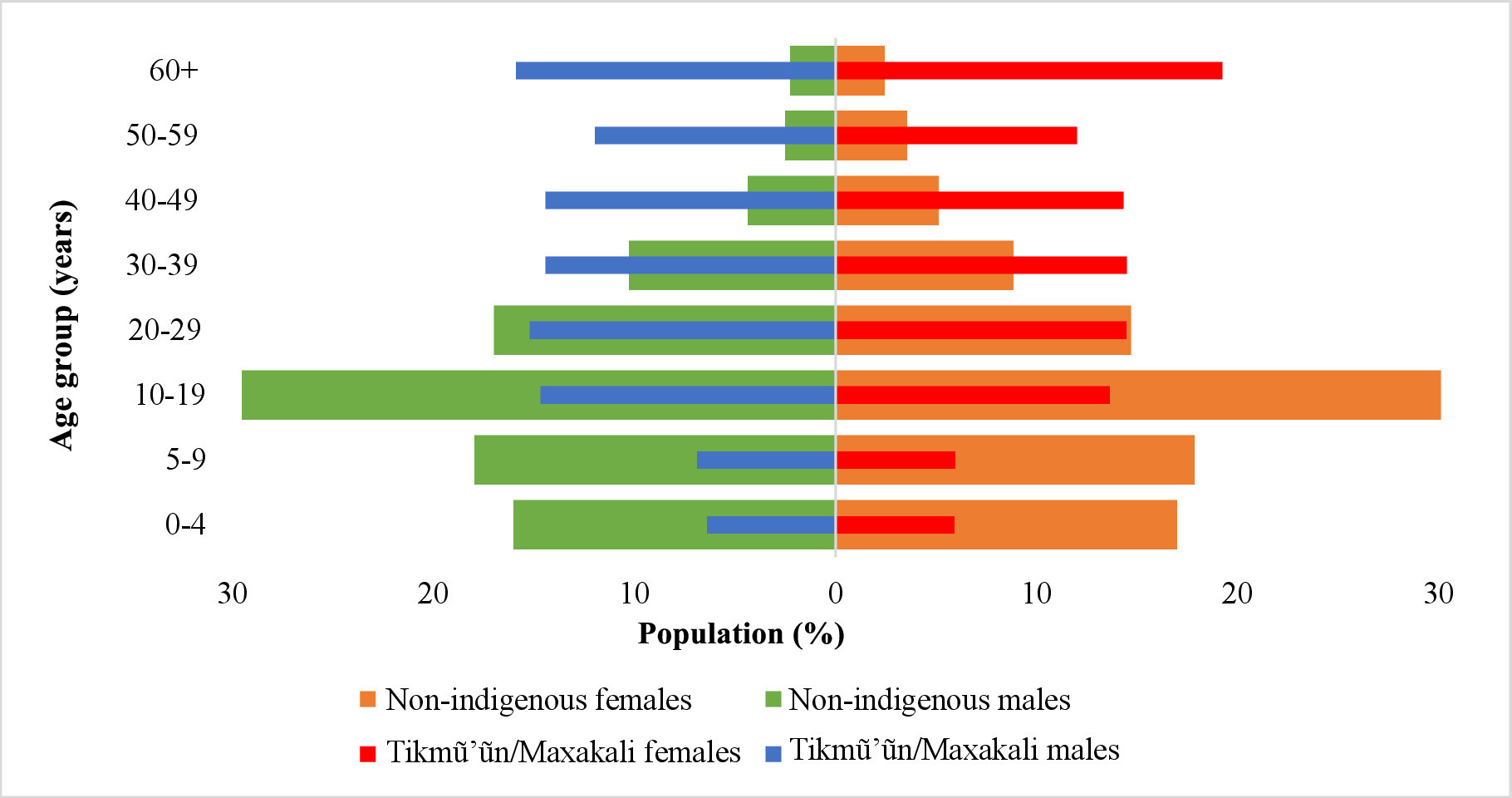
The age distribution of the Tikmũ’ũn/Maxakali (Figure 1) indicated a higher proportion of individuals between 10 and 19 years old (30.0%, n=750). There was a progressive population decline with effect from the 20-29 age group (15.8%, n=396), with the smallest proportion composed of individuals over 60 years old (2.4%, n=59). Among the non-Indigenous residents of Santa Helena de Minas, Bertópolis, Ladainha and Teófilo Otoni, which are where the Indigenous Tikmũ’ũn/Maxakali territories are located, the majority of the population is made up of elderly individuals over 60 years old (17.9%, n=28,550), with the smallest proportion composed of individuals under 4 years old (6.0%, n=9,559).
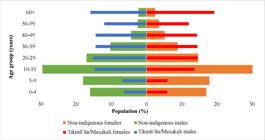
Distribution of the Tikmũ’ũn/Maxakali Indigenous population and the non-Indigenous population by sex and age group. Santa Helena de Minas, Bertópolis, Ladainha and Teófilo Otoni, 2022 (n=162,190)
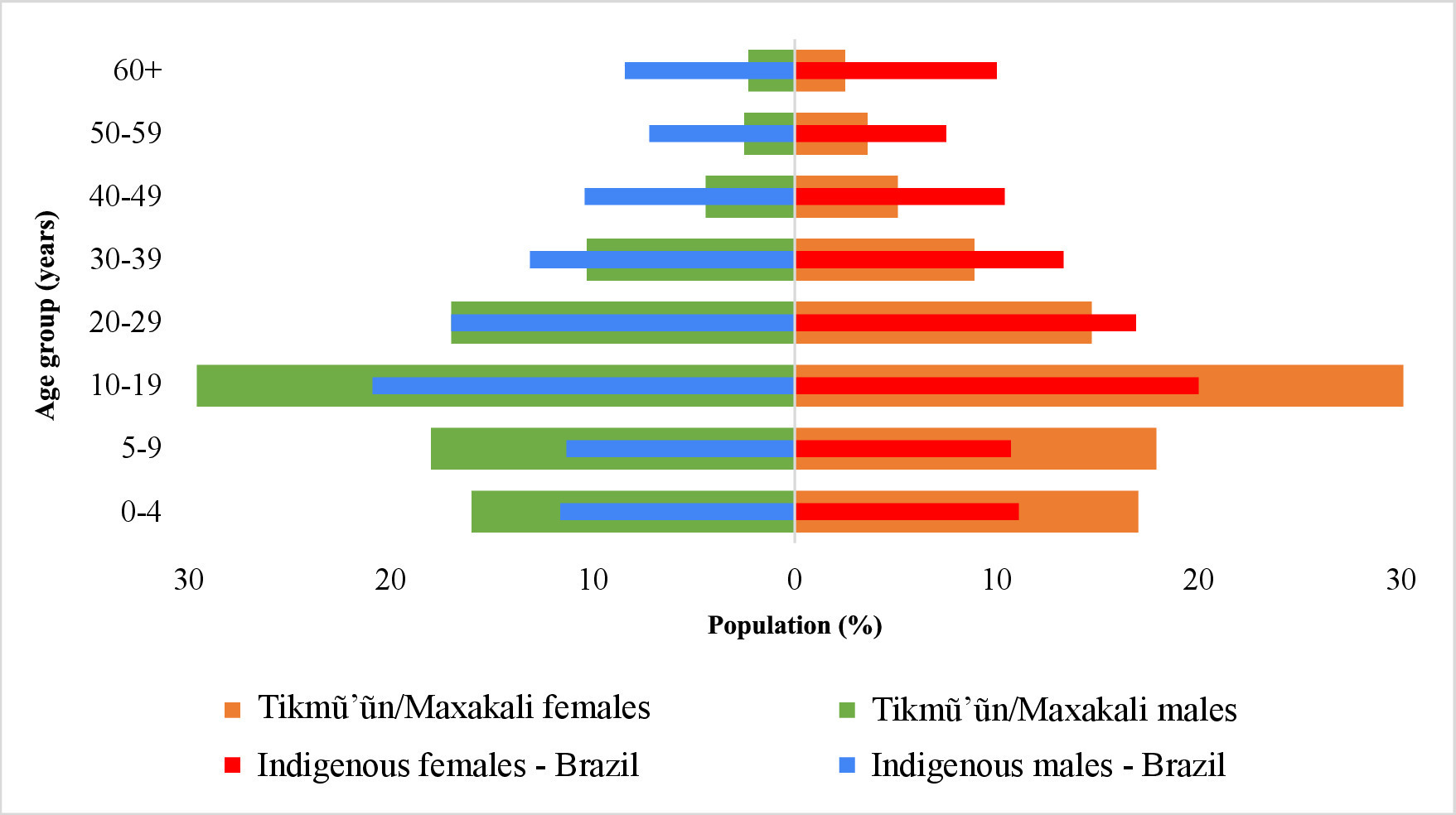
As for Brazil as a whole, the age distribution of Indigenous peoples showed a higher proportion of individuals between 10-19 years old (20.5%, n=251,425) and a lower proportion of elderly people between 50-59 years old (7.4%, n=90,676). Among non-Indigenous people, the majority of the population was over 60 years old (15.9%, n=31,999,315), and the least, under 4 years old (6.2%, n=12,564,922). In Minas Gerais, the age distribution of Indigenous people indicated a higher proportion of individuals between 20-29 years old (16.7%, n=5,311) and the lowest for children under 4 years old (7.3%, n=2,333). In Minas Gerais, the majority of the non-Indigenous population was concentrated in the over 60 age group (17.8%, n=3,654,934), and the least in the under 4 age group (5.8%, n=1,184,661).
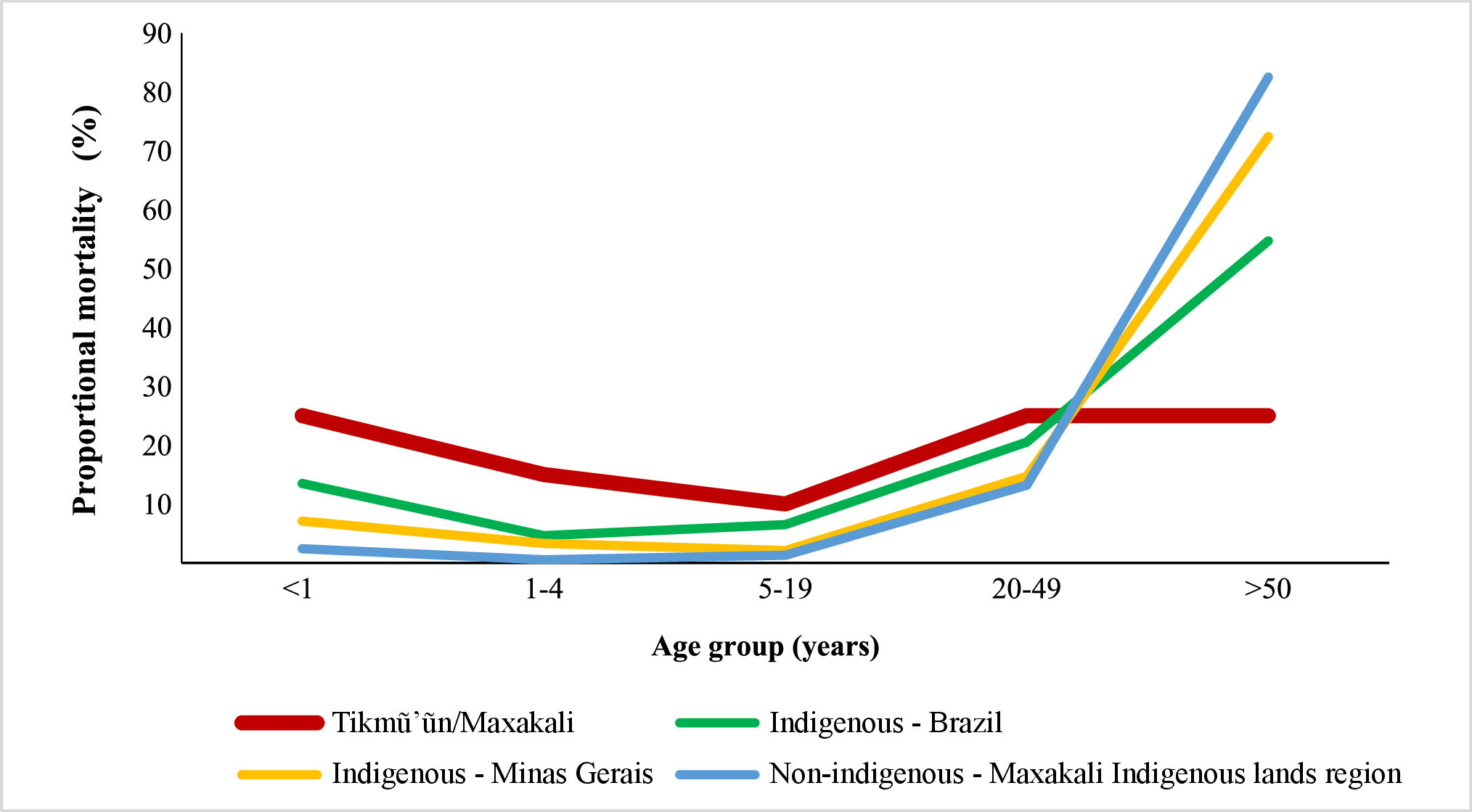
The proportionate mortality curve by age group for Indigenous children in Santa Helena de Minas, Bertópolis, Ladainha and Teófilo Otoni (Figure 2) indicated higher proportionate mortality among children under 1 year old, corresponding to 25.0% (n=5) of deaths. For non-Indigenous children, this value was 2.5% (n=32), which represented a tenfold higher proportionate mortality among Indigenous children (Table 1). In the 1-4 age group, deaths among Indigenous children corresponded to 15.0% (n=3) of the total, while for non-Indigenous children they accounted for 0.5% (n=6), which corresponded to a thirtyfold higher proportionate mortality among Indigenous children. Between 5-19 years of age, 10.0% (n=2) of total deaths occurred among Indigenous children and 1.3% (n=17) among non-Indigenous children, representing mortality 7.7 times higher among Indigenous youth. The proportionate mortality ratio among Indigenous people corresponded to 25.0% (n=25) of deaths, noting that there were no deaths among those over 80 years of age. For non-Indigenous people, this figure accounted for 82.6% (n=1,076) of deaths; 36.7% (n=478) were among those over 80 years of age. In the over 50 age group, the difference in proportionate mortality was 3.3 times greater among non-Indigenous people.
Proportionate mortality by age group in the Indigenous and non-Indigenous populations and mortality burden. Santa Helena de Minas, Bertópolis, Ladainha, Teófilo Otoni, Minas Gerais and Brazil, 2022 (n=1,513,791)

Proportionate mortality by age group in the Tikmũ’ũn/Maxakali Indigenous population and the non-Indigenous population living in the municipalities with Tikmũ’ũn/Maxakali Indigenous Lands, and in the Indigenous population of Minas Gerais state and the Indigenous population of Brazil. Santa Helena de Minas, Bertópolis, Ladainha, Teófilo Otoni, Minas Gerais and Brasil, 2022 (n=6,635)
In Brazil as a whole, in 2022, there was higher proportionate mortality among Indigenous children under 1 year of age (13.5%, n=720), while the proportion was 2.0% (n=29,576) in the other groups, which represented a mortality rate 6.8 times higher among Indigenous children. Regarding the 1-4 years age group, proportionate mortality among Indigenous and non-Indigenous children was 4.6% (n=247) and 0.4% (n=5,807), respectively, representing mortality 11.5 times higher among Indigenous children. Among those over 50 years old, the proportionate mortality ratio was 54.7% (n=2,925) among Indigenous people and 82.2% (n=1,240,116) among non-Indigenous people, representing a mortality rate 1.5 times higher.
In Minas Gerais, proportionate mortality by age group indicated that 7.1% (n=13) of deaths occurred among Indigenous children under 1 year of age, while for non-Indigenous children, they accounted for 1.6% (n=2,516), so that the mortality rate was 4.4 times higher among Indigenous children. In the 1-4 age group, Indigenous deaths accounted for 3.3% (n=6) of the total, while this was 0.3% (n=499) for non-Indigenous children, representing an elevenfold higher mortality rate among Indigenous children. Among those aged over 50, the proportionate mortality ratio among the Indigenous corresponded to 72.4% (n=132) and 84.8% (n=135,221) of deaths among the non-Indigenous, so that the mortality rate was 1.2 times higher among the non-Indigenous.
Regarding infant mortality in 2022, among Indigenous people in the four municipalities, there were five deaths among 75 live births, resulting in a mortality rate of 66.7 deaths per 1,000 live births, while this rate was 17.5 per 1,000 among non-Indigenous people. Of the Indigenous infant deaths, one occurred in the late neonatal period, and four in the postneonatal period. In Minas Gerais, the infant mortality rate for non-Indigenous populations was 10.9/1,000, while for the Indigenous population it was 26/1,000. At the national level, the rate for non-Indigenous populations was 11.9/1,000, while for Indigenous populations it was 26.2/1,000.
Discussion
Analysis of the age structure and mortality of the Indigenous Tikmũ’ũn/Maxakali people revealed unfavorable indicators compared to the non-Indigenous population residing in the municipalities that comprise their lands, and also compared to other Indigenous and non-Indigenous people in Minas Gerais and in Brazil as a whole. Among the Tikmũ’ũn/Maxakali, there was a high concentration of individuals in the age groups corresponding to children and youth and a sharp decline from the young adult age group onward. Proportionate mortality was high for the first four (youngest) age groups, while this trend was reversed in the over 50 age groups. The infant mortality rate for the Tikmũ’ũn/Maxakali showed levels much higher than that observed in the other groups.
Among the limitations of this study, it is important to consider that the use of secondary data may lead to inaccuracy, due to possible reporting errors and underreporting. Data related to mortality and live births held on the databases consulted are not broken down according to the different Indigenous peoples. This study assumes that the Tikmũ’ũn/Maxakali constitute the entire Indigenous population in the selected municipalities, since the only Indigenous lands in these locations belong to this ethnic group (23). However, this extrapolation may have made values imprecise. A potential advantage is the focus on the specific conditions of the Tikmũ’ũn/Maxakali people, which have been little studied, and the resulting contribution to analyzing Indigenous health based on the unique characteristics of each Indigenous people.
The overall age structure of the Tikmũ’ũn/Maxakali presented a broad base, although the base was narrow in relation to youth and adults, indicating high birth rates and high mortality rates in the early years of life, which may be related to inadequate socio-sanitary conditions (2). The narrow top of the structure signaled the low number of elderly people, indicating a scenario of early mortality. The age structure found for the Kayabí (24) and Xavante (25) peoples of Mato Grosso state, for the Indigenous people of Mato Grosso do Sul state (26), and for the Indigenous people of the 15 Brazilian cities with the highest percentage of Indigenous people (27) corroborated this result, with a broad-based age structure (0-5 years), narrowing in the other age groups. Thus, the data suggest that high fertility is relativized by lower life expectancy, differing from what has been called the “demographic revolution” of Indigenous peoples in Brazil (24), referring to the population growth of many ethnic groups that has prevented their disappearance.
Compared to the age structure of the inhabitants of the four municipalities that contain the Tikmũ’ũn/Maxakali Indigenous Lands (Figure 1), the data showed that non-Indigenous people had a higher life expectancy, in line with the age structure of the general population at the state and national levels. Similarly, the age structures of the Xavante in Mato Grosso, the Indigenous people of Mato Grosso do Sul, and the Indigenous people of the 15 municipalities with the highest proportion of Indigenous people in the country had a higher proportion of children and youth and a lower proportion of elderly people (25-27) compared to non-Indigenous people. The age structure of the Brazilian Indigenous population (Figure 3) had a narrow base and a wide top, indicating greater longevity, emphasizing the singularity of the living conditions of the Tikmũ’ũn/Maxakali people.
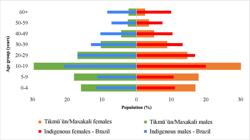
Distribution of the Tikmũ’ũn/Maxakali Indigenous population and the Indigenous population of Brazil by sex and age group. Brazil, 2022 (n=1,227,642)
The Tikmũ’ũn/Maxakali proportionate mortality curve showed that one-quarter of deaths were among children under 1 year of age. This figure is comparable to the Brazilian population in the early 1980s (28). More recent data revealed that, nationally, this age group’s contribution to total deaths was 16.2% among Indigenous people (6), indicating poorer health conditions among the Tikmũ’ũn/Maxakali people. The shape of the proportionate mortality curve among the Tikmũ’ũn/Maxakali (type I) denotes a very low level of health, with a predominance of deaths among young adults (2). These deaths may be associated with external causes (violence) and/or maternal mortality.
Among the non-Indigenous populations in the four municipalities studied, similar to what occurs in Brazil, the curves formed a “J” shape (type IV), where the concentration of deaths is in the oldest group (Figure 2) (2). Taking the Indigenous populations of Brazil as a whole, the shape of the curve denotes regular health levels (type III), with a higher proportion of deaths among those over 50 years of age and a lower proportion of infant deaths (2).
The proportionate mortality ratio among the Tikmũ’ũn/Maxakali corresponded to the lower limit of the third level proposed by the creators of this indicator, which characterizes countries with economic and health indices below those found in so-called developed countries (2). Among the Kayabí of Mato Grosso, the rate was 39.3% (24), and among the Indigenous people of Mato Grosso do Sul (26) it was 37.3%, which also corresponds to the third level of the classification. For the Indigenous people of Brazil as a whole (6), the rate was 52.0%, corresponding to the second level of the classification, characteristic of countries with a certain level of economic development and organization of the health care network (2).
Non-Indigenous people in the municipalities analyzed, in Minas Gerais and in Brazil as a whole, presented a ratio above 75.0%, typical of developed countries. Non-Indigenous people in Mato Grosso accounted for 58.2% of deaths among those over 50 years old (25), 67.2% in Mato Grosso do Sul (26) and 79.4% in Brazil as a whole (6). Thus, the data suggest unfavorable socioeconomic conditions for the Indigenous population (27) and even worse for the Tikmũ’ũn/Maxakali.
A high infant mortality rate (>50 deaths/1,000 live births) was found among the Tikmũ’ũn/Maxakali, similar to what occurred nationally four decades ago, when living conditions for the Brazilian people were poorer, with infectious intestinal diseases, acute respiratory infections and nutritional deficiencies as the main causes of death up to the first year of life (29). Considering that most deaths occur in the post-neonatal period, they can be related to health and socioeconomic conditions, since this period requires relatively simpler measures to prevent deaths (2). For the other populations, rates were found that were intermediate among the Indigenous (20-49 deaths/1,000 live births) and low among the non-Indigenous (<20 deaths/1,000 live births).
The difference in infant mortality rates between Indigenous and non-Indigenous people, to the detriment of the former, was also found in Mato Grosso do Sul and in Brazil’s microregions (30). In the case of the Tikmũ’ũn/Maxakali, this rate leaves them far from the level recommended by the World Health Organization (10 deaths per 1,000 live births) and the target of 5 deaths per 1,000 live births by 2030 (established by the Brazilian government based on the Sustainable Development Goals).
The Tikmũ’ũn/Maxakali population had a higher concentration of children and youth, but a high mortality rate among adults (18-49 years) and a high infant mortality rate, indicating poorer health and healthcare conditions compared to the other groups studied. These results reinforce the need to create and implement public policies aimed at addressing socio-health and economic conditions. Epidemiological studies on morbidity and causes of death can contribute to a better understanding of the health conditions of the Tikmũ’ũn/Maxakali.
-
Peer Review Administrator
Izabela Fulone (https://orcid.org/0000-0002-3211-6951)
-
Data availability
The database and the analysis codes used in this research are available at: https://data.scielo.org/dataset.xhtml?persistentId=doi:10.48331/scielodata.HK3073.
-
Use of generative artificial intelligence
Not used.
References
-
1 Pan American Health Organization. Health indicators: conceptual and operational considerations [Internet]. Washington: PAHO; 2018 [cited 2025 Jul 6]. Available from: https://www3.paho.org/hq/joomlatools-files/docman-files/Health_Indicators-June18-en.pdf.
» https://www3.paho.org/hq/joomlatools-files/docman-files/Health_Indicators-June18-en.pdf. - 2 Costa AJ, Kale PL, Vermelho LL. Indicadores de saúde. In: Medronho RA, Bloch KV, Luiz RR, Werneck GL, organizadores. Epidemiologia. 2. ed. São Paulo: Atheneu; 2010. p. 31–82.
- 3 Cabrera MSA, Andrade SM, Wajngarten M. Causas de mortalidade em idosos: estudo de seguimento de nove anos. Rev Bras Geriatr Gerontol. 2007;1(1):14-20.
- 4 Feliciano SC, Villela PB, Oliveira GM. Associação entre a Mortalidade por Doenças Crônicas Não Transmissíveis e o Índice de Desenvolvimento Humano no Brasil entre 1980 e 2019. Arq Bras Cardiol. 2023;120(4):1-10.
- 5 Malta DC, Duncan BB, Schmidt MI, Teixeira R, Ribeiro AL, Felisbino-Mendes MS, et al. Trends in mortality due to noncommunicable diseases in the Brazilian adult population: national and subnational estimates and projections for 2030. Popul Health Metr. 2020;18(Suppl 1):1-14.
- 6 Alves FT, Prates EJ, Carneiro LH, Nogueira de Sá AC, Pena ED, Malta DC. Mortalidade proporcional nos povos indígenas no Brasil nos anos 2000, 2010 e 2018. Saude Debate. 2021;45(130):691–706
- 7 Celino SDM, Nunes WB, Macedo SM, Silva SB, Andrade FB. Morbimortalidade por causas externas no Brasil entre 2015 e 2019: um estudo ecológico. Rev Cienc Plural. 2021;7(3):180-201.
- 8 Fernandes LT, Ayala TA, Firmato RM, Matos TS, Ferreira FO, Silvestre CC, et al. Consumo de medicamentos não padronizados na saúde indígena: uso racional? Cienc Saude Coletiva. 2023;28(11):3321–3.
-
9 Ministério da Saúde. Prevalência de doenças crônicas não transmissíveis (DCNT) no âmbito do subsistema de atenção à saúde indígena. In: Ministério da Saúde. Saúde indígena: análise da situação de saúde no SasiSUS [Internet]. Brasília: Ministério da Saúde; 2019 [cited 2025 Jul 6]. p. 64-9. Available from: https://bvsms.saude.gov.br/bvs/publicacoes/saude_indigena_analise_situacao_sasisus.pdf
» https://bvsms.saude.gov.br/bvs/publicacoes/saude_indigena_analise_situacao_sasisus.pdf - 10 Karajá J. Suicídio entre os povos indígenas do Brasil e entre os Inỹ da aldeia Hawaló. Fragmentum. 2021;(58):167-201.
-
11 Ministério da Saúde. Mortalidade indígena no Brasil em 2012: níveis, padrões e características principais. In: Ministério da Saúde. Saúde Brasil 2015/2016: uma análise da situação de saúde e da epidemia pelo vírus Zika e por outras doenças transmitidas pelo Aedes aegypti [Internet]. Brasília: Ministério da Saúde; 2017 [cited 2025 Jul 6]. p. 231–52. Available from: https://bvsms.saude.gov.br/bvs/publicacoes/saude_brasil_2015_2016_analise_zika.pdf
» https://bvsms.saude.gov.br/bvs/publicacoes/saude_brasil_2015_2016_analise_zika.pdf - 12 Assis EM, Oliveria RC, Moreira LE, Pena JL, Rodrigues LC, Machado-Coelho GL. Prevalência de parasitos intestinais na comunidade indígena Maxakali, Minas Gerais, Brasil, 2009. Cad Saude Publica. 2013;29(4):681–90.
- 13 Assis EM, Santos EM, Faria MC, Rodrigues JL, Garcez A, Bomfeti CA, et al. A vulnerabilidade de populações indígenas: qualidade da água consumida pela comunidade Maxakali, Minas Gerais, Brasil. Soc Nat. 2020;32:279–90.
-
14 Pena JL. Os Índios Maxakali: a propósito do consumo de bebidas de alto teor alcoólico. In: Souza ML, organizador. Processos de Alcoolização Indígena no Brasil: perspectivas plurais [Internet]. Rio de Janeiro: Fiocruz; 2013 [cited 2025 Jul 6]. p.143–57. Available from: https://precog.com.br/bc-texto/obras/2021pack1391.pdf
» https://precog.com.br/bc-texto/obras/2021pack1391.pdf -
15 Las Casas R. Saúde Maxakali, recursos de cura e gênero: análise de uma situação social [dissertation on the Internet]. Rio de Janeiro: Universidade do Estado do Rio de Janeiro; 2007 [cited 2025 Jul 6]. Available from: http://www.bdtd.uerj.br/handle/1/4069
» http://www.bdtd.uerj.br/handle/1/4069 - 16 Sousa MC, Scatena JH, Santos RV. O Sistema de Informação da Atenção à Saúde Indígena (SIASI): criação, estrutura e funcionamento. Cad Saude Publica. 2007;23(4):853-61.
-
17 Instituto Brasileiro de Geografia e Estatística. Panorama Censo 2022 [Internet]. Brasília: IBGE;2023 [cited 2025 Jul 6]. Available from: https://censo2022.ibge.gov.br/panorama/
» https://censo2022.ibge.gov.br/panorama/ -
18 Datasus. Tabnet [Internet]: Brasília: Ministério da Saúde; [cited 2025 Jul 6]. Available from: https://datasus.saude.gov.br/informacoes-de-saude-tabnet/
» https://datasus.saude.gov.br/informacoes-de-saude-tabnet/ - 19 Cavalcante TL. “Terra indígena”: aspectos históricos da construção e aplicação de um conceito jurídico. História (São Paulo). 2016;35:1-22.
-
20 Instituto Brasileiro de Geografia e Estatística. Censo Demográfico 2022: indígenas: principais características das pessoas e dos domicílios, por situação urbana ou rural do domicílio: resultados do universo [Internet]. Rio de Janeiro: IBGE; 2024 [cited 2025 Jul 6]. Available from: https://biblioteca.ibge.gov.br/index.php/biblioteca-catalogo?view=detalhes&id=2102155.
» https://biblioteca.ibge.gov.br/index.php/biblioteca-catalogo?view=detalhes&id=2102155 -
21 Ministério da Saúde. Cadastro Nacional de Estabelecimentos de Saúde. Consulta estabelecimento - identificação. [Internet] Brasília: Ministério da Saúde; [cited 2025 Jul 6]. Available from: https://cnes.datasus.gov.br/pages/estabelecimentos/consulta.jsp
» https://cnes.datasus.gov.br/pages/estabelecimentos/consulta.jsp -
22 Oda WY, Gasparini MF, Furtado JP. Dados de replicação para: Genocídio renovado na degradação sanitária e ambiental entre os Tikmũ’ũn/Maxakali em Minas Gerais, Brasil. [dataset]. 2024 [cited 2025 Jul 6]. SciELO Data. Available from: https://preprints.scielo.org/index.php/scielo/preprint/view/10906
» https://preprints.scielo.org/index.php/scielo/preprint/view/10906 -
23 Fundação Nacional dos Povos Indígenas. Painel Terras Indígenas no Brasil [Internet]. Brasília: Ministério dos Povos Indígenas; 2024 [cited 2025 Jul 6]. Available from: https://www.gov.br/funai/pt-br/atuacao/terras-indigenas/geoprocessamento-e-mapas/painel-terras-indigenas
» https://www.gov.br/funai/pt-br/atuacao/terras-indigenas/geoprocessamento-e-mapas/painel-terras-indigenas - 24 Pagliaro H. A revolução demográfica dos povos indígenas no Brasil: a experiência dos Kayabí do Parque Indígena do Xingu, Mato Grosso, Brasil, 1970-2007. Cad Saude Publica. 2010;26(3):579–90.
- 25 Oliveira MVG, Marinho GL, Abreu AMM. A população indígena Xavante em Mato Grosso: características sociodemográficas relacionadas à saúde. Esc Anna Nery. 2022;26:1-8.
- 26 Ferreira MEV, Matsuo T, Souza RKT. Aspectos demográficos e mortalidade de populações indígenas do Estado do Mato Grosso do Sul, Brasil. Cad Saude Publica. 2011;27(12):2327-39.
- 27 Dias Jr, CS, Verona APA, Pena JL, Machado-Coelho GLL. Desigualdades demográficas e socioeconômicas entre brancos e indígenas no Brasil. Redes (Santa Cruz do Sul). 2010;15(2):50-65.
- 28 Barros MBA. Considerações sobre a mortalidade no Brasil em 1980. Rev Saude Publica. 1984;18(2):122–37.
- 29 Szwarcwald CL, Castilho EA. Estimativas da mortalidade infantil no Brasil, década de oitenta: proposta de procedimento metodológico. Rev Saude Publica. 1995;29(6):451–62.
- 30 Marinho GL, Borges GM, Paz EPA, Santos RV. Mortalidade infantil de indígenas e não indígenas nas microrregiões do Brasil. Rev Bras Enferm. 2019;72(1):57-63.
Edited by
-
Editor-in-Chief
Jorge Otávio Maia Barreto (https://orcid.org/0000-0002-7648-0472)
-
Scientific Editor
Wildo Navegantes de Araújo (https://orcid.org/0000-0002-6856-4094)
-
Associate Editor
Elisângela Aparecida da Silva Lizzi (https://orcid.org/0000-0001-7064-263X)
The database and the analysis codes used in this research are available at: https://data.scielo.org/dataset.xhtml?persistentId=doi:10.48331/scielodata.HK3073.