 Performance of anthropometric indices in early detection of diabetes and prediabetes in the Brazilian population: a cross-sectional study, Brazil, 2013
Objective: To assess the diagnostic performance of anthropometric adiposity metrics for diabetes and prediabetes detection in Brazilian adults.
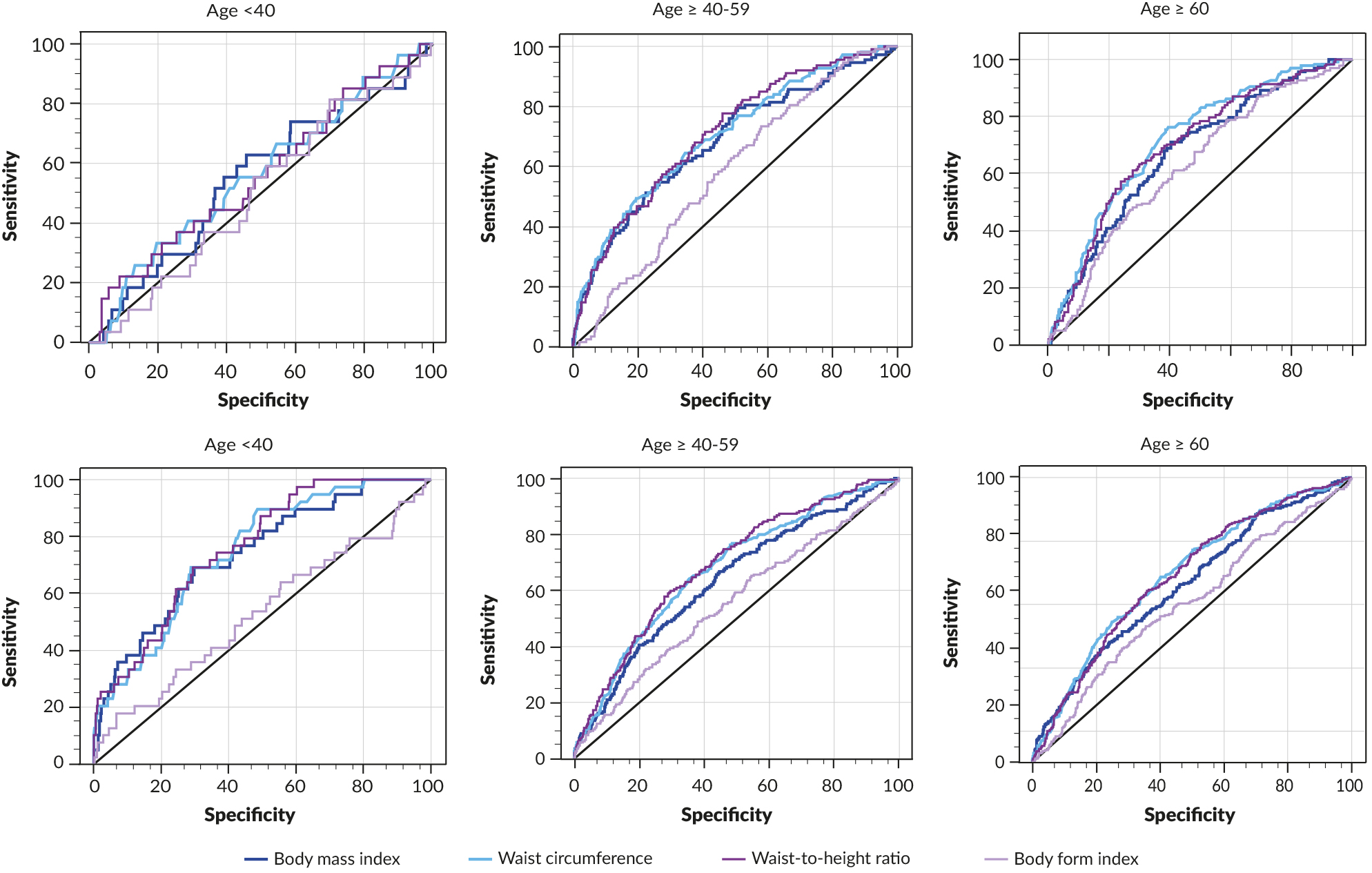
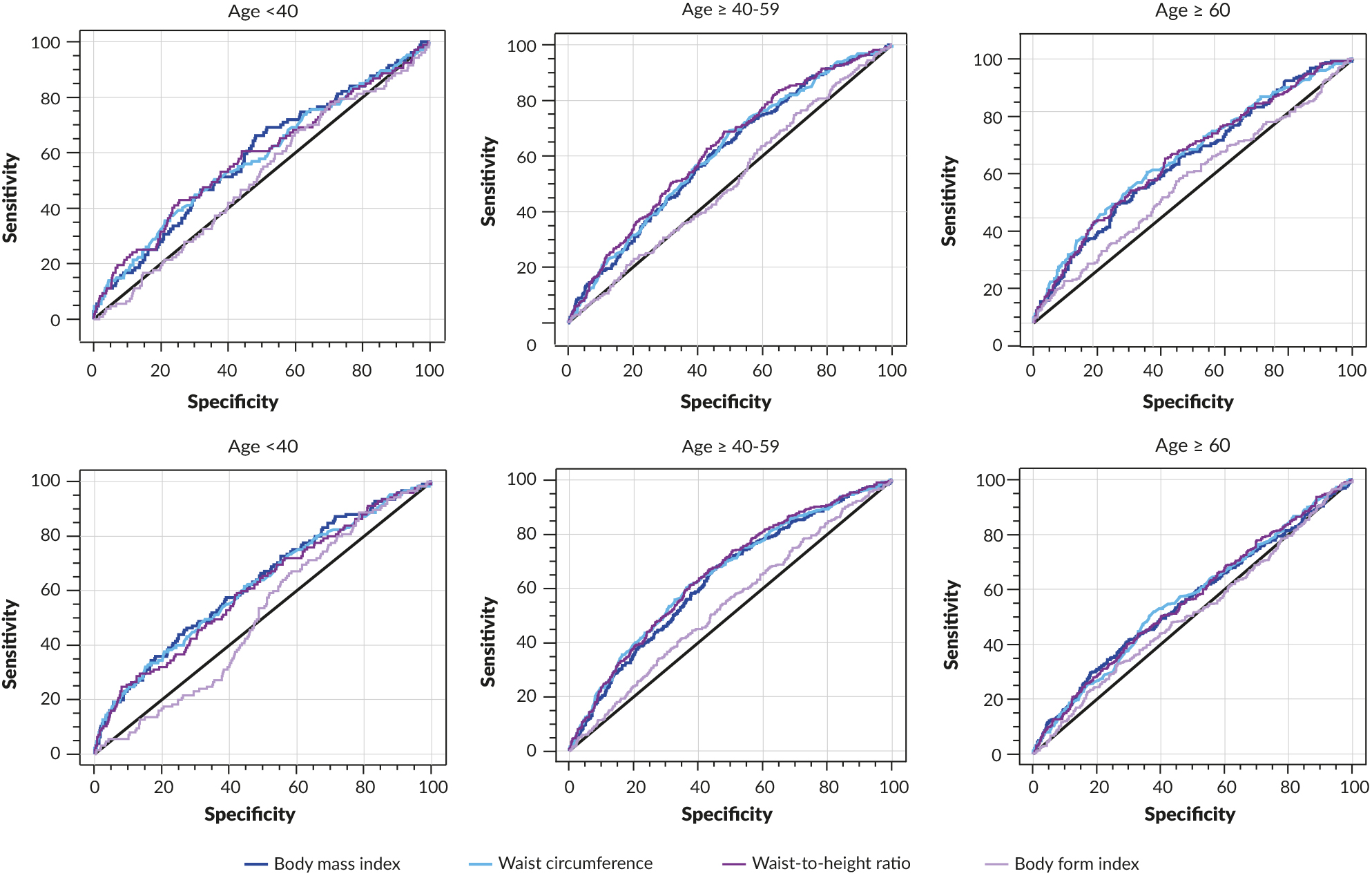
Methods: This was a cross-sectional study using data from national surveys, such as glycated hemoglobin laboratory test data. Diabetes was defined as glycated hemoglobin ≥6.5% or when hypoglycemic agents were being taken; prediabetes was defined as glycated hemoglobin ≥5.7% and <6.5%. Diabetes and prediabetes prevalence rates were estimated with 95% confidence intervals (95%CI). The diagnostic performance of anthropometric indices - body mass index (BMI), waist circumference (WC), waist-to-height ratio (WHR), and body shape index - were evaluated using the area under the ROC curve (AUC), sensitivity, specificity, positive and negative predictive value, and Youden's index, stratified by sex and age group.
Results: 8,435 individuals participated in the study. Diabetes prevalence was 8.6% (95%CI 7.8; 9.3), while prediabetes prevalence was 16.2% (95%CI 15.1; 17.3). In males <40 years old, the AUC for the anthropometric indices was close to 0.5; among males between 40 and 59 years old, it ranged from 0.66 to 0.71; in older males, the AUC for WC was 0.72. Among females <40 years old, the WHR AUC was 0.77; for those between 40 and 59 years old, it ranged from 0.64 to 0.69; and in older females, the WC AUC was 0.66. The AUCs were lower for prediabetes: in males, they ranged from 0.58 to 0.63; while in females they ranged from 0.60 to 0.65.
Conclusion: WC was the index with the best performance for differentiating individuals with diabetes, while the ROC curve showed greater accuracy among adults <60 years old.
Keywords:
Prediabetic State; Diabetes Mellitus; ROC Curve; Cross-Sectional Studies; Anthropometry.
 Thumbnail
 Thumbnail