
 Bio-inputs for agriculture in Brazil: why can’t the alternative become mainstream?
ABSTRACT
Bio-input technology can help reduce the health and ecosystemic risks posed by the Brazilian agricultural sector. From the Sociotechnical Transitions perspective, this paper maps the regulatory environment and the bio-inputs market, identifying key components of the process of inserting this technology into the mainstream regime. Despite growing at high rates, this technology remains a niche market and faces serious barriers due to a lack of coordination. However, our projections indicate the feasibility of a scenario in which bio-inputs would hold a much larger share of the agricultural inputs market, provided there is regulatory and technological coordination.
KEYWORDS:
Bio-inputs; technological regime; sociotechnical transitions; agriculture; sustainability
RESUMO
A tecnologia dos bioinsumos pode contribuir para a redução dos riscos sanitários e ecossistêmicos colocados pelo setor agrícola brasileiro. A partir da perspectiva das Transições Sociotécnicas, este artigo mapeia o ambiente regulatório e o mercado de bioinsumos, identificando componentes-chave do processo de inserção da tecnologia no regime dominante. Mesmo crescendo a altas taxas, tal tecnologia continua um nicho de mercado e se depara com sérias barreiras, devido à falta de coordenação. Contudo, as projeções apontam para a factibilidade de um cenário no qual os bioinsumos teriam uma fatia muito maior no mercado de insumos agrícolas, contanto que haja coordenação regulatória e tecnológica.
PALAVRAS-CHAVE:
Bioinsumos; regime tecnológico: transições sociotécnicas; agricultura; sustentabilidade
1. INTRODUCTION
Agri-food systems are essential for meeting humanity’s basic needs. Even so, they are responsible for around 30% of the world’s carbon dioxide (CO2) emissions. Land and ecosystem degradation resulting from intensive agriculture diminishes food production capacity and contributes to the scarcity and pollution of drinking water (FAO, 2023). In addition, the continuous use of pesticides has severe consequences for human health: even though agriculture is indispensable to the maintenance of modern life, there is an urgent need for restructuring.
Brazil, whose share of agribusiness in GDP is close to 24% (CEPEA, 2024b), has been the world’s largest consumer of agrochemicals since 2009 (Dias et al., 2023) and relies on imports of mineral fertilizers, mainly NPK-based, to maintain its productivity. In recent decades, this type of chemical input has caused eutrophication of the soil and water bodies, loss of biodiversity and risks to human and animal health (Gazzani, 2017). On the other hand, chemical pesticides, used to control pests and diseases, also generate negative externalities, damaging productive land, water bodies, native vegetation, and wildlife, as well as reducing the number of natural insect predators, leading to more resistant pests. Mortality and morbidity among rural workers due to exposure to pesticides are also common (Wilson; Tisdell, 2001). .
It is therefore necessary to understand the role of the agricultural input industry in order to provide governance pathways that address these problems. In this sense, inputs of biological origin, or bio-inputs, represent a technological promise, attracting not only the attention of alternative producers, but also that of large traditional producers in the Brazilian agricultural sector (Le Velly et al., 2023). The term bio-inputs has an umbrella character.
For the purpose of this investigation, bio-inputs are understood as the group of products of plant, animal or microbial origin (Brasil, 2020) composed of biodefensives (biofungicides, bionematicides and bioinsecticides) and bioinoculants that are used both for Biological Pest Control and for fertilization and phytosanitary stimulation. Biodefensives are considered environmentally friendly, safer for those who apply them and with greater efficiency and crop yields, as well as reducing the development of resistance by pathogens (Adly; Sanad, 2024; Daraban; Hlihor; Suteu, 2023). The active ingredients have a shorter decay time, reducing the risk of residues in food. For this reason, they may need several applications, making them more costly (Daraban; Hlihor; Suteu, 2023; MAPA; IICA; ABBI, 2024).
To establish a framework that would favor the supply of phytosanitary inputs for agriculture in Brazil, the National Bio-inputs Program (NBP) was launched in 2020. It straddles the legal and economic axes and is a pioneer in the field of biological inputs, contributing to the transition towards a resource-minimizing bioeconomy (Conteratto et al., 2021), which takes advantage of the potential of Brazilian biodiversity and reduces rural producers’ dependence on imported inputs (Bortoloti, 2022).
Since then, the registration of phytosanitary products for fertilization and Biological Control, both for organic use in Family Farming and for traditional agriculture, has increased considerably. It should be noted that the Brazilian Agricultural Research Corporation (Embrapa) leads research in the bio-inputs segment and some results are already evident, considering both the increase in supply and the dissemination of benefits. For biostimulant technology, for example, around 50% of Brazilian agricultural producers have already used it, compared to 28% of producers in the European Union, 23% in China, and 16% in the United States (Gottems, 2023).
It is important to note that there is no perfect substitutability between the categories, as the premise of complementarity between bio-inputs and chemical inputs is the prevailing norm. Among the main alternatives to agrochemicals in the area of inoculation and nitrogen fixation, the biostimulant Rhizobium tropici, demonstrates effectiveness and cost reduction relative to nitrogen fertilizers (Soares et al., 2016).
In terms of defensive action, Trichoderma and Beauveria stand out for fungal diseases and root rot, replacing systemic fungicides and protecting mainly bean, soybean, coffee, and vegetable crops; A. albipodus and C. carnea are effective in biological control of caterpillars, replacing carbamate insecticides such as methomyl carnea are effective in the biological control of aphids and flies in vegetables; bacteria from the Bacillus genus control caterpillars, replacing carbamate insecticides such as methomyl; and Baculovirus, protecting corn and soybean crops, as well as macrobiological agents such as nematodes, mites and insects, like the wasp Cotesia flavipes, which has several registered products (Adly; Sanad, 2024; Boschiero, 2024; Srivastava; Pandey, 2022).
In the 2022-2023 crop season, the bio-inputs market in Brazil moved $827 million, around R$4.26 billion, representing a 45% increase in the value of sales compared to the 2021-2022 season. Since the NBP came into force (2020), the segment’s turnover growth rates have been close to 60% per year. It is believed that bio-inputs could soon reach 20% of the input market over the next few years (Gottems, 2023, p. 115). However, even with the expressive growth of biological inputs, the market share is currently no more than 4% of the total amount of agrochemicals sold in Brazil (Goulet, 2021).
What are the main barriers and enablers for bio-inputs to transition from a niche market and compete on an equal footing in the agricultural input market?
This paper sets out to answer this question using the Sociotechnical Transitions framework, presented in Section 2. Next, elements of the bio-input segment are presented in Section 3. Section 4 describes the methodological procedures, including the assumptions used to construct the scenarios. The results of the two projections, in nominal values, are presented and discussed in Section 5, before the Conclusion.
2. CONCEPTUAL FRAMEWORK
Sociotechnical Configurations and Transitions
From a sociological perspective, technological innovations, alone, have no power of influence. It is only when it joins human actions, social structures, physical and legislative artefacts, natural resources, scientific elements, and organizations that they can fully satisfy their functionality. This “continuous web” is the basic point of accommodation of socio-technical configurations (Geels, 2002).
In this context, Rip and Kemp (1998) understood configurations as the alignment among a heterogeneous set of elements. An important inference is that socio-technical configurations have elements of both technical and social origin. The technical set includes technology, innovation, artifacts, equipment, and machinery. The social set includes individuals, groups, organizations, and cultures. As the alignments satisfy social functions, they integrate the elements within a dynamic system.
Socio-technical transitions are part of the shift from one socio-technical configuration to another, with the replacement and renewal of factors. Although the boundaries of the configurations are not strictly closed, they are somewhat rigid. As a result, “radically” new technologies find it difficult to overcome barriers, above all because regulations, infrastructure, user practices and maintenance networks are already aligned. It is therefore common for new technologies to clash with the current structure (Geels, 2002, p. 1258).
However, once technologies become established, they are not easily separated, as they establish operational standards. In other words, technologies work fundamentally because they are integrated and aligned with each other and with the current context, until an external force is applied that triggers in other consecutive changes.
Regimes, Landscapes and Technological Niches
The concept of technological regimes (Nelson; Winter, 1982) was expanded by Rip and Kemp (1998) to include sets of social, governmental and productive rules. Thus, technology users, policymakers, members of civil society and financial institutions also affect technological trajectories. The interaction of these various actors with their respective social environments fosters conditioning interdependencies, which include the development of technologies.
By using the term “socio-technical regimes”, Geels (2002) adds the action of different social groups, which have different rules. The stability of socio-technical regimes is dynamic, which means that even if innovations occur, they tend to be incremental in nature. Such regimes operate through a mechanism of selection and retention within deep structures (Geels, 2002, p. 1260).
The metaphor of socio-technical landscapes (Geels, 2002), which houses the deep structures in which technological trajectories are located, reinforces the idea of rigidity. This is because a certain level of viscosity is intrinsic to the functioning of societies, especially in their material layout, such as cities, avenues, and infrastructure. Landscapes are more comprehensive. They contain relative commodity prices, demographic factors, economic growth, geopolitical contexts, normative values, cultural pressures, and environmental problems. They are fundamentally an external structure to the interactions that take place in the regimes (Geels, 2002, p. 1260).
Regimes can generate marginal innovation. But radical innovations, which generate qualitative changes, are born from niches. They function as controlled and protected environments, or “incubators”, because they are isolated from the natural market selection of the incumbent regime, e.g., a regime whose set of rules, technologies and institutions is stable and sustains the socio-technical system. Radically new technologies need protection because they still have low technical performance and are difficult and expensive to develop. In other words, they emerge in niches precisely because the selection criteria are different from those in force in the regimes (Geels; Kern; Clark, 2023).
Hierarchical Analysis
There are thus three levels, which can be understood as a nested hierarchy. Niches, at the micro level, are responsible for generating radical innovations. Socio-technical regimes, at the meso level, are responsible for the stability of current technology and the validation of new trajectories. The sociotechnical landscapes, at the macro level, represent the gradual change of exogenous factors and provide the context for new trajectories (Geels, 2002).
The emergence of an innovation is strongly influenced by higher levels. The success of an innovation depends on its capacity to generate change and interaction between regimes and landscapes (Goulet, 2021). When tensions arise within in the regimes, a window of opportunity emerges and niches can trigger a bottom-up movement (Pérez, 2010), putting pressure on the regimes and creating passages for new technologies, characterizing an “innovation journey”.
Two useful notions for characterizing niche-regime alignments are “linkages” and “coherence”. The relationships between internal components, such as users and markets, form concrete links between niches and regimes. Coherence, on the other hand, deals with the greatest challenge of alignments, which is to associate components of the same nature or which fulfill the same social function, yet are antagonistic (Goulet, 2021).
Mechanisms that act specifically in the process breakthrough and insertion of innovations into the regimes are technological increments and hybridization. In this association, new and old technologies do not necessarily compete, but rather form a utilitarian symbiosis during part of the transition period (Geels, 2002).
Transitions to Sustainability
The regimes, in the meso dimension of hierarchical analysis, can be thought of as Consumption-Production Systems (CPS). In addition to the factors that make up sociotechnical configurations, such as industry, knowledge, values, policies, infrastructure, user practices and technology, the CPS category considers flows of resources in and goods and services out (Geels; Kern; Clark, 2023).
The visual framework represented by Figure 1 explores how innovation, stemming from niches, transforms stabilized rule-based regimes and consolidates new CPS. At the landscape dimension, cultural, demographic, economic and political changes are generally slow. At the niche level, actors work on creating radical innovations. As a niche idea has not yet been validated, the arrows go in several directions, meaning that efforts are dispersed. Even if an innovation looks promising, it may not succeed. But innovations can also consolidate and move through levels, which is demonstrated by the “increased density of arrows” (Geels, 2002, p. 1262).
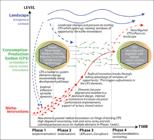
The phases illustrated in Figure 1 relate to the gradual evolution of transitions. There is experimentation, testing of political feasibility and social acceptance of innovations. Then there is a reduction in uncertainty before radical innovations become widespread in mainstream markets. It is then that the clash with the regime becomes clearer.
This dispute between new and incumbent technologies may generate political difficulties, but there is still no guarantee that innovations will “win” since the response of incumbents can demobilize and strangle the trajectory of new technologies. However, when innovations overcome the prevailing obstacles, the original CPS declines and the new one expands, eventually anchoring itself in institutions, power structures and prevailing notions of normality.
The interaction among niches, regimes and landscapes affects sustainable transitions, especially in energy, mobility, and food systems, which have a high degree of natural degradation. Although there are a number of innovative solutions, many are limited to incipient markets, which are not moving at the ideal speed and scale (Geels; Kern; Clark, 2023, p. 6).
Therefore, it is essential to understand the drivers of acceleration in transitions, which have historically been slow and incremental. Cost reductions; improvements in performance; the experience of the players involved and actions that weaken the original regimes, such as withdrawing political support, can accelerate the disruptive process. Filho et al. (2011) explore the constraints that prevent the diffusion of technological innovations in agriculture from being uniform in terms of speed and intensity, considering different socio-technical configurations.
A restructuring of regimes, as opposed to their complete substitution, reflects a more modern vision of how CPS can change. The simplistic narrative that a niche innovation fully replaces the status quo carries the idea of a false panacea for innovation policies, whereas the emphasis on the process of reconfiguration, with technological increments and hybridization, is more effective in triggering socio-technical changes.
Governments can also proactively influence the direction and speed of change towards sustainability by combining comprehensive and targeted public policies with strong intermediaries (Pérez; Leach, 2022). Green industrial strategies can be powerful tools in this regard. Therefore, the political nature of transformation processes should not be overlooked (Meadowcroft; Rosenbloom, 2022).
3. THE AGRICULTURAL INPUT REGIME AND INNOVATIONS IN BIO-INPUTS IN BRAZIL
Regulations
Since innovation in agriculture is inseparable from collective action (Oliveira et al., 2024), it is important to analyze how trends in alternative agriculture are conditioned by this relationship. The multi-actor network involved in socio-technical regimes, for instance, has an influence on the procedures of the Brazilian legislative environment, which is responsible for deliberating on the registration, regulation, and supply of biological inputs. This is manifested particularly in:
-
Political conflicts in the interaction arenas, since the idea of the threat posed by bio-inputs to the dominance of the chemical input regime is reinforced, thereby hindering market coexistence (Goulet; Hubert, 2020) ;
-
Regulatory misalignment, which results in the lack of a clear distinction between categories of alternative and conventional inputs (Goulet, 2021).
One attempt at legal progress was Bill 658/2021, which dealt with the self-production of bio-inputs on rural properties, known as on-farm production, through biological management, while also noting the importance of setting up bio-input production units, or bio-factories. At the end of 2024, the Bill was approved by the Federal Senate and published in the form of Law No. 15.070/2024, ratifying the regulatory National Bio-inputs Program (NBP) scope, and regulating on-farm production, marking a milestone in legal certainty for Brazilian agriculture.
Proper registration in the face of inspection rules for bio-inputs is central, since the process is still subject to the current “Agrochemicals Law”, which deals predominantly with traditional pesticides and chemical fertilizers (Brasil, 2023). This prevents the registration of bio-inputs that serve more than one purpose, such as those that are used for Biological Control and stimulation, such as the fungus Trichoderma spp, applied in corn, soybean, and coffee crops to control pathogen populations and stimulate nutrients. Moreover, it hinders the adoption of a differentiated and simplified regulatory approach for inputs of an essentially distinct nature
In September 2023, however, the Senate Constitution and Justice Committee (CCJ) approved a legal framework for bio-inputs born out of the Environmental Affairs Committee. Bill 3.668/2021, which sought to make a greater transition to the use of bio-inputs to the detriment of the use of pesticides, distinguishing registration from other types of chemical inputs (Magela, 2023) had its proposal hindered by the approval of Law No. 15.070/2024. The distinction would be made according to the types of producers who fall into:
-
Commercial bio-factories, which produce or import biological inputs for commercial purposes and must be registered with the relevant federal authority;
-
On-farm bio-factories, for non-commercial production, e.g., for own use and for larger-scale farms. This type has a simplified registration of the property with the federal agricultural agency;
-
Production units, also for self-use, but generally for smaller-scale producers, most of whom belong to the family farming sector.
Even though the legal and regulatory scope of the segment remains underdeveloped, some data may reflect the performance of the main regulatory framework of 2020 and its inductive actions. For biodefense manufacturers, for example, the increase in registrations increased the diversification of the product portfolio by 28% and the increase in guidance on correct use by 29%. It was also estimated that final prices would fall by 7% (Borsari; Santos; Dias, 2022, p. 26).
These figures suggest the impact of the NBP as a protector of niche technologies and point to the effectiveness of policies, with a possible increase in the registration and supply of bio-inputs, once the measures established by Law No. 15.070/2024 are fully implemented. However, this scenario remains imprecise, particularly considering the disjoining of Bill 3.668/2021 and the contradictions with other existing regulatory frameworks in Brazilian law. Article 10-D of Decree No. 6.913/2009, for instance, which addresses pesticide labeling, even for self-use, exempts phytosanitary products intended for organic farming from registration requirements (Brasil, 2009).
Bortoloti (2022, p. 61) addresses with Normative Instructions that rule on the registration and use of bio-inputs. In the collection, there are different guidelines, authorizations and levels within the Brazilian legal system that deal with this category. This leads to an “evident conflict of interests”, reflected in the different treatments and the creation of regulatory instruments that do not “accommodate Biological Control in a satisfactory manner” and maintain the pressure of the mainstream regime to the detriment of the insertion of niche technologies.
It becomes clear that most of the regulations that are drawn up are not designed by organizations that are politically neutral. The power relationship surrounding the use and regulation of pesticides is closely linked to the institutions aligned with the groups of influence that circulate within decision-making environments. In the debate, on the one hand there is concern for health and the environment, aligned with advocates of reducing pesticide use, groups pushing for deregulation and greater flexibility in agrochemical use (Bortoloti, 2022).
An important consideration is that the category of bio-inputs results from the pairing of technologies and visions that belong to the regenerative and alternative niches, but also to the agro-industrial regime. As such, bio-inputs are part of an institutional architecture based on pairing, in favor of hybridization and incrementation to leverage the breakthrough process. Therefore, this regulatory sprawl, which sometimes divides organizations and arenas of interaction, weakens the consolidation of bio-inputs as coexisting elements within the broader agricultural sector regime (Goulet, 2021).
Business Organization
The biological inputs segment emerged from medium and small-sized companies in the state of São Paulo in the 1980s, linked to biotechnology research institutions. The creation of the Association of Brazilian Biological Control Companies (ABCBio) in 2007 supported the development of firms in the field. Soon thereafter, a window of opportunity opened for the emancipation of the niche with the increased pressure on agrochemicals. Multinational agrochemical corporations, however, began to invest in biological inputs, acquired local companies and quickly stabilized the regime again.
These multinationals trained themselves in a technological area that gradually competed with their own conventional products, creating a form of “industrial dualism” and increasing market concentration. By 2010, the rapprochement between the two technologies was decisive, as ABCBio began to incorporate major agrochemical companies such as Bayer, Arysta and BASF, instead of small founding companies of the group (Goulet, 2021).
Thus, ABCBio, originally dedicated to developing alternatives to pesticides, merged with a larger group, dominated by high-end technologies from the agro-industrial regime, under the common banner of innovation. As the category of bio-inputs brought together biological control and bio-fertilization, the pairing of biotech and chemical companies helped strengthen the coherence of the new sociotechnical system: no longer antagonists, the technologies became two facets of a single approach to agricultural management. This contributed to the identification of the three types of entities that are important in the process of socio-technical alignments: technologies; users; and organizations, each forming coherent linkages due to their similar natures (Goulet, 2021).
Founded in March 2021, the Brazilian Association of Bio-inputs (ABBINS) also leads Brazil’s bioinputs agenda, consolidating ready-to-use products, inoculants, and on-farm own-use into a coherent framework. In 2025 they have helped implement Law No. 15,070 (Dec. 23, 2024) with clear, enabling rules that ensure legal certainty, defend farmers’ right to produce their own bioinputs, and provide FAO-aligned guidance for safe on-farm production. By promoting bioinputs that strengthen soil microbiota, biodiversity and pollinators, increase carbon storage and improve water quality, their main goal is to advance regenerative, climate-resilient agriculture while engaging institutions and communities and respecting the coexistence of diverse business models.
Economic incentives
At the time the National Bio-Inputs Program (NBP) was launched, credit policies and incentives for the production and commercialization of bio-inputs in Brazil were scarce or nonexistent (Vidal et al., 2022). However, the Sectoral Plan for Adaptation to Climate Change and Low Carbon Emissions, or Plano ABC+, came into force in 2020 and included incentives for bio-inputs in its strategic pillars.
Plano ABC+ has instruments to encourage agriculture with a low environmental impact, such as the credit line dedicated to producers with low GHG emission projects. In order to obtain credit, however, there are high requirements, which may explain the low demand for resources from the program (Conceição; Péres, 2024). The 2023/2024 Agricultural Plan (Plano Safra) also promotes a reduction in interest rates for producers who adopt sustainable farming practices, including funding and the production of bio-inputs. Upon verification, interest rates for investments can be as low as 7% per year (MAPA, 2023).
Tax exemptions applied to bio-inputs remain negligible when compared to those applied to chemical inputs. Although there are attempts at regulation, with Bill 5.359/2019, which exempts manufacturers and importers of biodefense products from PIS/Pasep and Cofins taxes (Machado; Moraes, 2022), the legislative framework still largely favors chemical products (Soares; Cunha; Porto, 2020). The bill in question would amend Law No. 10.925/2004 (Brasil, 2004), one of the main pieces of legislation granting tax exemption for pesticides.
The proposal is still pending approval by the Finance and Taxation Committee of the Chamber of Deputies, while the Tax Reform provides for a 60% exemption from the IBS and CBS rates for various chemical inputs, as outlined in Annex IX of Complementary Law No. 214/2025 (Brasil, 2025). This neglects the extra-fiscal nature of the selective tax, a mechanism that, if properly used, can encourage certain behaviors, and reduce the use of pesticides to favor organic and environmentally sustainable production. Paradoxically, an inverse tax selectivity was adopted, since the reduction in rates benefited products that are highly harmful to the environment.
For both large and small-scale farmers, Goulet (2023) identified the search for autonomy and the intention to implement on-farm production, since they consider the purchase of inputs to be costly. Freedom from commercial purchasing and importing practices can also bring autonomy for producers to choose the technology of their choice and not be bound by the technical recommendations of company representatives, since the sale of chemicals is closely linked to the suggestion and instruction of salespeople (Compagnone; Golé, 2011). This illustrates a reproductive force of the institutional links that sustain the established agro-industrial regime.
4. METHODS
In the field of Sociotechnical Transitions studies, the research questions that deal with particular policies and possible transition paths, or pathway questions (Zolfagharian et al., 2019), rely on the development of scenarios, the treatment of historical processes and the analysis of future political-institutional options.
The purpose of foresight, as a powerful tool for monitoring sustainability processes, is to provide decision-makers with inputs for implementing targeted actions. This relationship is not new and stems from the main objective of strategic forecasting in the move towards systemic sustainability (Destatte, 2010).
In constructing a Sustainable Foresight model, Destatte (2009) drew on regional experiences that harbor innovations in the collective learning process. The sequence adopted in the Mutual Learning Platform (MLP) Foresight was as follows: preparatory phase, with clarification of objectives, perimeters, time scale, desirable scenarios; foresight phase, debating the future, identifying actors and factors, establishing the long-term problem, and building the common vision; and the strategic phase, with definition of axes, measurement and choice of concrete actions and monitoring. The model was published in the European Regional Foresight Report guide, Boosting Regional Potential, and distributed to more than two thousand European regions.
Scenario building
It is emphasized that, with the model, the construction of exploratory scenarios can help to build a predictive diagnosis in the identification of possible futures. Attention is paid to the contribution of the participants, also highlighting the importance of governance in the regional or national scope of action. Finally, it is shown that the process does not end at the actual forecasting phase itself, since it can be integrated into the strategy phase, including implementation and actions (Destatte, 2009).
Accordingly, the methodological procedures of this research will proceed from the foresight process of the MLP’s Sustainable Foresight guide, limited to the preparatory and foresight phases, e.g., the diagnosis of the situation and the construction of scenarios for sustainable transitions in Brazil in the specific case of the insertion of bio-inputs in the agricultural sector.
Identifying actors can help to put together future scenarios for the segment. This can reveal interdependencies in the chained sociotechnical hierarchy (Pérez, 2009) and support decisions aimed at the sociotechnical systems in question. To answer the questions about why the bio-inputs market, despite its programmatic framework, remains a niche market in Brazil, and what are the relevant factors in this process, the following strategy will be followed:
Preparatory phase:
-
The aim of this phase is to recapitulate the construction of the programmatic framework that covers bio-inputs and to understand factors that are relevant to the dynamics of the agricultural input sector, such as the economic incentives, the legislation that deals with the classification of inputs and the cohesion that can allow technological coexistence.
-
Next, the Brazilian context is mapped, showing the maturity of the bio-input segment (Borsari; Santos; Dias, 2022; Gottems, 2023; Vidal et al., 2022), including components such as performance, growth and market turnover. The data used to analyze and build the scenarios comes from databases that keep track of the evolution of agricultural inputs, such as FarmTrak, CEPEA and MAPA (CEPEA, 2024a; CropLife Brasil; MAPA, 2023; Gottems, 2023; Soares; Cunha; Porto, 2020).
-
The period covering biological inputs starts from 2017, when market data ceased to be residual and began to offer a broader view. The period covering the Brazilian agricultural industry, e.g., the agricultural inputs sector as a whole, runs from 1996 to 2024. Based on this, it is possible to qualify the current scenario and identify trends in the transition process.
Foresight phase:
-
The mapping of key components in the bio-inputs segment, namely technologies, users and organizations, which involve possible forms of coordination, provides a basis for building forecasts;
-
Actors and components are identified according to their potential influence on the agricultural input sector, such as the traditional or alternative nature of the technologies, the large or small scale of the users and producers, and the public or private nature of the organizations. The cohesion among these components can influence legal order, political determination, economic incentives, regulation and the dissemination of practices;
-
A forecast model was developed for the turnover of the bio-inputs segment and for the agricultural inputs sector, considering the period from 2017 to 2034. The different scenarios reflect alternative growth rates in proportion to the total agricultural inputs sector in Brazilian agribusiness.
Across the scenarios, what varies is the growth rate of the bio-inputs segment, implying different degrees of adoption and commercialization. The growth rate of the agricultural input sector follows patterns identified since 1996 (CEPEA, 2024a) and is adjusted to the growth of bio-inputs in each scenario to reflect either hegemony or coexistence. The two scenarios therefore reflect different degrees of market maturity; of coordination among components; and of alignment between niche and regime to reflect success or failure of the socio-technical transition.
The first scenario is based on the lack of alignment in its technological and regulatory manifestations and, consequently, the maintenance of bio-input technologies as a niche market. Factors such as maintaining tax exemptions for chemical inputs (Agostinetto et al., 2020; Soares; Cunha; Porto, 2020), non-differentiated registration and a lack of structural incentives for production are prevalent in this scenario. In this case, the growth rates of bio-inputs are low and are in line with the trend in the Brazilian input market, as chemical companies continue to dominate and leave little room for innovation acceptance.
The projected value for growth and turnover is based on the continuation of historical trends for subsequent harvests, using the Holt-Winters models (Trull; García-Díaz; Troncoso, 2020) adjusted for level, trend and seasonality at a 95% confidence interval. The procedures for applying the models are detailed in the mathematical appendix.
The second scenario assumes cohesion of the key players identified, which generates technological and regulatory coordination and subsequent niche-regime alignment. Factors such as the reduction of tax exemptions for chemical inputs, the strengthening of structural incentives and regulatory assertiveness over the classes of inputs are in force in this scenario. This is reflected in divergent growth rates between the bio-inputs segment and the chemical inputs segment, which complement each other to form the average growth rate of the agricultural inputs sector. This progression takes place until the two technologies settle into a market coexistence in the agricultural branch of Brazilian agribusiness.
For forecasting purposes, market turnover is measured in nominal USD. The forecasts, in both scenarios, consider the Brazilian agricultural inputs market since the 2017-2018 harvest as the basis for the projection made until the 2033-2034 harvest. In this projection, the bio-inputs segment is made up of inoculants and biological control products, including bio-nematicides, bio-fungicides and bio-pesticides.
In both scenarios, the agricultural inputs sector is the sum of the bio-inputs and chemical inputs segments, including pesticides and fertilizers. It should be noted, however, that substitutability is not complete and the relationship between the two categories is closer to complementarity
Three key components have been identified to catalyze the Sociotechnical Transition process. The first component is technology, which is divided into traditional (chemical inputs) and alternative (biological inputs). The second component is users, who are producers and demanders of bio-inputs in general and are divided into small-scale and large-scale users. The third are the organizations, which are companies, associations, legislative houses, ministries, and are divided into public or private.
Each of these key components can come together in a coherent configuration, e.g., in a cost-effective and systematically deliberated configuration. Such can then generate technological and regulatory coordination. Coordination includes factors relevant to the breakthrough process, such as regulatory assertiveness for the classes and economic stimuli, such as ending or reducing tax exemptions for chemical inputs and strengthening credit lines for bio-inputs.
5. RESULTS AND DISCUSSION
Scenario 1
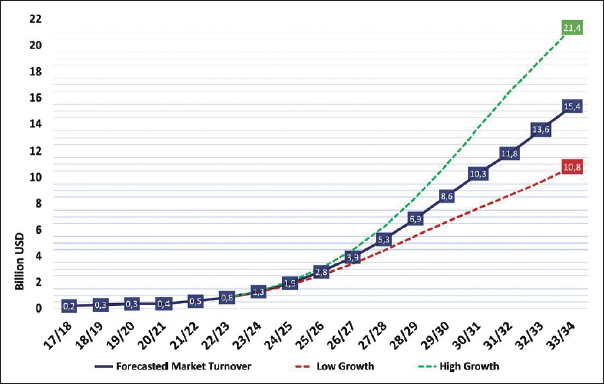
Scenario 1 is projected under conditions of regulatory and technological misalignment, that is, a lack of cohesion among technologies, users, and organizations. The persistence of these conditions constrains the bio-inputs segment and limits it to an average growth rate of 12% by 2034: an average lower than those identified in recent harvests. Even so, if this trajectory continues, the segment could reach USD 2.1 billion marketed in the 2033-2034 crop season (Figure 2).

Because of the lack of regulatory and technological coordination in the niche-regime dynamic, Scenario 1 is characterized by the dominance of the chemical inputs sector as the incumbent regime, with no effective coexistence with bio-inputs, which remain confined to a market niche. This scenario therefore presents the following features:
-
Moderate growth in the number of bio-factories, preventing the achievement economies of scale among producers, and maintained dependence on imports of agricultural inputs;
-
Risk aversion among producers regarding the production and use of bioinputs; high registration costs for bioinputs compared to chemical inputs; persistence of regulatory fragmentation across input classes; institutional disharmony and political conflicts;
-
Lack of economic incentives, such as maintaining tax exemptions for chemical inputs and weakening credit lines for bio-inputs.
Although the bio-inputs segment could reach USD 2.1 billion in sales, it only accounts for 4% to 6% of the total agricultural input sector Brazil: the incumbent regime has not accepted the innovation. The chemical input market, growing at an average of 7.2% per year, a lower rate than bio-inputs, would still represent 94% of the agricultural input market in Brazil at the end of the projection period (Figure 3).
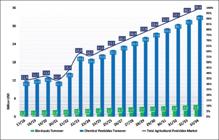
A determining factor in the non-emancipation of the bio-inputs niche is the insufficient degree of tension in the mainstream regime, which has made it impossible for regulatory coordination and technological coordination to exist. In other words, political-regulatory pressure keeps the regime-niche border rigid and implies a lack of pairing between actors and technologies, as institutional coevolution fails.
Scenario 2
Considering the bottleneck seen in the previous scenario, there are no mechanisms to unblock the alignment between regime and niche, due to the lack of coordination and cohesion among important players. Scenario 2 is projected under the existence of regulatory coordination and technological coordination, with pairings among technologies, users, and organizations, which result in the employment of the relevant factors and subsequently in regime-niche alignment.
If the bio-inputs segment maintains its current growth rate of 55% for the following year, and then gradually decreases by 5 percentage points per year until stabilizing at the same growth rate as chemical inputs, 12% annually, the agricultural inputs sector could reflect a state of technological coexistence. Under this projection, the bio-inputs segment could reach USD 15.4 billion in market value by 2034 (Figure 4).

Thus, this scenario is built on the coherent union among three key players in the Brazilian agricultural transition process: technologies (both traditional and alternative); users (both small and large); and organizations (both public and private). Scenario 2 presents technological and regulatory coordination and, therefore:
-
A favorable legal environment, with the regulation of Bill 3.668/2021, resulting in differentiation for registration and encouraging the establishment of bio-factories; a reduction in the private costs of bio-inputs; a reduction in import dependency and an increase in exports of biological inputs;
-
Reducing the contrast1 among technologies, translating into less regulatory fragmentation, less risk aversion for the producer, greater legal support for the class and competitive registration costs for bio-inputs compared to chemicals;
-
Regulating legal frameworks that increase economic incentives, such as Bill 5.359/2019, granting tax exemptions to the bio-inputs class; increasing the volume of credit for incipient producers; reducing tax exemptions for marketing, importing, and exporting chemical inputs.
The agricultural inputs sector in Brazil grew at an average annual rate of 15% from 1996 to In order to accommodate the stabilization of biological technologies as coexisting within the regime, it is sufficient for the bio-inputs segment to grow at a rate higher than that of chemical inputs, a trend that has already been observed (Borsari; Santos; Dias, 2022; Bortoloti, 2022; Gottems, 2023; Goulet, 2021). Figure 5 illustrates the possibility of this technological coexistence.

In this scenario, the average growth rate of the agricultural inputs sector (the sum of both segments) is approximately 8% per year. The average growth rate for the chemical segment is 5% annually, while the bio-inputs segment grows at an average of 33% per year. All three rates are conservative relative to those observed in each historical time series and remain within the sector’s growth limits identified since 1996. Therefore, Scenario 2 is deemed plausible.
Here, the coexistence among technologies is clear: bio-inputs now account for 40% of the agricultural input market and chemicals account for 60%. The prevailing regime does not present a hegemonic technology but instead operates with hybridization having allowed room for coexistence. The strategic efforts of transition governance organizations must therefore be directed towards implementing the hybridization mechanism as a driver of alignments.
6. CONCLUSIONS
This paper explored the reasons why the bio-inputs segment in Brazil remains a niche market. Barriers such as regulatory pulverization, technological contrast and lack of economic incentives were identified as constraints to the emancipation of the segment. On the other hand, enablers such as the National Bio-inputs Program (NBP) framework, the strengthening of associations, increased demand for alternative agriculture, and tax incentives can foster alignment between the regime and the niche, helping to unlock the socio-technical transition towards more ecologically sustainable agriculture.
The analysis of predictive scenarios demonstrated that it is possible for bio-inputs to overcome the niche barrier and coexist with chemical inputs. In Scenario 1, bio-inputs exhibit inertial behavior and remain a niche technology, holding just 6% of market share. In Scenario 2, a breakthrough occurs and both technologies share a 40-60% dynamic within a new agricultural input regime. As a result, low-impact agriculture is strengthened, reducing health and ecosystem risks, empowering small-scale farmers, and contributing to multiple Sustainable Development Goals (SDGs): Sustainable Agriculture, Good Health and Well-being, Reduced Inequalities and Climate Action.
To enable this transformation, there must be cohesion among the components involved in the insertion process, namely, the technologies; producers and users at both small and large scales; and the organizations responsible for regulating the bio-inputs market. If these adjustments take place, regulatory and technological coordination can emerge, along with the deployment of enabling factors such as institutional coherence, the reduction of tax exemptions for agrochemicals, and expanded credit offerings for bio-input producers. The State plays a pivotal role in designing institutional mechanisms to stimulate green market growth and in facilitating regime openness to innovations that disseminate regenerative practices.
Due to the limited availability of domestic datasets that would allow for the quantification of bio-input exports and imports, integration into trade models or input-output matrices remains difficult. It is hoped that this limitation will be addressed soon to support more robust market forecasting. An investigation into the necessary reduction in relative prices to reach a tipping point, that is, the elevation of the segment to a new threshold, would also be a valuable contribution.
The analysis makes it clear that the transition process, despite having strong economic dimensions and significant participation from private organizations, is inherently political. It is through coordinated institutional action that environments conducive to the emergence of innovations are formed. In the case of sociotechnical transitions towards sustainability, cohesive action can generate the alignment required between regime and niche, catalysing coevolution among agricultural technologies and ultimately reshaping the prevailing sociotechnical landscape towards greater environmental sustainability.
Data Availability Statement:
The research data is available in a repository.
REFERENCES
- ADLY, Dalia; SANAD, Ahmad Said. Comparative evaluation of biological control programs and chemical pesticides for managing insect and mite pests in cucumber greenhouses: a sustainable approach for enhanced pest control and yield. Egyptian Journal of Biological Pest Control, [s. l.], v. 34, n. 1, p. 42, 2024.
- AGOSTINETTO, Lenita et al. O uso dos agrotóxicos e a exposição humana e ambiental. In: VERISSIMO, Mario Alvaro Aloisio; MOREIRA, Patrícia; GINDRI, Diego Medeiros. Sanidade Vegetal: Uma estratégia global para eliminar a fome, reduzir a pobreza, proteger o meio ambiente e estimular o desenvolvimento econômico sustentável. 1°ed. Florianópolis: CIDASC, 2020. p. 182-193.
-
ALVES, Lucas; GOTTEMS, Leonardo. Bioinputs market moves $827 million in Brazil. In: AGROPAGES. out. 2023. Disponível em: Disponível em: https://news.agropages.com/News/NewsDetail---48136.htm Acesso em: 16 abr. 2024.
» https://news.agropages.com/News/NewsDetail---48136.htm - BORSARI, Amália; SANTOS, Clotilde; DIAS, Rita. Sumário Executivo Biodefensivos: Mercado Brasileiro | Safra 2021/22: S&P Global Commodity Insights. [S. l.: s. n.], 2022.
- BORTOLOTI, Gillyene. Características da inserção dos bioinsumos para controle biológico no mercado fitossanitário brasileiro. 2022. Dissertação de Mestrado - Instituto Biológico, São Paulo, 2022.
-
BOSCHIERO, Beatriz Nastaro. Biopesticidas ou biodefensivos: o que temos disponível no mercado 2024. In: AGROADVANCE. 13 mar. 2024. Disponível em: Disponível em: https://agroadvance.com.br/blog-biopesticidas-ou-biodefensivos-biologicos/ Acesso em: 21 abr. 2025.
» https://agroadvance.com.br/blog-biopesticidas-ou-biodefensivos-biologicos/ - BRASIL. Atos do Poder Legislativo. Decreto No 6.913, de 23 de julho de 2009. Dispõe sobre a pesquisa, (...) a comercialização, a importação, a exportação, o registro, a classificação e o controle de agrotóxicos. Diário Oficial da União, Seção 1, Brasília, DF, n. 6.913, p. 8, 2009.
- BRASIL. Decreto no 10.375, de 26 de maio de 2020. Institui o Programa Nacional de Bioinsumos e o Conselho Estratégico do Programa Nacional de Bioinsumos. Diário Oficial da União , Seção 1, Brasília, DF, p. 105, maio de 2020.
-
BRASIL. Poder Legislativo. LEI COMPLEMENTAR No 214, DE 16 DE JANEIRO DE 2025. Institui o Imposto sobre Bens e Serviços (IBS), a Contribuição Social sobre Bens e Serviços (CBS) e o Imposto Seletivo (IS); cria o Comitê Gestor do IBS e altera a legislação tributária. Diário Oficial da União , Seção 1, Brasília, DF, n. 214/2025, 16 jan. 2025. Disponível em: Disponível em: https://www.planalto.gov.br/ccivil_03/leis/lcp/lcp214.htm Acesso em: 20 abr. 2025.
» https://www.planalto.gov.br/ccivil_03/leis/lcp/lcp214.htm - BRASIL. Poder Legislativo. Lei No 10.925, de 23 de julho de 2004. Reduz as alíquotas do PIS/PASEP e da COFINS incidentes na importação e na comercialização do mercado interno de fertilizantes e defensivos agropecuários. Diário Oficial da União , Seção 1, n. 10.925/2004, p. 1, 2004.
- BRASIL. Atos do Poder Legislativo. Lei No 14.785, de 27 de dezembro de 2023. Dispõe sobre a pesquisa, a experimentação, a produção o registro, a classificação, o controle, a inspeção e a fiscalização de agrotóxicos, de produtos de controle ambiental, de seus produtos técnicos e afins. Diário Oficial da União , Seção 1, Brasília, DF, v. 246, n. 14.785, p. 28, 2023.
- CEPEA. PIB do Agronegócio Brasil. PIB do Agronecócio BrasileiroCEPEA/ESALQ/USP,, 2024a. xlsx
-
CEPEA. Produção agrícola cresce, mas queda de preço leva PIB agro a cair 3%. In: CENTRO DE ESTUDOS AVANÇADOS EM ECONOMIA APLICADA. 2024b. Disponível em: Disponível em: https://www.cepea.esalq.usp.br/br/pib-agro-cepea-producao-agricola-cresce-mas-queda-de-preco-leva-pib-agro-a-cair-3.aspx Acesso em: 5 jul. 2024.
» https://www.cepea.esalq.usp.br/br/pib-agro-cepea-producao-agricola-cresce-mas-queda-de-preco-leva-pib-agro-a-cair-3.aspx - COMPAGNONE, Claude; GOLÉ, Sylvain. The reconfiguration of advisory social space in agriculture: A case study on pesticide use advice in Burgundy vineyards. Cahiers Agricultures, [s. l.], v. 20, n. 5, p. 400-405, 2011.
- CONCEIÇÃO, Rodrigues da; PÉRES, Júnia Cristina. Principais obstáculos enfrentados pela agricultura familiar para sua participação no plano ABC+. [S. l.]: Texto para Discussão, 2024. Working Paper.
- CONTERATTO, Caroline et al. Biorefinery: A comprehensive concept for the sociotechnical transition toward bioeconomy. Renewable and Sustainable Energy Reviews, [s. l.], v. 151, p. 111527, 2021.
-
CROPLIFE BRASIL; MAPA. Produtos Biológicos Registrados. [S. l.], 2023. Disponível em: Disponível em: https://croplifebrasil.org/publicacoes/produtos-biologicos-registrados/ Acesso em: 5 maio 2024.
» https://croplifebrasil.org/publicacoes/produtos-biologicos-registrados/ - DARABAN, Gabriel Mihăiță; HLIHOR, Raluca-Maria; SUTEU, Daniela. Pesticides vs. Biopesticides: From Pest Management to Toxicity and Impacts on the Environment and Human Health. Toxics, [s. l.], v. 11, n. 12, p. 983, 2023.
- DESTATTE, Philippe. Foresight: A major tool in tackling sustainable development. Technological Forecasting and Social Change, [s. l.], v. 77, n. 9, p. 1575-1587, 2010.
- DESTATTE, Philippe. The construction of a foresight process model based on the interest in collective knowledge and learning platforms. [s. l.], 2009.
- DIAS, Alessandro Custódio et al. Conhecimento e percepção de risco dos trabalhadores rurais expostos a agrotóxicos em Teixeiras/MG: um estudo transversal. Revista Médica de Minas Gerais, [s. l.], v. 33, 2023.
- FAO. Agrifood solutions to climate change. [S. l.]: Food and Agriculture Organization of the United Nations, 2023.
- FILHO, Hildo Meirelles de Souza et al. Condicionantes da adoção de inovações tecnológicas na agricultura. Cadernos de Ciência & Tecnologia, [s. l.], v. 28, n. 1, p. 223-255, 2011.
- GAZZANI, Flavio. Economic and Environmental Evaluation of Nitrogen Fertilizer Taxation: A Review. International Journal of Environment, Agriculture and Biotechnology, [s. l.], v. 2, n. 4, p. 1829-1834, 2017.
- GEELS, Frank W. Technological transitions as evolutionary reconfiguration processes: a multi-level perspective and a case-study. Research Policy, [s. l.], v. 31, n. 8-9, p. 1257-1274, 2002.
- GEELS, Frank W.; KERN, Florian; CLARK, William C. Sustainability transitions in consumption-production systems. Proceedings of the National Academy of Sciences, [s. l.], v. 120, n. 47, p. e2310070120, 2023.
- GOTTEMS, Leonardo. 2023 Latin America Focus. Agropages, [s. l.], p. 1-65, 2023.
- GOULET, Frédéric. Characterizing alignments in socio-technical transitions. Lessons from agricultural bio-inputs in Brazil. Technology in Society, [s. l.], v. 65, p. 101580, 2021.
- GOULET, Frédéric. On-farm agricultural inputs and changing boundaries: Innovations around production of microorganisms in Brazil. Journal of Rural Studies, [s. l.], v. 101, p. 103070, 2023.
- GOULET, Frédéric; HUBERT, Matthieu. Making a Place for Alternative Technologies: The Case of Agricultural Bio-Inputs in Argentina. Review of Policy Research, [s. l.], v. 37, n. 4, p. 535-555, 2020.
- LE VELLY, Ronan et al. When Markets Make Agroecologies: Empirical Evidence from Downstream and Upstream Markets in Argentina, Brazil and France. Journal of Innovation Economics & Management, Louvain-la-Neuve, v. 42, n. 3, p. 21-42, 2023.
-
MACHADO, Ralph; MORAES, Geórgia. Comissão aprova isenção tributária para biodefensivos agropecuários. [S. l.], 2022. Disponível em: Disponível em: https://www.camara.leg.br/noticias/874080-comissao-aprova-isencao-tributaria-para-biodefensivos-agropecuarios/ Acesso em: 16 jul. 2024.
» https://www.camara.leg.br/noticias/874080-comissao-aprova-isencao-tributaria-para-biodefensivos-agropecuarios/ -
MAGELA, Geraldo. Comissão de Meio Ambiente aprova marco jurídico de bioinsumos. [S. l.], 2023. Disponível em: Disponível em: https://www12.senado.leg.br/noticias/materias/2023/09/13/comissao-de-meio-ambiente-aprova-marco-juridico-de-bioinsumos Acesso em: 21 jun. 2024.
» https://www12.senado.leg.br/noticias/materias/2023/09/13/comissao-de-meio-ambiente-aprova-marco-juridico-de-bioinsumos -
MAPA. Presidente anuncia Plano Safra 2023/2024 com financiamento de R$ 364,22 bilhões. [S. l.], 2023. Disponível em: Disponível em: https://www.gov.br/agricultura/pt-br/assuntos/noticias/presidente-anuncia-plano-safra-2023-2024 Acesso em: 22 maio 2024.
» https://www.gov.br/agricultura/pt-br/assuntos/noticias/presidente-anuncia-plano-safra-2023-2024 - MAPA; IICA; ABBI. Bioinsumos como alternativa a fertilizantes químicos em gramíneas: uma análise sobre aspectos de inovação do setor. Brasília, DF: Ministério da Agricultura e Pecuária, 2024.
- MEADOWCROFT, James; ROSENBLOOM, Daniel. Governing the net-zero transition: Strategy, policy, and politics. Proceedings of the National Academy of Sciences of the United States of America, [s. l.], v. 120, n. 47, p. e2207727120, 2022.
- NELSON, Richard R.; WINTER, Sidney G. An evolutionary theory of economic change. 1°ed. Cambridge, Mass.: The Belknap Press of Harvard Univ. Press, 1982.
- OLIVEIRA, Magnólia Abreu De et al. Inovações na agricultura orgânica: revisão sistemática e bibliométrica de literatura. Revista de Economia e Sociologia Rural, [s. l.], v. 62, n. 2, p. e269069, 2024.
-
PÉREZ, Carlota. Technological dynamism and social inclusion in Latin America: a resource-based production development strategy. [s. l.], 2010. Disponível em: Disponível em: https://hdl.handle.net/11362/11494 Acesso em: 22 out. 2024.
» https://hdl.handle.net/11362/11494 - PÉREZ, Carlota. Technological revolutions and techno-economic paradigms. Technology Governance, [s. l.], Working Papers in Technology Governance and Economic Dynamics, 2009.
-
PÉREZ, Carlota; LEACH, Tamsin Murray. Technological revolutions: which ones, how many and why it matters: a neo-schumpeterian view. Beyond 4.0, [s. l.], Horizon Project, 2022. Disponível em: https://pt.scribd.com/document/775989209/Beyond-4-0-Technological-Revolutions-Which-Ones-How-Many-and-Why-It-Matters-A-Neo-schumptarian-View
» https://pt.scribd.com/document/775989209/Beyond-4-0-Technological-Revolutions-Which-Ones-How-Many-and-Why-It-Matters-A-Neo-schumptarian-View - RIP, Arie; KEMP, René. Technological change. In: HUMAN CHOICE AND CLIMATE CHANGE: VOL. II, RESOURCES AND TECHNOLOGY. [S. l.]: Battelle Press, 1998. (Human choice and climate change). v. 2, p. 327-399.
- SOARES, Bruno Lima et al. Agronomic and Economic Efficiency of Common-Bean Inoculation with Rhizobia and Mineral Nitrogen Fertilization. Revista Brasileira de Ciência do Solo, [s. l.], v. 40, p. e0150235, 2016.
- SOARES, Wagner Lopes; CUNHA, Lucas Neves; PORTO, Marcelo Firpo. Uma política de Incentivo fiscal a agrotóxicos no Brasil é Injustificável e insustentável. [S. l.]: Abrasco, 2020.
- SRIVASTAVA, Amita; PANDEY, Eshita. A comparative study between biopesticides and conventional pesticides. [s. l.], v. 17, 2022.
- TRULL, Oscar; GARCÍA-DÍAZ, Juan Carlos; TRONCOSO, Alicia. Initialization Methods for Multiple Seasonal Holt-Winters Forecasting Models. Mathematics, [s. l.], v. 8, n. 2, p. 268, 2020.
- VIDAL, Mariane Carvalho et al. Bioinsumos: a Construção de um Programa Nacional pela Sustentabilidade do Agro Brasileiro. Economic Analysis of Law Review, [s. l.], v. 12, n. 3, p. 557, 2022.
- WILSON, Clevo; TISDELL, Clem. Why farmers continue to use pesticides despite environmental, health and sustainability costs. Ecological Economics, [s. l.], v. 39, n. 3, p. 449-462, 2001.
- ZOLFAGHARIAN, Mohammadreza et al. Studying transitions: Past, present, and future. Research Policy , [s. l.], v. 48, n. 9, p. 103788, 2019.

 Source:
  Source: Based on data from Kynetec (2023). Nominal values.
 Source: Developed from Kynetec (2023). Nominal values.
 Source: Based on data from Kynetec (2023).
 Source: Based on data from Kynetec (2023) and