 Masculinities and change in Spain: a study in the province of León (Spain)
This article presents the results of the research on the valuation that the residents of the province of León make of the currently dominant masculinity model of men in this area. An online questionnaire was administered to 890 people about men’s participation in care tasks, the distribution of household tasks, their involvement in equality, their emotional and relational behaviour, and the role of institutions in promoting their participation in equality, as well as three open questions. The results show that further progress in personal and collective policies is necessary for men to shed their privileges, stop their complicit silence with the macho culture, and become more actively involved in the transformation of gender inequality relations.
Keywords:
Masculinity; socialization; patterns of masculinity; hegemonic masculinity; traditional masculinity
 Thumbnail
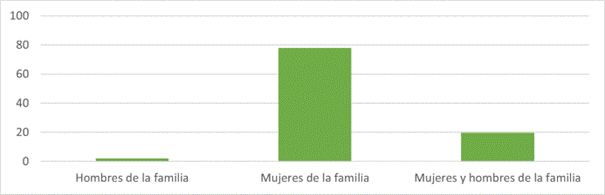 #PraTodoMundoVer La ilustración muestra la distribución, en gráfico de barras de color verde, de quién se ocupa de la atención a personas mayores dependientes en la familia. La primera columna están los hombres de la familia, con poco más del 0%. La segunda columna, las mujeres de la familia, con casi el 80% y la tercera columna con mujeres y hombres de la familia con un 20%.