
 Planetary boundaries as a way of assessing environmental performance: a methodological approach proposal
ABSTRACT
Objective This study aims to demonstrate how planetary boundaries can be used to evaluate organizations’ environmental performance.
Methodology The study uses different data collection and analysis methods, the literature on planetary boundaries and their measurement, secondary data collection, and examples of two companies operating in the oil and gas sector in the upstream segment.
Results To apply the proposed conceptual model to two cases of companies operating in the oil and gas sector in the upstream segment, it was initially necessary to validate the downscaling of planetary boundaries to the business analysis level. The proposed downscaling method and the use of planetary boundaries to evaluate organizations’ environmental performance both proved adequate, effective, and plausible.
Implications This study has significant practical implications. It provides a conceptual model that allows companies in the sector to evaluate and be evaluated based on the need to respect the biophysical limits of the Earth system, thereby engaging them in sustainable development.
Originality/Relevance The concept of planetary boundaries is particularly relevant in the oil and gas sector. Given that the natural capital consumed is physically finite, it provides a starting point for understanding the compatibility between the search for sustainable development and the current economic model. Moreover, the role companies play in this search is crucial, as the increased pressure on the consumption of natural resources directly impacts business operations.
Sustainable development; Planetary boundaries; Environmental performance assessment; Oil and gas sector
RESUMO
Objetivo Este estudo tem como objetivo demonstrar como as fronteiras planetárias podem servir como método de avaliação do desempenho ambiental das organizações.
Metodologia O estudo utiliza diferentes métodos de coleta e análise de dados, a literatura sobre fronteiras planetárias e sua medição, coleta de dados secundários e dois exemplos ilustrativos de duas empresas que atuam no setor de óleo e gás no segmento de upstream.
Resultados Para aplicar o modelo conceitual proposto a dois casos de empresas que operam no setor de óleo e gás no segmento upstream, foi inicialmente necessário validar o downscaling das fronteiras planetárias para o nível de análise empresarial. O método de downscaling proposto se mostrou adequado, eficaz e plausível, assim como a utilização das fronteiras planetárias como método de avaliação do desempenho ambiental das organizações.
Implicações Esse estudo tem implicações práticas significativas. Ele fornece uma estrutura metodológica que permite às empresas do setor avaliar e serem avaliadas com base na necessidade de respeitar os limites biofísicos do sistema terrestre, engajando-as assim no processo de desenvolvimento sustentável.
Originalidade/Relevância O conceito de fronteiras planetárias é particularmente relevante no setor de óleo e gás. Considerando que o capital natural consumido é fisicamente finito, ele fornece um ponto de partida para a compreensão da compatibilidade entre a busca pelo desenvolvimento sustentável e o modelo econômico atual. Além disso, o papel que as empresas desempenham nessa busca é crucial, pois a pressão crescente sobre o consumo de recursos naturais impacta diretamente as operações comerciais.
Desenvolvimento sustentável; Fronteiras planetárias; Avaliação de desempenho ambiental; Setor de óleo e gás
Introduction
The search for sustainable development is not new. From a biological point of view, the relationship between the Earth system and sustainable development is inherent, transparent, and consolidated in the very understanding of bio (a term of Greek origin related to life). However, other relationships go far beyond biological understanding. For example, from an economic perspective, we realize that the Earth system is also the basis for economic development, understood as natural capital. Natural capital is the stock of tangible natural resources (e.g., land, minerals, fossil fuels, forests) that generate a renewable flow of natural services and raw materials (Czech & Daly, 2004; Daly & Farley, 2004; O’Neill, 2015). In other words, natural capital is natural wealth, translated in economics as the ability to convert a natural asset into a financial resource. Given that the economic structure, in its essence, is based on the production, distribution, and consumption of goods and services, it follows that “all economic growth is based, ultimately, on the consumption of natural capital” (Czech, 2000, p, p. 11).
In this scenario, a fundamental discussion lies in identifying to what extent it is possible to maintain the current logic of unbridled economic growth (Meadows, 1998). The question is relevant since the natural capital consumed is physically finite (Meadows, 1998; Rockström et al., 2009a; Daly, 1972). Therefore, it is undeniable that the current development model is not sustainable in the long term (Rockström et al., 2009a). The world economy doubles every two decades, while the population doubles every half-century (Meadows, 1998). There are no signs that this growth will slow down in the next few decades (Rockström et al., 2009a). This exponential growth “is raising concerns that further pressure on the Earth system could destabilize critical biophysical systems and trigger abrupt or irreversible environmental changes that would be deleterious or even catastrophic for human well-being” (Rockström et al., 2009a, p. 1). Furthermore, it is estimated that by the year 2050, the extraction of natural resources will increase by 119%, leading to a 41% increase in greenhouse gas emissions (Hatfield-Dodds et al., 2017).
Given the current situation, the concept of planetary boundaries provides an exciting starting point for understanding the relationship between “safe space” (regarded as the consumption of natural capital that respects the biophysical limits of the Earth system), the natural capital, the natural resources, and the processes on which humanity depends for sustainable development (Raworth, 2012). The concept of planetary boundaries encompasses nine Earth system processes, which together prescribe a safe operating space for human and sustainable development (Rockström et al., 2009a; Rockström et al., 2009b; Steffen et al., 2015; Richardson et al., 2023). In the studies by Rockström et al. (2009a), Rockström et al. (2009b), Steffen et al. (2015) and Richardson et al. (2023), the authors define biophysical limits for the nine planetary boundaries so that “humanity use of natural resources does not stress critical processes of the Earth system – causing climate change or loss of biodiversity, for example – to the point that the Earth is pushed out of the stable state” (Raworth, 2012, p. 12). As “[the] approach to planetary boundaries is a warning for the international community to recognize that such limits and risks exist formally” (Raworth, 2012, p. 12), it is understood that, through it, the international community can assume responsibility toward sustainable development (Raworth, 2012; Steffen & Smith, 2013).
The company’s role is critical in seeking sustainable development (Lenssen et al., 2012). “There is a strong business case for investing in paths compatible with the limits of our planet” (Sabag-Muñoz & Gladek, 2017, p. 3); that is because most companies depend on natural capital (KPMG, 2012). Furthermore, increased pressure on the consumption of natural resources directly impacts business operations (KPMG, 2012). Based on this logic, every day, more companies recognize that “there is value and opportunity in a broader sense, beyond short-term results” (KPMG, 2012, p, p. 1) and begin to follow a path toward sustainable development. Therefore, companies began worrying about their operations and environmental results (Hussey & Eagan, 2007), i.e., the so-called environmental management practices and corporate environmental performance (Dragomir, 2018; Severo et al., 2017; Bhattacharyya & Cummings, 2015; Whiteman et al., 2013; Hussey & Eagan, 2007; Tyteca et al., 2002). Corporate environmental performance is defined as “the results of an organization’s management relating to its environmental aspects” (ISO, 1999). Furthermore, when operationalizing the concept, Xie and Hayase (2007) segmented corporate environmental performance into two dimensions: one focused on companies’ management practices, and the other focused on the results of such management. It is worth highlighting that the operationalization of the concept of corporate environmental performance has certain limitations (Dragomir, 2018), given that management practices and their results vary significantly from sector to sector (Trumpp et al., 2015).
The oil and gas sector stands out among the economic sectors critical to the discussions on sustainable development. This sector is considered the world’s largest in monetary terms and moves trillions of dollars globally every year (Muspratt, 2019). The sector was valued at US$3.2 trillion in 2021 (IPIECA, 2021). Also, considering the current economic growth model, most global economies consistently depend on petroleum-based products (Muspratt, 2019). Such dependence creates an unsustainable trend of physical provisioning since the oil and gas sector is responsible for three-quarters of greenhouse gas emissions worldwide (Ritchie, 2017). In the last six decades alone, more than 80% of the total oil consumed by humanity since the beginning of its exploration has been consumed (García-Olivares & Ballabrera-Poy, 2014), which points to an exponential growth in oil and gas consumption with no expected slowdown or end shortly.
Given the presented above, this study aims to demonstrate how planetary boundaries can serve as a method for evaluating the environmental performance of organizations. The study is based on the oil and gas sector, particularly oil and gas companies in the upstream segment. This is because there is a need for a greater understanding of business actions in the context of the nine planetary boundaries (Whiteman et al., 2013) and a definition of the biophysical limits proposed by the planetary boundaries for companies so that these boundaries become more suitable for companies’ strategic planning (Clift et al., 2007). Furthermore, “business management literature remains focused on understanding the social, organizational or institutional implications of corporate sustainability, in isolation from quantitative indicators of ecosystem functioning” (Whiteman et al., 2013, p. 308; Bhattacharyya & Cummings, 2015; Goldstein et al., 2011). According to Tyteca (1997, p, p. 184), “from the point of view of public and economic policies, the measurement of environmental performance can provide us with tools to study the effectiveness of environmental regulation, taxes and various other types of economic instruments as means to improve the quality of the environment”. In this vein, we expect to make methodological and practical contributions that will allow companies in the sector to evaluate and be evaluated based on the need to respect the Earth system’s biophysical limits.
1 Theoretical Background
The concept of planetary boundaries seeks to estimate a safe operational space for the development of humanity concerning the functioning of the Earth system (Steffen et al., 2015; Rockström et al., 2009a; Richardson et al., 2023) – understood as the physical, chemical, and biological processes on the planet.
1.1 Sustainable Development and Planetary Boundaries
The concept of planetary boundaries seeks to estimate a safe operational space for the development of humanity concerning the functioning of the Earth system (Steffen et al., 2015; Rockström et al., 2009a; Richardson et al., 2023) –understood as the physical, chemical, and biological processes on the planet. The concept “has been the subject of considerable attention and debate, both from a scientific and political perspective” (Fanning & O’Neill, 2016, p. 836; Dao et al., 2018; Richardson et al., 2023). Furthermore, planetary boundaries can contribute to decision-makers by allowing environmental mapping of societies’ development (Steffen et al., 2015). In the study by Rockström et al. (2009a), a preliminary effort was made to identify planetary boundaries and quantify their biophysical limits. These biophysical limits must not be transgressed due to the perpetuity of the balance of the Earth system for future generations (Rockström et al., 2009a; Steffen et al., 2015). Nine planetary boundaries were identified: climate change, ocean acidification, stratospheric ozone depletion, biogeochemical cycles of nitrogen (N) and phosphorus (P), atmospheric aerosol loading, freshwater change, land-system change, biosphere integrity, and novel entities (Rockström et al., 2009a; Steffen et al., 2015; Richardson et al., 2023).
All nine planetary boundaries proposed by Rockström et al. (2009a) were quantified (Richardson et al., 2023) as follows: the quantification of the planetary boundary of climate change is based on the concentration of CO2 in the atmosphere (Rockström et al., 2009a; Steffen et al., 2015; Richardson et al., 2023); the ocean acidification boundary is quantified by the average surface seawater saturation (Rockström et al., 2009a; Steffen et al., 2015; Richardson et al., 2023); stratospheric ozone depletion is quantified by the O3 concentration in the stratosphere (Rockström et al., 2009a; Steffen et al., 2015; Richardson et al., 2023); the biogeochemical cycles of nitrogen (N) and phosphorus (P) are quantified by industrial and agricultural evasion, and the influx of phosphorus into the oceans, respectively (Steffen et al., 2015; Richardson et al., 2023); atmospheric aerosol loading occurs by quantifying the inter-hemispheric difference in aerosol optical depth (AOD) (Richardson et al., 2023); freshwater change is quantified by freshwater use (Rockström et al., 2009a; Steffen et al., 2015); land-system change is quantified by the area of forested land as a percentage of the original forest cover (Steffen et al., 2015; Richardson et al., 2023); the biosphere integrity is quantified by the rate of extinctions per million species (Rockström et al., 2009a; Steffen et al., 2015; Richardson et al., 2023); and finally the novel entities boundary is quantified by the percentage of synthetic chemicals released into the environment without adequate safety testing (Richardson et al., 2023). It is estimated that humanity has already transgressed six of the nine boundaries, namely climate change, biogeochemical cycles of nitrogen (N) and phosphorus (P), freshwater change, land-system change, biosphere integrity, and novel entities (Richardson et al., 2023).
In 2015, Steffen et al. presented, for the first time, the approach of downscaling planetary boundaries to the regional level since there is a “need to consider this level to understand the functioning of the Earth system as a whole” (Steffen et al., 2015, p. 4). This permitted the application of the concept of planetary boundaries to different perspectives regarding sustainable development. Furthermore, studies that seek to apply the concept of planetary boundaries at the individual, company, and country levels are not just of vital importance but also widely encouraged (Nykvist et al., 2013; Biermann, 2012; Häyhä et al., 2016; Dao et al., 2018; Lucas et al., 2020).
Planetary boundaries also help to understand the fundamental processes of the Earth system and the “probability that certain changes in the system’s parameters may trigger large-scale disturbances” (Biermann, 2012, p. 9). In the understanding of Galaz et al. (2012) and Brown (2017), the concept of planetary boundaries is a means by which it is possible to operationalize sustainable development. In Häyhä et al.’s (2016) study, the authors highlight that “decisions relating to environmental management and the use of resources are generally not made on a planetary scale, but by governments, companies and other actors operating at national, subnational and supranational levels” (p. 61), which reinforces the need and the urgency to apply the concept of planetary boundaries at different levels.
1.2 Organizational Performance and its Environmental Dimension
Despite its importance and the growing interest in it (Tyteca, 1997; Bhattacharyya & Cummings, 2015; Escrig-Olmedo et al., 2017; Dragomir, 2018; Choi et al., 2020; Abrams et al., 2021), the concept of corporate environmental performance does not present a clear and indisputable definition, nor has an unambiguous conceptualization been established so far (Trumpp et al., 2015; Dragomir, 2018; Schultze & Trommer, 2012; Gallego-Álvarez, 2012; Xie & Hayase, 2007; Bhattacharyya, 2019; Szennay et al., 2021). In the systematic literature review study by Trumpp et al. (2015) addressing corporate environmental performance, the authors concluded that the definition that best suits the concept was proposed by the International Organization for Standardization (ISO) as “the results of management of an organization regarding its environmental aspects” (ISO, 1999). Such a definition is comprehensive, parsimonious, and consensual and integrates the essential attributes of previous academic definitions, providing a solid foundation for understanding corporate environmental performance (Trumpp et al., 2015).
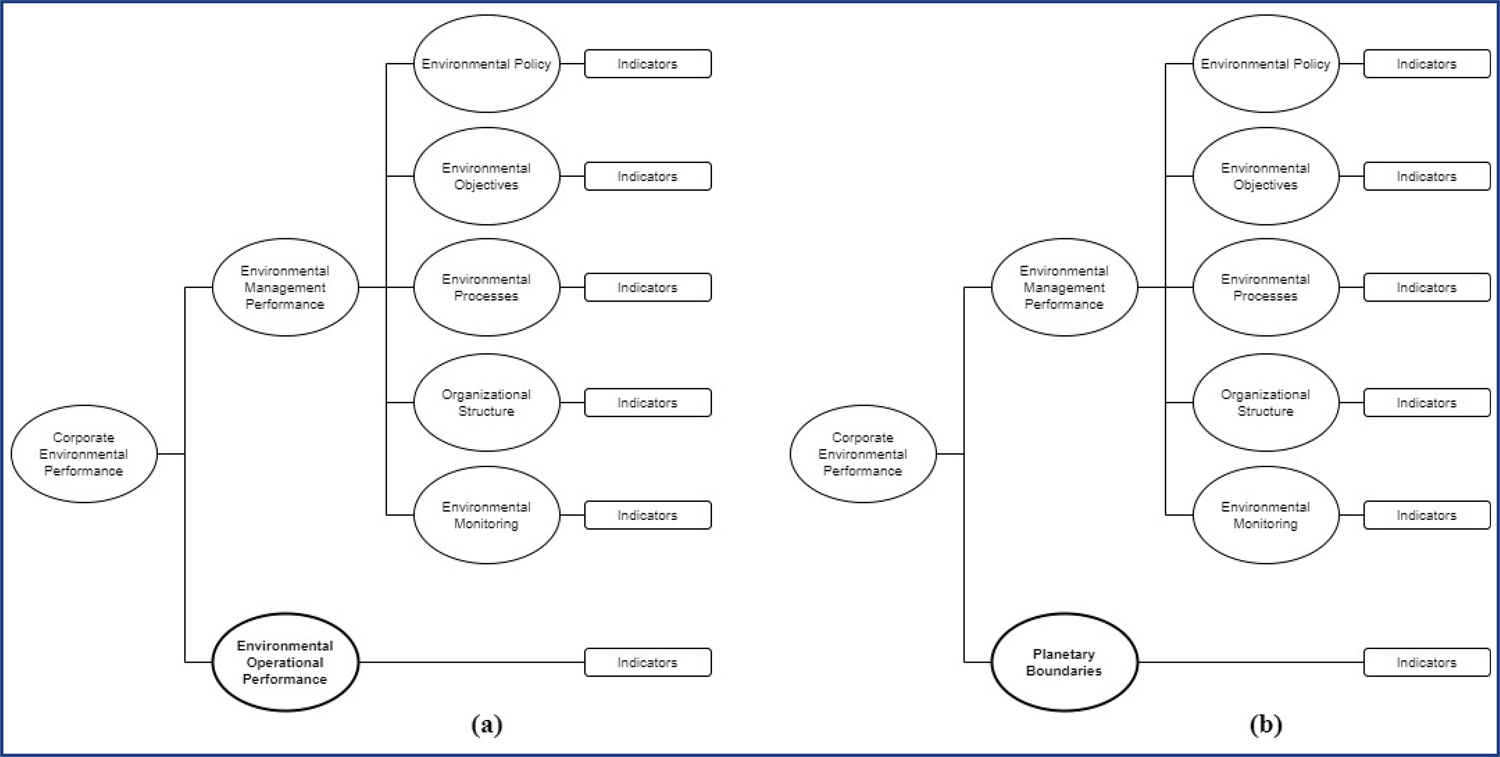
Aiming to operationalize the concept of corporate environmental performance and considering its complexity, it is essential to highlight that its observation must be made through indicators, which represent the observable manifestations of the construct (Bisbe et al., 2007; Semenova, 2010; Choi et al., 2020). According to Xie and Hayase (2007), Trumpp et al. (2015), Bhattacharyya and Cummings (2015), Bhattacharyya (2019), and Escrig-Olmedo et al. (2017), corporate environmental performance comprises two dimensions: environmental management performance and environmental operational performance. The environmental management performance dimension “refers to a strategic level of environmental performance and focuses on management principles and activities in relation to the natural environment” (Trumpp et al., 2015, p. 6). It is divided into five subdimensions: environmental policy, environmental objectives, environmental processes, organizational structure, and environmental monitoring (Trumpp et al., 2015).
The environmental operational performance dimension refers to “the operational level of environmental performance and explicitly focuses on the results (i.e., environmental aspects) of a company’s management activities in relation to the natural environment” (Trumpp et al., 2015, p. 6). This dimension, in turn, does not present specific sub-dimensions or indicators (Trumpp et al., 2015) because environmental aspects are highly specific and related to the contexts in which companies operate (Goldstein et al., 2011; Schultze & Trommer, 2012; Hourneaux Junior et al., 2014; Zheng et al., 2020). Therefore, when analyzing the environmental operational performance dimension, one must “select significant indicators that correspond to the specific environmental aspects of the companies under study” (Trumpp et al., 2015, p, p. 18). It is recommended that, for comparison purposes, corporate environmental performance be applied in sectoral analyses (Trumpp et al., 2015).
2 Methodological Procedures
Seeking to measure the relationship between environmental management performance and planetary boundaries, we identified the concept of corporate environmental performance as a construct that illustrates this relationship. As presented by Xie and Hayase (2007) and Trumpp et al. (2015), corporate environmental performance has two dimensions: environmental management performance and environmental operational performance. Given that the objective of this study is to demonstrate how planetary boundaries can serve as a method of evaluating the environmental performance of organizations and that the environmental operational performance dimension presents a certain flexibility in its operationalization (Trumpp et al., 2015), environmental operational performance dimension indicators must be replaced by corporate-level downscaling of the biophysical limits of planetary boundaries, in order to preserve the relationship between environmental management performance and environmental operational performance. Figure 1a represents the conceptual model proposed by Trumpp et al. (2015), while Figure 1b represents the conceptual model this study proposes:

The study proposal is based on an analysis of environmental operational performance concerning its proxy, planetary boundaries. This is because (i) environmental operational performance is the “result of a company’s management activities in relation to the natural environment” (Trumpp et al., 2015, p. 6); (ii) environmental operational performance does not present specific indicators (Trumpp et al., 2015); (iii) environmental operational performance indicators must be defined according to the sector (Xie & Hayase, 2007; Trumpp et al., 2015; Bhattacharyya & Cummings, 2015; Hourneaux Junior et al., 2014 ); and (iv) environmental operational performance indicators “are closely related to the occurrence of environmental impacts” (Schultze & Trommer, 2012, p, p. 377). In other words, from a planetary boundaries perspective, a company’s environmental operational performance should be contained within the biophysical limits of planetary boundaries. Therefore, we propose that planetary boundaries be used to measure the environmental operational performance of companies in the oil and gas sector in the upstream segment.
Starting with the operationalization of planetary boundaries as a proxy for environmental operational performance in an analysis of the oil and gas sector of the nine planetary boundaries proposed by Rockström et al. (2009a), and considering its quantifications and operationalization, we identified that the oil and gas sector directly affects the boundaries of climate change and freshwater change (Galán-Martín et al., 2021). The determination of these planetary boundaries was under the quantifications presented by Rockström et al. (2009a), Steffen et al. (2015), and Richardson et al. (2023) since the operations in the upstream segment of the oil and gas sector contribute to the concentration of CO2 in the atmosphere and the consumption of freshwater, which are related to those planetary boundaries (Rockström et al., 2009a; Steffen et al., 2015; Richardson et al., 2023). Furthermore, the easy correspondence of these planetary boundaries to key indicators that reflect specific environmental aspects of companies operating in the oil and gas sector in the upstream segment (Trumpp et al., 2015) makes them ideal for the analysis proposed by this study. Also, the determined planetary boundaries allow a “fair share” to be determined for each company regarding the biophysical limits proposed by the planetary boundaries (Whiteman et al., 2013), as detailed in this study’s Results and Discussion section.
One can consider that the planetary boundaries of biosphere integrity (quantified by the rate of extinctions per million species) and novel entities are affected by the oil and gas sector operations. However, the former does not entirely concern the upstream segment (oil and gas exploration) but also the midstream segment, responsible for the transport and storage of oil and gas, and in which oil spill accidents usually cause damage to biodiversity (Helle et al., 2016). Furthermore, according to Lewis and Sauzier (2020), the ecological effects of oil spills are not well studied, which makes it challenging to analyze the extinction rate per million species. Therefore, the planetary boundary of biosphere integrity is not an object of analysis in this study.
As for the planetary boundary of novel entities, given its definition and operationalization presented by Richardson et al. (2023), its application sets it outside the scope of the oil and gas sector since these are not synthetic chemical products, and the sector’s regulation makes their exploration safe, in a certain way. The other planetary boundaries are not directly affected by the operations of the upstream segment of the oil and gas sector according to the quantifications presented by Rockström et al. (2009a), Steffen et al. (2015), and Richardson et al. (2023) and were not considered for analysis.
Environmental data from the ASSET4 ESG database powered by Refinitiv Eikon DataStream were used to operationalize the proposed model. This database is considered a world leader regarding information related to the so-called ESG (Escrig- Olmedo et al., 2017; Trumpp et al., 2015). The database comprises 495 indicators related to ESG, divided into the respective categories (Environmental, Social, and Governance). This database is the only one to provide non-aggregated environmental and disclosure data (Trumpp et al., 2015). Furthermore, ASSET4 ESG has already been used in previous studies, such as Trumpp et al. (2015), Escrig-Olmedo et al. (2017), Ziegler et al. (2011), Semenova (2010), Hartmann and Uhlenbruck (2015), Hardcopf et al. (2021), Aouadi and Marsat (2018), Garcia and Orsato (2020), Sassen et al. (2016), Cheng et al. (2014), and Garcia et al. (2017), which makes it valid for the analysis proposed by this study.
Regarding operationalizing the indicators of biophysical limits proposed by planetary boundaries, “a comprehensive approach, which would cover all environmental aspects of a company’s activities, is virtually impossible” (Trumpp et al., 2015, p. 8). Therefore, we selected a limited number of key indicators (Trumpp et al., 2015). In the study by Nykvist et al. (2013), the authors recognize that a broad set of indicators relating to planetary boundaries is not necessary. However, the indicators must correspond to the variable we wish to analyze. Furthermore, considering that these indicators are of environmental performance, they must portray the characteristics of the sector, as well as the context in which the company finds itself, as explained by Hourneaux Junior et al. (2014), Goldstein et al. (2011), Xie and Hayase (2007), Trumpp et al. (2015), and Bhattacharyya and Cummings (2015). Hence, considering the indicators available by the ASSET4 ESG database and the planetary boundaries of climate change and freshwater change under analysis here, we concluded that only two indicators reflect the characteristics and context of the oil and gas sector according to Rockström et al. (2009a), Steffen et al. (2015) and Richardson et al. (2023): total CO2 equivalent emissions and total freshwater withdrawal, respectively.
3 Results and Discussion
To validate the conceptual model proposed by this study, it was initially necessary to validate the downscaling of the planetary boundaries of climate and freshwater change to the company level of analysis. To this end, different data were collected from diverse databases to support the analytical logic described below. An essential observation that must be made about the data collected concerns the year of data collection. Given that the objective of this study is to demonstrate how planetary boundaries can serve as a method of evaluating the environmental performance of organizations and that the concept of planetary boundaries is analytically based on the temporal restriction of years, we opted to use data referring to the year 2020. This is because there is consistency in all the data from that year, which was not identified for 2021, 2022, and 2023.
In the second analysis stage, the proposed conceptual model was applied to two actual cases of companies operating in the oil and gas sector in the upstream segment. This analysis allowed the downscaling of planetary boundaries to be validated as a method for evaluating environmental management performance. In other words, the results presented in this study are valid both according to the criteria of planetary boundaries and the concept of environmental management performance itself.
3.1 Downscaling the Biophysical Limits of Planetary Boundaries to the Company Analysis Level
The first analysis stage, the downscaling of the biophysical limits of planetary boundaries to the level of business analysis, is detailed below. The downscaling approach, however, does not present a universal rule (Parsonsova & Machar, 2021; Algunaibet et al., 2019). According to Nykvist et al. (2013), Dao et al. (2018), and Häyhä et al. (2016), an approach following a top-down strategy would be indicated for quantifying these limits. This “approach requires three steps: (i) define the planetary boundary value(s); (ii) allocate a fraction of the global secure operational space to a local context; and (iii) compare performance with the allocation (i.e., the local fair share) for each control variable” (Zipper et al., 2020, p, p. 4).
Thus, following Zipper et al.’s (2020) first two steps to define the biophysical limits, we have:
(i) Defining the value of the planetary boundary
Using a per capita approach (Nykvist et al., 2013; Dao et al., 2018), we calculated the biophysical limits of climate change and freshwater change in 2020:
Biophysical Limit of Climate Change = 1.6 tons of CO2/ year * 7.7 billion inhabitants =12,320,000,000 tons of CO2/ year.
Biophysical Limit of Freshwater Change = 574 m 3 of H 2 O / year * 7.7 billion inhabitants = 4,419,800,000,000 m 3 of H 2 O / year.
The calculation was made according to per capita values of the biophysical limits of climate change and freshwater change presented in the study by O’Neill et al. (2018). The population numbers refer to the latest data from the United Nations (2019), which estimates the population in 2019 to be around 7.7 billion inhabitants. This population estimate was used as a proxy for the number of inhabitants in 2020.
(ii) Allocating a fraction of the biophysical limit for the context of companies in the oil and gas sector in the upstream segment
The allocation of a fraction of the biophysical limit of the climate change boundary followed the study by Galán-Martín et al. (2021), which indicates that 7% of the total global CO2 emissions are related to the oil and gas sector. Furthermore, Masnadi et al. (2018) show that the upstream segment represents the equivalent of 5% of the sector’s emissions. Therefore, the biophysical limit for the oil and gas sector in the upstream segment was calculated as:
Biophysical Limit of Climate Change for the Oil and Gas Sector in the Upstream Segment = 12,320,000,000 tons of CO2 / year * 7% * 5% = 43,120,000 tons of CO2 / year
Regarding the biophysical limit of freshwater change, it was first necessary to calculate the participation of the upstream segment in the oil and gas sector. To this end, starting from the total global revenue of US$4.7 trillion for the oil and gas sector in 2020, according to information from Globe Newswire (2021), and the upstream segment’s revenue of US$1.8 trillion for the same year, according to information from IBISWorld (2022), this participation was:
Participation of the Upstream Segment in The Oil and Gas Sector = Total Revenue for the Upstream Segment / Total Revenue for the Oil and Gas Sector = US$1.8 trillions / US$ 4.7 trillions = 0,38 = 38%
According to information provided by Exxon Mobil (2018), the oil and gas sector consumes 2% of freshwater in its operations. Given the participation of the upstream segment in the sector, the biophysical limit of freshwater change was estimated to be:
Biophysical Limit of Freshwater Change for the Oil and Gas Sector in the Upstream Segment = 4,419,800,000,000 m3 of H2O / year * 2% * 38% = 34,016,996,440 m3 of H2O / year.
We calculated the individual biophysical limits of each company in the upstream segment through its participation in the total global production of the oil and gas sector. In 2020, crude oil production was 88.4 million barrels daily (Sönnichsen, 2021). Thus, total global production in 2020 was:
Total Global Production = 88,400,000 barrels * 366 days = 32,354,400,000 barrels / year.
The share of each company in the oil and gas sector in the upstream segment was calculated based on its production of barrels of crude oil concerning the total global production. The choice to use the crude oil barrels production indicator to calculate each company’s participation was made because this directly relates to the two planetary boundaries discussed. Moreover, this study presents a perspective of consumption of natural capital; in other words, a perspective of production. Thus, the participation of each company was:
Rate of Participation = Total Production of Barrels in 2020 of the Company / 32,354,400,000 barrels.
Based on the participation rate, the individual biophysical limits of the two planetary boundaries were calculated for companies in the oil and gas sector in the upstream segment as follows:
Individual Biophysical Limits for Climate Change = Participation Rate * Biophysical Limit of Climate Change for the Oil and Gas Sector in the Upstream Segment = Participation Rate * 43,120,000 tons of CO 2 / year.
Individual Biophysical Limits for Freshwater Change = Participation Rate * Biophysical Limit of Freshwater Change for the Oil and Gas Sector in the Upstream Segment = Participation Rate * 34,016,996,440 m 3 of H 2 O / year.
3.2 Application of the Proposed Conceptual Model in Illustrative Real Cases
Moving on to the second analysis stage, we carried out the third step of the descending strategy of Nykvist et al. (2013), Dao et al. (2018), and Häyhä et al. (2016), which comprises the application of the proposed conceptual model to illustrative real cases, in a sample of two companies. They were randomly selected from the ASSET4 ESG database and necessarily presented data relating to the indicators of total CO2 equivalent emissions, total freshwater withdrawal, and total production of barrels of crude oil for the year 2020. The selected companies were Hess Corporation and Canacol Energy Ltd. The first is an American company with oil and gas extraction operations in Mexico and Guyana. The second is a Canadian company that explores oil and gas in Colombia and Ecuador.
Following what was proposed by Zipper et al. (2020), the third step consisted of comparing the performance of companies in 2020 with their individual limits for the same period. The performance of companies in the year 2020 for total CO2 equivalent emissions and total freshwater withdrawals, as well as total production of crude oil barrels, was extracted from the ASSET4 ESG database, while the individual biophysical limits for each company were calculated based on the first two steps of the downscaling proposed by this study.
(iii) Comparing performances
By comparing the data presented by companies in 2020 and their “safe space” for the same period – that is, their downscaling of the planetary boundaries of climate change and freshwater change for the year 2020 –, it was possible to determine whether each company is operating within the biophysical limits proposed by the planetary boundaries of climate and freshwater change. As demonstrated in Table 1, this comparison provides a practical tool for assessing and improving environmental management practices.
According to Chart 1, we can conclude that the proposed conceptual model made it possible to measure the ‘fair share’ of each of the companies, as well as make a comparison with the actual contribution of each of these companies to the stress of the planetary boundaries of climate and freshwater change. The results presented in Chart 1 show that both Hess Corp and Canacol Energy Ltd. transgress the planetary boundary of climate change but do not transgress the planetary boundary of freshwater change. Therefore, the proposed conceptual model shows greater accuracy regarding both companies’ environmental management practices, enabling them i) to carry out stricter control of the total CO2 equivalent emissions and ii) to maintain the total freshwater withdrawal at current consumption levels.
4 Conclusions and Final Comments
Global concerns about the availability of natural capital and, consequently, the more significant commitment to adapting to a sustainable development model have shed light on the importance of environmental management (Pinto et al., 2018; Uhlaner et al., 2012). This happens because “environmental management is based on three aspects: (i) social benefits; (ii) environmental benefits; and (iii) the economic benefits” (Pinto et al., 2018, p. 1251-1252). Companies, in turn, are increasingly incorporating environmental practices proactively by establishing formal procedures and organizational routines that can help achieve their environmental goals (Khanna & Speir, 2013; Singh et al., 2014; Bansal et al., 2020). This movement integrates companies’ strategic visions (Singh et al., 2014; Khanna & Speir, 2013) to meet stakeholders’ interests, such as investors, customers, competitors, regulators, and environmental interest groups (Bansal et al., 2020). At the same time, “academic literature related to environmental management practices has grown immensely in the last two decades” (Hardcopf et al., 2019, p, p. 2900; Lucas, 2010). Thus, environmental management practices are distinct from conventional business practices (Lucas, 2010; Uhlaner et al., 2012) but relate to sustainable development, sustainability, corporate social responsibility, and sustainable entrepreneurship (Uhlaner et al., 2012).
This study’s main contribution is the proposition of an analysis method that enables downscaling planetary boundaries to the company analysis level in the oil and gas sector’s upstream segment. The objective was to demonstrate the practicality of planetary boundaries to assess the environmental performance of organizations in that segment. The downscaling method for the proposed business analysis level has proven practical, effective, and reliable for determining a ‘fair share’ for companies in the oil and gas sector’s upstream segment concerning the biophysical limits set by planetary boundaries. This contribution is significant, given the growing need and vital importance of studies that apply the concept of planetary boundaries at the business analysis level.
Regarding the use of planetary boundaries as a method of evaluating the environmental performance of organizations, the proposition proved effective for the indicators of total CO2 equivalent emissions and total freshwater withdrawal, consistent with the context of the oil and gas sector. However, given that each sector has its specificities and characteristics and requires its sectoral analysis (Trumpp et al., 2015; Goldstein et al., 2011; Schultze & Trommer, 2012; Hourneaux Junior et al., 2014; Zheng et al., 2020), the results found in this study cannot be extrapolated to other economic sectors. Also, it is not possible to extrapolate the findings to companies that are part of the midstream, downstream, or integrated segments (which cover the three segments of the oil and gas sector) without comparative tests between the samples from these companies and the sample presented in this study. Furthermore, given that the downscaling approach has proven effective, new sectoral analyses could be conducted effectively, considering the particularities and complexity of different economic sectors.
Notwithstanding, this study’s findings enable more complete analyses of the oil and gas sector in the upstream segment related to planetary boundaries, aiming at a macro approach to the sector. This would allow us to contemplate the sector’s real contribution to the stress of biophysical limits delimited by planetary boundaries in the Earth system. Based on the three aspects of environmental management, we can list that this study contributed to the upstream segment’s oil and gas sector as follows. Firstly, regarding social benefits, applying the concept of planetary boundaries to a sector and its companies allows the “fair share” to be measured. Thus, the appropriate public policy measures must adapt to the environmental scenario. This fact empowers both the primary public policy agents and society. Secondly, from the point of view of environmental benefits, adequately measuring the share of a sector’s contribution to the pressure on planetary borders represents a significant gain. Besides, this measurement allows new environmental management strategies to be elucidated objectively, which will theoretically allow for greater accuracy of the strategy and more robust results. Finally, regarding economic benefits, adopting the conceptual model proposed by this study will allow the stock market, of which the oil and gas sector is an integral and significant part, to have greater clarity regarding the operational environmental impact of companies in the sector. This will eventually cause the strengthening of environmental compliance, which is fundamental for the stock market.
This study presented some limitations by seeking to demonstrate how planetary boundaries can serve as a method of evaluating the environmental performance of organizations and using the downscaling approach to the level of analysis of companies. Among these are the dependence on secondary database numbers, temporal synchronicity for the analysis, scarcity of indicators that reflect the results of management activities related to planetary boundaries, and the lack of studies of the downscaling approach to the company level of analysis. However, this last limitation becomes an opportunity for future research since this study proved that planetary boundaries can serve as a method for evaluating the environmental performance of organizations. Therefore, more studies using this same approach should analyze other sectors to validate the use of planetary boundaries and evaluate the environmental performance of organizations and the downscaling approach presented in this study.
References
-
Abrams, R., Han, S., & Hossain, M. T. (2021). Environmental performance, environmental management and company valuation. Journal of Global Responsibility. DOI: https://doi.org/10.1108/JGR-10-2020-0092
» https://doi.org/10.1108/JGR-10-2020-0092 -
Algunaibet, I. M., Pozo, C., Galán-Martín, Á., Huijbregts, M. A., Mac Dowell, N., & Guillén-Gosálbez, G. (2019). Powering sustainable development within planetary boundaries. Energy & Environmental Science ,12(6), 1890-1900. DOI: https://doi.org/10.1039/C8EE03423K
» https://doi.org/10.1039/C8EE03423K -
Aouadi, A., & Marsat, S. (2018). Do ESG controversies matter for firm value? Evidence from international data. Journal of Business Ethics, 151(4), 1027-1047. DOI: https://doi.org/10.1007/s10551-016-3213-8
» https://doi.org/10.1007/s10551-016-3213-8 -
Bansal, S., Garg, I., & Yadav, A. (2020). Do firms with environmental concerns give better performance? A systematic literature review. Journal of Public Affairs, e2322. DOI: https://doi.org/10.1002/pa.2322
» https://doi.org/10.1002/pa.2322 -
Bhattacharyya, A. (2019). Corporate environmental performance evaluation: A cross-country appraisal. Journal of Cleaner Production, 237, 117607. DOI: https://doi.org/10.1016/j.jclepro.2019.117607
» https://doi.org/10.1016/j.jclepro.2019.117607 -
Bhattacharyya, A., & Cummings, L. (2015). Measuring corporate environmental performance-stakeholder engagement evaluation. Business Strategy and the Environment, 24(5), 309-325. DOI: https://doi.org/10.1002/bse.1819
» https://doi.org/10.1002/bse.1819 -
Biermann, F. (2012). Planetary boundaries and earth system governance: Exploring the links. Ecological Economics, 81, 4-9. DOI: https://doi.org/10.1016/j.ecolecon.2012.02.016
» https://doi.org/10.1016/j.ecolecon.2012.02.016 -
Bisbe, J., Batista-Foguet, J. M., & Chenhall, R. (2007). Defining management accounting constructs: A methodological note on the risks of conceptual misspecification. Accounting, Organizations and Society, 32(7-8), 789-820. DOI: https://doi.org/10.1016/j.aos.2006.09.010
» https://doi.org/10.1016/j.aos.2006.09.010 -
Brown, K. (2017). Global environmental change II: Planetary boundaries-A safe operating space for human geographers? Progress in Human Geography, 41(1), 118-130. DOI: https://doi.org/10.1177/0309132515604429
» https://doi.org/10.1177/0309132515604429 -
Cheng, B., Ioannou, I., & Serafeim, G. (2014). Corporate social responsibility and access to finance. Strategic Management Journal, 35(1), 1-23. DOI: https://doi.org/10.1002/smj.2131
» https://doi.org/10.1002/smj.2131 -
Choi, H., Han, I., & Lee, J. (2020). Value Relevance of Corporate Environmental Performance: A Comprehensive Analysis of Performance Indicators Using Korean Data. Sustainability, 12(17), 7209. DOI: https://doi.org/10.3390/su12177209
» https://doi.org/10.3390/su12177209 -
Clift, R., Sim, S., King, H., Chenoweth, J. L., Christie, I., Clavreul, J., ... & Murphy, R. (2017). The challenges of applying planetary boundaries as a basis for strategic decision-making in companies with global supply chains. Sustainability, 9(2), 279. DOI: https://doi.org/10.3390/su9020279
» https://doi.org/10.3390/su9020279 -
Czech, B., & Daly, H. (2004). The Steady-State Economy - What It Is, Entails and Connote. Wildlife Society Bulletin, 32(2), 598-605. DOI: https://doi.org/10.2193/0091- 7648(2004)32[598:IMOTSS]2.0.CO;2
» https://doi.org/10.2193/0091- 7648(2004)32[598:IMOTSS]2.0.CO;2 -
Czech, B. (2000). Economic growth as the limiting factor for wildlife conservation. Wildlife Society Bulletin, 28(1), 4-15. Retrieved from: https://mpra.ub.uni-muenchen.de/9038/1/MPRA_paper_9038.pdf
» https://mpra.ub.uni-muenchen.de/9038/1/MPRA_paper_9038.pdf - Daly, H. & Farley, J. (2004). Ecological economics: Principles and applications Washington, DC: Island Press.
-
Daly, H. (1972). In Defense of a Steady-State Economy. American Journal of Agricultural Economics, 54(5). DOI: https://doi.org/1239248
» https://doi.org/1239248 -
Dao, H., Peduzzi, P., & Friot, D. (2018). National environmental limits and footprints based on the Planetary Boundaries framework: The case of Switzerland. Global Environmental Change, 52, 49-57. DOI: https://doi.org/10.1016/j.gloenvcha.2018.06.005
» https://doi.org/10.1016/j.gloenvcha.2018.06.005 -
Dragomir, V. D. (2018). How do we measure corporate environmental performance? A critical review. Journal of Cleaner Production, 196, 1124-1157. DOI: https://doi.org/10.1016/j.jclepro.2018.06.014
» https://doi.org/10.1016/j.jclepro.2018.06.014 -
Escrig-Olmedo, E., Muñoz-Torres, M. J., Fernández-Izquierdo, M. Á., &Rivera-Lirio, J. M. (2017). Measuring corporate environmental performance: A methodology for sustainable development. Business Strategy and the Environment, 26(2), 142-162. DOI: https://doi.org/10.1002/bse.1904
» https://doi.org/10.1002/bse.1904 -
ExxonMobil. (2018, September 05). Understanding the relationship between energy and water. Retrieved from: https://corporate.exxonmobil.com/Sustainability/Environmental- protection/Sustainable-water-and-energy/Understanding-the-relationship-between- energy-and-water#Waterfundamentals
» https://corporate.exxonmobil.com/Sustainability/Environmental- protection/Sustainable-water-and-energy/Understanding-the-relationship-between- energy-and-water#Waterfundamentals -
Fanning, A. L., & O'Neill, D. W. (2016). Tracking resource use relative to planetary boundaries in a steady-state framework: A case study of Canada and Spain. Ecological Indicators, 69, 836-849. DOI: https://doi.org/10.1016/j.ecolind.2016.04.034
» https://doi.org/10.1016/j.ecolind.2016.04.034 -
Galán-Martín, Á., Tulus, V., Díaz, I., Pozo, C., Pérez-Ramírez, J., & Guillén-Gosálbez, G. (2021). Sustainability footprints of a renewable carbon transition for the petrochemical sector within planetary boundaries. One Earth, 4(4), 565-583. DOI: https://doi.org/10.1016/j.oneear.2021.04.001
» https://doi.org/10.1016/j.oneear.2021.04.001 -
Galaz, V., Biermann, F., Folke, C., Nilsson, M., & Olsson, P. (2012). Global environmental governance and planetary boundaries: an introduction. Ecological Economics, 81, 1-3. DOI: https://doi.org/10.1016/j.ecolecon.2012.02.023
» https://doi.org/10.1016/j.ecolecon.2012.02.023 -
Gallego-Álvarez, I. (2012). Indicators for sustainable development: Relationship between indicators related to climate change and explanatory factors. Sustainable Development, 20(4), 276-292. DOI: https://doi.org/10.1002/sd.483
» https://doi.org/10.1002/sd.483 -
Garcia, A. S., & Orsato, R. J. (2020). Testing the institutional difference hypothesis: A study about environmental, social, governance, and financial performance. Business Strategy and the Environment, 29(8), 3261-3272. DOI: https://doi.org/10.1002/bse.2570
» https://doi.org/10.1002/bse.2570 -
Garcia, A. S., Mendes-Da-Silva, W., & Orsato, R. J. (2017). Sensitive industries produce better ESG performance: Evidence from emerging markets. Journal of Cleaner Production, 150, 135-147. DOI: https://doi.org/10.1016/j.jclepro.2017.02.180
» https://doi.org/10.1016/j.jclepro.2017.02.180 -
García-Olivares, A., & Ballabrera-Poy, J. (2015). Energy and mineral peaks, and a future steady state economy. Technological Forecasting and Social Change, 90, 587-598. DOI: https://doi.org/10.1016/j.techfore.2014.02.013
» https://doi.org/10.1016/j.techfore.2014.02.013 -
Globe Newswire. (2021). "Global $7425.02 Billion Oil and Gas Markets, 2015-2020, 2020-2025F, 2030F". Retrieved from: https://www.globenewswire.com/news- release/2021/03/04/2187025/0/en/Global-7425-02-Billion-Oil-and-Gas-Markets-2015- 2020-2020-2025F-2030F.html
» https://www.globenewswire.com/news- release/2021/03/04/2187025/0/en/Global-7425-02-Billion-Oil-and-Gas-Markets-2015- 2020-2020-2025F-2030F.html -
Goldstein, D., Hilliard, R., & Parker, V. (2011). Environmental performance and practice across sectors: Methodology and preliminary results. Journal of Cleaner Production, 19(9-10), 946-957. DOI: https://doi.org/10.1016/j.jclepro.2010.12.012
» https://doi.org/10.1016/j.jclepro.2010.12.012 -
Hardcopf, R., Shah, R., & Mukherjee, U. (2019). Explaining heterogeneity in environmental management practice adoption across firms. Production and Operations Management, 28(11), 2898-2918. DOI: https://doi.org/10.1111/poms.13083
» https://doi.org/10.1111/poms.13083 -
Hartmann, J., & Uhlenbruck, K. (2015). National institutional antecedents to corporate environmental performance. Journal of World Business, 50(4), 729-741. DOI: https://doi.org/10.1016/j.jwb.2015.02.001
» https://doi.org/10.1016/j.jwb.2015.02.001 -
Hatfield-Dodds, S., Schandl, H., Newth, D., Obersteiner, M., Cai, Y., Baynes, T., ... & Havlik, P. (2017). Assessing global resource use and greenhouse emissions to 2050, with ambitious resource efficiency and climate mitigation policies. Journal of Cleaner Production, 144, 403-414. DOI: https://doi.org/10.1016/j.jclepro.2016.12.170
» https://doi.org/10.1016/j.jclepro.2016.12.170 -
Häyhä, T., Lucas, P. L., van Vuuren, D. P., Cornell, S. E., & Hoff, H. (2016). From Planetary Boundaries to national fair shares of the global safe operating space-How can the scales be bridged? Global Environmental Change, 40, 60-72. DOI: https://doi.org/10.1016/j.gloenvcha.2016.06.008
» https://doi.org/10.1016/j.gloenvcha.2016.06.008 -
Helle, I., Jolma, A., & Venesjärvi, R. (2016). Species and habitats in danger: estimating the relative risk posed by oil spills in the northern Baltic Sea. Ecosphere, 7(5). DOI: https://doi.org/10.1002/ecs2.1344
» https://doi.org/10.1002/ecs2.1344 -
Hourneaux Junior, F., Hrdlicka, H. A., Gomes, C. M., & Kruglianskas, I. (2014). The use of environmental performance indicators and size effect: A study of industrial companies. Ecological Indicators, 36, 205-212. DOI: https://doi.org/10.1016/j.ecolind.2013.07.009
» https://doi.org/10.1016/j.ecolind.2013.07.009 -
Hussey, D. M., & Eagan, P. D. (2007). Using structural equation modeling to test environmental performance in small and medium-sized manufacturers: Can SEM help SMEs? Journal of Cleaner Production, 15(4), 303-312. DOI: https://doi.org/10.1016/j.jclepro.2005.12.002
» https://doi.org/10.1016/j.jclepro.2005.12.002 -
IBISWorld. (2022). Global Oil & Gas Exploration & Production Market Size 2005- 2025. Retrieved from: https://www.ibisworld.com/global/market-size/global-oil-gas- exploration-production/
» https://www.ibisworld.com/global/market-size/global-oil-gas- exploration-production/ - International Organization for Standardization (ISO). (1999). ISO Environmental management environmental performance evaluation guidelines Geneva (Switerzland): ISO.
-
IPIECA. (2021). Accelerating action: An SDG Roadmap for the oil and gas sector. Retrieved from: https://www.wbcsd.org/contentwbc/download/11900/178800/1
» https://www.wbcsd.org/contentwbc/download/11900/178800/1 -
Khanna, M., & Speir, C. (2013). Motivations for proactive environmental management. Sustainability, 5(6), 2664-2692. DOI: https://doi.org/10.3390/su5062664
» https://doi.org/10.3390/su5062664 -
KPMG. (2012). Expect the Unexpected-Building Business Value in a Changing World. International Cooperative (KPMG International). Retrieved from: https://assets.kpmg/content/dam/kpmg/pdf/2012/02/building-business-value-exec- summary.pdf
» https://assets.kpmg/content/dam/kpmg/pdf/2012/02/building-business-value-exec- summary.pdf -
Lenssen, G., Van Wassenhove, L., Pickard, S., Lenssen, J. J., & Fernando, R. (2012). Sustainable globalization and implications for strategic corporate and national sustainability. Corporate Governance: The International Journal of Business in Society. DOI: https://doi.org/10.1108/14720701211267883
» https://doi.org/10.1108/14720701211267883 -
Lewis, D., & Sauzier, J. (2020). Cleaning up after Mauritius oil spill. Nature, 585(7824), 172-172. Retrieved from: https://www.nature.com/articles/d41586-020-02446-7
» https://www.nature.com/articles/d41586-020-02446-7 -
Lucas, M. T. (2010). Understanding environmental management practices: Integrating views from strategic management and ecological economics. Business Strategy and the Environment, 19(8), 543-556. DOI: https://doi.org/10.1002/bse.662
» https://doi.org/10.1002/bse.662 -
Lucas, P. L., Wilting, H. C., Hof, A. F., & van Vuuren, D. P. (2020). Allocating planetary boundaries to large economies: Distributional consequences of alternative perspectives on distributive fairness. Global Environmental Change, 60, 102017. DOI: https://doi.org/10.1016/j.gloenvcha.2019.102017
» https://doi.org/10.1016/j.gloenvcha.2019.102017 -
Masnadi, M. S., El-Houjeiri, H. M., Schunack, D., Li, Y., Englander, J. G., Badahdah, A., ... & Brandt, A. R. (2018). Global carbon intensity of crude oil production. Science, 361(6405), 851-853. DOI: https://doi.org/10.1126/science.aar6859
» https://doi.org/10.1126/science.aar6859 - Meadows, D. H. (1998). Indicators and information systems for sustainable development: A report to the Balaton Group Hartland (VE): The Sustainability Institute.
-
Muspratt, A. (2019). Introduction to Oil and Gas Industry. Oil & Gas IQ. Retrieved from: https://www.oilandgasiq.com/strategy-management-and-information/articles/oil- gas-industry-an-introduction
» https://www.oilandgasiq.com/strategy-management-and-information/articles/oil- gas-industry-an-introduction -
Nykvist, B., Persson, Å., Moberg, F., Persson, L., Cornell, S., & Rockström, J. (2013). National Environmental Performance on Planetary Boundaries: A study for the Swedish Environmental Protection Agency (Stockholm Environment Institute). Retrieved from: https://mediamanager.sei.org/documents/Publications/SEI-Report-Naturvardsverket- NationalEnvironmentalPerformance-2013.pdf
» https://mediamanager.sei.org/documents/Publications/SEI-Report-Naturvardsverket- NationalEnvironmentalPerformance-2013.pdf -
O'Neill, D. W. (2015). What Should Be Held Steady in a Steady-State Economy? Journal of Industrial Ecology, 19 (4), 552-563. DOI: https://doi.org/10.1111/jiec.12224
» https://doi.org/10.1111/jiec.12224 -
Parsonsova, A., & Machar, I. (2021). National Limits of Sustainability: The Czech Republic's CO2 Emissions in the Perspective of Planetary Boundaries. Sustainability, 13(4), 2164. DOI: https://doi.org/10.3390/su13042164
» https://doi.org/10.3390/su13042164 -
Pinto, G. M. C., Pedroso, B., Moraes, J., Pilatti, L. A., & Picinin, C. T. (2018). Environmental management practices in industries of Brazil, Russia, India, China and South Africa (BRICS) from 2011 to 2015. Journal of Cleaner Production, 198, 1251-1261. DOI: https://doi.org/10.1016/j.jclepro.2018.07.046
» https://doi.org/10.1016/j.jclepro.2018.07.046 - Raworth, K. (2012). A safe and just space for humanity: Can we live within the doughnut? Oxfam.
- Refinitiv DataStream ASSET4 ESG. (2019).
-
Richardson, K., Steffen, W., Lucht, W., Bendtsen, J., Cornell, S. E., Donges, J. F., ... & Rockström, J. (2023). Earth beyond six of nine planetary boundaries. Science Advances, 9(37), eadh2458. DOI: https://doi.org/10.1126/sciadv.adh2458
» https://doi.org/10.1126/sciadv.adh2458 -
Ritchie, H. (2017). Fossil Fuels. Retrieved from: https://ourworldindata.org/fossil
» https://ourworldindata.org/fossil -
Robèrt, K. H., Broman, G. I., & Basile, G. (2013). Analyzing the concept of planetary boundaries from a strategic sustainability perspective: How does humanity avoid tipping the planet? Ecology and Society, 18(2). DOI: http://dx.doi.org/10.5751/ES- 05336-180205
» http://dx.doi.org/10.5751/ES- 05336-180205 -
Rockström, J., Steffen, W., Noone, K., Persson, Å., Chapin III, F. S., Lambin, E., ... & Foley, J. (2009a). Planetary boundaries: Exploring the safe operating space for humanity. Ecology and Society, 14(2). Retrieved from: http://www.jstor.org/stable/26268316
» http://www.jstor.org/stable/26268316 -
Rockström, J., Steffen, W., Noone, K., Persson, Å., Chapin, F. S., Lambin, E. F., ... & Foley, J. A. (2009b). A safe operating space for humanity. Nature, 461(7263), 472-475. DOI: https://doi.org/10.1038/461472a
» https://doi.org/10.1038/461472a -
Sabag-Muñoz, O., & Gladek, E. (2017). One Planet Approaches-Methodology Mapping and Pathways Forward. Retrieved from: https://www.metabolic.nl/publications/one-planet-approaches-methodology-mapping- and-pathways-forward/
» https://www.metabolic.nl/publications/one-planet-approaches-methodology-mapping- and-pathways-forward/ -
Sassen, R., Hinze, A. K., & Hardeck, I. (2016). Impact of ESG factors on firm risk in Europe. Journal of Business Economics, 86(8), 867-904. DOI: https://doi.org/10.1007/s11573-016-0819-3
» https://doi.org/10.1007/s11573-016-0819-3 -
Schultze, W., & Trommer, R. (2012). The concept of environmental performance and its measurement in empirical studies. Journal of Management Control, 22(4), 375-412. DOI: https://doi.org/10.1007/s00187-011-0146-3
» https://doi.org/10.1007/s00187-011-0146-3 -
Semenova, N. (2010, June). Corporate environmental performance: Consistency of metrics and identification of drivers. In Proceedings of the PRI Academic Conference. Retrieved from: https://www.researchgate.net/profile/Natalia-Semenova- 2/publication/46466194_On_the_Validity_of_Environmental_Performance_Metrics/lin ks/0046352bb2f57c8d79000000/On-the-Validity-of-Environmental-Performance- Metrics.pdf
» https://www.researchgate.net/profile/Natalia-Semenova- 2/publication/46466194_On_the_Validity_of_Environmental_Performance_Metrics/lin ks/0046352bb2f57c8d79000000/On-the-Validity-of-Environmental-Performance- Metrics.pdf -
Severo, E. A., de Guimarães, J. C. F., & Dorion, E. C. H. (2017). Cleaner production and environmental management as sustainable product innovation antecedents: A survey in Brazilian industries. Journal of Cleaner Production, 142, 87-97. DOI: https://doi.org/10.1016/j.jclepro.2016.06.090
» https://doi.org/10.1016/j.jclepro.2016.06.090 -
Singh, N., Jain, S., & Sharma, P. (2014). Determinants of proactive environmental management practices in Indian firms: An empirical study. Journal of Cleaner Production, 66, 469-478. DOI: https://doi.org/10.1016/j.jclepro.2013.11.055
» https://doi.org/10.1016/j.jclepro.2013.11.055 -
Sönnichsen, N. (2021). Global oil production in barrels 1998-2020. In Statista - The Statistics Portal. Retrieved from: https://www.statista.com/statistics/265203/global- oil-production-since-in-barrels-per-day/#statisticContainer
» https://www.statista.com/statistics/265203/global- oil-production-since-in-barrels-per-day/#statisticContainer -
Steffen, W., & Smith, M. S. (2013). Planetary boundaries, equity and global sustainability: Why wealthy countries could benefit from more equity. Current Opinion in Environmental Sustainability, 5(3-4), 403-408. DOI: https://doi.org/10.1016/j.cosust.2013.04.007
» https://doi.org/10.1016/j.cosust.2013.04.007 -
Steffen, W., Richardson, K., Rockström, J., Cornell, S. E., Fetzer, I., Bennett, E. M., ... &Sörlin, S. (2015). Planetary boundaries: Guiding human development on a changing planet. Science, 347(6223). DOI: https://doi.org/10.1126/science.1259855
» https://doi.org/10.1126/science.1259855 -
Szennay, Á., Szigeti, C., Beke, J., & Radácsi, L. (2021). Ecological Footprint as an Indicator of Corporate Environmental Performance: Empirical Evidence from Hungarian SMEs. Sustainability, 13(2), 1000. DOI: https://doi.org/10.3390/su13021000
» https://doi.org/10.3390/su13021000 -
Trumpp, C., Endrikat, J., Zopf, C., Guenther, E. (2015). Definition, conceptualization, and measurement of corporate environmental performance: A critical examination of a multidimensional construct. Journal of Business Ethics, 126(2), 185-204. DOI: https://doi.org/10.1007/s10551-013-1931-8
» https://doi.org/10.1007/s10551-013-1931-8 -
Tyteca, D. (1997). Linear programming models for the measurement of environmental performance of firms-Concepts and empirical results. Journal of Productivity Analysis, 8(2), 183-197. DOI: https://doi.org/10.1023/A:1013296909029
» https://doi.org/10.1023/A:1013296909029 -
Tyteca, D., Carlens, J., Berkhout, F., Hertin, J., Wehrmeyer, W., Wagner, M. (2002). Corporate environmental performance evaluation: evidence from the MEPI project. Business Strategy and the Environment, 11, 1e13. DOI: https://doi.org/10.1002/bse.312
» https://doi.org/10.1002/bse.312 -
Uhlaner, L. M., Berent-Braun, M. M., Jeurissen, R. J., & de Wit, G. (2012). Beyond size: Predicting engagement in environmental management practices of Dutch SMEs. Journal of Business Ethics, 109(4), 411-429. DOI: https://doi.org/10.1007/s10551-011-1137-x
» https://doi.org/10.1007/s10551-011-1137-x -
United Nations, Department of Economic and Social Affairs, Population Division (2019). World Population Prospects 2019, Online Edition Rev. 1. Retrieved from: https://population.un.org/wpp/Download/Standard/Population/
» https://population.un.org/wpp/Download/Standard/Population/ -
Whiteman, G., Walker, B., & Perego, P. (2013). Planetary boundaries: Ecological foundations for corporate sustainability. Journal of Management Studies, 50(2), 307-336. DOI: https://doi.org/10.1111/j.1467-6486.2012.01073.x
» https://doi.org/10.1111/j.1467-6486.2012.01073.x -
Xie, S., & Hayase, K. (2007). Corporate environmental performance evaluation: A measurement model and a new concept. Business Strategy and the Environment, 16(2), 148-168. DOI: https://doi.org/10.1002/bse.493
» https://doi.org/10.1002/bse.493 -
Zheng, S., He, C., Hsu, S. C., Sarkis, J., & Chen, J. H. (2020). Corporate environmental performance prediction in China: An empirical study of energy service companies. Journal of Cleaner Production, 266, 121395. DOI: https://doi.org/10.1016/j.jclepro.2020.121395
» https://doi.org/10.1016/j.jclepro.2020.121395 -
Ziegler, A., Busch, T., & Hoffmann, V. H. (2011). Disclosed corporate responses to climate change and stock performance: An international empirical analysis. Energy Economics, 33(6), 1283-1294. DOI: https://doi.org/10.1016/j.eneco.2011.03.007
» https://doi.org/10.1016/j.eneco.2011.03.007 -
Zipper, S. C., Jaramillo, F., Wang-Erlandsson, L., Cornell, S. E., Gleeson, T., Porkka, M., ... & Gordon, L. (2020). Integrating the water planetary boundary with water management from local to global scales. Earth's Future, 8(2). DOI: https://doi.org/10.1029/2019EF001377
» https://doi.org/10.1029/2019EF001377
-
Copyrights
Authors of articles published by ReA/UFSM retain the copyright of their works.
-
Plagiarism Check:
The ReA/UFSM maintains the practice of submitting all documents approved for publication to the plagiarism check, using specific tools, e.g.: Turnitin.
Edited by
-
Edited by:
Jordana Marques Kneipp

 (a) Source:
