
 TRAINING AND QUALIFICATION OF HUMAN RESOURCES AS DETERMINANTS OF TECHNICAL EFFICIENCY OF BANK BRANCHES
This study analyzes whether the training and qualification of human resources carried out by the Banco do Estado do Rio Grande do Sul are determinants of the technical efficiency of the branches. For this study, a survey of 393 agencies distributed in the state of Rio Grande do Sul, Brazil, was used. For this purpose, the data envelopment analysis (DEA) method was used to verify the internal efficiency and a linear regression model. The study indicated that the hours of training and qualification are determinants of the technical efficiency of Banrisul's branches. The external variables that most influence the efficiency scores are branches located in Porto Alegre, population and economic activity related to agribusiness. The study also identified that the variable hours of training and qualification is the input that most influences the increase in the pure technical efficiency score of the branches. These findings contribute both from a theoretical point of view, given that few studies measure the effect of training and qualification on the level of efficiency of organizations, and from an empirical point of view, as they establish procedures that allow quantifying the impact of investments in human resources on performance of organizations.
Keywords:
Training; Technical Efficiency; Performance; Human Resources; Banrisul
 Thumbnail
 Thumbnail
 Thumbnail
 Thumbnail
 Thumbnail
 Fonte: Adaptado de
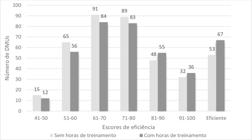
  Nota: Os escores inferiores a 41 não apresentaram nenhuma DMU.Fonte: Frontier Analysis (2021).
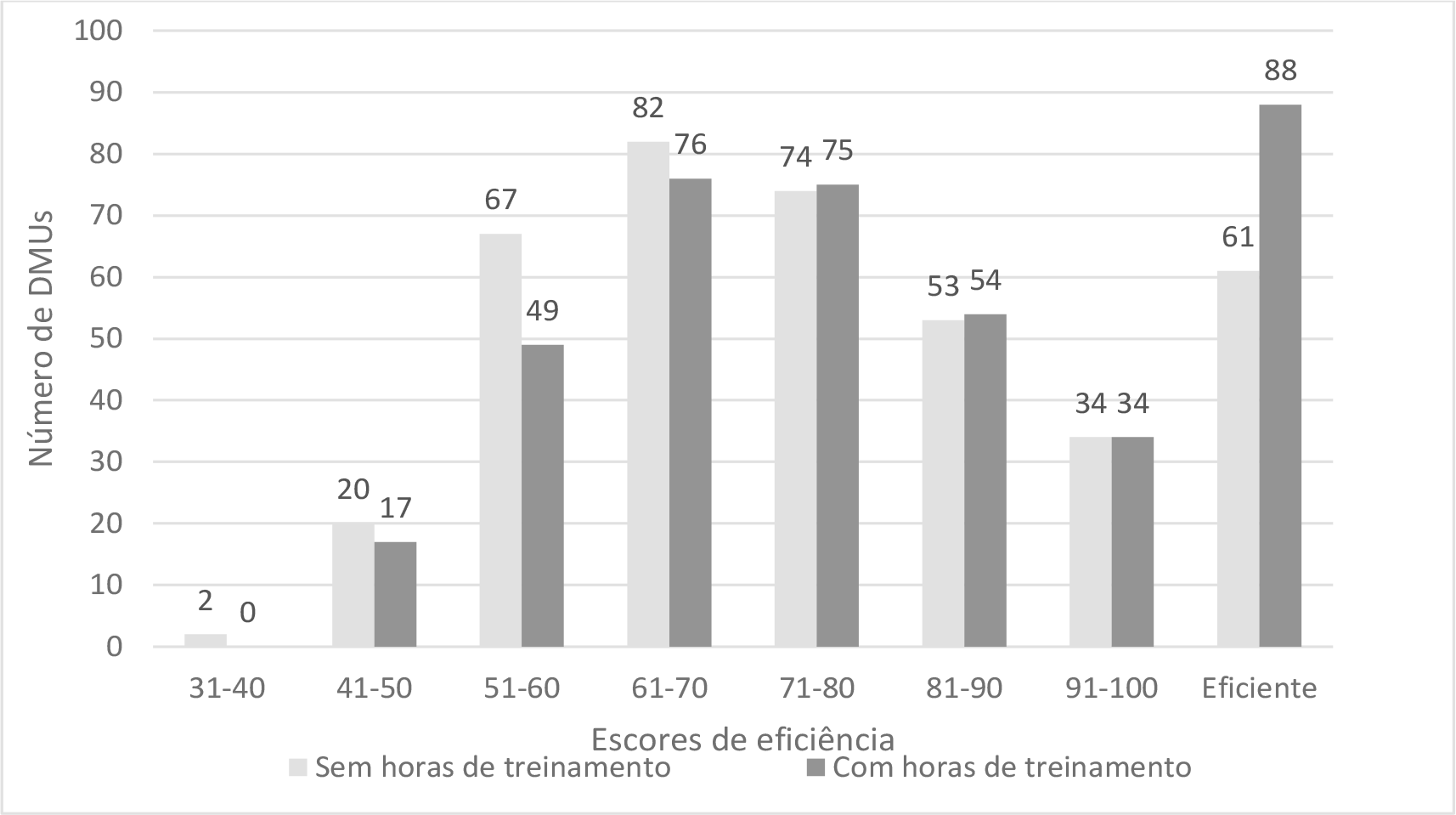 Nota: Os escores inferiores a 31 não apresentaram nenhuma DMU.Fonte: Frontier Analysis (2021).
 Nota: Os escores inferiores a 31 não apresentaram nenhuma DMU.Fonte: Frontier Analysis (2021).
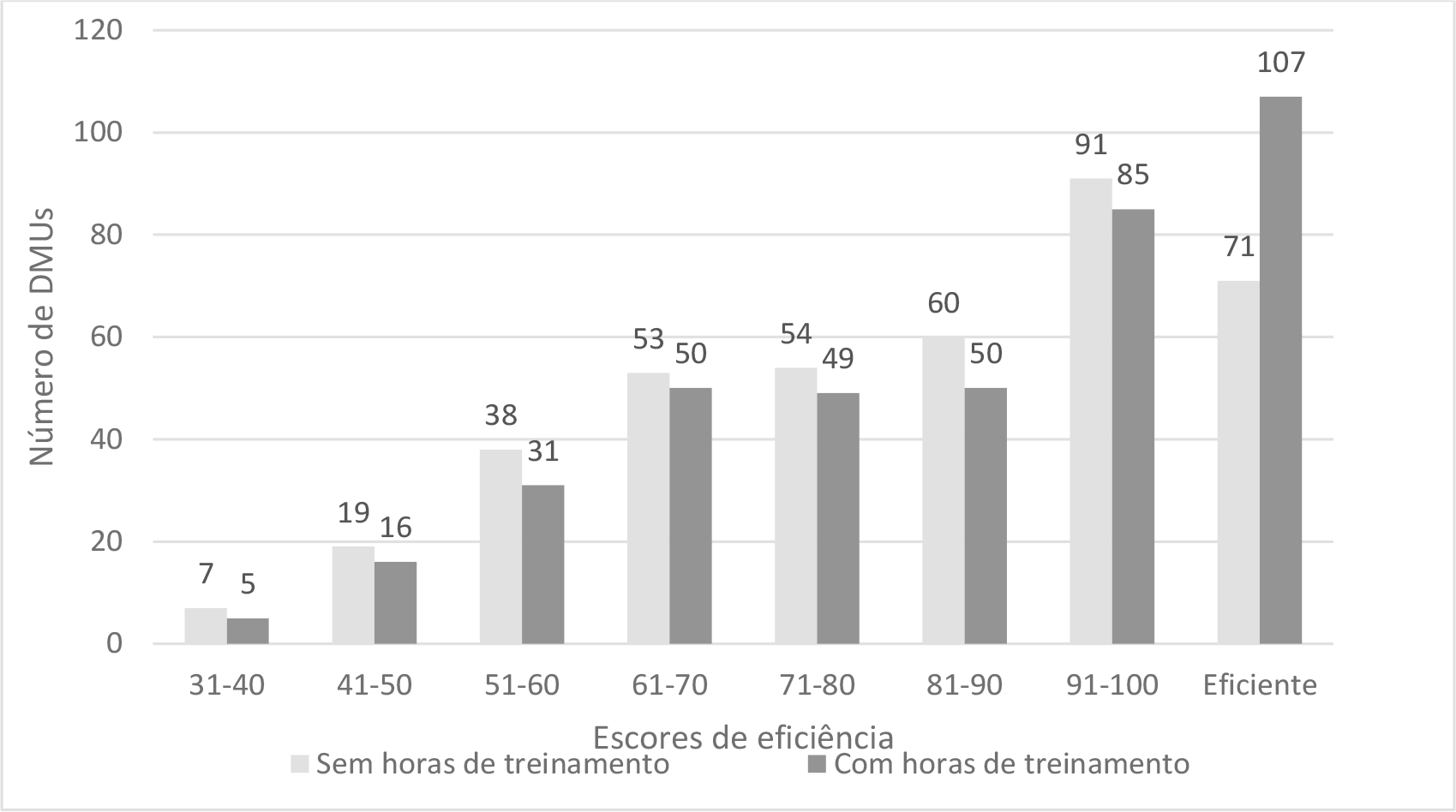 Nota: Os escores inferiores a 31 não apresentaram nenhuma DMU.Fonte: Frontier Analysis (2021).