
 Evaluation of the Special Tax Recovery Program of the Federal Revenue Service of Brazil
ABSTRACT
This article aimed to assess the extent to which the Special Tax Recovery Program (PERT), established by the Federal Revenue Service of Brazil in 2017, contributed to the recovery of tax debts among participating taxpayers. Despite the widespread use of tax installment programs, there are no clear criteria for evaluating their effectiveness, nor systematic evidence of their economic effects, as official analyses generally focus only on the amounts collected. This gap, compounded by the scarcity of studies employing rigorous empirical designs, limits the understanding of the impacts of such programs. The study seeks to address this gap by strengthening evidence-based public policies. Given the complexity of the Brazilian tax system, the topic is particularly timely and relevant. The main innovative contribution of this research lies in combining microdata from the Federal Revenue Service of Brazil with a quasi-experimental approach, thereby enabling the results to support decision-making on the continuation of PERT or the design of new tax installment programs. The findings have practical implications for the design and evaluation of policies aimed at recovering tax credits. The study covered 66,075 taxpayers, ensuring representativeness and reliability in the collection of information. Using a difference-in-differences approach, comparing a treatment group (PERT participants) with a control group (non-participants), the research evaluates the tax recovery of these taxpayers between 2017 and 2021. The results indicate that PERT had a positive effect on the evolution of tax compliance among participating taxpayers, with an average difference of 4.17 percentage points in favor of participants compared with non-participants, thereby contributing to the recovery of tax debts. Differences were also observed according to socioeconomic characteristics, with higher compliance among younger firms and certain economic sectors showing higher levels of compliance within the special program.
Keywords:
public policy evaluation; tax compliance; Special Tax Recovery Program; tax installment programs; Federal Revenue Service of Brazil
RESUMO
O objetivo deste artigo foi avaliar em que medida o Programa Especial de Recuperação Tributária (PERT), instituído pela Receita Federal do Brasil em 2017, contribuiu para a recuperação dos débitos fiscais dos contribuintes aderentes. Apesar da ampla utilização dos programas de parcelamento fiscal, não existem critérios claros para avaliar a sua eficácia nem evidências sistemáticas sobre os seus efeitos económicos, sendo a análise oficial restrita aos valores arrecadados. Essa lacuna, agravada pela escassez de estudos com desenhos empíricos rigorosos, limita a compreensão dos impactos desses programas. O estudo busca suprir essa lacuna, contribuindo para o fortalecimento das políticas públicas baseadas em evidências. Diante da complexidade do sistema tributário brasileiro, o tema revela-se particularmente atual e relevante. A principal contribuição inovadora desta pesquisa reside na combinação entre o uso de microdados da Receita Federal do Brasil e uma abordagem quase-experimental, permitindo que os resultados subsidiem a tomada de decisão quanto à continuidade do PERT ou à formulação de novos programas de parcelamento fiscal. Os achados têm implicações práticas para o desenho e a avaliação de políticas de recuperação de créditos tributários. Desenvolveu-se um estudo abrangendo 66.075 contribuintes, conferindo representatividade e confiabilidade na coleta das informações. Com a utilização da técnica de comparação entre grupos (difference-in-differences), nomeadamente um grupo de tratamento, aderentes ao PERT, e um grupo de controle, não aderentes ao PERT, busca-se avaliar a recuperação fiscal desses contribuintes no período de 2017 a 2021. O PERT teve um efeito positivo na evolução do cumprimento fiscal dos aderentes, com um valor médio de 4,17 pontos percentuais favorável a esse grupo, face aos não aderentes, contribuindo para a recuperação tributária dos aderentes. Verificaram-se, ainda, diferenças em função de características socioeconômicas, com maior conformidade fiscal nas empresas mais jovens e com determinados segmentos de atividade econômica associados a um maior cumprimento no programa especial.
Palavras-chave:
avaliação de políticas públicas; cumprimento fiscal; Programa Especial de Recuperação Tributária; programa de parcelamento fiscal; Receita Federal do Brasil
1. INTRODUCTION
The tax compliance gap, understood as the difference between potential tax revenue and the amount collected, remains high, particularly in developing economies (Organisation for Economic Co-operation and Development, 2024). In this context, tax administrations focus on reducing the compliance gap and on maximizing compliance with tax obligations through instruments that encourage voluntary compliance and increase tax revenues. Among these instruments are tax compliance improvement plans proposed by the International Monetary Fund, which structure risk management through systematic and segmented approaches (Brondolo et al., 2022); the use of self-regulation platforms enabled by digital transformation, which identify non-compliant taxpayers, communicate detected inconsistencies, and allow their correction together with the tax authority (Yarygina et al., 2025); and the use of behavioral nudges, such as simple and targeted messages that have proven effective and low-cost (Yogama et al., 2024). In addition, legal mechanisms, such as tax settlements (Freire, 2023) and installment payment programs, are relevant tools for resolving tax disputes and recovering tax credits.
Within this context, the Federal Revenue Service of Brazil established the Special Tax Recovery Program (PERT) in 2017. PERT allows installment payments of overdue taxes and tax contributions, enabling participating taxpayers to obtain discounts on interest, fines, and tax charges. Taxpayers who fail to make regular tax payments may participate in the program and settle their debt through monthly installments over more than 10 years. Under PERT, tax debts could be paid in up to 145 monthly installments (Law No. 13,496 of 24 October 2017).
Although the federal government explicitly states the motivations for implementing installment programs, it does not establish clear criteria for evaluating their effectiveness or their effects on economic activity. In general, the stated objectives are broad and lack specific indicators or measurable targets. Official data tend to focus mainly on the amounts collected, without presenting evidence regarding the outcomes and impacts observed after the program’s implementation (Brazil, 2025). Although such programs are frequently presented as mechanisms for fiscal regularization and support for corporate solvency, empirical studies have produced contradictory evidence. The literature emphasizes their role during economic crises and in the recovery of tax liabilities (Bottega et al., 2023; De Souza, 2013). Other studies highlight significant limitations, such as economic inefficiency (Pimenta & Lana, 2020), reduced incentives for voluntary tax compliance (Paes, 2014), or even the influence of interest groups in the approval of such programs (Alves & Campagnoni, 2021; Borges & Rech, 2021). Thus, the question remains open as to the extent to which these programs contribute to tax regularization and the sustainability of firms, which justifies further analyses to clarify their effects. Moreover, the absence of evaluations grounded in theoretical frameworks of tax compliance and rigorous empirical designs undermines the development of evidence-based public policies. It restricts the understanding of their real impacts on tax regularization and economic activity. This gap contrasts with other scientific fields, where experimental and quasi-experimental methodologies have increasingly been adopted to support robust causal inference.
This research aims to assess the contribution of PERT to the recovery of tax debts among debtor taxpayers, focusing on corporate taxpayers and classifying them by location, size, sector of economic activity, and years of operation. To this end, a quasi-experimental study was conducted using a group-comparison design, consisting of a treatment group composed of PERT participants and a control group composed of non-participants. The analysis focuses on the tax recovery of these taxpayers and aims to answer the following research question: To what extent did PERT contribute to tax debt recovery among program participants?
The study evaluates the effects of PERT using microeconomic data from 66,075 taxpayers and applies the difference-in-differences technique to compare the fiscal performance of both groups between 2017 and 2021. The results indicate that PERT had a positive impact on tax recovery, with an average difference in tax compliance of 4.17 percentage points in favor of participants. Differences were also observed by socioeconomic characteristics of firms, with greater compliance among younger firms and those in certain sectors of economic activity. The results obtained have practical implications for the continuation or reformulation of PERT, providing empirical evidence to support the decisions of public managers and fiscal policy-makers in contexts characterized by high tax complexity.
2. THEORETICAL FRAMEWORK
2.1. Evidence-Based Public Policies
When addressing public policy, it is common to refer to actions taken or not by the government, as well as to decisions aimed at solving public problems (Dye, 2017). Owing to their interdisciplinary nature, public policies seek to address problems that require attention and are oriented toward a specific objective to meet the needs of a target population.
Peters (2021) explains that the discussion of public problems marks the beginning of the public policy-making process. Birkland (2016) points out that studying public policies involves making decisions and solving problems, noting that “public policy is about problem-solving” and that “people participate in policy making because they perceive that there are problems for which government, at some level, can provide solutions” (p. 2). The idea of developing a public policy does not arise in an abstract manner, but rather as a result of the action of various social actors in political arenas.
The provision of complete and reliable information is a relevant factor in improving decision-making and enhancing the outcomes of public policies. Evidence should underpin political decision-making, guide evaluations and enable the assessment of impacts on target populations (Cairney, 2016). Political decisions are strengthened when grounded in collective insights derived from multiple strands, and this is the greatest contribution that evidence-based public policy seeks to offer. For Pawson (2006) , methodological realism is the most appropriate approach for synthesizing such evidence, especially given that most political decisions occur in highly dynamic, politically charged contexts. In this field, the development of evidence-based public policies requires systems of scientific advice that promote good governance, ensuring rigorous, inclusive, and accountable decision-making processes that reflect society’s diverse interests (Parkhurst, 2017). In this context, Saguin et al. (2024) identified significant variations in the use of evidence across different public policy sectors in Brazil, as well as within public administration itself.
2.2. Public Policy Evaluation
Public policy evaluation is a stage that seeks to understand the behavior of a public policy, with a view to measuring the efforts expended, the effects, or the results achieved by the policy or program in question (Agum et al., 2015), and may lead to the redesign of the problem, the correction of directions, or the discontinuation of the public policy.
Both public policy evaluation and performance auditing are instruments of public governance designed to strengthen accountability and promote learning within the policy development cycle. These instruments are relevant for public managers, parliamentarians, and other stakeholders, insofar as they may contribute to inducing change and promoting continuous improvement, whether in administrative activity or in the formulation and management processes of public policies (Viana & Carpinteiro, 2025). Another relevant point is to distinguish evaluation from monitoring and follow-up. Monitoring and follow-up are managerial activities that occur throughout the process and aim to detect deficiencies, problems, or shortcomings in the execution of activities. Evaluation, in turn, focuses on specific moments in the program life cycle and has greater depth and scope than simple monitoring. The use of monitoring and evaluation as complementary instruments is recommended in order to improve programs and public policies (Cunha, 2018).
Evaluation can assist in analyzing the results and performance of a public policy (Wollmann, 2007), consisting of verifying the level of fulfilment of the established objectives and making the necessary corrections to processes or to the conduct of policies, so as to improve results from the perspective of the citizens affected by such policy. When defining objectives is difficult, measuring their fulfilment becomes more difficult (Howlett & Giest, 2013).
In addition to contributing to the measurement of results, the evaluation of programs and public policies may also reinforce the legitimacy of state actions before the population, insofar as it seeks to verify the degree of fulfillment of the objectives defined against the established benchmarks (Cunha, 2018).
The purpose of evaluation is to verify how a public policy was developed and whether the results obtained may contribute to improving the policy or even lead to its extinction if they prove unfavorable (Wu et al., 2018). Strengthening evaluative practices may yield gains for public organizations and society by enabling the production of knowledge that supports public managers’ decision-making.
2.3. Tax Installment Programs
From the taxpayer’s perspective, an installment payment constitutes a right that defers the enforceability of the tax debt, allowing it to be regularized through successive payments within a previously established period. For the State, it represents the possibility of receiving the amount that was not paid on the due date (De Souza, 2013). An installment program constitutes a benefit for participating taxpayers, since it ensures the regularization of their tax situation before the Brazilian State. In addition, it benefits the State by allowing those taxpayers to settle at least part of the debt, thereby increasing tax revenue.
These programs constitute fiscal policy instruments aimed at restoring taxpayers’ financial health. On the one hand, the tax authority seeks to increase revenue collection; on the other hand, taxpayers aim to obtain benefits, such as discounts, and to maintain tax regularity. The first obligation that Brazilian taxpayers tend to stop paying is the tax obligation, possibly because it causes less harm to the continuity of activities than eventual delay or default vis-à-vis suppliers and employees. Non-payment to suppliers may lead to a shortage of inputs and raw materials essential to the firm's operations, and non-payment to employees may lead to strikes and labor claims (Munhoz, 2007).
For many firms, installment programs help reduce their debt, contributing to the recovery of tax debtors, especially those firms whose sole creditor is the State. Even so, several studies discuss the effectiveness of such programs. Their tax fairness is questioned, insofar as they may favor specific economic sectors, raising doubts as to the influence of interest groups on their approval (Alves & Campagnoni, 2021).
Others conclude that, because of high transaction costs and the absence of positive incentives for firms to participate in recovery, the programs may be economically inefficient (Pimenta & Lana, 2020). The analysis of four special tax installment programs between 2000 and 2009 suggests that the granting of these benefits significantly reduces the taxpayer’s propensity to pay taxes voluntarily. Only after a long period does this propensity tend to return to its natural level (Paes, 2014).
However, because these situations involve indirect tax waivers, it is difficult to measure how much of the reduction in voluntary tax compliance stems specifically from installment programs. In the field of fiscal policy, an indirect tax waiver refers to mechanisms by which the State ceases to collect tax revenue in an implicit manner, owing to rules or exceptions incorporated into tax legislation. Such practices constitute a form of implicit public expenditure, insofar as they reduce potential revenue without requiring a direct financial transfer. These tax expenditures constitute an alternative to direct expenditure for achieving public objectives, but they represent a deviation from the legal tax structure (Tribunal de Contas da União, 2022).
Installment arrangements are intended to increase revenue collection through the payment of overdue taxes in instalments, thereby facilitating settlement for taxpayers who are unable to pay on time. As a general rule, under the National Tax Code (Brazil, 1966), installment payments do not exclude interest and fines. Exceptional installment arrangements, in turn, offer additional benefits, such as discounts on interest and fines, and normally have a limited participation period (De Souza, 2013). PERT falls within the category of tax installment programs.
2.4. PERT
Provisional Measure no. 783, of 2017, was converted into Law no. 13,496, of 24 October 2017, which established PERT. Under the rules laid down in this law, individuals and legal entities were allowed to join the program and settle instalment taxes due up to 30 April 2017. PERT, launched in 2017 and still in force, falls within the category of special installment arrangements, since participation is limited in time and it offers discounts on interest and fines, in addition to payment in instalments that may extend up to 180 months for the settlement of the debt consolidated under the program. Special installment arrangements are, at the same time, a type of moratorium, by extending the payment period, and a form of remission and amnesty of tax debts.
The establishment of special installment programs, such as PERT, aims to increase tax revenue collection and reduce judicial and administrative litigation in proceedings against the State (Alves & Campagnoni, 2021). PERT participants held federal tax debts and were allowed to include them in the program, in April 2017, committing themselves to pay the minimum amount of R$ 200.00 in the case of individuals, or R$ 1,000.00 in the case of legal entities, with taxpayers falling under the Simples Nacional regime not being allowed to participate (Law no. 13,496, of 24 October 2017).
With the establishment of successive installment programs and their widespread use in the country, alongside a significant growth in the number of participants over time, it becomes relevant to investigate the extent to which these initiatives contribute to the recovery of participants’ debts and to improving firms’ ability to generate employment and revenue.
Among the benchmark empirical studies, Souza (2019) stands out, as it addresses the problem of repeated installment programs and their possible negative effects on tax collection, confirming the hypothesis that the successive emergence of programs harms revenue collection and produces other negative effects. In a complementary manner, Borba and Coelho (2019) analyze the granting of tax benefits in the form of tax settlement laws, such as tax installment programs, and conclude that such measures constitute tax expenditures carried out in a poorly transparent manner and directed at specific sectors, and may even be used as tax planning instruments.
Fontes (2021) criticizes the repeated granting of installment arrangements, arguing that such measures may foster a culture of default and fail to promote taxpayers’ fiscal regularization. The author considers that taxpayers do not maintain their tax situation in good standing, in the expectation that a new installment program will soon be introduced, through which they may obtain benefits such as reduced interest and late-payment fines. In this way, he argues that installment programs should be used sparingly, during periods of crisis, to provide temporary assistance to fragile firms facing financial difficulties.
Another study along the same lines is that of Borges and Rech (2021) , who assessed the effectiveness of tax installment arrangements, especially PERT, for the solvency of publicly traded companies, concluding that there is evidence that this type of debt installment arrangement is not effective in saving participating firms, contrary to the justification usually employed to approve laws in this regard. The results suggest that the programs bring no benefits to the public interest in terms of maintaining employment, generating revenue, and providing services to the population, and that granting new installment arrangements may be associated with pressure from interest groups. In turn, Marinho and Machado (2023) analyzed the influence of this instrument on the tax aggressiveness of publicly traded Brazilian firms and concluded that this mechanism may be interpreted by firms as both a strategy of tax regularization and a way to reduce the tax burden. The research provides evidence that firms that opt to pay taxes in instalments tend to adopt a more aggressive tax position.
Paes (2014) adds that special installment arrangements encourage tax disobedience, insofar as they reduce the present value of taxes due, thereby increasing the likelihood of failure to pay them on time. Alves and Campagnoni (2021) demonstrated that there were no significant differences in the magnitude of provisions between firms that adhered to PERT and those that did not benefit from the program in 2017. Finally, Gomes et al. (2024) analyze the relationship between the complexity of the tax system and the recurrence of special installment arrangements, concluding that both factors increase the probability of tax disobedience.
Conversely, Bottega et al. (2023) observe that, although many taxpayers use these programs as a form of tax planning, refraining from paying taxes on time in the expectation of later joining a more advantageous installment arrangement, installment programs play a relevant role for firms that face difficulties in regularizing their tax liabilities, while also providing support during periods of economic crisis.
The literature review shows divergent results regarding the effectiveness of installment programs in tax recovery. This diversity of findings motivated the investigation of whether PERT influenced participants' tax recovery, formulating research hypotheses that allow assessment of the program’s impact and the influence of socioeconomic characteristics on these taxpayers' behavior.
3. METHODOLOGY
In order to assess the extent to which PERT contributed to the recovery of the tax debts of participants, we developed the analytical model (Figure 1) and three hypotheses: (i) adherence to PERT had a positive impact on taxpayers’ tax compliance (hypothesis H1); (ii) within the group of PERT participants, the degree of tax compliance is influenced by the socioeconomic characteristics of taxpayers (hypothesis H2); and (iii) within the group of PERT participants, the degree of compliance with the program is influenced by the socioeconomic characteristics of taxpayers (hypothesis H3). The socioeconomic variables used to test hypotheses H2 and H3 were: (i) values of the overall debt and the installment debt included in the program (amounts owed); and (ii) number of years the organization has been in operation (longevity), sector of economic activity in which the organization operates (sector), size of the organization (size), and fiscal region in which the organization’s headquarters is located (location).

Within the scope of the research proposal, tax compliance corresponds to the ratio of overall debt paid to total overall debt and seeks to measure the volume of payments made to reduce the initial debt. This measure is applied to both the treatment group (taxpayers who adhered to PERT) and the control group (taxpayers who did not adhere to PERT). Program compliance corresponds to the outstanding ratio balance in 2021 / debt consolidated in the program in 2017, and seeks to measure the number of payments made under PERT. This measure is applied only to the treatment group (PERT participants). Tax recovery results from the combination of the two previous ratios, tax compliance and program compliance, and is intended to be the measure used to evaluate the results of PERT.
To assess the extent to which PERT contributed to the tax recovery of debtors, we considered the period before and after the program's introduction in 2017, and analyzed the results obtained until 2021. For this purpose, data were extracted from the information system of the Federal Revenue Service of Brazil to identify and characterize corporate taxpayers (associations, private companies, and public organizations from all regions of Brazil) eligible to participate in PERT. Two groups were formed: (i) the treatment group, composed of the totality of taxpayers (the population) who had outstanding debts and adhered to PERT under the modality described in Article 2, item III-b, of Law no. 13,496, of 24 October 2017 (payment of an entry installment plus 145 monthly payments); and (ii) the control group, composed of a subset (sample) of taxpayers who had outstanding debts during the same period and who resorted to debt installment through the conventional installment system (maximum of 60 monthly payments) under the Debt Installment System, choosing not to adhere to any of the modalities of PERT.
The collected data were analyzed using descriptive and inferential statistical methods to investigate the relationships among the variables of interest identified in the analytical model and to test the hypotheses under study. The analysis was conducted using IBM SPSS and R software, adopting a 5% significance level.
One of the study's concerns was to isolate the effects of the program intervention in the treatment group. Wu et al. (2018) present evaluation models for isolating observed outcomes, among which they propose using the matched comparison model (difference-in-differences) to estimate the average treatment effect on the treated (ATT). According to the authors, in the matched comparison model, “an experimental group is exposed to a policy, while a closely matched control does not receive the policy in question” (p. 132). Adjusted and unadjusted estimates of the ATT were obtained, taking into account the socioeconomic characteristics of taxpayers (covariates) in the pre-program period (2017): amounts owed, sector of activity, economic size, longevity, and location. The balance of the distribution of a covariate between the two groups was assessed using two complementary methods: (i) the two-sided Wald test (with continuity correction) to compare the proportion of each class of a covariate between groups; and (ii) the difference in mean values of a variable between groups (even when expressed as an indicator variable, dummy), normalized by their sample standard deviations. Regardless of the result of a hypothesis test, this statistic, comparable across variables, makes it possible to assess whether the difference in a covariate between groups is so large (generally > 0.25 in absolute value) that a simple adjustment method in a linear regression is not reliable for removing biases associated with differences in that covariate (Imbens & Rubin, 2015).
To test hypothesis H1, the ATT was estimated using two alternative estimators: (i) the two-way fixed effects estimator (TWFE) with linear regression using the ordinary least squares method; and (ii) the doubly robust and locally efficient estimator, obtained through the combination of weighted least squares regression with weighting by propensity scores estimated through inverse probability tilting, according to Sant’Anna and Zhao (2020) . In the adjusted estimation, covariates were incorporated linearly in both the TWFE and the doubly robust estimators.
The general expression of the equation used for estimation with TWFE was:
where 𝛽 1 is the intercept, the remaining 𝛽 correspond to the regression coefficients associated with the period (𝑇, with 𝑡=2017 or 𝑡=2021), the intervention group (𝐷; controlo ou tratamento), the ATT of PERT ( 𝛽 𝑇𝑊𝐹𝐸 ), and a vector of covariates (𝑋) with the observed socioeconomic characteristics of taxpayer 𝑖; 𝜀 𝑖𝑡 represents the stochastic error term.
In addition to the assumptions typically associated with the difference-in-differences methodology (data independence, parallel trends, and the common support condition), this specification of TWFE implies two additional assumptions: it assumes that the ATT is homogeneous across strata defined by the covariates and excludes specific parallel trends in the covariates analyzed. When these additional restrictions are not satisfied, the 𝛽 𝑇𝑊𝐹𝐸 estimate is generally different from the true ATT, and policy evaluations based on this estimate may be misleading (Sant’Anna & Zhao, 2020). As an alternative, Sant’Anna and Zhao (2020) developed doubly robust and locally efficient estimators for both consistency and inference by combining a covariate-adjusted regression technique with a propensity-score weighting method. These estimators satisfy the parallel trends assumption (conditional on covariates), incorporate covariates correctly into the estimation process, and do not impose restrictions on heterogeneity in treatment effects. They are particularly useful in contexts where the parallel trends assumption holds only after conditioning on a vector of pre-treatment covariates (for example, when imbalance in the distribution of covariates between groups violates this assumption) (Baker et al., 2025).
To test hypotheses H2 and H3, we used the Wilcoxon signed-rank test to compare the distribution of tax compliance before and after the program within each class of a socioeconomic variable (H2), and the one-way analysis of variance test (ANOVA) to compare the mean values of program compliance among the classes of a socioeconomic variable (H3).
4. DATA ANALYSIS AND DISCUSSION
4.1. Characterization of Taxpayers
Overall, we identified 66,075 corporate taxpayers, of which 40,564 (61.39%) adhered to PERT and formed the treatment group, and 25,510 (38.61%) who did not adhere to PERT and formed the control group. It is important to note that both groups consist of taxpayers who opted to pay their debts in instalments. However, taxpayers in the treatment group adhered to a special program, whereas those in the control group used a conventional installment arrangement.
When classifying taxpayers by quartiles of overall debt, four classes were obtained, with a balanced distribution of taxpayers across low, medium, high, and very high overall debt values. Table 1 presents the distributions of this variable across the two groups, as well as the distributions of economic sectors, economic size, longevity, and location. The highest levels of debt occur mainly in the treatment group. A predominance of the segment “Wholesale and retail trade; repair of motor vehicles and motorcycles” can be observed (32% in the control group and 27% in the treatment group). “Manufacturing”, “Construction”, and “Professional, scientific and technical activities” also stand out among the most frequent sectors. In both groups, approximately 76% of taxpayers fall into the “Other legal entities” category, followed by “Simples National regime participants” at nearly 24%, with the remaining categories accounting for the remainder.
With regard to longevity, the most frequent class corresponds to companies with 11 to 20 years of operation, whereas companies with more than 40 years of existence are less frequent. The 8th and 9th Fiscal Regions account for the largest share of companies’ locations in both groups. The characterization analysis indicates that both groups present similar profiles in terms of economic size and location. Although statistically significant differences are observed (p < 0.001) between the groups in almost all fiscal regions, the distribution is balanced (standardized difference < 0.25). However, imbalances are observed in the distribution of some of the remaining variable classes. The lowest levels of debt are significantly concentrated in the control group, whereas the highest levels are significantly concentrated in the treatment group. Statistically significant differences are also observed between the two groups in the distribution of all sectors of economic activity. However, the segments “Other service activities,” “Manufacturing,” “Real estate activities,” and “Wholesale and retail trade; repair of motor vehicles and motorcycles” are those in which the imbalance may have the greatest impact on the estimation of the ATT (particularly the segment “Other service activities,” given the standardized difference > 0.25). Significant differences are also observed between the groups in almost all longevity classes. The imbalance is observed mainly among taxpayers with more than 40 years of activity, although the magnitude remains relatively small (standardized difference < 0.25).
These imbalances suggest that the parallel trends assumption (unconditional on covariates) may not be ensured (Baker et al., 2025). For this reason, the covariates were included in the ATT estimation to allow comparison of the two groups based on similar observed characteristics. This precaution is even more important because data from periods prior to program adherence are unavailable, making it impossible to assess the plausibility of the parallel trends assumption directly.
4.2. Evaluation of Tax Compliance
To evaluate PERT and its contribution to participants' tax recovery, values for tax compliance and program compliance were considered.
To measure tax compliance, data were collected on taxpayers’ overall debt before and after the program adherence period. The period prior to the program includes debts up to 2017, and the period after adherence to PERT includes the overall debt from January 2017 until the end of 2021. Data on payments of the overall debt made during the same period were also collected. These values correspond to the overall debt and were therefore identified for both participants and non-participants in the program. The indicator used to determine tax compliance was the proportion of overall debt paid relative to total debt, applied to both the treatment and control groups: the higher the percentage, the greater the tax compliance. In the case of PERT participants (treatment group), tax compliance decreased significantly from 44.29% to 40.87%, average values (p < 0.001; Wilcoxon signed-rank test). This means that before the program intervention, taxpayers paid a larger portion of their overall debt. For non-participants (control group), the degree of tax compliance decreased from 64.91% to 55.97%, representing a more pronounced reduction (p < 0.001) than that observed among participants. Therefore, based on this indicator, it was observed that both participants and non-participants experienced a reduction in tax compliance after the program period, indicating that both groups followed a downward trend in this indicator (Figure 2).
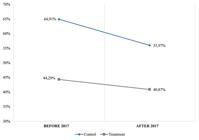
Evolution of tax compliance in the group of participants in the Special Tax Recovery Program (PERT) (treatment) and in the group of non-participants (control)
According to the data presented, tax compliance values are higher in the non-participant group than in the participant group, both before and after the program period. The difference between the two groups arises because, among participants, tax compliance decreased by only 3.42 percentage points on average, whereas in the non-participant group, the reduction was more pronounced, reaching 8.94 percentage points after the program period. As shown in Table 2, the program had a statistically significant effect (p < 0.001) on the group of PERT participants. According to the doubly robust estimator, taking into account taxpayers' socioeconomic characteristics, this effect was positive, with an average value of 4.17 percentage points. In other words, among taxpayers with comparable characteristics, adherence to PERT resulted in a more favorable evolution in debt compliance in the participant group than in the non-participant group. Although tax compliance decreased between 2017 and 2021 in both groups, the average reduction was 4.17 percentage points smaller among participants, thereby contributing to debtors' tax recovery. This estimate of the impact of PERT remains positive even when accounting for the margin of error (95% confidence interval: 2.83-5.51), although it is lower than that obtained with the other estimators presented in Table 2. The adjusted doubly robust estimator is the most appropriate for testing hypothesis H1 in the context of this study, because its properties are more favorable than those of the TWFE estimator for estimating the ATT, and because the distribution of socioeconomic characteristics is not balanced between taxpayers in the two groups being compared (Baker et al., 2025; Sant’Anna & Zhao, 2020). Overall, these results show that the reduction in tax compliance was smaller among PERT participants than among non-participants, suggesting that the program had a positive effect on the tax compliance of participating taxpayers. Therefore, hypothesis H1 is not rejected.
Among PERT participants, tax compliance was not influenced by the amount owed, sector of activity, economic size, or location, as compliance decreased across all segments analyzed for these variables after 2017, following the overall trend. Therefore, hypothesis H2 is rejected for these four dimensions. In contrast, it was not possible to reject the hypothesis that the degree of tax compliance among taxpayers is influenced by longevity (Table 3). Taxpayers with up to 10 years of activity significantly increased their compliance capacity, rising from 41.84% before the program to 59.64% in the subsequent period, representing a positive variation of 18 percentage points and statistically significant (p < 0.001). This result contrasts with older legal entities, particularly those with more than 40 years of activity, whose compliance decreased by approximately 9 percentage points. The evidence suggests that younger firms demonstrate greater resilience and the capacity to meet commitments, whereas older firms face persistent difficulties that even the program's incentives were unable to reverse.
4.3 Evaluation of Program Compliance
To evaluate the degree of compliance within the program, taxpayers who adhered to PERT were classified according to the status of the installment arrangement at the time of program adherence in April 2017: “in instalment”, when the taxpayer maintained payments up to date within the program; “installment arrangement settled awaiting closure”, when the taxpayer had already settled all payments foreseen in the program; “excluded from the program”, when the taxpayer was excluded due to default. It should be noted that, upon joining the program, taxpayers could choose the payment modality: lump-sum payment, with immediate settlement of obligations; or installment payment, with the option of up to 145 installments. With the exception of those who opted for a lump-sum payment (13.21%; 5,358 of 40,565), most taxpayers (86.79%; 35,207 of 40,565) chose the installment modality, spreading their debts over up to 145 months (approximately 12 years).
More than four years after adherence to the program, the status of taxpayers at the end of 2021 was extracted. It should be noted that for 6,580 taxpayers (16.22% of the total) the information was missing. During this period, the majority of PERT participants remained in installment payment status (47.48%, 19,262/40,565), maintaining regular compliance with the program. A substantial share (35.06%, 14,224/40,565) had fully settled their debts, having completed all the payments required under the program. Only a small fraction of taxpayers (1.23%, 499/40,565) was excluded from the program due to non-compliance.
With regard to the amounts included in the program, the average debt recorded at the beginning of the program was R$ 833,208.32 (standard deviation = R$ 16,382,529.12). By the end of 2021, after more than 4 years, this amount had decreased by approximately 42%, reaching R$ 486,824.27 (standard deviation = R$ 9,223.37). These values indicate a substantial, statistically significant reduction (p < 0.001) in consolidated debt in the program (n = 33,988). To measure the degree of compliance within the program, data from 2017 on the total debt included at the beginning of PERT (consolidated debt) and data from the end of 2021 on the amount each taxpayer still owed (outstanding balance) were considered. The indicator adopted was the ratio of the outstanding balance in 2021 to the debt consolidated in the program in 2017, applied only to the treatment group, since the control group did not participate in the program. The lower this indicator's value, the greater the taxpayer’s capacity to comply with the program. The analysis of program compliance values revealed an average of 34.85% for this indicator among the set of taxpayers participating in PERT.
The degree of compliance within the program was not influenced by economic size or the location of taxpayers, as results were similar across the different segments of taxpayers analyzed for these two variables and were close to the average value of the indicator for the overall group of taxpayers. Therefore, hypothesis H3 is rejected for these two socioeconomic variables. Conversely, it was not possible to reject that the degree of compliance within the program is influenced by the amounts owed, the sector of economic activity, and longevity, as shown below.
With regard to the amounts owed within the program, taxpayers were classified into four segments, according to the quartiles of the amounts owed within the program, resulting in four classes with a balanced distribution of taxpayers (25% in each class): low debt values (up to R$ 37,251.63), medium debt values (between R$ 37,251.64 and R$ 118,283.51), high debt values (between R$ 118,283.52 and R$ 438,865.60), and very high debt values (above R$ 438,865.60).
A clear distinction between smaller and larger PERT debtors was observed, with statistical significance (p < 0.001), as presented in Table 4. Taxpayers with lower debt values included in the program had practically already settled their outstanding balances; on average, only 0.09% of the initial debt remained unpaid. In the case of taxpayers with medium debt values, a more favorable level of compliance was also observed, since only 20.87% of the debt remained unpaid, a percentage below the overall average of 34.85%. By contrast, taxpayers with high or very high debt values faced a more critical compliance situation within the program, as the recorded values (above 60%) were almost twice the overall average. These results indicate that the amounts owed by firms influence the degree of compliance within the program; therefore, hypothesis H3 is not rejected for this variable.
Regarding economic activity sectors, program compliance was close to the overall average (35.03%) in most sectors. However, in five sectors the indicator (outstanding balance / total debt included in the program) showed values between 10 and 15 percentage points above the overall average: “Public administration, defense and social security” (49.56%); “Water supply, sewerage, waste management and remediation activities” (47.30%); “Manufacturing” (45.32%); “Mining and quarrying” (44.95%); and “Electricity and gas” (44.56%). Conversely, in two sectors: “Other service activities” and “Human health and social work activities”, the value of the indicator was below the overall average (25.32% and 22.99%, respectively), indicating a higher level of compliance than the average observed among taxpayers. Given that values deviating from the overall trend were observed (differences greater than 10 percentage points, either above or below the mean) and considering the statistical significance of the ANOVA test (p < 0.001), it can be concluded that the sector of activity of the legal entity influences the degree of compliance within the program. Therefore, hypothesis H3 was not rejected for this variable.
Regarding longevity, younger taxpayers with up to 10 years of activity had the highest compliance rate (Table 5). While the overall average is 35.03%, these taxpayers show only 27.45% of debt remaining to be paid within the program, approximately 8 percentage points below the mean. In contrast, legal entities with more than 40 years of activity showed the poorest performance, with 39.72% of debt remaining. These results indicate that younger firms demonstrated a greater capacity to comply with the program than older firms. The observed differences are statistically significant (p < 0.001) and consistent with the results of the analysis of tax compliance by longevity (hypothesis H2). It can therefore be concluded that the degree of compliance within the program is influenced by the longevity of the legal entity, and hypothesis H3 is not rejected for this variable.
4.4 Effectiveness of PERT in Tax Compliance
The analysis confirms that PERT had a positive impact on debtors' tax recoveries, mitigating the reduction in tax compliance that would likely have been more pronounced in the absence of the program. The 4.17 percentage-point difference in favor of participants can be explained by the program's more favorable payment conditions, which reduced costs and increased predictability. It may also reflect behavioral factors, such as the perception of a “second chance”, the relief generated by debt reduction, or the partial restoration of trust between taxpayers and the tax authority. In this sense, rational choice theory helps explain how PERT altered the cost-benefit relationship, making tax regularization more attractive. At the same time, behavioral approaches highlight the importance of trust and voluntary compliance in strengthening tax compliance.
However, criticisms remain regarding the design and scope of such programs. Silva et al. (2023) emphasize that indiscriminate participation may serve as a delaying strategy, potentially discouraging compliant taxpayers. For this reason, the authors advocate more rigorous access criteria, adjusted to the taxpayer’s actual financial situation and historical compliance behavior. Similarly, Gomes (2020) proposes reformulating PERT by replacing special programs with a permanent installment model based on objective criteria and a differentiated index that values socially relevant firms while discouraging repeated non-compliance.
5. CONCLUSION
The availability of high-quality information plays a decisive role in promoting more informed decisions and enhancing the effectiveness of public policies. The absence of clear criteria for evaluating the effectiveness of installment programs and the scarcity of systematic evidence on their economic effects create significant limitations in assessing their outcomes. In this context, the evaluation of public programs is an essential tool for improving them and supporting decisions to discontinue them when they fail to achieve the desired effects among the target population. To achieve this, political decisions must rely on robust empirical evidence, capable of guiding evaluation processes and assessing the effective impacts on beneficiary populations.
Based on this framework, this research evaluated PERT to verify its effectiveness in tax recovery for participating taxpayers. Both groups of taxpayers analyzed (the treatment group, composed of PERT participants, and the control group, composed of non-participants) presented lower recovery after 2017. However, a more pronounced reduction in tax compliance was observed in the control group (8.94 percentage points on average) than in the treatment group (3.42 percentage points). PERT had a significant effect on the evolution of tax compliance among participants, with an average value of 4.17 percentage points in favor of this group compared with non-participants. Based on these results, it can be concluded that the PERT installment program had a positive impact on tax recovery for participating taxpayers and contributed to the recovery of tax debts for debtors.
By adopting a quasi-experimental approach based on a robust dataset from the Federal Revenue Service of Brazil and employing a difference-in-differences methodology, this study contributes to evaluating the effectiveness of these policy instruments. The results, by highlighting variations in tax and program compliance across firms' socioeconomic profiles (such as debt levels, longevity, and sector of activity), also provide relevant insights into the design of more targeted and effective policies. Thus, the research findings indicate that PERT contributed to the recovery of tax debts, corroborating the positive effects identified in certain circumstances by previous studies. Beyond confirming this result, the study underscores the importance of evidence-based evaluations to inform decisions on the continuation, reformulation, or replacement of tax installment programs in Brazil.
The main limitation of this study is the lack of data for several periods prior to the program's implementation, which prevented empirical testing of the parallel trends assumption using placebo tests. This assumption is fundamental to the difference-in-differences methodology, as its violation implies that tax compliance would not evolve at the same rate in the treatment and control groups in the absence of the intervention. Although estimation methods were adopted that adjust the distribution of covariates between groups, thereby increasing the plausibility of conditional parallel trends, this limitation remains relevant. Furthermore, it was not possible to evaluate the “non-anticipation” assumption, which requires ensuring that individuals in the treatment group did not change their behavior before the intervention in response to the program's expectation.
Formally, this assumption implies that the ATT should be null in the pre-program period, but the absence of data for earlier periods also prevented the assessment of this condition through placebo tests. These limitations therefore recommend caution in interpreting the results.
As suggestions for future research, it is proposed to obtain data from several periods prior to the program in order to overcome the limitations mentioned above. It is also suggested to expand the scope of analysis to include a new segment of study: individual taxpayers participating in PERT, enabling a more comprehensive evaluation of the program’s effects. Finally, it is recommended to adopt a methodological expansion combining quantitative data with qualitative approaches, such as interviews with specialists and public decision-makers, in order to deepen the understanding of the effects and underlying mechanisms associated with such programs.
REFERÊNCIAS
-
Agum, R., Riscado, P., & Menezes, M. (2015). Políticas públicas: conceitos e análise em revisão. Agenda Política, 3(2), 12-42. https://doi.org/10.31990/10.31990/agenda.ano.volume.numero
» https://doi.org/10.31990/10.31990/agenda.ano.volume.numero - Alves, D. B., & Campagnoni, M. (2021). Parcelamento tributário e endividamento com provisões e contingências em empresas de relevância nacional. Contabilometria, 8(2), 1-18.
-
Baker, A., Callaway, B., Cunningham, S., Goodman-Bacon, A., & Sant’Anna, P. H. C. (2025). Difference-in-differences designs: A practitioner’s guide. arXiv.13323. https://doi.org/10.48550/arXiv.2503.13323
» https://doi.org/10.48550/arXiv.2503.13323 - Birkland, T. A. (2016). An introduction to the policy process (4th ed.). Routledge.
-
Borba, B. E., & Coelho, A. F. C. (2019). Gastos fiscais: regalia sob forma de despesa pública indireta? Revista de Informação Legislativa, 56(222), 181-199. http://www2.senado.gov.br/bdsf/handle/id/558917
» http://www2.senado.gov.br/bdsf/handle/id/558917 -
Borges, S. R. P., & Rech, I. J. (2021). Efetividade dos parcelamentos fiscais para a solvência corporativa no Brasil. Advances in Scientific and Applied Accounting, 14(1), 72-89. https://doi.org/10.14392/asaa.2021140103
» https://doi.org/10.14392/asaa.2021140103 -
Bottega, R. B., Fredo, A. R., da Motta, M. E. V., Priesnitz, M. C., & Camargo, M. E. (2023). Passivo tributário: uma análise dos programas de recuperação fiscal. Revista Observatorio de la Economía Latinoamericana, 21(7), 7522-7551. https://doi.org/10.55905/oelv21n7-095
» https://doi.org/10.55905/oelv21n7-095 - Brasil. (1966). Código Tributário Nacional. Diário Oficial da União.
- Brasil. (2025). Relatórios sobre a arrecadação federal. Centro de Estudos Tributários e Aduaneiros da Receita Federal.
- Brondolo, J., Chooi, A., Schloss, T., & Siouclis, A. (2022). Compliance risk management: developing compliance improvement plans. International Monetary Fund.
- Cairney, P. (2016). The politics of evidence-based policy making. Palgrave Macmillan.
- Cunha, C. G. S. (2018). Avaliação de políticas públicas e programas governamentais: tendências recentes e experiências no Brasil. Revista Estudos de Planejamento, 12, 27-57.
- De Souza, A. A. M. M. (2013). Renúncia a direitos fundamentais no regime de parcelamento fiscal. Revista do Instituto de Direito Brasileiro, 6, 5851-5889.
- Dye, T. D. (2017). Understanding public policy (15th ed.). Pearson.
- Fontes, T. V. (2021). Programas de parcelamento e anistia fiscal e seus impactos no comportamento dos contribuintes sob a ótica da redução do tax gap brasileiro [Dissertação de Mestrado]. Fundação Getúlio Vargas. 2021.
-
Freire, A. B. C. de M. (2023). Transação tributária: conceito, natureza jurídica e limites. Revista Direito Tributário Atual, 54, 25-45. https://doi.org/10.46801/2595-6280.54.1.2023.2375
» https://doi.org/10.46801/2595-6280.54.1.2023.2375 -
Gomes, A. P. M., da Cunha, J. V. A., Bispo, J. de S., & Lourenço, I. M. E. da C. (2024). Impacto da complexidade tributária e dos parcelamentos na desobediência tributária no Brasil: um estudo no âmbito da tributação federal relacionada ao IRPJ, à CSLL, ao PIS/Pasep e à Cofins. Revista de Educação e Pesquisa em Contabilidade, 18(3), 361-383. https://doi.org/10.17524/repec.v18i3.3419
» https://doi.org/10.17524/repec.v18i3.3419 - Gomes, E. de S. (2020). Uma exegese jurídica e financeira do Programa Especial de Regularização Tributária (PERT) [Monografia]. Universidade Federal do Ceará. 2020.
- Howlett, M., & Giest, S. (2013). The policy-making process. In E. Araral Jr., S. Fritzen, M. Howlett, M. Ramesh, & X. Wu (Eds.). Handbook of public policy (pp.17-28). Routledge.
- Imbens, G. W., & Rubin, D. B (2015). Causal inference in statistics, social, and biomedical sciences. Cambridge University Press.
-
Lei n. 13.496, de 24 de outubro de 2017. (2017, 24 de outubro). Institui o Programa Especial de Regularização Tributária (Pert) na Secretaria da Receita Federal do Brasil e na Procuradoria-Geral da Fazenda Nacional; e altera a Lei nº 12.249, de 11 de junho de 2010, e o Decreto nº 70.235, de 6 de março de 1972. https://www.planalto.gov.br/ccivil_03/_ato2015-2018/2017/lei/l13496.htm
» https://www.planalto.gov.br/ccivil_03/_ato2015-2018/2017/lei/l13496.htm -
Marinho, L. L. da S., & Machado, L. de S. (2023). Parcelamento tributário como determinante da agressividade fiscal em empresas brasileiras abertas. Revista Contabilidade & Finanças, 34(93), e1754. https://doi.org/10.1590/1808-057x20231754.pt
» https://doi.org/10.1590/1808-057x20231754.pt - Munhoz, E. S. (2007). Seção IV - Do procedimento de recuperação judicial. In F. S. Souza Junior& A. S. A. M. Pitombo (Eds.), Comentários à lei de recuperação de empresas e falências(pp. 270-319) (2nd ed.). Revista dos Tribunais.
-
Organisation for Economic Co-operation and Development. (2024). Tax administration 2024: Comparative information on OECD and other advanced and emerging economies. OECD Publishing. https://doi.org/10.1787/2d5fba9c-en
» https://doi.org/10.1787/2d5fba9c-en -
Paes, N. L. (2014). Os efeitos dos parcelamentos sobre a arrecadação tributária. Estudos Econômicos, 44(2), 323-350. https://doi.org/10.1590/S0101-41612014000200004
» https://doi.org/10.1590/S0101-41612014000200004 - Parkhurst, J. (2017). The politics of evidence: from evidence-based policy to the good governance of evidence. Routledge.
- Pawson, R. (2006). Evidence-based policy: a realist perspective. Sage.
- Peters, B. G. (2021). Advanced introduction to public policy. Edward Elgar.
- Pimenta, E. G., & Lana, H. A. (2020). A problemática da Lei de Recuperação de empresas e falência: ineficiência do parcelamento fiscal, alto custo de transação e desincentivos. E-Civitas, 13(1), 16-59.
-
Saguin, K., Guedes-, J. V. Neto, Palotti, P. L., Koga, N. M., & Carneiro, F. (2024). Variation in evidence use across policy sectors: The case of Brazil. Policy and Society, 43(4), 521-555. https://doi.org/10.1093/polsoc/puae031
» https://doi.org/10.1093/polsoc/puae031 -
Sant’Anna, P. H. C., & Zhao, J. (2020). Doubly robust difference-in-differences estimators. Journal of Econometrics, 219(1), 101-122. https://doi.org/10.1016/j.jeconom.2020.06.003
» https://doi.org/10.1016/j.jeconom.2020.06.003 -
Silva, R. C., Santos, F. de A., Fonseca, F. C. P. da, & Piacente, F. J. (2023). Financiamento indireto, adesão a parcelamentos previdenciários e as consequências à previdência social. Gestão & Regionalidade, 39, e20237674. https://doi.org/10.13037/gr.vol39.e20237674
» https://doi.org/10.13037/gr.vol39.e20237674 -
Souza, A. A. (2019). Parcelamentos tributários especiais no âmbito do governo federal - Um confronto com os princípios norteadores da Lei de Responsabilidade Fiscal. Cadernos de Finanças Públicas, 19(2), 1-73. https://doi.org/10.55532/1806-8944.2019.52
» https://doi.org/10.55532/1806-8944.2019.52 - Tribunal de Contas da União. (2022). Referencial de controle de benefícios tributários.
-
Viana, L. C., & Carpinteiro, J. P. (2025). Auditoria de resultados e avaliação de políticas públicas: o caso das instituições superiores de controlo. Cadernos Gestão Pública e Cidadania, 30, e91309. https://doi.org/10.12660/cgpc.v30.91309
» https://doi.org/10.12660/cgpc.v30.91309 - Wollmann, H. (2007). Policy evaluation and evaluation research. In F. Fischer, G. J. Miller, M. S. Sidney(Eds.). Handbook of public policy analysis: Theory politics and methods (pp. 393-404). Routledge.
- Wu, X., Ramesh, M., Howlett, M., & Fritzen, S. (2018). The public policy primer: Managing the policy process (2nd. ed.). Routledge.
- Yarygina, A., Iketani, E., Martinez, A., & Tiburcio, E. (2025, January). Massive regularization for effective tax payment: Evidence from Brazil[Working Paper]. Inter-American Development Bank, Fiscal Management Division.
-
Yogama, E. A., Gray, D. J., & Rablen, M. D. (2024). Nudging for prompt tax penalty payment: Evidence from a field experiment in Indonesia. Journal of Economic Behavior & Organization, 224, 548-579. https://doi.org/10.1016/j.jebo.2024.06.003
» https://doi.org/10.1016/j.jebo.2024.06.003
-
This is a bilingual text. This article was originally written in Portuguese, published under the DOI https://doi.org/10.1590/1808-057x20252133.pt
-
This article is derived from a master’s thesis defended by the author João Antônio Koerich de Liz, under the supervision of the authors Ana Lúcia Romão and Pedro Borrego, in 2023.
-
Study presented at the XXXIII Jornadas Hispano-Lusas de Gestión Científica, Ceuta, Espanha, January 2024.
-
DATA AVAILABILITY STATEMENT
The dataset supporting the results of this study is not publicly available.
-
DECLARATION OF NON-USE OF AI
The authors declare that no generative artificial intelligence was used in any stage of the production of this manuscript (including research, writing, data analysis, formula generation, or the creation of graphic elements).
-
FUNDING
The authors would like to thank the following institution for its financial support in carrying out this research: - Fundação para a Ciência e a Tecnologia (FCT), I.P. Project UID/00713/2025
The dataset supporting the results of this study is not publicly available.

 Source: Prepared by the authors.
 Source: Prepared by the authors based on the Federal Revenue Service of Brazil database.