 Budget participation and managerial performance: The role of psychological empowerment and creativity
ABSTRACT
This study aims to analyze the effects of budget participation (BP) on managerial performance (MP) through serial mediation of psychological empowerment (EP) and creativity (CT). The relationship between BP and MP motivates researchers to investigate intermediate variables to understand whether BP improves performance. This study fills this gap in examining PE and CT. CT and PE are critical factors for organizations’ success in the current business environment, characterized by rapid changes and high competitiveness. While PE creates an environment conducive to expressing CT, in turn, CT allows organizations to innovate and adapt to change, leading to a better MP. BP emerges as an effective strategy for promoting a more empowered and creative work environment, which, in turn, indirectly impacts MP. A survey was conducted with 267 companies listed on the Brazilian stock exchange B3 S.A. To test the hypotheses, we used partial least squares structural equation modeling, and additional analysis with importance-performance map analysis (IPMA). The results indicate that BP influences PE, which in turn boosts CT and, finally, CT positively affects MP. This study contributes to the literature by integrating PE and CT in analyzing the relationship between BP and MP. Regarding management implications, it is suggested that managers can leverage BP as a strategy to promote employees' PE and CT, aiming to improve MP.
Keywords:
budgetary participation; psychological empowerment; creativity; managerial performance
RESUMO
Este estudo objetiva analisar os efeitos da participação orçamentária (PO) no desempenho gerencial (DG) por meio da mediação serial do empowerment psicológico (EP) e da criatividade (CT). A relação entre PO e DG motiva pesquisadores a investigarem variáveis intermediárias para entender se a participação provoca melhorias no desempenho. Este estudo preenche essa lacuna ao examinar o EP e a CT. A CT e o EP são fatores críticos para o sucesso das organizações no ambiente de negócios atual, caracterizado por rápidas mudanças e alta competitividade. Enquanto o EP cria um ambiente propício para a expressão da CT, a CT permite que as organizações inovem e se adaptem às mudanças, levando a um melhor DG. A PO emerge como estratégia eficaz para promover um ambiente de trabalho mais empoderado e criativo, o que, por sua vez, impacta indiretamente o DG. Uma survey com 267 profissionais de empresas listadas na B3 S.A. - Brasil, Bolsa, Balcão foi conduzida. Para testar as hipóteses, utilizou-se a modelagem de equações estruturais por mínimos quadrados parciais, além da análise adicional com o importance-performance map analysis (IPMA). Os resultados indicam que a PO influencia o EP, que, por sua vez, impulsiona a CT, e, por fim, a CT afeta positivamente o DG. Este estudo contribui para a literatura ao integrar o EP e a CT na análise da relação entre PO e DG. Quanto às implicações gerenciais, sugere-se que gestores podem alavancar a PO como estratégia para promover o EP e a CT dos funcionários, visando a melhorar o DG.
Palavras-chave:
participação orçamentária; empowerment psicológico; criatividade; desempenho gerencial
1. INTRODUCTION
Budget participation (BP) refers to the degree of individual’s involvement and influence in the elaboration and definition of budgets (Amir et al., 2021; Milani, 1975). A participatory approach provides an environment in which financial and non-financial information, as well as ideas about tasks, goals, and management measures, can be shared (Macinati et al., 2016). BP has been associated with more positive attitudes towards work (Milani, 1975) and, when used effectively, is considered the basis for managing goals, objectives, and organizational resources (Zonatto et al., 2019).
Involvement in budgeting is a strategy for improving managerial performance (MP) (Hariyanti & Purnamasari, 2015), which is understood as the success in performing a given role (Ferris, 1977). Organizations that encourage participation in their budget definition and promote the exchange of information regarding the budgeting process observe significant performance improvements, including psychological and behavioral aspects (Bernd et al., 2022).
Thus, participatory behaviors can influence performance through psychological mechanisms (Huang et al., 2010). Therefore, many organizations adopt empowerment programs based on the premise that performance and results will improve by allowing employees to participate in decisions and share responsibility (Maynard et al., 2012). Psychological empowerment (PE) involves an individual's willingness to take control in their work environment. It arises from internal cognitive processes (Khrais & Nashwan, 2023). One of the ways employees can be empowered in their work is through participation (Chua & Iyengar, 2006). This approach encourages employees to take risks and attempt new solutions, rupturing stagnant outlooks (Spreitzer & Doneson, 2005).
Individually, PE benefits MP (Maynard et al., 2012) and also influences employees' creativity (CT), as the perception of empowerment practices positively impacts their psychological states, stimulating creative behaviors (Sun et al., 2012). Moulang (2015) adds that empowerment as an individual cognitive element can explain the relationship between the use of performance measuring systems and CT.
CT, in turn, is recognized as a strategic function that permeates all business operations (Bollinger, 2019). The exchange of creative ideas promotes the development of new processes and increases the odds of adapting to market shifts (Shalley et al., 2004). In the contemporary business context, characterized by its dynamic, rapid pace and constant change, an approach that promotes and enhances employees' creativity is essential (Shao et al., 2019).
BP stimulates CT by offering organization new perspectives (Ichdan et al., 2023) and PE directly impacts CT (Sun et al., 2012), facilitating learning, information exchange, and improving MP (Ichdan et al., 2023). Allowing employees to participate in the budget process promotes a sense of belonging in the organization (Ichdan et al., 2023). Giving employees freedom to choose how to perform their tasks is an effective way to empower them (Chua & Iyengar, 2006).
Bandura’s (1986, 2001) Social Cognitive Theory (SCT) highlights the role of triadic reciprocity between personal, behavioral, and environmental factors in the formation of human behavior. Applying this concept to organizational contexts, BP (environmental factor) can create conditions for developing PE (personal factor) and foster CT (behavioral factor), resulting in improved MP. Individuals have the ability to act intentionally and reflexively, influencing and shaping the circumstances of their own lives (Bandura, 2001). Thus, this study explores how this dynamic interaction sustains the impact of BP on MP.
PE provides employees the idea of having more opportunities to participate in work activities, encouraging them to share their opinions (Chamberlin et al., 2018). Meanwhile, CT plays a role in innovation, contributing to performance (Ibrahim et al., 2016; Malik et al., 2021). Although this issue is increasingly explored there is still a gap in research on the impact of management accounting practices in employee behavior, especially regarding CT (APPUHAMI, 2019). As such, this study considers PE and CT relevant elements of investigation to analyze the effects of BP in MP through the serial mediation of PE and CT.
Budget participation is the process by which the employee develops feelings of control over their decisions. This feeling, in turn, motivates them to be more creative (Winata & Mia, 2005). The research offers new evidence for the behavioral literature of accounting by examining new intermediate variables in the relationship between BP and MP, expanding the understanding of these interactions (Machado et al., 2022). The results indicate that environments in which employees feel empowered and have freedom to express their creativity are positively related to MP, benefiting the entire organization. Thus, studying the relationships between elements offers insights to improve management practices and promote positive results in organizations. This contributes to the professionals who determine the organizational structure. It should be noted that BP provides environments geared towards PE and freedom for individuals to be creative and feel involved to improve their performance.
2. LITERATURE REVIEW AND HYPOTHESES DEVELOPMENT
2.1. BP and MP
BP involves managers and employees, allowing collaboration in budgeting (Hasanuddin et al., 2022). This concept is based on the information transfer between subordinates and higher-ups which can result in mutual benefits, such as improving information quality (Maiga, 2005).
BP impacts employee’s attitudes and behaviors (Maiga, 2005). Through participation, employees have the opportunity to share in-depth knowledge from many areas of their work with the organization's decision-makers (Magner et al., 1996). As such, one of the main goals of increasing employee participation is to mitigate difficulties by reducing their dependence on managers (Argyris, 1955) and reinforce their perception of partnership in the decision-making process (Jermias & Yigit, 2013).
A justification for analyzing BP is that a positive attitude towards the organization will result in better performance (Milani, 1975). MP refers to the degree of success achieved by an individual or group in exercising their functions (Amir et al., 2021), also described as the effective execution of the main management tasks and activities (Mahoney et al., 1963, 1965). It is believed that the management know-how reflects specific skills and knowledge in the area, regardless of the working sector (Dafna, 2008).
MP requires employees to understand their functions and responsibilities, as well as expected performance standards (Alhasnawi et al., 2023; Silva et al., 2023). Management functions include planning, research, coordination, evaluation, leadership, human resources management, negotiation, and representation (Mahoney et al., 1963, 1965). BP is a tool that improves the understanding of responsibilities and goals, allowing employees to improve their performance (Hasanuddin et al., 2022).
SCT provides a theoretical framework for understanding how BP can influence MP. According to Bandura (1986), human behavior is shaped by continuous interaction between the environment and personal beliefs. In this study, BP represents an environmental stimulus that promotes greater involvement and commitment. This agrees with the view that the skill to act deliberately is essential for human performance (Bandura, 2001).
Some studies on BP and MP have found no significant results (Lunardi et al., 2020; Macinati et al., 2016; Schlup et al., 2021), suggesting mediating effects. The research conducted by Ichdan et al. (2023) in Indonesia's public sector pointed out that BP can expand the cognitive development of employees, resulting in a higher CT and, consequently, better performance. However, a direct connection between BP and work performance was not observed. In contrast, the studies of Guidini et al. (2020), Noor and Othman (2012), Santos et al. (2021) and Zonatto et al. (2020) found that the participation of managers in setting objectives and budget goals improved MP. Alhasnawi et al. (2023) reinforce the importance of BP for improving organizational MP.
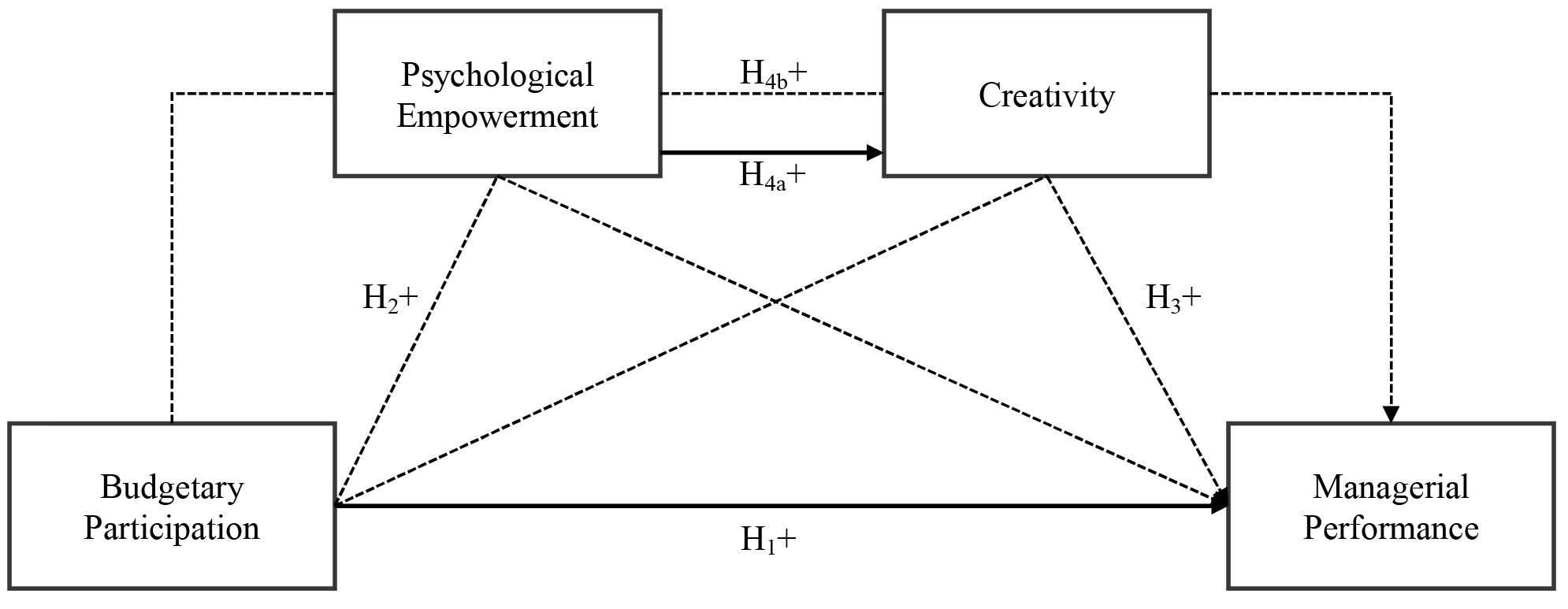
Given the above, it is believed that, in general, the relationship between BP and MP has been ambiguous. However, the first research hypothesis is based on the expectation that BP has a positive effect on MP, given that participating in the budget can improve MP (Guidini et al., 2020). Thus, it is expected that:
H1: BP positively influences MP.
2.2. PE, BP and MP
Empowerment is the process of delivering people's potential, directing their knowledge, experience and motivation to generate positive results to the organization (Blanchard, 2019). Empowering involves granting authority and the ability to inspire (Thomas & Velthouse, 1990). More accurately, PE is defined as a construct based on four dimensions: meaning, competence, self-determination, and impact (Spreitzer, 1995; Sun et al., 2012), which reflect an individual's perception of their ability to shape their professional role (Spreitzer, 1995).
PE focuses on the state or set of conditions that allow employees or teams to believe they have control over their work (Maynard et al., 2012). Individuals who feel more competent about their ability to work successfully tend to present better performance, among other characteristics (Meyerson & Kline, 2008). PE can be understood under SCT as a process that reflects the individual’s beliefs of self-efficacy, a fundamental component for exercising human agency. When employees realize they have greater autonomy and control over their activities, this strengthens their sense of competence and positively impacts their performance (Bandura, 2001).
PE therefore reflects beliefs about one’s own ability to act and can be strengthened by mechanisms such as BP. Empowerment’s sucess and legitimacy depend on a system that facilitates and encourages the participation of most employees (Prasad & Eylon, 2001). The emphasis is on employee participation through greater delegation of responsibilities at all organizational levels (Spreitzer & Doneson, 2005). Therefore, the administration widely seeks participation to motivate, retain, and promote PE (Jena et al., 2019). Thus, PE as a mediator mechanism connects the conditions preceding work-related results (Maynard et al., 2012). In this circumstance, it is expected that BP promotes environments that stimulate individual’s PE, positively impacting MP. With this, we present the following research hypothesis:
H2: PE positively mediates the relationship between BP and MP.
2.3. CT, BP and MP
CT can be defined as the ability to generate a new and timely response, product, or solution for a task (Amabile, 2012). Managers' CT refers to its ability to conceive innovative and profitable ideas related to organizational products and processes (Amabile, 1996; Appuhami, 2019; Madjar et al., 2002; Shalley et al., 2009). According to SCT it emerges from the interaction between personal and environmental factors that encourage innovation. According to Bandura (1986), the environment plays a relevant role in influencing behavior, providing both opportunities and restrictions that shape human actions. As such, BP creates a conducive environment for CT, allowing employees to share ideas and explore solutions, which, in turn, enhances performance.
Creativity in the workplace depends on both individual characteristics and organizational context, and it increases these factors are aligned (Shalley et al., 2004). Therefore, most organizations need a suitable system to allow employees to express CT (Ibrahim et al., 2016). Organizations should promote CT through innovation-encouraging processes and a corporate culture that favors information sharing (Dal Magro et al., 2022; El-Kassar et al., 2022). BP is one of these processes, as it offers subordinates an opportunity to exchange and share information (Chong & Chong, 2002), which can stimulate CT and drive performance (Luu, 2021).
Therefore, organizations that encourage CT and provide adequate resources and support to employees in their work activities promote creative thinking and action, resulting in higher performance (Ibrahim et al., 2016). As such, we present the following research hypothesis:
H3: CT positively mediates the relationship between BP and MP.
2.4. Serial Mediation of PE and CT
PE is directly related to employee CT (Khan et al., 2022; Shin & Perdue, 2022; Sun et al., 2012). The role of empowerment is the extent that an individual perceives themselves as someone who wants to be empowered in a particular work (Zhang & Bartol, 2010). It can prove indispensable for managers attempting to manage organizational changes (Congger & Kanungo, 1988).
PE is influenced by the environment in which a person is inserted (Moulang, 2015). When employees realize that the organization has adopted policies that empower them, they become more involve in problem solving and support their progress. Thus, they are more likely to feel protected and realize that the organization supports their CT (El-Kassar et al., 2022).
SCT explains human functioning in terms of triadic reciprocal causation (Bandura, 1986, 2001), suggesting that personal, behavioral, and environmental factors interact in a continuous and bidirectional way. As such, BP as an environmental factor influences PE and CT, which in turn shape MP, reflecting the dynamic interaction in the organizational environment. Given the above, BP triggers a sequence of beneficial effects that strengthen organizational dynamics. By including employees in the budgeting process, participation can enhance feelings of PE, causing them to have more autonomy and influence in their activities. PE, in turn, encourages CT, encouraging innovative solutions and creative alternatives in their performance.
Employees strive to be more creative, contributing significantly to their work. Participation can help them effectively use communication channels in the organization, making them feel part of the team (Akgunduz et al., 2018). The enhanced CT culminates in a better MP, in which managers and teams are able to quickly adapt to change, make better decisions, and achieve higher results. In this context, we highlight the following research hypotheses:
H4a: PE positively influences CT.
H4b: PE and CT serially and positively mediate the relationship between BP and MP.
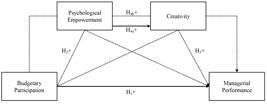
In Figure 1, we present the theoretical model with the investigated relationships.
3. METHODOLOGICAL PROCEDURES
3.1 Sample and Data
The study is characterized as descriptive and inferential research following a quantitative approach. The sample consisted of professionals with budget responsibility, including controllers, analysts, coordinators, managers, and directors of the 436 active companies listed on the Brazilian stock exchange B3 S.A. - Brasil, Bolsa, Balcão (B3). These companies are considered to have have solid financial and managerial foundations, with well-defined budgetary structure and management. The inclusion of high and medium-level managers is justified in line with previous studies (Monteiro et al., 2021). Lower-level positions are aligned with the BP central theme, which involves collaboration in decision-making between managers and employees (Locke et al., 1986). This diversity reflects the participation of professionals working at different levels of responsibility and areas of expertise.
The effectiveness of the research instrument was confirmed after pre-tests with two PhD in Management Accounting and two budget managers professionals. Next, professionals with budget responsibilities were identified and invited via LinkedIn® from September 2023 to January 2024. The professionals received the link from the questionnaire, limited to five respondents per company (Ehlert et al., 2023). 2.160 links were sent and 275 answers were received, resulting in a return rate of 12.63%. We then analyzed the presence of suspicious answers standards, resulting in 267 valid answers.
Among the 267 respondents, the majority (45.69%) occupy manager/head positions, followed by coordinators/supervisors (30.34%), analysts, specialists or technicians (14.98%), controllers (4.12%), and directors or superintendents (4.87%). Most study participants hold a specialization/Master of Business Administration (MBA) degree (72.66%), are male (177 respondents), are in the 31-40 age group (51.31%), and work for the company for less than 5 years (52.43%). Regarding the companies' existence, 35.58% have over 51 years of operation.
To mitigate the common method bias (CMB), the anonymity of the interviewees was preserved and no personal information was requested (Podsakoff et al., 2024). Harman's single factor test indicated that the first factor accounted for 35.75% of the total variance, suggesting that the CMB does not represent a relevant concern (Podsakoff et al., 2024). In addition, non-response bias (NRB) showed no significant differences between the groups (the first and last 10 respondents), with a p value of 0.083 (Armstrong & Overton, 1977).
Data analysis was performed using Partial Least Squares Structural Equation Modeling (PLS-SEM) with Smartpls 4 software, which allows the estimation of complex models without strict restrictions on data distribution or sample size (Hair et al., 2019). PE, a second-order latent construct, was measured through four first-order constructs: meaning, competence, self-determination, and impact, using the repeated indicators method (Sarstedt et al., 2019).
3.2 Variables Measurement
The study variables were measured using instruments validated in the literature and organized in five main blocks. All items were evaluated on a 7-point Likert scale, ranging from 1 (I totally disagree/almost never) to 7 (I totally agree /almost always), depending on the nature of the items. Block I concerns BP and evaluates the respondents’ involvement in their units’ budgeting process with six items based on Milani (1975). An example is: “I am completely involved in the elaboration of my unit’s budget.” Block II, on MP, uses the Mahoney et al. (1963, 1965) scale, adapted by Zonatto (2014), to evaluate nine performance dimensions, such as planning and leadership. Example: “Guide and lead the development of my subordinates (eg. counseling and training).”
Block III, PE, measures respondents’ empowerment in four dimensions (meaning, competence, self-determination and impact), with 12 items based on Spreitzer (1995). Example: “I have significant autonomy to determine how I do my job.” Block IV, regarding CT, evaluates the frequency of creative behaviors, with eight items based on Moulang (2015). Example: “I often engage in problem-solving intelligently and creatively.” Demographic data such as age and gender, as well as information on position and length of service was incorporated as control variables to regulate the dependent variable MP (Chen & Huang, 2021; Sun et al., 2012; Wei et al., 2021).
4. RESULTS
4.1 Measurement Model Analysis
After analyzing factorial loads (Hair et al., 2019), the PO_06 and EP_02 items were deleted for model adjustment. Reliability was confirmed by Cronbach's alpha (α), composite reliability (CR), and rho_a, with a recommended value above 0.70 (Hair et al., 2019). Although the CR of “BP” and “meaning” is slightly above 0.95, reliability was confirmed by α and rho_a. The converging validity was evaluated by the average variance extracted (AVE) with an acceptable minimum value of 0.50 (Hair et al., 2019). The corresponding data is detailed in Table 1.
The discriminant validity was evaluated by the criteria of Provill-Llarcker and heterotrait-monotrait ratio of correlations (HTMT) (Hair et al., 2019), as shown in Table 2.
Following Fornell-Larcker’s criteria, the square root of each construct’s AVE surpassed its largest correlation with any other construct (Hair et al., 2019). In addition, HTMT was less than 0.90 (Hair et al., 2019). All requirements of the measurement model have been met, suggesting that the next step is the evaluation of the structural model (Hair et al., 2019).
4.3 Structural Model Analysis
Following is the structural model analysis detailed in Table 3 using the bootstrap technique with 10.000 subsamples.
Collinearity was verified to ensure the integrity of regression results (Hair et al., 2019), evidenced in Table 3, without significant problems of multicollinearity. The coefficient of determination (R²) indicates that the regression model explains 22% of the variance in PE, 17.8% of the variance in CT, and 57.8% of the variance in MP. According to Cohen (1988), this suggests a high explanatory power for MP and an average explanatory power for PE and CT. Predictive accuracy was evaluated by Q², calculated with PLSpredict and the 10 folds procedure. Values above zero indicate predictive relevance for a specific endogenous construct (Hair et al., 2019). Q² was 0.208 for PE, 0.028 for CT, and 0.303 for MP.
Regarding the hypothesis test, H1suggests a direct and positive relationship between BP and MP. The results support this hypothesis (β = 0.275, t = 4.260, p = 0.000). H2 speculates that PE has a positive mediator effect on the relationship between BP and MP. The results show a statistically significant association (β = 0.135, t = 4.461, p = 0.000), thus corroborating this hypothesis. H3 postulates that CT positively measures the relationship between BP and MP. However, the results did not achieve statistical significance (β = 0.001, t = 0.054, p = 0.479), leading to the rejection of this hypothesis.
Finally, H4 suggests that PE and CT act serially, positively mediating the relationship between BP and MP. The results of serial mediation analysis demonstrate a statistically significant association (β = 0.069, t = 4.373, p = 0.000), thus supporting this hypothesis. The “Role” control variable demonstrates a negative and statistically significant association with the MP dependent variable, as evidenced in Table 3. Other control variables showed no significance in the examined relationships.
4.4 Additional Analysis
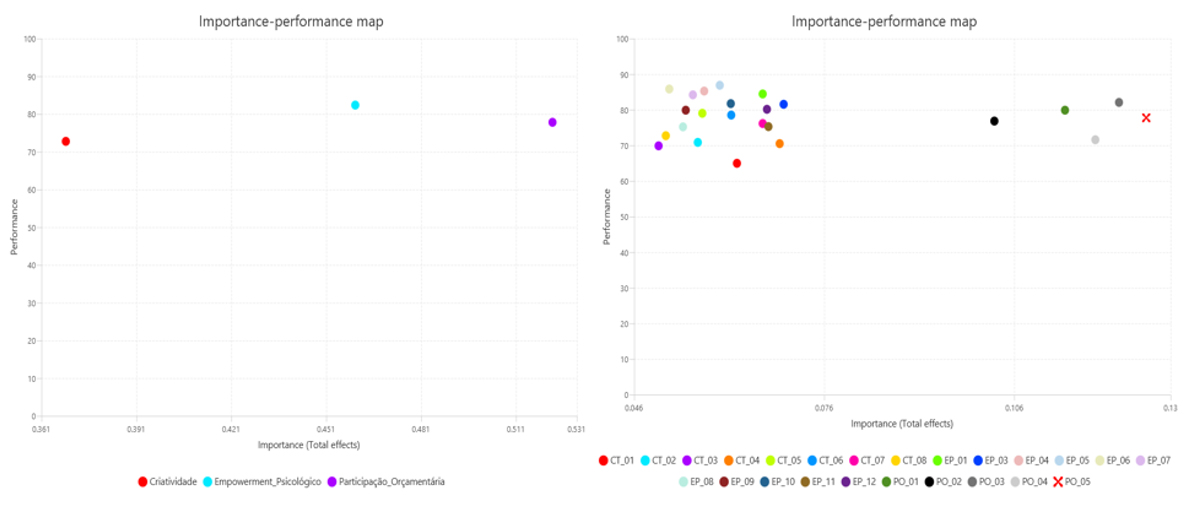
This study uses Importance-Performance Map Analysis (IPMA), a PLS-sem analytical technique that allows one to analyze the importance (beta coefficient) and the performance (average score) of constructs and indicators (Frare & Beuren, 2021; Mannes et al., 2021; Ringle & Sarstedt, 2016). The BP, PE and CT predecessors were investigated to determine their importance and performance in the MP variable. All IPMA application requirements have been verified, including restraining latent variable scores, coding indicators in the same direction on the scale, and external weight estimates (Ringle & Sarstedt, 2016). To ensure that all indicators had the same direction, the control variables were excluded from this analysis.
In terms of construct, the analysis suggests that BP and PE have greater importance and performance regarding MP, while CT, despite its high performance, has been classified with low importance. Although PE and CT have comparable performances, PE is considerably more important than CT. PE emerges as a significant antecedent of the CT, demonstrating a direct effect on it (Appuhami, 2019; Spreitzer, 1995; Sun et al., 2012; Thomas & Velthouse, 1990). Figure 2 complements the results.
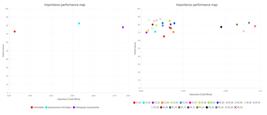
IPMA analysis reveals specific areas of improvement in the CT and PE indicators (Ringle & Sarstedt, 2016), with greater importance attributed to aspects such as creative problem-solving and work significance. Jansen (2015) emphasizes the importance of participation, highlighting that both managers and employees should not only change the organization members’ outlooks about their goals, objectives, and performance, but to ensure that they understand how they can contribute. Meanwhile, regarding BP indicators, the results suggest that the contribution to the budget process and autonomy in budgeting are key indicators that influence MP.
4.5 Results
The direct and positive relationship between BP and MP is evidenced by high levels of BP (Zonatto et al., 2019, 2022), as observed in this study. H1 proposes a positive relationship between BP and MP, confirmed by the results (β = 0.275, t = 4.260, p = 0.000). Participation allows employees to provide information on the necessary budget resources (Nouri & Parker, 1998), as well as enables them to improve their choices through more informed processes, leading to performance improvements (Chong et al., 2005).
As such, Almaasi et al. (2015) highlight recommendations to improve BP, such as refining budget participation indicators, increasing logic in change proposals, promoting suggestions, evaluating the impact of contributions, granting autonomy, and stimulating the team to brainstorm ideas.
H2 speculates that PE has a positive mediator effect on the relationship between BP and MP. The results show a statistically significant association (β = 0.135, t = 4.461, p = 0.000). In addition, PE has a significant positive effect on MP (β = 0.287, t = 4.974, p = 0.000). These results are in accordance with the findings of Bordin et al. (2006), which identified significant positive correlation between participation and empowerment, and with the results of Marginson et al. (2014), which observed a positive association between PE and MP.
H3 postulates that CT positively measures the relationship between BP and MP. However, the results did not achieve statistical significance (β = 0.001, t = 0.054, p = 0.479), leading to the rejection of this hypothesis. This result is consistent with Ichdan et al. (2023), which indicated that participation does not have a positive effect on CT. However, it does not corroborate the findings of Amabile (1988) and Amabile et al. (2004) that participation and autonomy are essential for creative results (Zhang & Bartol, 2010).
Employee participation in decision making does not always result in positive impacts (Locke & Schweiger, 1979), as it is influenced by factors such as individual, organizational and situational characteristics, such as time constraint (Chua & Iyengar, 2006). Therefore, investing in employee training on creativity methods or processes is susceptible to efforts (Zhang & Bartol, 2010).
Finally, H4 suggests that PE and CT act serially, positively mediating the relationship between BP and MP. Serial mediation results demonstrate significant association (β = 0.069, t = 4.373, p = 0.000). Thus, environments with BP stimulate PE, which, in turn, promotes an increase in CT, resulting in positive impacts on the MP. These findings indicate that environments with BP are beneficial for both employees and organizations, as BP stimulates the PE of employees. EP, in turn, promotes CT. That is, the understanding of employees about their role at work has a direct influence on their ability to create new ideas. BP, therefore, proves to be an effective strategy for a more empowered and creative work environment, indirectly impacting MP.
Employee CT is driven by increasing the meaning of work because employees strive to raise their CT, aiming to contribute more significantly to their activities (Akgunduz et al., 2018). Therefore, it is important for managers to develop a collaborative work environment and restructure the organizational structure to promote autonomy at all levels (Sun et al., 2012).
5. CONCLUSIONS
This study analyzed the effects of budget participation (BP) on managerial performance (MP) through serial mediation of psychological empowerment (PE) and creativity (CT) in companies listed on the Brazilian stock exchange B3 S.A., with a sample of 267 respondents. Four hypotheses of the theoretical model were tested through PLS-SEM. The results indicated a direct and positive relationship between BP and MP (H1), PE showed a positive mediator effect on the relationship between BP and MP (H2), while the CT did not have a positive mediator effect on the relationship between BP and MP (H3). PE and CT acted serially, positively mediating this relationship (H4).
These findings highlight the role of the organizational environment, as suggested by SCT, which emphasizes the interaction between personal, behavioral, and environmental factors in the formation of individuals' behavior. Human behavior is better understood as an interactive system, in which personal and environmental factors influence each other. The research shows that BP, by promoting PE and CT, works as a catalyst for MP (Bandura, 1986). SCT highlights that control over life itself is the essence of humanity (Bandura, 2001). This control, provided by a participatory environment, fosters PE, CT, and improves MP.
The results help managers understand the importance of involving employees in the budget process (Chong et al., 2006), aligning with SCT, which states that people are active in building their own experiences, not only passive observers (Bandura, 2001). This study contributes to the literature on BP, which covers different organizational and cultural contexts. The ambiguity found in previous studies may be related to research methods, justifying the serial mediation analysis adopted.
As for management implications, this research indicates that different management practices, such as BP, can impact human behavior and results. BP can, therefore, be strategically integrated in management processes considering its potential influence on PE and employee CT. Managers can seek ways to significantly engage employees in the budget process, ensuring that they feel qualified to contribute innovative suggestions. Multidisciplinary working groups can be created to propose budget ideas, holding alongside open meetings to discuss and deliberate on budget decisions, and setting challenging but feasible goals together with employees (Chong & Johnson, 2007). This encourages innovation and strengthens employees' perception of control and influence on the budgeting process, aligning with Bandura's idea that individuals are active in building their realities (Bandura, 1986, 2001).
Additionally, managers have the possibility of seeking ways to establish a favorable environment for PE development. Managers’ empowerment is correlated with their CT increase (Dal Magro et al., 2022). Therefore, strategies that encourage generating and sharing ideas, such as the creation of work environments that stimulate collaboration, experimentation, and free expression of ideas, can be effective. For instance, a suggestion program could be implemented offering prizes or recognition to employees who share the best ideas, which would certainly have a positive impact on MP.
To achieve high MP, IPMA analysis suggests prioritizing specific practices. First, in BP, the active contribution of employees should be encouraged, promoting autonomy in elaborating the budget and recognizing employees' influence on the final budget. Second, in PE, one should highlight the relevance of work, promote the feeling of control and influence, and recognize and value the importance of employees’ work. Third, regarding CT, it should be promoted to involve problem solving in a creative way, stimulate the generation of new perspectives, and create an environment that values creative ideas and the evaluation of multiple alternatives to new problems.
Regarding limitations and suggestions, the sample included all companies active on the Brazilian stock exchange B3 S.A, but did not differentiate between creative and non-creative industries, or between technology-dependent companies. This may have influenced the unfavorable results between BP and CT. Future research could segment companies by CT and include other variables, such as leadership and organizational culture. This study employed a quantitative approach, but suggests that future research could benefit from qualitative data for a deeper understanding of the relationships between BP, PE, CT, and MP. In addition, the analysis of moderating variables, such as individual characteristics and hierarchical levels, can offer insights on the consistency of these relationships in different organizational contexts.
REFERENCES
-
Akgunduz, Y., Alkan, C., & Gök, Ö. A. (2018). Perceived organizational support, employee creativity and proactive personality: The mediating effect of meaning of work. Journal of Hospitality and Tourism Management, 34, 105-114. https://doi.org/10.1016/j.jhtm.2018.01.004
» https://doi.org/10.1016/j.jhtm.2018.01.004 -
Alhasnawi, M. Y., Mohd Said, R., Mat Daud, Z., & Muhammad, H. (2023). Enhancing managerial performance through budget participation: Insights from a two-stage A PLS-SEM and artificial neural network approach (ANN). Journal of Open Innovation: Technology, Market, and Complexity, 9(4), 100161. https://doi.org/10.1016/j.joitmc.2023.100161
» https://doi.org/10.1016/j.joitmc.2023.100161 -
Almasi, H., Palizdar, M. R., & Parsian, H. (2015). Budgetary participation and managerial performance: The impact of information and environmental volatility. Management Science Letters, 5, 843-854. https://doi.org/10.5267/j.msl.2015.7.001
» https://doi.org/10.5267/j.msl.2015.7.001 - Amabile, T. M. (1988). A model of creativity and innovation in organizations. Research in Organizational Behavior, 10(1), 123-167.
- Amabile, T. M. (1996). Creativity and innovation in organizations Harvard Business School.
-
Amabile, T. M., Schatzel, E. A., Moneta, G. B., & Kramer, S. J. (2004). Leader behaviors and the work environment for creativity: Perceived leader support. The Leadership Quarterly, 15(1), 5-32. https://doi.org/10.1016/j.leaqua.2003.12.003
» https://doi.org/10.1016/j.leaqua.2003.12.003 - Amabile, T. M. (2012). Componential theory of creativity [Working Paper]. Harvard Business School.
-
Amir, A. M., Ridwan, R., Din, M., Yamin, N. Y., Zahra, F., & Firman, M. F. (2021). The role of budget participation in improving managerial performance. Accounting, 7, 269-280. https://doi.org/10.5267/j.ac.2020.12.004
» https://doi.org/10.5267/j.ac.2020.12.004 -
Armstrong, J. S., & Overton, T. S. (1977). Estimating nonresponse bias in mail surveys. Journal of Marketing Research, 14(3), 396-402. https://doi.org/10.1177/002224377701400320
» https://doi.org/10.1177/002224377701400320 -
Appuhami, R. (2019). Exploring the relationship between strategic performance measurement systems and managers’ creativity: The mediating role of psychological empowerment and organisational learning. Accounting & Finance, 59(4), 2201-2233. https://doi.org/10.1111/acfi.12287
» https://doi.org/10.1111/acfi.12287 -
Argyris, C. (1955). Organizational leadership and participative management. The Journal of Business, 28(1), 1-7. https://www.jstor.org/stable/2353517
» https://www.jstor.org/stable/2353517 - Bandura, A. (1986). Social foundations of thought and action: A social cognitive theory Prentice Hall.
-
Bandura, A. (2001). Social cognitive theory: An agentic perspective. Annual Review of Psychology, 52(1), 1-26. https://doi.org/10.1146/annurev.psych.52.1.1
» https://doi.org/10.1146/annurev.psych.52.1.1 -
Bernd, D. C., Beuren, I. M., Pazetto, C. F., & Lavarda, C. E. F. (2022). Antecedentes do compromisso com as metas orçamentárias. Revista de Administração Contemporânea, 26(2), e-200018. https://doi.org/10.1590/1982-7849rac2022200018
» https://doi.org/10.1590/1982-7849rac2022200018 - Blanchard, K. (2019). Liderança de alto nível: como criar e liderar organizações de alto desempenho (3rd ed.). Bookman.
-
Bollinger, S. R. (2019). Creativity and forms of managerial control in innovation processes: Tools, viewpoints and practices. European Journal of Innovation Management, 23(2), 214-229. https://doi.org/10.1108/EJIM-07-2018-0153
» https://doi.org/10.1108/EJIM-07-2018-0153 -
Bordin, C., Bartram, T., & Casimir, G. (2006). The antecedents and consequences of psychological empowerment among Singaporean IT employees. Management Research News, 30(1), 34-46. https://doi.org/10.1108/01409170710724287
» https://doi.org/10.1108/01409170710724287 -
Chamberlin, M., Newton, D. W., & Lepine, J. A. (2018). A meta-analysis of empowerment and voice as transmitters of high-performance managerial practices to job performance. Journal of Organizational Behavior, 39(10), 1296-1313. https://doi.org/10.1002/job.2295
» https://doi.org/10.1002/job.2295 -
Chen, Y.-L., & Huang, M.-C. (2021). Bottom-up (top-down) rolling budgeting and job autonomy: Consequences for the role of role overload and managerial performance. Asia-Pacific Journal of Accounting & Economics, 28(1), 1-21. https://doi.org/10.1080/16081625.2020.1844997
» https://doi.org/10.1080/16081625.2020.1844997 -
Chong, V., & Chong, K. M. (2002). The role of feedback on the relationship between budgetary participation and performance. Pacific Accounting Review, 14(2), 33-55. https://doi.org/10.1108/eb037966
» https://doi.org/10.1108/eb037966 -
Chong, V. K., Eggleton, I. R. C., & Leong, M. K. C. (2005). The impact of market competition and budgetary participation on performance and job satisfaction: A research note. The British Accounting Review, 37(1), 115-133. https://doi.org/10.1016/j.bar.2004.06.007
» https://doi.org/10.1016/j.bar.2004.06.007 -
Chong, V. K., Eggleton, I. R. C., & Leong, M. K. C. (2006). The multiple roles of participative budgeting on job performance. Advances in Accounting, 22, 67-95. https://doi.org/10.1016/S0882-6110(06)22004-2
» https://doi.org/10.1016/S0882-6110(06)22004-2 -
Chong, V. K., & Johnson, D. M. (2007). Testing a model of the antecedents and consequences of budgetary participation on job performance. Accounting and Business Research, 37(1), 3-19. https://doi.org/10.1080/00014788.2007.9730055
» https://doi.org/10.1080/00014788.2007.9730055 -
Chua, R. Y.-J., & Iyengar, S. S. (2006). Empowerment through choice? A critical analysis of the effects of choice in organizations. Research in Organizational Behavior, 27, 41-79. https://doi.org/10.1016/S0191-3085(06)27002-3
» https://doi.org/10.1016/S0191-3085(06)27002-3 - Cohen, J. (1988). Statistical power analysis for the behavioral sciences (2nd ed.). L. Erlbaum Associates.
-
Conger, J. A., & Kanungo, R. N. (1988). The empowerment process: Integrating theory and practice. The Academy of Management Review, 13(3), 471-482. https://doi.org/10.5465/amr.1988.4306983
» https://doi.org/10.5465/amr.1988.4306983 -
Dafna, K. (2008). Managerial performance and business success: Gender differences in Canadian and Israeli entrepreneurs. Journal of Enterprising Communities: People and Places in the Global Economy, 2(4), 300-331. https://doi.org/10.1108/17506200810913890
» https://doi.org/10.1108/17506200810913890 -
Dal Magro, C. B., Silva, T. B. J., Lavarda, C. E. F., & Ferla, R. (2022). Different ways of using the budget affect the empowerment and creativity of managers. Contaduría y Administración, 68(2), 381. http://doi.org/10.22201/fca.24488410e.2023.3161
» http://doi.org/10.22201/fca.24488410e.2023.3161 -
El-Kassar, A.-N., Dagher, G. K., Lythrearis, S., & Azakir, M. (2022). Antecedents and consequences of knowledge hiding: the roles of HR practices, organizational support for creativity, creativity, innovative work behavior, and task performance. Journal of Business Research, 140, 1-10. https://doi.org/10.1016/j.jbusres.2021.11.079
» https://doi.org/10.1016/j.jbusres.2021.11.079 -
Ehlert, J. B., Moreira, L. P., Frare, A. B., & Cruz, A. P. C. D. (2023). O papel moderador dos controles de comportamento na relação entre incivilidade e criatividade. Revista Contabilidade & Finanças, 34(93), e1886. https://doi.org/10.1590/1808-057x20231886.pt
» https://doi.org/10.1590/1808-057x20231886.pt -
Ferris, K. R. (1977). Perceived uncertainty and job satisfaction in the accounting environment. Accounting, Organizations and Society, 2(1), 23-28. https://doi.org/10.1016/0361-3682(77)90004-6
» https://doi.org/10.1016/0361-3682(77)90004-6 -
Frare, A. B., & Beuren, I. M. (2021). Fostering individual creativity in startups: comprehensive performance measurement systems, role clarity and strategic flexibility. European Business Review, 33(6), 869-891. https://doi.org/10.1108/EBR-11-2020-0262
» https://doi.org/10.1108/EBR-11-2020-0262 -
Guidini, A. A., Zonatto, V. C. D. S., Degenhart, L., & Schlup, D. (2020). Evidencias de la relación entre participación presupuestaria, ambigüedad de papeles y el desempeño gerencial. Cuadernos de Contabilidad, 21, 1-27. https://doi.org/10.11144/Javeriana.cc21.erpo
» https://doi.org/10.11144/Javeriana.cc21.erpo -
Hair, J. F., Risher, J. J., Sarstedt, M., & Ringle, C. M. (2019). When to use and how to report the results of PLS-SEM. European Business Review, 31(1), 2-24. https://doi.org/10.1108/EBR-11-2018-0203
» https://doi.org/10.1108/EBR-11-2018-0203 -
Hariyanti, W., Purnamasari, P., & Oktaroza, M. L. (2015). Pluriform motivation as antecedent and its relationships to budgeting participation and managerial performance (empirical study on manufacturing companies listed on Indonesian stock exchange). Procedia - Social and Behavioral Sciences, 211, 836-843. https://doi.org/10.1016/j.sbspro.2015.11.110
» https://doi.org/10.1016/j.sbspro.2015.11.110 -
Hasanuddin, A. N. T., Haliah, H., & Said, D. (2022). Psychological capital dalam Memoderasi Pengaruh Partisipasi Penyusunan Anggaran, Kompetensi dan Healthy Lifestyle terhadap Kinerja Aparatur Pemerintah Daerah. Owner, 7(1), 35-56. [Indonésio]. https://doi.org/10.33395/owner.v7i1.1241
» https://doi.org/10.33395/owner.v7i1.1241 -
Huang, X., Iun, J., Liu, A., & Gong, Y. (2010). Does participative leadership enhance work performance by inducing empowerment or trust? The differential effects on managerial and non-managerial subordinates. Journal of Organizational Behavior, 31(1), 122-143. https://doi.org/10.1002/job.636
» https://doi.org/10.1002/job.636 -
Ibrahim, H. I., Isa, A., & Shahbudin, A. S. Md. (2016). Organizational support and creativity: The role of developmental experiences as a moderator. Procedia Economics and Finance, 35, 509-514. https://doi.org/10.1016/S2212-5671(16)00063-0
» https://doi.org/10.1016/S2212-5671(16)00063-0 -
Ichdan, D. A., Yuliansyah, & Maryani. (2023). Do mental model and creativity help employees to improve their job performance from their participation in the budgeting? Cogent Business & Management, 10(1), 2184228. https://doi.org/10.1080/23311975.2023.2184228
» https://doi.org/10.1080/23311975.2023.2184228 -
Jansen, E. P. (2015). Participation, accounting and learning how to implement a new vision. Management Accounting Research, 29, 45-60. https://doi.org/10.1016/j.mar.2015.07.003
» https://doi.org/10.1016/j.mar.2015.07.003 -
Jena, L. K., Bhattacharyya, P., & Pradhan, S. (2019). Am I empowered through meaningful work? The moderating role of perceived flexibility in connecting meaningful work and psychological empowerment. IIMB Management Review, 31(3), 298-308. https://doi.org/10.1016/j.iimb.2019.03.010
» https://doi.org/10.1016/j.iimb.2019.03.010 -
Jermias, J., & Yigit, F. (2013). Budgetary participation in Turkey: The effects of information asymmetry, goal commitment, and role ambiguity on job satisfaction and performance. Journal of International Accounting Research, 12(1), 29-54. https://doi.org/10.2308/jiar-50385
» https://doi.org/10.2308/jiar-50385 -
Khan, M. M., Mubarik, M. S., Islam, T., Rehman, A., Ahmed, S. S., Khan, E., & Sohail, F. (2022). How servant leadership triggers innovative work behavior: Exploring the sequential mediating role of psychological empowerment and job crafting. European Journal of Innovation Management, 25(4), 1037-1055. https://doi.org/10.1108/EJIM-09-2020-0367
» https://doi.org/10.1108/EJIM-09-2020-0367 -
Khrais, H., & Nashwan, A. J. (2023). Leadership practices as perceived by emergency nurses during the COVID-19 pandemic: The role of structural and psychological empowerment. Journal of Emergency Nursing, 49(1), 140-147. https://doi.org/10.1016/j.jen.2022.10.003
» https://doi.org/10.1016/j.jen.2022.10.003 - Locke, E. A., & Schweiger, D. M. (1979). Participation in decision-making: One more look. Research in Organizational Behavior, 1, 265-339.
-
Locke, E. A., Schweiger, D. M., & Latham, G. P. (1986). Participation in decision making: When should it be used? Organizational Dynamics, 14(3), 65-79. https://doi.org/10.1016/0090-2616(86)90032-X
» https://doi.org/10.1016/0090-2616(86)90032-X -
Lunardi, M. A., Zonatto, V. C. D. S., & Nascimento, J. C. (2020). Efeitos cognitivos mediadores do compartilhamento de informação na relação entre participação orçamentária e desempenho gerencial. Revista Contabilidade & Finanças, 31(82), 14-32. https://doi.org/10.1590/1808-057x201908610
» https://doi.org/10.1590/1808-057x201908610 -
Luu, T. T. (2021). Knowledge sharing in the hospitality context: The roles of leader humility, job crafting, and promotion focus. International Journal of Hospitality Management, 94, 102848. https://doi.org/10.1016/j.ijhm.2020.102848
» https://doi.org/10.1016/j.ijhm.2020.102848 -
Machado, F. S., Zonatto, V. C. D. S., Degenhart, L., Kieling, D. L., & Bianchi, M. (2022). Enabling cognitive effects of vertical information sharing on psychological capital, managerial attitudes, and performance. BAR - Brazilian Administration Review, 19(3), 1-27. https://doi.org/10.1590/1807-7692bar2022210085
» https://doi.org/10.1590/1807-7692bar2022210085 -
Macinati, M. S., Bozzi, S., & Rizzo, M. G. (2016). Budgetary participation and performance: The mediating effects of medical managers’ job engagement and self-efficacy. Health Policy, 120(9), 1017-1028. https://doi.org/10.1016/j.healthpol.2016.08.005
» https://doi.org/10.1016/j.healthpol.2016.08.005 -
Madjar, N., Oldham, G. R., & Pratt, M. G. (2002). There’s no place like home? The contributions of work and nonwork creativity support to employees’ creative performance. Academy of Management Journal, 45(4), 757-767. https://doi.org/10.5465/3069309
» https://doi.org/10.5465/3069309 -
Magner, N., Welker, R. B., & Campbell, T. L. (1996). Testing a model of cognitive budgetary participation processes in a latent variable structural equations framework. Accounting And Business Research, 27(1), 41-50. https://doi.org/10.1080/00014788.1996.9729530
» https://doi.org/10.1080/00014788.1996.9729530 - Mahoney, T. A., Jerdee, T. H., & Carroll, S. J. (1963). Development of managerial performance: A research approach South-Western Publishing.
-
Mahoney, T. A., Jerdee, T. H., & Carroll, S. J. (1965). The job(s) of management. Industrial Relations, 4(2), 97-110. https://doi.org/10.1111/J.1468-232X.1965.TB00922.X
» https://doi.org/10.1111/J.1468-232X.1965.TB00922.X -
Maiga, A. S. (2005). Antecedents and consequences of budget participation. Advances in Management Accounting, 14, 211-231. https://doi.org/10.1016/S1474-7871(05)14010-6
» https://doi.org/10.1016/S1474-7871(05)14010-6 -
Malik, M., Sarwar, S., & Orr, S. (2021). Agile practices and performance: Examining the role of psychological empowerment. International Journal of Project Management, 39(1), 10-20. https://doi.org/10.1016/j.ijproman.2020.09.002
» https://doi.org/10.1016/j.ijproman.2020.09.002 -
Mannes, S., Frare, A. B., & Beuren, I. M. (2021). Effects of using static and flexible budgets on process and product innovation. Journal of Accounting and Organizations, 15, 1-13. https://doi.org/10.11606/issn.1982-6486.rco.2021.180829
» https://doi.org/10.11606/issn.1982-6486.rco.2021.180829 -
Marginson, D., McAulay, L., Roush, M., & Van Zijl, T. (2014). Examining a positive psychological role for performance measures. Management Accounting Research, 25(1), 63-75. https://doi.org/10.1016/j.mar.2013.10.002
» https://doi.org/10.1016/j.mar.2013.10.002 -
Maynard, M. T., Gilson, L. L., & Mathieu, J. E. (2012). Empowerment-fad or fab? A multilevel review of the past two decades of research. Journal of Management, 38(4), 1231-1281. https://doi.org/10.1177/0149206312438773
» https://doi.org/10.1177/0149206312438773 -
Meyerson, S. L., & Kline, T. J. B. (2008). Psychological and environmental empowerment: Antecedents and consequences. Leadership & Organization Development Journal, 29(5), 444-460. https://doi.org/10.1108/01437730810887049
» https://doi.org/10.1108/01437730810887049 -
Milani, K. (1975). The relationship of participation in budget-setting to industrial supervisor performance and attitudes: A field study. The Accounting Review, 50(2), 274-284. Retrieved from http://www.jstor.org/stable/244709
» http://www.jstor.org/stable/244709 -
Monteiro, J. J., Bortoluzzi, D. A., Lunkes, R. J., & Rosa, F. S. D. (2021). Influência do clima ético na justiça procedimental e no comprometimento organizacional: interação da participação orçamentária. Revista de Contabilidade e Organizações, 15, e174754. https://doi.org/10.11606/issn.1982-6486.rco.2021.174754
» https://doi.org/10.11606/issn.1982-6486.rco.2021.174754 -
Moulang, C. (2015). Performance measurement system use in generating psychological empowerment and individual creativity. Accounting & Finance, 55(2), 519-544. https://doi.org/10.1111/acfi.12059
» https://doi.org/10.1111/acfi.12059 -
Noor, I. H. B. M., & Othman, R. (2012). Budgetary participation: How it affects performance and commitment. Accountancy Business and the Public Interest https://ssrn.com/abstract=2161688
» https://ssrn.com/abstract=2161688 -
Nouri, H., & Parker, R. J. (1998). The relationship between budget participation and job performance: The roles of budget adequacy and organizational commitment. Accounting, Organizations and Society, 23(5-6), 467-483. https://doi.org/10.1016/S0361-3682(97)00036-6
» https://doi.org/10.1016/S0361-3682(97)00036-6 -
Podsakoff, P. M., Podsakoff, N. P., Williams, L. J., Huang, C., & Yang, J. (2024). Common method bias: it’s bad, it’s complex, it’s widespread, and it’s not easy to fix. Annual Review of Organizational Psychology and Organizational Behavior, 11, 17-61. https://doi.org/10.1146/annurev-orgpsych-110721-040030
» https://doi.org/10.1146/annurev-orgpsych-110721-040030 -
Prasad, P., & Eylon, D. (2001). Narrating past traditions of participation and inclusion: Historical perspectives on workplace empowerment. The Journal of Applied Behavioral Science, 37(1), 5-14. https://doi.org/10.1177/0021886301371001
» https://doi.org/10.1177/0021886301371001 -
Ringle, C. M., & Sarstedt, M. (2016). Gain more insight from your PLS-SEM results: The importance-performance map analysis. Industrial Management & Data Systems, 116(9), 1865-1886. https://doi.org/10.1108/IMDS-10-2015-0449
» https://doi.org/10.1108/IMDS-10-2015-0449 -
Santos, V., Beuren, I. M., & Marques, L. (2021 ). Desenho e uso justos do processo orçamentário e desempenho gerencial. Revista Contabilidade & Finanças, 32(85), 29-45. https://doi.org/10.1590/1808-057x202010750
» https://doi.org/10.1590/1808-057x202010750 -
Sarstedt, M., Hair, J. F., Jr. Cheah, J. H., Becker, J. M., & Ringle, C. M. (2019). How to specify, estimate, and validate higher-order constructs in PLS-SEM. Australasian Marketing Journal, 27(3), 197-211. https://doi.org/10.1016/j.ausmj.2019.05.003
» https://doi.org/10.1016/j.ausmj.2019.05.003 -
Schlup, D., Beck, F., & Zonatto, V. C. S. (2021). Efeitos mediadores do capital psicológico e da síndrome de burnout na relação entre participação orçamentária e desempenho gerencial. Advances in Scientific and Applied Accounting, 14(1), 297-314. https://doi.org/10.14392/asaa.2021140109
» https://doi.org/10.14392/asaa.2021140109 -
Shalley, C. E., Gilson, L. L., & Blum, T. C. (2009). Interactive effects of growth need strength, work context, and job complexity on self-reported creative performance. Academy of Management Journal, 52(3), 489-505. https://doi.org/10.5465/amj.2009.41330806
» https://doi.org/10.5465/amj.2009.41330806 -
Shalley, C. E., Zhou, J., & Oldham, G. R. (2004). The effects of personal and contextual characteristics on creativity: Where should we go from here? Journal of Management, 30(6), 933-958. https://doi.org/10.1016/j.jm.2004.06.007
» https://doi.org/10.1016/j.jm.2004.06.007 -
Shin, H., & Perdue, R. R. (2022). Developing creative service ideas through hotel customer engagement for open innovation: Focused on empowerment and motivation processes. International Journal of Hospitality Management, 100, 103077. https://doi.org/10.1016/j.ijhm.2021.103077
» https://doi.org/10.1016/j.ijhm.2021.103077 -
Shao, Y., Nijstad, B. A., & Täuber, S. (2019). Creativity under workload pressure and integrative complexity: The double-edged sword of paradoxical leadership. Organizational Behavior and Human Decision Processes, 155, 7-19. https://doi.org/10.1016/j.obhdp.2019.01.008
» https://doi.org/10.1016/j.obhdp.2019.01.008 -
Silva, P., Mota, J., & Moreira, A. C. (2023). Budget participation and employee performance in real estate companies: The mediating role of budget goal commitment, trust, and job satisfaction. Baltic Journal of Management, 18(2), 226-241. https://doi.org/10.1108/BJM-03-2022-0118
» https://doi.org/10.1108/BJM-03-2022-0118 -
Spreitzer, G. M. (1995). Psychological empowerment in the workplace: Dimensions, measurement, and validation. Academy of Management Journal, 38(5), 1442-1465. https://doi.org/10.5465/256865
» https://doi.org/10.5465/256865 - Spreitzer, G. M., & Doneson, D. (2005). Musings on the past and future of employee empowerment. Handbook of Organizational Development, 4, 5-10.
-
Sun, L., Zhang, Z., Qi, J., & Chen, Z. X. (2012). Empowerment and creativity: A cross-level investigation. The Leadership Quarterly, 23(1), 55-65. https://doi.org/10.1016/j.leaqua.2011.11.005
» https://doi.org/10.1016/j.leaqua.2011.11.005 -
Thomas, K. W., & Velthouse, B. A. (1990). Cognitive elements of empowerment: An “interpretive” model of intrinsic task motivation. The Academy of Management Review, 15(4), 666-681. https://doi.org/10.5465/amr.1990.4310926
» https://doi.org/10.5465/amr.1990.4310926 -
Wei, Z., Li, C. J., Li, F., & Chen, T. (2021). How proactive personality affects psychological strain and job performance: The moderating role of leader-member exchange. Personality and Individual Differences, 179, 110910. https://doi.org/10.1016/j.paid.2021.110910
» https://doi.org/10.1016/j.paid.2021.110910 -
Winata, L., & Mia, L. (2005). Information technology and the performance effect of managers’ participation in budgeting: Evidence from the hotel industry. International Journal of Hospitality Management, 24(1), 21-39. https://doi.org/10.1016/j.ijhm.2004.04.006
» https://doi.org/10.1016/j.ijhm.2004.04.006 -
Zhang, X., & Bartol, K. M. (2010). Linking empowering leadership and employee creativity: The influence of psychological empowerment, intrinsic motivation, and creative process engagement. Academy of Management Journal, 53(1), 107-128. https://doi.org/10.5465/amj.2010.48037118
» https://doi.org/10.5465/amj.2010.48037118 - Zonatto, V. C. D. S. (2014). Influência de fatores sociais cognitivos de capacidade, vontade e oportunidade sobre o desempenho gerencial nas atividades orçamentárias das maiores empresas exportadoras do Brasil [Tese de Doutorado]. Universidade Regional de Blumenau.
-
Zonatto, V. C. D. S., Weber, A., & Nascimento, J. C. (2019). Efeitos da participação orçamentária na assimetria informacional, estresse ocupacional e desempenho gerencial. Revista de Administração Contemporânea, 23(1), 67-91. https://doi.org/10.1590/1982-7849rac2019170327
» https://doi.org/10.1590/1982-7849rac2019170327 -
Zonatto, V. C. D. S., Bauer, L., Degenhart, L., & Nascimento, J. C. (2020). Efeitos cognitivos, motivacionais e do valor de realização da participação orçamentária sobre o desempenho no trabalho. Enfoque: Reflexão Contábil, 39(3), 133-150. https://doi.org/10.4025/enfoque.v39i3.46835
» https://doi.org/10.4025/enfoque.v39i3.46835 -
Zonatto, V. C. D. S., Jacomossi, F. A., Schlup, D., & Machado, F. S. (2022). Efeitos da favorabilidade orçamentária na relação entre participação, atitudes e desempenho gerencial. Revista Contemporânea de Contabilidade, 19(50), 161-178. https://doi.org/10.5007/2175-8069.2022.e82385
» https://doi.org/10.5007/2175-8069.2022.e82385

 Source: Prepared by the authors.
 Source: Research data extracted from SmartPLS.