 Compatibility of mixtures of phytosanitary products recommended for melon and their selectivity for Trichogramma pretiosum Riley (Hymenoptera: Trichogrammatidae)
ABSTRACT
In pest control, understanding insecticide compatibility and selectivity is crucial to effectively integrate the use of insecticides and parasitoids. The aim of this study was to evaluate the compatibility of mixtures of insecticides and fungicides recommended for melon and their selectivity in Trichogramma pretiosum Riley (Hymenoptera: Trichogrammatidae). The were evaluated the compatibility of six mixtures: 1) Spinetoram + Pyraclostrobin and Fluxapyroxad; 2) Cyromazine + Pyraclostrobin and Fluxapyroxad; 3) Cyproconazole + Spinetoram; 4) Cyantraniliprole + Abamectin + Metiram and Pyraclostrobin; 5) Spinetoram + Azoxystrobin and Difenoconazole; 6) Abamectin + Cyantraniliprole; and a Control (distilled water). The compatible mixtures were applied to Anagasta kuehniella (Zeller, 1879) (Lepidoptera: Pyralidae) eggs, before and after T. pretiosum parasitism. Was evaluated: mortality of adult T. pretiosum females after exposure to treated eggs, parasitism, emergence and number of parasitoids emerged/egg. Only treatment 4 showed change in physical stability after 5 minutes. In selectivity tests, treatments 1, 3, and 5 caused greater mortality (>47%) of female adults. In pre-parasitism, parasitism (>77%) and emergence (>76%) were observed in all treatments, and all the mixtures were classified as innocuous to the parasitoid in these parameters. In post-parasitism, treatments affected negatively emergence (>51%) and number of parasitoids/egg at the three ages studied. Therefore, all mixtures were considered stable and viable for use with T. pretiosum, as long as they were applied before parasitoid releases.
Keywords
pest-control; tank-mix Cucumis melo
INTRODUCTION
Melon (Cucumis melo L.) is a vegetable crop widely grown in tropical and sub-tropical regions of the world (Garcia-Mas et al., 2012). Brazil is among the largest producers of the crop worldwide, achieving production levels greater than 650 thousand metric tons annually (FAO, 2024). The Northeast region is responsible for around 80% of Brazilian production (IBGE, 2023).
In spite the precautions inherent to the production system and of crop adaptation to the growing regions, phytosanitary problems arise, especially the occurrence of pests and diseases (Guimarães & Aragão, 2019; Fernandes et al., 2019), which can compromise fruit productivity and quality, generating the need for additional care that can increase cost (Trindade et al., 2007; Medeiros et al., 2008).
Within this scenario, Integrated Pest and Disease Management (IPDM) is adopted to maintain the population levels of pests and infestations of diseases below the level of economic damage (Lima et al., 2012). In this context, the use of agricultural chemicals constitutes an important tool for control (Lima et al., 2012; Pastori et al., 2019). Due to the short fact that the crop has a short phenological cycle and the presence of several noxious agents is simultaneously affected, the increased use of mixtures of phytosanitary products in the spray tank has been observed, as a single pesticide does not have a spectrum of acition capable of controlling all pests and diseases that occur simultaneously (Guimarães, 2014; Gazziero, 2015).
The mixture of phytosanitary products permitted by legislation (Decree Portaria nº 148 of 26 December 2018) – aims at improving operation of the system, reducing costs and time with spraying (Prado et al., 2011; Gazziero, 2015). Nevertheless, this practice presents technical and environmental challenges, as there is little information about the mixtures used in the field, which may result in the inefficiency, due to incompatibility (physical or chemical), or even improvement in efficiency, due to synergistic effects (Nash, 1967; Gazziero & Souza, 1993; Ronchi et al., 2002; Petter et al., 2013).
Furthermore, within the assumptions of the IPDM, the possibilities of integration chemical and biological control, with the use of parasitoids of the genus Trichogramma (Hymenoptera: Trichogrammatidae) which has been widely studied and used in control in various crops (Melo et al., 2007; Pratissoli et al. 2011; Bueno et al., 2012; Foresti et al., 2013; Ko et al., 2014; Pastori et al., 2019; Oliveira et al., 2020). In melon crop, around 50,000 adult parasitoids / hectare are released weekly at at least 24 sites for control of defoliating insects, beginning at 15 to 20 days after transplanting (Brasil, 2013).
To make insecticide and parasitoid integration feasible in the production system, it is necessary to understand the lethal and sublethal effects of the chemical products so as to plan for and intersperse parasitoid releases and application of the products (Rakes, 2021). Although several studies evaluate the selectivity of products in relation to the Trichogramma spp. species, few investigate the effects and the selectivity of the mixtures of products (Wang et al., 2012; Leite et al., 2017; Jiang et al., 2019; Tabebordbar et al., 2020; Milonas et al., 2021; Rakes et al., 2021).
In this context, the aim of this study was to test the compatibility of mixtures of phytosanitary products (insecticides and fungicides) recommended in melon and the selectivity of these mixtures growing and their possible lethal and sublethal effects on T. pretiosum.
MATERIALS AND METHODS
The bioassays were conducted at the Applied Entomology Laboratory of the Universidade Federal do Ceará (UFC). The T. pretiosum population used came from stock reared in that laboratory (OLIVEIRA et al., 2020), which were maintained following the methodology described by Stein & Parra (1987).
Compatibility of phytosanitary product mixtures
The phytosanitary products and application rates (maximum recommended) used were chosen based on manufacturers’ recommendations and on the use and application rates practiced on melon production farms in the states of Ceará and Rio Grande do Norte for control of pest arthropods and diseases that affect the crop. The bioassays were conducted using mixtures with or without addition of adjuvants. Six mixtures of phytosanitary products plus the control treatment (distilled water) were evaluated, with 5 replications each (Table 1).
Pesticide solutions were prepared using 100 mL beakers, and dilutions were made in distilled water. The pesticide solutions were prepared based on label recommendations of each product considering application of 100 L of the pesticide solution ha1. Mixtures among the products were made according to recommendations and according to the formulations, measuring pH before and after mixing.
The pesticide mixtures were evaluated following the methodology proposed by Petter et al. (2012) at the following time intervals: immediately after mixing (0-30 seconds), and at 1, 5, 10, and 30 minutes after mixing. At these intervals, the interactions among the products in the mixture were observed, visually detecting precipitation, flocculation, or homogeneity; and scores were attributed on a 1 to 5 scale corresponding to the degree of stability of the mixtures throughout the observation times (Table 2).
The experiment was set up in a completely randomized experimental design (CRD) with 14 treatments and five replications. The data were analyzed using descriptive statistics, with scores attributed to each treatment regarding physical compatibility based on the degree of compatibility observed in evaluation (Petter et al., 2012).
Selectivity of mixtures of phytosanitary products for T. pretiosum
The bioassay regarding selectivity was performed with applications of treatments on eggs of Anagasta kuehniella (Zeller, 1979) (Lepidoptera: Pyralidae) before and after parasitism (pre-and post-parasitism) in no-choice tests, using the products and mixtures described in the previous bioassay.
In the pre-parasitism test, 15 eggs of the host A. kuehniella of up to 24 h of age were fastened on sky-blue cardstock cards (6.0 × 2.0 cm) using gum arabic (30%) and made inviable through exposure to germicidal light for 50 minutes. After the eggs were made inviable, the cards were immersed in the pesticide mixture of the respective treatment for 5 seconds and then placed on paper toweling to absorb excess moisture for around 30 minutes.
After that period, the cards were inserted in glass tubes (8.5 × 2.5 cm) containing a female of T. pretiosum of up to 24 h of age. A droplet of pure honey was placed for females to feed on. The tubes were sealed with PVC® plastic film and kept in a room under controlled climate conditions (25 ± 2 ºC, 70% ± 10% of RH, and 12 h photophase), and the cards were exposed to parasitism for 24 h. After that period, the mortality of the females was determined, and individual cards were placed in new glass tubes and closed with PVC® (Polyvinyl Chloride Polymer) plastic film, where they remained up until emergence of the adults.
In the post-parasitism test, the cards were first prepared, made inviable, and exposed to parasitism of the females of T. pretiosum for 24 h, as described in the pre-parasitism bioassay. Sufficient cards were prepared for division into three subgroups, considering the immature stages of the parasitoids within the host egg: the egg phase – 0-24 h after the end of parasitism; the larval phase – 72-96 h after parasitism; and the pupal phase – 168-192 h after parasitism (Cônsoli et al., 1999).
After exposure of the eggs to parasitism, the females were discarded and the cards were then stored at 25 ± 2 °C, 70% ± 10% of RH, and 12-h photophase. When the parasitoids reached the respective developmental stages of each subgroup, the cards were immersed in the mixed solutions of phytosanitary products for 5 seconds and then removed and kept under environmental conditions of 25 ± 2 °C and 70% ± 10% of RH for around 30 min on paper towel. After that period, the cards were once more inserted in glass tubes and kept in a room under controlled climate conditions of 25 ± 2 °C, 70% ± 10% of RH, and 12-h photophase up to emergence or non-emergence of the parasitoids.
Parameters evaluated in the selectivity experiment
The percentage of mortality of adult females was determined after 24 h of exposure to the treatments in the test in pre-parasitism. Determination was made by touching the female with the point of a brush (no. 00), and if it did not show any movement, it was considered dead. The following parameters were estimated: the percentage of parasitism [(number of parasitized eggs / total number of eggs) × 100] (only in the pre-parasitism modality), percentage of emergence [(number parasitized eggs with emergence orifice / total number of parasitized eggs) × 100] (Degrande & Gomez, 1990), sex ratio [number of emerged females / (number of females + males)] (Bowen & Stern, 1966), and the number of parasitoids that emerged per egg (number of emerged parasitoids / total number of parasitized eggs). In addition, the parasitized eggs that did not exhibit an orifice of emergence were desiccated to check for the presence of parasitoids within the egg.
Reduction in the parasitism rate (PR) and emergence rate (ER) of the parasitoids for each treatment was determined by comparison with the control (distilled water) and calculated by means of the formula: PR or ER = (1 - Rt/Rc) × 100, where PR or ER is the mean percentage of reduction in parasitism or of emergence (%); Rt is the mean parasitism or emergence value for each treatment; and Rc is the mean parasitism or emergence observed in the control (Hassan et al., 1992). Based on the reduction, the phytosanitary products / mixtures were classified according to the classes proposed by the “International Organization for Biological and Integrated Control of Noxious Animals and Plants (IOBC)”, in which 1 = innocuous (< 30%), 2 = slightly noxious (30-79%), 3 = moderately noxious (80-99%), and 4 = noxious (> 99%) (Hassan, 1997; Sterk et al., 1999).
The bioassays were conducted in a completely randomized experimental design (CRD) with 7 treatments and at least 30 replications (considering each female as a repeat). The Shapiro-Wilk normality test and Levene’s homogeneity of variance tests were applied and, as the assumptions of the analysis of variances were not met, the mean values were compared by the non-parametric Kruskal-Wallis test. All the statistical analyses were performed using the R 4.0.2 software (R Core Team, 2021).
RESULTS AND DISCUSSION
Compatibility of mixtures of phytosanitary products
Physical stability of the pesticide solutions was observed up to 30 min among the mixtures of insecticides and fungicides in Treatments 1, 2, 3, 5, and 6. Only the Treatment 4 mixture showed type 3 degree of physical incompatibility, resulting in flocculation and phase separation after 5 min.
The physical compatibility observed among the following mixtures: 1) Spinetoram + Pyraclostrobin and Fluxapyroxad, 2) Cyromazine + Pyraclostrobin and Fluxapyroxad, 3) Cyproconazole + Spinetoram, 5) Spinetoram + Azoxystrobin and Difenoconazole, 6) and Abamectin + Cyantraniliprole, with or without adjuvant, may be related to the sequence of addition of the products. Adhering to the following order: water, product of the formulation WP, WG, SC, EW (emulsion oil in water), OE (oil emulsion), EC, SL [soluble concentrate (liquid)] and concentrated aqueous solution, the result is a more limited effect on the physical stability of the pesticide solution, since the formulation of the products is the main factor that affects the physical stability of the mixture (Thiesen & Ruedel., 2004; Azevedo, 2015).
Furthermore, the results show that when two different active ingredients were mixed, both formulated in SC, there was no physical incompatibility in the presence or absence of the adjuvant, in spite of the high concentrations of the active ingredients in these suspensions. That is important because it shows the possibility of practical use of these mixtures, thus avoiding the occurrence of incompatibility and, consequently, the clogging of spray nozzles and impairment of the spraying operation (Gandini et al., 2020).
Due to the physical properties of products with WG and SC formulation, mixture between them results in good dissolution indexes in water and good dispersion, contributing to the stability of the pesticide solution even as a mixture. WP formulations form a suspension when diluted in water, due to the presence of an agent that assists in suspensibility (Petter et al., 2013; Azevedo, 2015). This same physical property can be observed in the products with SC formulation, which makes the use of the two products compatible in a mixture (Azevedo, 2015).
The incompatibility of the mixture 4 involving Cyantraniliprole + Abamectin + Metiram and Pyraclostrobin may be related to the physical nature of products formulated in OD. This formulation can promote greater sedimentation of the WG products compared to other water-based products (Petter et al., 2013). In addition, the mixture of oil-based products promotes separation of the solvents contained in the formulation of the products used in the mixture, resulting in a very concentrated suspension in the pesticide solution, which causes precipitation, as well as separation of the pesticide solution in phases. These effects can be minimized with the use of specific adjuvants in preparation of the pesticide solution and through continuous agitation (Petter et al., 2013).
In the field, spray applications using mixtures of phytosanitary products on agricultural crops has become a common practice, given the need to control pests and diseases that occur simultaneously in the field (Blumel et al., 2001; Gazziero, 2015). For the mixtures to be efficient, it is necessary that these products be compatible, allowing the formation of a pesticide solution with physical and chemical stability, and that way the active ingredients remain biologically available (Petter et al., 2013; Azevedo, 2015). In that respect, the results ratify that the mixtures tested were compatible and that they can be technically carried out.
The pH remained at 6.0 for all the mixtures throughout the period of evaluation, which lends stability and compatibility to the products in the mixture. Although carrying out the mixtures may not result in changes in pH, this parameter is important to evaluate because the dissociation of many molecules depends on the pH, in which interference in the biological effects of the phytosanitary products can occur (CUNHA et al., 2017).
The pH can directly affect the physical characteristics of the pesticide solutions (Azevedo, 2015) since some phytosanitary products undergo degradation by hydrolysis, and the speed of this reaction directly depends on the pH. In general, the acidification of pH can reduce the possibilities of alkaline hydrolyses of products characterized as acids, improving the efficiency of the application (Cunha et al., 2017). However, this acidification may be harmful to some molecules (Sanches et al., 2018).
The physical or chemical instability of the pesticide solution can affect the quality of the application of the products by spraying equipment, modifying the outflow and distribution of droplets. That may result in low efficiency of application, an increase in drift, and greater environmental contamination (Miller & Butler, 2000).
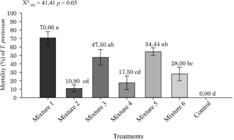
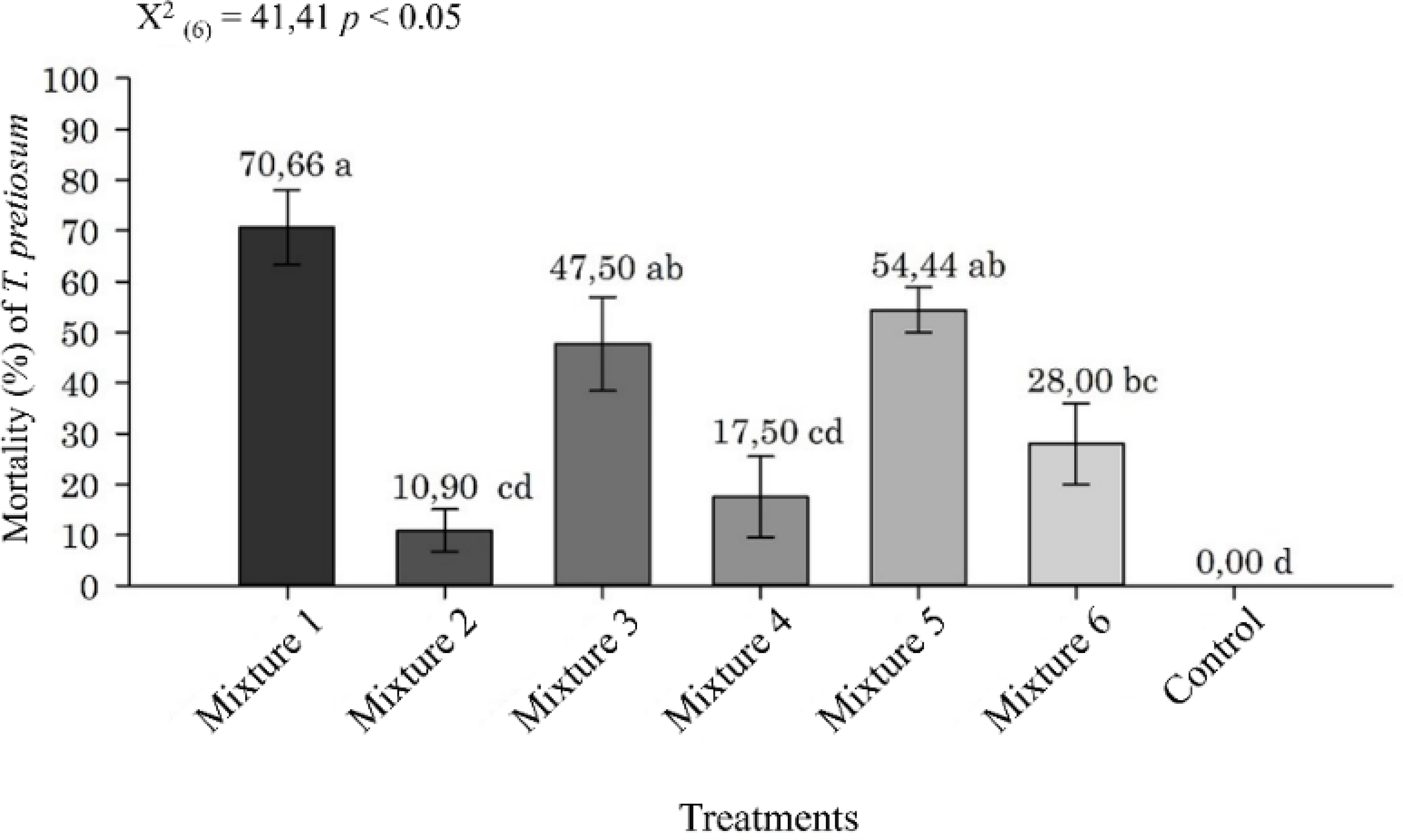
Mean of mortality (%) of adult females of Trichogramma pretiosum Riley (Hymenoptera: Trichogrammatidae) up to 24 hours old, after exposure to parasitism for 24 hours from eggs of the host Anagasta kuehniella (Zeller) (Lepidoptera : Pyralidae) treated with mixtures of phytosanitary products, including: Mixture 1= Spinetoram + Pyraclostrobin and Fluxapyroxad; Mixture 2= Cyromazine + Pyraclostrobin and Fluxapyroxad; Mixture 3= Cyproconazole + Spinetoram; Mixture 4= Cyantraniliprole + Abamectin + Metiram and Pyraclostrobin; Mixture 5= Spinetoram + Azoxystrobin and Difenoconazole; Mixture 6= Abamectin + Cyantraniliprole (ready-to-use mixture); and a Control (distilled water). The colors in the bars indicate the different treatments. Means followed by the same letter do not differ from each other, using the Kruskal-Wallis test, at a 5% probability level.
Selectivity of mixtures of phytosanitary products for T. pretiosum
From the results obtained, it can be inferred that the use of mixtures of phytosanitary products has adverse effects on the parasitoids of the T. pretiosum species, considering the different mechanisms of action involved. Obtaining this information becomes useful considering the practice of IPDM, with integration of biological and chemical control.
The mixtures affected the mortality of the adult females of T. pretiosum up to 24 hours after their exposure to the treated eggs (Figure 1). The highest mortality rates were observed in the treatments corresponding mixtures: 1) Spinetoram + Pyraclostrobin and Fluxapyroxad, 3) Cyproconazole + Spinetoram, and 5) Spinetoram + Azoxystrobin and Difenoconazole. That may be explained by the presence of Spinetoram, the active ingredient of the chemical group of the spinosyns, with a known adverse effect on Hymenoptera (Suh et al., 2000; Biondi et al., 2012; Khan & Ruberson, 2017; Rakes et al., 2021).
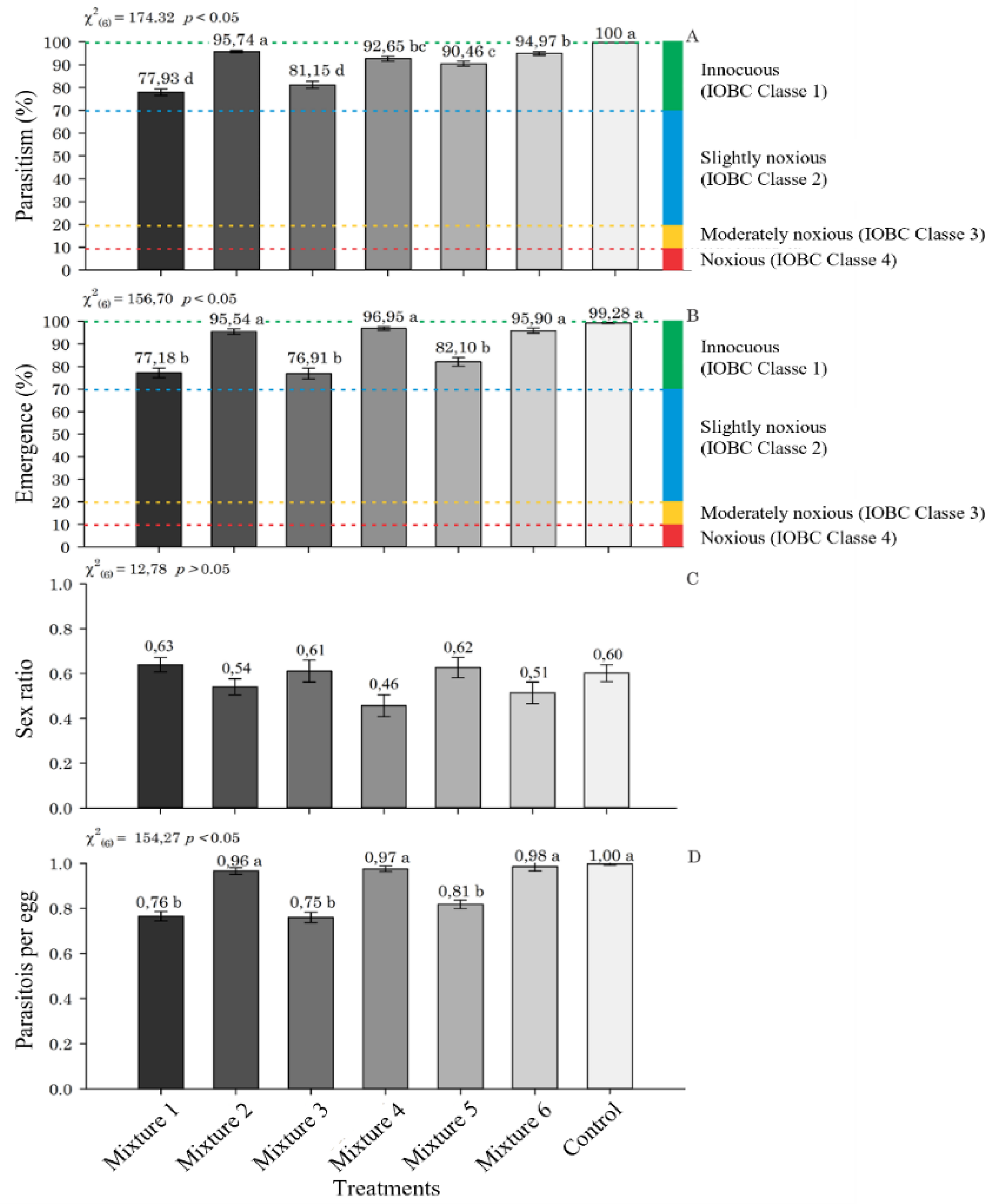
According to the IOBC classification, the treatments did not significantly affect the parasitism and emergence parameters when applied in the pre-parasitism tests (Figure 2), in which all the mixtures were classified as innocuous to T. pretiosum, with maximum reduction in the parasitism rate of 22 % and in emergence of 23% (Figure 2A). These results show the practical possibility of application of these mixtures together with releases of T. pretiosum.
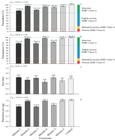
Mean of parasitism (%) (A), emergence (%) (B), sex ratio (C) of offspring and number of parasitoids per egg (D) of Trichogramma pretiosum Riley (Hymenoptera: Trichogrammatidae), by immersing eggs of the host Anagasta kuehniella (Zeller) (Lepidoptera: Pyralidae) treated with mixtures of phytosanitary products, being: Mixture 1= Spinetoram + Pyraclostrobin and Fluxapyroxad; Mixture 2= Cyromazine + Pyraclostrobin and Fluxapyroxad; Mixture 3= Cyproconazole + Spinetoram; Mixture 4= Cyantraniliprole + Abamectin + Metiram and Pyraclostrobin; Mixture 5= Spinetoram + Azoxystrobin and Difenoconazole; Mixture 6= Abamectin + Cyantraniliprole (ready-to-use mixture); and a Control (distilled water). The colors in the bars indicate the different treatments. Means followed by the same letter do not differ from each other, using the Kruskal-Wallis test, at a 5% probability level. IOBC/WPRS toxicity classification (Hassan, 1997).
The percentage of parasitism of T. pretiosum in eggs treated with the mixture 2 (Cyromazine + Pyraclostrobin and Fluxapyroxad) did not show a significant effect (Figure 2A). That is understandable because Cyromazine belongs to the triazine chemical group, which acts as disruptor of the ecdysis, especially in Diptera, and it is therefore innocuous to the parasitoid T. pretiosum (Khan & Ruberson, 2017; Rakes, 2021). Thus, as in the mixture test, the treatment that contained this active ingredient (a.i.) proved to be compatible, resulting in non-interference of the known effect of the molecule (Carvalho et al., 2001; Rocha & Carvalho, 2004), which consequently allows this mixture not to have a significant noxious effect on T. pretiosum.
The fungicides are generally classified as inoffensive to most insects, whether they are considered pests or natural enemies. The fungicide Pyraclostrobin did not have an adverse effect on the emergence of also egg parasitoid Telenomus remus Nixon (Hymenoptera: Scelionidae), thus being classified as innocuous to this parasitoid (Carmo et al., 2020), as observed in T. pretiosum in the present study.
The mixtures among 1) Spinetoram + Pyraclostrobin and Fluxapyroxad, 3) Cyproconazole + Spinetoram, 5) and Spinetoram + Azoxystrobin and Difenoconazole there was some negative effect on parasitism (Figure 2A), and on the generation of the parasitoids (Figure 2B) despite this, high percentages of parasitism (>77.93%) and emergence (>76.9%) were observed in treatments related.
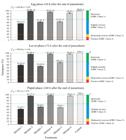
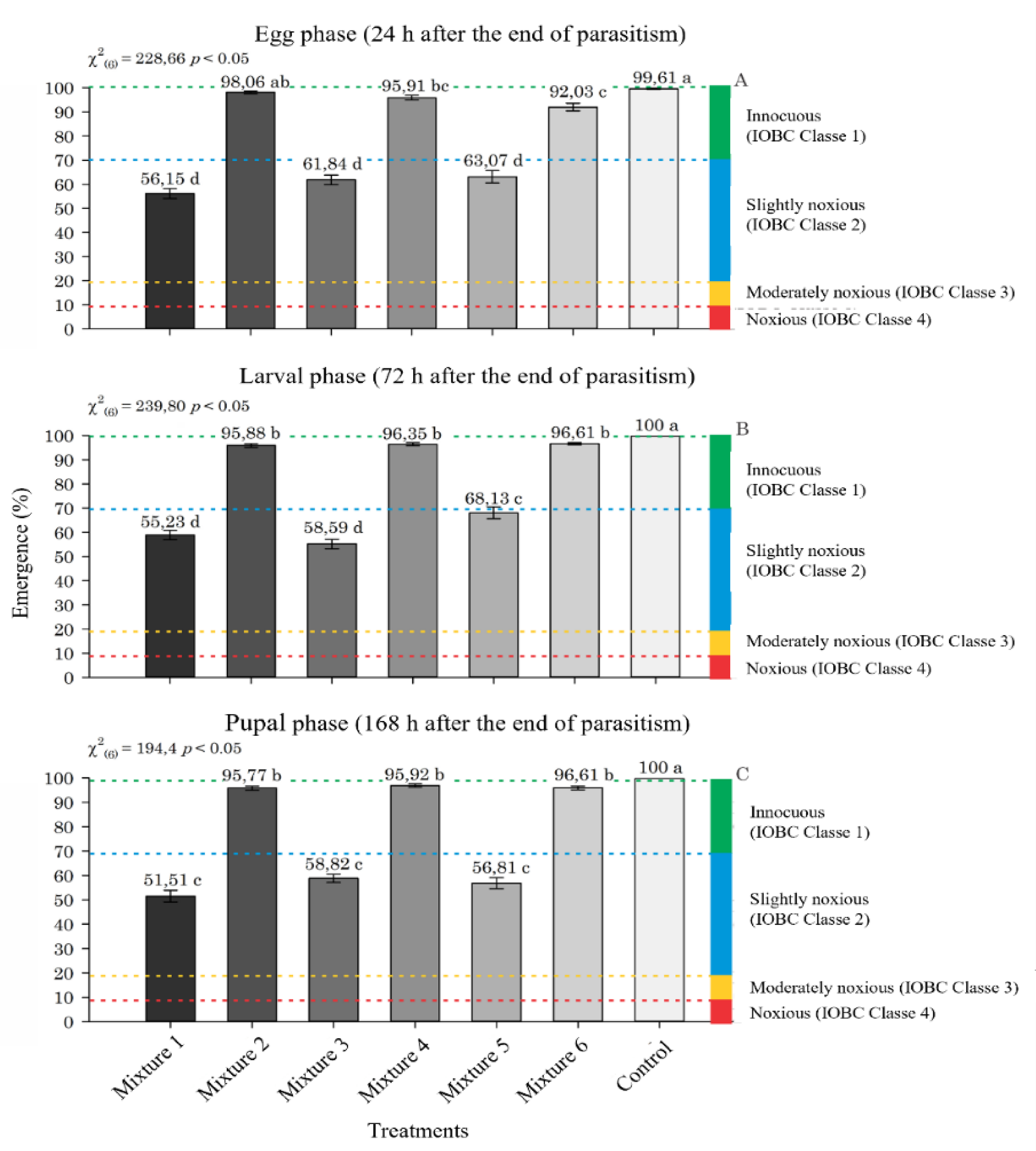
Emergence (%) (Mean), in the egg stage (24 hours after parasitism) (A), larvae (72 hours after parasitism) (B) and pupa (168 hours after parasitism) (C) of Trichogramma pretiosum Riley (Hymenoptera: Trichogrammatidae), by immersing eggs of the host Anagasta kuehniella (Zeller) (Lepidoptera: Pyralidae) treated with mixtures of phytosanitary products, being: Mixture 1= Spinetoram + Pyraclostrobin and Fluxapyroxad; Mixture 2= Cyromazine + Pyraclostrobin and Fluxapyroxad; Mixture 3= Cyproconazole + Spinetoram; Mixture 4= Cyantraniliprole + Abamectin + Metiram and Pyraclostrobin; Mixture 5= Spinetoram + Azoxystrobin and Difenoconazole; Mixture 6= Abamectin + Cyantraniliprole (ready-to-use mixture); and a Control (distilled water). The colors in the bars indicate the different treatments. Means followed by the same letter do not differ from each other, using the Kruskal-Wallis test, at a 5% probability level. IOBC/WPRS toxicity classification (Hassan, 1997).
Various active ingredients can compromise the performance of natural enemies (Rakes et al., 2021), for example such as the active ingredient Spinetoram (Biondi et al., 2012; Khan & Ruberson, 2017). There is an additional effect to that already mentioned. Because Spinetoram represents a product that can act through contact, females may be affected when they enter in contact with the surface of the treated card (Lahm et al., 2007; Grande et al., 2018; Paiva et al., 2018), resulting in a lower rate of parasitism and of emergence, as observed.
The results obtained at the three ages evaluated in post-parasitism (egg, larva, and pupa) show the effect of the treatments on emergence of the parasitoids. The percentage of emergence of T. pretiosum was less when the mixtures constituted by 1) Spinetoram + Pyraclostrobin and Fluxapyroxad, 3) Cyproconazole + Spinetoram, and 5) Spinetoram + Azoxystrobin and Difenoconazole were applied on at the three ages of T. pretiosum evaluated (Figure 3). These mixtures reduced the emergence of the parasitoids by more than 30% and were thus considered slightly noxious (Class 2) in post-parasitism (Figure 3). In contrast, the mixtures 2) Cyromazine + Pyraclostrobin and Fluxapyroxad, 4) Cyantraniliprole + Abamectin + Metiram and Pyraclostrobin, and 6) Abamectin + Cyantraniliprole were classified as innocuous in post-parasitism for all the ages of the parasitoids (Figure 3).

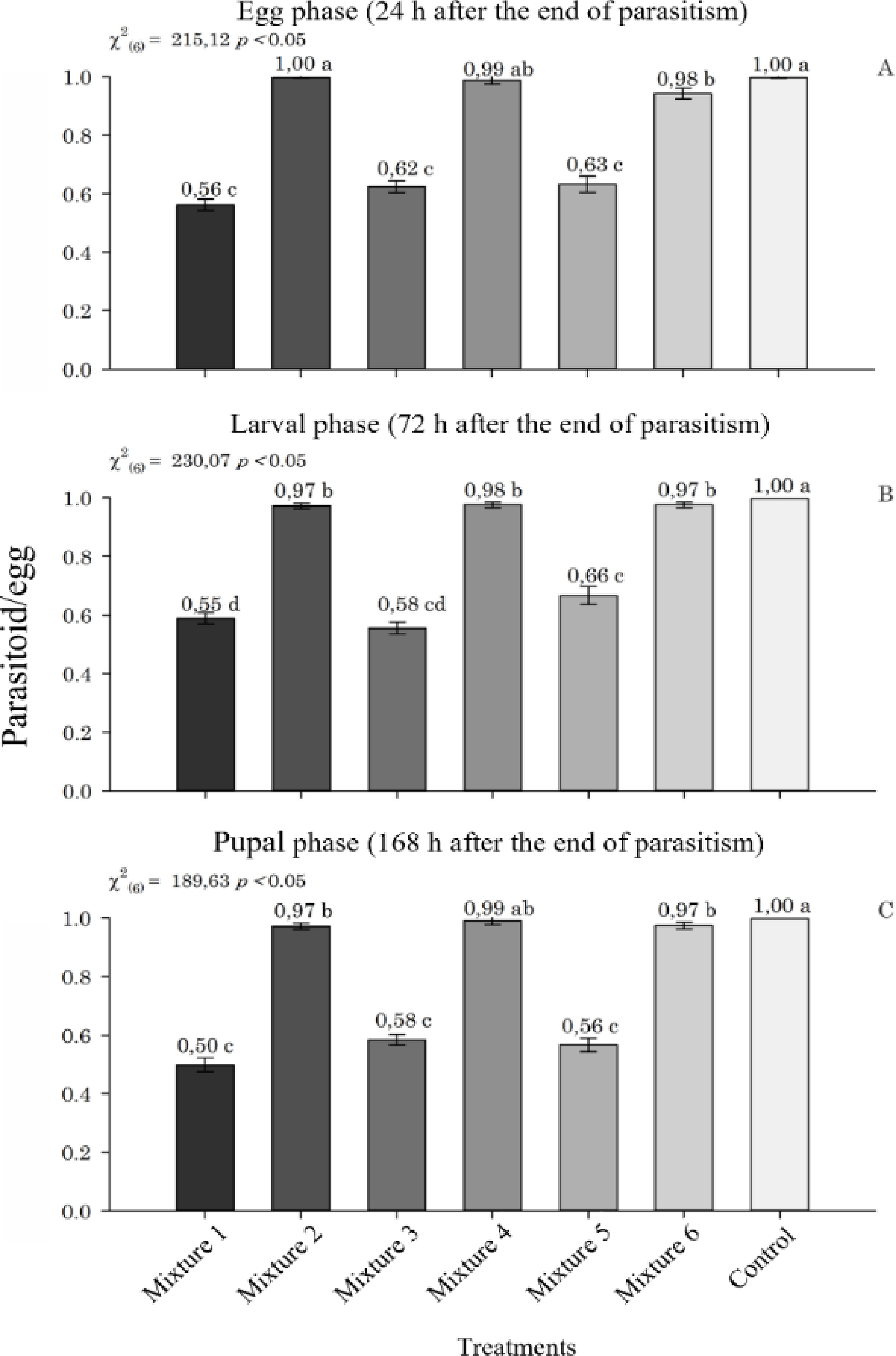
Parasitoid/egg (mean), in the egg stage (24 hours after parasitism) (A), larvae (72 hours after parasitism) (B), and pupa (168 hours after parasitism) of Trichogramma pretiosum Riley (Hymenoptera: Trichogrammatidae), by immersing eggs of the host Anagasta kuehniella (Zeller) (Lepidoptera: Pyralidae) treated with mixtures of phytosanitary products, being: Mixture 1= Spinetoram + Pyraclostrobin and Fluxapyroxad; Mixture 2= Cyromazine + Pyraclostrobin and Fluxapyroxad; Mixture 3= Cyproconazole + Spinetoram; Mixture 4= Cyantraniliprole + Abamectin + Metiram and Pyraclostrobin; Mixture 5= Spinetoram + Azoxystrobin and Difenoconazole; Mixture 6= Abamectin + Cyantraniliprole (ready-to-use mixture); and a Control (distilled water). The colors in the bars indicate the different treatments. Means followed by the same letter do not differ from each other, using the Kruskal-Wallis test, at a 5% probability level.
The observations made during desiccation of the eggs suggest that these active ingredients did not have a substantial effect on the development of the immature parasitoids within the eggs of their hosts; but the emergent adults were adversely affected by the remnants of a.i. that remained in the chorion of the egg, where possibly the parasitoids tried to open the exit orifice and died by contact with the residues (Bull & House, 1983; Suh et al., 2000). However, this information cannot be taken as a general rule because over the life stages, there are physiological variations of the parasitoids and hosts or even differences in the time of exposure of each stage to the products.
The a.i. Spinetoram present in the mixtures that had a lower rate of emergence of T. pretiosum in post-parasitism affected the emergence of the parasitoids Trichogramma exiguum Pinto & Platner in eggs of Helicoverpa zea (Boddie) (Lepidoptera: Noctuidae) (Suh et al., 2000), proving to be moderately noxious (Class 3) or even noxious (Class 4) at the different ages of the parasitoids in most of the laboratory and field studies (Biondi et al., 2012; Khan & Ruberson, 2017). The spinosyns are insecticides that connect to the nicotinic acetylcholine receptors, strengthening the effect on transmission of the nerve impulse and impeding the action of acetylcholinesterase (IRAC, 2021). The immature parasitoids may not have entered in directly contact with the molecules of the active ingredient, once they were oviposited inside the host egg. However, the adults when trying to get out of the egg, it entered in contact with the residues, and the operation of their nervous system was affected, leading to their death (Bull & House, 1983; Suh et al., 2000).
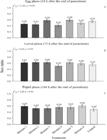
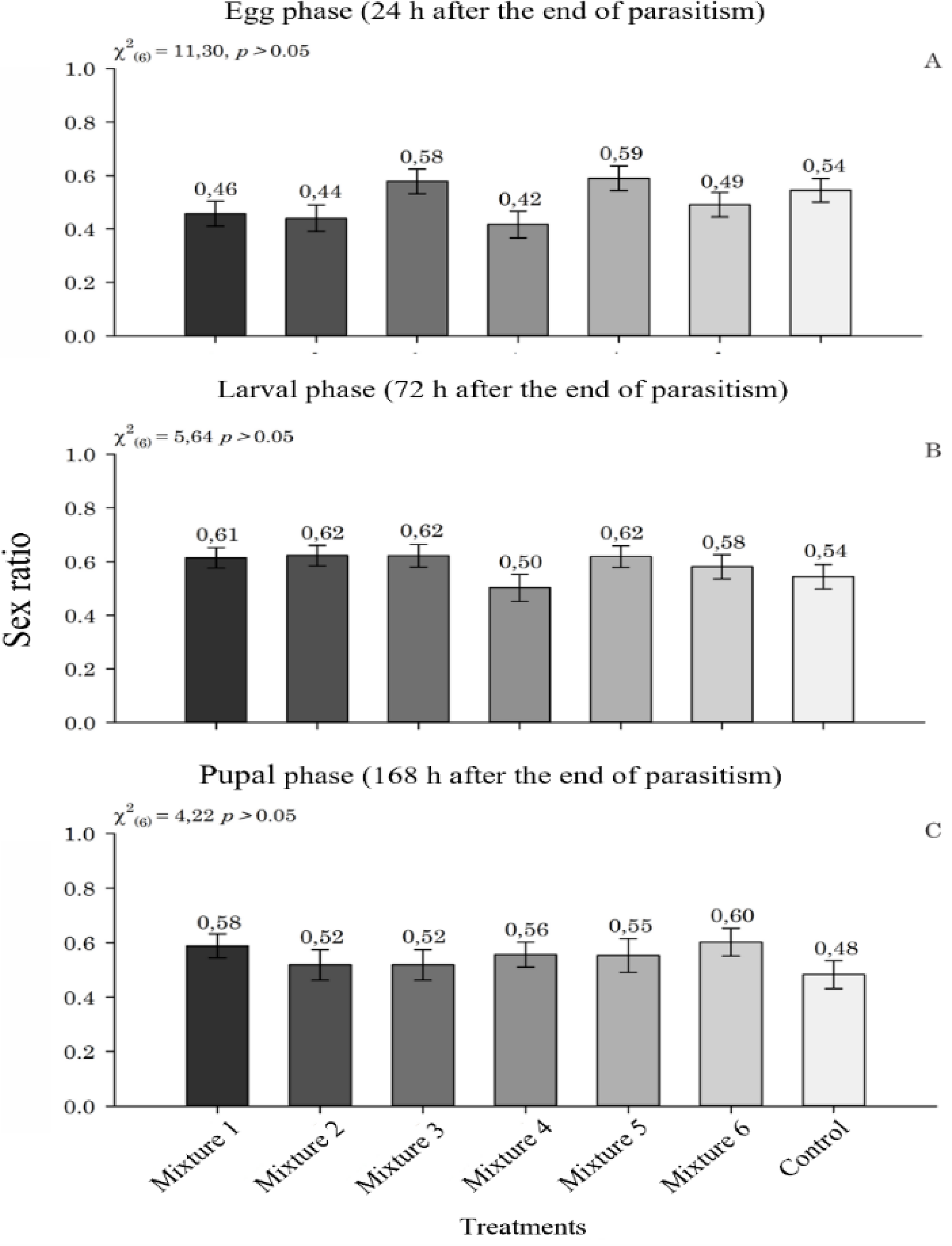
Sex ratio (Mean) in the egg stage (24 hours after parasitism) (A), larval stage (72 hours after parasitism) (B), and pupal stage (168 hours after parasitism) of Trichogramma pretiosum Riley (Hymenoptera: Trichogrammatidae), by immersing eggs of the host Anagasta kuehniella (Zeller) (Lepidoptera: Pyralidae) treated with mixtures of phytosanitary products, being: Mixture 1= Spinetoram + Pyraclostrobin and Fluxapyroxad; Mixture 2= Cyromazine + Pyraclostrobin and Fluxapyroxad; Mixture 3= Cyproconazole + Spinetoram; Mixture 4= Cyantraniliprole + Abamectin + Metiram and Pyraclostrobin; Mixture 5= Spinetoram + Azoxystrobin and Difenoconazole; Mixture 6= Abamectin + Cyantraniliprole (ready-to-use mixture); and a Control (distilled water). The colors in the bars indicate the different treatments. Means followed by the same letter do not differ from each other, using the Kruskal-Wallis test, at a 5% probability level.
The number of parasitoids that emerged per egg of A. kuehniella was similar among the treatments applied the mixtures 2) Cyromazine + Pyraclostrobin and Fluxapyroxad, 4) Cyantraniliprole + Abamectin + Metiram and Pyraclostrobin, 6) Abamectin + Cyantraniliprole, and the control (Figure 2D and Figure 4). The mixtures (mixtures 1, 3 and 5) containing Spinetoram reduced the number of parasitoids in the bioassays in pre- and post-parasitism.
Surface contact and recognition of the host (Roriz et al., 2006; Rukmowati-Brotodjojo & Walter, 2006) in the pre-parasitism test may have affected the oviposition behavior of the females in the face of the possibility of not being able to ensure the development of their progeny, in addition to the female possibly being killed before ovipositing all the eggs, considering that Spinetoram causes adverse effects, as mentioned.
The treatments did not have an effect on the sex ratio parameter (Figure 3C and Figure 5). The lack of difference reveals that the mixtures did not alter a capacity the females of regulating the sex of the descendant population (Navarro, 1998).
The sex ratio of Trichogramma species varies; it is regulated by factors such as temperature, humidity, host, and age of the females (Vinson, 1997). This behavior is considered important to ensure the maintenance of the parasitoids in the area since the mixtures did not affect the normal behavior of the species.
Therefore, all mixtures were considered beneficial and viable for use together with T. pretiosum, as long as they are applied before parasitoid releases, as a greater effect was applied in post-parasitism.
CONCLUSIONS
All mixtures were considered stable.
The mixture 4) Cyantraniliprole + Abamectin + Metiram and Pyraclostrobin showed physical incompatibility, resulting in flocculation and phase separation after 5 minutes; continuous agitation is recommended during application.
All the mixtures were considered innocuous to T. pretiosum in the pre-parasitism bioassay, with minimum rates of parasitism and emergence of 75%.
The mixtures 1) Spinetoram + Pyraclostrobin and Fluxapyroxad, 3) Cyproconazole + Spinetoram, and 5) Spinetoram + Azoxystrobin and Difenoconazole exhibited more pronounced adverse effects on parasitism, emergence, and number of parasitoids per egg in T. pretiosum and were classified as slightly harmful at the three phases (egg, larva, and pupa) in the post-parasitism bioassay.
The sex ratio of T. pretiosum was not affected by the treatments.
ACKNOWLEDGEMENTS, FINANCIAL SUPPORT AND FULL DISCLOSURE
To “Conselho Nacional de Desenvolvimento Científico e Tecnológico (CNPq)”, “Coordenação de Aperfeiçoamento de Pessoal de Nível Superior (CAPES)”, the “Fundação Cearense de Apoio ao Desenvolvimento Científico e Tecnológico (FUNCAP)” for the study scholarships.
REFERENCES
- Azevedo LAS (2015) Mistura de tanque de produtos fitossanitários: Teoria e Prática. Rio de Janeiro, IMOS Gráfica e Editora. 230p.
- Biondi A, Mommaerts V, Smagghe G, Vinuela E, Zappala L & Desneux N (2012) The non‐target impact of spinosyns on beneficial arthropods. Pest Management Science, 68:1523-1536.
- Blumel S, Gross M, Jeong Y J & Phillips DG (2001) Effect of pesticide mixtures on the predatory mite Phytoseiulus persimilis A.H. (Acarina, Phytoseiidae) in the laboratory. Journal of Applied Entomology, 4:201-205.
- Bowen WR & Stern VM (1966) Effect of temperature on the production of males and sexual mosaics in a uniparental race of Trichogramma semifumatum (Hymenoptera: Trichogrammatidae). Annals of the Entomological Society of America, 59:823-834.
- Brasil (2013) Instrução Normativa conjunta, nº 2, de 12 de julho de 2013. Estabelecer as especificações de referência de produtos fitossanitários com uso aprovado para a agricultura orgânica. DOU, 15/07/2013, Seção 1, p. 6-8.
- Bueno AF, Sosa-Gomez DR, Côrrea-Ferreira BS, Moscardi F & Bueno RCOF (2012) Inimigos naturais das pragas da soja. In: Hoffmann-Campo CB, Corrêa-Ferreira BS & Moscardi F (Eds.) Soja: manejo integrado de insetos e outros artrópodes-praga. Brasília, Embrapa. p.493-522.
- Bull Dl & House Vs (1983) Effects of different insecticides on parasitism of host eggs by Trichogramma pretiosum Riley. Southwest Entomology, 8:46-53.
- Carmo EL, Bueno ADF, Bueno RCOF, Vieira SS, Goulart MMP & Carneiro TR (2020) Seletividade de produtos fitossanitários utilizados na cultura da soja para pupas de Trichogramma pretiosum Riley, 1879 (Hymenoptera: Trichogrammatidae). Arquivos do Instituto Biológico, 77:283-290.
- Carvalho GD, Parra JRP & Baptista GD (2001) Seletividade de alguns produtos fitossanitários a duas linhagens de Trichogramma pretiosum Riley, 1879 (Hymenoptera: Trichogrammatidae). Ciência e Agrotecnologia, 25:583-591.
- Cônsoli FL, Rossi MM & Parra JRP (1999) Developmental time and characteristics of the immature stages of Trichogramma galloi and T. pretiosum (Hymenoptera, Trichogrammatidae). Revista Brasileira de Entomologia, 43:271-275.
- Degrande PE & Gomez DRS (1990) Seletividade de produtos químicos no controle de pragas. Agrotécnica, 7:08-13.
-
FAO - Food and Agriculture Organization of the United Nations (2023) Crop statistics 2022. Available at: <http://www.fao.org/faostat/en/#data/QC/visualize> Accessed on: July 2nd, 2024.
» http://www.fao.org/faostat/en/#data/QC/visualize - Fernandes OA, Ferreira CC & Montagna MA (2019) Manejo integrado de pragas do meloeiro: manual de reconhecimento das pragas e táticas de controle. Jaboticabal, FUNEP-CNPq. 28p.
- Foresti J, Bernardi O, Zart M & Garcia MS (2013) Comportamento de oviposição de Helicoverpa zea (Boddie, 1850) (Lepidoptera: Noctuidae) em milho semente e simulação de controle. Revista Brasileira de Milho e Sorgo, 12:78-84.
- Gandini EMM, Costa ESP, Dos Santos JB, Soares MA, Barroso GM, Corrêa JM & Zanuncio JC (2020) Compatibility of pesticides and/or fertilizers in tank mixtures. Journal of Cleaner Production, 268:122152.
- Garcia-Mas J, Benjak A, Sanseverino W, Bourgeois M & Baulcombe DC (2012) The genome of melon (Cucumis melo L.). Proceedings of the National Academy of Sciences, 109:11872-11877.
- Gazziero DLP & Souza IF (1993) Manejo integrado de plantas daninhas. In: Arantes NE (Ed.) Cultura da soja nos cerrados. Piracicaba, Potafos. p.83-208.
- Gazziero DLP (2015) Misturas de agrotóxicos em tanque nas propriedades agrícolas do Brasil. Planta Daninha, 33:83-92.
- Grande MLM, Braz ÉC, De Freitas AB, Da Silva DM, De Queiroz AP & Ventura UM (2018) Effect of increasing rate of insecticides on its selectivity for Trichogramma pretiosum Riley (Hymenoptera: Trichogrammatidae). Semina: Ciências Agrárias, 39:933-945.
- Guimarães MA & Aragão FAS (2019) Produção de melão. Viçosa, Editora UFV. 425p.
- Guimarães GL (2014) Principais fatores comerciais condicionantes da disponibilidade de produtos isolados e em misturas. In: 29º Congresso Brasileiro Da Ciência Das Plantas Daninhas, Gramado. Anais, UFSM. CD ROM.
- Hassan AS (1997) Métodos padronizados para testes de seletividade com ênfase em Trichogramma In: Parra JRP & Zucchi RA (Ed.) Trichogramma e o controle biológico aplicado. Piracicaba, FEALQ. p.207-233.
- Hassan SA (1992) Guideline for the evaluation of side-effects of plant protection product on Trichogramma cacoeciae, sequential testing programme. Bulletin OILB SROP, 15:18-39.
-
IBGE - Instituto Brasileiro de Geografia e Estatística. Estatísticas econômicas. Available at: <https://www.ibge.gov.br/estatisticas/economicas/agricultura-e-pecuaria/9117-producao-agricola-municipal-culturas-temporarias-e-permanentes.html?=&t=o-que-e>. Accessed on: May 18th, 2023.
» https://www.ibge.gov.br/estatisticas/economicas/agricultura-e-pecuaria/9117-producao-agricola-municipal-culturas-temporarias-e-permanentes.html?=&t=o-que-e -
IRAC - Comitê de Ação à Resistência a Inseticidas (2021) Modo de Ação de Inseticidas e Acaricidas. Available at: <https://www.irac-br.org/modo-de-acao> Accessed on: January 10th, 2023.
» https://www.irac-br.org/modo-de-acao - Jiang J, Liu X, Huang X, Yu X, Zhang W, Zhang X & Mu W (2019) Comparative ecotoxicity of neonicotinoid insecticides to three species of Trichogramma parasitoid wasps (Hymenoptera: Trichogrammatidae). Ecotoxicology and environmental Safety, 183:109587.
- Khan MA & Ruberson JR (2017) Lethal effects of selected novel pesticides on immature stages of Trichogramma pretiosum (Hymenoptera: Trichogrammatidae). Pest Management Science,73:2465-2472.
- Ko K, Liu Y, Babendreier D, Zhang F & Song K (2014) Evaluation for potential Trichogramma (Hymenoptera: Trichogrammatidae) strains for control of the striped stem borer (Lepidoptera: Crambidae) in the Greater Mekong Subregion. Journal of Economic Entomology, 107:955-963.
- Lahm GP, Stevenson TM, Selby TP, Freudenberger JH, Cordova D, Flexner L, Bellin CA, Dubas CM, Smith BK, Hughes KA, Hollingshaus JG, Clark CE & Benner EA (2007) Rynaxypyr: A new insecticide anthranilic diamide that acts as a potent and selective ryanodine receptor activator. Bioorganic & Medicinal Chemistry Letters, 17:6274-6279.
- Leite GL, De Paulo PD, Zanuncio JC, Tavares WDS, Alvarenga AC, Dourado LR, Bispo EPR & Soares MA (2017) Herbicide toxicity, selectivity and hormesis of nicosulfuron on 10 Trichogrammatidae (Hymenoptera) species parasitizing Anagasta (= Ephestia) kuehniella (Lepidoptera: Pyralidae) eggs. Journal of Environmental Science and Health, Part B, 52:70-76.
- Lima ACC, Costa EM, Araujo EL, Rugama AJM & Godoy MS (2012) Diagnóstico sobre o uso do MIP nas principais áreas produtoras de melão dos Estados do Rio Grande do Norte e Ceará. Revista Agro@mbiente On-line, 6:172-178.
- Medeiros EVD, Serafim ECDS, Granjeiro LC, Sobrinho EJ, Negreiros MZD & Sales Júnior R (2008) Influência do agrotextil sobre a densidade populacional de Monosporascus cannonballus em solo cultivado com melancia (Citrullus lanatus). Ciência e Agrotecnologia, 32:797-803.
- Melo RL, Pratissoli D, Polanczyk RA, Melo DF, Barros R & Milanez AM (2007) Biology and thermal requirements of Trichogramma atopovirilia Oatman & Platner (Hymenoptera: Trichogrammatidae) parasitizing eggs of Diaphania hyalinata L. (Lepidoptera: Pyralidae). Neotropical Entomology, 36:431-435.
- Miller PCH & Butler MCEE (2000) Effects of formulation on spray nozzle performance for applications from ground-based boom sprayers. Crop protection, 19:609-615.
- Milonas PG, Partsinevelos G & Kapranas A (2021) Susceptibility of diferente developmental stages of Trichogramma parasitoids to insecticides commonly used in the Mediterranean olive agroecosystem. Bulletin of Entomological Research, 208:111504.
- Nash RG (1967) Phytotoxic pesticide interactions in soil. Agronomy Journal, 59:227-230.
- Navarro MA (1998) El Trichogramma spp. Producción, Uso y Manejo em Colômbia. Guadalajara de Buga, Impretec. 183p.
- Oliveira RCM, Pastori PL, Coutinho CR, Juvenal SO & Aguiar CVS (2020) Natural parasitism of Trichogramma pretiosum (Hymenoptera: Trichogrammatidae) in Neoleucinodes elegantalis (Lepidoptera: Crambidae) eggs on tomato (Solanales: Solanaceae) in the Northeast region, Brazil. Brazilian Journal of Biology, 80:474-475.
- Paiva ACR, Beloti VH & Yamamoto PT (2018) Sublethal effects of insecticides used in soybean on the parasitoid Trichogramma pretiosum Ecotoxicology, 27:448-456.
- Pastori PL, Pinto AC, Dias-Pini NS, Godoy MS & Molina-Rugama AJ (2019) Manejo integrado das pragas do meloeiro. In: Guimarães MA & Aragão FAZ (Eds.) Produção de melão. Viçosa, Editora UFV. 425p.
- Petter FA, Segate D, De Almeida FA, Neto FA & Pacheco LP (2013) Incompatibilidade física de misturas entre inseticidas e fungicidas. Comunicata Scientiae, 4:129-138.
- Petter FA, Segate D, Pacheco LP, De Almeida FA & Alcântara FN (2012) Incompatibilidade física de misturas entre herbicidas e inseticidas. Planta Daninha, 30:449-457.
- Prado EP, Araújo DD, Raetano CG, Pogetto MHFDAD, Aguiar-Júnior HO & Christovam RDS (2011) Influência da dureza e potencial hidrogeniônico da calda de pulverização sobre o controle do ácaro-da-leprose em frutos de laranja doce. Bragantia, 70:389-396.
- Pratissoli D, Milanez AM, Celestino FN, Barbosa WF, Vianna UR, Polanczyk RA, Zinger FD & Carvalho JR (2011) Seletividade de inseticidas, recomendados para cucurbitáceas para Trichogramma atopovirilia Oatman & Platner (Hymenoptera: Trichogrammatidae) em condições de laboratório. Revista Ceres, 58:661-664.
-
R Core Team (2021) R: A language and environment for statistical computing. R Foundation for Statistical Computing. Available at: <https://cran.r-project.org/bin/windows/base/old/4.0.2/> Accessed on: January 10th, 2022.
» https://cran.r-project.org/bin/windows/base/old/4.0.2/ - Rakes M, Pasini RA, Morais MC, Araújo MB, Pazini JB, Seidel ES, Bernardi DD & Grützmacher AD (2021) Pesticide selectivity to the parasitoid Trichogramma pretiosum: A pattern 10-year database and its implications for Integrated Pest Management. Ecotoxicology and Environmental Safety, 208:111504.
- Rocha LCD & Carvalho GA (2004) Adaptação da metodologia padrão da IOBC para estudos de seletividade com Trichogramma pretiosum Riley, 1879 (Hymenoptera: Trichogrammatidae) em condições de laboratório. Acta Scientiarum. Agronomy, 26:315-320.
- Ronchi CP, Silva AA, Miranda GV, Ferreira LR & Terra AA (2002) Mistura de Herbicida para controle de plantas daninhas do gênero Commelina Planta daninha, 20:311-318.
- Roriz V, Oliveira L & Garcia P (2006) Host suitability and preference studies of Trichogramma cordubensis (Hymenoptera: Trichogrammatidae). Biological Control, 36:331-336.
- Rukmowati-Brotodjojo RR & Walter GH (2006) Oviposition and reproductive performance of a generalist parasitoid (Trichogramma pretiosum) exposed to host species that differ in their physical characteristics. Biological Control, 39:300-312.
- Stein CP & Parra JRP (1987) Uso da radiação para inviabilizar os ovos de Anagasta kuehniella visando estudos com Trichogramma sp. Anais da Sociedade Entomológica do Brasil, 6:229-231.
- Sterk G, Hassan SA, Baillod M, Bakker F, Bigler F, Blümel S, Bogenschutz H, Boller E, Bromand B, Brun J, Calis JNM, Coremans-Pelseneer J, Duso C, Garrido A, Grove A, Heimbach U, Hokkanen H, Jacas J, Lewis G, Moreth L, Polgar L, Rovesti L, Samsoe-Peterson L, Sauphanor B, Schaub L, Staubli A, Tuset JJ, Vainio A, Van de Veire M, Viggiani G, Viñuela E & Vogt H (1999) Results of the seventh joint pesticide testing programme carried out by the IOBC/WPRS-Working Group ‘Pesticides and Beneficial Organisms. BioControl, 44:99-117.
- Suh CPC, Orr DB & Van Duyn JW (2000) Effect of insecticides on Trichogramma exiguum (Trichogrammatidae: Hymenoptera) preimaginal development and adult survival. Journal of Economic Entomology, 93:577-583.
- Tabebordbar F, Shishehbor P, Ziaee M & Sohrabi F (2020) Lethal and sublethal effects of two new insecticides spirotetramat and flupyradifurone in comparison to conventional insecticide deltamethrin on Trichogramma evanescens (Hymenoptera: Trichogrammatidae). Journal of Asia-Pacific Entomology, 23:1114-1119.
- Thiesen G & Ruedel J (2004) Tecnologia de aplicação de herbicidas: teoria e prática. Cruz Alta, FUNDACEP. 90p.
- Trindade MSDA, Sousa AHD, Maracajá PB, Sales Júnior R & Andrade WGD (2007) Aqueous extracts and oil of neem combined with neonicotinoid insecticides against Bemisia tabaci biotype B in melon. Ciência Rural, 37:1798-1800.
- Vinson SB (1997) Comportamento de seleção hospedeira de parasitóides de ovos, com ênfase na família Trichogrammatidae. In: Parra JRP & Zucchi RA (Eds.) Trichogramma e o Controle Biológico Aplicado. Piracicaba, FEALQ/USP. p.67-119.
- Wang DS, He YR, Guo XL & Luo YL (2012) Acute Toxicities and Sublethal Effects of Some Conventional Insecticides on Trichogramma chilonis (Hymenoptera: Trichogrammatidae). Journal of Economic Entomology, 105:1157-1163.
Edited by
-
Editors:
Renato de Almeida SarmentoDanielle Fabíola Pereira da Silva