Electromyography of the masseter and suprahyoid muscles in female patients with either normal occlusion or ANGLE’s Class I malocclusion, during oral phase of swallowing
Purpose: to verify if malocclusion interferes with electromyographic activity of masseter and suprahyoid muscles during the oral swallowing phase.
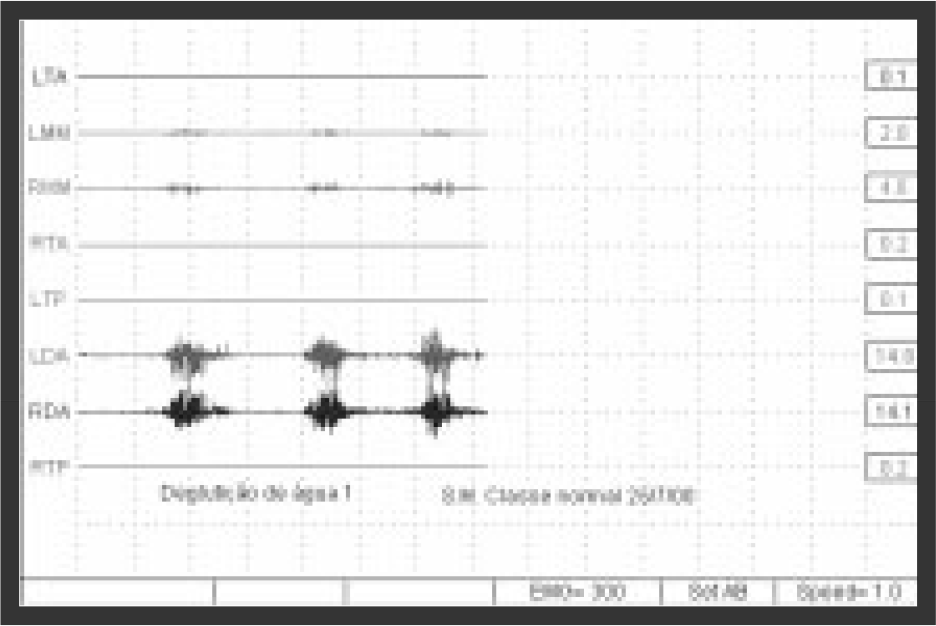
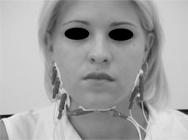
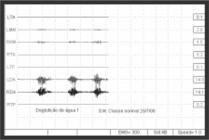
Methods: twenty six female patients were examined, ages ranging from 20 years and 7 months to 30 years and eight months, having permanent natural dentition and who were identified through a specific protocol associated with an oral myofunctional clinical examination. Patients were assigned into two groups: control group (CG), including 9 patients with normal clinical occlusion and group I (GI) including 17 patients with ANGLE’s Class I malocclusion. Surface electromyographic assessment was carried out in order to evaluate electric potential activity of the aforementioned muscles.
Results: statistically significant difference concerning electric activity of these muscles between both groups and a greater contraction force of patients included in group I.
Conclusion: female patients with ANGLE’s Class I malocclusion exhibit greater contractile force of the masseter and suprahyoid muscles, during oral swallowing phase.
KEYWORDS:
Electromyography/methods; Masseter muscle/physiology; Neck muscles/ physiology; Malocclusion; angle class I; Dental occlusion; Deglutition/ physiology; Female
 Thumbnail
 Thumbnail