Bruxism: masticatory performance in young adult
Purpose: to compare chewing development performance in subjects that press and/or creak the teeth with chewing development in normal subjects.
Methods: forty-two adults participated in these study of both sexes, with age above 17 years, with 24 bruxists and 18 pertaining to the control group. All subjects were assessed in masticatory test and answered a questionnaire concerning their nourishing habits.
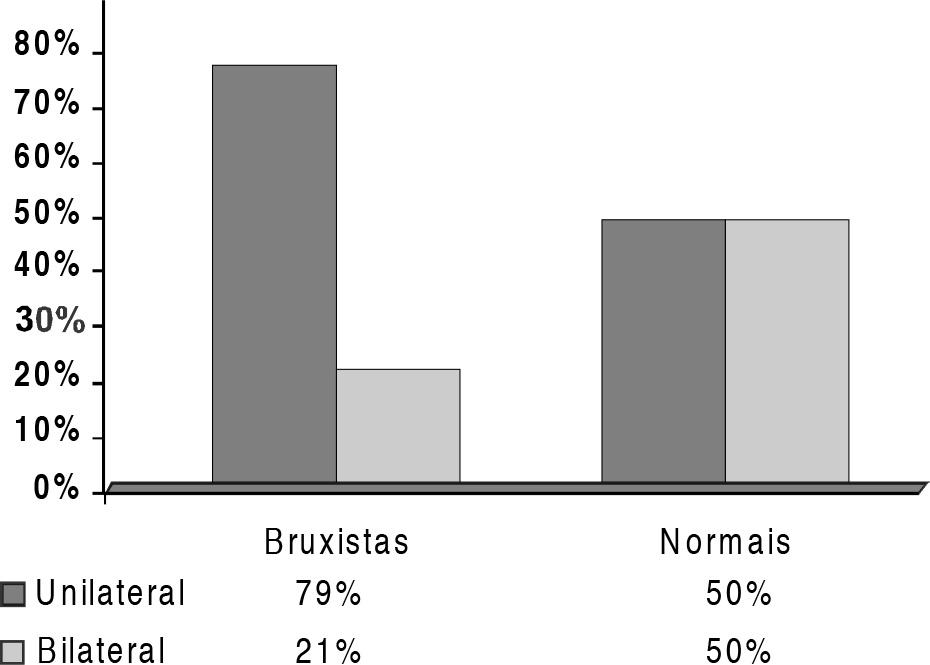
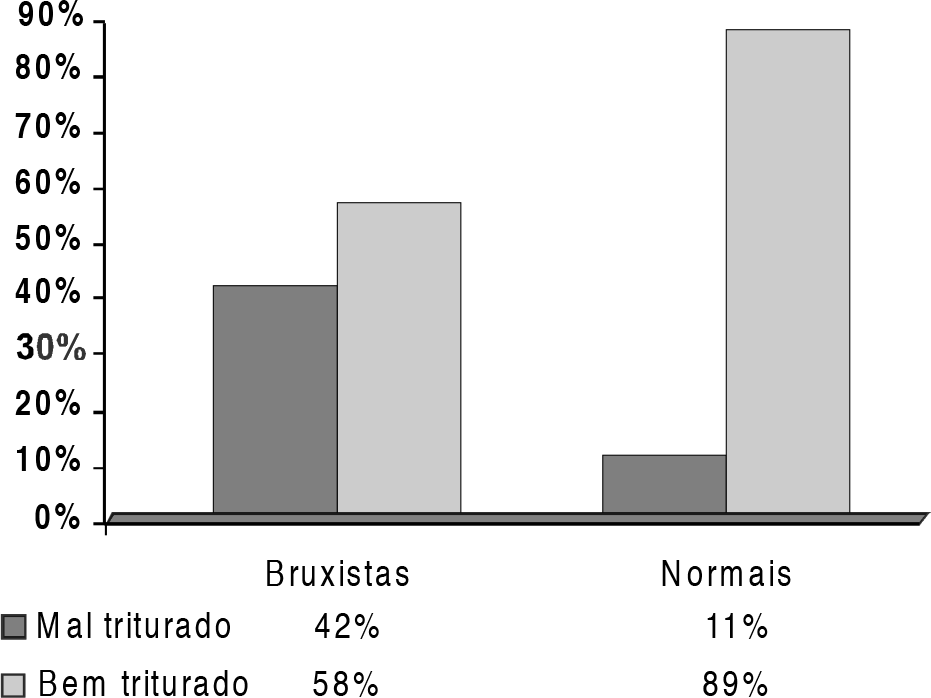
Results: the results did not show any significant statistical difference among the groups with relation to the favorite nourishment consistence, presence of muscular fatigue or facial mimic during mastication process. However, better grinding of foods was found in the control group (p=0.03) and a preference for the unilateral mastication in the bruxist group (p=0.047).
Conclusion: there were differences in the final result concerning the masticatory act with relation to food grinding, it was worse in the bruxist group, besides presenting low amplitude, predominant vertical movements of jaw and unilateral mastication.
KEYWORDS:
Bruxism; Mastication; Temporomandibular joint/physiopathology; Temporomandibular joint disorders; Sleep disorders; Feeding; Adult
 Thumbnail
 Thumbnail