
 Occupational stressors and implications for the mental health of primary care workers in the pandemic and post pandemic periods: An integrative review
ABSTRACT
Purpose: to systematize stress factors related to work changes during the pandemic and the implications for the mental health of Primary Healthcare workers in the post-pandemic period.
Methods: an integrative literature review of the BVS, CAPES Journals, PubMed, SciELO, ScienceDirect, and Web of Science databases, with a score of 80% or higher, according to the Critical Appraisal Skills Programme checklist. Data processing and analysis considered personal, organizational, and social aspects in the study design.
Literature Review: a total of 17 studies were included, which indicated that, during the pandemic, workers faced significant stressors, such as increased working hours and absenteeism, adaptation to new technologies, resource shortages, high levels of anxiety, depression, and stress, as well as negative social implications, such as discrimination and stigmatization, which contributed to high levels of burnout and other mental health problems. In the post-pandemic period, high prevalences of mental health problems persisted, indicating the lasting nature of impacts.
Conclusion: the findings show that the organizational and psychosocial stressors, during the pandemic, continue to have a negative impact on the mental health of Primary Healthcare (PHC) workers, highlighting the need for support policies and ongoing interventions focused on the well-being of these professionals.
Keywords:
Occupational Stress; Primary Healthcare; COVID-19; Occupational Health
RESUMO
Objetivo: sistematizar os fatores estressores relacionados às mudanças no trabalho durante a pandemia e as implicações para a saúde mental dos trabalhadores da Atenção Primária à Saúde no período pós-pandêmico.
Métodos Trata-se de uma revisão integrativa da literatura nas bases de dados BVS, CAPES Journals, PubMed, SciELO, ScienceDirect e Web of Science, com uma pontuação igual ou superior a 80%, de acordo com a lista de verificação do Critical Appraisal Skills Programme.
Revisão da Literatura: foram incluídos 17 estudos, os quais indicam que, durante a pandemia, os trabalhadores enfrentaram estressores como aumento das jornadas e do absenteísmo, adaptação a novas tecnologias, escassez de recursos, altos níveis de ansiedade, depressão e estresse, além de implicações sociais negativas, como discriminação e estigmatização, que contribuíram para níveis elevados de Burnout e outros problemas de saúde mental. No período pós-pandêmico, observa-se a persistência de altas prevalências dos agravos à saúde mental, indicando a natureza duradoura dos impactos.
Conclusão: os achados demonstram que os estressores organizacionais e psicossociais durante a pandemia continuam a repercutir negativamente na saúde mental dos trabalhadores da Atenção Primária à Saúde (APS) evidenciando a necessidade de políticas de apoio e intervenções contínuas voltadas para o bem-estar desses profissionais.
Descritores:
Estresse Ocupacional; Atenção Primária à Saúde; COVID-19; Saúde Ocupacional
INTRODUCTION
The COVID-19 pandemic, unprecedented in its magnitude and global impact, imposed several occupational stressors that uniquely affected the mental health of Primary Healthcare (PHC) workers1. Work overload, insecurity regarding infection, and emotional pressure, resulting from the management of health crises, were determinants to worsen the mental health conditions of these professionals1. The context of the pandemic, not only increased pre-existing vulnerabilities, but also introduced new challenges that require in-depth and contextualized analysis.
Professionals worked on the front lines in health units and in territories to reduce the virus transmissibility, as well as in pre-screening, referrals to more complex services, clinical care and monitoring, health awareness about risks, signs and symptoms, and ensured the continued availability of services to meet other daily demands2. The pandemic scenario revealed significant pressures on the work of health professionals, with expansion of duties, working hours and workload, without breaks and under high and urgent demands with greater risk of contamination3. The challenges experienced included lack of Personal Protective Equipment (PPE), work overload or reassignments to other sectors and services, inadequate or even absent training, besides non-existent, developing or even imprecise treatment protocols, impairing the accomplishment of activities3,4.
Recent studies indicate that the prevalence of anxiety and depression disorders among Primary Healthcare workers increased exponentially during the pandemic, with rates exceeding 45%3. A study conducted on professionals from the Spanish national health service, using data from the UK Biobank4, investigated the differences in severe manifestations of COVID-19 among various groups of workers in situations of risk and insecurity, with clinical repercussions and need for monitoring physical and mental health5-7. Similarly, the study evidenced the need to investigate the persistence of psychological symptoms, including anxiety, depression, somatic symptoms and burnout during the pandemic, as well as the implications for mental health7 in the post-pandemic context. These data highlight the urgency of understanding the factors that contribute to the psychological distress of these professionals and the pressing need for effective interventions.
The relationship between occupational stressors and mental health is widely recognized in the literature, especially in health systems operating under the Primary Care model. Primary care, which is the first gateway to the health system, has become a particularly vulnerable field, since professionals deal with the complexity of the population's health needs, especially during times of crisis, such as pandemics or natural disasters8. However, research9,10 related to work stress and psychological adaptation in health professionals in the post-pandemic period is scarce. This lack of data can compromise the establishment of adequate occupational health policies, which are fundamental to promoting a healthy and sustainable work environment.
Another aspect that should be highlighted is the transition from pandemic to endemic, in which comprehensive and continuous approaches are needed to ensure the well-being of health professionals, including the need to adapt to changes in work demands and the emotional recovery of professionals9. Adapting to a new normal requires reassessment of occupational stressors and their repercussions on mental health, highlighting the need for integrated approaches that consider the well-being of workers as priority. In this sense, the identification and analysis of specific stressors faced by these professionals are essential for the development of effective mitigation strategies10.
The choice to study the context of PHC is justified by the specificities of the work, which differ from other care levels. PHC professionals act as the first line of defense in the health system, dealing with a variety of health problems and social issues that affect the community. Working directly in the area where people live, they are exposed to a significant emotional burden, since they frequently face situations of vulnerability and suffering of patients, besides the pressure to offer quality care with limited resources. This complexity increases the demand for workers, who must not only diagnose and treat diseases, but also address social and economic issues that impact on the patients' health.
Therefore, this paper aims to systematize the stressors related to work changes, during the pandemic, and the implications for the mental health of Primary Healthcare workers in the post-pandemic period.
METHODS
This is an integrative review, used to evaluate and synthesize data from various sources in order to answer research questions and provide a comprehensive overview of current knowledge on a topic of interest, conducted in six steps: 1) identification of the subject and selection of the hypothesis or research question; 2) establishment of inclusion and exclusion criteria and literature search; 3) definition of information to be extracted from the selected studies; 4) evaluation of included studies; 5) interpretation of results; and 6) synthesis of knowledge11. The choice of a rapid review is justified by the need to quickly gather and synthesize the available evidence on occupational stressors and their impact on workers' mental health, especially in a dynamic and rapidly evolving context as the pandemic. This methodology allows for the immediate identification of gaps in the literature, formulation of practical recommendations, and guidance of health policies that respond quickly to emerging needs. In addition, the rapid review provides a preliminary analysis that can serve as basis for more in-depth investigations in the future, thus contributing to a more comprehensive and contextualized understanding of the mental health of the Primary Healthcare workforce.
The planning, development and dissemination of this study were based on recent recommendations from the Cochrane Collaboration's COVID-19-related research12.
For the purposes of this study, the “post-pandemic period” was defined as the interval of ≥ 36 months following the WHO’s declaration of the pandemic (March 2020), coinciding with the endemic phase and the end of the public health emergency in May 202313.
The question that guided the study was structured using the PCC (Population, Concept, Context) strategy. Thus, the elaboration occurred as follows: P - Health professionals, C - Mental health and occupational stressors, and C - post-COVID-19 pandemic context. This led to the research question: What are the stressors related to work changes in Primary Healthcare during the COVID-19 pandemic that may have long-term repercussions on the mental health of professionals in the post-pandemic period?
To answer the guiding question, searches were conducted in March 2023 by two researchers, independently and blindly, in the following scientific databases and libraries: National Health Library (BVS), Capes Journals, Pubmed, Scielo.org, Science direct, Web of Science. Selected descriptors from DeCS were used: "covid-19"; "post-covid"; "sequelae covid-19"; "health workforce"; "Primary Healthcare"; "mental health" associated with Boolean operators AND and OR for combining the adapted strategy, according to the database surveyed: ("covid-19") AND ("health workforce" or "health professionals") AND ("primary care" OR "Primary Healthcare" OR "Primary Care") AND ("Coronavirus Infections" OR "COVID-19" OR "POST-COVID) AND" AND "Mental Health" OR "Mental Health" OR "stress factors") AND (year cluster:[2020 TO 2023]), in Portuguese and English.
Qualitative primary studies published between March 2020 and May 2023, conducted in the primary care setting, that addressed workplace stressors during the pandemic and their consequences or persistence in the post-pandemic period, were included. Quantitative studies were excluded because this review emphasized the understanding on the subjective experiences and perceptions of Primary Healthcare workers, which are better captured by qualitative approaches. This methodological choice aimed to provide a more comprehensive view. A rich and contextualized account of challenges faced allows the identification of nuances and aspects that quantitative data may not reveal.
For eligibility, studies published between March 2020 and March 2023 were included in the context of Primary Healthcare (PHC), were included, ensuring that the results were applicable to the specific work environment of health professionals, covering the pandemic period and its consequences in the post-pandemic context. Only studies addressing stressors in PHC work during the pandemic and their consequences or the persistence of these effects in the post-pandemic period were considered. Since the study objective was to understand the specific impacts of the COVID-19 pandemic and its consequences, the research excluded studies that did not present sufficient data or information for a strong analysis; opinions, comments, or analyses that did not present original research; and studies focused on previous outbreaks, such as SARS, MERS, H1N1, H5N1, Zika, Ebola, and West Nile Fever. Finally, any studies that presented duplication of data or results were excluded, ensuring the originality of evidence included in the review. These criteria were established to ensure that the review focused on relevant and high-quality evidence, reflecting the specific experiences and challenges faced by Primary Healthcare workers during and after the pandemic.
Studies that did not provide sufficient data or information on the mental health impacts on workers in the post-pandemic period were excluded, as such gaps would preclude a robust analysis. Opinions, comments, or analyses lacking original research were also excluded, as were studies focused on previous outbreaks (SARS, MERS, H1N1, H5N1, Zika, Ebola, and West Nile fever), as the objective was to understand the specific impacts of the COVID-19 pandemic and its consequences. Finally, any studies with duplicate data or results were excluded, ensuring the originality of the included evidence. These criteria were established to ensure that the review focused on relevant, high-quality evidence capable of reflecting the specific experiences and challenges faced by PHC workers during and after the pandemic.
The selection of articles was initially conducted by two researchers using the Rayyan - Intelligent Systematic Review14 software, which assisted in identifying duplicate studies and applying the inclusion and exclusion criteria while reading the titles and abstracts. In cases of disagreement, a third researcher conducted the evaluation and resolved the tie.
The selection of papers was initially conducted by two researchers, using the Rayyan - Intelligent Systematic Review software14, which assisted in identifying duplicate studies and applying the inclusion and exclusion criteria for articles when reading the titles and abstracts. In cases of disagreement, a third researcher performed the evaluation.
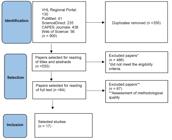
In the first search, 900 publications were identified. Subsequently, 350 duplicates were excluded, leaving 550 articles for reading the titles and abstracts. Among these, 466 were discarded because they did not meet the eligibility criteria. The remaining 84 articles were read in full, and 67 were excluded according to the criteria, leaving 17 articles selected for analysis.
Next, the Critical Appraisal Skills Programme (CASP)15 was used to assess the methodological quality of articles, which presents ten questions related to the rigor, credibility, and relevance of the study. Studies that met at least eight of these ten items, i.e., 80% of the score, were selected for full reading, which led to exclusion of two papers. Chart 1 presents the application of the CASP criteria to select the rigor, credibility, and relevance of the study15. For this purpose, the studies were classified into two categories: A, high methodological rigor, when at least 9 of the 10 items were met; and B, moderate methodological rigor, when at least 5 of the 10 items were met.
The final body of the review consisted of 17 papers. Finally, the process of study search and selection was simplified using a flowchart recommended by PRISMA - Preferred Reporting Items for Systematic Reviews and Meta-Analyses16 (Figure 1).
LITERATURE REVIEW
This review retrieved 17 papers (Chart 1), including review articles, theoretical articles, temporal analyses, and longitudinal studies with secondary data. The geographical distribution revealed that five studies were conducted in North America (Canada and the USA), three in South America (Brazil), two in Asia (China and Malaysia), five in Europe (Belgium, Spain, and the United Kingdom), and two in Oceania (Australia and New Zealand).
Regarding work changes during the COVID-19 pandemic, as shown in Chart 2, the analyzed studies consensually indicated that, at the onset and throughout the COVID-19 pandemic, healthcare professionals experienced significant changes in working conditions, resulting from the expansion of working hours and shifts (10/17), incorporation of health information technologies (5/17), constant changes in care protocols (3/17), reduced workforce due to absences during the pandemic (2/17), and insufficiency of Personal Protective Equipment (PPE) (3/17).
The combined effects of morbidity and mortality, the presence of young medical and nursing professionals, staff shortages and increased workload, besides constant changes in policies and procedures, characterized the organizational, social, and personal stressors faced by healthcare professionals during the pandemic, many of which persisted in the post-pandemic period, as shown in Chart 3.
During the most critical periods of the pandemic, organizational aspects were marked by the absence of emergency plans and working in stressful and unfavorable environments, characterized by a lack of clear guidelines on the management of COVID-19, ineffective risk communication strategies, inadequate access to PPE, and insufficient training for emergency situations. Additional stressors included the lack of defined validated treatment strategies, constant risk of contamination due to high exposure, care of patients without the presence of family members, and frequent changes in care protocols (Chart 3).
The implications related to work overload, lack of support, ambiguity of roles, incorporation of new information technologies, and perception of the disease threat are all correlated with burnout and feelings of emotional and physical exhaustion, as well as symptoms of post-traumatic stress disorder. These factors also manifest in cognitive and affective conditions, with intense symptoms of lack of concentration and sadness17.
Burnout has led to an increase in sick leave or medical absences and has been associated with workplace stress during the pandemic, resulting from extended shifts or working hours, which can culminate in sleep deprivation and emotional exhaustion. These are fundamental components of adverse mental health and burnout, compromising the ability of healthcare professionals to accurately perceive work demands18-20.
Regarding personal aspects, the risk of transmitting COVID-19 to family members, which could result in death, and the worker's fear of following guidelines that conflict with their professional standards or fundamental values were highlighed21-25. Evidence points to a dual trend among workers during the pandemic: on the one hand, they drew on their personal skills and resources as coping strategies; on the other hand, there were increases in anxiety, depression, impaired sleep quality, hypervigilance, and increased consumption of alcohol and other illicit substances, as well as psychosomatic symptoms and suicidal ideation26-30.
Regarding social stressors, studies have reported the suffering and moral damage faced by Primary Healthcare workers because of negative attitudes from the community, such as discrimination associated with the nature of their work and the risk of exposure to COVID-19. The media's focus on healthcare professionals as "heroes" worsened the burden on nurses, medical doctors, and other professionals during health emergencies31. The media’s portrayal of healthcare workers as “heroes” exacerbates the burden that nurses, doctors, and other professionals have borne during health emergencies.³⁰ Other studies link public resistance to healthcare workers to the spread of irrational panic and misinformation (fake news), resulting in episodes of violence, stigmatization, and anti-Asian sentiment 32,33.
Workers are still processing the trauma they witnessed and physical exhaustion, which severely impacts mental health and work capacity, especially in primary healthcare settings, where resources are often more limited, resulting in persistent staff shortages and the need for long working hours during the post-pandemic era32. In both the pandemic and post-pandemic contexts, understanding the reality experienced by Primary Healthcare workers is essential to define the necessary adjustments to provide better working conditions and ensure the effective functioning of universal health systems around the world34.
In the post-pandemic period, there was an increase in absenteeism, with a significant decrease in the number of professionals due to absences or medical leaves35. Factors such as high workload persisted, indicating the urgent need to establish balanced work schedules and create a supportive environment for health professionals, aiming to reduce burnout and ensure the quality of health and occupational safety.
Even though mental symptoms have shown some improvement after the pandemic, prevalence rates of depression, anxiety, and stress remain high, for a period following the pandemic (Chart 3). Psychological symptoms reported or associated with the post-pandemic era include fear, anxiety, stress, depressive symptoms, uncertainty, and frustration, which can lead to medical errors, lack of empathy in patient treatment, lower productivity, and higher turnover rates.
Scientific production related to COVID-19 has experienced exponential growth in recent years, especially after the end of the most critical phases of the pandemic36. According to a recent systematic review with meta-analysis37, most research has focused on the fields of infectiology and virology, with significant contributions from countries such as China, United States, Italy, and United Kingdom. However, investigations are incipient, especially concerning the inherent psychosocial impacts in the context of the pandemic38, and the need for continuous monitoring of the mental health of PHC workers.
Evidence 36-38 shows that stressors resulting from work changes in Primary Healthcare (PHC) during the pandemic may have long-term repercussions on the mental health of health professionals. The results analyzed indicate the predominance of changes in assignments and work modes, which generated organizational stressors, such as the intensification of functions and the poor working conditions, exacerbating mental health problems already recognized in the literature38. These changes occurred in a fragile social and economic context, in which the demand for healthcare was increased, requiring a coordinated set of actions to mitigate the adverse effects of the pandemic.
The stressors identified, both organizational and personal, reveal the urgent need for attention to the mental health of Primary Healthcare workers, who face constant risks, including exposure to communicable diseases and lack of Personal Protective Equipment (PPE). Ensuring adequate working conditions and implementing protection policies are fundamental to prevent illness among these professionals39. Previous studies40 corroborate this need, pointing to the risks of infectious disease pandemics for the mental health of health workers and the importance of effective policy interventions during and after health crises.
The scenario observed in Primary Healthcare reflects similar situations found in hospital environments, characterized by high workloads, exhausting shifts, and the constant fear of infection, both for professionals and their families. These factors contributed to an increase in conditions such as burnout, post-traumatic stress disorder, anxiety, and depression40.
However, the literature reveals a significant weakness in the emotional support offered to these professionals. The example of Australia, which implemented an Emergency Response Plan focused on Primary Healthcare during the pandemic, illustrates the effectiveness of strategies that prioritize the protection of health workers and the continuity of care40. The implementation of measures to ensure the physical and mental health of workers, along with job protection, are crucial elements, but they should be integrated into the daily routine of professional practice, and to a feedback system that allows professionals to express their concerns and needs, promoting mental health in a continuous manner.
Therefore, the development of interventions for stress management and psychosocial support services should be prioritized in the post-pandemic era. Identifying specific stressors and challenges faced by healthcare workers can support the development of appropriate and sustainable support policies and programs over time.
Limitations of the study: this review is subject to temporal constraints that may have affected the depth and scope of evidence analyzed. Future studies may elucidate, in more detail, the challenges faced by the workforce in the post-pandemic era. In addition, these investigations should serve as basis for the formulation of prevention policies and strategies aimed at mitigating the impacts on the mental health of workers, thus ensuring more effective and contextualized support.
CONCLUSION
The main stressors related to work changes during the pandemic were the intensification of workload and working hours, scarcity of PPE, frequent changes in protocols, accelerated incorporation of new technologies, and reduction of the workforce, due to absences. These organizational factors, combined with the workers’ fear of becoming infected and infecting their family members, resulted in damage to mental health evidenced by burnout, anxiety, depression, symptoms of post-traumatic stress, and suicidal ideation, which persisted in the post-pandemic period, as residual stressors.
Although the post-pandemic period is characterized by a reduction in community transmission and the end of the public health emergency declared by the WHO in May 2023 (1), primary care health professionals continue to report significant fear of SARS-CoV-2 infection. This phenomenon can be explained by three mechanisms: first, the traumatic experience of the acute phase generated conditioned aversive memories associated with PPE shortages and the loss of colleagues, which are not automatically extinguished with the reduction of objective risk (2); second, long COVID has emerged as a feared and disabling consequence, keeping the perception of threat high, even in the face of mild infections (3); third, uncertainty surrounding new variants and reinfections perpetuates a state of hypervigilance among frontline workers (4). Thus, the fear of infection in the post-pandemic period does not represent an irrational phobia, but rather a persistent adaptive response to real, albeit attenuated, risks, and constitutes a factor that sustains the anxiety, depression, and burnout observed in the sample.
The findings demonstrate that the organizational and psychosocial stressors, experienced during the pandemic, continue to negatively impact the mental health of Primary Healthcare workers, indicating the need for support policies and continuous interventions aimed at the well-being of these professionals.
REFERENCES
-
1 Desborough J, Dykgraaf SH, Phillips C, Wright M, Maddox R, Davis S et al. Lessons for the global primary care response to COVID-19: A rapid review of evidence from past epidemics. Fam Pract. 2021;38(6):811-25. https://doi.org/10.1093/fampra/cmaa142 PMID: 33586769; PMCID: PMC7928916.
» https://doi.org/10.1093/fampra/cmaa142 -
2 Prado NMBL, Rossi TRA, Chaves SCL, Barros SG, Magno L, Santos HLPCD et al. The international response of primary health care to COVID-19: Document analysis in selected countries. Cad Saude Publica. 2020;36(12):e00183820. https://doi.org/10.1590/0102-311X00183820 PMID: 33237251.
» https://doi.org/10.1590/0102-311X00183820 -
3 Schmidt B, Crepaldi MA, Bolze SDA, Neiva-Silva L, Demenech LM. Saúde mental e intervenções psicológicas diante da pandemia do novo coronavírus (COVID-19). Estudos de Psicologia (Campinas). 2020;37:e200063. https://doi.org/10.1590/1982-0275202037e200063
» https://doi.org/10.1590/1982-0275202037e200063 -
4 Mutambudzi M, Niedwiedz C, Macdonald EB, Leyland A, Mair F, Anderson J et al. Occupation and risk of severe COVID-19: Prospective cohort study of 120 075 UK Biobank participants. Occup Environ Med. 2020;78(5):307-14. https://doi.org/10.1136/oemed-2020-106731 Epub ahead of print. Erratum in: Occup Environ Med. 2022;79(2):e3. https://doi.org/10.1136/oemed-2020-106731corr1 PMID: 33298533; PMCID: PMC76117.
» https://doi.org/10.1136/oemed-2020-106731 -
5 Sahebi A, Nejati Zarnaqi B, Moayedi S, Yousefi K, Torres M, Golitaleb M. The prevalence of anxiety and depression among healthcare workers during the COVID-19 pandemic: An umbrella review of meta-analyses. Prog Neuropsychopharmacol Biol Psychiatry. 2021 Apr 20;107:110247. https://doi.org/10.1016/j.pnpbp.2021.110247 Epub 2021 Jan 19. PMID: 33476692; PMCID: PMC7817526.
» https://doi.org/10.1016/j.pnpbp.2021.110247 -
6 Spilg EG, Rushton CH, Phillips JL, Kendzerska T, Saad M, Gifford W et al. The new frontline: Exploring the links between moral distress, moral resilience and mental health in healthcare workers during the COVID-19 pandemic. BMC Psychiatry. 2022;22(1):19. https://doi.org/10.1186/s12888-021-03637-w PMID: 34991514; PMCID: PMC8734541.
» https://doi.org/10.1186/s12888-021-03637-w -
7 O'Donnell S, Quigley E, Hayden J, Adamis D, Gavin B, McNicholas F. Psychological distress among healthcare workers post COVID-19 pandemic: From the resilience of individuals to healthcare systems. Ir J Psychol Med. 2023;40(3):508-12. https://doi.org/10.1017/ipm.2022.35 Epub 2022 Aug 8. PMID: 35938227.
» https://doi.org/10.1017/ipm.2022.35 -
8 World Health Organization [webpage on the Internet]. Regional Office for the Western Pacific. (2020). Role of primary care in the COVID-19 response [acsessed on 2025, March 29]. Available at: https://iris.who.int/handle/10665/331921
» https://iris.who.int/handle/10665/331921 -
9 Amaral CE, Onocko-Campos R, de Oliveira PRS, Pereira MB, Ricci ÉC, Pequeno ML et al. Systematic review of pathways to mental health care in Brazil: Narrative synthesis of quantitative and qualitative studies. Int J Ment Health Syst. 2018 Oct 31;12:65. https://doi.org/10.1186/s13033-018-0237-8 PMID: 30450125; PMCID: PMC6208112.
» https://doi.org/10.1186/s13033-018-0237-8 -
10 Muñoz-Ortega S, Santamaría-Guayaquil D, Pluas-Borja J, Alvarado-Villa G, Sandoval V, Alvarado R et al. Mental health in healthcare workers post-COVID-19: A Latin American review and insights into personalized management strategies. J Pers Med. 2024;14(7):680. https://doi.org/10.3390/jpm14070680 PMID: 39063934; PMCID: PMC11278025.
» https://doi.org/10.3390/jpm14070680 -
11 Kutcher AM, LeBaron VT. A simple guide for completing an integrative review using an example article. J Prof Nurs. 2022 May-Jun;40:13-9. https://doi.org/10.1016/j.profnurs.2022.02.004 PMID: 35568452.
» https://doi.org/10.1016/j.profnurs.2022.02.004 -
12 Garritty C, Gartlehner G, Nussbaumer-Streit B, King VJ, Hamel C, Kamel C et al. Cochrane Rapid Reviews Methods Group offers evidence-informed guidance to conduct rapid reviews. J Clin Epidemiol. 2021 Feb;130:13-22. https://doi.org/10.1016/j.jclinepi.2020.10.007 Epub 2020 Oct 15. PMID: 33068715; PMCID: PMC7557165.
» https://doi.org/10.1016/j.jclinepi.2020.10.007 -
13 World Health Organization. A clinical case definition of post COVID-19 condition by a Delphi consensus [webpage on the Internet]. Geneva: WHO; 2021 Oct 6 [accessed on 2026, April 7]. (WHO/2019-nCoV/Post_COVID-19_condition/Clinical_case_definition/2021.1). Available at: https://www.who.int/publications/i/item/WHO-2019-nCoV-Post_COVID-19_condition-Clinical_case_definition-2021.1
» https://www.who.int/publications/i/item/WHO-2019-nCoV-Post_COVID-19_condition-Clinical_case_definition-2021.1 -
14 Zeng X, Zhang Y, Kwong JS, Zhang C, Li S, Sun F et al. The methodological quality assessment tools for preclinical and clinical studies, systematic review and meta-analysis, and clinical practice guideline: A systematic review. J Evid Based Med. 2015;8(1):2-10. https://doi.org/10.1111/jebm.12141 PMID: 25594108.
» https://doi.org/10.1111/jebm.12141 -
15 Galdas P, Darwin Z, Fell J, Kidd L, Bower P, Blickem C et al. A systematic review and metaethnography to identify how effective, cost-effective, accessible and acceptable self-management support interventions are for men with long-term conditions (SELF-MAN). Health Services Delivery and Research. 2015;3(34):1-301. https://doi.org/10.3310/hsdr03340
» https://doi.org/10.3310/hsdr03340 -
16 Page MJ, McKenzie JE, Bossuyt PM, Boutron I, Hoffmann TC, Mulrow CD et al. The PRISMA 2020 statement: An updated guideline for reporting systematic reviews. BMJ. 2021 Mar 29;372:n71. https://doi.org/10.1136/bmj.n71 PMID: 33782057; PMCID: PMC8005924.
» https://doi.org/10.1136/bmj.n71 -
17 Teixeira CFS, Soares CM, Souza EA, Lisboa ES, Pinto ICM, Andrade LR et al. The health of healthcare professionals coping with the Covid-19 pandemic. Cien Saude Colet. 2020;25(9):3465-74. https://doi.org/10.1590/1413-81232020259.19562020 PMID: 32876270.
» https://doi.org/10.1590/1413-81232020259.19562020 -
18 Price J, Becker-Haimes EM, Benjamin Wolk C. Matched emotional supports in health care (MESH) framework: A stepped care model for health care workers. Fam Syst Health. 2021;39(3):493-8. https://doi.org/10.1037/fsh0000600 PMID: 33983760.
» https://doi.org/10.1037/fsh0000600 -
19 Londoño-Ramírez AC, García-Pla S, Bernabeu-Juan P, Pérez-Martínez E, Rodríguez-Marín J, van-der Hofstadt-Román CJ. Impact of COVID-19 on the anxiety perceived by healthcare professionals: Differences between primary care and hospital care. Int J Environ Res Public Health. 2021;18(6):3277. https://doi.org/10.3390/ijerph18063277 PMID: 33810004; PMCID: PMC8004692.
» https://doi.org/10.3390/ijerph18063277 -
20 Paiano M, Jaques AE, Nacamura PAB, Salci MA, Radovanovic CAT, Carreira L. Mental health of healthcare professionals in China during the new coronavirus pandemic: An integrative review. Rev Bras Enferm. 2020;73(suppl 2):e20200338. https://doi.org/10.1590/0034-7167-2020-0338 PMID: 32965402.
» https://doi.org/10.1590/0034-7167-2020-0338 -
21 Lai J, Ma S, Wang Y, Cai Z, Hu J, Wei N et al. Factors associated with mental health outcomes among health care workers exposed to coronavirus disease 2019. JAMA Netw Open. 2020;3(3):e203976. https://doi.org/10.1001/jamanetworkopen.2020.3976 PMID: 32202646; PMCID: PMC7090843.
» https://doi.org/10.1001/jamanetworkopen.2020.3976 -
22 Halcomb E, Fernandez R, Ashley C, McInnes S, Stephen C, Calma K et al. The impact of COVID-19 on primary health care delivery in Australia. J Adv Nurs. 2022;78(5):1327-36. https://doi.org/10.1111/jan.15046 Epub 2021 Sep 23. PMID: 34554594.
» https://doi.org/10.1111/jan.15046 -
23 Mira JJ. COVID-19 pandemic: Now what? J Healthc Qual Res. 2020;35(3):133-5. https://doi.org/10.1016/j.jhqr.2020.04.001 PMID: 32354614; PMCID: PMC7158811.
» https://doi.org/10.1016/j.jhqr.2020.04.001 -
24 Gemine R, Davies GR, Tarrant S, Davies RM, James M, Lewis K. Factors associated with work-related burnout in NHS staff during COVID-19: A cross-sectional mixed methods study. BMJ Open. 2021;11(1):e042591. https://doi.org/10.1136/bmjopen-2020-042591 PMID: 33509850; PMCID: PMC7844932.
» https://doi.org/10.1136/bmjopen-2020-042591 -
25 Vanhaecht K, Seys D, Bruyneel L, Cox B, Kaesemans G, Cloet M et al. COVID-19 is having a destructive impact on health-care workers' mental well-being. Int J Qual Health Care. 2021;33(1):mzaa158. https://doi.org/10.1093/intqhc/mzaa158 PMID: 33270881; PMCID: PMC7799030.
» https://doi.org/10.1093/intqhc/mzaa158 -
26 Deng D, Naslund JA. Psychological Impact of COVID-19 Pandemic on frontline health workers in low- and middle-income countries. Harv Public Health Rev (Camb). 2020 Fall;28. http://harvardpublichealthreview.org/wp-content/uploads/2020/10/Deng-and-Naslund-2020-28.pdf PMID: 33409499; PMCID: PMC7785092.
» http://harvardpublichealthreview.org/wp-content/uploads/2020/10/Deng-and-Naslund-2020-28.pdf -
27 Bell C, Williman J, Beaglehole B, Stanley J, Jenkins M, Gendall P et al. Challenges facing essential workers: A cross-sectional survey of the subjective mental health and well-being of New Zealand healthcare and ‘other’ essential workers during the COVID-19 lockdown. BMJ Open. 2021;11(7):e048107. https://doi.org/10.1136/bmjopen-2020-048107 PMID:34281926; PMID: 34281926; PMCID: PMC8290948.
» https://doi.org/10.1136/bmjopen-2020-048107 -
28 Lamb D, Gnanapragasam S, Greenberg N, Bhundia R, Carr E, Hotopf M et al. Psychosocial impact of the COVID-19 pandemic on 4378 UK healthcare workers and ancillary staff: Initial baseline data from a cohort study collected during the first wave of the pandemic. Occup Environ Med. 2021;78(11):801-8. https://doi.org/10.1136/oemed-2020-107276 PMID: 34183447; PMCID: PMC8245285.
» https://doi.org/10.1136/oemed-2020-107276 -
29 Apaydin EA, Rose DE, Yano EM, Shekelle PG, McGowan MG, Antonini TL et al. Burnout among primary care healthcare workers during the COVID-19 Pandemic. J Occup Environ Med. 2021;63(8):642-5. https://doi.org/10.1097/JOM.0000000000002263 PMID: 33990531; PMCID: PMC8327767.
» https://doi.org/10.1097/JOM.0000000000002263 -
30 Salaton NF, Bulgiba Salaton NF, Bulgiba A. Depression, anxiety, and stress among frontline primary health care workers during the COVID-19 pandemic. Asia Pac J Public Health. 2022;34(4):416-9. https://doi.org/10.1177/10105395221077064 PMID: 35130753.
» https://doi.org/10.1177/10105395221077064 -
31 Breton M, Deville-Stoetzel N, Gaboury I, Smithman MA, Kaczorowski J, Lussier MT et al. Telehealth in Primary Healthcare: A portrait of its rapid implementation during the COVID-19 pandemic. Healthc Policy. 2021;17(1):73-90. https://doi.org/10.12927/hcpol.2021.26576 PMID: 34543178; PMCID: PMC8437249.
» https://doi.org/10.12927/hcpol.2021.26576 -
32 Roca M, Vicens C, Gili M. Covid-19 and the future of mental health in primary care. BMJ. 2020 Jun 30;369:m2520. https://doi.org/10.1136/bmj.m2520 PMID: 32606020.
» https://doi.org/10.1136/bmj.m2520 -
33 Pires GN, Bezerra AG, Oliveira TB, Chen SFI, Malfatti VDA, Mello VFF et al. COVID-19 meta-analyses: A scoping review and quality assessment. Einstein (Sao Paulo). 2021 Mar 15;19:eAO6002 https://doi.org/10.31744/einstein_journal/2021AO6002
» https://doi.org/10.31744/einstein_journal/2021AO6002 -
34 Santos RPO, Nunes JA, Dias NG, Lisboa AS, Antunes VH, Pereira EJ et al. Working conditions in primary health care in the COVID-19 pandemic: An overview of Brazil and Portugal. Cien Saude Colet. 2023;28(10):2979-92. https://doi.org/10.1590/1413-812320232810.10002023 PMID: 37878939.
» https://doi.org/10.1590/1413-812320232810.10002023 - 35 Novais JCE. Síntese de evidências científicas e proposição de intervenção psicológica para profissionais de saúde hospitalar com condição Pós Covid-19 [dissertation]. Salvador (BA): Programa de Pós-graduação em Saúde Coletiva, Universidade Federal da Bahia; 2023.
-
36 Fathuse N, Hlongwana KW, Ginindza TG. Why am i even here if i can't save the patients? The frontline healthcare workers' experience of Burnout during COVID-19 pandemic in Mthatha, South Africa. Int J Environ Res Public Health. 2023;20(8):5451. https://doi.org/10.3390/ijerph20085451 PMID: 37107733; PMCID: PMC10138325.
» https://doi.org/10.3390/ijerph20085451 -
37 Pappa S, Ntella V, Giannakas T, Giannakoulis VG, Papoutsi E, Katsaounou P. Prevalence of depression, anxiety, and insomnia among healthcare workers during the COVID-19 pandemic: A systematic review and meta-analysis. Brain Behav Immun. 2020 Aug;88:901-7. https://doi.org/10.1016/j.bbi.2020.05.026 Epub 2020 May 8. Erratum in: Brain Behav Immun. 2021 Feb;92:247. https://doi.org/10.1016/j.bbi.2020.11.023 PMID: 32437915; PMCID: PMC7206431.
» https://doi.org/10.1016/j.bbi.2020.05.026 -
38 De Kock JH, Latham HA, Leslie SJ, Grindle M, Munoz SA, Ellis L et al. A rapid review of the impact of COVID-19 on the mental health of healthcare workers: Implications for supporting psychological well-being. BMC Public Health. 2021;21(1):104. https://doi.org/10.1186/s12889-020-10070-3 PMID: 33422039; PMCID: PMC7794640.
» https://doi.org/10.1186/s12889-020-10070-3 -
39 Hudson G, Fung C, Sureshkumar DS, Gómez-Restrepo C, Uribe-Restrepo JM, Ariza-Salazar K et al. Do coping mechanisms moderate the effect of stressful life events on depression and anxiety in young people? A case-control study from Latin America. BMJ Ment Health. 2025;28(1):e301087. https://doi.org/10.1136/bmjment-2024-301087 PMID: 39788751; PMCID: PMC11751918
» https://doi.org/10.1136/bmjment-2024-301087 -
40 Grünheid T, Hazem A. Mental wellbeing of frontline health workers post-pandemic: Lessons learned and a way forward. Front Public Health. 2023 Jun 19;11:1204662. https://doi.org/10.3389/fpubh.2023.1204662 PMID: 37404276; PMCID: PMC10315458.
» https://doi.org/10.3389/fpubh.2023.1204662
-
A study conducted at the Federal University of Bahia, Multidisciplinary Institute of Health, Anísio Teixeira Campus, Vitória da Conquista, BA, Brazil.
-
Data sharing statement
Data collected during this study will be shared to promote transparency and allow other researchers to verify and build upon our findings. Data will be available after publication and will remain accessible indefinitely. Access to data will be granted to researchers who request it, upon presentation of a research proposal justifying the use of data. Criteria such as relevance of the proposed research, compliance with ethical regulations, and the guarantee that data will be used responsibly and for scientific purposes will be considered. Also, researchers will have to sign a commitment agreement taking responsibility for maintaining the confidentiality and integrity of shared data.
-
Artificial Intelligence tools statement
During the preparation of this study, the authors used OpenAI. (2024) CHATGPT-4 version to correct the grammar and fluency of the text. After using this tool, the authors revised and edited the content as needed. Furthermore, they assume full responsibility for the content of the publication.
Data collected during this study will be shared to promote transparency and allow other researchers to verify and build upon our findings. Data will be available after publication and will remain accessible indefinitely. Access to data will be granted to researchers who request it, upon presentation of a research proposal justifying the use of data. Criteria such as relevance of the proposed research, compliance with ethical regulations, and the guarantee that data will be used responsibly and for scientific purposes will be considered. Also, researchers will have to sign a commitment agreement taking responsibility for maintaining the confidentiality and integrity of shared data.

 Source: prepared by the authors (2024)*Consider, if feasible to do so, reporting the number of records identified from each database or register searched (rather than the total number across all databases/registers).**If automation tools were used, indicate how many records were excluded by a human and how many were excluded by automation tools. Source: Page M.J. et al. BMJ. 2021;372(71). Available at: https://doi.org/10.1136/bmj.n71This work is licensed under CC BY 4.0. To view a copy of this license, visit https://creativecommons.org/licenses/by/4.0/