
 Yield and quality of mini watermelon grown in hydroponics with brackish water
ABSTRACT
Water scarcity has become an increasingly frequent issue, significantly limiting agricultural production in semi-arid regions. This situation has led farmers to seek alternative water sources. In this context, the objective of this study was to evaluate the yield and quality of mini watermelon cultivated in a hydroponic system and irrigated with brackish water. The experiment was conducted in a protected environment, using a randomized block design with five replicates, arranged in a 6 × 2 factorial scheme: six levels of electrical conductivity of the irrigation water (ECw: 0.2, 1.5, 3.0, 4.5, 6.0, and 7.5 dS m⁻1) and two durations of exposure to saline nutrient solutions (TES1 - from transplanting to harvest, corresponding to 81 days; and TES2 - from the onset of flowering to harvest). The following variables were evaluated: average fruit mass, yield, number of marketable fruits, total number of fruits, fruit length and diameter, pH, soluble solids content, titratable acidity, and ascorbic acid content. The mass of marketable mini watermelon fruits was negatively affected by each unit increase in ECw, with a reduction of 0.1391 kg per plant. The results confirm that the deleterious effects of salinity impair the physicochemical attributes (soluble solids content and ascorbic acid concentration) of mini watermelon fruits, which particularly compromises their marketability. Brackish water application starting from the flowering stage appears to be a viable strategy to mitigate the adverse effects of salinity on fruit yield and quality in mini watermelon cultivation.
Keywords:
Citrullus lanatus L; Salt stress; Substrate.
RESUMO
A escassez hídrica tem se mostrado um problema frequente, limitando cada vez mais a produção agrícola em regiões de clima semiárido. Isso tem levado os produtores ao uso de fontes alternativas de águas. Neste sentido, objetivou-se avaliar a produção e a qualidade de mini melancia, sob cultivo hidropônico irrigada com águas salobras. O experimento foi realizado em ambiente protegido, em delineamento experimental em blocos casualizados, em esquema fatorial 6 x 2, dispostos com seis níveis de condutividade elétrica da água (CEa: 0,2; 1,5; 3,0; 4,5; 6,0; 7,5 dS m-1) para preparo da solução nutritiva e dois períodos de exposição à salinidade (TES1 = transplantio até a colheita, TES2 = início da floração até a colheita) com cinco repetições. Foram avaliadas as seguintes variáveis: massa média dos frutos, produtividade e número de frutos comerciais e totais; comprimento e diâmetro do fruto, pH, teor de sólidos solúveis, acidez titulável e teor de ácido ascórbico do fruto. A massa dos frutos comerciais da mini melancia foi afetado negativamente a cada incremento unitário da CEa, com redução de 0,1391 kg planta-1. Os resultados apresentados atestam como os efeitos deletérios da salinidade prejudicam os atributos físico-químico dos frutos (teor de sólidos solúveis e ácido ascórbico) de mini melancia, fato este que compromete sua comercialização. A aplicação de água salobra a partir da fase fenológica de início do florescimento é uma alternativa para minimizar efeitos deletério da salinidade sobre a produção e qualidade de frutos de mini melancia.
Palavras-chave:
Citrullus lanatus L; Estresse salino; Substrato.
INTRODUCTION
Scarcity of surface water is a frequent problem, increasingly limiting agriculture in several parts of the world. This has led producers to use alternative sources, such as brackish groundwater. However, these waters contain high concentrations of salts, which can affect crop yield (LACERDA et al., 2021; DRECHSEL; ZADEH; PEDRERO, 2023).
In view of this scenario, studies and new technologies related to the use of brackish water in agriculture are necessary. The hydroponics technique emerges as an alternative source of income for producers who have access to this type of water resource (BIONE et al., 2021; LESSA et al., 2023), and the results of several studies show that the use of brackish water in this type of cultivation is feasible, reducing possible environmental impacts.
The diffusion of hydroponics as a cultivation technique with the use of brackish waters has been gaining ground, and several crops have been explored, including mini watermelon (Citrullus lanatus (Thunb.) Mansf.). This crop stands out for its economic representativeness in the Northeast region, with about 38% of national production (IBGE, 2023), which has grown among producers seeking to meet an increasingly demanding consumer market (ALVES et al., 2023).
The salt stress tolerance of mini watermelon in hydroponic systems has been studied, with research using various water sources and showing different effects on its yield. When evaluating genotypes of mini watermelon, ‘Champagne’ and ‘Fancy’, grown in a floating hydroponic system, Ó et al. (2022a) observed a reduction in fruit production with brackish water with ECw of the nutrient solution from 2.5 dS m-1. Silva et al. (2022a) found reductions in the production of mini hydroponic watermelon under ECw of 4.0 dS m-1.
Despite the yield losses of mini watermelon with the use of brackish water, studies on fruit quality using lower-quality water are still needed, mainly because of the toxicity caused by specific ions such as Na+ and Cl-, which are harmful when absorbed in large quantities by plants (Ó et al., 2022b; LIMA et al., 2023), as it may lead to differences in the flavor and color of watermelon fruits. Thus, the use of this type of water is conditioned on the tolerance of the species and the cultivar, as well as on the management of water aimed at reducing the effects of salts on plants (Ó et al., 2022a; SILVA et al., 2022a).
In view of the above, the objective of this study was to evaluate the yield and quality of mini watermelon under hydroponic cultivation irrigated with brackish water.
MATERIAL AND METHODS
Study site
The experiment was carried out in a protected environment belonging to the Department of Agricultural Engineering of the Federal Rural University of Pernambuco - UFRPE, at the geographic coordinates 8° 01’ 05” S and 34° 5’ 48” W, at 6.5 m altitude. The protected environment has the following dimensions: 7 m wide, 24 m long and 3 m high, with an arch-type cover with 150-μm-thick low-density polyethylene film.
Air temperature (Figure 1A) and relative humidity (Figure 1B) inside the protected environment were obtained by a digital thermohygrometer, ranging from 25.2 to 30.0 °C and 64.7 to 95%, respectively, during the experiment.

Minimum, maximum and average temperature (A) and minimum, maximum and average relative humidity (B) during the experiment in a protected environment.
Experimental design
Treatments were arranged in randomized blocks with five replicates, in a 6 x 2 factorial scheme: six levels of electrical conductivity of the water (ECw: 0.2; 1.5; 3.0; 4.5; 6.0; 7.5 dS m-1) and two times of exposure to saline nutrient solutions (TES1 - period from transplanting to harvest, which corresponded to 81 days and TES2 - period from the onset of flowering to harvest, which comprised 65 days).
To reach the salinity levels evaluated, sodium chloride (NaCl, in g L-1) was added to the local-supply water (ECw = 0.2 dS m-1) according to the methodology proposed by Richards (1954). Subsequently, the nutrient salts were added as shown in Table 1.
Composition and formulation of the nutrient solution indicated by Campagnol, Mello and Barbosa (2012) for the cultivation of mini watermelon in different vegetative phases of the cycle.
An open hydroponic system was adopted, using pots with a capacity of 8.0 L, which were filled with a 2 cm thick layer of crushed stone n°1 and a layer of geotextile and coconut powder substrate. The pots were placed on a wooden bench with 0.2 m height, spaced 0.4 m x 1.0 m apart. Nutrient solution application was carried out using a pressure-compensating drip irrigation system with flow rate of 4.0 L h-1, with one emitter per pot. Wooden posts, steel wires, ratchets and plastic twine were used to form the support structure for the plants. The posts, with a height of 2.2 m, were positioned at the beginning and end of each cultivation row in each treatment.
Experiment conduction
Sowing of the mini watermelon cv. ‘Beni-Kodama’ was carried out on July 15, 2017, in trays of 128 cells, which were filled with coconut powder substrate, and the seedlings were irrigated during this period with 50% diluted nutrient solution. At 30 days after sowing, the seedlings were transplanted into pots (one per pot), which were previously moistened up to the maximum water retention capacity. The seedlings were kept in an acclimatization regime until the 5th day after transplanting (DAT). Subsequently, all plants received nutrient solution (Table 1) indicated for the cultivation of mini watermelon.
When the main branch of the plants had four to six true leaves, it was trained vertically using twine. Secondary branches below the third internode were eliminated and the others were pruned after the emergence of the third leaf. An attempt was made to keep the fruit always between the 8th and 14th internodes of the main branch, in accordance with Campagnol, Mello and Barbosa (2012). Pruning and thinning of branches and fruits were carried out. Fruits were selected when they reached 2 cm in diameter, keeping only one fruit per plant. The fruits were supported by the use of nylon nets. The fruits were placed into bags when their diameter approached 4 to 5 cm.
Salinized solutions were applied at two different times within the cultivation cycle, which were: from 5 days after transplanting until harvest (Figure 2A) and from the onset of flowering (21 DAT) to harvest (Figure 2B). Nutrient solution management was carried out through weighing lysimetry, and the maximum weight of the pots with substrate and nutrient solution was 4.425 kg. The volume for replacement, called plant water consumption, was obtained by the difference between the weights of the pots each day (L plant-1), using a scale with a precision of 0.01 kg.

Water consumption of mini watermelon under different strategies of salinity exposure: exposure throughout the cycle (A) and exposure from flowering (B).
Variables analyzed
At 86 DAT, the fruits of each plot began to be harvested, weighed and classified as marketable, non-marketable and reject (small, blemished, deformed fruits). The following production components were evaluated: marketable fruit mass (MFM) and total fruit mass (TFM) expressed in kg plant-1; number of marketable fruits (NMF) and total number of fruits (TNF); marketable yield (MYLD) and total yield (TYLD) expressed in Mg ha-1. The fruits were weighed on a precision scale (0.01 g).
Fruit quality was evaluated based on the measurements of fruit length (FRL) and fruit diameter (FRD) using a tape measure (cm fruit-1) and determination of the physicochemical parameters: soluble solids content (SS, °Brix), using a digital refractometer; titratable acidity (TA, % citric acid), ascorbic acid content (AA, mg 100g plant-1), by the titrimetric method; and hydrogen potential (pH) with a benchtop pH meter. The evaluation of the physicochemical variables of the fruits was based on the methodology described by AOAC (2002).
Statistical analysis
The data obtained were subjected to the normality test and then to analysis of variance using the F test (p < 0.05).
For the levels of electrical conductivity of the water, the data were analyzed by regression, fitting firstor second-degree polynomial models, and the significance of their parameters was subjected to Student’s t-test (p < 0.05). For the time of exposure to nutrient solution salinity, means were compared by Tukey test (p < 0.05).
RESULTS AND DISCUSSION
According to Table 2, there was an individual effect (p < 0.01) of the electrical conductivity of water (ECw) on the variables total fruit mass (TFM), marketable fruit mass (MFM), total number of fruits (TNF), number of marketable fruits (NMF), total yield (TYLD) and marketable yield (MYLD), while the time of exposure to salinity (TES) had an effect (p < 0.01) only on MFM, NMF and MYLD; no significant effect was found for the interaction between the factors studied (ECw x TES). The effect of ECw on the response variables can be considered expected, since the absorption of excess elements such as Na+ and Cl- is harmful to plants. However, the TES factor and its influence on the yield variables is an important piece of information, being relevant, given the possibility of mitigating the harmful effects of these salts.
Summary of the analysis of variance for total fruit mass (TFM), marketable fruit mass (MFM), total number of fruits (TNF), number of marketable fruits (NMF), total yield (TYLD) and marketable yield (MYLD) of mini watermelon cv. ‘Beni-Kodama’ subjected to different levels of electrical conductivity of water (ECw) and times of exposure to nutrient solution salinity (TES).
There was a reduction in the production variables of mini watermelon cv. ‘Beni-Kodama’ with the increase in ECw. For TFM (Figure 3A), there was a reduction of 0.1028 for each unit increment in ECw. Under ECw levels of 0.2 and 7.5 dS m-1, values of 1.49 kg plant-1 (ECw = 0.2 dS m-1) and 0.74 kg plant-1 (ECw = 7.5 dS m-1) were estimated for TFM.

Regression models fitted for total number of fruits (TNF) (A), number of marketable fruits (NMF) (B), total fruit mass (TFM) (D), marketable fruit mass (MFM) (E), total yield (TYLD) (D), marketable yield (MYLD) (E) of mini watermelon cv. ‘Beni-Kodama’ subjected to different levels of electrical conductivity of water (ECw).
For the variable MFM (Figure 3B), there were reductions of 0.1391 kg plant-1 for each unit increment in ECw, which corresponds to estimated values of 1.53 and 0.52 kg plant-1 under ECw levels of 0.2 and 7.5 dS m-1, respectively.
Considering the number of fruits, there were reductions of 45% for TNF and 65% for NMF caused by the use of water with the highest ECw (7.5 dS m-1) compared to the lowest ECw (0.2 dS m-1) (Figure 3C and Figure 3D). Each unit increase in ECw caused a reduction of 0.14 fruits plant-1 in TNF and 0.17 fruits plant-1 in NMF. These results were directly reflected in the variables TYLD (Figure 3E) and MYLD (Figure 3F), which showed decreases of 2.85 and 3.85 Mg ha-1, respectively, for each unit increment in ECw. The highest and lowest yields were 41.29 Mg ha-1 and 20.50 Mg ha-1 for TYLD and 42.47 Mg ha-1 and 14.35 Mg ha-1 for MYLD, obtained with ECw of 0.2 and 7.5 dS m-1, respectively.
Although mini watermelon is considered moderately tolerant to salinity (SILVA et al., 2022b), high concentrations of salts in the nutrient solution can cause adverse effects on this crop, as observed in the present experiment with the use of waters with ECw of 7.5 dS m-1. This effect can be explained by the presence of sodium (Na) in the waters used, as this element, when absorbed and accumulated in large quantities, becomes toxic, with several negative effects on plants (SANTIAGO-ROSARIO et al., 2021). Under saline conditions, the accumulation of salts near the root zone interferes with the absorption of water and nutrients, and the action of antagonistic interactions tend to limit plant metabolism, which results in yield losses, as observed in several studies (LIMA et al., 2023; Ó et al., 2022b).
Regarding the time of exposure to salinity, differences were found for MFM, with values of 0.92 kg plant-1 for TES1 and 1.15 kg plant-1 for TES2 (Figure 4A); for NMF, the averages were 1.1 fruit plant-1 for TES1 and 1.5 fruit plant-1 for TES2 (Figure 4B), directly affecting the MYLD variable, with values of 22.40 Mg ha-1 for TES1 and 29.86 Mg ha-1 for TES2 (Figure 4C). It can be observed that the management strategy adopted to apply the nutrient solution prepared with brackish water, after the beginning of the flowering period (TES2), promoted better plant development, resulting in higher crop yield, when compared to plants exposed to salinized solution since transplanting (TES1). This result may be linked to the use of good quality water (0.2 dS m-1), during the growth phase of mini watermelon, which corresponded to 26% of the total water applied in the cycle; possibly, in this phase plants have lower tolerance to salinity, which harms their development and consequently their production, as observed in TES1.

Tukey’s mean test for marketable fruits mass (A), number of marketable fruits (B), marketable yield (C) of mini watermelon cv. ‘Beni-Kodama’ subjected to different strategies of exposure to salinity.
Specific strategies can assist in the use of brackish waters; among them, the use of water with low concentrations of salts in specific phenological stages can mitigate the impacts caused by salinity (LACERDA et al., 2021), as observed in the present experiment, in which the TES2 strategy led to an increase of approximately 35% in production. These results corroborate the studies of Silva et al. (2019), who reported that watermelon expresses greater sensitivity to salt stress in the vegetative and flowering stages, which results in a decrease in fruit size.
When plants are exposed to a high concentration of salts in the flowering stage, a reduction in flowering intensity and a consequent reduction in fruit formation are expected (SILVA et al., 2020). Due to the longer time of exposure, the susceptibility of the plants is even greater. In this case, the consequences of salt stress are further intensified, which directly affects fruit yield and production, resulting in lower values.
When considering the qualitative evaluation of the fruits, a significant effect (p<0.01) of the ECw levels was observed for the variables fruit diameter (FRD), fruit length (FRL), pH, soluble solids (SS), titratable acidity (TA) and ascorbic acid content (AA). There was no significant effect of the interaction between the factors (ECw x TES) and no individual effect of the exposure time on the qualitative aspects of the fruits (Table 3).
Summary of the analysis of variance for fruit diameter (FRD), fruit length (FRL), pH, soluble solids (SS), titratable acidity (TA) and ascorbic acid content (AA) of mini watermelon cv. ‘Beni-Kodama’ subjected to different levels of electrical conductivity of water (ECw) and times of exposure to nutrient solution salinity (TES).
There was a reduction in the fruit quality variables of mini watermelon cv. ‘Beni-Kodama’ with the increase in ECw. For FRD (Figures 5A) and FRL (Figure 5B), there were reductions of 1.36 cm fruit-1 and 1.39 cm fruit-1 for each unit increase in ECw (dS m-1). Fruit pH (Figure 5C) also decreased linearly with the unit increment in ECw, with reductions of 0.05. For the SS variable (Figure 5D), there was a decrease of 0.20 °Brix per unit increment in ECw, a behavior also observed in AA (Figure 5E), which showed linear reductions of 1.76 mg 100 g-1 of pulp for each unit increment in ECw.
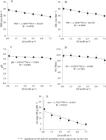
Regression models fitted for fruit diameter (A), fruit length (B), pH (C), soluble solids (D) and ascorbic acid content (E) of mini watermelon cv. ‘Beni-Kodama’ subjected to different levels of electrical conductivity of water (ECw).
The results presented attest to how the deleterious effects of salinity impair the physicochemical attributes of mini watermelon fruits, which greatly compromises their commercialization. Several studies have reported the demand of the consumer market and the satisfactory levels of each parameter mentioned above (FRD of 30 cm; FRL of 35 cm), from the marketing point of view (DAL MORA et al., 2021; Ó et al., 2022a), so salinity management can promote attractive returns even with the observed decrease.
The reduction in fruit size is related to the main consequences of salt stress, as can be seen in Figure 5A. Given the difficulty in translocating water and nutrients to the fruits, imposed by osmotic stress, the fruits showed a reduction in size with the increase in salinity, as observed in the FRL variable, whose percentage reduction for the highest ECw levels was 25.3%. Ó et al. (2021), when working with mini watermelon cv. ‘Smile’, observed decreases in fruit circumference, with reductions of 8.86% per unit increment in ECw, and similar results were also observed by these authors in fruit pH, with a reduction of 1.54%, while in the present study, reductions of 0.83% were observed for each increment in ECw. The negative behavior of pH is related to the salinity-induced accumulation of salts in plant tissues, which tend to accumulate specific acids, favoring its reduction.
The decreasing effect observed in SS and AA with the increase in ECw has also been observed by Silva et al. (2022b) and Ó et al. (2022b), when working with mini watermelon crop. On the other hand, Ó et al. (2020) studied brackish water and different water applications and observed no effect of salinity on SS, as also reported by Alves et al. (2023). The reduction in fruit mass may have caused this reduction in SS (approximately 2.00% for each unit increment in ECw) compared to the aforementioned studies. Lacerda et al. (2021) report that the severity of stress is one of the main factors that interfere with plant behavior under saline conditions, being able to cause significant reductions in the productive and qualitative aspects of the fruits of cultivated plants.
In view of the results obtained, the non-significance of the TES factor can be considered positive, since there were no changes in fruit quality, especially between the salinity levels studied for TES1 and TES2. In this case, with the increase in production promoted by TES2, this type of strategy becomes relevant for possible use in the existence of good-quality water to be applied at the beginning of the crop cycle.
CONCLUSIONS
Application of brackish water from the phenological stage of the onset of flowering is an alternative to minimize the deleterious effects of salinity on the yield and quality of mini watermelon fruits. This strategy can be adopted by producers who can alternate between the use of good-quality water, with approximately 30% of the total value of water applied, and the subsequent use of a brackish water source.
Taking into account the commercial aspect, using brackish water in preparing the nutrient solution for the hydroponic cultivation of mini watermelon cv. ‘Beni-Kodama’ potentially interferes with fruit production, so cultivation should be carried out using water with electrical conductivity close to 3.0 dS m-1.
Data Availability:
The data that support the findings of this study can be made available, upon reasonable request, from the corresponding author.
REFERENCES
- ALVES, A. S. et al. Production and quality of mini watermelon under salt stress and K+/Ca2+ ratios. Revista Brasileira de Engenharia Agrícola e Ambiental, 27: 441-446, 2023.
- AOAC - Association of Official Analytical Chemistry. Official methods of analysis of the Association of Official Analytical Chemistry 17. ed. Washington, DC: AOAC International, 2002. 1115 p.
- BIONE, M. A. A. et al. Hydroponic production of ‘Biquinho’ pepper with brackish water. Agricultural Water Management, 245: 106607, 2021.
- CAMPAGNOL, R.; MELLO, S. C.; BARBOSA, J. C. Cultivo vertical de mini melancia em função da altura de condução e densidade de plantas. Horticultura Brasileira, 30: 726-732, 2012.
- DAL MORA, M. R. et al. Atributos físico-químicos e bioquímicos de melancia vermelha e amarela minimamente processada, durante o armazenamento. Scientific Electronic Archives, 14: 13-21, 2021.
- DRECHSEL, P.; ZADEH, S. M.; PEDRERO, F. Water quality in agriculture: risks and risk mitigation. 1. ed. Rome: FAO & IWMI, 2023.175 p.
-
IBGE - Instituto Brasileiro de Geografia e Estatística. Sistema IBGE de Recuperação Automática - SIDRA: Levantamento Sistemático da Produção Agrícola, 2023. Available at: <https://sidra.ibge.gov.br/pesquisa/lspa/tabelas>. Access on: Jul. 19, 2023.
» https://sidra.ibge.gov.br/pesquisa/lspa/tabelas - LACERDA, C. F. et al. Strategies for the use of brackish water for crop production in Northeastern Brazil. In: TALEISNIK, E.; LAVADO, R. S. (Eds.). Saline and akaline soils in latin America Switzerland: Springer Nature, 2021. v. 1, cap. 5, p. 71-99.
- LESSA, C. I. N. et al. Potential of brackish groundwater for different biosaline agriculture systems in the brazilian semi-arid region. Agriculture, 13: 1-22, 2023.
- LIMA, G. S. et al. Irrigation with saline water in the cultivation of mini watermelon under phosphate fertilization. Brazilian Journal of Biology, 83: e274991, 2023.
- Ó, L. M. G. et al. Production and quality of mini watermelon under drip irrigation with brackish water. Revista Caatinga, 33: 766-774, 2020.
- Ó, L. M. G. et al. Osmotic adjustment, production, and post-harvest quality of mini watermelon genotypes differing in salt tolerance. Scientia Horticulturae, 306: 111463, 2022a.
- Ó, L. M. G. et al. Physiological and biochemical responses of mini watermelon irrigated with brackish water under two types of irrigation system. Semina. Ciências Agrárias, 43: 1497-1516, 2022b.
- Ó, L. M. G. et al. Production, water-use efficiency and post-harvest quality of hydroponic mini watermelon under salinity stress. Pesquisa Agropecuaria Tropical, 51: e67054, 2021.
- RICHARDS, L. A. Diagnosis and improvement of saline and alkali soils 1. ed. Washington D.C: Agricultural handbook 60, 1954. 160 p.
- SANTIAGO-ROSARIO, L. Y. et al. No escape: The influence of substrate sodium on plant growth and tissue sodium responses. Ecology and Evolution, 11: 14231-14249, 2021.
- SILVA, J. S. et al. Physiological responses and production of mini-watermelon irrigated with reject brine in hydroponic cultivation with substrates. Environmental Science and Pollution Research, 29: 11116-11129, 2022a.
- SILVA, A. A. R et al. Hydrogen Peroxide Reduces the Effect of Salt Stress on Growth and Postharvest Quality of Hydroponic Mini Watermelon. Water Air and Soil Pollution, 233: 198, 2022b.
- SILVA, S. S. et al. Gas exchanges and production of watermelon plant under salinity management and nitrogen fertilization. Pesquisa Agropecuária Tropical, 49: e54822, 2019.
- SILVA, S. S. et al. Application strategies of saline water and nitrogen doses in mini watermelon cultivation. Comunicata Scientiae, 11: e3233, 2020.
Edited by
-
Editor in Chief:
Aurélio Paes Barros Júnior
-
Section Editor:
Francisco Vanies da Silva Sá


