Morphological characterization of commercial okra accessions
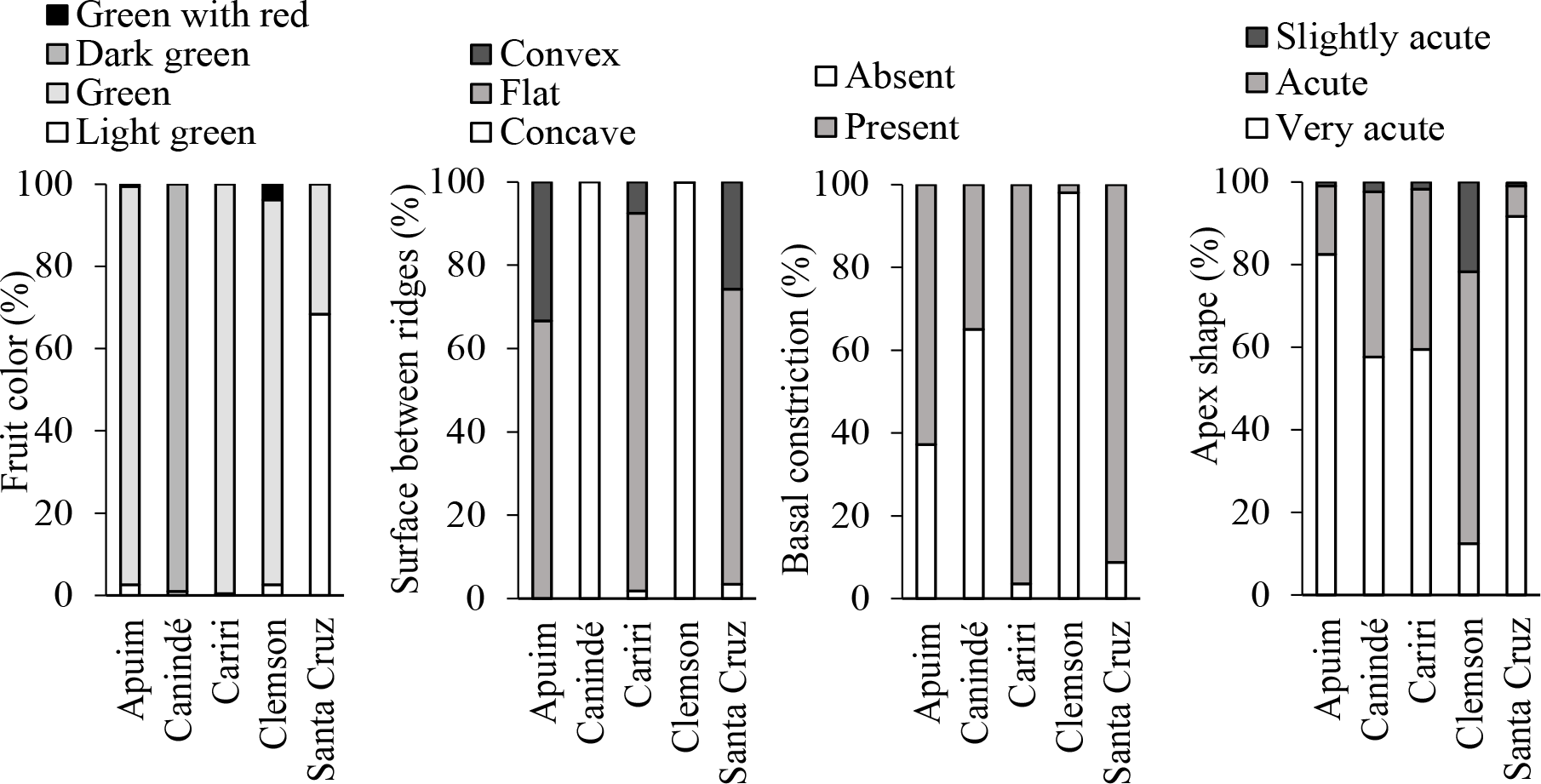
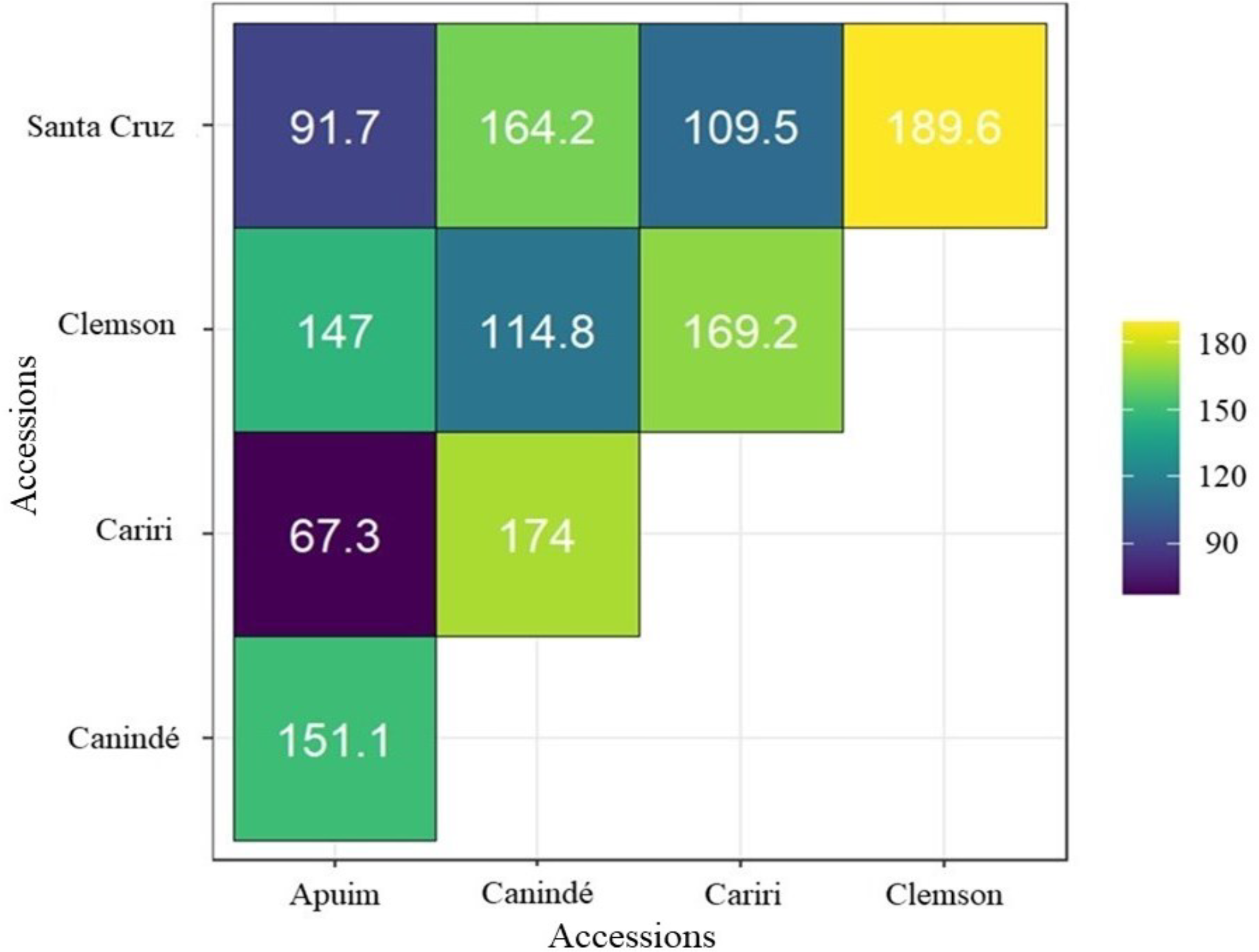
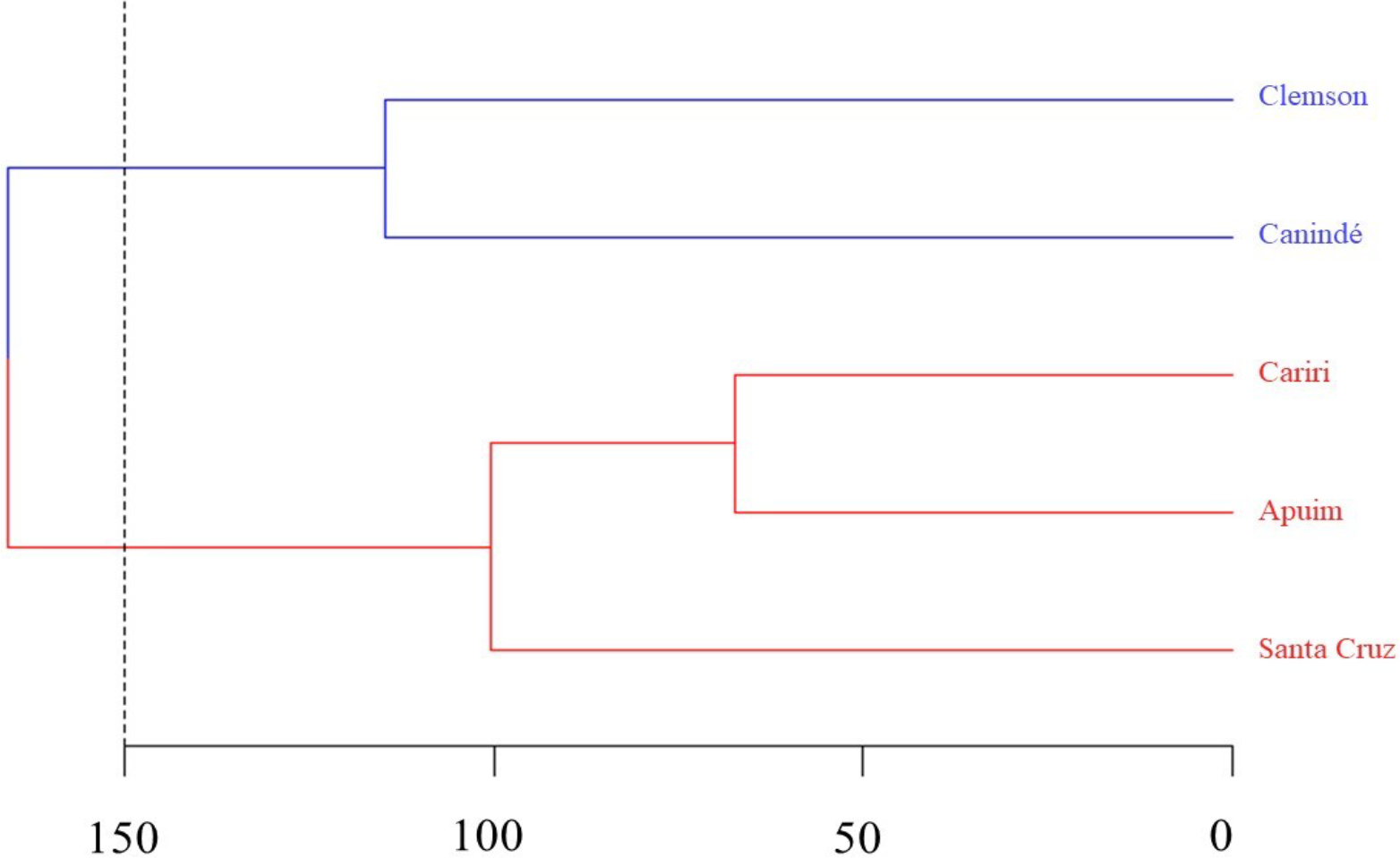
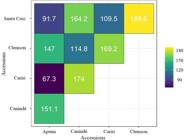
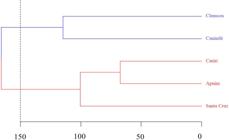
Okra (Abelmoschus esculentus L. Moench) has been less studied compared to other crop species of the family Malvaceae, thus presenting high potential for research, mainly in genetic improvement. Morphological characterization is a pre-breeding step that can be conducted using quantitative and qualitative descriptors. Thus, the objective of this study was to morphologically characterize commercial okra accessions to provide a foundation for breeding programs in this crop species. The experiment was conducted in the experimental area of the Federal Institute of Alagoas, Piranhas, AL, Brazil, using a randomized block design with five treatments and five replications. Okra plants and fruits were characterized through qualitative descriptors, using a hierarchical clustering of accessions based on Unweighted Pair Group Method with Arithmetic Mean (UPGMA). The greatest genetic distance was found between the Santa Cruz-47 and Clemson Americano-80 accessions, whereas the lowest distance was found between the Cariri and Apuim accessions. The UPGMA analysis resulted in two accession groups: group I consisting of Clemson Americano-80 and Canindé accessions, and group II consisting of Cariri, Apuim, and Santa Cruz-47 accessions. Viable hybrids can be obtained from crossings between accessions of group I and group II.
Keywords:
Abelmoschus esculentus; Breeding; Qualitative descriptors; Hybrids
 Thumbnail
 Thumbnail
 Thumbnail
 Thumbnail
 Thumbnail
 Thumbnail
 Thumbnail