Morphological characterization of commercial okra accessions
ABSTRACT
Okra (Abelmoschus esculentus L. Moench) has been less studied compared to other crop species of the family Malvaceae, thus presenting high potential for research, mainly in genetic improvement. Morphological characterization is a pre-breeding step that can be conducted using quantitative and qualitative descriptors. Thus, the objective of this study was to morphologically characterize commercial okra accessions to provide a foundation for breeding programs in this crop species. The experiment was conducted in the experimental area of the Federal Institute of Alagoas, Piranhas, AL, Brazil, using a randomized block design with five treatments and five replications. Okra plants and fruits were characterized through qualitative descriptors, using a hierarchical clustering of accessions based on Unweighted Pair Group Method with Arithmetic Mean (UPGMA). The greatest genetic distance was found between the Santa Cruz-47 and Clemson Americano-80 accessions, whereas the lowest distance was found between the Cariri and Apuim accessions. The UPGMA analysis resulted in two accession groups: group I consisting of Clemson Americano-80 and Canindé accessions, and group II consisting of Cariri, Apuim, and Santa Cruz-47 accessions. Viable hybrids can be obtained from crossings between accessions of group I and group II.
Keywords:
Abelmoschus esculentus; Breeding; Qualitative descriptors; Hybrids
RESUMO
O quiabeiro (Abelmoschus esculentus L. Moench) é uma cultura pouco estudada, quando comparada a outras espécies da família Malvaceae, por isso apresenta grande potencial para estudos, principalmente, na área de melhoramento genético. A caracterização morfológica é uma etapa de pré-melhoramento que pode ser realizada através de descritores quantitativos e/ou qualitativos. Sendo assim, esse trabalho teve como objetivo caracterizar morfologicamente acessos comerciais de quiabeiro para delimitar um programa de melhoramento para a cultura. O experimento foi conduzido na área experimental do Instituto Federal de Alagoas - Campus Piranhas, utilizando o delineamento em blocos casualizados, com cinco tratamentos em cinco repetições. As plantas e os frutos foram caracterizados através dos descritores qualitativos. Foi utilizada a técnica de agrupamento hierárquico baseado na média não ponderada dos pares de acessos (UPGMA) para agrupar os acessos. A maior distância genética foi visualizada entre os acessos Santa Cruz-47 e Clemson Americano 80 e a menor entre os acessos Cariri e Apuim. Houve a formação de dois grupos pelo método de agrupamento UPGMA, sendo o grupo I formado pelos acessos Clemson Americano 80 e Canindé, e o grupo II dos demais acessos (Cariri, Apuim e Santa Cruz-47). Híbridos viáveis podem ser obtidos a partir de cruzamentos entre acessos do grupo I e do grupo II.
Palavras-chave:
Abelmoschus esculentus; Melhoramento genético; Descritores qualitativos; Híbridos
INTRODUCTION
Okra (Abelmoschus esculentus L. Moench; Malvaceae) is a major crop species in the Semiarid region of Brazil, according to the Brazilian Institute of Geography and Statistics (IBGE, 2017). The okra annual national production is approximately 111,967 Mg; the Northeast region is responsible for 28.74% of this production. This crop is tolerant to high temperatures and require minimal technological inputs for its production; thus, it has become one of the main alternatives for small-scale farmers. This is an annual crop that produces vitaminrich fruits, which are harvested immature and consumed fresh; flowers and seeds of okra plants contain several nutrients and compounds favorable to health (SUN et al., 2023). Okra flowers are hermaphrodites and their reproduction is considered predominantly autogamous; although up to 37.5% allogamy can occur, this percentage progressively decreases after flower opening (HAMON; KOECHLIN, 1991). This percentage of allogamy may explain the variability within the species, which makes information about the level of allogamy essential before utilizing a cultivar in breeding programs.
The characterization and estimation of genetic diversity of a plant population are an essential initial step to develop a breeding program; despite the economic importance, information on characteristics of commercial accessions is not available for use in researches (BINALFEW; ALEMU, 2016). Plant breeders focused on okra plants have prioritized the development of heterotic, highyielding, and early-maturing hybrids (MACIEL et al., 2018). Another objective of okra breeding programs is to reduce the presence of trichomes on leaves and stems, as these structures challenge the harvest.
Morphological characterization involves the use of descriptors to identify, differentiate, and describe accessions of a same species, and can be carried out through determination of visually different morphological traits that exhibit high heritability and are expressed in all environments (EBERTZ; PALOMINO, 2017). This is an old and wellestablished method recommended to be applied before more in-depth biochemical and molecular studies (BINALFEW; ALEMU, 2016). This enables the acquisition of specific information about preserved germplasms, facilitating its efficient use in breeding programs and assisting in germplasm conservation (MARTINELLO et al., 2001; CRUZ; FERREIRA; PASSONI., 2011; MOULIN et al., 2012).
Conducting genetic diversity analysis based on morphological traits is a straightforward and often the first step in breeding programs, preceding more in-depth biochemical or molecular studies. This analysis enables the identification of potential parents and assists in the selection of pre-commercial hybrids and the development of elite cultivars (YONAS; GAREDEW; DEBELA, 2014; MACIEL et al., 2018). In this context, the objective of this study was to morphologically characterize commercial okra accessions to provide a foundation for breeding programs in this crop species.
MATERIAL AND METHODS
The experiment was conducted at the experimental area of the Federal Institute of Alagoas, in Piranhas, AL, Brazil (9°37'23.64"S, 37°46'2.41"W, and altitude of 110 meters), from February 13 to May 21, 2022. Piranhas is in the Sertaneja Depression; the region's climate is BSh, tropical semiarid, according to the Koppen classification, with a mean annual rainfall depth of 492.2 mm (SANTOS et al., 2017).
A randomized block experimental design with five treatments and five replications was used. The planting spacing adopted was 0.80 m between rows and 0.40 m between plants. The total experimental plot area was 8.92 m2, composed of 28 plants; the evaluation area was 4.48 m2, composed of 14 plants.
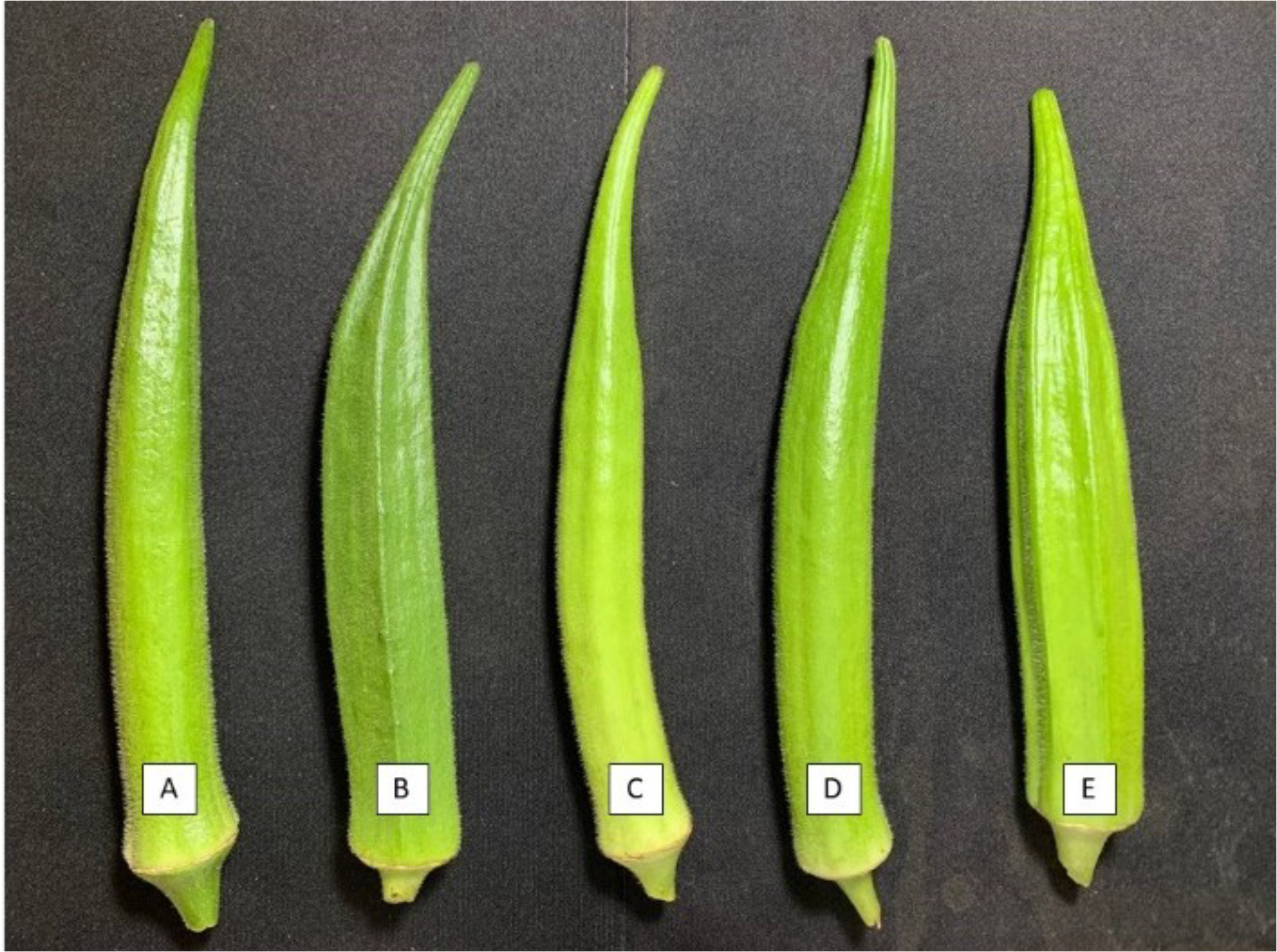
Five commercial okra accessions were used (Figure 1): three open-pollination cultivars (Apuim, Clemson Americano80, and Santa Cruz-47) and two hybrids (Canindé and Cariri).
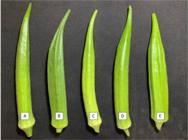
Fruits of commercial okra accessions of the cultivars Apuim (A), Canindé (B), Santa Cruz (C), Cariri (D), and Clemson Americano80 (E).
Soil fertilizers were applied as recommended for the crop in the state of Sergipe (SOBRAL et al., 2007), using lime and fertilizers, divided into three phases: basal dressing, using 21 kg ha-1 of N (ammonium sulfate), 270 kg ha-1 of P2O5 (simple superphosphate), and 120 kg ha-1 of K2O (potassium chloride); and topdressing carried out at 30 and 60 days after emergence, using 21 kg ha-1 of N (ammonium sulfate).
Weed population in the initial period was controlled through manual weeding using hoes. Plant residues, mainly dry leaves of Tabebuia aurea, were placed in the area when the plants exhibited five definitive leaves, for soil cover and for reduce the need for manual weeding. Four applications of a tobacco solution, prepared as described by Ayres et al. (2020), were carried out to the crop, with 15-day intervals, to control pests, such as defoliating lepidopteran larvae that emerged in the area.
The mean temperature during the experiment was 28 ° C, with relative air humidity of 71%, and total rainfall depth of 176.2 mm (INMET, 2022). Seventy plants of each genotype were characterized through visual observations 80 days after planting (DAP). Fruits that were within commercial standards (8 to 14 cm length) were harvested and characterized in the Laboratory of Plant Breeding of the Federal Institute of Alagoas; 500 fruits of each genotype were evaluated.
The plants were characterized through qualitative descriptors, using morphological descriptors adapted from the Brazilian Ministry of Agriculture and Livestock (BRASIL, 2022), as well as descriptors used by Martinello et al. (2001).
Plant descriptors
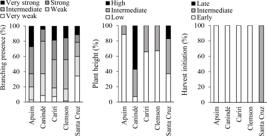
Branching presence (1 = very weak; 3 = weak; 5 = intermediate; 7 = strong; 9 = very strong): determined by counting the number of branches on the main stem;
Plant height (3 = low; 5 = intermediate; 7 = high): determined by evaluating plant height based on a reference height of 1.45 m. Class 3 represents plants with heights of up to 1.10 m, class 5 represents plants of 1.11 to 1.60 m, and class 7 represents plants higher than 1.60 m.
Harvest initiation (3 = early; 5 = intermediate; 7 = late): determined based on the date of the first harvest of fruits of each accession. Class 3 represents harvest initiation between 30-60 DAP, class 5 represents initiation between 6080 DAP, and class 7 represents initiation after 80 DAP.
Stem descriptors
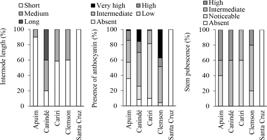
Internode length (3 = short; 5 = medium; 7 = long): determined by measuring the distance between nodes.
Presence of anthocyanin in the stem (1 = absent; 3 = low; 5 = intermediate; 7 = high; 9 = very high): determined by observing the stem color.
Stem pubescence (1 = absent; 3 = noticeable; 5 = intermediate; 7 = high): determined by touching the stem.
Leaf descriptors
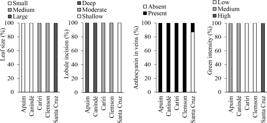
Leaf size (3 = small, 5 = medium; 7 = large); determined by measuring the size of leaves; the genotype that presented the largest leaves was defined as class 7, and the other were classified by comparison with this reference accession.
Lobule incision (3 = shallow; 5 = moderate; 7 = deep): determined by evaluating the leaf lobules.
Presence of anthocyanin in veins (1 = absent; 2 = present): determined by evaluating the leaf veins.
Leaf green intensity (1 = low; 2 = medium; 3 = high): determined by observing the color of leaves.
Fruit descriptors
Fruit color (1 = light green; 2 = green; 3 = dark green; 4 = green with red patches): determined by observing the color of fruits.
Surface between ridges (3 = concave; 5 = flat; 7 = convex): determined based on the presence and shape of the segments between ridges.
Basal constriction (1 = absent; 2 = present): determined by evaluating the basal part of the fruits.
Apex shape (1 = very acute; 2 = acute; 3 = slightly acute): determined by evaluating the apex of the fruits.
Considering that the variables were measured by assigning scores and there was segregation within the accessions, the following index complement was used as measure of dissimilarity:
where a is the number of cases in which accessions I and I' received the same score; and b is the number of cases in which accessions I and I' received different scores.
After developing the distance matrix, hierarchical clustering of the accessions was performed using the Unweighted Pair Group Method with Arithmetic Mean (UPGMA) to group the accessions. The R and GENES programs (CRUZ, 2013) were used for the statistical analyses.
RESULTS AND DISCUSSION
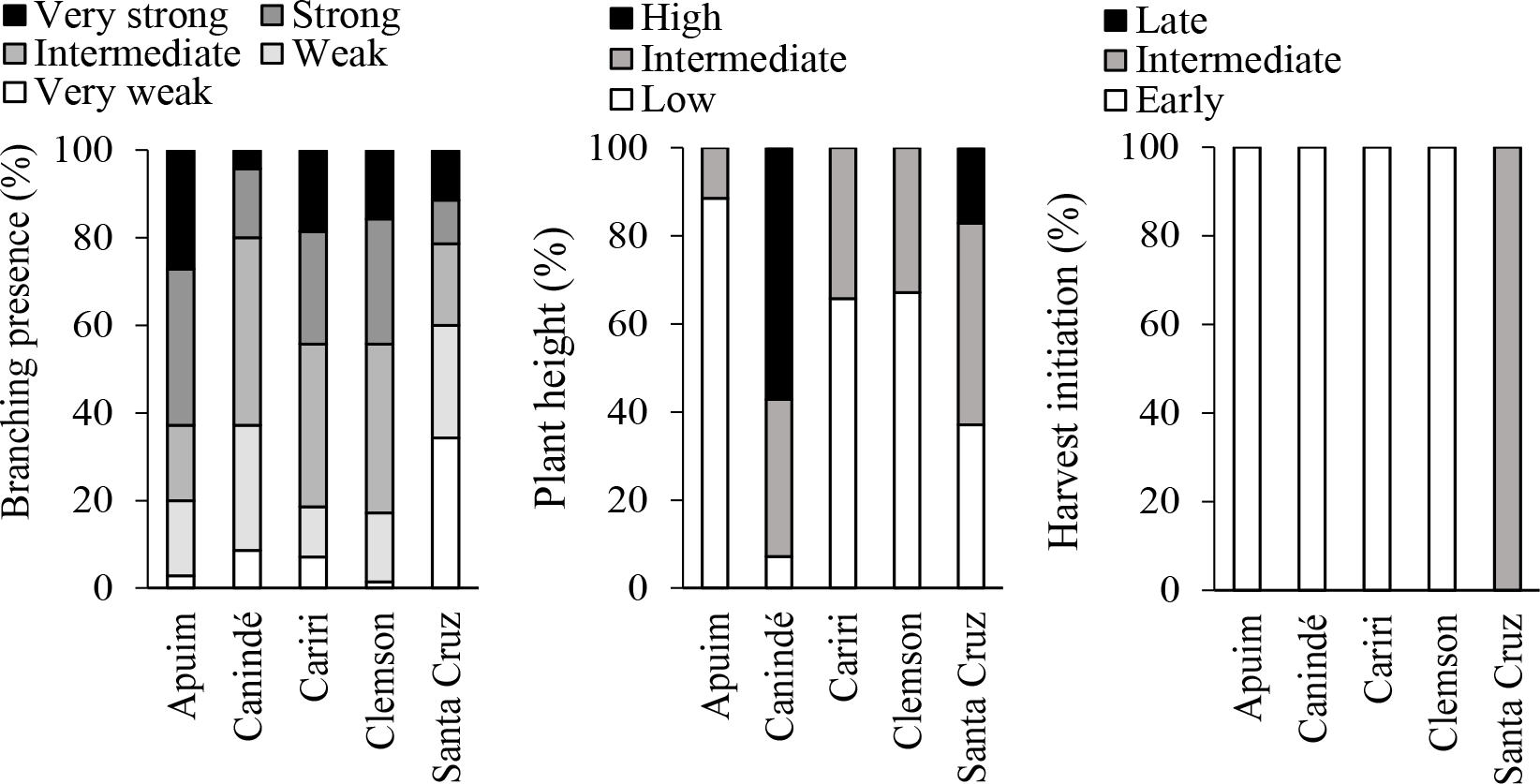
The evaluated plant descriptors showed divergence among and within okra accessions (Figure 2). Branching was found in all accessions. Accessions of the Apuim, Cariri, and Clemson Americano-80 cultivars exhibited low and medium plant heights, whereas those of the Santa Cruz-47 and Canindé cultivars had medium and low plant highs. Time to harvest initiation was short for all accessions, except for the Santa Cruz-47 genotype, which had an intermediate time to harvest initiation (65 DAP).
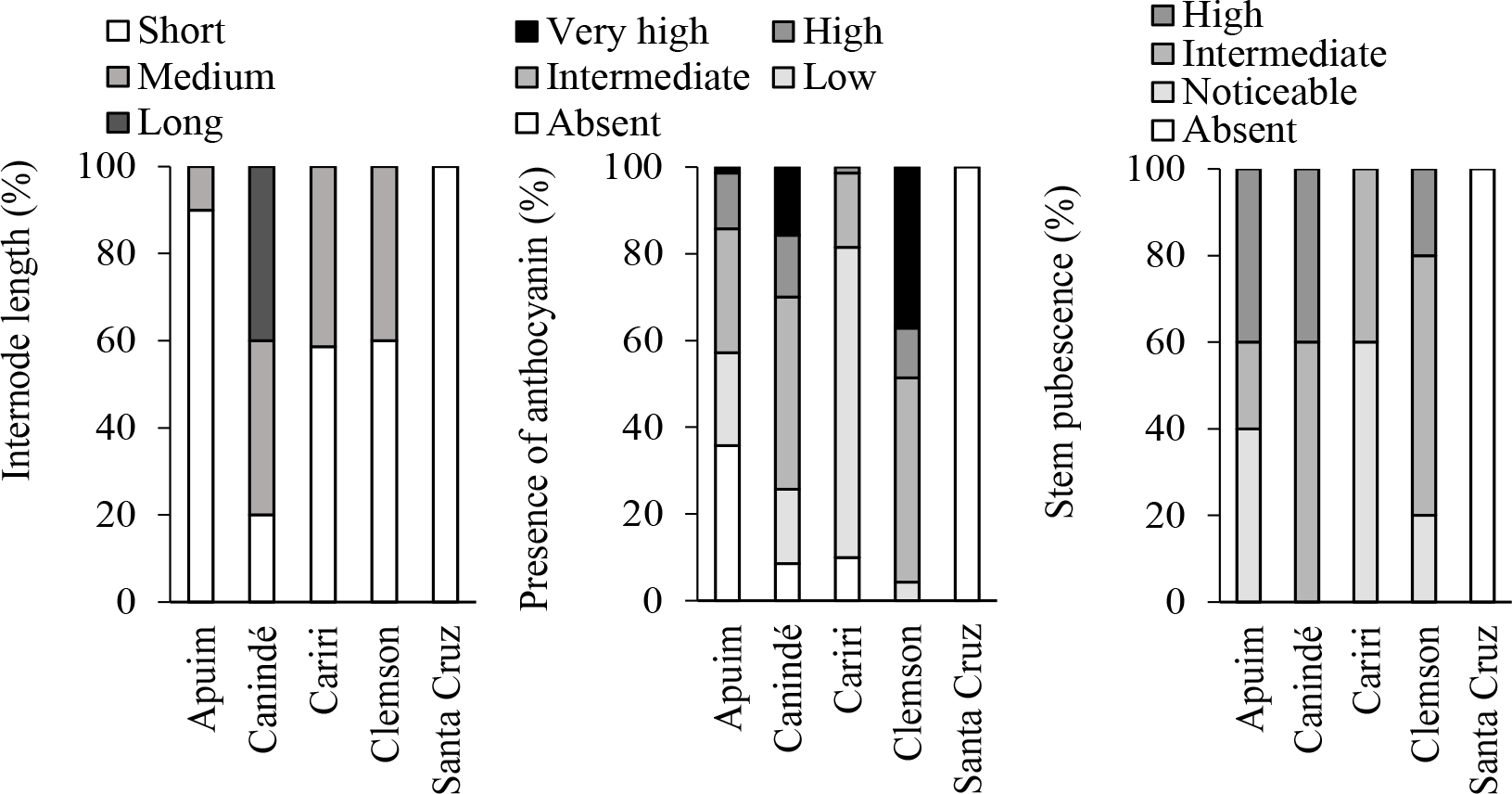
Regarding stem descriptors, Santa Cruz-47 was the only genotype that showed no significant difference within plants, which showed short internodes, absence of anthocyanin, and stem pubescence (Figure 3). However, Apuim, Cariri, and Clemson Americano-80 accessions had short to medium internode lengths, whereas Canindé accessions showed all classes (short, medium, and long). Apuim and Canindé genotypes expressed plants with presence and absence of anthocyanin in the stem.
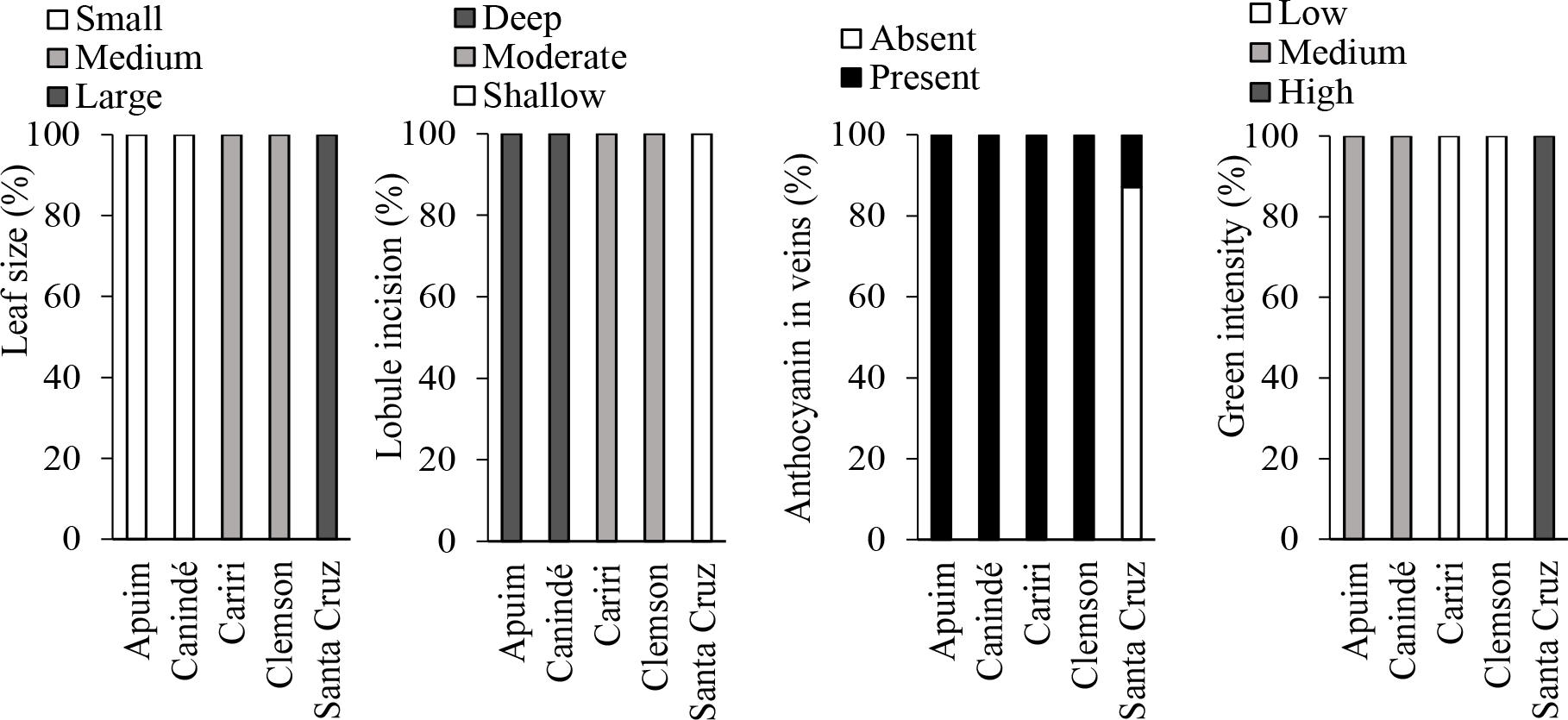
Leaf descriptors showed no visual difference within accessions, except for the presence of anthocyanin in leaf veins in the Santa Cruz-47 genotype, which yielded plants with presence and absence of anthocyanin, whereas all plants of the other accessions had anthocyanin in the leaf veins (Figure 4). The results of the leaf descriptors showed phenotypic similarity between the Apuim and Canindé genotypes and between the Cariri and Clemson Americano-80 genotypes for leaf size, lobule incision, and green intensity. The Santa Cruz-47 genotype exhibited large leaves with high green intensity and shallow lobule incisions.
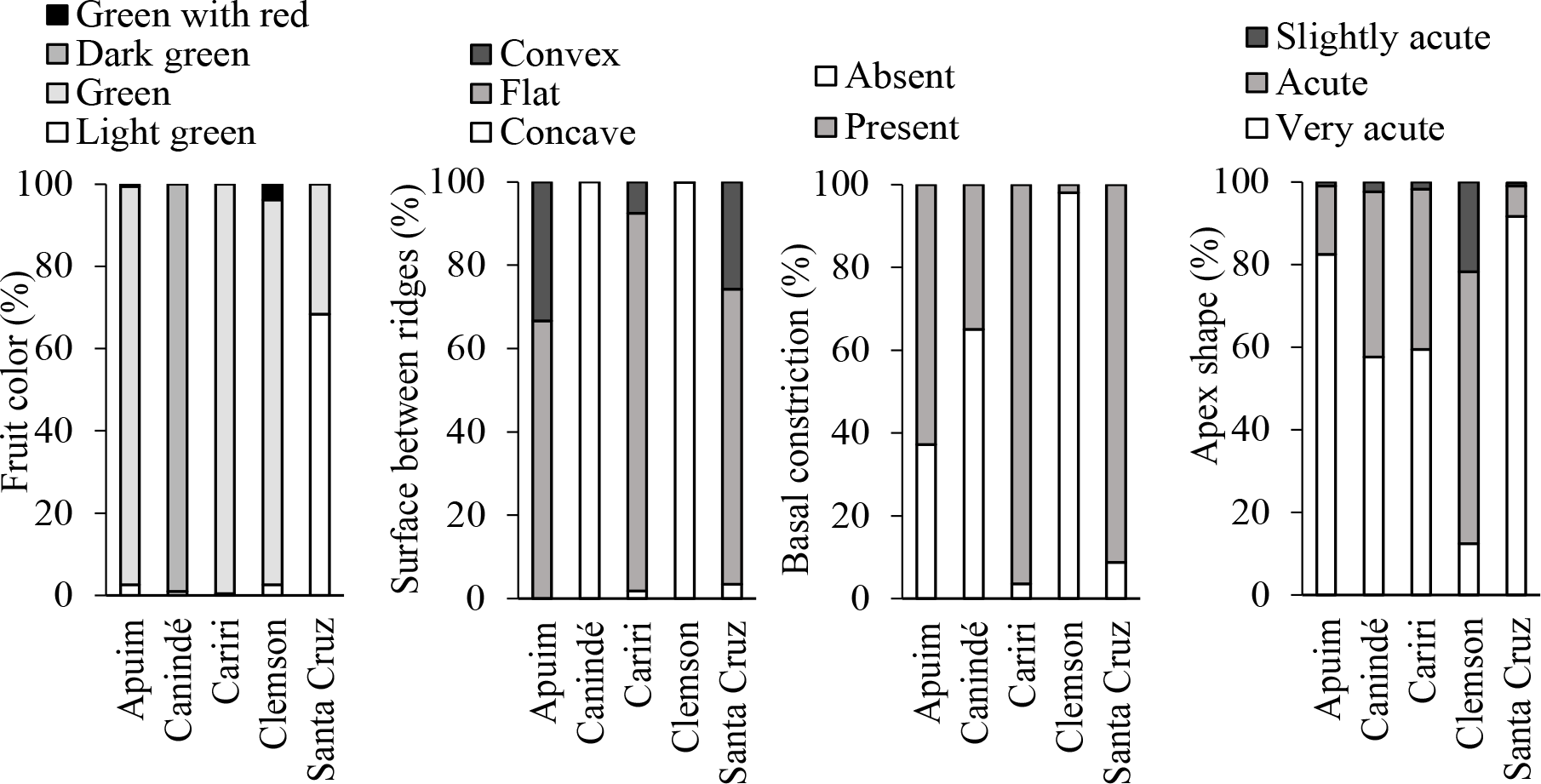
Most fruit descriptors exhibited visual differences within and among accessions; apex shape showed the greatest variation within accessions (Figure 5). Fruit color varied among accessions; Clemson Americano-80 accessions exhibited some green fruits with red patches, which is a distinctive feature of these accessions. Apuim, Cariri, and Santa Cruz-47 accessions exhibited light green and green fruits, whereas Canindé accessions presented green and dark green fruits. Basal constriction was found in all accessions, with the least occurrence in Clemson Americano-80 accessions.
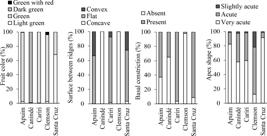
Most fruits exhibited a very acute apex and basal constrictions in over half of the accessions. In studies evaluating okra plants, Silva et al. (2021) found concave and flattened fruits, mostly with acute to very acute apices, whereas Massucato et al. (2020) found light green, green, and dark green fruits with flat, convex, and concave surfaces between ridges.
Genetic diversity can be found among and within populations of plant species, which can be classified as heterozygous (uniformly monomorphic) or heterozygous (polymorphic), exhibiting phenotypic and genotypic variations (JOSHI et al., 2023). Thus, the observed diversity within open-pollinated accessions is due to the population's genetic structure, characterized by a higher frequency of heterozygous loci. Contrastingly, hybrids showed higher uniformity due to crosses between pure lines (CLAYTON et al., 2009). Fruit color and surface between ridges are crucial determinants for the commercialization of these fruits. According to Santos, Gomes Junior, and Marcos Filho (2020), the market demands long, cylindrical, smooth, and bright green okra fruits; in this regard, Apuim, Cariri, and Santa Cruz-47 accessions present commercial shape patterns, whereas the Canindé genotype exhibits concave fruits with characteristics more favorable for international markets (PASSOS et al., 2015).
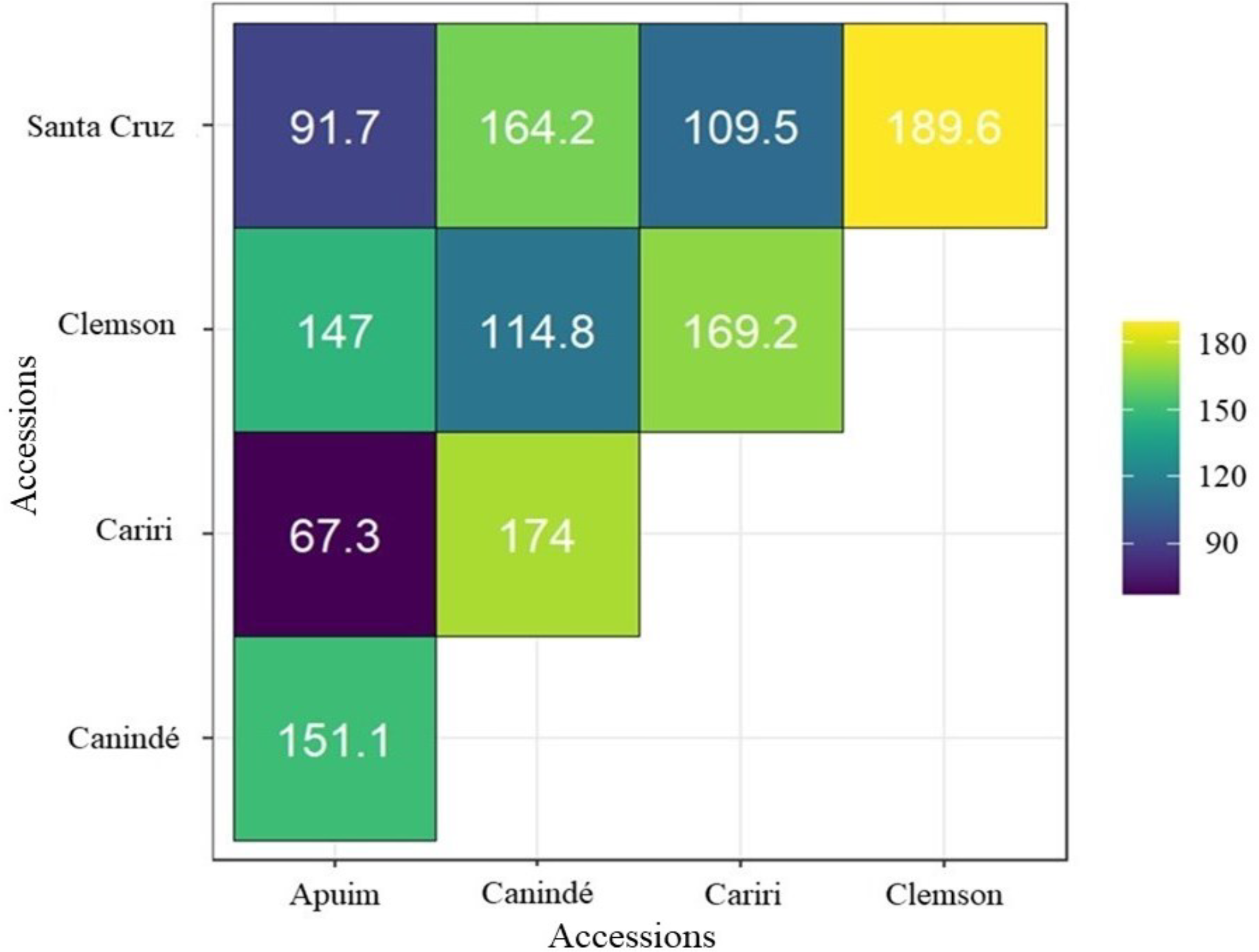
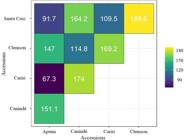
The greatest genetic distance (189.6) between the evaluated accessions was found between Santa Cruz-47 and Clemson Americano-80 (Figure 6). According to Ghaderi, Adams, and Nassib (1984), a high parental distance results from a large number of different alleles, which increases the chances of effective selection through crosses. The smallest genetic distance (67.3) was found between Cariri and Apuim accessions, indicating a low genetic diversity between them.
According to Albuquerque et al. (2022), genetic diversity studies focus on identifying crosses between the best parents to obtain segregating populations with high potential for desirable traits and wide genetic variability, or to determine heterotic groups. Yonas, Garedew, and Debela (2014) conducted multivariate analyses for a collection of okra populations in Ethiopia and found high genetic diversity among accessions evaluated for quantitative traits. In this sense, Reddy et al. (2012) found significant genetic diversity among 100 okra accessions.
The expected genetic variability increases as the number of evaluated accessions increases (BORÉM; MIRANDA; FRITSCHE-NETO, 2021). Despite the evaluation of only five commercial materials in the present study, divergences were found among them. Genetic information is essential for the improvement of okra populations, considering that studies on this vegetable are incipient.
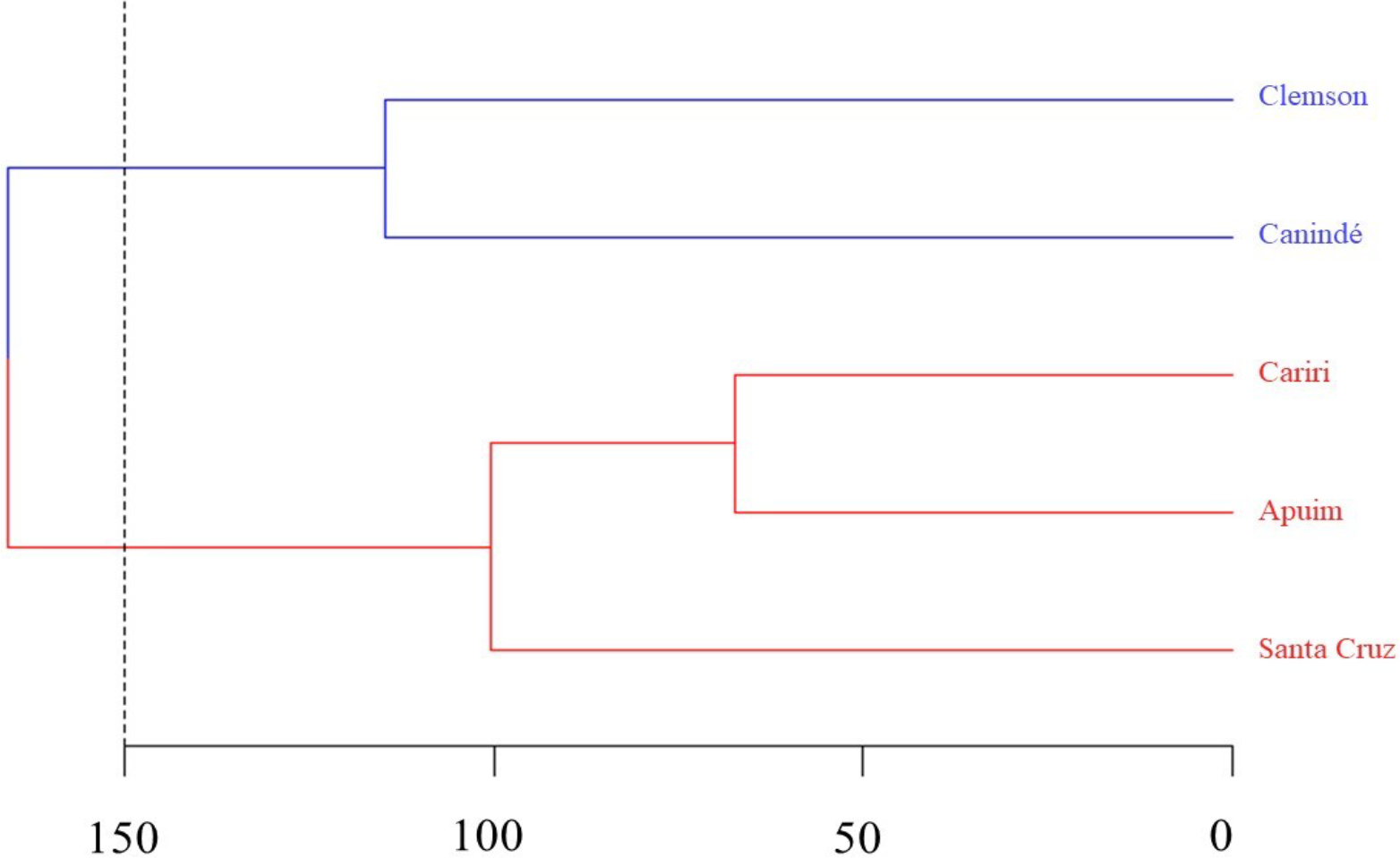
The data obtained from the dissimilarity matrix were used for hierarchical clustering analysis (UPGMA), which highlighted the similarities among the evaluated okra accessions (Figure 7). Maciel et al. (2018) reported that clustering methods are used to facilitate the visualization and interpretation of genetic distances by grouping individuals to assess within-subgroup homogeneity and between-subgroup heterogeneity.
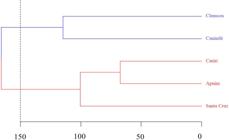
UPGMA dendrogram obtained from the distance matrix for five commercial okra accessions based on morphological traits. Cophenetic correlation = 0.96 (p<0.01).
The estimated cophenetic correlation, which indicates the efficiency of the clustering, was 0.96 (p<0.01), denoting high efficiency; i.e., there was high similarity between the original and final dissimilarity matrices. The cophenetic correlation values found in this study were higher than those obtained by Mendonça (2018), who found a coefficient of 0.90 (p<0.01) when evaluating okra population lines.
Considering the dendrogram cutoff point, the highest level (150%) formed two groups: group I consisting of Clemson Americano-80 and Canindé accessions, and group II consisting of the other accessions (Cariri, Apuim, and Santa Cruz-47).
Mendonça (2018) evaluated 20 pre-commercial okra lines and observed the formation of two groups through the UPGMA analysis, similar to the results of the present study. However, this author found a dendrogram cutoff point of approximately 50%, which differs from that found in the present study (150%).
Martinello et al. (2001) evaluated genetic divergence among 39 accessions of the genus Abelmoschus based on morphological markers, using hierarchical clustering of nearest neighbors for qualitative morphological traits; the clustering grouped the accessions according to the botanical species with a vertical cut at 2.5. Classical taxonomy commonly uses qualitative characteristics to classify species, as they are controlled by few genes and are less affected by the environment.
The obtained dendrogram enabled the selection of suitable accessions for the development of hybrids, as the best combination for producing F1 hybrids is obtained by accessions from different groups. Thus, crosses between group I (Clemson Americano-80 and Canindé genotypes) and group II (Cariri, Apuim, and Santa Cruz-47 genotypes) have a greater potential for obtaining viable hybrids, i.e., a greater probability of heterosis covering the costs of seed production. Besides the genetic distance between the accessions, traits related to the objectives of the breeding program should be considered, which may include obtaining early-maturing, high -yielding, uniform-developing, easy-to-harvest cultivars with attractive fruits (MATTEDI et al., 2015).
Thus, research on the development of F1 hybrids can be conducted using the results of the present study, with subsequent investigations of general and specific combinations. Additionally, research on the characterization of okra plants using quantitative traits can contribute to further research for this crop.
CONCLUSIONS
Viable okra hybrids can be obtained from crosses between accessions from group I (cultivars Clemson Americano-80 and Canindé) and group II (cultivars Cariri, Apuim, and Santa Cruz-47), considering plants with desired traits for the breeding program.
ACKNOWLEDGEMENTS
The authors thank the Federal Institute of Alagoas, Piranhas campus, for providing facilities for conducting this research; and the Brazilian National Council for Scientific and Technological Development (CNPq) for granting a Technological Initiation scholarship.
REFERENCES
- ALBUQUERQUE, J. R. T. et al. Influence of genotype- environment interaction on soybean genetic divergence under semiarid conditions. Revista de la Facultad de Ciencias Agrarias UNCuyo, 54: 1-12, 2022.
- AYRES, M. I. C. et al. Defensivos naturais: manejo alternativo para pragas e doenças. Manaus, AM: Editora INPA, 2020. 32 p.
- BINALFEW, T.; ALEMU, Y. Characterization of okra (Abelmoschus esculentus (L.) Moench) germplasms collected from western Ethiopia. International Journal of Research in Agriculture and Forestry, 3: 11-17, 2016.
- BORÉM, A.; MIRANDA, G. V.; FRITSCHE-NETO, R. Melhoramento de Plantas 8. ed. Viçosa, MG: UFV, 2021. 384 p.
-
BRASIL. Ministério da Agricultura, Pecuária e Abastecimento. Olerícolas Disponível em: <https://www.gov.br/agricultura/pt-br/assuntos/insumos-agropecuarios/insumos-agricolas/protecao-de-cultivar/olericolas >. Acesso em: 8 jun. 2022.
» https://www.gov.br/agricultura/pt-br/assuntos/insumos-agropecuarios/insumos-agricolas/protecao-de-cultivar/olericolas - CLAYTON, G. W. et al. Comparison of certified and farmsaved seed on yield and quality characteristics of canola. Agronomy Journal, 101: 1581-1588 2009.
- CRUZ, C. D. GENES - a software package for analysis in experimental statistics and quantitative genetics. Acta Scientiarum, 35: 271-276, 2013.
- CRUZ, C. D.; FERREIRA, F. M.; PASSONI, L. A. Biometria aplicada ao estudo da diversidade genética Visconde do Rio Branco, MG: Suprema, 2011. 620 p.
- EBERTZ, O. F.; PALOMINO, E. C. Caracterização morfológica de genótipos de Manihot esculenta Crantz obtidas via sementes. Agroecossistemas, 9: 66-77, 2017.
- GHADERI, A. M.; ADAMS, M. W.; NASSIB, A. M. Relationship between genetic distance and heterosis for yield and morphological traits in dry edible bean and faba bean. Crop Science, 24: 37-42, 1984.
- HAMON, S.; KOECHLIN, J. The reproductive of okra. 2. Self-fertilization kinetics in the cultivated okra (Abelmoschus esculentus), and consequences for breeding. Euphytica, 53: 49-55, 1991.
-
IBGE - Instituto Brasileiro de Geografia e Estatística. Censo Agropecuário 2017: resultados definitivos 2017. Disponível em: <https://sidra.ibge.gov.br/pesquisa/censoagropecuario/censo-agropecuario-2017/resultados-definitivos#horticultura >. Acesso em: 8 jun. 2022.
» https://sidra.ibge.gov.br/pesquisa/censoagropecuario/censo-agropecuario-2017/resultados-definitivos#horticultura -
INMET - Instituto Nacional de Meteorologia. Estação meteorológica de observação de superfície automática: Piranhas, AL, Brasil. Disponível em: <https://mapas.inmet.gov.br/>. Acesso em: 20 dez. 2022.
» https://mapas.inmet.gov.br/ - JOSHI, B. K. et al. Approaches and advantages of increased crop genetic diversity in the fields. Diversity, 15: 1-11, 2023.
- MACIEL, G. M. et al. Agronomic potential and selection of okra hybrids to obtains potential genitors. Horticultura Brasileira, 36: 112-117, 2018.
- MARTINELLO, G. E. et al. Divergência genética em acessos de quiabeiro com base em marcadores morfológicos. Horticultura Brasileira, 20: 52-58, 2001.
- MASSUCATO, L. R. et al. Genetic diversity among Brazilian okra landraces detected by morphoagronomic and molecular descriptors. Acta Scientiarum, 42: 2-11, 2020.
- MATTEDI, A. P. et al. Selection of okra parents based on performance and genetic divergence. African Journal of Biotechnology, 14: 3044-3050, 2015.
- MENDONÇA, T. F. N. Dissimilaridade genética entre linhagens de quiabeiro: caracteres morfológicos e moleculares 2018. 20 p. TCC (Graduação em Agronomia) - Universidade Federal de Uberlândia, Monte Carmelo, 2018.
- MOULIN, M. M. et al. Collection and morphological characterization of sweet potato in north of Rio de Janeiro state. Horticultura Brasileira, 30: 286-292, 2012.
- PASSOS, F. A. et al. Novas cultivares de quiabo para a agricultura familiar. Pesquisa & Tecnologia, 12: 1-07, 2015.
- REDDY, T. M. et al. Genetic divergence analysis of indigenous and exotic collections of okra (Abelmoschus esculentus (L.) Moench). Journal of Agricultural Technology, 8: 611-623, 2012.
- SANTOS, G. R. et al. Análise da precipitação pluvial e temperatura do ar de Olho D’água do Casado, Delmiro Gouveia e Piranhas, Alagoas. Revista de Geociências do Nordeste, 3: 16-27, 2017.
- SANTOS, R. F.; GOMES JUNIOR, F. G.; MARCOS FILHO, J. Morphological and physiological changes during maturation of okra seeds evaluated through image analysis. Scientia Agricola, 77: 1-09, 2020.
- SILVA, E. H. C. et al. Morphoagronomic characterization and genetic diversity of a Brazilian okra [Abelmoschus esculentus (L.) Moench] panel. Genetic Resources and Crop Evolution, 68: 371-380, 2021.
- SOBRAL, L. F. et al. Recomendações para o uso de corretivos e fertilizantes no Estado de Sergipe 1. ed. Aracaju, SE: Embrapa Tabuleiros Costeiros, 2007. 251 p.
- SUN, J. et al. Genome-wide assessment of genetic diversity and association mapping for salt tolerance traits in okra (Abelmoschus esculentus L. Moench) using genotyping-bysequencing. Scientia Horticulturae, 313: 1-9, 2023.
- YONAS, M.; GAREDEW, W.; DEBELA, A. Multivariate analysis among okra (Abelmoschus esculentus (L.) Moench) collection in South western Ethiopia. Journal of Plant Sciences, 9: 43-50, 2014.