In vitro Regeneration of the 'Piel de Sapo' and 'Cantaloupe' Melon
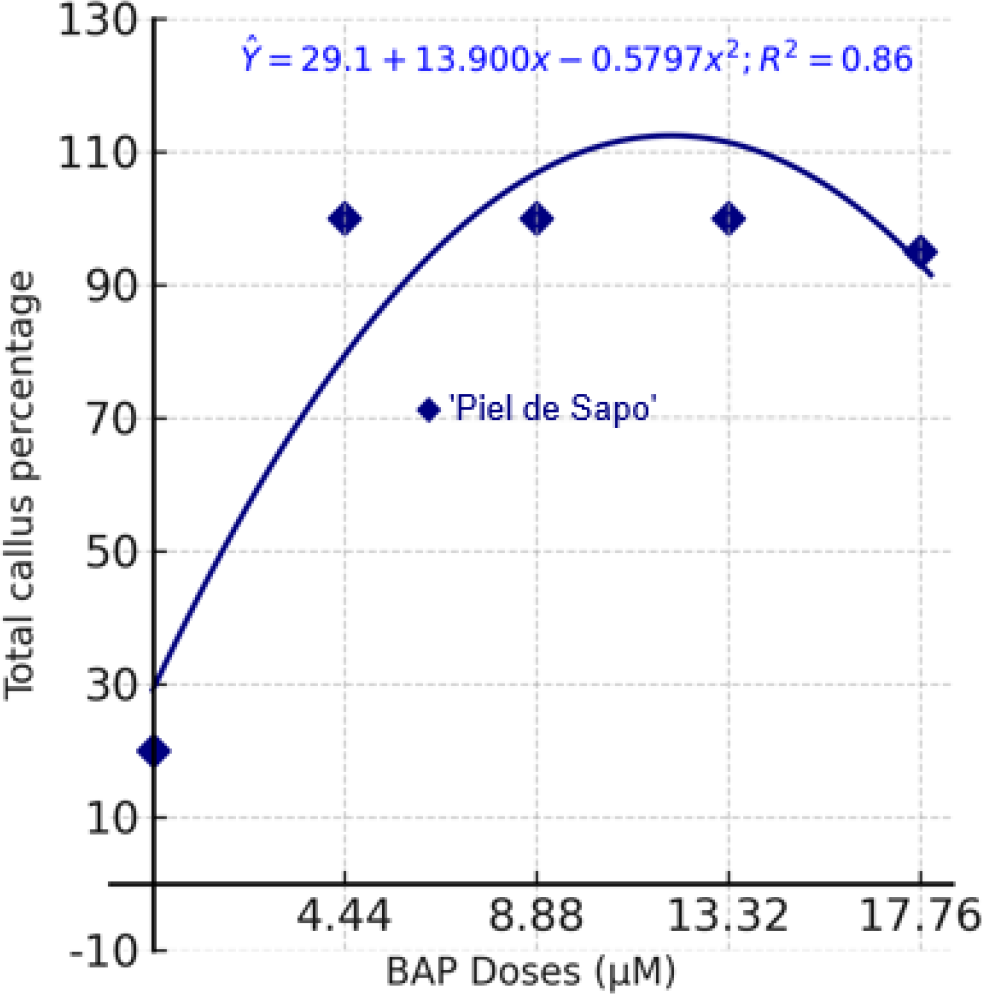
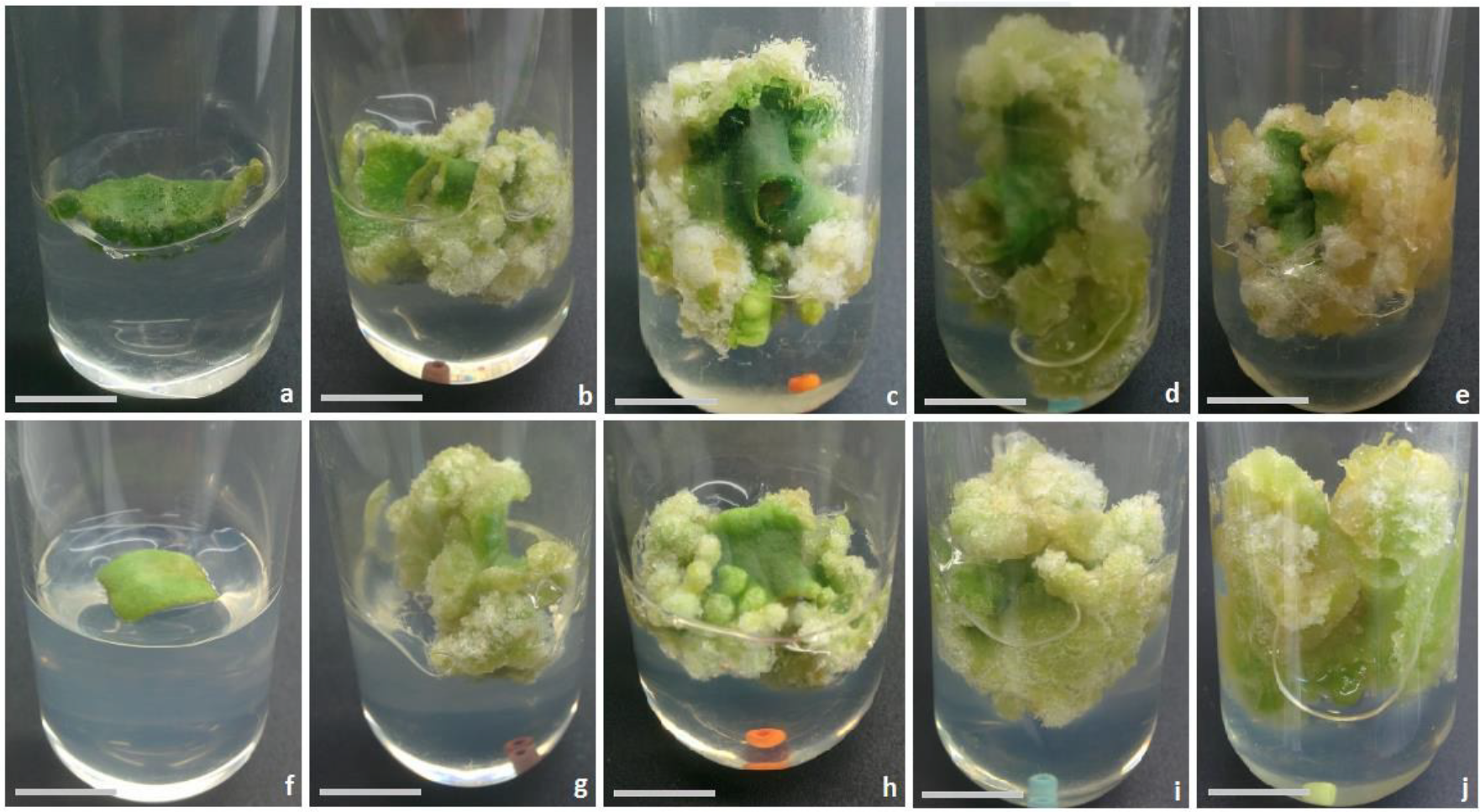
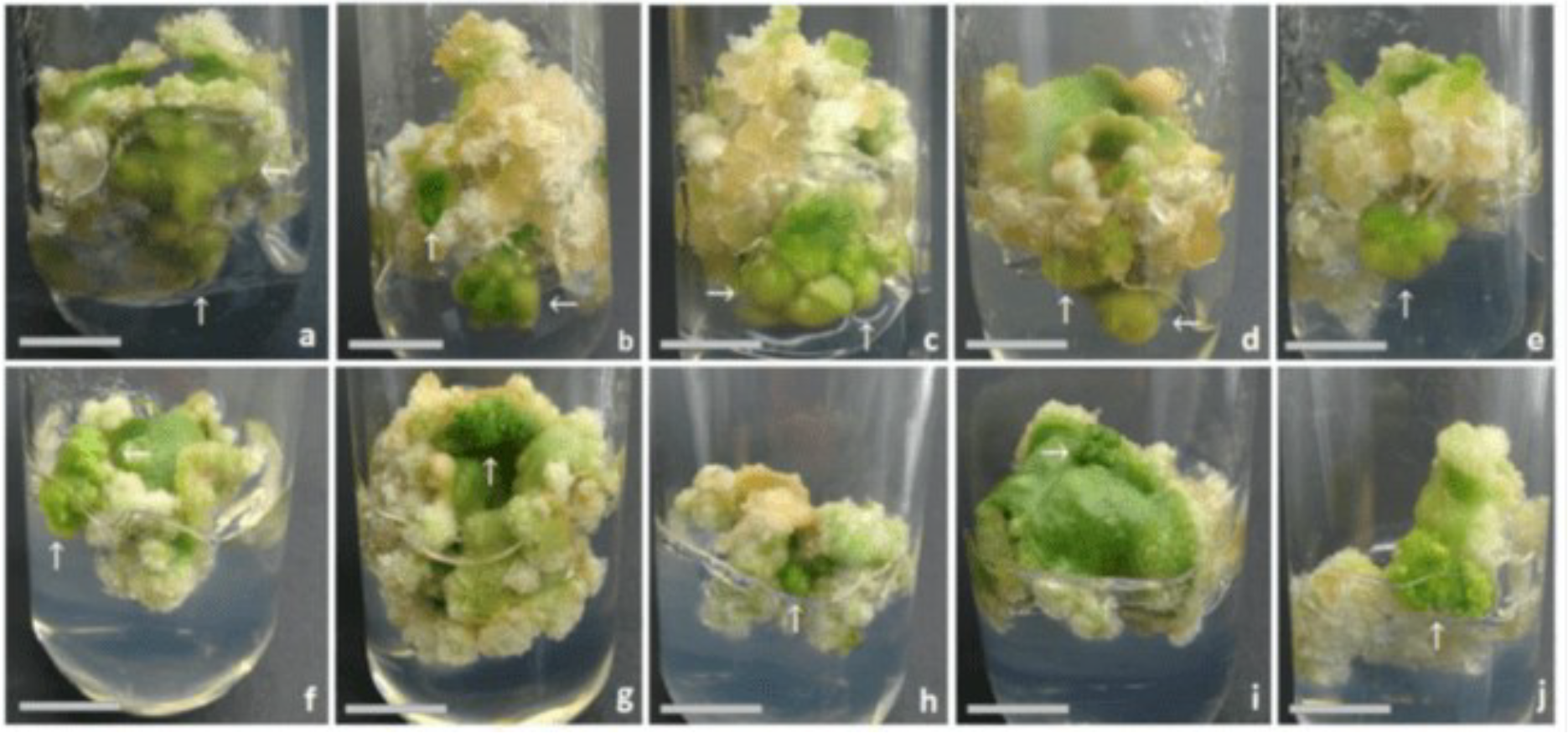
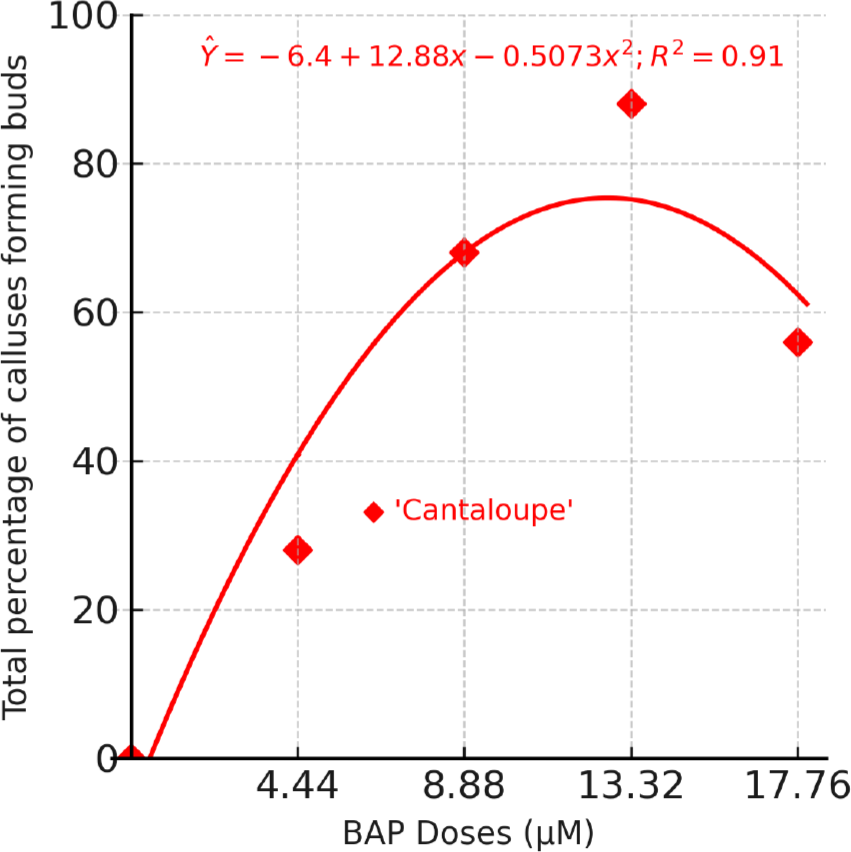
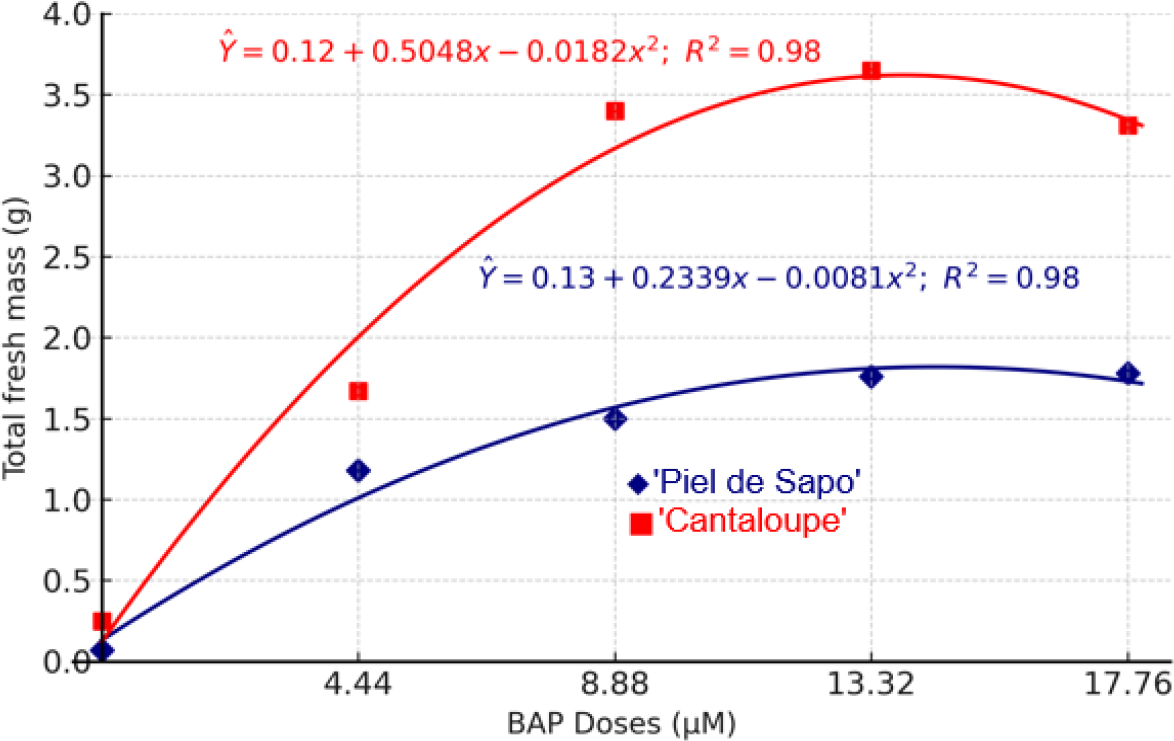
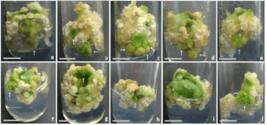
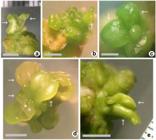
Melon cultivation is of significant socioeconomic importance, especially in the northeast of Brazil. In breeding programs that employ biotechnological techniques, developing efficient methods of in vitro plant regeneration is essential for this species. The aim of this study was to develop a regeneration protocol using cotyledonary explants. The experimental design was completely randomised in a 2 x 5 factorial scheme, with two melon cultivars ('Piel de Sapo' and 'Cantaloupe') x five concentrations of 6- benzylaminopurine (BAP) (0, 4.44, 8.88, 13.32, and 17.75 μM), with five replications of five test tubes, each containing one explant. The percentage of cotyledons that formed calluses and buds, the number of buds formed per callus, and the fresh weight of the callus were evaluated 35 days after the in vitro inoculation of the explants. Data were submitted to analysis of variance, with the mean values compared between cultivars using Tukey’s test, and regression analysis between the BAP doses. No buds were formed in the culture medium containing no BAP, so it was necessary to add BAP to both cultivars. In the culture medium containing 8.88 μM BAP, 68% of the calluses in 'Cantaloupe' formed buds, while for 'Piel de Sapo', buds were formed by 12% of the calluses only. The 'Cantaloupe' cultivar recorded the highest values for fresh callus weight and number of regenerated buds per explant, indicating a better in vitro response than that of 'Piel de Sapo'.
Keywords:
Cucumis melo L; Organogenesis; Plant tissue culture.
 Thumbnail
 Thumbnail
 Thumbnail
 Thumbnail
 Thumbnail
 Thumbnail