Influence of sowing date on cowpea yield in the humid caribbean subregion of Colombia
ABSTRACT
Cowpea is an important legume, a short-cycle crop in the humid Caribbean of Colombia and is sowed at different times of the year which affects grain yield and quality. Knowledge of the right times for sowing is necessary, so that farmers can have productive strategies to face periods of drought and high rainfall that directly influence productivity and food security in the region. The objective of this study was to determine the grain yield of two cowpea varieties, one with a semi-prostrate habit (Caupicor 50) and the other with an erect habit (Missouri), on three sowing dates in both the high rainfall (rainy) and low rainfall (dry) seasons, in two localities of the Department of Córdoba, Colombia: Cereté and Cotorra. The randomized complete block design was used, with four repetitions, in three serial experiments every 15 days, starting on October 21 in 2022B, and three more, starting on April 15, 2023A, for a total of six experiments. The grain yield of the genotypes was influenced by the sowing date, with the best result obtained in the second half of 2022 (October 21 and 24), in the Cereté and Cotorra localities, respectively, with the Missouri genotype recording superiority and better response in Cereté.
Keywords:
Agronomic behavior; Sowing season; Rainfall; Vigna unguiculata
RESUMO
O feijão-caupi é uma leguminosa importante, uma cultura de ciclo curto no Caribe úmido da Colômbia, e é semeado em diferentes épocas do ano, o que afeta o rendimento e a qualidade do grão. O conhecimento dos momentos certos para a semeadura é uma necessidade para que os agricultores tenham estratégias produtivas para enfrentar os períodos de seca e chuvas intensas que influenciam diretamente na produtividade e na segurança alimentar da região. O objetivo desta pesquisa foi determinar o rendimento de grãos de duas variedades de feijão-caupi, uma de hábito semi-prostrado (Caupicor 50) e outra de hábito ereto (Missouri), em três épocas de semeadura, tanto no período de alta pluviosidade (chuvoso) quanto no de baixa pluviosidade (secas). Foi utilizado o delineamento em blocos completos casualizados, com quatro repetiçoes, em três experimentos seriados a cada 15 dias, a partir de 21 de outubro de 2022B, e mais três, a partir de 15 de abril de 2023A, totalizando seis experimentos. A produtividade de grãos dos genótipos foi influenciada pela época de semeadura, com melhor resultado no segundo semestre de 2022 (21 e 24 de outubro), nas localidades Cereté e Cotorra, respectivamente, com superioridade do genótipo Missouri e melhor resposta registrada em Cereté.
Palavras-chave:
Comportamento agronômico; Época de semeadura; Pluviosidade; Vigna unguiculata.
INTRODUCTION
Cowpea beans are a species of the Fabaceae family, cultivated as an important source of protein, iron, zinc, and vitamins, for the consumption of humans and livestock, by taking advantage of its green pods, green and dried grains, and fodder (UKPENE; ISIBOR, 2022). In the humid Colombian Caribbean, it is the main short cycle crop cultivated by small and medium producers, mainly for grain production (ARAMÉNDIZ-TATIS; ESPITIACAMACHO; CARDONA-AYALA, 2023).
It is a crop with favorable agronomic characteristics such as drought resistance, short cycle and atmospheric nitrogen fixer through its symbiotic association with nitrifying bacteria, which constitutes a comparative advantage over other crops. From 2007 to 2020, the cultivated areas in the Caribbean region increased from 14.361 to 17.199 hectares (AGRONET, 2022), due to the availability of new varieties with greater genetic potential for yield, a semiprostrate growth habit, whose harvest is done manually, and which increases production costs by approximately 44% (MARTÍNEZ-REINA; CORDEROCORDERO; TOFIÑO-RIVERA, 2022). Similarly, the development of shrub cultivars with greater yield potential has forced genetic improvement programs to evaluate these genotypes at different sowing times and promoted understanding of the influence of environmental factors on cultivar response and allowed for more accurate recommendations, for sowing and improving grain yield and crop profitability.
Knowledge of the right times to plant cowpeas is important for better alternatives to alleviate the severe effects of drought and excess moisture, especially in the tropics (LURIWIE; ALIDU, 2022), given that the sowing season is defined by a series of environmental factors that interact with each other and also with the plant, thus affecting the components of yield and final production (BARBOSA et al., 2011). It is an agronomic necessity in the Caribbean region of Colombia, which has a monomodal regime with periods of high and low rainfall, with variations regulated by the El Niño-Southern Oscillation (ENSO) phenomenon, in its two phases: Niño and Niña. This is particularly true for cowpea growers due to its short cycle of 60-70 days, which requires water in the vegetative and reproductive phases and a dry period during pod maturity and harvesting.
In various countries, studies on sowing times for this crop have been conducted, with results that have contributed to improving production, the income of producers and merchants, food security, environmental, economic, and social sustainability. In this regard, studies have been reported in Ghana (LURIWIE; ALIDU, 2022) which indicated the importance of crop maturity coinciding with the dry season; in Nigeria, the importance of seasonal variation in agroclimatic conditions was shown as a determinant of flowering and pod filling (UKPENE; ISIBOR, 2022). Similar results have been reported by Alidu (2019), Kihindo et al. (2023), Mfeka, Mulidzi and Lewu (2019), and Tolefack et al. (2023).
The experimental objective was to determine the grain yield of two cowpea varieties, one with a semi-prostrate habit (Caupicor 50) and the other with an erect habit (Missouri), on three sowing dates in both the high rainfall (rainy) and low rainfall (dry) seasons.
MATERIALS AND METHODS
Cowpea genotypes and experimental site
The Missouri cowpea bean varieties with an erect growth habit and Caupicor 50, with a semi-prostrate growth habit, were used. These genotypes were obtained by the Plant Breeding program of the Faculty of Agricultural Sciences of the University of Córdoba, Colombia.
The experiments were conducted on farms owned by farmers in the following municipalities: Cereté (8°53′12"N 75°47′28"W, altitude 12 m) and Cotorra (9°02′20"N 75°47′36"W, altitude 15 m). Both localities have a monomodal rainfall regime of 1320 mm per year, with a dry period of 4 months (December to March) and a wet period of 6 months (May to October), with the months of April and November transitioning between the dry and wet periods. Table 1 presents the localities, soil physicochemical characteristics, sowing dates and recorded rainfall.
Experimental design
The Randomized Complete Block design was used, replicated four times, in three serial experiments in each location. The experimental unit consisted of six rows, with four rows as the effective experimental unit for both cultivars. For the Missouri cultivar, the plot size was 5 m x 2.4 m, with a spacing of 0.40 m between rows and 0.25 m between plants, meanwhile, for Caupicor 50 the plot size was 5.0 m x 4.2 m, with 0.70 m between rows and 0.40 m between plants.
Management of experimental units
The experimental area was ploughed and harrowed, two seeds were sown per site, Cypermethrin (2 ml L-1) was applied for pest arthropods and Mancozeb (2.5 g L-1) for fungi; weeds were managed with Glyphosate (2.2 L/ha), before sowing and Clethodim (100 ml L-1), and Glufosinate ammonium (250 ml L-1) directed between rows at 20 days after sowing. All applications were made with a back sprayer calibrated to the commercially recommended mixing volume. No fertilization was carried out in the experiments because the nutrient levels from the soil analysis supplied the crop requirements.
Data collection and analysis
The dry pods were collected from all the plants of the useful plot, then shelling was carried out manually and weighed with an OHAUS brand analytical balance, AR2140 to obtain the grain yield (YIELD) per plot, then it was taken to kg ha-1, and corrected for a moisture content of 13%.
Analysis of variance by experiment, combined analysis of variance of three sowing dates per locality-year, combined analysis of variance of localities by sowing date-year, and Tukey's mean separation test at 5% were carried out, and compliance with the assumptions of normality, homogeneity of variances and additivity were verified. The online version of the SAS software (2023) was used.
RESULTS AND DISCUSSION
Yield analysis of the three sowing dates, in 2022B and 2023A and location
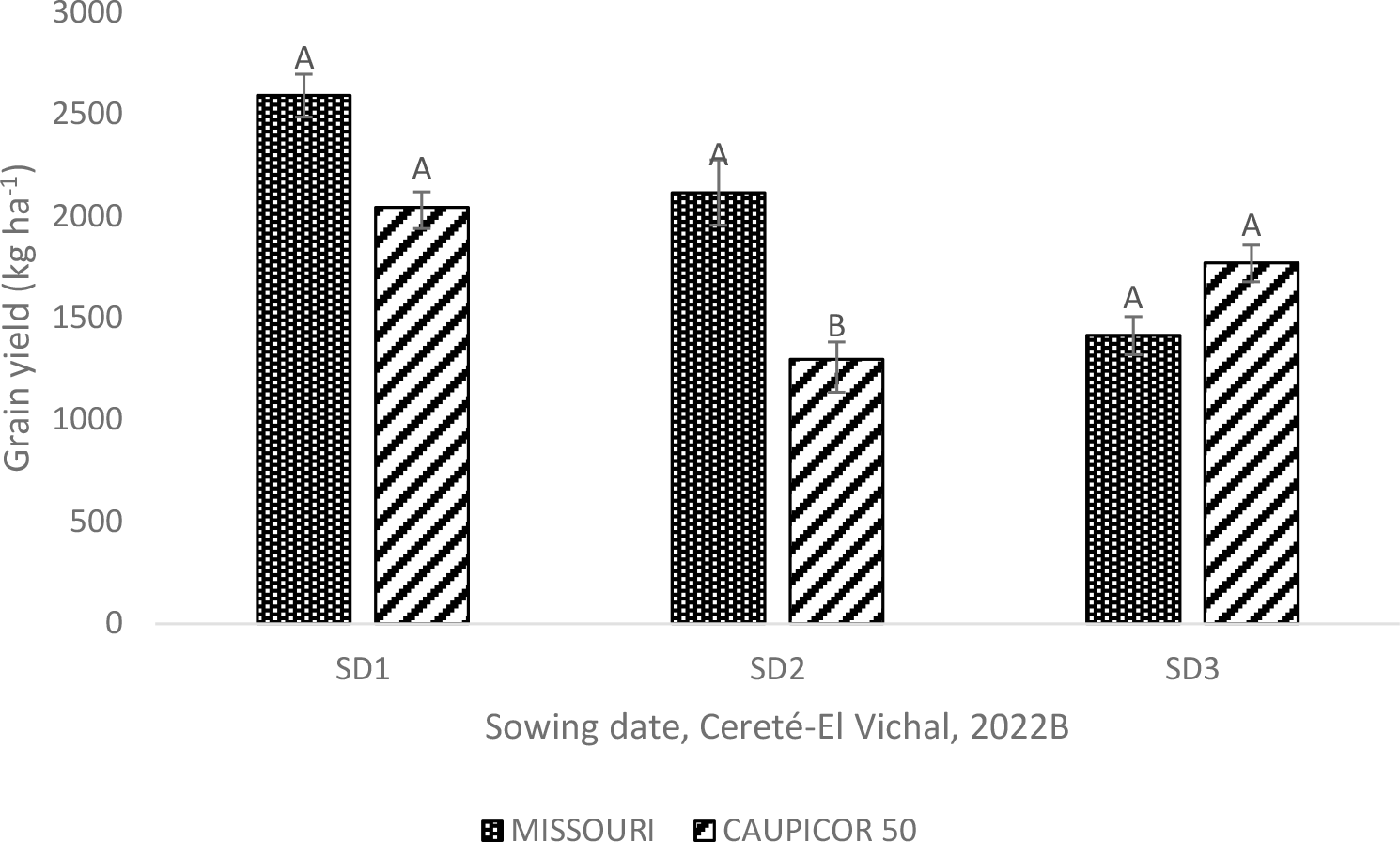
In the Cereté-El Vichal locality, the combined analysis of variance of the YIELD of the three sowing dates (Table 2) showed statistical significance for sowing date (p=0.0003), genotype (p=0.0088) and sowing date-genotype interaction (p=0.0026). In SD1, a 40.5% higher YIELD was obtained compared to SD2 and SD3. Furthermore, the main effects of the genotype factor showed Missouri with higher YIELD, 19.7% higher than Caupicor 50 (Table 2). However, the sowing date-genotype interaction showed significant simple effects between genotypes only in SD2, in which Missouri had a YIELD, 63.11% higher than Caupicor 50 (Figure 1).
Mean squares of the combined analysis of variance of three sowing dates by locality and tests of means of cowpea grain yield, in 2022B and 2023A.
Comparison of the grain yield of the Missouri and Caupicor 50 cowpea genotypes on each sowing date, in the second half of 2022.
On the first sowing date (SD1) of 2022B, Cereté-El Vical locality, a cycle 60 days after emergence (DAE) was observed in the Missouri genotype and 69 DAE in Caupicor 50, while on the second and third sowing dates (SD2 and SD3), the cycle decreased by five days in both genotypes (data not shown), possibly due to reduction in the amount and frequency of rainfall in the region. It has been reported that soil water deficit affects plant growth and development (HOSKEM et al., 2017) and one of the mechanisms of adaptation to drought is the shortening of the cycle, known as escape (CARDONA-AYALA; JARMA-OROZCO; ARAMÉNDIZ-TATIS, 2013), possibly because both genotypes have QTLs associated with drought resistance genes (MUCHERO et al., 2009).
In Cotorra-La Culebra1, a significant difference was also recorded between sowing dates (p=0.0017) and between genotypes (p=0.0032). The average YIELD obtained in SD1 exceeded that achieved in SD2 and SD3 by 113.6%. On the other hand, the Missouri cultivar presented a YIELD 39.4% higher than Caupicor 50, explained by its erect growth characteristic, which allows a greater population density (Table 2).
In both locations, a decrease in YIELD was recorded in the SD2 and SD3 sowings, despite the progressive difference of 15 days between one and the other, which can be explained in terms of the depletion of usable soil water, due to the decrease in rainfall as the dry period approached and possibly due to high temperatures, which affect pollen viability, generating flower abortion and a decline in the number of pods and weight of grains (BHEEMANAHALLI et al., 2019).
In Cereté-Rusia and in Cotorra-La Culebra2, the combined analysis of variance of the three sowing dates recorded statistical significance between sowing dates (p=0.0033 and p=0.0278), genotypes (p=<0.0001 and p=<0.0001) and in the sowing date-genotype interaction (p=0.0165 and p=0.0191), respectively (Table 2).
In 2023A, in the localities Cereté-Russia and Cotorra-La Culebra2, the Missouri genotype was harvested at 56 DAE on the three sowing dates, while Caupicor 50, at 64 DAE, the precocity of Missouri was consistent compared with Caupicor 50. Likewise, on the three sowing dates, the harvest coincided with the wet season of the year, a state of weather contrary to that presented in the second half of 2022, which coincided with the dry season; a situation that, according to field observations, affected the quality of the pods and grain.
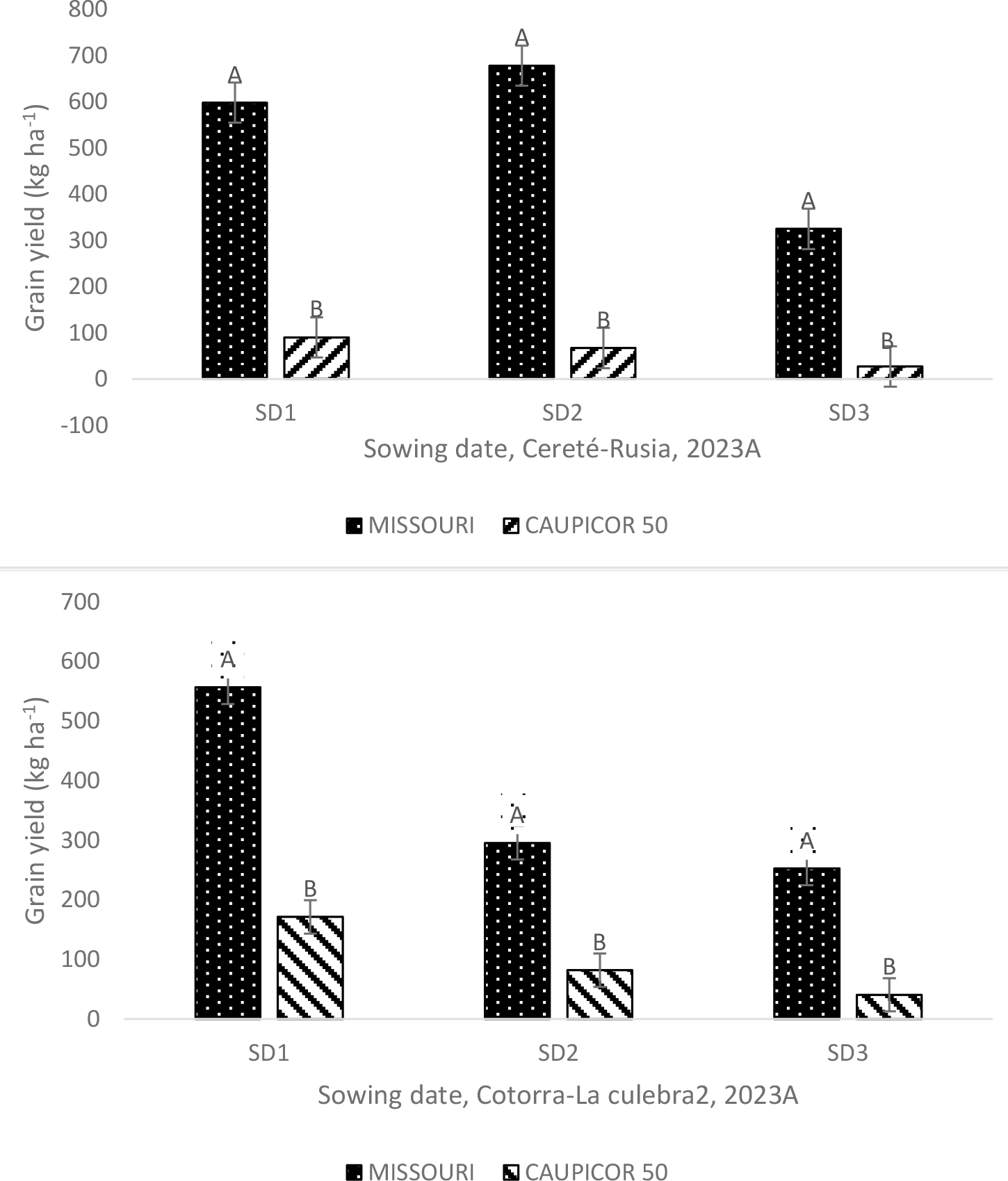
In Cereté-Rusia, the YIELD in SD1 and SD2 was similar, but higher than that of SD3 by 103.4%, while in Cotorra-La Culebra2, the YIELD in SD1 was 117.0% higher than that obtained in SD2 and SD3. Furthermore, the main effects of the Genotype factor showed that in Cereté-Rusia, Missouri outperformed Caupicor 50, in a 9:1 ratio, and in Cotorra-La Culebra2 the ratio was 4:1. However, the Sowing Date-Genotype interaction in Cereté-Russia suggested that the Missouri genotype was more superior to Caupicor 50 in SD1, SD2 and SD3, in ratios of 7:1, 10:1 and 12:1, respectively, while in Cotorra-La Culebra2, Missouri was also superior, although with smaller ratios, 3:1, 4:1 and 6:1, respectively (Figure 2), evidencing a poor performance of Caupicor 50, in the three sowing dates evaluated.
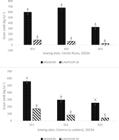
Comparison of the grain yield of cowpeas, Missouri and Caupicor 50 cultivars, on each sowing date, in the first half of 2023.
The higher Missouri YIELD can be explained by its erect growth habit, which favored greater pod health as they were far from the ground; in contrast, Caupicor 50, being of semi-prostrate growth habit, presented a higher incidence and severity of diseases and, consequently, greater deterioration of pods in different stages of development, as it was in contact with soil moisture, and had longer peduncles compared to those of the erect growth genotype (ROCHA et al., 2009).
In summary, when comparing the magnitudes of the YIELD of cowpeas, on the three dates evaluated in the two semesters, 2022B and 2023A, the Missouri and Caupicor 50 genotypes yielded 300% and 1400% more in 2022B, due to better environmental supply, which confirmed the YIELD decrease in the wet season of the year. This suggested that, in the rainy season, this species was very sensitive to soil moisture saturation, and was even more serious with a higher incidence and severity of fungal diseases and greater weed interference. The stress generated by soil moisture saturation negatively affected the physiology of the plant, expressed in the decreased number of pods, grain mass and productivity (OLIVEIRA et al., 2010), with yield reductions between 70 and 90% (MEDEIROS et al., 2021). This behavior suggested that, in the humid Caribbean subregion of Colombia, sowing should be carried out in the second half of the year, given the advantages of the environmental supply at that time of year. Likewise, the architecture of the genotypes influenced the ability to access light, as well as the degree of interference of weeds and their allelopathic activity (WORTHINGTON et al., 2015). Furthermore, the very humid microclimate favored the incidence and severity of diseases. In this study, wilting caused by Sclerotium rolfsii and Fusarium sp, (phytopathogenic fungi) that can cause losses greater than 50%, was observed (METSENA et al., 2021; FERY; DUKES, 2011). There was also pod rot caused by Choanephora sp, and damage to pods caused by insects of the Curculionidae family Chalcodermus sp.
Analysis of cowpea yield in the two locations at each sowing date
In 2022B, the combined analysis of variance of the YIELD for the two localities (Cereté-El Vichal and CotorraLa Culebra1), showed significant differences between localities (p<0.01) and between genotypes (p<0.01) in SD1 and SD2, while, in SD3, there was a significant difference between locations (p<0.01) and a significant interaction (p<0.05) (Table 3). In the Cereté-El Vichal locality, a higher YIELD was recorded compared to Cotorra-La Culebra1, with variations of 82.9, 210 and 150.3%, on the three sowing dates, respectively, which can be attributed to the difference in soil water availability. In this regard, it has been reported that the stress produced by the increase in water deficit and high temperatures affected the formation of pods due to pollen sterility and thus the yield (HOSKEM et al., 2017), corroborating what was stated by Nehe et al. (2023), who reported a greater environmental effect on the reduction of wheat yield.
Mean squares of the combined analysis of variance of localities for each sowing date and tests of means of cowpea grain yield, in 2022B and 2023A.
In SD1 and SD2, in Cereté-El Vichal, Missouri surpassed Caupicor 50, in percentages of 23.6 and 79.2, respectively, which was explained by the genetic differences of the genotypes and the higher population density of Missouri with respect to Caupicor 50, due to its erect growth habit. However, at the later sowing date, SD3, both cultivars had similar YIELD, due to lower soil water availability; as the dry season approached, drought stress and high temperatures could have affected Missouri cultivation more than Caupicor 50. There is sufficient evidence that the increase in root zone temperature limited the absorption and transport of water and nutrients (KOEVOETS et al., 2016), the negative effects on pollen and carbon assimilation were also known when the concentrations of CO2 and O2 were altered, in favor of the latter, thereby favoring the oxygenase activity of Rubisco (BARROS et al., 2021).
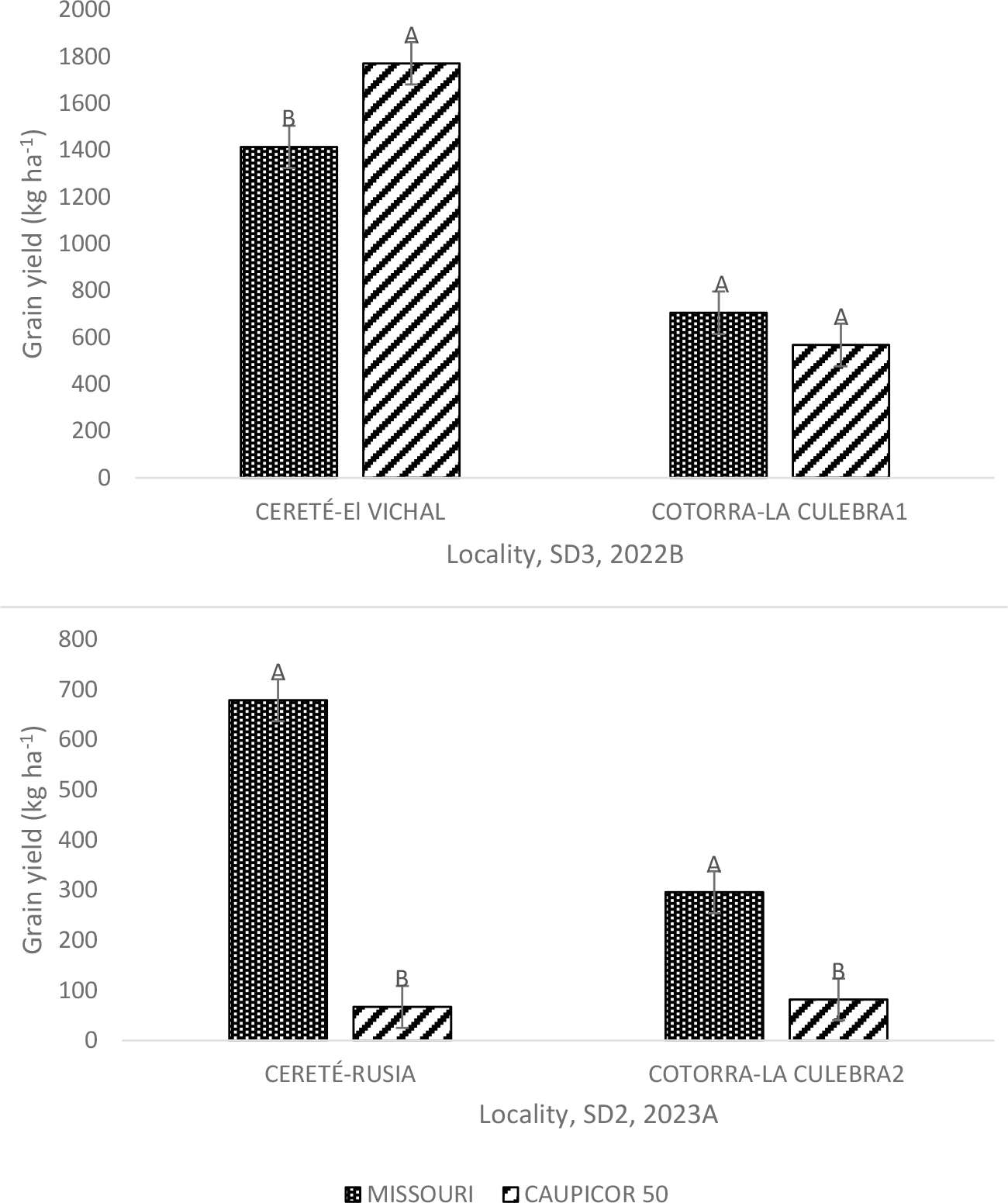
With respect to the Locality-Genotype interaction in SD3, a greater difference was observed in YIELD in favor of Caupicor 50 in Cereté-El Vichal, but slightly in favor of Missouri in Cotorra-La Culebra1 (Figure 3), this was probably because sowing later in the second semester and with less soil water availability, did not result in the consistent expression of differences in yield between genotypes.
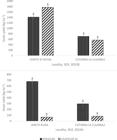
Location-Genotype interaction for cowpea YIELD in the second half of 2022, SD3 and in the first half of 2023, SD2.
On the other hand, in 2023A, the combined analysis of variance of the YIELD for the two localities (Cereté-Rusia and Cotorra-La Culebra2), only recorded significant differences between localities in SD2 (p<0.05) with the superiority of Cereté-Rusia to duplicate the YIELD obtained in Cotorra-La Culebra2. Furthermore, significant differences were observed between genotypes in the three sowing dates (p<0.01), with superiority of the Missouri genotype, in ratios of 4:1, 7:1 and 8:1, respectively. However, in SD2 there was a significant locality-genotype interaction (p<0.01) in which a wide difference was observed in YIELD in favor of the Missouri genotype in Cereté-Russia, and a minor difference in Cotorra-La Culebra2 (Figure 3). This showed that the YIELD of Missouri was consistently higher than that of Caupicor 50, on the three sowing dates of 2023A, a rainy period of the year in the humid Caribbean subregion of Colombia.
CONCLUSIONS
The grain yield of the genotypes was influenced by the sowing date, with the best result obtained in the second half of 2022 (October 21 and 24), in the Cereté and Cotorra localities, respectively, with the Missouri genotype showing superiority and better response in Cereté.
ACKNOWLEDGEMENTS
The authors are grateful for the financial support to the project "Research in the sustainable management of the cowpea bean system, to improve productivity and reduce the problems of food insecurity in the department of Córdoba, Magdalena" BPIN 2021000100078, financed with resources from the General System of Royalties (SGR), of Colombia, University of Cordoba, University of Magdalena, Canal del Dique-Compas Foundation and National Federation of cereal, legume and soybean growers (FENALCE).
REFERENCES
-
AGRONET. Área, producción y Rendimiento nacional por cultivo Available at: https://www.agronet.gov.co/estadistica/paginas/home.aspx?cod=1 Access on: Nov. 30, 2022.
» https://www.agronet.gov.co/estadistica/paginas/home.aspx?cod=1 - ALIDU, M. S. Evaluation of Sowing Dates on Growth and Yield of Three Cowpea [Vigna unguiculata (L) Walp.] Genotypes in Northern Ghana. Advances in Research, 18: 114, 2019.
- ARAMÉNDIZ-TATIS, H.; ESPITIA-CAMACHO, M.; CARDONA-AYALA, C. E. Variability, correlation, and path analysis in erect and prostrate cultivars of cowpea (Vigna unguiculata [L.] Walp.). Revista Colombiana de Ciencias Hortícolas, 17: e15508, 2023.
- BARBOSA, V. S. et al. Comportamento de cultivares de soja, em diferentes épocas de semeaduras, visando a produção de biocombustivel. Revista Ciência Agronômica, 42: 742-749, 2011.
- BARROS, J. et al. Production and biochemical responses of cowpea under thermal and water stress. Revista Brasileira de Ciências Agrárias, 16: 8599, 2021.
- BHEEMANAHALLI, R. et al. Quantifying the impact of heat stress on pollen germination, seed set, and grain filling in spring wheat. Crop Science, 59: 684-696, 2019.
- CARDONA-AYALA, C.; JARMA-OROZCO, A.; ARAMÉNDIZ-TATIS, H. Mecanismos de adaptación a sequía en caupí (Vigna unguiculata (L.) Walp.). Una revisión. Revista Colombiana de Ciencias Hortícolas, 7: 277-288, 2013.
- FERY, R. L.; DUKES, P. D. Southern blight (Sclerotium rolSDii Sacc.) of cowpea: Genetic characterization of two sources of resistance. International Journal of Agronomy, 2011: 652404, 2011.
- HOSKEM, B. C. et al. Productivity and quality of chickpea seeds in Northern Minas Gerais, Braz. Revista Brasileira de Ciências Agrárias, 12: 261-268, 2017.
- KIHINDO, A. P. et al. Influence of sowing date and water regime on growth and yield of two cowpea varieties (KN1 and KVX 61-1) in Burkina Faso. International Journal of Innovation and Applied Studies, 40: 1470-1478, 2023.
- KOEVOETS, I. T. et al. Roots Withstanding their Environment: Exploiting root system Architecture Responses to Abiotic Stress to Improve Crop Tolerance. Frontiers in Plant Science, 7: 1-19. 2016.
- LURIWIE, S.; ALIDU, M. S. Influence of Late Sowing on Growth and Yield of F3 Cowpea (Vigna unguiculata L. Walp) Inbred Lines in the Guinea Savanna Agro-Ecology of Ghana. Asian Journal of Research in Crop Science, 7: 123-134, 2022.
- MARTÍNEZ-REINA, A. M.; CORDERO-CORDERO, C. C.; TOFIÑO-RIVERA, A. P. Eficiencia técnica del frijol caupí (Vigna unguiculata L. Walp) en la Región Caribe de Colombia. Agronomía Mesoamericana, 33: 47673, 2022.
- MEDEIROS, I. et al. Evaluation of selected cowpea varieties under competition with weeds. Revista Ciência Agronômica, 52: e2020720, 2021.
- METSENA, P. et al. Identification of Fusarium oxysporum f.sp. tracheiphilum strains responsible for cowpea wilt in farnorth region of Cameroon. Journal of Applied Biosciences, 164: 17001-17011, 2021.
- MFEKA, N.; MULIDZI, R. A.; LEWU, F. B. Growth and yield parameters of three cowpea (Vigna unguiculata L. Walp) lines as affected by sowing date and zinc application rate. South African Journal of Science, 115: 4474, 2019.
- MUCHERO, W. et al. Mapping QTL for drought stressinduced premature senescence and maturity in cowpea [Vigna unguiculata (L.) Walp.]. Theoretical and Applied Genetics, 118: 849-863, 2009.
- NEHE, A. et al. Genotype and environment interaction study shows fungal diseases and heat stress are detrimental to spring wheat production in Sweden. PLoS ONE, 18: e0285565, 2023.
- OLIVEIRA, O. M. et al. Período de infestacion das plantas daninhas com cultivares de feijão-caupi em várzeas no Amazonas. Planta Daninha, 28: 523-530, 2010.
- ROCHA, M. M. et al. Controle genético do comprimento do pedúnculo em feijão-caupi. Pesquisa Agropecuária Brasileira, 44: 270-275, 2009.
-
SAS Institute. Sas On Demand (Free access on line) Available at: https://welcome.oda.sas.com/ Access on: Sep. 15, 2023.
» https://welcome.oda.sas.com/ - TOLEFACK, C. K. et al. Evaluating the Effect of Different Sowing Dates on Growth and Yield Performance of Cowpea [Vigna unguiculata (L.)] Walp in Buea, Cameroon. International Journal of Plant & Soil Science, 35: 430-438, 2023.
- UKPENE, A. O.; ISIBOR, C. N. Seasonal responses of flowering and pod setting in cowpea (Vigna unguiculata L. Walp). Journal of Sciences, 6: 56-61, 2022.
- WORTHINGTON, M. et al. Relative contributions of allelopathy and competitive traits to the weed suppressive ability of winter wheat lines against Italian ryegrass. Crop Science, 55: 7-64, 2015.