 Effects of magnetic and electromagnetic treatment of the nutrient solution on hydroponic lettuce production
Resumo
Vegetable production has increased in response to growing consumer demand for healthy and easily accessible foods. In this context, hydroponic systems have gained importance as they achieve yields comparable to soil-based cultivation while reducing water use by up to 70% and allowing control of environmental factors. Application of magnetic and electromagnetic fields to leafy crops may stimulate plant growth, resulting in higher productivity, improved leaf quality, and greater nutrient content, thus offering potential advantages for agricultural production. However, the effects of these treatments may vary among crop species. This study aimed to evaluate the effects of magnetic and electromagnetic treatments of the nutrient solution on hydroponic lettuce production. A completely randomized design with four replications was adopted. Treatments consisted of exposing the nutrient solution to magnetic and electromagnetic fields, along with a control (no exposure), evaluated at four intervals: 7, 14, 21, and 28 days after transplanting. Results indicated that applying magnetic and electromagnetic treatments to the nutrient solution improved plant growth and productivity and reduced algae incidence. Magnetic treatment, in particular, produced superior results for biometric parameters, whereas nutrient concentration showed no significant differences throughout crop development. These findings highlight a technological alternative that may enhance plant productivity, increase stress tolerance, and reduce nutrient consumption in hydroponic systems.
INTRODUCTION
Hydroponic systems can achieve yields equal to or greater than those of conventional cultivation while reducing water use and land requirements (Al-Tawaha et al., 2018; Santos et al., 2013). The Nutrient Film Technique (NFT) is the most widely adopted method for producing leafy vegetables; however, other crops such as tomato, cucumber, and strawberry can also be cultivated, including intercropping systems involving multiple species (Edaroyati, Aishah, and Al-Tawaha, 2017).
To maximize the genetic potential of crops, various techniques aimed at increasing productivity have been investigated, ranging from wastewater reuse (Leroy et al., 2022) to treatments involving low-frequency electrical pulses (Olaya Tellez et al., 2023), magnetism, and electromagnetism (Chibowski and Szczes, 2018; Putti et al., 2023a).
Environmentally friendly technologies have gained increasing attention in efforts to promote agricultural and environmental sustainability (Yu and Wu, 2018). Exposing water to magnetic fields induces changes in its physical and chemical properties (Putti et al., 2022). These benefits can be leveraged from seed treatment through later developmental stages, possibly due to increased ion hydration that enhances nutrient uptake and utilization (Khaskhoussy et al., 2023; Liu et al., 2019; Putti et al., 2023b).
Mghaiouini et al. (2021) reported that the effects of field induction on water can persist for up to 15 hours using equipment similar to that employed in this study. Such effects may relate to the dipole moment of water molecules and their oxygen content, leading to the formation of small molecular clusters that influence solubility and other characteristics (Esmaeilnezhad et al., 2017; Liu et al., 2019). When exposed to a magnetic field, water molecules tend to align with the magnetic flux, reducing ionic interactions and intra- and inter-cluster hydrogen bonding (Chibowski and Szczes, 2018; Gaafar et al., 2015). These treatments can increase parameters such as pH, electrical conductivity (EC), diffusion, and permeability, while reducing viscosity and surface tension compared with untreated water (Putti et al., 2024; Szczes, Chibowski, and Rze’znik, 2020; Zhao et al., 2021).
According to Mghaiouini et al. (2021), magnetic and electromagnetic treatments modify the magnetic field, with average fluctuations ranging from Bavg = 0.0155 mT to Bavg = 0.01175 mT between treated and untreated water. Numerous studies have sought to elucidate the effects of these treatments (Chibowski and Szczes, 2018; Sarraf et al., 2020). Reported benefits include reduced salt stress in wheat (Selim et al., 2019), improved eggplant yield (Souza et al., 2019), and enhanced tomato germination (Yusuf, Sakariyah, and Baiyeri, 2019). Increased magnetic forces can mitigate cellular damage and maintain electron transport rates and macronutrient levels under water and salt stress in barley (Ercan et al., 2022) and tomato (Putti et al., 2024), while promoting seedling and root development in cotton (Zhou et al., 2022).
In hydroponic arugula, magnetically treated water has been associated with improved growth and productivity, reduced algae proliferation on roots, and higher magnesium, manganese, and iron concentrations (Téllez, Putti, and Bôas, 2024). However, many of these effects remain underexplored (Zhang et al., 2022) and may vary among species. Studies have reported differences in plant development, productivity, nutrient uptake, and algae incidence when using treated water (Gosselin et al., 2018; Mercier et al., 2016; Putti et al., 2022, 2023b). The application of magnetic and electromagnetic fields in lettuce cultivation may enhance growth, increase productivity, improve leaf quality, and raise nutrient concentration, offering potential benefits to hydroponic production systems. Therefore, this study aimed to quantify the effects of magnetic and electromagnetic treatments of the nutrient solution on hydroponic lettuce production.
MATERIALS AND METHODS
Location of the experimental area
The experiment using lettuce var. Mimosa was carried out in the experimental area of the Department of Forestry, Soil, and Environmental Sciences, School of Agricultural Sciences, São Paulo State University (UNESP), Botucatu, São Paulo, Brazil (22°51′03″ S, 48°25′37″ W). According to the Köppen climate classification, the region is characterized as humid subtropical (Cfa), with average temperatures above 22 °C in the warmest month, an average altitude of 780 m, and mean annual rainfall of 945.15 mm (Cunha and Martins, 2009).
Experimental design
A completely randomized design was adopted with four replications. Treatments consisted of exposing the nutrient solution to three conditions: magnetic, electromagnetic, and control (no treatment). Four evaluation periods were established—7, 14, 21, and 28 days after transplanting (DAT)—using four lettuce plants per treatment.
Hydroponic system
A greenhouse measuring 24 × 7 m and 3.8 m in height, covered with a 150-µm plastic film, was used. Temperature and light intensity were controlled by opening the skylights when the thermometer reached 25 °C and by shading with a 50 % Aluminet® screen, respectively.
The hydroponic system employed was the Nutrient Film Technique (NFT) with a 5 % slope. To minimize border effects, only the 20 central plants in each treatment were considered for evaluation.
For each treatment, the nutrient solution was stored in pre-measured 500-L reservoirs. The solution drained by gravity from the cultivation channels back to the corresponding reservoirs at the end of each hydroponic profile. The pumping system consisted of a 0.5-hp Ferrari peripheral motor pump per treatment, controlled by an electromechanical timer programmed to irrigate every 15 minutes from 6:00 a.m. to 6:00 p.m. and for 5 minutes every hour from 6:00 p.m. to 6:00 a.m. The system operated at a flow rate between 1.5 and 2.0 L min-1.
The nutrient solution was prepared according to the formulation recommended by Furlani et al. (1999) and contained (mg L-1): 187 N, 72 P, 220 K, 143 Ca, 38 Mg, 52 S, 0.45 B, 0.45 Cu, 1.81 Fe, 0.45 Mn, 0.18 Zn, and 0.09 Mo. The nutrient solution was subjected to the following treatments: A) Magnetic treatment (ATM): A Sylocymol® device with a magnetization capacity of 5 m³ h-1 was installed vertically in the center of the reservoir, maintaining a constant magnetic field throughout the experiment; B) Electromagnetic treatment (ATE): An AQUA4D® system equipped with a pre-programmed electronic panel generated electromagnetic signals. The device was attached to the pipeline between the reservoir and the hydroponic system, exposing the nutrient solution to electromagnetic signals whenever the system was activated; and C) Control: Nutrient solution prepared without any magnetic or electromagnetic treatment.
Lettuce seedlings were germinated in plastic trays under protected conditions for 30 days. When plants reached 4–6 true leaves, uniform seedlings were selected and transferred to the hydroponic system, initiating the evaluation period.
Evaluations
At 7, 14, 21, and 28 days after transplanting (DAT), four plants per treatment were collected sequentially, properly labeled, and placed in plastic trays. In each new sampling, the harvest alternated between the ends of the bench to minimize positional effects. Throughout the experiment, border effects were mitigated by maintaining a row of plants at the end of the cultivation area.
The number of leaves was counted manually. Fresh shoot and root weights were measured using a precision balance (0.01 g). Dry shoot and root weights were obtained after oven-drying the samples at 65 °C with forced air circulation until a constant weight was achieved, approximately 72 hours later, and then weighed on the same precision balance.
The SPAD index was measured between 7:00 and 10:00 a.m. on the leaf exhibiting the highest photosynthetic activity using a portable chlorophyll meter (SPAD-502, Minolta®). For each leaf, four readings were taken—two on the left and two on the right sides of the blade—and the mean value was recorded.
At 28 DAT, four plants per treatment were collected, labeled, and transported to the Laboratory of the Department of Forestry, Soil, and Environmental Sciences, School of Agricultural Sciences, São Paulo State University (UNESP), Botucatu, São Paulo. The plants were separated into shoots and roots. Leaves were individually washed three times with distilled water and manually centrifuged to remove surface residues and impurities. Samples were then placed in individual paper bags and oven-dried at 65 °C with forced air circulation until a constant weight was reached (approximately 72 hours). The dry tissue was ground in a Wiley mill and analyzed in the Laboratory of Soil and Environmental Resources, FCA/UNESP, Botucatu, São Paulo, for nutrient content (N, P, K, Ca, Mg, S, B, Cu, Fe, Mn, and Zn), following the protocol of Malavolta, Vitti, and Oliveira (1997).
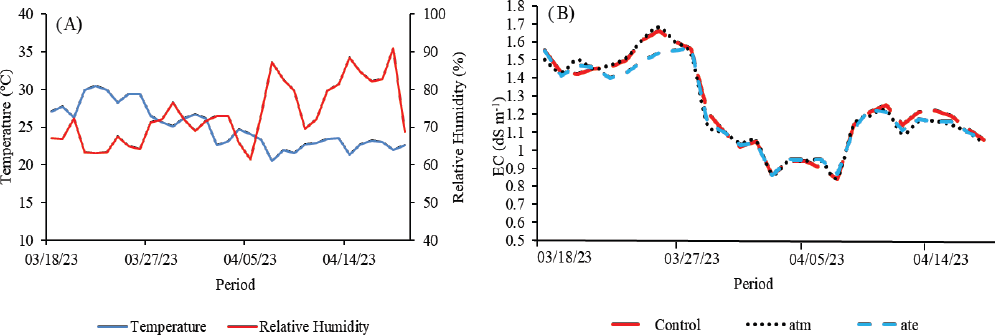
At each collection, the presence or absence of algae on the root surface was visually assessed. Throughout the growth cycle, climatic conditions were recorded using a thermometer installed inside the greenhouse. Daily measurements of pH and electrical conductivity (EC) were taken with a previously calibrated portable meter kit (HORIBA LAQUAtwin®). Figure 1A presents temperature and relative humidity data, while Figure 1B illustrates the variation in EC. The pH remained stable, ranging from 5.8 to 6.3 throughout the experimental period.

Climatic and nutrient solution data. (A) Relative humidity and temperature. (B) Electrical conductivity. ATM: magnetically treated nutrient solution; ATE: electromagnetically treated nutrient solution; Conv: untreated nutrient solution
The average temperature and relative humidity recorded during the experiment were 24.91 °C and 73.43%, respectively. Temperatures exceeding 25 °C can impair lettuce growth, and protected environments tend to accumulate heat; therefore, shade screens were installed to moderate internal temperature. Continuous monitoring of electrical conductivity (EC) enabled corrective adjustments to minimize plant stress, particularly during periods of elevated temperature.
Statistical analysis
Data were tested for normality using the Anderson–Darling test and for homoscedasticity (homogeneity of variance) using Hartley’s test. Subsequently, the data were analyzed by analysis of variance (ANOVA) at a 5% significance level. When significant differences were detected, means were compared using Tukey’s test at p ≤ 0.05. Regression analyses were also performed using the R statistical software (version 4.1.2), and graphical outputs were generated with SigmaPlot (version 14.0).
RESULTS AND DISCUSSION
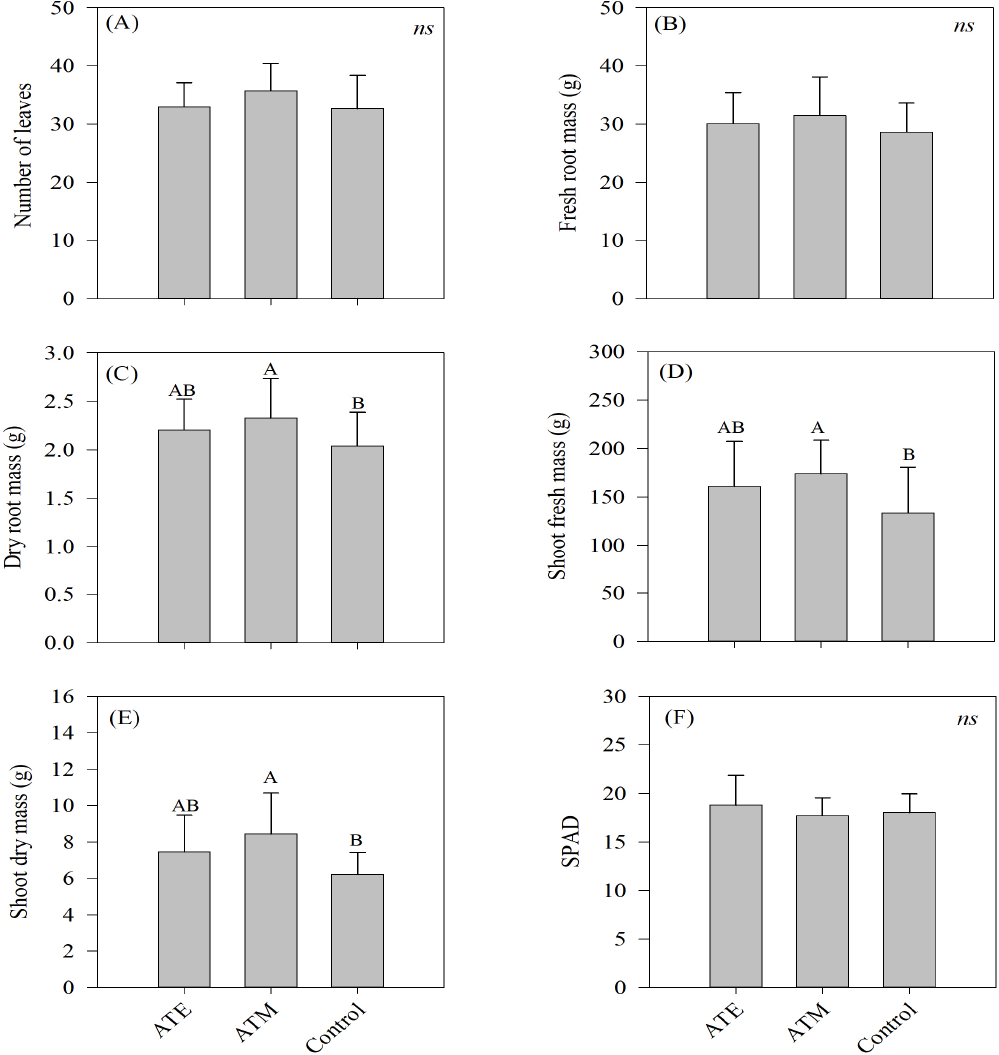
Root dry mass, shoot fresh mass, and shoot dry mass of hydroponic lettuce plants differed significantly among the ATM, ATE, and control treatments. In contrast, the number of leaves, root fresh mass, and SPAD index did not differ significantly between treated and control plants (Figure 2).

Response of biometric variables in hydroponic lettuce subjected to magnetic, electromagnetic, and control treatments in the nutrient solution. Different uppercase letters indicate significant differences among treatments, while identical letters indicate no significant difference. Error bars represent the standard deviation of the mean (n = 4). ATM: magnetically treated nutrient solution; ATE: electromagnetically treated nutrient solution; Control: untreated nutrient solution
Root dry mass (Figure 2C) and both fresh and dry shoot masses (Figures 2D and 2E) increased relative to the control. The ATM treatment promoted increases of 21%, 26%, and 30%, whereas the ATE treatment resulted in increases of 10%, 18%, and 24% for the respective variables. These results indicate that magnetic treatment (ATM) produced superior effects compared with electromagnetic treatment (ATE).
The results demonstrated enhanced lettuce growth under the ATM treatment. Previous studies have shown that both ATM and ATE treatments can modify plant water and mineral metabolism, mitigating stress under adverse conditions, optimizing water and nutrient uptake, increasing chlorophyll content, and promoting nitrate reductase activity (Khaskhoussy et al., 2023; Liu et al., 2019; Zhou et al., 2022). These responses can consequently influence plant growth and development. Putti et al. (2023a) reported similar increases in biometric parameters such as leaf number, fresh and dry weight, and root length in lettuce and carrot plants subjected to ATM and ATE treatments, consistent with the findings of the present study.
According to Khaskhoussy et al. (2023) and Chibowski and Szczes (2018), improvements in biometric parameters may result from the influence of magnetic fields that modify conditions for vegetative growth. ATM and ATE treatments likely affect the surface tension of water, enhancing nutrient solubilization in the nutrient solution. This, in turn, may promote root development and nutrient absorption, mitigating the effects of elevated temperature and electrical conductivity (Liu et al., 2019; Zhao et al., 2021). Comparable benefits have been reported in wheat (Selim et al., 2019), eggplant (Souza et al., 2019), and arugula (Téllez, Putti, and Bôas, 2024).
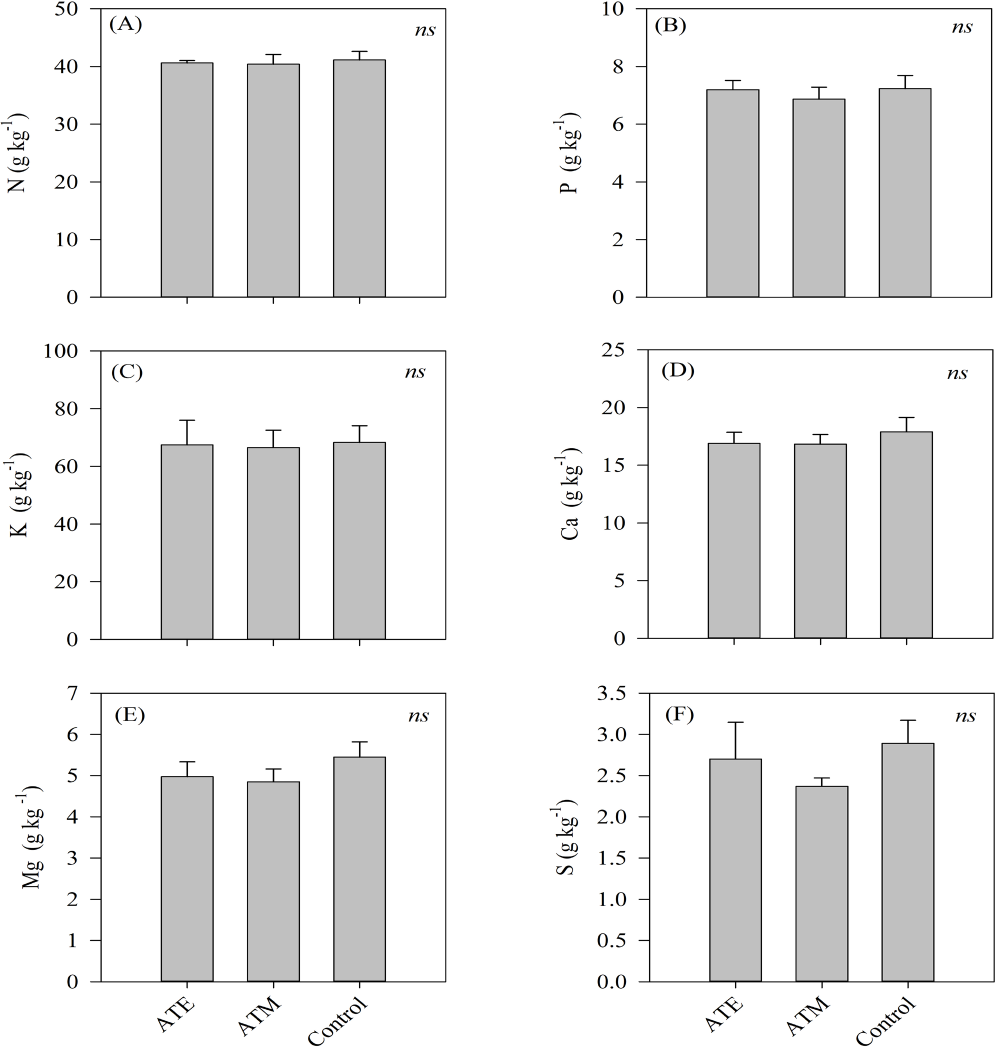
The concentrations of macro- and micronutrients did not differ significantly with the application of ATM and ATE treatments compared with the control hydroponic system. Among macronutrients (Figure 3), although no significant differences were observed, concentrations of most elements—except nitrogen and potassium—were lower under ATM and ATE treatments than under the control. A similar trend was observed for micronutrients (Figure 4), with lower concentrations recorded under ATM than under ATE.

Macronutrient concentrations in hydroponic lettuce subjected to magnetic, electromagnetic, and control treatments in the nutrient solution. Different uppercase letters indicate statistically significant differences among treatments, while identical letters indicate no significant difference. Error bars represent the standard deviation of the mean (n = 4). ATM: magnetically treated nutrient solution; ATE: electromagnetically treated nutrient solution; Control: untreated nutrient solution
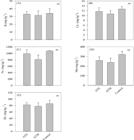
Micronutrient concentrations in hydroponic lettuce subjected to magnetic, electromagnetic, and control treatments in the nutrient solution. Different uppercase letters indicate statistically significant differences among treatments, while identical letters indicate no significant difference. Error bars represent the standard deviation of the mean (n = 4). ATM: magnetically treated nutrient solution; ATE: electromagnetically treated nutrient solution; Control: untreated nutrient solution
The results indicate that lettuce plants developed adequately even under lower nutrient concentrations in the ATE and ATM treatments. Putti et al. (2023b) observed increased nitrogen and phosphorus concentrations, as well as similar micronutrient levels, in lettuce plants exposed to these treatments. Téllez, Putti, and Bôas (2024) reported variations in magnesium, iron, and manganese concentrations under ATE compared with ATM and control treatments in arugula, demonstrating species-specific responses to magnetic and electromagnetic treatments.
From an enzymatic standpoint, magnetically treated plants may exhibit faster activation of enzymes and hormones during growth, enhancing nutrient transport and mobilization (Maheshwari and Grewal, 2009; Putti et al., 2024). Thus, ATE and ATM treatments may contribute to altered phytohormone production, resulting in improved plant growth and development (Turker et al., 2007). The variables leaf number, SPAD index, and root fresh mass showed linear variation patterns across all treatments (Figures 5A–C), with coefficients of determination (R²) of 99%, 92%, and 97%, respectively. Root dry mass (Figure 5D) also exhibited a linear response, with R² values of 90% for ATE and control treatments and 99% for ATM. Shoot fresh and dry masses (Figures 5E and 5F) followed quadratic variation patterns, with R² values of approximately 98% for all treatments. Both linear and quadratic models were highly significant according to Tukey’s test, confirming that they accurately represented the data.

Development of leaf number (A), SPAD index (B), and fresh and dry masses of roots (C, D) and shoots (E, F) throughout the growth cycle of hydroponic lettuce subjected to magnetic, electromagnetic, and control treatments in the nutrient solution. Error bars represent the standard deviation of the mean (n = 4). ATM: magnetically treated nutrient solution; ATE: electromagnetically treated nutrient solution; Control: untreated nutrient solution; DAT: days after transplanting
Mass accumulation varied among the ATE, ATM, and control treatments, which may be related to molecular changes in water structure induced by magnetization of the nutrient solution. Exposure to magnetic fields can bring hydrogen bonds between water molecules closer together, forming closed molecular chains that enhance mineral dissolution and improve nutrient availability for plant development (Szczes, Chibowski, and Rze’znik, 2020; Zhao et al., 2021).
Enhanced growth and productivity observed in tomato (Putti et al., 2024), poplar (Liu et al., 2019), and arugula (Téllez, Putti, and Bôas, 2024) irrigated with magnetized water have been associated with increased transport of assimilates, hormones, and growth regulators, as well as improved enzymatic activity, nutrient uptake, and water-use efficiency. Another advantage of magnetic treatment is its ability to mitigate stress caused by elevated temperature and electrical conductivity (Zhao et al., 2021), thereby benefiting both root and shoot development in hydroponic lettuce.
In this study, the presence or absence of algae on the lettuce root surface was also monitored. Algal growth occurred on up to 2 % of plants in the ATE and ATM treatments, compared with 11 % in the control treatment (Figure 6).

Algal growth on hydroponic lettuce roots. ATM: magnetically treated nutrient solution; ATE: electromagnetically treated nutrient solution; Control: untreated nutrient solution
The results demonstrated a reduction in algal incidence when ATE and ATM treatments were applied. A similar study by Téllez, Putti, and Bôas (2024) on hydroponic arugula reported an average algal incidence of 28% on roots, higher than the 2% observed in lettuce, but still lower than that recorded under the control treatment. These findings highlight species-specific responses to magnetic and electromagnetic treatments. The adoption of such technologies may reduce maintenance requirements in hydroponic systems and enhance the visual quality of marketable crops.
Mercier et al. (2016) and Gosselin et al. (2018) also observed alterations in biofilm development associated with algal incidence in magnetically and electromagnetically treated water. Beyond their positive effects on several plant species—such as tomato (Putti et al., 2023a), cotton (Zhou et al., 2022), and eggplant (Souza et al., 2019)—some studies have reported negative impacts on growth parameters in other crops (Turker et al., 2007). These contrasting outcomes may be attributed to differences in experimental conditions, plant species, climate, and device characteristics, including field intensity, exposure time, and magnet type. Such factors can influence plant response, underscoring the need for further research evaluating different magnetic intensities (Khaskhoussy et al., 2023).
In summary, studies in the literature have shown that water exposed to magnetic fields can induce biochemical changes that affect plant metabolism. These effects may explain the enhanced growth observed in hydroponic lettuce treated with magnetic and electromagnetic systems in the present study.
CONCLUSIONS
-
The application of magnetic and electromagnetic treatments enhanced plant development and productivity and reduced algal incidence on lettuce roots;
-
Magnetic treatment of the nutrient solution increased biometric parameters in hydroponic lettuce production;
-
Nutrient concentrations were not affected by magnetic or electromagnetic treatments throughout lettuce growth;
-
The findings highlight a technological alternative capable of improving crop productivity by increasing tolerance to environmental stress and reducing nutrient consumption.
ACKNOWLEDGMENTS
This study was supported by the Coordination for the Improvement of Higher Education Personnel – Brazil (CAPES) – Finance Code 001, and by São Paulo State University “Júlio de Mesquita Filho” (UNESP).
DATA AVAILABILITY STATEMENT
The research data is available in the repository (https://hdl.handle.net/11449/255822).
REFERENCES
- AL-TAWAHA, A. R. et al Effect of water flow rate on quantity and quality of lettuce (Lactuca sativa L.) in nutrient fi lm technique (NFT) under hydroponics conditions. Bulgarian Journal of Agricultural Science, v. 24, n. 5, p. 793-800, 2018.
-
CHIBOWSKI, E.; SZCZES, A. Magnetic water treatment: a review of the latest approaches. Chemosphere, v. 203, p. 54-67, 2018. DOI: https://doi.org/10.1016/j.chemosphere.2018.03.160
» https://doi.org/10.1016/j.chemosphere.2018.03.160 - CUNHA, A. R.; MARTINS, D. Classificação climática para os municípios de Botucatu e São Manuel, SP. Irriga, v. 14, n. 1, p. 1-11, 2009.
-
EDAROYATI, M. P.; AISHAH, H. S.; AL-TAWAHA, A. M. Requirements for inserting intercropping in aquaponics system for sustainability in agricultural production system. Agronomy Research, v. 15, n. 5, p. 2048-2067, 2017. DOI: https://doi.org/10.15159/AR.17.070
» https://doi.org/10.15159/AR.17.070 -
ERCAN, I. et al Magnetic field effects on the magnetic properties, germination, chlorophyll fluorescence, and nutrient content of barley (Hordeum vulgare L.). Plant Physiology and Biochemistry, v. 170, p. 36-48, 2022. DOI: https://doi.org/10.1016/j.plaphy.2021.11.033
» https://doi.org/10.1016/j.plaphy.2021.11.033 -
ESMAEILNEZHAD, E. et al Characteristics and applications of magnetized water as a green technology. Journal of Cleaner Production, v. 161, p. 908-921, 2017. DOI: https://doi.org/10.1016/j.jclepro05.166
» https://doi.org/10.1016/j.jclepro05.166 - FURLANI, P. R. et al Cultivo hidropônico de plantas Campinas: Instituto Agronômico de Campinas, 1999.
- GAAFAR, M. M. et al Effect of magnetic water on physical properties of different kind of water, and studying its ability to dissolving kidney stone. Journal of Natural Sciences Research, v. 5, p. 85-94, 2015.
-
GOSSELIN, F. et al Assessment of an anti-scale low-frequency electromagnetic field device on drinking water biofilms. Biofouling, v. 34, n. 9, p. 1020-1031, 2018. DOI: https://doi.org/10.1080/08927014.2018.1532998
» https://doi.org/10.1080/08927014.2018.1532998 -
KHASKHOUSSY, K. et al Performance of different magnetic and electromagnetic water treatment devices on soil and two tomato cultivars. Scientia Horticulturae, v. 322, e112437, 2023. DOI: https://doi.org/10.1016/j.scienta.112437
» https://doi.org/10.1016/j.scienta.112437 -
LEROY, K. A. et al Crescimento e produção da alface mimosa utilizando água residúaria tratada em filtros anaeróbios verticais. Irriga, v. 27, n. 4, p. 856-868, 2022. DOI: https://doi.org/10.15809/irriga.2022v27n4p856-868.
» https://doi.org/10.15809/irriga.2022v27n4p856-868 - LIU, X. et al The effects of magnetic treatment of irrigation water on seedling growth, photosynthetic capacity and nutrient contents of populus euramericana ‘neva’ under NaCl stress. Acta Physiologiae Plantarum, v. 41, n. 11, 2019.
-
MAHESHWARI, B. L.; GREWAL, H. S. Magnetic treatment of irrigation water: its effects on vegetable crop yield and water productivity. Agricultural Water Management, v. 96, p. 1229-1236, 2009. DOI: https://doi.org/10.1016/j. agwat.03.016
» https://doi.org/10.1016/j.agwat.03.016 - MALAVOLTA, E.; VITTI, G. C.; OLIVEIRA, S. A. Avaliação do estado nutricional das plantas: princípios e aplicações. Piracicaba: Potafos, 997. 201 p.
-
MERCIER, A. et al Characterization of biofilm formation in natural water subjected to low frequency electromagnetic fields. Biofouling, v. 32, p. 287-299, 2016. DOI: https://doi.org/10. 1080/08927014.2015.1137896
» https://doi.org/10.1080/08927014.2015.1137896 -
MGHAIOUINI, R. et al A new knowledge of water magnetism phenomenon. Arabian Journal for Science and Engineering, v. 47, p. 1129-1136, 2021. DOI: https://doi.org/10.1007/ s13369-021-05750-0
» https://doi.org/10.1007/ s13369-021-05750-0 -
OLAYA TELLEZ, H. et al Desenvolvimento da alface (Lactuca sativa) em hidropônia tratada com pulsos elétricos de baixa frequência1. Irriga, v. 28, n. 1, p. 148-163, 2023. DOI: https://doi.org/10.15809/irriga.2023v28n1p148-163.
» https://doi.org/10.15809/irriga.2023v28n1p148-163 -
PUTTI, F. F. et al Effect of magnetic water treatment on the growth, nutritional status, and yield of lettuce plants with irrigation rate. Horticulturae, v. 9, e504, 2023b. DOI: https://doi.org/10.3390/horticulturae9040504
» https://doi.org/10.3390/horticulturae9040504 -
PUTTI, F. F. et al Effects of water deficit on growth and productivity in tomato crops irrigated with water treated with very low-frequency electromagnetic resonance fields. Plants, v. 12, e3721, 2023a. DOI: https:// doi.org/10.3390/ plants12213721
» https://doi.org/10.3390/plants12213721 -
PUTTI, F. F. et al Magnetic technology to reduce the effects of saline stress on tomato plants. Environmental Technology & Innovation, v. 33, e103544, 2024. DOI: https://doi.org/10.1016/j.eti.2024.103544.
» https://doi.org/10.1016/j.eti.2024.103544 -
PUTTI, F. F. et al Productive and physico-chemical parameters of tomato fruits submitted to fertigation doses with water treated with very low-frequency electromagnetic resonance fields. Plants, v. 11, e1587, 2022. DOI: https://doi.org/10.3390/plants11121587
» https://doi.org/10.3390/plants11121587 -
SANTOS, J. D. et al Development of a vinasse nutritive solution for hydroponics. Journal of Environmental Management, v. 114, p. 8-12, 2013. DOI: https://doi.org/10.1016/j. jenvman.2012.10.045
» https://doi.org/10.1016/j.jenvman.2012.10.045 -
SARRAF, M. et al Magnetic field (mf) applications in plants: an Overview. Plants, v. 9, e1139, 2020. DOI: https:// doi.org/10.3390/plants9091139
» https://doi.org/10.3390/plants9091139 -
SELIM, D. A. F. H. et al Physiological and anatomical studies of two wheat cultivars irrigated with magnetic water under drought stress conditions. Plant Physiology and Biochemistry, v. 135, p. 480-488, 2019. DOI: https://doi.org/10.1016/j.plaphy.2018.11.012
» https://doi.org/10.1016/j.plaphy.2018.11.012 -
SOUZA, Á. H. C. et al Evaluation of the growth and the yield of eggplant crop under different irrigation depths and magnetic treatment of water. Journal of Agricultural Science, v. 11, p. 35, 2019. DOI: https://doi.org/10.5539/jas.v11n17p35
» https://doi.org/10.5539/jas.v11n17p35 -
SZCZES, A.; CHIBOWSKI, E.; RZE´ZNIK, E. Magnetic field effect on water surface tension in aspect of glass and mica wettability. Colloids Interfaces, v. 4, p. 37-49, 2020. DOI: https://doi.org/10.3390/colloids4030037
» https://doi.org/10.3390/colloids4030037 -
TÉLLEZ, H. O.; PUTTI, F. F.; BÔAS, R. L. V. Magnetic and electromagnetic treatment of the nutrient solution in arugula hydroponic cultivation. Pesquisa Agropecuária Tropical, v. 54, e79143, 2024. DOI: https://doi.org/10.1590/1983-40632024v5479143
» https://doi.org/10.1590/1983-40632024v5479143 - TURKER, M. et al The effects of an artificial and static magnetic field on plant growth, chlorophyll and phytohormone levels in maize and sunflower plants. Phyton-Annales Rei Botanicae, 2007.
-
YU, J.; WU, J. The sustainability of agricultural development in china: the agriculture–environment nexus. Sustainability, v. 10, p. 1776-1793, 2018. DOI: https://doi.org/10.3390/su10061776
» https://doi.org/10.3390/su10061776 -
YUSUF, K. O.; SAKARIYAH, S. A.; BAIYERI, M. R. Influence of magnetized water and seed on yield and uptake of heavy metals of tomato. Notulae Scientia Biologicae, v. 11, n. 1, p. 122-129, 2019. DOI: https://doi.org/10.15835/nsb11110360
» https://doi.org/10.15835/nsb11110360 -
ZHANG, J. et al Magnetic water treatment: an eco-friendly irrigation alternative to alleviate salt stress of brackish water in seed germination and early seedling growth of cotton (Gossypium hirsutum L.). Plants, v. 11, p. 1397-1416, 2022. DOI: https://doi.org/10.3390/plants11111397
» https://doi.org/10.3390/plants11111397 -
ZHAO, G. et al Response of winter-wheat grain yield and water-use efficiency to irrigation with activated water on Guanzhong plain in China. Irrigation Science, v. 39, p. 263-276, 2021. DOI: https://doi.org/10.1007/s00271-020-00706-y
» https://doi.org/10.1007/s00271-020-00706-y -
ZHOU, B. et al Magnetically-treated brackish water affects soil water-salt distribution and the growth of cotton with film mulch drip irrigation in Xinjiang, China. Agricultural Water Management, v. 263, e107487, 2022. DOI: https://doi.org/10.1016/j.agwat.107487
» https://doi.org/10.1016/j.agwat.107487