 Phytosociological survey of weeds in rice crops under drip irrigation with dairy effluent
ABSTRACT
The search for more sustainable systems of rice cultivation, especially in relation to water use, has included the evaluation of more-efficient irrigation systems in addition to alternative water sources. The aim of this study was to conduct a phytosociological survey of weeds in rice crops irrigated by subsurface drip with different concentrations of treated dairy effluent, maintaining the soil moisture at saturation or field capacity. A pilot scale experiment was carried out in a protected environment using a randomised block design in a 5 x 2 factorial scheme, with four replications. The IAC 301 cultivar (Arborio rice) was chosen. The phytosociological surveys were carried out on four different dates, and considered the composition as well as the distribution of plant species in each of the applied treatments, using the importance value index (IVI) to evaluate the influence of each treatment. The results showed that cultivating irrigated rice, giving priority to water management, altered the ecology of invasive plants. Fourteen weed species were identified, distributed over 10 families. The effluent dose did not alter the incidence of invasive plants, and only at the final evaluation was there a reduction in the IVI value at effluent concentrations of 50% and 75%. For soil moisture, the highest IVI values occurred on the first two days of the survey under saturated conditions; this result was reversed closer to plant maturity, when the IVI values were higher at field capacity.
Key words
Oriza sativa; Importance value index; Water reuse; Localised irrigation; Soil moisture.
INTRODUCTION
Rice is the staple food of the world's population, and is grown and consumed on every continent. In 2018, global production of paddy rice reached 782.0 million tons in an area of 167.1 million hectares, with an average productivity of 4,679 kg ha-1 (FAO, 2018). According to CONAB (2022), the 2021/2022 harvest in Brazil is expected to produce 10,347 thousand tons in an area of 1,638 thousand hectares, with a productivity of 6,317 kg ha-1. Average annual consumption in Brazil is 35.2 kg per person (EMBRAPA, 2021).
Most rice production in Brazil takes place under controlled irrigation with continuous flooding (EMBRAPA, 2019). In a flooded system, the water use efficiency of a surface irrigation system is low, mainly due to losses from surface runoff and percolation.
One of the strategies to rationalise the use of water resources in rice farming is to adopt drip irrigation systems and reuse water. Compared to other irrigation systems, drip irrigation can provide the required amount of water more efficiently (COLTRO et al., 2017; SIDHU et al., 2019). Reusing water by irrigating with treated agro-industrial effluents, such as dairy effluent, is one alternative to using better-quality water, which can then be conserved for more noble uses, such as human supply.
On the other hand, cultivating rice is characterised by a high incidence of a variety of weed species (SOSBAI, 2014). Invasive species cause significant losses in rice crops, as they create competition for water, solar radiation and nutrients, thereby reducing the productivity and quality of the grain (COBUCCI; NOLDIN, 2006). The adoption of flooded systems with the application of continuous irrigation helps control these plants, as the physical action of the water makes it difficult for the root system to adapt to the saturated soil.
When cultivating rice, the adoption of localised irrigation, such as a subsurface drip system, significantly reduces the wetted area of the soil. The low volume and high frequency of water applied to rice crops using this method has the advantage of efficient water use, but also increases the potential for weed infestation (KRAEHMER et al., 2016).
In this respect, methods of ecological assessment with the aim of understanding both the composition and distribution of plant species in any one community are crucial for defining management strategies. Identifying species, and quantifying weeds and the importance of their occurrence can be achieved using phytosociology (CONCENÇO et al., 2013).
The phytosociological method can provide specific data, such as the frequency, abundance and dominance of weeds, as well as the importance value index (IVI), which highlights weeds adapted to the growth environment under study (ERASMO; PINHEIRO; COSTA, 2004).
In view of the above, the aim of this research was to carry out a phytosociological survey of weeds in a crop of Arborio rice irrigated by subsurface drip with different concentrations of treated dairy effluent under two conditions of soil moisture.
MATERIAL AND METHODS
Research area, experimental design, cultivation and soil
The experiment was carried out in a gable-type greenhouse with an area of 210 m2, at the School of Animal Science and Food Engineering (FZEA/USP) of the department of Biosystems Engineering, Pirassununga, in the state of São Paulo, at 21°59' S and 47°25' W, at an altitude of 627 m. According to the Köppen classification, the climate in the region is type Cwa, with an average annual temperature of 20.8 °C and average annual rainfall of 1089 mm.
Arboreal rice (IAC 301), known for its use in Italian cuisine, was used in the experiment, sown in rows, spaced 0.17 m apart at a density of 50 seeds m-1, with 4 rows per plot. The rice was sown on 28 April 2021 and harvested on 13 October 2021, giving a cycle of 170 days. The treatments were started on 24 May 2021.
The experimental design was of randomised blocks in a 5 x 2 factorial scheme, with four replications. The treatments consisted of five concentrations of treated dairy effluent (TDE) and the maintenance of two levels of soil moisture, field capacity (FC) and saturation (SAT) (Table 1 and Figure 1).
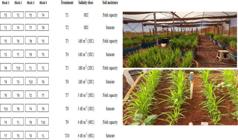
The experimental plots consisted of fibreglass boxes with a surface area of 1 m2 and a volume of 500 m3. The boxes were filled with undisturbed ravine soil, classified as a Eutrophic Red Oxisol of a medium sandy texture (EMBRAPA, 2013). Fertilisation and correction were carried out in each treatment when sowing based on the chemical analysis of the soil, as recommended by Raij et al. (1996) for irrigated rice, while top dressing was carried out in T1 and T2 only, applying N and K by fertigation.
Effluent and Irrigation
The effluent used for irrigation came from the Jamava commercial dairy in the district of Santa Cruz da Conceição. Each month, 10,000 litres of the effluent were transported to FZEA/USP by water tanker. The raw effluent was stored in a tank and then used to supply the treatment system located at the Experimental Dairy Effluent Treatment Station at FZEA/USP.
The treatment system comprised a grease trap, pH equalisation to values between 6.5 and 7.5 using limestone, followed by an anaerobic biological sequencing batch reactor with suspended biomass. The hydraulic retention time in the reactor was 48 hours. Before being used for irrigation, the effluent passed through a filter composed of a layer of no. 7 gravel (0.07m) covered with a geotextile blanket (MACAN et al., 2017) to remove any suspended solids. After filtration, the effluent was disinfected to remove pathogenic microorganisms using a system of five ultraviolet lamps, and was then stored in two PVC boxes, each of 500 L. A physical and chemical characterisation of the TDE was carried out every two weeks at both the Multi-User Environmental Analysis Centre/ESALQ/USP and the Environmental Biotechnology Laboratory of ZEA/FZEA/USP, as per the methodology proposed by APHA, AWWA and WEF (2012).
A subsurface drip irrigation system was adopted. Four lines of drippers were installed per plot, each one metre in length and spaced 0.20 m between rows at a depth of 0.15 m (SIDHU et al., 2019). The Aires integral non-pressure compensated anti-siphon dripper (Netafim) was chosen. This has a flow rate of 1.6 L h-1 and a working pressure of 15 m.c.a. The drippers were spaced 0.15 m apart.
Each treatment included an individual solenoid valve operated by a control panel and two motor pumps, one for each source of water (TW or TDE). A disc filter was installed at the outlet of each pump to retain solids, and pressure gauges to control the pressure. Each treatment included a hydrometer to control the volume of water, as well as a 25 PSI pressure regulator.
Irrigation management was based on the soil moisture determined using tensiometers installed in the central part of the experimental plot at a depth of 0.20 m, with three replications per treatment. The irrigation frequency was two days.
Phytosociological survey and indices
Phytosociological surveys of the weeds were carried out in each of the experimental plots at four different times: 49, 84, 112 and 147 days after sowing (DAS), corresponding to 16 June 2021, 21 July 2021, 18 August 2021 and 22 September 2021, respectively.
The invasive plants were collected manually from each experimental plot (1 m2), removing both the shoots and roots. After identifying each species, they were counted, packed in paper bags and sent to the ZEB/FZEA/USP Biosystems Laboratory to determine the dry weight by drying in a forced air circulation oven at 65 °C to constant weight.
The plants were classified by family and species as per Lorenzi (2008), consulting other specialists when necessary.
The phytosociological indices were determined as per the equations proposed by Müeller-Dombois and Ellenberg (1974), and defined by Concenço et al. (2013): (i) Absolute frequency (Fre abs), that allows the distribution of species in the study area to be evaluated; (ii) Absolute abundance (Ab abs) which provides information on the concentration of species in the area; (iii) Relative frequency (Fr) and relative abundance (Abr) that give information on the relationship of each species to other species found in the area; (iv) Relative dominance (Dor), which expresses the dominance of each species in terms of the biomass produced per area and, (v) Importance value index (IVI) that indicates which species are most important within the study area, and is the result the sum of the percentages of Fr, Apr and Dor.
The indices were calculated by collection date within each treatment, including the four replications. The Excel software was used to carry out the calculations and prepare the graphs. IVI graphs were chosen to present the results for the two species that concentrated the highest percentages within each treatment.
RESULTS AND DISCUSSION
The results shown below include studies on the characteristics of the TDE, the behaviour of the soil moisture, and the irrigation depth, based on the applied treatments and phytosociological survey of the weeds.
Effluent, soil moisture and irrigation depth
Table 1 shows the physical and chemical characterisation of the TDE used for irrigation when cultivating rice.
Physical and chemical characterisation of treated dairy effluent (TDE) (mean and standard deviation) used for irrigation when cultivating rice
Characterisation of the TDE shows that even after biological treatment, the organic and nutrient load persist in the effluent, especially the concentrations of nitrogen, potassium and magnesium, indicating a strong potential for the direct reuse of these waters (e.g. for irrigating agricultural crops) as an alternative to releasing them into bodies of water (Table 1). According to Matsura and Gomes (2021), effluents from the food industry or agribusiness can therefore be considered sources of water and nutrients for plants.
On the other hand, attention should be paid to the levels of salts in the wastewater, represented mainly by sodium, electrical conductivity (EC) and the sodium adsorption ratio (Table 1), whose values are high and, according to Donatti et al. (2017), can damage both the plants due to the chemical effect of salinity, and the soil through physical changes due to the levels of sodium. The Na content of the TDE is above the maximum concentration established by the environmental agency of the state of São Paulo, which presents restrictions on the use of effluents in crop irrigation (CETESB, 2006). It is therefore necessary to dilute the effluent, as proposed in this study, thereby reducing the concentration of salts and allowing the wastewater to be reused for agricultural purposes.
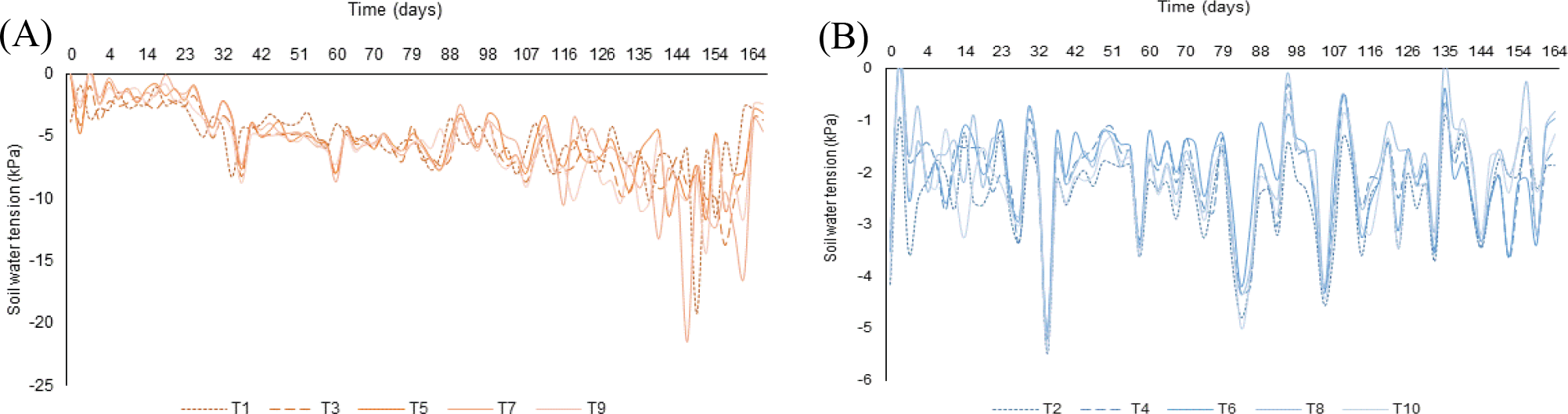
Moisture, a factor of variation in this study, was monitored by measuring the soil water tension, and is shown in Figure 2, where graph A shows the behaviour of the moisture when managing for field capacity, and graph B refers to maintaining the moisture close to saturation.
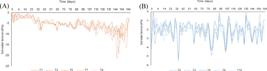
Irrigation management using a tensiometer allowed the soil moisture to be maintained under suitable conditions for differentiating between the treatments, i.e. the higher the tension, the lower the soil moisture. For FC, the tension was maintained between -5 and -10 kPa, disregarding the first 20 days, the germination and establishment phase of the plant canopy, and the last 20 days, the maturation phase of the rice plants. For saturation, the range was between -0.6 and -1.7 kPa.
As a result of the irrigation management, the irrigation depths applied to the amounts of effluent, also differed (Figure 3).
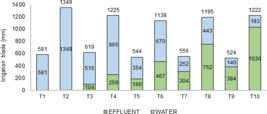
Applied irrigation depths when cultivating rice, for different proportions of treated dairy effluent and for managing the soil moisture at field capacity (FC) and saturation (SAT)
Odd-numbered treatments are related to irrigation management at FC (T1, T3, T5, T7 and T9) and even-numbered treatments to SAT (T2, T4, T6, T8 and T10). When compared to each other, the irrigation depth is reduced by 56.93%, 49.47%, 52.20%, 53.47% and 57.11% for T1, T3, T5, T7 and T9, respectively (Figure 3).
Phytosociological survey
The phytosociological surveys of the weeds in the rice crop were carried out on four dates: 49, 84, 112 and 147 days after sowing (DAS). Table 2 shows the family, species and common name of all the invasive plants found during the study. Fourteen species were found, distributed over 10 families.
The growth environment imposed in this study differed from the traditional system of cultivating irrigated rice, and led to a new community of plants, considered invasive, to become established (OLIVEIRA; FREITAS, 2008). In different phytosociological surveys found in the literature and carried out in rice plantations, the most common species, which coincide with those found this study, were Cyperus iria L and Chamaesyce prostrata (ANTIGUA; COLON, 1988; CRUZ et al., 2009; ERASMO; PINHEIRO; COSTA, 2004).
The most invasive species, Echinochloa spp, which according to Galon et al. (2011) is considered to cause the most damage to rice crops in the planted areas of Rio Grande do Sul, was not found in this study.
The importance value index (IVI) was used to evaluate the influence of the applied treatments on the occurrence of weeds. The IVI is the sum of the percentages for relative frequency (Fr), relative abundance (Abr) and relative dominance (Dor), whose value, within each treatment and sampling date, gives a total of 300. The highest IVI values also represent the highest values for Fr, Apr and Dor, and characterise the most important plants, which are those adapted to the environment under evaluation (EMBRAPA, 2011). In this study, it was decided to prioritise the two highest IVI values per treatment and sampling date when presenting the results (Figure 4). The graphs, when evaluated on different survey dates for the different TDE doses, show no definite behaviour that might explain the appearance of invasive plants; only on the final date, at 147 DAS, close to maturation of the rice, is it possible to see a reduction in IVI values in T5 and T6 (50% TDE), and T7 and T8 (75% TDE). This may be related to an interaction between the nutrient input from the effluent and the lower salt content compared to the highest TDE concentration (100%) favouring development of the rice and inhibiting the growth of weeds.
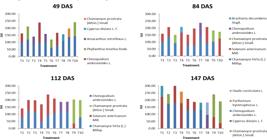
Importance value index (IVI) for the treatments under study, determined by the phytosociological survey of weeds when cultivating rice, 49, 84, 112 and 147 days after sowing (DAS)
Research that uses wastewater to irrigate crops shows that there are many factors that influence a definition of the best dose of effluent for a plant, since the presence of elements that lead to salinity and nutrient input may interact and cause variations in plant development (DRIDI et al., 2017; PEREIRA et al., 2011). According to Santos et al. (2017), the best criterion for fertigation using wastewater is the composition: balancing the rate of application with plant nutrition and soil fertility, reducing the volume of wastewater through dilution, and expanding the areas of cultivation.
Another point to be evaluated regarding the trend shown by the IVI values is related to the different levels of soil moisture (FC and SAT). A better visualisation might include comparing the odd and even treatments, which refer to maintaining the soil moisture at FC and SAT, respectively (Figure 4). On the first two evaluation dates, at 49 and 84 DAS, during the vegetative development of the rice plants, three of the five saturation treatments had the highest IVI values. In this case, it is clear that the weeds took advantage of the greater moisture available in the soil and were able to develop. This behaviour clearly changes close to collecting the plants at 147 DAS, when the IVI values were higher in the FC treatments (T1, T3, T5 and T9). The new proposal for cultivating rice presented in this research works at very low soil humidity compared to flooded systems, even under saturated conditions. As expected, the dynamics of occurrence imposed by the treatments altered the ecology of the invasive plants despite the invasive plants commonly found in rice cultivation not appearing under the conditions of this experiment.
In a vast bibliographical review by Kraehmer et al. (2016), it was found that weed diversity under flooded systems is reduced; however, when there is a need to prioritise water management to improve water use efficiency by reducing irrigation, the result is greater weed infestation.
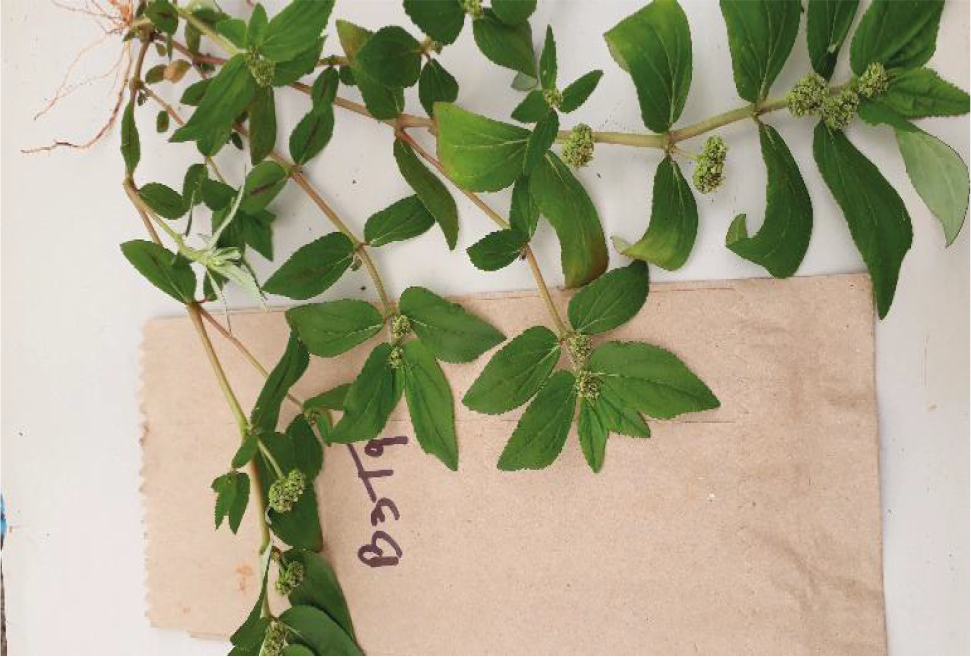
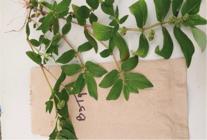
The most frequent species among the treatments, and present on each of the sampling dates, was Chamaesyce hirta (L.) Milisp. (Figure 5), belonging to family Euphorbiaceae. It presents herbaceous characteristics, a prostrate habit, an annual cycle, measures 10 to 50 cm, and is found almost everywhere in Brazil (Lorenzi, 2008). Santa Luizia grass is often found in nurseries and can play host to nematodes and phytopathogens such as mites (Cruz, 2019).
CONCLUSIONS
-
The treated dairy effluent used as a source of irrigation in rice cultivation showed the potential for supplying nutrients to the plants, albeit with a high saline content, explaining its application in diluted form. Irrigation management to maintain soil moisture at field capacity resulted in an average saving of 54% in irrigation depth, compared to maintaining the moisture at saturation;
-
Fourteen species of weeds were identified under the conditions of the experiment, distributed over 10 families. Among these, no invasive plants commonly seen in rice were found, leading to the conclusion that the established environment resulted in a new plant community;
-
The importance value index (IVI) was used to evaluate invasive species in the rice. For the doses of dairy effluent applied as a source of irrigation, no definite behaviour was seen that might explain the appearance of invasive plants. Only on the final evaluation date, at 147 days after sowing (DAS), was it possible to see a reduction in IVI values at doses of 50% and 75%. Regarding soil moisture, on the first two evaluation dates at 49 and 84 DAS, the highest IVI values were seen in the saturation treatments, indicating use of the available soil moisture by the invasive plants. This behaviour changed close to collecting the plants, when IVI values were higher in the treatments at field capacity;
-
The most frequent species among the treatments, and present on each of the sampling dates, was Chamaesyce hirta (L.) Milisp.
ACKNOWLEDGMENT
The authors would like to thank the Fundação de Amparo à Pesquisa do Estado de São Paulo (FAPESP) for funding the research (Research grant No. 2019/02921-2).
REFERENCES
- ANTIGUA, G.; COLON, C. Control integral de las malezas en el cultivo del arroz La Havana: Documentacion Agropecuaria, 1988. 47 p.
- APHA; AWWA; WEF. Standard methods for the examination for water and wastewater 22. ed. Washington, DC, USA: American Public Health Association, American Water Works Association, Water Environment Federation, 2012.
- CETESB. Orientação para apresentação de projeto visando à aplicação de água de reuso proveniente de estação de tratamento de esgoto doméstico na agricultura São Paulo, 2006. 11 p.
- COBUFCI, T.; NOLDIN, J. A. A cultura do arroz no Brasil 2. ed. Santo Antônio de Goiás: Embrapa, 2006. p. 633-681.
- COLTRO, L. et al. Environmental profile of rice production in Southern Brazil: a comparison between irrigated and subsurface drip irrigated cropping systems. Journal of Cleaner Production, v. 153, p. 491-505, 2017.
-
CONAB. Previsão safra de grãos 2021/22 Brasília, DF, 2022. Disponível em: https://www.conab.gov.br/ultimas-noticias/4213-conab-estima-producao-total-de-289-6-milhoes-de-toneladas-de-graos-para-safra-2021-22 Acesso em: 24 mar. 2022.
» https://www.conab.gov.br/ultimas-noticias/4213-conab-estima-producao-total-de-289-6-milhoes-de-toneladas-de-graos-para-safra-2021-22 - CONCENÇO, G. et al. Phytosociological surveys: tools for weed science? Planta Daninha, v. 31, p. 469-482, 2013.
- CRUZ, D. L. S. et al. Levantamento de plantas daninhas em área rotacionada com as culturas da soja, milho e arroz irrigado no cerrado de Roraima. Agroambiente On-line, v. 3, n. 1, p. 58-63, 2009.
- CRUZ, J. B. Ácaros plantícolas de três cultivos no Estado de São Paulo e biologia de duas das espécies de ácaros encontradas 2019. Tese (Doutorado) - Escola Superior de Agricultura Luiz de Queiros, Piracicaba, São Paulo, 2019.
- DONATTI, R. N. et al. Sodium phytoremediation by green manure growing in soil irrigated with wastwwater of dairy industry. Agricultural Engineering, v. 37, n. 4, p. 665-675, 2017.
- DRIDI, I. et al. Effects of a 25-year application of treated wastewater on soil properties of Cebala-Borj Touil irrigated perimeter (North Tunisia). Desalination and Water Treatment, v. 83, p. 281-28, 2017.
-
EMBRAPA. Cultivo do arroz: importância econômica e social. Brasília, DF: Embrapa, 2021. Disponível em: https://www.embrapa.br/importancia-economica-e-social Acesso em: 10 nov. 2021.
» https://www.embrapa.br/importancia-economica-e-social -
EMBRAPA. Dados de conjuntura da produção de arroz (Oryza sativa L.) no Brasil (1985-2018): área, produção e rendimento. Santo Antônio de Goiás: Embrapa Arroz e Feijão, 2019. Disponível em: http://www.cnpaf.embrapa.br/socioeconomia/index.htm Acesso em: 22 jun. 2021.
» http://www.cnpaf.embrapa.br/socioeconomia/index.htm - EMBRAPA. Dinâmica de plantas infestantes em sistemas integrados de cultivo Dourados, MS: Embrapa Agropecuária Oeste, 2011. 49 p. (Documentos 114).
- EMBRAPA. Estratégia para o aumento da eficiência do uso da água pelo arroz: sistema de irrigação por inundação intermitente. Pelotas: Embrapa Clima Temperado, 2009. 2 p.
- EMBRAPA. Sistema brasileiro de classificação de solos 3. ed. Brasília, DF, 2013. 353 p.
- ERASMO, E. A. L.; PINHEIRO, L. L. A.; COSTA, N. V. Levantamento fitossociológico das comunidades de plantas infestantes em áreas de produção de arroz irrigado cultivado sob diferentes sistemas de manejo. Planta Daninha, n. 22, p. 195-201, 2004.
-
FAO. FAOSTAT 2018. Disponível em: https://www.fao.org/faostat/en/#data/QCL Acesso em: 29 mar. 2022.
» https://www.fao.org/faostat/en/#data/QCL - GALON, L. et al Interferência da Urochloa brizantha nas características morfológicas da cana-de-açúcar. Planta Daninha, v. 29, p. 1029-1036, 2011.
- KRAEHMER, H. et al. Global distribution of rice weeds: a review. Crop Protectio, v. 80, p. 73-86, 2016.
- LORENZI, H. Plantas daninhas do Brasil: terrestres, aquáticas, parasitas e tóxicas. 4. ed. Nova Odessa, 2008. 640 p.
- MACAN, N. P. et al. Desempenho da irrigação por gotejamento com o uso de efluente de laticínio tratado por processo biológico. Irriga, v. 22, n. 3, p. 575-590, 2017.
- MATSURA, E. E.; GOMES, T. M. Água de reúso na agricultura irrigada. In: PAOLINELLI, A.; DOURADO NETO, D.; MANTOVANI, E. C. Diferentes abordagens sobre agricultura irrigada no Brasil: história, política pública, economia e recurso hídrico. 1. ed. Piracicaba: ESALQ/USP, 2021. cap. 23, p. 399-411.
- MUELLER-DOMBOIS, D; ELLENBERG, H. Aims and methods of vegetation ecology New York: John Wiley & Sons, 1974.
- OLIVEIRA, A. R.; FREITAS, S. P. Levantamento fitossociológico de plantas daninhas em áreas de produção de cana-de-açúcar. Planta Daninha, v. 26, n. 1, p. 33-46, 2008.
- PEREIRA, B. F. F. et al. Reclaimed wastewater: impact on soil-plant system under tropical conditions. Journal of Hazardous Materials, v. 192, n. 1, p. 54-61, 2011.
- SANTOS, S. R. et al. Changes in soil chemical properties promoted by fertigation with treated sanitary wastewater. Engenharia Agrícola, v. 37, n. 2, p. 343-352, mar./abr. 2017.
- SIDHU, H. S. et al. Sub-surface drip fertigation with conservation agriculture in a rice-wheat system: a breakthrough for addressing water and nitrogen use efficiency. Agricultural Water Management, v. 216, p. 273-283, 2019.
- SOSBAI. Arroz irrigado: recomendações técnicas da pesquisa para o sul do Brasil. Santa Maria, 2014. 192 p.
- RAIJ, B. VAN et al. Recomendações de adubação e calagem para o Estado de São Paulo 2. ed. Campinas: Instituto Agronômico de Campinas, 1996. 285 p. (IAC. Boletim Técnico, 100)
Edited by
-
Editor-in-Article: Prof. Daniel Albiero - daniel.albiero@gmail.com

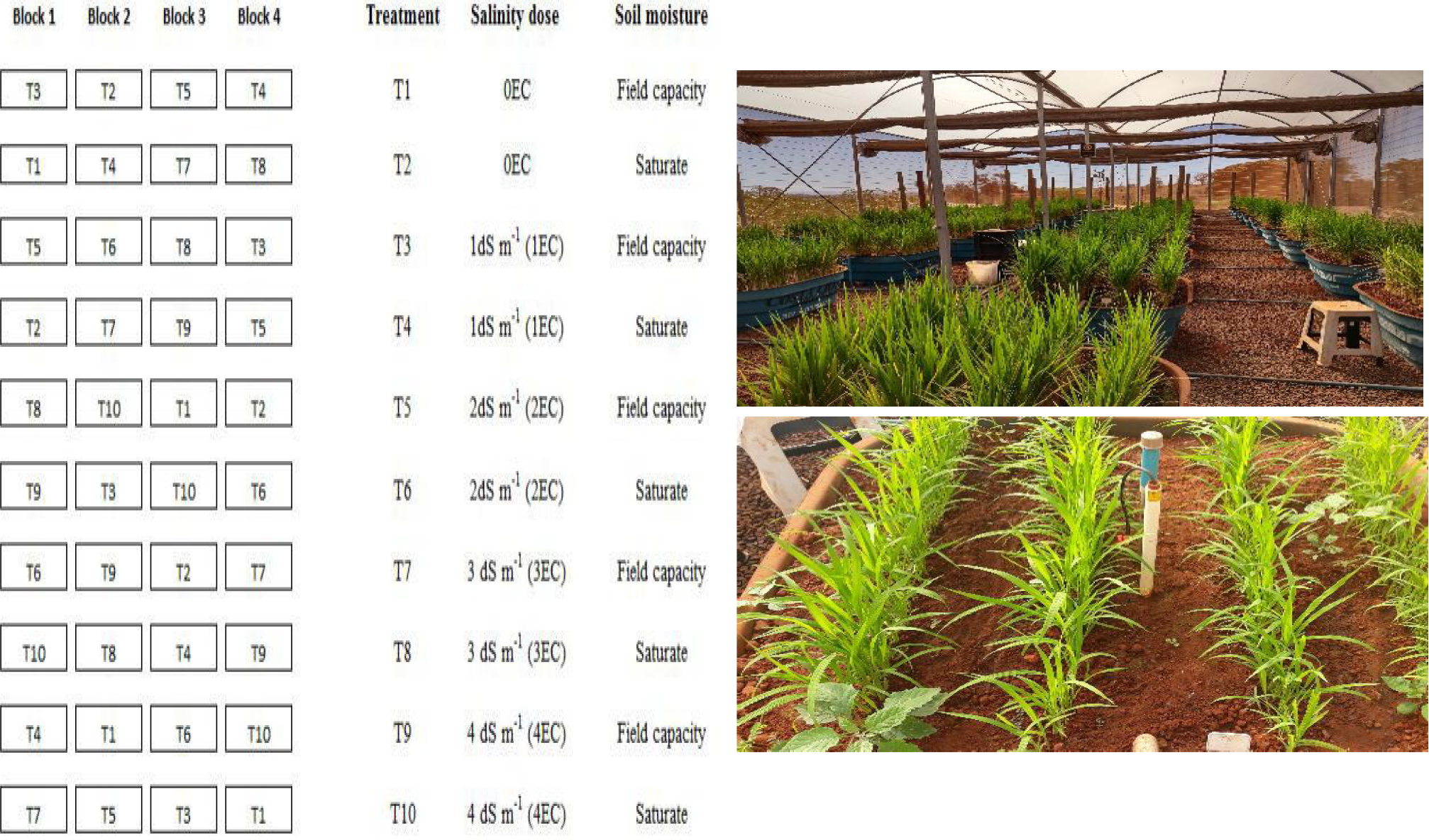
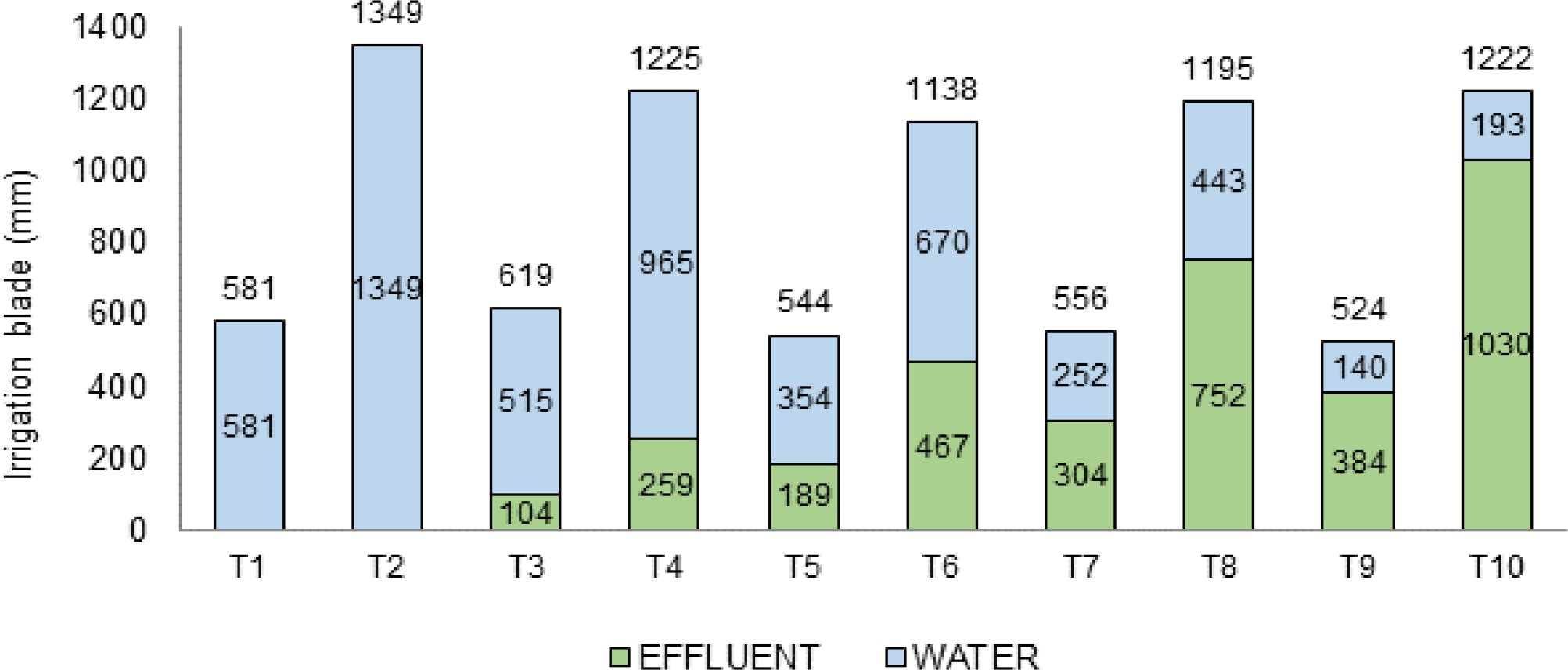 Legend: T1-100% tap water (TW) and 0% treated dairy effluent (TDE), field capacity (FC); T2-100% TW and 0% TDE, saturation (SAT); T3-75% TW and 25% TDE, FC; T4-75% TW and 25% TDE, SAT; T5-50% TW and 50% TDE, FC; T6-50% TW and 50% TDE, SAT; T7-25% TW and 75% TDE, FC; T8-25% TW and 75% TDE, SAT; T9-0% TW and 100% TDE, FC; T10-0% TW and 100% TDE, SAT
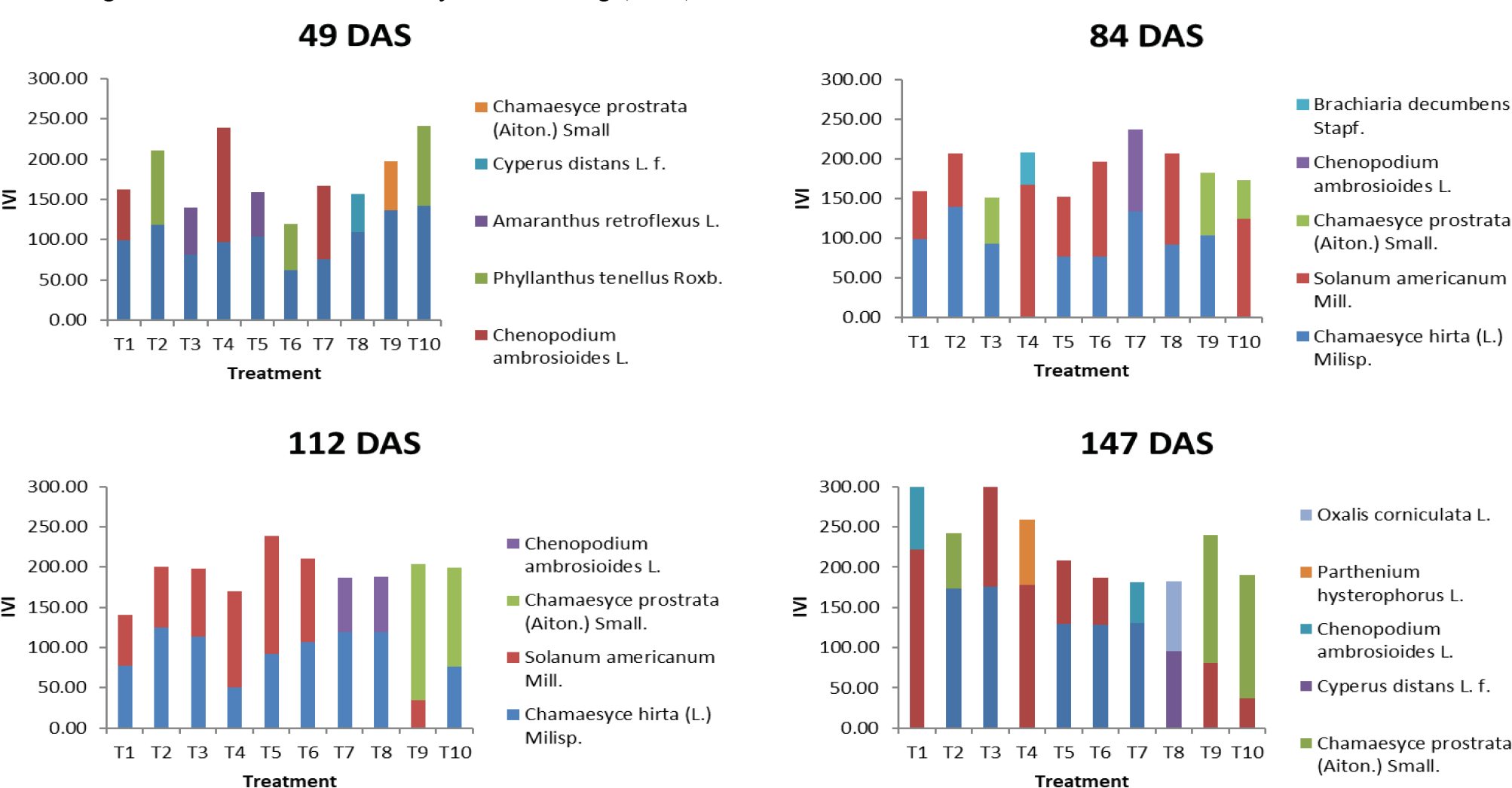 Legend: T1-100% tap water (TW) and 0% treated dairy effluent (TDE), field capacity (FC); T2-100% TW and 0% TDE, saturation (SAT); T3-75% TW and 25% TDE, FC; T4-75% TW and 25% TDE, SAT; T5-50% TW and 50% TDE, FC; T6-50% TW and 50% TDE, SAT; T7-25% TW and 75% TDE, FC; T8-25% TW and 75% TDE, SAT; T9-0% TW and 100% TDE, FC; T10-0% TW and 100% TDE, SAT