 Genetic diversity of the tilapia (Oreochromis spp.) in the Aguamilpa Reservoir, Nayarit, Mexico
ABSTRACT
Tilapia is one of the most cultivated species in Mexico and an important fishery resource in the Aguamilpa Reservoir, contributing to the local food supply and economy. However, little is known about its genetic diversity and population structure in this reservoir. This study analyzed the genetic diversity of tilapia from the Aguamilpa Reservoir using SSR markers. According to morphological criteria, three species of the genus Oreochromis were identified, and 85 alleles were detected at five loci. The observed levels of heterozygosity and polymorphic information content (PIC) indicated high genetic variability, with 78% of the samples showing values greater than 0.5, which indicates substantial genetic variability. The fixation index (Fst = 0.028) and AMOVA showed low genetic differentiation among populations. Principal coordinates analysis (PCoA) and a dendrogram evidenced overlap among individuals, indicating the absence of a defined population structure and random exchange of alleles among populations. These results suggest that the reservoir's tilapia populations function as a single, homogeneous genetic unit, providing valuable information for the sustainable management and conservation of this fishery resource.
Keywords:
genetic diversity; morphometric; reservoir; SSR markers; tilapia
1. Introduction
Tilapia is the common name for several species of cichlids that inhabit freshwater streams, rivers, and lakes (Wang and Lu, 2016). Originally from Africa, these fish have been introduced in more than 90 countries, contributing substantially to freshwater fisheries (Ahmed et al., 2023). The Aguamilpa reservoir is located in the central region of the state of Nayarit, Mexico, and covers the municipalities of Del Nayar, Santa María del Oro, and Tepic. The main economic activity is fishing for tilapia (De la Lanza Espino and García Calderón, 2002), and is regulated by the official standard NOM-026-SAG/PESC-2016 (SAGARPA, 2016). The presence of four cichlids has been reported in the reservoir: Oreochromis aureus, O. mossambicus, Cichlasoma beani and O. niloticus, the latter supporting the reservoir’s commercial fishery (SAGARPA, 2007; Guzmán-Arroyo et al., 2009; Peña-Messina et al., 2010; INAPESCA, 2020). The tilapia fishery has been little studied; this work constitutes the first genetic report revealing the diversity of the reservoir populations. This interest arises from the lack of knowledge about direct population control and the quality of reproductive lines (INAPESCA, 2020). Moreover, it remains uncertain whether there is a loss of genetic quality within these populations, given that fishing operations rely on the species’ natural renewal capacity in the reservoir. The absence of stocking or restocking programs, combined with the low dispersal and high reproductive capacity of individuals within the same population (Cuevas-Rodríguez et al., 2024), could lead to increased inbreeding, genetic erosion, and reduced adaptive potential. Therefore, assessing the genetic composition of these populations is crucial to identify potential risks, inform sustainable management strategies, and contribute to the conservation of tilapia in the region.
The accumulation of inbreeding and the reduction of genetic diversity are major concerns in animal conservation (Askari et al., 2011; Nosrati et al., 2021). Genetic variability within populations enables greater adaptation to constantly changing environments, which in turn ensures survival and long-term preservation (Tabatabaei et al., 2020).
Simple sequence repeat (SSR) molecular markers are suitable for assessing genetic diversity due to their co-dominant potential, high polymorphism, broad distribution in the genome, and essential role in studies on the genetic variability of populations (Ukenye and Megbowon, 2023). In tilapia, examining genetic diversity across different reservoirs worldwide has informed the design of monitoring and planning strategies for improvement, conservation, and diversity programs in wild tilapia populations in countries such as Ghana (Mireku et al., 2017), Africa (Bezault et al., 2011) and Ethiopia (Ahmed et al., 2023). Given the importance of the fishery resource to rural communities living around the reservoir, this study aimed to analyze the genetic diversity of tilapia populations in the main reservoir of the state of Nayarit, Mexico (Aguamilpa Reservoir), using microsatellite (SSR) markers. Additionally, it sought to perform morphological identification of the species present to support the taxonomic and genetic characterization of the sampled organisms.
2. Material and methods
This investigation is carried out in accordance with the provisions of NOM-026-SAG/PESC-2016, all applicable international, national, and/or institutional guidelines for the care and use of animals were followed.
2.1. Study area
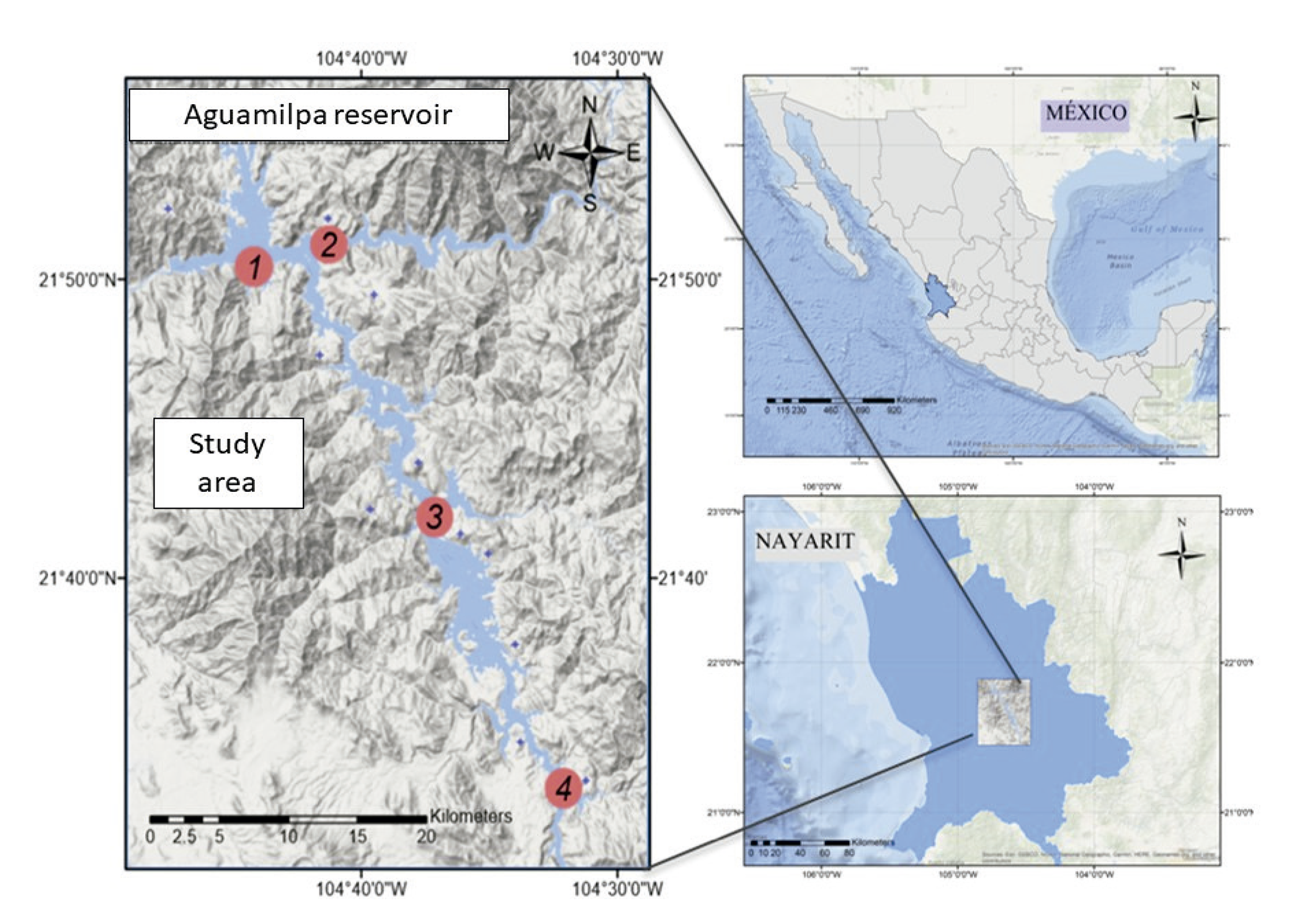
The study reservoir has been in operation since 1994. The reservoir is located in the central region of the state, between meridians 104°25' and 104°46' west longitude and parallels 21°23' and 21°53' north latitude. The Aguamilpa Reservoir, the last point where the Santiago River is dammed before flowing out to sea, is an area of great economic and fishing importance where fishermen from 16 towns belonging to the municipalities of Del Nayar, Santa María del Oro, and Tepic in the state of Nayarit, converge. These towns have a large number of fishermen, most of whom are members of fishing cooperatives mainly dedicated to catching tilapia, catfish, and bass (INAPESCA, 2020). The Dam´s curtain was constructed in 1993, standing 187 meters high and 660 meters long, with the capacity to generate 960 megawatts of electricity. The reservoir has an approximate capacity to hold 6,950 million m3 of water extending along 50 km of the Santiago River channel and 20 km of the Huaynamota River (INAPESCA, 2020). The study area was divided into four zones selected according to the geographical distribution of the reservoir; zones 1 and 3 are close to the reservoir´s access point, while zones 2 and 4 correspond to sites more distant from the reservoir’s access zone (Figure 1).

2.2. Sample collection
Thirty specimens of each species or morphotype identified visually were collected at each site with the assistance of fishermen from the “Sociedad Cooperativa de Producción Pesquera y Acuícola Unión de pescadores indígenas de Aguamilpa S.C. de R.L. de C.U.” These fishermen use gill nets with a 4.5’’ mesh size and a net length ranging from 17 to 30 m (INAPESCA, 2020). The sampled specimens were preserved on ice and transferred to the histology laboratory facilities of the Escuela Nacional de Ingeniería Pesquera of the Universidad Autónoma de Nayarit.
2.3. Morphological identification
The specimens collected in the Aguamilpa Reservoir were identified using dichotomous keys following the criteria described by Trewavas (1983), Arredondo-Figueroa and Tejeda-Salinas (1989), and Morales-Díaz (2003), taking into consideration the number of gills rakers in the lower part of the first gill arch, the number of dorsal spines, and the shape of the pharyngeal bone lobes (Figure 2).

2.4. Genetic diversity analysis
2.4.1. DNA amplification
Genomic DNA was extracted from muscle tissue using the 2% CTAB method (Doyle and Doyle, 1987), with minor modifications to optimize the protocol for this type of tissue. DNA quality and concentration were assessed with a NanoDrop 2000c spectrophotometer, and integrity was verified by electrophoresis on 1% agarose gels for 35 min at 90 V. Extracted DNA samples were stored at –20 °C until further analyses.
A panel of five microsatellite markers was selected for this study: UNH145, UNH155, UNH160, UNH166, UNH190 (Cuevas-Rodríguez et al., 2014; Hassanien and Gilbey, 2005; Bhassu et al., 2004; Rutten et al., 2004), primarily based on information criteria such as allelic range, number of alleles, polymorphic information content, and other available data. All primers were fluorescently labeled with FAM, VIC, PET, and NET (Thermo Scientific).
2.5. Polymerase chain reaction (PCR) and loci typifying
The PCR reactions for each amplification were prepared in a volume of 10 µL, composed of DNA (50 ng/3 µL), 1.25 U Taq DNA polymerase (Promega Co, Madison, WI, USA), 0.4 mM dNTPs, MgCl₂ (3 mM) and specific annealing temperatures were used for each primer pair (Table 1). These were amplified in a BioRad thermal cycler. Amplification was verified by electrophoresis in 1% agarose gel. Subsequently, the PCR products were mixed in two multiplexes, each multiplex containing the same amplified sample with different microsatellites within the same tube, which differed in their fragment size and/or in the fluorescent label of each of the primers. The tubes were subsequently lyophilized and sent to the University of Arizona Genetics Center, for sequencing.
2.6. Genetic analysis
The alleles were read using GeneMarker software (SoftGenetics). Based on these data, a matrix was generated containing the fragment sizes present in each of the analyzed samples. Genetic diversity analyses were then performed using the GenAlEx software (Peakall and Smouse, 2012). The diversity indices included the number of alleles per locus, effective alleles (Ne), expected heterozygosity (He), observed heterozygosity (Ho), inbreeding index (Fis), and fixation index (Fst). The Polymorphic Information Content (PIC) was calculated using Cervus 3.0 software (Marshall, 1998; Kalinowski et al., 2007). The number of microsatellite markers needed to capture 100% of the genetic diversity in the analyzed specimens was determined using the poppR library in the R statistical package.
For the population structure analysis, the genetic distance between individuals and between sampling sites was calculated in GenAlEx software, and a principal coordinate analysis (PCoA) was carried out. Additionally, with the genetic distance matrix obtained, a dendrogram was built in the MEGA software using the Unweighted Pair Group Method with Arithmetic Mean (UPGMA) (Kumar et al., 1994).
3. Results
3.1. Morphological identification
The specimens collected in the Aguamilpa Reservoir were identified following the morphological criteria described in the methodology (Trewavas, 1983; Arredondo-Figueroa and Tejeda-Salinas, 1989; Morales-Díaz, 2003), which considered the number of gill rakers in the lower part of the first gill arch, the number of dorsal spines, and the shape of the pharyngeal bone lobes (Figure 2). Based on these criteria, 74 out of 90 individuals were identified at the species level. Of these, 20 were determined as Oreochromis mossambicus, characterized by 13–19 gill rakers, 15–17 dorsal spines, and a slightly heart-shaped pharyngeal bone lobe; 48 individuals were identified as Oreochromis niloticus, showing 18–22 gill rakers, 17–18 dorsal spines, and a nearly straight pharyngeal lobe with little development; and 6 individuals were identified as Oreochromis aureus, which exhibited 15–16 dorsal spines and a well-pronounced heart-shaped pharyngeal lobe (Figure 2A and 2B). The three species were observed across the four sampling sites.
3.2. Determination of the genetic diversity of tilapia (Oreochromis spp.) in the Aguamilpa Reservoir
Only the 74 organisms identified morphologically to the species level were used for the genetic diversity analysis. A total of 85 alleles were identified, and the number of alleles per locus ranged from 11 to 21 at the UNH160 and UNH155 loci, respectively. The number of alleles per zone ranged from 7.8 in zone two to 12.6 alleles in zone three (Table 2). The rarefaction curve analyzed in poppR suggests that by assessing of three microsatellite markers it is possible to identify 100% of the genetic diversity of the populations evaluated. Therefore, the results of the analysis with five markers are reliable and support the results of genetic diversity of the four populations formed by three species of the genus Oreochromis in the Aguamilpa Reservoir (Figure 3). The Polymorphic Information Content (PIC) was high for the four populations formed by three species of the genus Oreochromis, with a mean value of 0.78, indicating a high level of polymorphism and genetic diversity, and reflecting that the five markers are highly informative. The Ho in the four sampling stations showed high values, ranging from 0.72 in zone three to 0.81 in zone four (Table 2).

Minimum number of loci required to capture 100% of the genetic diversity in 74 samples from four populations comprising three species of the genus Oreochromis.
The X-axis shows the cumulative number of loci or markers, and the Y-axis indicates the cumulative percentage of analyzed samples. This graph demonstrates the efficiency of the selected markers in adequately representing the genetic variability present in the studied populations.
3.2.1. Genetic structure of tilapia in Aguamilpa Reservoir
The genetic distance between individuals was calculated from the allele size data matrix. Based on this genetic distance matrix, a principal coordinate analysis (PCoA) was performed in GenAlex. The PCoA (Figure 4) showed an overlap of all specimens, with no tendency to cluster by sampling site. Additionally, a dendrogram was constructed from the genetic distance in MEGA, revealing the same pattern observed in the PCoA, with no defined population structure and individuals not grouping according to their sampling sites (Figure 5). The fixation index (Fst) showed a mean value of 0.028 across the four populations comprising three species of the genus Oreochromis, indicating that about 2.8% of the total genetic variation was explained by population differences, while the remaining 97.2% corresponded to differences among individuals within populations. Furthermore, differentiation and distance indices, such as Nei’s genetic distance and AMOVA values, were consistent with these results, confirming the low genetic differentiation among populations and supporting the lack of clear genetic structuring.


Dendrogram constructed using the UPGMA algorithm based on allele distances of each of the 74 individuals analyzed with five microsatellite markers.
The individuals belong to four sampling zones: (1) dam zone, (2) Huaynamota River zone, (3) central reservoir zone, and (4) southern reservoir zone.
4. Discussion
Morphological characterization has been successfully employed in nemerous studies to differentiate specific traits in teleost fish, serving as a reliabletool for taxonomic discrimination at the genus and species levels. For example, it has been applied to species of the family Gerreidae (González-Acosta et al., 2014) and, similarly, morphometric patterns have similarly been used to distinguish species within the family Carangidae (Bravo-Delgado et al., 2023). In the present study, specific morphological criteria were applied to identify species of the genus Oreochromis in the Aguamilpa Reservoir. Based on established diagnostic characteristics for tilapia identification, 90 individuals were analyzed, of which 74 met the established criteria (Table 2). This analysis enabled the identification of three Oreochromis species within the Aguamilpa Reservoir.
The identification of individuals was based on morphological traits, including the number of gill rakers on the first arch, the number of dorsal spines, and the shape of the pharyngeal bone lobe. Based on these characteristics, most organisms were identified as Oreochromis niloticus, suggesting that this is the most abundant species in the reservoir, in agreement with the report by SAGARPA (2016).
However, in this study, some individuals could not be identified definitively due to overlapping morphological characters that hindered clear species discrimination. Malformations such as bifurcation of one to three gill rakers were observed, which added to the difficulty. This overlap in meristic traits has also been reported by several authors, including B-Rao and Majumdar (1998), Barriga-Sosa et al. (2004), Narváez et al. (2005) and Espinosa-Lemus et al. (2009), Márquez (2017), Tibihika et al. (2018), who consider tilapia to represent partially differentiated species due to overlapping meristic characters among two or more species (Trewavas, 1983; Bbole et al., 2014; Márquez, 2017). Additionally, some authors describe species of the genus Oreochromis as phenotypically plastic, given that their growth and size can be strongly influenced by the physical composition, environmental variables and anthropogenic impacts of the aquatic environment, resulting in great adaptability and the ability to survive under a wide range of environmental conditions (Trewavas, 1983; B-Rao and Majumdar, 1998; Márquez, 2017; Tibihika et al., 2018). Therefore, some authors argue that morphometric and meristic characters have not yet provided definitive taxonomic resolution due to the overlap among tilapia subspecies (Ndiwa et al., 2016; Mireku et al., 2017).
To assess the genetic diversity in the reservoir, five microsatellite markers (SSR) were used to estimate the genetic variation in tilapia populations from the Aguamilpa Reservoir. The results suggest that these markers are highly informative, as they detected a total of 85 different alleles across the reservoir. The UNH155 locus exhibited the highest polymorphism, with 21 alleles, whereas the UNH160 locus presented the lowest number, with 11 alleles, across the four sampling sites in the Aguamilpa Reservoir, which comprised three species of the genus Oreochromis. Even though high polymorphism was observed, the genetic diversity detected in our study was lower than that reported by Hassanien and Gilbey (2005), who found heterozygosity values ranging from 0.40 to 0.96 in wild Nile tilapia populations, revealing a large-scale population structure. In contrast, our results did not show clear evidence of population structuring, which may be related to the high level of genetic mixing among populations in the reservoir. Similarly, Tesfaye et al. (2021) identified 706 alleles across 37 microsatellite loci in populations of O. niloticus from Ethiopia, also reporting high levels of genetic diversity among sampling sites.
Previous studies suggest, as in this work, a high genetic diversity of Tilapia in regions of Kenya (Ndiwa et al., 2016). The high levels of genetic variability observed in tilapia in this study can be attributed to their great capacity for adaptation to different and dynamic environmental conditions. This genetic diversity may enhance their survival and resilience in reservoirs, allowing them to maintain stable populations despite environmental fluctuations and fishing pressure (Arredondo-Vargas et al., 2013). However, the high genetic diversity observed in this study suggests that the tilapia population in the Aguamilpa reservoir is in balance. This indicates that, despite the exploitation of the resource by local fishermen, the tilapia population is not at risk. These results are of great relevance because they suggest that high genetic diversity positively affects the survival of the tilapia resource in the reservoir. One of the indices of genetic diversity that is directly related to random reproduction and balance in population size is heterozygosity. This indicator is one of the best estimators for comparing any species or population, allowing comparisons to be made (Sheraliev and Peng, 2021). In the present work, the highest values of heterozygosity were observed in zone four (Ho = 0.81; Table 2). Located in the most remote area relative to the other sampling sites. It is relevant to mention that this area is located 60 km upstream from the El Cajón Dam, a hydroelectric plant located in the bed of the Río Grande de Santiago in the municipalities of Santa María del Oro, Jala and La Yesca, Nayarit where various socioeconomic activities are carried out and where the main commercially exploited species is tilapia (INAPESCA, 2020). Occasionally, El Cajón dam opens its curtains and there may be a flow of fish through it, which can infer an influx of tilapia into the Aguamilpa reservoir, increasing the genetic variability in this area. According to INAPESCA (2020), the El Cajón dam has been very little studied, with regard to fishing aspects, there is no technical study that evaluates the fishing resources available in the reservoir, as well as its population dynamics, or the available species. The levels of heterozygosity observed in this study were high compared to work carried out in tilapia (Hassanien and Gilbey, 2005; Bezault et al., 2011; Lind et al., 2019). While the Polymorphic Information Content (PIC) was congruent with He, with 0.78 of the loci indicating values greater than 0.5. These high values of heterozygosity may be due to a possible mixture and potential hybridization of the three species without there being reproductive isolation between them. It is known that species of the genus Oreochromis and hybrids are common in aquaculture, where they are selected for desirable characteristics such as salinity tolerance (Yu et al., 2022) as well as growth traits (Teoh et al., 2011; Yildirim-Aksoy et al., 2020; Hamid et al., 2022), while in the natural environment, O. niloticus has been documented to hybridize with several species, including Oreochromis mossambicus in South Africa (D’Amato et al., 2007), Oreochromis aureus in China (Gu et al., 2014), Oreochromis adesonii and Oreochomis macrochir in Zambia (Deines et al., 2014) and Oreochromis esculentus and Oreochromis leucostictus in Kenya (Angienda et al., 2011; Kwikiriza et al. 2023), these observed genetic variations have been associated with hybridization which makes species become closer to each other as they occupy similar ecosystems (Kariuki et al. 2021). The absolute difference between observed and expected heterozygosity determines the value of Fis, which reflects the degree of random or non-random mating within or among populations. In this study, the average Fis coefficient was 0.04, suggesting that mating occurs under conditions close to Hardy-Weinberg equilibrium. A Fis value near zero indicates that observed heterozygosity is similar to the expected value, implying an absence of inbreeding or significant deviations from random mating such as selection or consanguinity.
These results differ markedly from those reported by Ahmed et al. (2023), who found a mean Fis value of 0.15, indicating some degree of inbreeding or non-random mating. Similar values were observed by Hassanien and Gilbey (2005), who reported a mean Fis value of 0.19. In contrast, Tesfaye et al. (2021) found Fis values ranging from 0.47 to –0.15 among populations, with high positive values attributed to inbreeding.
Additionally, the fixation index (Fst) was estimated to assess the degree of genetic differentiation among populations. According to Allendorf et al. (2010), Fst quantifies the proportion of genetic variance attributable to population subdivision, by comparing within-population variance with total genetic variance. Values close to zero indicate low genetic differentiation and high gene flow, while values approaching one suggest strong differentiation and restricted gene flow (Fst: 0–0.05 = low; 0.05–0.15 = moderate; 0.15–0.25 = high).
In this study, the observed Fst values ranged from 0.01 to 0.06, indicating low genetic differentiation among the cichlid populations and suggesting a random exchange of alleles among them. These results are similar to those reported by Tesfaye et al. (2021), who found very low Fst values (0.02–0.04), suggesting interconnected populations. Comparable values were also reported by Lind et al. (2019), who observed an Fst of 0.09 among populations within the same basin.
The low Fst values observed here indicate minimal genetic differentiation among populations, likely due to their occurrence within the same water body without physical barriers, enabling gene flow and interaction among groups (Ahmed et al., 2023). This pattern is supported by the principal coordinate analysis (PCoA) and Nei’s genetic distance dendrogram (Nei, 1973), which both show a complete overlap of individuals from the four populations composed of three Oreochromis species, without clear grouping patterns (Figure 4). Similarly, the dendrogram confirms the lack of distinct clusters, indicating intermingling among individuals (Figure 5).
These findings suggest that these cichlids coexist within the same ecosystem, allowing for potential genetic admixture (B-Rao and Majumdar, 1998; Tibihika et al., 2018). This pattern may be explained by the absence of physical barriers in the reservoir, unregulated anthropogenic activities, and the limited number of samples and microsatellites markers analyzed in this study. Therefore, further comparative studies in major lakes of the region where tilapia fisheries operate under natural conditions are recommended to provide a more comprehensive understanding of genetic diversity and to better inform conservation strategies.
5. Conclusions
This study provides insights into the tilapia fishery resource and the genetic diversity of populations in the reservoir. Evidence of gene flow and random allele exchange was found, with no defined genetic structure detected. The use of SSR markers proved valuable for assessing population genetic diversity. These findings are specific to the populations analyzed. Further studies including additional regions and species are recommended for a broader understanding.
Acknowledgments
The authors thank the fishermen of the Sociedad Cooperativa de Producción Pesquera y Acuícola Unión de Pescadores Indígenas de Aguamilpa S.C. by R.L. of C.U. for their valuable support in collecting the organisms and to the Functional Genomics Laboratory of the Instituto Politécnico Nacional, CIIDIR Unidad Sinaloa.
References
-
Ahmed, S. M.; Hordofa, B.; Meressa, B. H. and Tamiru, M. 2023. Population structure and genetic diversity of Nile tilapia ( Oreochromis niloticus ) using microsatellite markers from selected water bodies in southwest Ethiopia. Veterinary Medicine and Science 9:2095-2106. https://doi.org/10.1002/vms3.1212
» https://doi.org/10.1002/vms3.1212 -
Allendorf, F. W.; Hohenlohe, P. A. and Luikart, G. 2010. Genomics and the future of conservation genetics. Nature Reviews Genetics 11:697-709. https://doi.org/10.1038/nrg2844
» https://doi.org/10.1038/nrg2844 -
Angienda, P. O.; Lee, H. J.; Elmer, K. R.; Abila, R.; Waindi, E. N. and Meyer, A. 2011. Genetic structure and gene flow in an endangered native tilapia fish ( Oreochromis esculentus ) compared to invasive Nile tilapia ( Oreochromis niloticus ) in Yala swamp, East Africa. Conservation Gentics 12:243-255. https://doi.org/10.1007/s10592-010-0136-2
» https://doi.org/10.1007/s10592-010-0136-2 - Arredondo-Figueroa, J. L. and Tejeda-Salinas, M. 1989. El hueso faríngeo, una estructura útil para la identificación de especies de la tribu Tilapini (Pisces: Cichlidae) introducida en México. Anales del Instituto de Ciencias del Mar y Limnología UNAM 16:59-68.
- Arredondo-Vargas, E.; Osuna-Paredes, C.; Meléndez-Galicia, C.; Jesús-Avendaño, C.; Hernández-Montaño, D.; Gaspar-Dillanes, M. T. and Hernández-Montaño, D. 2013. Lago de Chapala, Michoacán y Jalisco. p.35-52. In: Gaspar-Dillanes M. T. and Hernández-Montaño, D. (comps.). Pesquerías continentales de México. Instituto Nacional de Pesca, México.
- Askari, N.; Mohammad-Abadi, M. and Baghizadeh, A. 2011. ISSR markers for assessing DNA polymorphism and genetic characterization of cattle, goat and sheep populations. Iranian Journal of Biotechnology 9:222-229.
-
Barriga-Sosa, I. D. L. A.; Jiménez-Badillo, M. D. L.; Ibáñez, A. L. and Arredondo-Figueroa, J. L. 2004. Variability of tilapias ( Oreochromis spp.) introduced in Mexico: morphometric, meristic and genetic characters. Journal of Applied Ichthyology 20:7-14. https://doi.org/10.1111/j.1439-0426.2004.00445.x
» https://doi.org/10.1111/j.1439-0426.2004.00445.x -
Bbole, I.; Katongo, C.; Deines, A. M.; Shumba, O. and Lodge, D. M. 2014. Hybridization between non-indigenous Oreochromis niloticus and native Oreochromis species in the lower Kafue River and its potential impacts on fishery. Journal of Ecology and the Natural Environment 6:215-225. https://doi.org/10.5897/JENE2014.0444
» https://doi.org/10.5897/JENE2014.0444 -
Bezault, E.; Balaresque, P.; Toguyeni, A.; Fermon, Y.; Araki, H.; Baroiller, J. F. and Rognon, X. 2011. Spatial and temporal variation in population genetic structure of wild Nile tilapia ( Oreochromis niloticus ) across Africa. BMC Genetics 12:102. https://doi.org/10.1186/1471-2156-12-102
» https://doi.org/10.1186/1471-2156-12-102 -
Bhassu, S.; Yusoff, K.; Panandam, J. M.; Embong, W. K.; Oyyan, S. and Tan. S. G. 2004. The genetic structure of Oreochromis spp. (tilapia) populations in Malaysia as revealed by microsatellite DNA analysis. Biochemical Genetics 42:217-229. https://doi.org/10.1023/B:BIGI.0000034426.31105.da
» https://doi.org/10.1023/B:BIGI.0000034426.31105.da -
B-Rao, C. and Majumdar, K. C. 1998. Multivariate map representation of phylogenetic relationships: application to tilapiine fish. Journal of Fish Biology 52:1199-1217. https://doi.org/10.1111/j.1095-8649.1998.tb00966.x
» https://doi.org/10.1111/j.1095-8649.1998.tb00966.x - Bravo-Delgado, L. A.; Cañarte-Pin, J. D. and Zambrano-Santana, L. J. 2023. Análisis morfométrico de otolitos en pelágicos pequeños de la familia carangidae capturados en el Pacífico Ecuatoriano. Revista de Ciencias del Mar y Acuicultura YAKU 6:13-23.
- Cuevas-Rodríguez, B. L.; Parra-Bracamonte, M.; García-Ulloa, M.; Sifuentes-Rincón, A. M. and Rodríguez-González, H. 2014. Genetic diversity of commercial species of the tilapia genus Oreochromis in Mexico. International Journal of Aquatic Sciences 5:58-66.
-
Cuevas-Rodríguez, B. L.; Rubio-Gómez, W. K.; Granados-Amores, J.; Dueñas-Romero, J. J.; Valdez-González, F. J.; Sandoval-Castro, E.; González-Huerta, C. A.; González-Hermoso, J. P. and Zavala-Leal, O. I. 2024. Analysis of the pharyngeal structure of the genus Oreochromis for species identification through geometric morphometrics in the Aguamilpa reservoir, Nayarit, Mexico. Zoologischer Anzeiger 313:183-190. https://doi.org/10.1016/j.jcz.2024.10.007
» https://doi.org/10.1016/j.jcz.2024.10.007 -
D'Amato, M. E.; Esterhuyse, M. M.; van der Waal, B. C. W.; Brink, D. and Volckaert, F. A. M. 2007. Hybridization and phylogeography of the Mozambique tilapia Oreochromis mossambicus in southern Africa evidenced by mitochondrial and microsatellite DNA genotyping. Conservation Genetics 8:475-488. https://doi.org/10.1007/s10592-006-9186-x
» https://doi.org/10.1007/s10592-006-9186-x - De la Lanza Espino, G. and García Calderón, J. L. 2002. Lagos y presas de México. AGT Editor S.A., México City, México. p.401-420.
-
Deines, A. M.; Bbole, I.; Katongo, C.; Feder, J. L. and Lodge, D. M. 2014. Hybridisation between native Oreochromis species and introduced Nile tilapia O. niloticus in the Kafue River, Zambia. African Journal of Aquatic Science 39:23-34. https://doi.org/10.2989/16085914.2013.864965
» https://doi.org/10.2989/16085914.2013.864965 - Doyle, J. J. and Doyle, J. L. 1987. A rapid DNA isolation procedure for small quantities of fresh leaf tissue. Phytochemical Bulletin 19:11-15.
- Espinosa-Lemus, V.; Arredondo-Figueroa, J. L. and Barriga-Sosa, I. A. 2009. Morphometric and genetic characterization of tilapia (Cichlidae: Tilapiini) stocks for effective fisheries management in two Mexican reservoirs. Hidrobiológica 19:95-107.
-
González-Acosta, A. F.; Rubio-Rodríguez, U. and Ruiz-Campos, G. 2014. El hueso urohial de los peces Gerreidae (Teleostei: Percoidei) de América y su aplicación taxonómica. International Journal of Morphology 32:923-929. https://doi.org/10.4067/S0717-95022014000300029
» https://doi.org/10.4067/S0717-95022014000300029 -
Gu, D. E.; Mu, X. D.; Song, H. M.; Luo, D.; Xu, M.; Luo, J. R. and Hu, Y. C. 2014. Genetic diversity of invasive Oreochromis spp. (tilapia) populations in Guangdong province of China using microsatellite markers. Biochemical Systematics and Ecology 55:198-204. https://doi.org/10.1016/j.bse.2014.03.035
» https://doi.org/10.1016/j.bse.2014.03.035 - Guzmán-Arroyo, M.; Orbe-Mendoza, M.; López-Hernández, M. and Peña-García, L. E. 2009. La fauna acuática del Río Santiago: curso medio y bajo antes del llenado de la "PH Aguamilpa'. p.189-196. In: Peniche-Camps, S. and Guzmán-Arroyo, S. (eds). Estudios de la cuenca del río Santiago: un enfoque multidisciplinario. Edit. Páramon, Guadalajara.
-
Hamid, N. K. A.; Somdare, P. O.; Harashid, K. A. M.; Othman, N. A.; Kari, Z. A.; Wei, L. S. and Dawood, M. A. 2022. Effect of papaya ( Carica papaya ) leaf extract as dietary growth promoter supplement in red hybrid tilapia ( Oreochromis mossambicus × Oreochromis niloticus ) diet. Saudi Journal of Biological Sciences 29:3911-3917. https://doi.org/10.1016/j.sjbs.2022.03.004
» https://doi.org/10.1016/j.sjbs.2022.03.004 -
Hassanien, H. A. and Gilbey, J. 2005. Genetic diversity and differentiation of Nile tilapia ( Oreochromis niloticus ) revealed by DNA microsatellites. Aquaculture Research 36:1450-1457. https://doi.org/10.1111/j.1365-2109.2005.01368.x
» https://doi.org/10.1111/j.1365-2109.2005.01368.x -
INAPESCA - Instituto Nacional de Pesca y Acuacultura. 2020. Dirección General de Investigación Pesquera Bahía de Banderas, Nayarit. Informe Final de Investigación. Pesquería de Aguas Continentales en el Estado de Nayarit; Evaluación y seguimiento de las pesquerías en las Presas en Cajón y Aguamilpa, Nayarit, México. 2020. Available at: <https://www.inapesca.gob.mx/portal/documentos/transparencia/planes-programas-informes/Informe-de-Autoevaluacion-3T2020.pdf> Accessed on: May 13, 2023.
» https://www.inapesca.gob.mx/portal/documentos/transparencia/planes-programas-informes/Informe-de-Autoevaluacion-3T2020.pdf> -
Kalinowski, S. T.; Taper, M. L. and Marshall, T. C. 2007. Revising how the computer program CERVUS, accommodates genotyping error increases success in paternity assignment. Molecular Ecology 16:1099-1106. https://doi.org/10.1111/j.1365-294X.2007.03089.x
» https://doi.org/10.1111/j.1365-294X.2007.03089.x -
Kariuki, J.; Tibihika, P. D.; Curto, M.; Alemayehu, E.; Winkler, G. and Meimberg, H. 2021. Application of microsatellite genotyping by amplicon sequencing for delimitation of African tilapiine species relevant for aquaculture. Aquaculture 537:736501. https://doi.org/10.1016/j.aquaculture.2021.736501
» https://doi.org/10.1016/j.aquaculture.2021.736501 -
Kumar, S.; Tamura, K. and Nei, M. 1994. MEGA: molecular evolutionary genetics analysis software for microcomputers. Bioinformatics 10:189-191. https://doi.org/10.1093/bioinformatics/10.2.189
» https://doi.org/10.1093/bioinformatics/10.2.189 -
Kwikiriza, G.; Vijayan, T.; Tibihika, P. D.; Curto, M.; Winkler, G.; Nattabi, J. K.; Kariuki, J. and Meimberg, H. 2023. Introgressive hybridization levels of Tilapiine species in Lake Victoria basin, Kenya inferred from microsatellite and mitochondrial DNA genotyping based on next-generation sequencing. Conservation Genetics 25:305-318. https://doi.org/10.1007/s10592-023-01570-x
» https://doi.org/10.1007/s10592-023-01570-x -
Lind, C. E.; Agyakwah, S. K.; Attipoe, F. Y.; Nugent, C.; Crooijmans, R. P. M. A. and Toguyeni, A. 2019. Genetic diversity of Nile tilapia ( Oreochromis niloticus ) throughout West Africa. Scientific Reports 9:16767. https://doi.org/10.1038/s41598-019-53295-y
» https://doi.org/10.1038/s41598-019-53295-y - Márquez, D. S. 2017. Identificación del recurso genético en poblaciones de tilapia, mediante el análisis de la Región Control del ADNmt en Baja California Sur. Tesis de Maestría. Centro de Investigaciones Biológicas del Noroeste, S.C.
-
Mireku, K. K.; Kassam, D.; Changadeya, W.; Attipoe, F. Y. K. and Adinortey, C. A. 2017. Assessment of genetic variations of Nile Tilapia ( Oreochromis niloticus L. ) in the Volta Lake of Ghana uising microsatellite markers. African Journal Biotecnology 16:312-321. https://doi.org/10.5897/AJB2016.15796
» https://doi.org/10.5897/AJB2016.15796 - Morales-Díaz, A. 2003. Biología, cultivo y comercialización de la tilapia. AGT Editor, S.A., México.
- Narváez, J. C.; Acero, A. and Blanco, J. 2005. Variación morfométrica en poblaciones naturalizadas y domesticadas de la tilapia del Nilo Oreochromis niloticus (Teleostei: Cichlidae ) en el norte de Colombia. Revista de la Academia Colombiana de Ciencias Exactas, Físicas y Naturales 29:383-394.
-
Ndiwa, T. C.; Nyingi, D. W.; Claude, J. and Agnèse, J. F. 2016. Morphological variations of wild populations of Nile tilapia ( Oreochromis niloticus ) living in extreme environmental conditions in the Kenyan Rift Valley. Environmental Biology of Fishes 99:473-485. https://doi.org/10.1007/s10641-016-0492-y
» https://doi.org/10.1007/s10641-016-0492-y -
Nei, M. 1973. Analysis of gene diversity in subdivided populations. Proceedings of the National Academy of Sciences of the United States of America 70:3321-3323. https://doi.org/10.1073/pnas.70.12.3321
» https://doi.org/10.1073/pnas.70.12.3321 -
Nosrati, M.; Nanaei, H. A.; Javanmard, A. and Esmailizadeh, A. 2021. The pattern of runs of homozygosity and genomic inbreeding in world-wide sheep populations. Genomics 113:1407-1415. https://doi.org/10.1016/j.ygeno.2021.03.005
» https://doi.org/10.1016/j.ygeno.2021.03.005 -
Peakall, R. and Smouse, P. E. 2012. GenAlEx 6.5: genetic analysis in Excel. Population genetic software for teaching and research-an update. Bioinformatics 28:2537-2539. https://doi.org/10.1093/bioinformatics/bts460
» https://doi.org/10.1093/bioinformatics/bts460 - Peña-Messina, E.; Tapia-Varela, R.; Velázquez-Abunader, J. I.; Orbe-Mendoza, A. A. and Velazco-Arce, J. M. J. 2010. Growth, mortality and reproduction of the blue tilapia Oreochromis aureus (Perciformes: Cichlidae) in the Aguamilpa Reservoir, Mexico. Revista de Biología Tropical 58:1577-1586.
-
Rutten, M. J. M.; Komen, H.; Deerenberg, R. M.; Siwek, M. and Bovenhuis, H. 2004. Genetic characterization of four strains of Nile tilapia ( Oreochromis niloticus L.) using microsatellite markers. Animal Genetics 35:93-97. https://doi.org/10.1111/j.1365-2052.2004.01090.x
» https://doi.org/10.1111/j.1365-2052.2004.01090.x - SAGARPA - Secretaría de Agricultura, Ganadería, Desarrollo, Pesca y Alimentación. 2007. Ley General de Pesca y Acuacultura Sustentables. Diario Oficial de la Federación, p.25-60.
-
SAGARPA - Secretaría de Agricultura, Ganadería, Desarrollo, Pesca y Alimentación. 2016. Especificaciones para el aprovechamiento de los recursos pesqueros en el embalse de la presa Aguamilpa, ubicado en el Estado de Nayarit. NOM-026-SAG/PESC-2016, México. Diario Oficial de la Federación. Available at: <https://www.dof.gob.mx/nota_detalle.php?codigo=5451351&fecha=06/09/2016#gsc.tab=0> Accessed on: June 06, 2020.
» https://www.dof.gob.mx/nota_detalle.php?codigo=5451351&fecha=06/09/2016#gsc.tab=0> -
Sheraliev, B. and Peng, Z. 2021. Molecular diversity of Uzbekistan's fishes assessed with DNA barcoding. Scientific Reports 11:16894. https://doi.org/10.1038/s41598-021-96487-1
» https://doi.org/10.1038/s41598-021-96487-1 -
Tabatabaei, S. N.; Abdoli, A.; Hashemzadeh Segherloo, I.; Normandeau, E.; Ahmadzadeh, F.; Nejat, F. and Bernatchez, L. 2020. Fine-scale population genetic structure of Endangered Caspian Sea trout, Salmo caspius: implications for conservation. Hydrobiologia 847:3339-3353. https://doi.org/10.1007/s10750-020-04334-7
» https://doi.org/10.1007/s10750-020-04334-7 -
Teoh, C. Y.; Turchini, G. M. and Ng, W. K. 2011. Erratum to "Genetically improved farmed Nile tilapia and red hybrid tilapia showed differences in fatty acid metabolism when fed diets with added fish oil or a vegetable oil blend". Aquaculture 316:144-154. https://doi.org/10.1016/j.aquaculture.2011.03.021
» https://doi.org/10.1016/j.aquaculture.2011.03.021 -
Tesfaye, G.; Curto, M.; Meulenbroek, P.; Englmaier, G. K.; Tibihika, P. D.; Alemayehu, E.; Getahun, A. and Meimberg, H. 2021. Genetic diversity of Nile tilapia ( Oreochromis niloticus ) populations in Ethiopia: insights from nuclear DNA microsatellites and implications for conservation. BMC Ecology and Evolution 21:113. https://doi.org/10.1186/s12862-021-01829-2
» https://doi.org/10.1186/s12862-021-01829-2 -
Tibihika, P. D.; Curto, M.; Alemayehu, E.; Waidbacher, H.; Masembe, C.; Akoll, P. and Meimberg, H. 2020. Molecular genetic diversity and differentiation of Nile tilapia ( Oreochromis niloticus, L. 1758) in East African natural and stocked populations. BMC Evolutionary Biology 20:16. https://doi.org/10.1186/s12862-020-1583-0
» https://doi.org/10.1186/s12862-020-1583-0 - Trewavas, E. 1983. Tilapiine fishes of the genera Sarotherodon, Oreochromis and Danakilia. British Museum (Natural History), London.
-
Ukenye, E. A. and Megbowon, I. 2023. Comparison of genetic diversity of farmed Oreochromis niloticus and wild unidentified tilapia (Wesafu) using microsatellite markers. Biodiversity 24:5. https://doi.org/10.13057/biodiv/d240550
» https://doi.org/10.13057/biodiv/d240550 -
Wang, M. and Lu, M. 2016. Tilapia polyculture: A global review. Aquaculture Research 47:363-2374. https://doi.org/10.1111/are.12708
» https://doi.org/10.1111/are.12708 -
Yildirim-Aksoy, M.; Eljack, R.; Schrimsher, C. and Beck, B. H. 2020. Use of dietary frass from black soldier fly larvae, Hermetia illucens, in hybrid tilapia (Nile x Mozambique, Oreochromis niloticus x O. mozambique ) diets improves growth and resistance to bacterial diseases. Aquaculture Reports 17:100373. https://doi.org/10.1016/j.aqrep.2020.100373
» https://doi.org/10.1016/j.aqrep.2020.100373 -
Yu, X. ; Setyawan, P. ; Bastiaansen, J. W. M. ; Liu, L. ; Imron, I. ; Groenen, M. A. M. ; Komen, H. and Megens, H. J. 2022. Genomic analysis of a Nile tilapia strain selected for salinity tolerance shows signatures of selection and hybridization with blue tilapia ( Oreochromis aureus ). Aquaculture 560:738527. https://doi.org/10.1016/j.aquaculture.2022.738527
» https://doi.org/10.1016/j.aquaculture.2022.738527
-
Data availability
The datasets generated and/or analyzed during the current study are available from the corresponding author upon reasonable request.
-
Financial support
This work was financed by the Secretaría de Agricultura y Desarrollo Rural (SADER), the Secretaría de Desarrollo Rural (SEDER) of the state of Nayarit and the Fondo del Patronato of the Universidad Autónoma de Nayarit.
Edited by
-
Editors:
Lucas Lima VerardoCarina Visser
The datasets generated and/or analyzed during the current study are available from the corresponding author upon reasonable request.