 Influence of THI index, age of bulls, year, and season on production and quality of native sperm of Holstein-Friesian bulls
ABSTRACT
The objective of this research was to determine the influence of heat stress, using the temperature-humidity index (THI), on the production and quality of native sperm of bulls. The effect of heat stress on the quantity of semen (mL), density of ejaculate (number of spermatozoa, 106/mL), gross sperm motility (1-5), number of frozen doses, and motility after freezing was analysed in 1,017 sperm samples taken from 32 Holstein-Friesian bulls, in the 2017-2019 period, at the Centre for Reproduction and Embryo Transfer in Serbia. The lowest amount of ejaculate (4.18±1.95 mL) and the lowest density of ejaculate (1,189.19±668.23 × 10⁶/mL) were recorded under conditions of very strong heat stress on the day of semen collection. The level of heat stress measured on the day of semen collection did not affect sperm gross motility, number of frozen doses, and motility after freezing. The level of heat stress at the beginning of spermatogenesis, measured 60 days before semen collection, did not affect the amount of ejaculate and motility of spermatozoa after freezing, but at very strong stress, the lowest density of ejaculate (1,170.34±680.27 × 10⁶/mL) and gross motility of spermatozoa were found (2.91±0.96). The lowest number of doses per ejaculate was recorded in conditions of moderate heat stress (396.6±157.71). Bulls older than 36 months had the best results according to all tested parameters of native sperm production and quality. The year in which the bulls produced semen did not affect density of ejaculate and sperm motility. The season of semen collection did not significantly affect the production and quality of native sperm, due to the practice of exploiting only bulls with the best sperm quality during the summer.
artificial insemination; heat stress; semen production; spermatogenesis
1. Introduction
In the near future, significant changes in the climate are expected, which will affect all living things on our planet, and thus the production of bull semen. Some breeds derived from Bos indicus tolerate heat stress more easily than breeds derived from Bos taurus. Heat stress does not comprise solely the influence of temperature and air humidity, but also the influence of solar radiation, photoperiod duration, wind speed, and other factors (Biniová et al., 2017; Morrell, 2020). Animals fight against it by increasing the frequency of breathing, sweating, and water intake and reducing feed intake, which also lead to changes in metabolism and impaired functioning of the endocrine system (Kučević et al., 2013; Herbut and Angrecka, 2018; Prathap et al., 2017; Morrell, 2020).
Changes caused by heat stress in the production of bull semen are reflected in sperm motility and morphology, their vitality, sperm concentration, as well as the ability to freeze and the quality of semen after thawing, fertilization success, and early embryo development (Rahman, et al., 2013; Llamas-Luceño et al., 2020b; Garcia-Oliveros et al., 2022), regardless of whether only the testes or the whole body are exposed to heat stress (Lees et al., 2019).
The age of the bull has an important role in the quality and quantity of native semen and semen after freezing. Although young bulls are more susceptible to heat stress, it has a more pronounced effect on the spermatogenesis in older bulls (Majic Balic et al., 2012; Morrell, 2020; Llamas Luceño et al., 2020a).
Most authors believe that heat stress begins with THI≥72. It depends on air temperature and relative air humidity, and THI>72 can occur at an air temperature of 22 ℃ and air humidity of 80% (Dunn et al., 2014), although THI = 68 is considered as a stress limit (Segnalini et al., 2011; Carter et al., 2011; Carabaño et al., 2014).
The objective of this research is to investigate further the influence of heat stress on the quantity and quality of native sperm, as an important factor for cattle reproduction.
2. Material and Methods
In accordance with ethical standards, the research was conducted using the production results of 32 Holstein-Friesian bulls that produced semen in the period from 2017 to 2019, in the Centre for Reproduction and Embryo Transfer, Belgrade, Serbia (44°49'14'', 20°27'44''), altitude 116.75 m. This Centre was of a local character and produced bull semen mainly for the needs of the parent company, which during that period bred about 7,000 Holstein-Friesian dairy cows and the accompanying young female animals, but also for the needs of a certain number of farms in the vicinity of Belgrade and a smaller part of Vojvodina (a total of about 12,000 cows with accompanying young heads). The bull production program was based on the selection of the best cows, which are inseminated with imported Holstein-Friesian bull semen. Healthy calves were brought to the Centre at the age of 6-10 months, where their physical development was monitored and they were prepared for breeding. After the collection of the first 900 doses, the semen was sent to the farms where the biological test was carried out and the production of semen was continued in a limited quantity to avoid creating large stocks, due to the limited market in which the semen was placed and the overall financial operation of the Centre.
The bulls were housed in the facilities in individual stalls/boxes, and the semen was taken two times a week in a hall with a stall connected to the housing facilities. Semen was collected using a sterilized, tempered artificial vagina with a calibrated sperm collector. After the jump, the amount of semen was recorded (mL). The number of spermatozoa was determined with the ACCUREAD device (IMV, France) and based on this, the density of the ejaculate (concentration of spermatozoa) in 1 mL of semen was determined. Motility was determined by microscopic examination on a NIKON Eclipse E100 binocular microscope with a magnification of 10-40X and was evaluated as a percentage of progressively motile spermatozoa. Sperm was graded on a scale of 1 to 5 based on colour, density, and proportion of progressively motile spermatozoa: 1 - very weak (very few motile spermatozoa moving in a circle; about 10% of total motility); 2 - weak (small number and low mobility of spermatozoa; 20-40% of total motility); 3 - medium (slowed sperm movement; 40-70% of total motility); 4 - good (vigorous motility of 75-90% of spermatozoa); 5 - very good (thick sperm with very energetic movement of more than 90% of spermatozoa).
Based on the amount of ejaculate and the density of the semen, the total number of spermatozoa in the ejaculate was calculated, which was then divided by the number of spermatozoa we wanted in one dose, and thus the maximum number of doses that could be obtained from the ejaculate was obtained. The obtained number was multiplied by the volume of one mini tube (0.25 mL), and the total amount of diluted semen was obtained. Dilution was calculated by subtracting the amount of ejaculate from the total amount of diluted semen and dividing the difference by the amount of ejaculate. Based on this, the amount of diluent added to the amount of ejaculate was determined.
The evaluation of sperm samples, determination of dilution, and number of doses for freezing was carried out by the chief technologist at the Centre for Reproduction and Embryo Transfer, who is a graduated veterinary specialist in reproduction. Sperm failing to produce a sufficient number of progressively motile spermatozoa or of insufficient density was recorded as a jump, the amount of ejaculate was measured and graded, and then discarded. Investments in equipment and technology were very limited considering the size of the Centre, and the amount of semen sold annually, and during the summer months, was generally not collected from bulls with problematic semen quality.
Data on temperature and air humidity were obtained by measuring in the facility where the bulls were housed. The sensors were in devices for automatic registration of microclimate parameters, i.e. in the data logger AMTAST, AMT-116. Measurements were made every 60 min during the research.
The THI index was calculated using the formula (Dunn et al., 2014):
in which T = temperature in the facility (℃) and RH - relative air humidity (%). The THI index on a given day is the average value of the THI index by hours on that day.
The categorization of heat stress was performed on the basis of the THI index and was interpreted according to Ekine-Dzivenu et al. (2020): no stress = THI ≤ 66; mild stress = THI 67-71; moderate stress = THI 72-78; strong stress = THI 79-81; and very strong stress = THI ≥ 82.
The influence of heat stress was examined on native sperm and on spermatogenesis by monitoring the value of the THI index 60 days earlier. In addition to the THI index, the following were analysed: amount of ejaculate (mL), density of ejaculate (number of spermatozoa/mL of sperm), evaluation of sperm based on sperm motility and density, number of doses for freezing, and motility of spermatozoa after thawing.
Statistical data processing was performed with the SAS software package (Statistical Analysis System, 2013). A multifactorial analysis of variance according to a random plan was applied, and the following model was applied:
in which Yijkl = observed parameter of the quantity and quality of semen; µ = general average; SBi = fixed effect of the i-th group of bull age; Gj = fixed effect of j-th year of semen collection; Sk = fixed effect of k-th season of semen collection; THIl = fixed effect of l-th heat stress category; and eijkl = random error.
The difference between the average values of the THI index by year and season was examined with the t-test, and the significance of the examined effects on the indicators of native sperm and motility after thawing was examined using the F test.
Depending on the indicator that was monitored, the number of repetitions per bull also varied. For each analysed indicator, the smallest number of repetitions per bull was five and ranged up to 75 for the quantity and density of the ejaculate. When it comes to spermatogenesis, the lowest number of repetitions per bull was five, and the highest was 65 for the amount of ejaculate (Table 1).
3. Results
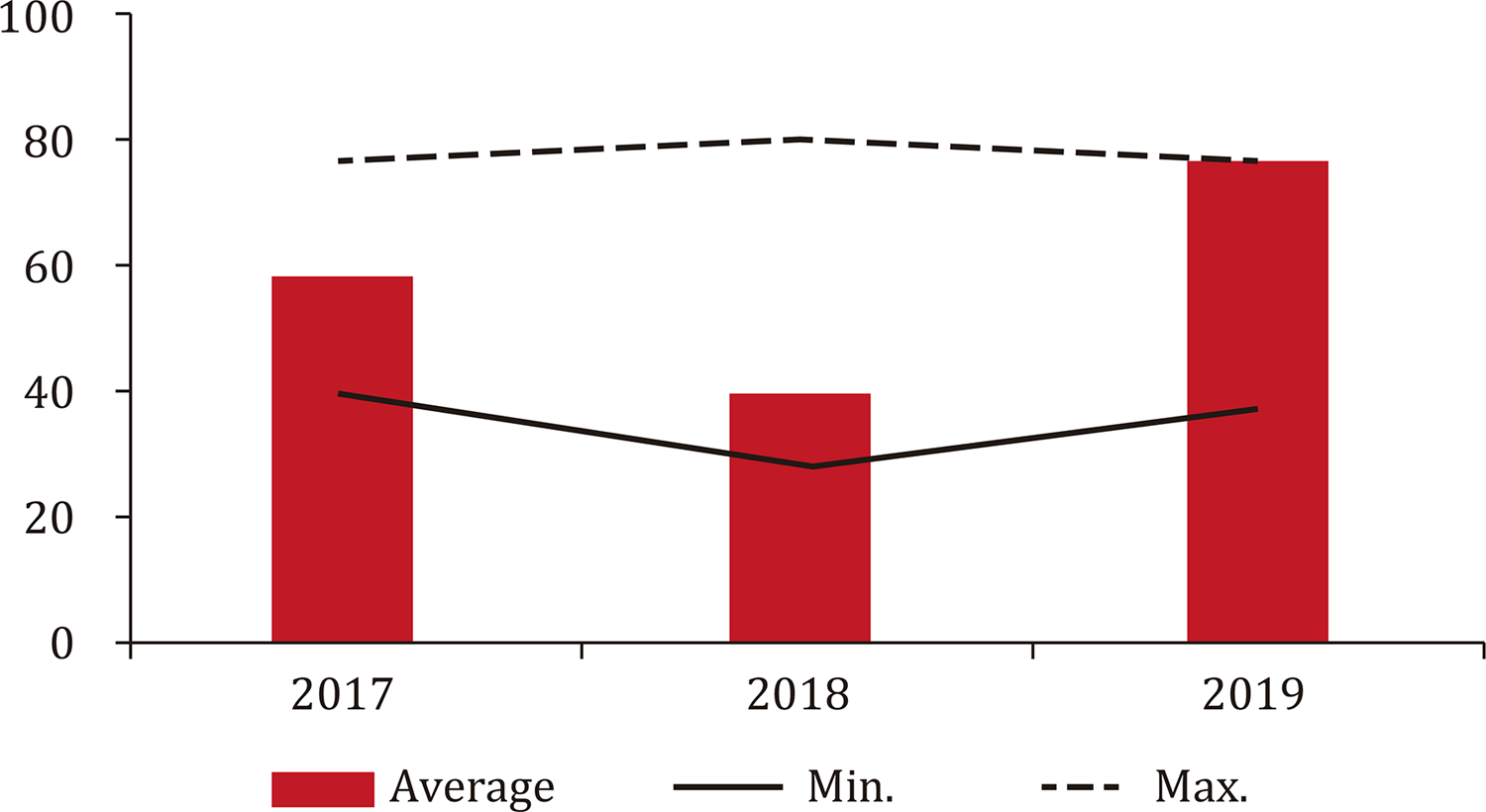
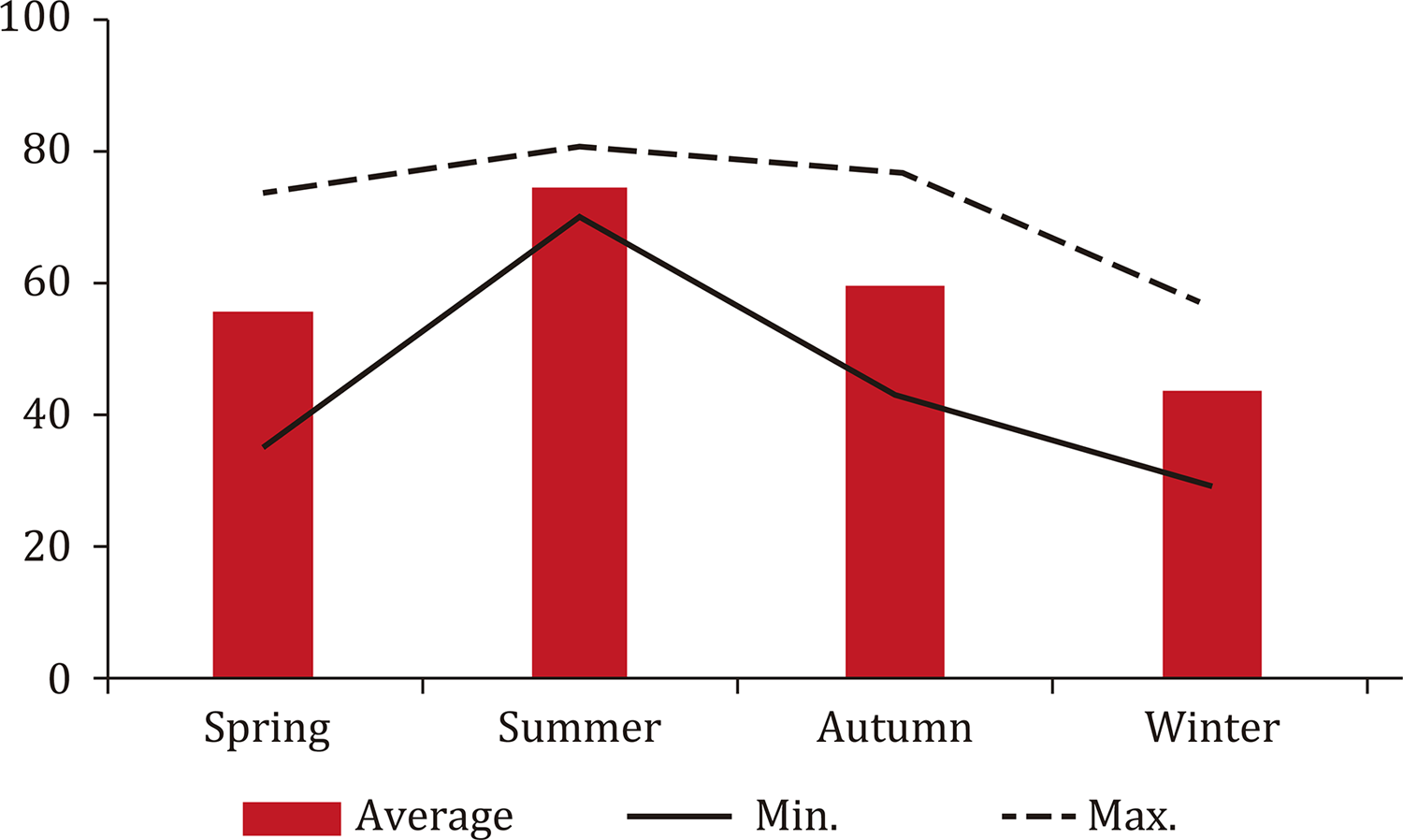
During the research, the THI was calculated every 60 min, and for a given day it represented the average of 60-min values in that day. The lowest average value of the THI was recorded in year 2018 (48.50±11.67%, AVG±SD), and the highest in 2019 (59.75±8.60%) (Figure 1). The number of THI measurements by year was 446, 430, and 141, respectively, and by season it was 256, 60, 386, and 315. Differences in average THI values by year were not statistically significant (P>0.05). By season, the THI values ranged from 43.12±5.51% in winter to 74.61±3.76% in summer (Figure 2), and the difference in the average THI value during summer compared with winter was highly significant (P<0.01).

During the three years of research, 1,017 ejaculates were taken from 32 bulls, the average volume of which was 5.12±2.16 mL. Of the total number of ejaculates, 941 samples passed the first check, density of ejaculate, containing on average 1,370.95±688.03 × 10⁶/mL spermatozoa. The gross motility of spermatozoa was determined in 924 sperm samples, with an average score of 3.24±0.91, that is, semen that was of medium density with more than 50-70% progressively motile spermatozoa. Of a total of 1,017 ejaculates, 462 ejaculates passed the freezing test, and an average of 472.38±177.42 doses of semen were obtained. Moreover, 376 ejaculates passed the semen motility test after thawing, with an average motility of 0.524±0.086.
The intensity of heat stress measured 60 days before semen collection (approximated as the beginning of spermatogenesis) showed no statistically significant effect (P>0.05) on the amount of ejaculate, which ranged from 4.89±1.91 (moderate stress) to 5.61±2.16 mL (very strong stress), as well as sperm motility after freezing, which ranged from 0.49±0.08 (moderate stress) to 0.54±0.08 (mild stress) (Table 2). A significant effect (P<0.05) of heat stress at the beginning of spermatogenesis on density of ejaculate was established, which ranged from 1,170.34±680.27 × 10⁶/mL (very strong stress) to 1,588.65±687.12 × 10⁶/mL (strong stress), as well as the effect on gross motility of spermatozoa, which was the worst in conditions of very strong stress (2.91±0.96) and the best when there was no stress (3.62±0.71) (Table 2). When it comes to the number of frozen doses per ejaculate, heat stress at the beginning of spermatogenesis had a very significant effect (P<0.01), and the lowest number of doses was recorded in conditions of moderate stress (396.6±157.71), and the highest in conditions of strong stress (507.01±173.03) (Table 2).
In the conditions when heat stress was measured on the day of semen collection, its highly significant influence (P<0.01) on the amount and density of the ejaculate was recorded. The smallest amount of ejaculate ranged from 4.18±1.95 mL (very strong stress) to 5.34±2.21 mL (mild stress), while the density of semen ranged from 1,189.19±668.23 × 10⁶/mL (very strong stress) to 1,509.64±736.67 × 10⁶/mL (mild stress). Although the worst results for gross sperm motility, number of frozen doses and motility after freezing were obtained under the influence of very strong stress, the influence of heat stress measured on the day of semen collection was not statistically significant (P>0.05) (Table 2).
The amount of ejaculate by year (2017-2019) varied highly significantly (P<0.01) and it was, respectively, 4.74±1.98, 5.25±2.11, and 5.88±2.58 mL. Sperm motility was 2.92±0.95, 3.45±0.81, and 3.67±0.7, while the number of doses obtained per ejaculate was 426.24±159.08, 472.32±180.77, and 540.74±173 (Table 3). The average values of density of ejaculate by years were 1,162.21±686.89, 1,525.2±601.27, and 1,583.6±757.32 × 10⁶/mL, respectively, and the influence of the year was significant (P<0.05). The influence of year on sperm motility after thawing was not statistically significant (P>0.05) and was 0.5±0.09, 0.54±0.08, and 0.52±0.09, respectively (Table 3).
The effect of the season was significant (P<0.05) with the density of ejaculate; the lowest density was recorded in bulls that produced during spring (1,142±691.22 × 10⁶/mL), and the highest in bulls that produced during autumn (1,589.58±637.25 × 10⁶/mL). Other indicators of sperm production did not variate significantly (P>0.05) depending on the semen harvesting season (Table 4).
A highly significant influence (P<0.01) of the age of bulls on the amount of ejaculate was recorded, which was 5.25±1.98, 4.58±1.97, and 5.49±2.34 mL per age, respectively (≤24, 25-35, and ≥36 months), on sperm motility (3.28±0.94, 3.07±0.91, and 3.37±0.86), and on the number of frozen doses (454.97±169.86, 409.25±163.01, and 522.29±177.33), while it was significant (P<0.05) on the density of ejaculate (1,359.32±676.01, 1,299.3±734.34, and 1,441.15±649.28 × 10⁶/mL) and sperm motility after thawing (0.52±0.09, 0.51±0.08, and 0.53±0.08) (Table 5).
4. Discussion
Heat stress has always existed, but it was probably less pronounced than today. There are many reasons, mostly related to the large population of our planet, water and air pollution, increased CO2 and methane emissions, etc. In Northern Europe, by year 2050, the air temperature is expected to increase by 1.5 to 3 ℃ compared with average temperatures in the period 1961-1990, and in Southern Europe by 2 to 3 ℃ (Matović et al., 2013). When it comes to precipitation in Serbia, an increase in the amount of precipitation is expected in the north of the country, but also a decrease in the south. A significant increase in the number of tropical days is expected (Stričević et al., 2019). All living things will be exposed to heat stress, and it will affect all areas of life and work, including agriculture and animal husbandry/livestock production.
Very similar THI values in the Netherlands in 2016 in March (spring) and August (summer) were reported by Llamas Luceño et al. (2020a). Most authors consider that heat stress begins with THI≥72. It depends on air temperature and relative air humidity, so the critical value of the THI index can be obtained even at lower temperatures if the humidity is high (Dunn et al., 2014). Some authors believe that, in fact, THI = 68 marks the beginning of heat stress (Segnalini et al., 2011; Carter et al., 2011; Carabaño et al., 2014).
Examining the impact of stress on cattle, a significant number of researchers report that breeds originating from Bos indicus tolerate elevated temperatures more easily compared with those originating from Bos taurus and this is explained by better thermoregulation (Wettemann and Boehmer, 2014; Seifi-Jamadi et al., 2019; Morrell, 2020). The existence of bulls that are more tolerant to heat was also observed, and it is desirable to include this criterion in the selection/breeding of bulls (Netherton et al., 2022) and cows (Vuković et al., 2018).
An increase in the ambient temperature leads to an increase in body temperature (Dikmen and Hansen, 2009), and bulls’ response to this is sweating and breathing more frequently, consuming more water and accelerating blood flow. To ensure normal spermatogenesis, the temperature in the testicles must be 2-6 °C, lower than the body temperature, or according to some authors, 4-5 °C. The sweat glands of the scrotal sac, its smooth muscles, and scrotal and testicular blood flow play an important role in optimizing scrotal temperature (Thundathil et al., 2012; Wettemann and Boehmer, 2014; Morrell, 2020). Otherwise, spermatogenesis is impaired, which leads to impaired fertility and sterility. In their research on mice, Kastelic et al. (2019) established that hyperthermia itself is the cause of thermal effects on sperm, and that hypoxia does not significantly increase its impact, nor is it mitigated by hyperoxia.
Most authors believe that heat stress affects both the quantity and quality of semen, spermatogenesis, sperm maturation, but also the ability to freeze and the quality of semen after thawing (Garcia-Oliveros et al., 2022), fertilization success (Rahman et al., 2013; Llamas-Luceño et al., 2020b), and early embryonic development (Llamas Luceño et al., 2020a).
In the initial phase of spermatogenesis, subsequent to the effect of heat stress, changes occur on the head of the spermatozoa, and the potential of the mitochondrial membrane changes; later, the mobility of the spermatozoa and the potential of the mitochondrial membrane decrease, the number of abnormal spermatozoa increases, and DNA defragmentation increases as well as lipid peroxidase. Early spermatogenesis begins seven to nine weeks after the effect of heat stress, and recovery is observed after 10-11 weeks (Llamas Luceño et al., 2020a; Garcia-Oliveros et al., 2022; Capela et al., 2022). Similar effects on sperm quality (sperm concentration, number of progressively motile spermatozoa, and number of abnormal spermatozoa) are also reported by Wettermann and Boehmer (2014) and Seifi-Jamadi et al. (2019). Reduction of sperm freezing ability by 14 to 18% after severe heat stress, reduced motility of spermatozoa after thawing, and a reduced number of throats in the non-return test by more than 4% are cited as serious problems by Llamas-Luceño et al. (2020b). An increase in cell death due to the effect of heat stress, a decrease in the number of blastocysts, an increase in the number of apoptotic cells, and the changed ratio of certain cell parts in blastocysts are detected, which affect the embryo’s ability to survive (Seifi-Jamadi et al., 2019; Llamas Luceño et al., 2020a). Al-Kanaan et al. (2015) considered that the effect of heat stress is lower in bulls that have a longer interval between jumps.
In this study, heat stress did not affect the amount of ejaculate when it was measured at the beginning of spermatogenesis (P>0.05), which can be partly explained by the fact that the bulls producing at that time produced better quality semen, i.e. those individuals that were less susceptible to heat stress, which were mostly older bulls that had been in exploitation longer. On the other hand, the THI index measured on the day of semen collection had a highly significant effect on the amount of ejaculate (P<0.01), which is in accordance with the research of other authors, and in our case, it can be interpreted as the fact that both during spring and autumn, there were days with high THI values, when the semen was collected from most of the bulls. A similar amount of ejaculate is reported in the research of Chikhaliya et al. (2018), somewhat more in the study by Das et al. (2017) and Pathak et al. (2018), while Paldusova et al. (2014) reported significantly higher amounts of ejaculate in Simmental bulls, similar to Snoj et al. (2013).
In accordance with the results of the majority of authors, the lowest density of ejaculate concentration of sperm (P<0.05) is recorded in periods of the highest heat stress and at the start of spermatogenesis and on the day of semen collection. Sharma et al. (2017) reported the lowest density of ejaculate in conditions of very strong heat stress. Similar values of density of ejaculate were established by Prathap et al. (2017) and Bhave et al. (2020), and lower values by Paldusova et al. (2014) and Chikhaliya et al. (2018).
Unfortunately, in the Centre for Reproduction and Embryo Transfer, spermatozoa morphology and sperm motility were not analysed, but only gross motility was examined, which was significantly influenced (P<0.05) by THI measured at the beginning of spermatogenesis, and the obtained values were in line with the research of other authors. Although the lowest gross motility of spermatozoa was also found at the time of high heat stress during semen collection, the influence of THI was not significant (P>0.05).
The number of produced doses is primarily a function of the amount of semen and the concentration of spermatozoa, provided that the other conditions for the quality of the semen are met. The lowest number of doses (396.6±157.71) in our research was obtained in conditions of moderate stress at the beginning of spermatogenesis (P<0.01), since the smallest amount of ejaculate and a lower concentration of spermatozoa were also established in that period. This can be explained by the process of spermatogenesis, because in the period of three to six weeks after the effect of very strong heat stress, sperm motility, plasma membrane integrity, and the number of normal spermatozoa are all reduced, and early spermatogenesis occurs after seven to nine weeks, and recovery occurs after 10-11 weeks (Garcia-Oliveros et al., 2022). The lowest number of frozen doses was also found during strong heat stress on the day of ejaculate collection (P>0.05), which is close to the research of Al-Kanaan et al. (2015).
No significant influence of the THI on sperm motility after freezing (P>0.05) was established either when heat stress was measured at the beginning of spermatogenesis or at the time of semen collection.
The age of bulls also affects spermatogenesis and the quality and quantity of semen produced. According to Morrell (2020) and Majic Balic et al. (2012), young bulls are more susceptible to heat stress than older bulls, but the impact of heat stress on the quality of spermatogenesis is more pronounced in older bulls and has by 3.8 times more negative impact on the quality of frozen sperm (Llamas-Luceño et al., 2020b). According to research by Paldusova et al. (2014), older bulls have a significantly higher (P<0.01) amount of ejaculate and lower sperm concentration compared with younger ones. A similar trend is established for the amount of ejaculate by Bhave et al. (2020) and Snoj et al. (2013), as well as Majic Balic et al. (2012), noting that the differences in the total number of spermatozoa and progressive motility are not statistically significant (P>0.05).
In our study, the largest amount of ejaculate was found in the oldest bulls, which is in line with the research of other authors, but the oldest bulls included in our study also had the highest density of semen, which is not the case in other studies. The reason for this may be the fact that in the group of older bulls there were those that were selected/bred for the quality and quantity of semen, while in the younger group, there were bulls whose semen was collected and the results of biological tests were pending. Ahmad et al. (2003) found a significantly higher amount of ejaculate, sperm motility, and number of doses in bulls aged 3-5 years compared with younger and older bulls, which is in line with our research.
Seasons during the year vary depending on the climate, but are always related to atmospheric temperatures, precipitation amounts, air humidity, and the duration of the photoperiod, and as such, affect the production of bull semen (Morrell, 2020). In fact, the influence of the season is a less precise method, compared with THI, to assess the influence of climatic factors on spermatogenesis and the quality of native sperm. In research carried out in tropical and subtropical conditions, the seasons are generally divided into summer, winter, and rainy season, and in temperate continental conditions into spring, summer, autumn, and winter.
Studying the quality of native ejaculates of three bulls of different breeds, Dhami et al. (2021) found no significant (P>0.05) effect of season, although the highest amount of ejaculate and number of abnormal spermatozoa have been established in the monsoon season, motility and number of live spermatozoa during winter, and the highest concentration during summer. According to Bhave et al. (2020), Gir bulls achieve the best results in semen production during summer, which can be explained by better spermatogenesis taking place during lower atmospheric temperatures. Unlike them, bulls of the same breed, according to research by Das et al. (2017), have the best results of native sperm quality during winter (ejaculate amount, sperm concentration, and motility), but also the lowest sperm motility after thawing.
In moderately continental conditions, according to Snoj et al. (2013), the highest amount of ejaculate is obtained during summer, and the lowest in winter, with the Brown Swiss bulls then having the highest number of spermatozoa. Majic Balic et al. (2012) found that young bulls have lower semen motility during summer than during spring.
Certain deviations from the literature data should be explained, first of all, as the consequence of the size of the Reproduction Centre, its purpose and the market it supplied, there was no need for greater semen production, and therefore during the summer months, semen was not taken from all the bulls, only from the individuals that had good semen quality in the previous period.
5. Conclusions
There is a noticeable trend that high temperature and air humidity adversely affect spermatogenesis and the quantity and quality of semen. It is recommended to prepare bulls for semen collection in less favourable temperature conditions, select individual animals that are more tolerant to high temperatures and air conditioning facilities. It can be helpful to extend the interval between two semen collections or, in extreme conditions, not to collect semen at all. This can significantly affect the improvement of the quality and quantity of semen, fertilization, embryogenesis, and thus, through better reproduction, increase the profitability of cattle production.
Acknowledgments
This paper is the result of research under a contract for the implementation and financing of scientific research in 2024 between the Institute for Science Application in Agriculture, Belgrade, and the Ministry of Science, Technological Development and Innovation, number 451-03-66/2024-03/200045.
References
- Ahmad, M.; Asmat, M. T.; Rehman, N. U. and Khan, M. Z. 2003. Semen characteristics of Sahiwal bulls in relation to age and season. Pakistan Veterinary Journal 23:202-206.
-
Al-Kanaan, A.; Köning, S. and Brügemann, K. 2015. Effects of heat stress on semen characteristics of Holstein bulls estimated on a continuous phenotypic and genetic scale. Livestock Science 177:15-24. https://doi.org/10.1016/j.livsci.2015.04.003
» https://doi.org/10.1016/j.livsci.2015.04.003 -
Bhave, K. G.; Jawahar, K. T. P.; Kumarasamy, P.; Sivakumar, T.; Joseph, C.; Shirsath, T.; Deshmukh, P. and Venkataramanan, R. 2020. Genetic and non-genetic factors affecting semen production and quality characteristics of Gir cattle breed under semi-arid climate. Veterinary World 13:1714-1718. https://doi.org/10.14202/vetworld.2020.1714-1718
» https://doi.org/10.14202/vetworld.2020.1714-1718 -
Biniová, Z.; Duchácek, J.; Stádník, L.; Doležalová, M. and Hájek, R. 2017. Effects of climatic conditions on bovine semen characteristics. Acta Universitatis Agriculturae et Silviculturae Mendelianae Brunensis 65:17-23. https://doi.org/10.11118/actaun201765010017
» https://doi.org/10.11118/actaun201765010017 -
Capela, L. ; Leites, I. ; Romão, R. ; Lopes-da-Costa, L. and Pereira, R. M. L. N. 2022. Impact of heat stress on bovine sperm quality and competence. Animals 12:975. https://doi.org/10.3390/ani12080975
» https://doi.org/10.3390/ani12080975 -
Carter, B. H.; Friend, T. H.; Sawyer, J. A.; Garey, S. M.; Alexander, M. B.; Carter, M. J. and Tomaszewski, M. A. 2011. Effect of feed-bunk sprinklers on attendance at unshaded feed bunks in drylot dairies. The Professional Animal Scientist 27:127-132. https://doi.org/10.15232/S1080-7446 (15)30459-9
» https://doi.org/10.15232/S1080-7446 (15)30459-9 -
Carabaño, M. J.; Bachagha, K.; Ramón, M. and Díaz, C. 2014. Modeling heat stress effect on Holstein cows under hot and dry conditions: selection tools. Journal of Dairy Science 97:7889-7904. https://doi.org/10.3168/jds.2014-8023
» https://doi.org/10.3168/jds.2014-8023 -
Chikhaliya, P. S.; Ahlawat, A. R.; Solanki, G. S.; Raval, R. J.; Vala K. B. and Verma, A. D. 2018. Physical seminal attributes of Gir bull semen. International Journal of Current Microbiology and Applied Sciences 7:1152-1159. https://doi.org/10.20546/ijcmas.2018.707.139
» https://doi.org/10.20546/ijcmas.2018.707.139 - Das, S.; Sana, D.; Gupta, T.; Chowdhury, S.; Chakraborti, A.; Biswas, J. and Sarkar, S. 2017. Seasonal variation in semen production parameters of Gir bulls reared under tropical climate. Indian Journal of Animal Reproduction 38:49-50.
- Dhami, A. J.; Suthar, V. S.; Chaudhari, D. V. and Hadiya, K. K. 2021. Effect of heat stress on sperm production, oxidative markers and their association in native breeding bulls. Indian Journal of Veterinary Sciences and Biotechnology 17:39-44.
-
Dikmen, S. and Hansen, P. J. 2009. Is the temperature-humidity index the best indicator of heat stress in lactating dairy cows in a subtropical environment? Journal of Dairy Science 92:109-116. https://doi.org/10.3168/jds.2008-1370
» https://doi.org/10.3168/jds.2008-1370 -
Dunn, R. J. H.; Mead, N. E.; Willett, K. M. and Parker, D. E. 2014. Analysis of heat stress in UK dairy cattle and impact on milk yields. Environmental Research Letters 9:064006. https://doi.org/10.1088/1748-9326/9/6/064006
» https://doi.org/10.1088/1748-9326/9/6/064006 -
Ekine-Dzivenu, C.; Mrode, R.; Oyieng, E.; Komwihangilo, D.; Lyatuu, E.; Msuta, G.; Ojango, J. M. K. and Okeyo, A. M. 2020. Evaluating the impact of heat stress as measured by temperature-humidity index (THI) on test-day milk yield of small holder dairy cattle in a sub-Sahara African climate. Livestock Science 242:104314. https://doi.org/10.1016/j.livsci.2020.104314
» https://doi.org/10.1016/j.livsci.2020.104314 -
Garcia-Oliveros, L. N.; Arruda, R. P.; Batissaco, L.; Gonzaga, V. H. G.; Nogueira, V. J. M.; Florez-Rodriguez, S. A.; Almeida, F. S.; Alves, M. B. R.; Pinto, S. C. C.; Nichi, M.; Losano, J. D. A.; Kawai, G. K. V. and Celeghini, E. C. C. 2022. Chronological characterization of sperm morpho-functional damage and recovery after testicular heat stress in Nellore bulls. Journal of Thermal Biology 106:103237. https://doi.org/10.1016/j.jtherbio.2022.103237
» https://doi.org/10.1016/j.jtherbio.2022.103237 -
Herbut, P. and Angrecka, S. 2018. Relationship between THI level and dairy cows' behaviour during summer period. Italian Journal of Animal Science 17:226-233. https://doi.org/10.1080/1828051X.2017.1333892
» https://doi.org/10.1080/1828051X.2017.1333892 -
Kastelic, J. P.; Wilde, R. E.; Bielli, A.; Genovese, P.; Rizzoto, G. and Thundathil, J. 2019. Hyperthermia is more important than hypoxia as a cause of disrupted spermatogenesis and abnormal sperm. Theriogenology 131:177-181. https://doi.org/10.1016/j.theriogenology.2019.03.040
» https://doi.org/10.1016/j.theriogenology.2019.03.040 -
Kucevic, D.; Plavšic, M.; Trivunovic, S.; Radinovic, M. and Bogdanovic, V. 2013. In?uence of microclimatic conditions on the daily production of dairy cows. Biotechnology in Animal Husbandry 29:45-51. https://doi.org/10.2298/BAH1301045K
» https://doi.org/10.2298/BAH1301045K -
Lees, A. M. ; Sejian, V. ; Wallage, A. L. ; Steel, C. C. ; Mader, T. L. ; Lees, J. C. and Gaughan, J. B. 2019. The impact of heat load on cattle. Animals 9:322. https://doi.org/10.3390/ani9060322
» https://doi.org/10.3390/ani9060322 -
Llamas Luceño, N.; Angrimani, D. S. R.; Bicudo, L. C.; Szymanska, K. J.; Van Poucke, M.; Demeyere, K.; Meyer, E.; Peelman, L.; Mullaart, E.; Broekhuijse, M. L. W. J. and Van Soom, A. 2020a. Exposing dairy bulls to high temperature-humidity index during spermatogenesis compromises subsequent embryo development in vitro. Theriogenology 141:16-25. https://doi.org/10.1016/j.theriogenology.2019.08.034
» https://doi.org/10.1016/j.theriogenology.2019.08.034 -
Llamas-Luceño, N.; Hostens, M.; Mullaart, E.; Broekhuijse, M.; Lonergan, P. and Van Soom, A. 2020b. High temperature-humidity index compromises sperm quality and fertility of Holstein bulls in temperate climates. Journal of Dairy Science 103:9502-9514. https://doi.org/10.3168/jds.2019-18089
» https://doi.org/10.3168/jds.2019-18089 -
Majic Balic, I.; Milinkovic-Tur, S.; Samardžija, M. and Vince, S. 2012. Effect of age and environmental factors on semen quality, glutathione peroxidase activity and oxidative parameters in Simmental bulls. Theriogenology 78:423-431. https://doi.org/10.1016/j.theriogenology.2012.02.022
» https://doi.org/10.1016/j.theriogenology.2012.02.022 - Matovic, G.; Gregoric, E. and Glamoclija, D. 2013. Crop production and drought in Serbia in light of climate change. p.264-286. In: Agriculture in Serbia and Portugal: Recent Developments and Economic Policy Implications. Faculty of Economics of the University of Coimbra, Coimbra, Portugal.
-
Morrell, J. M. 2020 Heat stress and bull fertility. Theriogenology 153:62-67. https://doi.org/10.1016/j.theriogenology.2020.05.014
» https://doi.org/10.1016/j.theriogenology.2020.05.014 -
Netherton, J. K.; Gunn, A.; Robinson, B. R.; Villaverde, A. I. S. B.; Colyvas, K.; Wise, C.; Russo, T.; Dowdell, A.; Ogle, R. A. and Baker, M. A. 2022. The seasonal effect of temperature on bull semen quality: the emergence of heat-sensitive and heat-tolerant bulls. Research Square. https://doi.org/10.21203/rs.3.rs-1157467/v1
» https://doi.org/10.21203/rs.3.rs-1157467/v1 - Pathak, P. K.; Dhami, A. J. and Chaudhari, D. V. 2018. Seminal attributes, freezability and their interrelationships in zebu cattle and buffalo bulls from central Gujarat. Indian Journal of Veterinary Sciences and Biotechnology 14:1-8.
- Prathap, P.; Sejian, V.; Madijagan, B.; Krishnan, G.; Archana, P. R.; Jou, A. and Bhatta R. 2017. Heat stress impact on semen production in bulls. In: National Conference on Adaptation Interventions for Climate Resilient Agriculture in Coastal Agro-ecosystems. Acharya N. G. Ranga Agricultural University, Guntur, Andhra Pradesh, India.
- Paldusova, M.; Kopec, T.; Chladek, G.; Hosek, M.; Machal, L. and Falta, D. 2014. The effect of the stable environment and age on the semen production in the Czech Fleckvieh bulls. MendelNet 2014:178-182.
-
Rahman, M. B.; Kamal, M. M.; Rijsselaere, T.; Vandaele, L.; Shamsuddin, M. and Van Soom, A. 2013. Altered chromatin condensation of heat-stressed spermatozoa perturbs the dynamics of DNA methylation reprogramming in the paternal genome after in vitro fertilisation in cattle. Reproduction, Fertility and Development 26:1107-1116. https://doi.org/10.1071/RD13218
» https://doi.org/10.1071/RD13218 -
Segnalini, M.; Nardone, A.; Bernabucci, U.; Vitali, A.; Ronchi, B. and Lacetera, N. 2011. Dynamics of the temperature-humidity index in the Mediterranean basin. International Journal of Biometeorology 55:253-263. https://doi.org/10.1007/s00484-010-0331-3
» https://doi.org/10.1007/s00484-010-0331-3 -
Seifi-Jamadi, A.; Kohram, H.; Zhandi, M.; Llamas Luceño, N.; Leemans, B.; Henrotte, E.; Latour, C.; Demeyere K.; Meyer, E. and Van Soom, A. 2019. 139 Heat stress has a deleterious effect on bull semen quality and subsequent embryo development. Reproduction, Fertility and Development 32:196-196. https://doi.org/10.1071/RDv32n2Ab139
» https://doi.org/10.1071/RDv32n2Ab139 -
Sharma, M.; Yaqoob, B.; Singh, A.; Sharma, N. and Rawat, S. 2017. Effect of temperature humidity index on semen quality of bovine bull. International Journal of Current Microbiology and Applied Sciences 6:1822-1830. https://doi.org/10.20546/ijcmas.2017.612.206
» https://doi.org/10.20546/ijcmas.2017.612.206 -
Snoj, T.; Kobala, S. and Majdic, G. 2013. Effects of season, age, and breed on semen characteristics in different Bos taurus breeds in a 31-year retrospective study. Theriogenology 79:847-852. https://doi.org/10.1016/j.theriogenology.2012.12.014
» https://doi.org/10.1016/j.theriogenology.2012.12.014 - Stricevic, R.; Prodanovic, S.; Ðurovic, N.; Petrovic Obradovic, O. and Ðurovic, D. 2019. Climate change impacts on Serbian agriculture. Report on observed climate change impacts on agriculture in Serbia and future projections of climate impacts based on different scenarios regarding future emissions. United Nations Development Programme, Belgrade.
-
Thundathil, J. C.; Rajamanickam, G. D.; Kastelic, J. P. and Newton, L. D. 2012. The effects of increased testicular temperature on testis-specific isoform of Na + /k + -ATPase in sperm and its role in spermatogenesis and sperm function. Reproduction in Domestic Animals 47(Suppl. 4):170-177. https://doi.org/10.1111/j.1439-0531.2012.02072.x
» https://doi.org/10.1111/j.1439-0531.2012.02072.x -
Vukovic, A. J.; Vujadinovic, M. P.; Rendulic, S. M.; Djurdjevic, V. S.; Ruml, M. M.; Babic, V. P. and Popovic, D. P. 2018. Global warming impact on climate change in Serbia for the period 1961-2100. Thermal Science 22:2267-2280. https://doi.org/10.2298/TSCI180411168V
» https://doi.org/10.2298/TSCI180411168V - Wettemann, R. P. and Boehmer, B. H. 2014. Influence of heat stress on male fertility. p.257-263. In: Proceedings of Applied Reproductive Strategies in Beef Cattle. K-State Research and Extension, Stillwater, OK.
Edited by
-
Editors:
José Nélio de Sousa SalesFabiana Fernandes Bressan