 Prevalence of occupational acne in healthcare professionals during the COVID-19 pandemic: systematic review
Abstract
Objective To estimate the prevalence of occupational acne associated with the use of N95, FFP2 or FFP3 masks by health professionals during the COVID-19 pandemic.
Methods A systematic review of prevalence studies, guided by the Joanna Briggs Institute’s evidence synthesis manual. The searches were carried out between April and June 2024 in the PubMed, Embase, Web of Science, SciELO, and Scopus databases, published between 2020 and the months in which the search strategy was conducted. The combined prevalence was calculated from the individual results of the studies.
Results 13 studies were selected, in which 3,959 health professionals participated. 864 cases of occupational acne were identified, resulting in a combined prevalence of 21.8%. Higher prevalences were observed in females and in those who wore masks for a long time. The data, obtained mainly through non-validated questionnaires and applied digitally, showed heterogeneity.
Conclusion Occupational acne induced by the use of respirator masks is a relevant occupational risk, affecting over one fifth of healthcare professionals that participated in the included studies. Considering the pandemic context, prevalence may have been underestimated due to difficulties in recording cases.
Keywords:
Acne; N95 Respirators; Occupational Dermatosis; Health Professionals; COVID-19; Occupational Health
Resumo
Objetivo Estimar a prevalência de acne ocupacional associada ao uso de máscaras N95, FFP2 ou FFP3 por profissionais de saúde durante a pandemia da covid-19.
Métodos Revisão sistemática de estudos de prevalência, orientada pelo manual de síntese de evidências do Instituto Joanna Briggs. As buscas foram realizadas, entre abril e junho de 2024, nas bases PubMed, Embase, Web of Science, SciELO e Scopus, publicados entre 2020 e os meses de condução da estratégia de busca. A partir dos resultados individuais dos estudos, foi calculada a prevalência combinada.
Resultados Foram selecionados 13 estudos, nos quais participaram 3.959 profissionais de saúde. Foram identificados 864 casos de acne ocupacional, resultando em prevalência combinada de 21,8%. Prevalências mais altas foram observadas em pessoas do sexo feminino e naquelas que faziam uso prolongado de máscaras. Os dados, obtidos principalmente por meio de questionários não validados e aplicados via digital, apresentaram heterogeneidade.
Conclusão A acne ocupacional induzida pelo uso de máscaras respiratórias constitui um risco laboral relevante, que afetou mais de um quinto dos profissionais de saúde que participaram dos estudos revisados. Considerando o contexto pandêmico, a prevalência pode ter sido subestimada devido às dificuldades para o registro dos casos.
Palavras-chave:
Acne; Respiradores N95; Dermatose Ocupacional; Profissionais de Saúde; Covid-19; Saúde do Trabalhador
Introduction
Throughout the COVID-19 pandemic, healthcare professionals have presented various physical disorders, including skin, respiratory, musculoskeletal, neurological, urinary, and circulatory problems, associated with the use of personal protective equipment (PPE) at work1. Among these, skin alterations, or occupational dermatoses, were the most frequently reported adverse events2.
Occupational dermatoses are skin conditions for which a relationship with work can be proven. They are defined as any alterations to the skin, mucous membranes, or appendages, directly or indirectly caused, conditioned, maintained, or aggravated by physical (such as heat, cold, and radiation), chemical (organic and inorganic chemicals), mechanical (pressure, friction, and vibration), or biological (bacteria, viruses, fungi, and parasites) agents present in the occupational environment and in work activities3-5.
Studies carried out during the COVID-19 pandemic revealed that occupational dermatoses related to the use of PPE affected approximately 70% of healthcare workers, with face masks - especially N95 masks (or equivalent) - being the main culprits. Prolonged and continuous use of the N95 mask can result in a variety of cutaneous adverse events, including pain, exacerbation of pre-existing skin diseases, contact dermatitis, and pressure injuries6,7. Another skin manifestation frequently observed is acne related to the use of PPE, also known as occupational acne8,9.
Disposable masks and respirators come in different filter options. N95 respirators (North American standard, certified by the Centers for Disease Control and Prevention) block at least 95% of particles larger than 0.3 μm, including bacteria and viruses. Similarly, in Europe, FFP2 respirators offer a minimum filtration efficiency of 94%, while FFP3 respirators reach up to 99%, both of which are widely used to protect healthcare workers10,11.
Reports of acneiform rashes in healthcare workers before the COVID-19 pandemic were relatively rare in the literature12. In the pandemic context, cumulative evidence from systematic reviews points to a high occurrence of cases of occupational dermatoses13,14. Despite the high prevalence of these adverse events, it is likely that the real magnitude is even higher, due to the lack of recording of cases. The overload of health services during the pandemic has made it difficult to formally record dermatoses considered to be of lesser severity, and the lack of specific protocols for characterizing acne as an occupational condition has contributed to the heterogeneity of the data and the underestimation of the occurrence15,16.
The occlusion of the skin by the use of masks can cause dysbiosis of the skin flora, retention of biofluids, and increased skin temperature, factors associated with the development of dermatoses related to heat and sweat. Moreover, the rubbing of masks can induce mechanical acne and friction dermatitis, as well as exacerbating pre-existing inflammatory skin conditions17.
Although the exact mechanism is not fully understood, mechanical pressure and friction, associated with the hot and humid microclimate generated by the prolonged use of face masks - especially the tight-fitting N95 mask - can cause an occlusive effect on the ducts of the pilosebaceous units, contributing to the development of acne lesions. Furthermore, the mucosa can be colonized by bacteria that increase the microbial load on the surrounding skin, influencing the occurrence of acne, with Propionibacterium acnes being the main bacterial etiological agent18.
The main complications associated with occupational dermatoses include secondary infections (including COVID-19), pigmentation changes, scars, physical and emotional sequelae, as well as possible impacts on working capacity. These consequences compromise not only individual health, but also quality of life, self-esteem and the permanence of these workers in their jobs, resulting in significant economic and social repercussions for the health system19,20.
In view of the above, the aim of this review is to estimate the prevalence of occupational acne associated with the use of N95, FFP2 or FFP3 masks by healthcare workers during the covid-19 pandemic.
Methods
This is a systematic review of prevalence studies, reported in accordance with the Preferred Reporting Items for Systematic Reviews and Meta-Analyses (PRISMA) guidelines21 and guided by the Joanna Briggs Institute - JBI Manual for Evidence Synthesis22.
The protocol of this systematic review is registered in the International Prospective Register of Systematic Reviews (PROSPERO), accessible through the identification number CRD42024542446.
The study was conducted based on the following research question: what scientific evidence exists on the prevalence of occupational acne associated with the use of N95, FFP2 or FFP 3 respirators by healthcare workers during the COVID-19 pandemic?
The search for relevant studies was carried out in the following databases: PubMed/MEDLINE (National Library of Medicine, Bethesda, MD), Embase (Elsevier, Amsterdam, Netherlands), SciVerse SCOPUS (Elsevier), Scientific Electronic Library Online – SciELO, and Web of Science - Main Collection. The databases were accessed through the Capes Journal Portal. The search was carried out from April to June 2024, with no restrictions on the publication year.
Moreover, a search was carried out in the gray literature, including thesis and dissertation banks, government reports, and conference abstracts not published in journal supplements, i.e. with restricted circulation. The pre-publication repository MedRxiv: (https://www.medrxiv.org/) was also consulted.
The search strategy adopted the following structure: (N95 OR “face mask” OR “medical mask” OR FFP2 OR FFP3) AND (“healthcare worker” OR “health professional” OR “medical staff” OR “healthcare personnel” OR “health worker”) AND (acne OR “occupational acne” OR “acneiform eruptions” OR “acne vulgaris”) AND (COVID-19 OR “SARS-CoV-2” OR “novel coronavirus”). Filters: 2020-2024.
The following were considered for inclusion: (i) cross-sectional studies as a methodological design; (ii) any healthcare professional directly involved in patient care; (iii) other individuals involved in the care process, such as administrative staff; (iv) studies conducted during the covid-19 pandemic, in any care setting; (v) use of respirator masks (N95, FFP2, FFP3); (vi) first use or reuse and/or reprocessing of masks; (vii) any sample size.
Exclusion criteria included: (i) studies that evaluated other types of equipment for the proposed outcomes; (ii) studies that investigated different outcomes; (iii) inadequate methodological designs for estimating prevalence; (iv) studies unavailable in full.
All the studies retrieved were screened and assessed for eligibility by two independent reviewers (PPO and JLSA). In the event of disagreement, a third reviewer (MMD) assisted in the decision-making process. Selection took place in two phases:
-
First screening: in this phase, the reviewers have access to only limited information - title, abstract, citation details, and keywords - and, based on this preliminary data, decide whether the publication has the potential to meet the inclusion criteria.
-
Second screening: complete reading of the studies selected for inclusion in the systematic review.
The data was previously organized in a Microsoft Excel spreadsheet and then shared with the reviewers. No reference management software or AI tools were used in this process.
After defining the studies included in the sample, internal validation was carried out, involving assessment of methodological quality and risk of bias. Methodological quality was determined using the Appraisal for Cross-Sectional Studies (AXIS)23 tool, a critical appraisal system that considers both the study design and the quality of the reports.
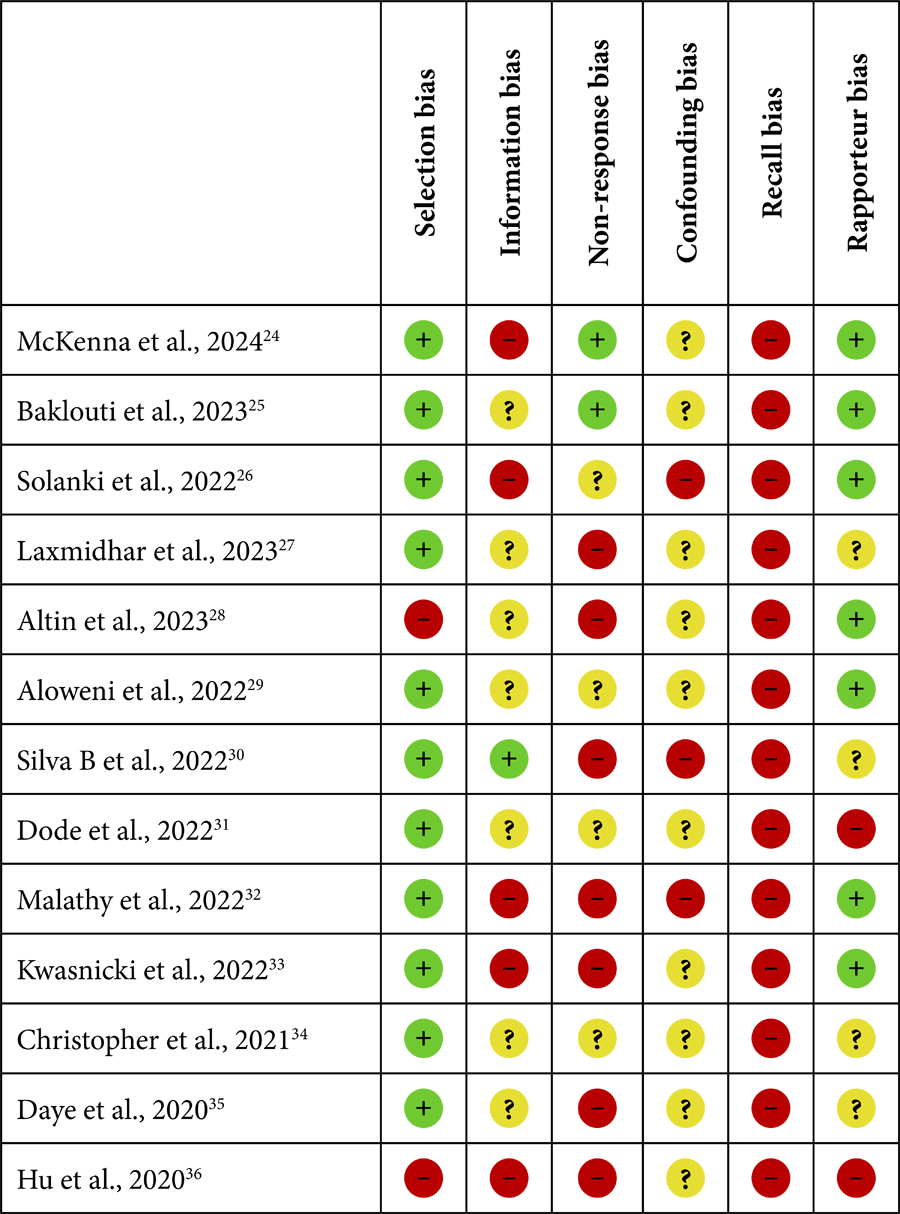
The risk of bias was assessed based on the presence of different types of bias commonly identified in prevalence studies, including selection, information, non-response, recall, confounding, and reporter bias.
The qualitative synthesis involved extracting the relevant data from the studies, including authors, year of publication, country of origin, number of participants, distribution of participants by gender, and mean age. And the clinical characteristics of the lesions: number of events (prevalence), anatomical location and staging.
From each study, we extracted the sample size and the prevalence of acne among healthcare workers associated with the use of respirator masks. Based on this data, the combined prevalence was estimated.
To present the data, we used a flowchart (PRISMA) to illustrate the study selection process; tables to describe the general characteristics of the studies; and figures to represent internal validity (methodological quality and risk of bias).
Results
By applying the search strategy in different databases and complementary sources, 181 potentially relevant studies were retrieved (Figure 1).

Flowchart of the literature search according to the Preferred Reporting Items for Systematic Reviews and Meta-Analysis
We included 13 cross-sectional studies, published between January 2020 and June 2024, which reported the prevalence of occupational acne associated with the use of N95, FFP2, or FFP3 respirators. The sum of the number of participants in these studies resulted in 3,959 healthcare professionals, ranging from 61 to 592 participants per study. They worked in the care of COVID-19 patients during the pandemic, in different clinical settings, including urgent care, outpatient care, home care, hospitalization in wards and intensive care units, among others. 864 cases of occupational acne were identified, corresponding to a combined prevalence of 21.8%.
The data from the studies is limited in terms of the clinical characteristics of the lesions, as well as the initial presentation or exacerbation of pre-existing conditions. None of the included studies provided detailed dermatological diagnoses of the clinical presentation of acneiform eruptions.
In terms of geographical location, the included studies were widely distributed throughout the world, demonstrating the comprehensiveness of the search strategy (Table 1).
The distribution by country was as follows: Australia (n=1)24, Brazil (n=2)30-31, China (n=1)36, India (n=3)26,27,32, Indonesia (n=1)34, United Kingdom (n=1)33, Singapore (n=1)29, Tunisia (n=1)25, and Turkey (n=2)28,35.
Women made up the largest proportion of participants, totaling 2,493 (62.9%). One study did not report the sex/gender distribution26. It was unclear whether the included studies considered sex or gender as variables, and presented only binary classification categories, without considering gender diversity.
The main professional categories were nursing (nurses and technicians) with 1,644 (41.5%) participants, followed by doctors, with 1,421 (35.8%) individuals. Two manuscripts categorized all non-medical professionals as paramedics25,26. One study included administrative professionals31, while another included a large number of medical students34.
The studies presented different ways of reporting the age of the participants, which prevents the definition of a single value for this variable. Despite this, the average age was less than 40 years, regardless of the differences in data recording methods.
Only one study34 used the STROBE (Strengthening the Reporting of Observational Studies in Epidemiology) checklist to standardize the reporting of cross-sectional studies, making it easier to assess their limitations, strengths and the generalizability of the results.
The assessment of the methodological quality of the studies, carried out using the AXIS tool, is shown below (Figure 2).

Of all the studies, five24,26,32,33,36 did not justify the sample size and received a negative evaluation, although the objectives and methodological design were appropriate in most cases.
None of the included studies provided justification or additional information on individuals who refused to participate or withdrew from the study. Studies that did not report data on non-response were classified as uncertain in this respect, while those with a high number of non-respondents received a negative evaluation in this regard. The evaluation considered the percentage of responses obtained in questionnaires: 400/186 (46.5%)27, 120/82 (68.3%)28, 458/398 (86.8%)30, 500/415 (83.0%)32, 225/178 (79.1%)33.
The ethical aspects of the research were duly declared by all the studies included. Similarly, information on financial support, or the lack of it, was adequately documented.
A relevant aspect refers to the absence of detailed information on the application of statistical methods to obtain and analyze the results in the studies. Those that did not adequately describe the methodological structure were classified as “uncertain” on this item. This limitation also had an impact on the evaluation of the interpretation of the results (Figure 3).

In general, the participants were considered representative of the universe studied, suggesting no selection bias. However, one study was classified as high risk for this type of bias due to the small number of participants36.
Considering that data was collected using non-validated questionnaires and applied remotely, a potential risk of bias was assumed in this area. Moreover, studies with a high proportion of non-respondents received negative evaluations. It should be noted that there was no standardization between the studies in terms of the instruments used for data collection, which may have contributed to the heterogeneity of the results.
All the studies presented a high risk of bias in the “recall” domain, since the answers were based on self-reporting by the participants. Studies that did not discuss their limitations were considered to have potential reporting bias, as were those that received funding.
Discussion
This systematic review found a combined prevalence of 21.8% of cases of acne related to the use of N95 respirators or equivalent, highlighting the relevance of this occupational dermatosis among healthcare professionals who use these devices in their work activities.
Mask-related acne is clinically characterized by the appearance of lesions of recent onset or the exacerbation of pre-existing acne, most commonly affecting the mask line and the lower face. A distinctive feature of this condition is the temporal association with the continuous use of the mask, with symptom relief observed during intermittent periods without its use, which shows the direct effect of the device on the skin37.
The occurrence of these lesions is favored by mechanical pressure, friction, and the hot and humid microclimate under the device. Intrinsic factors, such as genetic predisposition, hormonal changes, pre-existing acne, scars, and previous systemic treatment, as well as extrinsic factors, including mask quality, time of continuous use, inadequate hygiene, stress, and smoking, can aggravate the condition. The combination of these factors increases the prevalence and severity of occupational acne38-41.
It is worth noting that the studies included did not evaluate the intrinsic or extrinsic factors that could influence the occurrence of occupational acne. This limitation may represent a determining factor for the clinical heterogeneity observed between the studies, so that the results specifically represent the impact of wearing respirator masks. Only one study25 validated the questionnaire used to obtain information on the occurrence of occupational acne.
The prolonged use of respirator masks is the most important risk factor for the development of facial dermatoses, including acne. A systematic review and meta-analysis evaluating 24 observational studies with the general population and healthcare professionals found a combined prevalence of acne of 31% (95% CI: 26%; 37%)42. In addition to time of use, female gender and the presence of pre-existing acne were also associated with the exacerbation of lesions, corroborating the findings of individual studies which highlight greater susceptibility in women and in individuals with a history of acne43-46.
From this perspective, the length of time respirator masks are worn can be a modifiable risk factor in the workplace. Adjustments to the duration of use or strategic breaks can contribute to the prevention and mitigation of adverse skin reactions in healthcare workers, especially those most susceptible to occupational acne42,47.
Females are more susceptible to developing occupational acne related to the use of respirator masks, highlighting the importance of considering hormonal and physiological factors48. A survey of healthcare professionals revealed that females were more than five times more likely to develop mask-related acne than males (OR = 5.40; 95% CI: 2.4; 12.1; p < 0.001)49.
Female skin tends to be thinner and more sensitive, which can increase susceptibility to irritation caused by prolonged use of respirator masks. These conditions favor the development of acne lesions, especially in areas such as the chin and jaw, regions frequently affected by hormonal acne50.
Genetic and hormonal factors contribute to its etiopathogenesis. Female hormonal fluctuations, such as those that occur during the menstrual cycle, pregnancy, and menopause, can increase sebum production by the sebaceous glands. This excess oil can clog pores and favor the development of acne51,52.
The psychological impact of occupational acne in women is significant and multifaceted. The occurrence of acne related to the use of respirator masks can generate adverse effects, especially in women, due to their greater concern with facial appearance. Studies indicate that these acne lesions are associated with reduced self-esteem, increased anxiety, and depressive symptoms. Furthermore, women report greater emotional and social impact, including discomfort in professional interactions and decreased confidence in the workplace53-55.
The studies included did not provide detailed information on the anatomical location of the lesions. It is known, however, that the sites most frequently affected by acne associated with the use of masks are in the so-called “zero zone of the face”, which includes the cheeks, nose, and chin9,56. Moreover, there were no reports of the use of standardized systems for classifying the severity of lesions, such as the Global Acne Severity Scale (GEA Scale). This is a global scale validated both in photographs and in clinical evaluations, which considers multiple aspects of acne severity, including the number, type, and size of lesions, as well as the presence of inflammation, erythema, and seborrhea57.
The absence of this information limited the possibility of establishing more precisely the anatomical distribution and clinical severity of occupational acne in the studies analyzed. Another limitation of this review was the heterogeneity between the studies, which prevented a meta-analysis from being carried out, and the combined prevalence was estimated from the individual data. In the emergency context of the pandemic, there was not enough time to develop and validate the instruments, which possibly hindered studies with more robust methodologies.
Despite the limitations discussed, the occurrence of occupational acne highlights the need to adopt strategies aimed at mitigating this adverse skin event, considering its potential impacts on workers’ health.
Preventive strategies can reduce the incidence and severity of occupational acne. These include: periodic breaks from mask use when safe, choosing well-fitting and quality devices, proper hygiene, using non-comedogenic dermatological products, moisturizing the skin, and monitoring lesions early. Furthermore, education and guidance programs for healthcare professionals can help identify individual risk factors and adopt effective preventive measures8,40,58,59.
Conclusion
Occupational acne induced using respirator masks represents an occupational risk for healthcare professionals, evidenced by a combined prevalence of over 20.0% in the participants of the studies included in this review.
It is important to note that, despite the overload of care and the predominance of more severe events, several studies have systematically recorded the occurrence of these injuries. These efforts are relevant, as they give visibility to occupational acne in a context where underreporting was highly likely.
For future studies, we recommend the adoption of validated tools for the accurate recording of acne lesions induced by respirator masks, as well as the use of the STROBE checklist in the design of cross-sectional studies. Such measures allow for a more rigorous evaluation of the studies and their results.
References
-
1 Manookian A, Dehghan Nayeri N, Shahmari M. Physical problems of prolonged use of personal protective equipment during the COVID-19 pandemic: a scoping review. Nurs Forum. 2022 Sep;57(5):874-84. https://doi.org/10.1111/nuf.12735
» https://doi.org/10.1111/nuf.12735 -
2 Shanshal M, Ahmed HS, Asfoor H, Salih RI, Ali SA, Aldabouni YK. Impact of COVID-19 on medical practice: a nationwide survey of dermatologists and health care providers in Iraq. Clin Dermatol. 2021;39(3):500-9. https://doi.org/10.1016/j.clindermatol.2020.11.010
» https://doi.org/10.1016/j.clindermatol.2020.11.010 -
3 Srinivas CR, Sethy M. Occupational dermatoses. Indian Dermatol Online J. 2022 Dec;14(1):21-31. https://doi.org/10.4103/idoj.idoj_332_22
» https://doi.org/10.4103/idoj.idoj_332_22 -
4 Proietti I, Borrelli I, Skroza N, Santoro PE, Gualano MR, Bernardini N, et al. Adverse skin reactions to personal protective equipment during COVID-19 pandemic in Italian health care workers. Dermatol Ther. 2022 Jun;35(6):e15460. https://doi.org/10.1111/dth.15460
» https://doi.org/10.1111/dth.15460 - 5 Sari ARP, Patria YN, Wiguna OR, Soebono H, Febriana SA. Occupational skin dermatoses among health care workers: a review of adverse skin reactions to personal protective equipment. Dermatol Rep. 2022;14(4):9474.
-
6 Ho WY, Tan LY, Zhao X, Wang D, Lim HL. Epidemiology of occupational dermatoses associated with personal protective equipment use in the COVID-19 pandemic: risk factors and mitigation strategies for frontline health care workers. JAAD Int. 2022 Sep;8:34-44. https://doi.org/10.1016/j.jdin.2022.03.013
» https://doi.org/10.1016/j.jdin.2022.03.013 -
7 Shea H, Puyk K, Tuck M, Kusiak M, Sidhu J, Bucknall T. Evaluation of a care bundle to support healthcare workers wearing N95 masks. Collegian. 2023;30(5):653-9. https://doi.org/10.1016/j.colegn.2023.07.005
» https://doi.org/10.1016/j.colegn.2023.07.005 -
8 Cretu S, Dascalu M, Salavastru CM. Acne care in health care providers during the COVID-19 pandemic: a national survey. Dermatol Ther. 2022 Oct;35(10):e15753. https://doi.org/10.1111/dth.15753
» https://doi.org/10.1111/dth.15753 -
9 Lima Sánchez DN, Chavarría Suárez M, Villarreal Portillo D, Abascal Miguel L, Alayola Sansores A, Martínez Valdivieso LY, et al. Acné y mascarillas faciales durante la pandemia por COVID-19. Lat Am J Clin Sci Med Technol. 2023;5(1):184-93. https://doi.org/10.34141/LJCS1411041
» https://doi.org/10.34141/LJCS1411041 -
10 Regli A, Sommerfield A, Ungern-Sternberg BS. The role of fit testing N95/FFP2/FFP3 masks: a narrative review. Anaesthesia. 2021 Jan;76(1):91-100. https://doi.org/10.1111/anae.15261
» https://doi.org/10.1111/anae.15261 -
11 Peters MD. N95 respirators for health care workers: the importance of fit, comfort, and usability. Med J Aust. 2022 Jul;217(2):83-4. https://doi.org/10.5694/mja2.51618
» https://doi.org/10.5694/mja2.51618 -
12 Cretu S, Dascalu M, Georgescu SR, Salavastru CM. Personal protective equipment use and face acne in health care providers during the COVID-19 pandemic in Romania: A new occupational acne type? J Eur Acad Dermatol Venereol. 2022 Jan;36(1):e18-20. https://doi.org/10.1111/jdv.17679
» https://doi.org/10.1111/jdv.17679 -
13 Radha K, George G, Varghese A, Joseph J, Vijayanarayanan N. Prevalence of physical and psychological impacts of wearing personal protective equipment on health care workers during COVID-19: a systematic review and meta-analysis. Indian J Occup Environ Med. 2022;26(3):140-50. https://doi.org/10.4103/ijoem.ijoem_32_22
» https://doi.org/10.4103/ijoem.ijoem_32_22 -
14 Yang R, Ke Q, Chan SW, Liu Y, Lin H, Li W, et al. A cross-sectional examination of the relationship between nurses' experiences of skin lesions and anxiety and depression during the COVID-19 pandemic: exploring the mediating role of fear and resilience. J Nurs Manag. 2022 Sep;30(6):1903-12. https://doi.org/10.1111/jonm.13638
» https://doi.org/10.1111/jonm.13638 -
15 Altun E, Topaloglu Demir F. Occupational facial dermatoses related to mask use in healthcare professionals. J Cosmet Dermatol. 2022 Jun;21(6):2535-41. https://doi.org/10.1111/jocd.14415
» https://doi.org/10.1111/jocd.14415 -
16 Abdali S, Yu J. Occupational dermatoses related to personal protective equipment used during the COVID-19 pandemic. Dermatol Clin. 2021 Oct;39(4):555-68. https://doi.org/10.1016/j.det.2021.05.009
» https://doi.org/10.1016/j.det.2021.05.009 -
17 Teo WL. The "Maskne" microbiome: pathophysiology and therapeutics. Int J Dermatol. 2021 Jul;60(7):799-809. https://doi.org/10.1111/ijd.15425
» https://doi.org/10.1111/ijd.15425 - 18 Hadžavdic A, Bukvic Mokos Z. Maskne: A new entity in the COVID-19 pandemic. Acta Dermatovenerol Croat. 2021 Dec;29(3):148-53.
-
19 Uthayakumar AK, Panagou E, Manam S, Schauer A, Veraitch O, Walker S, et al. PPE-associated dermatoses: effect on work and wellbeing. Future Healthc J. 2021 Mar;8(1):e67-9. https://doi.org/10.7861/fhj.2020-0210
» https://doi.org/10.7861/fhj.2020-0210 -
20 Duan X, Sun H, He Y, Yang J, Li X, Taparia K, et al. Personal protective equipment in COVID-19: impacts on health performance, work-related injuries, and measures for prevention. J Occup Environ Med. 2021 Mar;63(3):221-5. https://doi.org/10.1097/JOM.0000000000002123
» https://doi.org/10.1097/JOM.0000000000002123 -
21 Page MJ, McKenzie JE, Bossuyt PM, Boutron I, Hoffmann TC, Mulrow CD, et al. The PRISMA 2020 statement: an updated guideline for reporting systematic reviews. BMJ. 2021 Mar;372(71):n71. https://doi.org/10.1136/bmj.n71
» https://doi.org/10.1136/bmj.n71 -
22 Aromataris E, Lockwood C, Porritt K, Pilla B, Jordan Z, editors. JBI manual for evidence synthesis. Adelaide: JBI; 2024 [citado 23 set 2025]. Disponível em: https://synthesismanual.jbi.global
» https://synthesismanual.jbi.global -
23 Downes MJ, Brennan ML, Williams HC, Dean RS. Development of a critical appraisal tool to assess the quality of cross-sectional studies (AXIS). BMJ Open. 2016 Dec;6(12):e011458. https://doi.org/10.1136/bmjopen-2016-011458
» https://doi.org/10.1136/bmjopen-2016-011458 -
24 McKenna K, Bouchoucha S, Redley B, Hutchinson A. Australian health care workers experience of PPE related side-effects: a cross-sectional survey. Front Public Health. 2024 Feb;12:1325376. https://doi.org/10.3389/fpubh.2024.1325376
» https://doi.org/10.3389/fpubh.2024.1325376 -
25 Baklouti M, Ben Ayed H, Maamri H, Ketata N, Rhila F, Yaich S, et al. Adverse effects of personnel protective equipment among first line COVID-19 healthcare professionals: a survey in Southern Tunisia. Infect Dis Health. 2023 Feb;28(1):10-8. https://doi.org/10.1016/j.idh.2022.06.001
» https://doi.org/10.1016/j.idh.2022.06.001 -
26 Solanki AD, Patel NM, Saxena S, Banker K, Shah T. Dermatoses due to personal protective equipment and other protective/preventive measures in COVID-19 pandemic: a study on frontline health care workers. Int J Res Dermatol. 2022;8(1):57-61. https://doi.org/10.18203/issn.2455-4529.IntJResDermatol20214913
» https://doi.org/10.18203/issn.2455-4529.IntJResDermatol20214913 -
27 Laxmidhar R, Desai C, Patel P, Laxmidhar F. Adverse effects faced by healthcare workers while using personal protective equipment during the COVID-19 pandemic in Civil Hospital, Ahmedabad. Cureus. 2023 May;15(5):e38485. https://doi.org/10.7759/cureus.38485
» https://doi.org/10.7759/cureus.38485 -
28 Altin L, Akbiyik A. Skin problems associated with using of personal protective equipment in COVID-19 intensive care units. Nurs Crit Care. 2023 Nov;28(6):985-95. https://doi.org/10.1111/nicc.12956 PMID:37495564
» https://doi.org/10.1111/nicc.12956 -
29 Aloweni F, Bouchoucha SL, Hutchinson A, Ang SY, Toh HX, Bte Suhari NA, et al. Health care workers' experience of personal protective equipment use and associated adverse effects during the COVID-19 pandemic response in Singapore. J Adv Nurs. 2022 Aug;78(8):2383-96. https://doi.org/10.1111/jan.15164
» https://doi.org/10.1111/jan.15164 -
30 Brandao ES, Mandelbaum MHS, Lanzillotti RS, Granja PD, Silva LF, Tonole R. Skin lesions resulting from use of personal protective equipment in the context of COVID-19: a cross-sectional study. J Wound Care. 2022 Dec;31(Sup12 Suppl 12):S22-8. https://doi.org/10.12968/jowc.2022.31.Sup12.S22
» https://doi.org/10.12968/jowc.2022.31.Sup12.S22 - 31 Dode MT, Blois CR, Pereira GA, Eicholz TK. O uso de EPIs faciais durante a pandemia COVID-19: consequências na pele e autoestima de profissionais de saúde. Rev Inspirar Mov Saúde. 2022;22(3):1-13.
-
32 Malathy PA, Daniel SJ, Venkatesan S, Priya BY. A clinico-epidemiological study of adverse cutaneous manifestations on using personal protective equipment among health care workers during COVID-19 pandemic in a tertiary care centre. Indian J Dermatol. 2022;67(4):478. https://doi.org/10.4103/ijd.ijd_1157_20
» https://doi.org/10.4103/ijd.ijd_1157_20 -
33 Kwasnicki RM, Super JT, Ramaraj P, Savine L, Hettiaratchy SP. FFP3 Feelings and Clinical Experience (FaCE). Facial pressure injuries in healthcare workers from FFP3 masks during the COVID-19 pandemic. J Plast Reconstr Aesthet Surg. 2022 Sep;75(9):3622-7. https://doi.org/10.1016/j.bjps.2022.06.057
» https://doi.org/10.1016/j.bjps.2022.06.057 -
34 Christopher PM, Roren RS, Tania C, Jayadi NN, Cucunawangsih C. Adverse skin reactions to personal protective equipment among health care workers during COVID-19 pandemic: a multicenter cross-sectional study in Indonesia. Int J Dermatol Venereol. 2020;3(4):211-8. https://doi.org/10.1097/JD9.0000000000000132
» https://doi.org/10.1097/JD9.0000000000000132 -
35 Daye M, Cihan FG, Durduran Y. Evaluation of skin problems and dermatology life quality index in health care workers who use personal protection measures during COVID-19 pandemic. Dermatol Ther. 2020 Nov;33(6):e14346. https://doi.org/10.1111/dth.14346
» https://doi.org/10.1111/dth.14346 -
36 Hu K, Fan J, Li X, Gou X, Li X, Zhou X. The adverse skin reactions of health care workers using personal protective equipment for COVID-19. Medicine (Baltimore). 2020 Jun;99(24):e20603. https://doi.org/10.1097/MD.0000000000020603
» https://doi.org/10.1097/MD.0000000000020603 -
37 Rudd E, Walsh S. Mask related acne ("maskne") and other facial dermatoses. BMJ. 2021 Jun;373(1304):n1304. https://doi.org/10.1136/bmj.n1304
» https://doi.org/10.1136/bmj.n1304 -
38 Özkesici Kurt B. The course of acne in healthcare workers during the COVID-19 pandemic and evaluation of possible risk factors. J Cosmet Dermatol. 2021 Dec;20(12):3730-8. https://doi.org/10.1111/jocd.14530
» https://doi.org/10.1111/jocd.14530 -
39 Santoro PE, Borrelli I, Gualano MR, Proietti I, Skroza N, Rossi MF, et al. The dermatological effects and occupational impacts of personal protective equipment on a large sample of healthcare workers during the COVID-19 pandemic. Front Public Health. 2022 Jan;9:815415. https://doi.org/10.3389/fpubh.2021.815415
» https://doi.org/10.3389/fpubh.2021.815415 -
40 Spigariolo CB, Giacalone S, Nazzaro G. Maskne: the epidemic within the pandemic. J Clin Med. 2022 Jan;11(3):e152-3. https://doi.org/10.3390/jcm11030618
» https://doi.org/10.3390/jcm11030618 -
41 Chien WC, Tsai TF. The pressurized skin: a review on the pathological effect of mechanical pressure on the skin from the cellular perspective. Int J Mol Sci. 2023 Oct;24(20):15207. https://doi.org/10.3390/ijms242015207
» https://doi.org/10.3390/ijms242015207 -
42 Justin LY, Yew YW. Facial dermatoses induced by face masks: a systematic review and meta-analysis of observational studies. Contact Dermatitis. 2022 Dec;87(6):473-84. https://doi.org/10.1111/cod.14203
» https://doi.org/10.1111/cod.14203 -
43 Lujia C, Hanlong Z, Hui S, Jieying T, Jianmin Y, Weiwei L. Mask-related adverse skin reactions in orientals during COVID-19: Prevalence, social-psychological impacts and risk factors for acne exacerbation. J Cosmet Dermatol. 2023 Feb;22(2):370-7. https://doi.org/10.1111/jocd.15593
» https://doi.org/10.1111/jocd.15593 - 44 Berger D, Caldwell C, Zukowski M, Basting J, Mazur L, Gopaul R. Review of the effect of continuous use and limited reuse of N95 respirators on respirator fit. J Int Soc Respir Prot. 2022;39(1):1-25.
-
45 Damiani G, Gironi LC, Grada A, Kridin K, Finelli R, Buja A, et al. COVID-19 related masks increase severity of both acne (maskne) and rosacea (mask rosacea): Multi-center, real-life, telemedical, and observational prospective study. Dermatol Ther. 2021 Mar;34(2):e14848. https://doi.org/10.1111/dth.14848
» https://doi.org/10.1111/dth.14848 -
46 Montero-Vilchez T, Cuenca-Barrales C, Martinez-Lopez A, Molina-Leyva A, Arias-Santiago S. Skin adverse events related to personal protective equipment: a systematic review and meta-analysis. J Eur Acad Dermatol Venereol. 2021 Oct;35(10):1994-2006. https://doi.org/10.1111/jdv.17436
» https://doi.org/10.1111/jdv.17436 -
47 Yu J, Chen JK, Mowad CM, Reeder M, Hylwa S, Chisolm S, et al. Occupational dermatitis to facial personal protective equipment in health care workers: A systematic review. J Am Acad Dermatol. 2021 Feb;84(2):486-94. https://doi.org/10.1016/j.jaad.2020.09.074
» https://doi.org/10.1016/j.jaad.2020.09.074 -
48 Tunçer Vural A. The development of acne vulgaris due to face masks during the pandemic, risk awareness and attitudes of a group of university students. J Cosmet Dermatol. 2022 Nov;21(11):5306-13. https://doi.org/10.1111/jocd.15120
» https://doi.org/10.1111/jocd.15120 -
49 Berjawi A, Salameh P, Fadel N, El Khoury JR. Mask-acne prevalence and risk factors during the COVID-19 pandemic: a cross-sectional single institution study. Dermatol Ther. 2023;36(1):e9470636. https://doi.org/10.1155/2023/9470636
» https://doi.org/10.1155/2023/9470636 - 50 Raju SP, Sachdev M, Khunger N, Madnani N. Mask acne in skin of color: A significant dermatological condition amidst the COVID-19 pandemic. J Clin Aesthet Dermatol. 2022 Apr;15(4):44-8.
-
51 Bagatin E, Freitas TH, Rivitti-Machado MC, Machado MC, Ribeiro BM, Nunes S, et al. Adult female acne: a guide to clinical practice. An Bras Dermatol. 2019;94(1):62-75. https://doi.org/10.1590/abd1806-4841.20198203
» https://doi.org/10.1590/abd1806-4841.20198203 -
52 Branisteanu DE, Toader MP, Porumb EA, Serban IL, Pinzariu AC, Branisteanu CI, et al. Adult female acne: clinical and therapeutic particularities (Review). Exp Ther Med. 2022 Feb;23(2):151. https://doi.org/10.3892/etm.2021.11074
» https://doi.org/10.3892/etm.2021.11074 -
53 Sim HS, How CH. Mental health and psychosocial support during healthcare emergencies - COVID-19 pandemic. Singapore Med J. 2020 Jul;61(7):357-62. https://doi.org/10.11622/smedj.2020103
» https://doi.org/10.11622/smedj.2020103 -
54 Beri K, Singh D, Beri D. The Emotional impact of Maskne in the Era of COVID-19: a commentary on the future of a multi-modality approach. Cosmetics. 2022;9(3):45. https://doi.org/10.3390/cosmetics9030045
» https://doi.org/10.3390/cosmetics9030045 -
55 Dabash D, Ahmed S, Malik R, Khan N, Javed A. Prevalence of acne and its impact on quality of life and psychological well-being among women aged 18-25 years. Sci Rep. 2024;14(1):12345. https://doi.org/10.1038/s41598-024-55094-6
» https://doi.org/10.1038/s41598-024-55094-6 -
56 Yaqoob S, Saleem A, Jarullah FA, Asif A, Essar MY, Emad S. Association of acne with face mask in healthcare workers amidst the COVID-19 outbreak in Karachi, Pakistan. Clin Cosmet Investig Dermatol. 2021 Oct;14:1427-33. https://doi.org/10.2147/CCID.S333221
» https://doi.org/10.2147/CCID.S333221 -
57 Dréno B, Poli F, Pawin H, Beylot C, Faure M, Chivot M, et al. Development and evaluation of a Global Acne Severity Scale (GEA Scale) suitable for France and Europe. J Eur Acad Dermatol Venereol. 2011 Jan;25(1):43-8. https://doi.org/10.1111/j.1468-3083.2010.03685.x
» https://doi.org/10.1111/j.1468-3083.2010.03685.x -
58 Keng BM, Gan WH, Tam YC, Oh CC. Personal protective equipment-related occupational dermatoses during COVID-19 among health care workers: a worldwide systematic review. JAAD Int. 2021 Dec;5:85-95. https://doi.org/10.1016/j.jdin.2021.08.004
» https://doi.org/10.1016/j.jdin.2021.08.004 -
59 Sawada Y. Occupational skin dermatitis among healthcare workers associated with the COVID-19 pandemic: a review of the literature. Int J Mol Sci. 2023 Feb;24(3):2989. https://doi.org/10.3390/ijms24032989
» https://doi.org/10.3390/ijms24032989
-
Information on academic work:
Work based on the doctoral thesis of Michel Marcos Dalmedico, entitled “Prevalência de dermatoses ocupacionais relacionadas ao uso de equipamentos de proteção facial por profissionais de saúde durante a pandemia de covid-19: Revisão sistemática e metanálise (Prevalence of occupational dermatoses related to the use of facial protective equipment by healthcare professionals during the COVID-19 pandemic: systematic review and meta-analysis)”, presented in 2024 to the Postgraduate Program in Health Technology at the Pontifical Catholic University of Paraná.
-
Data availability:
The entire dataset supporting the results of this study has been made available in the SciELO Data repository, available from: https://doi.org/10.48331/SCIELODATA.5D4PLU
-
Statement on the Use of Artificial Intelligence:
During the preparation of the article, the artificial intelligence tool ChatGPT (OpenAI), based on the GPT-5.2 model, was used exclusively for language revision purposes. The authors declare that they have fully reviewed and validated all content.
-
Presentation at a scientific event:
The authors declare that the study has not been presented at a scientific event.
-
Funding:
The authors declare that the study was not subsidized.
Edited by
-
Responsible editors:
Kionna Oliveira Bernardes SantosLeila Posenato Garcia
The entire dataset supporting the results of this study has been made available in the SciELO Data repository, available from: https://doi.org/10.48331/SCIELODATA.5D4PLU