
 Socieconomic development after the implementation of the integrated rural sanitation system in Sertão do Pajeú, Pernambuco, Brazil
ABSTRACT
The high rates of water supply shortages in rural communities of Brazil’s semi-arid region highlight the need for management models that expand access and ensure greater efficiency in service delivery. This study aimed to evaluate the impacts of the implementation of SISAR in the Sertão do Pajeú (PE) mesoregion, considering changes in water access, household adaptations, costs, and self-reported health outcomes. Aligned with the previous studies on SISAR, which employed interviews, document analysis, and the Collective Subject Discourse (CSD), this research applied a similar methodological triangulation, consisting of an online survey of 91 households, analysis of secondary indicators, and qualitative interpretation through CSD. The results indicate expanded access to hygiene facilities, a perceived reduction in waterborne diseases, and improvements in operational sustainability within the communities, although water intermittency persists. It is concluded that SISAR contributes to socioeconomic and sanitary advances, and continuous monitoring and adjustments to local specificities are recommended.
Keywords:
Water resources; Water supply; Human development; Semiarid region
RESUMO
Os elevados índices de desabastecimento em comunidades rurais do semiárido brasileiro reforçam a necessidade de modelos de gestão que ampliem o acesso e garantam maior eficiência no abastecimento. O estudo teve como objetivo avaliar os impactos da implantação do SISAR no Sertão do Pajeú (PE), considerando mudanças no acesso à água, adaptações domiciliares, custos e saúde autodeclarada. Em diálogo com estudos anteriores sobre o SISAR, que empregaram entrevistas, análise documental e o Discurso do Sujeito Coletivo (DSC), aplicou-se aqui uma triangulação metodológica semelhante, composta por questionário on-line a 91 domicílios, análise de indicadores secundários e interpretação qualitativa via DSC. Os resultados indicam ampliação do acesso às instalações de higiene, redução percebida de doenças de veiculação hídrica e melhoria na sustentabilidade operacional nas comunidades, embora ainda haja intermitência de água. Conclui-se que o SISAR contribui para avanços socioeconômicos e sanitários, recomendando-se monitoramento contínuo e ajustes às especificidades locais.
Palavras-chave:
Recursos hídricos; Abastecimento de água; Desenvolvimento humano; Semiárido
INTRODUCTION
The universalization of basic sanitation in Brazil assumed new dimensions with the enactment of the Law No. 14.026/2020 (Brasil, 2020), which established the New Legal Framework for Basic Sanitation. This legislation set ambitious national targets: ensuring access to safe drinking water for 99% of the population and achieving 90% coverage of sewage collection and treatment by the year 2033. The country's climatic and hydrogeological heterogeneity poses major challenges to achieve these goals, especially in semi-arid regions, due to the predominance of fractured aquifers, high evapotranspiration rates, and low rainfall patterns (Caiçara et al., 2022; Rodrigues et al., 2022).
Therefore, rural areas face additional difficulties as the dispersion of dwellings and the distance from water sources make providing water supply services more costly (Garrido et al., 2016; Machado et al., 2023). In response to the need for appropriate technologies and stronger community participation, the National Rural Sanitation Program (Brasil, 2019) was created. Different strategies have been implemented in the northeastern semi-arid region, including desalination systems and rainwater harvesting programs to enhance water security for dispersed rural communities.
The Integrated Rural Sanitation System (Sisar) stands out among these initiatives. Created in the state of Ceará in 1996, it is based on a model of community self-management of simplified water supply systems. Structured as a Civil Society Organization, Sisar brings together rural associations, state sanitation companies, and governments at multiple levels, enabling shared management, technical maintenance, socio-environmental education, and institutional strengthening (Castro et al., 2021). The model was later expanded to the states of Bahia and Pernambuco, consolidating itself as a viable alternative for increasing access to drinking water in rural areas.
In the case of Pernambuco, the Pernambuco Water and Sanitation Company (Compesa) adopted the SISAR model in four mesoregions, covering the Sertão of Alto Pajeú and Moxotó, where 32 simplified systems are already operating under community management. Preliminary evidence indicates that this institutional arrangement has contributed to improvements in human development indicators, particularly in the dimensions of longevity and education (Castro et al., 2021).
However, unlike states where SISAR has been consolidated for a longer period such as Ceará, Piauí, and Bahia, which already have a substantial body of studies and evaluations, systematic analyses of its socioeconomic impacts and long-term effectiveness remain scarce in Pernambuco. Thus, the identified gap refers specifically to the lack of in-depth investigations within the Pernambucan context, rather than to an absence of literature on the model in other regions of the country.
In this regard, studies such as those by Castro et al. (2021), which analyzed the relationship between SISAR and human development in municipalities of Ceará, and Araújo & Silva (2024), which examined shared management in public policies for rural sanitation, provide an important theoretical and methodological foundation for understanding the phenomenon.
Overall, these studies employ comparative quantitative approaches supported by aggregated indicators at municipal scales and extended time series, enabling broader interterritorial analyses. This research draws on that framework but differs by adopting a finer analytical scale, specifically the community level, focusing on the localities served by SISAR in the Sertão do Pajeú. This approach makes it possible to identify dynamics and effects that more aggregated studies tend to obscure.
Therefore, the present study aims to evaluate the socioeconomic impacts of implementing the Integrated Rural Sanitation System in the Sertão do Pajeú region of Pernambuco. The methodological approach adopted is based on comparative analyses of social and economic indicators, focusing on community management of rural sanitation in Brazil’s northeastern semi-arid region.
METHODOLOGY
A methodological triangulation approach was adopted in this study, combining qualitative and quantitative research methods to collect information and draw robust inferences. The methodological triangulation combines: (i) a survey applied using Google Forms (n = 91) to measure social demographic and perception variables; (ii) quantitative analysis of the five open-ended questions via Collective Subject Discourse (DSC), aiming to synthesize representative discussions; and (iii) consulting the secondary sources (SISAR Alto Pajeú, 2023; Castro, 2015; Castro et al., 2021) to contextualize temporal health effects. This integration allows to confront local perception with objective indicators and to identify convergences and divergences on the reported impacts.
Study area
According to data from the Brazilian Institute of Geography and Statistics (Instituto Brasileiro de Geografia e Estatistica, 2022), the state of Pernambuco has a population of 9,058,155 inhabitants, ranking as the seventh most populous state in Brazil. The rural population is estimated at approximately 1,908,773 million people (Brasil, 2021).
The Alto Pajeú region has a rural population density between 50 and 100 inhabitants per square kilometer across most of its territory. Given these demographic and environmental conditions, the adoption of a solution like Sisar is essential for the local population.
Thus, the present study was applied to the systems operating under the SISAR Alto Pajeú model, as shown in Table 1. All systems were included in the research in order to obtain a temporal continuum, with systems operating for periods ranging from six (6) months to eight (8) years, totaling 18 SISAR systems.
Operational water supply systems under the SISAR model, comprising 18 units with operating times ranging from six months to eight years.
Most of these systems draw water from the Pajeú Pipeline, an infrastructure managed by Compesa, which conveys water from the São Francisco River transposition to municipalities in the Sertão do Pajeú. It is noteworthy that the majority of these systems were implemented by the State Government of Pernambuco through the Secretary Department of Water Resources and Sanitation.
Sample selection
Within the Sisar Alto Pajeú system, 2,041 active household water connections were registered during the study period. Given the large number of active connections and corresponding families, a probabilistic sampling approach was adopted to ensure representativeness.
The probability sampling method adopted was without replacement (Silva, 2004), and the samples were drawn from the pool of communities under study. The sample size was determined based on the estimated population (Equation 1).
where, = initial sample size (without finite population correction); = critical value associated with the confidence level (1.96 for 95%); σ = estimated population standard deviation (set at 0.5, a conservative value in the absence of prior estimates); E = defined margin of error (10%). For this study, the following parameters were adopted, Z=1.96, corresponding to the 95% confidence level; σ = 0.5, a conservative estimate of population variability; E = 0.10 (10% allowable absolute error).
Based on these values, the minimum required sample size was n ≈ 96 respondents. However, after the data collection period, 91 valid questionnaires were obtained, representing 4.46% of the total 2,041 active water connections. Although slightly below the initial estimate, this number keeps the sampling error within an acceptable range for the chosen confidence level, and therefore constitutes the final sample analyzed in this study.
Questionnaire administration
The questionnaire was administered remotely using the Google Forms platform, which was shared through the messaging groups of the community associations supplied by SISAR. The response period for the forms extended from April 8 to April 21, 2024. It is important to note that administering the questionnaire exclusively through a digital medium (Google Forms) may introduce selection bias, particularly by limiting the participation of families with restricted internet access, low connectivity, or limited familiarity with digital tools. This methodological limitation may have led to the underrepresentation of digitally vulnerable groups, a factor that should be considered when interpreting the results. Nevertheless, the adoption of this strategy was necessary due to the wide geographic dispersion of the communities and the logistical difficulties associated with simultaneous in-person access to all 18 systems analyzed.
Development of the evaluation questionnaire
The questionnaire consisted of 40 questions organized into thematic blocks. Among them, five open-ended qualitative questions were included with the aim of capturing residents’ perceptions, experiences, and interpretations regarding the functioning of the systems and the impacts observed in their communities. To analyze these responses, the Collective Subject Discourse (CSD) method was employed, a technique that synthesizes individual statements into discourses representative of the collective by identifying key expressions and central ideas (Lefèvre & Lefèvre, 2003).
The procedure involved: (i) identifying the Key Expressions (KE) within individual responses; (ii) formulating the Central Ideas (CI); and (iii) constructing the Synthesized Discourses that reflect the collective viewpoints of the participants. This method allowed for a structured understanding of residents’ perceptions concerning changes in water supply, system operation, and the social impacts resulting from the implementation of SISAR.
The remaining questions were closed-ended and objectively structured, enabling the application of the survey method and the descriptive quantitative analysis of the sample. To ensure greater methodological transparency, Table 2 below presents the explicit relationship between the specific objectives, targets, corresponding questionnaire items, and the expected outcomes.
Specific objectives, targets, related questions, and expected outcomes of the SISAR Alto Pajeú survey.
In addition, the study’s limitations and potential directions for future research were discussed.
RESULTS AND DISCUSSION
Rural sanitation presents significant descriptive challenges due to its multidimensional nature, encompassing socioeconomic, cultural, and environmental aspects. Nevertheless, the mixed-methods approach adopted in this study allowed for a comprehensive understanding of the specificities of the rural communities studied.
Socioeconomic pattern of communities benefiting from Sisar
The data indicates that most households consist of three members (42.5%), followed by those with four (26%) and two members (12%). Only five of the 91 households (5.5%) are composed of single residents, while 13 (14%) comprise families with five or more members.
Regarding the presence of children, 68% of households reported at least one minor. Among these latter, 42% correspond to families with one child (38 households), 18% have two children (16 households), and only eight households have three or more. The presence of children in environments lacking adequate sanitation services increases their vulnerability to waterborne diseases (Alencar et al., 2019). Therefore, Sisar emerges as a relevant initiative by providing access to treated water, thereby contributing to improved public health conditions and reducing disease incidence.
Concerning the participation in income transfer programs, 57% of families reported being beneficiaries of initiatives such as Bolsa Família and Mães de Pernambuco, while 43% do not receive any type of assistance. Thus, more than half of the sampled households depend partially or entirely on public income transfer programs, reinforcing the relevance of such policies in reducing social vulnerability and ensuring minimum living conditions.
This reliance on governmental assistance aligns with experiences in other decentralized water supply systems across the Brazilian Northeast. Similar to Sisar Alto Pajeú, Araújo et al. (2024) concluded that the rural sanitation program implemented in Piauí (PROSAR-PI) was effective because it went beyond the infrastructural dimension, incorporating educational initiatives, and ensuring tariff compliance, which is an indispensable factor for system sustainability. Likewise, Castro (2015) demonstrated that, in the case of Sisar Ceará, the continuity of rural water access was directly associated with income transfer programs, which enabled families to maintain regular payments. Thus, it appears that the sustainability of rural supply systems depends not only on the infrastructure in place but also on institutional and socioeconomic arrangements that ensure the households’ capacity to pay, thereby guaranteeing the continuity and efficiency of services.
It is important to note that the current minimum wage in Brazil is BRL 1,412.00 (Brazilian reais). Compared to essential expenses, such as food, transportation, and housing, this amount highlights the financial constraints families face when incorporating additional sanitation-related costs. Thus, the articulation between income transfer programs, community management practices, and public sanitation policies becomes essential for both social inclusion and financial sustainability of water supply systems.
An analysis of household income reveals that most Sisar Alto Pajeú families live on up to one minimum wage. Specifically, 36.5% of families earn half a minimum wage, 47.0% earn exactly one, while 5.5% and 4.4% earn two and three minimum wages, respectively. A small fraction (6.6%) reported incomes above three minimum wages. This data depicts a scenario of high socioeconomic vulnerability, with 83.5% of households falling within an income range of up to one minimum wage.
In 2013, the United Nations Special Rapporteur on the Human Rights to Water and Sanitation, Catarina Albuquerque, highlighted that recognizing water and sanitation as human rights does not imply free service provision. Rather, tariff policies should ensure affordability, preventing families from having to choose between fundamental needs, such as food, health and sanitation (Albuquerque, 2013). The Rapporteur recommended that household expenditure on water should not exceed 3% to 5% of total income and emphasized the adoption of social tariffs as an equity mechanism for vulnerable families.
At Sisar Alto Pajeú, the minimum tariff is BRL 45.00 for households consuming up to 8 m3 of water. Given that 36.5% of families earn half the minimum wage, their expenditure on water represents 6.37% of total household income, which is above the threshold recommended by the United Nations. However, for families with a per capita income of one minimum wage, this share decreases to 3.19%, falling within the United Nations recommended range.
Beyond meeting domestic needs, improved water access can foster local economic development by enabling productive diversification and small-scale entrepreneurship. As noted by Castro (2015), reliable water availability supports agricultural activities such as fruit and vegetable cultivation, enhancing income generation and reinforcing households’ capacity to pay for water supply services.
Financially, Sisar Alto Pajeú demonstrated sound management by the end of the 2023 fiscal year. Approximately 83% of revenues were allocated to operational and maintenance expenses, while 17% remained in cash reserves, generating a surplus (SISAR Alto Pajeú, 2023). Additionally, the system expanded from 1,369 to 2,041 connections between 2023 and August 2024, representing a 33% increase in subscribers.
With regard to educational attainment, only 2% of respondents reported no formal education, while 85% had completed high school and 13% held a university degree. Thus, 98% of the participants demonstrated some level of schooling. Castro (2015) observed that low educational attainment and functional illiteracy can hinder understanding of technical information and limit participation in community meetings and decision-making processes. In the case of Sisar Alto Pajeú, the relatively high educational level among respondents supports greater community engagement and comprehension of operational guidelines.
As for housing and sanitary conditions, 84 households (92.3%) reported having a bathroom within their residency, while four (4.4%) lacked one, and three (3.3%) had bathrooms located outside the main unit. Regarding wastewater treatment, Sisar Pernambuco does not yet operate in this sector. In contrast, Sisar Piauí has implemented individual septic tanks systems. Despite challenges related to service planning, especially septic tank cleaning, Sisar Piauí has adopted more structured management and planning strategies (Araújo et al., 2024). Households benefiting from septic tank maintenance pay an additional fixed fee linked to the Sisar Piauí tariff, which in 2013 was BRL 2.50.
Assessment of the financial and social impacts on the communities benefiting from Sisar Alto Pajeú
Implementing water supply systems has proven decisive for reconfiguring socioeconomic dynamics in rural communities, directly affecting both the domestic economy and local social indicators. On that account, analyzing the length of residence in the territory is essential as it allows for a comparative assessment of living conditions before and after system implementation, highlighting the magnitude of the impacts resulting from regular access to drinking water. Based on this purpose, research participants were asked about the duration of their residence in the community (Figure 1).

As shown in Figure 1, 40.7% of respondents have lived in the community for more than ten years, while only 13.0% have resided there for two years or less. According to Castro (2015), prolonged residence in rural communities provides residents with a more consolidated perception of change following the implementation of piped water supply system, as such perceptions are based on continuous lived experiences rather than isolated events.
The collected reports also highlight the diversity of experiences related to the absence of tap water. Most participants reported that they had never previously benefited from such a service before the current system was implemented. Common statements included: "All my life, we have only now gained access to tap water"; "Before Sisar, I lived my life without water"; "Many years"; "61 years"; "41 years"; and "I can’t even remember the time." These narratives demonstrate that, for a considerable portion of interviewees, the absence of a water supply network was so prolonged that many could not even quantify the duration.
When asked about the time since their households were connected to Sisar, 60% reported having received water for over a year, while 40% had been beneficiaries for less than a year. Among the latter, 14% reported that they had started accessing the service less than six months ago and were still adapting to the model implemented.
The arrival of tap water also stimulated structural changes within homes. The data shows that 87% of respondents carried out home upgrades, notably the installation of internal plumbing, which enabled the adoption of showers as part of daily routines. Before system implementation, only 2% of households had internal water connections. Conversely, 11% had not yet made such modifications, continuing to rely on buckets and hoses connected directly to the water meter, although many expressed the intention to adapt their installations in the near future.
Souza, Machado et al. (2023) highlight that water infrastructure represents a limiting factor and, consequently, a source of vulnerability for rural populations. According to the authors, simple access to the distribution network does not ensure full utilization of water. It is essential to have points of use in bathrooms, kitchens, and laundry rooms to ensure dignified and functional consumption. The data collected in this study corroborates the authors' analysis, showing that water supply only translates into an effective improvement in quality-of-life when accompanied by internal home adaptations.
To better understand prior forms of access, respondents were asked about the sources used before Sisar. Half (50%) depended on water trucks, 35% used wells or springs, and 15% resorted to other alternatives such as ponds, dams, or rainwater reservoirs. Similar situations are discussed by Almeida et al. (2022) and Teixeira et al. (2024), who highlight that, in semi-arid regions, supply through alternative and irregular sources reflects socio-environmental vulnerability, compromising both water security and quality.
Among water-truck users, the reports revealed wide variations in purchased volumes, duration of supply, and prices paid. Some families received free water deliveries from the municipal government or the Army, while others had to purchase it. Reported volumes ranged from 8 m3 to 16 m3, with costs varying between BRL 150.00 and BRL 250.00—and reaching up to BRL 300.00 during drought periods. Supply duration also varied considerably: one interviewee stated that 12,000 liters costing BRL 150.00 lasted 15 days, while another reported purchasing 10 m3 for BRL 120.00 which lasted 50 days.
In addition, reports highlighted the high costs and poor quality of untreated (raw) water: "I used to buy 30 m3 per month, paying between BRL 180.00 and BRL 200.00 per truck of 15 m3 until the end of 2022." Another added: "16,000 liters filled the cistern and lasted 15 days; it started at BRL 200.00, then rose to BRL 250.00, and the water was muddy, unfit for consumption." These statements reveal the precarious conditions and widespread dissatisfaction that existed prior to Sisar’s implementation.
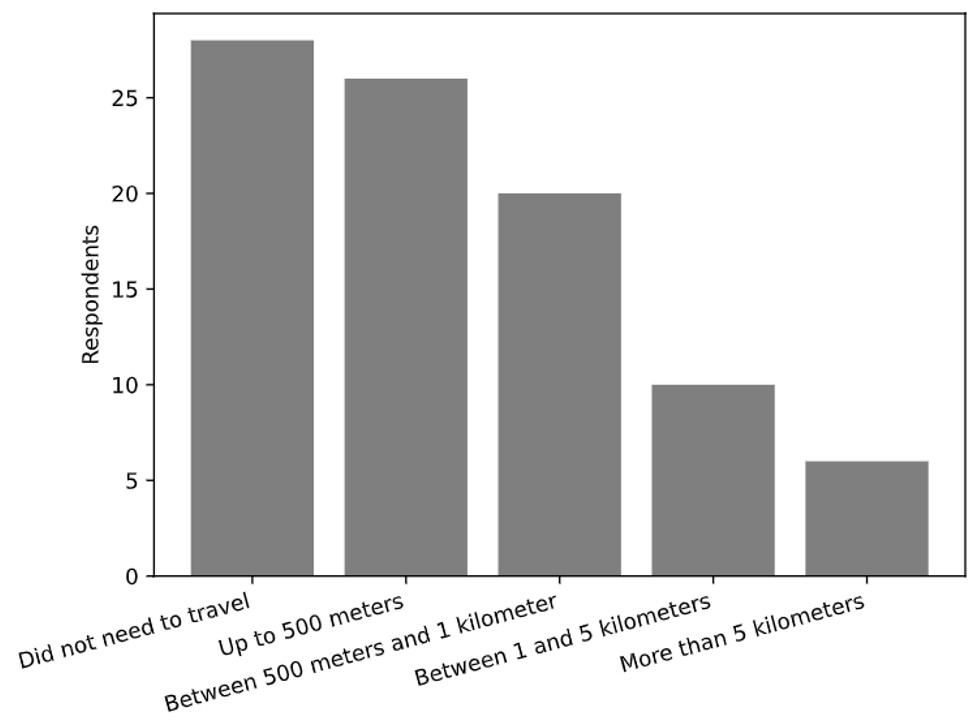
Regarding the distances previously traveled to obtain water, 30.76% of respondents reported not needing to travel because they already had access to water within their homes. In contrast, 28.58% of families needed to travel 1 km, and 21.97% traveled 2 km. Longer distances were less frequent, although still significant: 10.99% reported traveling 3 km, and 7.70% needed to walk 4 km to collect water. The data demonstrated that, although part of the population had direct access to the resources, most still needed to travel regularly, often over long distances, to meet their water needs (Figure 2).

Cruz (2019), when analyzing the effects of Sisar’s intervention in the community of Cristais, Ceará, highlighted that the daily displacement of family members to obtain water was drastically reduced after the system’s implementation. Before that, travel times varied considerably: while some residents mentioned trips lasting 20 to 50 minutes, others reported journeys of more than an hour using ox carts, and in extreme cases, up to two hours.
Similarly, Castro (2015), in a study conducted within the scope of Sisar Ceará, described long water collection routes exceeding six hours. To avoid sun exposure, these trips often took place at night or in the early morning, revealing the vulnerable conditions under which families sought access to water.
These findings align with recent analyses by Nunes et al. (2024) and Ribeiro et al. (2024), which emphasize how the dispersion of housing, the distance from water sources, and the inadequacy of public policies make water supply more costly and limited. Such structural barriers deepen the socioeconomic inequalities faced by rural communities, especially those dependent on family farming and government water supply initiatives.
Regarding household water collection, 78% of respondents reported that the task was shared among all family members, whereas 22% indicated that the responsibility fell primarily on women and children, as men were generally engaged in paid work outside the home. The literature points out that, in contexts of health vulnerability, women and children are primarily responsible for water collection (Graham et al., 2016; Hutton et al., 2007). Silva (2017) adds that, in the absence of adequate sanitation services, women also assume responsibility for solid waste disposal within the household.
In terms of transportation to water sources, 30% of participants reported not traveling, 23% walked to collection points, 25% used ox carts, 9% used automobiles (cars or motorcycles), and 13% outsourced transportation, hiring residents with appropriate vehicles.
After the implementation of the new water supply system, participants were asked how the time previously devoted to water collection was reallocated. Responses differed across households, yet most indicated that the time gained was used for work, study, and rest. Some reported dedicating themselves to agricultural activities, caring for crops and properties, while others mentioned investing in training, such as learning to sew. Women emphasized being able to devote more time to their homes and children. One participant stated: "I am resting due to health problems." Such transformations contribute not only to improving quality of life but also to reducing rural exodus and its consequent strain on urban infrastructure and living conditions.
Prior to the system’s implementation, 56% of households stored water in cisterns, 32% in water tanks, and 12% in barrels. Cisterns remain the predominant storage method in the communities served by Sisar Alto Pajeú, which aligns with Santos et al. (2023), who observed the widespread use of cisterns throughout northeastern Brazil, particularly following the P1MC Program.
Regarding costs, 75% of families fall within the minimum consumption range (up to 8 m3 per month), corresponding to BRL 45.00. Another 16% reported expenditures between BRL 45.00 and BRL 75.00, while 9% exceeded this amount. The tariff composition includes charges for water consumption, electricity costs, and the operator's fee.
With respect to water conservation practices, 96% of respondents indicated that they employed at least one strategy, whereas 4% did not adopt any. The most frequently reported strategies included taking shorter showers, turning off taps while brushing teeth or applying soap, and attending to potential leaks. Water reuse was also widely observed; for example, using laundry water for cleaning bathrooms and flushing toilets, or repurposing dishwashing water to irrigate plants.
From a cost-benefit perspective, 99% of families reported financial savings compared to the previous scenario, when water supply relied on water trucks, which cost an average of BRL 120.00 per 8 m3, higher than the current minimum tariff and often of questionable quality, as the water frequently did not meet drinking standards. Savings were primarily redirected toward household consumption. Women with young children mentioned being able to purchase diapers and milk more regularly, while others invested in courses, livestock, or home improvements.
The arrival of treated water in households marked a milestone in promoting dignity and quality of life for rural families. Among the primary benefits reported, health improvements stand out, largely due to the reduction of waterborne diseases. Of the respondents, 87% reported fewer episodes of illness following the introduction of treated water, while 13% perceived no significant change. This finding is particularly relevant in Pernambuco’s semi-arid region, where high rates of diseases associated with the consumption of contaminated water persist. In 2023 alone, approximately 70,000 cases of acute diarrhea were reported in the state, according to the data from the Notifiable Diseases Information System (Brasil, 2024). Similarly, Monteiro et al. (2024), in a study conducted under the Sisar Moxotó program, observed a correlation between system implementation and reduced hospitalizations for diarrhea in three municipalities, although they call for more detailed data.
Finally, when asked about the main changes perceived after the arrival of water, the participants unanimously reported positive outcomes. Most emphasized the convenience of no longer traveling to collect water, the time gained for family and work activities, and the improvements in health conditions. This corroborates Garrido et al. (2016), who found that 96.5% of residents in communities served by water supply systems recognized significant positive impacts on their lives after gaining access to household water connections.
Evaluation of the operational efficiency of the Sisar Alto Pajeú water supply systems
Understanding the perception of the population served by Sisar Alto Pajeú is a fundamental element for evaluating the operational efficiency of water supply systems. Therefore, respondents were asked about the intermittency of water supply in the analyzed SAAs, specifically regarding the weekly frequency of water availability in households (Figure 3).
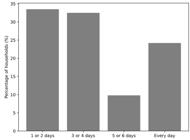
The analysis of water-supply intermittency reveals considerable variability in the regularity of service among households served by the Water Supply Systems (WSS) operating under SISAR Alto Pajeú. The results show that 33.5% of households receive water only 1 to 2 days per week, while 32.5% have access for 3 to 4 days. Only 9.8% reported supply on 5 to 6 days per week, and merely 24.2% have continuous service throughout the week. This pattern indicates a significant structural limitation in the operation of the systems within the study area.
Considering the international normative framework, the observed intermittency constitutes a substantial barrier to the realization of the Human Right to Water (HRW). According to General Comment No. 15 of the United Nations Committee on Economic, Social and Cultural Rights (United Nations, 2002), adequate fulfillment of the HRW requires, among other criteria, continuity, predictability, and reliability of supply, thereby ensuring that users can safely and regularly meet their domestic and hygiene needs. United Nations General Assembly Resolution A/RES/64/292 (United Nations General Assembly, 2010) reinforces this premise by recognizing that regular and safe access to water is indispensable for health, well-being, and human development.
From this perspective, the high levels of intermittency identified in the study area compromise the maintenance of adequate hygiene standards, hinder the safe management of household storage, and increase the risk of contamination during periods of scarcity. Structural causes include dependence on the Pajeú Transmission Line, operational rotation schedules, insufficient local storage capacity, and the high energy costs associated with pumping—limitations that tend to intensify in semi-arid contexts characterized by climatic variability and hydrological constraints.
Considering these challenges, measures to enhance the operational resilience of the systems are recommended, such as: (i) expanding household and community storage capacity; (ii) integrating complementary supply technologies, including cisterns and modular reservoirs; (iii) improving the hydraulic and energy efficiency of pumping systems; and (iv) implementing remote monitoring systems for rapid fault detection.
Such actions are essential to align water-supply systems with the principles of the Human Right to Water and to improve the quality of life of the populations served by SISAR Alto Pajeú.
Within the systems managed by Sisar Alto Pajeú, 15 rely on the Pajeú pipeline, which conveys water from the São Francisco River transposition. As the pipeline is primarily allocated to urban supply under the management of Compesa, certain rural systems are consequently dependent on the company’s operational schedule, especially during times of rationing.
Even though supply is not continuous throughout the week, 98% of households stated that the amount of water is sufficient to meet domestic needs, while only 2% reported insufficiency. The adoption of storage strategies is also widespread: 96% of respondents maintain reservoirs for use during periods of supply interruption, compared to 4% who do not resort to this practice.
Regarding the uses of treated water, 78% of respondents reported using it exclusively for domestic purposes, 18% for hydrating animals, and 4% for crop irrigation. Previous studies indicate that meetings promoted by Sisar and government agencies in Ceará include educational activities focused on the rational use of water, such as discouraging its use for large animals (Castro, 2015). Similarly, Sisar Alto Pajeú holds meetings with communities before implementation and operation of the systems to present the model and provide guidance on the proper use of water resources.
Concomitantly, for service costs, 92% of respondents considered the tariff fair, while 8% disagreed. The remuneration paid to operators varies according to the number of families served, and according to the Summary Billing Report September 2024 (SISAR Alto Pajeú, 2024), the amounts do not exceed the minimum wage, with the highest amount registered being BRL 1,250.00. It should be noted that the amount is divided proportionally in communities with more than one operator. According to Castro (2015), in Ceará, the operator is a community member elected in a local assembly, and remuneration is established collectively and included in the water bill. In Alto Pajeú, this amount currently corresponds to BRL 7.00 per account (data from August 2024), characterized as financial assistance and not as a formal salary.
The relationship between users and Sisar management was rated as positive: 87% of respondents rated communication as excellent, and 13% as fair, with no negative ratings. SISAR Alto Pajeú has an office at Compesa's headquarters in Afogados da Ingazeira and provides customer services through telephone and WhatsApp. The proximity between community association leaders and the management team, combined with regular community visits, promotes effective communication.
Regarding the quality of distributed water, 93% of respondents rated it as excellent, and 7% as fair, with no negative assessments. This result contrasts with the period prior to system implementation, when water often came untreated from dams. As for the operational model, 98% of participants considered it adequate, while only 2% expressed a contrary opinion, reinforcing the acceptance of the shared management system recently adopted in Pernambuco.
Efficiency in resolving failures was also highlighted. Eighty percent of the respondents stated that problems are solved quickly, while 20% rated the response as partial, with no reports of prolonged delays. Furthermore, over 80% of respondents identified no aspects requiring improvement, reflecting high levels of user satisfaction and suggesting the potential for system expansion to other communities. These findings are consistent with Machado et al. (2021), who identified high satisfaction among users of rural systems in Espírito Santo, despite occasional concerns regarding water quality. Similarly, Amaral et al. (2022) note that positive perceptions of water quality, although influenced by organoleptic characteristics, are strongly related to trust in local management and community involvement in system maintenance.
The spontaneous comments collected at the end of the survey corroborate the quantitative data, highlighting the population's recognition of the work carried out by Sisar Alto Pajeú and their appreciation for regular access to treated water. These results reinforce the acceptance of the community management model and its effectiveness in promoting sustainable rural water supply, consistent with experiences in Russas-CE (Silva et al., 2019). Complementarily, Santos et al. (2025) highlighted the role of social technologies in the territorial development of the Semi-Arid Region of Ceará, encompassing initiatives such as digital inclusion, water resource management, and sustainable agricultural practices, examples include the Mandalla Project and SISAR. These initiatives demonstrate that social technologies effectively address socioeconomic and environmental inequalities, promoting integrated and participatory territorial development.
Study limitations
Despite the contributions of this research, some limitations must be acknowledged to guide the proper interpretation of the results. First, the analysis was based on a specific set of communities in the Sertão do Pajeú, which, although enables an in-depth understanding of the local context, limits the generalization of the findings to the other regions served by SISAR or to rural areas with different sociocultural characteristics. Additionally, the collection of primary data faced challenges related to the questionnaire response rate and the availability of residents to participate in interviews, which may introduce selection and perception biases.
Another limitation relates to the availability of updated secondary data on socioeconomic and operational indicators of the simplified water supply systems. In some cases, gaps or temporal discontinuities require methodological adjustments, such as the use of estimated or aggregated data, which may reduce the accuracy of comparisons across periods.
From an operational standpoint, the assessment of the impacts of the SISAR model did not fully consider exogenous factors such as interannual climate variability, the management capacity of local operators, or recent institutional changes. These elements can influence the results and were not systematically controlled. Finally, the predominantly quantitative nature of the analysis, although appropriate to the study’s objective, does not fully encompass qualitative aspects of community participation, local governance, and users’ perceptions of the service.
Future work
Considering the limitations identified, it is recommended that future research expand on the territorial scope of the analysis, including communities served by SISAR in other mesoregions of Pernambuco and in different states of the Northeast, in order to enable more consistent interregional comparisons. Longitudinal studies are also relevant to assess the sustainability of the community management model over time. Especially in scenarios of climate change and increasing environmental pressures in the semi-arid region.
Another promising line of inquiry involves qualitative and participatory approaches that allow for a deeper understanding of the sociocultural factors influencing the efficiency, acceptance, and continuity of the SISAR model, including aspects such as community engagement, internal conflicts, institutional capacity, and governance dynamics.
It is further suggested that studies explore the relationship between supply intermittency, operational resilience, and the socioeconomic performance of communities, especially in regions with greater geographic dispersion or limited infrastructure. In addition, applied research may investigate technological and organizational adaptations to the SISAR model, focusing on automation strategies, remote monitoring, continuous socio-environmental education, and strengthening of local associations.
Finally, it is recommended to develop comparative models integrating geoprocessing techniques, multicriteria analysis, and water vulnerability indicators, enabling progress toward more robust assessments of the viability and sustainability of community-based rural sanitation management in diverse contexts.
CONCLUSIONS
The implementation of the Integrated Rural Sanitation System (SISAR) in the Sertão do Pajeú has brought about significant changes in the socioeconomic conditions of the households served, demonstrating its role as a strategic instrument for the sustainable development of rural communities in semi-arid regions. The expansion of access to treated water reduced sanitary vulnerabilities and increased water security, with direct effects on health, household economy, and rural productivity.
The social and economic indicators analyzed show that, although inequalities and structural limitations persist, SISAR has contributed to the reduction of waterborne diseases, decreased expenditures on water purchases, and improved conditions for maintaining productive activities. Residents’ perceptions confirm that regular water supply, even when marked by intermittency in some systems, has strengthened the permanence of families in rural areas and reduced migration pressures.
The community-based management model proved to be well aligned with the socio-territorial characteristics of the semi-arid region, fostering participation, shared responsibility, and operational sustainability. Nonetheless, important challenges remain, particularly regarding the lack of adequate sanitation systems, variations in infrastructural quality, and the ongoing need for capacity building among local operators.
Thus, although SISAR represents an effective and innovative solution for rural sanitation, its full consolidation requires structural investments, improvements in operational processes, and the effective integration of water supply, sanitation, and socio-environmental education. Strengthening these dimensions is essential to ensure that the positive impacts identified are maintained and expanded over time.
ACKNOWLEDGEMENTS
The authors would like to thank the projects: APQ-2169-3.01/24 (FACEPE), 88887.689130/2022-00 (CAPES), 406978/2022-0 and 311705/2025-1 (CNPq).
DATA AVAILABILITY STATEMENT
Research data is only available upon request
REFERENCES
- Albuquerque, C. (2013). Report of the United Nations Special Rapporteur on the Human Right to Water and Sanitation USA: United Nations.
- Alencar, L. M., Lima, D. F., & Pereira, A. P. (2019). The impact of basic sanitation on children’s health in rural communities: a study on the importance of treated water. Brazilian Journal of Public Health, 53(4), 142-155.
-
Almeida, V. D. A., Vieira, P. V. M., Ferreira, I. C. S., Silva, N. H. S., & Peixoto, F. S. (2022). Uso das águas subterrâneas e conflito no abastecimento de água em pequena cidade do semiárido Potiguar. Geografia em Atos, 6(2), 92-110. https://doi.org/10.35416/geoatos.20229070.
» https://doi.org/» 10.35416/geoatos.20229070 -
Amaral, K. D. S., Navoni, J. A., & Ferreira, D. M. (2022). Perception of drinking water quality in diffuse rural communities of the semi-arid region of Rio Grande do Norte, Brazil. Ibero-American Journal of Environmental Sciences, 13(9), 262-276. https://doi.org/10.6008/CBPC2179-6858.2022.009.0021
» https://doi.org/10.6008/CBPC2179-6858.2022.009.0021 -
Araújo, I. C. M. A., & Silva, E. F. (2024). Shared management in public policies for rural sanitation. Innovation & Social Technology, 6(16), 120-132. https://doi.org/10.47455/2675-0090.2024.6.16.15189
» https://doi.org/10.47455/2675-0090.2024.6.16.15189 - Araújo, W. F., Gomes, J. M. A., & Carvalho, J. N. F. (2024). Rural sanitation: effects of a participatory intervention in the semi-arid region of Piauí. Latin American Water Management Journal, 21(1), 1-15.
- Brasil. (2019). National Rural Sanitation Program (PNSR) Brasília: National Health Foundation (FUNASA).
- Brasil. (2020). Lei nº 14.026, de 15 de Julho de 2020. Atualiza o marco legal do saneamento básico e altera a Lei nº 9.984, de 17 de julho de 2000, para atribuir à Agência Nacional de Águas e Saneamento Básico (ANA) competência para editar normas de referência sobre o serviço de saneamento, a Lei nº 10.768, de 19 de novembro de 2003, para alterar o nome e as atribuições do cargo de Especialista em Recursos Hídricos, a Lei nº 11.107, de 6 de abril de 2005, para vedar a prestação por contrato de programa dos serviços públicos de que trata o art. 175 da Constituição Federal, a Lei nº 11.445, de 5 de janeiro de 2007, para aprimorar as condições estruturais do saneamento básico no País, a Lei nº 12.305, de 2 de agosto de 2010, para tratar dos prazos para a disposição final ambientalmente adequada dos rejeitos, a Lei nº 13.089, de 12 de janeiro de 2015 (Estatuto da Metrópole), para estender seu âmbito de aplicação às microrregiões, e a Lei nº 13.529, de 4 de dezembro de 2017, para autorizar a União a participar de fundo com a finalidade exclusiva de financiar serviços técnicos especializados. Diário Oficial [da] República Federativa do Brasil, Brasília.
- Brasil. Ministry of Cities. National Sanitation Information System. (2021). Basic sanitation indicators dashboard Brasília: National Sanitation Information System (SNIS).
-
Brasil. Ministry of Health. Secretariat of Health Surveillance. (2024). Notifiable Diseases Information System – SINAN Retrieved in 2025, October 12, from https://portalsinan.saude.gov.br/
» https://portalsinan.saude.gov.br/ - Caiçara, S. L., Sousa, R. M., & Medeiros, A. L. (2022). Challenges of basic sanitation in Brazil’s semi-arid regions: climatic and hydrogeological impacts. Brazilian Journal of Water Resources, 27(3), 451-463.
-
Castro, L. A., Taleires, F. C. S. S., & Silveira, S. S. (2021). Human development index in municipalities that adopt the integrated rural sanitation system: a comparative analysis. Science & Collective Health, 26(1), 351-357. PMid:33533856. https://doi.org/10.1590/1413-81232020261.24452018
» https://doi.org/10.1590/1413-81232020261.24452018 - Castro, S. V. (2015). Analysis of the Integrated Rural Sanitation System (SISAR) in its political-institutional dimension, with emphasis on community empowerment (PhD thesis). Federal University of Minas Gerais, Belo Horizonte.
- Cruz, B. A. S. (2019). Access to water from a human rights perspective: analysis of the effects of a SISAR intervention in the community of Cristais, Ceará Belo Horizonte: Federal University of Minas Gerais.
- Garrido, J., Rocha, W., Gambrill, M., & Collet, H. (2016). Study of management models for rural water supply services in Brazil: Part I. Main Report Brasília: World Bank.
- Graham, J. P., Hirai, M., & Kim, S.-S. (2016). An analysis of water collection labor among women and children in 24 sub-Saharan African countries. PLOS ONE, 11(6), e0155981.
-
Hutton, G., Haller, L., & Bartram, J. (2007). Global costs and benefits of water and sanitation interventions. Journal of Water and Health, 5(4), 481-502. PMid:17878562. https://doi.org/10.2166/wh.2007.009
» https://doi.org/10.2166/wh.2007.009 - Instituto Brasileiro de Geografia e Estatistica - IBGE. (2022). Population projection for Brazil and its federative units Rio de Janeiro: IBGE.
- Lefèvre, F., & Lefèvre, A. M. C. (2003). The collective subject discourse: a new approach in qualitative research Caxias do Sul: EDUCS.
-
Machado, A., Aranha, P. A. P., Gonçalves, R. P., & Dias, J. (2021). User satisfaction with drinking water supply in rural communities of Boa Esperança, Espírito Santo, Brazil. Ibero-American Journal of Environmental Sciences, 12(1), 309-320. https://doi.org/10.6008/CBPC2179-6858.2021.001.0027
» https://doi.org/10.6008/CBPC2179-6858.2021.001.0027 -
Machado, C. S., Sudan, D. C., Álvares, C. D. M., Zagui, G. S., & Ponzilacqua, M. H. P. (2023). Comments on the difficulties of water supply for rural communities based on the article: coverage analysis of supply and quality of water distributed in 2019. Ciência & Saúde Coletiva, 28(03), 959-960. https://doi.org/10.1590/1413-81232023283.15962022
» https://doi.org/10.1590/1413-81232023283.15962022 - Monteiro, A. M., Santos, P. F., & Souza, L. R. (2024). Impacts of SISAR in Pernambuco: reduction of hospitalizations due to diarrhea in serviced municipalities. Pernambuco Journal of Public Health, 13(1), 101-115.
-
Nunes, W. S., Ribeiro, E. M., Santos, S. P., & Galizoni, F. M. (2024). Water for family agriculture: an analysis of public supply programs in the Jequitinhonha Valley, Minas Gerais. Brazilian Journal of Water Resources, 29, e7. http://dx.doi.org/10.1590/rbrh.v29.e7
» http://dx.doi.org/10.1590/rbrh.v29.e7 -
Ribeiro, E. M., Galizoni, F. M., Cruz, G. C., & Silva, K. A. (2024). Family farming and water supply programs in the Gerais of Alto-Médio São Francisco River, Minas Gerais. Journal of Rural Economics and Sociology, 62(4), e274867. https://doi.org/10.1590/1806-9479.2023.274867
» https://doi.org/10.1590/1806-9479.2023.274867 - Rodrigues, L. A., Alves, D. M., & Silva, R. F. (2022). Climate change in the semi-arid region: impacts on water availability and basic sanitation. Journal of Climatology and Environmental Management, 15(1), 101-116.
- Santos, C. A. P., Sá, Á. K. G., Cândido, P. P. V., Santos, C. A. B., & Bonfim, F. R. (2025). Social technologies and territorial development in the semi-arid region of Ceará. Journal of Science and Technology, 21(64), 1-15.
- Santos, M. S., Silva, F. R., & Oliveira, L. A. (2023). The P1MC Program and cisterns in the Northeast: impacts on water storage in rural areas. Journal of Regional Development, 8(2), 200-212.
- Silva, G. M., Taleires, F. C. S. S., & Silva, Í. B. (2019). Integrated rural sanitation system in the semi-arid context: case study in the district of Peixe/Russas-CE. Teaching. Science & Technology Notebooks, 1(spec), 131-143.
- Silva, J. A. (2004). Sampling methodology and sample size calculation in field research São Paulo: Atlas.
- Silva, T. L. (2017). The vulnerability of women in communities without basic sanitation: the impact of domestic and water-related work. Gender Studies Journal, 9(1), 45-59.
- SISAR Alto Pajeú. (2023). Activities Report 2023 Integrated Rural Sanitation System.
- SISAR Alto Pajeú. (2024). Cash flow and financial control report: summary billing report (No. 539). SISAR Alto Pajeú.
- Teixeira, D. B., Rodríguez, A. L., Schneider, R. D. C. S., Gehlen, G., Benetti, A., & Machado, Ê. L. (2024). Bibliometric analysis: decentralized sanitation with the application of constructed wetlands in wastewater treatment. Revista Políticas Públicas & Cidades, 13(1), e744.
- United Nations – UN, & Committee on Economic, Social and Cultural Rights. (2002). General Comment No. 15: the Right to Water (Articles 11 and 12 of the ICESCR) Geneva: UN.
- United Nations General Assembly. (2010). Resolution 64/292: the human right to water and sanitation (A/RES/64/292) United Nations: United Nations General Assembly.
Correspondence
E-mails: thamires.cavalcanti@ufpe.br (TCCM), severino.martins@ufpe.br (SMSN), silvanete.silva@ufrpe.br (SSS), antonio.antonino@ufpe.br (ACDA), arthur.coutinho@ufpe.br (APC)Editor in-Chief:
Associated Editor:

 Source: Authors (2024).
 Source: Authors (2024).
 Source: Authors (2024).